Feeds:
Posts
Comments

Archive for the ‘Uncategorized’ Category

Photo: Filip Mroz/Unsplash.
A coach told his team the day’s workout would be shoveling for old folks at no charge. Where were these guys when I needed them?

I don’t know if there are any coaches reading this blog, but I just had to spread an idea that a football coach at a Pittsburgh high school had after a snowstorm. Over the years, there have been several storms when I was home alone and really needed the kind of help described here. Once the snow was so high, I had to climb over my picket fence.

Cathy Free writes at the Washington Post, “Pearl Moss looked out her front window in Bethel Park, Pa., and was instantly worried. A major snowstorm that pummeled the Pittsburgh area and the East Coast over the weekend had dumped nearly a foot of snow in her driveway, and there was more on the way.

“ ‘I thought, “What am I going to do? There’s no way I can get out there and shovel myself out,” ‘ said Moss, 74, surveying the white landscape on Monday. …

“A few hours later, there was a knock on her door. Moss peeked out and was surprised to see two teenage boys standing on her porch with shovels.

“ ‘I couldn’t believe it — they were going to shovel me out,’ she said. ‘And they didn’t want a single penny to do it.’

“David Shelpman, 16, and Aidan Campbell, 17, live in the same neighborhood as Moss and are on the football team at Bethel Park High School. Head Coach Brian DeLallo had emailed them and other team members Sunday to inform them that their Martin Luther King Jr. Day workout in the school gym wasn’t going to happen.

“DeLallo also posted a notice on Twitter with some instructions. ‘Due to expected severe weather, Monday’s weightlifting workout has been cancelled,’ he wrote. ‘Find an elderly or disabled neighbor and shovel their driveway. Don’t accept any money — that’s our Monday workout.’

“Shelpman and about 40 other team members put on their snow gear and took their assignment seriously.

“ ‘I grabbed some shovels and drove over to pick up Aidan, and we spent the next eight hours shoveling driveways and sidewalks for people that we knew couldn’t do it for themselves,’ said Shelpman, an offensive and defensive lineman for the Bethel Park Black Hawks.

“ ‘It was a fun way to spend the day,’ he said. ‘We just kept going until we’d done six houses. We even skipped out on having lunch. It made me feel like I was a part of something bigger than myself.’ …

“Braedon Del Duca, a guard for the Black Hawks, shoveled out five houses with two of his friends, Colton Pfeuffer and his brother, Tanner Pfeuffer.

“ ‘I like helping other people, and I love the snow, so it was fun to get a workout outside,’ said Del Duca, 16. ‘It was cool to see how happy people were when we showed up.’ …

“ ‘My dad went to school here, and he also used to shovel snow around the community,’ he said. ‘Whenever there’s a snow day, it’s just what you do when you’re on the football team.’

“DeLallo, 51, said the ‘shovel day’ ritual was started in 2002 by former head coach Jeff Metheny, who is now retired.

“ ‘I was on staff as an assistant coach when he started it, and it’s something everyone is proud to keep going,’ he said.

“In Bethel Park, a Pittsburgh borough with about 32,000 residents, community support of the football team is strong, DeLallo noted.

“ ‘Our games are always well attended, so giving back is the right response,’ he said. ‘Most of our kids know the older people in their neighborhoods, and shoveling snow is a way to connect outside of the usual Friday night football game.’ …

“Other high schools in the area do similar service projects in the community, DeLallo said.

“ ‘The feedback has been awesome, but we’re not the only ones making a difference,’ he said. ‘When you get 11 inches of snow, this is something a lot of communities have stepped up to do.’

“Pearl Moss said she’s grateful for the teens, adding that if they hadn’t shown up when they did, she probably would have been stuck in her house for a while.

“ ‘Those kids did a fine job, and I’ll never forget it,’ she said.”

I believe many teens would like to help neighbors but don’t know where to start. Do you have online neighborhood bulletin boards in your area where people can post needs or trade services — say, a batch of homemade cookies for shoveling the front walk?

We have a pretty reliable paid service right now, but I had a new neighbor offer to help out with his snowblower in the last storm, and you can bet I will keep him in mind. I find it’s unusual for New Englanders to volunteer their help in this way. Please correct me if that has not been your expeience!

More at the Post, here.

Read Full Post »

Photo: Prasidha Padmanabhan.
Prasidha Padmanabhan, 16, founded WEAR (Women for Education, Advocacy and Rights), a nonprofit with an executive board made up entirely of students.

The teen in today’s story not only pointed out the absence of women of color in her school’s history curriculum. She influenced a large school system. That takes a special kind of patience.

Theresa Vargas reports at the Washington Post, “If you happen to get into a conversation about American history with Prasidha Padmanabhan, you will have to keep reminding yourself of this: She is only 16. The names of historically overlooked women flow from her in the same way the names of modern-day A-list celebrities flow from other kids her age.

“She can tell you about the lives of Rebecca Lee Crumpler (the first African American woman to become a doctor), Queen Liliuokalani (the first woman and last person to rule Hawaii) and Claudette Colvin (a Black teenager who refused to give up her seat on a bus before Rosa Parks did). …

“She can tell you why, if you know about Paul Revere, you should also know about Sybil Ludington. Ludington was 16 when she rode through the night during the American Revolution to warn militia members of a British attack. …

“The teenager has not only spent the last few years learning about the historic and too-often unseen roles of women, and in particular women of color, but also has worked to make sure students in one of the country’s largest school systems have a chance to learn about them.

“During the pandemic, Prasidha went from seeing people on social media talk about repealing the 19th Amendment, which granted women the right to vote, to creating a student-led nonprofit, to working with educators from Fairfax County Public Schools to add more women’s history to curriculum offerings.

“Her collaboration with school officials is ongoing, but so far, she has worked with social studies teachers to create Civil War material made available for sixth-grade U.S. history lessons, and she has written minibooks about Native American women for the school system’s young readers.

“ ‘She like many others noticed that when it comes to the stories we tell about Indigenous people in our K-12 classrooms, too often Native American people do not show up as individual people with lives and interests and contributions,’ says Deborah March, who works for Fairfax schools as a culturally responsive pedagogy specialist, a position that calls for her to support teachers and curriculum writers. ‘She created these short, accessible, image-laden biographies so that our younger elementary school learners can encounter Native American women as full human beings whose lives are worthy of study.’

“Days ago, the U.S. Mint prompted public celebrations and conversations across the country. The Mint announced that coins from the American Women Quarters Program — which honors the remarkable contributions of women — had been shipped. …

“That these women’s names will soon be in our hands and in front of our faces should give us joy. It should also cause us to pause and think about why many people still don’t know their stories and what women we should have learned about but haven’t. …

“Prasidha is a first-generation Indian American and says those comments she saw online in 2020 about taking away women’s right to vote made her think about what she had learned in her history classes about women. She, like most people, had been taught about Harriet Tubman, Rosa Parks and Susan B. Anthony. But she couldn’t recall learning about what women did during the Civil War or during other notable periods.

“She told her parents she wanted to start an organization that would focus on getting those stories told. From that conversation grew WEAR (Women for Education, Advocacy and Rights), a nonprofit with an executive board made up entirely of students.

One of Prasidha’s first actions through the organization was to create a Change.org petition calling on Fairfax Schools to integrate women’s history into elementary and middle school curriculum. … The petition drew more than 5,000 signatures.

“Prasidha recalls the day she was at home, engaged in virtual learning, and an email caused her to let out an excited yell. She says it was from March saying she wanted to meet and talk about a possible collaboration between the school system and WEAR.

“ ‘I didn’t know what to expect,’ March says of her first encounter with Prasidha, who is a junior at Thomas Jefferson High School for Science and Technology. … ‘It was exciting for me to connect with a student who was on fire for just and equitable access to learning experiences that tell a complete story.’

“March says everyone benefits when educators take seriously the type of questions Prasidha and WEAR are raising: ‘What if we broaden the story? What if we rethink whose lives and contributions are deemed worthy of study in our classrooms and textbooks?’

“ ‘I think students have a better chance of seeing their power to shape our systems and institutions when they encounter lots of different examples of what that can look like, examples of diverse people as the doers and movers of history,’ March says. ‘It would be a shame if students came away from their K-12 education thinking they have to become a president or a general if they want to make a difference in the world.’

“March says she, her colleague Jen Brown and three social studies teachers met with Prasidha weekly at one point to work on the Civil War material that is offered to sixth-grade teachers. Prasidha was also invited in August to speak to educators. Her presentation was titled, ‘Expanding and Transforming Women’s History for K-12.’

“Brown recalls Prasidha telling participants about Susie King Taylor, who was born into slavery and attended school in secret. At 14, she became the first Black teacher to openly educate African Americans in Georgia, and she later served as a nurse for the Union army during the Civil War.

“ ‘I had never heard of Susie King Taylor, before Prasidha introduced me to her, and was so grateful for the opportunity to learn about her and other women who did extraordinary things,’ Brown says.

More at the Post, here.

Read Full Post »

Photo: Ozy.
Thirty-year-old Abhinav Agrawal is helping India’s rural folk musicians survive and thrive. He uses a backpack studio developed by Latin Grammy winner Gael Hedding to go where the musicians are.

If there’s a moral to today’s story, it might be, “Stay close to your interests, to things you love.” Young Abhinav Agrawal loved India’s rural folk music.

As Tania Bhattacharya reported at Ozy in fall 2020, “In 2016, Abhinav Agrawal set off to Rajasthan to record folk musicians on the go and set them up with CDs, a website, videos and business cards free of cost so they can market themselves.

“His first find was Dapu Khan of the Merasi heritage community in Jaisalmer. But after Agrawal returned home to New Delhi, he couldn’t contact Khan. ‘We suddenly saw an article in the paper that claimed he had died as a result of communal violence,’ says Agrawal. Heartbroken, the musician-entrepreneur headed to Jaisalmer to look for Khan’s son, who began to cry the moment they met.

“As Agrawal consoled him, Khan’s son was surprised to hear his father had died. ‘But he’s in Germany, performing!’ The tears were of joy and gratitude, and Agrawal’s experiment of empowerment had succeeded.

“India’s countless folk communities are in dire need of funding and technical and creative upskilling to revitalize themselves in an increasingly globalized world. Live and festival-centric performances, which is all these musicians have known through generations, barely bring in money, and an online presence has become mandatory for creative mileage. Many music traditions are dying out, with practitioners taking up menial labor to make ends meet. And the pandemic has dealt a fatal blow, with performances off the table for the foreseeable future.

“Cue 28-year-old Agrawal, whose passion for folk music birthed the nonprofit Anahad Foundation in 2012, and the creation of the BackPack Studio that remains one of a kind in India. Developed by Latin Grammy winner Gael Hedding for Anahad, the portable recording studio is a high-quality wireless recorder with 12 mics that can run on battery for three days and shoot 4K videos. It’s designed to meet rural Indian challenges such as lack of electricity and the unwillingness on the part of musicians to leave their hometowns (and daily livelihoods) to travel to studios in cities.

“Anahad, meaning ‘limitless,’ is also aimed at preserving India’s oral folk traditions, and has extensively covered artists from Himachal Pradesh, Jharkhand, Karnataka, Punjab and Rajasthan — helping 6,000 artists in all.

“Born and raised outside New Delhi in the historic city of Bulandshahr, Agrawal is a trained classical vocalist and tabla player, and was heavily influenced by folk songs. Much of the region’s traditional music revolves around nature and seasons, and Agrawal ‘felt closer to nature through music.’ Growing up, his town was very green, but rapid urbanization adversely impacted its scenic beauty.

‘When components of nature like the trees and birds began to disappear, the tradition of singing songs about them also began to die,’ Agrawal adds.

“With architects for parents, Agrawal also studied architecture but combined his love for nature and heritage by exploring the connection between music and urban spaces, because ‘architecture is frozen music.’ He formed an open music society, experimented with folk songs and set off on lengthy train journeys recording traveling artists and burning CDs for them. ‘All I had was a laptop, mic and sound card,’ says Agrawal. ‘But an interesting pattern emerged — these artists began to sell out their CDs.’

“He formed Anahad soon after, but the reality of running a nonprofit in India proved daunting. ‘I realized I needed business knowledge,’ says Agrawal. He headed to Berklee College of Music for an advanced degree, writing a thesis on how to design a music-based nonprofit in India.

“His organization now attacks all elements of a musician’s life, from approaching event promoters to legal tutorials. The idea has always been to empower these musicians toward dignified livelihoods as opposed to giving them handouts, which is unsustainable. Many singers have broken down in tears listening to their playbacks because they couldn’t believe how beautiful they sound. …

“Having raised some $400,000 over the years from the likes of Google as well as author and philanthropist Sudha Murthy, Anahad is now developing its own music distribution system via an app that will allow artists to earn through streaming. …

“ ‘His compassion for artists is beautiful, with no sense of envy despite being a musician himself,’ says partner and Anahad managing director Shuchi Roy. ‘At the same time, he is very tactical in thought.’ Roy, who is a lawyer and has practiced in India’s Supreme Court, handles all copyright and intellectual property issues for the nonprofit.

“Like a musical score, Agrawal’s journey has had its highs and lows — his music society’s first-ever recording that is yet to be released because the lead singer died a week after recording; dealing with depression after returning to India from Berklee in 2016; and making it to Forbes’ 30 Under 30 list last year. ‘Whenever I’m frustrated with work, I play my music and instantly feel better,’ he says. ‘Now I carry my guitar everywhere.’ ”

More at Ozy, here. There’s music on Spotify, here.

Read Full Post »

Photo: BBC.
Monday Aigbe standing alongside a statue of his great-grandfather, one of the sculptors of the famous Benin Bronzes.

You have probably heard that art museums around the world have started to return to Africa the bronze sculptures stolen from Benin. In today’s post we learn what the return of the bronzes means to the local people.

Mayeni Jones, the BBC’s Nigeria correspondent, reports, “On the bustling streets of Nigeria’s Benin City, residents cannot wait to get their Bronzes back — for them their return symbolizes reparations for some of the wrongs committed by British troops during the colonial era.

“A statue of a cockerel is one priceless artifact soon to be welcomed home, after Jesus College handed it over to a delegation from Nigeria at a ceremony at Cambridge University on Wednesday.

“It is one of thousands of metal sculptures and ivory carvings made between the 15th and 19th Centuries and looted by British troops in 1897 from the West African kingdom of Benin, in modern day Nigeria’s Edo state.

” ‘I feel happy that the work of my great-grandfather will be coming back to Benin,’ says Monday Aigbe, who, like his ancestor, is a sculptor. He runs a foundry in Benin City, the capital of Edo state, where his craftsmen work quietly on brass statues.

“The skilled workers fashion a myriad of shapes out of metal, including busts of the Oba — the title of the traditional king of Benin — as well as statues of animals and carved doors.

“They have been making bronzes here for six generations. In the middle of the foundry is a large statue of Mr Aigbe’s great-grandfather. He worked for Oba Ovonramwen Nogbaisi when the raid took place on the Royal Palace more than 120 years ago.

‘It makes me upset because they came, they destroyed the palace, they made my great-grandfather run from the city to the village,’ says Mr Aigbe.

“The loot was amongst the most valuable African artworks ever made — and was sold or gifted to private collectors and museums around the world.

“With more and more of the stolen artifacts expected back in Nigeria — [the] University of Aberdeen in Scotland will also be returning one of its Bronzes — Mr Aigbe plans to take his children to see them when they go on display.

“This will be at the Edo Museum of West African Art — a grand initiative by the governor of Edo state to house all the returned Benin Bronzes. The authorities say it will not be completed for at least five years – construction on the building, set to be designed by famous British-Ghanaian architect David Adjaye, has yet to start. …

“The British government has argued that the Benin Bronzes ‘properly reside’ in the British Museum, which has the largest collection of them in the world — with more than 900 pieces. Hosting the ancient objects in London also ensures they are accessible to the world, the UK authorities say.

“But it is an argument that [Theophilus Umogbai, deputy director and curator of the National Museum Benin] takes exception to, saying that most Nigerians will never get to see them there given visa and travel costs. …

” ‘When I saw the Bronzes in the British Museum I was happy at first. Then that thought was replaced by the feeling that these objects were incongruously sitting where they shouldn’t be. They should be back home.’

“Twenty-eight-year-old artist Joe Obamina agrees — as he believes it is the past that inspires the future. In his sunlit studio in Benin City he makes pixellated paintings — inspired by his childhood spent indoors, playing Tetris. …

” ‘Each pixel is a continuous story. Besides the overall image, I tell other stories inside each cube,’ says Mr Obamina. …

“One painting depicts the Idia mask, one of the most famous Benin Bronzes. It is said to be a carving of the face of the mother of an oba from the first half of the 16th Century.

” ‘My painting of the Idia mask was inspired by the ongoing restitution of the Benin Bronzes,’ says Mr Obamina.

” ‘We grew up without seeing the actual mask, just the replicas. Our heritage has been scattered, so I had to paint something to depict that: the scattered heritage that is abroad. But nevertheless we still have our own identity and cultural practices. That’s why when you take a picture of it with your phone you can still see the mask in full.’ …

” ‘These artifacts being returned is going to mean a lot, because it will help me connect with my ancestors.’ “

More at the BBC, here. For another take and some additional pictures, check out a story by Sylvie Corbet and Thomas Adamson at the Associated Press (AP), here.

Read Full Post »

Photo: Daniel Norris via Unsplash.
Koalas, decimated by Australian bush fires in recent years, may be surviving at higher elevations than previously expected.

Researchers in Australia are trying to unravel a mystery about koalas in order to protect them. But some koalas may be doing OK on their own.

Michael E. Miller reports at the Washington Post that the scientists “had been stalking the remote, fire-scorched stretch of forest for an hour in the sizzling midday sun when Karen Marsh spotted something on the trunk of a tall mountain gum.

“ ‘Do you see all the claw marks?’ the ecologist asked a student research assistant, pointing to scratches in the wood above a blackened base. ‘Something definitely likes going up this tree.’

“Marsh peered up at the canopy of eucalyptus leaves, hoping to catch a glimpse of the animal she and a small team had spent weeks searching for — a koala. But one of Australia’s most iconic animals is getting harder to find.

“Two years ago, when bush fires supercharged by climate change killed or displaced an estimated 3 billion animals, thousands of koalas were among the dead. Between the blazes, drought, disease and deforestation, almost a third of the country’s koalas have disappeared since 2018, according to one conservation group. The federal government is weighing whether to label half the country’s koalas as endangered.

“The collapse is especially severe in New South Wales, where the bush fires destroyed 70 percent of some koala populations and a state inquiry warned that the species will probably go extinct before 2050 without urgent government intervention.

“Marsh and her colleagues had come to Kosciuszko National Park on a mission. For decades there had been speculation that koalas roamed its 1.7 million mountainous acres.

Now, with the 2019-2020 bush fires boosting funding and urgency, the scientists aimed to determine whether koalas were hiding in one of the country’s best-known wilderness areas.

“The discovery would do more than just increase the known number of koalas. It would also add to growing evidence that koalas can live at higher elevations, raising hopes that the marsupials might survive global warming better than feared.”

According to the Post, koalas were hunted nearly to extinction from the late 18th century to the early 20th. Even after hunting was outlawed, they “continued to suffer from a chlamydia epidemic and a habitat shortage as eucalyptus forests were paved for subdivisions. Although adapted to Australia’s frequent dry spells, the animals couldn’t cope with a climate-change-fueled drought in 2018 and 2019 that saw dehydrated koalas literally dropping from trees.

“Then came the Black Summer bush fires, which burned more than 20 percent of Australia’s forests. Marsh, a research fellow at Australian National University in Canberra, watched as the blaze roared to within a few hundred yards of her house. She and her colleagues began receiving calls from people who had rescued koalas, some badly singed but others simply emaciated.

“ ‘They were in awful condition,’ Marsh said of the roughly 30 koalas that ended up at the lab. As nocturnal animals, even a small rise in temperature can make koalas less hungry. But heat can also play havoc with a koala’s ability to break down the toxins in eucalyptus.

“While Marsh and her colleagues nursed the koalas back to health, they were pleased to see the notoriously picky eaters were able to consume some types of epicormic growth, the green shoots that sprout from burned eucalyptus trees and can be especially toxic. That enabled the researchers to release the animals into the scorched landscape a few months later. When they did, they were surprised to find that koalas that had survived in the bush were doing just as well.

“ ‘Essentially, they recovered by themselves in the wild,’ Marsh said, adding that the findings, though still provisional, suggest koalas that survive bush fires are less susceptible to starvation than feared. …

“Scientists have long speculated that the stunning wilderness surrounding Australia’s highest peak could harbor koalas, but a 1940 sighting was followed by decades of silence. Then, in 2016, a motorist spotted a male koala crossing a highway running through the park and snapped a picture. The incident sparked renewed interest, and in the past three years, National Parks cameras set up to detect invasive species such as foxes and deer in Kosciuszko have captured images of koalas on four occasions. …

“With the koala mating season ending this month, the researchers have only a few more weeks to search for the animals in Kosciuszko. But they are only now recording some of the most promising sites, and the first batch of audio files have already come back with lots of potential hits.” More at the Post, here.

Should we be worried that human activity, often the cause of devastation to the koala world, should be pushing into a sanctuary? Those humans better not be carrying anything flammable!

Read Full Post »

Photo: Jaida Grey Eagle/Sahan Journal.
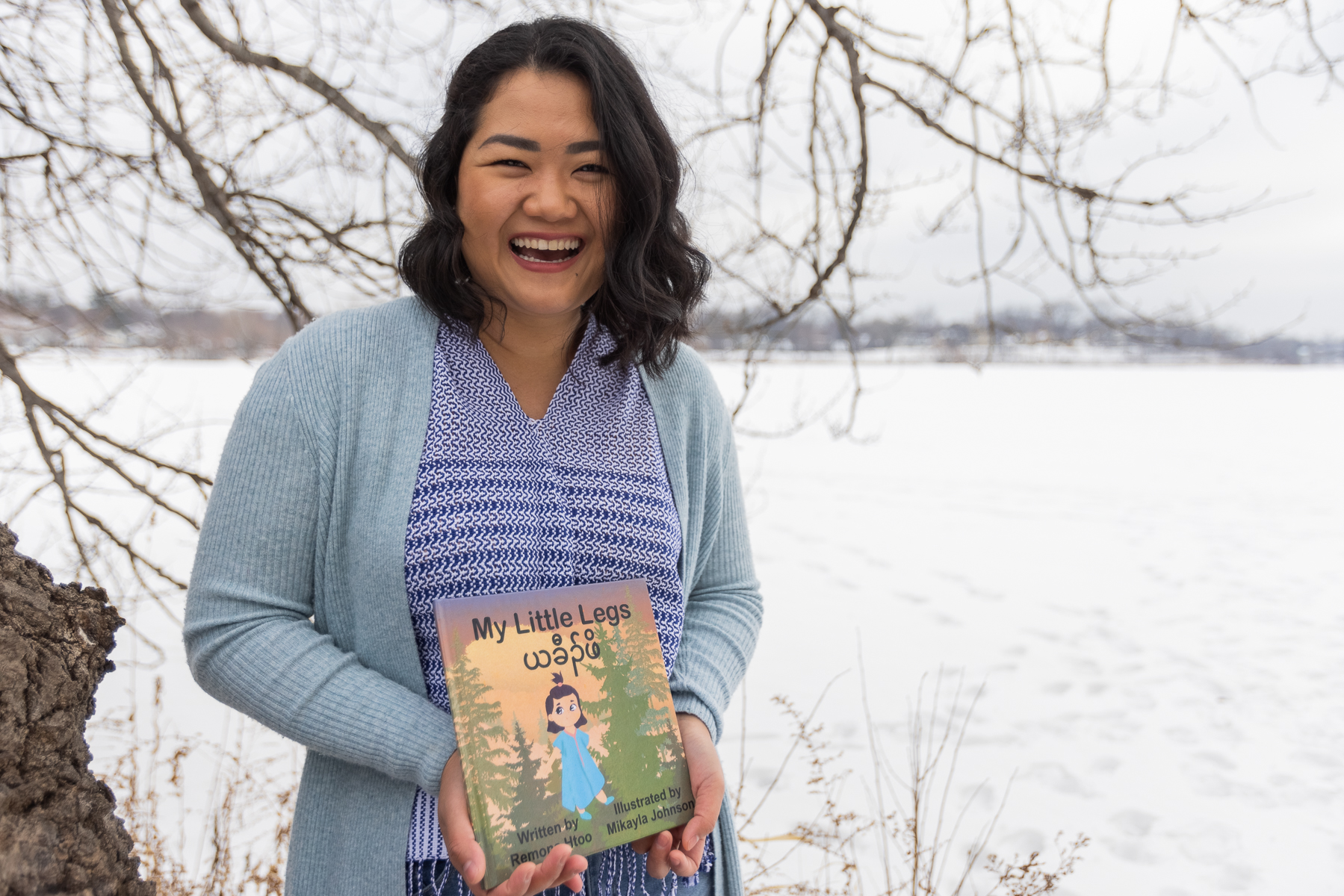
Remona Htoo, an immigrant from Mynamar (Burma), with her book My Little Legs at Como Lake in St. Paul, MN on January 13th, 2021. (Minnesota in January? She must be freezing!)

Since 2016, I’ve had the privilege of meeting people from vastly different cultures as I volunteer to help teachers in English as a Second Language classes, currently online.

Right now, I’m thinking of one woman who was originally from Myanmar (Burma) and who spent many years in a refugee camp in Thailand. She eventually landed in Rhode Island with her husband and children. It was there that I met her.

Myanmar is unfortunately known mostly for brutal military rule and suppression of rights activists and minorities. Among those minorities are the Karen people. I knew a little about them, but had not met any until the ESL class. There is good reason to believe that their language and culture are in danger of being lost, particularly as English becomes the primary language for their children.

Andrew Hazzard has a story on a Karen woman who decided to do something about that. The article was published at Sahan Journal, “the only independent, 501(c)(3) nonprofit digital newsroom fully dedicated to providing authentic news reporting for and with immigrants and communities of color in Minnesota.”

Hazzard writes, “Remona Htoo didn’t have any children’s books growing up. Now, she’s publishing one of her own. 

“Htoo was born into a Karen family fleeing the civil war in Myanmar. She spent 10 years in a refugee camp in Thailand before her family resettled in Idaho, in 2007. At the time, the 12-year-old spoke no English. 

“Refugees don’t choose where in the U.S where they end up. A significant population of Karen people came to Minnesota, but only 20-odd families landed in Idaho, Htoo said. …

“While attending college at a small Christian university, she began taking trips to the Sawtooth Mountains, where she fell in love with the landscapes of mountains, pine trees, and clear lakes. 

“ ‘It was me trying to cope with stress, trying to cope with the trauma I had. It was a healing mechanism for me,’ Htoo said. 

“Ten years ago, she met a young Karen man online who lived in St. Paul: More than 17,000 Karen people live in the city and neighboring Maplewood. The two shared early childhood experiences in the refugee camps and struck up a relationship. Now, the two are married, with a 22-month-old daughter, Emma, and live in St. Paul’s east side. 

“Htoo, 27, began taking her daughter on outdoor adventures: backpacking and camping in the summer; and sledding in the winter. The family goes near and far to experience nature. … In the summer, the family hits the road to visit national parks like Glacier, in Montana. Emma has already seen 10 national parks — more than many adults. …

“ ‘After I became a mom, I realized there are no children’s books in Karen,’ she said. ‘I wanted to read a book in Karen for my daughter.’ 

“So, Htoo took action. She wrote and self-published My Little Legs, a book she said is about ‘being outdoors and what your little legs can do.’  Emma, her daughter, served as inspiration for the main character. She wears a traditional Karen shirt in the illustrations, created by local artist Mikayla Johnson. The book is bilingual, with English and Karen script. 

“There are very few children’s books, or books in general, published in Karen in the United States, and much of what exists originated in St. Paul. … St. Paul Public Library recognized the need for more Karen language literature. The library system has published three children’s books in Karen since 2015, according to spokesperson Stacy Optiz. The most recent is Children’s Stories, a collection of five traditional Karen folk stories, released in 2021.

My Little Legs targets families with children ages 1–3. In compiling the tale, Htoo looked back at Emma’s own development milestones, like learning to crawl and walk. She also wanted to create an outdoor adventure story that featured southeast Asian characters, and to inspire a curiosity about the Karen people for other American readers. 

“ ‘I don’t think people think we are the outdoor type,’ Htoo said. 

“People of color make up about 20 percent of Minnesota’s population, but only 5 percent of state park users, according to Minnesota Department of Natural Resources data. Many Minnesotans of color feel isolated in outdoor spaces. In response, groups like BIPOC Outdoors Twin Cities emerged, where people can find diverse friends to hit the trails or go fishing.” 

Readers can order Htoo’s book by emailing NawHaChu@gmail.com. More at Sahan Journal, here.

Read Full Post »

Photo: Vanessa Nakate.
Vanessa Nakate’s book A Bigger Picture: My Fight to Bring a New African Voice to the Climate Crisis recounts her journey as an environmental justice activist.

I continue to be impressed that people college age and younger are taking the lead on the critical issues of our time — gun control, climate change, inequality, everything. It is probably wrong to put pressure on them, but I do think they’re more likely to have answers — often because they don’t know what’s “impossible.” Older folks tend to believe things that have never been done are impossible. Young ones don’t.

At Living on Earth, Steve Curwood talks to a young Ugandan activist who has become a leader in fighting climate change.

“STEVE CURWOOD: Greta Thunberg started the Fridays For the Future climate strikes by sitting in front of the Swedish Parliament, and millions of people around the world ultimately joined her cause. One of them was Vanessa Nakate of Kampala, Uganda, who was just getting out of college at the time.

“Teenaged girls in Uganda don’t typically have the same social freedoms as many in the Global North have to be out on their own picketing and demonstrating. But at age 22 Vanessa Nakate could, as college age women have a lot more freedoms in her culture. And in the face of climate change, intensified floods and droughts that ravaged Uganda at the time, Vanessa was inspired by Greta to organize and start holding climate strike signs herself in front of the Ugandan Parliament.

“Greta Thunberg soon heard of Vanessa through social media and in January of 2020 Vanessa was invited to join Greta for a press conference at the World Economic Forum in Davos, Switzerland. But the Associated Press cropped Vanessa, the only black woman, out of a widely circulated photo that included Greta Thunberg and three other white European activists. Comments citing that editorial decision as racist soon went viral. And since that incident Vanessa has used her visibility to bring light to climate struggles in the Global South. In her book, A Bigger Picture: My Fight to Bring a New African Voice to the Climate Crisis, Vanessa points to how climate change is impacting Africa and the short shrift that she and other people and nations of color receive at the UN climate talks. … [Vanessa] what kind of climate change effects are going on in Uganda? …

“VANESSA NAKATE: Uganda as a country heavily depends on agriculture for survival for many communities, especially those in the rural areas. But with the rising global temperatures, many people are threatened with floods, droughts and landslides, causing massive destruction, massive loss of lives, loss of homes, farms and businesses. … In the western part of the country in areas of Kasese, because of the rising global temperatures, many people have been displaced and still are living in camps because of extreme flooding.

“CURWOOD: Please tell me a story of a particular recent climate related incident. …

“NAKATE: I can talk about one that happened last year. During the pandemic in 2020. The water levels of Lake Victoria rose as a result of extreme rainfall. And many people were displaced from their homes at a time when they had to stay at home to keep themselves safe. And with the rise in the water levels. Not only were farms destroyed, but even toilets were submerged, causing contamination of water sources and threatening the livelihoods of very many people.

“CURWOOD: Now, you join Friday’s for the Future in your 20s Vanessa. And that movement was made up of well, mostly teenagers and younger folks, why did you choose to join? …

“NAKATE: This is a challenge for some of my friends, because most of them were just finished in college and in their 20s. So, we all had this feeling that this movement was a movement for teenagers. But to me, that wasn’t the issue. … I just wanted to demand for climate justice and to talk about the challenges that the people in my country were facing because of the climate crisis.

“CURWOOD: Vanessa, tell me about some of the projects that you’re working on now.

“NAKATE: In 2019, I started school project Vash Green Schools Project. [It] involves the installation of solar panels and ecofriendly cookstoves in schools. I started this project to help drive a transition to renewable energy in schools in Uganda, and also for the clean cooking stoves to reduce the firewood that schools were using for preparation of foods. Almost all the schools in my country use firewood for food preparation. But with these ecofriendly stoves, the number that is used is greatly cut. … So far we’ve done installations in 13 schools.

“CURWOOD: You write in your book that when you came actually to the UN, a couple of [bad] things happened. …

“NAKATE: One of the people was a part of the Ugandan delegation [who] asked if I can meet him and talk about my activism. [I met] members of parliament, and I remember one of them actually recognizing me and saying that I’ve seen you on TV, you’re the girl who strikes every Friday. And at that moment, I’m like, wait, you’ve seen me. And you haven’t even said anything about the activism that I’m doing. …

“For the UN Youth Climate Summit … I was told that I would have a speaking role. I worked on my speech. And I was just really happy to talk about the experiences of the people in my country. [Then] I’m told that, well, you’re actually not going to speak but you will just be able to, you know, be like in discussions with other young activists. And at that point, it was really a disappointment before I left and I couldn’t tell my family or my friends because they were very excited.

“[And after the Davos incident] I felt like everything that I said at the press conference … didn’t matter, like it just went into the air and immediately disappeared, and no one was really paying attention. …

“It’s important for people to know that, historically, Africa is responsible for only 3% of global emissions. And yet Africans are already suffering some of the most brutal impacts of the climate crisis. It’s also important to know that while Africa, while the global south, is on the frontlines of the climate crisis, it is not on the front pages of the world’s newspapers. And it’s also important to know that there are a number of activists in the African continent in the global south who are speaking up, who are demanding for justice from leaders, from governments, from corporations. … We want climate action from the leaders and our voices will not be silenced.”

More at Living on Earth, here.

Read Full Post »

Photo: Ariel Cobbert.
At the Memphis, Tenn., library, Cloud901’s maker space is equipped with such high-tech tools as laser cutters and 3-D printers. The workshop is open to all ages, not just teens.

Today’s story is about an astonishingly innovative library in Memphis, Tennessee. It makes me ashamed to recall that my younger tradition-bound self thought libraries should never spend money on anything but books! Who knew the extended role libraries were going to play in people’s lives — from providing shelter during Ferguson, Missouri, protests to launching kids on undreamed-of careers. My own local library was recently renovated, and I wouldn’t give up a single 3-D machine.

Richard Grant writes at the Smithsonian magazine, “The Benjamin L. Hooks Central Library, a building of pale concrete and greenish glass, rises four stories in midtown Memphis. Walking through its automatic doors on a weekday afternoon, I hear unexpected sounds, muffled but unmistakable, almost shocking in a library context: the deep, quaking bass beats of Memphis hip-hop, plus a faint whine of power tools cutting through metal. …

“Here at the Central branch in Memphis, ukulele flash mobs materialize and seniors dance the fox trot in upstairs rooms. The library hosts U.S. naturalization ceremonies, job fairs, financial literacy seminars, jazz concerts, cooking classes, film screenings and many other events — more than 7,000 at last count. You can check out books and movies, to be sure, but also sewing machines, bicycle repair kits and laptop computers. And late fees? A thing of the past.

“The hip-hop beats and power tool noise are coming from an 8,300-square-foot teenage learning facility called Cloud901 (the numerals are the Memphis area code). Two stories high, it contains a state-of-the-art recording studio staffed by a professional audio engineer, a robotics lab that fields a highly competitive team in regional and national championships, and a video lab where local teens have made award-winning films. Cloud901 also features a fully equipped maker space (a kind of DIY technology innovation workshop), a performance stage, a hang-out area and an art studio. …

“Many cities have slashed their library budgets and closed branches. Memphis, Tennessee, one of the poorest cities in the nation, chose instead to invest, recently opening three new branches, for a total of 18, and increasing the library budget from $15 million in 2007 to almost $23 million today. Attendance at library programs has quadrupled in the last six years. In 2019, before the pandemic, more than 7,000 people attended the annual Bookstock festival, a celebration of literacy and education.

Memphis Public Libraries (MPL) is the only public library system in the country with its own television and radio station, and its branches receive more than two million visits a year.

“ ‘How did this happen?’ I asked Mayor Jim Strickland, who is serving his second term in office. He was sitting in his seventh-floor office with a view of downtown and the Mississippi River. ‘I’m a strong believer in libraries as a force for good,’ he said. ‘But none of this would have happened without our library director Keenon McCloy. She is amazing. We’ve got library people coming from all over the country to see what she’s done here.’

“McCloy is high-energy, fit from running, always busy, sometimes frenetic. Though passionate about public libraries, she has no training in the highly specialized field of librarianship, not even an undergrad degree in library science, and this provoked dismay and even uproar when she took over the Memphis system in January 2008. 

“ ‘I was the director of public services and neighborhoods for the city, and the mayor — it was Mayor Herenton at the time — appointed me without doing a search for other candidates,’ McCloy says over a salad lunch near her office in the Central branch. ‘It caused quite a stir in Libraryland.’ …

“McCloy’s first big task was to reorganize the funding and administration of the library system. Then she went looking for advice. She talked with directors from other states and visited acclaimed public libraries. ‘I wanted to meet the rock stars of Libraryland with the most progressive ideas,’ McCloy says. ‘And they all wanted to help me and share what they’d learned, because that’s how library people are. No one is proprietary and we’re not competitive with each other. We’re all about the greater good.’

“In Chicago, she toured the Harold Washington Library Center, where a 5,500-square-foot facility called YOUmedia opened in 2009. It was the first dedicated teen learning center in an American library, and it had a maker space and an in-house production studio to record teenage musicians. ‘That’s where I got the idea for Cloud901,’ says McCloy. ‘People kept saying the biggest problem at the Central library was all the teens hanging around, and I thought, well, they’re in our library, let’s find a way to redirect their energy.’

“The next step was to meet with the Memphis Library Foundation, a volunteer fundraising organization with connections in the business community and social elite. ‘I asked them if they would support a teen center at the Central branch,’ says McCloy. ‘Well, not immediately, but then they started raising money, and we decided to double the expense and really go for it.’

“Instead of a basic recording studio, McCloy and her team wanted a professional-quality studio. The legendary Memphis music producer Lawrence ‘Boo’ Mitchell, co-owner of Royal Studios and a longtime supporter of the libraries, agreed to design it. For the maker space, they hired a native Memphian who had been overseeing such facilities in the Bay Area. He stocked the workshop with 3-D printers and other equipment, and brought in FedEx, a Memphis-based corporation, as a supporter. It was the same approach with the video and robotics labs: hire experts, buy the best equipment, recruit sponsors. Cloud901 opened in 2015, at a cost of $2.175 million. …

“When [when Janay Kelley, now 18] first arrived at the video lab, an instructor there, Amanda Willoughby, taught her how to use the equipment — cameras, lights, editing software. …

“The first film that Kelley made here was titled The Death of Hip-Hop. She lit and filmed herself. … ‘I was going to upload it onto YouTube, but Amanda insisted on entering it into the Indie Memphis Youth Film Fest.’ “

Read the rest of the story at the Smithsonian, here. It’s free. It’s a long article with fascinating testimonials. Pretty sure Laurie Graves will want to read the whole thing!

Read Full Post »

Photo: Westcountry_Hedgelayer/Instagram.
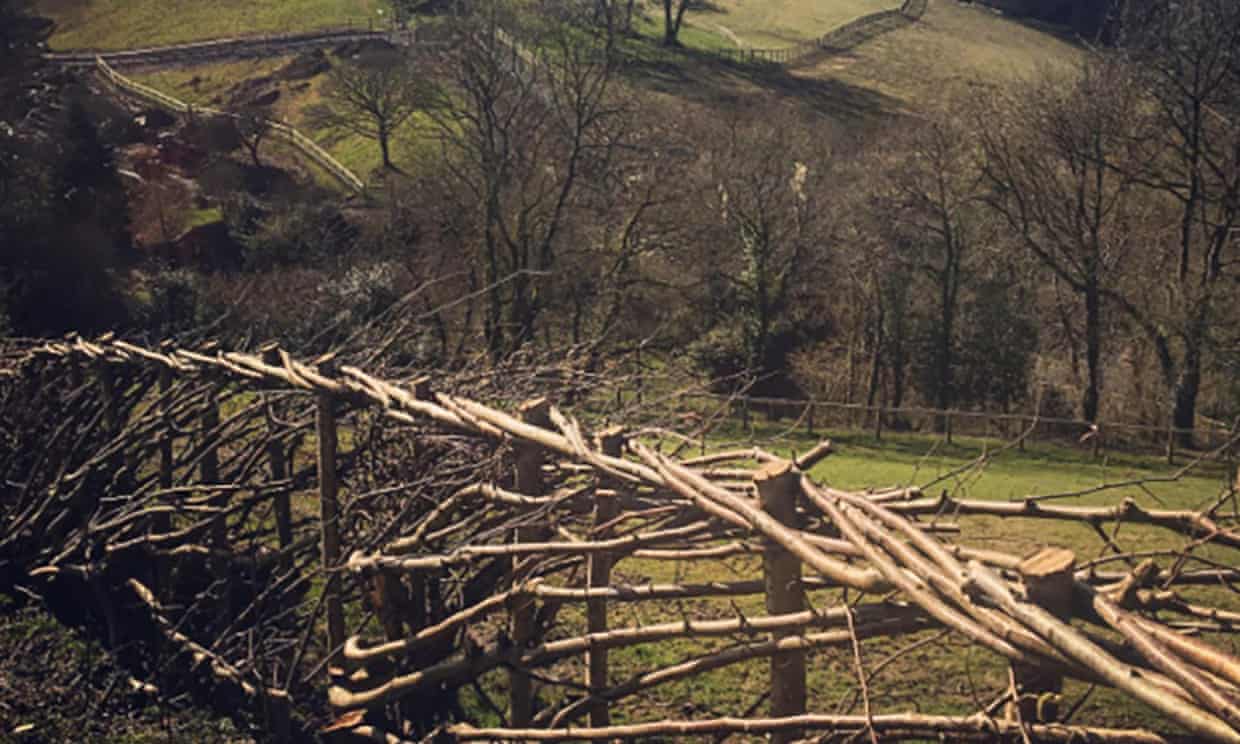
A newly laid hedge at a farm on Dartmoor, Devon.

I haven’t visited England in decades, so I didn’t realize it had gone through a period of ripping out its iconic hedgerows. How sad! But as Tom Wall writes at the Guardian, renewed interest in biodiversity is bringing them back.

“The emerald-green five-year-old hawthorn hedge glistens in autumnal sunshine. In the cider apple orchard and grass pastures below, younger hedges shoot off towards a fast-flowing trout stream.

“History has come full circle in Blackmore Farm, which nestles in the foothills of the Quantocks in Somerset. The owner, Ian Dyer, remembers helping his father, who arrived as a tenant farmer in the 1950s, grub out old hedges in the 1960s and 1970s. But – like increasing numbers of landowners – he has hired a hedgelayer to bring back his hedges to provide habitats for wildlife, capture carbon and slow water pouring off fields into rivers.

“ ‘In my life, I’ve probably taken out three miles of hedge. It was seen as progress at the time. The government was pushing for more and more production,’ he says, standing in the long grass on his 750-acre arable and beef farm. …

“Dyer, 62, has planted 1km of new hedges in the last five years and has noticed more insects, nesting birds and small mammals, including water voles, since the work started.

One study found that hedgerows provide 21 ecosystem services – more than any other habitat.

“ ‘My views have changed in the last 10 years. I want to live in a green and pleasant land – not in a [ecological] desert,’ he remarks. ‘It’s starting to look like I remember it as a five-year-old boy.’

“The National Hedgelaying Society, which held its national championship event this weekend, says its members have been inundated with requests to lay hedges this season, which runs from September to April. ‘There is more work than anyone could ever do for the rest of their lives,’ says Claire Maymon, one of the charity’s trustees. ‘Our founders in the 1970s were worried the craft would be lost for ever, but now we are worried that we don’t have enough young hedgelayers coming through to meet demand.’

“The Campaign to Protect Rural England estimates that over 25,000 workers will be needed to deliver on the Committee on Climate Change’s call to plant 200,000km of new hedges in the UK. The committee has calculated that the nation’s hedgerows will have to be expanded by 40% in order to reach net-zero by 2050. …

“The government wants the post-Brexit agricultural subsidy system to encourage farmers to better maintain hedges. A pilot scheme, offering farmers up to £24 per 100 metres of hedgerows, starts next month.

“Hedges need to be carefully managed throughout their lives, otherwise they thin and eventually gaps appear. Paul Lamb, the hedgelayer helping to transform Dyer’s farm, ‘pleaches’ – or splits – hawthorn, blackthorn and spindle stems so that they grow back dense and thick next spring. ‘Every hedgelayer has their own style,’ he says. … ‘For me, it’s so satisfying to plant and lay a hedge and then see it full of birds, insects and wildlife.’

“Business is booming for Lamb, who lives in a converted horsebox on a nearby farm. He has never been busier, with commercial farmers making up a growing proportion of his work. …

“ ‘When I started hedging, it was a way of earning a bit of beer money on a Saturday. I would never have expected to be booked up for a whole season. But here I am, booked up for this season and half of the next – and still people are phoning me with jobs. There is a renewed interest in conservation and craft – and a feeling that we need to live in a more sustainable way.’

“Britain lost half its hedgerows in the decades after the second world war as farmers were encouraged to create large arable fields to increase production. Since then, legal protections have been introduced and hedges are no longer being ripped out – but the decline has continued due to poor management, including some landowners over-trimming hedges mechanically, without simulating new growth below. But the growing demand for traditional hedgelaying leaves many in the craft feeling optimistic.

“Nigel Adams sits on the HedgeLink steering group, which advises [the UK’s Department for Environment, Food and Rural Affairs]. He says there has has been a sea-change in attitudes, with everyone from the National Farming Union to Natural England calling for more hedges. …

“Adams, who lays hedges throughout the country, including on Prince Charles’s estates, believes the role of hedges should not be underestimated. ‘Insects follow hedges and bats hunt along hedges,’ he says. ‘If we didn’t have hedgerows, then we would be living in a barren wasteland.’ ”

More at the Guardian, here. Since the Guardian is free, you have access to the pictures, too. I think you are going to love the water vole there.

Read Full Post »


Photo: Sarah Matusek/
The Christian Science Monitor.
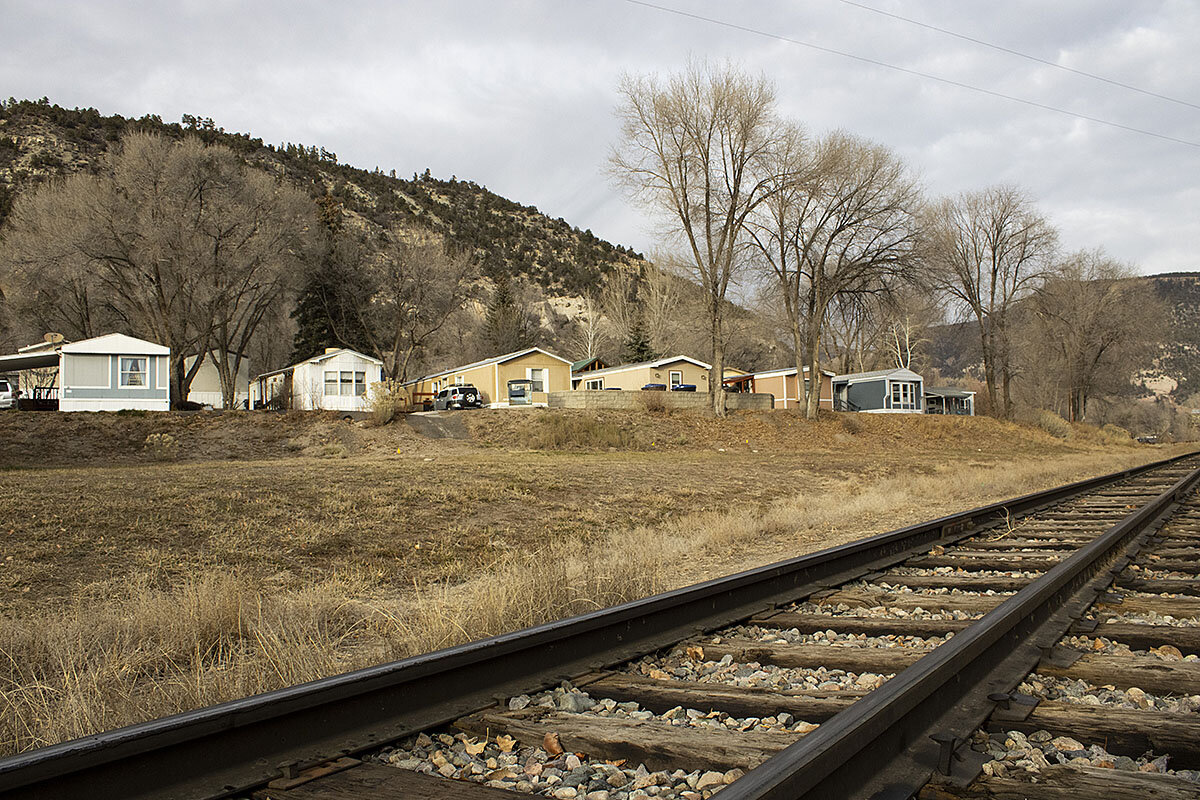
The Animas View MHP Co-op in Durango, Colorado, sits above the Durango and Silverton Narrow Gauge Railroad. It is one of six resident-owned manufactured housing communities in Colorado.

In the world of affordable housing, the trailer park traditionally got no respect. Until now. When residents cooperatively buy the land under them, self-esteem is one of the many benefits.

Sarah Matusek writes at the Christian Science Monitor, “One sunny, cold morning last January, John Egan joined fellow mobile home park residents on a neighbor’s front porch. They needed to organize. But how? 

“ ‘I had to go to the restroom, and when I came back from the restroom, they said, “Hi! You’re president!” ‘ recalls Mr. Egan.

“The half-dozen folks had convened to think through how to buy their Durango, Colorado, park from the private landlord – a move Mr. Egan and others deemed a shot in the dark. But now they at least had a president for what would become an interim board. With guidance from a housing nonprofit and majority support from the community, residents succeeded in purchasing the roughly 15-acre property within five months. They celebrated with a picnic, as the new Animas View MHP Co-op joined some thousand other resident-owned communities countrywide. …

“The resident-owned market constitutes just 2.4% of manufactured housing communities nationwide. Bolstering the health and longevity of mobile home parks is important as they are a critical source of affordable housing, say industry experts. Recent legislation in Colorado offers some provisions for communities like Animas View that hope to secure their future by governing themselves.

‘Everybody sleeps better at night,’ says Steve Boardman, here for 20 years, as he takes out his recycling. ‘We’re in control.’

“River, mountains, grasses bleached blonde in autumn – the Durango mobile homes have a million-dollar view. Largely immobile and costly to move, these factory-built units have been commonly called ‘manufactured homes’ since 1976. They house an estimated 18 million to 22 million people in the United States. …

“The median annual household income of these homeowners – $35,000 – is half that of site-built homeowners, according to Fannie Mae. Manufactured housing fills 6.3% of U.S. housing stock, with more than double that share in rural areas.

“Many residents own their homes but not the underlying land, for which they pay ‘lot rent.’ That model can spur financial precarity: These homeowners are ‘more likely to see their homes depreciate and have fewer protections if they fall behind on payments,’ reports the Consumer Financial Protection Bureau

“Media reports have increasingly shed light on private-sector purchases of these parks that often result in rent increases, which housing advocates deem predatory. 

“Mobile home park investor Frank Rolfe counters: ‘When we buy these properties, they’re often in terrible condition, and [we] bring them back to life. … You can’t bring old properties back to life without raising rents.’

“Mr. Rolfe estimates that he and a partner are the fifth largest owners of U.S. mobile home parks. ‘There is this conception I think out there that park owners are in some way hostile to residents buying their own communities, and that is completely off base,’ says Mr. Rolfe, co-founder of Colorado-based Mobile Home University, which trains investors to purchase parks. Three parks he co-owned have been sold to residents.

“Mr. Egan and his wife, Cate Smock, bought their trailer here in 2012 – an affordable move to Durango so their son could attend a better school. But afterward, they saw their lot rent, which includes utilities, increase annually, if not twice a year. … Animas View residents also complained of the previous owner’s lack of attention to their needs and delayed repairs.

“Shortly before Christmas 2020, residents learned that the latest landlord, Strive Communities, intended to sell. Residents began to organize almost immediately. …

“ ‘We don’t tell people that it’s easy’ to become resident-owned, says Mike Bullard, communications and marketing manager for ROC USA, a New Hampshire nonprofit that, along with its affiliates, reports having helped nearly 300 manufactured housing communities become resident-owned. (ROC stands for resident-owned communities.) …

“In Colorado, the network affiliate Thistle ROC helped the Durango cooperative patch together funding for their purchase. But to afford the financing, the co-op increased lot rent by $80 this fall (rent ranges between $755 and $825). While the uptick may seem counterintuitive, it’s not uncommon, says Mr. Bullard. 

“ ‘These groups are buying not just the real estate, but the business,’ he says, adding that lot rent for new resident-owned communities will typically drop down to market rate or below within five years. …

“ ‘One of the first things that we decided when we met as a board was that we would not allow anybody to be forced out of the park because of an inability to pay the rent,’ says former board president Mr. Egan. …

“To ensure folks can afford to stay, the community is developing a rental assistance fund. In addition to seeking outside funding, some residents plan to donate spare dollars themselves.”

More at the Monitor, here. By the way, this all started with New Hampshire’s Community Loan Development Fund, here. I published several articles from them when I worked at the Boston Fed.

Read Full Post »

Photo: Georgi Mabee/RHS/PA.
A compost bin in the Cop26 garden at last year’s Chelsea flower show. This year, designers have been asked to include biodiverse elements in their exhibitions.

I was talking to Jeanne yesterday about her yeoman’s effort to keep in place the restrictions on those gas-powered leaf blowers we all hate for noise reasons or health reasons or climate reasons. Town meeting voted to outlaw professional landscapers’ leaf blowers by 2025 and personal ones by 2026.

But in the blink of an eye, landscapers, claiming inaccurately that no one had consulted them, acquired enough signatures to bring the issue before town meeting again this year. I asked where they got the signatures. Customers. It seems that most people in this often forward-thinking town can’t live without a leafless vista in front of their house and don’t want to put the lawn service to the trouble of getting the cheaper electric blowers that would save their immigrant workers from diseases and help the environment.

As Pogo said, “We have met the enemy, and he is us.”

Given that her neighbors want leafless lawns, Jeanne is not focusing on the biodiversity trend that encourages homeowners to let the leaves stay and fertilize the soil. But the idea is taking hold elsewhere. Consider the displays at the Chelsea (UK) garden show.

From Helena Horton at the Guardian:

While many expect to see rows of bright flowers and pillowy blossoms at the Chelsea flower show, this year star gardens will also feature such biodiverse elements as fungi and a beaver habitat.

“Garden designers at the annual Royal Horticulture Society (RHS) show have been asked to consider the environment when making their entries. Though many of the traditional aspects of the show, including the prize flowers in the Great Pavilion, remain, many gardens focus on nature rather than conventional manicured beauty.

“For the first time, the gardening power of beavers will be displayed at the show. The Rewilding Britain Landscape garden, by the designers Lulu Urquhart and Adam Hunt, will demonstrate how the rodents tend the landscape and let biodiversity thrive.

“Beavers became extinct in the UK 400 years ago, and only in recent years have they been reintroduced to parts of the country. … It will feature a beaver dam, and a pool with a lodge behind, and show off a ‘riparian meadow’ of the sort beavers create when they partially flood a riverbank and attract pollinators and other wildlife. …

“Favourite trees of beavers, including hazel and field maples, have been chosen for the garden, as well as native wildflowers and plants that encourage and support trees such as hawthorn and alder, which provide winter food for many birds and support dozens of insect species.

“Rather than flowers, the designer Joe Perkins has decided to show off a range of fungi to highlight the ‘inseparable connection between plants and fungi within woodland ecosystems.’

“In between buying new roses and water features for their gardens, attenders will learn about the complex mycelium networks that connect and support woodland life. … The garden will also include species that are used to warmer climates, to highlight how our planting may have to change as a result of a warming planet.

“While most at the show, to be held in May in the grounds of the Royal hospital, Chelsea, usually focus on what grows in the soil, the dirt itself is the star of the new Blue Peter garden. The designer, Juliet Sergeant, is hoping to ‘open the eyes of children and adults to the role of soil in supporting life and its potential to help in our fight against climate change.’

“The garden will feature a subterranean chamber, which will show a soil animation, and soil-themed art by the children of Salford. It also features a roof-top meadow and barley field with common spotted and southern marsh orchids and a two-tonne tree on the planted roof, showing the wide variety of plants that good healthy soil can sustain. …

“Also at the show is a foraging garden by Howard Miller, for the Alder Hey children’s hospital. … The garden will heavily feature heather and bilberries. Miller said: ‘One of my favourite childhood memories is going to pick bilberries with my grandparents. My grandpa Harold had a habit of counting 1,000 bilberries into a bag before he would allow himself to talk to us. My grandma Mary and I would sit and eat the bilberries while he wasn’t looking.

“ ‘The smell of sitting in among heather and bilberries just transports me to that moment. So the takeaway I would like people to have is to give foraging a try, it’s free, it’s good for the soul and it’s a great excuse to connect with nature and each other.’ ”

More at the Guardian, here.

Read Full Post »

Photo: Jessica Lustig.
Jessica Lustig, left, and Lesley Friedman Rosenthal, part-time Berkshires residents, went to Portugal to greet students, faculty and family from the Afghanistan National Institute of Music. Thanks in part to their efforts, the school was rescued and is resettling in Portugal, along with its founder and director, Dr. Ahmad Sarmast, center.

There are still small community newspapers that are doing actual reporting. Not where I live, where the the “local” paper mostly republishes content from a chain headed up by USA Today. It’s been so bad for so long, a group of community leaders is raising money for a nonprofit local newspaper such as we’ve begun to see around the country.

But I digress. Today’s Berkshire Eagle article is not a local story but I am not sure it would have happened if the reporter had not taken the time to interview local people.

Felix Carroll wrote that from a home in Otis, Massachusetts, “a daring, dangerous, complicated and ultimately successful rescue effort was coordinated beginning last August. …

“The denouement came on Dec. 13, when a community of school children from the Afghanistan National Institute of Music (ANIM) landed in Lisbon, Portugal — to safety, freedom and a future far afield from one that would have demanded their silence.

“Lesley Friedman Rosenthal, a part-time resident of Otis, was in Portugal to greet them. So was Jessica Lustig, a part-time resident of Great Barrington.

“ ‘It was remarkable to watch the young music students, their faculty and families come off the plane,’ said Rosenthal, president of the United States-based Friends of ANIM. ‘These 273 individuals, whose names, birth dates and national ID numbers I had helped work through so many lists for government agencies, and about whose lives and safety I had been so concerned in the past four months, suddenly appeared before us, with a look on their faces I can only describe as hopefulness.’

“Rosenthal and Lustig make up two-thirds of the board members of Friends of ANIM, the charitable group that, beginning in 2016, has supported the school, the first and only music academy in Afghanistan’s capital, Kabul.

“The school, which was inaugurated in 2010, had gained international fame for teaching Afghan and Western music to a co-ed student body against the backdrop of threats from the Taliban, the militant Islamist regime that had prohibited nonreligious music outright when it led Afghanistan from 1996 to 2001.

“The third member of Friends of ANIM is the school’s founder and director, Dr. Ahmad Naser Sarmast, who still suffers the physical effects following a Taliban attack on his school in 2014.

“The philanthropic efforts of Friends of ANIM took a dramatic turn in August upon the withdrawal of U.S. military troops in the country and the ensuing consolidation of control by the Taliban.

“Rosenthal, who serves as chief operating officer of The Juilliard School, the performing arts conservatory in New York City, and Lustig, the founder of a New York City-based publicity, advocacy and consulting business, engaged in round-the-clock efforts to assist Dr. Sarmast in rescuing the school.

“They reached out and received the support of political leaders, military veterans, academics, and artists, including local musicians Yo Yo Ma and Emanuel Ax.

‘It became clear, just in a matter of days, that the only way to salvage the school was to actually do a mass evacuation and airlift of the entire school community,’ Rosenthal said.

“In the meantime, videos began surfacing of Taliban members making a public show of destroying musical instruments. The Taliban had taken over the school campus. …

“News reports from Kabul told of how seven busloads of people associated with the school were left waiting at the airport for 17 hours, unable to board their plane amid fears of a terrorist attack. With that in mind, the evacuation efforts became less conspicuous; the efforts moved more slowly and comprised waves of smaller groups.

“In the end, the evacuation consisted of five airlift flights of 273 school members (including students, staff and immediate family) over a six-week period from Oct. 2 through late November.

“The first stop was Doha, in Qatar, whose government provided shelter and helped negotiate with the Taliban to ensure safe passage. Then, the school community flew on Dec. 13 to Portugal, where they have been offered asylum.

“ ‘Friends of ANIM is now working to reestablish the school in Portugal so that Afghan music and music education can continue for the girls and boys of the ANIM community,’ said Rosenthal.

“Rosenthal and Lustig had never imagined that their charitable efforts to support a school 7,000 miles away would ever come to this — essentially to establishing a war room in the Berkshires in the year 2021. …

“In December 2014, [a] suicide bomb attack at a student concert [in Kabul killed] an audience member and injured many others. Sarmast had to be airlifted to Australia for treatment. His hearing has been permanently damaged.

“ ‘The needs were clear,’ said Lustig. ‘He had threats to his life and threats to his school.’

“With the formation of Friends of ANIM in 2016, Sarmast and his staff and students would come to know that the world has his back.”

More at the Berkshire Eagle, here.

Read Full Post »

Photo: Lin & Jirsa Photography.
An example of India wedding choreography as shown at Maharini Weddings.

This is a fun story about the way entertainment has taken over weddings. Although our own family’s weddings have included Swedish customs (e.g. when the bride makes a trip to the ladies room, all the woman go kiss the groom) and Egyptian customs (e.g. a belly dancer with lighted candles in her hair), some families in the southern part of India are really going beyond the beyond. Mujib Mashal and Suhasini Raj reported the story for the New York Times.

“Weddings in India’s south, particularly in the coastal state of Kerala, have transformed into a festival of color — and dance, lots of dance.

“Unlike those in the north, weddings in the south used to be subdued affairs centered on a feast that, at best, would occasionally include a live band. Now, the ceremonies draw on the latest entertainment from across the country, including the breathtakingly fast rhythms of Tamil and Telugu dance music, and the colorful costumes and drumbeats of Punjab.

“Dr. Sheha Pfizer’s wedding had something extra. …The ceremonies in Kerala have become so colorful that they are the talk of the town and viral discussions online. There is the favorite Punjabi dhol drumming, but also troupes that perform Egyptian, Mexican and Sufi dances — all with lavish outfits. People hire water drummers, pole dancers and acrobats.

“About 60 percent to 70 percent of the weddings in Kerala now include choreographed dances, said Mayjohn P.J., a former wedding singer who started a wedding management agency, Melodia, a decade ago.

“Mr. P.J. has no doubt about what has fueled the transformation: social media. Couples find inspiration for their weddings on Instagram, YouTube and Pinterest, before posting their own ceremonies onto the same platforms.

“Wedding planners, part of an industry that brings in tens of billions of dollars every year in India, offer video and photo packages that are tailored to get clicks. The packages, usually costing $2,000 to $5,000, include an ‘Instagram teaser’ and the ‘wedding highlight,’ essentially your own five- to seven-minute blockbuster film.

“The most ambitious ones incorporate the narrative tricks of Indian soap operas for emotional effect, and deploy the latest technology — steady cams, drones and lots of musical special effects — to create the climax of a techno concert. …

The lingering pandemic has also brought changes to weddings in India’s south, where the peak season runs from December to February.

“Health regulations limit capacity to 200 people (as opposed to as many as five times that in pre-Covid times). So families have turned them into multiday affairs of smaller ceremonies — inviting a different set of guests for each so that everyone feels part of the celebration.

“Perhaps the busiest man during the wedding season is the choreographer Manas Prem.

“He has been commissioned to choreograph 500 wedding routines in the coming months. Most of them are small, and Covid has forced much of the training online.

“His frequent challenge is older relatives who get cold feet when they see the audience. ‘They get shy and they don’t want to do it,’ Mr. Prem said. ‘Then I have to fill the gaps.’

“Both Dr. Pfizer, 25, and her husband are Muslims. Their wedding was a display of Kerala’s largely seamless diversity. Her childhood friends performing for her wedding were a mix of Hindus and Christians. …

“Dance runs in Dr. Pfizer’s family. Her mother was a dancer. One of her grandmothers performed with a folk ensemble in the 1960s and 1970s.

“The bride started training as a dancer even before kindergarten — a large stretch of it under the tutelage of Mr. Prem. Pictures of competitions when she was younger adorn the walls of his small dance studio. …

“As the guests took their seats in the hall for the evening ceremony, the dance troupe changed costumes repeatedly — a Sufi entrance with the groom, a Punjabi bhangra number that included a cameo by the bride, a mash-up of the latest hits where the dancers displayed their hip-hop moves. Another group, all women, performed a traditional Keralan Muslim dance, oppana, a hip-hop dance in jeans and T-shirts, and a flamenco-inspired routine.

“In between, the tall wedding singer, wearing a turtleneck and chic glasses with transparent rims, entertained the crowd. He announced the bride’s first entrance.

“The heads turned to the back, where Dr. Pfizer, surrounded by the female troupe of dancers, beamed with excitement in a dazzling ocean-green dress paired with stunning jewelry. Mobile phones came out for pictures. Music blared as the dancers shimmied and snapped their fingers, parting the aisle for the bride.

“But before the bride had climbed the stage to take her seat, someone realized that the main camera that films the ‘wedding highlight’ for YouTube and Instagram wasn’t set up yet.

“The bride and the dancers had to go back to their starting point at the entrance and do it all over again.”

More at the Times, here. Lots of great pictures.

Read Full Post »

We do not have a plant-based diet in our house, although I’ve been taking baby steps in that direction as far back as the early 1970s when my little sister (now departed) gave me the Frances Moore Lappé book Diet for a Small Planet. This was when my sister was still in college and studying to be a poet. Long before she went to medical school and became a doctor.

I used to make an eggplant, mozzarella, and brown rice dish from that book. It was yummy but took too long to make. I’m a lazy cook.

Still, I keep being reminded that the effort is important — for example, when Robyn Vinter wrote for the Guardian in October about the environment summit in Glasgow, Scotland.

Vinter reported, “Plant-based dishes will dominate the menu at the Cop26 [Conference of the Parties no. 26] climate conference. … The low-carbon menu includes 95% British food, especially locally sourced Scottish produce, and each menu item has an estimate of its carbon footprint, ‘helping attendees make climate-friendly choices.’

“Delegates will be served dishes such as potato, leek and rosemary chowder, smoked salmon and ‘a spiced mushroom and onion burger served with a vegan tomato mayo, slaw and shoots.’

“Caterers are using sustainable suppliers including Edinburgh’s Mara Seaweed, which is abundant, entirely sustainable and does not require fertilizer, fresh water or soil to grow, and carrots and potatoes from Benzies, which uses wind turbines to power their cool storage, biomass to provide heating and recycles the water used. Hot drinks will be served in reusable cups that can be washed 1,000 times, which organizers say will save 250,000 single-use cups.”

How does the list at the Guardian sound to you?

” Winter squash lasagne (0.7kg CO2 equivalent emissions) – celeriac, glazed root vegetables and winter squash, with a vegan cheddar.
” Organic kale and seasonal vegetable pasta (0.3kg CO2 ee) – spelt fusilli, field mushrooms, kale and seasonal vegetables.
” Braised turkey meatballs (0.9kg CO2 ee) – with organic spelt penne pasta in a tomato ragu.
” Organic spelt wholegrain penne pasta (0.2kg CO2 ee) – with a tomato ragu, kale, pesto and oatmeal crumble.”

Mmmm. Maybe it’s worth the effort.

Meanwhile, at the Harvard Health newsletter, you can read why a plant-based diet is also better for your health. Katherine D. McManus, MS, RD, LDN, says, “Plant-forward eating patterns focus on foods primarily from plants. This includes not only fruits and vegetables, but also nuts, seeds, oils, whole grains, legumes, and beans. It doesn’t mean that you are vegetarian or vegan and never eat meat or dairy. Rather, you are proportionately choosing more of your foods from plant sources.

“What is the evidence that plant-based eating patterns are healthy? Much nutrition research has examined plant-based eating patterns such as the Mediterranean diet and a vegetarian diet. The Mediterranean diet has a foundation of plant-based foods; it also includes fish, poultry, eggs, cheese, and yogurt a few times a week, with meats and sweets less often.

“The Mediterranean diet has been shown in both large population studies and randomized clinical trials to reduce risk of heart disease, metabolic syndrome, diabetes, certain cancers (specifically colon, breast, and prostate cancer), depression, and in older adults, a decreased risk of frailty, along with better mental and physical function. Vegetarian diets have also been shown to support health, including a lower risk of developing coronary heart disease, high blood pressure, diabetes, and increased longevity. …

“Here are some tips to help you get started on a plant-based diet.

” Eat lots of vegetables. Fill half your plate with vegetables at lunch and dinner. Make sure you include plenty of colors in choosing your vegetables. Enjoy vegetables as a snack with hummus, salsa, or guacamole.
” Change the way you think about meat. Have smaller amounts. Use it as a garnish instead of a centerpiece.
” Choose good fats. Fats in olive oil, olives, nuts and nut butters, seeds, and avocados are particularly healthy choices.
” Cook a vegetarian meal at least one night a week. Build these meals around beans, whole grains, and vegetables.
” Include whole grains for breakfast. Start with oatmeal, quinoa, buckwheat, or barley. Then add some nuts or seeds along with fresh fruit.
” Go for greens. Try a variety of green leafy vegetables such as kale, collards, Swiss chard, spinach, and other greens each day. Steam, grill, braise, or stir-fry to preserve their flavor and nutrients.
” Build a meal around a salad. Fill a bowl with salad greens such as romaine, spinach, Bibb, or red leafy greens. Add an assortment of other vegetables along with fresh herbs, beans, peas, or tofu.
” Eat fruit for dessert. A ripe, juicy peach, a refreshing slice of watermelon, or a crisp apple will satisfy your craving for a sweet bite after a meal.”

To read McManus’s meal suggestions and her answers to readers with specific diet problems, click on the Harvard Health newsletter, here. More at the Guardian, here. And don’t forget to investigate Diet for a Small Planet, here.

Read Full Post »

Photo: Nathan Klima for the Boston Globe.
Health care professionals at a Mass. General vaccination van parked near the La Colaborativa food pantry administered COVID-19 vaccines and tests for residents during a mini-festival for teens in Chelsea, Mass., on Oct. 06, 2021.

Today I’m thinking about all the people who keep on keepin’ on. Some may think they have no choice, but that doesn’t make them any less heroic to me. There is a kind of unconscious daily heroism of putting one foot in front of the other without any expectation of light at the end of the tunnel that I used to see among tired commuters on the subway. Endless Covid has a bad effect on my gumption, so I greatly admire truckers, grocery workers, nurses, doctors, hospital cleaners, housecleaners, farmers, teachers, and the many others who just keep going.

Today’s article from the Boston Globe shows, I hope, that such dedication pays off. Even if things get worse after they get better, it pays off again and again.

Felice J. Freyer, Bianca Vázquez Toness and Diana Bravo wrote last fall, “The crew had been out on the streets for more than an hour before they found a man who needed a shot.

“The five young people in torn jeans and mint- and cantaloupe-colored T-shirts had already accomplished a lot on this bright late-September day. Stopping stroller-pushing moms on the sidewalk and knocking on the doors of triple-deckers, they told people about the food pantry, the English classes, the sports and music lessons for children, the upcoming block party, where to get help with a leaky oil tank — even how to register to vote.

“But until they came across Gato, sitting at the open door of a shed under the staircase to his home, the promotores de salud — community health workers — did not have occasion to talk about the vaccine against COVID-19, an illness that had stormed this small impoverished city with notorious ferocity.

“ ‘Have you been vaccinated, Gato?’ asked Natalia Restrepo, the 29-year-old engagement coordinator for La Colaborativa, the community service group that hired and trained the promotores.

“ ‘No,’ he said. Restrepo knows Gato; he’s friends with her husband. But she did not know this troubling fact about him.

“He was a member of the unvaccinated minority. According to state data, 74 percent of Chelsea residents are fully vaccinated, above the state average of 67 percent. That happened even though Chelsea’s population is dominated by groups traditionally hard to reach — immigrants, poor people, Latinos. …

“And new COVID-19 cases in Chelsea have plummeted to below the statewide average. Chelsea has made itself into a vaccination standout, the result of a person-to-person campaign by multiple community groups.

“ ‘The Chelsea experience is one we really need to learn from,’ said Carlene Pavlos, executive director of the Massachusetts Public Health Association. ‘It’s one where we can see the value of efforts that are locally designed, locally led, and developed by the people most familiar with the community and most trusted by the community.’ …

“The pandemic had raged like a wind-whipped fire in Chelsea, a 2.5-square-mile city across the Mystic River from Boston, bringing fevers and hacking coughs to apartments and houses packed with grandparents, mothers and fathers, sons and daughters — a mysterious sickness that rode home with folks who took the bus to jobs serving food or cleaning hotels or hospitals.

“In April 2020, according to a new report from the environmental group GreenRoots, the COVID-19 infection rate in Chelsea was one of the highest in the nation, 57 per 10,000 residents, higher than the worst days in New York City, six times the statewide infection rate. Researchers at Massachusetts General Hospital found that by April 2020 one-third of the city’s residents had acquired antibodies to the virus, indicating they’d been infected. …

“But sickness wasn’t the only source of pain: By June 2020, with the economy flattened by the pandemic, one in five Chelsea residents was out of work. …

“Founded in 1988 to serve a new influx of Latino immigrants, La Colaborativa [offered employment and more]. It set up a food pantry, delivering food and medicine to those in quarantine. ‘We became the survival center,’ said Dinanyili Paulino, the chief operating officer.

Gladys Vega, the CEO, recalls encountering an 11-year-old in the food line. The girl had been left to care for her 6-month-old sibling when their mother was suddenly hospitalized with COVID-19.

“ ‘We adopted that girl for three weeks,’ Vega said, making sure she had diapers and food, and neighbors checking in on her.

“So when it came time to vaccinate, Paulino said, community members wondering whether the vaccine was safe turned to La Colaborativa —’the people that have been with them from the beginning.’ …

“When the COVID-19 vaccines were approved in late 2020, the organization trained mothers to form a cadre of promotores, who teamed up with doctors from Massachusetts General Hospital going door to door to talk about the importance of vaccination. …

“Despite such preparations, despite the severity of COVID-19 in Chelsea, the vaccine itself was slow to arrive. … Advocates were outraged, and undeterred. …

“The first big vaccination clinic in Chelsea opened on Feb. 4. The doses didn’t come from the state. Instead, the East Boston Neighborhood Health Center received them through a federal program and agreed to set up a clinic at La Colaborativa.

“Offering the vaccine at their headquarters, Vega said, ‘sent a strong message that, if we are welcoming the vaccination, that means that you as an individual should get vaccinated.’ ”

More at the Globe, here.

Read Full Post »

« Newer Posts - Older Posts »