Feeds:
Posts
Comments

Archive for the ‘Uncategorized’ Category

Normally, this is a week when people take stock of their year, maybe make New Year’s Resolutions. But how to summarize 2020? What to resolve for 2021 other than to stay alive and donate more to people in need?

Kara Baskin at the Boston Globe, having taken on writing a pandemic newsletter for parents, decided to ask them what they have learned from this strange time.

“This year has been piercingly difficult for most of us in ways ranging from soul-shatteringly epic to mundanely depleting,” she writes. … “As parents, we’ve cared for kids in close quarters — and our own parents, often from afar. We’ve tried to work while serving as supplemental tutors, counselors, and IT gurus. We have sworn at Google Classroom. We have cursed Zoom. We have vowed to never, ever take teachers for granted again. … The daily rhythms of life faded and morphed. Our circles often became smaller; our waistlines sometimes got bigger.

“But there were glimmers of happiness, too: more time for stuff that really mattered. Perspective. Gratitude. Reframed expectations. Hope? …

“I’ve learned that true colors come to light in the darkness. I’ve watched as my community and friends have stood up for causes they believed in, donated to businesses they felt compelled to support, and rallied around the sick and hurting. I’ve also realized that some connections fray without sustenance. … Most of all, I hope this year has allowed us to be vulnerable. … To realize that there is no shame: in being hungry, in being sick, in feeling inadequate or lost. …

“How about you? What has this year taught?

“ ‘That I don’t give myself enough credit after surviving COVID-19 for almost three months with three children as a single mom.’– April Golden-Shea

“ ‘I’ve learned that I need to be able to ebb and flow with how my kids are feeling. That might mean cutting them some slack one day and keeping them on task on another day. My parenting style has never been one-size-fits-all with my kids, but this pandemic has only crystallized how important it is for me to see them as individuals.’ – Eric Berman

‘That volunteering has saved me in every conceivable way.’ – Julie Lucey

“ ‘I have learned that I crumble without external structures.’ – Susan Anderson Garcia

“ ‘I appreciate that I’m not constantly comparing myself to others (and feeling like I come up short), because there’s not the constant level of activity or achievements which are usually happening. I hope I can continue this practice of not comparing, as it gives me more peace.’ – Roslyn Fitzgerald

“ ‘I will never take seeing a full, smiling face for granted again. The eyes can show a lot of emotion, but so much is hidden behind masks.’ – Alysia Tardelli Rourke

“ ‘My lesson learned (or emphasized?) from this year is that you can’t compartmentalize yourself. Being a parent and being a worker are intertwined. … In a former pre-COVID life, I would feel embarrassed (as though I were failing at work) when I had to leave early to pick up a sick kid or take a phone call from my child’s teacher. Now, it’s clearer to me that expecting work and family to stay separate is not only unrealistic but unhealthy.’ – Mallory Rohrig

“ ‘One lesson that is often internally known is that our kids come before ourselves. However, this year I feel like we’ve really had to live up to that. I’ve had to put my own college grades and aspirations aside in order to help my kindergartener through her homework and starting school during the strangest time of our lives.’ – Karlie McDaniel Le

“ ‘I’ve learned the importance of neighborhood and how it almost seemed irrelevant until a crisis. Our son’s second birthday was a Facebook Live production. And instead of having a handful of people over, we had 100!’ … – Michele Aron.”

So many awesome comments: hard to choose! Read others at the Globe, here.

Photo: Cherry Lane School
Suzanne says if she’s learned one thing this year it’s that “school is essential.”

Read Full Post »

Have you ever gotten a glimpse of the aurora borealis, maybe from an airplane? It’s something I’ve always wanted to see. My sense of the northern lights comes only from pictures and from the fantasy trilogy His Dark Materials, in which the electricity generated is harnessed for travel to other worlds.

In an article at the Guardian by Patrick Barkham, we learn of a different way to get a sense of the aurora borealis.

“There’s a hypnotic crackle before a whoosh of sound flies from ear to ear,” he writes. “It’s followed by a heavenly chorus that might be whales whistling, frogs calling or the chirping of an alien bird. It sounds celestial because that’s what it is. The noise is the aurora borealis: the northern lights.

“The vivid green lights that trace across the Arctic sky emit electromagnetic waves when the solar shower meets the Earth’s magnetic field, and these can be translated into sounds that are made audible to human ears by a small machine.

“These mysterious, sweeping noises are celebrated by a new Radio 3 documentary following the biologist Karin Lehmkuhl Bodony into the wilderness on her dog sleigh to record the soundscape, which has now been turned into music by an Alaskan composer.

“Bodony lives in the remote Alaskan village of Galena. She can see the lights from her porch, and 16 years ago she discovered she could also record the sound of the lights using a very low frequency (VLF) receiver.

“ ‘To hear those “whoosh-whoosh” sounds, which are so like what you see, is really special,’ she says. …

‘There are times when it’s just normal background chattery, crackly sounds and then there’ll be other times when it’s really cool – beautiful whooshing sounds and a chorus that sounds like frogs calling. If it was always the same it wouldn’t be as fun to go out and listen.’

“For Songs of the SkyRadio 3 commissioned the composer Matthew Burtner, who works with natural sounds and scientific environmental data, to make a piece of music derived from the sounds of the aurora.

“Northern lights listeners must get at least four miles away from human-made sounds and other electrical sources such as power lines to avoid interference on the VLF receivers, so Burtner had to hike into the wilds with his daughter. …

“Burtner found that the recordings from the [VLF recorder] weren’t very clear and so mapped the sounds’ frequency and amplitude profile onto a high-quality synthesiser. ‘You can then alter the timbre of the sound and have the northern lights play different instruments. That let me really orchestrate with the northern lights, using their input as a controller,’ he says. …

“Burtner created a six-minute piece that he hopes expresses the dialectic between humans and the natural world. ‘That’s what I’m always looking for in music – there’s something of the real natural system in there that’s untouched by a person.’ …

“The programme also explores the traditional meanings of the aurora borealis in the rapidly changing Arctic environment, where temperatures are rising faster than in many parts of the world.

“According to Bodony, traditional Inuit interpretations of the northern lights are often benevolent, with the lights signalling to hunters how they will find food or reassuring the bereaved that their loved ones have passed to a better place.

“But there are more sinister mythologies connected with the northern lights, which have symbolised danger in certain stories as well. ‘Our atmosphere shields us from the sun’s radiation and manages to warm the planet but not too much – it’s a shield – and this display of the northern lights is a representation of the sun’s fearsome force on our planet that could make it uninhabitable,’ says Burtner. …

“For Bodony, the perspective derived from her rural subsistence culture – and the experience of the aurora borealis – can correct the wider human attitude to the planet, which is ‘like impudent children whose parent is away and we’re destroying the house’ “

More at the Guardian, here.

Read Full Post »

Whatever kind of art you make, I have a question for you. What matters most to you: being in the moment of making? Or the aftermath? And if you feel satisfaction in pleasing someone else with your art or joy in selling it, are those experiences all part of the making or entirely separate things?

See what the late folk artist Helen LaFrance had to say about the relative importance to her.

Penelope Green wrote the New York Times obit on the artist. “Helen LaFrance, a self-taught artist whose vibrant and intimate ‘memory paintings’ of scenes from her childhood in rural Kentucky brought her renown late in life, died on Nov. 22 at a nursing home in Mayfield, Ky. She was 101. …

“In glowing colors and sharp brush strokes, Ms. LaFrance painted church picnics and river baptisms; tobacco barns; backyard gardens with geese and children racing through them; kitchens with bushels of apples and jars of preserves shining like stained-glass windows. Her exuberant scenes of rural life invited comparisons to the work of Grandma Moses, Horace Pippin and other regional painters who drew from their memories to tell stories about a vanished time and place.

‘It’s just a way of reliving it all again,’ Ms. LaFrance told a television interviewer in 2010. The next year she told another interviewer, ‘If I do something somebody likes, well, I’m satisfied because somebody liked what I did, but I don’t think it’s important.’

“The author Kathy Moses Shelton, who, with the gallerist Bruce Shelton wrote ‘Helen LaFrance: Folk Art Memories’ (2011), called Ms. LaFrance ‘an American treasure.’ …

“Ms. Moses Shelton said in a phone interview. ‘She grew up under Jim Crow. She was 10 when the Great Depression hit. Her art doesn’t reflect the pain of that era. … Instead what comes through is joy, and the values of family and work. Her family owned and farmed their own land when sharecropping was the norm, and they were self-sufficient and lived in dignity. Her blend of personal experience, Black American culture and heritage, and her skill all come into play to make her work unlike anybody else’s.’ …

“Helen LaFrance Orr was born on Nov. 2, 1919, in Graves County, Ky., the second of four daughters. Her parents, James Franklin Orr and Lillie May (Ligon) Orr, known as Bud and Hon, grew tobacco and corn.

“Helen did not attend much school. Her parents instructed her in reading and math, and her mother taught her to paint, guiding her hand and helping her mix colors from dandelions, berries and Bluette laundry detergent. She and her sisters worked in the family fields; Helen drew after her chores were done. She recalled loving the smell of the crayons her mother would bring her.

“Ms. LaFrance spent most of her life no more than 10 miles from her birthplace. She worked in a tobacco barn and in a hospital as a cook. She made custom whiskey decanters for a local ceramics company and worked as a retoucher in a photography studio. She owned property, commercial spaces and land.” To read more of the story and to see more art by LaFrance, click here.

And speaking of outstanding, self-taught artists, I never lose an opportunity to point people to a special children’s book about WWI soldier Horace Pippin, here. You will love it.

Read Full Post »

Shelter

America, January 12, 2020

At a time of year that many communities around the world are telling the story of finding shelter in a stable, it feels ironic that even in a pandemic wealthy countries can’t find it in their hearts to protect people from being evicted.

In America, if the December rescue bill is signed, renters will be protected until the end of January 2021, about a month.

Coronavirus shut down businesses, and people lost jobs and couldn’t pay rent. Have we no collective will to protect the most vulnerable? Landlords, especially small landlords, need protection, too. It’s not just up to them.

The burden of pandemic losses must fall on us as a group. As a taxpayer, that would be my priority. I can do without more bombers and military aid to Saudi Arabia. As a people, many of us celebrating Christmas today, what are our priorities? What does Christmas mean?

At the Washington Post, Heather Long and Rachel Siegel interviewed Americans who are in danger at this season.

“Most told The Post they are ‘not political people’ and are struggling to understand why Congress and the president would be able to celebrate Christmas when 14 million Americans are slated to lose unemployment aid on Saturday, the government is set to shut down on Tuesday, and an eviction moratorium that has prevented millions from losing their homes during a pandemic ends on New Year’s Eve.

“Waitress Robyn Saban summed up the sentiment of many: ‘I’ve worked for 18 years at a diner under very hard conditions. I never called in sick except when my husband died. And now Congress is just leaving town. It makes me furious because they are leaving people hanging.’ …

“Tony Bowens, 31, spent nine days in a hospital in March fighting for his life against the deadly coronavirus. In many ways, he’s just grateful this Christmas to be home with his wife and two kids, even though very little is the same. As his family struggles to pay rent, he can’t believe [there’s no] agreement on aid. …

“Bowens has ongoing complications from covid: Headaches, temperatures that spike for a day, crippling leg pains and trouble breathing. He lost his IT job in March and has not been able to work since. He received $65 a week in unemployment through the Pandemic Unemployment Assistance program that Congress created this year to assist independent contractors and gig workers like him, but it will end the day after Christmas unless a relief bill gets enacted.

“His family is barely getting by on his wife’s job as a state government worker in Illinois. They are behind on rent and the electric bill, and they worry about more layoffs for state workers.

“Bowens said extending unemployment is ‘one of the most important things’ in the relief package because a $600 one-time check won’t last long, ‘but unemployment would go for 11 weeks. I was going to be able to get that again.’ ”

More on evictions at the News and Observer in Charlotte, North Carolina, here, at US News, here, at the Washington Post, here, and at CNBC, here. Eviction Lab is worth checking, too, here.

Read Full Post »

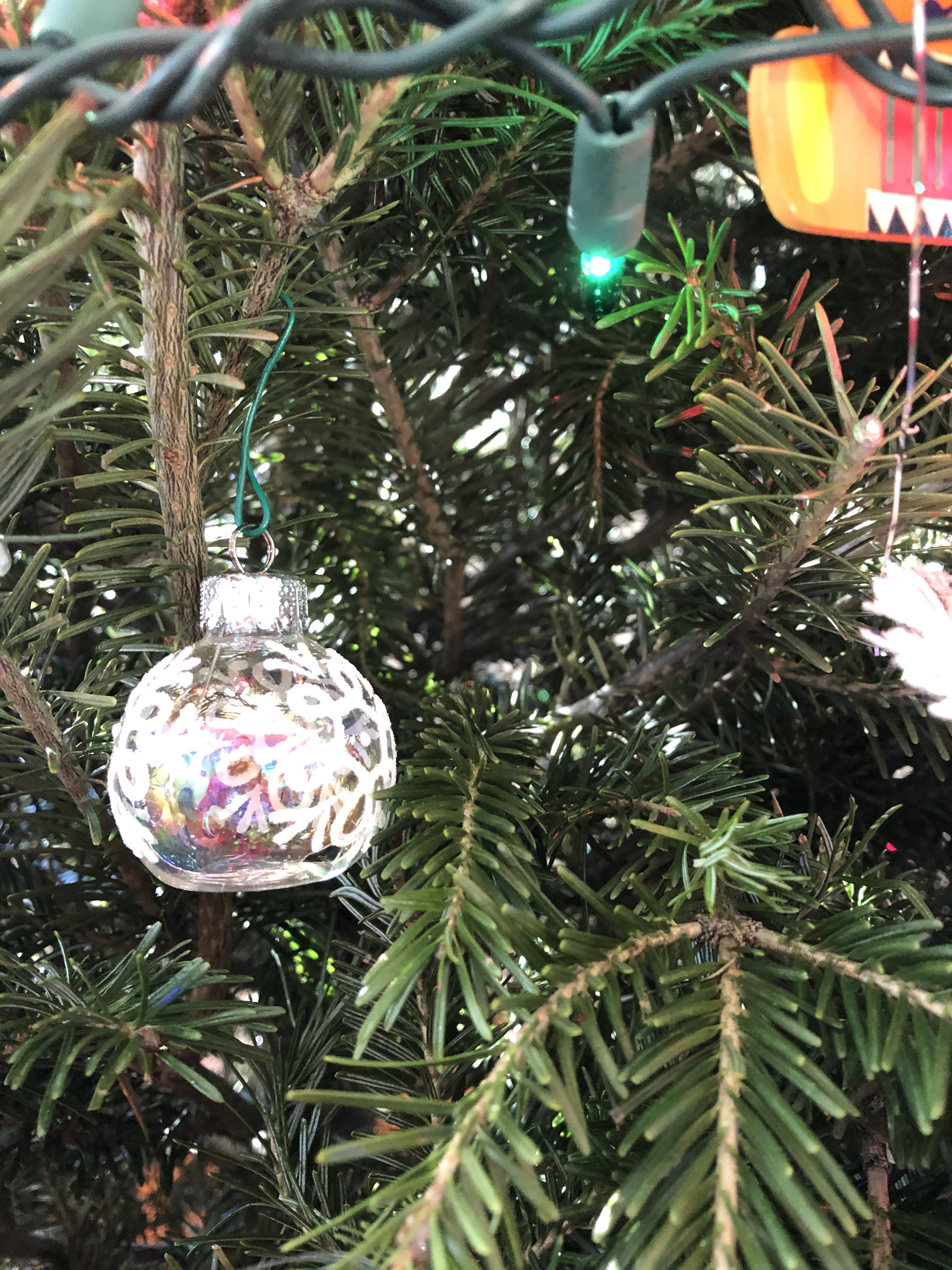
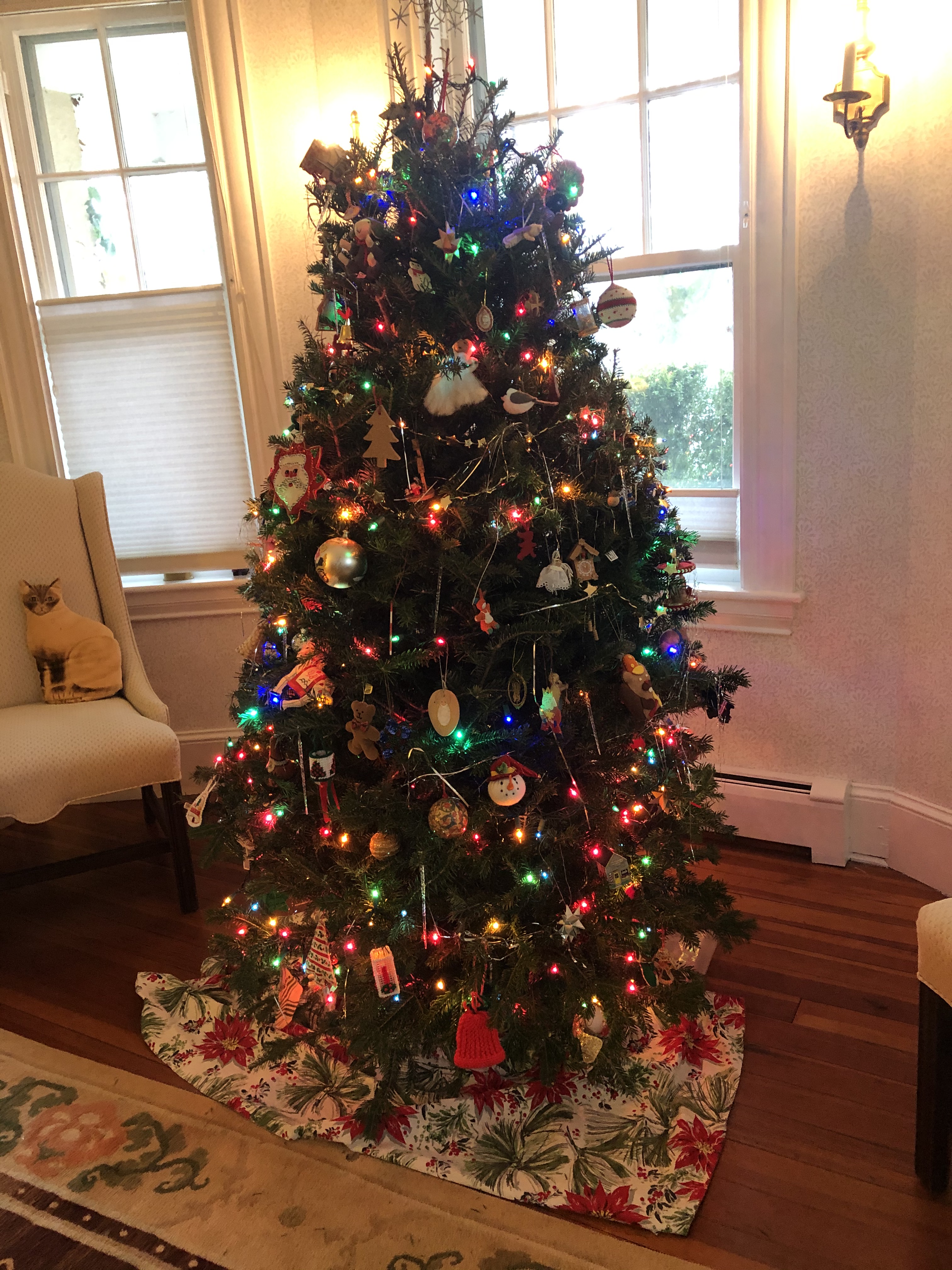
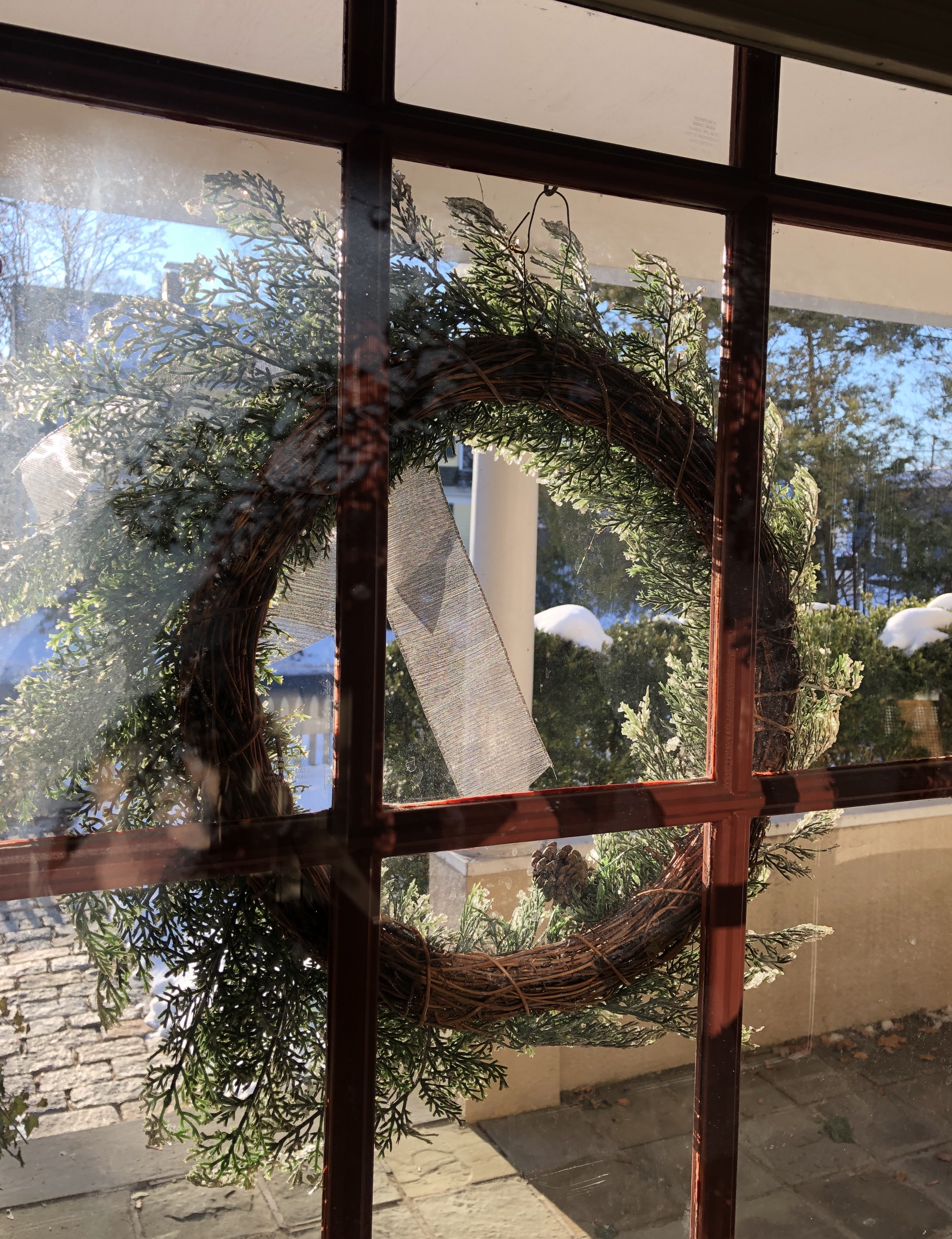
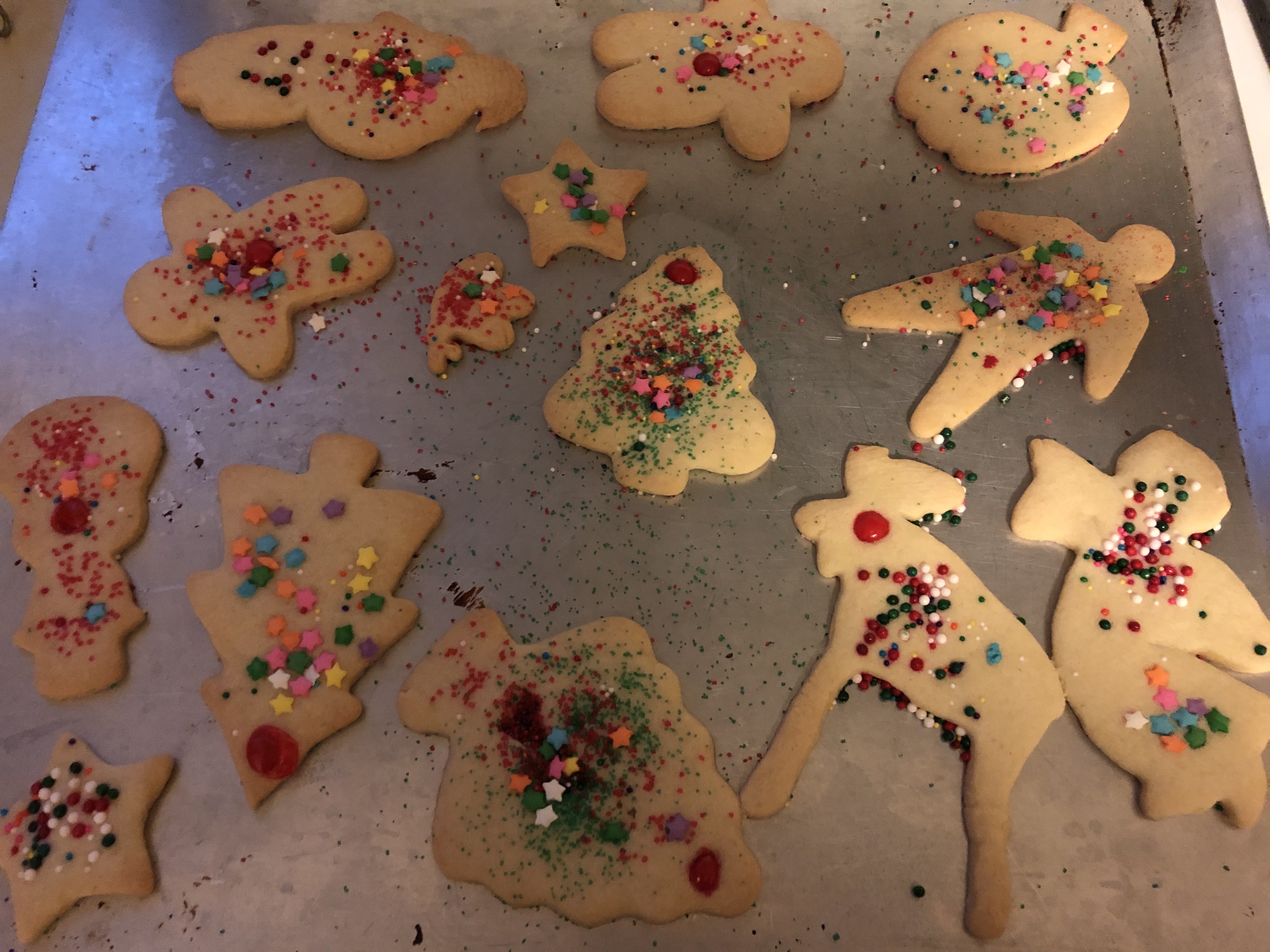
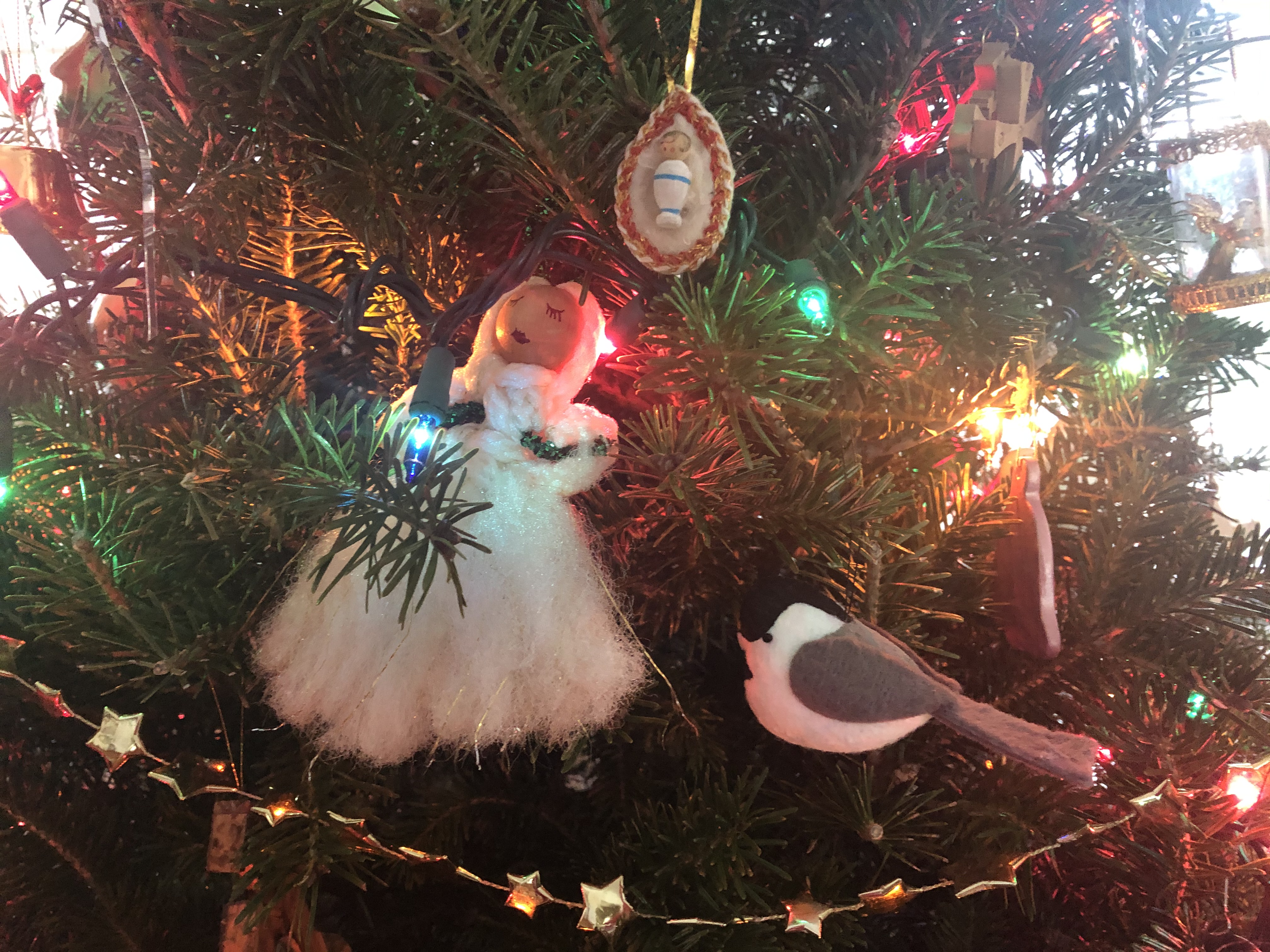
This year, while choosing ornaments for the tree, I felt particularly drawn to anything that looked like a bird or an angel. All the bird and angel ornaments went up. The small snowy ball also gives me a good feeling. It was from a winter wedding in 2011.

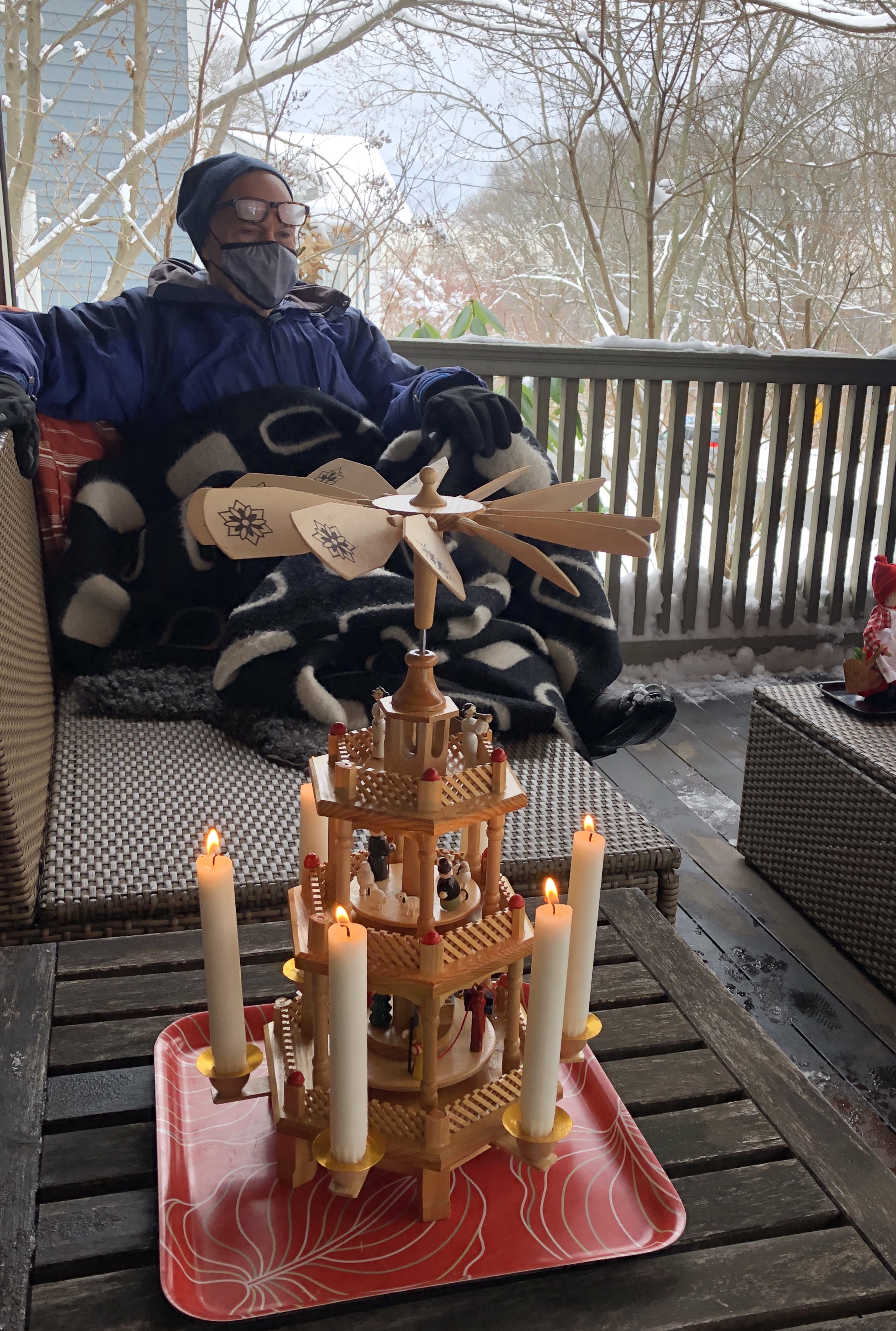
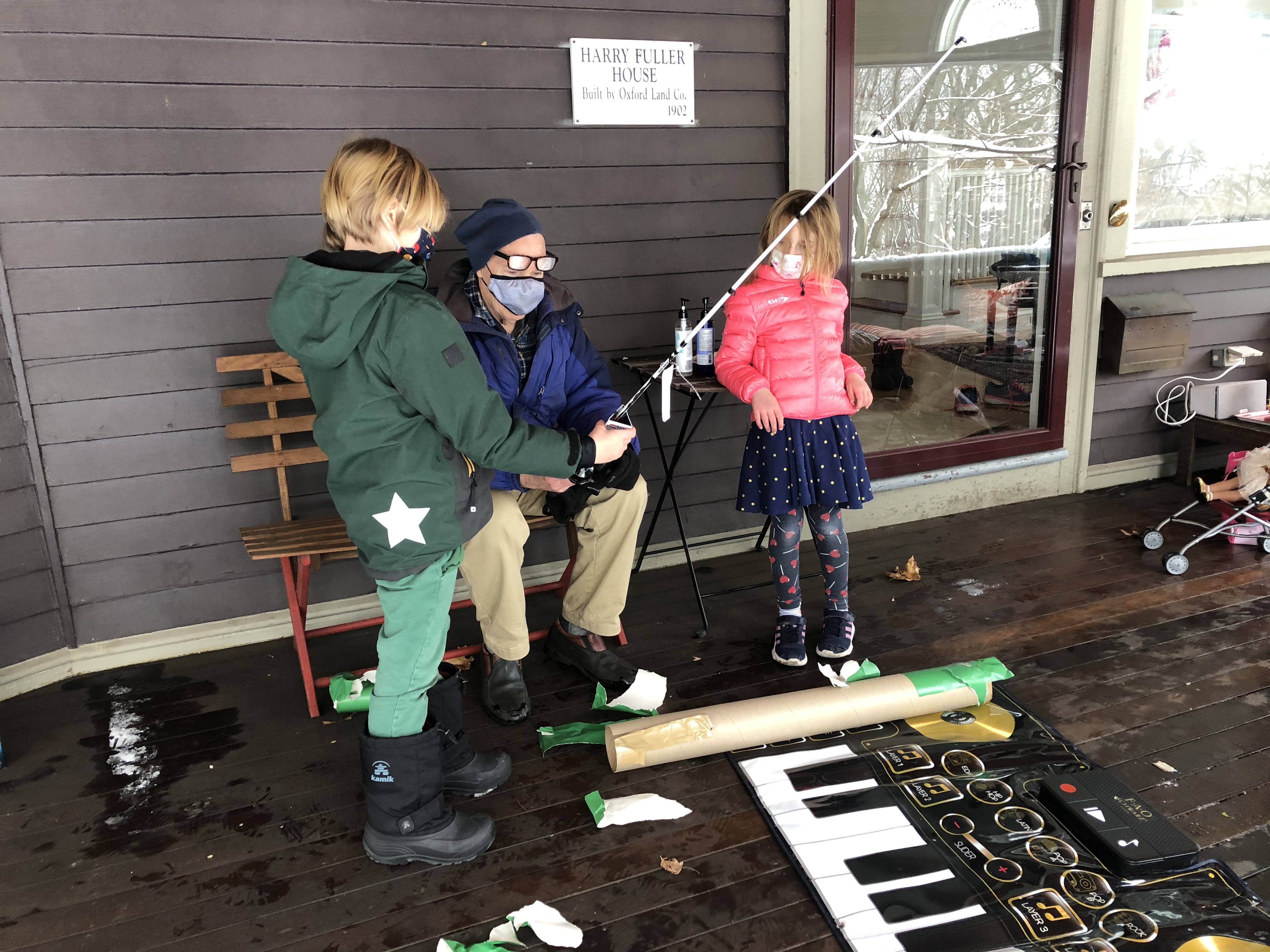
On Sunday’s trip to Rhode Island to deliver the kids’ presents, Suzanne prepped her porch with cozy, festive elements. The candelabra has a bit of a story. When Suzanne and John were still little kids, I bought two of these from a Lillian Vernon sale. When my children grew up and had their own homes, I gave each one their candelabra. They light theirs every year with their own children.

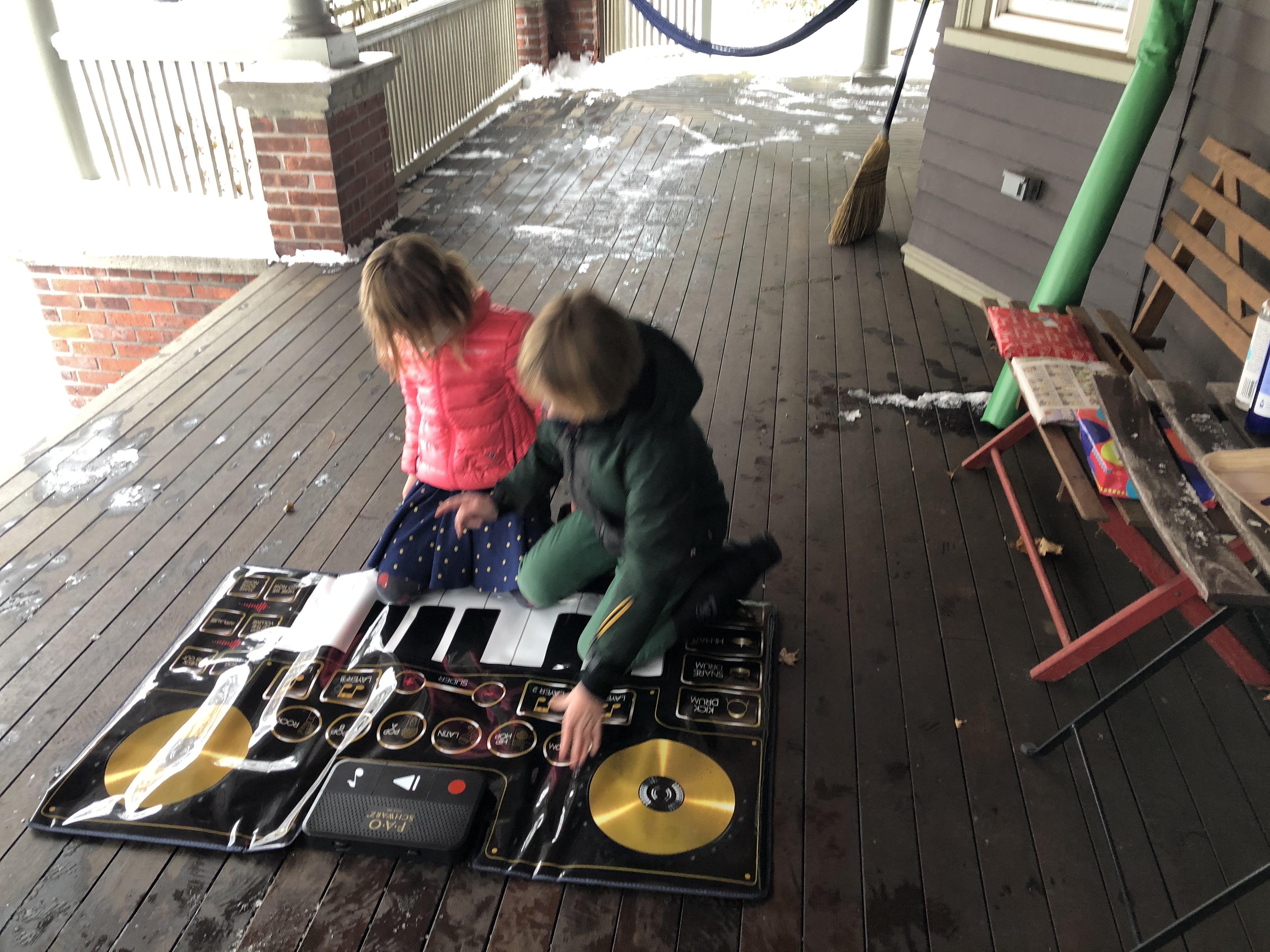
Suzanne and Erik allowed each kid to open two gifts early so Mormor and Morfar could see how they reacted while we were still at their house.

In addition to those Christams-y photos, I want to share a couple pictures from far-flung friends. Earle, in California, makes the magnificent wooden bowls on his lathe and is known to donate a bowl to one of his environmental causes at the holidays to delight the top donor.

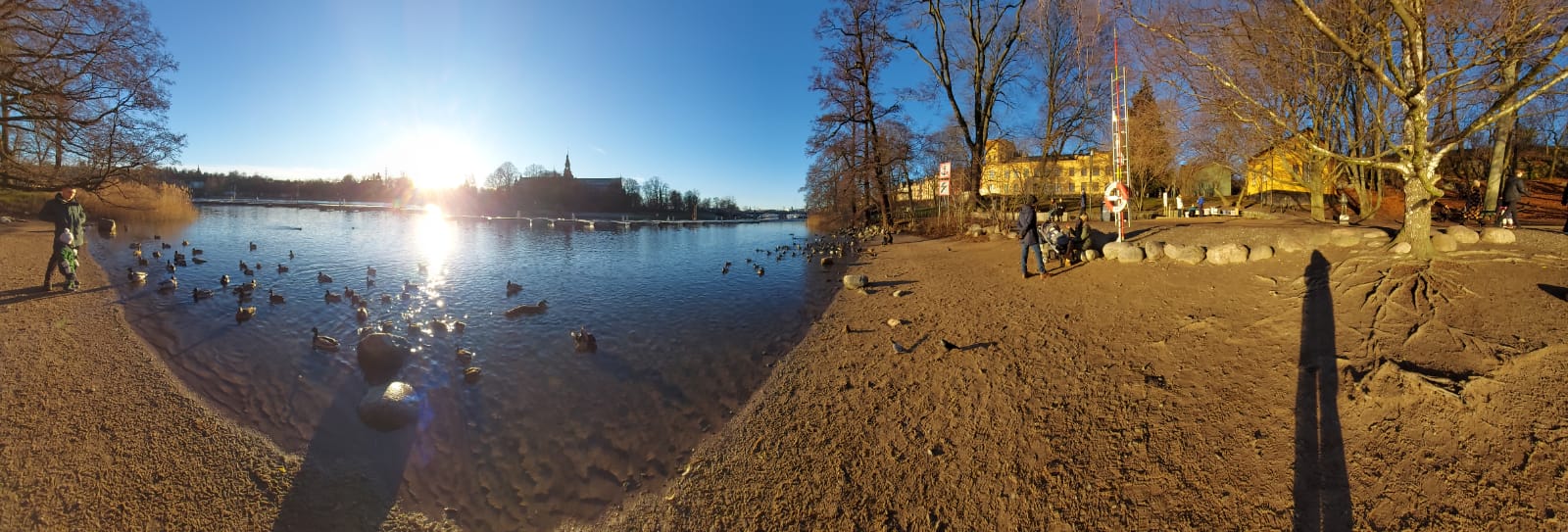
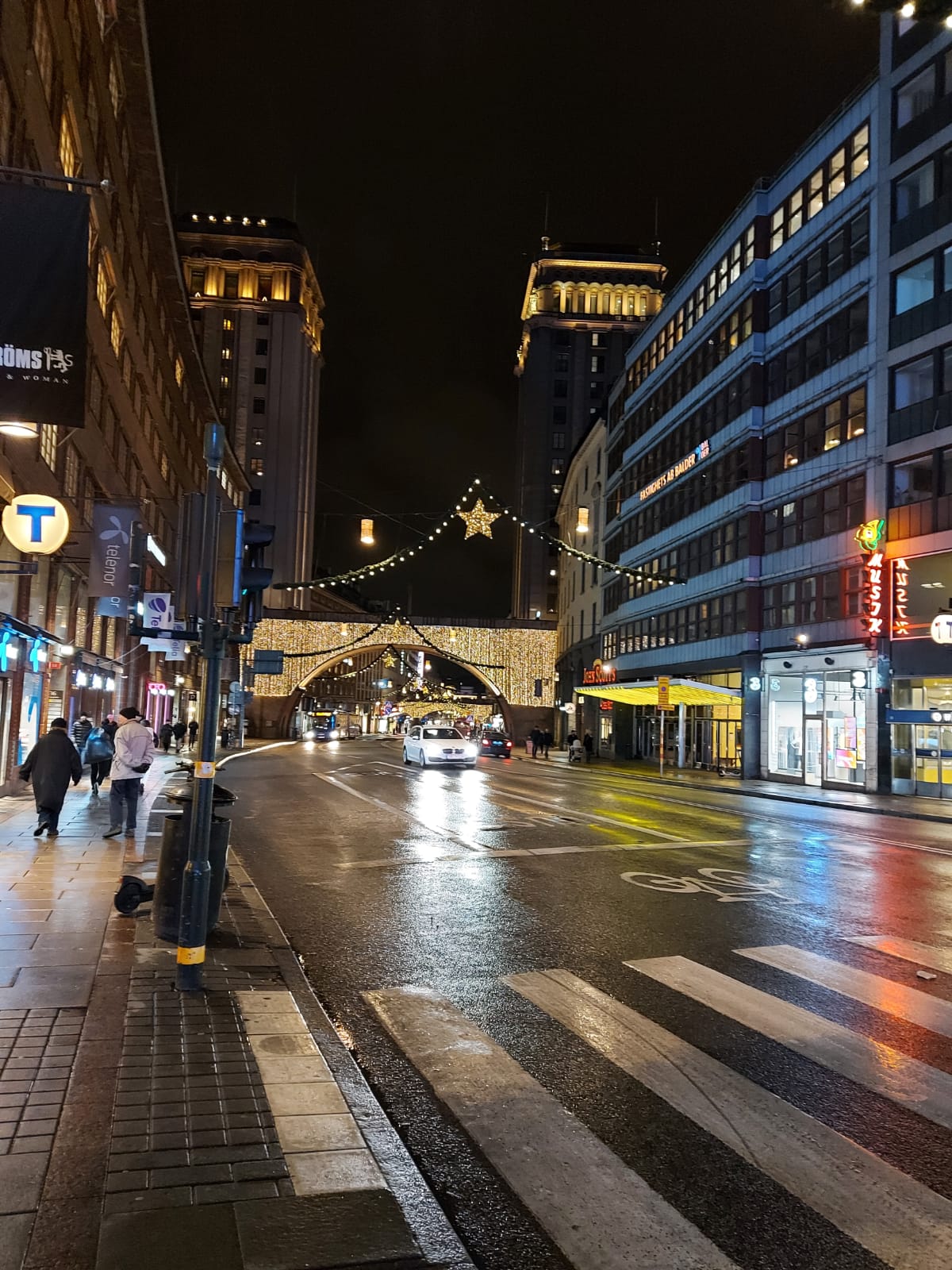
Stuga40 is in Stockholm, where there is almost no sun at this time of year. She caught a little today after weeks of overcast skies. I asked her take a picture of a shadow, but she said the sun is so low on the horizon now that she might not be able to. In the end, she was able to get some very, very long shadows! The sun set at lunchtime.

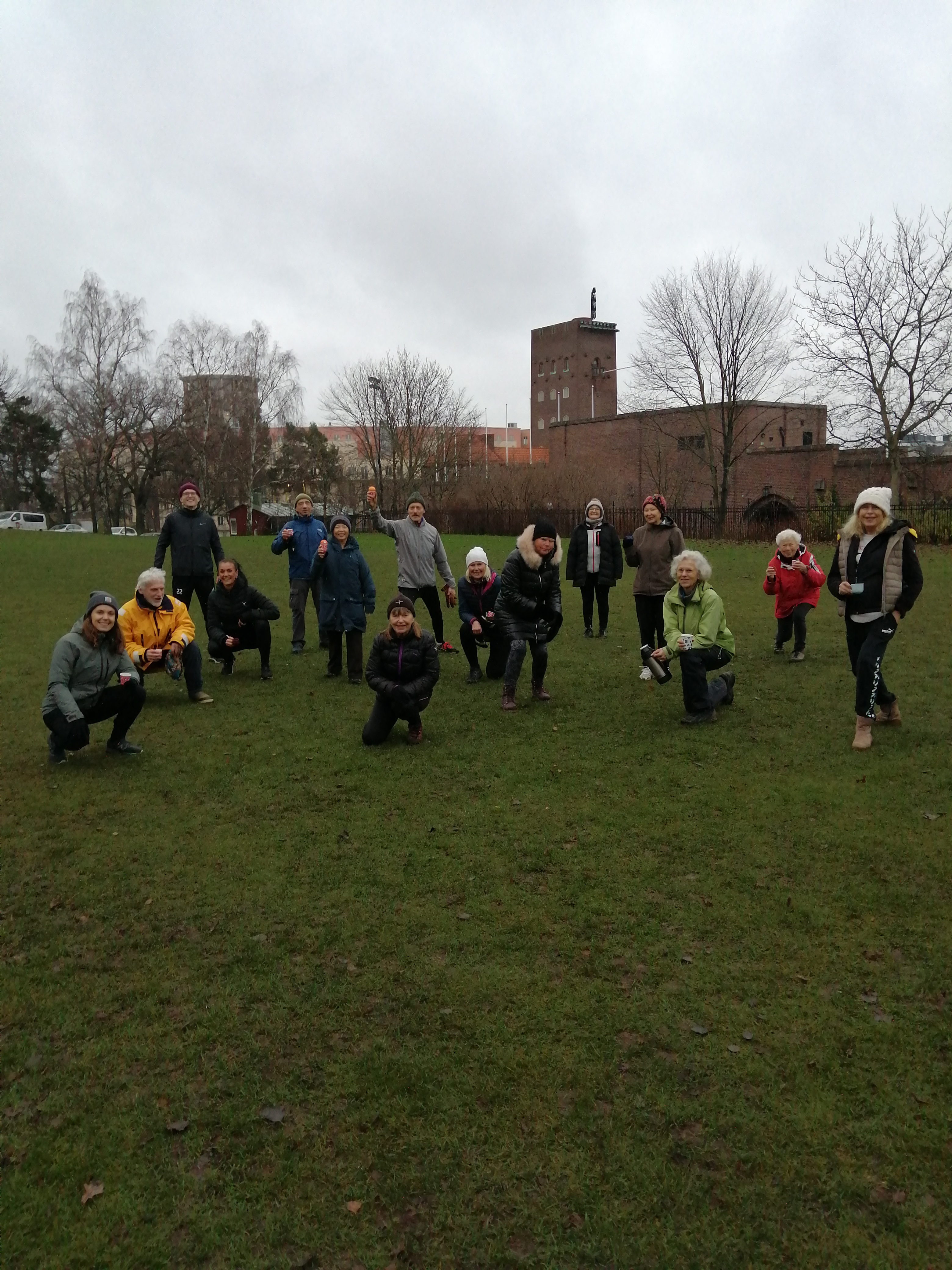
But you can trust those Swedes to light up their nights with outdoor decorations and to make some kind of fun during the day, too. Stuga40, in the light green jacket below, stepped into the instructor’s role for the outdoor exercise class after new Covid restrictions kept the leader from traveling by bus. The woman in red is 91, and rain or snow, they all keep up the outdoor exercising. Stuga40 says she leads the group using Spotify and a speaker from home. One day, some passing teens and a few boys from a school class joined in.

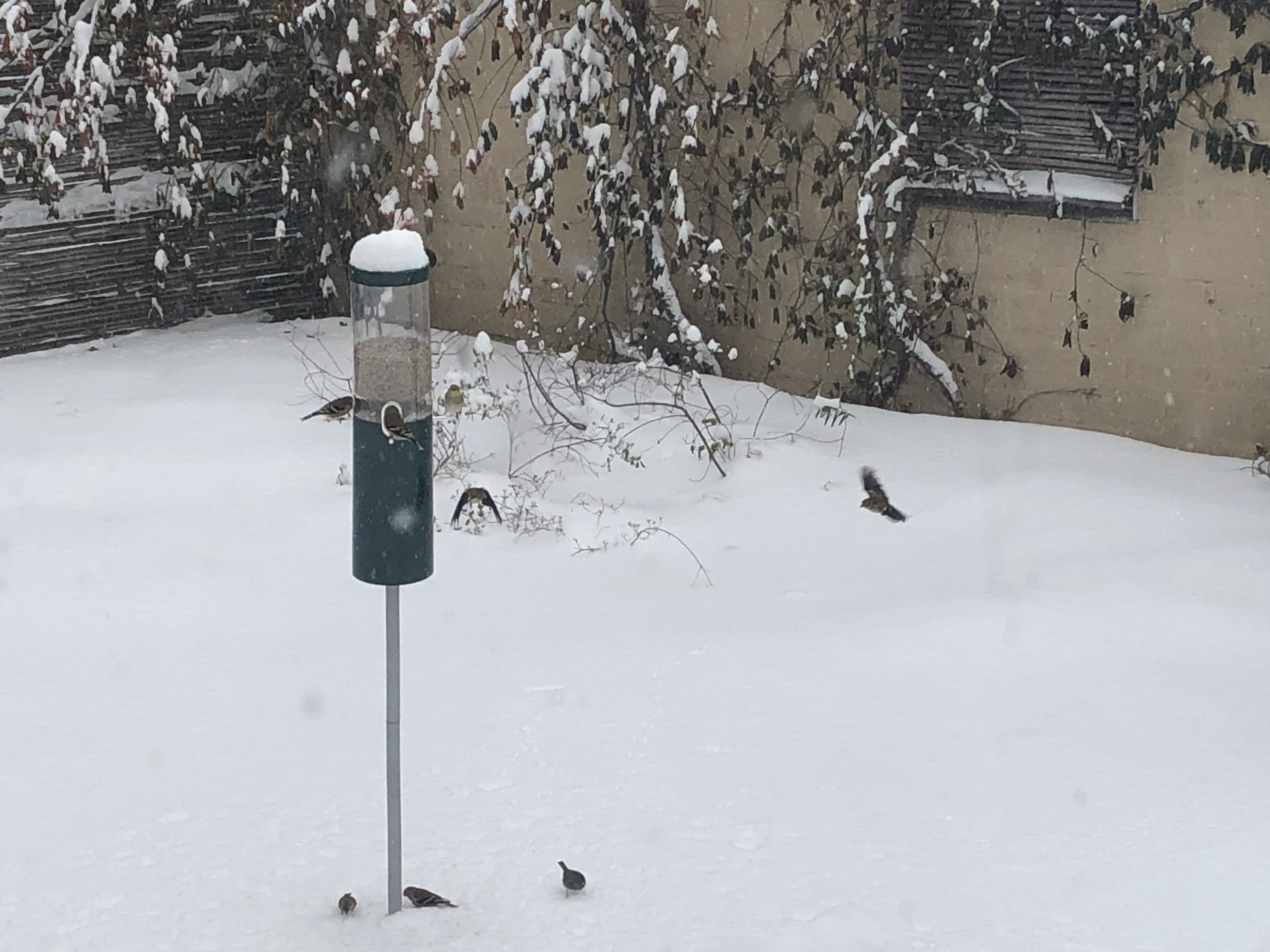
Back in wintry New England, you can see that our big new bird feeder is popular. It arrived the day before we had a snowstorm, and it’s such fun to watch. The gray squirrel tolerates a rabbit but chased away a gang of 11 mourning doves. Also very aggressive are the goldfinches. Does anyone know (Nancy G.? Kim?) if goldfinches are always aggressive? The first day at the feeder we had cardinals, bluejays, a purple finch, a house finch, juncos, and even a red bellied woodpecker. Now it’s mostly goldfinches. I love them, but I do wonder.

There’s also a little red squirrel that makes tunnels under the snow and pops up all over the yard like a gopher.

Happy Holidays to Everyone, wherever you are and whatever your weather!

Read Full Post »

The more the media covers indigenous activities, the more we learn what we’ve been missing. There is so much wisdom embedded in tribal memory, especially wisdom about taking care of the natural world. First step: having the right attitude.

Jim Morrison writes at the Washington Post about a tribe in the Pacific Northwest that has a climate plan.

“For 10,000 years, the Swinomish tribe has fished the waters of northwestern Washington, relying on the bounty of salmon and shellfish not only as a staple of its diet but as a centerpiece of its culture. At the beginning of the fishing season, the tribe gathers on the beach for a First Salmon ceremony, a feast honoring the return of the migratory fish that binds the generations of a tribe that calls itself the People of the Salmon.

“At the ceremony’s conclusion, single salmon are ferried by boat in four directions — north to Padilla Bay, east to the Skagit River, south to Skagit Bay and west to Deception Pass — and eased into the water with a prayer that they will tell other salmon how well they were treated.

“In recent years, though, the tribe’s harvest, diminished by vanishing habitat and warming waters fueled by climate change, hasn’t been sufficient to feed the hundreds of people who come to pay homage to their ancestors and to the fish that sustained them.

“ ‘We don’t have that abundance anymore,’ said Lorraine Loomis, an elder who has managed the tribal fishery for 40 years. ‘To get ceremonial fish, we buy it and freeze it.’

“For the Swinomish, perched on a vulnerable, low-lying reservation on Fidalgo Island, the effects of a warming world have been a gut punch. The tribe has responded with an ambitious, multipronged strategy to battle climate change and improve the health of the land and the water and the plants, animals and people who thrived in harmony for generations.

“In 2010, the Swinomish became one of the first communities to assess the problems posed by a warming planet and enact a climate action plan. An additional 50 Native American tribes have followed, creating climate strategies to protect their lands and cultures, ahead of most U.S. communities.

“The Swinomish see the tasks beyond addressing shoreline risk and restoring habitats. They look at climate adaptation and resilience with the eyes of countless generations. They recognize that the endangered ‘first foods’ — clams, oysters, elk, traditional plants and salmon — are not mere resources to be consumed. They are central to their values, beliefs and practices and, therefore, to their spiritual, cultural and community well-being.

“Loomis is 80. Every member of her family, from her grandfather to her nine great-grandchildren, has fished the tribe’s ancestral waters. She has watched over the decades as the salmon disappeared and her family turned to crab, geoduck and sea cucumbers. She’s seen the salmon season drop to only a few days per species from the eight months — May through December — of decades past in order to protect populations. The Skagit River is the last waterway in the continental United States that’s home to all five species of Pacific salmon.

“Progress has been slow; some researchers say it could be 90 years before the salmon recover. Loomis is taking the long view. ‘If I didn’t believe we would recover [the fishery], I guess I wouldn’t still be working on this,’ she said.

“In recent years, the tribe has fostered salmon recovery through a variety of projects. It has restored tidelands and channels, planted trees along streambeds to cool warming waters, and collaborated with farmers to increase stream setbacks to improve water quality.

Restoring salmon populations is just part of an ambitious climate action plan to blunt the effects of increased flooding, ocean acidification, rising river temperatures, more-destructive storms and habitat loss.

“They’re planning the first modern clam garden in the United States on the reservation’s tidelands, reviving an ancient practice. They’re monitoring deer and elk populations through camera traps to understand the climate change pressures and to inform hunting limits. And they have ongoing wetland restoration projects to explore preserving native plants and to help naturally manage coastal flooding.

“ ‘They’re doing really innovative climate adaptation,’ said Meade Krosby, a senior scientist with the Climate Impacts Group at the University of Washington. ‘They were way ahead of the curve. And that really shouldn’t be surprising, because the tribes have shown tremendous leadership in climate adaptation and mitigation.’ “

More at the Washington Post, here.

Read Full Post »

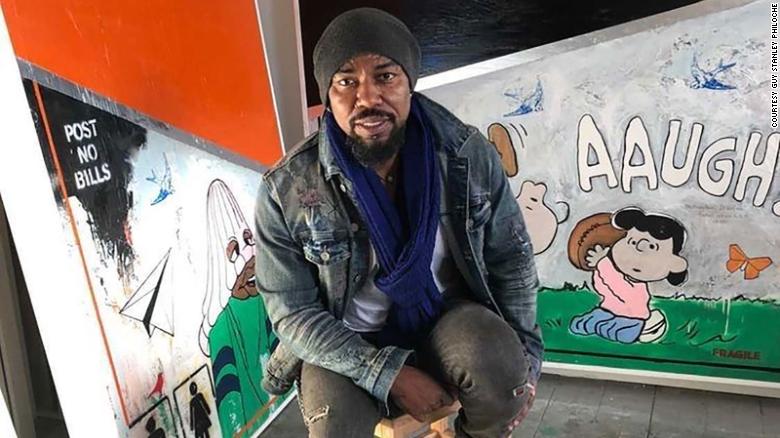
Photo: CNN “The Good Stuff”
Guy Stanley Philoche, seen here with his own work, has helped fellow artists survive the pandemic by buying their art.

No one can solve all the problems of the world, but if we each try to address a problem we see in our particular corner of the world, we can move civilization forward. In today’s story, an artist saw other artists struggling in lockdown and knew what he could do to help.

Alaa Elassar, writes at CNN’s “The Good Stuff,” “Painter Guy Stanley Philoche, a New Yorker known for his colorful textured abstract artworks, has spent more than $65,000 buying work from struggling artists affected by the coronavirus pandemic.

“Philoche, 43, has dedicated himself to seeking out artists from around the world who are unable to make ends meet and has so far purchased more than 150 artworks for up to $500 each. His own pieces sell for up to $120,000, according to Cavalier Galleries.

” ‘The art world is my community and I needed to help my community,’ Philoche told CNN. ‘People say New York is dead, but it’s far from that. There’s an artist somewhere writing the next greatest album. There’s a kid right now in his studio painting the next Mona Lisa. There’s probably a dancer right now choreographing the next epic ballet.’ …

“When the pandemic began to affect families across the country, many people found themselves unable to pay rent, afford WiFi for their kids’ distance learning, or even put food on the table.

“As the ability to afford the basic necessities slowly diminished, art became a luxury not many could splurge on. In turn, hundreds of thousands of artists and independent creators were left without an income stream in the midst of the chaos.

“One of these artists was Philoche’s own friend, who just had a baby and had lost his job because of the pandemic.

‘I told him, “Don’t worry, we’re New Yorkers. We’ve been through 9/11, the blackout, the market crash, we’ve got this,” ‘ Philoche said. ‘But he was scared, so I bought a painting from him to help him get through it.’

” ‘It was such a big deal for him at that moment, and that’s when I realized if he’s panicking like this, other artists are too.’ … So, Philoche took matters into his own hands.

“On March 20, he posted on Instagram a video asking artists who were feeling the effects of the pandemic to direct message him their work. Whenever he saw a piece he fell in love with, Philoche bought it and paid for it to be shipped to his East Harlem studio.

“Within months, artists from Los Angeles and Chicago to London and New Zealand — and even artists who were in prison — reached out to him with their stories and their creations. … ‘It meant a lot to me. I want to help as many artists as possible, to make sure they are able to buy groceries, or pay their rent, or get their kids diapers or formula.’

“For Tara Blackwell, an artist from Stamford, Connecticut, art is her sole source of income. The only way she can survive off her art is through showing her work to collectors at exhibits, galleries, and studio visits — all which stopped because of the pandemic. …

” ‘The struggle to make a living as an artist is something I’ve known from a young age. I’m used to the ups and downs, but this felt different. There were so many unknowns.’ …

“Philoche purchased ‘Free Speech’ for $500 from Blackwell’s ‘Corner Store’ series, in which she uses retro pop culture imagery from her childhood with graffiti influences and the incorporation of subtle social-political commentary. ‘His support meant the world to me at a time when things seemed really bleak.’ …

“When Philoche was 3 years old, his family immigrated to the US from Haiti with nothing to their name. ‘Leaving one country to come to another was difficult. I didn’t speak the language, I was awkward and weird and trying to find myself in a new country,’ Philoche said. ‘I learned the language by watching cartoons and reading comics, and found my voice by drawing Disney characters. It’s how it all started.’ …

“Philoche started off by sliding business cards under apartment doors and hopping from art gallery to art gallery in hopes of meeting interested collectors. ‘Fast forward twenty years, I’m in the game,’ he said. ‘But throughout those years, I had no one open a door for me. It was me going through the back door, the window, until I found a way in the room by myself. Now that I have a seat at the table and I actually have a voice, I vowed to myself to open that door for other artists.’

“After struggling for years to make a name for himself, the artist now has a philosophy: ‘Sell a painting, buy a painting.’ ”

More at CNN, here.

Read Full Post »

I’ve been following artist Diana Beltran Herrera on Instagram since I first blogged about her, here.

Recently her Instagram account led me to news about a children’s museum under development in Singapore. She wrote, “The Singapore commission I have been working over the past months is completed. This will be my first solo show in Singapore, to open early 2022, and it is the first exhibition of the new Children’s museum. …

“It is very important for me to educate through my work, make information accessible for all of us, and offer a new way to interact with nature. … Art is a very powerful medium of communication that can be used to discuss important subjects about our beautiful world.”

At Singapore’s ‘zine Mothership in March, Melanie Lim reported on an opening planned for 2021, but coronavirus seems to have moved the target.

“The Singapore Philatelic Museum (SPM), which is currently closed for redevelopment, will re-open as a dedicated children’s museum, Minister for Culture, Community and Youth (MCCY) Grace Fu announced,” she wrote. “Speaking at MCCY’s Committee of Supply debate on Mar. 6, Fu elaborated that children will be able to ‘learn about a wide range of themes, including the heritage and culture of Singapore and the region, by playing with interactive and immersive exhibits.’

“According to the National Heritage Board (NHB), the new children’s museum will serve as a ‘starter museum’ to introduce young visitors and their families to the museum-going experience, and offer children’s programming all year round.

“Targeted at children aged 12 and below, it will also present them with the opportunity to learn about themselves, their nation and their place in the world. … For instance, there will be a permanent exhibition on ‘Singapore, Our Home,’ where children can learn how early pioneers lived and worked, and role-play as hawkers, coolies and merchants, Fu revealed.

“Meanwhile, SPM’s philatelic collection will continue to be used alongside other artifacts to support children’s learning in the new museum.

“Stamps make excellent educational resources for children who find them attractive and accessible, NHB added, and they will be part of the museum’s refreshed permanent galleries and special exhibitions.

“SPM will also complement National Gallery Singapore’s Keppel Centre for Art Education and Singapore Science Centre’s KidsSTOP, among others to create a more diverse and vibrant museum scene in Singapore.”

I admit to knowing little about Singapore other than that a childhood friend of Suzanne’s lives there now and that the people hang messages on outdoor trees at Christmas. I’m glad to be a little more au courant now.

More at Mothership, here.

Read Full Post »

Holidays go on, one way or another. On Friday, our church had an online carol sing (secret of success: only one person unmuted at a time), and I was able to see my grandchildren in two different states mouthing the words and dancing. Someone else I know watched her friend’s son perform (virtually) as the Prince in a local Nutcracker. In Miami, another Nutcracker is taking place outdoors.

Gia Kourlas reports at the New York Times, “Lourdes Lopez, the artistic director of Miami City Ballet, is facing a new unknown. It’s a fear she’s never had. And it stresses her out.

“ ‘I just hope that at the last minute that they don’t close us down,’ she said. …

“Against the odds during a pandemic, the company will present its reimagined production of ‘George Balanchine’s The Nutcracker’ this month. Normally, Ms. Lopez said, her worries would fall more along the lines of, are the costumes going to be ready? …

“Now she is thinking about the backstage choreography of the crew and the dancers, since masks will not be worn during performances. ‘We have to make sure that when you’re exiting, no one is in that wing,’ she said. …

“ ‘The Nutcracker’ ” is more than a beloved holiday staple. For ballet companies across the country it’s a financial lifeline that supports the repertory for the rest of the year. This year, most productions have been relegated to virtual offerings, but Miami has something that some other cities, like New York, don’t: warm weather at holiday time.

“The company’s production of Balanchine’s 1954 classic already pops with an abundance of color and heat. In 2017, it was given a vibrant Miami makeover, with designs and costumes by Isabel and Ruben Toledo and projections by Wendall K. Harrington. …

“Miami City Ballet’s production is, Ms. Lopez noted, a true community effort. ‘Think of a hospital, a government agency, a real estate investment firm and a ballet company somehow coming to the table,’ she said. ‘Never in my wildest dreams would I ever, ever have thought of that.’

“She hadn’t planned for this to happen.

‘This is not because I’m a visionary,’ Ms. Lopez said. ‘It was just opportunities that arose and it came, honestly, from a “What can we do?” ‘ …

“It was Ms. Harrington who, over the summer, suggested to Ms. Lopez that the company should present a ‘Nutcracker.’ … ‘I’m not like the hugest fan of “The Nutcracker” in all the world, but I do know of its healing effects,’ she said. ‘And right now we need a little Christmas, as the song goes.’ …

“The company has teamed up with a health care partner, Baptist Health South Florida, and abides by a stringent testing and safety protocol. Masked audience members will be seated in socially distanced pods that accommodate up to four people each. The intermission has been cut to five minutes — more of a pause — and the idea is to get people in and out efficiently.

“Ms. Lopez credited early actions that the Miami City Ballet organization took when the coronavirus forced a shutdown in March. It quickly formed a Covid task force, which led to engaging an industrial hygienist who examined the studios for safety. …

“Ms. Lopez was able to hold the school’s summer course — an indoor, in-person program for 100 students — for five weeks in July. ‘We were biting our nails because Florida in July was a red-hot state,’ she said. ‘And we didn’t have one single case in those five weeks. We sent the staff home. You couldn’t come into the building if you weren’t part of the school or faculty.

“ ‘And so there was a real sense that we could do this, that we knew how to do it safely in the building. That’s really how it started.”

“When Downtown Doral Park became available, Ms. Harrington refocused her thinking. … ‘I had to look through the ballet and figure out how the storytelling can continue without the numbers of people that you would want in the party scene and the battle scene. … One big change is an Act 2 overture in place of the young children who usually play Angels. For it, she created a journey from the snow scene that ends Act 1 to the beach, ‘because it’s Miami,’ Ms. Harrington said. …

[Ms. Harrington] was always baffled by the abrupt change in setting, from the Act 1 snow scene to Act 2’s tropical Land of the Sweets. ‘It was snowy and now there’s a pineapple onstage,’ she said. … ‘It was within my grasp to fill in the gaps. …

“ ‘I felt like this could be a thrill. I hope I’m right. I believe in theater and art. … I just needed it to happen.”

More here.

Read Full Post »

One of the many downsides of this dratted pandemic is that, for some schools, snow days are a thing of the past. My Massachusetts grandchildren had school online after the blizzard. The Rhode Island ones were told to go out and play. Play matters.

Andreas Wagner writes at Nautilus, “Because thinking minds are different from evolving organisms and self-assembling molecules, we cannot expect them to use the same means … to overcome deep valleys in the landscapes they explore. But they must have some way [and] one of the most important is play.

“I don’t mean the rule-based play of a board game or the competitive play of a soccer match, but rather the kind of freewheeling, unstructured play that children perform with a pile of LEGO blocks or with toy shovels and buckets in a sandbox. I mean playful behavior without immediate goals and benefits, without even the possibility of failure.

“Play is so important that nature invented it long before it invented us. Almost all young mammals play, as do birds like parrots and crows. … The world champion of animal play may be the bottlenose dolphin, with 37 different reported types of play. Captive dolphins will play untiringly with balls and other toys, and wild dolphins play with objects like feathers, sponges, and ‘smoke rings’ of air bubbles that they extrude from their blowholes. …

“Where the benefits of play have been measured, they can make the difference between life and death. The more feral horses from New Zealand play, for example, the better they survive their first year. Likewise, Alaskan brown bear cubs that played more during their first summer not only survived the first winter better, but also had a better chance to survive subsequent winters.

“Some purposes of such play have nothing to do with mental problem solving. When horses play, they strengthen their muscles, and that very strength can help them survive. When lion cubs play-fight, they prepare for the real fights. … In mammals, play goes beyond mere practice of a stereotypical behavior, like that of a pianist rehearsing the same passage over and over again. When mammals stalk, hunt, and escape, they find themselves in ever-new situations and environments. …

Play creates diverse behaviors, regardless of whether that diversity is immediately useful. It prepares the player for the unexpected in an unpredictable world.

“That very flexibility can also help the smartest animals solve difficult problems. A 1978 experiment demonstrated its value for young rats. In this experiment, some rats were separated from their peers for 20 days by a mesh in their cage, which prevented them from playing. After the period of isolation, the researchers taught all the rats to get a food reward by pulling a rubber ball out of the way. They then changed the task to a new one where the ball had to be pushed instead of pulled. Compared to their freely playing peers, the play-deprived rats took much longer to try new ways of getting at the food and solving this problem. …

“One hallmark of play is that it suspends judgment so that we are no longer focused on selecting good ideas and discarding bad ones. That’s what allows us to descend into the valleys of imperfection to later climb the peaks of perfection. But play is only one means to get there.”

Read more, including ideas on the role of dreams and mind-wandering (sometimes called incubation), at Nautilus, here.

Read Full Post »

Photo: Ismoon
The earliest recognized form of “written” communication may have been small bits of clay, called tokens. This charming one is from the Indus Valley.

Nowadays, one reads almost too much about artificial intelligence, AI. I myself have an ever increasing list of things I’d rather not have AI managing for me. But using it to translate ancient texts is one application that seems to make perfect sense.

Ruth Schuster writes at Haaretz, “Understanding texts written using an unknown system in a tongue that’s been dead for thousands of years is quite the challenge. Reconstructing missing bits of the ancient text is even harder. …

“Filling in missing text starts with being able to read and understand the original text. That requires much donkey work. Now an Israeli team led by Shai Gordin at Ariel University in the West Bank has reinvented the donkey in digital form, harnessing artificial intelligence to help complete fragmented Akkadian cuneiform tablets.

“Their paper, ‘Restoration of Fragmentary Babylonian Texts Using Recurrent Neural Networks,’ was published in the Proceedings of the National Academy of Sciences in September.

“ ‘Neural networks’ … means software inspired by biological nervous systems. The concept dates back more than 70 years. … The base concept is to teach machines to learn, think and make decisions. In this case, the computer decides on the plausible completion of missing text. …

“Gordin and the team feed their machine transliterations of the extant Babylonian texts i.e., what the text would have sounded like.

“Then what? When it comes to missing bits in a papyrus or tablet, humans can intuit that “’…ow is your moth…’ isn’t a query into the well-being of your mothball.

With machines, it’s all about mathematics and probabilities based on knowledge gained so far. …

“It may have been trading that inspired the earliest recognized form of communication: ‘pseudo-writing’ on small bits of clay in Mesopotamia around 7,000 years ago. The clay bits, called tokens, were shaped into simplistic imagery such as a cow or other ancient commodities. …

“Then we start seeing abstract signs; repetitive strokes or depressions are interpreted as numbers (price, perhaps); and possibly also personal names, using the first sounds of different imprints to put together words you can’t draw. …

“Anyway, after pseudo-writing came proto-writing: figurative proto-cuneiform inscribed on tablets, which arose about 5,500 years ago in the city of Uruk. … Within mere centuries, proto-cuneiform evolved to become increasingly schematic and Sumer was apparently where it happened, [Gordin] says. And figurative hieroglyphic script began to appear in ancient Egypt at about the same time, about 5,000 years ago. …

“By the time cuneiform became a thing, writing had passed the stage of ‘Sheep : four : Yerachmiel’ and reached the stage of official records, letters and formulaic recounts of the wondrousness of the ruler. …

“For cuneiform, we have the gargantuan multilingual text at Behistun, Iran. Darius the Great had his exploits described in three different cuneiform scripts. [The] Behistun text was monumental: 15 meters (49 feet) high by 25 meters wide, and 100 meters up a cliff on the road connecting Babylon and Ecbatana, all to describe how Darius vanquished Gaumata and other foes. …

“And over decades, linguists slowly interpreted the languages of Babylon and Assyria, thanks to Darius’ monumental ego. …

“Interpreting a dead language is a mathematical game, Gordin says. … Neural networks are a computerized model that can understand text. How? They turn each symbol or word into a number, he explains. …

“When humans reconstruct missing text, their interpretation may be subjective. To be human is to err with bias, and quantifying the likely accuracy of the completion is impossible. Enter the machine. …

“The machine proved capable of identifying sentence structures – and did better than expected in making semantic identifications on the basis of context-based statistical inference, Gordin says. Its talents were further deduced by designing a completion test, in which the machine-learning model had to answer a multiple-choice question: which word fits in the blank space of a given sentence.”

Not sure how many readers are into that kind of thing, but I do find it intriguing. More at Haaretz, here.

Read Full Post »

Back in January, I read Michelle Herman’s Slate column about taking up ballet late in life, and I’ve been wondering if she’s kept it up during the pandemic. Even professional ballet dancers have found it challenging to practice.

Here is how Herman got into ballet at age 62.

“The dance studio had just opened on my corner — I didn’t even have to cross a street to get there. So what I asked myself was just how lazy I would have to be not to try a class. I had fond, if vague, childhood memories of the weekly modern dance classes I took for five or six years at the famous Marjorie Mazia School in Brooklyn. …

“It had left its mark: The thought of a dance class did not fill me with despair or fury the way a Pilates class or the contemplation of a gym membership would have. Plus, I enjoyed dancing at parties. So maybe this would be fun, I told myself. Maybe I wouldn’t hate it.

“I didn’t hate it. I didn’t hate it so much that almost right from the beginning I was in tears. … There is no reason it should have felt so right to have one hand on the barre as I extended a foot that I was concentrating very hard on simultaneously turning out and pointing — concentrating not only on that pointed foot, but also on muscles throughout both that leg and the other leg, the one that was supposedly just standing still. And on my right arm in second position.

“I believe what happened that day was that I fell in love.

“There were only four of us in the room that first day. Three students (two old, as in over 50, and one young, as in under 20) and Filippo Pelacchi, the teacher (who was very young himself, although not in dancer years—he had just turned 28).

“If I cannot recreate every one of the 75 minutes of that first adult beginner class I took in the summer of 2017, it’s because by now I’ve spent approximately 84,000 more minutes in that studio—that is, 1,400 hours, something like 950 dance classes plus rehearsals for performances, and those minutes run together in my mind. But I do know this—that in that very first class, …  I had a moment of what seemed like perfect clarity: My body and my mind were working as one. …

“I’m a writer and a teacher, so all my work is mental work. But in ballet there was what seemed to me a remarkable twist: I was living that mental work in my body. In my body — with which, even more remarkably (even more improbably), I was making art. …

“In ballet, there is no separating the body and the mind. I have to think hard to create the shapes, to make the movements, of ballet. Even standing still in first position — which to the observer doesn’t look like anything — requires the engagement of muscles that will not turn on without my express command, muscles that do not engage reflexively the way my muscles do when going about ordinary tasks. There is nothing ordinary, nothing of the daily life, about ballet. …

“And there is this: Almost from the start I saw that ballet would fulfill a longing I’d had as far back as I could remember, a longing that accounts for the pleasure I take in hosting and leading a Passover Seder although I am a firmly nonbelieving Jew. …

“Sometimes the ballet advice sounds a lot like life advice.

  • Build a solid structure, Filippo tells us, and then find the open spaces where you can experiment, be yourself, and make it your own.
  • With stability comes freedom. If you are strong in your center, the rest can move freely around it.
  • Everything is connected. Everything you do is informed by what you have done before.
  • Commit to the transitions, he urges us. Even though they are not the highlights, they are the platform for the highlights.
  • And: No matter what happens, stay in it. Even if you forget or make a mistake, keep moving. “Here I am!” Own it. And then find your way back in.
  • Search every moment for what is there. Especially in the pauses, you have time to find something new, the next thing.”

More at Slate, here.

Art: Natalie Matthews-Ramo

Read Full Post »

My friend Jeanne has been investigating more-sustainable living and has experimented with producing zero waste. I’m impressed. My small efforts have been almost completely undermined by the pandemic and all the plastic containers that come with takeout — takeout being both a break from cooking and support for our local restaurants.

Even the folks at Plastic Free Hackney, an inspiring effort in an English town, admit that it’s all harder during a pandemic. Still, idealists soldier on and will eventually triumph.

Jessica Wolfrom writes at the Washington Post, ” ‘It was kind of like a slow-moving coup on my part,’ said Anna [Marino], 32, a former seller on the website Etsy, who started researching the meat industry and the zero-waste movement. Even though they were only a family of four — [Anna and Justin] have two children, ages 6 and 3 — they knew they needed to change their lives.

“Paper towels and single-use napkins were the first to go. Then went the plastic. But as they traded traditional products for more eco-friendly items, they quickly realized that their reliance on online shopping was another problem.

“ ‘It almost defeats the purpose,’ said Justin, 43, who previously worked in cybersecurity. ‘I’m ordering something to save the planet, but in order for it to get here, it’s creating a pretty nasty carbon footprint. … And so, we were like, well, there needs to be a store around here.’

“Enter Mason & Greens, the Washington region’s first zero-waste store. … The airy shop is equal parts organic grocer and minimalist boutique, selling items such as package-free shampoo bars, organic produce and drip-irrigated olive oil. Hanging plants and shelves lined with stainless steel containers and books titled ‘All You Need Is Less’ offer shoppers a glimpse into the world of low-waste living. …

“ ‘You know it’s a movement when you don’t know everything that’s going on,’ said Gary Liss, vice president of Zero Waste USA, a nonprofit organization dedicated to reducing waste, who described the growing interest in low-waste living as a sea change in the relationship between people and things.

“Americans throw away about five pounds of trash per person per day, according to the Environmental Protection Agency — 12 percent of which is plastics. … Scientists estimate that up to 91 percent of plastic is never recycled, leaving the rest to burn in incinerators, clog landfills or degrade in the oceans. Scientists have even found microplastics in air, water and food. …

“The coronavirus pandemic has only increased reliance on disposable plastics. Billions of masks and gloves made from plastics and used by health-care workers, first responders and essential workers are being discarded every month, studies show. …

“Mason & Greens, which is based in part on the bulk model, makes a point of avoiding plastics at nearly every turn. Beans and grains come in gravity dispensers. Produce is package-free. Pomberry Kombucha and pinot noir stream from a tap. The spices are self-serve.

“Customers aren’t required to bring their own bags or refillable containers, but the couple said many customers do. The shop employs a tare system that logs the weight of an empty container and then calculates the price of products by the ounce. …

“The couple welcomes newcomers into their waste-free world, but Anna routinely castigates vendors for their packaging practices — she is not above shaming suppliers who send items wrapped in plastic. … ‘I have to go through so much to get a product into the store that’s zero-waste or low-waste.’

“But living a waste-free life might soon become easier. As consumers demand more sustainable options, brands large and small are shifting to make sustainability central to their strategy. Major companies such as Unilever have pledged to halve the use of virgin plastics in packaging by 2025. Walmart, Target, CVS and other retailers are working to develop an environmentally friendly alternative to the plastic bag. And other companies are starting circular delivery services — an updated version of the 1950s milkman — where groceries and goods are packaged in reusable containers that are returned empty.”

Signing up for the guy who brings milk in reusable bottles is one way I’ve actually gotten better at controlling waste in the pandemic. Thanks to my daughter-in-law, I got in under the wire with the dairy farm as other people started lining up for deliveries, too.

Read about a variety of zero-waste shops and the blogger who fit all the waste she produced over four years into a 16-ounce Mason jar at the Washington Post, here.

Read Full Post »

A few nights ago, Suzanne attended a drive-in theatrical performance in Providence and posted photos to her Luna & Stella account on Instagram. She went “with” a friend. That is, Suzanne was in her car, and her friend was in another car. The husbands were at home babysitting.

Suzanne’s understanding from the article she had read was that the play had something to do with an illness, maybe not too far from what we are all dealing with now. She had no idea that the illness in question was the one my sister died of a year ago. All illnesses are metaphors these days.

From Susan McDonald’s special report to the Providence Journal: “Two years ago, when Josh Short assumed a role in ‘Constellations,’ it was in the black-box space of Wilbury Theatre Group, where he is artistic director, framed by walls and a ceiling, the audience an arm’s length away.

“When he next slips into the persona of Roland, half of a romantic duo grappling with love and pain against the shifting backdrop of the cosmos, there will be a limitless feeling to the stage and, hopefully, a twinkling drape of actual stars overhead.

“Wilbury and Short teamed with WaterFire Providence to bend the constraints of traditional theater environs and follow the governor’s COVID-safety directive in taking the show outdoors.

“Fueled by a grant from the state’s Take it Outside initiative, the groups offer a new take on Nick Payne’s play ‘Constellations’ through Dec. 19 [in Spanish on Dec. 18, thewilburygroup.org]. Audiences will stay in their vehicles and listen through their radios while a production crew streams multiple angles of the performance on a 40-by-30-foot screen.

“While ‘Constellations’ is staged simply without set or props, Short says the challenge in restaging it has been to maintain the intimate feel of romance. …

‘We stylized it to combine original elements because the intimacy is important. This is a love story about connections and missed connections.’

“Compelling outdoor performances are the bailiwick of Barnaby Evans, WaterFire’s artistic director, who long wanted a towering screen for outdoor movies and artistic performances. The social distancing guidelines in place during the COVID-19 pandemic provided even more impetus. …

“The screen worked well for smaller productions, but he says ‘Constellations’ called for more advanced planning and elaborate production elements, such as four cameras. …

“The story’s health crisis — the female character Marianne, played by Rachel Dulude, grapples with serious illness — also parallels COVID.

“ ‘With COVID, we really understand connections versus distance and random versus determined,’ Evans adds. ‘The context makes the play much, much richer. … Artists thrive on creative challenges, and we just make the safety of the audiences and production team front and center.’ …

“Being safe means tapping CVS for twice-weekly COVID-19 tests for the cast and production crew and working with an epidemiologist on a plan to minimize risk, Short says. The actors union demanded proof of their efforts before granting project approval.

“ ‘It took months to get their approval, and there were hoops to jump through, but you’ve got to drive forward,’ Short says.”

Driving forward. That’s another metaphor for our times.

More here.

Read Full Post »

As a volunteer in English classes (all online these days), I am aware that most immigrants are determined to contribute to the countries they arrive in. Consider, for example, the Muslim husband and wife in Germany who were largely responsible for the miracle vaccine developed in one year against the odds.

In the Netherlands, the Refugee Company has immigrants employed in making face masks to protect the Dutch against Covid-19.

Michal van der Toorn at the Local Europe has the story.

“Why be dependent on factories on the other side of the world if you can produce face masks locally? That’s exactly what Dutch entrepreneurs Jaap Stelwagen, Fleur Bakker, Johan Blom and Naz Kawan thought in March. The Netherlands, like many other countries at the time, was dealing with a big deficit of surgical face masks.

“Stelwagen, who lived in China, together with his wife who is originally from China, called several people there to ask whether it would be possible to get material. Bakker’s sister, a KLM pilot, managed to get hold of a roll of [fabric] that you need to make face masks, and brought it to the Netherlands on a plane full of other health equipment. Later that month, on one of the few flights that were running at the time, two face mask machines flew 7,000 kilometres to Amsterdam.

“But who would operate them? [One] Company already had a sewing workshop and restaurants in place where people with a refugee background were able to acquire work experience. [The company writes its name Refugee Company to focus on the work, not immigration status.]

“ ‘As a response to the pandemic,’ project spokesperson Peter-Paul de Jong explains, ‘we decided to set up a face mask factory: the Mondmaskerfabriek. … The project not only responded to the deficit of masks in Dutch healthcare,’ de Jong explains, “but also provides people with a refugee background with work experience and knowledge about the labour market in the Netherlands.’

“Firas al Naif, 33, is one of the employees in the factory. ‘I’m doing different tasks,’ he says. ‘I for example have to make sure the masks are properly wrapped and check if the machines work.’ It is all new for Al Naif, as in Syria, he worked as a biology teacher. ‘I wasn’t used to doing technical tasks. The first month was pretty hard, but now it’s going really well. …

” ‘We have a paid four-hour programme next to work, in which we can improve our language and become more familiar with the labour market, and we make for example a CV, application letters, we see how you can find work. …

“ ‘The one thing I like most about this work is solving problems,’ says Al Naif. ‘If there is a problem with the machine from China, I like to look for ways to get it working again.’

“And there were other problems, de Jong explains. After the challenges of getting the right machines and material, the next problem arose: getting certification to create surgical face masks for healthcare professionals. In order to be used in the healthcare sector, the face masks have to be certified by a laboratory to say they meet strict standards. And that took some time. …

“As the building is old, ventilation is a problem and it’s hard to get it up to the antibacterial standards, Bakker writes on the website. The location caused occasional deviations that stood in the way of the factory’s certification.

“The project tried different ways to ensure the masks were up to medical standards, including sterilizing them with gamma radiation and setting up a special sterile production room within the factory with purified air and an antibacterial floor.

“In mid October the certification was acquired and the factory started supplying the Dutch centralized point for healthcare products. …

“ ‘That distinguishes the Mondmaskerfabriek from other projects from the Refugee Company,’ de Jong explains, ‘as we can use the profits to pay employees, instead of only relying on funds and donations.’ …

“ ‘I love how much I learned about technology,’ [al Naif] says. But he would rather be a biology teacher again. ‘When my Dutch is good enough, I want to go back to the classroom.’ ”

More at the Local Europe, here.

Read Full Post »

« Newer Posts - Older Posts »