Feeds:
Posts
Comments

Archive for the ‘Uncategorized’ Category

Photo: Jim Davis/Globe Staff
John Fallon gathers squash at the 8,000-square-foot traffic island in Beverly Farms.

Today my friends surprised me with a bag of apples from a tree in their yard. They are not farmers, but many nonfarmers are getting into growing things these days. Some gardeners are growing especially to share.

Consider the Beverly, Mass., man who appropriated a traffic island for a community garden.

John Laidler reports at the Boston Globe, “Growing up in Beverly Farms, John Fallon developed a talent for cultivating vegetables by helping his Irish immigrant father tend the family’s backyard garden. A half-century later, Fallon is drawing on those farming skills — refined through many years of his own gardening — to help improve the lives of people in need.

“Since 2016, Fallon has been growing vegetables on a traffic island in Beverly Farms and donating them — together with vegetables from his own garden — to local food pantries, homeless shelters, and other organizations that serve low-income families.

“In the first four years of his nonprofit operation, Fallon annually harvested and donated on average 3,000 pounds of produce. This year, in response to COVID-19, he expects to raise that volume to about 5,000 pounds. …

“Now retired as a test engineer in the semiconductor industry, Fallon, 61, cited the need to promote economic and social justice as a motivation for his philanthropic farming. …

“ ‘Everyone should help those less fortunate than them,’ said Fallon, who experienced losing a job himself when he was laid off from his longtime semiconductor job in 2007.

“Fallon’s philanthropy began in 2014 when he donated surplus tomato plants from his home garden to a farming program for inner-city children. …

“In 2016, Fallon came up with the idea of growing crops on the idle traffic island on Hale Street. The state Department of Transportation, which owns the island, authorized him to farm the land for free provided he donate any crops he raised to charity. …

“His 8,000-square-foot Beverly Farms Gardens produces tomatoes, peppers, cucumbers, summer squash, regular and golden zucchini, eggplant, broccoli, and acorn and butternut squash.

“Fallon does all the growing and harvesting himself, with occasional help from volunteers, including students from Landmark School in Beverly, and Gordon College’s women’s soccer team. …

“Although his program is self-funded, Fallon has received donations from individuals, local businesses, and churches. The Farms-Prides Community Association helped him purchase compost last year and plans a fund-raising effort to assist him with other expenses.

“ ‘I have watched John over the last five years turn a barren plot of land into a lush, productive garden supplying food to needy families,’ Rick Lord, the association’s president, said by e-mail. …

“Fallon hopes he can inspire others to do similar work. … ‘My vision would be for each town or city to set aside 4 acres, whatever it takes to feed the homeless in their area,’ he said.”

More at the Boston Globe, here. Another take on the story is at the Salem News, here.

Read Full Post »

I’m grateful to people who witness some kindness in our troubled world and let the rest of us know about it so we don’t lose all faith in humanity. To my way of thinking, it doesn’t even matter how few people are involved in the example, just that there is a kindness plant growing somewhere.

At the Boston Globe, Leila Philip wrote recently about something her neighbor signed up to do.

“The text from my neighbor had come at 5 a.m., ‘Mother passed yesterday evening.’ … My neighbor had been caring for her mother, who had dementia for many years, and for the past three weeks she had been keeping vigil, not leaving the house and living mostly on oatmeal. When I offered to make her a rhubarb crisp, she answered emphatically, ‘Yes!’

“As I pulled into her driveway, I was startled to see an enormous motor home. Even more startled when my neighbor popped out, broom in hand. Was she already planning a trip?

“ ‘You didn’t know I had this, did you?’ she said, taking the still-warm crisp. Then she explained that she’d been waiting for an opportunity to list her Coachman with RVs4MDs, a volunteer group that was matching RV owners with medical workers in need of temporary housing.

My neighbor had just lost her mother, but there she was, cleaning her expensive motor home so she could loan it to someone else whose life had been upended by COVID-19. …

“Rvs4MDs began when two women in Texas saw a concrete way to help others. Within a week of their putting up their Facebook page, hundreds of people had joined as volunteers. … They have matched 1,500 RVs with nurses, doctors, EMTs, and paramedics. …

“Said Holly Haggard, one of the founders. ‘It has brought hope to so many.’ Her cofounder, Emily Phillips, agreed, ‘We didn’t realize it when we started, but in addition to helping medical workers, we were building a community. Nobody brings their politics to the group.’ …

“Barbara Ludwig is a professor of nursing with a specialization in critical care. An Air Force veteran, she did not hesitate when the call came in April to work in a COVID-19 unit, but she had a problem: Members of her immediate family were high risk, and she feared bringing the virus home and infecting them.

“Barbara was in the middle of searching for an affordable hotel room when she learned about Rvs4MDs. She posted about her situation and Krystal Muci responded, offering to loan her 42-foot-long motor home. Within days, Krystal and her husband had not only driven their RV to Barbara’s house outside Kansas City (a three-hour drive), but had found an electrician to do the needed electrical work and complete the hookup.

“When Barbara got off shift and walked into the RV, she found a gift basket and a poster of photographs of her family that Krystal had made. …

“ ‘Knowing someone had cared enough to do this for me, it brought tears to my eyes,’ said Barbara, ‘and it allowed me to focus on taking care of patients because I knew my family was safe. In my work as a critical care nurse I am used to dealing with mortality, but the amount of loss that was happening every day … it took a toll on me that I was not prepared for.’ …

“Now that we are six months into the pandemic, the unprecedented emotional toll it has had on the mental health of caregivers and health care workers has begun to emerge. Preliminary studies in Italy show that over one-half of health care workers there suffered some form of PTSD. …

“More than 192,000 Americans are dead of COVID-19. [Meanwhile] ordinary Americans like my neighbor and the many volunteers at Rvs4MD show how we can prevail — when we remember our American tradition of lending a hand, the transformative power of kindness.”

More at the Globe, here.

Read Full Post »

Many of the activities people used to seek out for entertainment are closed these days, so more of us are walking in woods and shady cemeteries or looking for nearby public gardens. One of our favorite gardens was started by friends in Lee, New Hampshire, but we haven’t visited there for a while. Silly reason, I suppose: since Covid-19, I’m afraid to use a public bathroom on the highway.

Arnoldia, the voice of Harvard’s Arnold Arboretum, recently touched base with staff of public gardens around the country to learn what their days have been like in the shadow of coronavirus.

“Public gardens,” the magazine reports, “like other cultural institutions, were confronted with the same stay-at-home mandates that shuttered their communities. According to the American Public Gardens Association, more than 25 percent of gardens closed on a single day (Monday, March 16), and by the end of March, only 4 percent remained fully open to the public. The plants, of course, did not wait to begin growing until gardens reopened. The sunshine-colored blossoms of forsythia and daffodils put on their radiant shows no matter what.

“The unrelenting arrival of spring was, in many ways, incongruous with the national mood. It also meant that horticulturists at public gardens continued working despite closures and event cancellations at their institutions. Schedules changed. Procedures changed. But there were plants to be tended. [Thirteen] horticulturists from gardens around the country describe the on-the-ground realities of caring for their collections during the first months of the pandemic — the months in which an old normal faded and a new normal was created.”

Among the updates is one from the Bellevue Botanical Garden near Seattle, the New York Botanical Garden, the San Francisco region’s Filoli (“birdsongs provide a sense of vibrancy during the day, and large animals [like cougars, coyotes, foxes, and raccoons] leave evidence of nighttime visits”), Utah’s Ashton Gardens, the Boston region’s Wakefield Arboretum, Pittsburgh’s Phipps Conservatory, Pennsylvania’s famed Longwood Gardens, Denver Botanic Gardens, the Morton Arboretum in Illinois, and Florida’s Naples Botanical Garden.

Conor Guidarelli, Arnold Arboretum’s horticulturist, had a rather sad entry about the Covid-19 version of the annual Lilac Day, and event that Suzanne and I loved to attend when she was small.

He says he “spray-painted white arrows on the sidewalk to request one-way traffic to limit potential exposure of those in the garden. I spent the afternoon posting normal signage (‘Please don’t pick the lilacs,’ ‘No picnicking at the Arboretum’), along with another, ‘Don’t smell the lilacs.’ ”

Golly. There’s almost no point in going if you can’t smell the lilacs. We once spent a whole day sniffing as we tried to find a particularly fragrant variety we thought was called Persian Lilac.

The Arnoldia article concludes, “By the end of the spring, gardens and arboreta began to reopen. Bellevue Botanical Garden and the Arnold Arboretum were among the few whose grounds remained fully open throughout the early months of the pandemic. Ashton Gardens reopened on May 1, allowing visitors to catch the late-blooming tulips, and Filoli reopened on May 11. Attendees at both gardens were required to purchase timed-entry tickets. Filoli initially offered eight hundred tickets each day and later raised the number to fourteen hundred.

“Prepurchased tickets became the modus operandi for gardens — a way of preventing attendance surges and of reducing interactions between visitors and staff at entrance bottlenecks. Denver Botanic Gardens reopened with a ticketed entry on May 22. The Morton Arboretum reopened to members on June 1 and to the general public on June 15. Phipps Conservatory and Botanical Gardens reopened on June 13, allowing a one-way path through the indoor conservatories. Longwood Gardens reopened on June 18, about three weeks before a massive corpse flower (Amorphophallus titanum) came into bloom.

“Due to state-mandated limits on guest capacity, the garden significantly expanded their evening hours so that more visitors could obtain tickets to experience the rare and short-lived bloom. Some visitors were relieved to find that the notoriously foul smell of the flowers was muffled by their masks.

“Naples Botanical Garden fully reopened on July 6. New York Botanical Garden partially reopened on July 21. By the end of July, the Wakefield Arboretum had opened for limited reservation-only tours and special programs.” Read more at Arnoldia, here.

Read Full Post »

As readers know from my post on Shagufa Habibi, I am one of a group of people who believe in this young Afghan immigrant and her dream to end child marriages, first by gaining relevant skills. It doesn’t matter that the dream seems impossibly big. After all, when people believe in you, big things do happen. Young Greta Thunberg may not have ended global warming, but you know she won’t stop until there are serious changes.

Today’s story is about a young man from a poor family in Lake Charles, Louisiana, who had people who believed in him.

As Kellie B. Gormly wrote at the Washington Post, “Russell J. Ledet spent four years patrolling the doctors’ parking lot at Baton Rouge General Medical Center, where, as a security guard, he watched people in white coats come and go from the building. He fantasized about what his life could be.

“In a moment of bravery one day, Ledet was walking with a doctor and asked: ‘Hey, do you think I could shadow you?’ To Ledet’s surprise, the doctor, a surgical resident, replied: ‘Yeah, why not?’ Ledet recalled.

“Whenever Ledet had free time over the next several months, he was in the operating room and visiting patients with Patrick Greiffenstein.

“ ‘It just so happened, God put me in the right place at the right time, and it worked,’ said Ledet, 34, of Gretna, La.

“Now, seven years after he was a security guard at Baton Rouge General Medical Center, Ledet is assigned to the hospital as a medical student. He is doing his pediatrics rotation at the Louisiana hospital and is in his third year at Tulane University School of Medicine. …

“He sometimes runs into people he used to work with when he was a guard. Once when he was recently in the emergency room, one of them yelled out: ‘You did it! You actually did it!’

“Ledet grew up in Lake Charles, La., with a single mother who worked as a certified nursing assistant. They relied on food stamps to eat. After high school, Ledet joined the Navy and was stationed in Washington, D.C., from 2004 to 2007. He entered the Reserves, and his wife — Mallory Alice Brown-Ledet, whom he met in high school — persuaded him to go to college while she worked at a bank. They moved back to Louisiana in 2009, and Ledet enrolled in Southern University and A&M College in Baton Rouge.

“Ledet initially thought he would become a social worker, like the ones who had helped his family when he was a child. But one day, his chemistry professor told him that based on his performance in class, he should major in biology or chemistry. Ledet took on both sciences as a double major. That same year, he started the security-guard job to help support his family — which included a new baby, Maleah. …

“The doctor whom Ledet shadowed 10 years ago — now is a trauma surgeon at University Medical Center in New Orleans. … ‘It’s hard not to like him right away,’ said Greiffenstein, explaining why, in part, he said yes when Ledet asked to shadow him. He said Ledet’s path to becoming a doctor has been ‘remarkable.’

“Ledet graduated from college in 2013 and … moved east with his family to attend New York University, where he earned a PhD in molecular oncology in 2018. … His research on prostate cancer earned recognition, but Ledet fondly recalled his shadowing days in Baton Rouge and felt called to the clinical, hands-on work of a physician. …

“About an hour after his second daughter, Mahlina, was born, Ledet got an email from Tulane University in New Orleans: a full scholarship to medical school. …

“Over the summer, Ledet started his third-year rotations, after indicating his location preference for Baton Rouge General Medical Center. He was thrilled when he got it. …

“He plans to open a clinic in New Orleans offering mental health services for marginalized communities. And to be a better business owner, Ledet managed to squeeze in one more project: He is working on an MBA while in medical school. …

“ ‘I’m just grateful, man,’ he said. ‘I’m grateful I made it here. I’m grateful that I didn’t give up. I’m grateful that people believed in me.’ ”

Read more here.

There are just some people who if they say they are going to do a thing, then you know it’s going to happen.

Read Full Post »

Saving the Stork

Photo: Gerrit Vyn at Living Bird.
A conservation army of women has worked hard to revive the population of an odd endangered stork, the Greater Adjutant. The work is tied to Aaranyak, a nonprofit focused on biodiversity in northeast India.

As I was trying to decide if you’d be interested in another initiative that might be on hold because of Covid-19, I read the article more carefully and saw something that confirmed it is merely experiencing a pause. “When the entire nation of India was placed into lockdown in spring 2020 due to the coronavirus pandemic, public festivals were canceled, but the hargila army still celebrated the storks by making Greater Adjutant face masks.”

Hargila? Greater Adjutant? The story of an inspiring Indian conservationist comes from Arundhati Nath at All About Birds.

“Dr. Purnima Devi Barman carefully balances her feet as she clambers down from an 80-foot-tall bamboo platform. She’s been scanning the treetops above the village of Dadara in northeastern India, looking for the giant stick nests of Greater Adjutants — huge storks named for their stiff-legged, almost military gait.

“These tall, majestic birds were once widely distributed in wetlands across India and Southeast Asia. … The Greater Adjutant is now confined to the northeastern state of Assam, their last stronghold. Elsewhere, small populations persist in Cambodia’s northern plains. The species is endan­gered, one of the rarest storks in the world. …

“In study­ing this species, Barman has noticed a change in the storks’ behavior. Greater Adjutants are now increasingly leaving the rural wetlands where they have historically nested and becoming village dwellers.

“Through her tireless work with Aaranyak, Barman has empowered an army of local women to make another big change happen. Once scorned, the storks are now wel­comed and celebrated in the villages — and people who once destroyed Greater Adjutant nests now care for the birds like their own children. …

“Greater Adjutants can be smelly neighbors. They bring rotting flesh to their nests to feed hatchling storks, and they rain smelly droppings down on villagers’ gardens. People in the Assamese villages of Dadara and Pacharia, where the storks are most common, tended to see the huge birds as a bad omen, a plague. They were even willing to chop down magnificent old trees in their backyards to get rid of stork nests.

“One day in 2007, Barman watched in horror as nine baby storks fell to the ground when a villager chopped down a nest tree. When she tried to stop the vil­lager, she was taken aback by his anger. …

“As other villagers gathered around her at the fallen nest tree, she asked for their help in taking the baby storks to a rescue center at a nearby zoo. … They laughed at Barman, ridiculing her and asking if she wanted to eat the baby birds on her way home. It was an inci­dent that could have discouraged her from enlisting locals in an effort to save the storks. But instead, Barman marks it as a turning point that led to a lot of good and necessary change.

‘I realized that it wasn’t the people’s fault,’ she says now. ‘They were com­pletely unaware about the ecological significance of the endangered stork.’ …

“She made a huge personal sacrifice, stepping away from her PhD studies to dedicate herself to shifting people’s attitudes. Barman started by reaching out to several women in the villages, speaking to them about the importance of these birds and their dwindling population.

“She chose women as a first point of contact for her conservation outreach effort, because she felt the women in these villages don’t often get a chance to weigh in on social issues. And within their families, women can serve as the gatekeepers.

“A big part of Barman’s conservation challenge was access to nests, with Greater Adjutants nesting atop trees on private land, in people’s yards. By striking up friendships with the local women, who were mostly homemakers, Barman figured she could gain permis­sion to enter their premises and work to save the storks. She organized activities such as cooking competitions to attract women to her meetings.

“The meetings were a hit, and they gained a big following. Today Barman has organized a group of more than 400 local volunteers in what she calls the ‘hargila army.’ (In Assamese, Greater Adjutants are called ‘hargila,’ which literally translates as ‘bone swallower’ because the storks sometimes swallow whole bones.)” More at All About Birds, here.

adds a bit more on Barnum at the Better India. “Fondly referred to as the ‘Hargila Baideu’ (Stork Sister) by the local community for the work she has been doing for the birds, Purnima has dedicated her life to protect the Greater Adjutant. …

” ‘My grandmother instilled my love and passion for nature. But it was during my Master’s studying ecology and wildlife biology, when my professors spoke of the endangered Greater Adjutant Stork, which were then nowhere to be seen in my grandmother’s paddy fields. I volunteered at Aaranyak, a Guwahati-based non-profit wildlife conservation organisation, but saw that people’s interest was restricted to glamourous species like the rhino or tigers. So, why shouldn’t I work towards protecting the Greater Adjutant Stork,’ says Purnim.” More here.

By the way, this week I’m drinking a vey nice loose-leaf tea from Assam, home of the Greater Adjutant. Upton Teas has a huge selection, and they ship fast.

Map: Jillian Ditner. Greater Adjutant image: Amol Marathe/Macaulay Library.

Read Full Post »

As I often say to my grandchildren when they come up with creative ideas, “I love people with ideas!” And nowadays I find young leaders with ideas especially inspiring. I think if teens and 20-somethings working to end gun violence and reduce global warming are successful, they will have earned the mantle of the Great Generation.

Today’s story is about a couple of teens who wanted to use music to help children smile.

Kyle Melnick writes at the Washington Post, “After asking nine children on her computer screen to retrieve a piece of paper and something to draw with, Charu Balamurugan explains the class’s next lesson.

“ ‘We’re going to listen to parts from each of these three different songs,’ Balamurugan says, ‘and you’re going to use … different types of lines [or drawings] to show how it makes you feel; the emotions you feel.’

“A few moments later, when Balamurugan plays the first song, Peter Schmalfuss’s version of ‘Clair De Lune,’ the children put their heads down and draw images that pop into their minds.

“By the time Balamurugan has streamed three classical songs during this Zoom class on a Friday evening in late August, the kids’ papers feature drawings of watermelon, roller coasters, chocolate bars, sunsets, cupcakes, pumpkin patches and Snoopy.

“Los Angeles high school students Balamurugan and Katheryn Williams created this class, Music for Milestones, to provide local children a creative outlet through music. The free Zoom classes give children a chance to socialize and clear their minds at a time when they’re usually stuck in their homes during the coronavirus pandemic.

‘The most meaningful part about all of this is getting to see the kids smile every single class and the joy on their faces,’ Williams said. …

“Balamurugan began playing the piano at age 6. She went through hour-long practices almost every day and partook in local competitions. Balamurugan enjoyed playing waltz, but she also liked performing pop songs to energize family and friends. Playing the piano would boost her family members’ spirits after they returned from work.

“In high school, the piano became more of a creative outlet for Balamurugan as she realized how composers deliver a story or message through their performances. She taught piano to family friends who had money for lessons, but she wanted to reach those who didn’t.

“Meanwhile, music was a driver in Williams, improving her state of mind. When she was 9, she lost motivation to pursue goals in and outside of school. She felt angry at the world.

“Around that time, Williams’s grandmother, Delmy Lopez, played her ‘Esta Vida’ by Jorge Celedón — a song that preaches appreciating the small pleasures in life. That song changed her perspective, and the next day she signed up for her school’s band, learning the bass, guitar and drums. She later gained the confidence to try out for the school’s basketball team.

“In December, Balamurugan and Williams attended a meeting at their school about the Dragon Kim Foundation, which offers a fellowship program that provides $5,000 to a handful of California teenagers, helping jump-start programs they aim to form in their communities. … They wanted to team up to create a music program.

“They decided they would teach music to children around the Los Angeles area. They would create a free workbook for the class and use the grant they’d receive to purchase keyboards for the children participating. …

“Balamurugan said, ‘Katheryn is an amazing public speaker and has such an affable personality, and with me taking the reins on the organizational aspects, we played on each other’s strengths.’ …

“The original plan was for the hour-long classes to occur in-person, but they shifted to Zoom when the pandemic arrived. Online classes have allowed Balamurugan and Williams to expand their reach, as families have inquired about joining from multiple states. … Balamurugan and Williams go over the basics of music notes and tempos, give instructions on how to play the piano and suggest how to use music to improve one’s mind-set. …

“Balamurugan and Williams are proud to inspire children by showing them women of color can create and teach music, too.

“ ‘We want kids to know that through all your struggles, through anything that you’re facing,’ Williams said. More here.

Read Full Post »

This morning, three Blue Jays were arguing over something they thought was good to eat in my backyard, and I got to thinking about how my attitudes are evolving as from the kitchen window I watch creatures come and go during the pandemic.

It occurred to me that the Blue Jays don’t know it’s my backyard. They don’t even have a way of registering the information. Nor, for that matter, do the baby skunk, the possum, the chipmunks, the squirrels, the cardinals, or the numerous rabbits.

Perhaps we’re all just a bunch of critters using this space for now.

That’s my prelude to a post on the conflicting interests of the endangered North Atlantic right whale and the lobster fisherman.

Some lobster fishermen are doing their bit to live in harmony with nature. Karen Weintraub reported on this issue at the New York Times late last year, after a right whale well known to scientists was found dead.

“Marc Palombo has been fishing lobster for 41 years, and he wants fishermen who come after him to be able to do the same. That’s why he’s testing a new type of fishing gear that, along with other efforts in New England and Canada, is being designed to avoid harming North Atlantic right whales. …

“This year [2019], about 10 have been found dead, but that number is uncertain. Not one of the nearly 30 right whale deaths in the last three years has been attributed to natural causes, said Philip Hamilton, a research scientist with the New England Aquarium, which maintains a catalog of North Atlantic right whales. Mr. Hamilton blames climate change, which has driven the whales northward in search of food.

“Over the last decade, warming in the Gulf of Maine has driven zooplankton, which the whales feed on, northward into Canada’s waters. As the whales follow, they are swimming across fishing and shipping lanes in the Gulf of St. Lawrence, where they are vulnerable to being struck by ships or entangled in fishing lines — often long lines of rope connecting buoys at the surface with traps at the bottom.

“ ‘The only way to save the right whale is to have all stakeholders, including industry, at the table collaborating on proactive solutions that will protect them while ensuring the future of the lobstering industry,’ Patrick Ramage, director of Marine Conservation, for the International Fund for Animal Welfare (IFAW) said in a statement.

“Fishermen, like Mr. Palombo, and others have been testing new equipment, like ropeless gear, to protect the passing whales, and their fishing livelihood. …

“ ‘We know that entanglements in fishing gear and collisions with ships are killing these ocean giants,’ Megan Jordan, spokeswoman for Oceana, an international advocacy and conservation organization, said via email. ‘Reducing the amount of vertical lines from fishing gear in the water and requiring ships to slow down can help save North Atlantic right whales from extinction.’ …

“In Canada, a multipronged effort to protect the North Atlantic right whales is underway. After 17 whales were killed in the 2017 fishing season, including 12 in Canada’s waters, the Canadian government initiated a three-year research project. …

“For example, snow crab fishermen in the Gulf of St. Lawrence use rope that can withstand 14,000 pounds of force, Mr. Cormier said. His team is testing rope that breaks below 1,700 pounds, a weight that would allow a whale to free itself. …

“[Meanwhile,] the Maine Lobstermen’s Association recently pulled out of an agreement to reduce the number of fishing ropes in the water by 60 percent. The association’s executive director, Patrice McCarron, said the deal treats Maine lobstermen unfairly, because their fishing gear has not been the cause of any of the whale deaths in the last five years. She also said almost 30,000 miles of floating rope have been replaced with line that sinks.

“Mr. Palombo and collaborators at the New England Aquariumare testing a ropeless system that would leave lobster pots attached to a spool of rope at the bottom of the sea rather than to a buoy on the surface. A few days after setting his pots during a testing, Mr. Palombo headed back to the area and pushed a button on his boat that sent an audio signal to the spool. The rope rose to the surface where it took only a few minutes to retrieve.

“ ‘It’s pretty gratifying,’ he said about testing the ropeless system. ‘We’re the adventurers, we’re the people that are breaking the ground.’ ” More here.

In January, David Abel at the Boston Globe reported on delays in new regulations: “Officials at the National Oceanic and Atmospheric Administration, which is responsible for protecting the critically endangered species, had planned to issue the regulations last year. But they were delayed after months of criticism from the region’s powerful lobster industry, which is worried that new requirements could be harsh and expensive.”

I sure am hoping for compromises that take everyone’s concerns seriously, including the whales’.

Read Full Post »

Photo: Taylor Luck
Bargaining over a Berber rug in Khemisset, Morocco.

Yesterday I mentioned to Nancy that the pandemic may have affected the timeliness of some of the stories I’ve collected for future blog posts. I wasn’t sure, for example, if the Berber women who weave carpets and manage their markets in Morocco were still working.

Today I found a late May report indicating the weavers work from home and continue to produce for export companies despite Covid-19 lockdowns. So I think I can share this article from the Christian Science Monitor. When it’s safe to return to public spaces, I’m counting on women like these to be fully in charge once again.

Taylor Luck writes, “The carpet palace is at the far end of the bustling, dusty, weekly outdoor market here. Past heaps of wheat and grain, mounds of clothes, and piles of sandals and animal feed is a rust-colored structure with vaulted archways and bushels of thread and fabric.

“But visitors drawn by the allure of Berber rugs of every hue must abide by one important law: Inside this palace, women rule.

“For here at Khemisset’s zarabi souk – literally ‘rug market’ – women are the shearers, weavers, mediators, sellers, and distributors. There is no room for men in their business model – and they like it that way.

“Moroccan connoisseurs know their straight-from-the-source products: the minimalist, black-and-white geometric weaves of the Beni Ourain; the colorful reds, blues, yellow symbols, and wavy lines of the Azilal tribe; patchwork confetti-like Boucherouite rugs of leftover textile scraps; the blue-and-red, lightweight, tightly-nit kilims.

“Anyone who wishes to fill their tourist bazaar, auction house, hotel, or travel bag with these intricate multicolor Berber rugs must first go through these merchant matriarchs. … The women of Khemisset know more than their carpets; they know how to drive a hard bargain.

“Situated 60 miles east-southeast of Rabat and nestled in the plains below the Berber-inhabited Middle Atlas Mountains, Khemisset is a bilingual town of Berbers and Arabs. It has long been a natural trading post where Berber farmers and craftswomen from the mountain villages and rural hinterlands sell to urban, mainly Arab clientele. For the past three decades, women from the town have teamed up with relatives and contacts from the outer villages to sell carpets and rugs directly to vendors. …

“Khemisset merchants such as Fatima Rifiya gather at the marketplace to await dozens of women from far-off Berber villages (locals refer to themselves as Amazigh, which means ‘free people’) who arrive in horse-drawn carriages at 4 a.m.

“The sellers and middle-women then rummage through the piles of rugs, evaluating every piece by size, coloring, thickness, weave, and pattern. Khemisset women say their secret to success is an eye for desirability – fitting each carpet to the target audience and buyer who never knew they always needed it. …

“ ‘Once we grade the carpets, we explain to the weavers the values and who their customers may be, [and] we set a price and our commission,’ explains Ms. Rifiya, herself a transplant from a mountainous Berber village who now acts as a head matriarch and an Arabic translator. …

“Carpet dealers come from Marrakech and Fez. The men pace between the tiny stalls muttering, ‘Really, that is too much,’ or, ‘I swear to God, I can get half that price somewhere else.’ But Ms. Rifiya and her sisterhood stand their ground. She and some of the more veteran sellers such as Faten act not only as translators for the Berber weavers, but as coaches in the ways of bartering and selling.

“Simple rules such as: Never appear desperate for a sale. Let the customer walk away, they’ll always come back. Add 20% to your preferred price to open up bargaining. …

“This souk is not sponsored by a charitable association, a collective, or even a government or royal initiative to help rural women. Instead, it is an organic, grassroots product of local residents and shared interests.

“Here at the zarabi souk, women are selling individually yet banding together – an alliance driven by economic opportunity, supply and demand, and a dash of solidarity.

“It was not always like this. Three decades ago, most Berber weavers say they would sell to middlemen who would go off to market towns and sell at any price they wished, or to traveling ‘dealers’ who would purchase directly from village women for their bazaars and tourist shops. But each Berber woman would not know how much others were being paid for their work or what the market rate was for their carpets.”

Sounds like this market has made a real difference in people’s lives. Here’s hoping that post-Covid, these strong women will see to it that everything goes back to normal. More at the Christian Science Monitor, here.

Read Full Post »

Do you get the radio show Living on Earth where you live? I find it fascinating no matter what topics they cover. Here is a recent episode on urban farming.

“HOST STEVE CURWOOD: Industrial agriculture today is a resource-intensive endeavor, requiring big machines, plenty of land, water, and energy to produce much of the food on a typical American dinner table. And as the public trends more toward plant-based foods, some are thinking outside the box by bringing farms inside the box. By retrofitting old shipping containers with grow lights and hydroponic gear, what would take about an acre of land to grow vegetables such as lettuce can be fit into just 8 by 40 feet. Living on Earth‘s Jay Feinstein and Aynsley O’Neill took a trip to Corner Stalk Farms in East Boston, Massachusetts to find out more. …

“O’NEILL: I see these shipping containers. I mean, right in the middle of these houses and behind the auto body shop … here we are!

“FEINSTEIN: You know, the funny thing is a farm like this would not have even been legal until 2013, when Boston revamped its zoning code. …

“COONEY: My name is Shawn Cooney. And I’m the partner and owner of Corner Stalk farm in East Boston, Massachusetts, and we started in 2014. So this is it. … Basically you’ve seen the whole of the farm by walking the 120 feet or so. …

“O’NEILL: Are those the plants in those columns all up and down?

“COONEY: Right. You really need just an industrial area [where] you can basically bring as many plants as possible into as little amount of square footage as possible. … In a real farm, you’re talking about square footage and acreage. Here, it’s really cubic feet. We’ve got so many feet on the floor, but we plant plants up to ten feet high. …

“We’ve got a climate control system, and a lot of fans keep the air moving so that everything’s happy. And the plants get a little bit of stress. If you just leave them without any movement, the plants actually get weak. …

“They do need to be moved around for them to have a good texture to them, so that the cell walls are thick enough, so that it’s not just eating a piece of water. …

“You can log into it from the outside world. If you want to fiddle around with settings, or just check on everything, you can do that from home, you can do it from from vacation. …

“FEINSTEIN: So how did you get into this?

“COONEY: I started three software companies and sold them. … My wife and I myself funded it, and we have loans [from] the US Department of Agriculture. …

“Mainly we grow lettuce. That’s our business. And we’ve grown tomatoes, we’ve grown lots of flowers, we’ve grown all kinds of herbs, and God knows what else. But [what] people buy every day is our greens, even our restaurants, that’s what they want. …

“FEINSTEIN: What type of environmental cost are you saving? …

“COONEY: One of the things we definitely don’t do is waste any water. No matter how good you are at growing outside, you could never grow with the kind of water use we have. We use, say 1000 plants we can grow in one unit, we probably use 25 gallons of water a week. So you couldn’t water your patio plants for a week with 25 gallons and keep them alive. …

“We adhere to the organic principles. Generally, the way we control any kind of a pest in here is kind of preemptive. We basically use ladybugs. We ship them in once a month or so, and sprinkle them around, and they pretty much do the policing of any kind of bugs in here. And when we have had to use something it’s called chrysanthemum oil. …

‘You guys want to try something a little, little further on the edge? This is called wasabi arugula. And I grow it for a couple of restaurants. And they use it instead of wasabi on their crudo and their raw fish and their raw meats. So here, take a leaf of that and be prepared. …

“FEINSTEIN: It does taste like wasabi. But it it’s a little milder, but I love it.”

More at Living on Earth, here.

Read Full Post »

There are many stories about how people in poor or immigrant communities pull together to help one another when the government doesn’t. Today’s article is about the mutual aid systems of black communities in Canada, the US, and other countries.

Vicky Mochama writes at the Walrus, “There aren’t, compared to Ontario and Quebec, that many Black people in British Columbia: less than one-tenth of the overall Black Canadian population. But, when troubles [strike], official numbers don’t matter. …

“As covid-19 began to take hold, a group of activists and organizers did something that, for Black folks, is as old as time: they started a mutual-aid group.

“ ‘Our community members are likely to be found in the blind spots of the [federal] agencies that are giving out the money,’ says Kevonnie Whyte, one of the group’s organizers. The money the group has collected has gone to Black migrants without permanent residency, Black students stuck in Canada on visas that limit their ability to work, and Black people trapped in the rinse cycle of the gig economy — taxi drivers, delivery couriers, cleaners, and dog walkers.

“The premise of the fund is simple: for the duration of the pandemic, any Black person in BC can apply to get $150 to use for whatever they need. The fund prioritizes Black people who, for whatever reason, don’t get access to government supports like the Canada Emergency Response Benefit. …

“A group of young women in Boston started a mutual-aid drive to get help — cash, food, assistance — to the vulnerable in their community. Students at Pittsburgh’s Carnegie Mellon University started spreadsheets to help people cover basic expenses. … By late May, Whyte says, the Black in BC Mutual Aid collective had raised nearly $20,000 and had disbursed three-quarters of that to over 100 people. …

“Then, in June, everything changed. In the aftermath of the killing of George Floyd, the group received an astounding influx of donations, quintupling their fund in ten days to over $100,000; by early July, they had topped $170,000. …

“Over decades and centuries, mutual aid has helped people pay rent, buy groceries, and acquire medicine; it has given workers something where there is so much nothing to be had, and it has given luckier people a way to help out in desperate times.

“So why weren’t we doing mutual aid before — everybody, all the time? Well, Black people were.

” ‘Mutual aid is not new. It’s a long-standing practice of Black communities. ‘Mutual aid is just something that we’ve always done,’ says Caroline Shenaz Hossein, a professor in York University’s social science department. …

“In the late aughts, Hossein’s research took her to the Caribbean, where she met the ‘banker ladies’: women who ran and participated in money pools. Money pools are deeply familiar to many people from Black diasporas. …

“There’s a magical quality, money appearing as if from nowhere. Depending on where you’re from and who invited you in, the pools have different names: sol (Haiti), susu (Ghana), box hand (Guyana), jama (Kenya), hagbad (Somalia). There are cultural nuances in how you get into one, and the amounts may range, but the principle is almost universally the same — you get out what you put in.

“A typical arrangement might look like this: ten women decide to each contribute $30 a month to a pool, and they each get their turn receiving money from the pool — a $300 cash injection when they do. …

“1932, at the height of the Great Depression, Black people in Gary, Indiana, developed a local economy though mutual aid. ‘The last bank had just pulled out of their neighbourhood. Everybody was unemployed,’ says political economist Jessica Gordon-Nembhard.

“The way she tells it, they didn’t know exactly what to do. Maybe, they thought, we could start a co-op for groceries or just to share what little we do have. Twenty African American families joined a study group; for a year and a half, they met monthly to talk and plan, chaired by a local high school teacher, Jacob L. Reddix, with a passion for cooperative economics. (A cooperative economy is one in which ‘most of the economic activity is organized around cooperative ownership … in a democratic way so that they all participate in decision making about the economic activity,’ Gordon-Nembhard explains.)

“Eventually, they pooled enough money ($24 at first) to buy their groceries in bulk. Next came a credit union. Within five years, the area added a gas station and two branches of a co-op grocery store, and at the school, they began to teach a curriculum on cooperative enterprises.

“In the middle of a depression and despite the continued closure of the steel mills, the Consumer’s Cooperative Trading Company was bringing in $160,000 (US) in sales and had a membership in the hundreds. The title of their agenda — ‘A Five Year Plan of Cooperative Action for Lifting the Economic Status of the Negro in Gary’ — was precise: in good times and bad, the people must prosper with the economy.”

It’s a pretty interesting article. Read more here.

Read Full Post »

I feel especially grateful to essential workers, mail carriers, and delivery people this Labor Day. Workers really make the world go ’round any year, not just during a pandemic, and many get no credit for it.

As Kenya Evelyn noted in the Guardian in April, Amazon the company was doing just great thanks to quarantine; workers not so much.

“The Amazon CEO and entrepreneur, Jeff Bezos, has grown his vast fortune by a further $24bn so far during the coronavirus pandemic, a roughly 20% increase over the last four months to $138b. …

“[Meanwhile] Amazon reported its first warehouse worker death on Tuesday. The man, an operations manager who worked at the company’s Hawthorne, California, warehouse, died on 31 March.

“Several workers have organized strikes and walkouts in protest at lack of worker protections. Chris Smalls, a former manager assistant, was fired by the retailer after leading workers at the JFK8 warehouse in Staten Island, New York, on a walkout. …

“Memos leaked by Vice News revealed company executives suggested coordinating an attempt to smear Smalls as ‘not smart or articulate’ in response to the backlash over his firing.

“Several Amazon workers have since alleged retaliation for organizing. In an op-Ed for the Guardian, Smalls urged Bezos to spend more time on protecting his workers instead of stifling dissent.

‘Without us working, what are you going to do,’ he asked. ‘You’ll have no money. We have the power. We make money for you. Never forget that.’

Something to think about.

For more on how our society has moved away from appreciation for workers, you might check out a fat book my husband has been fascinated by for months called The Enchantments of Mammon, which suggests that when capitalism has become a religion, it’s gone too far. “Everything in Moderation,” advise the Greeks.

Do you like traditional songs from the labor movement? Nick Noble’s Folk Revival on WICN radio plans to feature them this week and you can stream his show.

Here’s a word on the Folk Revival, in case you’re interested.

“The Folk Revival features the ‘folk of the folk renaissance’ from the second half of the last century right into the millennium. Focusing on the folk boom of the 1950s and the 1960s, this four-hour show also visits recordings from both before and well after that period,  highlighting folk music as a living and ever-changing tradition, connecting listeners and music through an eclectic mix of traditional songs, topical and  protest music, singer-songwriter creations, the blues, folk rock, and more. …

“Do you want to suggest a theme? Request a song? Talk about the music? React to the show? Correct the host (nicely, of course)? Share and/or find out more about the folk music tradition? Feel free to contact the host: nicknoble@wicn.org.”

Workers who matter, and not just in a pandemic.

Read Full Post »

John takes my grandchildren on a paddle-board trip. Guess what happened when the youngest decided she wanted to stand up.

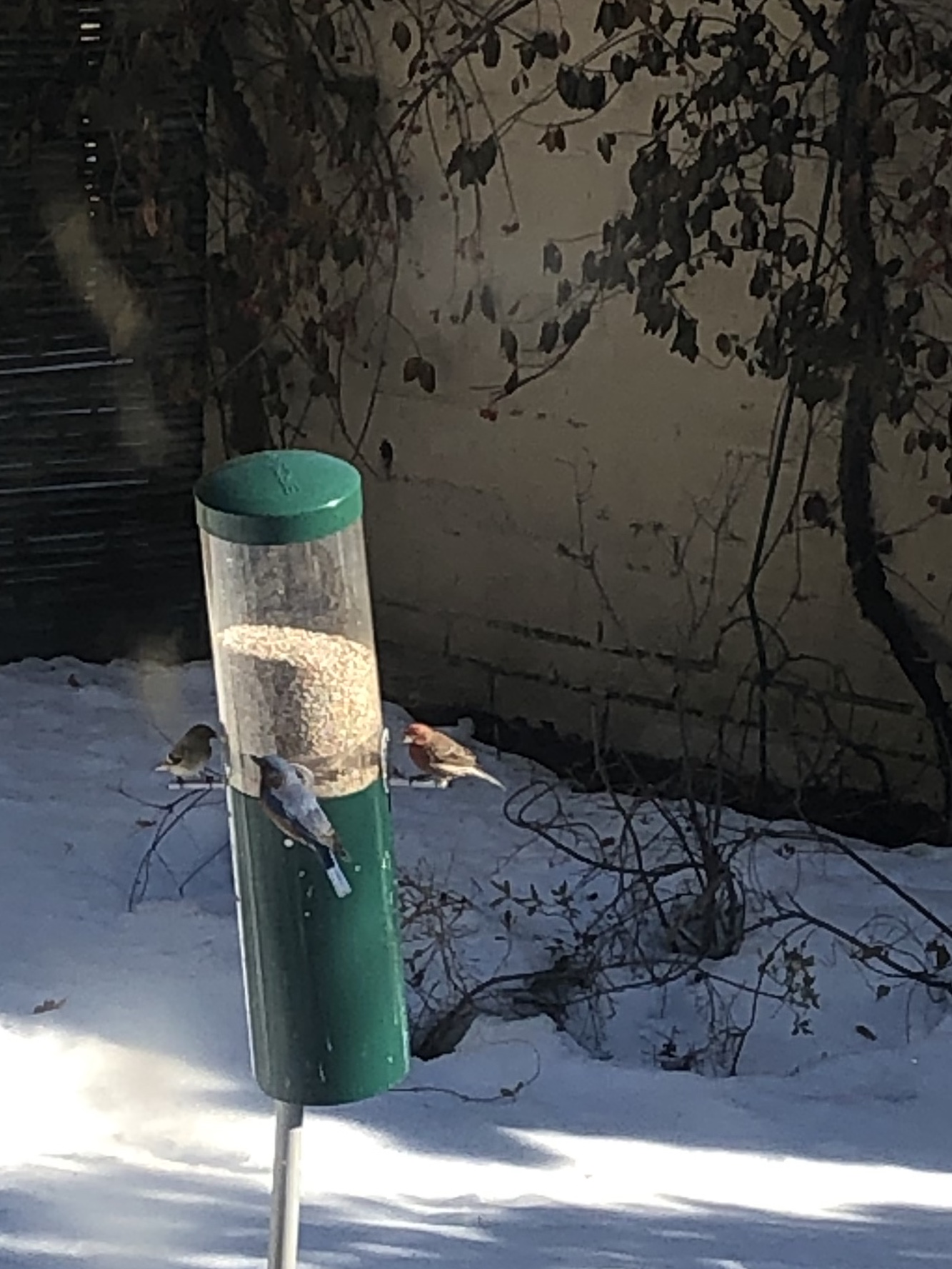
Here we are in September, and already August is seeming like a long time ago. So I want to share summer photos, mostly from my walks.

The first one below, however, shows a lighthouse painting by Ben Cummings. It was sent by his son Earle,after my last photo post, which featured a lighthouse. Everyone loves lighthouses.

Next is a picture of chicory, which people in New Shoreham and other parts of Rhode Island call Ragged Sailor. It has many names, in fact, depending on where you live. The turtle art is also from New Shoreham, one of my favorite Painted Rock images this year, and one that actually lasted more than a few hours. (The rock is a local billboard and really gets a workout in the summer.)

Back in Massachusetts, Kristina shared a photo of a sunflower from Verrill Farm’s pick-your-own-sunflowers day, a benefit for Emerson Hospital. Kristina gave me one of her sunflowers, and I was worried when I left for a few days that it wouldn’t survive. So I put it in the birdbath, and it did just fine.

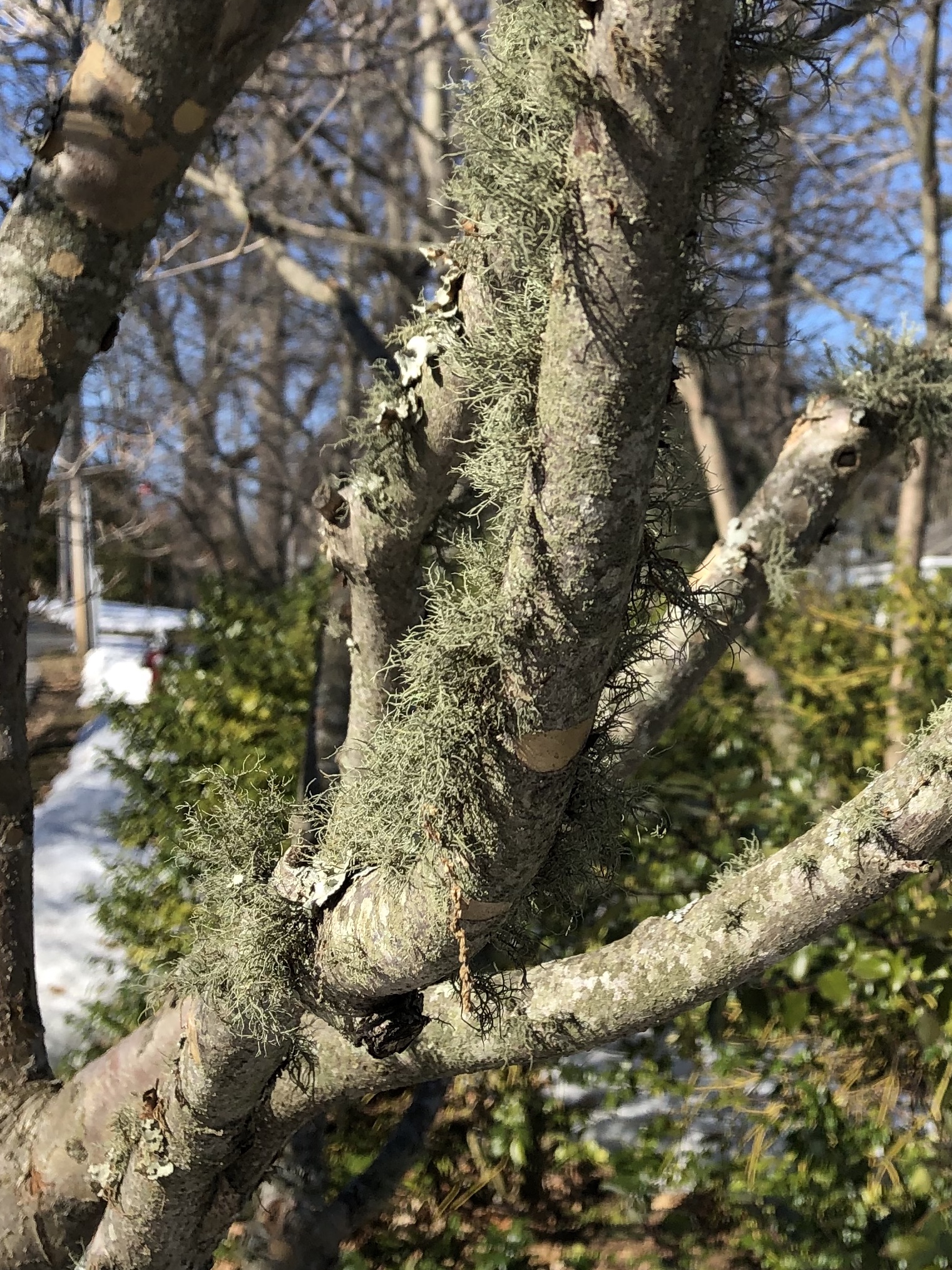
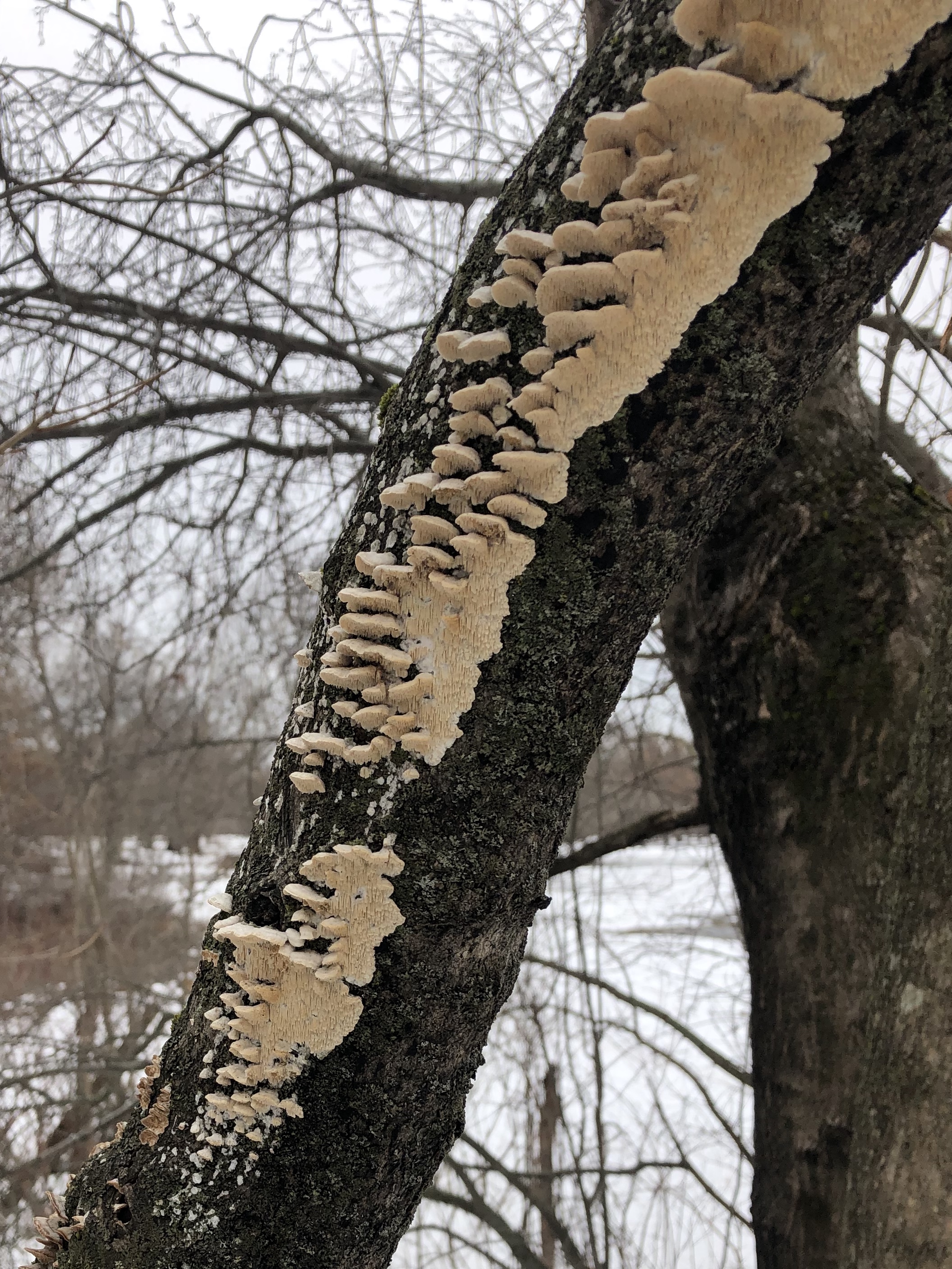
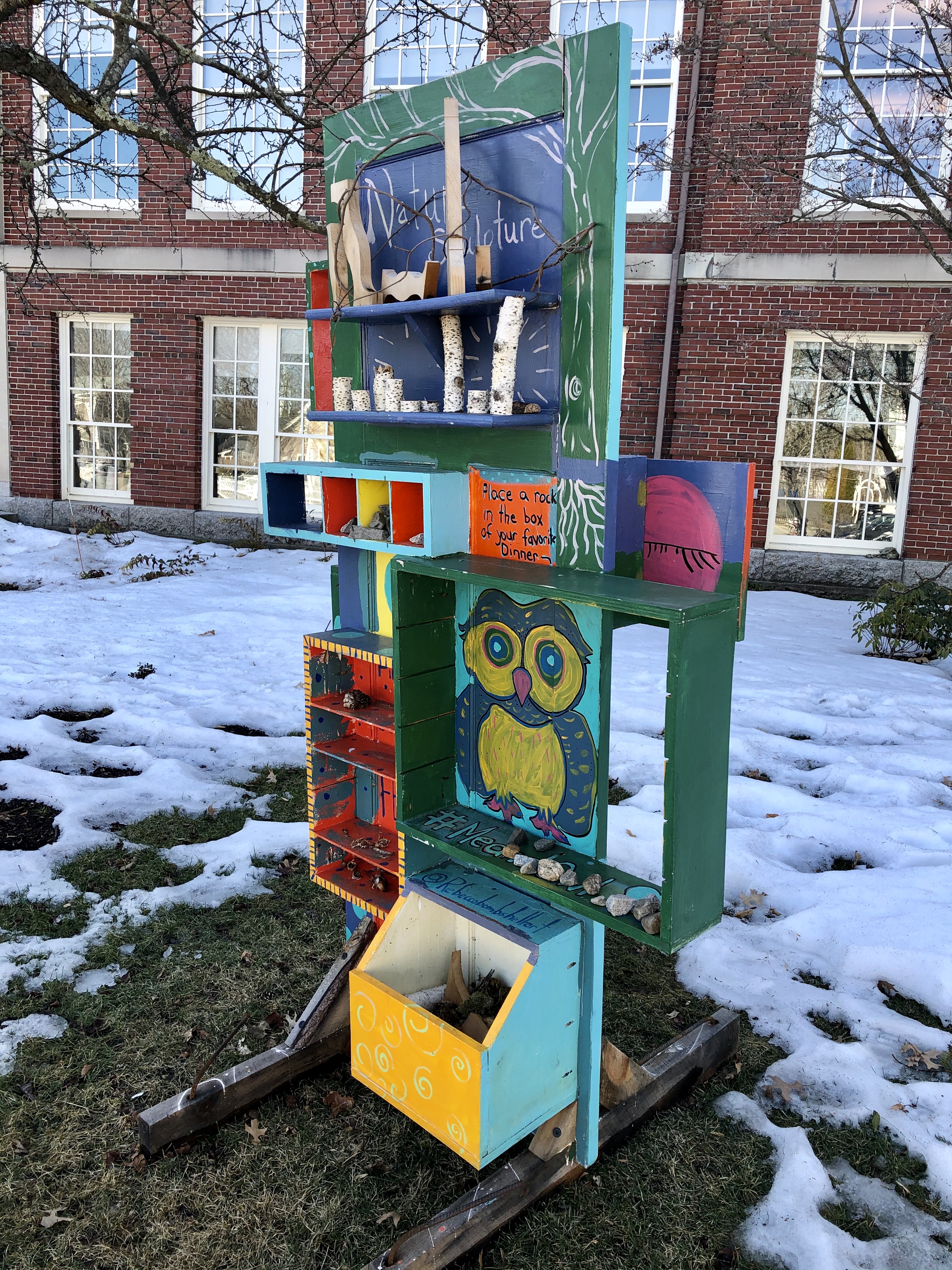
Woodland scenes and the farm along the Lincoln bike path come next. I continue to be fascinated by fungi and by bits of art in unexpected places. The pig, an Old Spot, is one of the varieties raised at Codman Community Farms.

The frame on a pedestal and the amoeba-shaped sculpture were next to a construction site near a conservation trail. I wasn’t sure what to make of them. Perhaps you have a thought.

Meanwhile in the town, a second-floor shop’s staircase says, “Whatever you do today, do it with the confidence of a four-year-old in a Batman cape.” I thought it was excellent advice.

The last photo speaks for itself.

Read Full Post »

Maria Popova at the blog Brain Pickings is an endless source of inspiration. Whether she is posting about art, nature, philosophy, or children’s books, she’s a treasure. 

Today I want to dip into her report on an out-of-print book featuring an artistic rendering of the wonders of the Great Barrier reef. Considering how fast the optimal conditions for the reef are being lost to global warming and the ocean’s higher carbon levels, it might be a good idea to think about how it looked in 1893.

Popova begins, “While the German marine biologist Ernst Haeckel was salving his fathomless personal tragedy with the transcendent beauty of jellyfish, having enraptured Darwin with his drawings, his English colleague William Saville-Kent (July 10, 1845–October 11, 1908) was transcending his own darkness on the other side of the globe with the vibrant, irrepressible aliveness of the Great Barrier Reef and its astonishing creatures. 

“By the end of his adolescence, William had survived the unsurvivable. The youngest of ten children, he lost his mother when he was seven.”

Suzanne’s Mom pauses here to let you read what else was “unsurvivable,” including murder most foul.

“William was shaken by the inordinate share of loss, violence, and public shame he had accrued in so young a life. Taking refuge in the impartial world of science, he came to study under the great biologist and comparative anatomist T.H. Huxley, who had coined the term agnosticism and who had so boldly defended Darwin’s evolutionary ideas against the reactionary tide of opposition a decade earlier.

“Upon completing his studies, Saville-Kent received an appointment in the Natural History department of the British Museum as curator of coral. He grew enchanted with these beguiling, poorly understood creatures; he also grew bored with the museum position — he longed to do research, to contribute to the evolving understanding of these living marvels. …

“As Saville-Kent approached forty, his old mentor T.H. Huxley — by then the most prominent British life-scientist after Darwin’s death a year earlier — recommended him as inspector of fisheries in Tasmania. Saville-Kent left England and the dark specter of his youth for the bright open seas of the South Pacific, where he grew newly enchanted with the lush underwater wonderland of strange-shaped corals and echinoderms, frilly anemones and tentacled mollusks, fishes in colors that belong in a Kandinsky painting, creatures he had marveled at only as dead and disjointed museum specimens or segregated aquarium captives, creatures he had never imagined. 

“Determined to bring public awareness and awe to this otherworldly ecosystem — an ecosystem that in the century since his time has grown so gravely endangered by human activity that it might not survive another century — he authored the first popular science book on that irreplaceable underwater world. In 1893, several years before the German oceanographer published the gorgeously illustrated first encyclopedia of deep-sea cephalopods, Saville-Kent published The Great Barrier Reef of Australia: Its Products and Potentialities — a pioneering encyclopedia of one of Earth’s most luscious and delicate ecosystems, illustrated with a number of Saville-Kent’s black-and-white photographs and several stunning color lithographs by two artists, a Mr. Couchman and a Mr. Riddle, based on Saville-Kent’s original watercolors.” More at Brain Pickings, here.

One thing I love about Brain Pickings is the way Maria Popova’s own brain makes such interesting connections. At the end of almost every post she links to other posts on topics that may seem unrelated on the surface but play off each other in an interesting way. Her approach is a bit like suggesting an unusual cheese to go with your wine.

Illustration from William Saville-Kent’s book Fishes from The Great Barrier Reef of Australia, 1893. (Maria Popova at Brain Pickings makes it available as a print and as a face mask!)

Read Full Post »

Few things equal the joy of dancing, as I keep learning from my 5-year-old granddaughter and the videos Suzanne and Erik send of her living-room performances. They make me want to get up and boogie, too.

A teacher in Africa who loves ballet thought, Why not? There may be no ballet in Nigeria, but kids need to dance.

As Noor Brara explains at the New York Times, “In June, a minute-long video featuring a young ballet student dancing in the rain began circulating on the internet. As the rain falls, forming puddles between the uneven slabs of concrete on which he dances, Anthony Mmesoma Madu, 11, turns pirouette after pirouette.

“Though the conditions for such dancing are all wrong — dangerous, even — he twirls on, flying barefoot into an arabesque and landing it. …

“The wide reach of the video — it has been seen more than 20 million times on social media platforms — has turned a spotlight on the unlikely story of a ballet school in a poor suburb of Lagos, Nigeria: the Leap of Dance Academy.

“Founded in 2017, the academy has transformed the lives of its students, affording them a place to dance and to dream. And in the last few months, it has inspired influential people in ballet to lend a hand. Seemingly overnight, a world of opportunity has opened up: for the students, scholarships and invitations to attend prestigious schools and companies overseas; and for the school, sizable donations, which will allow for building a proper space, outfitted with a real dance floor.

“For now, the Leap of Dance Academy is housed at the home of its founder, Daniel Owoseni Ajala, in Ajangbadi, Ojo, on the western outskirts of Lagos. Every day after school, Mr. Ajala’s 12 students walk to his apartment, where he pushes aside his furniture and spreads a thin vinyl sheet over the concrete floor for class, throwing open the doors and windows to let in the light. …

“Much of this is filmed and posted to the school’s Instagram feed, where the students’ joy is evident in each video, their movements precise and praiseworthy — as the comments, hearts and trembling star emojis left by their fans attest. …

” ‘In the beginning, people kept saying, “What are they doing?!” ‘ Mr. Ajala said. ‘I had to convince them that ballet wasn’t a bad or indecent dance, but actually something that requires a lot of discipline that would have positive effects on the lives of their children outside the classroom. I always say, it’s not only about the dance itself — it’s about the value of dance education.’

“When Mr. Ajala, 29, founded Leap of Dance three years ago, he was a self-taught recreational dancer with a dream: to open a ballet school for students who were serious about learning the art form and possibly pursuing it professionally one day. …

“As a child, Mr. Ajala became obsessed with ballet after watching “Save the Last Dance,” the 2001 movie about a lapsed ballet dancer (Julia Stiles) who moves to the South Side of Chicago after her mother dies …

“Mr. Ajala said he was captivated by the movement he saw onscreen and, perhaps even more, by the discipline and sacrifice that was evidently required to master it. Ballet appealed to him for another reason, too: It wasn’t widely taught or practiced in Nigeria. ‘I wanted to be different,’ he said. …

“Mr. Ajala’s role in the lives of his students goes beyond dance; he is invested in their whole development. One day a week class is dedicated solely to academics; the students come to the academy with their homework, with Mr. Ajala providing one-on-one tutoring as needed. They practice speaking, reading and writing in English together. And between lessons, which run from mid afternoon to early evening, he cooks them a meal. …

“Recently, too, the students have begun learning conversational Spanish, Italian and Chinese from their ballet teachers abroad, like [Thalema Williams, in St. Croix, and Mary Hubbs, in Brooklyn, Mich., who gave him lessons online to improve his technique]. ‘I want the kids to be able to relate to people internationally,’ Mr. Ajala said.”

At the Times, here, you can read how he manages to keep the ballet classes free. Very inspiring story.

Photo: Stephen Tayo for the New York Times
Anthony Mmesoma Madu, left, with fellow students from the Leap of Dance Academy, in Ajangbadi, Ojo, Nigeria.

Read Full Post »


When residents of Holyoke, Colorado, saw local businesses struggling in the pandemic, they stepped up.

Sometimes it’s hard to know where to start when many problems call for attention at the same time. In one small Colorado town, the almost unimaginable generosity of the community helped neighbors — and built a lifetime bond.

Cathy Free reports at the Washington Post, “Brenda Hernandez Ramirez thought she might have to close the doors of her family’s small-town Mexican restaurant for good when she was temporarily forced to shut down in March because of the coronavirus pandemic.

“With bills piling up and no income, ‘we weren’t prepared for the challenges that covid-19 brought,’ said Ramirez, who owns Taqueria Hernandez in Holyoke, Colo., population 2,313.

“When she and her employees heard in late March that a Help Holyoke campaign had been started to assist small businesses, Ramirez said she felt grateful, thinking she might get a few hundred dollars to help pay her utilities.

“Two months later, when Holyoke Chamber of Commerce Director Holly Ferguson stopped by with a check, Ramirez was shocked to learn that people in her farming community had donated their government stimulus checks and dipped into their bank accounts to raise $93,592 — enough to help every business in town affected by the shutdown.

“In addition to about $2,000 to pay her restaurant bills, Ramirez also received smaller checks for each of her six employees.

‘We were overwhelmed with emotion,’ said Ramirez, 24. ‘Feeling our community’s support during the pandemic gave us the ambition to keep on going. I’m beyond thankful.’

“The Help Holyoke fund came about after Tom Bennett, president of the town’s First Pioneer National Bank, wondered if people might be willing to part with the $1,200 stimulus checks that most had received from the federal government.

“Even during normal times, it’s not easy to run a business in a small town, he said. … ‘Having our restaurants, bars, salons, the gym and movie theater shut down was unprecedented. You start thinking, “What if that was me?” ‘

“Bennett contacted Ferguson, Phillips County Economic Development Director Trisha Herman and Brenda Brandt, publisher of the Holyoke Enterprise, and arranged a meeting at the newspaper’s office to talk about his idea to help save their downtown. …

“The group members quickly developed a plan: They would get the word out about Help Holyoke through the Enterprise, the local radio station and social media, plus enlist high school students to help call everyone in town. Once the donations were collected, they would cut checks based on how many employees each business owner had to lay off. …

“Karen Ortner, a family and consumer sciences teacher at Holyoke High School, rounded up members of the Family Career and Community Leaders of America club she advises and put the teens to work calling every household in Holyoke.

“ ‘We split up the phone book with two other student organizations — the Future Business Leaders of America and the Future Farmers of America,’ she said. ‘Almost everyone the kids called said they’d give what they could.’ …

“ ‘This is a supportive, tightknit town,’ added FCCLA President Amy Mackay, 17. ‘Everybody knows everybody and they knew exactly who that money would be going to in the end.’ …

“ ‘This was the best way we could make a difference,’ said Nancy Colglazier, 67, executive director of Holyoke’s Melissa Memorial Hospital Foundation. … Colglazier and her husband, Harvey Colglazier donated one of their $1,200 checks to the fund after seeing how abandoned their downtown had become, she said. …

“Said chamber director Ferguson, ‘Some gave $10, some gave $100 and little kids came to my office to empty their piggy banks,’ she said. ‘Everyone did what they could and showed overwhelming compassion.’ …

“In addition to receiving about $3,500 from Help Holyoke, Veronica Marroquin, 44, who runs Veronica’s Hair and Nail Salon, also received checks from customers who wanted to pay for the haircuts they missed due to covid-19, she said.

“ ‘I’d been really worried, and I got teary-eyed when I saw everybody’s generosity,’ Marroquin said. ‘I’m close friends with my clients — they’re family. But this took it to a new level,’ she said. ‘None of us will forget their kindness.’ ” More here.

Read Full Post »

« Newer Posts - Older Posts »