Feeds:
Posts
Comments

Archive for the ‘Uncategorized’ Category

Photo: Kolya Kuprich
Outlawed Belarus Free Theatre has been successfully performing
A School for Fools and other plays despite the pandemic. It took some ingenuity, but they have plenty of that.

What kind of theater could handle a pandemic better than one that is of necessity always underground? If you’re fighting an authoritarian regime, you will continually find ways it doesn’t know about for getting your work out into the world — or you’ll go to prison.

Verity Healey writes at HowlRound,* “If any theatre company is going to feel at home during COVID-19 and the challenges the pandemic has brought to theatres worldwide, it is going to be Belarus Free Theatre (BFT), an outlawed company based in Belarus and the UK (its artistic directors Natalia Kaliada and Nicolai Khalezin, in fear of their lives, had to seek asylum in Britain in 2011).

In Belarus, where dictator President Lukashenko faces national elections in August — and is busy arresting citizens attending opposition rallies — the BFT ensemble is banned from performing and from registering as a theatre company because it produces democracy-promoting plays and global campaigns advancing human rights.

“Working out of a small garage in a secret location in Minsk, the country’s capital city, BFT is ineligible to apply for national funding, and ensemble members, continuing to perform illegally and underground, face the very real and constant threat of being arrested by the KGB. …

“On top of this, Lukashenko is a COVID-19 denier and has advised his citizens to drive tractors, go to the sauna, and drink vodka to prevent infection. Whilst he has not imposed a lockdown, he is using the virus as an excuse to ban protests of any kind (prescient in the run-up to the elections) and arrest anyone who raises a voice in opposition. This means that, in Minsk, BFT, in tandem with their colleagues in the UK, have voluntarily gone into self-isolation to protect themselves and their families whilst creating work from their living quarters — turning their homes, quite literally, into performance spaces.

“ ‘I get to spend twenty-four hours a day with the people I love, otherwise the lockdown is no different for me,’ says Khalezin.

“It will not come as a surprise then that, since late February, the company has premiered two full-length plays, facilitated and broadcast several online fairy tales with renowned artists such as Stephen Fry, Juliet Stevenson, Will Attenborough, and Sam West for their campaign #LoveOverVirus, and made all of their previous shows accessible for free on YouTube. …

“It’s their latest show, though, A School for Fools (ASFF), which is streaming live online, that has recently made the headlines. Adapted from Sasha Sokolov’s 1960s phantasmagoric modernist novel of the same name … the story charts the experiences of a young boy living with a dual personality disorder attending an oppressive school, a kind of place that used to exist in Eastern Europe (and still does in Kazakhstan). …

“Starring twelve of BFT’s ensemble members, all living in Minsk, in twelve locations (the actors’ mostly small Soviet-style [flats]), and with sixteen different camera setups hosted by Zoom, it is a feat of technical wizardry imagined by [director Pavel] Haradnitski’s artistic vision and Sveta Sugako’s broadcasting direction. …

“Haradnitski calls the need to do ASFF ‘a desire to act, because even in two months, actors can lose their skills.’ Previous conversations had with Haradnitski, Sugako, and Nadia Brodskaya, the producer for ASFF, have also revealed to me that for everyone in the ensemble BFT is a way of life, 24/7. …

“ASFF is not just an ideological road map out of the pandemic — i.e., using technology and social media platforms in new ways to bring live drama to people at home via laptops and devices. It is also a way of doing theatre that, as Khalezin says, we may have to return to more and more if the world faces other pandemics. …

“Zoom is not custom-made to handle large-scale live performances—it was invented purely for business meetings and conferences and it lacks the interfaces custom-made platforms might have (there are ones being developed especially for BFT, but they were not ready in time for the pandemic). ..

“One of Sugako’s and Haradnitski’s main difficulties, for example, was working out how to let the actors know what marks to hit, especially when it was required for actors to make it look like they were physically interacting with each other. In the end, Sugako had to use a webcam, pointed at her Zoom host interface, which allowed her to share her screen with the actors so they could see they were in the right place to make it look like they were connecting across frames.

“The other issue is Zoom’s propensity to kick people off the platform if their internet connection drops — which anyone who has ever been to Belarus will know is a common occurrence. And to make things more complicated, Sugako had to line up the sixteen devices — laptops, phones — in a particular order for actors to hit their cues. If they get out of sync, the whole show is scrambled.” Read how they handled that difficulty and others at Howlround,* here.

By the way, John has been to Belarus. Maybe he will confirm that the internet connections often get dropped.

* The staff of HowlRound Theatre Commons at Emerson College wish to respectfully acknowledge that our offices are situated on land stolen from its original holders, the Massachuset and Wampanoag people. We wish to pay our respects to their people past, present, and future.

Read Full Post »
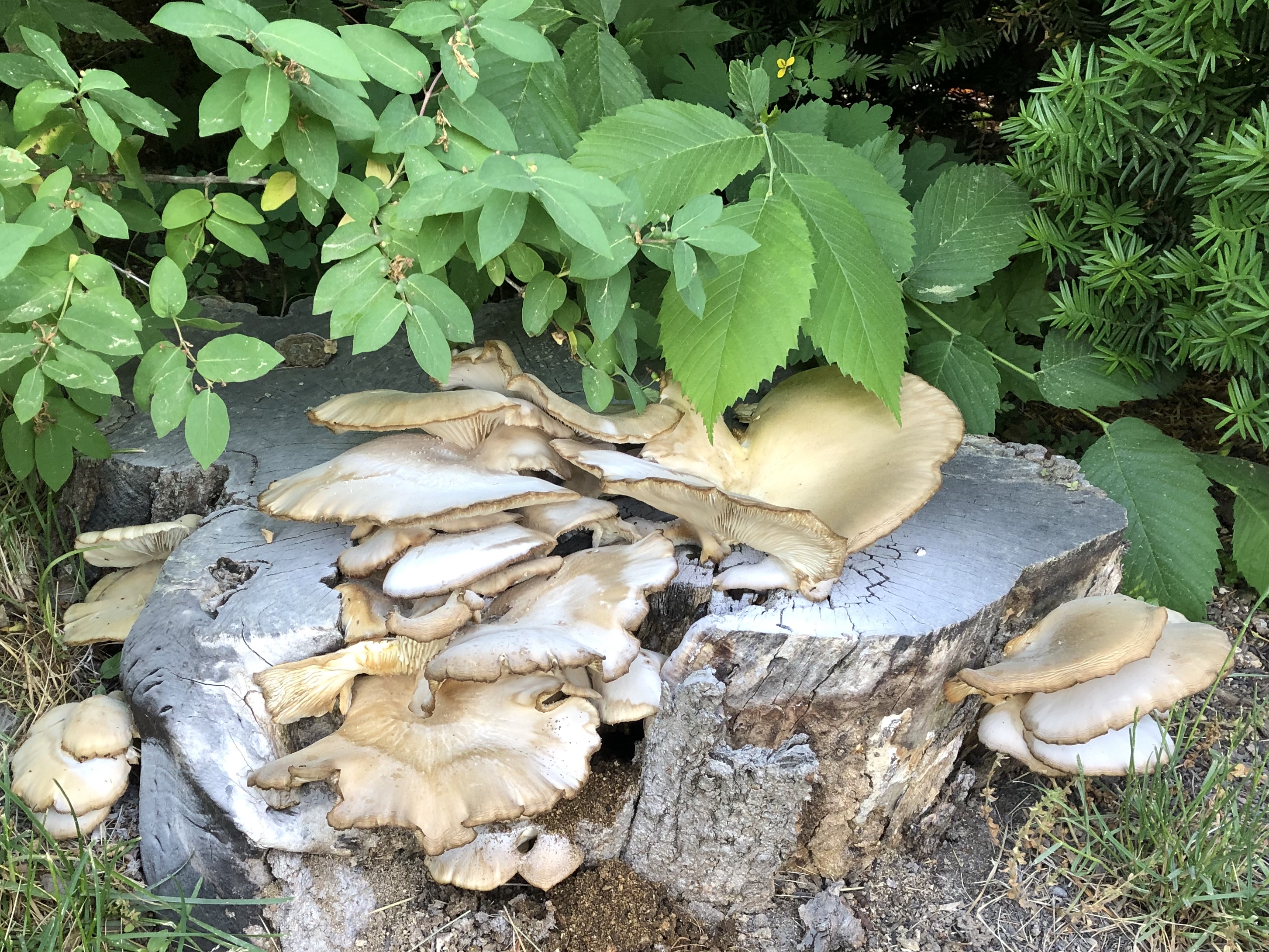
Photo: Zbigniew Bzdak / Chicago Tribune
Rosario Del Real, 70, a paletero at ice cream shop Las Tres Abejas, gets emotional after meeting with Michaelangelo Mosqueda and girlfriend Karen Gonzalez, who posted a TikTok video about buying up his ice pops so he could go home for Father’s Day.

Struggling a bit with what to say about the 4th of July in a time of both upheaval and promise, I decided to share a story that highlights the best side of the American spirit. In this report, a couple bought up a vendor’s ice pops so he could spend Father’s Day with his family. And they didn’t stop there.

Cathy Free shared the story at the Washington Post. “People in Chicago’s Southeast Side are accustomed to the sight of 70-year-old Rosario Del Real pushing his bright yellow cart along the streets, offering up frozen treats on summer days.

“The former carpenter makes a living selling $2 Mexican-style ice pops, or paletas, in a variety of flavors, including pineapple, strawberry, watermelon and cinnamon.

“On Father’s Day, Cynthia Gonzalez was enjoying an alley cookout with her family in the 83-degree heat when Del Real came by and asked if anyone would care to buy a paleta, she said. Gonzalez, along with Michaelangelo Mosqueda and several other family members, decided they could do better than buy just one pop apiece.

“They opened their wallets and bought every paleta in Del Real’s cart — 65 of them, at a cost of $130. Then they recorded a video of Del Real’s joyful reaction and posted it on TikTok.

“Mosqueda’s post quickly racked up more than 5 million views, he said, prompting him and the Gonzalez family to set up a GoFundMe for Del Real in the hope of helping him retire. In about a week, the effort has raised more than $62,000, and comments have poured in from tens of thousands of people:

“ ‘The paleta man was KING to us kids in Chicago!!!!’ wrote one woman. ‘Miss those days. Bless you guys!’ …

“ ‘I cried tears of joy to see his humble reaction,’ added a woman in her 20s. ‘So proud of you for doing this.’ …

” ‘Our local paletero is the sweetest, most polite person ever,’ Gonzalez said. ‘We didn’t want him to be working on such a hot day anymore.’

“As she and the others bought all of the ice pops in his cart, Del Real started crying, she said.

“ ‘You could see the relief in his face,’ Gonzalez said. … ‘He even got on his knees. We offered him some food and something to drink, and he left with the biggest smile on his face.’ ”

For a bit more background, read the article by Laura Rodríguez Presa at the Chicago Tribune: “Don Rosario was born in a rural town in Zacatecas, Mexico. He immigrated to the United States in 1969, crossing the southern border a handful of times before becoming a citizen in 1979, he said.

“ ‘When I first decided to immigrate to the U.S., my only wish was that my family and I could eat once a day, at least,’ Don Rosario said. ‘We were very poor.’ …

“ ‘I’ve had countless jobs,’ Don Rosario said. When he moved to Chicago, he established his family on the Southeast Side, where he was able to buy a home to raise his three children with the help of his wife. In 2015, Don Rosario was able to slow down when he finally finished paying off his house, he said.

“Don Rosario said he has made mistakes in his life, including run-ins with the law, but having to deal with them helped him to become a better person.

“ ‘I was diligent to do everything right to pay for the mistakes that I made,’ he said Thursday. … The first thing Don Rosario plans to do once he returns to Mexico is to visit the Shrine of Our Lady of Guadalupe to thank God for the blessings he has received, he said. …

” ‘He refuses to stop working,’ said Lucero Del Real, one of Don Rosario’s daughters. ‘I’m still in shock and extremely grateful for the family, and all the people that have changed my father’s life from one day to another.’ ”

More at the Washington Post, here, and at the Chicago Tribune, here.

Read Full Post »

Image: India Marshall; iStock; Lily illustration
She woke up from a surgery with her hair perfectly braided. Her black male doctor braids his daughters’ hair; the surprise he gave his patient touched her heart.

The Washington Post has a newsletter called the Optimist that I’m really enjoying. This story about a surgeon who understood what a patient’s hair might mean to her is something the newsletter shared recently. Some folks might find the doctor’s act uncomfortably personal, but the point is his patient didn’t.

Soo Youn writes at the Lily, “For the past couple of years, India Marshall has been contemplating getting another surgery to have bone growths in her head removed. She had already undergone one operation when she was about 20 years old.

“Now 29, and working as a manager in a primary care clinic, Marshall was experiencing more growth from her osteomas. While not dangerous, they can be painful. Several had started to grow on her forehead and between her eyes, making it uncomfortable and annoying when she wore her glasses. She met with a few surgeons about getting them removed. …

“Jewel Greywoode, an ear, nose and throat physician who specializes in cosmetic and functional facial plastic surgery [was] the only surgeon who mentioned going though Marshall’s nose so she wouldn’t be left with scars on her face. The other doctors told her she would need an ear-to-ear incision on her head, and hair might not grow back over the scar. Marshall underwent a successful surgery on June 9. …

“For the first couple days after the surgery, she went in and out of consciousness, her head wrapped. But when her mother and husband took off the bandages to clean the incisions, Marshall noticed that she had more braids in her hair. She went in with two loose braids, but woke up with four or five smaller ones.

‘I remember waking up and there were two black nurses helping me get myself together, helping me get my clothes on to go and I just assumed they did it. I was like, “Who else would have known how to braid?” …

” ‘I loved that whoever did it had thought of it because it was very easy to get to the incisions and clean. My hair wasn’t matted or in the way, and it was just easier for the recovery process,’ Marshall said. …

“On Wednesday, she went in for her last post-op appointment. As Greywoode removed her staples, Marshall says he noticed that she had redone her hair with smaller braids and commented, ‘Oh your braids are better than mine. I hope I didn’t do too bad,’ she recounted. …

“Greywoode told her he has two little girls and he braids and twists their hair. That he participates in the maintenance required for his daughters’ natural hair really moved Marshall.

“ ‘Natural hair is a lot of work,’ she said. … ‘To be honest there are not a lot of dads that [can] help with hair. … It was a very nice gesture and it just spoke to my bigger point of having black doctors and them being able to identify with patients.’

“Greywoode also told Marshall that he chose to staple the opening over suturing, because when you remove stitches, you often have to cut the surrounding hair. … ‘That was another part that showed me that he gets it.’ ”

What Marshall wrote on Twitter @IndiaDionna: “thinking about this black man braiding my hair to prepare to cut my head open is hilarious and endearing at the same time. also the fact that he’s that active in helping his wife with their girls, I love it. moral of the story: find black doctors.”

More here.

Read Full Post »

Photo: Marta Grossi at My Modern Met

I love recent stories in which the discomfort of quarantine has spurred the isolated to adapt in interesting ways. Today’s article features an artist who found herself looking at her sink much more than usual.

Darcy Schild writes at Insider, “Marta Grossi is an artist and creative director who was quarantined in Milan, Italy, when she found an innovative way to make handwashing a magical experience. Grossi was running low on her traditional painting paper, so she started applying watercolors directly to the sink in her bathroom. …

“Grossi recalled the day she first picked up her watercolor brush at the bathroom sink …  after returning home from the grocery store, the one place (aside from pharmacies or to seek medical care) where citygoers in Milan were allowed to go at the beginning of lockdown orders. …

” ‘Everything felt apocalyptic in the city. I was hearing helicopters 24/7,’ said Grossi. ‘The alarm was extreme. I was a bit upset coming back from my errand, and I just wanted to wash everything off,’ she said.

“As she was washing her hands, she noticed her small watercolor tray sitting on the sink ledge, which she had used earlier in the day.

‘Suddenly, I don’t know what happened, but I started to paint,’ she said. ‘I started with branches and then filled in colors of a cherry blossoms. In that moment, I lost all track of time, and all my thoughts about what was going on washed away.’ …

“Grossi’s on-a-whim painting made her smile each time she returned to the sink to wash her hands, she said, so the concept stuck.

” ‘I started leaving the designs in the sink overnight and not washing [my hands] in that sink until the next day,’ Grossi said.

“The sink also became a canvas of sorts for Grossi. [She] began to run low on her supply of traditional drawing and painting paper, which she said she was saving to use for client projects and for pieces that were donated to a hospital. That’s when the apartment’s bathroom sink came into play.

” ‘It was about being able to use my hands to create something that was familiar, but also new to me,’ Grossi said of the sink watercolor method. …

“Grossi said it’s important to start with a dry surface or else the watercolor paints get hard to control, but that the challenge of a unique canvas made her artwork even more enjoyable.

” ‘It became my way to be present,’ she said. ‘These are the instruments I knew how to use to stay in the moment and to not let things that are out of my control affect me.’

“After admiring her designs for a day, Grossi turns on the faucet and rinses out the sink, then starts fresh with a new creation. Grossi said the act of filming her designs wash away has been soothing for her, as well as her growing fanbase.

” ‘The comments I got, even from strangers, were about what my next design would be, or telling me how the art was helping them,’ said Grossi. ‘This started as a necessity in a very bad moment and came therapeutic, not only for me, but for many others.’

Grossi says her sink designs are an example of temporary art, which, to her, reflects the importance of cherishing life in the moment. … By washing the designs away, it marks a new day, Grossi said, and ‘mirrors what’s going on in the real world — that there are beautiful moments even in the scary and unknown.’

“At the very least, the unexpected designs have been one way to make constant handwashing more enjoyable, Grossi said. ‘I translated this into something beautiful. If I wash my hands, I see flowers, I see the sea, I see animals. This changed my perspective on what was becoming so routine.’ …

“Grossi said she hopes to someday create an exhibit full of painted sinks inspired by her quarantine ritual because, in her opinion, sinks and the monotony of handwashing will ‘always be a symbol of what we all went through collectively’ during the pandemic.”

You really have to see these watercolors. Click here. And there’s more at the site My Modern Met, here.

Read Full Post »

I learned recently that years before Thoreau built his famous little cabin at Walden Pond in Concord, Mass., a former slave called Brister Freeman and his family made their home in Walden Woods.

Robbins House reports, “Brister Freeman was enslaved in Concord for the first 30 or so years of his life. After taking his freedom in the late 1770s, he purchased an acre of ‘old field’ in Walden Woods. Other formerly enslaved people followed and Walden Woods became one of three black enclaves that sprung up in Concord following gradual emancipation in Massachusetts.”

I happened upon Freeman’s house site this morning when I took my walk, and because my photo is hard to read, I copied down what the marker says.

“Near here lived Brister Freeman (d. 1822)
formerly enslaved in Concord
Fenda Freeman (d. 1811) and their family

” ‘Down the road on the right hand on Brister Hill lived Brister Freeman, there where grow still the apple trees which Brister planted and tended.’ Thoreau, Walden, 1854.”

When I got home, I looked up more information. I felt woefully ignorant considering that I have lived in the town for many years.

The National Endowment for the Humanities posted about Black Walden back in 2010. It’s painful to read some of these details though we already know slavery is repellent.

“In Black Walden: Slavery and Its Aftermath in Concord, Massachusetts, published by the University of Pennsylvania Press, Elise Lemire (rhymes with sheer), a literature professor at Purchase College of the State University of New York, describes an aspect of Concord’s history that most accounts have overlooked. …

“[One] former slave, Brister Freeman, is the hero of Black Walden. He was named with a diminutive form of Bristol, after the English slave-trading port, whose ships plied routes to both Africa and the West Indies. Black Walden’s other main protagonist is Colonel John Cuming, a wealthy landholder and doctor in Concord who was Brister Freeman’s master for twenty-five years, having received the nine-year-old slave boy as a wedding present from his father-in-law. …

“Ironically, history has reversed the two men’s positions. ‘Unlike Brister Freeman, whose name survives in Walden the book and at Walden the place, where a hill [Brister’s Hill] bears his name,’ Lemire writes, ‘John Cuming has been largely forgotten.’ His large estate was broken up long ago and is now the site of a state prison; Cuming’s mansion house is a prison office building. The Cuming name survives only on a local medical building. …

“Freeman, who served alongside Cuming in the Revolutionary War, had acquired a wide range of farming and survival skills while managing the Cuming estate during his master’s numerous absences, and likely learned a good deal about local politics by watching Cuming rule the town of Concord. Though many liberated slaves continued to live on their masters’ estates as paid servants (their options being few), Freeman, who took his telling surname after gaining his liberty during the Revolution, instead managed to buy and farm an acre of ‘lousy, sandy soil’ near Walden so that he could marry and have children. ‘He was harassed all the time,’ Lemire says, ‘but he never gave up. I see why Thoreau saw him as heroic.’”

Then there’s this from the Walden Woods Project: “Brister’s Hill is a few hundred feet from Walden Pond, and was one of Henry David Thoreau’s study sites later in his life. In the late 1980s, a large commercial development was proposed on Brister’s Hill that was such a significant threat to the Walden ecosystem that the National Trust for Historic Preservation twice listed Walden Woods as one of America’s Eleven Most Endangered Historic Places. This threat, as well as another proposed development at Bear Garden Hill, spurred the foundation of the Walden Woods Project. …

“In 2013, we installed a Toni Morrison Society Bench by the Road at Thoreau’s Path on Brister’s Hill. The Bench by the Road Project seeks to recognize the contributions of enslaved people to the building of this nation. For much more about the program, we encourage you to visit the official Toni Morrison website.

Find more information at the historic Robbins House website, at the National Endowment for the Humanities, and at the Walden Woods Project. Enjoy!

Read Full Post »

There are so many things going on right now that sometimes it’s hard to remember that crises like global warming and plastic pollution are no less urgent just because illness and job losses are center stage.

Fortunately, all this time we’ve been counting Covid-19 deaths, a few people have been working on the problems that will still be around when the pandemic has ended.

On June 19, Doug Struck reported at the Christian Science Monitor about one woman working to clean up the ocean.

“Nothing pleases Mary Crowley more than to see a huge, dripping, bedraggled fishing net, ensnarled with plastic garbage, being lifted from the sea. That is progress, she says.

“Ms. Crowley, a sailor since childhood days spent in her grandfather’s wooden sailboat on Lake Michigan, has been working for more than a decade to clean up the world’s oceans. She started by urging fishermen to pick up floating plastic. Now her million-dollar effort employs drones, satellites, floating GPS buoys, sophisticated oceanographic models, a corps of yachtsmen, and an oceangoing cargo ship.

“The Kwai, a 140-foot, two-masted cargo sailing vessel that normally shuttles supplies among Pacific islands, has been plucking nets and trash from the Pacific for the past six weeks. It is expected to return to Hawaii around June 23 with 100 tons of debris, the first of what Ms. Crowley hopes will be two such voyages this summer; she is hoping to dispatch the ship for a second voyage in July.

Much of that trash will be ‘ghost nets,’ fishing nets abandoned or lost that float freely, ensnarling fish, marine life, trash, and passing vessels.

“The Kwai’s crew of 11, sailors accustomed to unloading anything from cars to concrete on isolated islands, uses winches and sweat to hoist the heavy nets from the Great Pacific Garbage Patch, where swirling currents gather floating debris.

“The term is misleading; the area is huge and the debris is spread out. But the Kwai is led to wayward nets in part by GPS buoys that yachtsmen and other sailors, volunteers for Ms. Crowley, have stopped mid-ocean to attach to trash.

“ ‘This work feels great,’ Capt. Brad Ives replies mid-voyage from the Kwai by email. ‘When the weather is good and the nets are flowing, there is no better work for a fine old sailing ship. Crew spirits are high and we are cleaning our Mother Ocean.’ …

“Ms. Crowley began her project as a labor of love for the sea. She runs a yacht chartering business from Sausalito, California. But her clients consistently confirmed her own observations that the ocean seems increasingly cluttered with plastic debris. …

“Every year, an estimated 8 million tons of plastic is washed from the lands and is threatening to choke the seas. The United Nations has warned that by 2050 there will be more plastic than fish in the sea. Marine mammals are routinely found dead, their bodies clogged with plastics. Microplastics – the result of deteriorating larger pieces or small manufactured beads – are now thoroughly infused in the marine food chain. …

“There are many creative ideas to clean the ocean, and Ms. Crowley supports them all. She formed Ocean Voyages Institute in 1979 to educate audiences about the sea. Over time she gathered a ‘think tank’ of sailors, naval architects, marine engineers, and fishermen. ‘We decided that one of the most harmful things going on in the ocean is the huge proliferation of large plastics,’ she says. ‘This includes derelict fishing gear, and boats and piers and car fenders.’ …

“ ‘There is debris practically every day inside the gyre,’ Captain Ives writes from the ship. … ‘The most difficult are always the big nets. … These require divers in the water to get cargo slings around them and often several lifts to get them wrestled aboard. A large net can take several hours to wrestle aboard.’ …

“Ms. Crowley has recruited a cadre of volunteers with a gentle inexhaustibility.

“ ‘As someone who loves the ocean and has had the pleasure and honor of spending lots of time in the ocean,’ she says, ‘it’s my responsibility to not have the health of our ocean held hostage by plastic garbage.’ ”

More at the Christian Science Monitor, here.

Read Full Post »

Photo: CNN
A winter storm coated buildings along the shores of Lake Erie with ice as thick as three feet back in February. Something to ponder if you’re in the middle of a heat wave now.

Blogger Deb at A Bear’s Thimble once suggested saving a winter photo for blogging on a hot day in summer, which was exactly what I did that year. So now, during our current heat wave, I’m pulling up an extreme cold-weather story saved from early March. Enjoy. Keep cool.

Alicia Lee and Hollie Silverman wrote at CNN about homes along Lake Erie that were “covered in ice following two days of gale-force winds. …

“Instead of a winter wonderland, residents living along the shore of Lake Erie in New York woke up this weekend to a winter nightmare when they found their homes completely encased in thick ice.

“Ed Mis has lived in his home in Hamburg, New York, for the past eight years, and while the neighborhood has seen ice coatings before, he said this is the first time it’s been this bad.

‘It looks fake, it looks unreal,’ [the homeowner] told CNN. ‘It’s dark on the inside of my house. It can be a little eerie, a little frightening.’

“His home on South Shore Drive in the Hoover Beach neighborhood of Hamburg, about 9 miles south of Buffalo, is covered in several feet of ice and his backyard has about 12 feet of ice, Mis told CNN by phone. …

“The ice makes the houses appear as if they’re ice sculptures or something out of the movie Frozen. …

“To blame? No, not Elsa, but 48 straight hours of gale force winds. The winds created huge waves, driving lake water up on the shore, according to the Weather Channel.

” ‘When you are down in the low to mid-20s, all of that spray that comes up and hits the buildings is going to freeze and make it a giant icicle,’ winter weather expert Tom Niziol told the Weather Channel.

“The ice has started to melt a bit since Friday, Mis said, but he hopes the governor will approve an emergency declaration to help the neighborhood recover.

‘It’s a beautiful sight, but I don’t want to live through it again,’ Mis said.

More.

It sounds like one of those “what-am-I-seeing?” phenomena. Do you know of others? Have you ever been to a place where it took your eyes a while to understand what you were looking at?

Photo: CC/Wikimedia Commons
Town of Hamburg in Erie County, New York. (If you went to public school for 7th grade in New York State, I bet you can draw that New York map with your eyes closed.)

Read Full Post »

Photo: Tanecni Aktuality
Dance master Curtis Foley left Canada for a gig in the Czech Republic. Then Covid-19 struck.

Lockdown in the pandemic has kept a lot of people from going home, sometimes stranding them in surprising places. Today’s story is about camping out for four months in the Czech Republic’s ornate national theater.

Jennifer Stahl writes at Dance Magazine, “When Canadian ballet master Curtis Foley arrived in Ostrava, Czech Republic, in early March, he planned to spend five weeks with the National Moravian-Silesian Ballet, serving as a part-time ballet master. The former Royal Winnipeg Ballet and Les Ballet Grandiva dancer had spent the previous four years as a ballet master at the Polish National Ballet, and had recently gone mostly freelance.

“But five days after he landed in the Czech Republic, COVID-19 sent that country into a state of emergency, with one of the strictest lockdowns in Europe. Most of the foreign artists working with the company swiftly left before the borders closed. But Foley felt a sense of duty to stay. ‘I was supposed to be here to help these dancers for five weeks, and if I were to leave, coming back could be difficult since I don’t have Czech residency and I’m not an EU national,’ he says. So he remained, hunkering down alone inside an apartment on the third floor of the theater.

“With travel remaining complicated, his original five-week stay has ended up lasting for four months.

‘The joke I started with my friends is that I’m the phantom of the opera,’ says Foley. ‘There’s no one else here but me in this massive labyrinth.’

“Although a skeleton crew of administrative and janitorial staff have come in to work during the weekdays, Foley says that starting at 4 pm every Friday, he knows he’ll be on his own until Monday morning.

” ‘It was a novelty at first,’ he says. … ‘Now it just feels like home.’

“Being the only person in the building most of the time has raised logistical questions. ‘During the first few weeks, the company and I were having discussions like, Is it okay to turn off the heat to save money?’ (He said it was.)

“But there’s been more to do than wander the hallways. The dancers took just one week off after the lockdown, then Foley started teaching company class on Zoom. Soon, as the Czech Republic got the virus under control, five people at a time were allowed in the studio (including Foley and an accompanist). Throughout all of June, he’s been able to teach the entire company at once in person again. …

“It’s now been 16 weeks, and with the European Union opening its internal borders, Foley is finally returning to Warsaw, where his boyfriend lives. He admits that he’s a bit anxious to leave.

” ‘This has become my new normal,’ he says. ‘Being there for the dancers has given me the motivation to get through the pandemic, to get out of bed every day and think this isn’t weird.’

“He’s grateful for the intimate relationship he’s built with the dancers while going through this crisis. ‘It typically takes years to create this kind of relationship, but we got to do it really fast,’ he says. Soon enough, he’ll be back — though hopefully not haunting the theater at night all on his own again.” More here.

Did you ever stay overnight in an unlikely place? I did once. I was working for a newspaper chain and there was a blizzard that everyone knew was going to be bad. The other staff left early, but I had decided to bring my sleeping bag and stay over as I had to work in the morning and really dreaded the drive home and back again. It was a little weird, with machines making noises all night, but it was way better than driving.

Read Full Post »

062620-clouds-and-blue-sky

Hello, summer clouds — so beautiful! I was discussing them with my friend Nancy yesterday, and she told me she had signed up some years ago with the UK-based Cloud Appreciation Society, which sends her a daily cloud picture and a few words on cloud science or cloud mythology. Consider joining if you need a daily pick-me-up in quarantine.

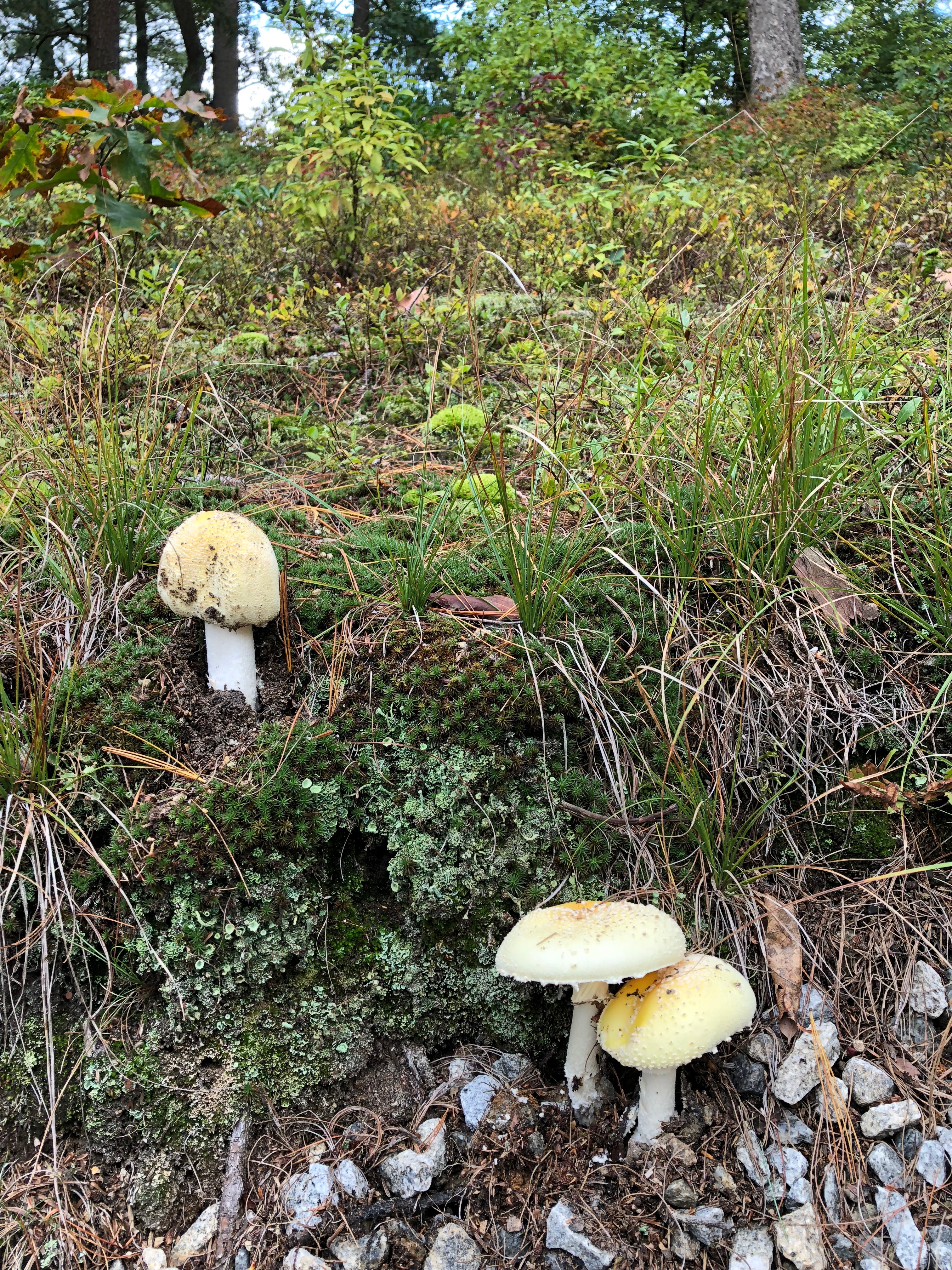
The next two pictures reference my growing appreciation of fungus. Then comes a bright red intruder in the forest, reminding me of the lamppost that Lucy found in the wintry Narnia woodland after emerging from the wardrobe.

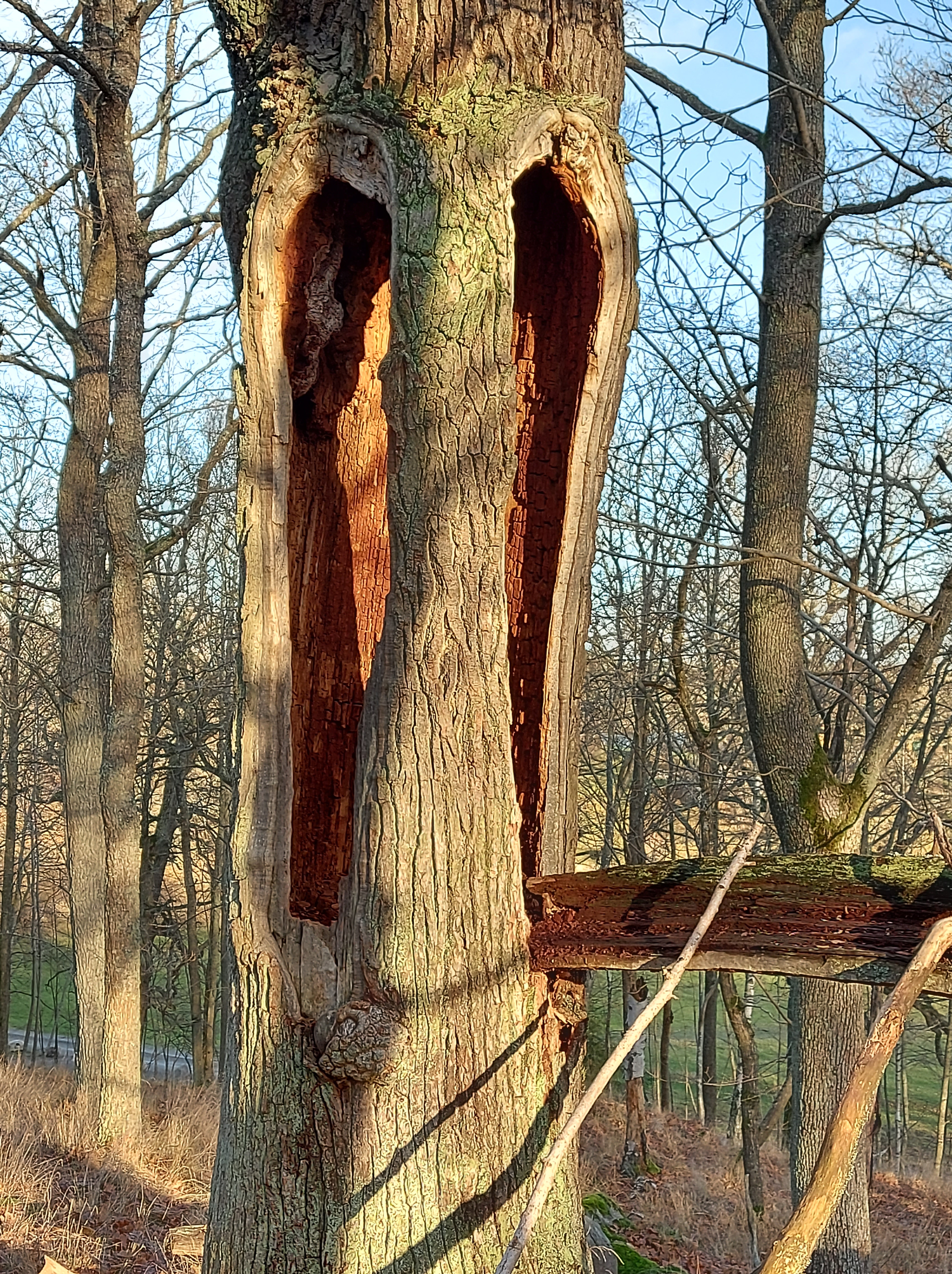
The doorknob in the tree made Suzanne think of a handy panic button (I think she is tired of lockdown), but I’m pretty sure it leads into a home. Probably not a hobbit home, since they prefer burrows underground. Maybe it belongs to Owl.

I love the little red squirrels that have started to appear in our region. John thinks global warming may be bringing them up from the south. Clue me in if you know.

The decidedly unscenic bug repellent had been abandoned along the bike trail. I didn’t touch it as I am a Covid germaphobe, but I got a laugh: I’d been slapping mosquitoes for the whole walk.

In the town of Lincoln, yarn stretched between trees caught my eye. A bit further along the conservation trail, there was a helpful explanation.

The tippy old wooden building is next to Orchard House, a childhood home of author Louisa May Alcott. The building was named the School of Philosophy by Louisa’s hippy father Bronson and continues to offer presentations and lectures in normal times. (I put up my photo of Louisa in her coronavirus face mask for yesterday’s post.)

Speaking of adapting to the times, you will note that the Colonial Inn (founded in 1716) has marked off six-foot segments on its brick walk for safe distancing.

The Art Deco frieze on the old Emerson school building welcomes visitors to what is now the Umbrella Center for the Arts.

I don’t think I need to explain the last three. Sometimes readers give me their reactions to one or two pics. I do get a kick out of that — should you feel moved to comment.

Read Full Post »

Photo: Rik Pierce/Concord Players
The 2002 cast of Little Women at the Concord Players. Katie Lynch, standing, played Jo (the author’s alter ego). Jan Turnquist, front left, is in real life the director of Louisa May Alcott’s home, Orchard House, in Concord, Massachusetts.

In the town where I have lived nearly four decades, we get a lot of tourists. One of the main attractions is the home of the Little Women author, Louisa May Alcott. Her book remains popular worldwide. Many movie adaptations have been made. I have friends from Japan who were beyond thrilled to see Alcott’s home because of a popular Japanese television series. And at the theater that Alcott helped to set up, Little Women productions have been staged every ten years for generations. I even helped to cast one production.

Needless to say, I couldn’t resist Hillel Italie’s recent story for the Associated Press about an unfinished bit of Alcott juvenalia.

The current issue of Strand Magazine will give readers the chance to discover an obscure and unfinished Louisa May Alcott work of fiction, and to provide a conclusion themselves.

“Alcott’s ‘Aunt Nellie’s Diary’ has rarely been seen since she drafted what may have been a novel or novella, and set it aside, as a teenager in the late 1840s. The 9,000 word fragment is narrated by the 40-year-old title character, and follows her observations as a romantic triangle appears to unfold among her orphaned, fair-haired niece Annie Ellerton, Annie’s dark-haired friend Isabel Loving and the visiting Edward Clifford, ‘a tall, noble-looking’ young man with a complicated past.

Strand managing editor Andrew Gulli found a reference to the manuscript during an online search of Alcott’s archives, stored at Harvard University’s Houghton Library. ‘Aunt Nellie’s Diary’ appears in the Strand’s spring issue, delayed until now because of the coronavirus. …

“ ‘What struck me was the maturity of the work,’ says Gulli … ‘Here was Alcott, who was on the cusp of adulthood, creating a complex work, where her main character is a single woman in her 40s, who defies many of the stereotypes of how women were portrayed in mid-19th century America.

“Because ‘Aunt Nellie’s Diary’ ends with various storylines unresolved, Gulli is inviting readers to complete the narrative. ‘…

“Alcott scholar Daniel Shealy says that ‘Aunt Nellie’s Diary’ reflects what the author called her sentimental phase, her early immersion in such British authors as Charles Dickens and Sir Walter Scott.

“ ‘You can see her picking up on some of the romanticized, even sensationalized material from those books. It’s a tough time for her, because the family was short of money, but it’s also a creative time. She’s beginning to develop and mature as a writer,’ says Shealy, a professor of English at the University of North Carolina-Charlotte.

“ ‘If I had to compare this to Little Women, I’d say that you can see her ability to create characters that you can take an interest in. And you see her ability to have several strands of the story going off in different directions, and you’re wondering how she going to tie this all together. Clearly, this story is building to a big reveal, and we’re going to learn new things about the characters’ pasts.’ ”

That is, we are going to learn things from Strand readers who send in the best endings. Maybe you.

More at Yahoo, here.

How Louisa has been adapting.

062220-Louisa-May-in-facemask

Read Full Post »

Photo: Peter Means.
Linsey Marr’s unusual set of skills puts her in high demand for insight into Covid-19 aerosol dangers.

With new Covid-19 data coming out every day, I am a bit less anxious about potential germs on the groceries and a bit more concerned about how long a contaminated droplet can last in the air and how many droplets it takes to get sick. Even the experts don’t know. But it sure is reassuring to read about people who are on the case. Dr. Linsey Marr, for example.

Tara Parker-Pope wrote about her recently at the New York Times. “When Linsey Marr’s son started attending day care 12 years ago, she noticed that he kept getting sick with the sniffles and other minor illnesses. But unlike most parents, Dr. Marr, an aerosol scientist at Virginia Tech, tried to figure out why. …

“Dr. Marr was uniquely equipped to tackle the problem [of airborne illness]. She had graduated with an engineering science degree from Harvard University, where she developed an interest in air pollution during her daily runs breathing car exhaust on nearby Boston streets.

“She earned a doctorate in civil and environmental engineering from the University of California at Berkeley, and completed post-doctorate work at the Massachusetts Institute of Technology, with Mario J. Molina, a Nobel laureate recognized for research into ozone damage caused by chlorofluorocarbon gases.

“But it was during that first foray into day care germs that she discovered how little was known about airborne transmission of viruses.

‘I was surprised to find out we don’t even know how much of the flu is spread through the air or through touching,’ Dr. Marr said. …

“Now, Dr. Marr’s maternal and scientific curiosity and her multidisciplinary background have made her one of the world’s leading scientists on airborne viruses. Her research led to the publication of a groundbreaking study that found flu virus in microscopic droplets that were small enough to remain floating in the air for an hour or more. …

“Public health officials in the United States and with the World Health Organization have called on Dr. Marr for her expertise, and scientists from all over the world have asked her to review their papers. Her lab has focused on testing new materials to solve shortages of personal protective equipment for medical workers. Working with her colleagues and graduate students, Dr. Marr’s lab found that a large stockpile of expired respirator masks were still effective but that 3-D printed masks unfortunately were not.

“ ‘There are not many people who are trained engineers who also study infectious disease,’ said Dr. X.J. Meng, a Virginia Tech professor who studies emerging animal viruses. … ‘Linsey is one of very few scientists who has this ability to study aerosol transmission because she can use the engineering tools to study the dynamics of viruses and bacteria in the air.’ …

“Part of the reason Dr. Marr has become so popular in public forums is her ability to explain difficult scientific concepts in easy-to-understand terms. She uses the visual of cigarette smoke when explaining viral plumes. To explain a concept called Brownian motion — and why masks can more easily filter the smallest microscopic particles — she uses the analogy of a drunken person stumbling into chairs and walls while trying to cross a room. ‘The particle is the drunk person, and the chairs are the fibers of the masks,’ she says. ‘The fibers stop the particles.’

“When people began asking whether their clothes could be covered in virus after going to the store or walking outdoors, she gave us all a lesson in aerodynamics.

Just as bugs don’t smash into the windshield of a slow-moving car because they’re carried by air currents alongside the car, lingering viral particles also slip by the human body as we move, and don’t smash into our clothes, she explained. …

“She used mathematical models to determine the safety of hugging during a viral outbreak, taking photos with her daughter in various hug positions to explain how to lower risk. She collaborated with Dutch researchers on how we can safely return to the gym. And her team is in the midst of research on the benefits of homemade masks.

“But the demand for Dr. Marr’s expertise also highlights an alarming problem in the study of viruses and respiratory illness. There are, perhaps, fewer than a dozen scientists around the world with extensive expertise in aerosol transmission of viruses, but funding for their research often falls between the cracks of different disciplines. Basic science grants tend to view airborne viruses as a topic to be supported by health funds. But health agencies tend to focus on how a virus behaves inside the body, not how it gets there. Environmental scientists may study waterborne pathogens or air pollution, but they don’t typically focus on airborne transmission of disease. …

“Despite knowing more than most of us about the risks posed by the coronavirus, Dr. Marr exudes a sense of calm about managing risks. She has access to top-rated N95 medical masks, but she chooses to wear a cloth mask, like the rest of us. … ‘For the things we don’t know, it’s good to err on the safe side, but also to not be paranoid.’

“Dr. Marr said she personally focuses on a ‘top four’ for lowering risk — social distancing, avoiding crowds, wearing a mask and washing hands.”

More at the New York Times, here.

Read Full Post »

Photo: Purple
Jean-Philippe Delhomme, an artist, was hired by the Musée d’Orsay to bring humor to promotion on the museum’s Instagram account.

Back in January, Lanre Bakare wrote at the Guardian about an artist that the Musée d’Orsay in Paris hired to make weekly contributions to its Instagram account. Naturally I wondered how Covid-19 had affected this effort. Answer: Not at all.

Bakare wrote, “One of France’s most celebrated and august art institutions has taken a novel approach to embracing technology while breathing new life into its collection – by installing an Instagram artist-in-residence who imagines the social media accounts of famous artists from history.

“The Paris museum Musée d’Orsay has invited the illustrator Jean-Philippe Delhomme to take over its Instagram account every Monday during 2020. On the account he will post a different drawing each week, depicting an artist as a contemporary social media user. …

“The Orsay president, Laurence des Cars, told Le Figaro that the purpose of the project was to bring more visibility to its artists from centuries ago. ‘The aim [of the residency] is to bring these artists of the second half of the 19th century closer by enrolling them in today’s interactions.’ …

“The idea was not to ‘desecrate works’ but to draw attention to a particular moment in an artist’s biography, and through ‘contemporary commentaries, fictitious or not, to evoke the adhesions or antagonisms aroused.’

“Delhomme released a book last year called Artists’ Instagrams: The Never Seen Instagrams of the Greatest Artists, in which he depicted the social media accounts of Jackson Pollock, Frida Kahlo and Paul Gauguin. ‘If Instagram had existed a century ago, there would be no art criticism today,’ he told the Guardian at the time. ‘Only thumbs-ups and emojis.’ …

“He wanted to focus on artists who were famous to the ‘point of creating mythologies around themselves. … That’s what was fun about it. They’re the gods of art. It’s like doing the Instagram of Mount Olympus. Artists want to be seen – even the most serious ones. Why wouldn’t they show off like everyone else?’ …

“Orsay was widely praised last year for its ground-breaking exhibition Black Models: From Géricault to Matisse, which displayed French masterpieces but renamed them in honour of the black subjects in the pictures but absent from the narratives.”

More at the Guardian.

There’s also a nice interview with Delhomme at ArtNews.

ARTNEWS: “Since you do a weekly post, do you plan out in advance which works to tackle?

DELHOMME: “No, no, no — I don’t plan ahead of time. At the beginning of this collaboration, I took walks in the museum with Sylvie Patry, the museum’s head of collections and conservation. It was wonderful.

“I started looking at the paintings in a much more intimate way. Obviously I can’t go back there for a while, but I have my own memories and I’m reading biographies of artists, trying to deepen my knowledge of nineteenth–century art history.

“I’m reading Michael Fried on Manet. Thinking of the current lockdown situation, one of the posts I did was on Henri Fantin-Latour’s ‘La Liseuse’ [‘The Reader,’ 1861] — and of course it speaks to us today: we’re in our rooms, we can’t go out. It’s a challenge to be absorbed by at-home activities.”

If you’re on Instagram, check out @Jean-Philippe Delhomme and @museeorsay.

Art: Jean-Philippe Delhomme
Delhomme knows that artists must adapt to changing media tastes, like using Instagram to promote their work. What if the Greats had to do that? he asks.

Read Full Post »

Photos: Bakers Against Racism
Both chefs and home bakers are making and selling desserts, then donating profits to a group of their choice that supports black people in their community.

It’s been interesting to see how many different kinds of food businesses have been on the front lines helping out in difficult times. After all, everyone has to eat, and when they buy food, they’re often open to doing good simultaneously.

Whether it’s a nonprofit raising funds to keep restaurant workers employed feeding healthcare workers (OffTheirPlate) or bakers taking a stand against racism (@BakersAgainstRacism), there have been quite a few spontaneous efforts taking off.

Teddy Amenabar reported recently at the Washington Post, “Three D.C. pastry chefs have launched an effort that’s become an international bake sale raising money for nonprofit community groups working against racism.

“Through Bakers Against Racism, professional chefs and home bakers are making and selling desserts, then donating profits to a group of their choice that supports black people in their community. The project was launched the first week in June and has more than 3,000 bakers in more than 200 cities in 16 countries.

“On the first day they put the word out on social media, 100 chefs signed up. … Days later, there were more than 1,000 participating chefs.

” ‘After that, it just snowballed out of control,’ said Paola Velez, executive pastry chef at Kith/Kin on the Wharf, who with two other D.C. chefs started what might be the world’s biggest bake sale.

“It works like this: Bakers contact the group on its website to join in the bake sale. Bakers Against Racism then sends participants instructions on starting and precautions to take during the pandemic. Each baker is expected to make a minimum of 150 pastries or other goodies and send a majority of the proceeds to an organization that promotes social justice in their community. Once all the baked goods are sold, bakers will record on the website how much they’ve raised.

“Bakers are sending donations to local chapters of Black Lives Matter, nearby nonprofits and organizations that support communities of color.

“Raisa Aziz, a home baker who lives in Northeast Washington, is preparing to make 250 almond shortbread cookies at home and donate the proceeds to the Okra Project — which provides home-cooked meals for black transgender people — as well as the Loveland Foundation, which helps black women and girls seeking therapy. …

“The idea for the project came in late May after Willa Pelini, a pastry chef who works at Emilie’s on Capitol Hill, saw the success Velez had with a pop-up Dominican doughnut shop at Union Market in March called Doña Dona. Velez donated a portion of her proceeds to a group that provides legal counsel for immigrants in the D.C. area.

“Pelini messaged Velez about possibly teaming up to raise money for Black Lives Matter after the death of George Floyd in police custody in Minneapolis. …

“Velez created a Google Docs folder with information to share with any pastry chef or home baker who wanted to be involved. She called up Rob Rubba, the chef and a partner at the not-yet-open Oyster Oyster in Shaw who has a background in graphic design, to create a logo. After a few days of planning, the three pastry chefs launched their idea. …

‘It takes zero dollars to start something like this. I used Google Forms, you know?’ Velez said.

“The team’s Instagram account for the project has more than 28,000 followers, but chapters also are popping up in Berlin, Kansas City, New York, Paris and San Francisco to help organize the effort. Velez said people on five continents are participating.

“Rachel Anderson, a pastry chef in Saint Paul, Minn., learned about the project a few days ago on Instagram from other women in the restaurant industry. … She is using donated rhubarb from a local nonprofit to make and sell about 100 rhubarb crisp pies through a coffee shop with locations around the Twin Cities….

“All proceeds from the rhubarb pies are going to Appetite for Change, a nonprofit that grows and makes food, distributes meals and offers job training in North Minneapolis. Anderson said the bakery has raised about $2,000.” More here.

Check out some yummy photos on Instagram, @bakersagainstracism.

Read Full Post »

Photo: ergey Ponomarev for the New York Times.

This was completely new to me: Many Russian restaurants provide disposable gloves for things like burgers that you eat with your hands. Although I know I’m much more likely to get Covid-19 from breathing droplets, I think I could get used to the glove concept.

As Anton Troianovski reports at the New York Times, “When you enter a home in Moscow, you take off your shoes. When you go to a play, you have to check your coat. When you eat a burger, you often wear gloves.

“Across hygiene-conscious Eastern Europe, many people consider it uncouth and unsanitary to eat a burger with their bare hands. The answer used to be a knife and fork. But the pandemic has accelerated a years-old trend: order a burger from Kyiv to Kamchatka — or in Brighton Beach, Brooklyn — and there is a fair chance it will come with a side of disposable gloves.

“Most often, the gloves are made of a synthetic, latex-free rubber called nitrile. At Black Star Burger, which launched the phenomenon in Moscow in 2016, the gloves on offer are black, individually wrapped in plastic packets. At Star Burger in Kyiv, Ukraine, they are green (or pink on Valentine’s Day). At Butterbro, a gastro pub in Minsk, Belarus, they come wrapped discreetly inside a napkin next to a serving dish made of the trunk of an ash tree.

‘Gloves, I think, are an unspoken, required attribute of any burger restaurant,’ said Butterbro’s manager, Alina Volkolovskaya. ‘I’m surprised that establishments in every country don’t offer them.’

“To visiting Americans, the practice always seemed odd, bordering on blasphemous. But when Moscow’s lockdown ended this month and I went out to celebrate, nervously, with a cheeseburger to go, it suddenly kind of made sense. …

“I called George Motz, a New York hamburger specialist, and he insisted that gloves negate the ‘very tactile experience’ of eating a burger. ‘Take the gloves off and get closer to your burger!’ Mr. Motz said. ..

“Several American restaurant safety experts, however, were intrigued, having never heard of establishments providing diners with disposable gloves. They doubted the practice would take off in the United States — the coronavirus, after all, is not even known to spread through food — but some said that gloves used properly could help protect people who don’t wash their hands from a variety of germs. …

“Vanity, not health concerns, first propelled Eastern Europe’s gloves-and-burgers fad. Mr. Levitas of Black Star Burger recruited Timati, a Russian rap star close to the Kremlin, to lend a celebrity cachet to his new burger chain, which now has 67 locations across the former Soviet Union and one in Los Angeles. …

“The gloves help Black Star’s customers feel special, Mr. Levitas said, like the sparklers that go off when waiters bring out the $11 ‘V.I.P.’ burger.

“The gloves proved impervious to politics. A Kyiv restaurateur, Gennady Medvedev, says he had the idea to serve gloves with burgers independently of Black Star Burger in the years after he opened his Star Burger chain in the Ukrainian capital in early 2014 — during his country’s anti-Putin revolution. …

“The trend took off behind the former Iron Curtain as fancy burger places popped up in a region unfamiliar with the dish before McDonald’s arrived in the 1990s. Alexander Monaenkov, a Moscow-born burger-bar owner in Prague, says he handed out gloves to evoke the refinement of white-gloved waiters in Michelin-star restaurants. Corina Enciu, a Moldovan-born restaurateur in Krakow, Poland, said she introduced gloves because her burger joint lacked a place for people to wash their hands. …

“Gera Wise, a Kyiv-born cafe and nightclub owner in the Russian-speaking Brooklyn neighborhood of Brighton Beach, said his customers started asking for gloves after Timati started modeling them. …

“Isaac Correa, a Puerto Rico-born chef who lived in Moscow for two decades, thinks the gloves-and-burgers concept could have a global future. Mr. Correa worked with Mr. Medvedev in Kyiv to start the Star Burger chain. … Now Mr. Correa runs a restaurant in Sarasota, Fla., and his diners hesitate to touch menus or to come inside to collect takeout orders.

“ ‘I could see some of my customers in a casual restaurant say, “Hey, look, I’m going to try this,” ‘ Mr. Correa said.”

I’m thinking of adding gloves to my other nutty pandemic practices, including throwing out the takeout container immediately and reheating all the food in the oven. Now, if only I could find a place that sells disposable gloves.

More at the New York Times, here.

Read Full Post »

topper-2

Photo: Taobao / JD.com.
Livestreaming has brought some Chinese farmers badly needed customers during the pandemic.

I originally heard this reassuring tale at the radio show called The World, which is great about covering news from around the world, not just the US. If you’d like to listen to the broadcast, click here.

As Karen Hao reported at MIT Technology Review, some Chinese farmers hurting from the Covid-19 lockdown have been saved by technology.

“A few years after Li Jinxing graduated from college, he returned to his rural hometown to become a flower farmer. The days were long but the routine familiar: rise early and tend to the blossoms in the morning; trim and package those in bloom during the afternoon; deliver the parcels, delicately stacked in trucks, to customers by late evening.

“Where the flowers ended up, Li was never quite sure. From his fields in Yunnan province, China, he sold them to national distributors who sold them to flower shops who sold them to end consumers. … It all threatened to come to an end with covid-19.

“Li, 27, remembers the exact moment he heard about the viral outbreak: it was past midnight on January 20, 2020. The Chinese New Year was only five days away, and he had spent the day harvesting flowers in preparation for the expected holiday bump in sales. As he swiped through Douyin, China’s version of TikTok, he saw a fleeting mention of the disease. Li wasn’t sure what to think. Wuhan was nearly 1,200 miles away — the problem felt distant and intangible. …

“But as lockdown protocols swept through the country, panic began to set in. The logistics company that Li relied on had shut down for the holidays, and now the drivers were stuck at home. Without any way to carry out deliveries, Li watched as his flowers plummeted in price and still couldn’t be sold. In the end, tens of thousands of blossoms waiting in storage spoiled. …

“Then, on February 11, he received a message from an old friend, Ao Fenzhen, the COO of a flower distribution company. JD.com, one of China’s largest online retailers, was offering to help farmers use live-streaming to reach consumers, she said. It would involve broadcasting a few hours of content each day on its app, JD Live, to show off different products and answer questions from potential buyers. The company would provide access to its delivery networks — one of the few that had survived the lockdown — and take a small percentage of sales. Did Li want to join in? …

“Both JD.com and Alibaba-owned Taobao … helped farmers and merchants set up online stores with expedited approvals and showed them how to design the content of their broadcasts. They made their apps more intuitive and used their logistics networks to ship the products directly from farm to home. …

‘Most farmers didn’t know how to live-stream; even fewer understood e-commerce,’ says Zhang Guowei, the head of JD Live.

“But the pressure of the crisis — and the unique scale of China’s consumer base — provided the necessary catalyst. … Growers who had once sold 90% of their products offline have now flipped to selling 90% online. Live-streaming has not only helped the industry weather the crisis — it’s forged an entirely new way of business that is likely to continue long after the pandemic is over.

“Li’s friend Ao had been with her family for the holiday when news of covid arrived. … It was through an ad that she learned of JD.com’s live-streaming initiative. She didn’t have any experience with the medium, but she also didn’t know what else to do. She contacted the company and messaged Li. He was onboard.

“The first week of live-streaming was largely a blur. Ao set up an online store for consumers to make their purchases, and prepared scripts for one to two hours of content per day. Li then used JD Live to broadcast from his fields. He gave a tour of where the flowers grew, showcased their characteristics, and explained how to care for them. Li worked even longer hours than before … but when he sold 100 orders on the first day, he knew they were on to something.

“Through JD’s initiative, Ao and Li also connected with live-stream influencers who offered to help them promote the flowers for free. The pair provided the expertise, teaching the influencers the properties of the flowers and how to arrange them. Once, an influencer’s broadcast surpassed 1 million viewers.

“More orders came flooding in, and Li began to gain his own following. At one point, he remembers, he barely had enough farmhands to fulfill the sales. … By the end of the harvesting season, he had sold several hundred thousand flowers. His and Ao’s businesses had survived.”

More at MIT Technology Review, here.

Read Full Post »

« Newer Posts - Older Posts »