Feeds:
Posts
Comments

Archive for the ‘Uncategorized’ Category

A Lancaster, Massachusetts, woman who came to the country at age 12 without a word of English is giving back by helping immigrants get a start in farming — and her model is being picked up around the nation.

Jane Dornbusch at the Boston Globe writes, “Maria Moreira, 62, is fond of the proverb ‘Necessity is the mother of invention.’ When her kids were small and she and her husband had a dairy farm in this Central Massachusetts town, she had plenty of milk, hungry kids to feed, and a need to make a little money.

“So she started a business making a soft Portuguese cheese — she calls it simply Portuguese fresh cheese — that reflected her roots in the Azores, where she was born.

“That was in 1986. A year earlier, she had seen another need, and, in her own inventive way, she’d set about meeting it. Moreira and her husband, Manny, had a 70-acre field, not far from their farm, that they used to grow corn.

“A Hmong woman, an immigrant from Laos, approached Moreira about using a small corner of the field to grow her own crops. Soon, word spread, and little by little the entire field was given over to immigrant farmers, each in charge of his or her own plot. Today, says Moreira, 275 farmers are growing more than 75 kinds of vegetables at what is now called Flats Mentor Farm. …

“Gus Schumacher, former Massachusetts commissioner of food and agriculture, came to know Moreira’s work when he served as a USDA undersecretary in the late ’90s. He notes that she was among a handful of leaders — others included John Ogonowski (one of the pilots killed on 9/11) and Jennifer Hashley, of New Entry Sustainable Farming Project — supporting refugees and immigrants in establishing themselves as farmers and market gardeners. It’s a movement that has since gained momentum nationally, he says. ‘But it all started in Massachusetts.’ ”

More at the Globehere.

Photo: Joanne Rathe/Globe Staff
Maria Moreira, of Flats Mentor Farm, holds some lemon basil.

Read Full Post »

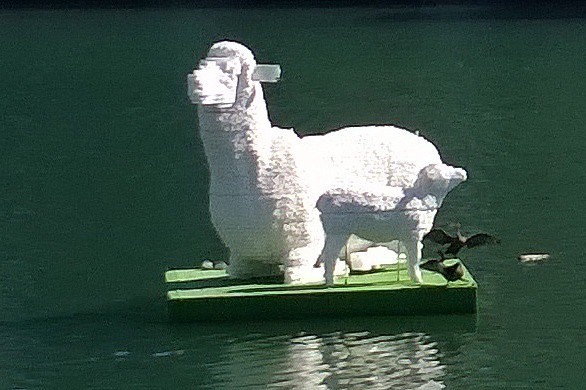
Today I sat on a shady bench next to Fort Point Channel and ate my Vietnamese noodles from the food truck. In front of me, floating on a green platform visited by cormorants, were two sheep — a big one and a small one. As the breeze and the tide nudged the platform, it turned slowly, showing the sculptures with different shadings and from different angles.

Steve Annear at the Boston Globe says, “The installation, called ‘Who Wears Wool,’ was created by artist Hilary Zelson, and pays homage to the Fort Point area’s former wool trade. … Earlier this year, FPAC [Fort Point Arts Community] put out a request for proposals seeking an artist who could weave together a prominent display connecting the neighborhood’s arts community with residents and visitors.  …

“For the project, Zelson said she layered EPS foam — or expanded polystyrene — to create the bodies of the sheep. The layers are held together with a spray adhesive, and the sheep are bolted to the dock with an armature of steel rods. Once built, the sheep were covered in packing peanuts to create the look of wool, before the entire thing was covered with a white acrylic latex coating …

“Zelson started working on the project in August. The first six weeks alone were dedicated to planning, she said.

“ ‘Once I was able to get the foam to my studio, I was working seven days a week,’ she said. ‘It was probably a 300-hour project.’ … The project — from the 3D renderings to the welding to the stacking of foam — was documented on Zelson’s Instagram account”

More here.

What I see in my photo are a ewe and a lamb — and cormorants.
100715-sheep-sculpture-ft-pt-channe;l

Read Full Post »

My mother liked to buy from people who sold door-to-door. There aren’t many door-to-door salespeople who get a welcome these days. Maybe Brownies with Girl Scout cookies or Cub Scouts with popcorn, but not many others. I haven’t seen an Avon lady in decades.

My mother bought from a “huckster,” a vegetable salesman in an old school bus painted blue. And of course, there was the Fuller Brush Man.

Recently, Linda Matchan at the Boston Globe wrote about a Massachusetts-based Fuller Brush Man who is still making sales after 40 years.

Al Cohen, she says, has been at it second-longest of the three remaining Fuller Brush Men in Massachusetts — “40 years with the Fuller Brush Co., which was launched 110 years ago by Alfred C. Fuller in his sister’s Somerville basement. He’s done it by selling one Angle Broom and Wooly Bully Hand Duster at a time.

“ ‘Toward the end of summer, he appears. And we’re elated,’ said Melissa Zeller, a longtime Cohen customer who lives in the South End and has a summer home in Hull. …

“On a recent morning, he worked Hull’s Allerton Hill neighborhood. He’d brought a replacement mop head for one customer and hand soap for an older woman who’d been buying it for years.

“ ‘How you been?’ he greeted the customer, who was slow to answer the door.

‘ ‘Very sick,’ she said. ‘I had two heart attacks and I lost Tom.’

“The day was hot and it was slow going. … Then things got better. Maureen Keiller and Patrick Miehe bought a broom after Cohen assured them it was ‘laboratory tested to last over a million sweeps.’ Afterward, George and Helen Kelley ordered several items, though it was a challenging sell at first.

“ ‘I don’t think I’ll pay $25 for a broom,’ said Helen, 82. ‘It’ll last,’ said Cohen. ‘How long will I last?’ she said.

“For that matter, how long will Al Cohen keep at it?

“ ‘It keeps me going,’ he said. ‘And if I stopped, it would almost be a letdown for some of my customers. Some of them depend on me.’ ”

More here.

Photo: Pat Greenhouse/Globe Staff
Al Cohen, 64, estimates that he still has about 1,000 regular customers for his Fuller cleaning products.

Read Full Post »

Sy Montgomery had a lovely story in the Boston Globe about studies investigating  animals’ dreams. I zeroed in on the beautiful little zebra finch.

“What do birds dream about?” Montgomery asks.

“Singing.

“University of Chicago professor Daniel Margoliash conducted experiments on zebra finches. Like all birds, zebra finches aren’t born knowing their songs; they learn them, and young birds spend much of their days learning and rehearsing the song of their species. …

“The researcher was able to determine the individual notes based on the firing pattern of the neurons. While the birds were asleep, their neurons fired in the same order — as if they were singing in their dreams.”

At American Scientist, Michael Szpir titles a related article “To Sleep, Perchance to Sing.”

“It turns out that single neurons in the forebrain song system of the sleeping birds display a pattern of activity that’s only seen in the waking bird when it sings. [Amish S.] Dave and Margoliash think that this neuronal activity is part of the learning process — the birds are rehearsing in their sleep by dreaming about singing.

“Since the awake male zebra finch will sing when a female is presented, it seems natural to ask whether the male finch has an image in mind when he sings in his sleep. Margoliash won’t speculate, but if human males are any indication we might imagine they dream of fetching female finches. It’s either that or bird seed.

“You can hear the song of the awake zebra finch at: http://www.williams.edu:803/Biology/ZFinch/zfsong.html.” More.

Read what other critters dream about at the Globe, here.

Photo: Nigel Mann

Read Full Post »

In 2007, conceptual artist Yoko Ono established the John Lennon Peace Tower in Iceland, a beam of multiple, heaven-directed lights that is intended to appear every year from John Lennon’s birthday, Oct. 9, to Dec. 8. It was most recently relit in 2014.

Wikipedia says, “The Imagine Peace Tower (Icelandic: Friðarsúlan, meaning ‘the peace column’) is a memorial to John Lennon from his widow, Yoko Ono, located on Viðey Island in Kollafjörður Bay near Reykjavík, Iceland.

“It consists of a tall tower of light, projected from a white stone monument that has the words ‘Imagine Peace’ carved into it in 24 languages. These words, and the name of the tower, are a reference to Lennon’s peace anthem ‘Imagine.’

“The Tower consists of 15 searchlights with prisms that act as mirrors, reflecting the column of light vertically into the sky from a 10-metre wide wishing well. … The power for the lights is provided by Iceland’s unique geothermal energy grid. It uses approximately 75 killowatts of power.

“Buried underneath the light tower are over 1 million written wishes that Ono gathered over the years in another project, called Wish Trees. … Iceland was selected for the project because of its beauty and its ecofriendly use of geothermal energy.” More at Wikipedia.

Says the Peace Tower website: “One of the mesmerising features of the Imagine Peace  Tower is that the strength, intensity and brilliance of its light continually changes with the prevailing weather and atmospheric conditions unique to Iceland – creating a clear pillar of light on a cloudless night, beams irridescing with rainbow refractions in rain or snowfall, and brilliantly reflecting off and through any moving layers of cloud.” More.

Photo: McKay Savage
“Imagine Peace” Tower

Read Full Post »

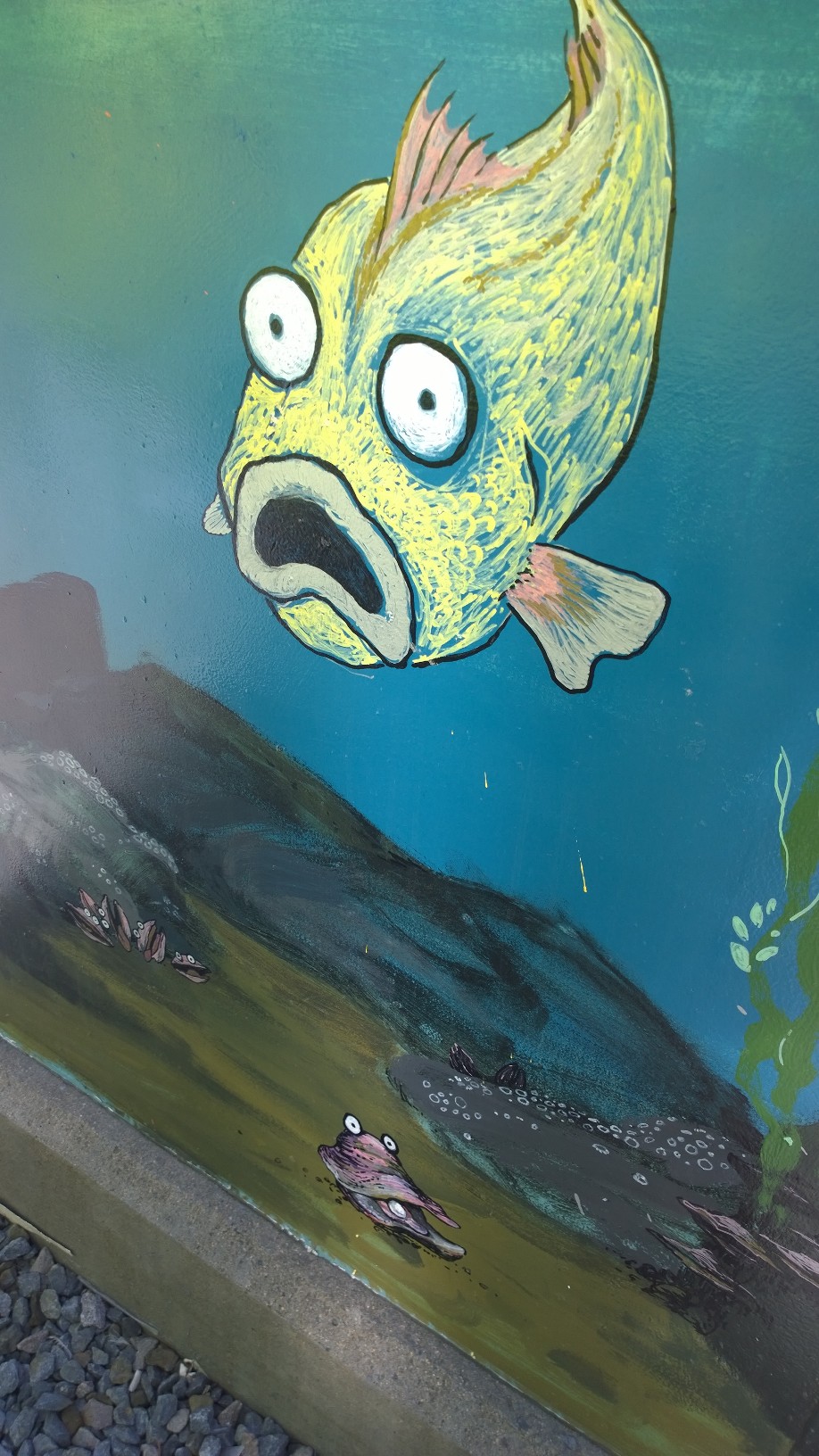
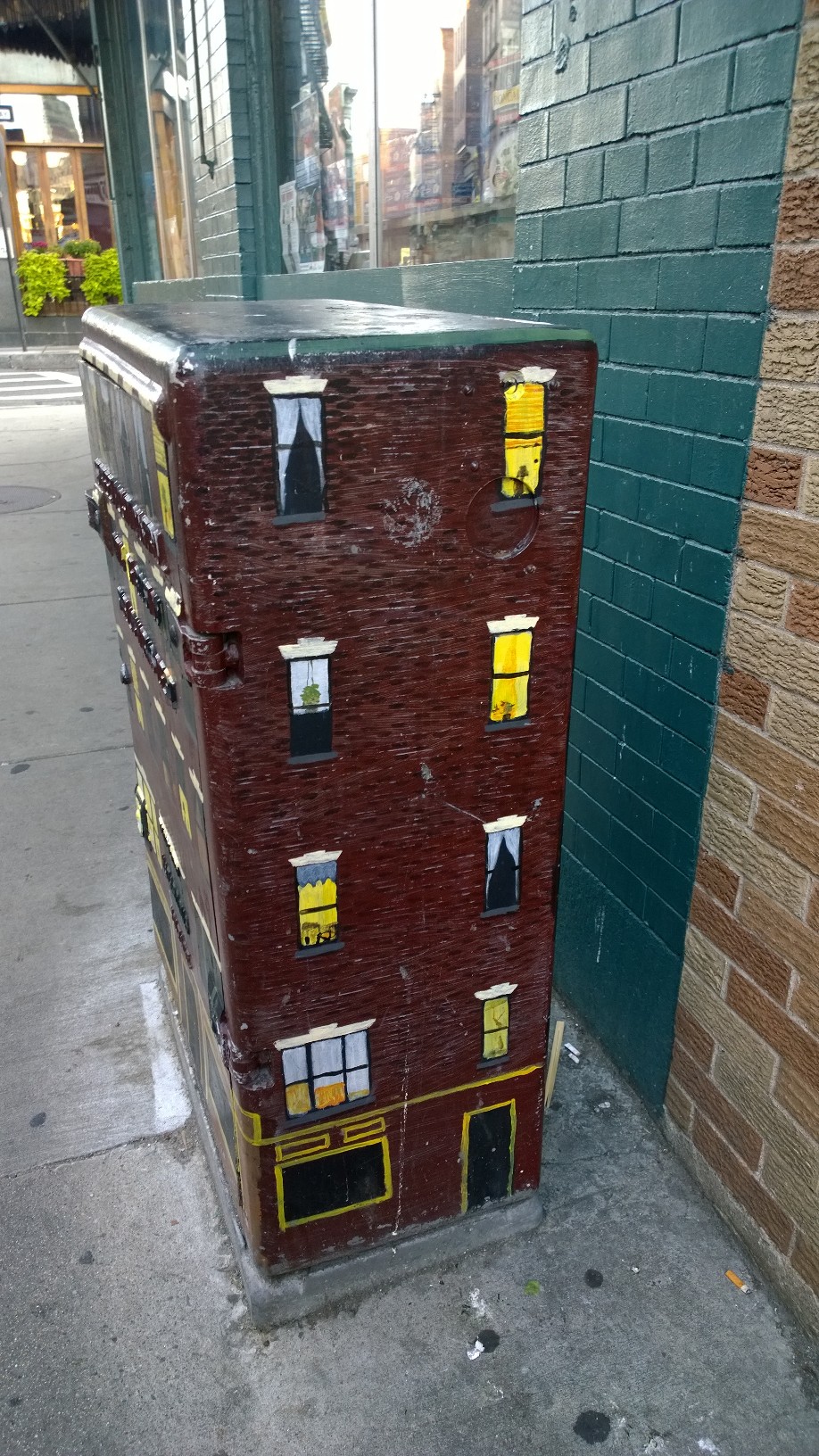
Adding appeal to a neighborhood by having local artists decorate utility boxes has become a thing. The adorable utility-box sea creatures below, however, have their work cut out for them as the only agreeable aspect of a heavily trafficked truck route between parking lots in South Boston.

I’ve taken photos of quite a few decorated utility boxes in the last couple years, and I think they work best in places where they support other amenities — trees, flowers, attractive storefronts. Otherwise they seem to be fish out of water.

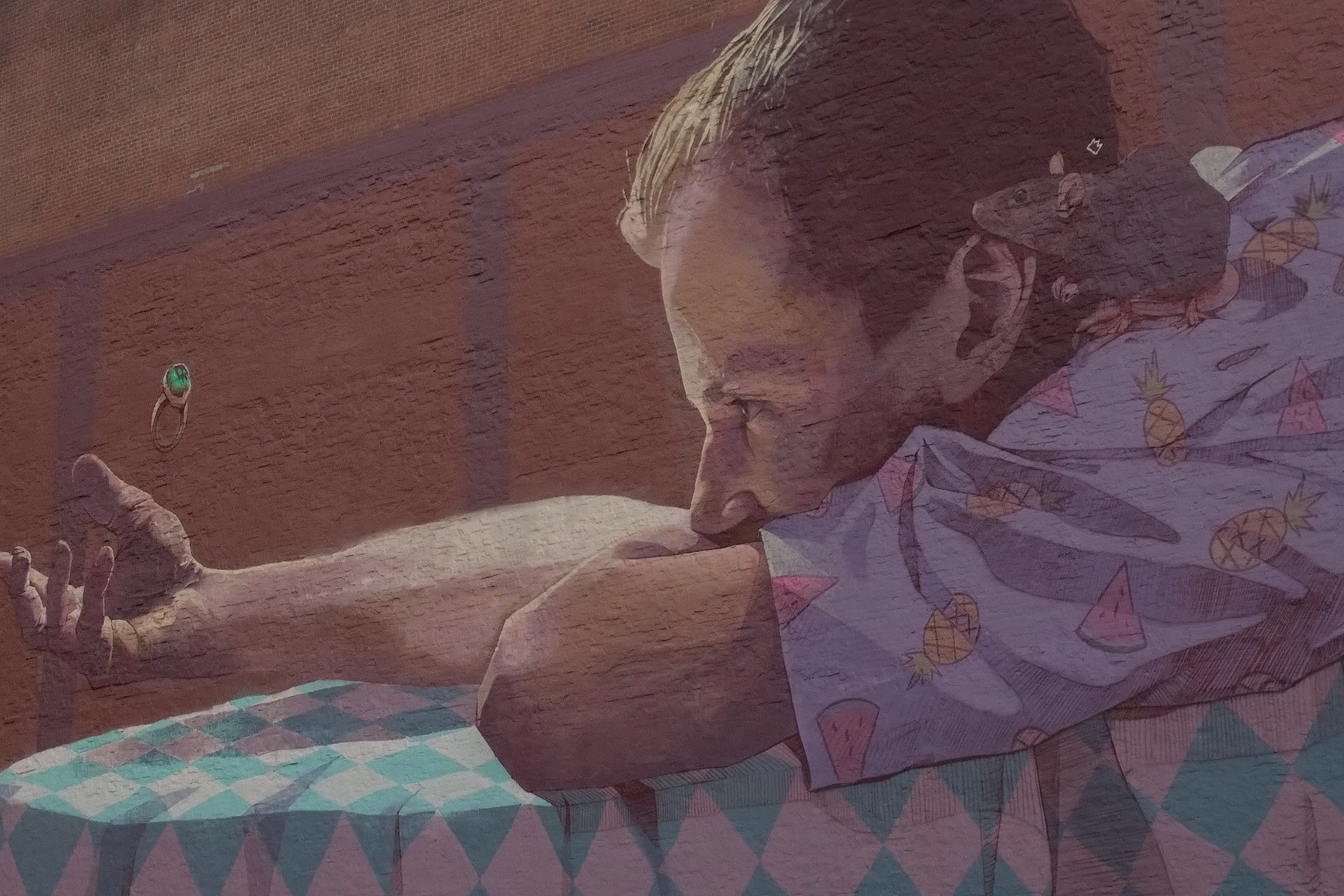
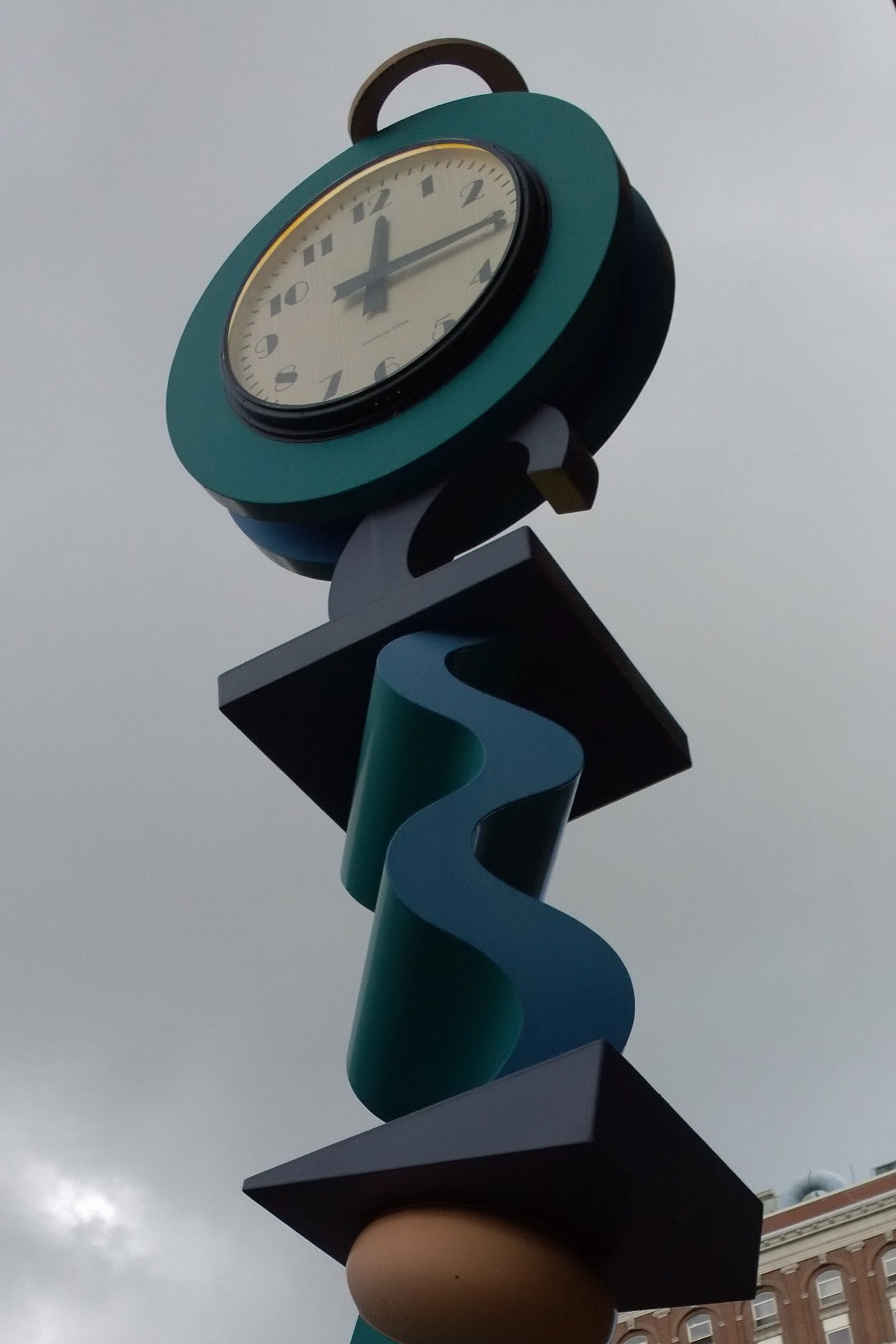
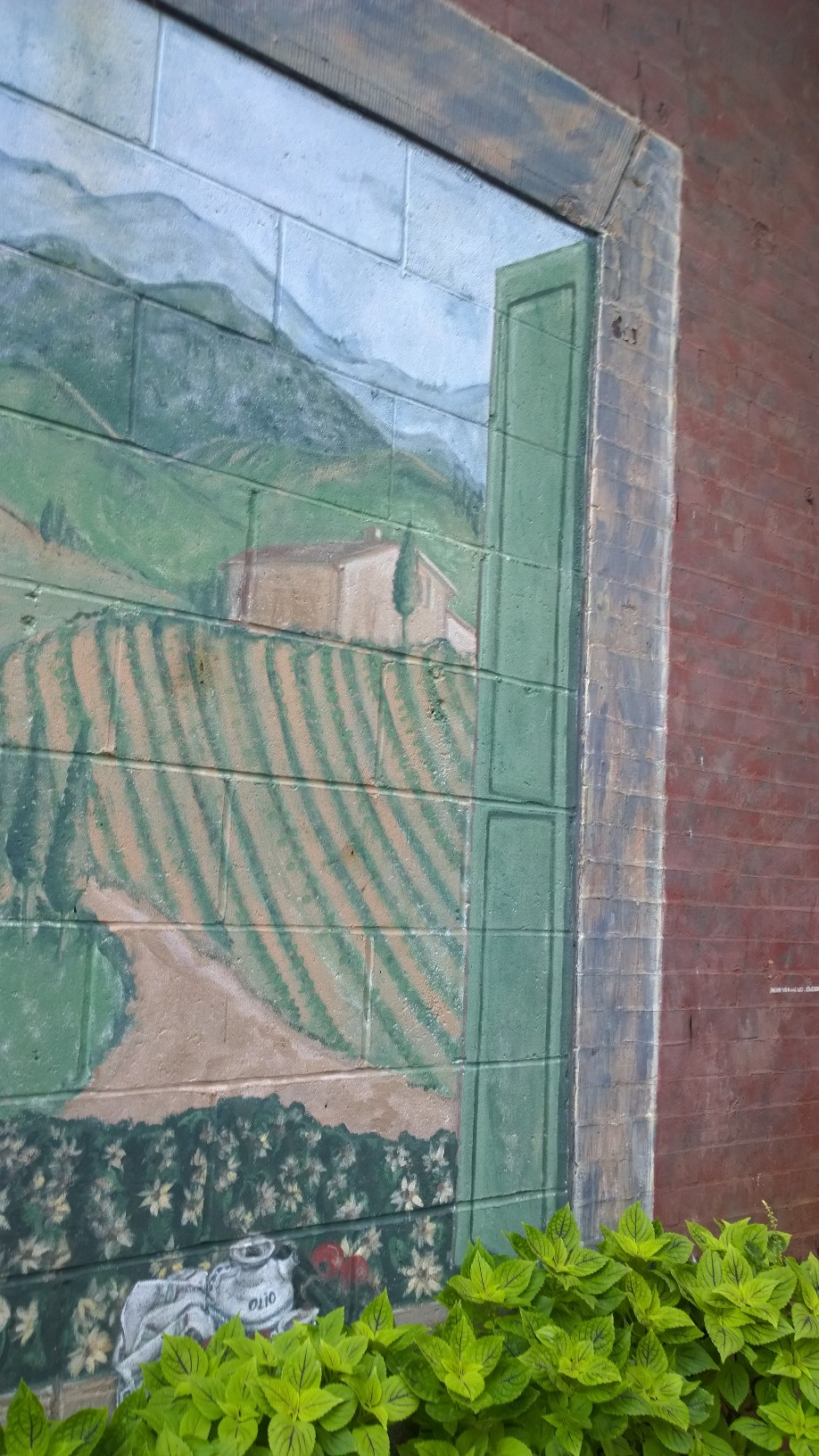
The unusual mural in downtown Providence is an example of street art with companions. The crazy Alice in Wonderland-type clock, for example, is nearby.

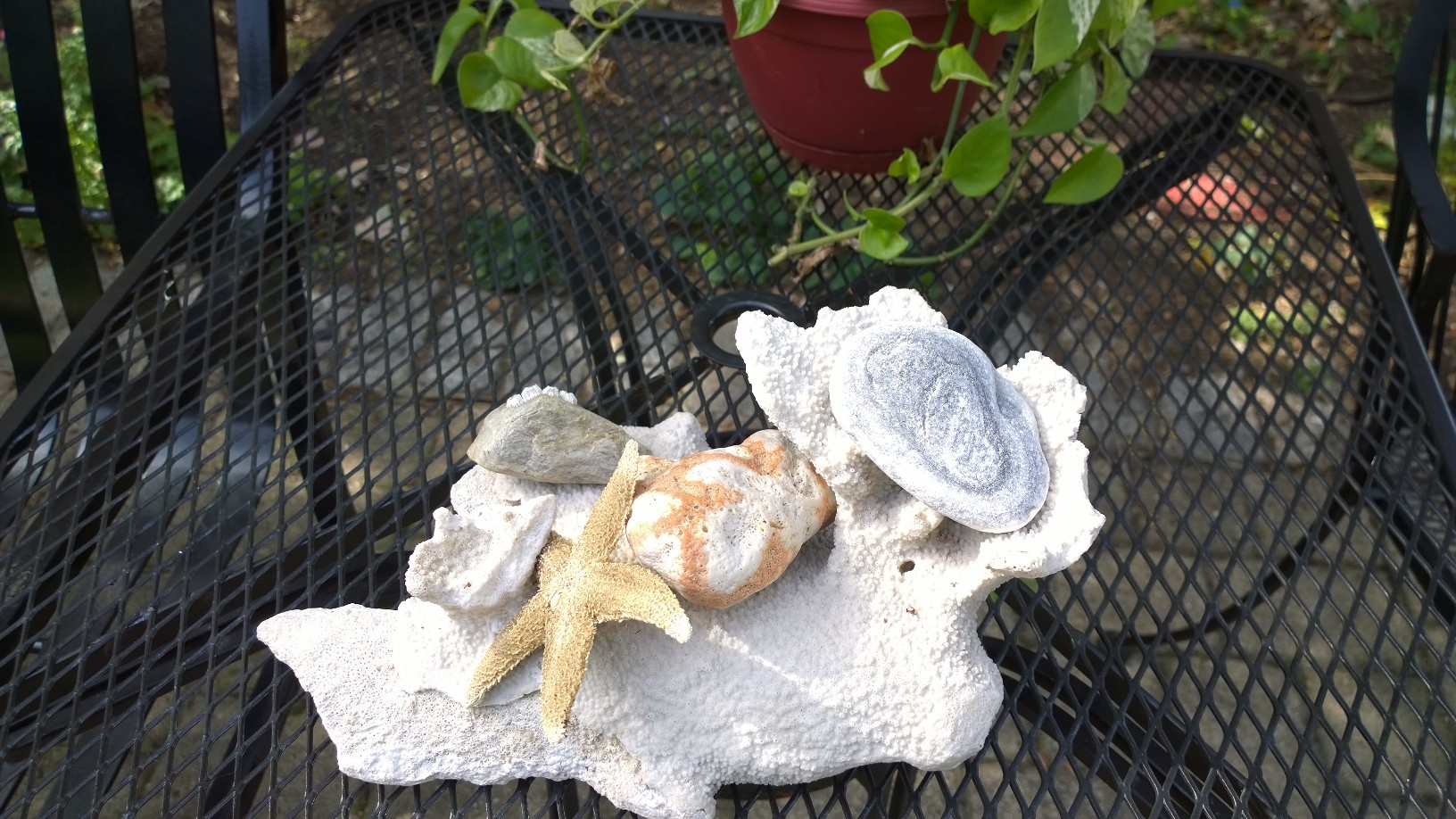
From other recent photographic undertakings comes shell art in Wormwood Park, sun-drenched crab apples, and a floating flower in the Greenway.

092515-utility-box-lobster

092515-fish-on-utility-box

092915-Providence-mural

092915-crazy-clock-in-Prov

092515-wormwood-park-display

092715-crabapples

082015-flower-in-Greenway-for-DS

Read Full Post »

Yesterday, as part of my organization’s participation in the United Way Community Care Day, several of us chose to volunteer in the Jewish Vocational Service’s refugee employment program. This service helps refugees learn basic English and works with local employers like Legal Sea Foods and Pret a Manger to find the immigrants jobs in four months. They have 80 percent job-placement success and more than 90 percent job retention after several months.

Each of the volunteers had a reason to be interested in this particular opportunity as opposed to, say, painting a day-care classroom or weeding in a community garden. One guy had lived in Germany for three years and knew what it was like not to understand the local language. Two women had parents who had been immigrants. Two other volunteers were naturalized citizens and had experienced challenges being an immigrant. In my case, I edit articles on low-income immigrant issues as one of the topics we cover where I work, and I am related to immigrants.

We were assigned either to a classroom where people spoke no English (and may not even have learned to read and write in their home country) or to a classroom where people had a little English. I was directed to a table of three adult learners in the latter classroom. The teacher gave me small cards with questions such as: What is your name? What is your favorite movie? What do you do on the weekend? How many people in your family?

We proceeded to get to know each other through these questions. The students asked me questions, too.

Then the teacher provided worksheets about the kind of things it is OK and not OK to talk about at work or to do in an interview. The worksheets also discussed body language in interviews. We practiced interviewing for a job.

Other staff showed up from time to time, reminding me of being in a hospital, where someone pops in to take your blood pressure and someone else suddenly arrives to check your chart or ask if you want to talk to a social worker. The people popping in at JVS were staff members focused on employment. A young man told my three students that on Saturday the restaurant Pret a Manger would be hiring people and did anyone want to come? He said it is a very supportive partner company. He noted that one person doesn’t eat pork and was able to ascertain that she wouldn’t want to work there as she might have to handle pork. She was a Christian from Ethiopia, and I found the prohibition against pork intriguing, especially has she later mentioned that she likes wine. The other woman said she would come Saturday. The man didn’t have his work papers yet, but another staff member popped in to help him take care of that.

Later, that student said I had helped him a lot and hoped I would come back again. All the volunteers had a wonderful time and are trying to figure out when they can volunteer again, although we will have to do it on our own time.

Photo: Jewish Vocational Service

Read Full Post »


John sent me the picture below of a corn maze designed to look like a scene from Alice in Wonderland.

It got me thinking about Alice’s other outdoor appearances, like the Mad Tea Party topiary at Disney or the statue in Central Park, New York City.

“Alice and her cast of storybook friends found their way to Central Park in 1959, when philanthropist George Delacorte commissioned this bronze statue as a gift to the children of New York City. … Engraved around the statue are lines from his nonsensical poem, The Jabberwocky. …

“Created by the Spanish-born American sculptor José de Creeft, the piece depicts Alice holding court from her perch on the mushroom. The host of the story’s tea party is the Mad Hatter, a caricature of George Delacorte. The White Rabbit is depicted holding his pocket watch, and a timid dormouse nibbles a treat at Alice’s feet.” More.

Photo: http://i.imgur.com/8uwnCKI
Aerial view of a corn maze commemorating the 150th year anniversary of
Alice’s Adventures in Wonderland.

Read Full Post »

Gaia Pianigiani wrote recently at the NY Times about an effort by new residents of a town in Italy to get to know neighbors through social media.

“When Laurell Boyers, 34, and her husband, Federico Bastiani, 37, moved in together in Bologna in 2012, they did not know any of their neighbors. It was a lonely feeling. …

“So Mr. Bastiani took a chance and posted a flier along his street, Via Fondazza, explaining that he had created a closed group on Facebook just for the people who lived there. He was merely looking to make some new friends.

“In three or four days, the group had about 20 followers. Almost two years later, the residents say, walking along Via Fondazza does not feel like strolling in a big city neighborhood anymore. Rather, it is more like exploring a small town, where everyone knows one another, as the group now has 1,100 members.

“The idea, Italy’s first ‘social street,’ has been such a success that it has caught on beyond Bologna and the narrow confines of Via Fondazza. There are 393 social streets in Europe, Brazil and New Zealand, inspired by Mr. Bastiani’s idea, according to the Social Street Italia website, which was created out of the Facebook group to help others replicate the project.”

The original meet-and-greet concept has evolved into neighbors helping neighbors in many ways.

“A few months back, Caterina Salvadori, a screenwriter and filmmaker who moved to Via Fondazza last March, posted on Facebook that her sink was clogged. Within five minutes, she said, she had three different messages.

“One neighbor offered a plunger, then another a more efficient plunger, and a third offered to unblock the sink himself. …

“Nothing comes at a cost in the Via Fondazza group. Some of the community’s facilities are donated, but most of the benefits stem from the members’ willingness to help, share and live better.” More here.

Photo: Nadia Shira Cohen/New York Times
Residents of Via Fondazza in Bologna, Italy, at a neighborhood bar. The street’s Facebook page has grown to 1,100 members.

Read Full Post »

About a week ago, I did something funny. I went to a Sing-along concert of Gilbert & Sullivan’s HMS Pinafore.

It convinced me that an awful lot of people have been in the show at some point in their lives, because many audience members brought dog-eared copies of the libretto — and all of them wore goofy grins on their faces for an hour and a half.

The leads were professionals, or quasi professionals. They dressed in costumes and affected English accents in their speaking roles on a raised platform where the orchestra was. It was nice that they were so professional, but I actually thought it was fun to read how different from performing their daily lives were.

According to the program notes, Thom Kenney (playing our hero Ralph Rackstraw) “has performed in musicals, operas and plays and is a member of the Tanglewood Chorus. He earned an MBA at Notre Dame and was deployed to Afghanistan.”

Beverly St Clair (Cousin Hebe) is a psychiatrist.

Ken Martin (HMS Pinafore’s Captain Corcoran) is a management consultant.

Conductor Alan Yost “is a percussionist and a research aircraft pilot and IT specialist with the US Department of Transportation. His true passion is conducting.”

The story in a nutshell: The captain’s daughter falls for a lowly “tar” (sailor) and plans to elope rather than marry the “ruler of the Queen’s Nav-ee,” the clueless Sir Joseph. The plot is discovered and Rackstraw ordered to a dungeon, when Buttercup, who comes on board periodically to sell notions and who has been hinting darkly about a desperate secret, announces that she was once nurse to Captain Corcoran and Ralph Rackstraw simultaneously and “mixed those babies up.”

So their social positions being suddenly switched, it’s OK for the new Captain Rackstraw to marry beneath him. Corcoran, now a lowly tar, decides to marry Buttercup, and no one seems to notice that she must be nearly 60 to his 40 (we are talking Gilbert & Sullivan, after all).

The young woman bouncing enthusiastically in the seat next to me had delightful hand gestures for every phrase she sang.

And did I mention that I sang the role of Sir Joseph’s Cousin Hebe when I was in junior high, which was long enough ago that television actress Tyne Daly, best known for talking tough on cop shows, played the ingenue.

Photo: borrowed from the Pittsburgh Savoyards by way of showbiz.com

Read Full Post »

Sometimes it’s hard to remember the details of what I did last week, or even today. If it’s a question of work, I can review my calendar, the e-mails I sent, or see what I checked off my checklist.

But the things that seem important and keep popping up in my head are shreds of conversations the details of which I can’t always remember. Who said that to me? And where? Was it in the hallway, the ladies room, the cafeteria, walking into the building, waiting to go through the security line? Was it someone I see a lot? A stranger at a food truck?

My new project is to do a better job of holding on to these brief but significant interactions.

One day, as I approached the cafeteria with a colleague, I asked if he went to his vacation home at this time of year. He said, “No. I rented it for the summer, and a new tenant is coming in for the winter. I had to remortgage it to pay for my mother’s care. She had Alzheimer’s.”

The woman in the office across the hall mentioned the supermoon and eclipse: “At first I thought it would be something huge and orange. We were going to make an event, take a blanket and a thermos to the beach and watch it from there. But after reading about it online, we scaled back our expectations about huge and orange and were happy watching from the front yard.”

Coming into the building with my lunch, I met another woman coming out. We hadn’t seen each other for weeks and stopped to chat. I admired her earrings. She said they were from the Rhode Island School of Design and told me her son just started grad school there. We talked about the wonderful craft sales RISD has, and I said I especially like the one where they block off several streets sometime around Mother’s Day.

Going home on the train, I sat next to a co-worker who had been strung out with anxiety about her only child, six months old, who had a fierce case of croup that got her hospitalized for a whole weekend. My colleague thought the baby was starting to pull out of it. As she talked about how cheerful the little girl is and how much she loves to carry her in the baby carrier next to her chest, the subway car seemed to fill with love and lift toward the heavens.

071415-clouds

Read Full Post »

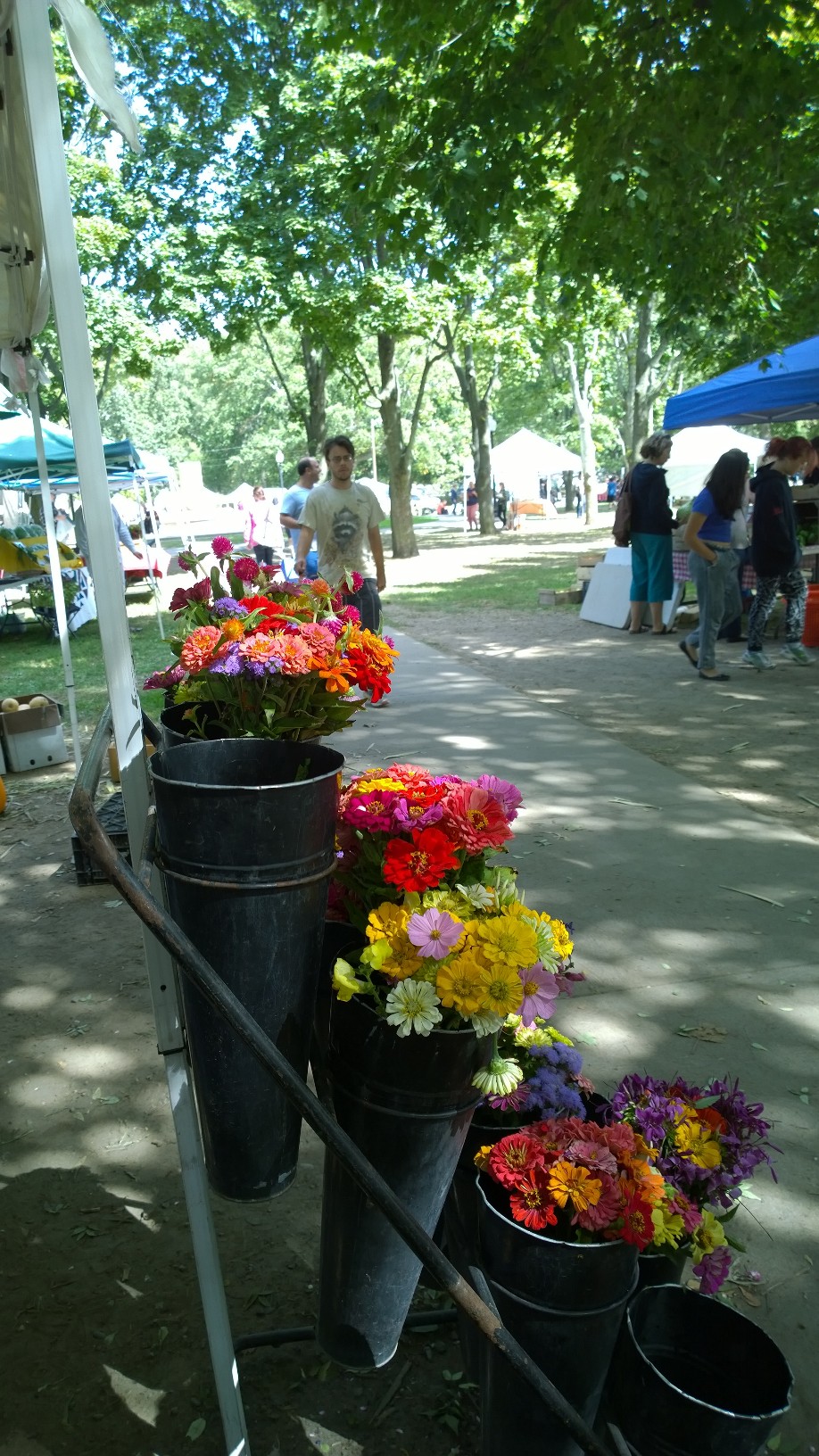
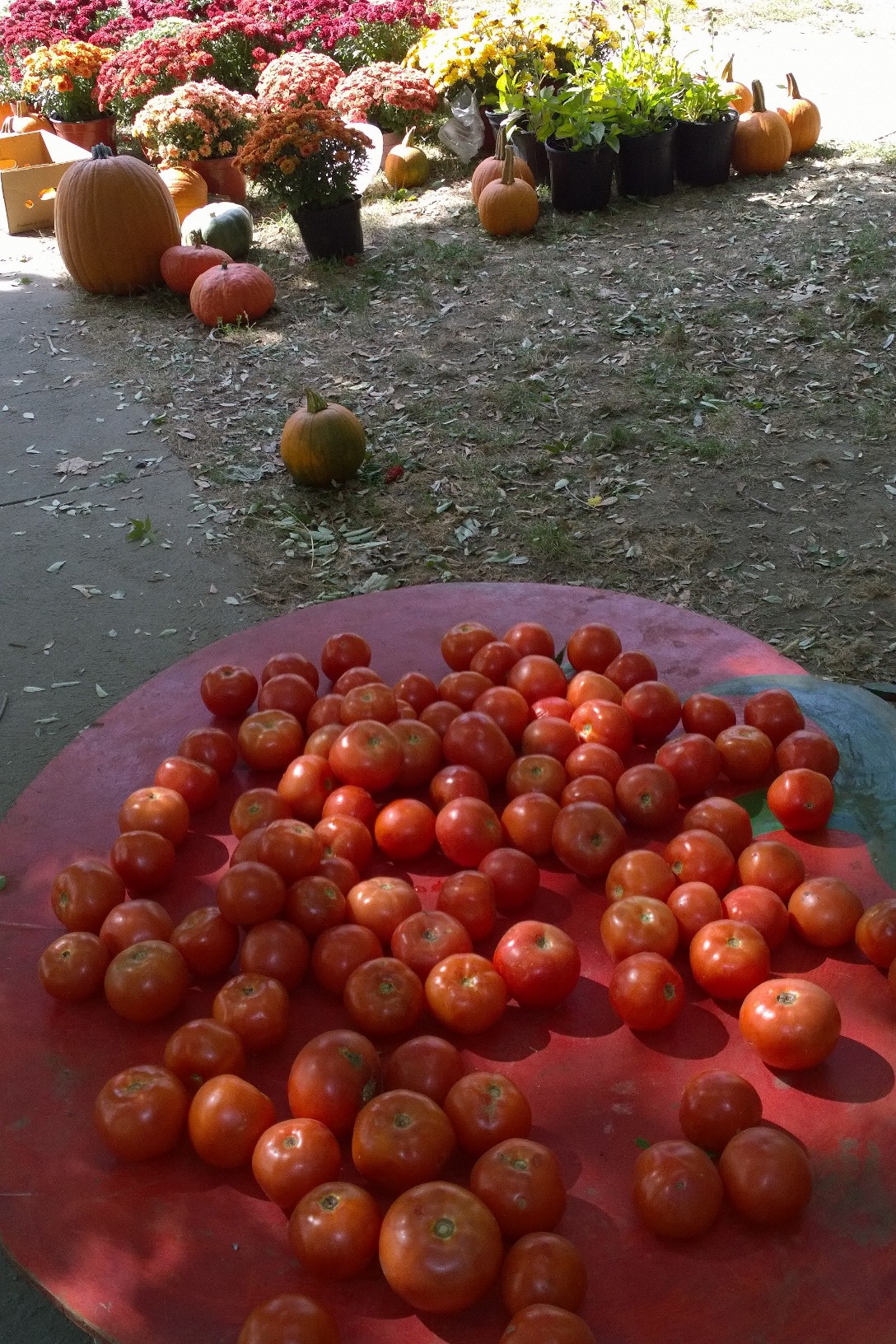
Who can resist a farmers market at this time of year? They are such joyful places.

Saturday we went with Erik and the kids to the Hope Street Farmers Market in Providence. It’s in a good-sized park where there is a playground as well as farmstands, crafts, live music, samosas, tacos, flowers, raw juices, fish, sausages, granola made by refugees …

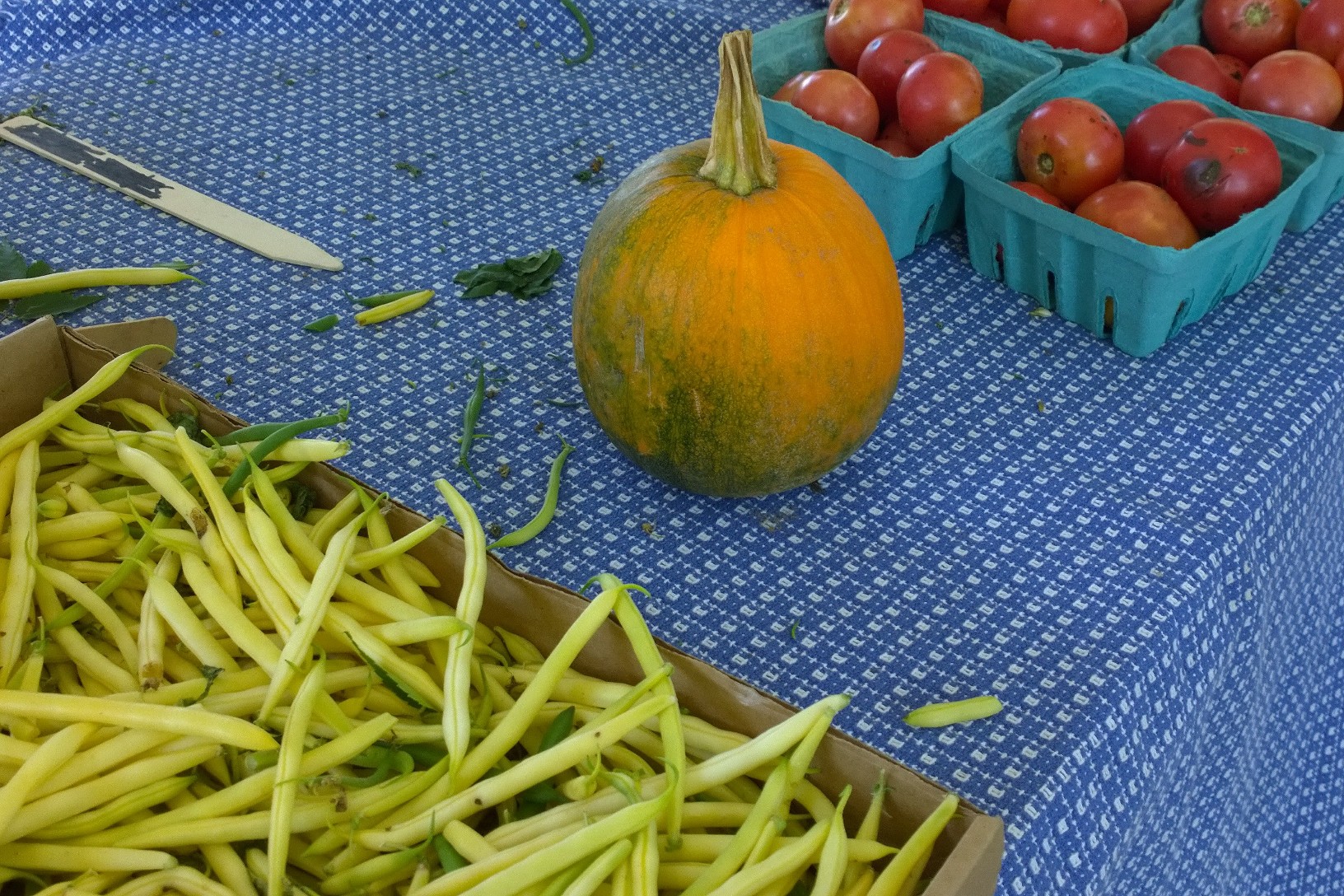
After his grilled cheese and his Del’s lemonade, our 3-year-old grandson chose the little green and orange pumpkin below. It’s now on his dining-room table at home. His sister, when she wasn’t sleeping, worked hard at inspecting everything on the ground and trying to put it in her mouth.

A few words from the website on extra offerings that might interest backers of other farmers markets: “For your convenience, here are some of the unique features of the Hope Street Farmers Market: The Bicycle Valet at the Saturday morning market, run by Recycle-A-Bike, a volunteer-based community organization that connects people with refurbished bikes, provides practical bike knowledge, and advocates bicycle use by safer, more confident cyclists. Anyone can drop off their bike while shopping and know that it will be safely watched and sometimes even tuned up, for a small fee, while they shop. http://www.recycleabike.org gives a full description and mission of the organization.

“Knife Sharpening while you shop is another new feature of our Saturday market. You can drop our your knives (wrap them carefully and mark them with your name please!) to be professionally sharpened for a small fee while you shop.

“Live music at the markets features local musicians or acoustic bands playing every Saturday and some Wednesdays, so feel free to bring a blanket, buy your picnic lunch or supper and enjoy the entertainment.”

092615-RI-farmers-market

092615-Prov-Farmers-Market

092615-market-Providence

Read Full Post »

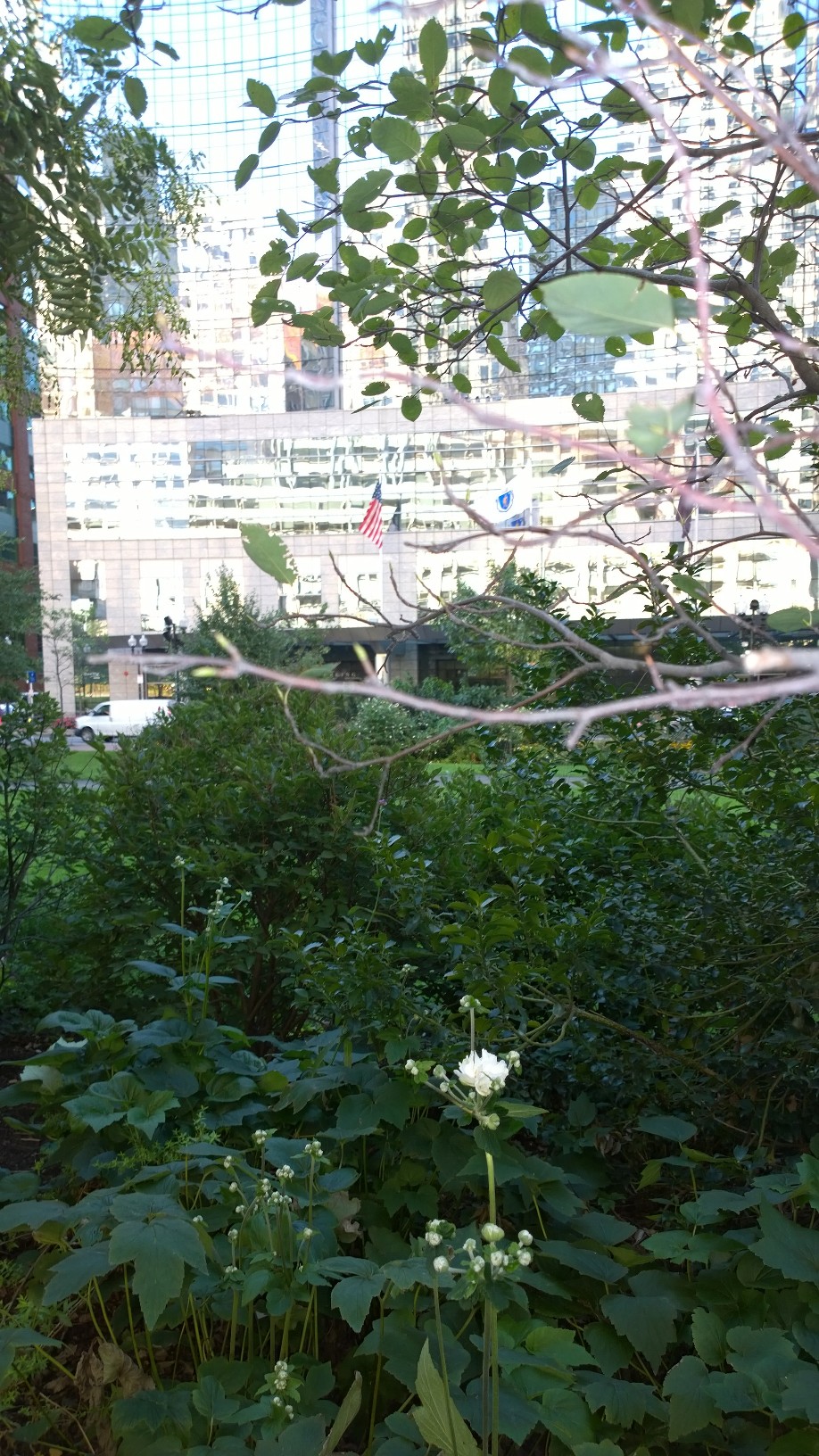
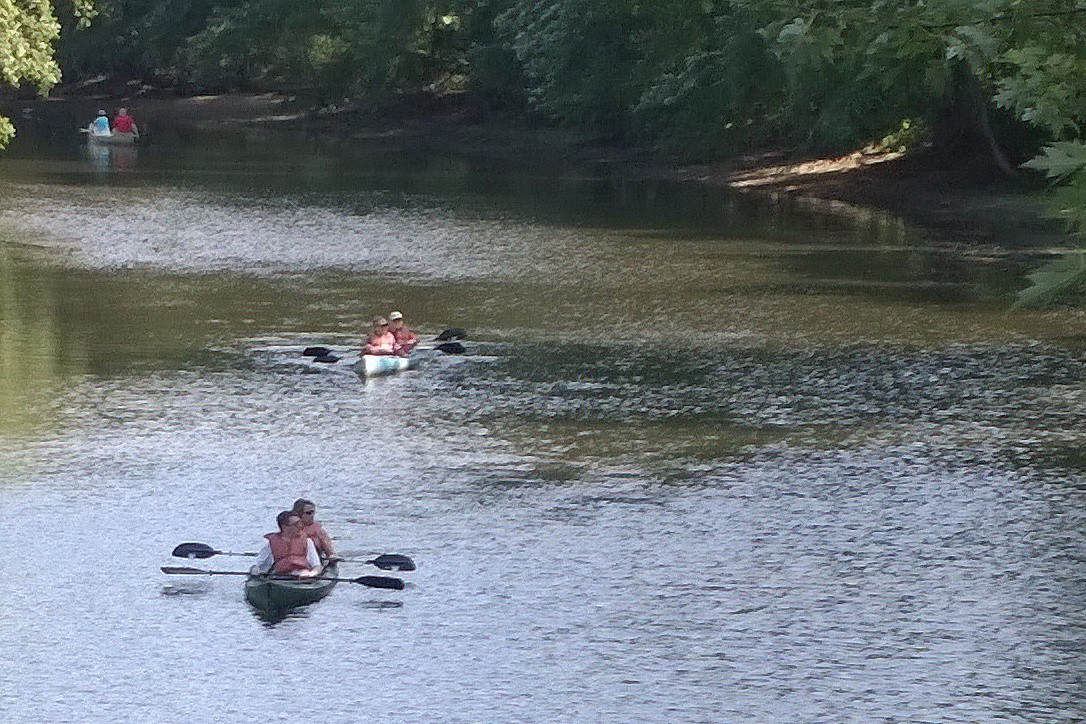
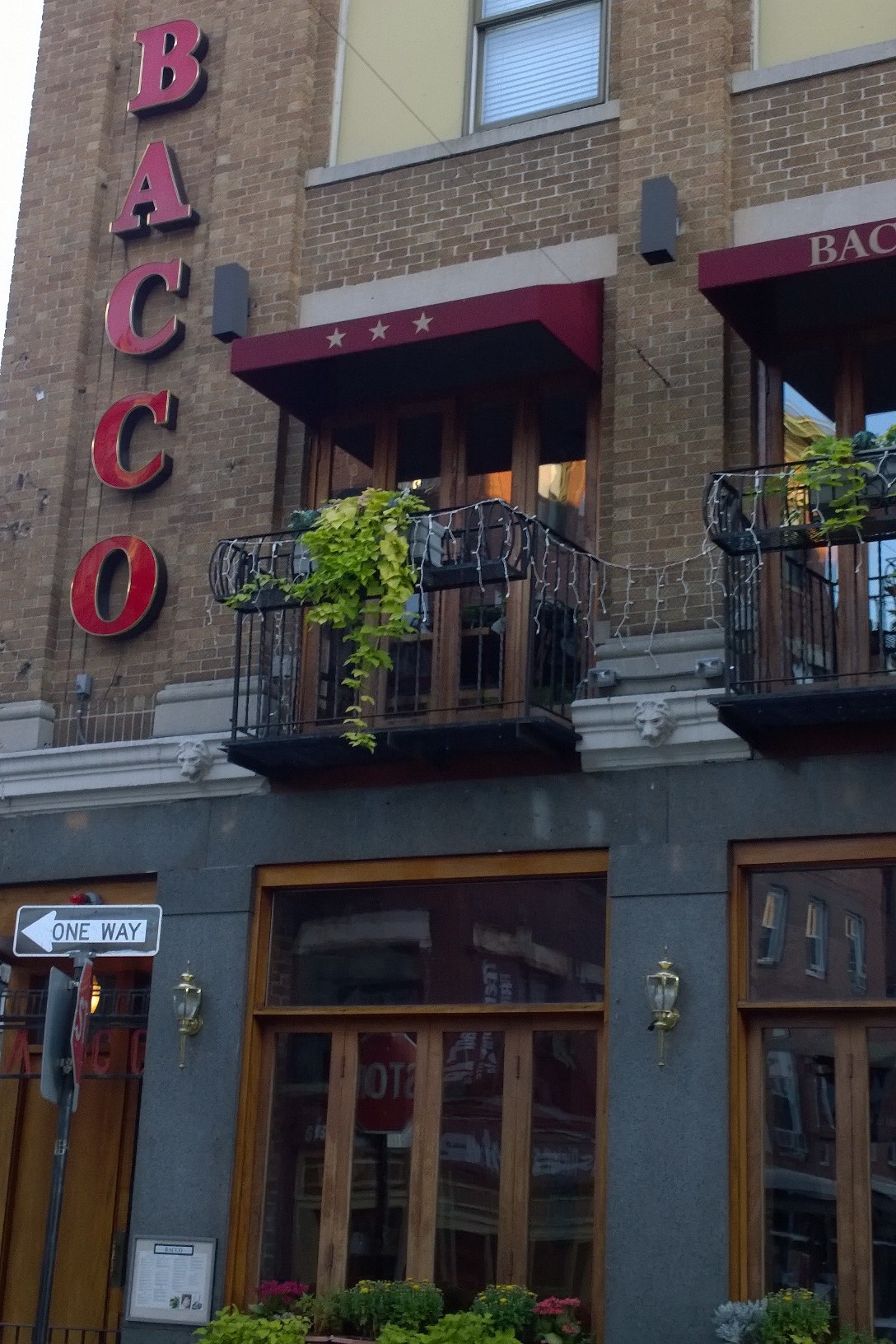
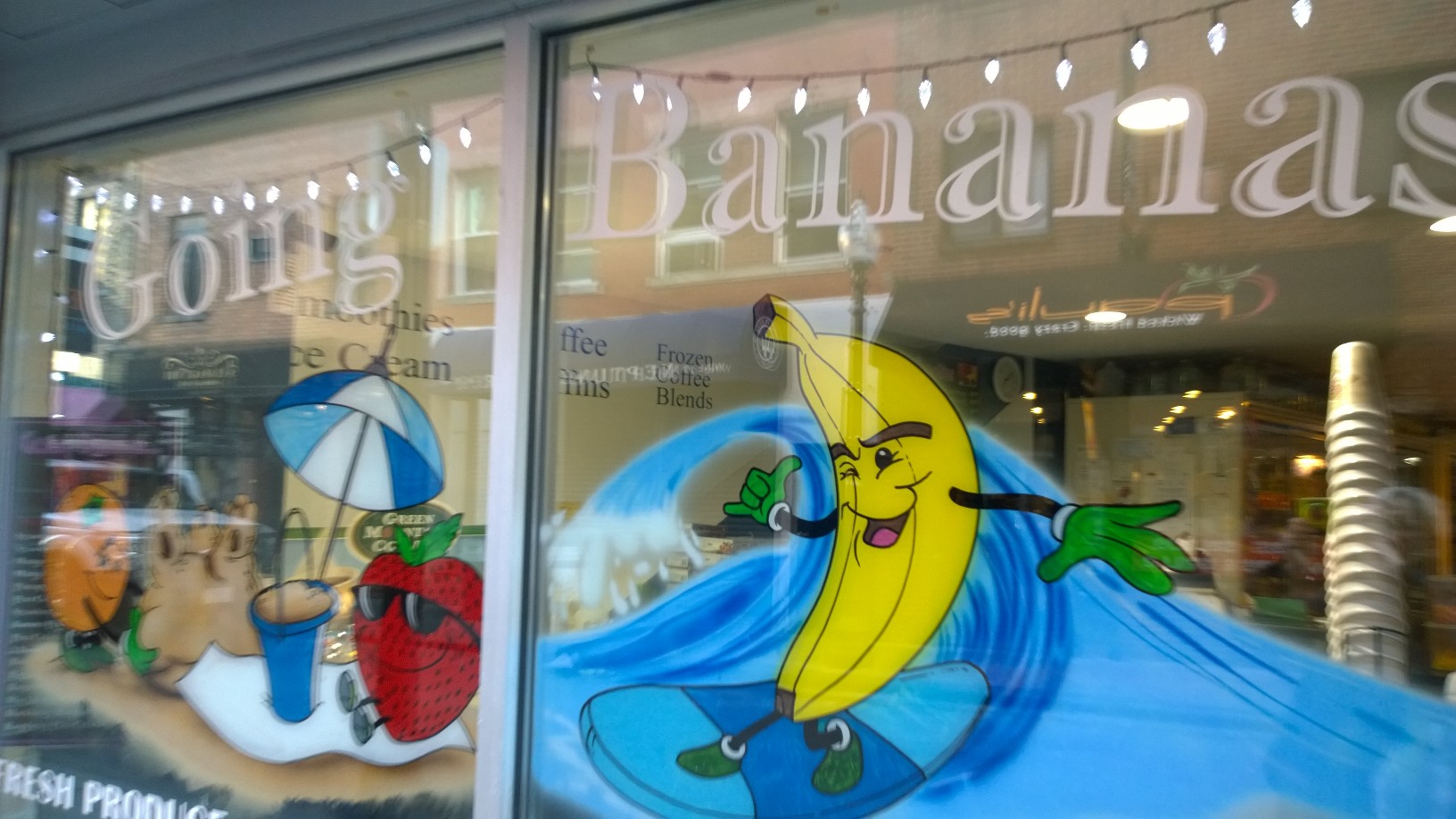
A few recent shots. The beautiful Zakim Bridge, late summer flower in the Greenway, water bugs on the Sudbury River, four scenes from Boston’s North End (which can still feel a bit like stepping into Italy), mysterious “pasta” along the railroad track, and my selfie shadow.

WP_20150924_06_52_11_Pro

091715-greenway

090715-canoes-Sudbury-River

090715-paddleboarding-Sudury-River

092415-North-End-Boston

092415-Going-Bananas-store

092415-North-End-utility-box

092415-North-End-Mural

092315-strange-RR-pasta

091915-shadow-selfie

Read Full Post »

Last month, Steve Curwood of the radio show Living on Earth covered a special conference on climate change.

“Curwood: A coalition of 80 leading Islamic clerics, scholars and officials meeting in Istanbul has issued a declaration on climate change, ‘calling on all nations and peoples to phase out greenhouse gas emissions as soon as possible.’ …

“Islamic nations, including wealthy oil-producing states, are taking action on global warming, says Wael Hmaidan. He’s director of Climate Action Network International, one of the conference organizers and joins us now from Istanbul. …

“Hmaidan: I was really happily surprised by how rigorous the Koran and the Islamic teachings on the environment and the care for the planet. It’s a core function of Islam to care for the planet. It’s a responsibility. … It talks about the delicate balance that all the creatures have on Earth and it’s the responsibility of humans to protect this balance.

“It also talks actually about how humankind should not think that they are more important than other creatures. It talks about the role of all creatures and the need of respect, this diversity in the planet. So all of these kinds of proverbs from the Koran and the Islamic teachings, as well as stories about Prophet Mohammed’s life and his care for the environment clearly [makes] environmental care and climate change key issue for an Islamic teaching. And hearing strong statements saying that it is forbidden not to phase out greenhouse gas emissions coming from Islamic scholars is something very inspiring, even for climate activists. …

“There’s an agreement to establish an informal group … that will follow up on all the ideas that came out from the conference. And the ideas are varied, some of them are high-level, like I mentioned going to the UN agencies, to governments, but also the representatives of the organizations that attended want to create action plans in their communities of influence, to bring the declaration. … We need to transform all mosques to renewable energy, and so on. So a lot of ideas, and they’ve created this platform Muslims for Climate to continue the dialogue.”

More here.

Photo: Islamic Relief
Mohamed Ashmawey, CEO of Islamic Relief Worldwide and one of the Climate Change Symposium organizers addresses attendees.

Read Full Post »

Ken Shulman reports at WBUR’s Only a Game that skateboarding often means a lot to kids on reservations.

The story starts with an Apache artist, Doug Miles.

“Miles paints mainly on found objects: fuel cans, car hoods, panels from a trailer home. But there’s one outlier among the surfaces, a curious artifact that migrated from California to America’s inner cities to the suburbs and, finally, to the reservation: the skateboard. …

“Miles said. ‘My son needed a skateboard. I didn’t have enough money. So I painted him one. And then he rode it all around the rez. And I knew what was going to happen. I knew. So when he got home I said, “What did everybody say?” And he said, “Dad, Dad, everybody wants one.” ‘

“Today Miles’ skateboards hang in private collections and museums. Some of them sell for hundreds of dollars. But the former social worker is most proud of APACHE Skateboards — a skateboard team, shop and artist collaborative he founded on the San Carlos Reservation, about 90 miles east of Phoenix.

“Miles said that making skateboards helps his kids connect with their Apache heritage.

“We’ve been making things for centuries as native people,” he explained. …

“The San Carlos team has a thriving skate park — with colorful murals painted by Miles and his crew. The team also travels to compete against other tribes and against big city skaters. Miles said the travel is mind opening.

“ ‘The kids in the South Bronx and the other reservations and East LA, they’re just like our kids,’ he said. ‘These are all communities that are struggling. So when they meet our kids they’re really meeting themselves. And so I think it empowers kids to know that we’re struggling here, too, but we’re also making art and skateboarding and having a lot of fun in the process.’ ”

More here.

Photo: Ken Shulman/Only A Game
For some Native Americans living on Indian reservations in the American Southwest, skateboarding is more than just a recreational activity.

Read Full Post »

« Newer Posts - Older Posts »