Feeds:
Posts
Comments

Archive for the ‘Uncategorized’ Category

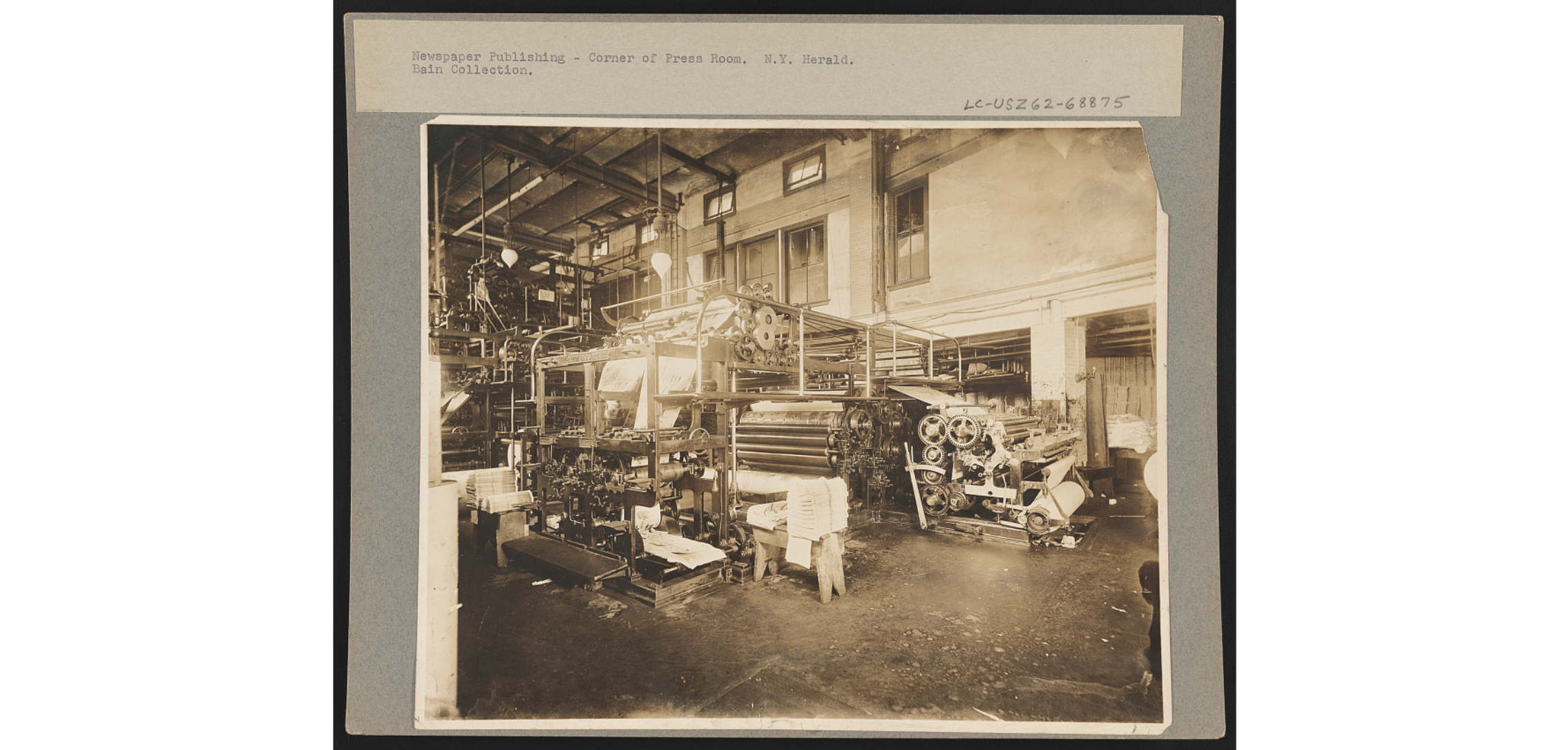
Photo: Library of Congress.
New York Herald press room back in the day. Times change.

To stay relevant, businesses need to keep moving forward. That’s what an Austrian journal with a long history decided recently. It has a few tips for other businesses thinking of modernizing.

Lucinda Jordaan writes at the World Association of News Publishers, “A government-owned national daily founded in 1703 in Vienna, Austria, Wiener Zeitung had faced the possibility of closure for most of this century. In October 2022, the threat was realized when a new law was adopted by the Austrian parliament that effectively cut off the main revenue stream of what was the official government gazette until 2020.

“Government job ads and companies’ annual financial results – required by law to be published in the paper – had largely funded WZ’s [annual] revenue. That would be stripped away by the end of 2022.

“This led to, arguably, the fastest, most radical transformation in newsroom history. ‘It was super quick; we had to do it in no time,’ acknowledges Editor-in-Chief Katharina Schmidt. ‘The law made us a publicly-funded news outlet in May 2022; we started the product development process in December 2022 and, by 1 July 2023, everything had changed.’

Wiener Zeitung is now WZ, an about-face from its roots in print and an aging audience. WZ has  a dedicated website, several newsletters, podcasts, and a growing following on TikTok and Instagram.

“Schmidt, the paper’s first female editor, shared the company’s challenges and learnings with a packed audience at WAN-IFRA’s recent World News Media Congress in Copenhagen. 

“In October 2022, Wiener Zeitung’s newspaper subscription totaled 8,000, within a population of about 9 million. ‘Most of our 8,000 subscribers were over 90 years old,’ [Schmidt says]. …

“Along with revenue loss, the newsroom faced multiple challenges in its reconstruction, as it fought for sustainability. They not only had to reduce staff by 60 percent (from 55 to 20) – and overcome internal resistance to this – but were also restricted by law in the topics they could cover.

“ ‘We really had to focus because, of course, there were so many ideas that we really wanted to put in practice, but we couldn’t. So we just focused on constructive journalism, and our target audience: the 20 to 29-year-olds. …

” ‘And of course, we checked out their needs. We had many focus groups and usability testing so that we could really focus on, on the needs of our audience.’

“The development process was also a reiterative process of testing and developing, then adapting to needs. ‘This is very important in this process; you cannot fixate on some framework,’ explains Schmidt. …

“Within weeks of the launch, they saw positive results: WZ had 750,000 unique monthly users, and Instagram figures increased by a third in the first three weeks. In September, they launched a newsletter dedicated to politics; subscription is at 12,000, with other topic-focused newsletters in planning.

“By November 2023, WZ’s relaunched and refreshed website has had up to 3 million users; their new TikTok channel had 11,500 followers, and Instagram followers went up by 46 percent from July to November 2023.

“Here’s how they did it. “1) Make friends in high places – get the publisher on your side; 2) Form a core group, comprising an interdisciplinary team – but don’t underestimate the number of editors you need; 3) Renew your news product following a development process – learn from other areas to adapt to your need ; 4) Focus your journalism: stay on track, and find your audiences.; 5) Involve the rest of the editorial team in the process. Over-prepare yourself. … Let the motivation of the core group carry your load; 6) Lead by example: say goodbye to hierarchical leadership, and find allies in-house, and externally, within the industry; 7)  Know that change takes time – this relates to new editorial direction, as well as mentally.” More here.

Read Full Post »

Photo: MassAudubon.
The invasive multiflora rose forms dense thickets in fields and field edges, crowding out other species.

The problem with invasive species that aren’t native to a region is that they crowd out the local species, and that has a snowball effect. We colonists crowded out indigenous people, which among other things, undermined wisdom about protecting nature. In the plant world, local pollinators don’t get what they need to pollinate. The list goes on.

Frank Carini reports at ecoRINews on how invaders hurt both the environment and the economy: “Invasive Asian shore crabs are outcompeting young lobsters. Invasive snake worms and hammerhead worms are burying themselves deeper into southern New England, where the former consumes the top layer of soil and dead leaves where the seeds of plants germinate, and the latter is toxic and transmits harmful parasites to humans and animals.

“Invasive multiflora rose and oriental bittersweet have long been embedded in the region, crowding out native vegetation and strangling trees. …

“Last summer, the Intergovernmental Science-Policy Platform on Biodiversity and Ecosystem Services (IPBES) for the United Nations issued a global assessment providing clear evidence of this growing threat.

“In a paper recently published in the journal Nature Ecology & Evolution, the authors of last year’s assessment — 88 experts representing 101 organizations from 47 countries — outline the main findings from that report and echo the need for urgent action.

Laura Meyerson, a University of Rhode Island professor of invasion science and habitat restoration ecology and editor-in-chief of the journal Biological Invasions, is a contributing lead author on the IPBES assessment and a lead author on the recent paper. …

“She said, ‘Our research produced overwhelming and unequivocal evidence that the negative impacts of biological invasions far outweigh any benefits and that those who depend most on nature suffer the worst consequences.’

“The researchers documented some 37,000 invasive species that had been introduced by people to areas around the world. Of those, about 3,500 species were considered harmful invaders that negatively affect nature and people’s quality of life. 

“The number of invasive species — major drivers of global biodiversity loss, according to Meyerson — are expected to continue to grow. Some 200 new species are expected to be added annually by human activities in regions that have not recorded such invaders before, according to the June 3 paper. And established invasives will continue to expand their ranges, spreading into new countries and choking out native species.

“The paper also noted that simple extrapolations from current impacts from invasive species are likely to underestimate the level of future impacts, and drivers of biodiversity loss, such as the climate crisis, are acting in concert and those interactions are increasing biological invasions. …

“ ‘It’s critically important that we all do our part to reverse current trends,’ Meyerson said. ‘The public can make sure that the plants they are buying for their gardens are native species. Pet owners should not release animals, like rabbits or Burmese pythons, that are no longer wanted into the wild.’

“For example, red-eared sliders — native to the Southeast, the south-central United States, and northern Mexico — are the most popular pet turtle in the United States and available at pet shops around the world. But this turtle species lives for about 30 years, so they are often released where they don’t belong after pet owners tire of them. As a result, they are considered one of the world’s 100 most invasive species.

“Meyerson is also the senior author on a global study that explored the extent of biological invasions on lands owned or managed by Indigenous people. The study was published in Nature Sustainability in late May.

“The spread of animal and plant species into new regions by humans is increasing rapidly worldwide, with thousands of species now present in regions outside their native range. The research team, which included scientists from Australia, Austria, Germany, Hungary, and the United States, investigated the spread of invasive species to lands managed by Indigenous people and found significantly fewer invaders in those areas compared with other natural areas.

“ ‘This was a really important finding because even after controlling for the remoteness and accessibility of Indigenous peoples’ lands and how land is used, in general, the numbers of invasive species are lower, as is biodiversity loss,’ Meyerson said. …

“Researchers analyzed millions of available data points from around the globe on the distribution of non-native plant and animal species. On average, there were 30% fewer non-native species on Indigenous lands. The study suggested the enormous difference is primarily due to sustainable land use, a higher proportion of forests, and lower accessibility to humans.

“Indigenous people represent ethnic groups that settled in regions long before the arrival of Europeans, such as Native Americans, the Aborigines of Australia, and the Sami in Scandinavia. About 28% of the land surface around the globe is inhabited by Indigenous people. Most of these areas are in remote regions and many have enormous importance for conservation of biodiversity such as the Amazon basin and wilderness areas in the Arctic.”

More at ecoRI News, here. No firewall. Donations solicited.

Read Full Post »

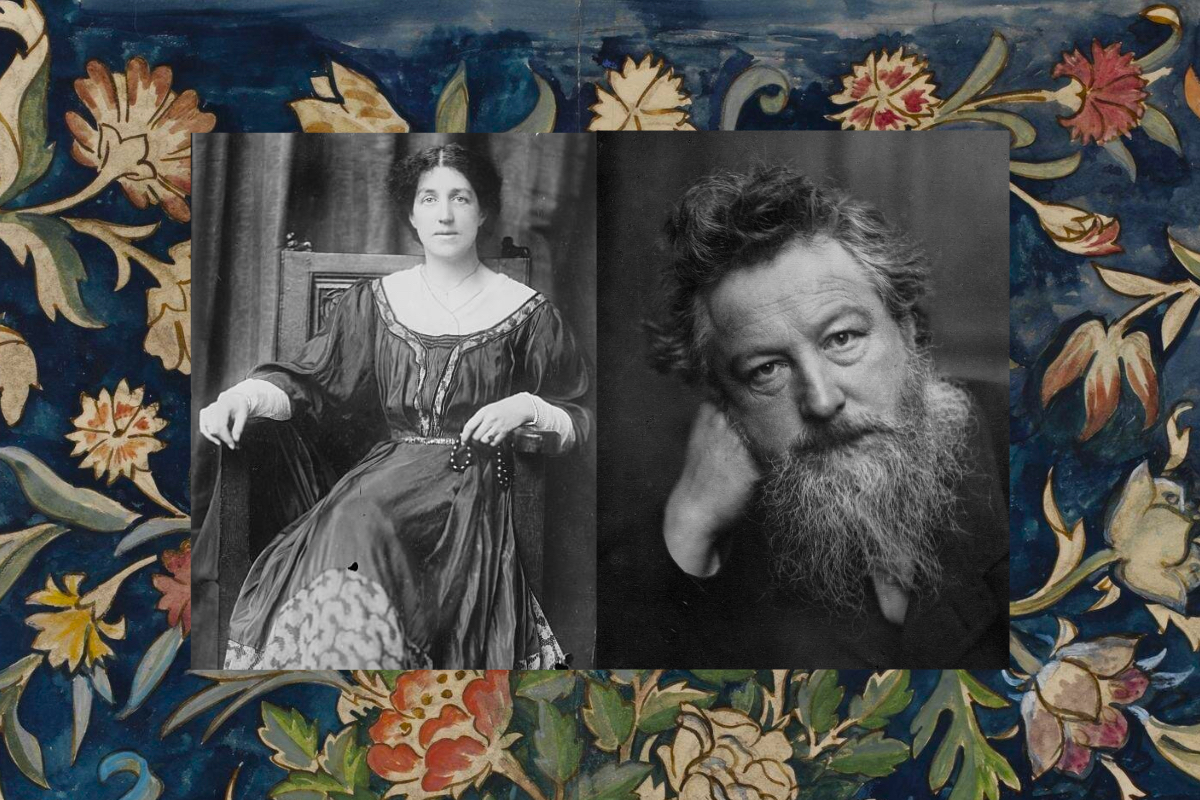
Photo collage: Isabella Segalovich/Hyperallergic, using images from Wikimedia Commons.
Detail of embroidery design by May Morris overlaid with portraits of May and her father William Morris.

Is this the year that the contributions of women get recognized in a big way? There seems to be something in the air.

In any case, today’s story draws attention to art that most of us have known about for years as the work of William Morris. Who knew that much of it was by his daughter May?

Isabella Segalovich wrote recently at Hyperallergic, “On a bright, sunny day in Victorian England, a little curly-haired May Morris gleefully handed a ball of wriggling worms to her father, William. The legendary textile and wallpaper designer smiled: He was both glad to have fresh bait for his favorite pastime of fishing and proud to see his daughter happily playing in the dirt, a freedom afforded to few girls of their social class. 

“There’s plenty to admire about artist William Morris, from his timeless ornamental wallpaper designs to his late-in-life turn to socialist politics, where he imperfectly but tirelessly fought for workers rights and against British imperialism. Less well known is that by all accounts, William was a pretty great dad, who encouraged his two daughters, Jenny and May, to grow into incredibly talented designers themselves. …

“The sisters soaked up their father’s aesthetic brilliance as they carefully observed him experiment with drawing, calligraphy, and textile dying; William even provided them with their own dying kits for messy, colorful play. May enrolled in what is today the Royal College of Art in 1878, where she studied embroidery. This was in no way preparing her for a life of a housewife with an under-appreciated textile skill. Rather, her father had been slowly training her to take over the reins at his historic company’s embroidery department at only 23 years old — a business decision typically reserved for the sons of the era, not its daughters.

“There, she began designing patterns for Morris & Co. that became mainstays of the company, some of which, unfortunately, were later misattributed to her father. She supervised a team of embroiderers as they produced all manner of textiles, from bedspreads to book covers to altar cloths. Soon, she was a leading artist of the progressive Arts and Crafts Movement.

“Before long, the two were close comrades in the small but mighty English socialist movement: May stood close on blustery London sidewalks as William became a kind of socialist street preacher. Together, they broke from the Social Democratic Federation in 1885 and took part in founding the Socialist League, where May took charge of the group’s library and became close friends with Karl Marx’s daughter, Eleanor, another one of the league’s founders. …

“Scholars have noted that William Morris was certainly a flawed crusader for women’s rights, once proclaiming that ‘it would be poor economy setting women to do men’s work’ in the same breath that he called for ‘absolute equality of condition between men and women.’ A powerful feminist, May greatly improved upon his political legacy by co-founding the Women’s Guild of Arts for the crafters who were not allowed into the Arts and Crafts Movement’s foundational Art Worker’s Guild. 

“It’s quite likely that no one knew William Morris better than May did. After his death, while caring for her older sister who struggled with epilepsy, she edited a whopping 24 volumes of her father’s writing, each with introductions so studied and lengthy that they were later published as their own two volume set. Biographer Fiona MacCarthy wrote that their relationship was ‘partly suffocating, in the intensity of its demands, but in another sense a kind of freedom … It released her latent talents and brought her into contact with ideas and activities far beyond the reach of most young women of her period and class.’ 

“Even so, May was undervalued in her time, and she knew it. ‘I’m a remarkable woman – always was,’ she wrote to playwright George Bernard Shaw in 1924. ‘Though none of you seemed to think so.’ “

Gorgeous pictures at Hyperallergic, here. No firewall. Subscriptions encouraged.

Read Full Post »

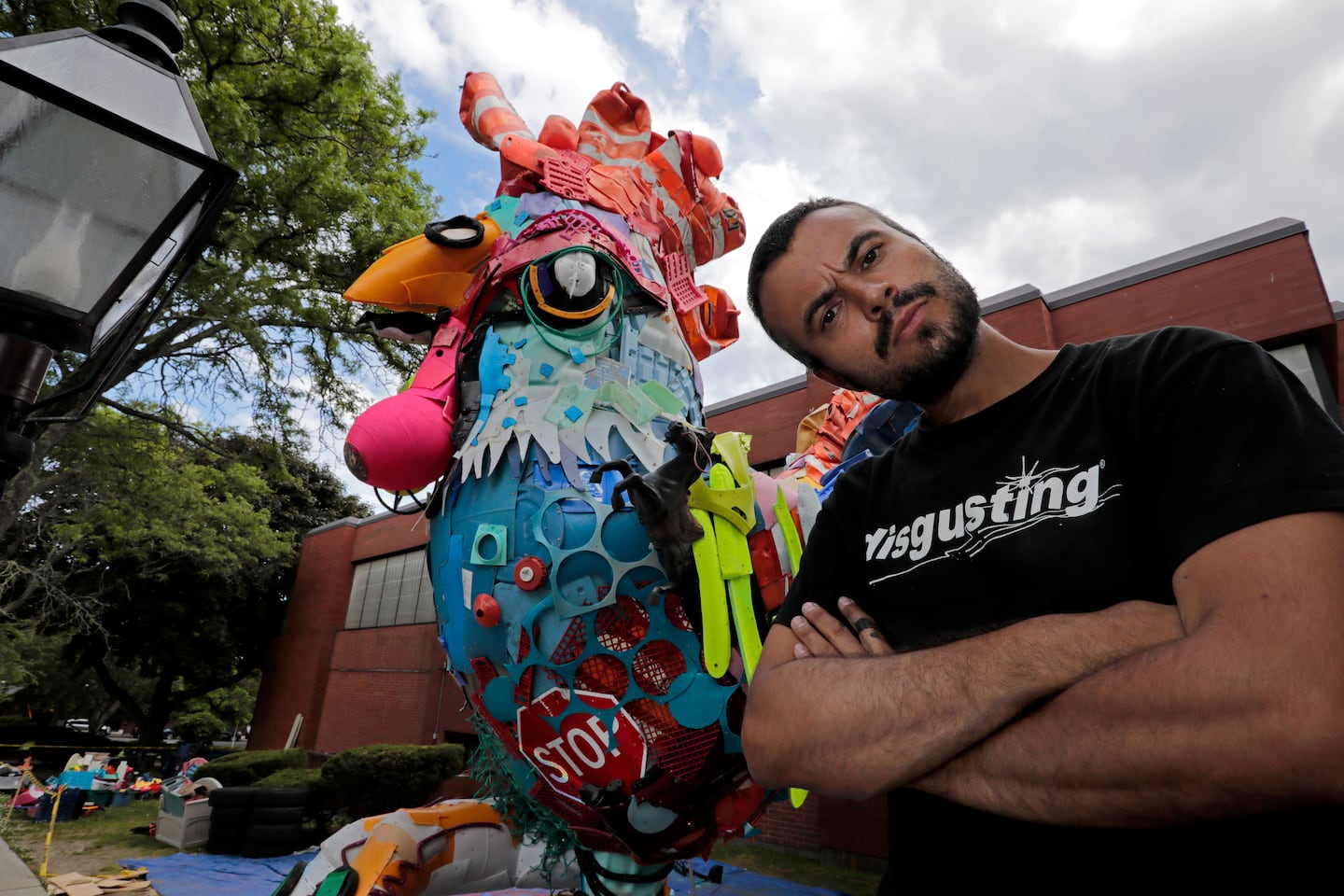
Art: Bordalo II.
Photo: Pat Greenhouse/Boston Globe.
I’ve been following this Portuguese sculptor on Instagram for several years. Now he’s worked with high school students to create a sculpture for Portuguese-speaking New Bedford, Mass., not too far from where I live.

I have been curious about this artist, age 36, for a long time. He makes vibrant sculptures from trash and shows them on Instagram.

Cate McQuaid wrote recently at the Boston Globe about Bordalo II’s “Plastic Rooster.” 

“There’s a new rooster in town,” she says, “and he’s close to 20 feet tall and kind of trashy. Portuguese artist Bordalo II’s ‘Plastic Rooster’ sits beside the New Bedford YMCA, the centerpiece of Massachusetts Design Art and Technology Institute’s (DATMA) ‘TRANSFORM: Reduce, Revive, Reimagine’ public-art initiative through Oct. 14. …

“Bordalo has traveled the world, from Bora Bora to Montreal, painting and building gaudy, charismatic animal sculptures out of waste materials. He was in town in mid-June putting finishing touches on ‘Plastic Rooster.’ The giant bird is clad in nautical refuse, plastic, street signs, and more collected by locals. He wears a plastic penguin under his beak like a bowtie, and his talons are cut from bright-pink safety cones. …

“[He says] ‘My grandfather, he was an artist. I was really young and I always tried to dig into his studio and steal his paints and draw stuff.’

“The artist, whose first name is Artur, calls himself ‘Bordalo II’ as a tribute to his grandfather, Real Bordalo. At 11, the younger Bordalo became a graffiti artist.

“ ‘It shaped the person I am, the way we do everything,’ he said. “Not being afraid to risk, to really do it. The scale. The sense of how it connects with the street.’ …

“The artist’s lighthearted characters carry messages about over-consumption and conservation. ‘With the big trash animals, it’s like you make portraits of the victims with what destroys them or their habitats,’ he said. …

“ ‘Plastic Rooster’ was commissioned by DATMA, which has partnered with local landfill management departments and the Greater New Bedford Regional Vocational Technical High School to involve the community.

“Bordalo sent his rooster image to the school’s 11th-grade Metal Fabrication students, who built the structure from steel and wood.

“ ‘After that we have a list of plastic trash materials that we know we’re going to need, and we ask the local production team to collect all those materials,’ Bordalo said. ‘My team starts to cover it, to make the first skin. I join them in the middle of the process, and I make more skin, more volumes, all the details. I make the head, the eyes, the nose.’ …

“Public art and programming presented around New Bedford by Massachusetts Design Art and Technology Institute through Oct. 14, www.datma.org/transform.”

I am adding more fromWikipedia, as I felt I had more questions.

“He studied painting at the Faculty of Fine Arts at University of Lisbon in Lisbon for eight years, but never finished the course, instead experimenting with ceramics, sculpture, and other materials. …

“His work has been shown in solo and group exhibitions and mounted in streets across the world, including Singapore, the United States, French Polynesia, and Europe. In the 10 years between 2012 and 2022, he used over 60 (or 115, by another estimate) tons of waste materials to create around 200 sculptures of animals.

“Bordalo’s work is focused on the themes of ecology, waste, and recycling, and makes use of garbage in his work as a method of critiquing over-consumption in the world. Using materials such as old tires, pieces of wrecked cars, discarded appliances, plastic waste, and aluminum cans, he challenges materialism and consumerism in the modern world. …

“Bordalo supports Portuguese refugee advocacy organization Humans Before Borders, which helps to fund five medical NGOs working in refugee camps on the Greek islands of Lesbos and Samos.

“A short documentary film entitled Bordalo II: A Life of Waste was released by the Irish Film Board in 2017.”

More at the Globe, here, and at Wikipedia, here.

Read Full Post »

Photo: Thomas M Jauk.
This theatre’s climate impact report found wood made up half of the 41 tons of raw materials it used last year, but produced only 1% of its emissions.

What does it take to be climate neutral? This theater in Germany believes we all have role to play.

In June, Kate Connolly reported at the Guardian, “A handful of Spanish conquistadors fight through thick undergrowth to emerge in the ivy-clad ruins of a fallen civilisation during a rehearsal of Austrian playwright Thomas Köck’s Your Palaces Are Empty.

“Premiered last month at the Hans Otto Theater in Potsdam, south-west of Berlin, the bleak and unforgiving drama probes the wounds of a shattered capitalist world that has exploited its people and the planet’s resources.

“But it is not just the dystopian play that is embracing the subject of the climate crisis.

“The production itself has been declared climate neutral under a €3m [~$3.3 million] pilot project launched by Germany’s federal ministry of culture. The project, called Zero, is sponsoring the Potsdam theatrer and 25 other cultural institutions across Germany, from dance companies to libraries and museums, to completely restructure their creative modus operandi.

“ ‘It leads to restrictions,’ says the director, Moritz Peters, crouching on a wooden stool on stage as he takes a break from rehearsals. ‘But it also forces greater creativity.’

“No aspect of the process of making a play has been left unturned. From the lighting (switching to LED bulbs) to reducing travel (rehearsals are longer but less frequent to cut down on journeys) ‘everything has come in for scrutiny,’ says Marcel Klett, the managing director.

“Swapping to a green source of electricity in 2022 had already improved the theatre’s carbon footprint, reducing its annual 661 tons of emissions, or the ‘equivalent of 66 households,’ by more than 10%, but did not go far enough, Klett says. No less challenging is tackling a change in attitude. ‘Nurturing a sense that we all – from the set designer to the theatergoer – have a role to play and have to ask ourselves: “what can I concretely do?” ‘ Klett says.

“The costume designer, Henriette Hübschmann, says she initially struggled with having to abandon her usual task of creating new costumes from scratch. ‘At least half of the costumes have to come from the existing collection of props and costumes now,’ she says, on a tour of the wardrobe in the theater’s underbelly. ‘The rest should be from recycled, easily recyclable or renewable materials.’ …

“An inventory of its resources forms the basis of the theater’s first climate impact report. … It states that wood makes up half of the 41 tons of raw materials that the theater used last year, but is responsible for only about 1% of the emissions produced, while just four tons of steel and aluminum used in productions made up almost 30%. …

“Other forms of stage-set building are also being experimented with, such as growing constructions out of the organic building material mycelium. The potential use of this in other areas, such as exhibition architecture, is already being explored.

“Most [theaters], from a certain size upwards, will be required to do so from next year, under EU legislation that will treat theaters the same as all big commercial enterprises.

“Klett is hopeful of a knock-on effect among audiences and theatre staff as well as from other cultural institutes joining in. …

“He is appealing to local politicians to embrace the project by sponsoring the erection of solar panels on the theater’s roof and allowing the space – a former Prussian military stables – to be insulated, which is currently not allowed because the building is listed.

“The success of the project, though, will largely depend on the audience and the way they choose to travel to the theater. … Travel remains the theater’s single biggest polluting factor, contributing to about 50% of Hans Otto’s emissions. In response, theater tickets will double up as public transport passes in the three hours before and after the play.”

More at the Guardian, here. No paywall. Donations solicited.

Read Full Post »

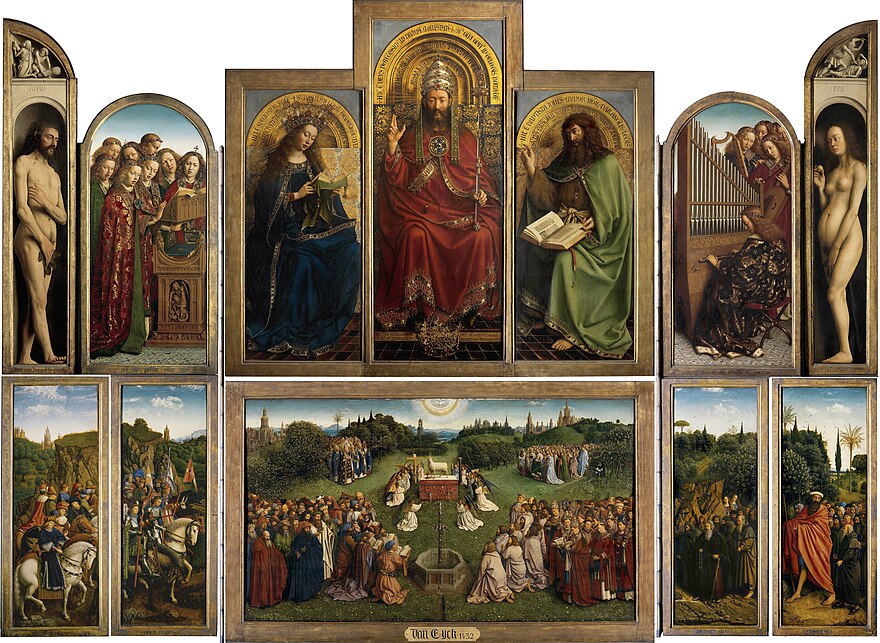
Art: Hubert and Jan van Eyck. 
Ghent Altarpiece (completed 1432).

In New England, when we hear about an art thief’s confession, it makes our heart beat a little faster. That’s because we are hoping so much that the Isabella Stewart Gardner Museum heist (see where I wrote about it, here) will be solved in our lifetimes.

Today’s story, however, is about a much older art theft, equally puzzling.

Noah Charney reports at the Guardian, “Just about everything bad that could happen to a painting has happened to Hubert and Jan van Eyck’s Adoration of the Mystic Lamb (also known as the Ghent Altarpiece). It’s almost been destroyed in a fire, was nearly burned by rioting Calvinists, it’s been forged, pillaged, dismembered, censored, stolen by Napoleon, hunted in the first world war, sold by a renegade cleric, then stolen repeatedly during the second world war, before being rescued by The Monuments Men, miners and a team of commando double-agents. …

“In 1934, one of its 12 panels was stolen in a heist that has never been solved, though the case is still open and new leads are followed all the time.

“On 11 April of that year, Ghent police commissioner Antoine Luysterborghs pushed through a crowd at the St Bavo Cathedral that had gathered to gawk at something that was no longer there. One of the panels, depicting The Just (or Righteous) Judges, was gone. …

“The theft was followed quickly by a ransom demand for one million Belgian francs. As a show of good faith, the ransomer returned one of the panel’s two parts (a grisaille painting of St John the Baptist). But police remained baffled.

“Then a stockbroker called Arsène Goedertier had a heart attack at a Catholic political rally. He summoned his lawyer, Georges de Vos, to his deathbed. Just before he died, De Vos claimed, Goedertier whispered: ‘I alone know where the Mystic Lamb is. The information is in the drawer on the right of my writing table, in an envelope marked “mutualité.” ‘

“The lawyer followed the instructions and found carbon copies of the ransom notes, plus a final, unsent note with a tantalizing clue about the stolen panel’s whereabouts: ‘[it] rests in a place where neither I, nor anybody else, can take it away without arousing the attention of the public.’

“But if Goedertier did steal the panel, why? The church has been defensive, and there is an air of cover-up – as well as evidence that other members of the bishopric were involved. One theory goes that a group of church members, Goedertier among them, were involved in a failed investment scheme that lost church money. Rather than admit their failure, they stole the panel and ransomed it to cover the losses. But Goedertier was wealthy and devout; it seems odd he would resort to extorting his beloved diocese. …

“De Vos failed to alert police about Goedertier’s confession for a month. Eventually, after many false leads, police concluded Goedertier had been the thief. The case went cold. …

“The greatest strides in solving the crime have not been made by an active officer, though. Karel Mortier was chief of the Ghent police from 1974 to 1991, and fascinated with the Just Judges theft. It was a huge unsolved mystery, not just for Ghent, for Flanders, for Belgium, but for the art world. Mortier has dedicated his quiet hours to the hobby that drives him to this day: the hunt for the lost panel.

“Now in his 80s, he has done more than anyone to shed light on the case. He was the first to note that Goedertier had an eye problem that meant he could barely see in the dark, much less rob a cathedral at night. He turned up information that Goedertier already had more than the million francs demanded in the ransom in his bank account. What, then, was the motivation for stealing the panel?

“Mortier also suggested Goedertier could not have acted alone: the panel was taken from the altarpiece’s framework, which was so high off the ground that it needed a ladder, and at least two people, to remove it. Surely, Mortier concluded, one of the four church custodians was involved, if only to provide the ladder.

“Mortier’s investigation met many obstacles. The church granted him access to 600 pages of archives relating to the painting – but not the period between 1934-1945. It seemed there was either a conspiracy to hide the truth, or that those involved in the investigation, the police in particular, were wildly inept.”

More at the Guardian, here. No firewall.

Read Full Post »

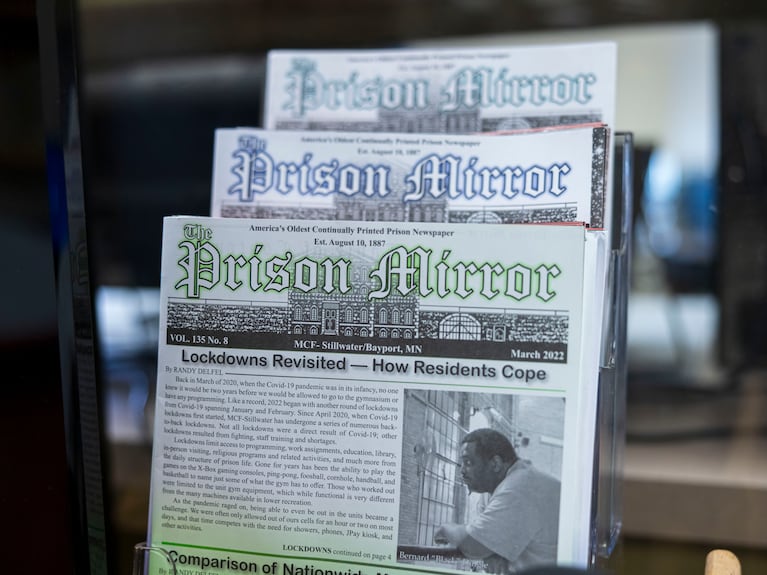
Photo: Kerem Yücel/MPR News via Oregon Public Broadcasting.
Previous issues of the Prison Mirror, which has been publishing since 1887, sit on display in the Minnesota Correctional Facility in Stillwater.

From time to time I like to run a story about interesting prison programs or ex-offenders trying to make good. I’m pretty sure we don’t have the right kind of prisons in the US. You may recall me writing about the system in Norway, which is completely different. (Click here and here.)

Meg Anderson (Minnesota Public Radio NPR) wrote recently about a longtime enrichment program at a prison in Minnesota.

“Inside a state prison near Stillwater, Minn., past the guards and the wings of cells stacked one on top of another, tucked in the corner of a computer lab, Richard Adams and Paul Gordon are fervently discussing grammar.

“Both men are on staff at the Prison Mirror, a newspaper made by and for the people held at the Minnesota Correctional Facility – Stillwater. Gordon had written a profile on the prison art instructor. He read it aloud to Adams. …

“Conversations like this have been happening in this prison for more than a century. The Prison Mirror is one of the oldest prison newspapers in the country, running since 1887. Publications like this aren’t common, but in an era where many journalism outlets in the free world are struggling to thrive amid scores of layoffs, journalism behind bars is actually growing.

“ ‘Overall we do see a growth and a lot of interest in starting publications, starting podcasts even. And so that’s really quite exciting,’ says Yukari Kane, CEO of the Prison Journalism Project.

“Thirty years ago, she says there were estimated to be only six prison newspapers. Today, there are more than two dozen. That doesn’t take into account the hundreds of incarcerated writers submitting work to publications on the outside, like The Marshall Project’s Life Inside series.

“Kane says this kind of work can offer a window into what prison is actually like, one that prison administrators aren’t necessarily going to offer up freely. … Even if a newspaper doesn’t circulate far beyond the prison yard, it can offer a sense of empowerment for its writers. …

“The Stillwater prisoners write book reviews, legal explainers, and summaries of local, national and international events for the monthly newspaper. One man recently submitted an essay on homesickness. Another wrote an editorial criticizing lockdowns. The men on staff — there are only three of them — had to apply for these unpaid jobs, and they’re highly sought after.

“Adams says the job requires a lot of reading and research about what’s going on around the world and the prison. There are challenges. They don’t have the internet, for instance, so they have to rely on print media and articles printed out by prison staff.

“The prison also has to approve everything the paper publishes. The men say that can limit what they write about, especially if they want to report on the harsher aspects of their lives.

“ ‘I am limited in the sense of, they’re not going to let me print all types of crazy things about the water or the lockdowns or getting restrained or anything like that, which is understandable to a degree,’ Gordon says.

“Last fall, around 100 Stillwater prisoners refused to return to their cells. Gordon says the disobedience was their way of protesting extreme heat, poor water quality, and staffing shortages, which he says often result in lockdowns. He plans to write about it, but says he has been retaliated against in the past for sending reporting to outside publications.

“ ‘I was a lot more aggressive in my writing back then, and that was a learning experience for me,’ he says.

Brian Nam-Sonenstein, a senior editor at the Prison Policy Initiative, says punishment for doing journalism behind bars is common. ‘You can lose what are called good time credits, which are essentially time off of your sentence based on good behavior. You could go to solitary confinement. You could have your privileges revoked,’ he says. …

“Marty Hawthorne works at the Stillwater prison and oversees the Prison Mirror.

“ ‘They have a lot of freedom. My philosophy is: It’s their newspaper. It’s not my newspaper,’ he says. ‘I believe they have a right to do what they’re doing.’ He says if the men plan to publish something critical, he makes sure whoever they’re writing about has an opportunity to respond. But he says he also pushes back when leadership tries to censor stories he believes are fair.”

More at NPR, here. No firewall.

Read Full Post »

Photo: Erin Braaten/Dancing Aspens Photography via AP.
A rare white buffalo calf in Yellowstone National Park in Wyoming on 4 June 2024. 

In the early days of TV, a show we watched regularly was Rin Tin Tin. It featured a dog and a boy and the US Army patrolling out west. I’m sure there were many elements that would be considered offensive today, but you know, children pick up nice things from anywhere. I can still sing the song about the White Buffalo.

After a white buffalo was born in June, Oliver Milman wrote about the event at the Guardian.

“A rare white buffalo has been born in Yellowstone national park, with the arrival prompting local Lakota Sioux leaders to plan a special celebration, with the calf representing a sign of hope and the need to look after the planet.

“The white calf was reportedly spotted shortly after its birth … by park visitor Erin Braaten, a photographer. She took several shots of the wobbly baby after spotting it amongst a herd of buffalo in the north-eastern corner of the large park, located in Wyoming and a small slice of Montana.

“ ‘I couldn’t believe what I was seeing,’ Braaten told ABC News. ‘It was so surreal. I just knew it was something special and one of the coolest things I’ve ever photographed.’

“Braaten and her family watched the calf and its mother for another half an hour before coming back on each of the following two days to look for the white calf, but with no further sighting. …

“Members of the Lakota Sioux tribe will hold a ceremony to celebrate the arrival at the headquarters of the Buffalo Field Campaign, which advocates for the animals, in West Yellowstone on 26 June.

“The birth of a white buffalo holds a special significance to the tribe, according to the Buffalo Field Campaign. ‘The birth of this calf is both a blessing and warning. We must do more,’ said Chief Arvol Looking Horse, the spiritual leader of the Lakota, Dakota and the Nakota Oyate in South Dakota, according to AP, referring to looking after nature and the environment.

“Tens of millions of buffalo once roamed the plains of the western US, only to be slaughtered on an enormous scale for their hides by settlers, hunters and traders in the 19th century, leaving just a few hundred of the animals unscathed.

“The mass killing of buffalo caused severe harm to native American communities that relied upon the animals as a sustainable food source, as well as being a key cultural touchstone.” More at the Guardian, here.

At a National Park Service (NPS) site, you can read a lot more about the legends surrounding the White Buffalo. For example: “To American Indians, a White Buffalo Calf is the most sacred living thing on earth. The calf is a sign to begin life’s sacred loop. Some American Indians say the birth of a white calf is an omen because the birth takes place in the most unexpected places and often happens among the poorest of people. The birth is sacred within the American Indian communities, because it brings a sense of hope and is a sign that good times are about to happen.” More at NPS, here.

If you go to the YouTube clip below, you will see many happy comments from people who loved the Rin Tin Tin episode about the White Buffalo when they were kids.

Read Full Post »

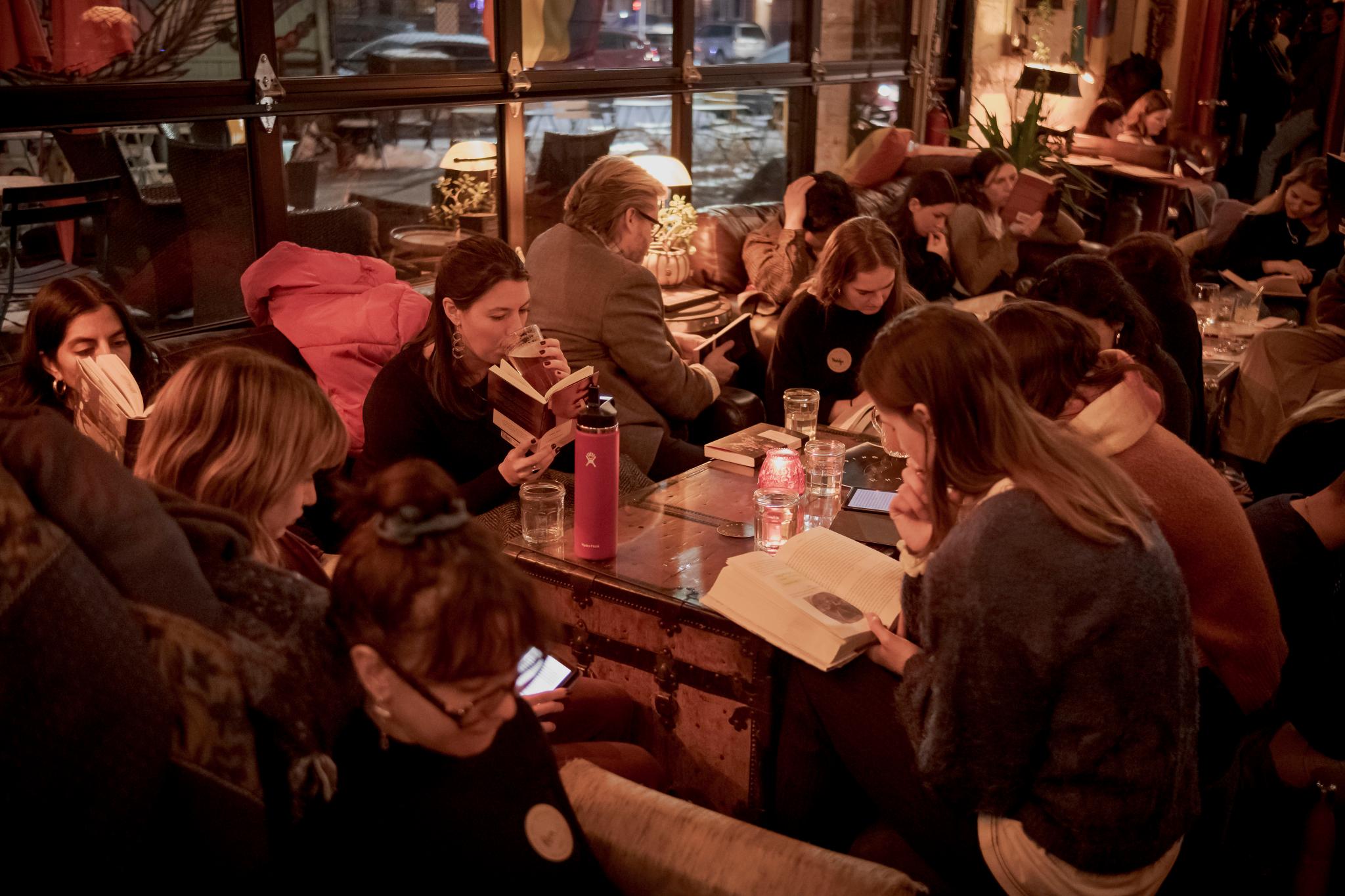
Photo: Stefano Giovannini for N.Y.Post.
A reading party in New York. No phones.

I often wonder why anyone agrees to get notifications on their mobile phones. To me, it feels like some sort of conspiracy to keep us all from ever finishing a thought. That’s why I love hearing about people who have said “enough already” to cellphones, at least for a fewer hours a day.

Today’s story is from the Netherlands, and Orla Barry covers it at the radio show The World.

“Saliha Gündüz, a PhD student from Turkey, has just handed over her smartphone to one of the founders of The Offline Club in Amsterdam, who places it carefully in a ‘phone hotel’ — essentially a locker with dividers that holds up to 60 phones.

“Gündüz said she doesn’t feel apprehensive yet — and she settled down to a cup of herbal tea at the New Yoga School cafe in the center of Amsterdam.

“ ‘The withdrawal symptoms will kick in later,’ she said. ‘But maybe a withdrawal is what’s needed if I’m going to cure myself of my addiction.’ …

“Gündüz is among 20 people of all ages and nationalities who turned up at The Offline Club on a wet Friday evening in May to see if they could wean themselves off of their addiction.

“The club’s founders — Ilya Kneppelhout, Valentijn Klok and Jordy van Bennekom — started the venture in 2022 with a plan to host offline weekend getaways. Kneppelhout said, at the time, each of the co-founders felt their phones had been dominating their lives.

“Earlier that year, he took a short trip to the north of the Netherlands on his own with ‘some books, a journal and myself.’ No phone. He said something shifted over those four days.

“ ‘I felt so much creativity and, at the same time, a sense of peace.’

“Van Bennekom did the same and loved it. They began organizing weekend getaways with groups in a house in the countryside. Everyone was required to hand over their phones upon arrival. The three-day events were a hit. But Kneppelhout said that not everyone can afford to pay a few hundred dollars for the experience. So, the idea of The Offline Club was born.

“Each attendee at the club pays around $8 at the door. The events and venues differ each time. At the New Yoga School in Amsterdam, van Bennekom lays out the rules for the evening.

“First, there’s 45 minutes of quiet time, then a 30-minute break to chat, then a further 30 minutes of time to yourself. Most people bring books to read. Soft music plays in the background as van Bennekom lays out coloring books and markers for anyone who wants to draw or doodle.

“On that rainy Friday, three men from Puglia in Italy were huddled in one corner drinking tea. Two of them were visiting their friend Pietro Maggi who lives in Amsterdam. Maggi, who works for electric carmaker Tesla, said the evening was his idea and that he persuaded his two visitors to join him. …

“[Damiano Caforio admits] ‘I keep looking at the news constantly, checking to see what’s going on in the world, or, more specifically, with my job.’ He works at the Italian Chamber of Commerce.

“ ‘I need to know what’s going on, I feel I need to control the environment. … Actually, I desperately need this experience tonight,’ he laughed. …

“Leah Davies from Wales said she spotted a post about The Offline Club on Instagram.

“ ‘I saw people reading books and knitting and playing piano,’ she said. ‘And I just loved the idea of being able to go somewhere where you’re not checking your phone all night.’ …

“Davies said she would like to see phones restricted at other events too, like concerts and nightclubs, ‘so people can just dance or talk like you did in the ‘90s.’

“Phone-free music events are already happening elsewhere in the Netherlands. In Tilburg, a city in the south of the country, another group, Off the Radar, organizes music gigs where attendees are expected to hand in their devices at the door.

“There isn’t anything quintessentially Dutch about the desire to have smartphone-free events, said Ilya Kneppelhout, co-founder of The Offline Club. But work-life balance is an important aspect of life in the Netherlands. …

A study by the Organization for Economic Cooperation and Development (OECD) found only 0.3% of employees in the Netherlands work very long hours in paid work, the lowest rate in the OECD, where the average is 10%. In January, smartphones were banned in secondary schools across the country under government guidelines.

“A similar ban is set to be introduced in Dutch primary schools in the 2024-25 school year. A study last month by Radboud University in the Netherlands found that students were generally positive about the change, saying breaks were more enjoyable and there was less bullying during school hours.”

More at The World, here. No firewall. See my earlier post on the new book-reading parties, here.

Read Full Post »

Photo: D Rosengren/Global Rewilding Alliance.
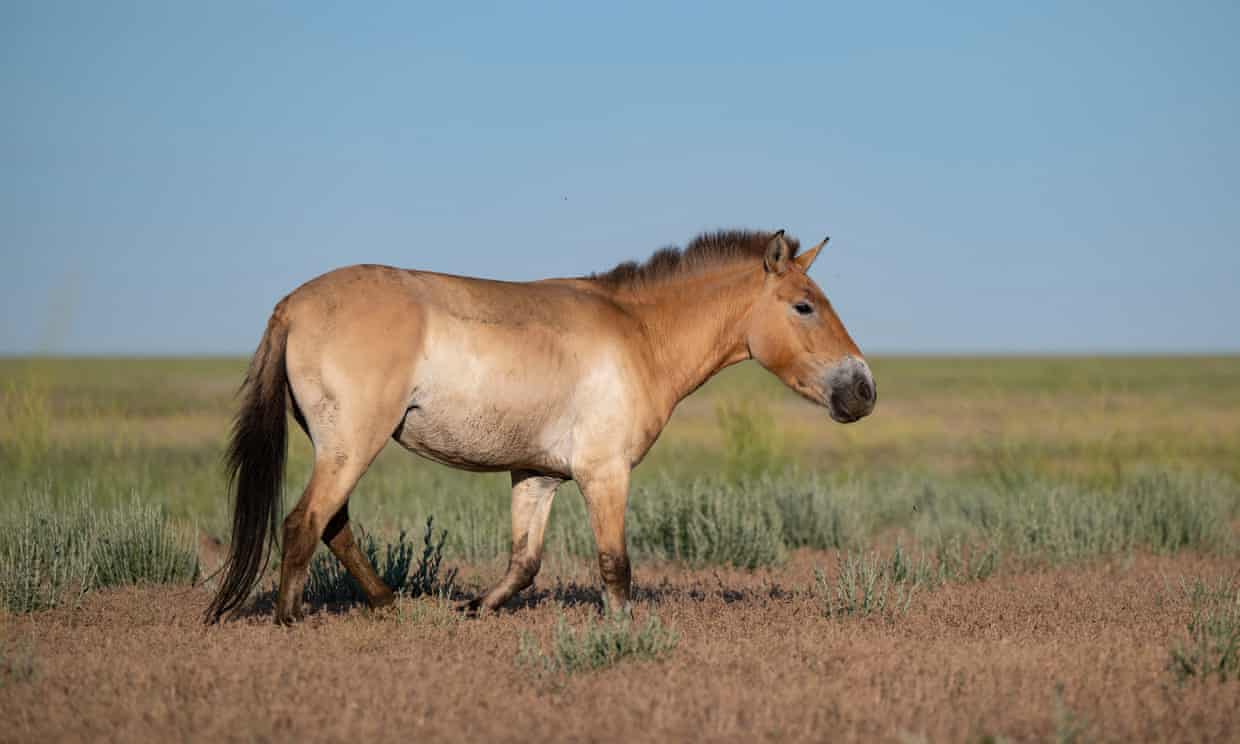
The wild Przewalski’s horses are said to be the only horses in the world that have never been domesticated. They are being reintroduced to the steppes of Kazakhstan.

The woman who cuts my hair has convinced me that, on the whole, zoos are bad for animals — that elephants shifting from one leg to the other for hours at a time are not doing a little happy dance but are bored witless.

Even so, we do hear of zoos doing good work to protect endangered species.

Sophie Kevany reports at the Guardian about some zoos’ recent win for biodiversity.

“A group of the world’s last wild horses have returned to their native Kazakhstan after an absence of about 200 years. The seven horses, four mares from Berlin and a stallion and two other mares from Prague, were flown to the central Asian country on a Czech air force transport plane.

“The wild horses, known as Przewalski’s horses, once roamed the vast steppe grasslands of central Asia, where horses are believed to have been first domesticated about 5,500 years ago.

“People are known to have been riding and milking horses in northern Kazakhstan nearly 2,000 years before the first records of domestication in Europe. Human activity, including hunting the animals for their meat, as well as road building, which fragmented their population, drove the horses close to extinction in the 1960s.

“Filip Mašek, Prague zoo’s spokesperson, said: ‘These are the only remaining wild horses in the world. Mustangs are domesticated horses that went wild.’

“The horses reintroduced into Kazakhstan are descended from two groups that survived in Munich and Prague zoos.

“Originally, eight horses had been scheduled to travel, said Mašek, but one horse sat down before the flight from Prague and had to be unloaded and returned to Prague zoo.

“ ‘He was just a little dizzy returning, but he is fine now. These horses have to stand for the entire journey – they can’t sit down, mainly because their blood needs to circulate properly. It is a 30-hour journey in total, and the horses will only survive if they stand all the way,’ he said.

“Returning the horses from Prague zoo would help increase biodiversity in the region, said Mašek. ‘The horses spread seeds in their dung and when they dig up plants, they help the water get down into the soil. They also fertilize the steppe with their dung.

“ ‘For me,’ he said, ‘the goal of a modern zoo is not just about protecting and breeding endangered species, it is about returning them to the wild where they belong.’ …

“In 2011, Prague zoo was involved in a reintroduction of Przewalski’s horses to Mongolia. The project, which involved nine flights of horses, continued until 2019 when the population stabilized, said Mašek, adding that there were now about 1,500 of the wild horses in Mongolia. Mašek said the plan was to transport a total of 40 horses to central Kazakhstan over the next five years.”

More at the Guardian, here.

Read Full Post »

Photo: Alfredo Sosa/CSM Staff.
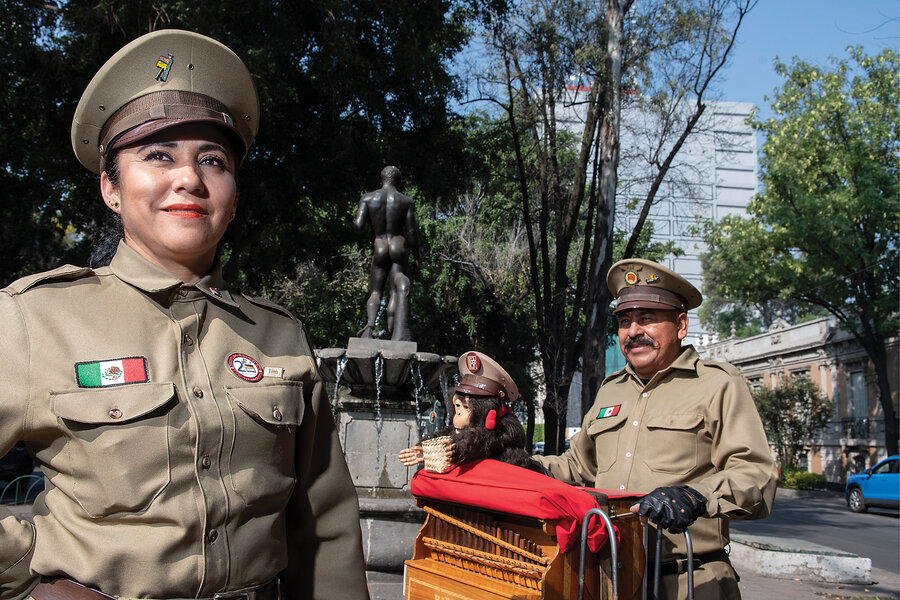
Elsi Sastre (left) and Cresencio Torres work as a team of organ-grinders in the Roma neighborhood of Mexico City.

Between the two of us, my husband and I can tell our grandchildren about having seen an ice-delivery man, a huckster selling vegetables door-to-door, a traveling knife-sharpening guy. Wouldn’t it be great to show such things in person once in a while, not just in historic villages with costumed interpreters?

Today’s article is about something we will need to hurry up to see before it fades into history: the traditional organ grinder in Mexico.

Whitney Eulich writes at the Christian Science Monitor, “Hunched over a weatherworn hand-crank organ in his repair shop, Roman Dichi explains why the work of Mexico’s organilleros has endured for a century and a half. 

“ ‘This music evokes happiness, tradition, and childhood memories of going out to a plaza with Mom and Dad – or of falling in love,’ says Mr. Dichi, president of the organ-grinders union in Mexico City. …

“Organ-grinders, especially ubiquitous in Mexico City’s historic center, date back to the presidential administration of Gen. Porfirio Díaz in the late 1800s. The dictator’s adoration of all things European inspired Mexico’s elite to import organs into their homes. Eventually, the instruments moved out of private parlors and onto the streets as public entertainment. They were used to draw customers to circuses, with the help of monkeys, and to keep soldiers in good spirits. Over time, the European songs inside the machines were replaced with revolutionary ballads and local classics, such as ‘Las Mañanitas,’ the Mexican birthday song.

“Despite these deep roots, today the tradition is at risk. Not everyone is charmed by the tip-seeking musicians. A crank organ’s sound – akin to the pitchy puff of air from a slide whistle – can be loud. In the wrong hands, an organ can be positively off-key, an assault against the ears. …

“The organs are also expensive, with many organilleros renting them from the small stock available locally. And upkeep gets costlier with each passing year. The heavy instruments can get damaged while being wheeled down crowded city streets or warped by weather and time. 

“Edgar Alberto Méndez Hernández has been slowly turning the crank on his organ in the capital’s historic center for some 15 years. He nets about 250 pesos (a little more than $15) on a good day after paying 250 pesos for his rental. …

“After several hours working along a bustling sidewalk near the Bellas Artes theater, he pushes his black-and-brown antique wooden organ on its dolly and heads several blocks toward the Zócalo square. When he shows up at this even busier – and potentially more lucrative – spot, the two young men already playing organs there take their cue, as if in a dance, and move to a side street. These shifts are imperceptible to the public but tediously negotiated with the union’s help. …

“They ‘live off of tips,’ notes Yuleina Carmona, the Mexico City coordinator for Women in Informal Employment: Globalizing and Organizing, an international nonprofit. Shoeshiners and strolling mariachi bands have fixed rates for their services, but organ-grinders churn out music whether they are paid or not. …

“In March, Mr. Dichi’s union submitted a proposal to Mexico City’s Congress to have organilleros’ work recognized as a cultural heritage. It was the fourth attempt – and this time it was approved.

“The legal recognition is expected to translate to better protection on the street from police harassment and greater support for organ-grinders in their disputes with residents and businesses. Ms. Carmona notes it will also give organ-grinders ‘a seat at the table’ – a say in how Mexico City uses funds for cultural activities in the center.”

More at the Monitor, here. Great pictures. No paywall.

Now, what is the coolest old-timey thing in your memory?

Read Full Post »

Photo: Larkin Durey.
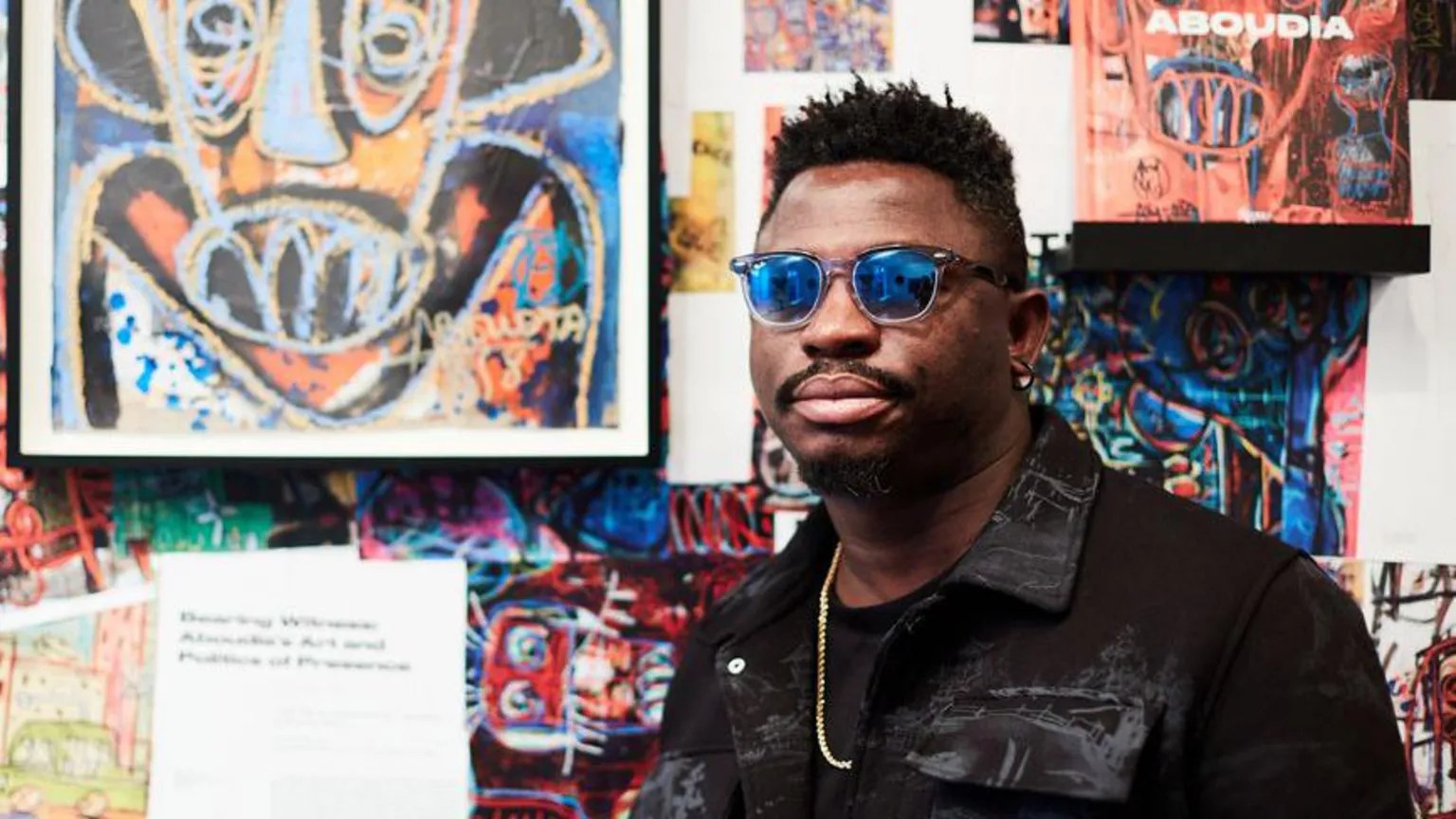
Aboudia’s work has been shown in exhibitions held in Abidjan, London, New York and Tel Aviv
. Hiscox Artist Top 100 says he sold more than even Banksy in one year.

The art world is becoming more international, and that’s a good thing. For too long, people have used their own world’s cultural references to judge the quality of art. And how can only one culture be the only worthy measure?

Wedaeli Chibelushi reports at the BBC about an African that is currently making a big splash internationally.

“Back in September, global art experts were taken aback by the name topping a fresh list of the world’s best-selling artists.

“Aboudia, a graffiti-inspired artist from Ivory Coast, had beaten well-known names, like Damien Hirst and Banksy, to sell the most pieces at auction the previous year.

“According to the Hiscox Artist Top 100, Aboudia, real name Abdoulaye Diarrassouba, had flogged 75 lots. One of these canvasses had gone for £504,000 ($640,000).

“Leading online marketplace Artsy called Aboudia’s triumph ‘striking,’ while The Guardian said market experts were ‘blindsided by the ranking.

“Months later, sitting in a London gallery plastered with his paintings, Aboudia tells me the survey results were no surprise to him. ‘Because if you work hard, the success is going to come,’ he says. …

“Aboudia’s mellow disposition clashes with the art surrounding him – his vividly colored, heavily layered canvases feature a cast of cartoon-like figures plucked from the streets of Abidjan, Ivory Coast’s largest city. Through a blend of oil sticks, acrylic paints and recycled materials like newspapers, Aboudia depicts the hardships of life in downtown Abidjan.

He particularly focuses on the children who live and work on the city’s streets.

“His eyewitness portrayals of Ivory Coast’s 2011 civil war are equally arresting. Figures gaze at the viewer with vacant eyes, while armed soldiers and skulls crank up the intensity. …

“Aboudia was born in 1983, in Abengourou, a small town around [124 miles] from Abidjan. In a 2012 essay, the artist said he was kicked out of his home aged 15 after telling his father he wanted to paint for a living.

“After being cast out, the young Aboudia pressed on and enrolled in art school. Due to a lack of financial support, he slept in his classroom after the other students went home for the day. These uncomfortable nights paid off — after graduating in 2003 the soon-to-be-star was accepted into Ivory Coast’s leading art school, École des Beaux-Arts.

“Abidjan’s École des Beaux-Arts would expose Aboudia to the Ivorian art icons whose influence can be found in his current work. For instance, Aboudia’s focus on his direct surroundings and his use of recycled materials can be traced back to Vohou Vohou, a modernist collective established in the 1970s by artists like Youssouf Bath, Yacouba Touré and Kra N’Guessan.

“Aboudia began to veer away from traditional styles of art, instead using untamed brushstrokes and earthy colors to recreate graffiti produced by Abidjan’s underprivileged children. In Aboudia’s words, these young, de facto street artists ‘draw their dreams on the world.’

“The children are his main influence, he says. …

“After establishing his core style, Aboudia would lug his paintings around the galleries of central Abidjan, hoping for a way in.

” ‘It was very hard. … They’d say: “Are you crazy? What is this work? You better go to London, to United States or Paris, because this work … here it doesn’t make sense,” ‘ Aboudia recalls.

“The adversity did not end there. In 2010, Laurent Gbagbo, the then president of Ivory Coast, refused to step down after losing an election to rival Alassane Ouattara. A civil war broke out, killing 3,000 people and forcing another 500,000 from their homes.

“Throughout the four-month conflict, Aboudia sought refuge in his basement studio, documenting the horrors he saw when venturing above ground.

“The war ended with Mr Gbagbo’s dramatic capture by UN and French-backed troops — and Aboudia emerged from his haven with 21 disconcerting paintings.

“Art-lovers and journalists from Ivory Coast and beyond lauded his work and Aboudia’s ascent to global success began. He was championed by renowned art collectors Charles Saatchi and Jean Pigozzi — and went on to exhibit his work at prestigious venues like Christie’s New York and the Venice Biennale.

“Aboudia’s first solo exhibition was at the setting for this interview, London’s Larkin Durey (then named the Jack Bell gallery). Owner Oliver Durey, who has now known Aboudia for over a decade, tells the BBC: ‘There is something we can all relate to in his paintings; hiding amidst the uncertainty and horror there are balanced moments of strength and beauty.’

“African art expert Henrika Amoafo [notes] reasons for his success … like his ‘authenticity, the really raw emotional power that he’s able to convey, the way that he speaks to urban life, the way that he speaks about conflict and its impact on children.’ …

“Aboudia’s rise also coincides with that of the African art market. In 2021, art analysis firm ArtTactic reported that the auction sales value of contemporary and modern African art surged by 44% to a record high of $72.4m. …

“Aboudia’s rise has led to him splitting his time between his country of birth and New York. When he is back in Ivory Coast, he pours his efforts into the Aboudia Foundation, an organization he launched to support the country’s children and young artists.

“This is yet another example of the star’s drive — but when I ask him if he has any plans lined up for his career, he … says he takes things one day at a time.”

More at the BBC, here. No paywall.

Read Full Post »

Photo: The Salt Lake Tribune.
Harvest watercraft encircle brine shrimp in Great Salt Lake using containment booms in preparation for harvesting.

Although today’s story about brine shrimp feeding the world is interesting in itself, the thing that stands out to me is thinking of Uzbek scientists. Uzbekistan feels so foreign to me, it’s like talking about scientists from the far side of the moon. That’s how limited my world view is, alas.

Here’s what Leia Larsen and Levi Bridges have to say at the Salt Lake Tribune about scientists in Uzbekistan and elsewhere who are studying brine shrimp.

“As the rising sun casts golden rays over the Aral Sea, a group of Uzbek fishermen wearing sweatshirts and knit caps gathered on a chilly beach to discuss the day’s plan.

“For two days they had waited in vain for brine shrimp. A dead calm in the first cold days of winter replaced winds that usually blow large slicks of the tiny crustaceans to shore.

“Standing and smoking cigarettes beside ramshackle cabins covered in sheets of plastic to keep out the elements, the fishermen debated whose turn it was to check if any shrimp had drifted in. Two volunteers jumped on a rattling old truck and chugged off miles into the distance to scour the beach.

“When the winds blow just right, Aral Sea fishermen work up to 36 hours gathering brine shrimp eggs, also known as cysts. They often labor with headlamps through the darkness. Winter temperatures can dip as low as minus 40 degrees Fahrenheit.

“ ‘Sometimes we get so sleepy you feel drunk,’ said Miyrbek Mirzamuratov, an Uzbek fisherman who has spent two winters gathering cysts on the Aral Sea.

“The Great Salt Lake remains the world’s largest source of brine shrimp cysts, exporting 40% of the global supply. The shrimp are a key food source used in aquaculture. Seafood is the main source of protein for billions of people across the planet, and aquaculture, fueled by brine shrimp, now produces roughly half of the world’s commercial seafood.

“But drought and decreasing water resources have put new pressure on brine shrimp in both Utah and Central Asia. In 2022, the Great Salt Lake’s shrimp populations almost collapsed due to record-low water elevation and spiking salinity.

“ ‘We’re all starting to realize just how much the lake touches us in many ways that we don’t appreciate,’ said Tim Hawkes, a former Utah state representative and current general counsel for the Great Salt Lake Brine Shrimp Cooperative. …

“Environmental challenges are also forcing scientists in Uzbekistan to devise ways to save their own brine shrimp – and help keep the world fed if Utah can’t ensure its own inland sea survives. Despite being too salty for fish, the Great Salt Lake’s aquaculture industry infuses Utah’s economy with up to $67 million each year, thanks to brine shrimp.

“That’s because their cysts, no bigger than a grain of sand, tolerate extreme conditions.

“ ‘You can boil them, you can freeze them, you can send them to outer space,’ Hawkes said. ‘And still, under the right conditions, if you put them in a little bit of salt water and give them some light, they’re going to hatch out.’

‘It makes brine shrimp cysts an ideal product to package and ship across the world, where they’re raised as an essential food source for the farmed seafood humans eat, particularly prawns and cocktail shrimp.

“Although farm-raised seafood has generated controversy due to its runoff pollution and impacts to wild fisheries, the United Nations issued a 2020 report identifying it as a critical player in global food security. It provides nutritious protein at low cost to rural and developing communities that have a hard time producing other farmed goods. …

“Globally, the average person ate 44.5 pounds of seafood in 2020, up from 31.5 pounds in the 1990s, according to the U.N. More than half of that came from farms.

“ ‘If we lost the Great Salt Lake,’ Hawkes said, ‘or we lost the ability to produce brine shrimp from the Great Salt Lake, it would have a significant impact on our ability to feed the world.’ …

‘Companies on the Great Salt Lake gather brine shrimp cysts from the water with boats and floating booms similar to those used to contain oil spills, but the work is still mostly done by hand in Uzbekistan and other Asian countries. …

‘Islambek Shumomurodov said he earns about $1.50 for every pound of Aral Sea cysts he gathers. The average annual household income in Uzbekistan is around $1,600. ‘Some people even buy new houses and cars from working here,’ Shumomurodov said.

“Although Uzbekistan’s brine shrimp production represents just a fraction of Utah’s output, the crustaceans created an economic opportunity after the Aral Sea’s traditional fishery shriveled.

“The Aral Sea, like the Great Salt Lake, has declined significantly from agricultural demand and human water consumption. Once a freshwater lake teeming with fish, the Uzbek portion of the Aral turned saline — a trend scientists don’t expect will change.

“Neighboring Kazakhstan spent millions damming off their portion of the North Aral Sea to keep the freshwater fishery viable. Brine shrimp, which likely hitchhiked to the region as cysts stuck to the feathers of visiting shorebirds, are the only creatures with commercial value able to survive in the shrinking southern Uzbek portion of the lake. …

“ ‘It’s just a matter of years now before [the Uzbek side of] the Aral Sea can no longer support brine shrimp,’ said Ablatdiyn Musaev, a biologist at the Uzbek Academy of Sciences.”

More at the Salt Lake Tribune, here. No firewall. Nice photos. There’s an audio version of the story at PRX’s The World.

Read Full Post »

Photo: Isabel Kokko, Forman Arts Initiative, Philadelphia, via the Art Newspaper.
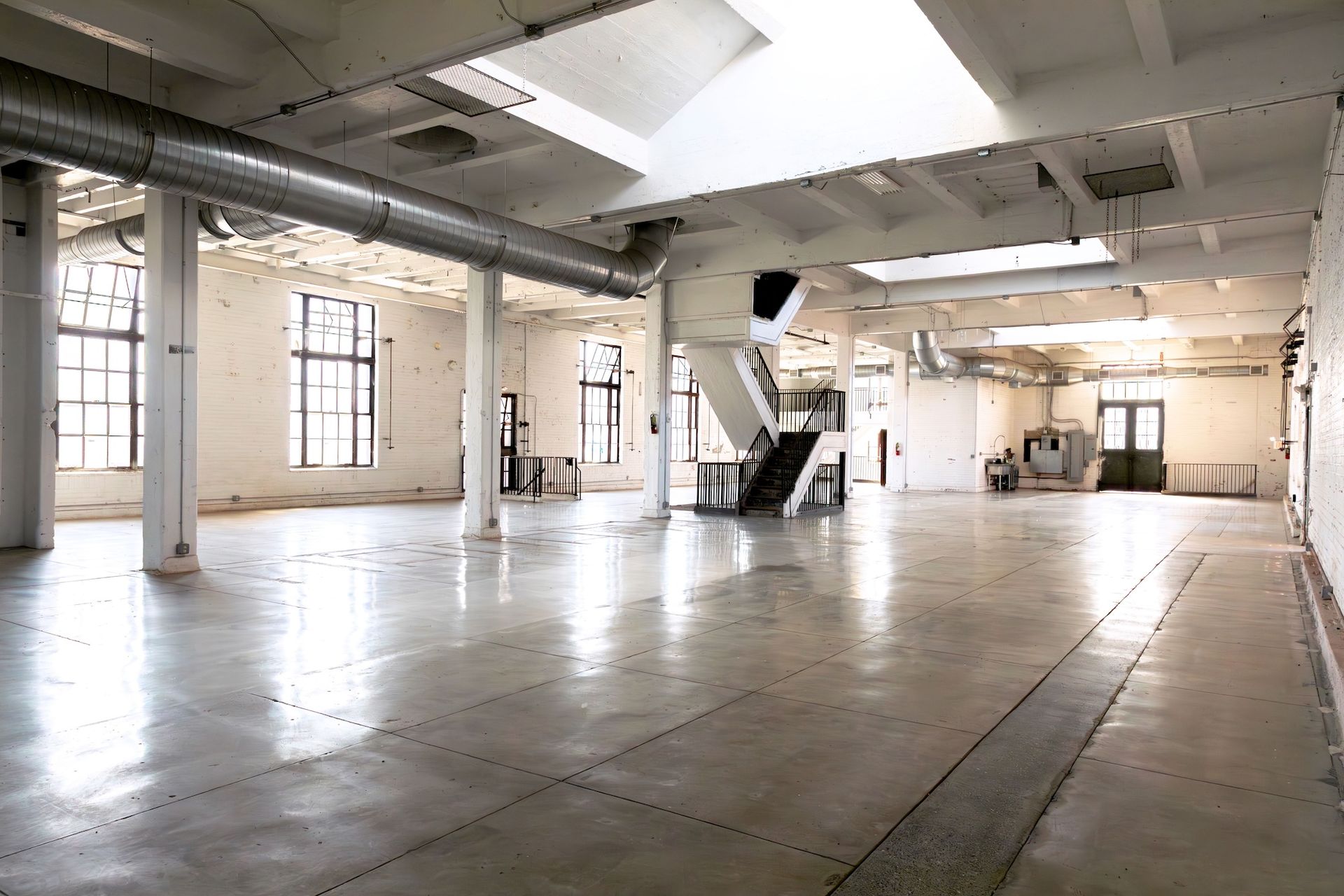
Inside the former electrical substation as it appears today. The Forman Arts Initiative plans to renovate four buildings in Kensington to hold a gallery, performing arts venue, garden area, and FAI offices.

One of the cool places I get leads from is ArtsJournal. The variety of topics is great because they check out way more sources than any one person could monitor (or pay the fees for). Today’s story is from the Philadelphia Inquirer and covers an art initiative not far from where I used to live in Pennsylvania.

Rosa Cartagena writes, “A new 100,000-square-foot arts campus coming to West Kensington will open in stages over the next two years. The Forman Arts Initiative, an arts organization that awards grants to local creatives and arts nonprofits, plans to renovate four buildings on American Street. The multipurpose space will hold a gallery, performing arts venue, and garden area, in addition to FAI’s offices.

“Michael Forman and Jennifer Rice, the art-collecting couple behind FAI, envision the campus as a cross between an arts center, coffee shop, art-making studio, and gallery space where they can publicly display their collection of more than 800 artworks. The collection — largely works from artists of color and women — includes such names as Philadelphia ceramist Robert Lugo, legendary photographer Gordon Parks, and abstract painter Alma Thomas.

“ ‘We live with our art, and we think of our collecting more as stewardship than ownership,’ said Rice. … ‘We’re really looking at using art as a tool for education, community engagement, performance, and inspiration.’

“In late 2022 and early 2023, the couple purchased a vacant lot and four adjoining buildings on the 2200 block of American Street. … FAI will work with Philadelphia architecture firms DIGSAU and Ian Smith Design Group to transform the 100,000-square-foot site. Forman said it’s too early to know how much the restoration and renovation will cost, but FAI plans to finance it internally and will seek government funding and potential support from local foundations.

“FAI has also attracted one of the most influential people in the art world to serve as lead designer: urban planner and sculptor Theaster Gates. Forman and Rice first connected with him as collectors of his art and when they began developing plans for the campus, they approached Gates for his unique style that combines ‘social practice and art practice,’ said Forman.

“In Chicago, where Gates lives and works, he is renowned for repurposing abandoned industrial buildings into arts spaces, archives for Black culture, affordable housing, and artist residences that have revitalized a South Side neighborhood.

“Philadelphia has been a site for his artwork, as well. In 2020, Gates created the public work Monument in Waiting, in a response to the movement to tear down Confederate monuments. The sculpture, which critically questions national heroes, has been on display at Drexel University since 2022. …

“FAI is undertaking an extensive listening tour to determine what exactly the West Kensington neighborhood needs and wants from a space such as this. Gates will work with newly appointed FAI executive director Adjoa Jones de Almeida, who was previously at the Brooklyn Museum, and associate executive director Sunanda Ghosh, a local nonprofit strategist who has worked with BlackStar and Asian Arts Initiative, among others.

“ ‘We are very intentionally saying to people, “We actually don’t know,” because, truly, we are emphasizing the design of a communities engagement strategy,’ said Jones de Almeida, who moved to East Kensington earlier this year. The plan is to incorporate input from the neighborhood’s residents and organizations into the design of the space.

“She’s interested in ‘radical collaboration’ with neighborhood organizations such as the Norris Square Neighborhood Project and Taller Puertorriqueño, both recipients of last year’s FAI grants. …

“Forman and Rice believe that West Kensington is the best location because, despite being systemically overlooked and under-resourced, the community has a strong arts community, including Crane Arts and the Clay Studio.

“ ‘We were interested in the notion that we’re not displacing anybody — the buildings that we bought were all commercial,’ said Rice. ‘It’s just repurposing.’ …

“ ‘You have to enter with big ears and an open and pliant heart,’ said Gates. ‘The work of creating a creative space and making a significant investment in a place that’s been highly underinvested is hard work when you’re trying to really listen, because there’s a lot of bruised feelings.’ ”

More at the Inquirer, here. And the Art Newspaper version has no paywall, here.

Read Full Post »

Photo: Alfredo Sosa/CSM Staff.
Virginia Frederick (left) and Sarah Duncan (center) participate in a conversation table training workshop hosted by the East County Citizens’ Alliance in Washougal, Washington.

Sometimes it seems we have nothing in common with other passengers on spaceship Earth, and it sure is anxiety making. But if we were invaded by aliens from deep space, you know, we’d suddenly all band together. We’d realize what we have in common.

What else do we have in common? What can we build on? Some people in the state of Washington reaiized they could start with trash.

Stephen Humphries has the story at the Christian Science Monitor. “Before the troubles started, Melanie Wilson believed she’d finally found paradise. 

“She and her husband had moved from Washington, D.C., to Washougal, Washington, in 2019. After the cacophonies of the U.S. capital, they immediately felt at home with tranquil views of the mountains, including the snowcapped peak of Mount Hood in the Oregon distance. … The pace of life here is as unhurried as the logging barges wending through its gorge.

“ ‘I’ve been looking for a home my whole life,’ Ms. Wilson says of the town of 17,000 people. ‘I want to make friends here. I want to put down roots here.’

“That was five years ago. Then the pandemic hit in March 2020. Two months after that, George Floyd was murdered by Minneapolis police. And the Wilsons’ paradise, it seemed, suddenly erupted into the kind of rancor they thought they had left in Washington, D.C. 

“Protests sprang up in the conjoined towns of Washougal and Camas that summer. By August, pro-police rallies were attracting hundreds of supporters waving American flags in support of law enforcement. On opposite sides of the street, half as many counterprotesters hoisted Black Lives Matter signs in a clash of highly charged remonstrations.

“The area has been called the ‘crossroads to discovery.’ Today both towns are at the crossroads of America’s deepening political and cultural divides. The bedroom communities are just a 30-minute drive west from progressive Portland, Oregon. A few miles to the east, however, horses, cows, and alpacas graze on gentle swells of verdant farmland, scattered with barns. …

“The protests in Washougal and Camas were mostly peaceful. Mostly. The police broke up a couple of push-and-shove scuffles. …

“Ms. Wilson was getting increasingly worried. Then, at a school board meeting in 2021, the vitriol she’d been witnessing reached a tipping point, jolting the sense of home that had become so important to her life.

“During the meeting, a man stood up and jabbed his finger at the elected officials sitting in front of them. ‘ “Civil war is almost here. We’re sharpening our bullets,” ‘ Ms. Wilson recalls the man saying. …

“She was startled once again by the crowd’s response. ‘People around the room clapped and stamped their feet on the floor,’ she says. ‘It seemed to me, that’s a flashing red warning in a community.’

“After the meeting, she began talking to others in the community about the violent rhetoric. She joined a group of citizens in Washougal and Camas to think about how to counter the civic vitriol that seemed to be tearing their community apart. Over time, she conceived a simple idea: People would gather to pick up trash, together.

“Today, Ms. Wilson is the co-founder and executive director of the East County Citizens’ Alliance. Its volunteers don’t chant and shout. They don’t tote signs and megaphones, let alone AR-15s. What they do carry, however, are seedlings, paintbrushes, and trash bags. One volunteer even brings his tractor. 

“The organization engages in other projects, too, from feeding the hungry to mentoring students. It’s all in service of an underlying mission: Getting people out of their news silos and partisan bubbles to gather together outside – their outside, their gorgeous, scenic, pastoral part of the world – and make an effort to work together and get to know each other. 

“This idea, too, is simple: To fix our politics, we must first mend our culture.

“There are groups like Ms. Wilson’s springing up all over America, in fact. From Wilkesboro, North Carolina, to Madison, Wisconsin, to Compton, California, small bands of volunteers are working to improve their quality of life, not only in their neighborhoods, but also in their hearts. 

“There’s little glory in it. Sometimes, volunteers may even wonder if they’re making any progress at all. But with each small act of kindness, they’re working to weave a social fabric of grace, stitch by stitch, and rooted in tolerance, respect, and faith in each other, as different as that other may be. …

“Ms. Wilson, riding shotgun, plays tour guide to Monitor journalists along for the ride [with Barbara Seaman]. A few days previously, the duo transported braised barbecue to ReFuel Washougal, a program that serves free meals to residents in need. The East County Citizens’ Alliance took a turn hosting a dinner in collaboration with Washougal High School’s culinary arts program. 

“ ‘If you were in my car, it’d be full of traffic cones and trash bags and trash,’ Ms. Wilson says. ‘This is what community-building looks like. It doesn’t look like fancy discussions about policy.’

“But the group’s members did get their start with discussions. About 90 residents, including Ms. Wilson and Ms. Seaman, held regular meetings in 2021 about the culture war issues roiling their schools. The topic of political extremism in the area started cropping up more and more. 

“The discussions soon grew into the organized alliance. People decided they were done focusing on politics as a community. ‘I’m so sick and tired of everybody labeling everybody,’ says Ms. Seaman, the group’s assistant executive director. ‘I just want to get people together to build relationships.’ …

“The emerging alliance needed a project that could both build community ties and be free of controversy. So it decided to start simply, getting people with opposing political views outside, working together for a common purpose in the offline world.

“ ‘Nobody likes trash,’ says Ms. Wilson. ‘They’re both picking up trash next to each other. They’re talking about, “Who would leave a tire on here? … And I’m sick of these beer cans out here. What are people doing?” ‘

“That could lead to conversations about drinking and driving, she continues. ‘We’re all against drinking and driving. They’re finding what they’re against and for, together, in the moment. And if you have to start out small because everybody hates trash, that’s where you start.’ ”

Lots more at the Monitor, here. No paywall.

Read Full Post »

« Newer Posts - Older Posts »