Feeds:
Posts
Comments

Learning From Play

Photo: Carlos Magno/Unsplash.
Remember when we weren’t so hyper about Covid germs? My kids loved this.

I tend to pounce on articles about the importance of creative play for children (in this 2020 post, for example). I have seen the value of play in my own life and in the lives of my former students, my children, and my grandchildren.

Also, I read Dickens, who was a leader in encouraging imagination and who wrote about its value often — not just in his education novel Hard Times, where he calls for “Queen Mab’s chariot among the steam engines.”

Jackie Mader writes at the Hechinger Report about a study on “guided” play, which has the advantages of free play and a bit more.

What happens when you stop teaching young children via direct instruction and instead set up purposeful opportunities to play? They could learn just as much — or more — when it comes to literacy, numeracy and executive function skills critical to early academic success, according to a new review of 17 studies of play.

“Researchers looked at 39 studies of play and included 17 in a meta-analysis that found when children ages three to eight engage in guided play, they can learn just as much in some domains of literacy and executive function as children who receive direct instruction from a teacher or adult. …

“Guided play [means] there is a learning goal set by an adult and children are ‘gently steered’ to explore. The study found children also learned slightly more in some areas of numeracy, like knowledge of shapes, and showed a greater mastery of some behavioral skills, like being able to switch tasks.

“These findings, which were published in the journal Child Development, add to a growing body of research that has found play is not simply a carefree tangent to learning, but rather an effective way to teach important early skills.

“ ‘Children often struggle with mathematical concepts because they are abstract,’ said Elizabeth Byrne, a co-author of the study and a research associate at the University of Cambridge, in a statement. That’s why the hands-on nature of play may be helpful. Those concepts ‘become easier to understand if you are actually using them in an imaginary game or playful context.’ …

“Last year, a report by the LEGO Foundation that looked at 26 studies of play from 18 countries found play is so powerful it can reduce inequality and close achievement gaps between children ages 3 to 6. Those studies, which also looked at free play in addition to guided play, found children progressed in several domains of learning, including language and literacy, math and social-emotional skills.

“While direct instruction gets information across quickly and is effective for certain skills or lessons in a classroom, ‘real learning’ occurs when children are active and engaged, said Kathy Hirsh-Pasek, a professor of psychology at Temple University and a senior fellow at the Brookings Institution. That’s why play can be so effective. … ‘What it’s really about here is can we teach human brains in the way human brains learn,’ Hirsh-Pasek said.

“An added benefit is kids enjoy play more than sitting and listening to an adult talk at them. ‘The kids are happier, the teachers are happier. It’s teaching them more about how to collaborate and communicate,’ she added.

“In the years prior to the pandemic, some states and districts were bringing more play into schools by creating play-based kindergarten classrooms. It was an attempt to move away from the rigorous, academic-focused kindergarten classrooms that emerged in a nation concerned about low reading scores and meeting the Common Core standards.

One top pre-K researcher recently called for more play in pre-K amidst concerns that state-funded pre-K programs involve too much direct instruction and not enough time spent outside. …

“Ideally, guided play involves forethought in setting up play opportunities based on a learning goal, but it doesn’t necessarily require extensive adult interaction. For example, if a climbing structure is painted to show units of measurement, children may take notice and talk about how high they’re climbing. Or if kids are trying to learn addition and subtraction during lesson, throwing a giant number line on the ground and letting children jump forward or backward becomes a guided play activity.

“Teachers or parents ‘become guides on the side,’ Hirsh-Pasek said. ‘When we interact too much and become helicopter parents, the kids check out,’ she added.”

More at the Hechinger Report, here.

Photo: China Highlights.
“In ancient China, lanterns were used to provide light and as aspects of worship. Today, they are used only for decoration,” says China Highlights.

There is something about candles and lanterns that seem to take one back in time. If I light candles in a hurricane when the electricity goes out, I don’t think of lighting candles last week for a dinner or a birthday party, I think of being a little girl in a long ago hurricane. Lanterns also take me back in time — to my college’s traditions and our night-time processions with the lanterns of our particular year and the songs we’d learned to sing in ancient Greek.

Rebecca Kathor at Public Radio International’s The World reports on how China passes the ancient tradition of lantern making to new generations.

“Sixty-five-year-old Li Jianguo grew up in Shanghai during the Cultural Revolution,” she writes. “He remembers not always having enough to eat when he was young and having to drop out of school. Yet, his happiest memories as a child were during the Lunar New Year.

“ ‘That was when we had new clothes to wear and good food to eat,’ he said. ‘After dinner, [we] kids would run outside and play with our lanterns in the alleyways.’

“In China, the tradition of children playing with handmade paper lanterns during the Lunar New Year has been passed down for generations. During Lantern Festival, the last day of Lunar New Year celebrations, families gather for a meal of dumplings and light lanterns together. …

“Today, most lanterns are manufactured, but when Li was a boy, everyone had simple bamboo and paper ones. His was made by his father who learned from his own father. It was lit by a candle and had four wooden wheels and a string to pull it along.

“ ‘At the time, the streets in Shanghai weren’t well-paved and our rabbit lanterns would bump along behind us as we ran,’ he said. ‘If the rabbit fell over, the candle inside would burn up the lantern. The other kids would laugh at you, but it was also considered good luck — like you burned up all your bad luck and could start fresh in the new year.’

“These days, Li doesn’t play with lanterns anymore. He makes them. Li is one of the last remaining lantern craftspeople in Shanghai. His cramped apartment is covered floor to ceiling with paper lanterns shaped like rabbits, dragons and lotus flowers. He and his wife spend the entire year making 600 lanterns to sell during the 15 days of the Lunar New Year. Sometimes, he’s so busy, he said, that he doesn’t have time to sit down for a meal.

“ ‘This isn’t the busiest time of the year for me. Every day, I’m busy,’ Li said. ‘If I don’t keep up the pace during the year, when it comes time to sell my lanterns, people will be disappointed if I run out too fast.’ …

“Li demonstrated how to make a rabbit lantern. It takes 60 intricate steps to build the bamboo frame and decorate each one — a nearly six-hour process that he learned from watching his father. Each sells for $15. …

“Craftspeople like Li are disappearing, though, in a rapidly modernizing Shanghai.

“Zhou Qi is the author of a book featuring 60 of Shanghai’s remaining craftspeople. Over the course of eight years, she searched out artisans who make everything from handspun cloth to woven bamboo shopping baskets to hand-stitched cotton shoes.

“ ‘They all make everyday things I used as a child growing up here in the ’80s,’ she said. ‘But they are more than just things we use, they are also a part of our culture.’

“Many of the craftspeople in her book are elderly. And they haven’t passed down their skills because there are few people who want to learn these crafts. Zhou said that she found only four lantern makers in Shanghai. …

“The craftsmen are tough to find — most of them don’t have a storefront and aren’t on social media.

“One place you can find lanterns is at Yu Gardens, in Shanghai’s Old City. Every year at this time, crowds flock here to take photos of the massive lantern displays near the City God Temple.

“Rabbit lantern maker Li is here too, but … many people are buying their children cheaper, mass-produced plastic and paper versions instead. And these days, they are lit up by battery-powered light bulbs.

“Li said that he doesn’t make lanterns for the money. He and his wife live off their retirement pension.

“ ‘I want my children and grandchildren to have a memory of playing with rabbit lanterns just like I did,’ he said.”

More at the World, here. No firewall.

Recent Pics

The Michael S. Van Leesten Memorial Bridge is a footbridge crossing the Providence River. The bridge connects Providence’s Fox Point neighborhood to the city’s former Jewelry District.

Spring is coming to New England in fits and starts. I warned Stuga40 before she left Sweden to visit Providence that she might need to bring clothes for anything from balmy days to a deep freeze. She was glad to know that, as it turned out we did have both.

The day we walked with her over the Providence River pedestrian bridge (above) it was cold but warm enough to eat our lunch outside at a nearby vegan restaurant. We were dressed for it.

When the I-195 highway was rerouted, Providence had a big debate about what to put in the old Jewelry District area where land was freed up. I’m so glad the pedestrian advocates won out. The bridge is truly magnificent, a model that other cities would be well to emulate. We don’t need to enable more cars and driving. And the bridge has become a major attraction, which helps local businesses.

While our Swedish relative was at Suzanne and Erik’s house, my husband and I stayed at a rental apartment nearby in order to have more time to explore the city with her. Below are two photos from our rainy day at the Rhode Island School of Design Museum. The RISD Museum is a quirky collection of buildings featuring photogenic nooks and crannies that I like. I also liked this Georgia O’Keeffe. When I showed the photo to my 7-year-old granddaughter, she knew already that many O’Keeffe paintings are close-ups of flowers. She’d heard about the artist in school.

Stuga40 and I also walked the downtown area and chatted with the shoemaker at the new cobbler shop, recently reviewed in the Boston Globe.

The other photos are just things that caught my eye, both in Rhode Island and Massachusetts.

Note that signs of Ukraine solidarity are popping up everywhere. You might be interested in a Kyiv messaging project that Asakiyume and I (and many other volunteers) are working on. Podcast here.

Photo: Wikipedia.

The problem with crossword puzzles is like the problem with academic entrance exams: they assume a cultural knowledge common to the creators’ identity groups. An older woman who doesn’t read Harry Potter books is not going to know what a young crossword creator is hinting about owls. Recent Latin American immigrants may never have heard of John Paul, George, and Ringo. And it may depend on your family life if you know anything about Marian Anderson, W. E. B. Du Bois, or Bayard Rustin.

Read what African American crossword puzzle creator Portia Lundie has to say about that at the Washington Post.

“I’m a Black woman who creates crossword puzzles. That’s rare, but it shouldn’t be. … Margaret Farrar, who became the founding puzzle editor of the New York Times in 1942, is credited with popularizing daily crosswords. But despite the impressive distinction, she only published the work of a handful of women.

“That’s perhaps unsurprising in a world dominated by White men; when I published my debut 15-by-15 crossword in the New York Times during Black History Month last year, I didn’t know of any crosswords constructed by Black women in America’s crossword gold standard.

“Before last year, I’d made dozens of 9-by-9 grids, or ‘midis,’ for the New York Times crossword app. I knew that my pop culture-themed puzzles were among the most popular on that platform, but I didn’t know what publishing my first crossword on a major newspaper site would be like — that it would open me up to a wave of subculture criticism.

“When it was announced that the Times would feature a week of Black constructors for Black History Month, there were myriad opinions on popular crossword blogs: ‘I prefer puzzles to be fun, not dry activist treatises that promote political ideology,’ wrote one commenter in response to the word ‘REPARATIONS’ in a puzzle by Erik Agard. …

“Yet, finally, I found some relief. ‘Must admit to knowing very little about Marcus Garvey. … Thanks to crosswords … for leading me there,’ one enthusiast said. When it came to learning the name of a horse racing champion or their jockey, I was more like this last commenter — excited that a puzzle introduced me to something new. This attitude, while seemingly compatible with a love for testing your trivial knowledge, is actually rare in the world of crossword critics.

“The experience came with other revelations. My dad worked for his uncle’s newspaper in Guyana when he was a teen, reading submissions and judging the crossword competition. But he didn’t tell me about his experience with crosswords until after mine was published in the Times. He revealed he was ’embarrassed’ that he wasn’t as good at crosswords when he immigrated to America. Turns out, I was robbed of a chance to learn about crosswords at a young age in part because crossword culture does not encourage learning — rather, it rewards already knowing.

“I ended up being introduced to crosswords in my early 20s while dating a constructor. Of course, I had attempted them before, but no one ever walked me through the rules. [For example] studying words that are used much more in crosswords than real life — words like ‘ESTOP’ and ‘STE’ and ‘ERE,’ which are usually used for their vowel placements. …

“I ultimately used practice, dictionary obsession and occasional cheating to get better. Constructing and cluing my own crosswords made me even better at recognizing the patterns — not to mention, it allowed me to assert my particular voice and trivial knowledge of 1990s cartoon characters.

“But most crosswords, I’ve found, still reflect the majority of creators. Like so many other hallmarks of culture, crosswords as we know them were standardized by a profound woman, yet the authority on language still seems to be in the hands of a few White men. In my opinion, there’s no such thing as a view from nowhere, and I’m glad to play a small role in giving crossword enthusiasts a view from someone who isn’t White, and isn’t a man.”

More at the Post, here.

Photo: Capital Area New Mainers Project.
Abdalnabi family members (left) are seen here with property manager Efrain Ferrusca (right). The family lives in what used to be St. Matthew’s Episcopal Church in Hallowell, Maine, a building managed by Capital Area New Mainers Project [CANMP].

As church attendance decreases and buildings can no longer be supported by the remaining congregants, some properties are sold or donated to worthy causes. Tara Adhikari and Erika Page write about church transitions at the Christian Science Monitor.

“Victoria Stadnik glides on roller skates down one side of a wooden halfpipe decorated in neon spray paint. Light pours in through stained-glass windows, catching her body as she rotates through the air in the nave of what used to be St. Liborius Catholic Church [in St. Louis]. 

“After the church shut down in 1992, the building served briefly as a homeless shelter. Now, St. Liborius is better known as Sk8 Liborius – a skate park in use informally for a decade, with plans to open officially in three years.

“St. Liborius is one of hundreds of churches across the United States beginning a second life. As congregations dwindle – only 47% of American adults reported membership in a religious organization in 2020, down from 70% in 1999 according to a Gallup poll – churches are closing doors and changing hands. Developers have jumped at the chance to transform the consecrated spaces into luxury condos, cafes, mansions – even a Dollar Tree

“For some, the trend brings with it a sense of dismay. … But in some cities, residents are breathing new life into sacred spaces by giving fresh thought to what it means to serve, and who can constitute a congregation. Groups in St. Louis, Philadelphia, and Hallowell, Maine, are finding that one fundamental purpose of church – community uplift – can take many forms. 

“ ‘These places are very powerful links to the history and the evolution of our neighborhoods,’ says Bob Jaeger, president of Partners for Sacred Places, based in Philadelphia. Even though a church ‘may need repair, even though it may be empty, … it’s a bundle of assets. It’s a bundle of opportunities.’ …

“When Dave Blum, co-owner of Sk8 Liborius, speaks about his plans for the church, his voice echoes out across the sanctuary, ringing with the hope and certainty of a sermon. His team is creating not only a skate park but also an urban art studio where local artists can display and sell their work and children can learn skills ranging from metalworking to photography.  

“In every empty nook and cranny, he sees the potential to support a new congregation: underserved urban youth. He hopes skateboarding will get kids in the door – where vital lessons await. …

“The church was completed in 1889, and after years of neglect, it has a long way to go before it can pass an inspection and be formally opened to the public. Emergency exits, bathrooms, window repair, plumbing, electricity, and heat are just a few of the items on a to-do list of fixes estimated at $1 million. But donations are pouring in from supporters, and local skaters like Ms. Stadnik, who also works as a skating coach, spend weekends helping with repair work.

“ ‘A whole community came together to build these structures because it was important to them. And now, what we’re trying to do is have a whole community come together to maintain this structure,’ says Mr. Blum. 

“Welcoming newcomers into the fold is another function churches often fulfill. In Maine, a local nonprofit is continuing that mission by turning a former holy space into a home and community center.

He appreciates the sacredness of his new home and is just happy to finally have enough space to study. 

“Ali Al Braihi and Mohammed Abdalnabi came to the U.S. as refugees because war – in Iraq for the first and Syria for the second – made staying home impossible. Their journeys were different, but their families both ended up in Hallowell, Maine. Housing was limited, says Mr. Abdalnabi, and squeezing all nine members of his family into a two-bedroom apartment was ‘rough.’ Mr. Al Braihi had the same difficulty.

“Now, the 18 people that make up both families live in what used to be St. Matthew’s Episcopal Church. … 

“ ‘What I feel is fortunate and thankful,’ says Mr. Al Braihi, now a college student. His family is Muslim, but he says he appreciates the sacredness of his new home and is just happy to finally have enough space to study. 

“After closing last summer, St. Matthew’s offered the building to Capital Area New Mainers Project (CANMP), which supports the growing number of refugees and other immigrants in the area.

“The congregation chose CANMP because it ‘felt like we would be carrying on the mission,’ says Chris Myers Asch, CANMP’s co-founder and executive director. ‘We take that responsibility very seriously. It’s hallowed ground.’ 

“Mr. Myers Asch and his team of volunteers are currently renovating the sanctuary to create the Hallowell Multicultural Center. When it’s ready, anyone in the community will be able to host events: dinners, talks, movie screenings, weddings – whatever brings people of different backgrounds together.”

More about church reuse at the Monitor, here. No firewall.

Photo: Robert Kato Lionel/New York Public Library.
Early opera recordings on wax cylinders 1900–1904, recorded by Lionel Mapleson.

I recently finished reading an excellent biography of Margaret Wise Brown, the author of Goodnight, Moon and many other delightful children’s titles you probably would recognize. At the end of a life cut short by a blood clot in a foreign hospital (her dates are 1910 to 1952), she was experimenting with a wire recorder to make records of her stories and poems.

That took me back, for sure, as my father also was experimenting with a wire recorder around that time. All I have left of his experiments is a record, transferred years later to a cassette tape, called “The Birth of Willie” — me with a squeaky voice and an unfamiliar accent and my first brother, also squeaky, responding to the news of a new sibling. What a miracle that wire recorder once seemed!

It wasn’t the first such device, though. In today’s story we learn about recordings once made on wax.

Jennifer Vanasco reports at National Public Radio, “Before audio playlists, before cassette tapes and even before records, there were wax cylinders — the earliest, mass-produced way people could both listen to commercial music and record themselves.

“In the 1890s, they were a revolution. People slid blank cylinders onto their Edison phonographs (or shaved down the wax on commercial cylinders) and recorded their families, their environments, themselves.

“When I first started here, it was a format I didn’t know much about,’ said Jessica Wood, assistant curator for music and recorded sound at the New York Public Library for the Performing Arts. …

‘It became my favorite format, because there’s so many unknowns and it’s possible to discover things that haven’t been heard since they were recorded.’

“They haven’t been heard because the wax is so fragile. The earliest, putty-colored cylinders deteriorate after only a few dozen listens if played on the Edison machines; they crack if you hold them too long in your hand. And because the wax tubes themselves were unlabeled, many of them remain mysteries. …

” ‘They could be people’s birthday parties,’ Wood said. … ‘I really hope for people’s birthday parties.’

“She’s particularly curious about a box of unlabeled cylinders she found on a storage shelf in 2016. All she knows about them is what was on the inside of the box: Gift of Mary Dana to the New York Public Library in 1935.

“Enter the Endpoint Cylinder and Dictabelt Machine, invented by Californian Nicholas Bergh, which recently was acquired by the library. Thanks to the combination of its laser and needle, it can digitize even broken or cracked wax cylinders — and there are a lot of those. But Bergh said, the design of the cylinder, which makes it fragile, is also its strength.

” ‘Edison thought of this format as a recording format, almost like like a cassette machine,’ Bergh said. ‘That’s why the format is a [cylinder]. It’s very, very hard to do on a disc. And that’s also why there’s so much great material on wax cylinder that doesn’t exist on disc, like field recorded cylinders, ethnographic material, home recordings, things like that.’

“One of those important collections owned by the library is … a collection recorded by Lionel Mapleson, the Metropolitan Opera’s librarian at the turn of the last century. Mapleson recorded rehearsals and performances — it’s the only way listeners can hear pre-World War I opera singers with a full orchestra. …

“[Bob Kosovsky, a librarian in the music and recorded sound division] said that some of the stars sing in ways no contemporary opera singer would sing. ‘And that gives us a sort of a keyhole into what things were like then. … It’s a way of opening our minds to hear what other possibilities exist.’

“It will take the library a couple years to digitize all its cylinders. But when they’re through, listeners all over the country should be able to access them from their home computers, opening a window to what people sounded like and thought about over 100 years ago.”

More at NPR, here.

Photo: Wen-hao Tien.
Taiwan-born artist Wen-hao Tien (left) started inviting people from around the world to teach her songs from their homelands as part her exhibit on immigration experiences at the Pao Arts Center in Boston, Massachusetts.

Singing a new language can be a good way to learn that language, but even if you are not trying to learn it, you can experience the emotion in it. Consider all the choruses around the world learning the Ukrainian national anthem these days. Who is not moved by the feeling of solidarity, whether you are a Ukrainian, a singer, or a listener?

It may take an artist, perhaps an immigrant artist like the one in this story, to explore the mysterious, emotional side of the phenomenon.

As Patrick Cox reports at Public Radio International’s the World, “Opera divas sometimes have to sing in languages that aren’t their native tongue. So do popular singers. The Beatles sang in German in their early years. Today, BTS sings in Japanese as well as their native Korean.

“Is it easier to sing than speak in a foreign tongue? And what is the difference between singing and speaking?

“Taiwan-born artist Wen-hao has put that to the test as part of her exhibit ‘Home on Our Backs,’ about the immigrant experience, at Boston’s Pao Arts Center.

“Tien, who has lived in the US for 33 years — much of that time in Boston — wanted to explore the sound of homelands as part of the exhibit.

So, she started inviting people from around the world into the exhibition space to teach her songs from their places of origin.

“Among the musical numbers she learned: a Dutch Indonesian song, a Sanskrit chant, a Shaker hymn, a French song, and the ‘Happy Birthday’ song sung in Brazilian Portuguese (which Tien now considers far superior to any other version).

“For Tien, learning to sing these songs — even when she didn’t fully understand the lyrics or the cultural context — was a highly emotional experience.

“That didn’t surprise William Beeman, emeritus professor of anthropology at the University of Minnesota. He said singing is ‘enhanced communication.’ …

“He knows this in a personal way [as] Beeman was an opera singer for a time. He said that learning to sing can be a bit like becoming a young child again — and it often sparks childhood memories. 

“ ‘The first thing that a teacher has to do in order to be able to get a person to sing is to kind of regress to the time when they were 4 or 5 years old,’ he said. That is usually a time when people can sing ‘freely and openly without any inhibition.’ 

“Which is also what Wen-hao Tien taps into with her ‘Teach Me a Song’ project. The songs tend be old ones — learned at a young age. …

“Tien’s exhibit also features her artwork, including an elaborate dress made of red plastic bags. The inspiration sprang from a family visit and a clutch of red plastic bags from a grocery store nearby to the exhibition space, where her parents always shopped. 

“ ‘My parents used to visit me from Taiwan,’ Tien said. ‘The first thing they would do when they arrived is to take the subway and go to Chinatown.’ They’d go to a grocery store in Boston’s Chinatown and buy a ton of food. Tien remembers the last time they did this was not long before her father died.

“ ‘I was in my apartment and it was getting dark,’ she recalled. ‘I looked out the window and saw two old people. Both were carrying as many bags as they could possibly hold.’  She knew it was her parents because of the bags. …

“ ‘That’s my last memory of my parents visiting me from far away,’ she said. ‘The image of them carrying many, many red plastic bags.’ … 

“Tien filed this in the back of her mind for years until these memories eventually resurfaced. She decided to make a dress out of about 35 of those bags, stitched and branded together in the style of a ball gown. …

“Tien has made a second dress out of red plastic bags. She hopes to give that one to Boston’s new mayor, Michelle Wu. Like Tien, Wu was born to Taiwanese parents.

“For more on Tien’s ‘Teach Me a Song’ project, check out ‘Subtitle,’ a podcast about languages and the people who speak them.” More at the World, here.

Photo: Likolani Arthurs Bro.
“Likolani Brown Arthurs [with her father, left] danced with the New York City Ballet for 15 years. Now, she’s moving to a new stage, NYU Langone’s operating theater,” says the New York Post.

Talk about planning ahead! This ballerina knew that dance would be a short career for her and wasn’t inclined to spend the rest of her life teaching ballet or creating choreography. She went to medical school instead.

Hannah Sparks reports at the New York Post, “Likolani Brown Arthurs, 36, spent 15 years dancing with the New York City Ballet. Now, she’s moving to a new stage: NYU Langone’s operating theater, where the retired ballerina will begin her surgical residency.

“With her 6-month-old son, Kaipo, on her hip, in a room full of hospital-bound hopefuls at NYU Grossman School of Medicine, Arthurs opened her Match Day letter during the nationwide annual event, when medical students across the county learn where they will launch their careers as resident doctors.

“ ‘I realized a lot of the things I love about ballet exist here,’ she told the Post of her desire to enter the medical field, spurred by personal tragedy when she lost her father to cancer.

“Arthurs, also mother to 2-year-old Bronson, may have struggled with some imposter syndrome during her uncommon career change. ‘I came in questioning if I would fit in.’ …

“Her transition from the ranks of one of the world’s most storied dance companies to the roster of world-class heath-care providers in NYC was never in step with the Hawaii-born daughter of an activist and a lawyer. ‘Not everyone comes from these “doctor families,” ‘ she said of her entry into medicine. …

“Arthurs set out at 16 to join the ranks of NYC’s prestigious School of American Ballet — just weeks before the attacks on the World Trade Center on Sept. 11, 2001.

She recalled being told that ballet practice would go on as scheduled even after the first tower had been struck. ‘I remember riding the elevators up to change and seeing only one tower still standing. And then when I came down, after changing, both towers were down. That’s when they canceled everything and we took some time off,’ said Arthurs. …

“It was a ‘very special place,’ she said of her experience at SAB, which culminated with her landing a coveted spot — one of 10 placements — with the New York City Ballet. … After a yearlong apprenticeship, she scored a contract with the company’s corps de ballet, making it official.

“ ‘I turned down Harvard,’ the self-described math and science geek told the Post. ‘I knew I could only dance when I was young.’ … Her successful tenure included dancing some of her dream roles, including all three of ballet legend George Balanchine’s ‘Jewels’ … as well as the ‘mysterious’ Arabian dance solo of ‘The Nutcracker.’ …

“ ‘I always thought ballet would be it for me,’ she remembered, but couldn’t shake the feeling she had more to do. … An inclination toward STEM led her to believe she should go pre-med at Columbia University, which she credited with guiding her to the right coursework in her spare time ‘when the theater was dark.’ …

“She could see parallels between medicine and dance during her early days as an emergency room volunteer. ‘I saw a lot of teamwork,’ she said. ‘A lot of creativity and artistry there.’ And the rush she got ‘was similar to what I felt on the stage during a live performance.’

“At NYU, she would eventually land on her calling in general surgery, guided in part by the untimely death of her father due to a slow-growing sarcoma that, at the time it was discovered 18 years prior, required an incredibly invasive open-chest surgery to access. Unfortunately, close monitoring of his disease ‘fell through the cracks.’ By the time he began to show advanced symptoms, his condition was no longer treatable.

“ ‘I just felt that if a surgeon had attended to him earlier in his course, especially with the new advances … things could have been different for him,’ she said.”

More at the New York Post, here. (Lovely ballet photos. No firewall.)

Photo: Christopher Hopkins/The Guardian.
Back To Back acting ensemble member Mark Deans takes part in a weekend workshop at the Geelong Theatre in Australia. The group, which features people with disabilities, just won the “Nobel prize for theater,” says the Guardian.

I imagine there’s nothing like being recognized for great work when you least expect it. When you are just doing what gives you joy. That’s the recent experience of a specialized theater company in Australia.

Lyn Gardner reports at the Guardian, “A small Australian theatre company made up of neurodiverse and disabled actors has won one of the world’s richest theatre prizes, the DK2.5m (~$371,000) Ibsen award.

“Back to Back, which was established in 1987 and is based in Geelong, were announced as the winners of the biennial prize on Sunday night in Norway. The pioneering theatre company is the first Australian recipient of the award, dubbed ‘the Nobel prize for theatre,’ which goes to an individual or company ‘that has brought new artistic dimensions to the world of drama or theatre.’

“Back to Back is renown for their acclaimed and often confronting shows, like 2011’s Ganesh Versus the Third Reich, which sees the cast members interrupt the show to question their right to perform it, about the Hindu deity traveling to Germany to reclaim the swastika from the Nazis. Their other shows include Food Court (2008), Lady Eats Apple (2016) and The Shadow Whose Prey the Hunter Becomes (2019). …

“ ‘It is such an honor for all of us to get that award and to receive it from that panel,’ [ensemble member Sarah] Mainwaring said. … It’s so rewarding for us to know that we can go on, and build our work.’ …

“Back to Back’s artistic director Bruce Gladwin told the Guardian he was ‘shocked’ by the news. When he was first contacted by the Norwegian National Theatre, which takes part in the announcement, he thought they wanted to collaborate. ‘But in that meeting, they announced that we’d won it. None of the ensemble had any idea that they were in contention for it, let alone that they’d won. They were just so moved that their work was acknowledged at that level.

“Awards are strange because you don’t necessarily make the work to receive them. This just came out of the blue. I feel really honored that this group of international theatre practitioners have been watching the company’s work for close to two decades. They’ve acknowledged the ensemble’s insight as social commentators.’ …

“Norway’s ministry of culture made the announcement on Sunday local time, timed to mark the birthday of celebrated Norwegian playwright Henrik Ibsen.

“ ‘We are proud to be able to honor an outstanding and unique theatre company that asks questions of their audience, of society and of each other through groundbreaking productions,’ said chair of the prize committee, Ingrid Lorentzen. … In a letter detailing its decision, the prize panel praised Back to Back’s shows as ‘some of the most memorable productions of 21st century theatre.

“ ‘There is no need for exposition in their theatre, no overreliance on dialogue, no need for a proximity of performer and role. Back to Back create a theatre that doesn’t follow the rules; they take over spaces that have been marginalized, erased or rendered insignificant … this is a theatre that defies a tick box culture. It’s a theatre – both pragmatic and metaphysical – that gravitates around what it means to live in the fullest sense of the word at this precise moment in history.’ “

More at the Guardian, here.

Photo: Biodiesel33/ Wikimedia.
An Earthship is a style of architecture developed by architect Michael Reynolds. Earthships are designed to behave as passive solar earth shelters.

When I saw that one of the women in the movie Nomadland was building an earthship, I was puzzled. Was this related to an interest in UFOs? A survivalist thing? Certainly living off the grid had to be beneficial both for individuals and the planet, but what’s the rest of the story? Now I know more.

Nick Aspinwall writes at the Washington Post that “earthships have long been an offbeat curiosity for travelers, but through the lens of climate change, they suddenly look like a housing haven. …

“Mike Reynolds never worried too much as the world inched closer to doomsday,” Aspinall reports. “In the spring of 2020, motorists lined up in their cars outside grocery stores waiting for food as the coronavirus pandemic first wrapped its tentacles around the global supply chain. Next came an unprecedented surge of extreme weather as wildfires devastated the American West, hurricanes lashed tropical coastlines and a deadly winter storm brought the Texas power grid to its knees.

“ ‘I was watching that on TV and then walking down the hallway of my building, picking bananas and spinach and kale and tomatoes and eating them. Barefoot, because my building was warm without fuel,’ Reynolds said. ‘My Earthship took care of me.’

“Earthships are off-grid, self-reliant houses built from tires, dirt and garbage. … Residents of the 630-acre flagship Earthship community treat their own waste, collect their own water, grow their own food, and regulate their own temperature by relying on the sun, rain and earth, which Reynolds and other adherents call natural ‘phenomena.’

“Reynolds, 76, has been building these structures — he calls them ‘vessels’ — since the early 1970s when, after graduating from architecture school at the University of Cincinnati, he took up off-road motorcycle racing on the high desert plateau around Taos. … He never left, attracting interest and eyerolls as dozens of Earthships arose from the dirt. …

“New Earthships once used to sit dormant for years, but many are now sold before they’re even completed as the pandemic has drawn people to an oasis of self-sufficiency. They range from dreamers such as Linda May, who was depicted in the film Nomadland and whose ultimate goal was to build an Earthship, to young people anxious about a worsening climate, a housing shortage, and the dark promise of eternally escalating electricity and heating costs. To them, Earthships offer a life free of grids and bills; a clean break from a world that feels like it’s on the verge of breaking itself. …

“Earthships operate using six green-building principles governing heating and cooling, solar electricity, water collection, sewage treatment, food production, and the use of natural and recycled materials. …

“About 40 percent of a typical Earthship is built with natural or recycled materials, most notably foundations and walls made up of hundreds of used tires packed with dirt. These work with dual layers of floor-to-ceiling passive solar windows, which collect sun during winter and reject it in the summer to keep structures at a comfortable room temperature, no matter the weather outside.

“Inside a usual customized Earthship … plants line corridors between inner and outer windows, while glass bottles and aluminum cans stuffed inside walls make rooms look like mosaic playgrounds resembling the work of Antoni Gaudí. …

“Each Earthship shares a set of core organs such as a water organization module, which filters and separates water as it moves throughout the house. In the Earthship ecosystem, water is first used for drinking, showering and hand washing before moving to interior plants, such as fig and banana trees, along with hanging gardens of herbs and flowers. The resulting ‘gray water’ is used to fertilize ornamental outdoor plants and can be safely released into the groundwater supply or used in the toilet. …

“Enthusiasts warn against buying or building an Earthship before participating in an Earthship Academy, in which students pay about $1,000 to spend a month helping with a build and taking classes on construction and maintenance.” More at the Post, here.

Suzanne’s mother-in-law, known on this blog as Stuga40 (see selfie below), flew from Sweden in March to hang out with family in Providence for a few weeks. She brought along her artist’s eye.

My husband and I had many nice walks with her, outdoor lunches, indoor conversations, and playtimes with grandchildren. Because of Covid, it had been three years since we’d seen her.

I wanted to share a few of Stuga40’s photos with you because I liked them so much.

Above, you see a view under the I-195 bridge over the Providence River, where a new bike trail passes. It reminded me of artists like Charles Sheeler, whose work was among those we saw on a rainy-day visit to the RISD [Rhode Island School of Design] Museum.

She also took shots of random things that intrigued her: utility-box art, a large mural, and the plant life we have all around us but don’t always notice.

When Stuga40 gets back to Sweden, I know she will continue to apply her connoisseur’s eye to the photos she takes on her walks around Stockholm. I hope to have some more to show anon.

Galapagos Adventure

Photo: Jennifer Junghans.
Jennifer Junghans had long dreamed of traveling to the Galapagos to swim with the marine iguanas. Today’s story is about her visit.

My college classmate Jean has purchased her ticket. She bought tickets for her daughters and grandchildren, too. They’re determined to kiss Covid good-bye this year and go see the magical Galapagos Islands.

So for Jean, here are some thoughts about what she might see, courtesy of radio show Living on Earth.

“Writer Jennifer Junghans had always dreamed of going to the Galapagos to swim with the marine iguanas. In 2017 she finally had her chance, and although the iguanas stayed high and dry, the experience brought her up close with blue-footed boobies and blacktip sharks, and face-to-face with a curious pufferfish. Jennifer shares her story of visiting ‘the remote wilderness of her dreams’ with Aynsley O’Neill, who spent a memorable summer studying in the Galapagos. …

“JENNIFER JUNGHANS: For as long as I can remember, I’ve dreamed of traveling to the Galapagos Islands to free dive with the ancient marine iguanas and roam the archipelago as Darwin did as he unraveled our story of evolution.

“He found little value in the marine iguana, insulting their physical appearance, intelligence and behavior. But I fell in love with them when I saw a photo in National Geographic of [marine] iguanas swimming underwater.

“I longed to be right there among them, these gentle giants that often look like statues on land armored in scales with faces that resemble a gentler cousin of tyrannosaurus rex, and snaggle-toothed spines that jut from head to tail, eyes that stare and large claws at the end of hands that look strangely like our own.

“Then, in 2017, I disembarked a small plane from Ecuador and stepped into the remote wilderness of my dreams. …

“Here, the animals are abundant and unafraid. In one startling panoramic view, blue-footed boobies dive like torpedoes into turquoise water.

“Sea lion pups with giant dark globes for eyes and sand all over their faces follow us as they wait for their mothers to return with food. And colossal numbers of my beloved marine iguanas bask in the sun to warm themselves. …

“At night when we anchor at sea, sea lions jump up to rest and sleep on the stern of our boat and we wait for black-tip sharks to appear just below the surface. …

“I gasp when they appear. Several have come and we peer overboard, the mystery of how big the next one will be or how close it will come or from which direction electrifies my senses. In their presence, Hollywood’s characterization of these beings as man-eating predators crumbles and I feel an undeniable resurrection of a connection once lost.

“Out here in the wilderness, … where the planet pulses according to its natural rhythms, it all makes sense.

“We take a long hike up rocky terrain to where Blue-footed Boobies have gathered to mate and raise their young. White puffs of down stretch their gaping beaks upward from beneath their mother’s wing and by the magic of serendipity, we witness the flamboyant courtship dance. …

“But it’s a tiny pufferfish that touches me most. Several swim up to me as I snorkel but one stays. She fans her fins, hovering right in front of me, observing me as intently as I observe her. We stay like this, face-to-face, for several minutes. I’ve never felt so acknowledged or seen. …

“As different as we look, transcending millions of years of evolution, we come from the same origin — in fact we share strikingly similar genomes with pufferfish — and something inside me innately knows it. 

“I never did swim with the marine iguanas as I’ve dreamed of. They spent most of their time basking on land even though they depend on the algae clinging to rocks in the sea, but my time here has given me something greater. Wandering among these wild animals at every turn, I attune to how life unfolds and exists when we are the visitor. …

“AYNSLEY O’NEILL: Thank you, Jennifer, I loved to hear that. I have to say I was extremely excited to get to speak to you, because coincidentally, I spent some time in the Galapagos Islands, in fact, during July of 2017, so we must have been there overlapping at the same time.

“JUNGHANS: Oh, my goodness! I wonder if we crossed paths?

“O’NEILL: [What] are the chances? I was very fortunate that I got to spend some time with each of the animals that you wrote [about], except for maybe the puffer fish. But I have to say, I love that you have an affection for the marine iguanas, because I do, too. … Maybe not the most captivating at first sight.

“JUNGHANS: I almost think they are! I tend to gravitate towards the underdog, always. And so when people see these creatures, and they, they think it’s ugly, or they don’t think it’s worthy of their attention, for me, I see beyond all of that immediately. … I know that there’s a being in their soul just like mine. I love them, so much!

“O’NEILL: I also loved hearing you talk about the sea lions who would jump up to rest near the stern of the boat. I didn’t spend that much time on boats unless I was traveling between islands. But right in front of the school that I was attending was the beach and they would all just come pop up there and hang out with us there.

“JUNGHANS: Yeah, it’s amazing because you are always reminded of the rules, to keep your distance from the animals, and stay away, and don’t touch them, and don’t encourage them. But at the same time, you often find yourself having to move away quickly because they’re following after you, or the sea lions are coming up and touching their noses to yours as you are snorkeling. … I was standing next to this whale skeleton that we had stumbled upon on a beach and my daughter was taking pictures of me and all of a sudden I felt this thing on my back. And it was one of the mockingbirds that had flown onto my bathing suit, crawled up my back! …

“We are used to seeing animals in zoos and aquariums and on television. But [when] you are on the Galapagos, you are witnessing this entirety of this being, and it’s in its natural place. You can sit and stay among them, and observe this kind of life. And we just, we rarely have the opportunity to do that. So it’s, it is wildly magical.”

More at Living on Earth, here. No firewall.

Photo: Encyclopedia of Life.
Paddle crab, endemic to New Zealand. A new study reports on “ways to monitor visually elusive but vocal species in aquatic environments.”

Technology is being used in ways that that sometimes hurt, sometimes help, the creatures of the natural world. Today’s story is about helping.

Shweta Varshney at Samachar Central introduces us to the Global Library of Underwater Biological Sounds and its wonderful acronym GLUBS. GLUBS uses audio technology to help monitor changes in marine life.

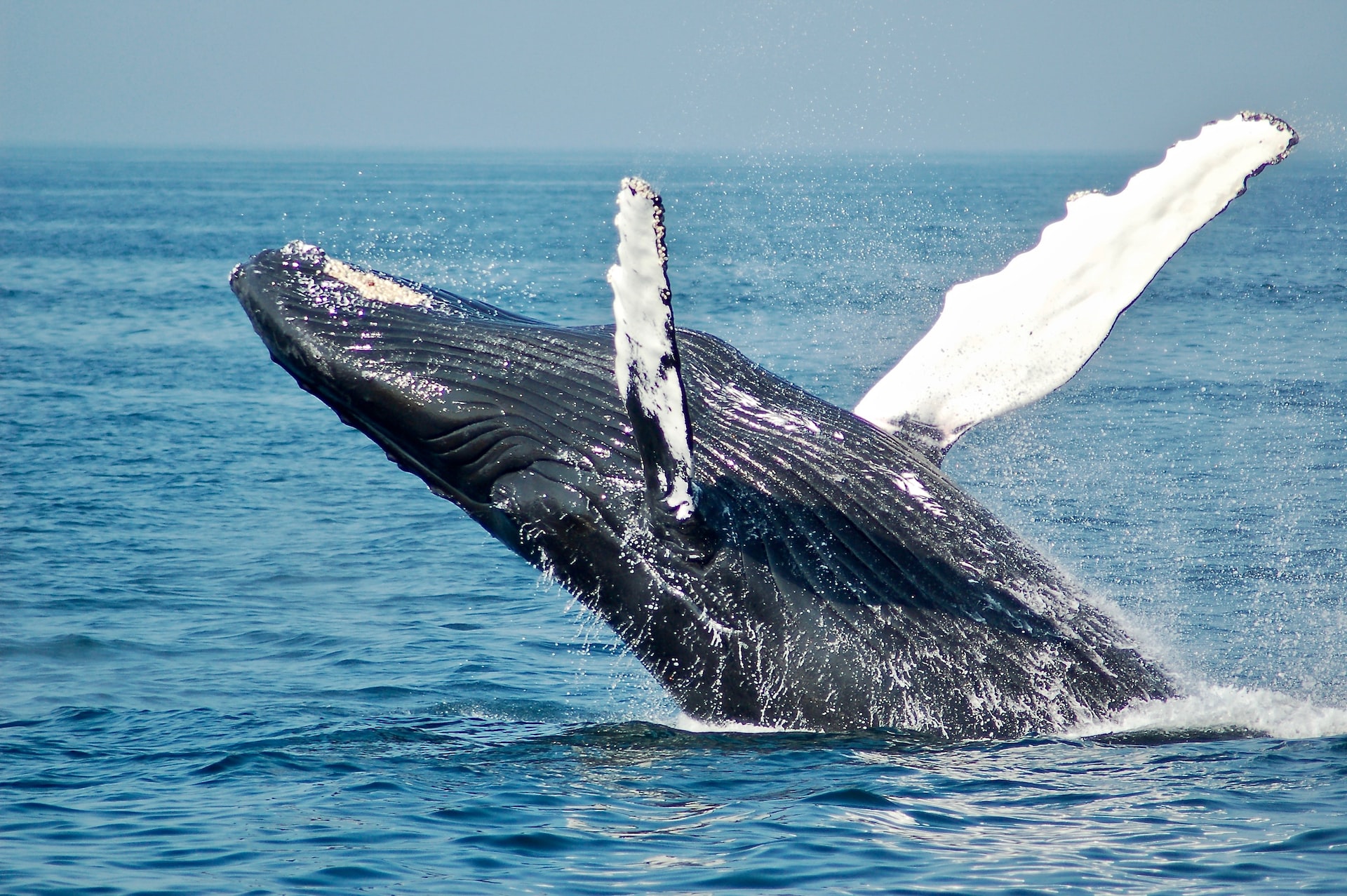
“Of the roughly 250,000 known marine species,” reports Varshney, “scientists think all ~126 marine mammals emit sounds — the ‘thwop’, ‘muah’, and ‘boop’s of a humpback whale, for example, or the ‘boing’ of a minke whale. Audible too are at least 100 invertebrates, 1,000 of the world’s 34,000 known fish species, and likely many thousands more.

“Now a team of 17 experts from nine countries has set a goal of gathering on a single platform huge collections of aquatic life’s tell-tale sounds, and expanding it using new enabling technologies — from highly sophisticated ocean hydrophones and artificial intelligence learning systems to phone apps and underwater GoPros used by citizen scientists.

“The Global Library of Underwater Biological Sounds, ‘GLUBS,’ will underpin a novel non-invasive, affordable way for scientists to listen in on life in marine, brackish and freshwaters, monitor its changing diversity, distribution and abundance, and identify new species. Using the acoustic properties of underwater soundscapes can also characterize an ecosystem’s type and condition.

“Says lead author Miles Parsons of the Australian Institute of Marine Science: ‘The world’s most extensive habitats are aquatic and they’re rich with sounds produced by a diversity of animals. With biodiversity in decline worldwide and humans relentlessly altering underwater soundscapes, there is a need to document, quantify, and understand the sources of underwater animal sounds before they potentially disappear.’

“The team’s proposed web-based, open-access platform will provide:

  • “A reference library of known and unknown biological sound sources (by integrating and expanding existing libraries around the world);
  • “A data repository portal for annotated and unannotated audio recordings of single sources and of soundscapes;
  • “A training platform for artificial intelligence algorithms for signal detection and classification;
  • “An interface for developing species distribution maps, based on sound; and
  • “A citizen science-based application so people who love the ocean can participate in this project

“The wide range of uses for PAM [passive acoustic monitoring] is expanding in step with advances in technology, providing a large volume of easily-accessible data. …

“Many fish and aquatic invertebrate species are predominantly nocturnal or hard to find, the paper notes, making visual observations difficult or impossible. As a result, ‘PAM is proving to be one of the most effective ways to monitor visually elusive but vocal species in aquatic environments, which can potentially aid in more effective conservation management,’ including zoning in marine park areas or fishery closures, the paper says.

“Besides making sounds for communication, many aquatic species produce ‘passive sounds’ while eating, swimming, and crawling — often less acoustically complex or distinct than active sounds but important contributions to an ecosystem’s tell-tale soundscape.

“ ‘Collectively there are now many millions of recording hours around the world that could potentially be assessed for a plethora of both known and, to date, unidentified biological sounds. …

“ ‘This developing library is a key way to catalog, monitor and track changes in biodiversity on reefs and other ocean habitats before they are gone but also help us define “what a healthy reef is” as we seek to rebuild reefs.’ …

“ ‘A database of unidentified sounds is, in some ways, as important as one for known sources,’ the scientists say. ‘As the field progresses, new unidentified sounds will be collected, and more unidentified sounds can be matched to species. …

“ ‘A global database could serve broader questions, like determining universal trends in underwater sound production, while individual, specialized repositories could continue to inform and detail other topics, such as documenting the presence of soniferous species in a particular region.’

“[Listening] to the sea has revealed great whales swimming in unexpected places, new species and new sounds.” Learn about what listening is doing for other species here. No firewall.

Swahili in Africa

Photo: Annabel Lankai.
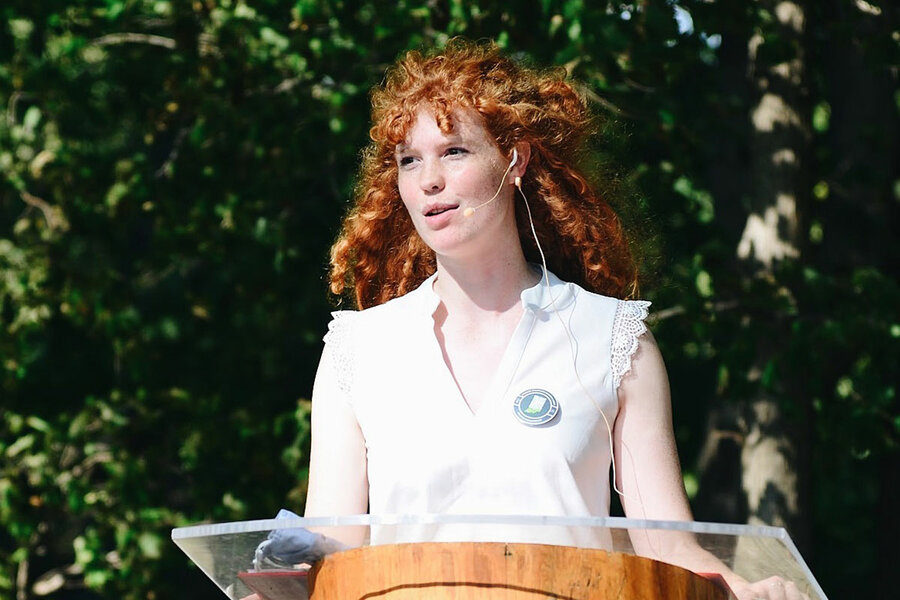
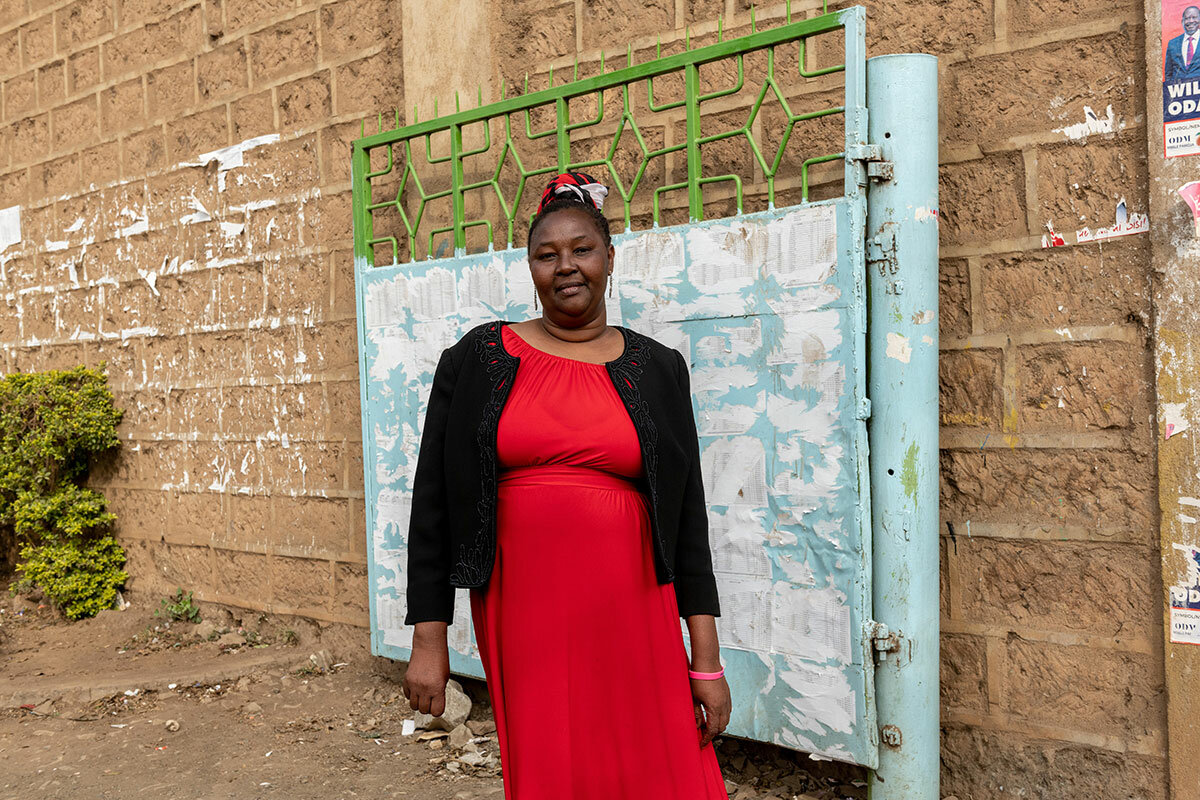
Ghanaian Swahili student Annabel Naa Odarley Lankai is advocating to make Swahili the lingua franca of Africa.

The BBC reports on renewed efforts to make Swahili the Esperanto of Africa, the universal language on the continent.

“With more than 200 million speakers, Swahili, which originated in East Africa, is one of the world’s 10 most widely spoken languages and, as Priya Sippy writes, there is a renewed push for it to become the continent’s lingua franca.

” ‘It’s high time we move from the colonizer’s language.’

“This is not part of a rousing speech by a pan-African idealist but rather the sentence is uttered quietly and calmly by Ghanaian Swahili student Annabel Naa Odarley Lankai. … Africa should ‘have something that is of us and for us,’ the 23-year-old adds.

“In its heartland, Swahili and its dialects stretch from parts of Somalia down to Mozambique and across to the western parts of the Democratic Republic of Congo. But Ms Lankai’s classroom at the University of Ghana in the capital, Accra, is some 4,500km (2,800 miles) west of Swahili’s birthplace – coastal Kenya and Tanzania. The distance could be seen as a measure of the spread of the language and its growing appeal. …

“Swahili, which takes around 40% of its vocabulary directly from Arabic, was initially spread by Arab traders along East Africa’s coast. It was then formalized under the German and British colonial regimes in the region in the late 19th and early 20th Centuries, as a language of administration and education. …

“At its recent heads of state meeting, the African Union (AU) adopted Swahili as an official working language. It is also the official language of the East African Community (EAC), which DR Congo is poised to join.

“In 2019, Swahili became the only African language to be recognized by the Southern African Development Community (SADC). Shortly after, it was introduced in classrooms across South Africa and Botswana. Most recently, Ethiopia’s Addis Ababa University announced it would start teaching Swahili. …

“Tom Jelpke, a researcher of Swahili at London’s School of Oriental and African Studies, argues that as connections grow across the continent, people will want a common way to communicate. He believes that its closeness to other languages in east and central Africa will cement its position there. But beyond those regions there may also be an ideological element. …

“Says Ally Khalfan, a lecturer at the State University of Zanzibar … ‘It is about our property and our identity as Africans.’ …

“Currently, English is the official or second language in 27 out of the 54 countries in Africa, and French is the official language in 21 of them.

” ‘English is still the language of power,’ says Chege Githiora, a linguistics professor in Kenya, in recognition of the political and economic reality. He advocates what he calls ‘fluent multilingualism,’ where people are comfortable speaking more than one trans-national language. …

“But whereas Swahili has an appeal in east, central and southern Africa, it has more competition in the west and the north. Arabic is dominant in the north, but in the west there are African languages – such as Hausa, Igbo and Yoruba – which could vie for the status of lingua franca.

“If Swahili is to become truly pan-African it will take political will, an economic imperative and financial investment to reach all regions.”

More at the BBC, here. No firewall.

Turtle Movers Needed

Photo: Lauren Owen Lambert.
A rehabilitator with the Sea Life Aquarium holds one of approximately 85 endangered Kemp’s ridley sea turtles released at Galveston Beach in Texas last year.

When Suzanne and Erik and the kids were visiting the island of Eleuthera, a local guide gave them a treat. As they maneuvered their rented kayak, the guide stood on his paddle board and led them to where they could see green turtles without harming them. Though listed as endangered, the turtles seemed very happy in Eleuthera. According to Suzanne, they swam really fast and playfully.

Some other endangered turtles have been moving a little too fast — to the hook of Cape Cod, Massachusetts, where they get in trouble. That’s when local rescue operations go into high gear.

Lauren Owens Lambert at Vox has the story.

“Sea turtles appear to fly as they swim beneath ocean waves. With long, gray-green flippers that move like slow wingbeats, they glide through the water as birds do through the sky. Actually flying through the air, though, at 10,000 feet above the ground, the reptiles seem anything but graceful.

“Inside the airplane, 120 sea turtles, 118 of which are juvenile Kemp’s ridleys (Lepidochelys kempii), shift uncomfortably among beach towels inside stacked Chiquita banana boxes, their crusty eyes and curved pearlescent beaks peeking through slot handles. The windowless metal cabin vibrates with the sound of propellers as the pilots work to keep the plane aloft and the internal air temperature at a turtle-friendly 22 degrees Celsius (72 degrees Fahrenheit). It’s December 2020, and outside, the cold air above New England slowly gives way to balmier southern temperatures. The pilots are taking the turtles on a 2,900-kilometer (1,800-mile) trip from Massachusetts to Texas’s Gulf Coast.

“Eight hours later, they’re nearly there. ‘We’re coming into Corpus Christi,’ says Mike Looby, a pilot with a sea turtle rescue organization called Turtles Fly Too, as airport runways come into view among the sprawling buildings below. Looby and co-pilot Bill Gisler, both from Ohio, will visit four different locations in Texas to offload the animals. This is the largest number of turtles the organization has transported to date.

“Once the plane is on the tarmac, staff and volunteers from several aquariums and marine rescue facilities crowd around. The pilots gently slide each box of turtles toward the cargo door, and the group lines up to carry them to vans parked nearby.

“ ‘What happened to these guys?’ someone asks.

“ ‘They were found stranded on Cape Cod, in Massachusetts,’ says Donna Shaver, chief of the division of Sea Turtle Science and Recovery at Padre Island National Seashore, as she grabs a box.

“In the summer months, the waters in the Gulf of Maine where Cape Cod is located are warm, calm, and full of food, serving as a natural nursery for 2- to 4-year-old Kemp’s ridleys, the smallest and most endangered sea turtle in the world. Migrating loggerheads (Caretta caretta), green sea turtles (Chelonia mydas), and the occasional leatherback (Dermochelys coriacea) also visit Cape Cod Bay. But as water temperatures plummet in November, December, and January, the cold-blooded turtles must migrate out or perish.

Many lose their way and wash up, cold-stunned, on the inside edge of the hook-shaped Cape, which curls into the ocean like a flexing arm, forming what some locals call ‘the deadly bucket.’ …

“ ‘This area is increasing in water temperature faster than 99 percent of water bodies in the world,’ says Kate Sampson, sea turtle stranding and disentanglement coordinator at the National Oceanic and Atmospheric Administration (NOAA), who helps coordinate turtle transport. ‘Because of that, it seems like it’s drawing more sea turtles.’

“Fortunately for the turtles, hundreds of volunteers and several staff members organized by the nonprofit Mass Audubon Wellfleet Bay Wildlife Sanctuary stand at the ready to patrol every inch of the 105-kilometer (65-mile) stretch of beach lining the inner Cape, twice a day, from November through December, no matter the weather. When they find a turtle, the animal begins a logistically complex journey from rescue to rehabilitation and, eventually, to release.

“Saving each flight’s worth of little lives involves approximately five vans, 1,000 miles, four organizations, and 50 people. Without this monumental collaboration across North America’s Eastern Seaboard, other efforts to save the Kemp’s ridley sea turtle from extinction might be futile.”

Read why turtle strandings are on the rise at Vox, here. No firewall.