Feeds:
Posts
Comments
Photo: The Guardian.
Sister Brigid Arthur, 86, and Anj Sharma, 16, are among a group who secured a judgment from the Australian federal court that found the government has a duty to protect young people from climate change.

If you ever feel powerless to do anything about climate change, consider how an 86-year-old nun and eight Australian teenagers stopped a massive new coal mine in its tracks by persuading a court that the needs of youth need to be addressed first. Fingers crossed that the success is more than temporary.

Adam Morton writes at the Guardian, “The federal court of Australia has found the environment minister, Sussan Ley, has a duty of care to protect young people from the climate crisis in a judgment hailed by lawyers and teenagers who brought the case as a world first.

“Eight teenagers and an octogenarian nun had sought an injunction to prevent Ley approving a proposal by Whitehaven Coal to expand the Vickery coalmine in northern New South Wales, arguing the minister had a common law duty of care to protect younger people against future harm from climate change.

“Justice Mordecai Bromberg found the minister had a duty of care to not act in a way that would cause future harm to younger people. But he did not grant the injunction as he was not satisfied the minister would breach her duty of care.

“David Barnden, a lawyer representing the children, said it was a historic and ‘amazing decision’ with potentially significant consequences.

“ ‘The court has found that the minister owes a duty of care to younger children, to vulnerable people, and that duty says that the minister must not act in a way that causes harm – future harm – from climate change to younger people,’ he said outside court.

‘It is the first time in the world that such a duty of care has been recognized, especially in a common law country.’

“He said Bromberg had indicated he would now take submissions before making further declarations about what the minister’s duty of care may mean for whether the mine extension could go ahead.

“Whitehaven Coal had a different interpretation of the judgment. In a statement to the stock exchange, it did not mention the duty of care finding, and said it welcomed the court dismissing the teenagers’ attempt to block Ley from approving the mine extension. …

“Speaking for the children, 17-year-old Ava Princi said it was ‘thrilling and deeply relieving’ that the justice had recognized the minister had a duty of care. …

“She said though an injunction was not granted the case was ‘not over yet. … There will be further submissions on what the duty of care means for the minister’s decision and the mine.’ …

“The court heard the expansion of the mine could lead to an extra 100m tonnes of CO2 – about 20% of Australia’s annual climate footprint – being released into the atmosphere as the extracted coal is shipped overseas and burned to make steel and generate electricity.

“In his judgment, Bromberg said the evidence presented to the court showed the potential harm the children could face due to global heating ‘may fairly be described as catastrophic, particularly should global average surface temperatures rise to and exceed 3C beyond the pre-industrial level.’ ” More at the Guardian, here.

It may not be over, but a finding for children and their future is important, and when added to other recent judicial decisions described in the Guardian article, there’s some reason for hope.

Photo: Time magazine, 2020.
At 15, scientist Gitanjali Rao made history with a device to detect lead in drinking water. ‘You don’t need a PhD to make a difference,’ she says.

More kids are getting into science these days, and I think their enthusiasm is going to benefit us all.

Anne Branigin reports at the Lily, “Gitanjali Rao just finished her final exam of the year and, like any other teenager, is eager to begin her summer.

“The 15-year-old is, in many ways, not your typical teen. She landed on the cover of Time magazine in 2020 as its inaugural ‘Kid of the Year’ for her scientific achievements, which include building a device, Tethys, that detects lead in drinking water.

“But Rao doesn’t see herself as exceptional. In fact, when she was younger, she didn’t even see herself as ‘the science type.’ She was driven, instead, by trying to find solutions to problems in her community. Once she discovered science and technology could be a means of finding those solutions, there was no turning back.

‘Using science and technology as social change became something that was intuitive to me and something that I wanted to keep doing,’ she said. …

“Rao says her passion for STEM has shaped her days and her goals — she is working on creating a global network of young innovators to tackle global problems. It also fuels her relentless optimism for the future and all its possibilities. …

“Anne Branigin: I’m curious what a normal day looks like for you during a very not-normal year.

“Gitanjali Rao: A normal day obviously involves being your normal high school student, just, you know, maintaining a social life, still doing homework every single day, studying for exams. But then there’s this added layer of my research and innovations. A lot of my work has been focused on running my innovation workshops for students all over the globe, which is also taking up a little bit — a lot of my energy and time trying to maintain that sort of situation as well. And also just being, even remotely, in the public eye obviously comes with its own perks, but also disadvantages of being able to manage that as well. …

“I love helping people. I love using science and technology to do that. So that priority always comes first. … I don’t do eight things at a time. I might do eight things in a day, but not eight things at a time because I know what I need to focus on. I know how to prioritize my work. …

“Anne Branigin: On the subject of your generation, there’s a recent study showing that interest in STEM is at an all-time high among young people.

“Gitanjali Rao: It honestly makes me really happy to see younger generations engaging in science. Today’s kids are tomorrow’s innovators and they [will] make the world better, stronger and more sustainable in the future. …

“Anne Branigin: What do you think makes your generation’s approach to science unique?

“Gitanjali Rao: So a question that I commonly get is, what is one word to describe your generation? And I like to say, hotheaded — but in a good way. Our generation, if we put our mind to something, we want to get it done. That’s how I have been. That’s how a lot of my friends have been. …

“Anne Branigin: In the past, we haven’t always seen people of color and women and other members of marginalized communities really be the drivers of this technology. I’m curious how you’ve been thinking about equity and how those conversations have come up with your peers.

“Gitanjali Rao: My generation is destined to be innovators more than any generation that came before. And we’re the first generation to grow up as natural innovators because of how we live, where we live and what we have access to from a technology standpoint.

“Where I want to see that equity change is in education. Access to resources is something that obviously people have faced across the world. It’s an issue still to this day. It’s the 21st century, and we’re still talking about girls and women struggling to get education. But what it’s important to recognize is that a lot of times, the ideas start in the bare minimum.

“With my device, Tethys, to detect lead in drinking water, I started with a cardboard box and a couple of drawings on a piece of paper. And honestly, what that turned into was not looking at what resources I had, but dreaming big and then thinking back to reality.

“So equity is something that we need to work together to make a difference. But until then, it’s about using what we have on hand. Most of the innovators that I talk to online don’t have their driver’s license. I don’t have my driver’s license. But at the same time, it gives me this opportunity to be like, ‘Okay, with the resources that I have on hand, without having money to spend, what can I do?’ “

More at the Lily, here.

Photo: Josh Reynolds for the Boston Globe.
Phalla Nol of Lowell weeded rows of garlic in her plot at White Gate Farm in Dracut.

I’ve really been intrigued by the Boston Globe “States of Farming” series — “occasional stories looking at Black, indigenous, and people of color (BIPOC) farmers in New England.” Today’s article addresses how a Cambodian who arrived here as child went about building a well-respected produce business.

Jocelyn Ruggiero writes that after Phalla Nol’s family “entered the United States as refugees in October 1981, they settled in Revere. Nol spoke ‘a little bit’ of English and could understand well enough to get along at the local high school, where the students were friendly. The adults in the community weren’t as welcoming.”

After an act of arson that left Nol’s family homeless, they rebuilt their lives in Greater Boston, got jobs, and made friends.

Her father “was 71 in 1998 when he retired from the New England Seafood Company and was among the first participants in the New Entry Sustainable Farming Project, an initiative of Tufts University’s Friedman School of Nutrition Science and Policy. The farmer training program supported his plot at Smith Farm, a training site owned by the Dracut Land Trust, where New Entry trained him in such skills as sourcing seeds, selling produce, using small farm equipment, pest and disease management, and drip irrigation. …

“Although Nol ‘loved the farm,’ it didn’t generate enough revenue to interest her. ‘He didn’t care about money, but me, I do care about the money.’ Beginning around 2007, however, Nol saw an opportunity for profit. She began purchasing produce from Cambodian New Entry farmers and graduates and resold those vegetables at local farmers’ markets. This proved to be a financial success.

“In 2013, New Entry found that they had more Southeast Asian crops from their Cambodian farmers than they could use in their CSA. So Hashley approached Nol with a proposition.

“ ‘Phalla was . . . already organizing and buying and selling from other farmers for her own markets,’ [New Entry director Jennifer Hashley] said. New Entry proposed that Nol become a ‘broker’ of sorts between the farmers and Whole Foods. ‘We helped her get the necessary insurance and distributor’s license she needed to aggregate orders among the farmers and sell directly to Whole Foods. We also connected her to Russo’s in Watertown to do similar wholesale sales.’ …

“Tony Russo, the owner of Russo’s in Watertown, has nothing but respect for Nol after doing business with her for eight years. ‘Phalla’s remarkable. . . . She’s honest, she’s responsible, she’s skillful. All the products she gives us are always just what they’re supposed to be, never less than that, and she’s fair with her prices. She’s a very hardworking person in a very difficult business environment. She’s a tower of strength.’

“Today, Nol leases five acres from the town of Westford and a smaller plot from the Dracut Land Trust. Her sister drives from New Jersey to help every weekend, and nieces, nephews, cousins, and other relatives do what they can to chip in. Although Nol pays a couple of people to plow and till, her mother, Kimsan Ly, ‘is with me 24 hours. . . . She’s my main helper. She’s stronger than me!’ Nol and her mother begin many days at 5:30 in the morning, and some nights harvest until well after dark, preparing for farmers’ markets and wholesale deliveries. Since so much of the business’s financial success is tied to her family’s help, Nol is unsure of what the business will look like 10 years from now. ‘The older we get, the more challenging it is.’ …

“Despite the challenges and despite the uncertainty of the future, she’s proud of the business she’s built: ‘My stand, what a crazy thing,’ Nol laughs. ‘At my stand, people line up, from here to there,’ she says, making a wide gesture. ‘They fight to get to my veggies!’ ”

For more on the family’s difficult history in Cambodia and both challenges and successes in American, check out the Globe, here.

Photo: Jim Maragos, US Fish and Wildlife Service, CC BY-NC 2.0.
The Ocean Panel is a group of 14 countries looking to protect 100% of their ocean areas by 2025. Pictured: a coral reef in the Palmyra Atoll National Wildlife Refuge.

I don’t know which aspect of this story is more hopeful: that there is time to save oceans or that 14 countries have pledged to collaborate. On anything.

From the radio show Living on Earth: “The oceans are facing serious and growing threats, including climate change, overfishing, plastic pollution and more. But a group of 14 world leaders called the Ocean Panel is committing to transform the ocean from victim to solution, by sustainably managing 100% of their ocean areas by 2025. Jane Lubchenco is the Deputy Director for Climate and Environment for the White House Office of Science and Technology Policy, as well as a co-chair of the Ocean Panel Expert Group that helped ground this vision in research. She joins Host Aynsley O’Neill. …

“O’NEILL: Before she took her White House job, [Jane Lubchenco] spoke with us about the vision and work of the Ocean Panel. Jane, welcome back to Living on Earth!

“LUBCHENCO: Thanks, Aynsley, it’s a delight to be here.

“O’NEILL: Now, when we look at how we currently manage the oceans, why does the world need this total transformation in management? …

“LUBCHENCO: We’ve treated a lot of these problems issue by issue. And part of the message that the Ocean Panel leaders heard is the need for integrated solutions that consider the whole suite of human activities. The other major thing that I think they heard was that a smart future is not just doing more of the same. It’s actually doing things differently, being much smarter about how we fish, much smarter about how we produce energy, much smarter about how we transport goods around the world. And so much of what is in their new, exciting Ocean Action agenda is doing things smarter, more effectively, more efficiently, and also doing things more holistically. …

“In September of 2019, we had a new report that came out from the IPCC, the Intergovernmental Panel on Climate Change. There was a special report on the ocean and the cryosphere, and it painted in very depressing detail, all of the ways that the ocean has been massively affected by climate change and ocean acidification. … The same week, the Ocean Panel unveiled a report. … The report that the Ocean Panel commissioned, looked at a variety of ocean-based activities and asked simply, what is the potential for mitigating climate change? And they found enough data at the global scale to analyze five categories of activities. And when they added up how much they could get from each of those five, they came to the astounding conclusion that it might be as much as 1/5 of what we need, by way of carbon emission reductions to achieve the 1.5 degree centigrade target of the Paris Agreement by 2050.

So that’s huge. You know, a lot of those activities weren’t even on the table. And here, we find that they actually could play a very significant role in helping to turn things around in terms of climate change.

“O’NEILL: So Jane, you mentioned five ocean-based activities to help mitigate climate change. Could you go through those for us, please?

“LUBCHENCO: So the first one was increasing renewable energy from the ocean, and that’s a big one. Most of that is going to likely be wave energy, but it might also be tidal, it might be current, it might be thermal, depending on what part of the world you are in.

“The second category was making shipping less polluting. So 90% of the goods that are traded globally travel by ocean and currently, that’s pretty polluting. Its dirty fuels contribute significantly to greenhouse gases. But it is technologically possible to decarbonize shipping, and that could have a huge benefit.

“Number three is focusing on what we call blue carbon ecosystems. So these are coastal and ocean ecosystems, such as mangroves, salt marshes, or seagrass beds, that are little carbon engines that are just sucking carbon out of the atmosphere like crazy. Those habitats; mangroves, sea grasses, salt, marsh beds, can not only remove but then sequester as much as 10 times as much carbon as an equivalent area of forest, for example. And we’ve currently lost about half of them globally. So here is an opportunity to actually protect the remaining ones, but also to restore those that have already been degraded.

“The fourth area for ocean based activities to mitigate climate change comes from focusing on a little bit greater efficiency with aquaculture, mariculture operations, a little bit greater efficiency with fisheries. But the big one in this category is really shifting diets globally, away from animal protein on the land, and including animal protein from the sea, instead of that animal protein from the land.

“And then the fifth category was simply sequestering carbon on the seabed. And the panel who looked at these five categories, said that the first four, they felt completely comfortable recommending that they be pursued aggressively. Smartly, yes, but aggressively. This fifth one, carbon storage in the seabed has a lot of questions still about technical and environmental impacts. And so they recommended further study for those. …

“This is not really sacrifice. It’s being smarter about doing things. I think people are familiar with the concept of greater efficiency when we think about energy. You know, much of the focus for mitigating climate change has been focusing on how do we use energy more efficiently. And there have been tremendous advances in energy efficiency of our appliances, of our automobiles, of our transportation systems. That same concept of being more efficient, is what underlies a lot of the transformative actions that are in the ocean action agenda. So yes, this is an incredible opportunity. And it’s my belief that these 14 nations that have embarked on this journey of discovery and now journey of action will have such success with what they are proposing that others will say, oh my gosh, I want some of that too.”

More at Living on Earth, here.
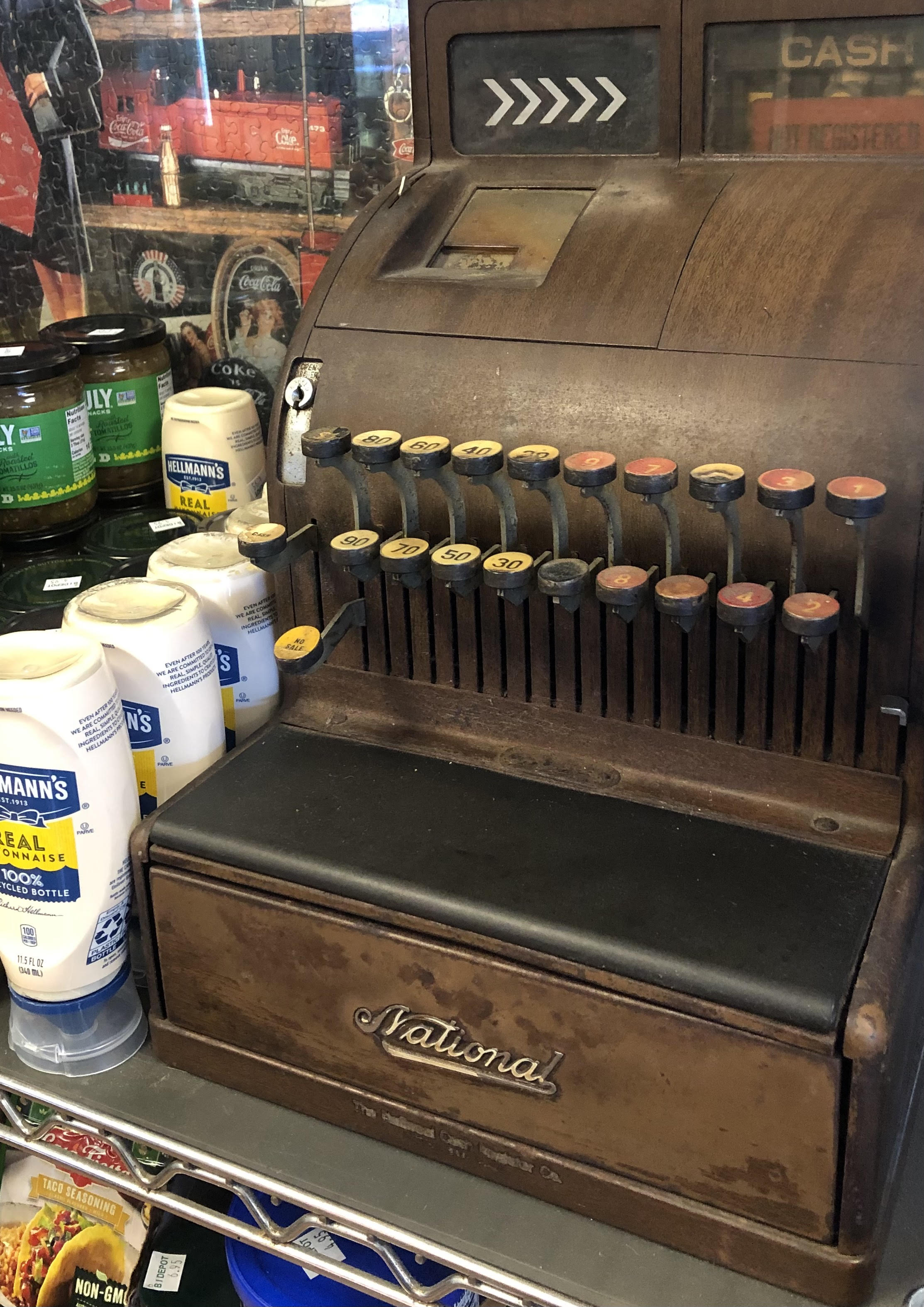
Photo: Michelle Groskopf.
At home in Arizona, James Turrell views plans for the access road to his giant desert artwork. “Tight contour lines near the center represent the steep slope to the summit,” the
Smithsonian reports.

What is the difference between intensity and obsession, and does the latter ever benefit humanity? Read this story and be the judge. It’s about an artist in his late 70s who as a young man spent a year in jail for teaching other young men how to avoid the draft — and Vietnam. An unusual person.

At the Smithsonian magazine, Wil S. Hylton describes James Turrell’s massive art project in the desert.

“It was a cloudless day in northern Arizona,” writes Hylton, “and James Turrell wanted to show me an illusion. We climbed into his pickup truck and drove into the desert. After a few miles, he turned off the pavement to follow a dusty road; then he turned off the road and barreled across the desiccated landscape. When we reached the base of a red volcano, he shifted into four-wheel-drive. …

“The engine groaned and Turrell gripped the wheel with two hands as we climbed. Here and there we lost traction and slipped backward a few feet, but eventually we reached the top. The desert stretched for miles around, a patchwork of green and gold and brown, with the snowcapped peaks of the San Francisco mountains on the horizon.

“Turrell pointed down. ‘You see how the area right below us seems to be the lowest point?’ he asked. I followed his gaze, and it was true: The desert appeared to slope toward us from every direction, as if the volcano were sitting at the bottom of an immense bowl. ‘But it can’t be,’ Turrell said, ‘or we’d be surrounded by water. This is an illusion that Antoine de Saint-Exupéry talked about. You have to be between 500 and 600 feet above the terrain for it to happen.’ …

“Turrell, who turns 78 this year, has spent half a century challenging the conventions of art. While most of his contemporaries work with paint, clay or stone, Turrell is a sculptor of light. He will arrive at a museum with a construction crew, black out the exterior windows, and build a new structure inside — creating a labyrinth of halls and chambers, which he blasts with light in such a way that glowing shapes materialize. In some pieces, a ghostly cube will appear to hover in the middle distance. In others, a 14-foot wedge of green shimmers before your eyes. One series that Turrell calls ‘Ganzfelds’ fills the room with a neon haze. To step inside is to feel as if you are falling through a radioactive cloud. In another series, ‘Skyspaces,‘ Turrell makes a hole in the roof of a building, then winnows the edges around the opening to a sharp point. The sky above appears to flatten on the same plane as the rest of the ceiling, while supersaturated tones of light infuse the room below.

“Turrell’s work can be found in 30 countries around the world. He has produced nearly 100 Skyspaces alone. … The volcano is different. It is Turrell’s most ambitious project, but also his most personal. He has spent 45 years designing a series of tunnels and chambers inside to capture celestial light. Yet Turrell has rarely allowed anyone to visit the work in progress. Known as Roden Crater, it stands 580 feet tall and nearly two miles wide. One of the tunnels that Turrell has completed is 854 feet long.

When the moon passes overhead, its light streams down the tunnel, refracting through a six-foot-diameter lens and projecting an image of the moon onto an eight-foot-high disk of white marble below.

“The work is built to align most perfectly during the Major Lunar Standstill every 18.61 years. The next occurrence will be in April 2025. To calculate the alignment, Turrell worked closely with astronomers and astrophysicists. Because the universe is expanding, he must account for imperceptible changes in the geometry of the galaxy. He has designed the tunnel, like other features of the crater, to be most precise in about 2,000 years. Turrell’s friends sometimes joke that’s also when he’ll finish the project. …

“One thing I came to understand about Turrell was that, deep in his marrow, the crater was not just a vision but a kind of duty. The decades of struggle to gather funds, perfect the design and continue work on the project were culminating in the twilight of his life with a painful recognition that time was running out. … He had, reluctantly, shifted his focus to drafting meticulous blueprints for the crater, so that if he did not complete it, someone else could. But there was little peace in that. He seemed to be torn between the forces of obsession and mortality.

“That began to change a few years ago, when Turrell got a call from Kanye West. Like countless others, West wanted to visit the crater. But for reasons even Turrell cannot explain, he agreed to give West a private tour. Late one night, they wandered for hours through the underground chambers, staring at the stars and basking in ethereal light. Afterward, West offered to donate $10 million to the project, which Turrell, who has received many more offers than actual donations over the years, regarded as a compliment, but little more. Then the money appeared.”

Whoa!

Read the whole story at the Smithsonian, here.
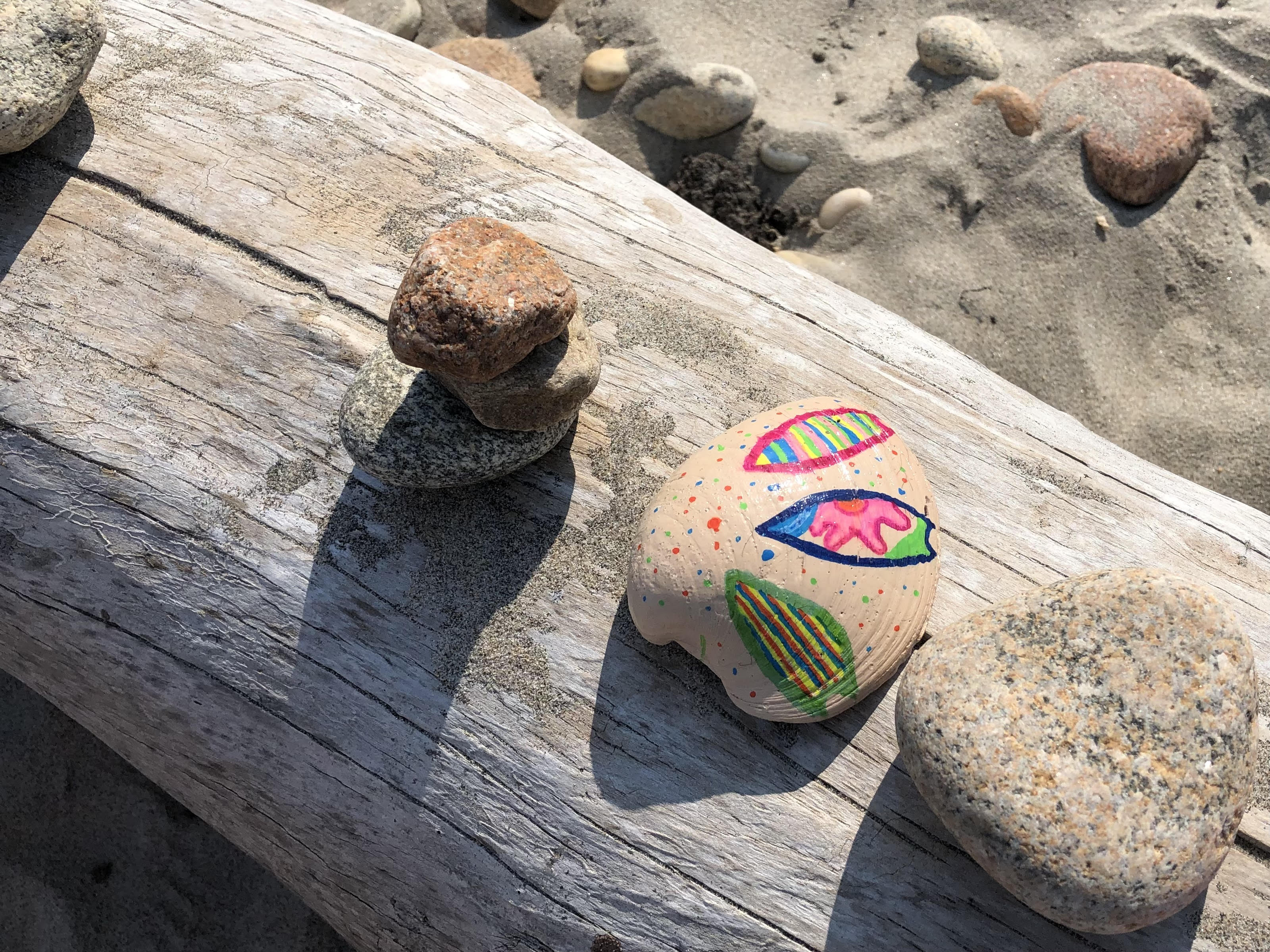
Photo: Marcos Paulo Prado/unsplash.
A diary version of the chain letter, begun by Kyra Peralte
, comforted participants during the pandemic.

As things are gradually getting back to something resembling normal, people are taking stock of the past 14-plus months and recording how they got through them. A new kind of chain letter, first begun by Kyra Peralte, provided support to 115 strangers around the world.

Sydney Page writes at the Washington Post, “Kyra Peralte thought keeping a diary during the pandemic might help her sort out her tangled feelings. Then she decided to drop her journal in the mail and share it with a stranger.

“Peralte — a mother of two in Montclair, N.J. — started writing candidly last April about the challenges of juggling work, marriage and motherhood during a global crisis. Writing was cathartic, but Peralte, 44, wanted to know how other women were doing. Was she alone in her feelings or were other women experiencing the same overwhelming stress? She craved connection.

“So she made an unusual offer. She invited other women from near and far to fill the remaining lined pages of her black-and-white marbled composition notebook with their own pandemic tales.

‘I wanted an interaction that felt human, and it feels very human to read someone else’s writing,’ said Peralte, a children’s game designer.

“She dreamed up ‘The Traveling Diary’ — a simple notebook that would traverse the globe via snail mail, collecting handwritten stories and, ultimately, creating a community.

“A year later, seven marbled notebooks have circulated in various locations — from the United States to Australia, Canada to South Africa — and a growing group of strangers have formed an unexpected friendship as a result. So far, 115 women have signed up to participate.

“Peralte found her first contributor on a Zoom conference for entrepreneurs, during which she mentioned her diary idea. A woman from North Carolina immediately reached out and said she would like to write in the book.

“From there, Peralte wrote a Medium article, in an effort to recruit more women to get involved. Word spread, and she created a website so participants could easily add their names to the queue. Each person is allowed to keep the diary for up to three days and fill as many pages as they wish, with whatever writing or artwork they choose. Then, they are responsible for mailing it to the next person, whose address Peralte provides. …

“Amy Tingle, 52, sat down with the diary last September, in the wake of civil unrest and ongoing protests, and she decided to focus her entry on America’s racial reckoning.

“ ‘I couldn’t escape the sadness,’ said Tingle, who lives in Maine. ‘I remember being really disappointed in humanity.’ Writing in the communal diary, ‘was definitely a therapeutic thing during that time,’ she said. As an artist, she also included a collage of women, symbolizing the sense of friendship she felt with other participants. While writing her own thoughts was healing, she said, it was equally meaningful to read the words of other women who held the book before her. …

“Kirsty Nicol, 29, who lives in London, heard about the Traveling Diary through a friend. She received the journal two months ago, after it was shipped from New York City.

“ ‘It came to me at a challenging time during lockdown,’ she said. …

“Reading the entries allowed her to escape, transporting her into the lives of others and finding bits of wisdom they left. One woman from Australia had written: ‘Working with the setbacks. Not against them. Patience and gratitude. It’s a dance. Life is moving and we can stomp our feet in rejection, or we can gracefully embrace the mess, tidying as we go.’ …

“When Colleen Martin, 44, received the diary on her doorstep in Florham Park, N.J., last November, ‘I had just recently lost my brother,’ she said. … It helped her look for meaning and ‘the growth and development that occurs in terrible times.’ …

“ ‘It has really evolved into a community,’ Peralte said. She often hosts Zoom events so the women get the chance to get to know one another more, share stories they might have missed and connect more intimately. Some of the women, she said, have actually become close friends.”

More here.
Kyra Peralte, below, had the original idea to send a composition notebook with a diary entry to a stranger in April 2020, during the pandemic. “A year later,” says the Washington Post, “seven diaries have circulated, and 115 women have been part of the traveling diary.”

Photo: Abubaker Lubowa/Reuters.
From the
Christian Science Monitor news roundup: “Managing director Kimani Muturi shows off a TexFad hair extension made from banana trunk fibers near Kampala, Uganda, April 3, 2021. When finished using it, consumers can compost the product. The company also makes rugs and other handwoven textiles.

When in the air-conditioner season I stop to think about how much we all depend on fossil fuels, I worry that we will never be able to halt global warming. But then I read stories from around the world about inventive people doing what they can, and I remember the underlying wisdom of “one and two and 50 make a million.”

Lindsey McGinnis at the Christian Science Monitor has scoured the news media for signs of progress in a variety of areas, including the environment.

“Researchers from the University of Maryland and Yale have made a breakthrough in the search for sustainable plastic alternatives, developing a wood-based bioplastic that disintegrates in a few months. … The new bioplastic is created by using a biodegradable solvent to deconstruct wood powder found at lumber mills into a slurry, which can then be shaped into common plastic products, such as shopping bags and other packaging.

“Other experimental bioplastics have often lacked the strength to compete with petroleum-based plastics, but the scientists say their product showed high mechanical strength during tests, the capacity to hold liquid, and resistance to ultraviolet light. At the end of a product’s life, the bioplastic will quickly decompose in soil, or can be re-slurried and used again. Source: New Atlas, Nature Sustainability

“A startup in Uganda is making consumer products from edible banana plant material that would otherwise go to waste. Uganda is sub-Saharan Africa’s top producer of bananas and plantains, with an estimated 75% of all farmers growing some form of banana. They typically leave the stalks to rot after harvesting fruit. That’s where TexFad saw an opportunity. The company, which launched in 2013 and employs 23 people, runs the stalks through a machine to create long fibers, hangs the leathery strands to dry, and uses the material to create products such as carpets.

“Last year, the company made $41,000 in sales, and the managing director expects TexFad to double production in 2021 to 2,400 carpets, some of which will be exported to customers in the United Kingdom, Canada, and the United States for the first time. The company also creates hair extensions (used ones can be composted) and is working on a process to soften the fibers for use in clothing. Source: Interesting Engineering, Reuters

“A global network is helping reroute dangerous refrigerants before they leak into the atmosphere. Freezers and refrigerators have housed some of the most potent greenhouse gases, including the compound known as R12, a chlorofluorocarbon with roughly 10,000 times the destructive potential of CO2. The refrigerants pumped into modern units are better, but still pose global warming potential. When disposed of improperly – either knowingly or unknowingly – these gases are released into the atmosphere and contribute to climate change.
“Tradewater, a company that collects and destroys greenhouse gases and sells the carbon offset credits, is coordinating with governments and businesses around the world to dispose of the gases safely. Its teams are sometimes called ‘chill hunters’ or ‘ghostbusters’ for the way they track and trap the gases, transferring them from discarded refrigerator cylinders into a large container. Tradewater then incinerates the recovered gases. The group reports that 4 million to 5 million metric tons have been kept out of the atmosphere so far. Ángel Toledo has run a waste disposal plant on the edge of Guatemala City for 16 years, but only dealt with refrigerant gases since 2018. ‘It’s like a dream, helping the environment … [by preventing these] gases from reaching the atmosphere.’ Source: BBC.”

More at the Monitor, here. I am not a Christian Scientist, but the Christian Science Monitor newspaper has a long and illustrious history for objective reporting, especially on international news, although I believe they don’t cover health news.
Photo: Matthew Genge, Imperial College London.
The simulation of the Scottish countryside for an online geology class included buildings, walls, and gravestones.

Although it always seemed likely I would turn out to be an English major, I did have to choose a science in college. My mother thought it was charming that the geology class had the same two professors from the time she was there. She recommended the course. And a few people said geology would be easier than the other sciences. Ha! They were wrong about that! But I learned as much as I could, if not very well, and to this day I can tell you if your dorm is made of Wissahickon Schist.


If I thought geology was hard back then, what would it have been like this past year? At Atlas Obscura, Robin George Andrews reports on the challenges of teaching it online during the pandemic.

“If you decide to pursue a degree in geology,” Andrews notes, “be prepared to spend some time in the wilderness, where you will be asked to find and analyze rocks that will help teach you how the planet works. You will sketch curious outcrops, smash stone to pieces, peer at crystals through a hand lens, and, every now and then, even lick rocks, if it comes to that, all under the watchful, judging eye of your instructors.

“When the pandemic kicked into gear back in March 2020, these both scintillating and stressful field schools were no more. Geology instructors across the world were at a bit of a loss as to what to do. Many understandably concluded that there was no way to replicate this hands-on learning experience and just made do, but Matthew Genge, a planetary scientist at Imperial College London (ICL), had an epiphany.

“By happenstance, he had taken up the hobby of video game design a decade earlier. ‘It’s pure problem solving,’ he says. ‘You get that achievement buzz when you make something work or overcome some challenge.’

“One of his colleagues, fellow ICL geoscientist Mark Sutton, had also been dabbling in the same digital sandbox. So they decided to put their skills to pedagogical use:

They built video game versions of the field trips their undergraduate students would normally go on, where they could practice the same techniques and learn about the planet in the same way they would in the real world.

“It started with a 3D replica of Sardinia (and Mt. Etna on Sicily), where students galivanted about, looking for ancient fossils, prodding volcanic rocks, and exploring an abandoned silver mine. But like in all good video games, things escalated quickly. Before long, students were piloting spaceships, fending off hostile fighters, and trying to find a good place to land on an asteroid (to study its chemistry). …

“Back in 2019, Sutton had brought a drone to Sardinia — one of the usual field trip locations — and took a bunch of photographs of the places they were visiting to learn geology. A year later, Genge used those photographs, along with some bespoke computer code, to whip up a virtual version of the study area.

“In the (real) field, the objective would be to examine a location, study it scientifically, pose a research question, and then attempt to answer it. The same scenario played out in the virtual world Genge and Sutton created.

“For example, an area that was once a lake, 330 million years ago, is now jam-packed with plant and animal fossils. There are even ancient traces of rain, which made little indentations that have been naturally preserved. Some of these impressions are elongated in one direction, which can be used to estimate wind speed. A student might find these rain prints, examine them in high resolution, and then write something about how they might be used to understand what Earth’s atmosphere was like back then.

“The students were engaged, and the quality of their work was similar to what the instructors had seen in previous field seasons. ‘Two of the projects were close to being publishable,’ says Genge.”

More details (including how the video game meant the study of meteorites could become a space adventure) at Atlas Obscura, here.

Photo: Colorado Public Radio.
Cherish Ross is with FLOW, a sign language interpreting agency that specializes exclusively in performing arts.

So many interesting kinds of jobs in the world! And the luckiest people are the ones whose work aligns with what they love doing. Consider those who interpret for the deaf at concerts.

Corinna da Fonseca-Wollheim has a cool story at the New York Times. “On a recent afternoon in a brightly lit studio in Brooklyn, Mervin Primeaux-O’Bryant and Brandon Kazen-Maddox were filming a music video. They were recording a cover version of ‘Midnight Train to Georgia,’ but the voices that filled the room were those of Gladys Knight and the Pips, who made the song a hit in the 1970s. And yet the two men in the studio were also singing — with their hands.

“Primeaux-O’Bryant is a deaf actor and dancer; Kazen-Maddox is a hearing dancer and choreographer who is, thanks to seven deaf family members, a native speaker of American Sign Language. Their version of ‘Midnight Train to Georgia’ is part of a 10-song series of American Sign Language covers of seminal works by Black female artists that Kazen-Maddox is producing for Broadstream, an arts streaming platform.

“Around the world, music knits together communities as it tells foundational stories, teaches emotional intelligence and cements a sense of belonging. … As sign language music videos proliferate on YouTube, where they spark comments from deaf and hearing viewers, the richness of American Sign Language, or A.S.L., has gotten a broader stage.

“ ‘Music is many different things to different people,’ Alexandria Wailes, a deaf actress and dancer told me in a video interview, using an interpreter. Wailes performed ‘The Star-Spangled Banner’ at the 2018 Super Bowl, and last year drew thousands of views on YouTube with her sign language contribution to ‘Sing Gently,’ a choral work by Eric Whitacre. …

“A good A.S.L. performance prioritizes dynamics, phrasing and flow. The parameters of sign language — hand shape, movement, location, palm orientation and facial expression — can be combined with elements of visual vernacular, a body of codified gestures, allowing a skilled A.S.L. speaker to engage in the kind of sound painting that composers use to enrich a text.

“At the recent video shoot, Gladys Knight’s voice boomed out of a large speaker while a much smaller one was tucked inside Primeaux-O’Bryant’s clothes, so that he could ‘tangibly feel the music,’ he said in an interview, with Kazen-Maddox interpreting. Out of sight of the camera, an interpreter stood ready to translate any instructions from the crew, all hearing, while a laptop displayed the song lyrics.

“In the song, the backup singers — here personified by Kazen-Maddox — encourage Knight as she rallies herself to join her lover, who has returned home to Georgia. In the original recording the Pips repeat the phrase ‘all aboard.’ But as Kazen-Maddox signed it, those words grew into signs evoking the movement of the train and its gears. A playful tug at an invisible whistle corresponded to the woo-woo of the band’s horns. Primeaux-O’Bryant signed the lead vocals with movements that gently extended the words, just as in the song: on the drawn-out ‘oh’ of ‘not so long ago-oh-oh,’ his hands fluttered into his lap. The two men also incorporated signs from Black A.S.L.

‘The hands have their own emotions,’ Primeaux-O’Bryant said. ‘They have their own mind.’

“Deaf singers prepare for their interpretations by experiencing a song through any means available to them. Many people speak about their heightened receptivity to the vibrations of sound, which they experience through their body. As a dancer trained in ballet, Primeaux-O’Bryant said he was particularly attuned to the vibrations of a piano as transmitted through a wooden floor.

“Primeaux-O’Bryant was a student at the Model Secondary School for the Deaf in Washington in the early 1990s when a teacher asked him to sign a Michael Jackson song during Black History Month. His first reaction was to refuse.

“But the teacher ‘pulled it out’ of him, he said, and he was thrust into the limelight in front of a large audience. Then, Primeaux-O’Bryant said, ‘the lights came on and my cue happened and I just exploded and signed the work and it felt good.’ Afterward the audience erupted in applause: ‘I fell in love with performing onstage.’ ”

Find information on things like the role of ballet training in ASL interpretation, the impact of the pandemic, and Egyptian Arabic Sign Language at the Times, here.

What’s weird about WordPress is that it keeps changing how things are done and forgets its own history. So, for example, it recently decided to congratulate people for consecutive days of posting. I guess it started counting when the new editing system went in. But when it throws exclamation points at me for “1,449!” consecutive days, it’s really a bit insulting.

Every day for ten years is 3,650 plus three leap years. So ex-cu-use me!

Well, enough of that. Today I also thought I would post some spring photos, the one above being ten years out of date. Suzanne, of course, looks exactly the same, but I really got old!

First, I want to share three pictures I took of redbud trees, which I always thought were plum trees until the dear sister who died in 2019 showed me an especially beautiful one on Fifth Avenue in New York. I realized from studying these photos that it’s the delicate shape of the branches from a distance that charms me most. And I always think of my sister now when I see redbuds.

Next are apple trees growing wild along the Sudbury River and cherry blossoms coexisting on a branch with moss and lichen.

Also looking pretty: woodland trails, dogwood, barberry flowers, rhododendron open and opening, plus a rare pink Lady Slipper.

And it wouldn’t be a Suzanne’s Mom’s Blog photo round-up without some shadows.

Welcome

As of today, I’ve been posting every single day for ten years. This was my first post. As you can see, I hadn’t yet figured out how Comments were done!

Suzanne's Mom's Blog

Suzanne knew that I blogged at work and asked me to do a blog for Luna & Stella, her birthstone jewelry company. She said I could write about anything that interested me, which is a good thing because as much as I love birthstone jewelry, it would be hard to say something new about it every day.

The things that interest me include the arts, the environment, my family, and people who try to make the world a better place. So I think I’ll start out by telling you about an organization that I learned of from Suzanne, The Homeless Prenatal Program, which is based in San Francisco. “HPP has three major goals: Healthy babies … safe and nurturing families where children thrive … and economically stable families.” I love that this organization is really preventing problems before they start. Check it out.

Blog comments should be sent…

View original post 9 more words

Photo: Nicole Leeper on Unsplash.
Learn why many people say child care benefits are essential to a strong economy.

When Suzanne and four other women running Rhode Island businesses talked to Vice President Kamala Harris recently, the subject of child care came up a lot. Commerce Secretary Gina Raimondo, who was also present, emphasized that to reboot the economy, we need the more than 2 million women Covid forced out of work to come back — and they can’t come back if they have no child care. Child care is infrastructure just like bridges and roads.

Now imagine how hard it has always been for people who lose benefits like child care support when their earnings inch even a tiny bit over the poverty level.

At the Washington Post, Zoe Sullivan describes the ongoing challenges.

“In October 2016, Georgia Allen got a phone call that changed her life. At the time, Allen, 35, was a single parent living in Madison, Wis., with a 3-year-old daughter. To cover her $925 monthly rent and keep her daughter in day care, Allen worked two jobs at a hospital, answered calls part time at a domestic violence center and held down a side hustle caring for elderly people and children. Even with a $300 state subsidy, Allen had to pay another $1,200 out of pocket for her daughter’s care.

“The caller told Allen that she had reached what she calls the ‘benefits cliff’: She was earning too much to qualify for the health- and child-care benefits she was receiving. Yet without those benefits, Allen couldn’t make ends meet.

‘I get emotional thinking about it, because I was just so frustrated,’ Allen said. ‘I finally get to 16, 17 dollars an hour, and the journey was so hard because I couldn’t go to school and have child care. I had to choose one or the other.’ …

“Although Allen adjusted her work schedule after that October call so she wouldn’t lose her benefits, she ultimately lost her job. …

“ ‘It took me several months of a lot of prayer,’ Allen said about finding her new direction in that period. One day, in tears, Allen had a revelation that the different jobs she’d held were all training for running a business. With families like her own in mind, Allen envisioned a cooperative network of home-based child-care sites that would not only ensure that low-wage-earning parents could secure quality child care but also provide living-wage employment to caregivers.

“The challenges and disparities Allen faced existed long before the coronavirus pandemic. The crisis, however, has exacerbated these challenges for many families and underscored the argument that caring for children is an essential service. Without child care, front-line workers, whether supermarket employees or doctors, can’t go to work. …

“In Allen’s home state of Wisconsin, only child-care programs that participate in the state’s ranking system can accept the subsidies low-income families receive. But on the flip side, those subsidies often don’t fully cover the cost of care at high-quality facilities. …

“ ‘If economic stability isn’t happening, and people are choosing alternative child-care options because child care is expensive or not accessible, that will affect the educational journey that our children will face. So, I started to see how it was all connected,’ [Allen] said. …

“Julia Henly, a University of Chicago social work professor, framed the challenge: ‘Child care needs to be super flexible and variable around parents’ work schedules, but child-care workers themselves are low-wage workers who, you know, we kind of are expecting them to carry the caregiving needs of other low-wage workers, and I just think that is not really sustainable.’

“These are the conundrums Allen aims to solve. In mid-2019, she met someone who took seriously her two-pronged approach of simultaneously addressing both employment and child-care needs. That was Abha Thakkar, executive director of a community development organization, the Northside Planning Council, which focuses on that sparsely served area of Madison.

“Now the NPC is helping Allen and her team build a round-the-clock, in-home child-care network with support on a business proposal, and by facilitating connections to grant-makers and lenders. The network’s home-based care sites will be supported by a central location that, along with offering care, will also train providers, prepare meals for the in-home satellites, and handle the back-office tasks.

“One of the central elements of Allen’s plan is that families who participate in this child-care network won’t face the sort of spike in costs that threatened to derail her after that 2016 phone call.

“ ‘This platform, for the parents, when they get to that benefits cliff, there is an option,’ Allen said. She points to a plan for a sliding pay scale and case management to help parents navigate the transition away from public benefits as they grow their incomes. …

“ ‘This model is going to be a hybrid,’ Thakkar says. ‘You don’t want a worker-owned co-op to be a nonprofit [because] the whole point is wealth-building,’ she said. As a result, the Northside Planning Council will serve as a nonprofit fiscal sponsor while the co-op develops its business.”

More at the Washington Post, here.

Photo: John Campbell via CSM.
“This spring,” says the
Christian Science Monitor, “two groups of Sterling College students spent time at instructor John Campbell’s shop, Alpine Luddites, learning how to design backpacks and operate industrial-grade sewing machines.”

I never cease to be amazed by the great variety of careers out there, some of which are careers that individuals create for themselves. Consider mountain climber John Campbell, who has learned survival skills outdoors the hard way and now shares them with others, often indoors.

Gareth Henderson reported for the Christian Science Monitor on his work.

“After scaling the heights of the Andes, Alps, and northern Rockies, John Campbell understands the importance of proper outdoor gear – and he’s eager to share that knowledge.

“This spring, he taught college students in Vermont the finer points of backpack fixing – and even how to make their own product from scratch. That’s a big advantage for those pursuing outdoor careers, because it’s rarer than one might think, Mr. Campbell says.

“As recently as the 1990s, many outdoor brands in the United States sewed their products locally. But Mr. Campbell, who runs his own gear business, says that’s not the case anymore, and he wants to pass along how it’s done. 

‘These are just good skills to have,’ he says.

“Mr. Campbell is one of three instructors for the first gear design and repair course at Sterling College, in Craftsbury Common, Vermont. The scenic college, about 40 minutes from the Canadian border, has long focused on the environment and sustainability. The new design class has the potential, say the instructors and those in the industry, to not only help students be better prepared for surviving in the wild, but also expand both local gear manufacturing and an understanding of the design process overall.

“ ‘Everything – and I do mean everything – is designed and developed the same way: through a series of steps that visualize, confirm, and then create,’ says Kurt Gray, who runs the design and product operation at Jagged Edge Mountain Gear in Telluride, Colorado. ‘The major benefit to the community,’ he adds, ‘is teaching young people how to realize their dreams through the rigors of meticulous planning and application of skill.’ …

“Mr. Campbell started by introducing students to his business, Alpine Luddites, in Westmore, Vermont. Students – in two groups of five due to pandemic protocols – trained on three large, industrial-grade sewing machines. Each group created its own backpack design, and from there individuals made their own packs, which they personalized with smaller parts, like daisy chains (the bumpy strips on the sides of packs), pockets, clips, and straps. …

“When the students weren’t at Mr. Campbell’s shop, they were honing their new skills on the nearby 130-acre Sterling campus in Craftsbury Common, a village in the town of Craftsbury, where experiential outdoor learning has been in place for five decades.

“Josh Bossin, one of the outdoor education faculty, organized the course and taught the ins and outs of repair and gear history. At his request, the college community dropped off all kinds of outdoor gear for the students to fix.

” ‘This allows us to support our community [with] keeping things out of the landfill, and at the same time, gives my students a chance to do real-life repairs and feel the impact it has with a real “customer,” ‘ says Mr. Bossin. …

“Having more students learn the skills the class is offering, Mr. Campbell says, could help bring back some manufacturing jobs that were lost years ago. … 

“Prin Van Gulden focused on participants mastering fundamentals like sewing in her part of the course, including a range of techniques for making repairs by hand. ‘My goal is for students to gain confidence and competence with the basics,’ says Ms. Van Gulden, an adjunct faculty member in the area of environmental humanities. ‘I want them to feel undaunted, to feel empowered to deal with problems as they come up.’ …

“Tyler Kheang, a student from Philadelphia, would like to use what he’s learned to get others interested in the outdoors. ‘For me personally, I want to get more minorities into the outdoor setting,’ he says.

“These skills save money, he says, as you can repair old gear rather than buying new. And anyone can learn it, he adds. ‘It takes away that financial factor and makes an opportunity for everyone to be equal,’ he says. ‘A lot of people back where I’m from don’t have a lot of money to buy expensive things.’ “

More at the Monitor, here.

Photo: David L. Ryan/Globe Staff.
A customer got groceries at the Fresh Truck stop in the Mission Hill neighborhood of Boston.

When I was a kid, my mother sometimes bought vegetables from Mr. Mackey. Mr. Mackey was a “huckster” who came around in an old school bus, repainted blue and outfitted like a produce market. I think my mother patronized this project because it charmed her. Earle and Caroline’s mother, Grace, was more practical. She may have tested Mr. Mackey’s wares once or twice, but she objected that he was overpriced. As indeed he was.

But if nothing else, there’s something to be said for the memories generated by such “old tyme” services. My husband likes to talk about a knife grinder who frequented his childhood neighborhood. And ever since the pandemic inspired me to start getting milk delivered in glass bottles, I feel like I’m not only reducing plastic waste but preserving a happy tradition.

As to repurposed school buses carrying produce, Diana Bravo reports at the Boston Globe about a few that are now serving “food deserts” in the Boston area.

Fresh Truck “co-founder Josh Trautwein was working as a health educator at MGH Charlestown Healthcare Center,” she writes, “when he heard from local families that it was difficult to shop for healthy food because the only local grocery store was shut down for a yearlong renovation. That inspired Trautwein to start About Fresh, which operates a program called Fresh Truck to bring affordable, healthy food into Boston communities that need it most.

“The nonprofit purchases food wholesale, and during the growing season Fresh Truck buys from local growers and resells the food at around the same price to help families keep nutritious food on the table at affordable prices.

“The nonprofit operates three retrofitted school buses that have been converted to mobile grocery stores. The trucks accept a variety of payments. Beyond cash and credit, they also accept Electronic Benefit Transfer, Healthy Incentives Program, and Fresh Connect. … Before the COVID-19 pandemic struck, mobile markets would allow customers to board and shop on the three buses at 18 locations. But at the height of the pandemic, that was not possible. …

“After a brief shutdown, the program reopened with an open-air plan. Now, at most locations, customers order outside the bus while volunteers shop and package their orders.

“Customers order online in advance and pick up their produce at four locations. [Victoria Strickland, director of communications and partnerships for About Fresh,] says this has been beneficial to the nonprofit’s senior and disabled customers. As a result, Fresh Trucks hopes to continue and expand online ordering beyond the end of the pandemic.”

Sure beats food shopping for your family at “convenience” stores, where in addition to pretzels, Coke, and canned soup, a couple hard, bland apples are likely to be unconscionably marked up.

More at the Boston Globe, here. By the way, I have posted a lot of stories on how other people are addressing the challenge of food deserts. Just search on the phrase in the search box above if you’re interested.

Photo: NPY Women’s Council.
To combat coronavirus in Australia, “For the first time, Aboriginal health workers were given contact-tracing powers usually reserved for state health authorities.”

Recognizing that plagues of the past had wiped out whole indigenous communities, Australian authorities took action to get ahead of the coronavirus plague — with a particular focus on protecting elders.

At the Washington Post, Rachel Pannett reported on where their results stood in early April.

“From Alaska to the Amazon, Indigenous people are more likely to get sick with or die of covid-19, as the pandemic magnifies deep-rooted health and socioeconomic inequities. That is not the case in Australia.

“Not only have Indigenous Australians recorded far fewer infections per capita than their global counterparts, they are six times less likely than the wider Australian population to contract the coronavirus, government data shows.

“There have been no cases in remote communities, and not a single Aboriginal elder has died. Of the 149 cases involving Indigenous people since the start of the pandemic nationwide, few were serious enough to require hospitalization. …

“The vaccine rollout is also proceeding more smoothly in many Indigenous communities than elsewhere in Australia, where some clinics are complaining of empty vaccine fridges. Aboriginal people and Torres Strait Islanders are being prioritized for vaccinations because of their higher risk of developing serious illness if infected.

“On the first day of the vaccine rollout in Sydney, one Aboriginal clinic booked all of its appointments in an hour, according to Aboriginal health officials. In the remote Australian-controlled islands of the Torres Strait — near Papua New Guinea, which is battling an outbreak — over 80 percent of adults have been vaccinated, officials said.

‘This is a most amazing response to the pandemic from a community that is so marginalized,’ said Fiona Stanley, an Australian epidemiologist specializing in public health. ‘This is probably the best evidence we have that if you put Aboriginal people in charge, then you get better outcomes.’

“First-nation people globally have a painful legacy of disease and its impact on elders, those most responsible for the survival of Indigenous culture. Europeans introduced smallpox and other diseases to the New World starting from around 1500, wiping out much of the Indigenous population. The 1918 flu pandemic destroyed entire villages. …

“The first case of the coronavirus in Australia, in January 2020 — a man from Wuhan, China, who arrived in Melbourne — was a wake-up call for the country, but especially for Australia’s Indigenous leaders. The new virus was striking older people, particularly those with chronic conditions. And being highly contagious, it was likely to spread like wildfire through remote Indigenous communities where overcrowding is common. …

“Pat Turner, chief executive of the National Aboriginal Community Controlled Health Organization, wrote to state and federal leaders in March 2020, asking them to use their powers to order the closure of remote communities to stop visitors from entering. Accordingly, the communities were sealed off.

“Lawyer Teela Reid kicked off efforts to protect elders in Gilgandra, a rural town 270 miles northwest of Sydney. ‘I could clearly see how catastrophic it could get in the country, if we got one case in our town of 3,000, because we don’t have the health resources,’ Reid said.

“The local municipality compiled a list of elders and made sure they did not need to leave their homes for food or medicines. Reid’s grandmother Stella, the town matriarch who presides over traditional ceremonies, went against her natural instincts and padlocked her gate.

” ‘It was hard for us,’ Reid said. ‘Our grandparents are often the people who raise children. But they also hold our story lines. They’re passed down orally. If you lose that, it’s gone.’ She added, ‘The ways in which many communities acted was through the natural instinct to be a survivor and to protect elders.’

“Before the pandemic, Aboriginal health organizations had been talking with government officials about plans to address a syphilis outbreak using local Indigenous health services. Australia’s chief medical officer at the time, Brendan Murphy, supported the approach, an endorsement that [Dawn Casey, who co-chairs a government task force established to develop a virus plan for Indigenous communities], says helped smooth the way for a community-led approach to the coronavirus.

“On Facebook, TikTok and Vimeo, Aboriginal health agencies launched coronavirus messages — including instructions on cough etiquette and hand hygiene — and interviews with trusted health officials, translated into local languages.”

More here.