Feeds:
Posts
Comments

Few things equal the joy of dancing, as I keep learning from my 5-year-old granddaughter and the videos Suzanne and Erik send of her living-room performances. They make me want to get up and boogie, too.

A teacher in Africa who loves ballet thought, Why not? There may be no ballet in Nigeria, but kids need to dance.

As Noor Brara explains at the New York Times, “In June, a minute-long video featuring a young ballet student dancing in the rain began circulating on the internet. As the rain falls, forming puddles between the uneven slabs of concrete on which he dances, Anthony Mmesoma Madu, 11, turns pirouette after pirouette.

“Though the conditions for such dancing are all wrong — dangerous, even — he twirls on, flying barefoot into an arabesque and landing it. …

“The wide reach of the video — it has been seen more than 20 million times on social media platforms — has turned a spotlight on the unlikely story of a ballet school in a poor suburb of Lagos, Nigeria: the Leap of Dance Academy.

“Founded in 2017, the academy has transformed the lives of its students, affording them a place to dance and to dream. And in the last few months, it has inspired influential people in ballet to lend a hand. Seemingly overnight, a world of opportunity has opened up: for the students, scholarships and invitations to attend prestigious schools and companies overseas; and for the school, sizable donations, which will allow for building a proper space, outfitted with a real dance floor.

“For now, the Leap of Dance Academy is housed at the home of its founder, Daniel Owoseni Ajala, in Ajangbadi, Ojo, on the western outskirts of Lagos. Every day after school, Mr. Ajala’s 12 students walk to his apartment, where he pushes aside his furniture and spreads a thin vinyl sheet over the concrete floor for class, throwing open the doors and windows to let in the light. …

“Much of this is filmed and posted to the school’s Instagram feed, where the students’ joy is evident in each video, their movements precise and praiseworthy — as the comments, hearts and trembling star emojis left by their fans attest. …

” ‘In the beginning, people kept saying, “What are they doing?!” ‘ Mr. Ajala said. ‘I had to convince them that ballet wasn’t a bad or indecent dance, but actually something that requires a lot of discipline that would have positive effects on the lives of their children outside the classroom. I always say, it’s not only about the dance itself — it’s about the value of dance education.’

“When Mr. Ajala, 29, founded Leap of Dance three years ago, he was a self-taught recreational dancer with a dream: to open a ballet school for students who were serious about learning the art form and possibly pursuing it professionally one day. …

“As a child, Mr. Ajala became obsessed with ballet after watching “Save the Last Dance,” the 2001 movie about a lapsed ballet dancer (Julia Stiles) who moves to the South Side of Chicago after her mother dies …

“Mr. Ajala said he was captivated by the movement he saw onscreen and, perhaps even more, by the discipline and sacrifice that was evidently required to master it. Ballet appealed to him for another reason, too: It wasn’t widely taught or practiced in Nigeria. ‘I wanted to be different,’ he said. …

“Mr. Ajala’s role in the lives of his students goes beyond dance; he is invested in their whole development. One day a week class is dedicated solely to academics; the students come to the academy with their homework, with Mr. Ajala providing one-on-one tutoring as needed. They practice speaking, reading and writing in English together. And between lessons, which run from mid afternoon to early evening, he cooks them a meal. …

“Recently, too, the students have begun learning conversational Spanish, Italian and Chinese from their ballet teachers abroad, like [Thalema Williams, in St. Croix, and Mary Hubbs, in Brooklyn, Mich., who gave him lessons online to improve his technique]. ‘I want the kids to be able to relate to people internationally,’ Mr. Ajala said.”

At the Times, here, you can read how he manages to keep the ballet classes free. Very inspiring story.

Photo: Stephen Tayo for the New York Times
Anthony Mmesoma Madu, left, with fellow students from the Leap of Dance Academy, in Ajangbadi, Ojo, Nigeria.


When residents of Holyoke, Colorado, saw local businesses struggling in the pandemic, they stepped up.

Sometimes it’s hard to know where to start when many problems call for attention at the same time. In one small Colorado town, the almost unimaginable generosity of the community helped neighbors — and built a lifetime bond.

Cathy Free reports at the Washington Post, “Brenda Hernandez Ramirez thought she might have to close the doors of her family’s small-town Mexican restaurant for good when she was temporarily forced to shut down in March because of the coronavirus pandemic.

“With bills piling up and no income, ‘we weren’t prepared for the challenges that covid-19 brought,’ said Ramirez, who owns Taqueria Hernandez in Holyoke, Colo., population 2,313.

“When she and her employees heard in late March that a Help Holyoke campaign had been started to assist small businesses, Ramirez said she felt grateful, thinking she might get a few hundred dollars to help pay her utilities.

“Two months later, when Holyoke Chamber of Commerce Director Holly Ferguson stopped by with a check, Ramirez was shocked to learn that people in her farming community had donated their government stimulus checks and dipped into their bank accounts to raise $93,592 — enough to help every business in town affected by the shutdown.

“In addition to about $2,000 to pay her restaurant bills, Ramirez also received smaller checks for each of her six employees.

‘We were overwhelmed with emotion,’ said Ramirez, 24. ‘Feeling our community’s support during the pandemic gave us the ambition to keep on going. I’m beyond thankful.’

“The Help Holyoke fund came about after Tom Bennett, president of the town’s First Pioneer National Bank, wondered if people might be willing to part with the $1,200 stimulus checks that most had received from the federal government.

“Even during normal times, it’s not easy to run a business in a small town, he said. … ‘Having our restaurants, bars, salons, the gym and movie theater shut down was unprecedented. You start thinking, “What if that was me?” ‘

“Bennett contacted Ferguson, Phillips County Economic Development Director Trisha Herman and Brenda Brandt, publisher of the Holyoke Enterprise, and arranged a meeting at the newspaper’s office to talk about his idea to help save their downtown. …

“The group members quickly developed a plan: They would get the word out about Help Holyoke through the Enterprise, the local radio station and social media, plus enlist high school students to help call everyone in town. Once the donations were collected, they would cut checks based on how many employees each business owner had to lay off. …

“Karen Ortner, a family and consumer sciences teacher at Holyoke High School, rounded up members of the Family Career and Community Leaders of America club she advises and put the teens to work calling every household in Holyoke.

“ ‘We split up the phone book with two other student organizations — the Future Business Leaders of America and the Future Farmers of America,’ she said. ‘Almost everyone the kids called said they’d give what they could.’ …

“ ‘This is a supportive, tightknit town,’ added FCCLA President Amy Mackay, 17. ‘Everybody knows everybody and they knew exactly who that money would be going to in the end.’ …

“ ‘This was the best way we could make a difference,’ said Nancy Colglazier, 67, executive director of Holyoke’s Melissa Memorial Hospital Foundation. … Colglazier and her husband, Harvey Colglazier donated one of their $1,200 checks to the fund after seeing how abandoned their downtown had become, she said. …

“Said chamber director Ferguson, ‘Some gave $10, some gave $100 and little kids came to my office to empty their piggy banks,’ she said. ‘Everyone did what they could and showed overwhelming compassion.’ …

“In addition to receiving about $3,500 from Help Holyoke, Veronica Marroquin, 44, who runs Veronica’s Hair and Nail Salon, also received checks from customers who wanted to pay for the haircuts they missed due to covid-19, she said.

“ ‘I’d been really worried, and I got teary-eyed when I saw everybody’s generosity,’ Marroquin said. ‘I’m close friends with my clients — they’re family. But this took it to a new level,’ she said. ‘None of us will forget their kindness.’ ” More here.

Photo: Dieter Nagl/Xinhua News Agency/Getty Images
The Vienna Philharmonic Orchestra performed their first post-lockdown concert at
Vienna’s Musikverein in Austria on June 5, 2020. Only 100 guests were allowed in attendance. 

Covid-19 guidance seems to change every few days. In the beginning, we were very anxious about wiping down every little thing with Clorox. Now we are more worried about the droplets we breathe in and whether the kids’ schools have adequate air circulation.

Performers worry, too, which is why one European orchestra armed itself with facts before bringing in an audience.

Eva Amsen reports at Forbes, “Last week, violinist Daniel Froschauer was in Salzburg with the Vienna Philharmonic, of which he is also the Chairman. The orchestra played at the Salzburg Festival the entire month of August, under strict regulations to ensure that the musicians and their audience are at minimal risk of catching or spreading the SARS-CoV-2 coronavirus. …

The Vienna Philharmonic was one of the first professional orchestras to return to rehearsals and performances since the start of the Covid-19 pandemic, but it wouldn’t have been possible if they hadn’t carried out their own small research study into the way droplets disperse on stage while musicians play. …

“The case of a choir rehearsal in Washington state back in March was a wake-up call for many musical ensembles. The choir thought they were prepared. They didn’t hug, they stood six feet apart throughout their two-and-a-half-hour rehearsal, and they didn’t share food during the break. Despite their precautions, 53 members of the 61-piece choir caught Covid-19, and two died.

“If such a spread could happen at a choir rehearsal, then an orchestra or band rehearsal – particularly one with wind and brass instruments – might pose a similar risk. The virus can be passed on through tiny airborne droplets called aerosols from an infected individual’s mouth or nose. …

“Until a few months ago, we knew very little about how wind instruments spread droplets. It was only since the Covid-19 pandemic that orchestras and other ensembles suddenly needed to understand exactly how singing or playing instruments could spread the virus so that they could mitigate the risk. …

“The Vienna Philharmonic enlisted the help of physician Fritz Sterz. Initially, Sterz and Froschauer hoped that the Vienna Philharmonic members were immune already. The orchestra had passed through Wuhan on a tour of Asia in late 2019, perhaps already encountering the virus there. But this didn’t seem to be the case: Only one member of the orchestra tested positive in an antibody test.

“The next step was to figure out how rehearsals were putting them at risk, by determining how aerosols were formed around their instruments. …

“Sterz and the orchestra found a creative way to visualise the aerosols’ movement. Each musician was placed in front of a dark background and wore a device up their nose to produce aerosols as they breathed.

While playing their instruments, the musicians dispersed the droplets, and a photographer captured images of the cloud of aerosols surrounding each musician.

“By measuring the dispersal of the droplets for each instrument, Sterz was able to get a sense of which musicians created the largest air flow around them. Unsurprisingly, it was the wind musicians. …

“In lieu of the traditional peer review process that follows most scientific studies, the Vienna Philharmonic worked with a notary to verify that they carried out the procedures as they said they did, and that the results were what they measured. It wasn’t the way research is usually done, but it was enough to convince the Austrian government.

“In May, Froschauer got a call from the Austrian Prime Minister. The Vienna Philharmonic was allowed to rehearse, record and perform again, albeit under very strict conditions. To make it work, the musicians are regularly tested, stay a safe distance apart on stage, wear masks when they have to be near each other in the hallways, and limit the size of the audience. …

“In the United States, the National Federation of State High School Associations and the College Band Directors National Association funded the Performing Arts Aerosol Study to determine the best recommendations for school bands, orchestras and other performing arts groups returning to practice this fall term.

Shelly Miller, professor of environmental engineering at the University of Colorado Boulder, is one of the lead researchers on the study. She explains, … ‘Once we knew what the flow looked like, we probed those flows to measure the particles in the flow.’ …

“From the preliminary results, the Performing Arts Aerosol Study concluded that certain safety precautions needed to be put in place before bands and school orchestras could return to rehearsals.

“It’s worth noting here that these various studies into the spread of aerosols between musicians nicely illustrate how the pandemic has changed the pace of scientific research. Normally, research is slow and the process of verifying, publishing and reviewing the work can be slower than the studies itself. But everything was different this summer. Music groups needed advice about returning to rehearsals and pushed for the research to be carried out, soon. …

“ ‘It’s really intense,’ says Miller.” More at Forbes, here.

1604

Photo: YouTube
The enthusiasm of YouTube phenomenon Twinsisthenewtrend (brothers Tim and Fred Williams) pushed an old Phil Collins song back to the top of the charts.

I’ve been getting a kick out of YouTube videos showing young people listening to pop music that was big decades ago. If you haven’t heard of this trend, read Luke Holland’s overview at the Guardian.

“Earlier this month a wonderful thing – remember those? – happened. Twin brothers Tim and Fred Williams, who post YouTube vids under the name Twinsisthenewtrend, shared a clip that went viral. In it, the affably enthusiastic 21-year-olds sit down to listen to Phil Collins’s moody, 1981 reverb anthem In the Air Tonight.

“And, well, that’s it. The clip is just them, doing that. But their reactions made it one of the most talked-about videos of the year, clocking up over six million views in three weeks.

Because there’s a twist: the twins had never heard this song before. Their minds are suitably, and adorably, blown.

“ ‘I ain’t never seen nobody drop a beat three minutes in a song!’ they hoot, delighted, after Phil clatters in with that drum fill – the one we’ve been so familiar with for so long that it’s passed into the graveyard of hoary old cliche. But hearing it through fresh ears – their ears – and watching the twins as they’re floored for the first time reminded people what an amazing musical moment it is. As a direct result of the clip, the song shot to No 2 in the US iTunes charts.

“First-reaction videos have been a thriving, and rather joyous, subsection of social media for years. In 2018, YouTuber Bman shared a video of him experiencing Bohemian Rhapsody cold. Watching the full gamut of human emotions – gentle contemplation, wistful sadness, wide-gobbed amazement – shimmer across his face, as the song lunges from one operatic movement to the next, is nothing short of wonderful.

“ ‘WHERE HAVE I BEEN?!’ he asks at the end, on the verge of tears. Bohemian Rhapsody is such a pillar of music that it’s taken for granted, in the same way gravity is taken for granted. Bman reminds you what a monumental achievement Freddie Mercury managed to pull off, because you’re right there with him, hearing it anew. …

“As viewers, it goes beyond simple nostalgic appreciation of these songs: it’s a way of reliving your own first experiences of them by proxy.

“Most importantly, despite predictably joyless accusations that many of the videos are staged, they represent a level of wholesomeness that is sorely lacking in music appreciation right now. No snark, no whataboutery, absolutely no pretension. Just people loving some great music, possibly reminding you that you – yes, you – still love it, too.” More at the Guardian, here.

If you want another angle, Jody Rosen at the New York Times sees a darker side to the current trend. “The viral popularity of this display of intergenerational sympathy — Black 20-somethings professing love for a white boomer’s pop-rock chestnut — may also tell us something else about the ambient tensions and neuroses that are, you might say, in the air, adrift in the ether of 2020. …

“Race is a crucial component of music-reaction videos. There are many Black YouTubers who specialize in responding to white musicians, and the twins’ most popular clips feature white performers. These videos … suggest that Black and white people inhabit walled-off cultural spheres — a dodgy proposition in the first place — and then perform a symbolic rapprochement, in which a sick beat-drop holds the power to bridge a racial divide.”

OK, I take his point, but I still think these videos are delightful.

In 2018, YouTuber Bman showed himself listening to Queen’s Bohemian Rhapsody for the first time.

Not So Very Extinct

Photo: NewsBeat Social/Youtube
“Seven years after conservation groups started a breeding program to save the Myanmar Roofed Turtle, 60 were released into the country’s river system,” says
Science Times.

Anytime a creature thought to be extinct makes a comeback, it gives one hope that other things can come back. We really shouldn’t minimize the importance of, say, the little fish called the snail darter that was the focus of a big fight. We never know what aspect of a biodiverse world will benefit us in the future. And, besides, we need metaphors.

I loved this story about a comeback for a rare turtle in Myanmar.

Liz Kimbrough reports at Mongabay, “Once considered extinct, the Burmese roofed turtle (Batagur trivittata) was brought back from the brink by an ambitious conservation program.

“Now, almost 30 years after its rediscovery in the wild, scientists have [published] photos and descriptions of hatchlings and eggs, as well as some background information about the conservation of the species [in] the journal Zootaxa by scientists from Wildlife Conservation Society (WCS) Myanmar, Turtle Survival Alliance (TSA), Global Wildlife Conservation, and Georgetown University.

“The Burmese roofed turtle is the second-most critically endangered turtle in the world. Once abundant, hunting and overexploitation of eggs has driven the population to near-extinction, with only five or six adult females and two adult males known to exist in the wild today.

“The species was presumed extinct until 2001, when researchers found the shell of a recently killed turtle in a village along the Dokhtawady River in Myanmar. Shortly after, a U.S. turtle collector found a living turtle at a wildlife market in China.

“Encouraged by these findings, researchers conducted field surveys to find the wild populations. After following locals’ descriptions of ‘duck-sized eggs,’ the researchers found living turtles in two separate rivers in Myanmar. However, the population had collapsed to a whisper. …

‘The biggest threat is that there are so few left in the wild and so if there’s an accident we’ve lost a big chunk of the population,’ Steven Platt, first author of the study and WCS associate conservation herpetologist for Southeast Asia, told Mongabay.

“ ‘Otherwise its mostly fishing. I worry about them getting entangled in fishing gear and drowning. And if we didn’t monitor, the eggs would be collected.’

“More than half of the world’s turtle and tortoise species are now threatened with extinction. Loss of habitat is their biggest threat globally, but turtles also face dangers from the pet trade, overconsumption for food and medicine, fishing, pollution, invasive species, and climate change.

“In an effort to bring the Burmese roofed turtle back from the brink of extinction, WCS and the Turtle Survival Alliance (TSA) in collaboration with the Myanmar Ministry of Environmental Conservation and Forestry began a program to ‘headstart’ the species in 2007. Researchers and technicians collected eggs from wild turtles for a captive-breeding program. …

“The captive population is now approaching 1,000 turtles, and the species appears to be in little danger of biological extinction. The goal is to eventually release them back into their wild habitat in the Chindwin River.

“In 2015, WCS and TSA reintroduced some male turtles back to the wild, but reintroduced turtles can be hard to follow and locate in the river when the wet season rolls in, Platt says. For now, the team is trying a different strategy, keeping some of the turtles in floating cages in the river as a ‘soft release’ of sorts. The hope is that once the turtles become acclimated to the area they can be released and won’t stray too far.

“ ‘River turtle conservation is really difficult,’ Platt said. ‘Tortoises can move about a kilometer, or, normally just stay within a few hectares of where we release them, but these turtles, once they’re in the river, they can go up or down for several hundred miles if they just keep swimming.’ ”

Read more at Mongabay, here. And hope for other comebacks.

Photo: Myo Min Win/WCS Myanmar
Burmese roofed turtle shown moments after emerging from an egg collected from a sandbank along the Chindwin River and incubated at a facility in Limpha village, Sagaing region, Myanmar. See Platt et al.

burmese-roofed-turtle-hatchling3-credit-myo-min-winwcs-myanmar-1306x1536-1

Photo: Amanda Matthews/Prometheus Art Bronze Foundry & Metal Fabrication
A clay model of a statue of Netti Depp, the first woman to be honored with a public monument in Kentucky.

Now that we’re removing statues and other honors for men whose dark side has become obvious (think segregationist president Woodrow Wilson, whose name has been removed from an institution at Princeton), how do we choose who deserves a statue? It’s possible some of the women and minorities we want to honor are known not only for praiseworthy things but also more troubling activities or associations. People are complicated.

Hakim Bishara reports at Hyperallergic, “Next year, Kentucky will raise a public statue of a woman for the first time in its history. The monument will honor Nettie Depp, a Kentucky educator who died in 1932.

“The statue will be unveiled at the Kentucky Capitol on August 21 of 2021, Kentucky’s Lieutenant Governor Jacqueline Coleman announced in a speech on August 5. It will be the first monument honoring a woman on state-owned land.

‘A failure to observe women in places of honor narrows the vision of our youth and reveals a lack of understanding of American history regarding women’s work, sacrifice and the immeasurable and timeless contribution to society’s advancement,’ Coleman said.

“The statue is designed by Amanda Matthews, a sculptor from Lexington, Kentucky, who spent years lobbying state officials for a monument honoring a woman.

“In 2015, Matthews founded the nonprofit the Artemis Initiative to campaign for a monument for Depp upon the recommendation of Kentucky’s Commission on Women. Matthews is Depp’s great-great niece (another distant relative of Depp’s is Kentucky-born actor Johnny Depp, who is her a great-great-nephew).

“Later in 2015, the Kentucky Human Rights Commission backed Matthews’s campaign with a resolution encouraging the state and local governments to erect statues of women of historical significance and outstanding achievements. A year later, Kentucky’s Historic Properties Advisory Commission started reviewing the Artemis Initiative’s proposal for a statue of Depp, and in 2017 it voted unanimously in favor of the monument.

“ ‘My hope is that this sculpture will break through the obstinate norm that has held fast in Kentucky since 1792 and move the needle toward a more inclusive future for women, minorities, and children,’ Matthews told Hyperallergic in an email.

“Last year, Matthews designed a sculpture of Alice Dunnigan for the Seek Museum in Russellville, Kentucky. Dunnigan was an award-winning Kentucky journalist and the first Black woman credentialed to cover the White House. … Presently, along with her sculpture of Depp, she is completing a monument for investigative journalist Nellie Bly, which will be installed next year at New York City’s Roosevelt Island.

“Depp was a Kentucky teacher and principal. In 1913, she became the first woman to be elected as Superintendent of Barren County Schools … During her tenure, Depp built 13 new schoolhouses, repaired 50 others, dug water wells, fought for fair pay for teachers, and promoted stricter enforcement of the Compulsory Education Laws to reduce literacy rates.

“After finishing her four-year term in 1917 (Depp declined to run for a second term), she went on to become principal at Cave City School until 1923. She spent the last decade of her career as a teacher in Scottsville from 1923 to 1931. …

“But there are questions to be raised about Depp’s legacy. As superintendent, she was tasked with overseeing 100 segregated schools across the county. There are no historical records that explicitly show her stances about segregation, and Depp does not appear to have advocated for integration. However, she is believed to have worked to improve learning conditions for Black students. …

“ ‘In the context of Kentucky in 1915, this should not be understated,’ Matthews told Hyperallergic. ‘Barren County Kentucky was located in solidly Confederate territory only a few decades prior. Depp’s public advocacy on [better Black schools] was groundbreaking, and possibly even dangerous.’ …

“However, in 1920, Depp helped write an endorsement for President Woodrow Wilson’s re-election for a third term in her capacity as a member of the Resolutions Committee of the Barren County Democratic Party’s local convention. … Wilson supported the resegregation of federal offices and held virulently white supremacist views, according to historians. In 2015, Princeton University removed his name from its School of Public and International Affairs. …

“ ‘It is honestly a disappointment to me that she publicly endorsed Wilson’s candidacy, but there is evidence that her first and most passionate interest was improved education for all children, and she never wavered on her stance on that,’ Matthews said. …

“ ‘I have no intent or interest to whitewash Depp’s history or that of my ancestors, but I do have an interest in bringing more equity to those who are marginalized,’ said Matthews. ‘Nettie Depp may not have done everything right, but she certainly did some things right.’ ”

More at Hyperallergic, here.
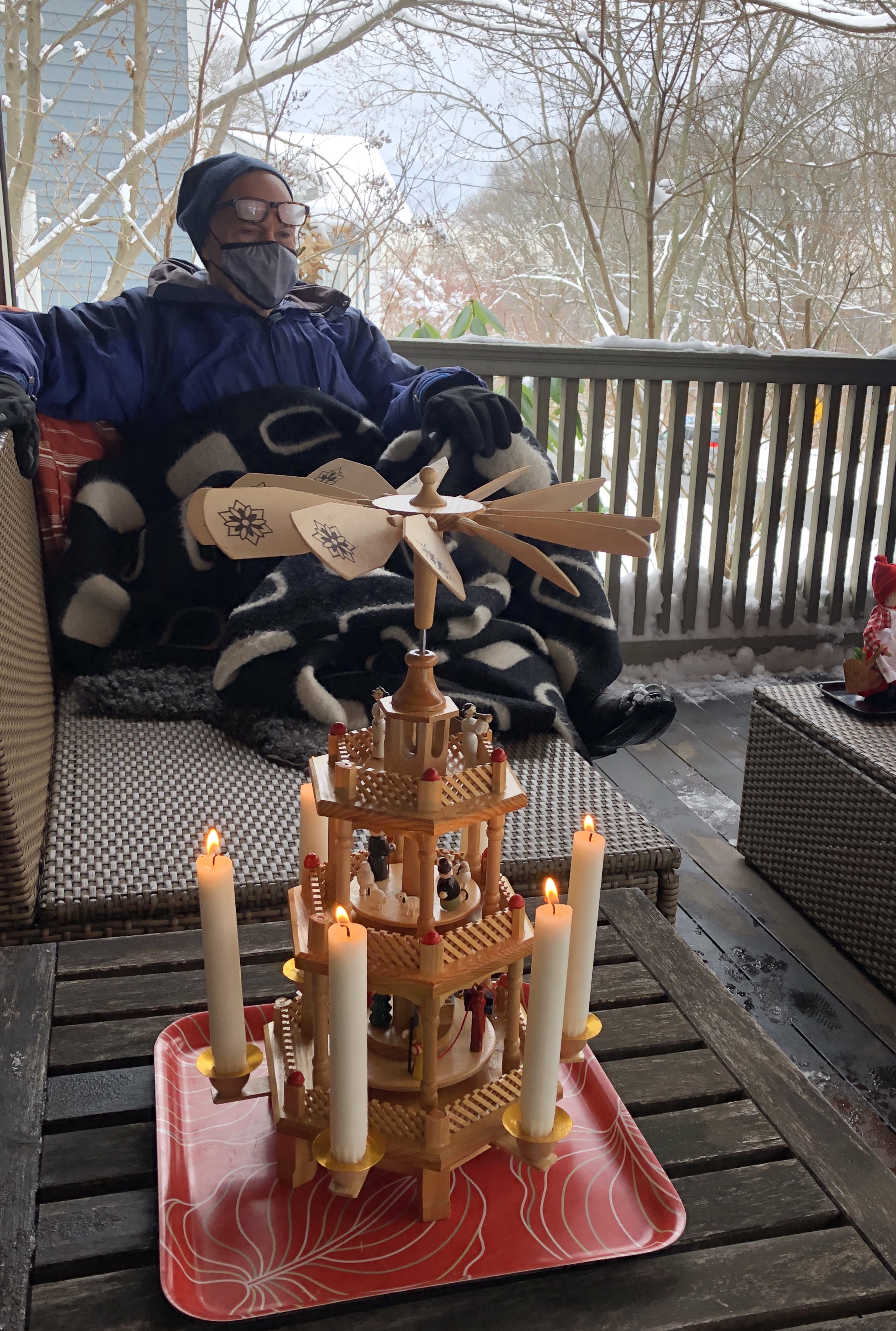
Photo: Shahzad Qureshi
Shahzad Qureshi, founder of Urban Forest, in Karachi, Pakistan.

Today most people have come to realize the importance of trees for everything from reducing global warming to improving life in neighborhoods. The Amazon rain forest (currently in grave danger from Brazil’s government) is known to cool the planet by soaking up carbon in the atmosphere, and urban forests give city residents a chance to cool off — and calm down.

Sometimes it takes a tragedy, but around the world, more people are feeling they better do something themselves to protect trees.

Anna Kusmer reports at PRI’s The World, “Extreme heat often hovers over Karachi, Pakistan’s largest city, creating insufferable conditions for its 16 million inhabitants. But each time Karachi resident Shahzad Qureshi transforms a barren patch of land into a dense, urban forest, he helps his city adapt to extreme urban heat that has become inevitable under climate change. Over the last four years, Qureshi’s organization, Urban Forest, has planted 14 urban forests in parks, schools, people’s yards and outside of a mosque.

“Qureshi’s quest to plant urban forests started in 2015, when temperatures reached over 120 degrees Fahrenheit in Karachi. About 2,000 people in the region died from dehydration and heatstroke. It was devastating.

‘It was just too hot,’ Qureshi said. …’ And one of the things everybody was talking about is that there’s not enough green cover.’

“Around that time, Qureshi saw a TED Talk that changed his life. He listened to a man named Shubhendu Sharma sharing a method to quickly grow dense urban forests. Qureshi was amazed. …

“Qureshi decided to learn Sharma’s technique and bring it to Karachi, joining a growing global community of urban foresters who want to help their cities adapt to extreme urban heat events created by rapid climate change. …

“Sharma’s organization Afforestt has now helped plant 150 mini-forests in 13 countries.

“ ‘So, there is a quite strong global community right now,’ Sharma said. ‘I am very keen on taking this method to every single country of the world.’

“Sharma’s special technique is known as the Miyawaki method. It involves the close placement of a variety of trees with different growing speeds and light requirements to prevent competition for the same resources. The approach specifically uses native species, allowing trees to thrive in their original climates and environments while supporting native bird and insect populations.

“ ‘Most of the city is roads and buildings and built-up urban area,’ said Nadeem Mirbahar, an ecologist with the Swiss International Union for Conservation of Nature Commission (IUCN) on Ecosystem Management, based in Karachi. His organization did a survey and found that only 7% of Karachi had green cover.

“This contributes to an ‘urban heat island’ effect, Mirbahar said. The phenomenon causes cities to be significantly hotter than the surrounding countryside. He thinks Karachi should strive for at least 25% green cover to avoid catastrophic heat events in the future.

“Qureshi’s oldest urban forest is four years old and already has towering, 35-foot-tall Acacia trees full of big, thorny branches and birds’ nests.

“ ‘I have seen bird species in this park, which I have not seen in my life,’ he said. ‘It’s a habitat for them.’ …

“Policymakers in Pakistan have started to look at planting trees as a solution to the urban heat threat, said Umer Akhlaq Malik, a policy analyst at the United Nations Development Program (UNDP) in Pakistan.

“In 2016, the government launched a plan to plant hundreds of millions of trees as part of a project called ‘the Billion Tree Tsunami,’ in response to the fact that the country had fallen to a mere 2% forest cover.

“Malik said … ‘To take it to scale, you need more practitioners who invest their time and energy into this.’

“Malik said the biggest barriers are cost and space. Each forest can cost hundreds of thousands of dollars to establish.

“But Qureshi remains hopeful that the project can scale up. He is working with the UNDP to form a coalition that aims to bring urban forests to every park in the city. He thinks Karachi could look fundamentally different.”

More at PRI, here.

Photo: New Music Box
The First Congregational Church of Los Angeles virtual choir.

Online group singing has become a fixture of the coronavirus era, and many of the choruses have given great pleasure to listeners. But how do the singers fare emotionally, considering that part of what they love has always been the proximity of other participants?

Fahad Siadat has a few answers at New Music Box.”While the entire music sector has been affected by the coronavirus pandemic, the choral community has been hit especially hard.

“Singers have been deemed ‘super spreaders’ of the virus, by a study commissioned by a coalition of performing arts organizations. The study has let the national community know they don’t believe there will be a safe way for choirs to safely rehearse until there is widespread testing and/or a vaccine, potentially an entire year or more in the future. Like other musicians, this bleak forecast has prompted panic for professional choristers who rely on group singing for their income, but it has also affected some 40 million people in the United States who rely on choirs for the social community, mental health, and emotional well-being.

“My spouse Cynthia Siadat, a licensed psycho-therapist, recently wrote an article about how choir helps alleviate mental health distress. She writes, ‘73% of singers report that choral singing helps them to feel less lonely. … A 2015 study, found that loneliness has been proven to be just as detrimental to one’s longevity as obesity and smoking 15 cigarettes a day’. …

“The question becomes not only, ‘how do we make a quality musical product?’ But, ‘how can we continue to have meaningful musical and social experiences?’  …

“I have the good fortune of making my living as a chorister in a particular subset of the community deeply interested and invested in innovating and experimenting with choral music, and because of this involvement have had the opportunity to participate first hand in how different groups are handling the crisis and trying to move forward.

“No one group has ‘solved’ the issue of not being able to sing and rehearse together, but all of them have found unique ways forward and are experimenting wildly. …

“Building a virtual choir, once considered a technological marvel, has become astonishingly commonplace in the last few months. The professional choir at the First Congregational Church of Los Angeles (led by my long time colleague David Harris), for instance, has recorded 3-4 virtual choir pieces every week since March.

There are many resources for those interested in getting involved with virtual choirs. I’ve even put my own document of step by step instructions for composers, conductors, and singers.

“(Virtual Choir ProTip: Recording the audio and video separately allows a great deal of editing and ‘punching’ in while recording. It goes much faster than trying to get a single perfect take.)

“(Additional ProTip: Conductor tracks aren’t all that helpful for the singers, use a click instead. Also consider using a ‘section leader’ to create a guide track for each part so the rest of the choir has a voice to follow along with for style and phrasing.) …

“There are some unexpected perks to virtual choirs, namely in terms of how it makes certain kinds of repertoire more accessible than ever before. … The ability to learn and record a piece phrase by phrase allows for the ‘performance’ of music that might have otherwise been out of reach of an ensemble.

“In May, for instance, the FCCLA professional ensemble performed Stravinsky’s 12-tone anthem The Dove Descending, an emotional and mystical work rarely performed by choirs today, especially church choirs, perhaps in-part due to the amount of rehearsal time required. In the virtual choir setting, however, we were able to effectively record the piece in a matter of a few hours. …

“While the end product of virtual choirs can be satisfying, the means by which that product is made can be sorely lacking. The great communal spirit of singing together is completely lost. …

“Luckily, there are some low-latency audio options specifically designed for musicians to re-create some semblance of in-person music making. (Soundjack and Jamulus are two that my community uses, but there are others.)

“It didn’t take long working with this medium to realize that remote choirs are entirely new kinds of ensembles. … Typical choral values like blend, balance, and uniformity are made that much trickier by every singer’s individual mic set up. Rehearsals started with about an hour of tech adjustments, setting levels, and troubleshooting. …

“And yet, once we finally waded through the tech set up and arrived at our first moment of singing together, just a simple C Major chord, I felt a flood of emotion. After long weeks of isolation, I was finally singing with my friends. It wasn’t the choral experience I was used to, but it was unmistakably live music making, and that taste was enough to keep me coming back every week.”

The author provides a lot of technical detail showing how to approximate the group-singing experience, here, at the New Music Box.

I wonder if the rest of us can find ways to feel more present with friends and family via new internet applications. FaceTime and What’s App and Zoom are way better than a mere phone call, but nothing beats meeting someone in a yard for a chat that feels normal. And how will we manage that in winter?

Photo: Warner Bros. via Wikipedia
In 1957, Warner Bros. released a Bugs Bunny version of the Wagner opera
The Ring of the Nibelung. Creative folks are still thinking up engaging ways to involve children in the beauty and hilarity of opera.

If you love the field you are in and if you have some imagination, there’s always a way to inspire even the youngest children with your enthusiasm.

Michael Andor Brodeur writes about one recent example at the Washington Post.

“Like many a music lover of an age we needn’t get into here, my formative education in classical music and opera came straight from the masters: Bugs, Elmer, Porky. Bugs Bunny was my first Brünnhilde. (So I guess he introduced me to drag as well. Different story.)

“Looney Tunes, Merrie Melodies and Silly Symphonies taught my wee ears how to listen, how to synthesize the music in my imagination with color, movement, emotion and irony. It was like a crash-bang-boom course in how to read sound: The vastness of Wagner became suddenly legible in the context of wabbit-killing.
Kids today are a bit more hands-on, as I discovered during a recent session of ‘Opera Starts With Oh!,’ an opera education program for ages 3 to 7, run by the D.C. and NYC-based company Opera Lafayette. …

“Each installment I watched of ‘Opera Starts With Oh!’ — helmed by director, choreographer and teaching artist Emma Jaster and Opera Lafayette community engagement manager Ersian François — kept its grid of budding opera buffs rapt with an action-packed half-hour of activities, performances and assorted operatic antics.

“ ‘Opera Starts With Oh!’ originated in 2018 as an in-person program to accompany productions in progress, but in its Zoom-based incarnation, each themed installment [centers] on a visit from a guest artist and a simple lesson. …

“At a recent workshop, the Zoom grid filled up fast with small faces smooshed into the frame. It was easily the most entertaining Zoom meeting I’ve had since this whole thing started.

“Lucy and Phoebe were sporting matching unicorn horns and dancing in circles whenever music played. Theodor was paying attention but kept changing his background — first it was outer space, then it was a hedgehog. Gabriel, Massimo and Timothy all crammed attentively into one square.

“Jaster led a round of warm-up exercises (her 6-year-old Ellis popping in and out of view), Nero performed the Passacaille from Lully’s ‘Armide’ (a performance of which Opera Lafayette recorded in 2007) and François skillfully moderated a quick Q&A session (turns out kids are way better at the muting/unmuting thing than adults).

“By the end of it, Helen, who had been pretty quiet up to that point, politely raised her hand, unmuted, and let the group know: ‘I think I want to play the violin.’ …

“ ‘I didn’t get to attend my first opera until I was about 26 years old, particularly because it’s a pretty expensive endeavor to attend an opera,’ says Natalia Lopez-Hurst, mother of Gabriel, Massimo and Timothy. ‘So I wanted to start my kids early with the exposure. I feel like opera encompasses so many different forms of art … We use it as a steppingstone to teach them about art, as well as history, as well as geography.’

“For Jaster, the kinetic goals of the workshop are as important as the aesthetic ones.

“ ‘I’m a movement director and choreographer, that’s how I came to opera,’ says Jaster, ‘But I have a 5-year-old and I live and witness every day how much children need to move their bodies.’ …

“Thus, much of the unbound energy that animates an average ‘Opera Starts With Oh!’ is channeled into twirling, interpretive dance, vocal exercises and functional training (like ‘finger ripples’) for aspiring virtuosos. ..

“ ‘What’s a fun way to take what we’ve learned and make it something that these children will do and be engaged with beyond and outside of this 30 minutes?’ says Jaster. ‘As a parent, 30 minutes is not a lot of the time that I actually need to occupy from my child’s day. So the more the children can be inspired to take this along and then go and make their own performance for all of their stuffed animals — that’s where I want to be.’ ”

More here.

Credit: Science History Images / Alamy Stock Photo
The “lost” colony of Roanoke, Virginia.

The mystery of the “lost colony” of Roanoke, Virginia, may be solved. The answer seems to lie in the enmity of two indigenous tribes and in the likelihood that the English relocated from Roanoke to the village of their friends, the Croatoans.

Jeff Hampton at the Virginian-Pilot reports, “The English colonists who settled the so-called Lost Colony before disappearing from history simply went to live with their native friends — the Croatoans of Hatteras, according to a new book.

‘They were never lost,’ said Scott Dawson, who has researched records and dug up artifacts where the colonists lived with the Indians in the 16th century. ‘It was made up. The mystery is over.’

“Dawson has written a book, published in June, that details his research. It is called ‘The Lost Colony and Hatteras Island,’ and echos many of the sentiments he has voiced for years. A team of archaeologists, historians, botanists, geologists and others have conducted digs on small plots in Buxton and Frisco for 11 years.

“Dawson and his wife, Maggie, formed the Croatoan Archaeological Society when the digs began. … Teams have found thousands of artifacts 4-6 feet below the surface that show a mix of English and Indian life. Parts of swords and guns are in the same layer of soil as Indian pottery and arrowheads. …

“Dawson’s book draws from research into original writings of John White, Thomas Harriot and others. Most of their writings were compiled at the time by English historian Richard Hakluyt. Records from Jamestown also helped Dawson understand more about the tribes’ political structure.

“The evidence shows the colony left Roanoke Island with the friendly Croatoans to settle on Hatteras Island. They thrived, ate well, had mixed families and endured for generations. More than a century later, explorer John Lawson found natives with blue eyes who recounted they had ancestors who could ‘speak out of a book,’ Lawson wrote.

“The two cultures adapted English earrings into fishhooks and gun barrels into sharp-ended tubes to tap tar from trees.

“The Lost Colony stemmed from an 1587 expedition. Just weeks after arriving, White had to leave the group of settlers — including his daughter, Eleanor Dare, and newborn granddaughter, Virginia — to get more supplies from England. White was not able to return for three years. When he arrived at Roanoke Island in 1590 he found ‘CROATOAN’ carved on a post and “cro” on a tree. He found no distress marks.

“They literally made a sign. It was expected the colonists would go with their friends, the Croatoans and tribe member, Manteo, Dawson said. Manteo had traveled to England with earlier expeditions and was baptized a Christian on Roanoke Island.

“White later wrote of finding the writing on the post, ‘I greatly joyed that I had found a certain token of their being at Croatoan where Manteo was born …’

“A bad storm and a near mutiny kept White from reaching Hatteras. He returned to England without ever seeing his colony again. …

“A lead tablet and lead pencil found at the dig could have belonged to White himself, Dawson said. White also was part of the 1585 group, working as an artist who drew natives and wildlife. …

“He likely used the newly discovered tablet or a similar one to draw the miniature pictures. The uncovered tablet has an impression of an Englishman shooting a native in the back. …

“The Croatoans assisted the English in the ambush, Dawson said. The Secotans and the Croatoans hated each other, Dawson said. Secotans enslaved Croatoans just a few years before the English arrived. …

“White was concerned about the danger posed by the Secotans when he left for England. The Croatoans saved the colonists by taking them away from Roanoke Island to their Hatteras Island village, Dawson said. ‘You’re robbing an entire nation of people of their history by pretending Croatoan is a mystery on a tree,’ he said.” More here.

Although this explanation makes perfect sense to me, I would still love to hear from archaeologists not involved in the dig. What do you think?

Photo: Etienne Naude
“I felt that I was making something bigger than me,” said Angel Sierra (right) after he and Etienne Naude made the Earth into a sandwich with pieces of bread 8,000 miles apart.

I love any attention-getting gag meant to show we are all part of one world. This story describes a feat that seems silly on the surface, but draws attention to something deep. Eight thousand miles deep.

As Owen Amos reported at the BBC in January, “Two men in New Zealand and Spain have created an ‘Earth sandwich’ — by placing bread on precise points, either side of the planet, at the same time.

“The man behind the sandwich, Etienne Naude from Auckland, told the BBC he wanted to make one for ‘years,’ but had struggled to find someone in Spain, on the other side of the globe. He finally found someone after posting on the online message board, Reddit.

“The men used longitude and latitude to make sure they were precisely opposite. That meant there was around 12,724km (7,917 miles) of Earth packed between the slices — and some 20,000km between the men, for those forced to travel the conventional route.

“The first ‘Earth sandwich’ is credited to the American artist Ze Frank, who organised two slices of baguette to be placed in New Zealand and Spain in 2006. …

“Wanting to create his own, Mr Naude, 19, used an online longitude and latitude tool called ‘tunnel to the other side of the Earth’ to find his exact opposite point. …

“He posted on the Spain section of the online message board Reddit. He got ‘a few replies’ and found one person close to the precise location.

Angel Sierra, a 34-year-old chef, told the BBC he replied to the message because ‘it can help to show how people can work together across the globe … I felt that I was making something bigger than me.’ …

“Once the men were in contact, then came the tricky part — making a sandwich with another person when you are on opposite sides of the planet.

” ‘It was quite hard to organise since it’s 12-hour time difference,’ Mr Naude said. ‘And there’s lots of things to arrange, such as the kind of bread, the time, the [precise] location, et cetera. … It’s quite tough to find a spot which isn’t water on the New Zealand end — and where public roads or paths intersect in both sides.’ …

“Using a ‘near top of the range laser cutter,’ he burnt an ‘Earth sandwich’ design onto 20 slices of bread, then used one slice to mark his exact, tightly defined sandwich spot in New Zealand.

“His counterpart used nine slices of unmarked bread to make sure he covered the exact spot. …

“The scientific name for points opposite each other on the Earth’s surface is antipodes … According to World Atlas, only around 15% of ‘territorial land’ is antipodal to other land. The UK, Australia and most of the US do not have antipodal land points — the other side of the world is water. More at the BBC, here.

Naude was later reported saying, “It’s also quite nice to just know that there is someone at the exact opposite point of the world that has done exactly the same thing as you. In this one particular instance, we’ve got entirely different lives, but we are now connected by this one point.”

… I have to believe she will do it. She’s a miracle girl.

Let me begin at the beginning. Almost exactly three years ago, I wrote a blog post about a girl from a deeply conservative family in Herat, Afghanistan, who secretly took up golf and opened a whole new world for herself.

It was through the radio show “Only a Game” that I learned about Shagufa Habibi and how she had gotten herself to a golf competition in Bangladesh and then bravely applied to college there and matriculated without the knowledge of either her family or the abusive husband she was forced to marry at age 16.

Fast forward to early 2020, when I get a message at the blog from Shagufa thanking me for my 2017 post. Turns out she now lives half an hour away from me in Massachusetts.

This is a young woman who makes things happen for herself. After a few emails, she asks if I could help her prepare for the graduate record exam (GRE). She wants to go to grad school to acquire the tools she needs to set up a South Asia foundation for girls in sports that will empower them to break free of traditional constraints and dangers.

Shagufa’s vision combines access to sports (which poor South Asian girls usually lack), education in skills such as leadership, and a stipend to help the young women financially so their impoverished families will be less pressed to marry them off for the bride price.

I know. Pretty far out, huh?

But when I consider all she has already done, including being accepted for fall 2021 at a top grad school and awarded a generous scholarship, I know she will do what she sets out to do.

But here’s the rub. Despite the generosity of the scholarship from Brandeis, Shagufa still can’t afford to go. She has no family here to help her, and they definitely do not support her goals. In fact, if she returned to Afghanistan right now, her life would be in danger because she is regarded as having “dishonored” her family.

Read her description of the situation and her ambitious dream in the GoFundMe link below and consider whether you want to help her with a donation or just cheer her on. Maybe you’d be up for telling someone you know about her.

I have been speaking with Shagufa via What’s App once or twice a week since we met. We alternate between work on advanced vocabulary (you wouldn’t believe how she studies and retains the most difficult words!) and GRE-type essay topics, because even though Brandeis waived the GRE for now, Shagufa still plans to take it. Often we spend part of the hour just chatting and learning about each other’s culture.

The GoFundMe site for Shagufa is here.

Shagufa Habibi, Afghan miracle worker.

081020-New-Shoreham-SE -Light

Photo: Shadows on the Southeast Lighthouse

Time to share a few more photos from a summer in isolation. Four island photos come first. The dishrack photo is to show how I spend my time there. (LOL. I am the one, alas, who said we should protect the groundwater and not have a dishwasher. Sometimes it’s better to be pragmatic than idealistic.)

Back on the mainland, the photos reflect my appreciation of colorful summer meadows, cows, and outdoor library fun for kids. No pictures of people. I do sometimes meet a friend at a safe distance for a sandwich and a chat, but masks never make for good photos. And in my walks, I generally aim for places where people are scarce, like graveyards.

I really liked the spooky-looking crypt and wish I could be Edgar Allan Poe for a minute and invent a reason that a lock was broken.

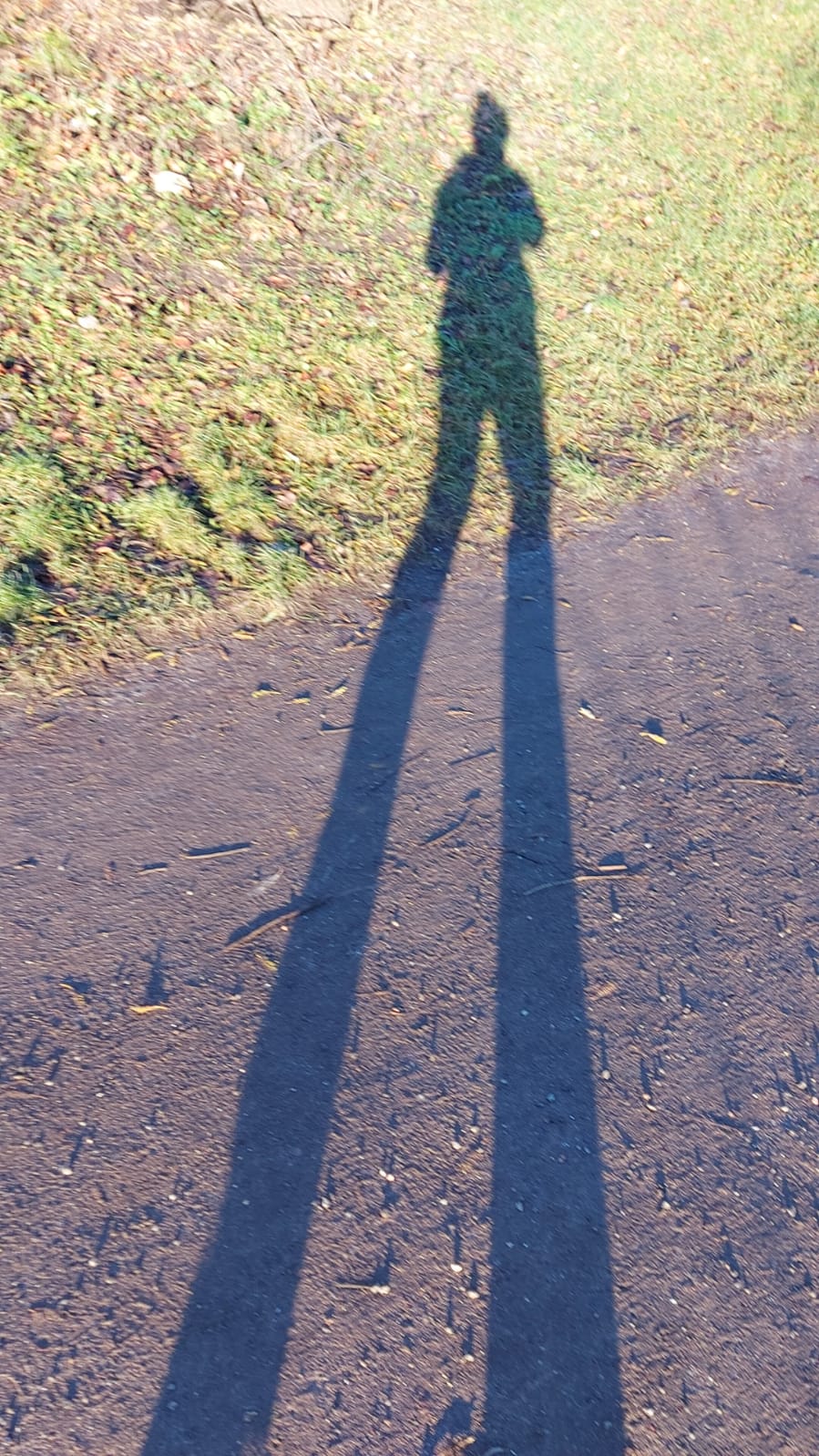
The long shadow in the next photo is in front of a local senior-living building.

Next comes a sign at Emerson Field that struck me as funny. No golfing? There was never any golfing there. What’s the story? Someone must have tried to get around the governor’s rules in coronavirus Phase One and gotten in the way of dog walkers. If there’s one thing I’ve learned in our town it’s you don’t want to mess with dog walkers.

I wonder what memories we will take away from this weird time. For me, a sign forbidding golfing where there was never golfing might be one.

081020-RI-lighthouse-from-1873

081020-Mohegan-Bluffs-BI-RI

081020-what-I-did-on-my-vacation

081520-.loosestrife-and-Queen-Annes-Lace

081920-cows

Photo: Ken Hofheinz
Brandon Steppe, the founder of the David’s Harp Foundation, received a grant for his work using music education and multimedia training to help at-risk youth.

When philanthropists step up to fill a need, it may be a sign that our tax money is not being used in some important ways. Arts education, for example, provides so many benefits to students that it really should be available in every school, but too often it’s the first thing to go when districts are underfunded.

So hooray for philanthropists filling a gap! Lauren Messman wrote at the New York Times, “The Lewis Prize for Music, a new philanthropic organization focused on fostering music education and career development in young people, announced its first slate of winners on [January 14]. The $1.75 million will be awarded to the leaders of nine organizations in eight states.

“The prize, which is split into three categories and includes both long-term and single-year support, was founded in 2019 by the philanthropist Daniel R. Lewis.

“ ‘My vision is to ensure opportunities to learn, perform and create music are available to all young people,’ said Mr. Lewis in a statement. ‘Ideally, this would be happening in every school, but that isn’t the case, especially in low-income and historically marginalized communities.’

“The Accelerator Award, which provides $500,000 for multiyear support, was given to Community MusicWorks, which provides classical music educational programs in Providence, R.I.; My Voice Music, which brings songwriting, recording and performance mentorships to mental health treatment and detention centers in Portland, Ore; and The David’s Harp Foundation, a San Diego-based organization that works to develop job skills through music with youth in the juvenile justice system. …

“ ‘What we’ve noticed is that when these young people come from being incarcerated back into the community, there’s a gap in our service there,’ [Brandon Steppe, the founder,] said in a phone interview. He added that the rest of the money will go toward building ‘arts-based diversionary programming in the community,’ in an effort to keep youth out of the juvenile justice system.

“Winners of the Infusion Award, which provides $50,000 over one year, include programs aimed at inspiring Native American music educators and composers, bringing traditional Mexican music education to the children of immigrants, providing music and entrepreneurship training for young musicians of color in Detroit and building support for the next generation of New Orleans brass band musicians.” More at the Times, here.

I liked reading further about one of the Infusion Award winners, the Native American Composer Apprentice Project. The Grand Canyon Music Festival website explains, “Since 1984, the Grand Canyon Music Festival has been dedicated to bringing the world’s finest musicians to Grand Canyon National Park in celebration of the power and beauty of this magnificent World Heritage site.

“Since 1985, the Festival has extended this gift of music to the students of northern Arizona’s under-served and rural communities, primarily at schools on the Navajo and Hopi Reservations. In 2001, the Festival initiated its Native American Composers Apprentice Project (NACAP) to extend its outreach to training talented Native American students in the art of composition. NACAP develops musical literacy and enhances critical thinking and decision making skills through the study of music composition. It introduces students to European ‘classical’ music techniques, develops their understanding of their own musical heritages and how to use that knowledge to develop their own compositional voices.”

2480

Photo: Bertramz
When you look at the remains of Qalb Lozeh church in Syria, you can see the inspiration behind Notre-Dame.

As many of us have been learning in recent years, much that is beloved in Western architecture was originally inspired by buildings in the Middle East. Moreover, there are Christian cathedral styles that mirror Muslim mosques.

A new book aims to set the record straight. Oliver Wainwright reviewed it at the Guardian.

“As Notre-Dame cathedral was engulfed by flames last year, thousands bewailed the loss of this great beacon of western civilisation. The ultimate symbol of French cultural identity, the very heart of the nation, was going up in smoke. But Middle East expert Diana Darke was having different thoughts. She knew that the origins of this majestic gothic pile lay not in the pure annals of European Christian history, as many have always assumed, but in the mountainous deserts of Syria, in a village just west of Aleppo to be precise.

‘Notre-Dame’s architectural design, like all gothic cathedrals in Europe, comes directly from Syria’s Qalb Lozeh fifth-century church,’ Darke tweeted on the morning of 16 April, as the dust was still settling in Paris. …

“It is not only the twin towers and rose window that have their origins in the Middle East, she pointed out, but also the ribbed vaults, pointed arches and even the recipe for stained glass windows.

“Gothic architecture as we know it owes much more to Arab and Islamic heritage than it does to the rampaging Goths. ‘I was astonished at the reaction,’ says Darke. ‘I thought more people knew, but there seems to be this great gulf of ignorance about the history of cultural appropriation.’ …

“With Stealing from the Saracens, an exhilarating, meticulously researched book, [she] sheds light on centuries of borrowing, tracing the roots of Europe’s major buildings – from the Houses of Parliament and Westminster Abbey to Chartres cathedral and St Mark’s basilica in Venice – back to their Middle Eastern precedents. …

“ ‘Now we have this notion of east and west,’ says Darke. ‘But back then, it wasn’t like that. There were huge cultural exchanges — and most came from the east to the west. Very little went the other way.’

“Given their prevalence in the great cathedrals of Europe, it is easy to imagine that pointed stone arches and soaring ribbed vaults are Christian in origin. But the former dates back to a seventh-century Islamic shrine in Jerusalem, while the latter began in a 10th-century mosque in Andalucia, Spain.

“In fact, that first known example of ribbed vaulting is still standing. Visitors to the Cordoba Mezquita can marvel at its multiple arches intersecting in a masterpiece of practical geometry and decorative structure, never needing a repair in its thousand-year existence. …

“The pointed arch, meanwhile, was a pragmatic solution to a problem encountered by masons working on the Dome of the Rock in Jerusalem. One of the holiest sites in the Muslim world, it was built in 691 by the ruler of Islam’s first empire.

“The challenge was how to line up an outer arcade of rounded arches with a smaller inner arcade, while maintaining a horizontal ceiling between them. For the openings to align, the masons had to give the inner arcade tighter arches, forcing them to become pointed. Another world first can be spotted higher up in the shrine, where encircling the dome is an arcade of trefoil arches, the three-lobed style of arch that went on to encrust practically every European cathedral. …

“[Misidentification of] the Dome of the Rock was down to the Crusaders of the Middle Ages mistakenly thinking the building was the Temple of Solomon. They used the domed, circular layout of this [shrine] as the model for their Templar churches (like the City of London’s round Temple church), even copying the decorative Arabic inscription, which openly chastises Christians for believing in the Trinity rather than in the oneness of God. Their pseudo-Kufic calligraphic patterns went on to adorn French cathedral stonework and the borders of richly woven textiles, with no one aware of what they actually meant.” More at the Guardian.