Feeds:
Posts
Comments

Buccleuch, Buccleuch. It has a familiar ring to it. Didn’t we stay at the Buccleuch Arms on our honeymoon trip through Scotland? I think so, but it’s been 50 years, so …

I do clearly remember the beautiful rolling hills of the Scottish Lowlands and the black-faced sheep wandering over the roads like they owned them, which of course, they did. So whether or not I was ever in the Buccleuch environs, I love today’s story about a Scottish village’s determination to preserve 8 square miles of beauty.

Severin Carrell writes at the Guardian, “A village in southern Scotland has succeeded in buying a large part of Langholm Moor, a famous grouse moor held for centuries by the dukes of Buccleuch, among the UK’s most powerful hereditary peers.

“Buccleuch Estates said on Monday it would be selling just over 2,000 hectares (about 5,000 acres) of Langholm Moor [to] the local community, which plans to create a leading new nature reserve and community regeneration project.

“The deal, the largest ever community buyout in the south of Scotland, follows months of fundraising by the Langholm Initiative, which only succeeded with hours to spare before the deadline of 31 October.

“Kevin Cumming, the initiative’s project leader, said he was thrilled with the deal. ‘Community ownership can be a catalyst for regeneration, which we want to show can be done with the environment at its heart,’ he said. …

“Buccleuch Estates told the campaigners it would continue talking about the possibility of buying the remaining 2,100 hectares that covers much of the former grouse moor, which would involve the Langholm Initiative raising [almost $3 million more]. …

“The Langholm buyout is one of three community land sales involving Buccleuch in south-west Scotland, all part-funded with taxpayers’ money.

“Earlier this year, Buccleuch Estates sold 300 hectares of land around the village of Newcastleton and has offered to sell 1,560 hectares of moorland, pasture and brownfield land to a community trust at Wanlockhead in the Leadhills for nearly [$2 million].

The Langholm Initiative hopes the moorland regeneration, ecotourism and rural industries it plans to fund will bring enough money to plough back into community regeneration and bring in new residents.

“The scheme will focus on creating a new nature reserve called Tarras Valley, including restoring Langholm’s ancient peatlands and protecting the area’s threatened populations of hen harrier. The initiative hopes its reforestation and peatland restoration projects will attract subsidies from programmes funding measures to combat global heating.”

People who inherit vast lands they cannot afford to keep up either have to sell them or get creative. They can end up being owned by the land — a status I do not envy. I’m thinking of people I knew who inherited Rokeby on the Hudson River and rented it out for weddings and such, including the shooting of a pretty wild art film. I’m glad the Buccleuch Estates are trying to help others preserve what is sold off.

More at the Guardian, here.

Today’s challenge features my favorite lines from “America the Beautiful,” the 1895 poem by Katharine Lee Bates, with music by Samuel A. Ward. The challenge is to sing it along with me — outloud — without choking up.

“O beautiful for spacious skies,
“For amber waves of grain,
“For purple mountain majesties
“Above the fruited plain! …

“America! America!
“God mend thine ev’ry flaw,
“Confirm thy soul in self-control,
“Thy liberty in law.”

Got to reblog this post so you can see some of the funny answers I have had over two years. Today I heard from Jessica, who actually has a YouTube channel showing foxes stealing things: https://www.youtube.com/channel/UC6cpOtpwo4XYb4Mc2auvf6A

Suzanne's Mom's Blog

mammals-3218028_1280Why do foxes steal so many shoes?
A recent article by Daniel Hurst, reporting from Tokyo for the Guardian, prompted a web search but no definitive answers. Apparently foxes steal shoes. OK, but why and why so many?

“It began at midnight,” Hurst wrote. “A six-hour police stakeout to catch the shoe-loving thieves who had pilfered 40 pairs of sandals from a neighbourhood in Japan. Finally, the officers found the main suspects: a pair of sly foxes.

“ ‘I can’t believe that foxes stole my sandals,’ a resident, 36, told the Mainichi newspaper. …

“Five police officers were involved in the stakeout in the early hours of 20 May. This culminated in the discovery of two foxes in the garden of an empty house, with 40 pairs of shoes scattered around a burrow, the Mainichi reported.

“Kyoto city zoo’s chief, Naoki Yamashita, speculated that the foxes ‘could have been…

View original post 273 more words

When pandemic restrictions caused the cancellation of African musicians’ concerts, many took the coronavirus battle into their own hands, without having to be asked by any government to create a public service announcement.

Public Radio International’s The World reports on the wave of Covid-19 songs giving Africans reliable information and warning against fake health news on social media.

“When graduate student Dipo Oyeleye heard the song ‘We Go Win (Corona)‘ by Cobhams Asuquo, a Nigerian singer-songwriter,” the radio show reported in September, “he knew what his next research project would be: a study of the myriad coronavirus songs that flourished in Africa at the pandemic’s onset on the continent. …

” ‘I love artists using the moment to create music that actually helps to disseminate the right information to the general public,’ Oyeleye told The World.

“Originally from Nigeria himself, Oyeleye studies at the University of Wisconsin, Madison, where he is now researching COVID-19 songs from Nigeria to Uganda, Democratic Republic of Congo to Ghana, among many other places across the continent. Oyelele has been able to compile and track the impact of at least 50 songs from various African artists.

“Unlike the US, where very few artists have taken on COVID-19 as a subject in songs, African musicians quickly turned to their songwriting as a form of communication and to disseminate crucial public health information: social distancing, washing hands and staying home during lockdowns. 

” ‘This is a major [pandemic that] directly affects everybody, including the musicians. Some of them had to cancel their shows. I think the personal became political,’ Oyeleye explained. 

“Having battled epidemics such as the Ebola virus, most Africans are used to governments that call on musicians to produce ‘edutainment,’ or songs with a message to sensitize the public. 

“But Oleyele says that what makes the coronavirus songs different is that it was not ‘necessarily initiated by the governments. It’s just, you know, individuals lending their voices to help prevent the spread of the virus.’ 

“Some artists took a direct public health approach, while others used humor or religion to ease fears and connect with various communities. And some songs were specifically meant for people who could only communicate in local languages. There’s really something for everyone. …  

” ‘Wash your hands / love each other / we go win o,’ [Asuquo] croons at the piano.

“In [a] reggae-inspired song, Bobi Wine opens with the bad news that ‘everyone is a potential victim’ of the virus, but also a potential solution … and calls it ‘patriotic’ to social distance and isolate if sick with possible virus symptoms.” More at PRI’s The World, here. Extra details at the Washington Post, here.

I’m impressed with these musicians. Will we get songs to slow the spread here, too?

I’ve really enjoyed how artists have addressed the pandemic situation, whether designing socially distant ballets and theater or specifically coronavirus-related paintings, constructions, and photos.

Today we learn from Hyperallergic that the lowly face mask has been a particular inspiration. Hakim Bishara reports on a Denver exhibition of artistic face coverings.

“Face masks in all forms and colors have become an essential part of our lives. … A new exhibition at the Vicki Myhren Gallery at the University of Denver comes to remind the nonbelievers and the COVID-fatigued among us that face masks are not only crucial to our health but that they can also be delightful means of self-expression.

MASK … celebrates the centuries-long use of masks as ritual and ornamental objects throughout human history with new works by a group of 41 artists. The dozens of masks are positioned on mannequin heads throughout the gallery space. While some of the face coverings on display are not functional, they are a creative reminder of the times, and the creativity that can emerge from isolation. …

“As the COVID-19 crisis continues to worsen in Denver, the gallery says that it hopes that the exhibition will ‘call attention to the [significance] of masking as an issue of public health and a demonstration of civic responsibility.’ …

“As part of the exhibition, the gallery has joined forces with RedLine Contemporary Art Center in Denver to fabricate free, functional masks that will be distributed to members of the community.

“Ranging in style from the classical to the otherworldly, the masks on view offer inventive notions of what face-coverings can look like. Serge Attukwei Clottey’s science fiction-esque mask appears to be constructed from plastic pipes and found industrial materials. Elizabeth Morisette’s avian mask is a beak made out of zippers. Kate Marling designed a mask that invokes a classical sculpture as if freezing half of her face in stone. Trey Duvall’s ‘COVID19 (Mask for the Art World)’ covers the mouth area with a brick fastened over surgical hand gloves, perhaps hinting at the silencing of certain voices. By contrast, Tobias Fike attached a sizeable megaphone to a mask titled ‘Mouthpiece.’

“A virtual panel discussion with some of the featured artists will be held on November 5.”

A selection of the works, including images of some of the artists modeling their masks, may be viewed at Hyperallergic, here.

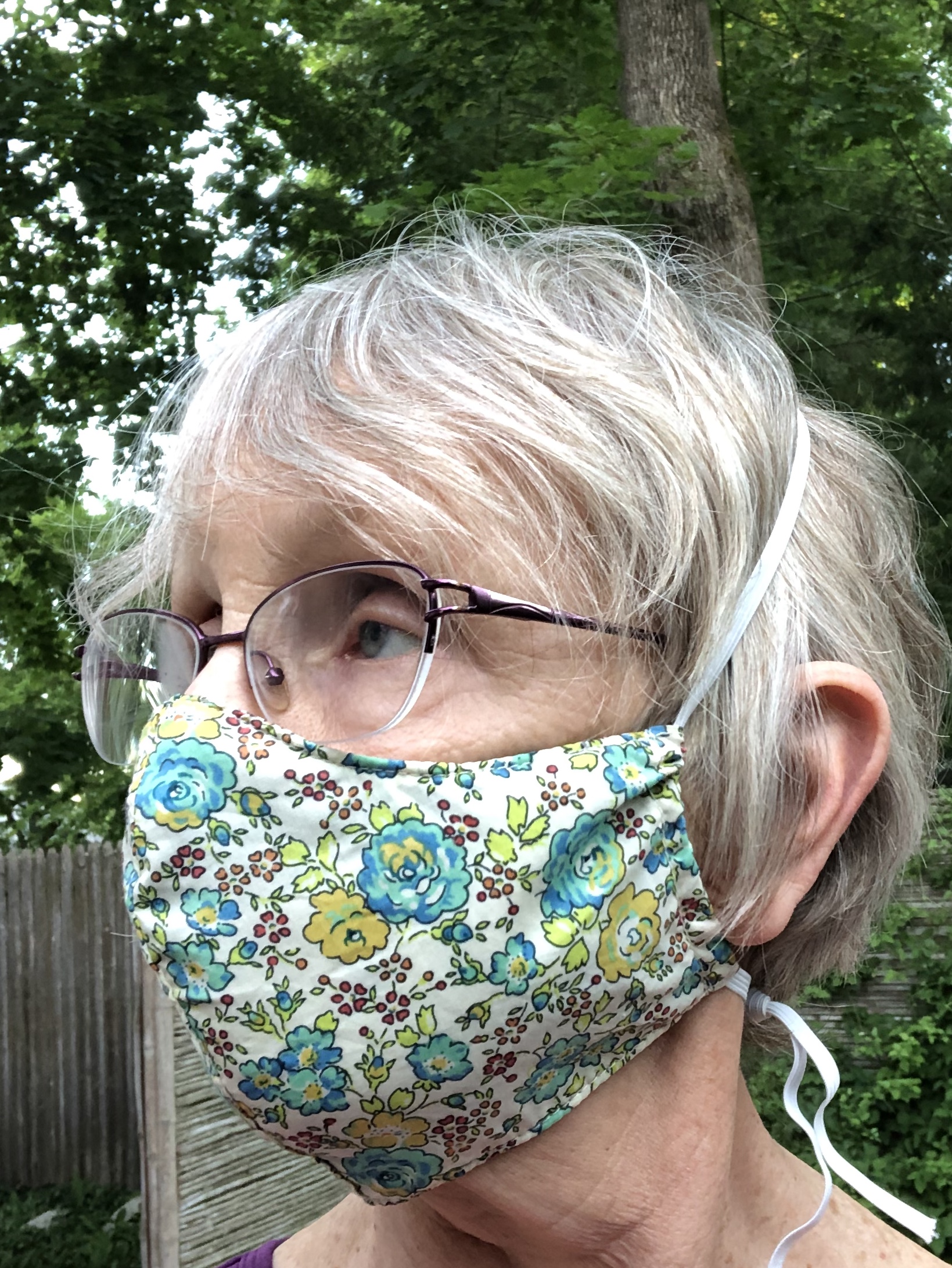
Looking for an unusual mask for yourself? Check out the variety at Etsy, here, where you can also get beautiful masks by a family member of mine, good for preventing foggy glasses.

Autumn Turns to Winter

Oops!

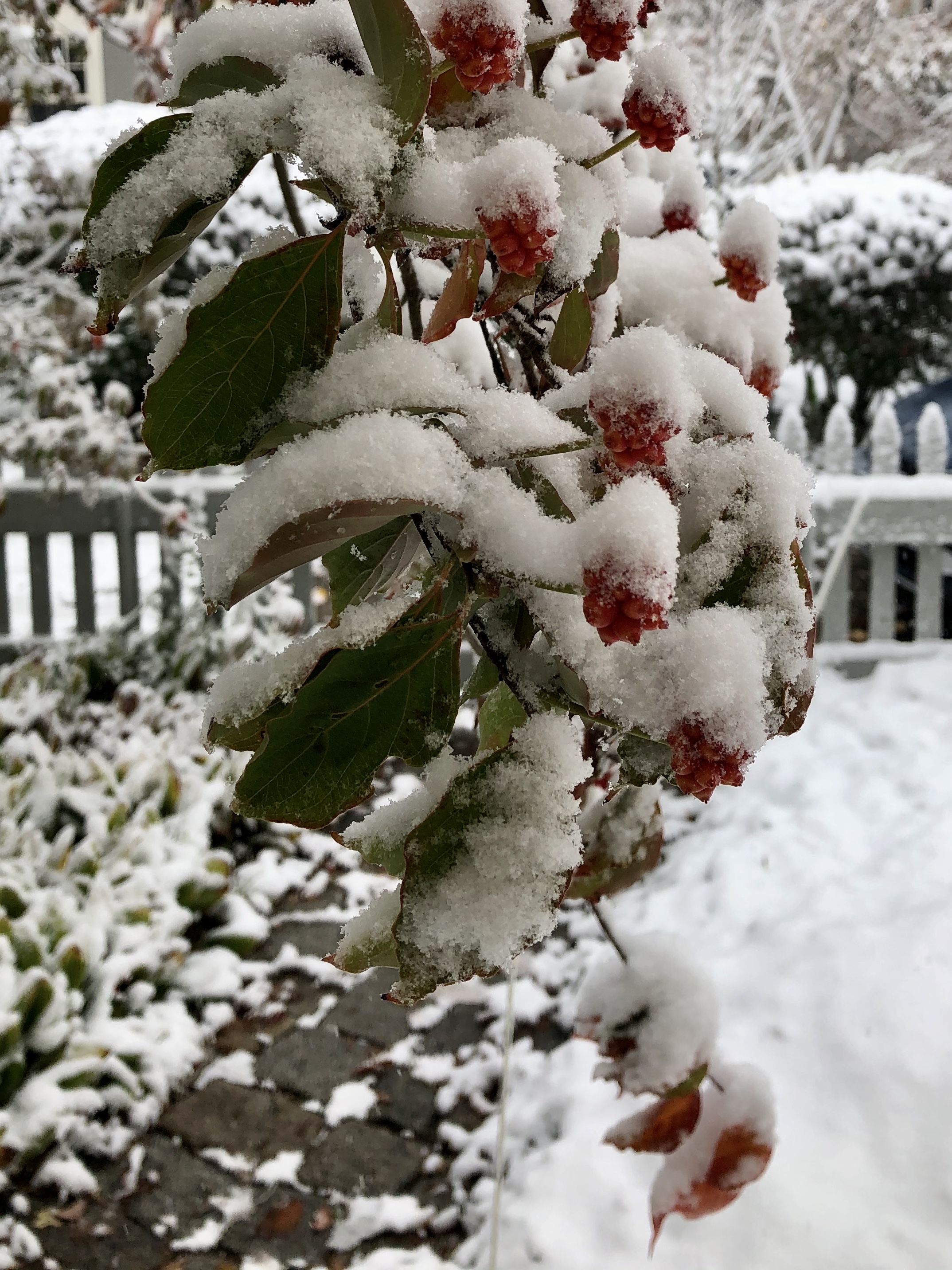
Massachusetts got a tree-bending snowfall October 30 while leaves were still attached to everything. I don’t know if we should call it an October surprise or a Halloween surprise, but it’s likely to add to the reasons kids will long remember this year’s mask-required Halloween.

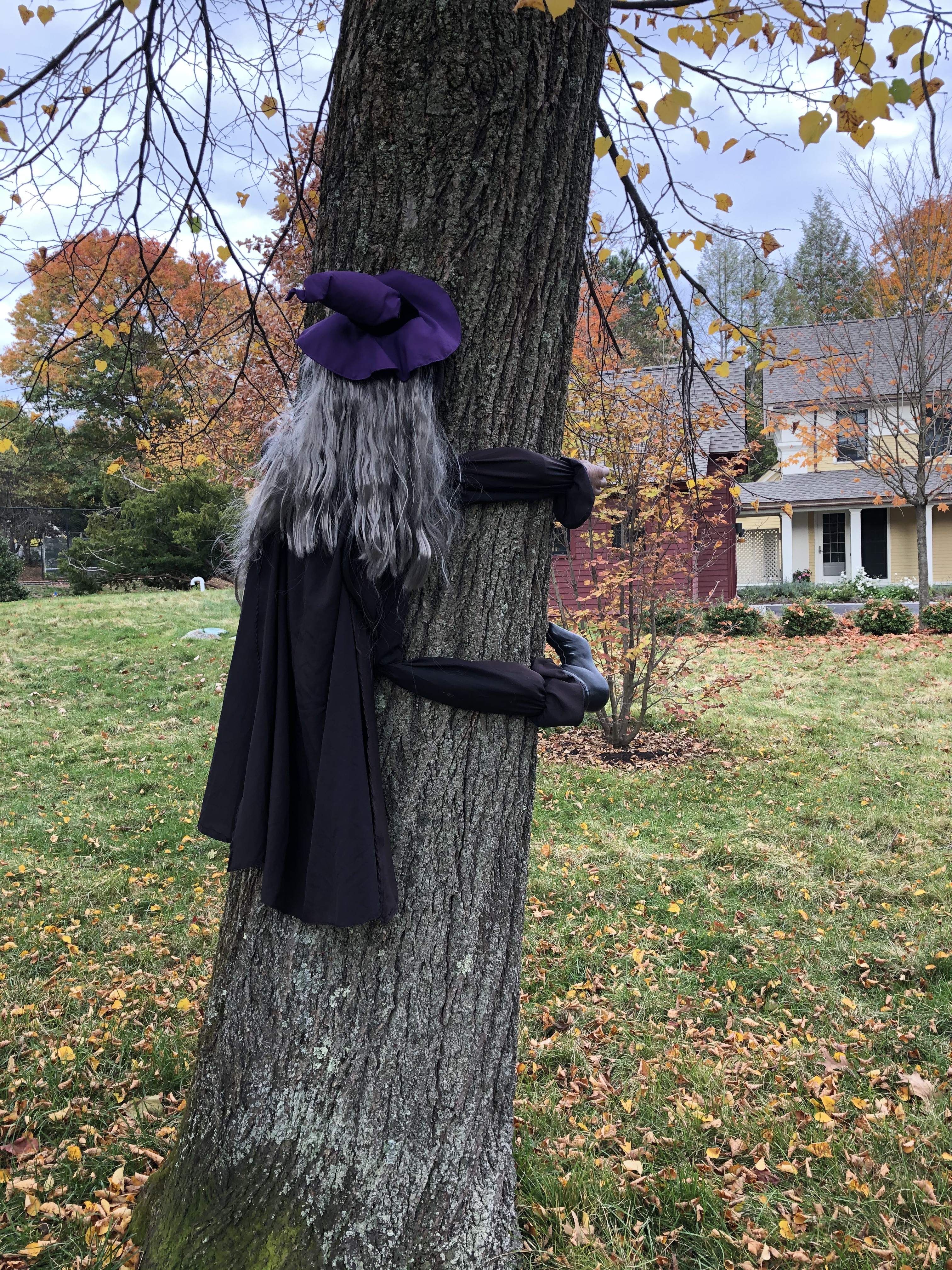
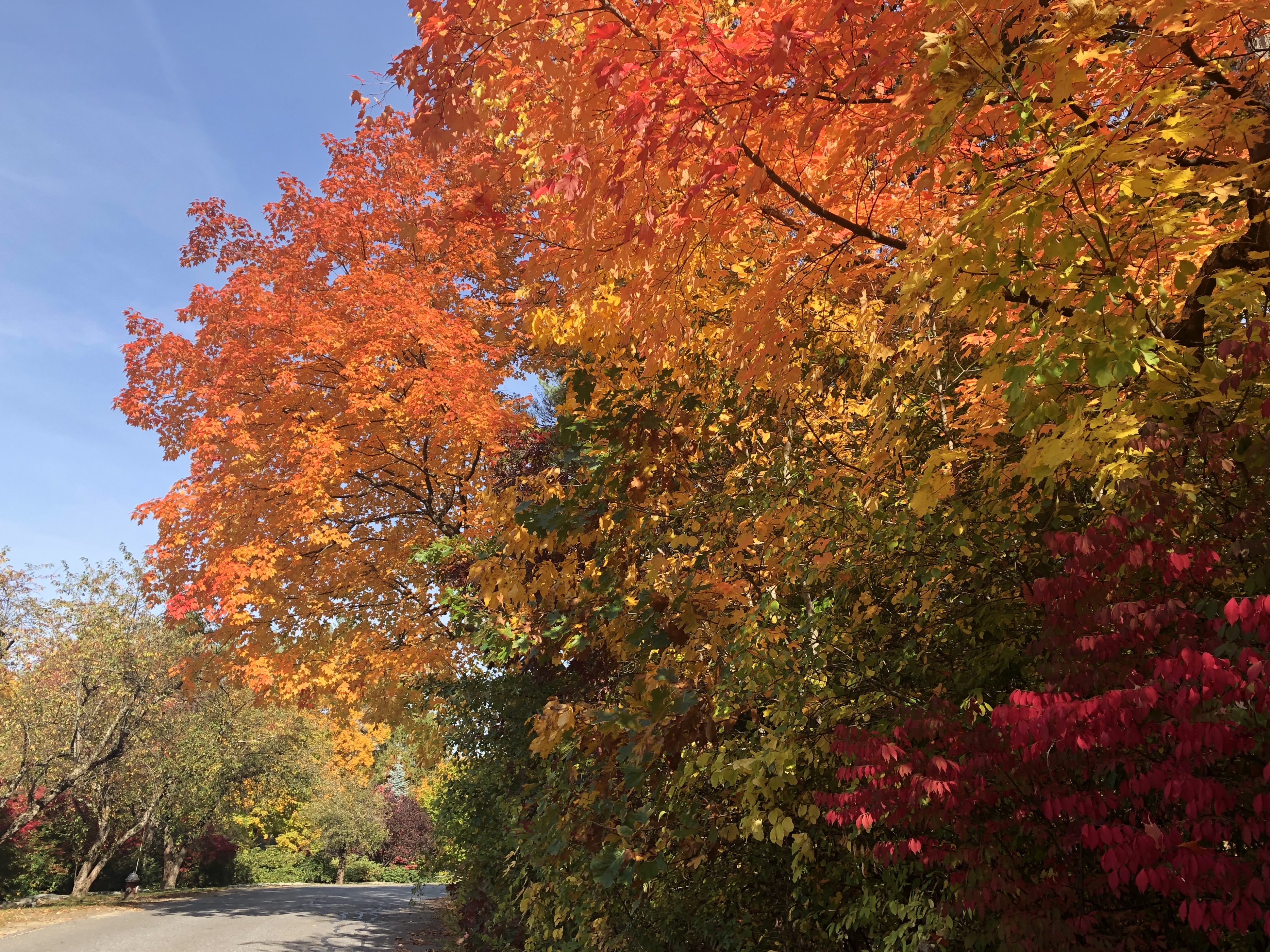
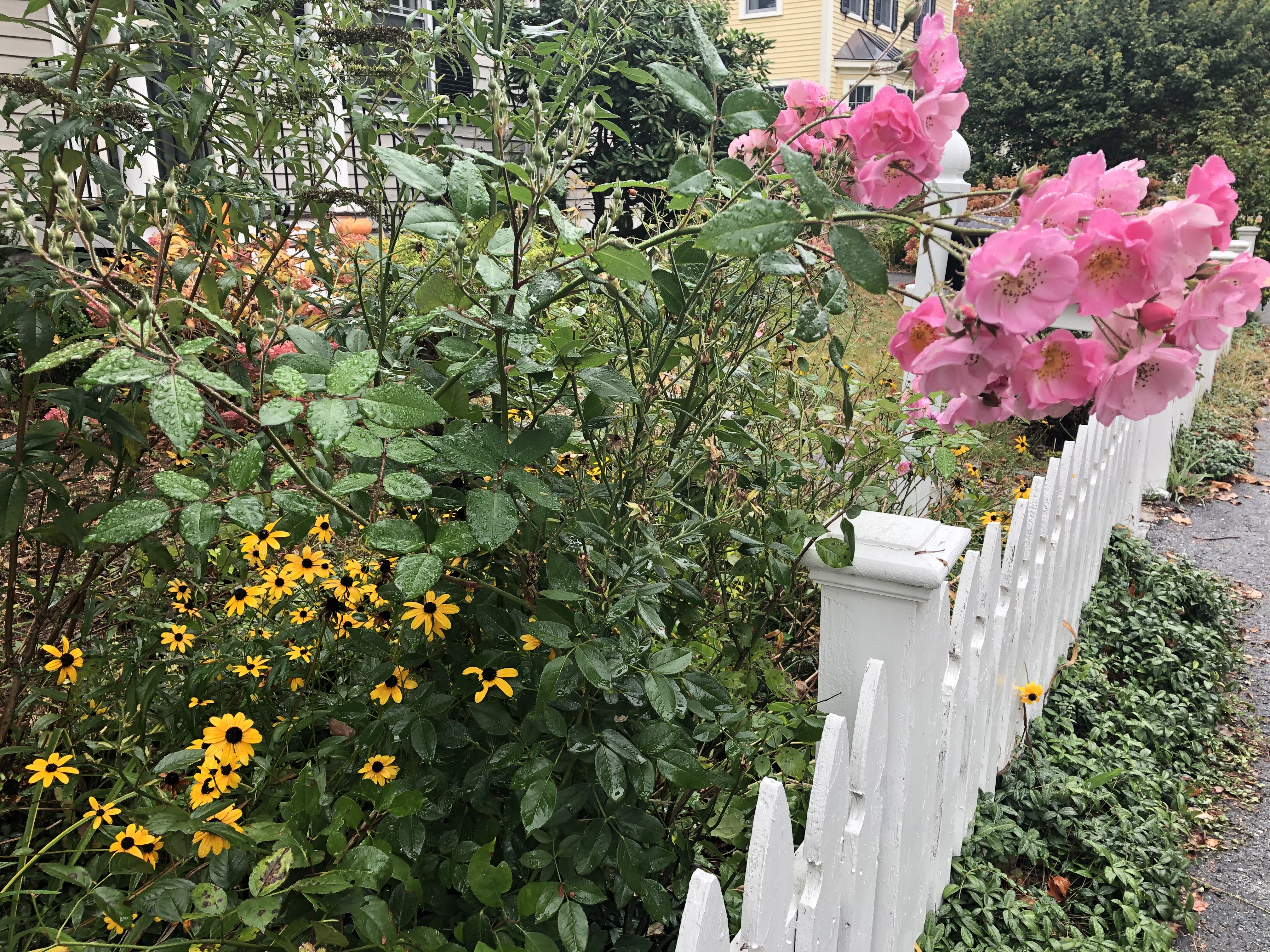
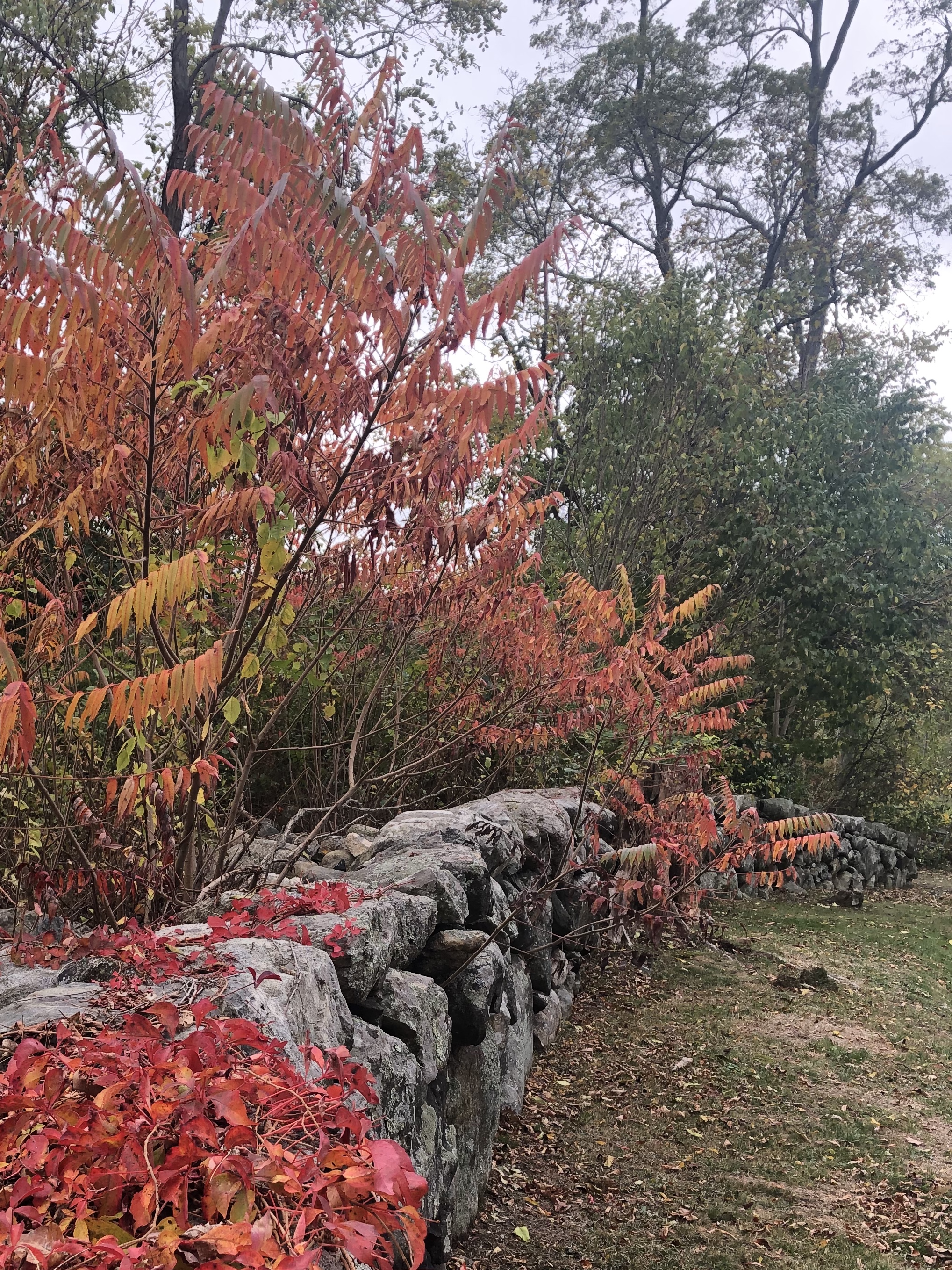
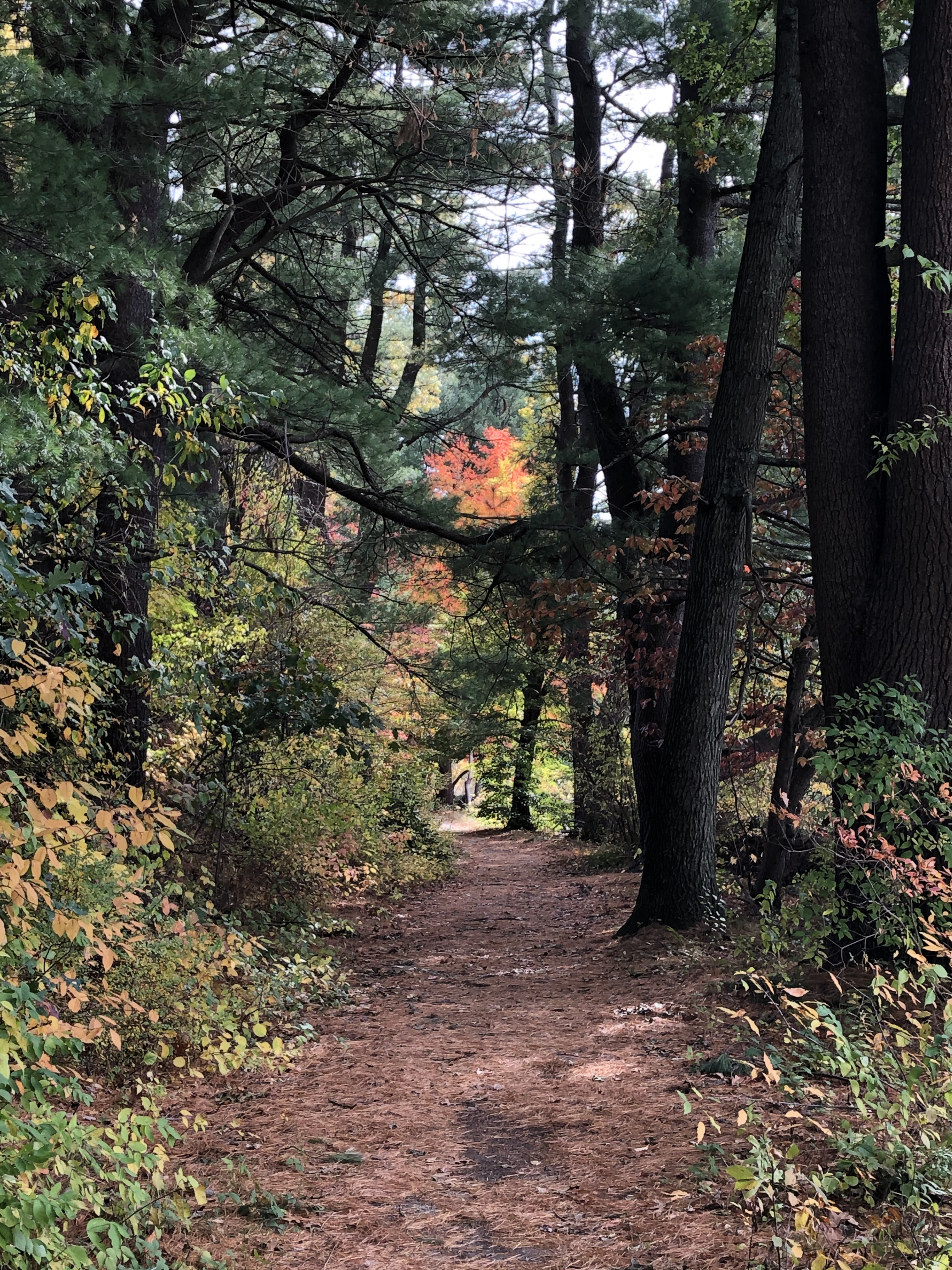
For today’s photo round-up, let’s start with what autumn looked like in these parts before the snow. Amusing, colorful, thought-provoking.

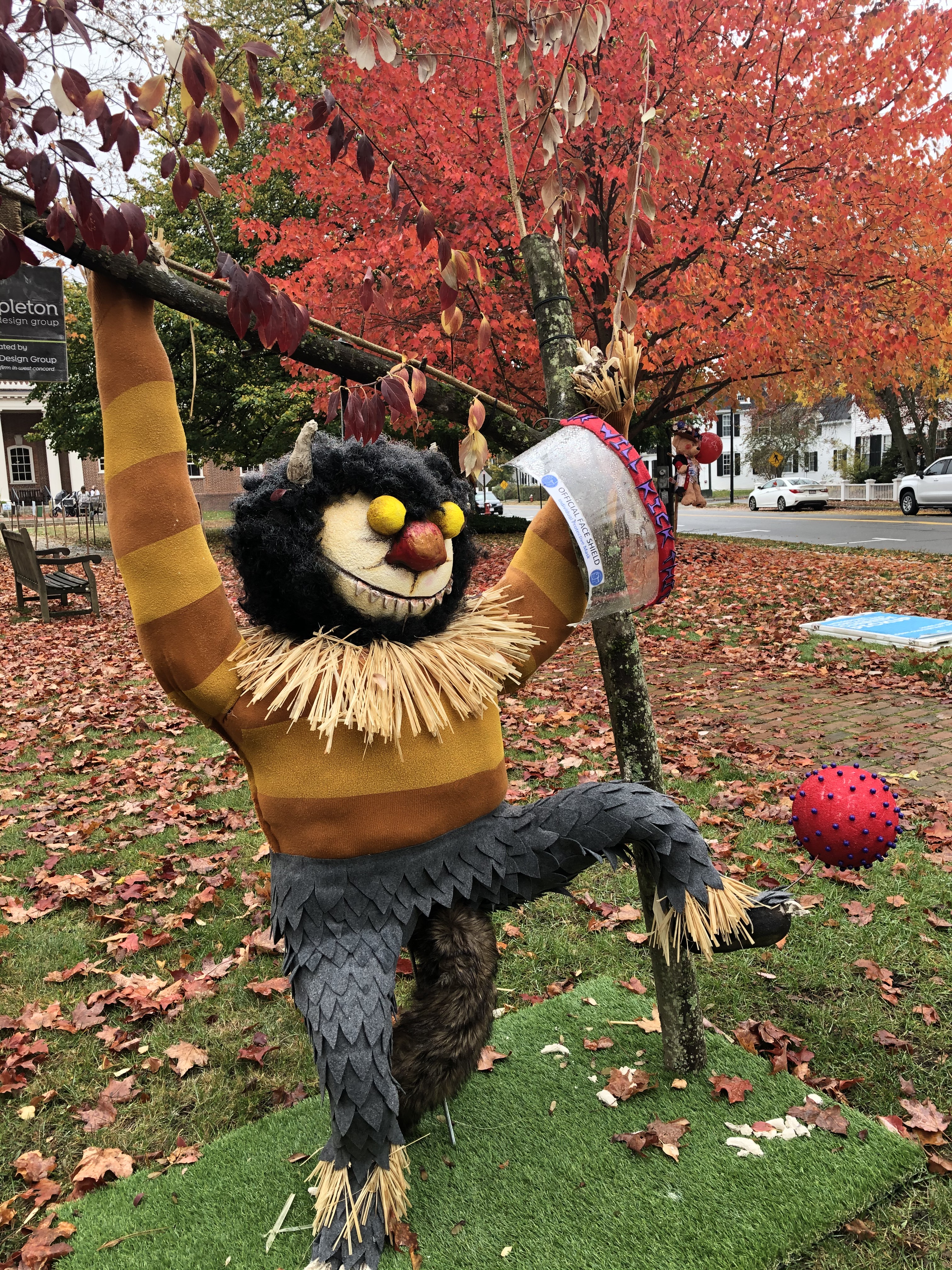
In an annual event on the library lawn, people put up scarecrows to represent their favorite storybook characters. I love the face-shield wielding Wild Thing below kicking a coronavirus soccer ball.

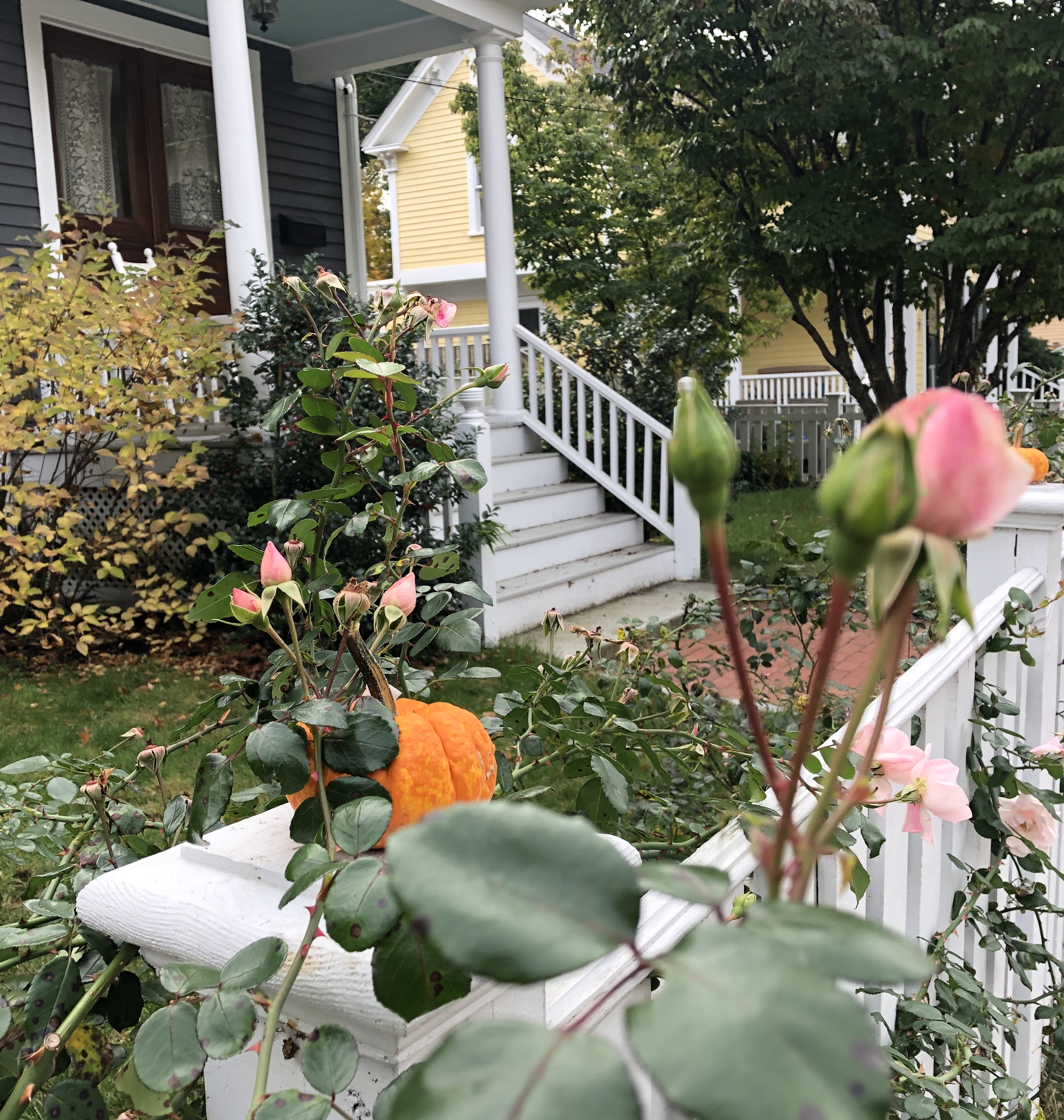
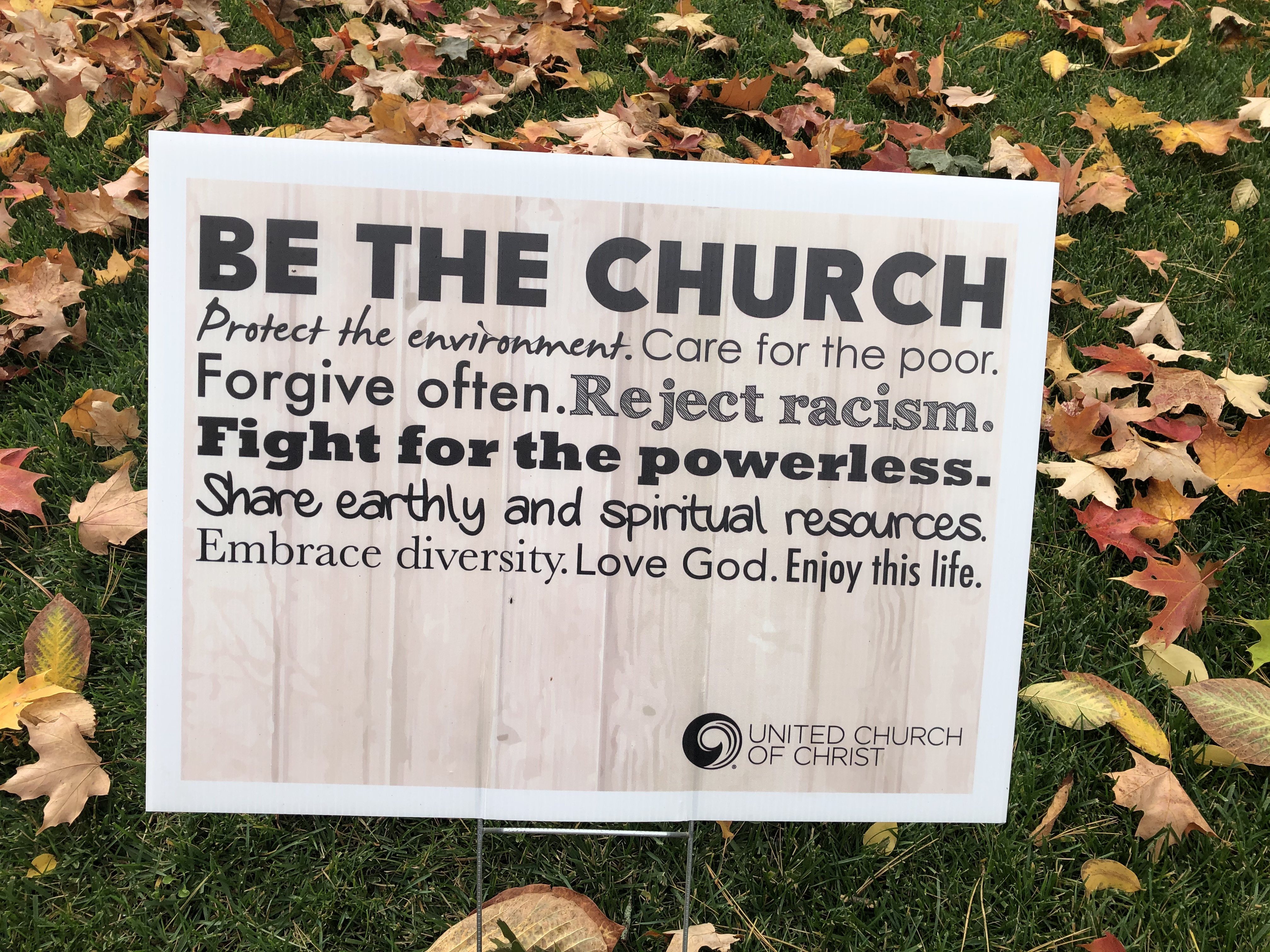
As pumpkins came out in yards, flowers continued to bloom on fences, and sometimes the woods seemed to bloom like flowers.

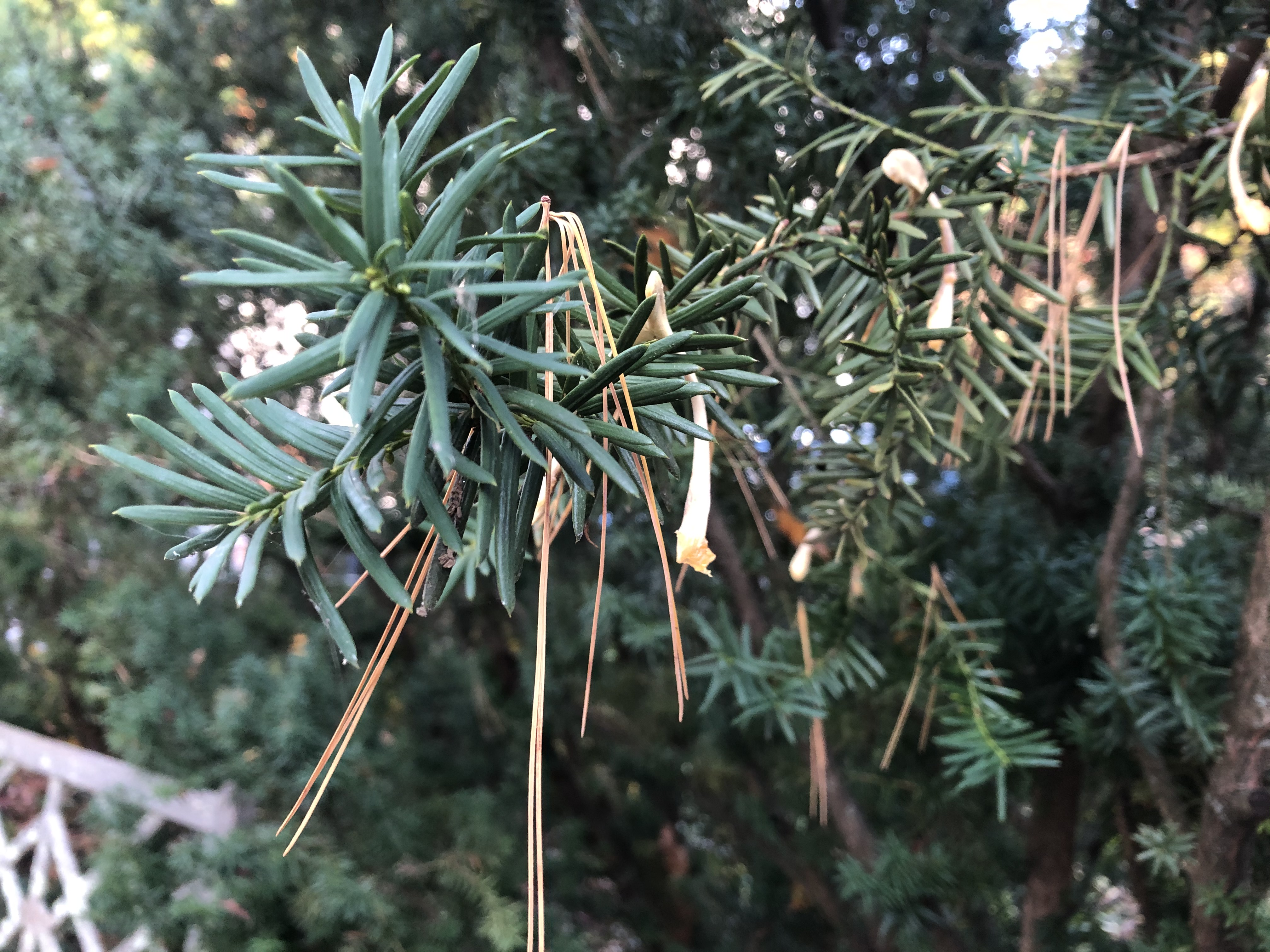
One day I got it in my head that the white-pine needles on our yew branches looked like wishbones, so I set up a silly shot.

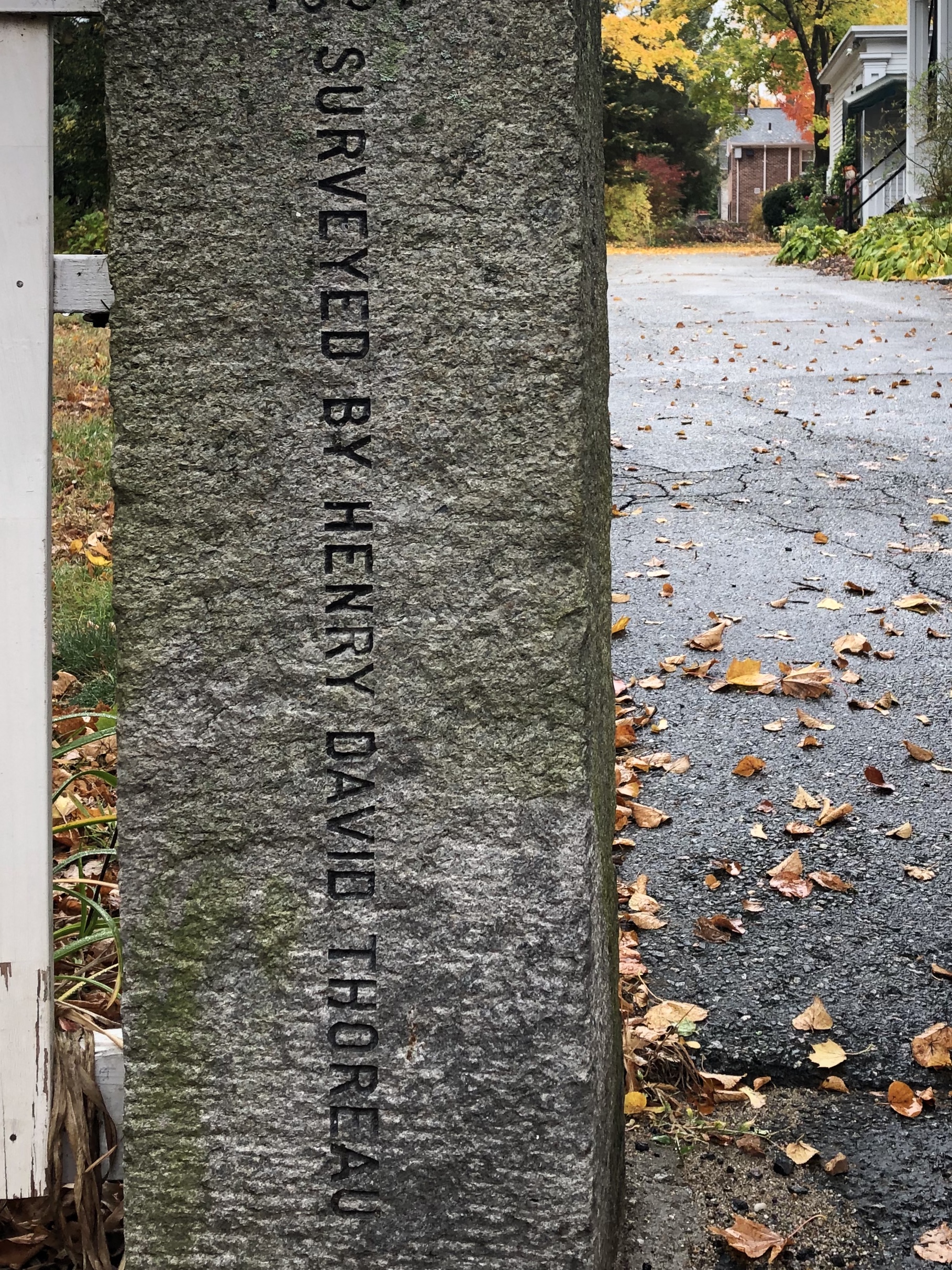
The carved stone marker is located near a retirement home in town. I had never noticed before that it has a word about local celebrity Henry Thoreau.

The mother-baby sculpture is a peaceful one outside a hospital in Boston, where I had to go for an annual checkup. Overall, it wasn’t a peaceful experience because there were so many people. The safety protocols were good, but I am definitely not used to crowds.

OK, the luscious dahlia is not mine. Melita sent it from Madrid, where she reports a State of Emergency has been decreed until May 9!

After the dahlia is my attempt at creating a Maxfield Parrish.

Stay safe, stay warm, but try to get out in the fresh air for a bit every day.

The Diary Hunters

People throw out very private things, usually without realizing it. When I was volunteering for my college’s used bookstore years ago, a piece of writing fell out of a book my neighbor had donated. I wish I hadn’t seen it. It was a very sad poem about a son that cried for his father after a divorce. It wasn’t for my eyes.

Amelia Tait writes at the Guardian book feature the Observer about things like that — diaries that people write for themselves but that may end up years later in the hands of a stranger. According to the article, very few people consciously give their diaries away.

“Sally MacNamara,” Tait reports, “has long told her four children that if there’s a fire in her Seattle home, they should rescue Olga first. … The ‘Olga’ that is so precious to the 63-year-old online seller is a 118-year-old diary written by a woman of the same name. Beginning in 1902, the diary chronicles the experiences of a young immigrant who was raised in a strict religious environment in America. [MacNamara] purchased the diary online in 2005 – it is now one of her most prized possessions.

“Over the past 35 years, MacNamara has read more than 8,000 strangers’ diaries. As a child, her mother would take her ‘dump diving’ to salvage objects – when she discovered an old, handwritten piece of paper in the trash one day, she was immediately intrigued. …

“At first, MacNamara bought diaries in antique shops, but when a friend introduced her to eBay in 1998, she began using the auction site to buy and sell. …

“While MacNamara has more than two decades’ experience trading strangers’ secrets, her hobby has recently become more widespread. On YouTube, videos entitled ‘I bought a stranger’s diary’ are incredibly popular – an October 2019 video racked up 300,000 views, while the video that started the trend in December 2017 has been watched by over 6.4 million people.

“Clearly the mystery and intrigue of reading someone’s personal history can be compelling. But should we be troubled by the inherent voyeurism? Or – as Observer literary critic Kate Kellaway once said on the subject – ‘do people who keep diaries secretly hope someone will read them?’

Joanna Borns, 35, is a writer from New York with 10,000 YouTube subscribers. Borns first started the YouTube trend for reading strangers’ diaries three years ago – since then, she’s purchased five diaries, which cost between [$26 and $52] each. ‘It’s interesting to see how you’re similar to a totally random stranger,’ Borns says. …

“Borns thinks ‘a lot’ about the ‘moral aspects’ of her videos. … ‘I certainly don’t want to broadcast anyone’s personal information – I do change the names,’ she says; she also avoids sharing ‘dark’ thoughts that diarists recorded. …

“Victoria is a 58-year-old from Cheltenham who has been selling love letters and diaries online since 2004 (she has asked to be identified by her first name only). She procures diaries in flea markets and car boot sales for up to [$26]. … ‘You go to one of these car boot sales and you find a box and it’s scruffy and insignificant and it’s wet, and you open it up and it’s a bundle of wonderful yellowing letters tied up with a ribbon,’ she says, ‘You’re just blown away.’ …

“Although the trend is undeniably voyeuristic, many collectors have a grander purpose. Polly North is the 41-year-old director of the Great Diary Project. …

“She believes historians can learn about marginalised people via journals. Yet North also receives a huge number of donations from modern diarists, who can opt to make their journals immediately available or can seal them for decades (amazingly, most people are happy to have their diaries read and shared straight away).

“North’s favourite is from a ‘virtually illiterate’ woman who was brought up in a trailer park in California and is still alive. ‘There’s no capital letters, there’s no punctuation… It’s stripped down, it’s raw, it doesn’t tick any conventional literary boxes, but it still achieves something that’s magical.’ ”

More at the Observer, here.

Six-Foot Tutus

Never underestimate the power of artists to work around obstacles! In today’s story, a dancer, a choreographer, and a costume designer figured out a socially distanced way to get dancers back to dancing. Anna Bailey reported the story at BBC Radio.

“Acclaimed Cuban ballet star Carlos Acosta says ‘it feels great’ to be venturing back to staging indoor performances for a live audience in the UK after months of being prohibited from doing so because of the pandemic.

” ‘It feels great because we’ve been in lockdown for far too long and it’s a kind of career where if you don’t exercise your body for a week you go back and pay for it,’ says Acosta. …

“Acosta and the Birmingham Royal Ballet are following in the footsteps of The Royal Ballet in London which recently performed in front of a live audience in a reduced capacity auditorium.

“But Acosta is going one step further by introducing socially distanced costumes in the form of extra wide tutus for the brand-new mixed bill Lazuli Sky.

“It is the first one-act ballet commissioned and presented by Acosta since he took over as director of the Birmingham company at the start of the year. It is also due to be performed at Sadler’s Wells in London at the end of [October and online Nov. 1].

” ‘When we started, we wanted a piece where nobody would touch each other and so the dancers will be wearing elongated structures that are not static but are constantly moving and creating different shapes, evoking your imagination,’ explains Acosta about the spiral-shaped costumes. …

” They’re great in terms of aesthetic and a record of the time that we live in,’ Acosta adds.

“He has devised Lazuli Sky with the help of his designer Samuel Wyer and the award-winning choreographer Will Tuckett.

The influence for their costumes came from the crinoline skirts worn by fashionable women in the 19th Century to protect themselves from smallpox, cholera – and unwanted male advances. …

” ‘The tutu has always been a socially distanced piece of clothing; a stiff skirt that sticks out half a metre from your body. So it’s taking that idea and going “let’s just push it a little bit further,” ‘ says Tuckett. ‘The movement is dictated by them and the dancers have been fantastically adaptive and collaborative. Both male and female dancers wear them and so far there have been no upsets.’ …

“In Tuckett’s production the tutus with [6.5-foot] trains will also act as part of the set, as the production crew are unable to move props during performances due to the risks of the virus.

” ‘We’ll be projecting images onto the skirts,’ says Tuckett, ‘and when the dancers come out on stage it’s hypnotic and other worldly. They also look like sails and flowers when they all open out, they completely fill the space.’

“Nature is at the heart of Lazuli Sky, which stands for ‘bright blue sky’ and focuses on the upsides of the pandemic, such as open skies and birdsong, rather than the downsides. …

” ‘It’s incredible, there were no planes flying, levels of contamination and pollution dropped, and I got to see the beauty of it all,’ says Acosta [of his time in quarantine]. ‘I just hope that people will take notice of this and try and find a solution to help the planet. We want to give people hope.’ …

” ‘It’s unnatural for human beings not to touch and we have this tribal aspect of who we are to be social beings and our art form has always been about interaction physically,’ he says. ‘If you take that away from us, I’m not sure what kind of art form you would get if you’re not able to do Sleeping Beauty touching each other.

” ‘But we will wear masks on stage if we have to, and the dancers and musicians are very disciplined, we take ourselves very seriously in that regard.’ …

“So, is he the man to champion bringing ballet back during the pandemic, particularly having overcome his own challenges growing up in Cuba?

” ‘Well yeah, I just want for the people, especially those in Birmingham, to try and break the stigma that ballet is yesterday and something distant,’ he says. ‘My story, everybody has heard it and what ballet has done for me, and I want to bring that same enthusiasm to everybody, challenge people’s perceptions and do the best I can to achieve diversity and a healthy turnout of audiences from different backgrounds.’ “

More at the BBC, here.

Looking back, don’t you feel like you always knew malls would go the way of the Dodo as soon as online shopping started taking hold? I had no idea, but now I imagine I was ahead of the curve. I wonder how many people in the 1990s were already pondering what to do with empty mall real estate in future decades.

There will probably always be a need for someplace like a mall for people to gather with friends and maybe have an indoor walk when the weather is bad. Maybe retail shops for people who’d rather see items up close — or try them on before buying — will survive, but they’ll never fill all that space.

In today’s article, we learn about a conversion effort at a mall in Washington State.

In June, Patrick Sisson wrote at Bloomberg’s City Lab, “The multiple crises impacting the U.S. economy — the botched response to the coronavirus and the resulting economic fallout, and lack of spending power — have delivered a new gut punch to brick-and-mortar retail, a sector that was already reeling.

“More than half of all U.S. department stores in malls will be gone by 2021, one real estate research firm predicts, and surviving retailers may not be far behind; once-mighty brands such as Cheesecake Factory and the Gap are skipping rent payments, Starbucks is closing physical locations, and developers see a future for big box stores as office complexes. …

“At the Alderwood Mall in Lynnwood, a suburb north of Seattle, an adaptive reuse project already in progress suggests that America’s vast stock of fading shopping infrastructure could indeed get a second life as places to live. …

“Developers are turning a wide swath of the 41-year-old shopping center into Avalon Alderwood Place, a 300-unit apartment complex with underground parking. The project won’t completely erase the shopping side of the development: Commercial tenants will still take up 90,000 square feet of retail. But when the new Alderwood reopens, which developers expect will happen by 2022, the focus will have shifted dramatically. …

“Lynnwood may offer an ideal testing ground for the long-term opportunities in large-scale suburban mall-to-housing conversion. The suburb of roughly 40,000 people is a commuter bedroom community for Seattle, which has been struggling mightily with a severe housing shortage. …

“ ‘There have been some great examples of this kind of redevelopment, such as Tyson’s Corner in Virginia, but it’s very specific to individual cases, and very expensive,’ says Nick Egelanian, president of retail consultancy SiteWorks, who predicts up to a third of malls will be vacant due to the economic fallout from the pandemic. ‘If it’s a good location, you can backfill that with residential, hotel, office and entertainment.’ …

“Brian Lake, a senior attorney at the Pacific Legal Foundation who focuses on housing issues, believes that, minus the hurdles put up by zoning regulations and red tape, such commercial conversions should be happening everywhere. From a construction standpoint, conversions are simple.

‘We need to open up every opportunity possible to develop new affordable housing,’ he says. ‘Fannie Mae estimated we need an additional 2.5 million units just to satisfy the long-term demand, and that’s before this year’s crises.’

“Converting commercial real estate to housing may be the best use of land in such an over-retailed country. Big shopping centers tend to be centrally located and connected to transit. … During a time of housing shortages, Lake believes that transforming empty commercial buildings is a ‘moral imperative.’

“The Alderwood redevelopment brings challenges. … So the city is working on a housing action plan to make sure social services and education arrive in the community, not just new apartments. The mall may be evolving, but the desire, and challenges, in creating a community-oriented development still remain.

“ ‘You can have acres and acres of housing, but without a community, is it a place?’ [David Kleitsch, the city’s economic development director,] says. ‘Does it fulfill somebody’s experience?’ ”

More at City Lab, here.

Notes From the Hinterland

I’m coming down the homestretch with the proofing for my new YA fantasy, Out of Time. By mid-November, I should be done. Fanfare, please! I certainly won’t be sorry when that arduous job is done.

I’m not sure how much I’ll be blogging until the proofing is finished. More than likely, posts will be sporadic.

However, I did want to share our first-ever map that will be in Out of Time.The map was created by my husband, Clif, and it features the country of Norlander, which is in the magical realm of Elferterre, where Maya and her new team—Will, Jay, and Lexie—must travel.

In Elferterre—green and mysterious with a touch of steampunk—Maya, Will, Jay, and Lexie encounter allies and foes, including a talking cat, a witch, sprites, ogres, imps, and a mechanical horse. All the while, Magic swirls around Elferterre, enhancing the good and bad in every…

View original post 9 more words

Art Along the Bikeway

Along the Minuteman Bikeway, one finds a variety of art exhibits that stay up about a year.

There are some really good bike paths in my neck of the woods, although they don’t all connect yet because some property owners fear them. But where they do exist, they give delight to all kinds of people, not just bikers. In many sections, artists have put up temporary displays, which add to the delight.

As I showed, here, the Bruce Freeman Trail currently has imaginatively painted doors by Umbrella Arts Center artists.

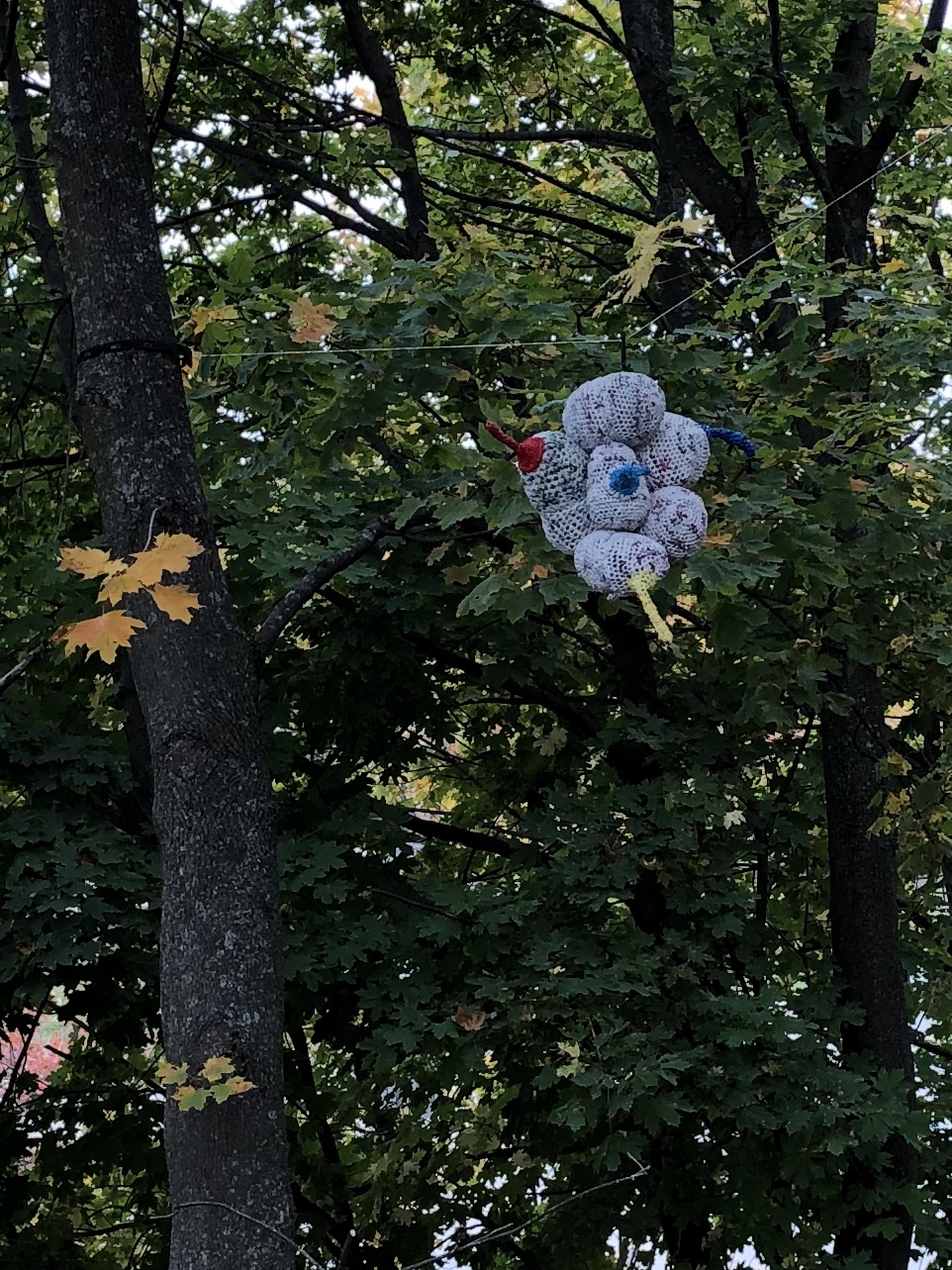
And when Cate McQuaid reported in the Boston Globe about crocheted plastic-bag art in the Arlington section of the Minuteman Trail, I knew I had to check it out. Three good things at once: a pretty walk, art, and volunteers fighting to end plastic litter!

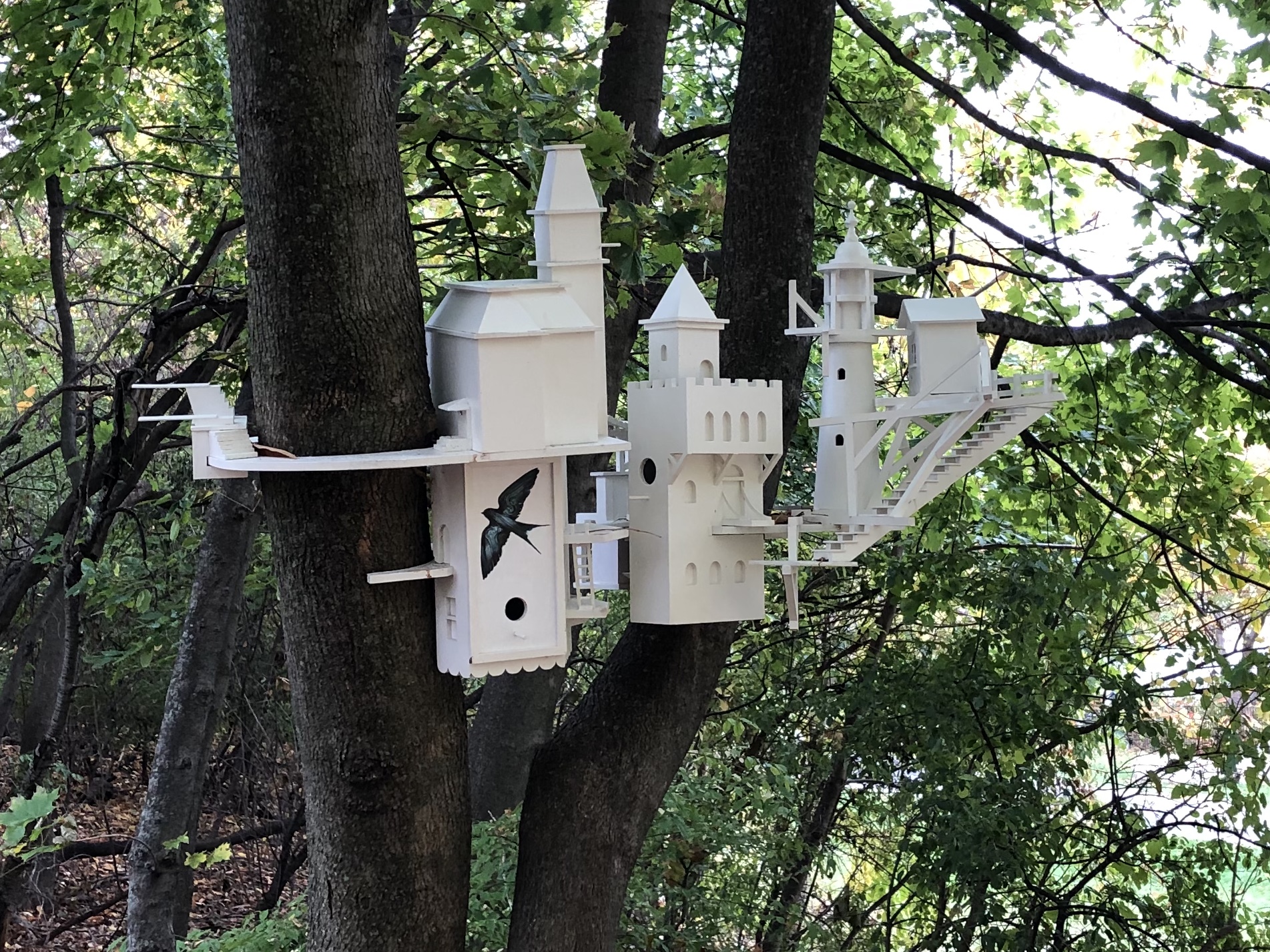
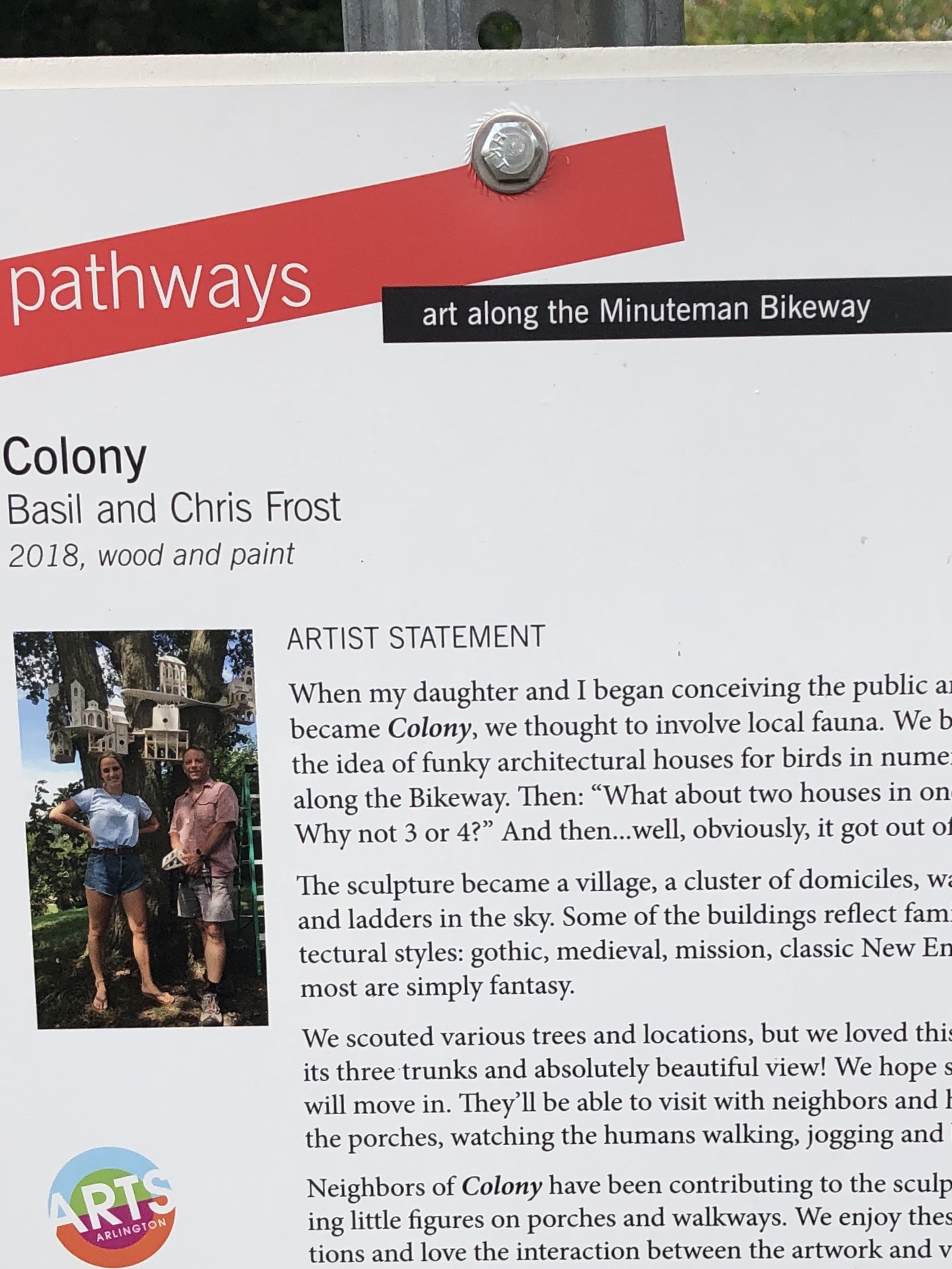
While hunting the location of “Persistence: A Community Response to Pervasive Plastic,” I also got to see the Colony installation, which was scheduled to come down. It consisted of castle-like architecture that invited visitors to add their own little elements — for example, Fisher-Price “Sesame Street” figures.

About the crocheted creations, McQuaid wrote, “Plastic persists, breaking down into microplastics, which fish eat — and if we eat fish, we also eat plastic. But there’s another reason ‘Persistence: A Community Response to Pervasive Plastic,’ an installation by Michelle Lougee along the Minuteman Bikeway, got its title.

“ ‘It’s also the persistence it took everyone to get through this time, and who helped our project persist,’ said organizer Cecily Miller, public art curator for the Arlington Commission of Arts & Culture.

“The project kicked off late last year, with rosy hopes of community crafters coming together to crochet plastic bags. Lougee would turn the components they made into sculptures of aquatic microorganisms and suspend them from trees along the Bikeway overlooking Spy Pond. Workshops and meetups kept the momentum going. Miller says more than 100 people were collecting plastic, flattening, and folding it into plastic yarn, and doing the needlework. Then came the fog of COVID-19.

“ ‘Do the plastic bags hold the virus? Can we quarantine them? Nobody really knew the answers,’ Miller said.

“Miller and Lougee forged ahead with plastic the sculptor had in storage. The social element of the project came to a halt. They posted online resources for volunteers at home. …

“ ‘We had people who did more than they would have done without the pandemic,’ Lougee said. ‘Some people were happy to have this to focus on.’ “

They persisted. The display will be up through Halloween of next year. See www.artsarlington.org/artist-in-residence. And read more from Cate McQuaid at the Globe, here.

Rebuilding Greener

Sometimes progress on global warming is made not by idealistic environmentalists but by pragmatists thinking about long-term costs. That was the case in a rural Kansas town that was badly damaged by a tornado.

Annie Gowen reported recently at the Washington Post, “A wind-swept farming community in southwestern Kansas, Greensburg rebuilt ‘green’ after an EF5 tornado — the most violent — barreled through at more than 200 miles per hour and nearly wiped it off the map in 2007.

“A decade later, Greensburg draws 100 percent of its electricity from a wind farm, making it one of a handful of cities in the United States to be powered solely by renewable energy. It now has an energy-efficient school, a medical center, city hall, library and commons, museum and other buildings that save more than $200,000 a year in fuel and electricity costs, according to one federal estimate. The city saves thousands of gallons of water with low-flow toilets and drought-resistance landscaping and, in the evening, its streets glow from LED lighting. …

“Greensburg is no liberal bastion. [But] leaders there now are routinely consulted by communities around the world grappling with devastating weather events from wildfires, tsunami, earthquakes and floods. …

“Greensburg’s journey has not always been easy, residents say, nor did it unfurl perfectly. A fancy rainwater irrigation system for its Main Street has never worked. Wind turbines installed for city and other local buildings were costly to maintain — and one toppled into a field. A business park built to attract companies and clean-energy jobs remains empty.

“ ‘There are lessons learned that we can share,’ said Bob Dixson, a retired postmaster who served as mayor during much of the rebuilding. ‘I totally believe that we’re a living laboratory here with a plethora of architectural design and sustainable environmental practices to share.’ …

“Environmentalists around the world are now arguing that this moment is crucial for local governments — whether they’re trying to rebuild a town burned by a wildfire or figuring out ways to revitalize their economies after a pandemic, said Katharine K. Wilkinson, a climate strategist and co-editor of the recent anthology ‘All We Can Save: Truth, Courage, and Solutions for the Climate Crisis.’ …

“ ‘[There] are opportunities to rethink the systems we create at a local level, and that’s where a lot of climate solutions happen,’ Wilkinson said. …

“[In Greensburg in 2007] more than 90 percent of the buildings and trees had been swept away in a matter of minutes. Twelve people died. Amid the chaos of rescue and recovery, town leaders began contemplating early on how to rebuild — and the idea of building back in a sustainable way emerged almost immediately, they said in interviews with the Post. …

“City leaders worked to build community consensus around the concept — and persuade homeowners to also embrace green as they rebuilt their homes. But it wasn’t always easy to convince some in the rugged farm community where conservative politics predominate. …

‘We tried to approach it in a practical way, not tree-hugger green, but economic green. Ramming stuff down people’s throats — especially in this part of the world — doesn’t work.’

John Janssen

“By the end of 2007, Greensburg became the first city in the country to require all municipal buildings over 4,000 square feet to be certified LEED (Leadership in Energy and Environmental Design) platinum by the U.S. Green Building Council, a nonprofit organization. That means the buildings meet certain standards for saving energy, reducing the greenhouse gas emissions that are linked to global warming. …

“The city was able to halve its carbon footprint by shifting to 100 percent wind energy from a 10-turbine wind farm south of town that is owned and operated by Exelon Corp. The turbines, which began operating in 2010, are capable of producing 12.5 megawatts of electricity, enough to power about 4,000 homes, according to Exelon. …

“An NREL [National Renewable Energy Lab] study from 2011 showed that 13 of the city’s ‘smart’ buildings save about a combined $200,000 a year in utility costs, and the homes consume about 40 percent less energy on average than before the tornado. …

“Not everything the town has tried has worked. Some of the buildings, including the school and the hospital, used to have their own smaller wind turbines to use along with solar panels, but the turbines proved costly to maintain. The hospital took its down after one toppled over, officials said. Luckily, no one was injured.

“ ‘You can build the greenest buildings in the world but if you can’t afford to live with them, that’s not sustainable,’ Dixson said. ‘You have to look at long-term maintenance also.’ ”

More tips on how to rebuild greener are here, at the Post.

Have you been reading any of the advice columns on ways to deal with undifferentiated time in a pandemic? The columns with titles like “What day is today?”

Not knowing what day it is was one thing I dreaded before I retired, but I’ve developed my own systems. In today’s article, agricultural time suggests another approach.

Layli Foroudi writes at Sierra, “In the second half of January, I met a friend in Tunis, the capital of Tunisia. He was agitated and said that he needed to go back to his hometown of Gabès. …

“He said he needed to plant trees. It was that time of the year, when temperatures are mild at night and cold in the day — the ideal climate for planting fruit trees. It’s known as the layali essoud.

“In March, I followed my tree-planting friend to Gabès. A few days later, the country went into lockdown to stop the spread of the novel coronavirus. And so, I became a guest in a ghabba.

“The word ghabba means ‘forest’ in Tunisian Arabic. But it also means a plot of farmland within an oasis. The ghabba that I passed my time in was a hectare of land (around 2.5 acres), much of it overgrown with reeds. …

“I didn’t look for a way to leave. I was ready to replace humans with plants, and the uncertainty [with] the work of making things take root.

“The Tunisian traditional agricultural calendar splits the year into unequal slots of time that indicate how crops behave and what activities to carry out. Layali essoud comes just after layali el bidh — the white nights from December 25 to January 13 when temperatures plunge in the night. ‘The plant sleeps, so it is the time to cut it — it doesn’t hurt them,’ explained Hassen Waja, a 74-year-old retired teacher. …

“In Gabès, dates came up often in my conversations with those aged over 50. … Back in the day, dates were the go-to food for breakfast or a snack, and Gabès-grown dates were bought in bulk by nomads because they travel well. …

“The demise of the local date has transformed the oasis, said Nizar Kabaou. … Since the 1970s, he said, Gabès has seen a 60 percent reduction in the surface area covered by date palms. …

“Now, it is the smell of sulfur that is a marker of home. … Since the 1970s, the region has served as a zone for the treatment of phosphate, a key natural resource for the country, used for the production of fertilizers — an irony given the devastating effect the industry has on local agriculture. …

“Cement and phosphate treatment plants [have] exhausted the region’s natural water resources. …

“Water comes every 40 to 50 days and costs three to five dinars per hour ($1 to $1.7), plus a five to 10 dinar bribe for those who want to skip to the head of the line. ‘Before the creation of the industrial zone, the oasis benefited from 750 liters of water per second — from a natural source. Now we are at 150 to 170 liters per second, with a pump. That is the ecological catastrophe that Gabès has undergone,’ said [one man]. …

“In some parts of Tunisia, people still count their days according to the agricultural calendar, though this is rare now. In Gabès, only the farmers still use it, said Waja, the retired schoolteacher. When Waja was a child, he said, ‘the oasis used to be life.’ …

“Ninety-five percent of the population of the Chenini Oasis were full-time farmers, according to Nizar Kabaou. Today, about 20 percent are. But 40 percent still practice agriculture in their spare time, and, in the past five years, Kabaou has seen a small renaissance of part-time oasis farming, which has only grown during the lockdown.

‘This period gives value to the old type of agriculture,’ he said. ‘To live, we need to do our own production. In situations like this, we need to be self-sufficient.’ …

“In Tunisia, the economic toll of the lockdown sparked protests in parts of the country where people were struggling to eat. This did not happen in Gabès, where the ghabba remained. ‘In Chenini, you never go hungry,’ said [farmer Zakaria] Hechmi, who still trades produce with his neighbors. …

“At the oasis, I [read] Flights by Olga Tokarczuk, In one chapter, a character describes two types of time. ‘Sedentary peoples, farmers, prefer the pleasures of circular time, in which every object and event must return to its own beginning, curl back up into an embryo and repeat the process of maturation and death.’ Linear time, which is ‘able to measure progress towards a goal or destination, rises in percentages,’ was more favored by nomads and merchants. …

“When I arrived at my friend’s ghabba, only a portion of the land was still being used to grow fruit and vegetables. Gradually, we began to plant more and clear away reeds that hadn’t been touched in 25 years. No one had the time, and then we did.”

More at Sierra, here.

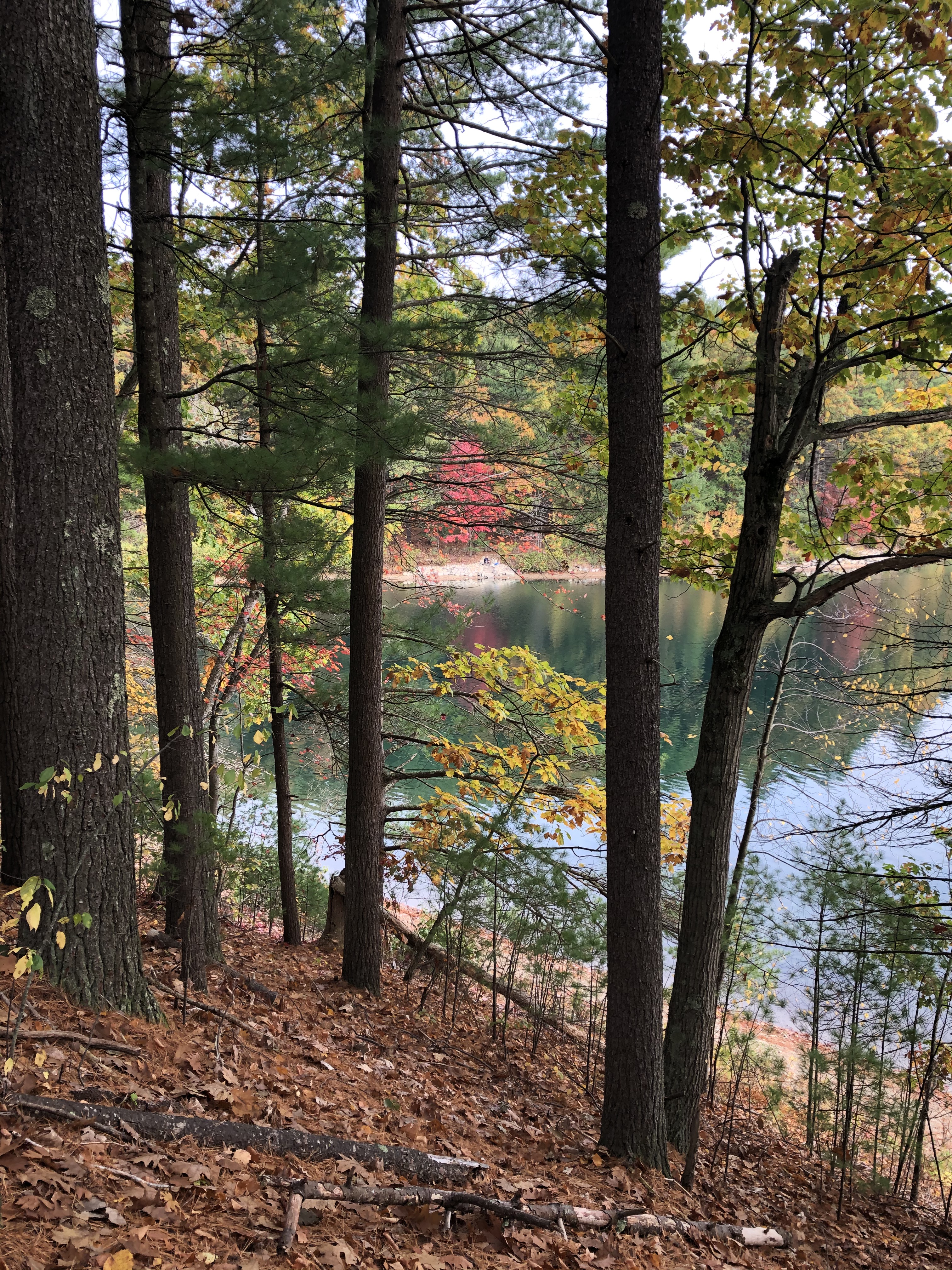
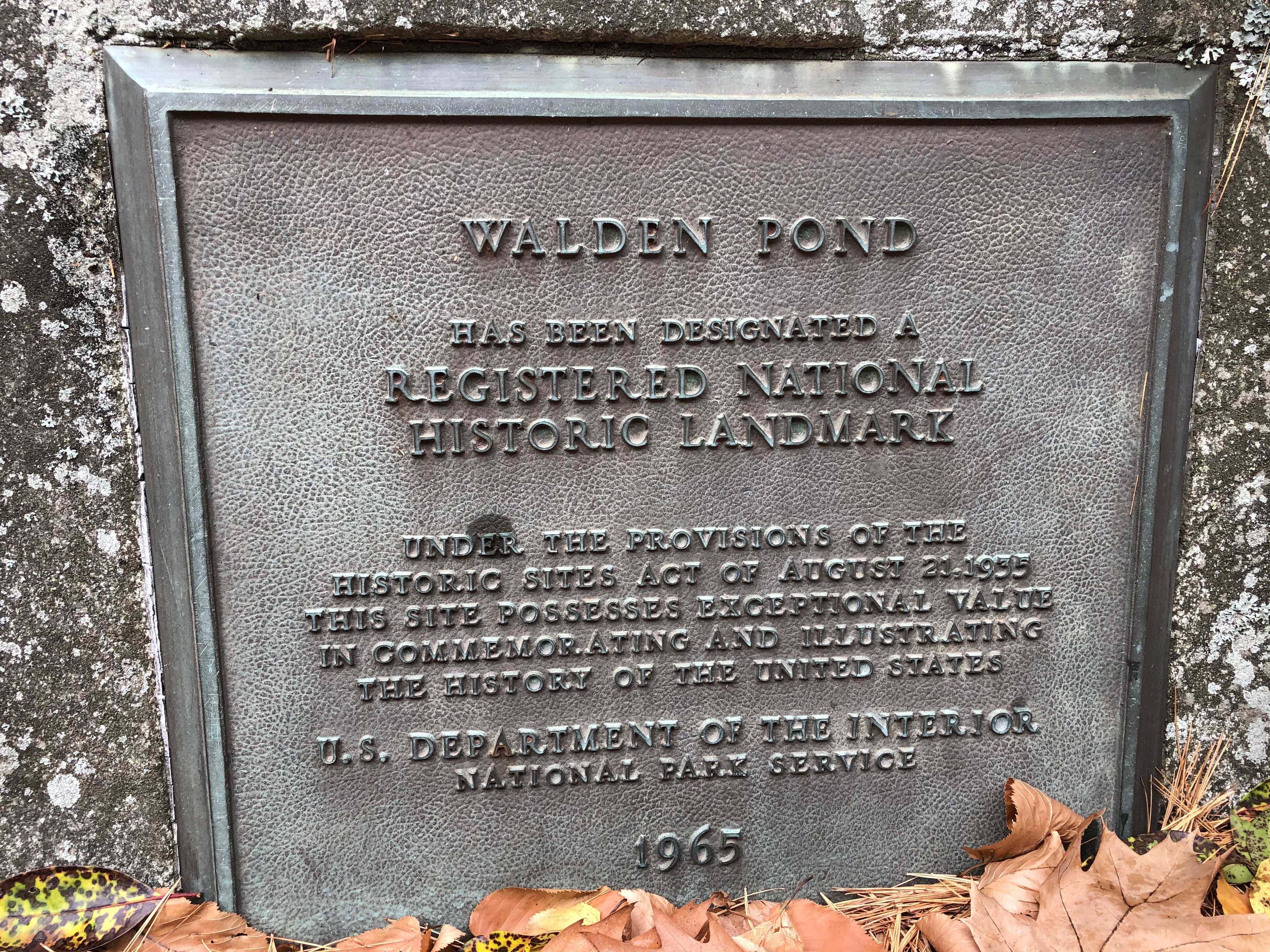
Walden Pond

In the summer, I stayed away. It gets very crowded at Walden Pond, a state park popular with swimmers, and since March I’ve been worried about picking up coronavirus in a crowd.

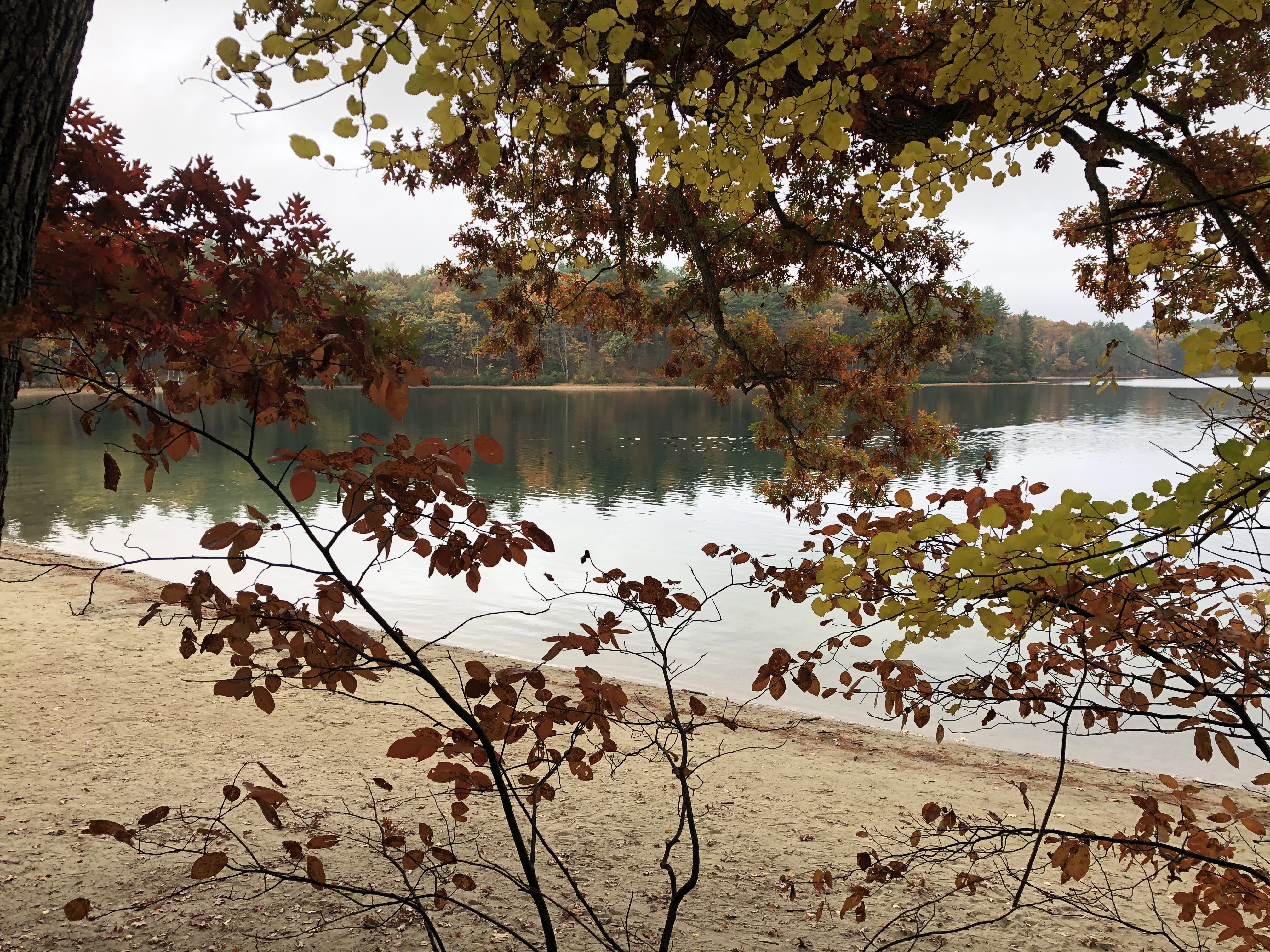
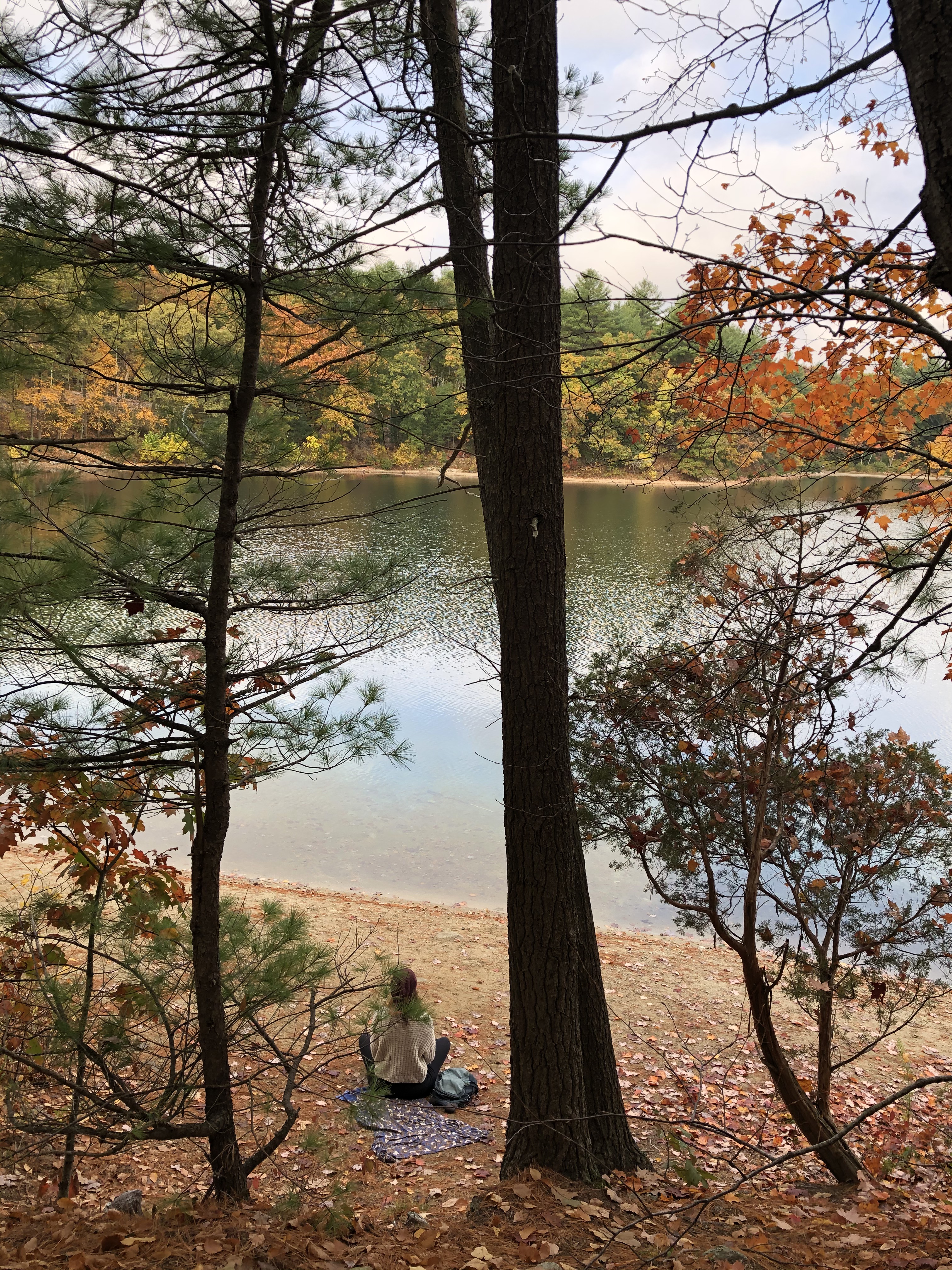
But on a cloudy weekday morning in fall, I thought I’d give it a shot, and I’m so glad I did. It’s lovely, and I was mostly reassured by signs reminding people about masks and social distancing. Moreover, for the pandemic, the path is one-way, counterclockwise around the pond.

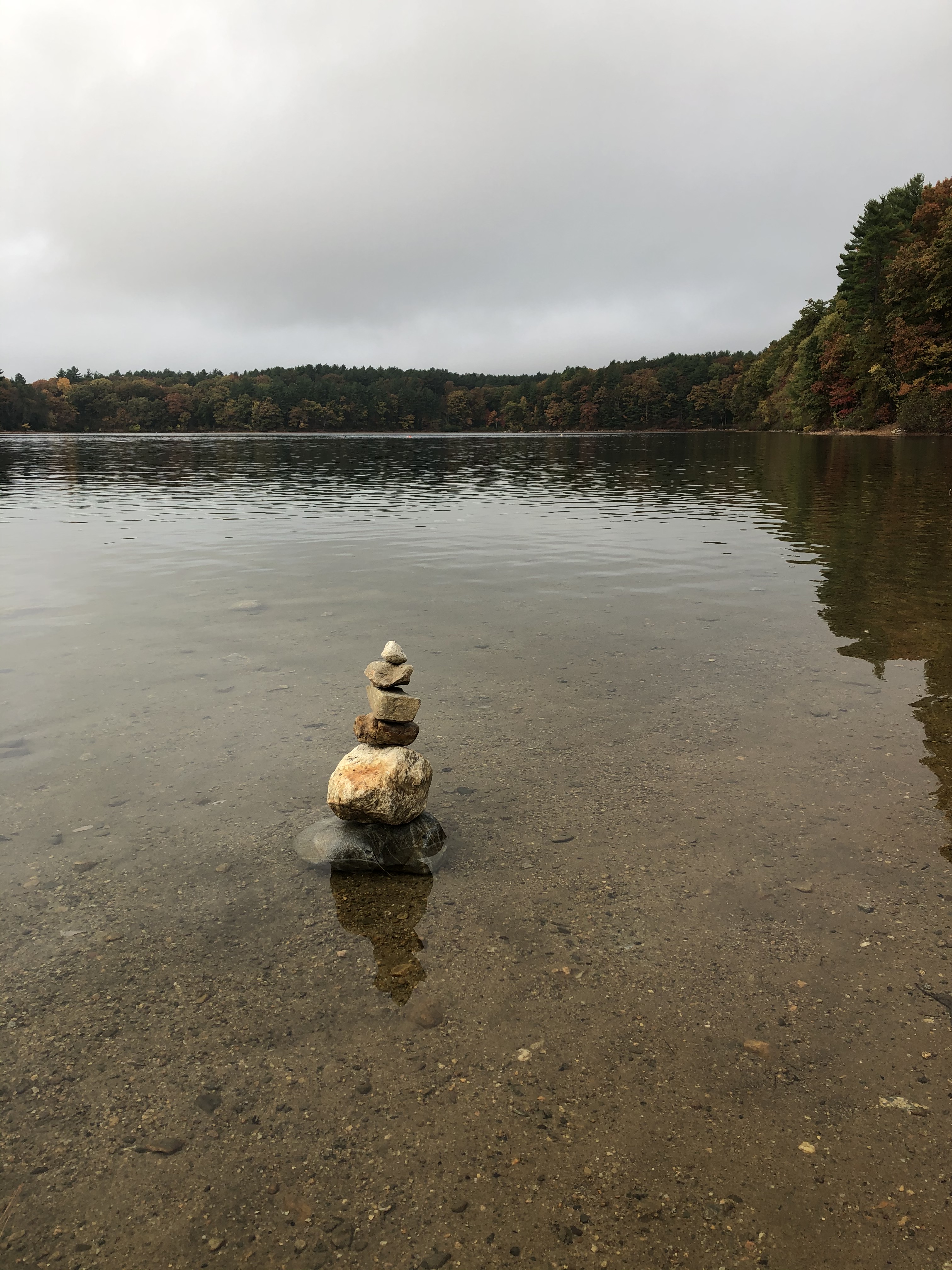
It wasn’t quite as empty as my photos make it seem. There were ten or 20 swimmers, gliding quietly with their orange bubbles attached for safety, and a few kayakers, paddeboarders, and fishermen. I even ran into a neighbor who was out for his constitutional.

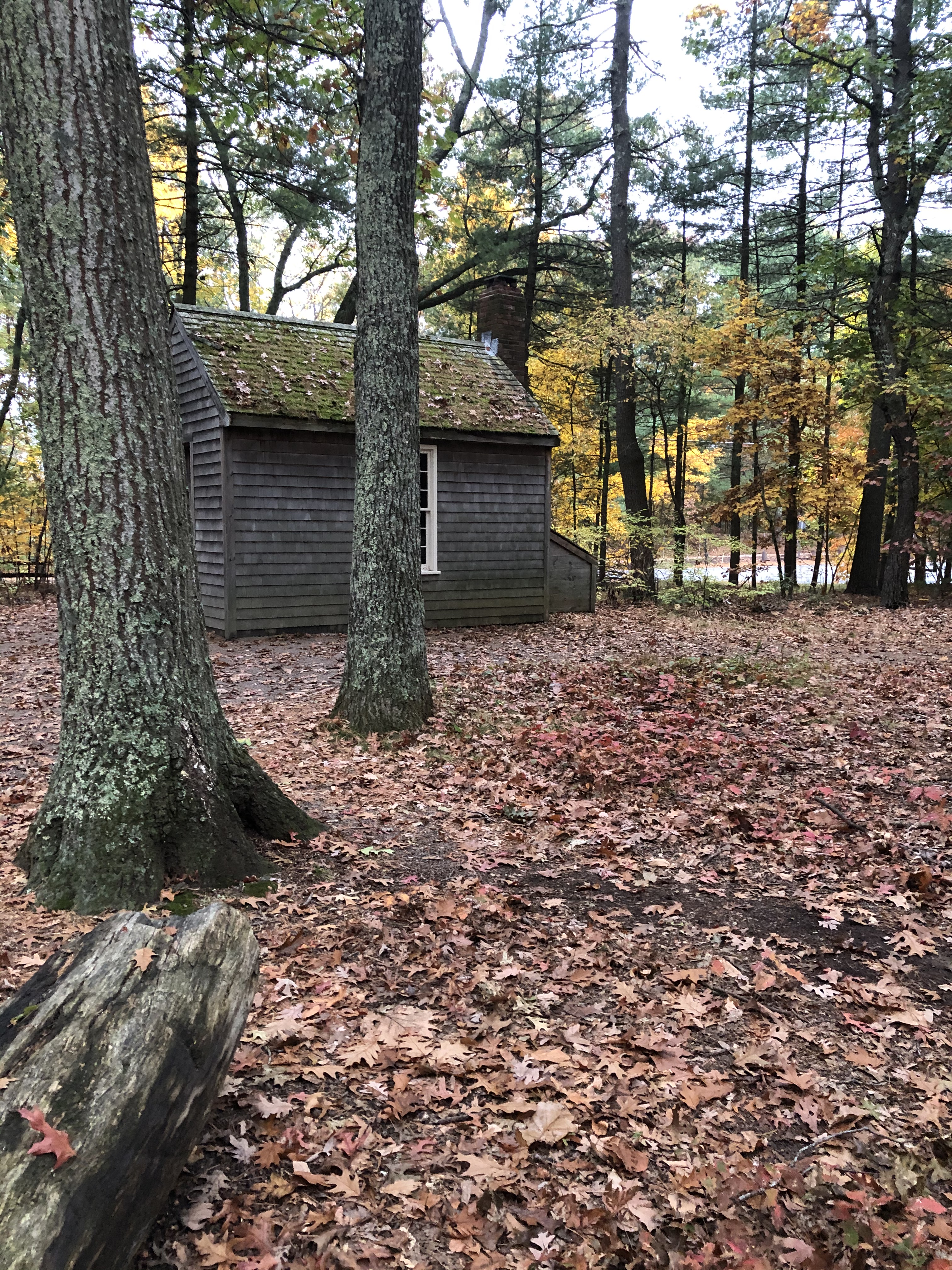
At the farthest point from the beach house is the railroad track for the train to Boston. I remember visiting with the class when Suzanne was in second grade and studying Henry David Thoreau, and we learned that train whistles would have been a sound Thoreau heard when he lived at his cabin. (But not airplanes, the teacher reminded us.)

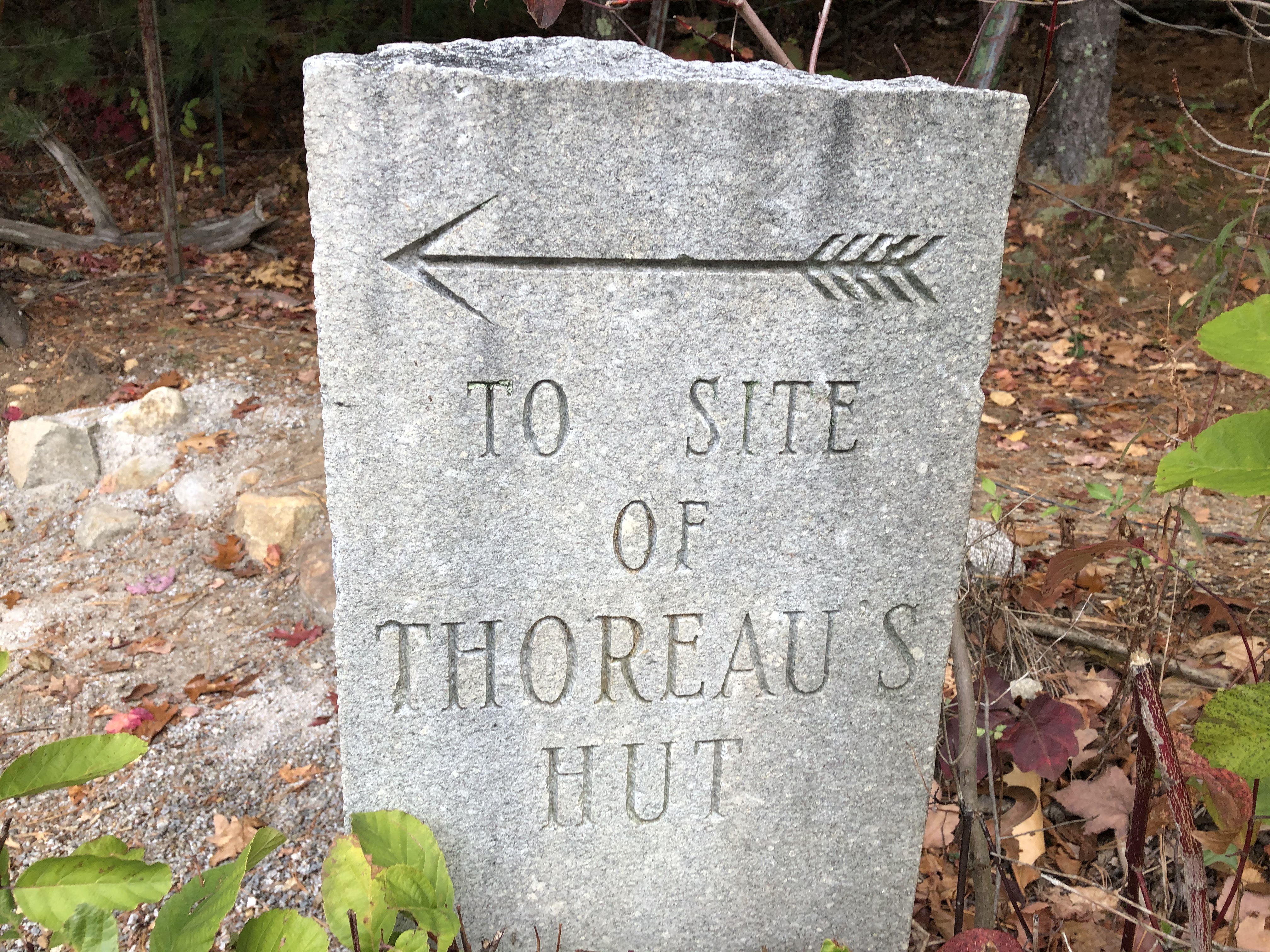
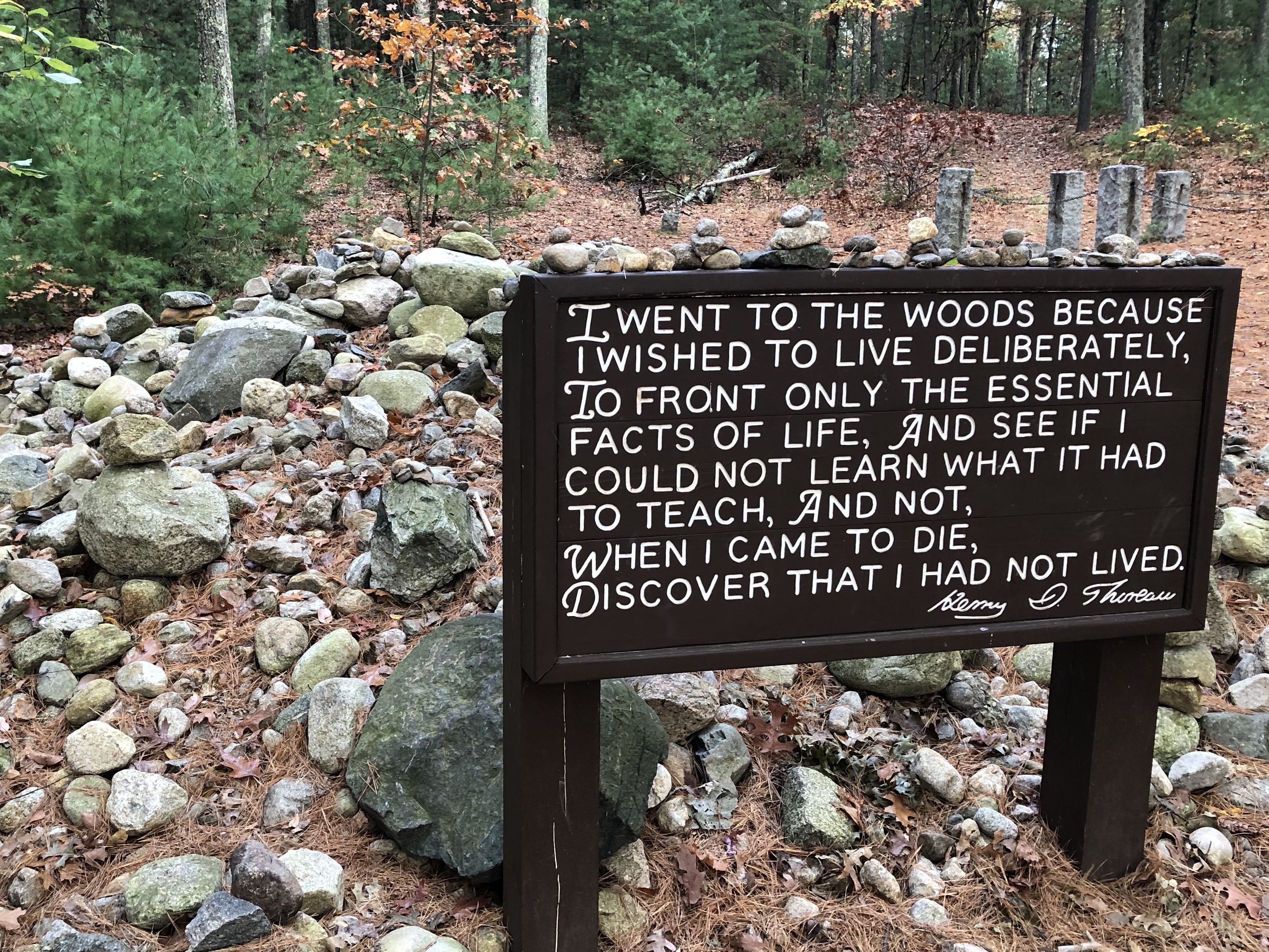
I have stuck the photo of Thoreau’s lodging next to the hut-site photo with his famous quotation and the memorial stones, but in fact the cabin is a replica and is located over by the parking lot across Route 126.

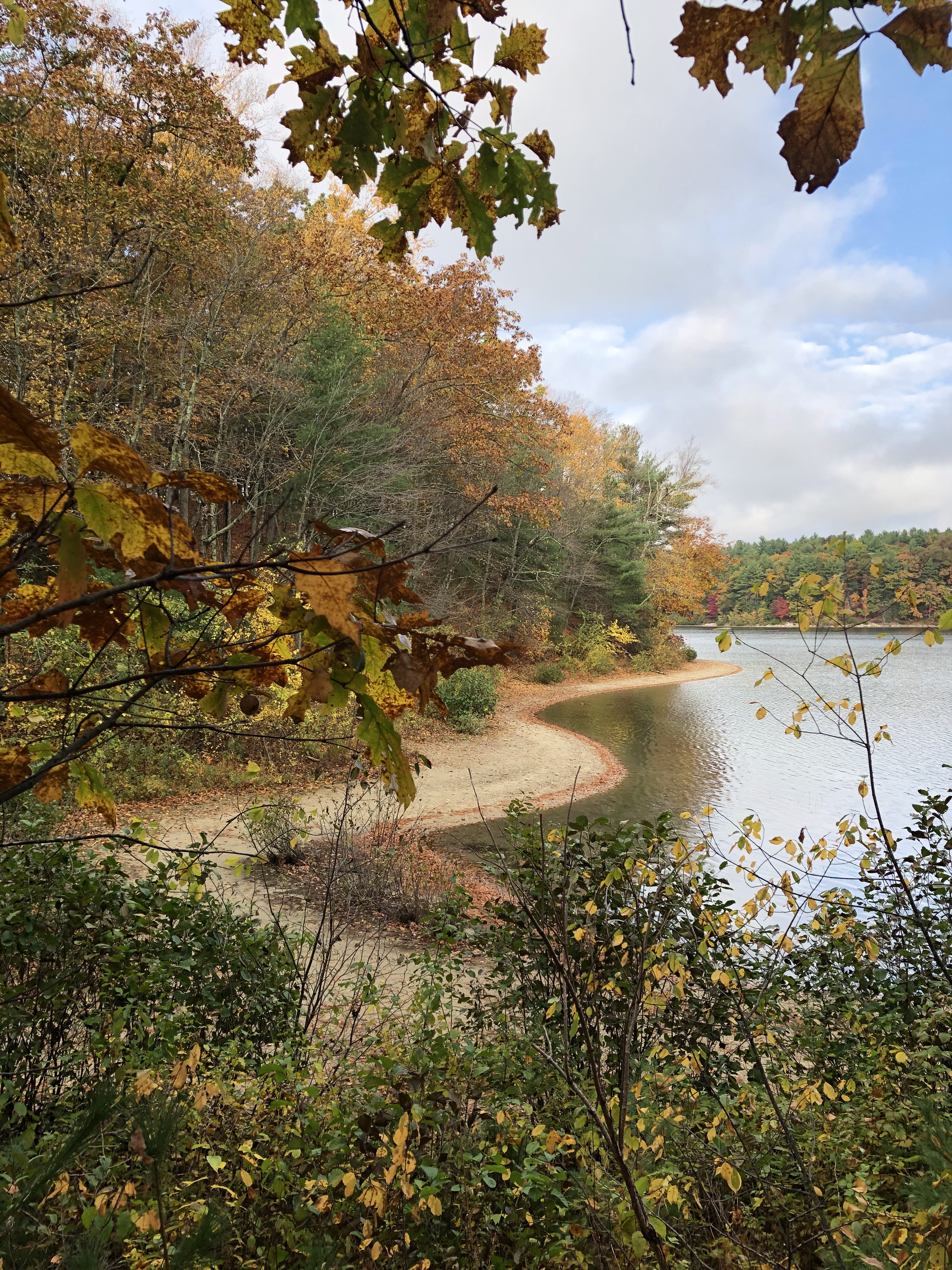
I loved the wavy curve of the shore in one shot. Also the woman meditating by the quiet water.

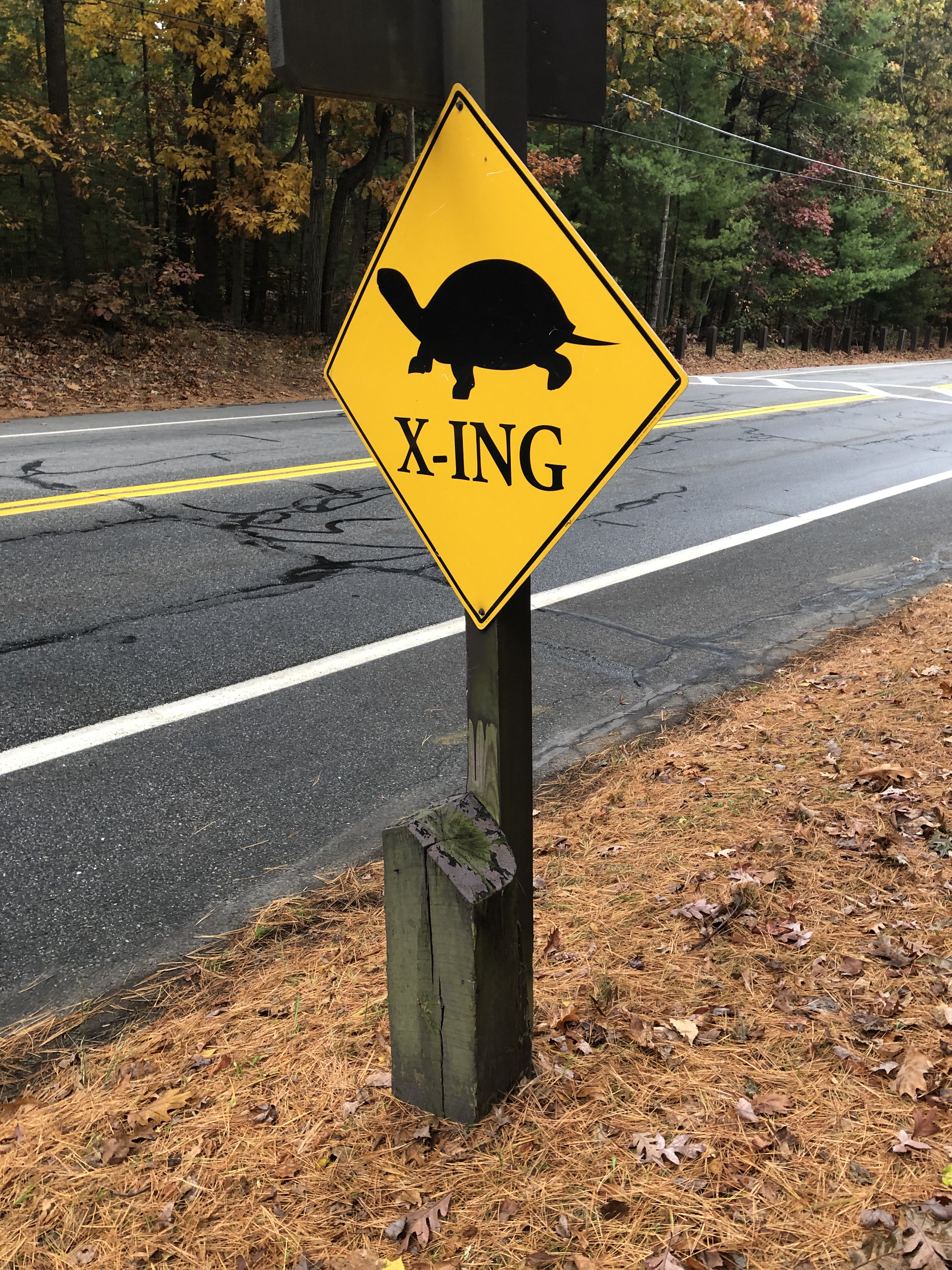
There weren’t any turtles, unless that street sign refers to me. I’m a very slow walker. Fortunately, slow walkers can turn on flashing lights to cross the road and get back to the parking lot safely.

Sometimes the worst offenders against the public good are the first to test a new course. As today’s story shows, it does help if they get a nudge from government regulation.

Sara Miller Llana reports at the Christian Science Monitor about a big polluter in a Canadian mining town that’s decided to cooperate with greening efforts.

“When the Superstack was constructed in 1972, it was the tallest structure in Canada – and the tallest smokestack in the world. At 1,250 feet, it’s visible from every vantage point in the area [and] has long stood as a reminder of the environmental devastation that mining wrought here. But this year the chimney is being fully decommissioned. …

“Whether or not the structure remains a fixture on the skyline when it’s taken out of operation, it tells a powerful tale of renewal. The stack was built as part of an industrial complex that denuded the land here of any kind of vegetation, leaving blackened rocks and lakes without fish. The landscape drew comparisons to moonscapes and barren Martian worlds. At one time the smelters in Sudbury were the largest point source of sulfur dioxide in the world.

“It got so bad that scientists, politicians, industry officials, and the community finally came together to halt the pollution, replant the trees, and restock the lakes. It has been 40 years of toil and triumph, and the story is not over yet. But today Sudbury enjoys some of the cleanest air quality in Ontario. Residents swim and fish in the 330 lakes inside the city’s boundaries.

And those here say the community of 165,000, at the gateway of northern Ontario, offers a lesson in how to break the cycle of conflict that the current climate crisis often creates, pitting industry against the environment. …

“Says David Pearson, an earth scientist and driving force in turning around Sudbury, ‘When one speaks of the Sudbury story, [it] somehow seems local and isolated, and it’s not local and isolated. It’s an example of what we need to modify in order to be able to live alongside a thriving environment.’ …

“Dr. Pearson, who arrived from a coal mining town in northern England, remembers distinctly how bad the air smelled one day in 1969. … ‘I parked in the parking lot, and I had to run in order to be able to hold my breath long enough to get into a building because the smell of the sulfur dioxide was so powerful even in my car. … I had never experienced anything nearly as penetrating a pollution as this.’

“For a child in Sudbury back then, fun didn’t involve climbing trees or playing hide-and-seek in the forest. Young people like Dave Courtemanche, who went on to become mayor, clambered over rocks. There was no greenery to be found in his neighborhood or at his school. …

“On a hillside, he and classmates carved out an acre of land and limed and fertilized it. As tufts of grass began to poke through, he recalls a feeling that might be comparable to children of the tropics seeing their first snowflakes. ‘Looking up and seeing a green patch emerging from the dead earth was nothing short of a miracle,’ he says. … Mr. Courtemanche was unwittingly among the first volunteers in one of the largest regreening efforts in Canadian history. …

“Laurentian University was established in 1960. ‘Nobody was going to say anything against the company, essentially,’ says Peter Beckett, an ecologist at the university and chair of the city’s advisory panel on regreening. ‘And so the university was kind of the first independent thing in the town, and people started asking questions: “Can one do anything about the landscape?” ‘ … 

“Dr. Beckett and Graeme Spiers, another scientist from Laurentian University, … have traveled the world [with a roadshow] called ‘Sudbury, 40+ Years of Healing.’ 

“None of this would have been possible without tough regulations, though. When the Superstack was built, mining’s motto for the era was ‘Dilution is the solution to pollution.’ New technology and evolving processes helped reduce emissions in Greater Sudbury, but the Superstack dispersed them further afield, to neighboring provinces, and as far as the United States and Greenland. …

“The provincial government developed the Countdown Acid Rain program, which forced Inco and other major polluters in 1985 to cut emissions by more than 60% in under a decade. The companies balked at first.”

Read how they eventually not only got on board but decided to do more than required, here.