Feeds:
Posts
Comments

3776Photograph: OST Collective
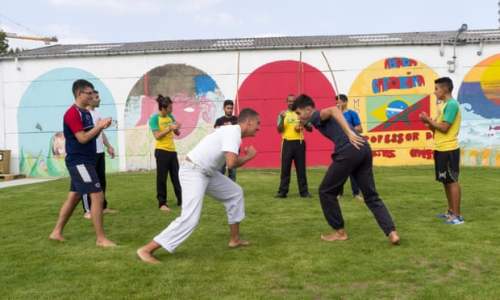
A Brussels nonprofit that reactivates abandoned buildings offers “free space to whoever wants to organize regular activities that are open to all.” Here you see young people practicing capoeira, an Afro-Brazilian martial art, in one of the free spaces.

When I had lunch with Kai recently, we talked about his work investing in real estate for a publicly traded Chinese company. Progressive by nature, he tries to ensure that any gentrification of an urban neighborhood honors the needs of the local community. It’s not always easy.

I thought of Kai when I read about a Belgian approach to managing space during the period between abandonment and development.

Laurent Vermeersch writes for the Guardian, “When industrial activity moves out of central urban areas, property developers tend to move in quickly to build high-end housing. But things don’t necessarily have to turn out this way. With financial support from the city authorities, a group of enthusiasts in Brussels turned exactly this kind of site into a socio-cultural activity centre to benefit local youth.

“ ‘Young people need space. Space to play, party and express themselves, but also to experiment, fail and learn. The problem is that access to space is not democratic,’ says Pepijn Kennis, a 27-year-old member of Toestand (meaning ‘state of being’), a Brussels non-profit that specialises in the reactivation of abandoned buildings and places. ‘We give free space to whoever wants to organise regular activities that are open to all.’

“Toestand’s biggest project yet is Allée du Kaai, a complex of several warehouses and open space along the Brussels canal, a rapidly changing part of the city. Just across the street is Molenbeek … which suffers from high levels of poverty and unemployment. Although much of the area surrounding Allée du Kaai is marked by deprivation, with families cramped into tiny housing units without access to good public space and services, there are also pockets of gentrification. … Toestand’s goal has been to bring together different population groups in a city facing growing inequality.

“The Allée du Kaai site has been active for about two years. … Walking around it on a busy day, you can feel a sense of creativity and potential in the air. There’s a bike repair workshop taking place, as well as a cooking class. Elsewhere kids are skating, or learning to print on T-shirts. A local band is rehearsing in a back room. There is even a tiny cinema in a former city bus. Others are playing ping-pong, strolling on the waterfront, or just hanging around against the backdrop of big graffiti walls. …

“Toestand is actually paid by local authorities to manage the site. ‘We have a contract with the Brussels Region Environment agency,’ says Kennis. ‘They are planning to make a park here, but that’s not going to happen anytime soon, so in the meantime they wanted to do something meaningful with the place.’ …

“As is the case in many other cities around the world, pop-up culture has taken root in Brussels – but many examples tend to be very commercial. … The kind of social calling that Toestand brings to the table, however, can probably only exist with support from city authorities. Private owners are usually extremely reluctant to make buildings public, even if they’re abandoned. They fear the temporary occupants won’t vacate the place as soon as more lucrative plans take shape. Allée du Kaai is also exceptional in the sense that the land it occupies will remain wholly public after Toestand’s activities move on, because the buildings will give way to a park. …

“To bring together different people in Allée du Kaai, Toestand decided to work together with associations active in local communities, but at first it wasn’t easy to engage people from the neighbourhood and build a network. The skate park, however – as well as hip-hop and breakdance events – proved helpful in attracting a variety of young people.

“Another people-connector are the rabbits on the site. ‘They were brought here by Ismaël, a local teenager, and his dad,’ says Kennis.

“ ‘They were keeping rabbits on the balcony of their tiny flat and asked to bring them here as soon as they heard about our space. One day the chef de cabinet of the regional minister of environment was visiting and started talking with Ismaël. Turned out they both know a great deal about rabbits, so they talked for quite some time about how to feed them. This is at the heart of our philosophy: creating a space where people can meet and interact. Even people who’d probably never cross paths in the normal world.’ ”

More at the Guardian, here.
merlin_142430100_e8839457-7a73-4bdd-b80e-65b68ecfaa81-superjumbo

Photo: Jeffrey Gettleman/The New York Times
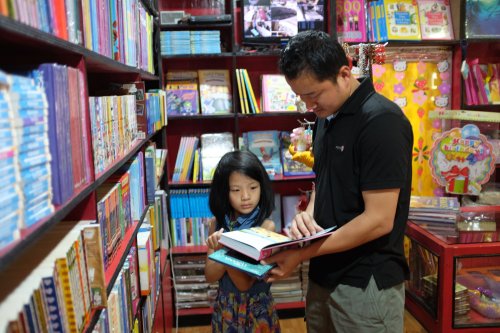
Customers browsing through books in Thimphu, Bhutan. Literacy is growing in the isolated Himalayan country.

Bhutan is a small Himalayan country best known for its focus on Gross National Happiness. I know two other things about it, and they are contradictory. One is that the Hindu Nepalese ethnic minority gets so little happiness there that many end up in refugee camps in India for decades.

But the other thing I know is that Suzanne found Bhutan to be a magical place when she traveled there after her time as vice president of Red Envelope and just before founding Luna & Stella. A Buddhist monk in Bhutan even provided her with a name for her first-born. (She translated it into Swedish and used it as a middle name.)

Nations are complicated.

Here is a recent article I liked about Bhutan’s growing literary culture. It’s by Jeffrey Gettleman at the New York Times. “Not long ago, when Bhutan’s government tried to enroll children in school,” he writes, “parents hid them in the attic and bribed government agents with butter and cheese to go away. Families needed their children as field hands. The last thing they cared about were books.

“But … literacy is taking root across these deep green mountain valleys — it’s now around 60 percent, compared to 3 percent in the 1950s — giving rise to a surprising underdog literary scene.

“The number of bookshops is increasing; there are around a dozen in the capital, Thimphu, and a few more in far-flung districts. Bhutanese writers are publishing books more than ever before — fantasy novels, poetry, short story collections and especially folklore. Each August, Bhutan hosts an international literary festival. …

“It’s a delicate dance of letting in outsiders without getting steamrollered. Historically, Bhutan has sealed itself off, a Shangri-La nestled in the highest, snow-capped mountain range in the world. Before the 1960s, few foreigners set foot here; it was only in 1999 that television was allowed in. …

“This new generation of Bhutanese writers and novelists see themselves as occupying a special role: as guardians of their nation’s culture. Many are relatively young, in their 30s and 40s, and love to reminisce about growing up in villages without radios or TVs or even roads, wearing traditional clothes and eating traditional foods (such as hard cubes of yak cheese the size of Starburst candies). They feel an urgency to write about the old ways deep in the mountain villages before that lifestyle totally disappears.

“ ‘Create?’ asked Tshering Tashi, a writer, journalist, tour guide and co-director of the Mountain Echoes Literary Festival. ‘That’s a luxury. Our foremost job is to record.’ …

“Mr. Tashi, 45, is determined to track down the last of the traditional shamans and spiritual hermits — the custodians of Bhutanese legends — and write their stories, not his, before they take them to the grave. On one mission, he hiked two weeks into the mountains where no roads reach; he finally found his target, an old hermit who had been living by himself for 70 years. …

“Gopilal Acharya, 40, is a poet with dark eyes, a natty beard, crisp plaid shirts and a slightly coiled vibe. He writes in English, like most Bhutanese writers, because that is what he studied in school. (Several indigenous languages are spoken in Bhutan but relatively few books are printed in them.) …

“Mr. Acharya is passionate about Bhutanese folklore. He wrote a book of children’s tales that celebrate a way of life rooted in isolated hamlets where even today, on windswept mountainsides, people till fields of buckwheat with yoked oxen and wooden plows.

“ ‘These stories are how we are anchored as a society,’ he said. ‘We don’t have military or economic power. Our culture is all we have.’ ” More here.

For yet another angle on Bhutan, check out this Washington Post article on why some residents hate the nasty politics of their new democracy so much, they are pining for the old days — and the “absolute monarchy under a beloved king.”


merlin_142511841_c0acf840-eaa7-49c5-a8ce-88b3071b3fa1-superjumbo

Photo: Nathaniel Brooks for the New York Times
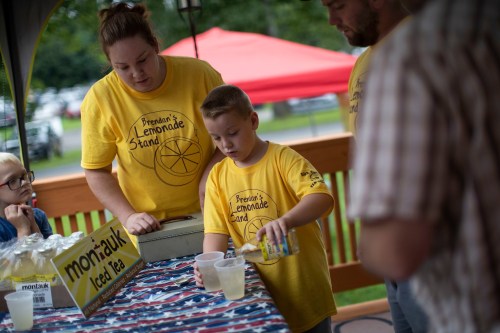
Jodi Mulvaney and Sean Mulvaney watch as their son Brendan Mulvaney, 7, served lemonade to a customer in Ballston Spa, N.Y. When the health department shut down the lemonade stand in July, an uproar ensued.

Pity the poor bureaucrat just trying to do a job! Nobody is glad to see you. But here’s a tip for for state health inspectors everywhere: Never mess with a kid’s lemonade stand.

As Tyler Pager reported at the New York Times in August, “When a 7-year-old boy’s lemonade stand was shut down by a health inspector [in Ballston, NY] last month, it became the talk of the town … and the roadside drink entrepreneur’s photo was splashed across newspapers around the country.

“But, at the end of the day, Brendan Mulvaney just wanted to sell lemonade. So, on [August 18th] Brendan and his family reopened the lemonade stand for one more day. Instead of raising money for a trip to Disney, as Brendan had planned to do the first time around, he and his family sought to capitalize on his newfound fame to raise money for a local family in need.

“Last month, Brendan set up his lemonade stand on the side porch of his house, just as he had done for the past two years during the Saratoga County Fair. This year, Brendan hung new signs, printed by a family friend, and with the help of his parents, added water and snow cones to the stand’s menu.

“But an inspector with the state Department of Health soon told the Mulvaneys that they needed a permit because their venture was similar to those of permitted vendors at the fair, said Jill Montag, a health department spokeswoman. … Brendan’s lemonade stand closed.

“But after Brendan’s dad, Sean Mulvaney, posted on Facebook about the interaction with the health inspector, the news spread quickly, leading [Gov. Andrew] Cuomo to issue a statement that he would personally pay the fee for any necessary permit. The Department of Health later clarified that Brendan would not need a permit if he wanted to sell only lemonade. …

“On Saturday, Brendan’s lemonade stand was back in business. Coinciding with the World’s Largest Yard Sale at the Saratoga County Fairgrounds, Brendan raised $946 for Maddy Moore, a 12-year-old battling Blount’s Disease, a growth disorder affecting bones in her lower leg. …

“By noon, as elected officials and media outlets descended on the Mulvaney’s porch, Mr. Mulvaney said he was worried the attention was distracting from the ultimate goal. … Mr. Mulvaney said, ‘My son’s loving it. But now we just got to get back to selling lemonade and try to raise as much money for Maddy.’ …

“State Senator James Tedisco introduced ‘Brendan’s Lemon-Aid Law,’ which would exempt people under the age of 16 who have lemonade stands from the health department’s permit requirements.

“ ‘When I was kid, probably half the people here had lemonade stands in front of their homes,’ he said. ‘Nobody ever complained.’ … The mayor of Ballston Spa also visited and presented Brendan with a key to the city.

“The buzz around Brendan’s stand achieved the goal the Mulvaneys had hoped for: customers. … As for next year, Brendan plans to resume operations for a fourth year. But, next time, he will return to a simple menu. Just lemonade.”

More at the New York Times, here.


An Artist of Pies

43wx4hiph47t7f5fygl42o2sla

Photos: Lauren Ko
Blueberry ombre spoke pie. Lauren Ko creates amazing pies with geometric designs and photographs them both before and after baking.

Cooking is an art. Or it can be. My daughter-in-law and her mother have proved that to me. Their art is expressed in the blending of subtle flavors. A baker I just learned about expresses her own art in pies that feature geometric designs.

Annaliese Nurnberg at the Washington Post displays an array of pie photos that are hard to believe.

“Lauren Ko came from a family of ‘phenomenal eaters,’ ” writes Nurnberg. “She grew up watching her mother and grandmother make cakes and cookies, but to her recollection, nobody in her family ever made a pie. …

“It was two years ago that she decided to make her first pie. Instead of sticking with the current trends, she wanted to create pies with geometric patterns, straight lines and contrasting colors. She started baking more and posted photos of her creations to … a public Instragram account, @lokokitchen.  …

“With a background in social work and nonprofit administration, Ko had been working as an executive assistant before she quit her job to focus full time on creating pies and tarts. She now teaches workshops and classes throughout Seattle, flies to food events in other cities, and even got the opportunity to bake with Martha Stewart on her show ‘Martha Bakes.’ …

“She says she has always loved art but has no professional training. She finds inspiration everywhere, from bathroom tile and textiles, to lawn chairs and bamboo purses, and saves images to give her ideas for future pies.

“Ko has no plans to sell her pies because her designs are so labor-intensive that they would be impossible to mass-produce. But, more important, she enjoys the freedom of being able to create something new every time she steps into the kitchen to bake and wants to hold on to that freedom while she continues her art.

“ ‘I’m going to ride the wave as long as it takes me. You know, the nature of social media is that it changes so quickly, and you never know what’s going to happen with it,’ Ko said. ‘I mean, all of this could go away tomorrow, but as long as I’m able and have more ideas for designs and flavor combinations, I’m going to continue baking and posting.’ ”

A Martha Stewart article has more: “Her inspiration ranges from architecture and string art to wicker purses and bathroom tiles. ‘I’ll see someone walking down the street with a cool shirt and file that away in my memory bank,’ says Ko. ‘Anything with geometric shapes and straight lines catches my eye because they’re easiest for me to replicate with dough and fruit.’

“She recreates one of her most popular pies on [a September episode of “Martha Bakes,”] her signature blueberry spoke, which has strips of dough fanning out in a swirled wheel pattern.”

Great pictures at the Washington Post, here, and at Lauren Ko’s own website. Since Ko makes only one pie at a time, I do wonder who gets to eat it. I’m getting hungry.

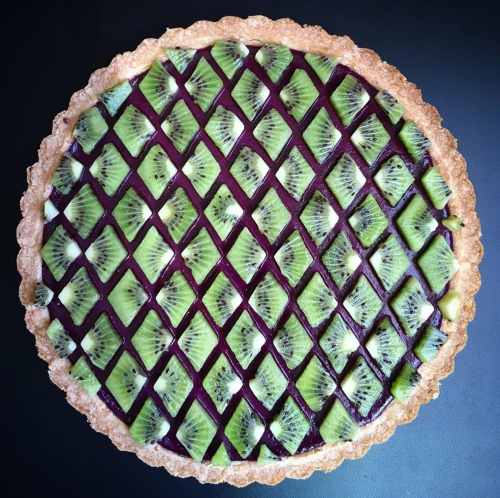
Blueberry tart with kiwi diamonds.

k4ko4hjvyazvjkr6zar45hiftu

6Photo: Fondazione Manifesto
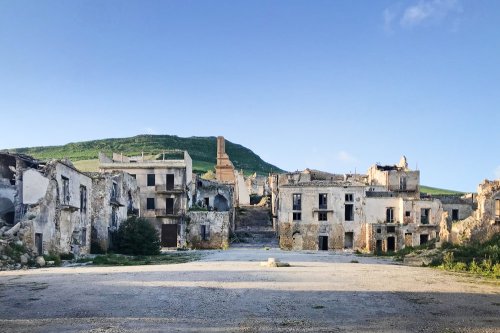
Poggioreale, Sicily, one of the towns destroyed by a 1968 earthquake. A public art project has helped to heal the region’s survivors, many of whom were still suffering from depression decades later.

I’ve blogged a lot about the healing power of various arts in various contexts, but I think this is the first post about what art can do for a traumatized region after a natural disaster. The story takes place in Sicily, where a 1968 earthquake flattened an already impoverished region.

Patricia Zohn writes at artnet news, “On a recent day this summer, I [descended] into the rural, arid Belice Valley. I was accompanied by Zeno Franchini of the Fondazione Manifesto, an advocacy group that leads tours of the region, which was devastated by the 1968 earthquake in Sicily. …

“More than the number of people who died (approximately 400), or the number rendered homeless (approximately 100,000), the earthquake exposed grave fissures in the socioeconomic and political fabric of one of Italy’s poorest regions — disparities that linger to this day.

“While thousands of earthquake victims lived outside Gibellina, an isolated agricultural community, in two shanty towns with barebones infrastructure, in 1970, the National Institute of Social Housing in Rome, determined, after numerous plans for reconstruction were abandoned, to build an entirely new city, a Gibellina ‘Nuova’ for the victims at a site 11 miles from the ruins. …

“By 1979, scant progress had been made due to government corruption, the Mafia influence, and red tape, and victims were still living in dire conditions. That’s when Gibellina’s flamboyant, powerful gay Mayor, Ludovico Corrao, invited a number of leading Italian and German artists and architects to participate in a rescue mission. …

“Though there was no budget for art or culture, Corrao had already begged and borrowed to found the Orestiadi performance festival, just outside the ruins of Gibellina, with the help of performers like John Cage and Philip Glass. Emilio Isgrò, an artist and dramatist, described a wind-chilled night of 1983

‘where artisans, sheep farmers, housewives, anti-Mafia judges and theater directors and personalities from all over Europe sat together to watch’ his performance in the festival. …

“The concrete Utopian city of Gibellina Nuova [became] an open-air laboratory for assessing the healing capabilities of public art. Today, 50 years since the earthquake struck, many look back on Corrao’s radical experiment in civic engagement, rehabilitation, and unification as a cautionary tale. But new efforts are now underway to realize a more pragmatic version of [his] utopian dream.

“ ‘The city needs to really become an Art Town,’ says Alessandro La Grassa, president of the Center for Social and Economic Research of Southern Italy, the organizational heir to the early activist efforts. He envisions it as a place ‘where artists live or stay and where empty buildings and spaces start to find a new function.’ …

“Today the region is a symbol of hope. A newly revitalized combination of social activists, municipal agencies, educational institutions, and private support is finally bringing the unique art interventions of more than five decades in the Belice Valley — and especially the city of Gibellina — to the attention of a wider public. …

“Tours of Poggioreale, Burri’s Cretto, and Gibellina Nuova are available until November 14 through fondazionemanifesto.org.” More here.

I wonder how public art might by employed to rebuild after a hurricane like Michael. Something for art leaders in Florida to think about.

merlin_141879969_eeff1f2b-bf6b-42a2-be3f-3bd75ef7ae51-superjumbo

Photo: Gabriela Bhaskar for the New York Times
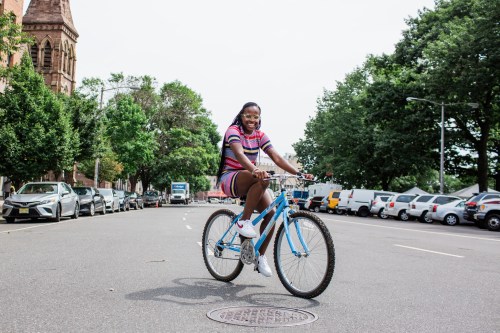
A graduate of Rutgers University in Newark is teaching girls to ride bicycles as part of a program run by the organization she founded, Girls on Bikes.

I love reading how a small gesture or comment can lead to something big in a person’s life. It’s all about the Power of One. In this story, a bystander said something upbeat to Kala La Fortune Reed when she was biking to class, and it led to a movement.

Liz Leyden writes at the New York Times, “The training wheels were off. The young woman with a bright smile and golden sunglasses told Kaneisha Marable she didn’t need them. The little girl believed her.

“Kaneisha pedaled a wobbly path up the block beside Lincoln Park. House music thumped from the stage to her left, a festival underway, but the 8-year-old girl paid it no mind. Her eyes darted between the pavement ahead and Kala La Fortune Reed, the woman jogging by her side.

“The bike tipped. Kaneisha teetered. Finally, the wheels began to spin. Ms. La Fortune Reed let go, watching girl and bike move farther away.

“ ‘Yes, she’s got it,’ she exhaled. ‘You got it!’

“The victory came on a [Sunday in August] at a learn-to-ride clinic run by Girls on Bikes, a community group aiming to achieve pedal equality for a new generation of girls and women in Newark.

“The effort began in 2016 when Ms. La Fortune Reed rediscovered her old bicycle and started riding everywhere: to classes at Rutgers University in Newark, thrift shops and parks throughout the city.

“One day, a man called out to her. Keep it up, he said. There aren’t enough girls on bikes.

“Ms. La Fortune Reed scanned the streets and realized he was right. … She recruited Maseera Subhani and Jenn Made, friends from Rutgers who shared her love of cycling and for Newark itself; the idea of using bicycles to spread empowerment resonated with each of them.

“The trio juggled full-time classes and part-time jobs to get the group going. Ms. La Fortune Reed interned with a local bike mechanic and learned how to repair bikes and build them from scratch. Ms. Made created a curriculum for school workshops. Ms. Subhani found graphic designers to make fliers and T-shirts, and reached out to other community groups to collaborate. …

” ‘We wanted to create a sisterhood,’ Ms. La Fortune Reed said. ‘We go really slow. We have fun. We’re doing this to build relationships, to build a movement.’ …

“Ms. La Fortune Reed said Girls on Bikes tries especially hard to reach girls in middle school.

“ ‘We try to catch them at that age, to build up bicycling and the idea of empowerment and leadership, before peer pressure hits,’ she said.

“In June, the group taught a four-week workshop for sixth- through eighth-grade girls at Marion P. Thomas Charter School. …

“ ‘Before, there was a negative connotation for a lot of them — this idea that if you rode a bike it meant you couldn’t afford a car, that you weren’t cool,’ [the teacher] said. ‘But having that reimagined by these strong, stylish young women, the students really bought into it.’ …

“More than 80 children, including 45 girls, participated throughout [the August bike] weekend. Some didn’t need any help, just a nudge to put on helmets. Simply watching them enjoy the bicycles made Ms. La Fortune Reed happy.

“But the moments when she saw girls growing in their confidence — testing out no-hands, standing on their pedals, letting go of training wheels — meant something more. ‘We’re leaving a memory in their lives that they can accomplish anything,’ she said.

“When Kaneisha Marable realized that she was riding on her own, she looked back at Ms. La Fortune Reed, astonished. She rode and rode and then ran off, returning a few minutes later with her mother. She climbed back on the bicycle.

“ ‘Look, Mommy, look! Look what I learned to do!’ ”

More at the New York Times, here.

vvzodywnvei6rlikbya67or4yePhoto: Charlotte Kesl/For The Washington Post
Leroy Wilson outside his home in Marianna, Florida, a day after Hurricane Michael hit the panhandle.

I believe that when a hurricane is coming and you’re told to evacuate, you should evacuate. But this story about a homeowner who refused to leave is pretty great anyway.

Like the wolf in the “Three Little Pigs,” Hurricane Michael huffed and puffed, but the homeowner’s brick house not only stood strong, it welcomed neighbors whose houses were not so strong.

Read what Patricia Sullivan and Frances Stead Sellers wrote at the Washington Post about why the Marianna, Florida, native couldn’t bear to leave his house. It adds a whole other level to the story.

“The modest one-story brick house on Old U.S. Road,” they report, “meant more to Leroy Wilson and his family than a roof over their heads.

“Their ancestors lived on this land as slaves before Wilson’s grandfather acquired five acres here in 1874, right after emancipation. … So as Hurricane Michael ripped the top off a 50-year-old dwelling next door, brought a tree down on Leroy’s daughter’s home and snapped nearby pine trees like pencils, the Wilsons stayed put in their brick house on Wednesday, opening the doors to neighbors whose homes were succumbing under Michael’s powerful winds.

“ ‘I wasn’t going anywhere,’ said Wilson, 74. …

“Sixty miles from the coast in Jackson County, this city of about 10,000 rarely suffers through hurricanes. Known as ‘The City of Southern Charm,’ Marianna has experienced storms that have taken down trees and power lines, but it has been largely spared the devastation regularly wrought in coastal towns. Hurricane Michael was different.

“ ‘It hit everybody hard,’ said Annell Wilson, Leroy’s wife. ‘We prayed a lot.’

“[Leroy’s son] Lamar, an assistant professor at the University of Alabama in Tuscaloosa, said he dismissed class around 5 p.m. Wednesday after getting a text from his sister describing the devastation in his hometown and he began making frantic telephone calls to his relatives. He knew they would not leave their land.

“ ‘To be able to own several homes you built with your hands, to protect the home your mother built, that your grandfather toiled for, it’s noble,’ Lamar said.

“And in this case, dangerously noble. His sister lost her home; his brother’s house is barely habitable.

“But the little brick house protected the Wilsons and the people they took in. It lost its water pump and its shutters, and the wind drove water in under the window panes. But the structure stayed intact — and by the end of the evening, more than a dozen members of five families were seeking shelter there.

“ ‘That’s what we do. We all help each other,’ said Annell Wilson, 73, Lamar’s mother, describing how she settled her unexpected visitors and got them fed, and then stuffed towels along the windows to mop up the water that seeped in.”

More at the Washington Post, here. No word on a wolf coming down the chimney or the canny homeowner setting a boiling pot in the fireplace to welcome him, but I wouldn’t have been surprised.

Don’t you love it when life imitates art? (Having said that, I still urge you, “Don’t sit out a hurricane when told to evacuate.”)

Tribes on the Edge

tribesonthebrink

Photo: The Explorers Club

You remember the great marine explorer Jacques Cousteau? Well, his granddaughter has grown up to be an explorer of vanishing cultures, and recently she made a movie about endangered tribes in the Amazon.

The film by Céline S. Cousteau is called Tribes on the Edge, and according to its website, it’s “more than a narrative of tribal reality in the Amazon [as it] suggests the universal story of our human tribe and how our future is interwoven with each other and with nature. This is a story that invokes the critical importance of respect and care – for land, culture, and humanity. …

“[The film] explores the timely topics of land threats, health crises, and human rights issues of indigenous peoples, expanding the view to how this is relevant to our world. More than a film, it has grown into a movement driven by a passionate effort to enact tangible impact in the Javari [Valley of Brazil] through education, advocacy, and activism. …

“Spanning more than 85,000 km2 (an area the size of Portugal), the Vale do Javari is the second largest indigenous territory in Brazil and is home to 5000 indigenous peoples from 6 tribes as well as the largest population of people living without any contact with the outside world in the entire Amazon and some say the world.

“Though the Javari has been designated for the tribes living there, there is looming pressure to increase harmful resource extraction which in other parts of the Amazon has led to environmental degradation. … It is estimated that the Amazon produces 20% the world’s oxygen and releases 55 gallons of water into the Atlantic ocean every second.”

Read more at the website, here, about what the International Union for Conservation of Nature calls “one of the irreplaceable areas of our planet.” And at the website for New York’s Explorers Club, which screened the film this past April, you can also can read about speaker Beto Marubo. A Marubo Indian, he has served with the national Indian foundation of Brazil, FUNAI, an initiative threatened by the likely election of someone Wikipedia calls “a polarizing and controversial politician” to the country’s presidency.

The movie is more timely than ever.

beto_250

Remember this September post on the way benches can civilize a town? Grace promised to send an addendum from Maine, and it was worth waiting for.

If you have others, send them along.

2018-Maine-bench-pic-by-G-Gregor

blackorpheus01

I’ve always been interested in other countries and cultures and have tried to read books from afar if they are written in English or translated into English. Years ago, the works of Africa writers Chinua Achebe and Wole Soyinka were among my favorites. I have continued to read other African writers, but none have interested me as much as those two.

Recently I learned that some new authors have complained that African literary magazines — often the place to launch a writing career — have not been open to younger voices.

An article in Okay Africa provides an overview of the magazines that publish African literature and explains why the number of outlets has been increasing.

Tadiwa Madenga writes, “African literary magazines and journals don’t just shape literary culture, they offer the most rebellious responses to political and social movements. They not only respond to the cultures they’re in, these magazines also create distinct cultures of their own that reflect the personalities of their editors.

“Some are experimental and bold, some are satirical and polemic, some can also be aesthetically conservative, but they all find beautiful ways to confront the most pressing issues in society. Magazines archive stories that might not always gain the attention that books will, but are sometimes the most thrilling work in a writer’s career. Here are five of the most notable literary magazines that have shaped contemporary African literature.

“Based in Nigeria, Black Orpheus was groundbreaking as the first African literary periodical on the continent publishing works in English. It was founded in 1957 by German editor Ulli Beier, and was later edited by Wole Soyinka, Es’kia Mphahlele, and Abiola Irele. The magazine stopped printing in 1975.

“At a time when African writers needed spaces where they could simply gather and enjoy each other’s works, the magazine was started to promote African literature, publishing the works of literary giants like Chinua Achebe, Ama ata Aidoo, and Christopher Okigbo in their early career. The best part of the magazine was that it introduced literature from French, Spanish, and Portuguese speaking regions to an English speaking audience …

Transition was founded [in 1961] by Rajat Neogy in Kampala when Uganda, like other African nations, was gaining its independence. Like Black Orpheus, the magazine published notable writers like Achebe, Ngugi wa Thiong’o, Nadine Gordimer, and Taban lo Liyong when they were new writers.

Transition … has had fearless takes on politics that eventually forced it to be transferred to Nigeria when Soyinka was editor, and later to the U.S. Transition is now housed at Harvard University and is still producing provocative work …

Kwani? began after a group of Kenyan writers, artists, and journalists became frustrated with the slow publishing scene in the country that mostly accommodated earlier writers like Ngugi from the Transition and Black Orpheus generation. A new publication was created in 2003 for emerging writers that has led to the incredible literature we enjoy today from Kenya. The journal has published works by writer like Yvonne Owuor, Parselelo Kantai, Andia Kisia, Uwem Akpan and Billy Kahora.

“Edjabe is a Cameroonian journalist and a DJ who engages literature, music, and politics with a rebel spirit [in the magazine Chimurenga]. Edjabe founded Chimurenga in 2002 in Cape Town at a time where South Africans were having lively discussions about life during and after political and social revolutions. What makes Chimurenga unique is not only the amazing writing that they publish, but the ways the platform evokes other mediums with literature. …

“While the other literary magazines and journals where mostly print magazines, JALADA represents the digital moment where African literature is thriving on online platforms like Saraba, Enkare, and Brittle Paper. JALADA began after a group of writers from various African countries published their work on their own website which became so popular they began receiving submissions from other writers.”

Read more here.

600x600


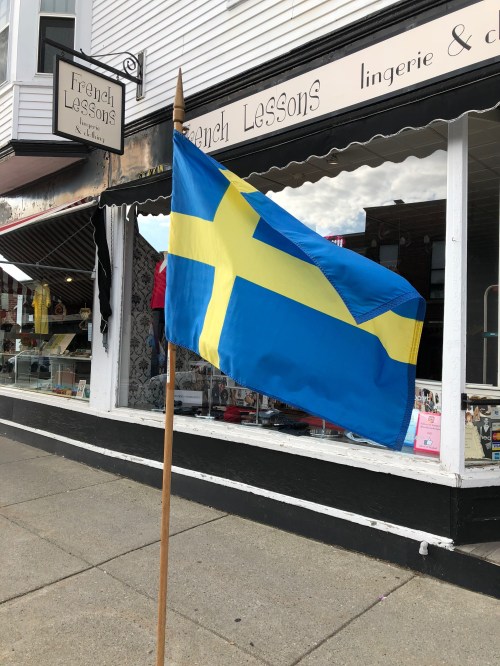
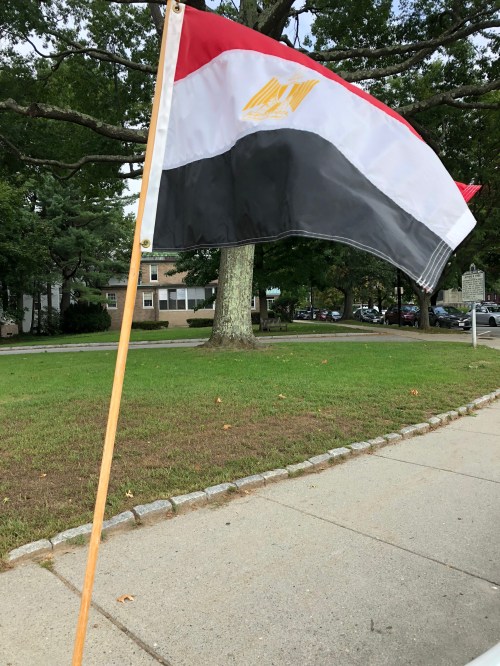
092118-Swedish-flag-on-Peace-Day092118-Egyptian-flag-International-Peace-Day

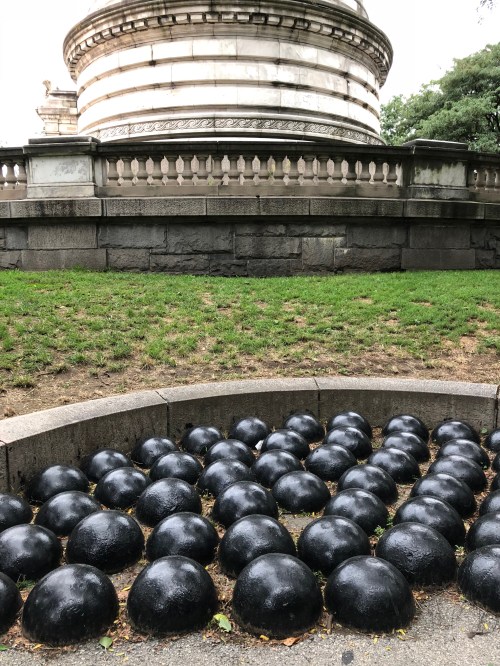
Except for the cannon balls at the Civil War monument in New York City, these photos are all from my walks in Massachusetts.

The town of Concord recognizes the International Day of Peace every year by putting up the flags of all members of the United Nations. This year I sent photos of my relatives’ countries of origin to them — Sweden and Egypt.

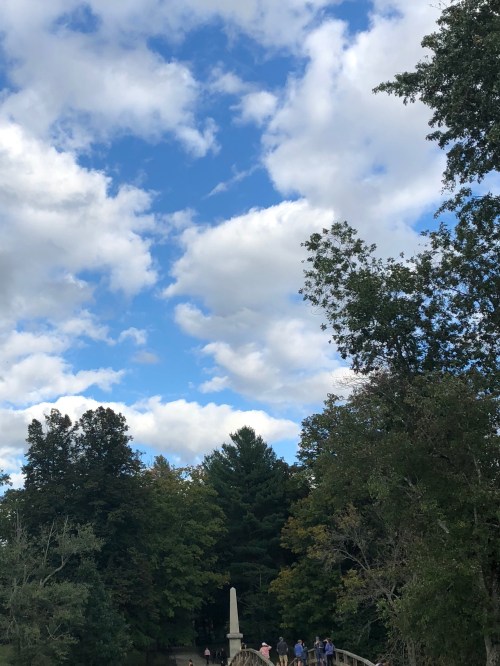
The Old Manse, run by the Trustees of Reservations, is decorating for fall. Its most famous tenants were author Nathaniel and artist Sophia Hawthorne. Tour guides like to show visitors where the couple carved window messages with her diamond ring.

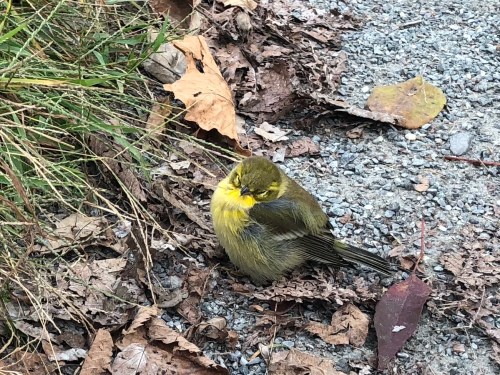
The injured Blackpoll warbler had a tough fall migration and didn’t make it through the night. I did learn from Kim that one should put an injured bird in a “small, warm, dark box for night. If living in the morning, drip a little sugar water into mouth and release.” Something to keep in mind.

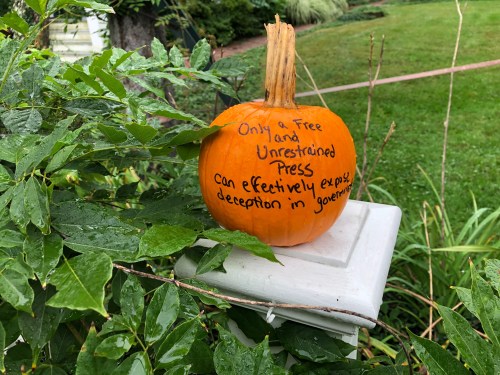
The pumpkin has an important quotation from former Supreme Court Justice Hugo Black about a free press. My neighbor puts 24 small pumpkins on her fence posts every year near Halloween and inscribes something on each. This year the words are from Supreme Court justices, the 19th Amendment (giving women the vote), Massachusetts justice Margaret Marshall (making the state the first to allow gay marriage), and the like.

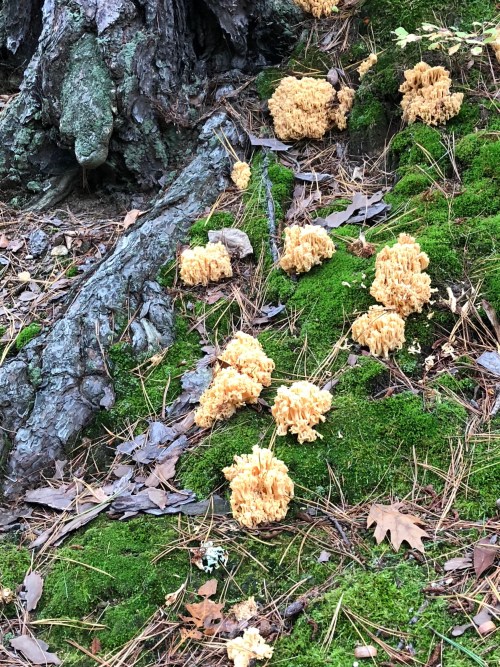
I wind up with another neighbor’s new tree house and a couple fungi photos. There seems to be a huge array of fungi in town this year, some of them very peculiar looking. We also have a lot of mosquitoes. Too much rain?

092918-Old-Manse

092918-clouds-over-North-Bridge

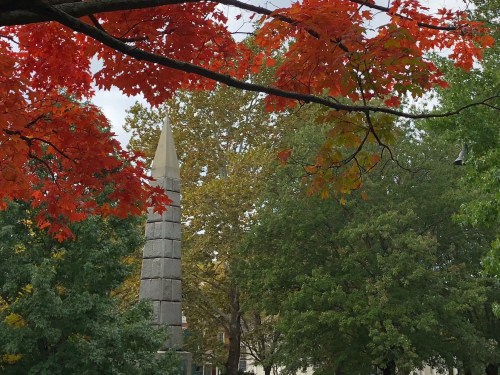
100918-fall-in-ConcordMA

092018-Civil-War-cannon-balls-NYC

092918-injured-Blackpoll warbler

092818-Justice-Black-addresses-free-press-on-pumpkin

100518-treehouse

100918-weird-fungus-in-cemetery

100918-fungi-at-Sleepy-Hollow


skatekitchen_custom-7cb11468e3eaad2e6acb94579b8e6315ed0687dc-s700-c85

Photo: Magnolia Pictures 
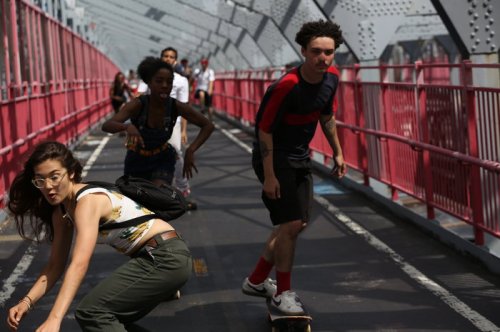
In the film Skate Kitchen, the introverted Camille (played by Rachelle Vinberg, left) finds her tribe of skaters in New York City. The filmmaker found her subjects almost the same way — instinctively.

What I especially loved about this article on making a female-skateboarder movie was the director’s sixth sense. She hears girls on the subway talking in a wildly creative way and experiences vibes that direct her to pursue a new path of possibility.

Lakshmi Singh reports at National Public Radio, “Director Crystal Moselle made waves three years ago when her documentary The Wolfpack won the grand jury prize at the Sundance Film Festival. The film told the true story of six brothers growing up in confinement in Manhattan’s Lower East Side — and it all began from a chance encounter Moselle had with the brothers on the street.

“Her new film comes from a similar place. Skate Kitchen follows a group of teenage girl skateboarders and activists rolling their way through the streets of New York. This time, she met them on the subway.

From the NPR interview:

“I learned to understand my instinct. There’s this thing that happens to me. …  I’m like: Oh, this is something. This is interesting. I just — I have to explore it. …

“I was on the train in New York City. I was on the G train. And I heard this voice that just — you know, sometimes there’s a voice that’s so charismatic, you just have to figure out who’s talking and what’s happening. I mean, that’s how I am. And I look over, and there’s these three teenage girls, and they have skateboards. And Nina [Moran] — she’s telling a story. I can’t remember what the story was about. I think maybe it was about a party she went to or something that happened in the park that day. And she has that kind of voice that almost silences a room where you want to — just everybody stops what they’re doing and they want to see who’s talking.

“And so I — just out of curiosity and out of this instinct that I’ve kind of gained from my past project, I just — I feel like there’s this moment where I sort of know that there’s something there and I have to figure it out. And I went up to them and asked them — I just said, hey, you know, introduced myself. I said, my name’s Crystal. I’m a filmmaker, and I’d love to talk to you guys. Maybe you guys would be interested in doing some sort of video project at some point. [And] — I don’t remember saying this — I said, is there more of you? …

“They’ve found all these really interesting pockets [of the city], and they go to these skate parks, and they have these, like, spots that they skateboard and they just use the architecture of buildings. And you know, people chase them away. And it’s just, like, this kind of really riveting scene. And I would just start hanging out with them and experiencing it myself. They’d even, like, make me jump on the skateboard. They’re like, if you’re going to hang out with us, you have to skateboard. Here’s the board. Skate down the block. …

“The girls actually met through YouTube. They would be commenting on each other’s videos and, you know, that’s how they would create these communities because it’s difficult. Like, if you’re a girl living on Long Island and there’s no other girls around that skateboard, you can go to, you know, a social media platform to find other women that also do the same thing that you do that’s, like, something specific. …

“I think that it’s actually a really positive thing to be able to find people that are, I guess, your tribe. …

“When I was with Rachelle one day — Rachelle Vinberg, who plays Camille. She was skating with all these boys. And they all rolled by, and the little girl [watching the film crew] didn’t notice them at all. And then Rachelle rode by with her hair just like in the wind. It was just an epic moment — she’s, like, carving down this hill. And this little girl, like, stopped in her tracks and just watched her and, like, saw the future.”

More here. I love how this director is drawn by curiosity to pursue things that are unfamiliar and interesting. Having something interesting to think about is apparently as essential to her as food.

merlin_141970665_3226dcb4-ae59-4f88-aa9e-53ad5880d80e-jumbo

Photo: Lisa Marie Summer for the New York Times
A German opera company invited current refugees to be part of its production of “Moses,” lending immediacy to the story of exile.

Powerful stories from any century speak to the human condition in any other century. Thus, for example, the story of exile in the opera “Moses” speaks to the sense of dislocation that today’s refugees experience. To drive home that point, an opera company in Germany has invited current refugees to participate in a production.

Joshua Barone reports at the New York Times, ” ‘We tell the story of Moses because it is actually our story,’ one teenager, a refugee from Afghanistan by way of Iran, said in the Hazaragi dialect to the German-speaking audience at the Bavarian State Opera here on a recent Sunday evening.

“Others chimed in: ‘The story of Moses is also my story,’ they said in French, Kurdish, Greek and Arabic.

“They were the cast of ‘Moses,’ a feel-good yet sobering new production by the Bavarian State Opera’s youth program, written for refugees, children of immigrants and born-and-raised Bavarians.

“In the opera, a mixture of new music by Benedikt Brachtel and adapted excerpts from Rossini’s “Mosè in Egitto” [“Moses in Egypt”], the teenagers tell the story of Moses — common ground for followers of the Bible, Torah and Quran — with Brechtian interludes about refugee experiences and current events.

“The director Jessica Glause, who created the libretto based on interviews with refugees in the cast, has concocted a blend of humor, horror and youthful energy that hardly feels like a didactic documentary about Europe’s refugee crisis. Behind the scenes, ‘Moses’ has provided a way to learn German and make friends — in short, to make the process of migration a little less painful. And audiences have responded favorably. …

“Theater about the refugee crisis has proliferated in Germany since migration into the country reached its peak in 2016. But rarely has the hot-button issue — which continues to threaten Chancellor Angela Merkel’s power and fuel the rise of the far-right party Alternative for Germany, or AfD — entered the realm of opera, much less children’s opera. …

“Ms. Glause, who had volunteered on boats in the Mediterranean, also wrote the libretto for ‘Noah,’ after interviewing many of the same young refugees who are in ‘Moses.’ She described the process — hearing stories of loss, danger and fear from teenagers — as acting as both an artist and a counselor.

“Among the people she spoke with were Ali Madad Qorbani, a young man from Afghanistan who fled to Iran, then Europe, after his father had disappeared; and Zahra Akhlaqi, also from Afghanistan, whose mother came to Europe first while she and her sister waited in Iran, where, she said, they were forbidden from going to school but would dress up like students at home and play pretend.

“Now, their lives are slightly more stable, though just as precarious as any refugee’s. …

“There are still monologues of how and why some of the cast members came to Europe, but much of the material is about reconciling their faiths and cultures with those of Germany — including one humorous passage about trying German beer for the first time. But they also describe how they don’t always feel welcome, such as a scene in which the plagues in Moses’s story give way to one person describing signs near Munich that say refugees overrun Germany like locusts. …

“In interviews, [youth program director Ursula Gessat] and Ms. Glause were quick to say that their job is to reflect the world around them, and that it would be irresponsible to ignore the refugee crisis. Indeed, Ms. Glause said that conservative politicians may change their minds if they met the cast of ‘Moses.’

“ ‘I would tell them to come see this show,’ she said. ‘Come hear these stories.’ ”

More at the New York Times, here.


dsc0221-2_wide-3fcfb07127773efdd138130d9f2491856f240005-s700-c85

Photo: Claire Harbage/NPR
Susan van Rooyen and Moe Kekana of communications firm King James Group were behind the 2-Minute Shower Song project the helped rescue Cape Town, South Africa, from a severe water crisis.

When it’s a matter of life and death, people can cooperate. That’s what we saw in Cape Town, South Africa, this year, when residents threatened with the very real possibility of running out of water were able to cut down enough on consumption to save the day.

And one way they cut down on consumption was by singing in the shower.

In this January report from National Public Radio (NPR), Ari Shapiro explains. “When the drought in Cape Town, South Africa, was worsening in late 2017, one of the country’s leading insurance companies, Sanlam, wanted to help get the word out that people needed to save water. Sanlam’s idea was to make a billboard telling people to cut down on water use.

“But that seemed boring to copywriter Susan van Rooyen and art director Moe Kekana. They’re with the King James Group, the communications firm that Sanlam pitched.

“So van Rooyen and Kekana started brainstorming. Cape Town’s government was asking people to save water by taking showers that lasted two minutes or less. Inspiration struck soon enough.

” ‘What do people do in the shower?’ says 30-year-old van Rooyen. ‘They sing.’

“She and Kekana, 28, came up with something of a musical challenge: the 2-Minute Shower Songs campaign. The team asked South Africa’s biggest pop stars to record new, shortened versions of their most famous songs.

” ‘I remember sending an email where somebody said, “How many do you want?” And I said, “I could live with four or five, but 10 would be the dream,” ‘ Kekana says. ‘And we got 10.’ …

“The idea of 2-Minute Shower Songs is fairly simple: You hit play as you jump in the shower, sing along and finish by the time the song ends. …

“In June — after the city cut down on water usage by more than half — Cape Town officials proclaimed that ‘Day Zero’ had been averted. The term refers to the day it was predicted the city would have had to turn off its taps and distribute rationed water. …

“During this water crisis, everyone had a role to play.

” ‘Sometimes you don’t know what you can do to help within a crisis,’ van Rooyen says, ‘and [the pop stars] were doing what they do best.’ ” More at NPR, here.

I take away the encouraging message that if you contribute whatever you’re good at to save your place, you can be successful.

Image: Gifer

2idr

3709018635_ecef9dc046_b

Photo: Tom Blackie via Flickr
The Avenue of Sphinxes on the Al-Kabbash road in Luxor. Recently, a previously unknown sphinx was discovered by construction workers.

Every day new discoveries. Today I have a story about a recent discovery in Egypt. But first, to refresh your classical memory, the mythological creature called a sphinx has the body of a lion and the head of a human. Although the most famous sphinx story — the one that involved Oedipus — took place in Greece, all the statues of sphinxes are in Egypt.

Naomi Rea writes at artnet news, “A previously unknown statue of a sphinx has been discovered in Egypt, the general director of Luxor Antiquities, Mohamed Abdel Aziz, announced [in August].

“Construction workers upgrading the historic Al-Kabbash Road between the famous Luxor and Karnak temples stumbled upon the find, the English-language Egypt Today reports. …

“The Ministry of Egyptian Antiquities is developing a way to lift the newfound statue from its resting place. … In the meantime, construction work has been paused on the road and the Minister of Antiquities, Khaled al-Anani, is encouraging tourists to visit the site to see the statue.

“A researcher in Egyptology, Bassam al-Shamma, told Egyptian media that the find is not altogether surprising as many similar sphinx statues have been found across Luxor. Several new discoveries have been found in recent years, and the road is already lined with many other small stone versions of the mythical creatures dating from around 1400 BC. …

“The mythical creature of the sphinx has the head of a human and the body of a lion. In ancient Greek tradition, the sphinx’s head is often a merciless female. … For the Egyptians, though, the guardian creature was seen as benevolent, and the heads of the statues were often carved in the likeness of pharaohs. This is the case with the famous Great Sphinx; the monumental statue is thought to have been sculpted in likeness of the pharaoh Khafra.

“Other famous Egyptian sphinxes include a granite example with the head of the pharaoh Hatshepsut, which is now in the Metropolitan Museum of Art in New York. The Great Sphinx of Tanis in the Louvre is one of the largest sphinxes outside of Egypt.”

More at artnet, here