September 1, 2014 by suzannesmom
Following up on yesterday’s post, which highlighted simple pleasures like spending time in the library, I give you this report by Morgan Ribera at Bustle.
“Apparently, libraries provide patrons with a happiness that money can’t buy. Or at least nothing less than almost two grand in cash. According to a recent study commissioned by the U.K.’s Department for Culture, Media, and Sport, the act of going to the library induces joy equivalent to that brought on by a £1,359 ($1,878) pay raise.
“The study was conducted in an attempt to measure which activities have the most positive impact on an individual’s well-being. Visiting a library scored among the top joy-generating activities, alongside dancing and swimming, giving us yet another reason to hang-out at our local library. …
“And this U.K. study adds even more to the proof already stacking up on the value of libraries, a value that was evidenced extensively in a Pew Research Study released [in March]. The rather pleasing results of this eye-opening Pew study showed that habitual library goers maintain stronger community ties, are more likely to socialize with friends and neighbors, and exhibit higher levels of technological engagement.”

Posted in Uncategorized | Tagged bill lapp, Bustle, community, Department for Culture Media and Sport, happiness, joy, library, Morgan Ribera, pay raise, pew, photo, postaday, socialize, uk, well-being | Leave a Comment »
August 31, 2014 by suzannesmom
Quite a bit of energy has been spent on studies to determine what makes people happy. The findings often seem self-evident (for example, the observation that simple pleasures can be the most satisfying), but studies may be needed when the culture grows detached from what is self-evident.
NY Times columnist Ron Lieber writes, here, about one such study: “Amit Bhattacharjee and Cassie Mogilner, met when Mr. Bhattacharjee was earning his doctorate at the Wharton School at the University of Pennsylvania, where Ms. Mogilner is an assistant professor of marketing.
“When they decided to work together … they were trying to help answer one of the next big questions in the emerging field of happiness studies. Already, scholars in the field have established that experiences tend to make people happier than possessions. What we do, it seems, has more potential for lasting satisfaction and memory-making than what we have. But Mr. Bhattacharjee, who is now a visiting assistant professor of marketing at the Tuck School of Business at Dartmouth College, and Ms. Mogilner wanted to know what sort of experiences made people the most happy and why.
“To find out, they conducted eight studies in which they asked participants about their recollections of, planning for or daydreaming about various happiness-making experiences. They also checked to see what sort of things their subjects were posting about on Facebook. The researchers’ definitions of ordinary and extraordinary experiences, when they prompted people to discuss one or the other, were simple and focused on frequency; ordinary experiences happen often and occur in the course of everyday life.”
Lieber notes ordinary experiences like reading the paper, walking around the block, talking to neighbors, spending time in the library. I would add playing with grandchildren, listening to music, and baking something when you have time.
Update 9/3/14 — John just sent word of another study tending to prove the same thing, here.
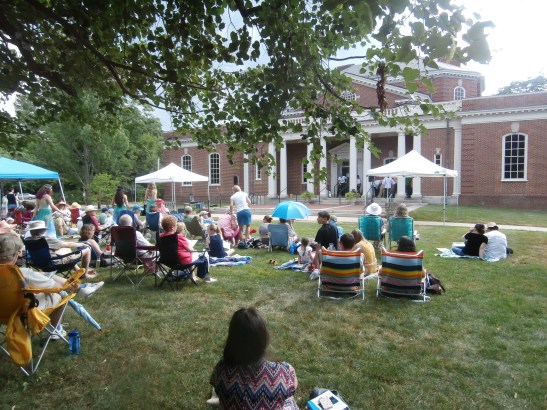
Free Shakespeare production on the library lawn in summer
Posted in Uncategorized | Tagged Amit Bhattacharjee, Cassie Mogilner, dartmouth, pleasures, postaday, Ron Lieber, simple, tuck, university of pennsylvania, wharton | 2 Comments »
August 30, 2014 by suzannesmom

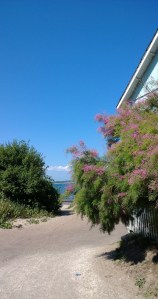
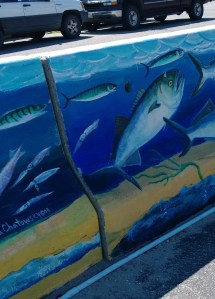
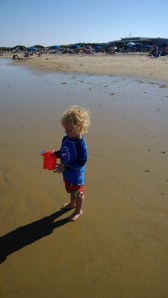
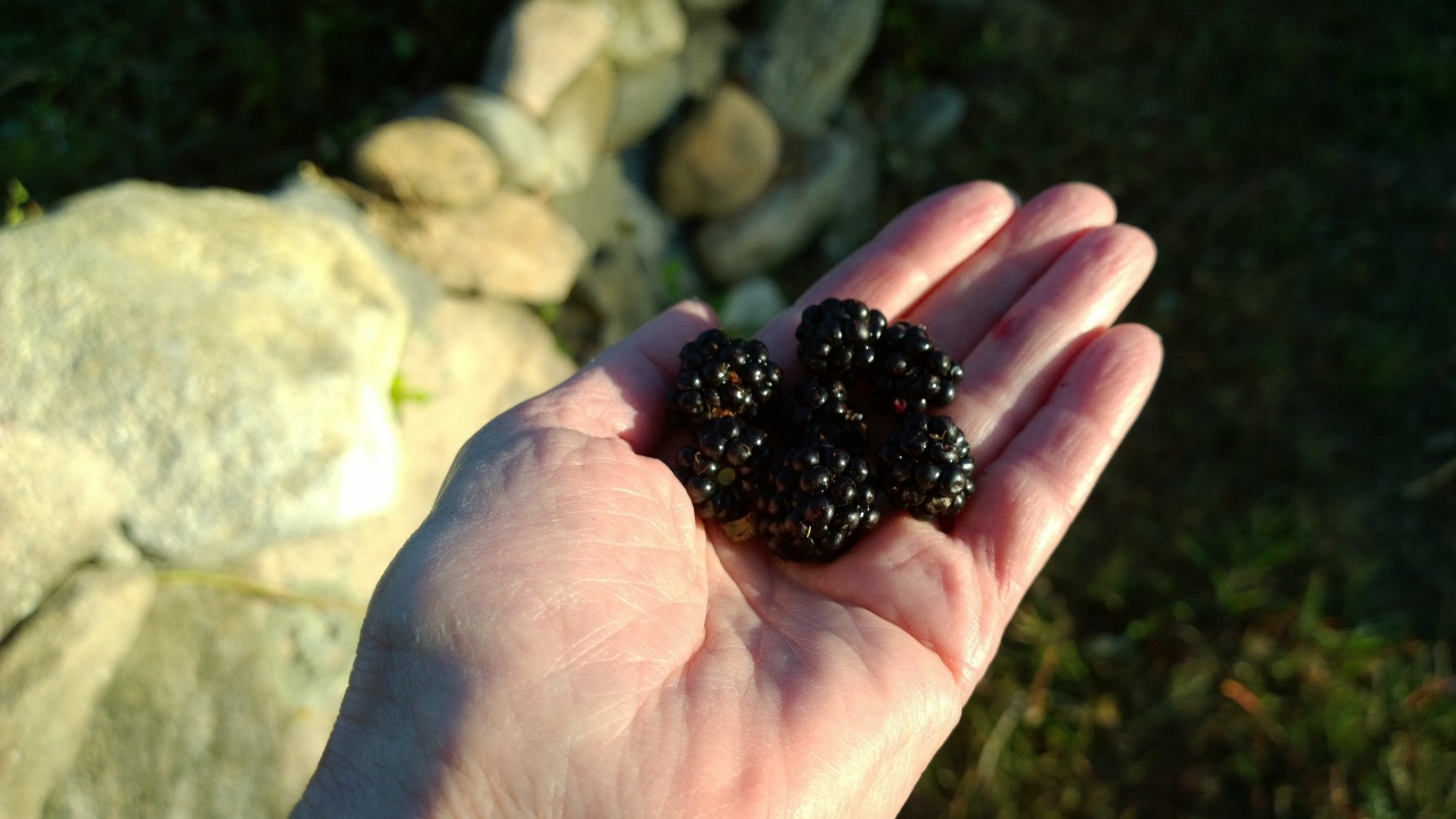
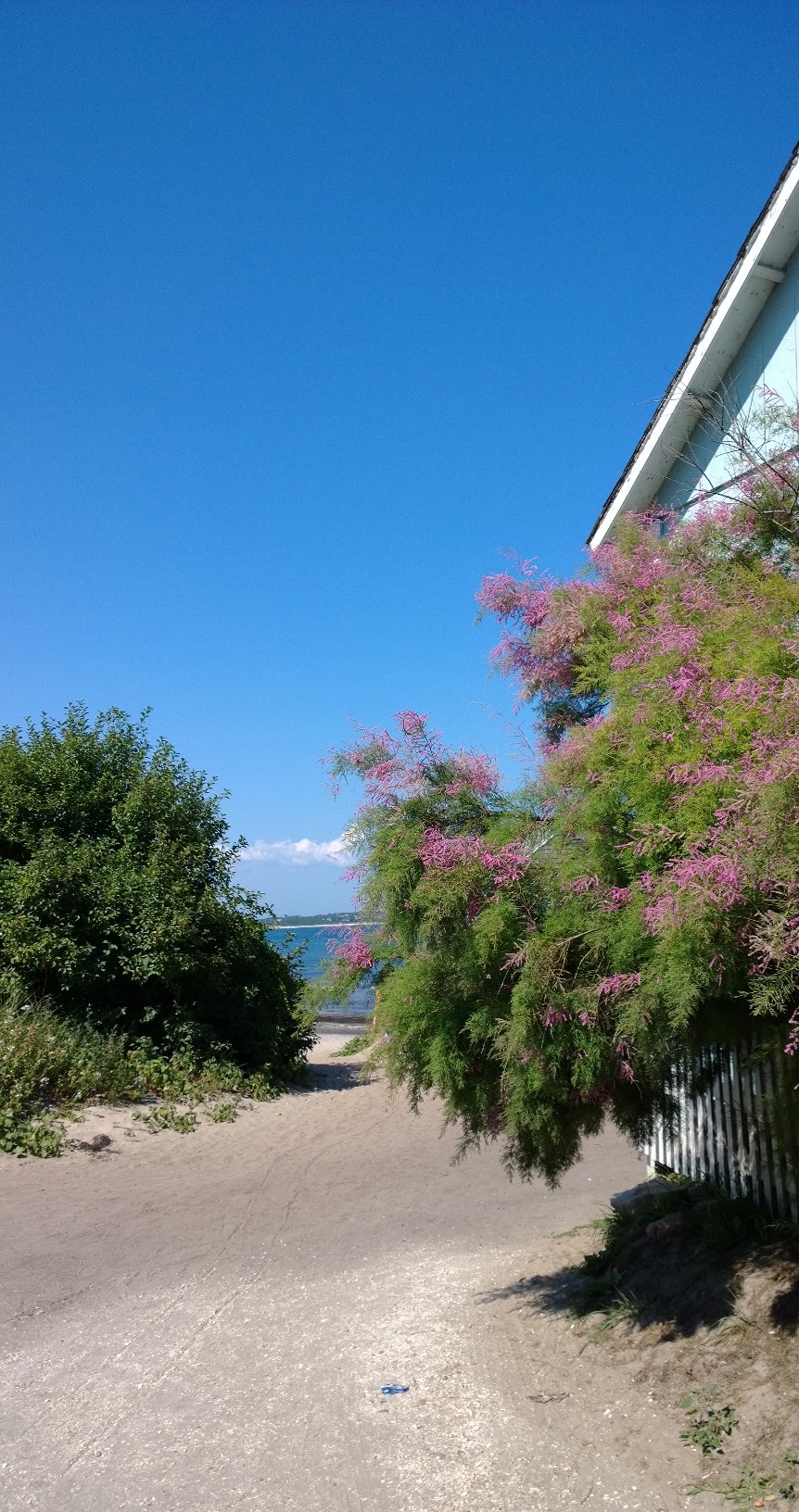
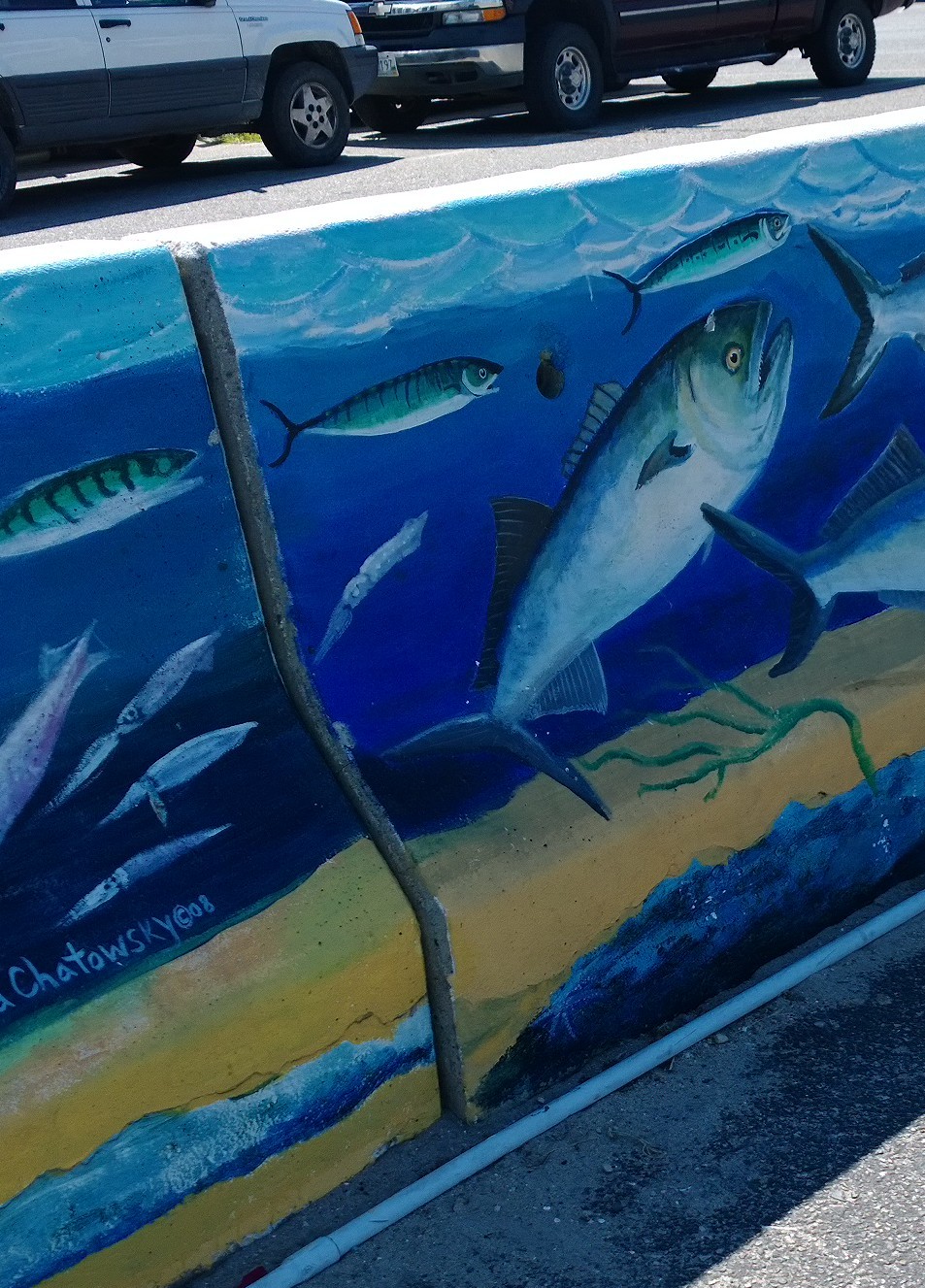
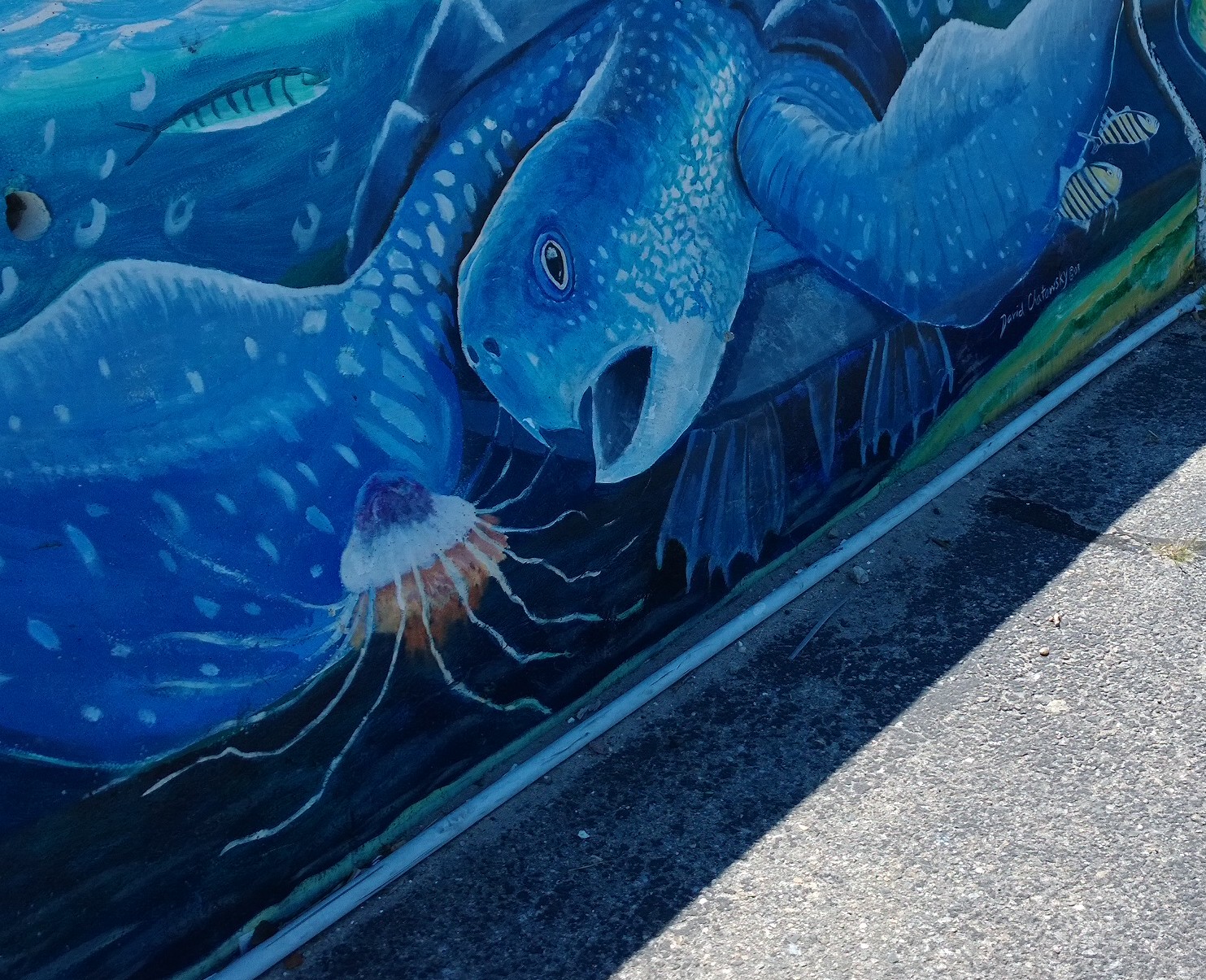
Inside my neighbor’s lotus flower is something that looks like a shower head. I think I will make a new year’s resolution on it (the school year, say): “Because you can never imagine what’s inside the lotus, try to be alert to the subtext.”




Posted in Uncategorized | Tagged beach, blackberries, flower, lotus, mural, photography, photos, postaday, summer | Leave a Comment »
August 29, 2014 by suzannesmom
Do you believe in miracles? Consider the snowflake, consider the soap bubble.
Our family is big on soap bubbles in summer. Wired magazine seems to be big on soap bubbles, too, with a recent article on an installation involving bubble magic.
Kyle Vanhemert writes, “Soap is pretty ordinary stuff – until you blow a bubble with it. Then it becomes something a little bit magical, shimmering with delicate, ever-changing color. Unsurprisingly, if you shine a light through that swirling orb, it makes for a pretty incredible show.
“That’s the gist of ‘Invisible Acoustics,’ an audiovisual installation by Royal College of Art graduate Dagny Rewera. For the project, Rewera created three apparatuses that combine light, sound, and soap to spectacular effect.
“First, a wand dips itself into a pool of water, creating a wet, soapy lens. A speaker plays tones and chords, vibrating the soap, while a light projects the proceedings on the ceiling above. …
“Each of the three units is set to play a different range of frequencies, making for three distinct sets of patterns unfolding overhead.” More here.
Art: Dagny Rewera

Posted in Uncategorized | Tagged art, audiovisual, bubbles, Dagny Rewera, installation, Invisible Acoustics, postaday, royal college of art, sound, vanhemert, wired | Leave a Comment »
August 28, 2014 by suzannesmom

The mother of the cofounder of Meaningful Wins is not big on gambling, but as John reminds her, she is the one who took him to Suffolk Downs once when he was 12 and let him bet on a horse, so she doesn’t have a leg to stand on.
In any case, she is proud that John and his college friend Thad Levine (Texas
Rangers) have successfully worked with nonprofits and baseball players, among others, to provide a way that people who play fantasy football can donate their winnings directly to charity.
Peace Players International writes, “Ellis and Levine recently founded Meaningful Wins which allows fantasy football players to compete in leagues for the charity of their choice. Leagues are first set up on commercial platforms such as NFL.com, ESPN.com, and Yahoo.com just as usual. After doing so, they can then register on MeaningfulWins.com. Each league player then receives an email asking them to register, pay their entry fees, and then choose a charity to play for, upon which completing this information they will receive a tax-deduction receipt. At the end of the fantasy season, the winning player’s charity receives the money!”
See John interviewed, here, at New England Cable News. Read about Meaningful Wins at the Nonprofit Times, here.
Photo: Doctors without Borders, now partnering with Meaningful Wins to receive donations from fantasy-football players.
Posted in Uncategorized | Tagged charity, doctors without borders, donatino, fantasy football, meaningful wins, msf, necn, new england cable news, nonprofit, nonprofit times, peace players internatinoal, postaday, texas rangers, thad levine | Leave a Comment »
August 27, 2014 by suzannesmom

Art: Salvador Dali
I was swept away by theater at age 10 as the understudy for Alice in Binny Rabinowitz’s adaptation of Alice in Wonderland. Ever since, I’ve been a fan of the little girl who was so clear-eyed about the unreasonableness of grownups.
So imagine my delight at Maria Popova’s essay on the many different ways the story has been illustrated, including by Salvador Dali.
“In the century and a half since Sir John Tenniel’s original illustrations, the Carroll classic has sprouted everything from a pop-up book adaptation to a witty cookbook to a quantum physics allegory, and hundreds of artists around the world have reimagined it with remarkable creative vision. …
“In 1969, Salvador Dalí was commissioned by New York’s Maecenas Press-Random House to illustrate a special edition of the Carroll classic, consisting of12 heliogravures — one for each chapter of the book and an original signed etching in four colors as the frontispiece. Distributed as the publisher’s book of the month, the volume went on to become one of the most sought-after Dalí suites of all time.”
See a splendid array at Brainpickings, here.
Art: Lisbeth Zwerger 
Posted in Uncategorized | Tagged alice, alice in wonderland, antrim players, art, binny rabinowitz, brainpickings, children's literature, illustration, john tenniel, lewis carroll, Lisbeth Zwerger’, looking glass, maria popova, postaday, salvador dali, understudy | Leave a Comment »
August 26, 2014 by suzannesmom
“Nearly two decades ago,” writes National Public Radio, “a massive wave struck the Tokio Express, a container ship that had nearly 5 million Legos onboard. The colorful toy building blocks poured into the ocean. Today, they are still washing up on shores in England.
“Tracey Williams and her children first happened upon the Tokio Express Legos in the late 1990s. Since then, she’s created a Facebook page called — Lego Lost At Sea — where other collectors show off their findings.
“Williams, who lives in Cornwall, tells NPR’s Scott Simon that among the many small, colorful and ironically nautical-themed Lego bits are flowers, swords, life vests, scuba tanks and even Lego octopi. …
” ‘I thought it would be quite interesting, from a scientific point of view, to monitor where it was all turning up, what was turning up and in what quantities and who found it,’ Williams says.” Read more here.
I note a variation on a theme in Pen Pal (which tells what happens when a child on the Gulf Coast throws a message in a bottle into the sea and ends up with a political-prisoner pen pal across the world). Francesca Forrest, author of Pen Pal, records true stories about messages in bottles at her website about the novel, here. Like the stories of Legos washed up near England, some of the message-in-a-bottle stories are pretty intriguing.
Photo: Tracey Williams/Lego Lost at Sea
Posted in Uncategorized | Tagged cornwall, Francesca Forrest, lego, lost at sea, message in a bottle, npr, pen pal, postaday, scott simon, Tokio Express, Tracey Williams | 8 Comments »
August 25, 2014 by suzannesmom
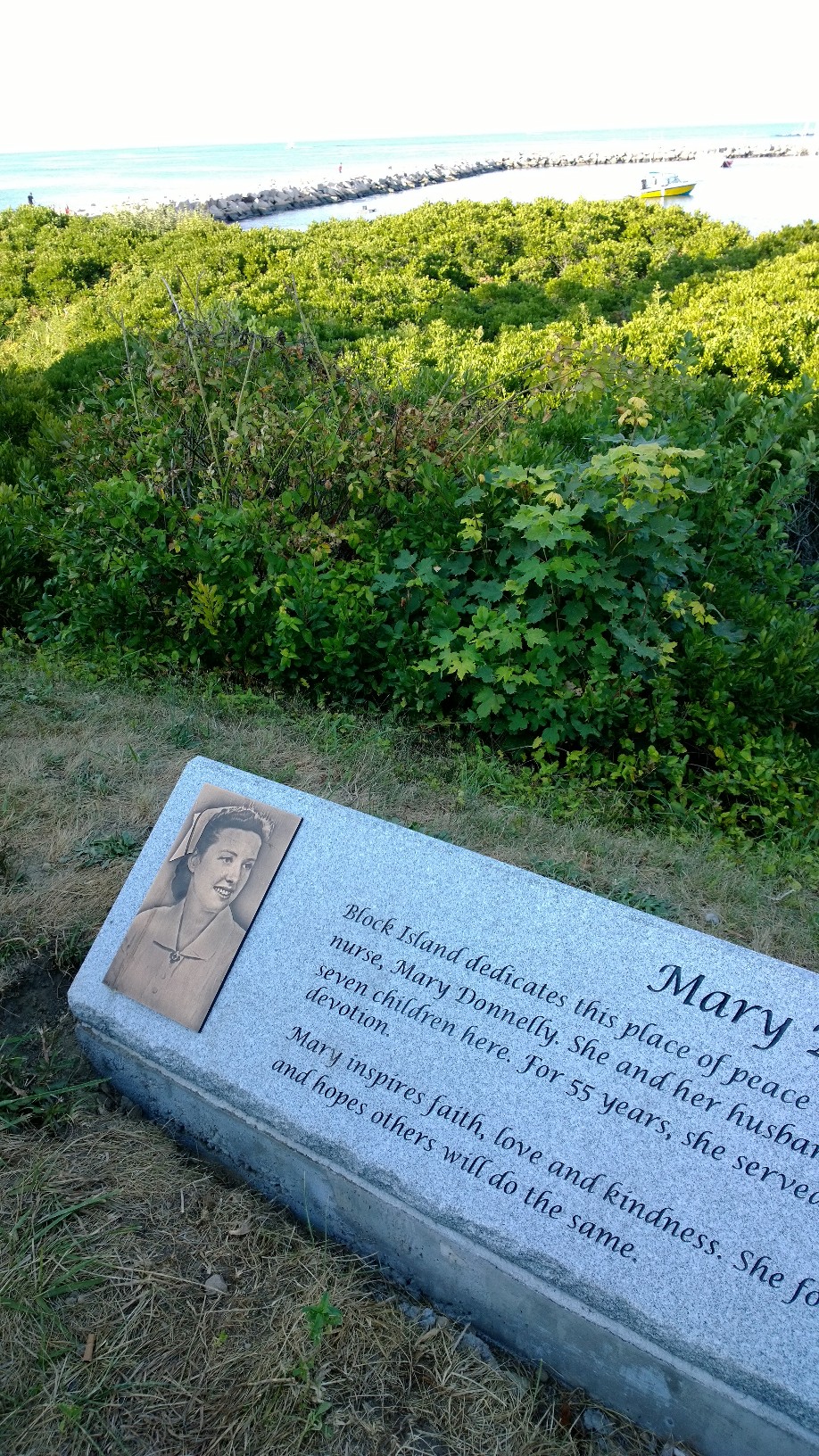
A while back, I wrote about a documentary on Mary Donnelly, a public health nurse who made house calls for many decades and on whom year-round island residents relied. She was so trusted that the community made donations to something called the Mary D Fund, and with the money, she would directly help people in need by paying heating and other bills when they were strapped.
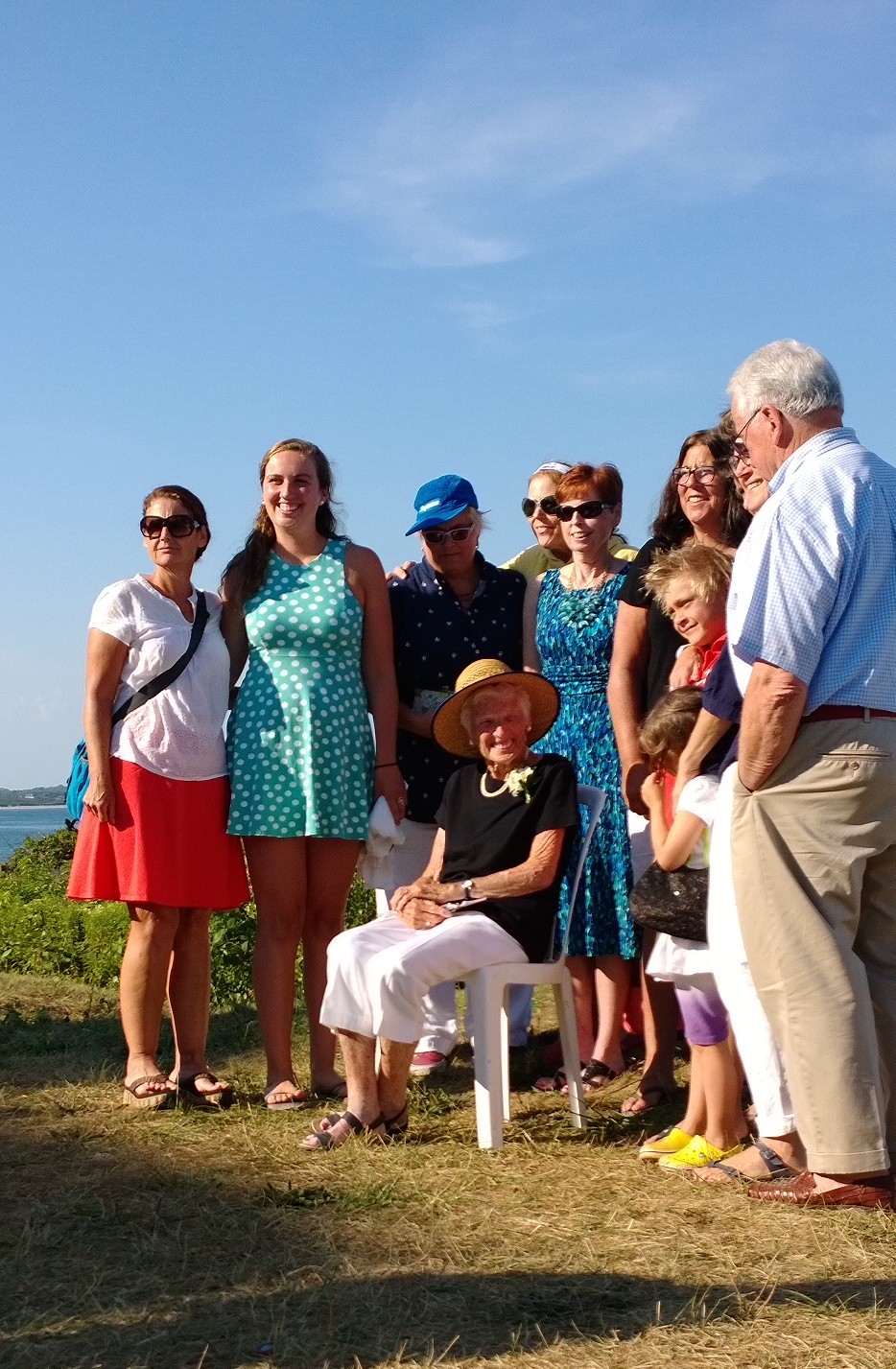
Today the island dedicated a bit of park on the harbor to her and unveiled a marker.
Read my previous post here.
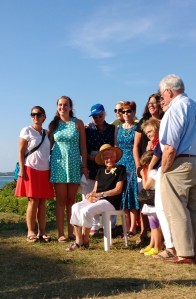
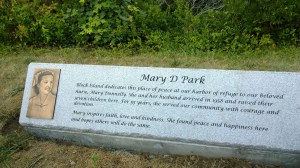

Posted in Uncategorized | Tagged block island, island nurse, mary d, mary d fund, mary donnelly, new shoreham, postaday, rhode island | Leave a Comment »
August 24, 2014 by suzannesmom
When I said I was taking my laptop on vacation, Bob urged me to forget about work and release my “inner Frenchman.”
Well, my inner Frenchman is having a field day as I have a couple days without work and before the family returns to the island. I wouldn’t like it all the time, but for a brief spate, it’s nice to just take pictures and naps, read an Eliot Pattison mystery about the French and Indian War, and plan lunch with friends. The days are sunny, the evenings may feature an art opening.
(Wish I could say the beautiful produce is mine, but it’s Sandy’s and Pat’s, from their garden.)




Posted in Uncategorized | Tagged garden, photo, picture, postaday, sun, vacation | 2 Comments »
August 23, 2014 by suzannesmom
After a delightful morning with my granddaughter and my older grandson, I went to Providence to hang out with my younger grandson and Suzanne and a good friend.
I caught up with them at the park, where the farmers market was winding down and a free summer concert was revving up: the annual Summit Music Festival. (Check it out here.)
The four of us liked a blues group called the Selwyn Birchwood Band (pictured) and another band called Smith and Weeden. The ice cream eater below had reservations about a third performance. Everyone’s a critic.
We spent a chunk of time going “higher, higher” on the swing in the playground and watching a multi-ethnic group of small boys kick a soccer ball. (How brave it is to go up to boys you don’t know and ask to play!) We skipped the face painting, which was gorgeous but, to a 2-year-old, kind of pointless. We watched kids and grownups painting a mural wall.



Posted in Uncategorized | Tagged band, blues, concert, Festival, free, music, postaday, providence, Selwyn Birchwood Band, Smith and Weeden, summer, summit | 8 Comments »
August 22, 2014 by suzannesmom
Yesterday I tried Google Glass.
Summer interns where I work had been given a pair of the wearable computer glasses to program. For fun, they made the glasses present a data-visualization tool my boss created last year.
When I tried it out, I had to say first, “OK, Glass” to activate the program. A small computer screen appeared in front of my vision but a bit higher and to the right. Then I had to ask see a piece of the information I knew was available in the data-visualization tool. “Show me the population of Boston.”
Then the interns told me to scroll with my finger on the right side of the frame to see other data about Boston: characteristics of people in lower-income census tracts; characteristics of middle- and upper-income tracts. Finally, I asked to see other cities.
Until yesterday, I had no idea that you talk to the thing. It’s wildly expensive and, according to MIT Technology Review, sometimes subject to security dangers.
But what a fun toy!
(Hmmm. I can hear my father quoting Fowler’s dictionary: “Fun is a low-cant word.” And that man didn’t even know “fun” would someday be used as an adjective. Well, as the song goes, something’s lost but something’s gained in living every day.)
Photo: NBC producer Frank Thorp using Google Glass in Washington, DC, Aug. 2, 2013. 
Posted in Uncategorized | Tagged dictionary, fowler, frank thorp, glasses, google glass, MIT Technology Review, postaday, voice command, wearable computer | 6 Comments »
August 21, 2014 by suzannesmom
Kathy was telling me on the commuter train about an article on Littleton’s Life Care Center, which uses llamas and other critters to engage the residents.
I said, “Send me a link!”
Today I received the article in the Lowell Sun. Samantha Allen writes, “At the Life Care Center of Nashoba Valley, it’s not uncommon to see patients asleep in their wheelchairs by the saltwater-fish tank, or out for a stroll around a pasture filled with grass-grazing animals like goats and llamas.
“Director Ellen Levinson said while the merits of ‘pet therapy’ have been adopted and used at various skilled nursing facilities across the country, it’s rare to find chickens and alpacas at a site.
“At the 120-bed nursing home, which houses a specialized memory-support unit for those with severe dementia and other conditions that affect the memory, staff members make time to ensure their patients interact with the animals whenever possible.
” ‘This is my philosophy: A lot of places say, “We have pet therapy,” and what they have is someone who brings a dog in on a leash once a week,’ she said. ‘If I were living here, that would make me more miserable. It’s not like real life. It’s not like having a dog, and then you’re just tempted with what you could have all the time.’ …
“This spring, the Life Care Center of Nashoba Valley was awarded a perfect score by the [Massachusetts] Department of Public Health in a survey of nursing homes and senior-care providers.” According to Kathy, the Center is also friendly to outsiders, welcoming the public in for the llama shearing and other events.
Read more about the approach Levinson devised, here.
Photo: Life Care Center of Nashoba Valley 
Posted in Uncategorized | Tagged aging, elderly, Ellen Levinson, life care center, littleton, llama, lowell sun, Nashoba Valley, nursing home, postaday, retirement, samantha allen, seniors | 6 Comments »
August 20, 2014 by suzannesmom
In today’s Boston Globe, Kelly Gifford wrote about a new effort to hop over the generation of adults who don’t cook and teach children how.
“Short single-file lines form beside a table with three hot plates at the Blue Hill Boys & Girls Club in Dorchester. …
“This is the first time the majority of the 10 girls have ever cooked an omelet — a fact that [Bill] Yosses, Sally Sampson, president and founder of ChopChop Magazine, and the Harvard Pilgrim Health Care Foundation are hoping to change through a series of healthy eating classes at several New England Boys & Girls Clubs.
“The Dorchester program is part of the series, which is aimed at 8- to 12-year-olds. The weeklong program kicked off in Worcester in early July and will continue in six Boys & Girls Clubs in the Boston area and eight in New Hampshire this fall, to reach about 200 kids total. The program is funded through a $100,000 grant from the Harvard Pilgrim foundation.
“ ‘There is a whole generation of parents across the income and age spectrum that can’t cook, so they do takeout,’ says Harvard Pilgrim president Karen Voci. ‘So we decided to skip a generation and see if these kids could bring the skills they learned back home to their families.’ ”
The children seem to be enjoying trying new tastes and showing off what they can prepare. Read the whole article here.
Photo: Pat Greenhouse/Globe staff
Former White House pastry chef Bill Yosses (standing) helps teach children to make yogurt parfaits and other healthful dishes.
Posted in Uncategorized | Tagged bill yosses, boys & girls club, chopchop, cooking, dorchester, eating, food, Harvard Pilgrim, healthful, karen voci, kelly gifford, nourishing, nutrition, pastry chef, pat greenhouse, postaday, Sally Sampson, white house | Leave a Comment »
August 19, 2014 by suzannesmom
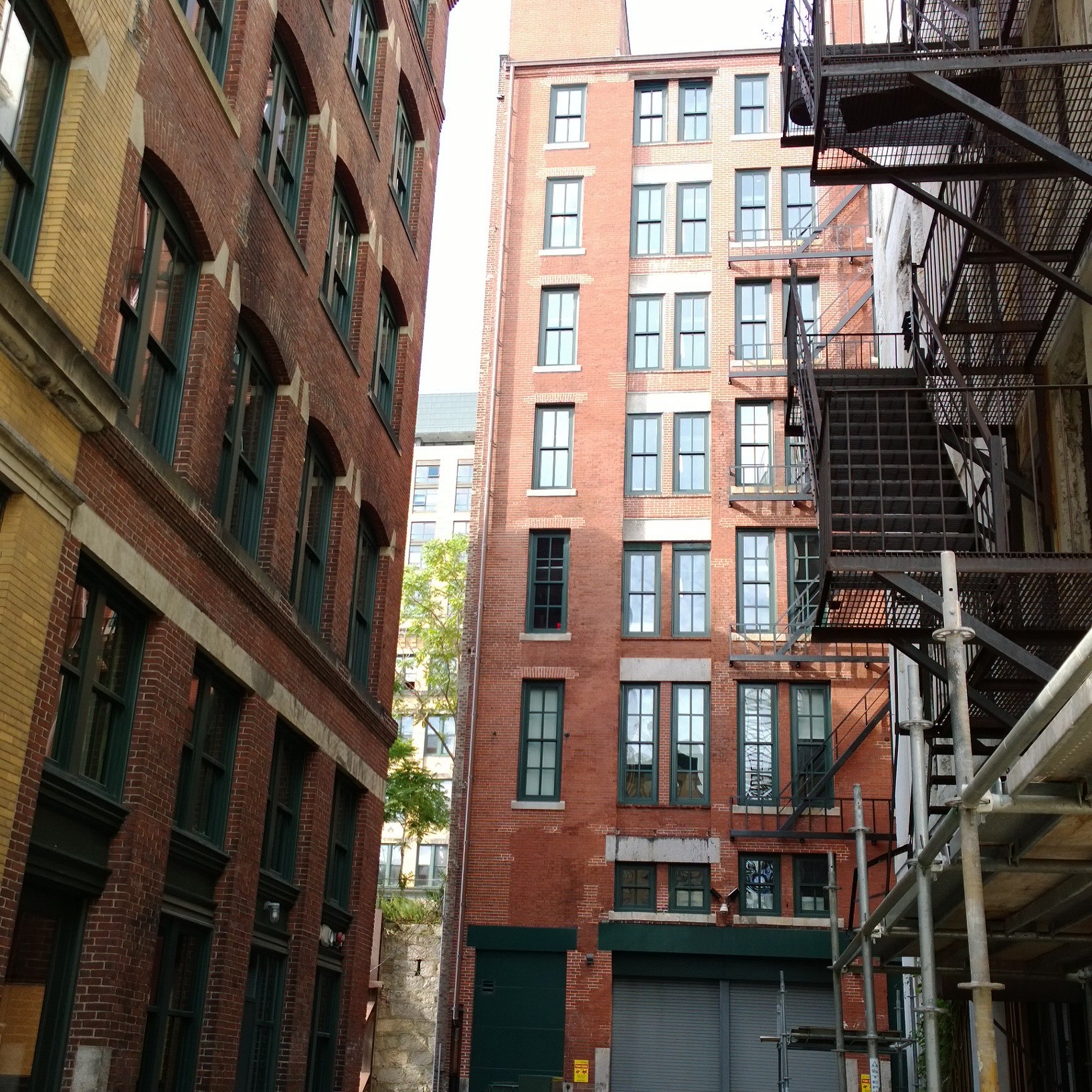
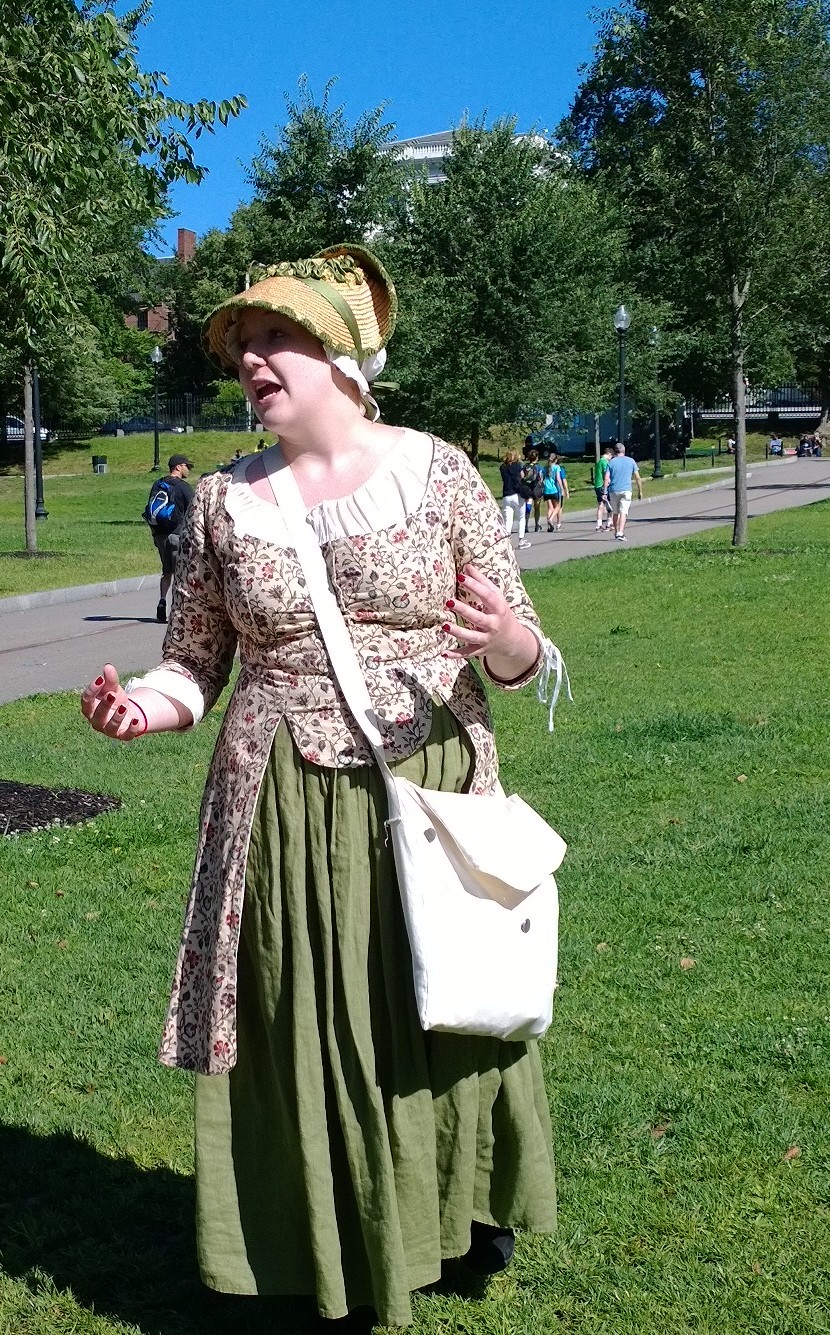
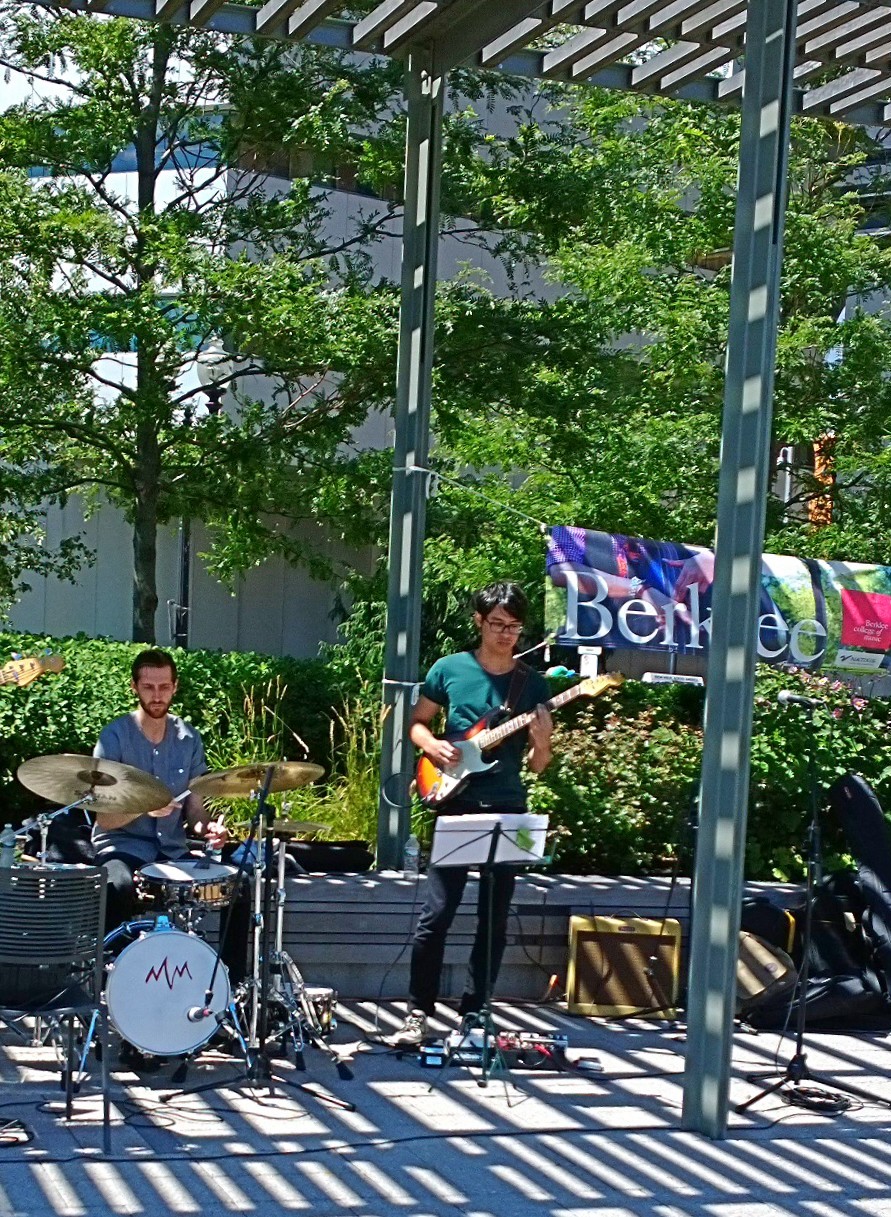
I’m back in America. America is what people on the island call the mainland. “I have to go to America today. Dentist appointment.” “I missed the boat and got stuck in America.”
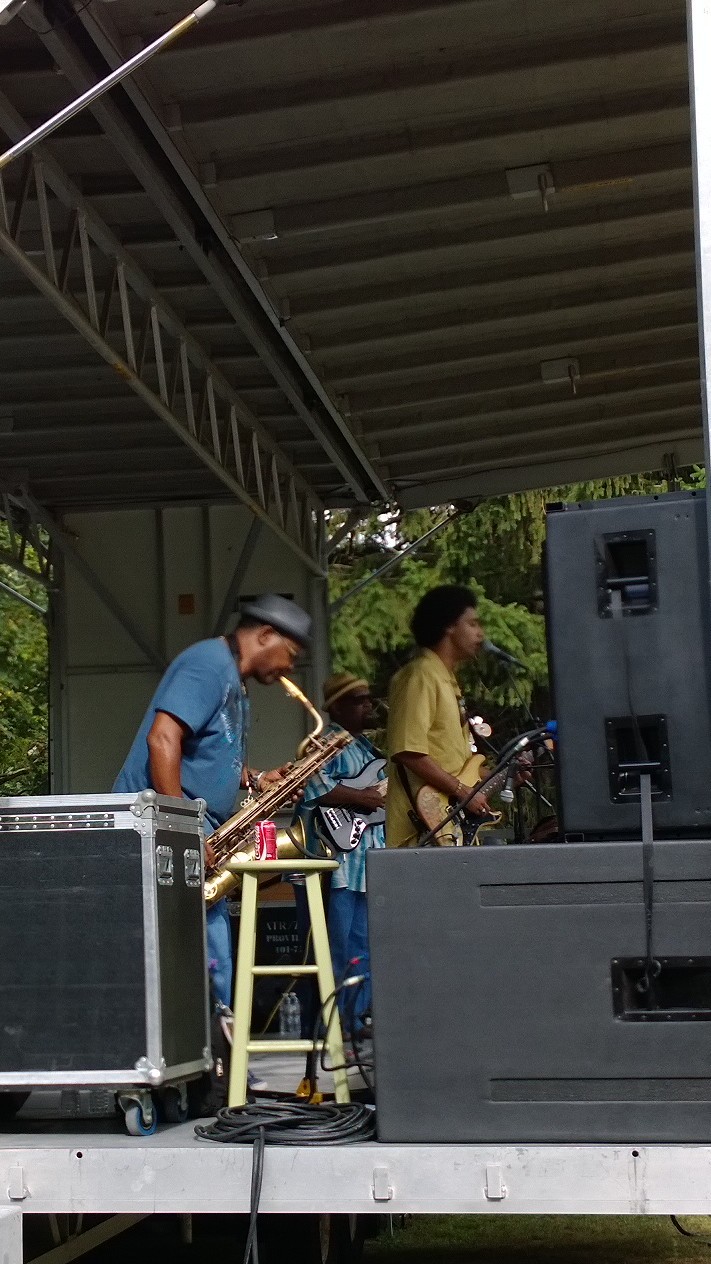
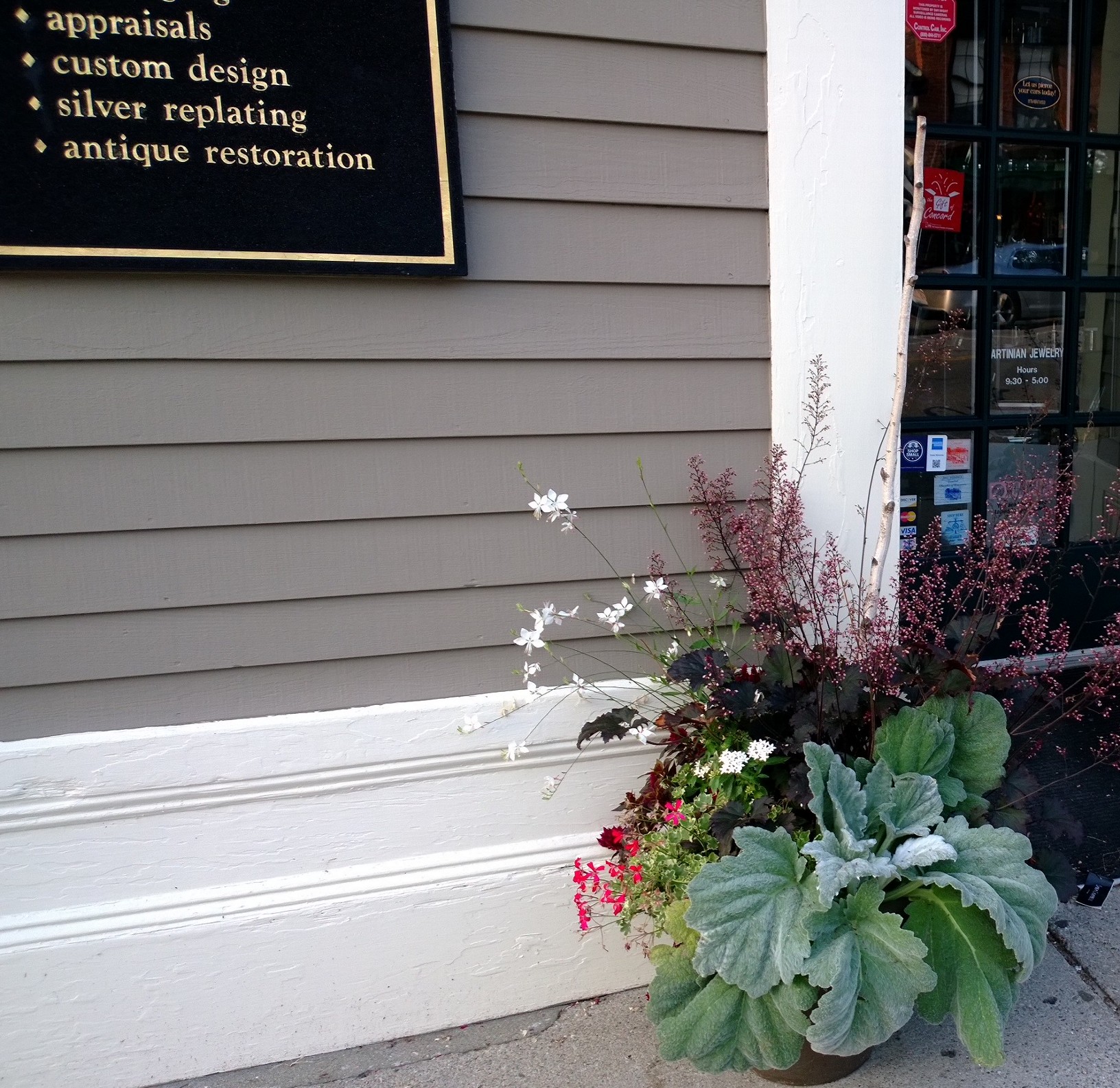
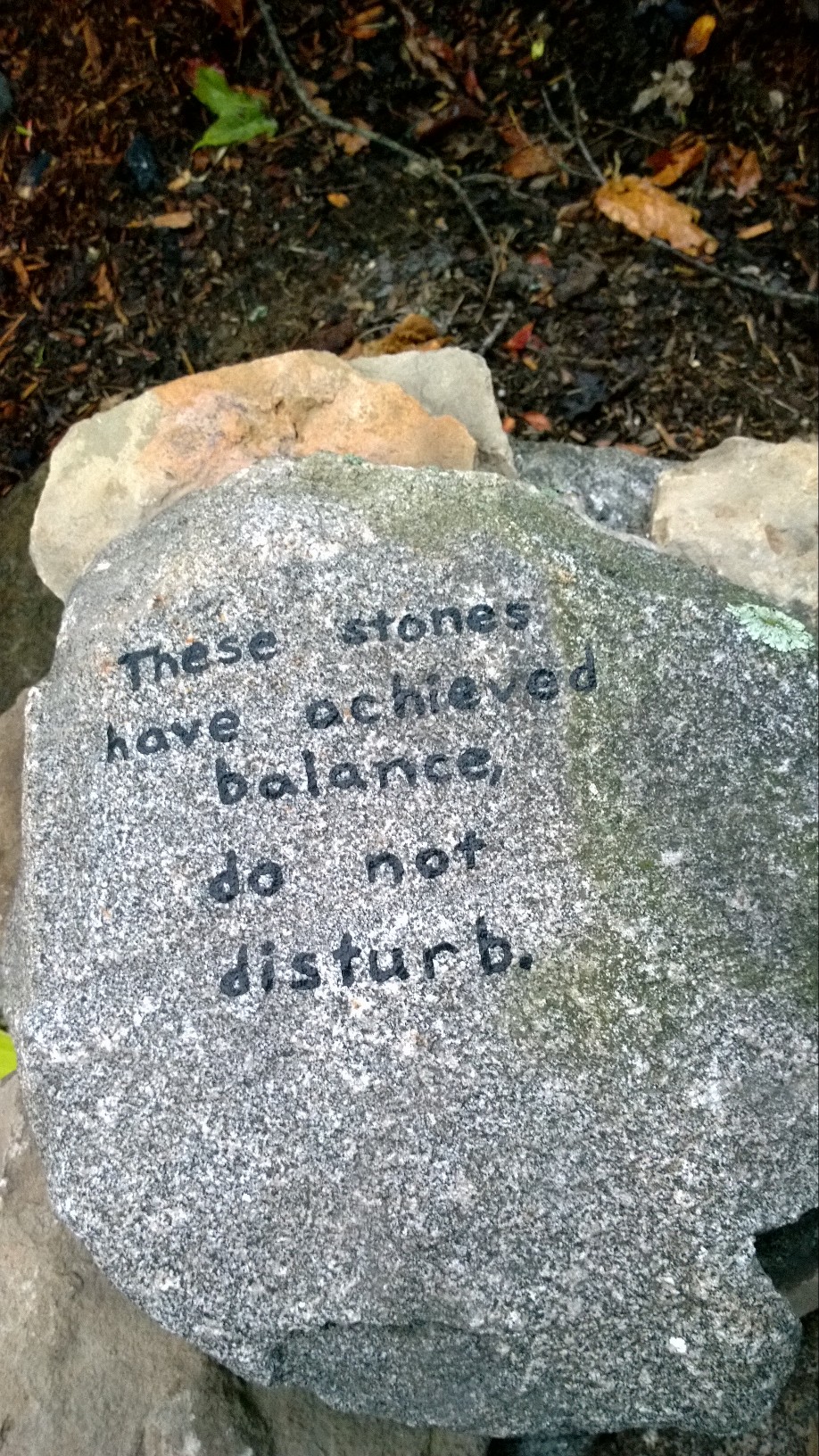
Here are a few pictures from America. Burdock in bloom. Warnings from a stone wall that has “achieved balance.” An alley in Fort Point. A tour guide on the Common. Berklee students performing jazz at Atlantic Wharf. A decorative plaque on a building that wasn’t always a hotel.
I have two questions. Who knew that burdock had pink flowers? What are “spitting spiders”?

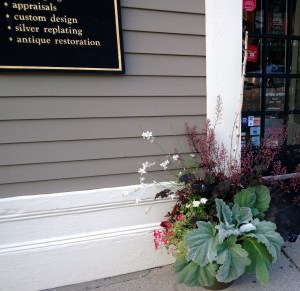




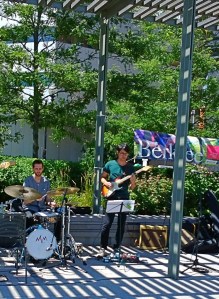

Posted in Uncategorized | Tagged atlantic wharf, berklee, boston common, burdock, fort point, jazz, photograph, pictures, postaday | 3 Comments »
August 18, 2014 by suzannesmom
It’s not always easy for low-income people to get access to food that is healthful, and once children get accustomed to salty, fatty, sugary snacks, junk food becomes comfort food and stores see little demand for better items. But if children know what would taste good and be good for them, they are on the road to better nutrition.
That is why the folks fighting childhood obesity are enlisting the support of several hip-hop artists that young people admire.
Winnie Hu at the NY Times writes, “Adrian Harris, known as Easy A.D. to his fans, has rapped about street life in the South Bronx as a member of the Cold Crush Brothers, a group that is among the pioneers of hip-hop.
“Now Mr. Harris also raps about broccoli.
“ ‘If you think you eat healthy, say ‘”me,” ‘ Mr. Harris called out over a pounding bass that shook the gym at the Future Leaders Institute, a charter school in Harlem, on a recent morning. A photo of a cart laden with fruits and vegetables filled a screen behind him. ‘Boys and girls,’ he added, ‘there are no Doritos on that cart.’
“Mr. Harris, calling himself a ‘health M.C.,’ aims to reach children who might otherwise tune out nutrition lessons. His vegetable rap is part of a growing public health campaign that has enlisted hip-hop artists such as Doug E. Fresh, Chuck D and DMC of Run-DMC to work alongside doctors and nutritionists in fighting obesity and related illnesses in poor communities. The campaign is being rolled out this year in 18 cities.” More here.
Photo: Ozier Muhammad/The New York Times
Adrian Harris, also known as Easy A.D., made a pitch for healthy eating recently at the Future Leaders Institute in Harlem. 
Posted in Uncategorized | Tagged access, Adrian Harris, children, Cold Crush Brothers, Easy A.D., food, Future Leaders Institute, harlem, healthful, healthy, hip hop, nutrition, obesity, Ozier Muhammad, postaday, Winnie Hu | 2 Comments »
« Newer Posts - Older Posts »













 Suzanne's Mom's Blog