Feeds:
Posts
Comments

Les Miz Comes to Town

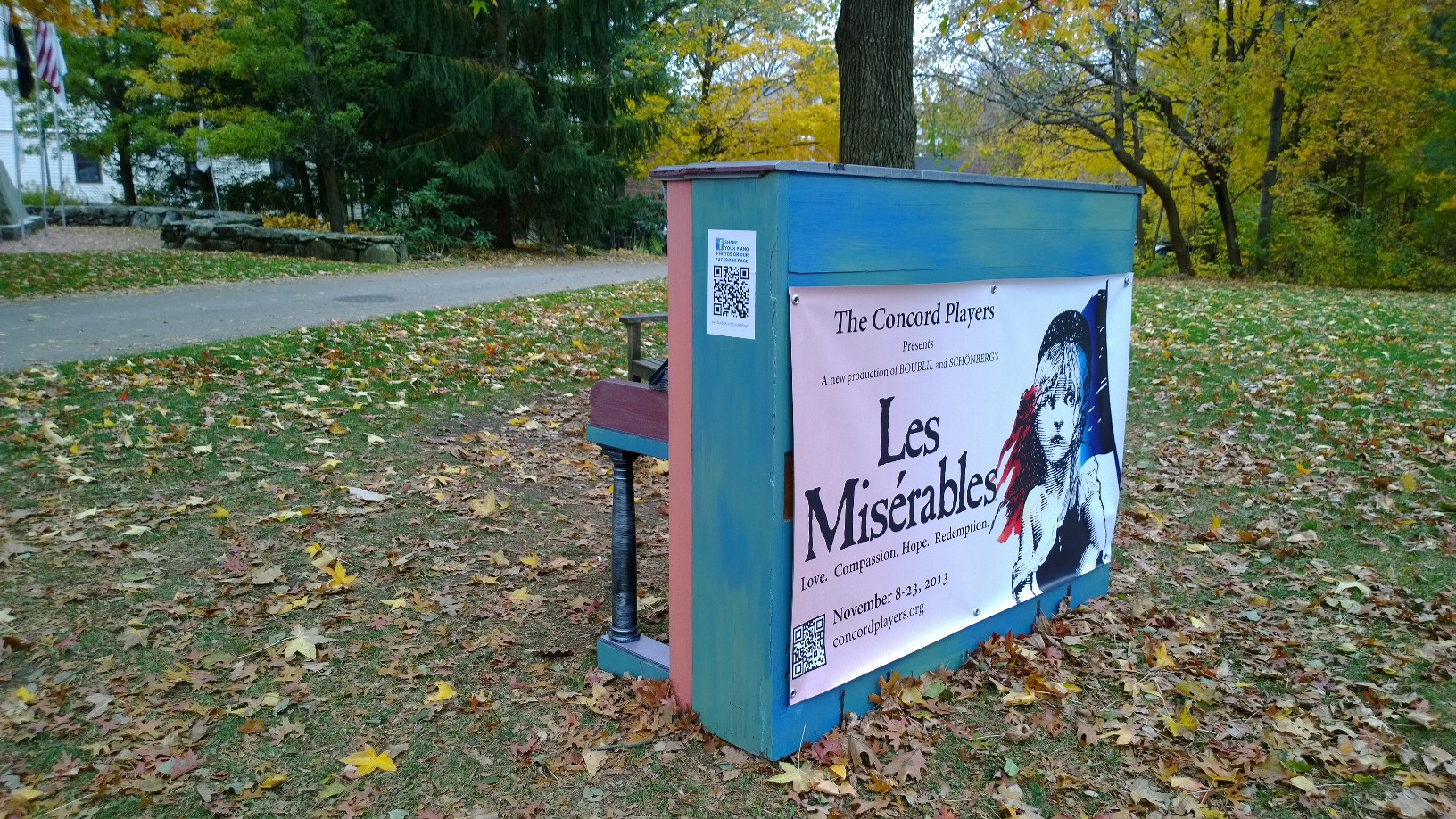
street-piano-promotes-les-mizSunday I went to a local production of the musical Les Misérables. I was one of the few people in America, I think, who had never seen it in any form, and I thought it was time. Besides, I had put an ad in the season program for Suzanne’s company, Luna & Stella, and wanted to pick up a couple copies.

Hard to imagine the Concord Players is only an amateur theater. They did a great job. And I guess the word has gotten around because they are sold out for the run.

I don’t love the story (having overdosed on French revolutions of all periods after reading A Tale of Two Cities once too often), and I think the dialogue in the musical is clunky. But I loved the performances and many of the songs, and I admired all the things that go into a good production — sets, costumes, sound, lighting, orchestra. The Concord Players are well known in the Greater Boston area for their production values, and they draw talent from all over.

Good job, Guys!

Siavosh Derakhti, the 22-year-old son of Iranian immigrants. is the founder of Young People Against Anti-Semitism and Xenophobia. He hails from Malmö, “a dynamic and diverse city of some 300,000 in southern Sweden.”

Gary G. Yerkey interviewed him for a story in the Christian Science Monitor.

” ‘Anti-Semitism, Islamophobia, and xenophobia are huge problems in Malmö,’ Derakhti says. ‘I can’t accept that Jews are leaving my hometown [because of anti-Semitism]. I told the [US] president [who was in Sweden on an official visit] that I would never give up the fight for equal rights for all people.’ …

“Derakhti says he focuses on educating young people about the evils and dangers of anti-Semitism, racism, and xenophobia. He has done that by speaking to students and teachers at schools around the country, holding workshops for educators and others, and pressing the authorities to work toward ‘increasing awareness and understanding between different groups,’ he says. …

“For his work, Derakhti earlier this year was presented with the Swedish government’s Raoul Wallenberg Award – named after the late Swedish diplomat who is credited with saving thousands of Hungarian Jews in 1944.” More at the Monitor.

I’m impressed that a young person would understand so clearly that tolerance for his own family and religion is so closely tied to tolerance for all.

Photo: Karin Nylund/Utrikesdepartementet/Swedish MFA Siavosh Derakhti founded Young People Against Anti-Semitism and Xenophobia in his native Sweden.

If you’re a country called Ireland and your soccer team doesn’t make it into the 2014 World Cup competition in Brazil, what do you do?

Change the “r” in your name to “c” and adopt another team.

I like David Trifunov’s headline at the Global Post, where you can read the background: “Iceland closes in on World Cup bid. Wait … Iceland has a soccer team?”

He continues, “Iceland is now one game away from becoming the smallest nation ever to advance to a World Cup. … It started in 2008 when the national economy, under the weight of an inflated currency, tanked.

“The modest Iceland soccer league cut ties with nearly all its more expensive foreign players, leaving the door wide open for homegrown talent. They took advantage, getting the experience they needed. …

“Ireland is one frustrated World Cup nation that has taken notice. At least the fans have. Eoin Conlon and friends were lamenting their country’s failed attempt to reach Brazil when he realized there’s only one nation that deserves their support now.

“ ‘And we kind of laughed, saying: “Well, that’s as close as Ireland’s going to get to Brazil. It’s only a letter difference. A ‘c’ for an ‘r.’ We might as well be brothers,” Conlon told Public Radio International.

“So they struck up a website and Twitter profile to encourage Irish football fans to back tiny Iceland.

“ ‘There are only about 320,000 people in Iceland,’ Conlon told PRI. ‘So if they were a county in Ireland — I’m calling them the 33rd county — it would [be] only the fifth-largest county in Ireland.’ ”

More here.

Photo: (AFP/AFP/Getty Images)
Iceland’s striker Kolbeinn Sigthorsson, right, and Croatian defender Vedran Corluka vie for the ball during their World Cup playoff in Reykjavik on November 15, 2013. 

The Humans of New York

A quirky book of photos and interviews has rocketed to the top of the NY Times bestseller list, demonstrating once again the value of doing what interests you.

Julie Bosman at the NY Times reports on Brandon Stanton’s success with taking portraits and asking subjects both mild questions and questions “so personal they might make Oprah Winfrey blush. …

“Hundreds of his pictures and interviews have been compiled into a book, Humans of New York, which has become an instant publishing phenomenon. After its first week on sale last month, the book landed in the No. 1 spot on the New York Times hardcover nonfiction best-seller list. …

“Mr. Stanton grew up in an Atlanta suburb and attended the University of Georgia. After graduating as a film major, he found a job in Chicago as a trader, and on the weekends, he spent hours photographing that city.

“But after he was laid off in 2010, Mr. Stanton decided to shift to a completely new career. He moved to New York, where he didn’t know a single person. …

“After several months, he began moving in a different direction, interviewing his subjects and asking them about their lives, their struggles, their disappointments and their hopes.

“Most people brushed him off. … But his project gradually attracted an audience, mostly people in their 20s who left enthusiastic comments on his website. When his Facebook page had collected more than 200,000 followers, Mr. Stanton decided it was time to collect the pictures into a book.

“St. Martin’s Press, part of Macmillan, was the only publisher willing to print the book in hardcover.”

Good for St. Martin’s! Bet Stanton’s editor, Yaniv Soha, is laughing at all the naysayers now — laughing all the way to the bank.

More at the NY Times.

Photo: Brandon Stanton
The quote in the caption is presumably from the girl’s parents: “We ordered her those pants, and as soon as they arrived, she cut off the bottoms and made a pair of gloves.”

On Sunday my husband and I took in the painful stories of several formerly incarcerated women who work on getting their lives back on track with Mary Driscoll at OWLL. The occasion was the performance of a collaborative theater piece called Hidden Faces of Courage.

All the women had the cards stacked against them from childhood on and had little hope of a better future after serving time. A recurring theme was the near impossibility of finding work with a criminal record.

So it was with particular interest that I read an article in UU World today about a café in North Carolina that is giving such women a second chance at life, starting with helping them earn an income.

Michelle Bates Deakin writes, “There’s a classic Catch-22 for women who have served jail time. It’s nearly impossible to get a job with a criminal record, and without a job and an income, it’s hard to keep from reoffending.

“The Rev. Melissa Mummert, a community minister in Charlotte, N.C., has dedicated the past decade to helping solve this conundrum, providing career and life coaching to female prisoners …

“In August, she helped open a new takeout restaurant in downtown Charlotte run by women released from jail. Second Helping gives formerly incarcerated women valuable job skills, income, and new starts at life.

“ ‘I kept hearing the same theme from so many women: “When I hit the jail door, I can’t get a job, because there is so much employment discrimination against people with criminal records,” ‘ said Mummert. Second Helping helps women leaving jail or prison land that all-important first job.”

Monique Maddox is one of the beneficiaries of the effort. “Maddox has worked at Second Helping since November 2011, when it opened its first coffee cart. She credits Second Helping with giving her opportunity. ‘Each and every one of us value our freedom today,’ she said. ‘I would never give it up.’ ”

More.

Photo: UU World
Rev. Mummert helped open the Second Helping café in Charlotte. It employs and trains formerly incarcerated women.

Philippines

This extra post is just to give you suggestions for where you can send donations. Send love through your thoughts. Send donations to Doctors without Borders or one of these other relief organizations, here. You can specify which disaster you want your aid to go to. I personally do unspecified in case other disasters follow and the money is needed for them.

Thank you, Asakiyume, for the list.

Photo: NBCNews

Pavithra Mehta writes at Yes! Magazine about a network of restaurants where guests are asked to “pay it forward.”

Mehta’s explanation is a little far out for me, but I know I wouldn’t mind eating at one of these places. They sound cheerful. And I would be happy to pay it forward.

“In Berkeley, Calif.,” Mehta writes, “the Karma Kitchen restaurant bases its business on the concept of gratitude. Each visitor can pay nothing or voluntarily pay for a meal for a future guest. …

“The bill comes with a note that explains their meal was a gift from someone who came before them. If they wish to pay it forward, they can make a contribution for someone who comes after them …

“More than six years [after its founding], Karma Kitchen is still going strong. It has served more than 30,000 meals and now has chapters in half-a-dozen cities around the world. And it is all sustained by gratitude.

“Karma Kitchen works on the deceptively simple premise that the heart that fills, spills. The nature of gratitude is to overflow its banks and circulate. It does not stand still. But remove that ineffable quality from the equation, and the virtuous cycle breaks down.

“The sociologist Georg Simmel called gratitude ‘the moral memory of mankind.’ It serves to connect us to each other in small, real, and human ways. Remove it from the fabric of our lives, and all relationship becomes an endless series of soulless transactions.”

More at Yes! here.

Video: Seva Café , Gujarat, India

More Advantages to Music

The NY Times contains a Science section on Tuesdays, and it always has delightful tidbits. Today Sindya N. Bhanoo writes that if you had music lessons at a young age, the experience may benefit you in old age.

“A new study reports that older adults who took lessons at a young age can process the sounds of speech faster than those who did not.

“ ‘It didn’t matter what instrument you played, it just mattered that you played,’ said Nina Kraus, a neuroscientist at Northwestern University and an author of the study, which appears in The Journal of Neuroscience.

“She and her collaborators looked at 44 healthy adults ages 55 to 76, measuring electrical activity in a region of the brain that processes sound.

“They found that participants who had four to 14 years of musical training had faster responses to speech sounds than participants without any training — even though no one in the first group had played an instrument for about 40 years.” More here.

Now, of course, I am looking back and trying to count how many years of piano lessons I had as a kid. I’m sure it was at least the four Kraus deems necessary. But I hardly ever practiced, so probably the effect was small.

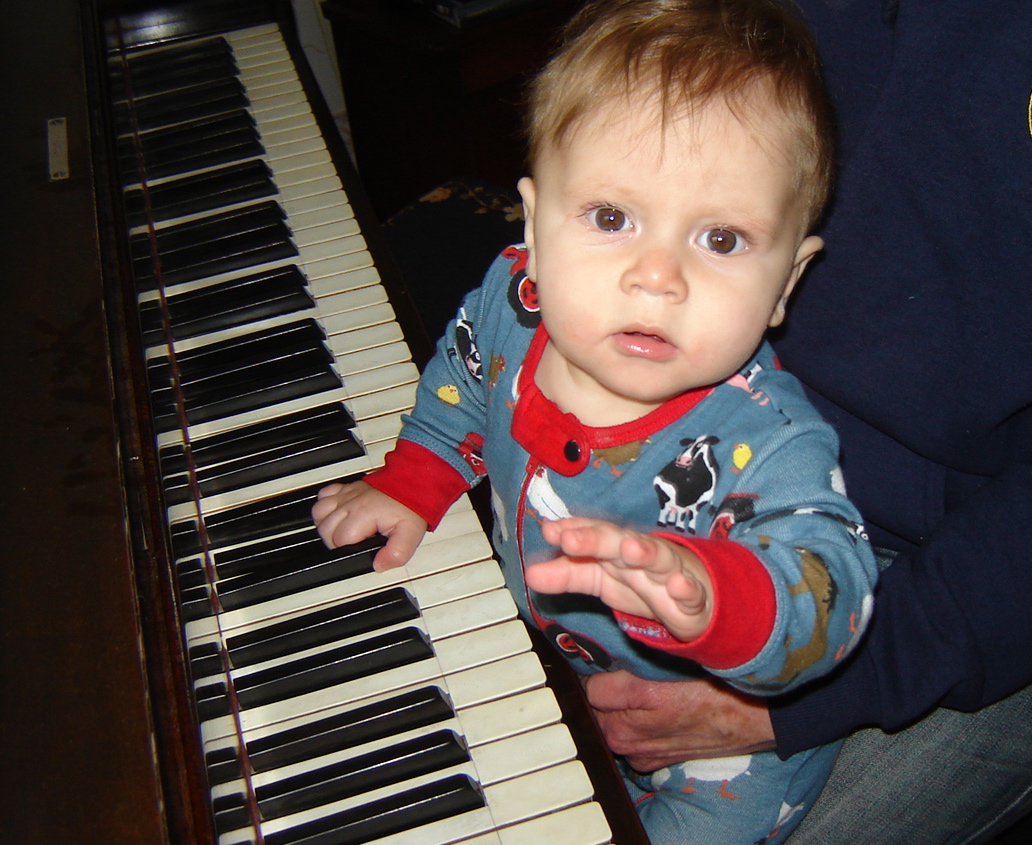
The serious pianist below was sitting on my lap when the picture was taken in 2011.

at-the-piano

blue-flower

The word is we are to expect a dusting of snow tomorrow. So before I start taking winter photographs, I think I will round up a few from balmier days.

What are these pictures of? you ask.

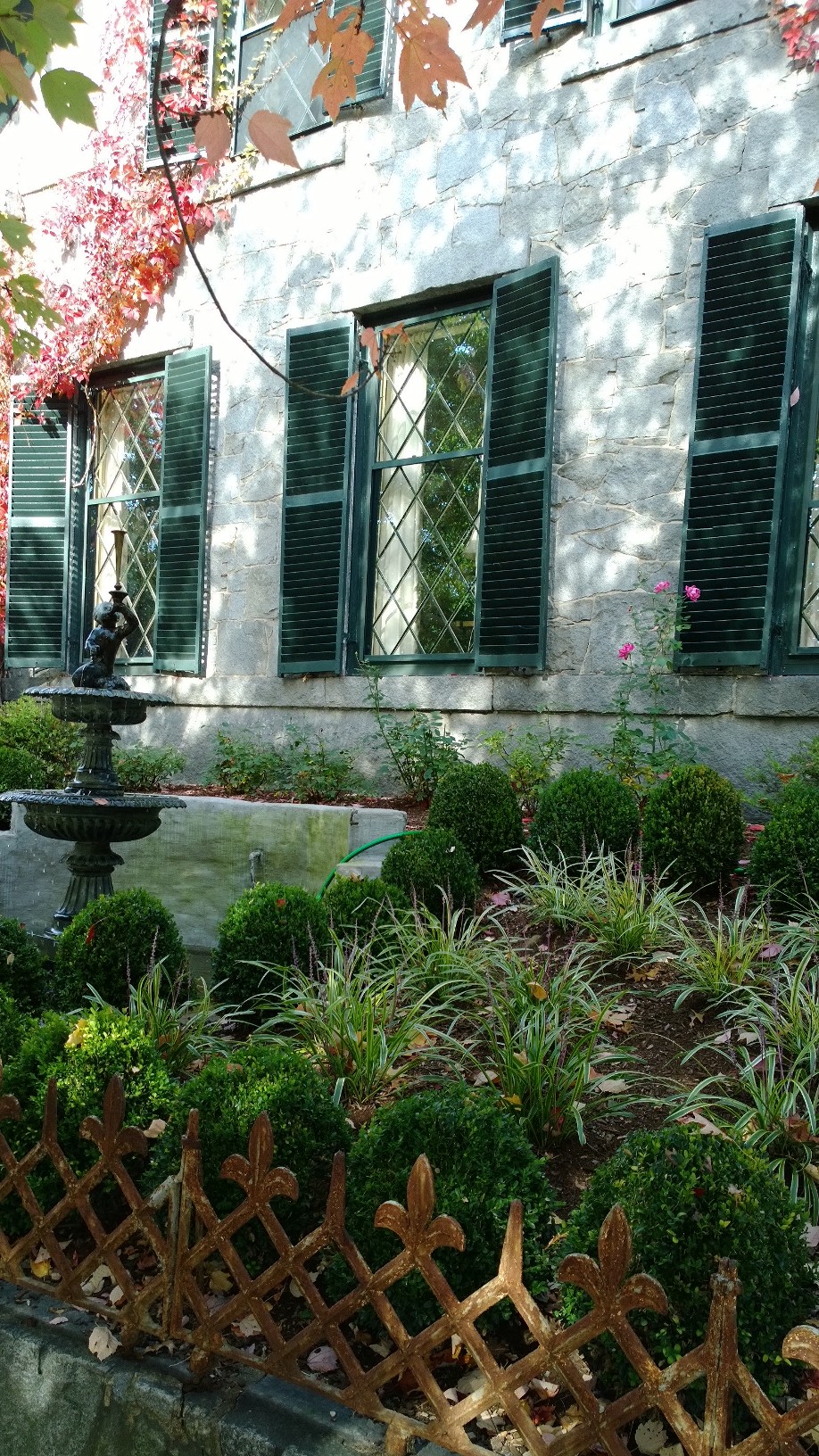
In Concord: mysterious blue flowers (I need to ask MisterSmartyPlants.com about them), a French style house, and a flower box at the second-floor shop called Nesting.

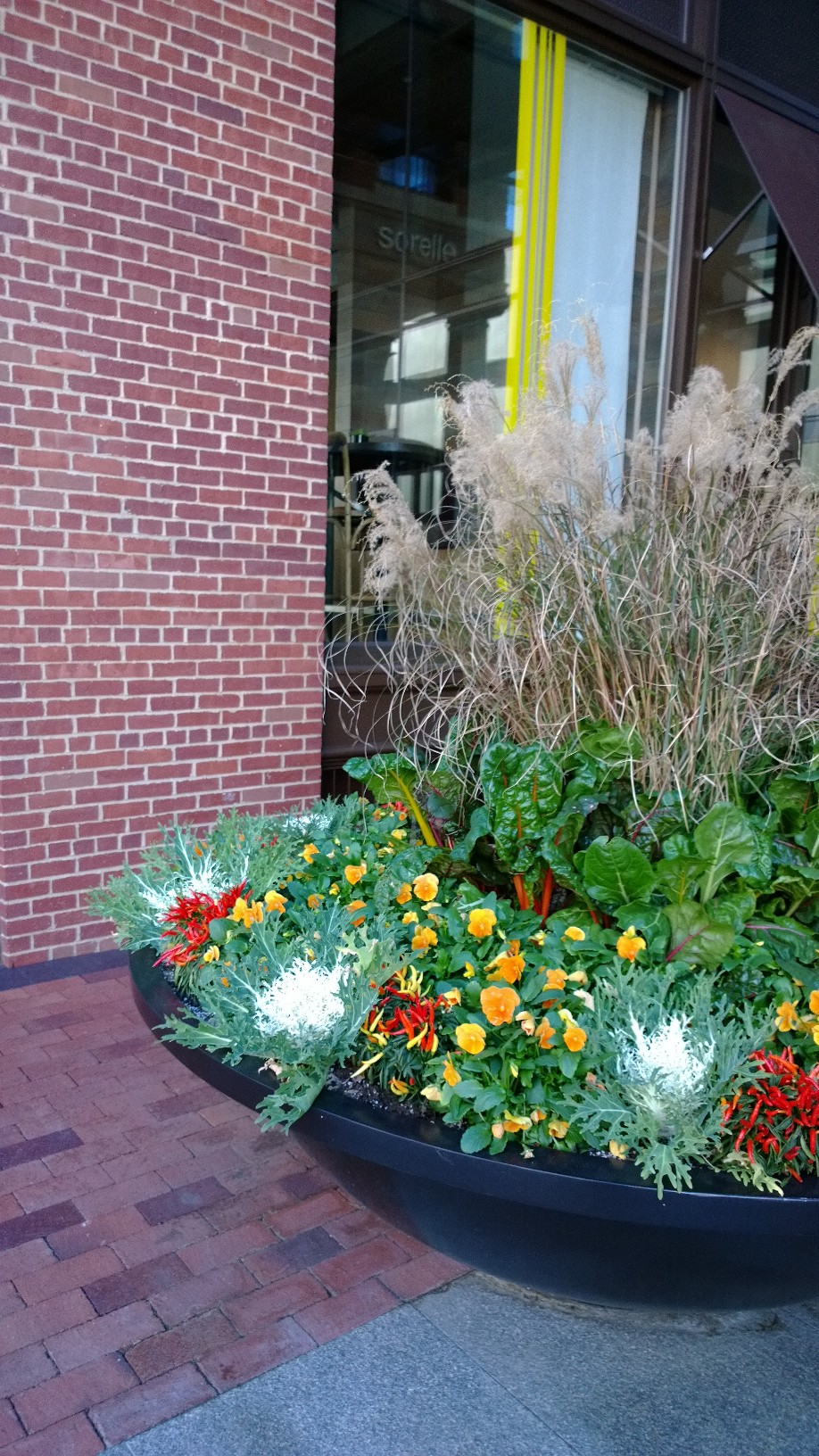
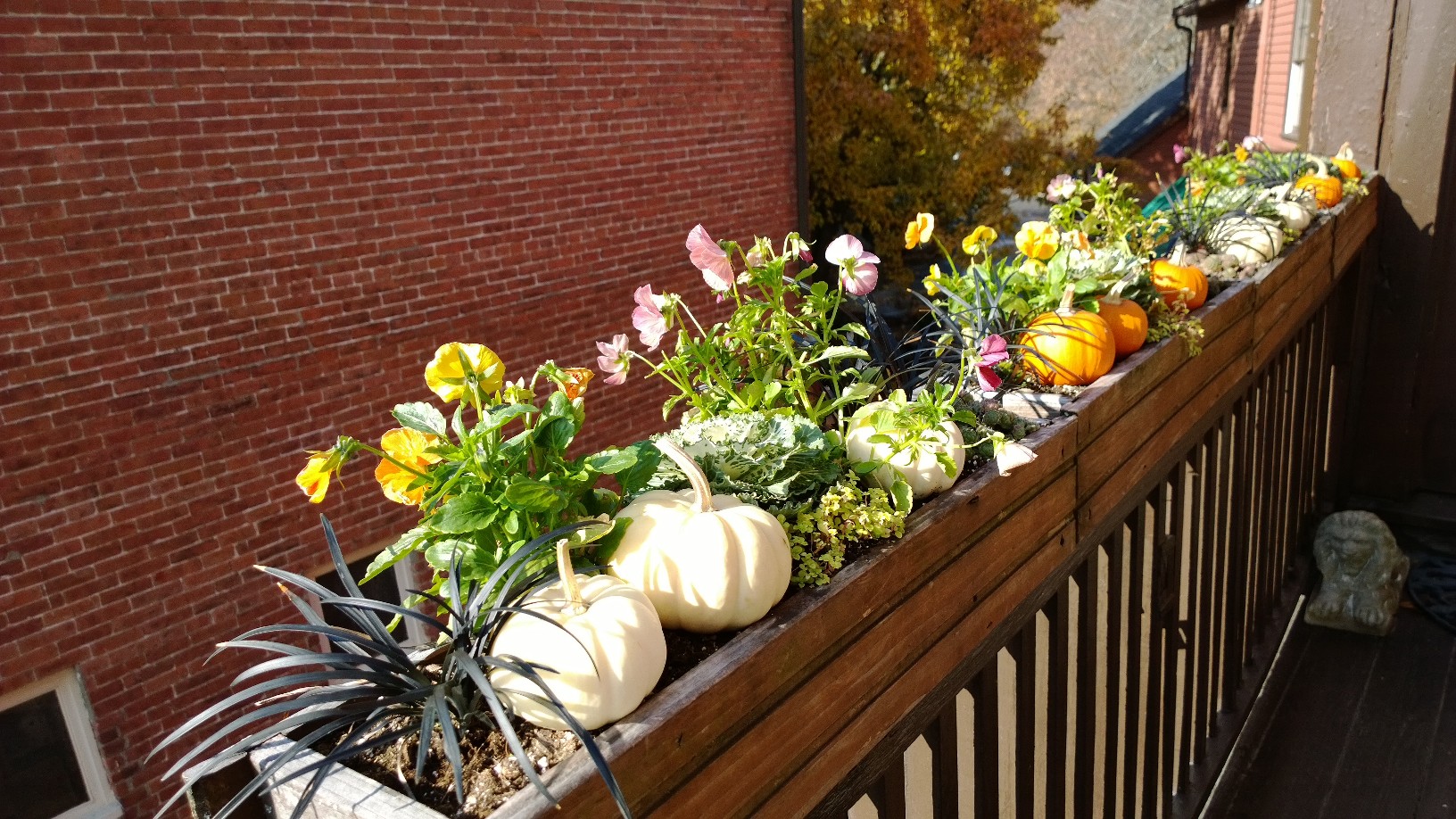
In Boston: An autumnal plant display on Congress Street and another on the Northern Avenue bridge overlooking Boston Harbor.

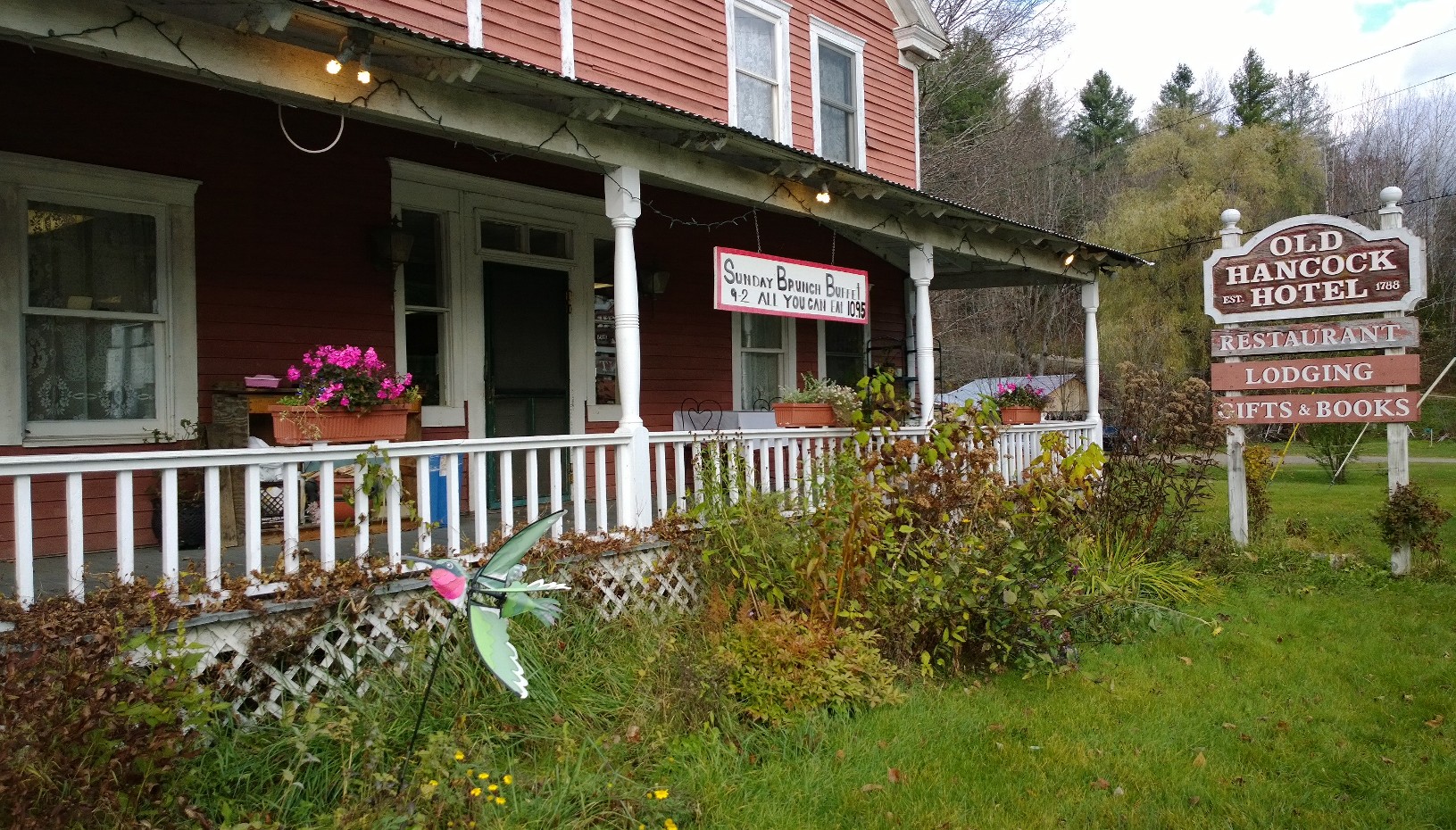
In Vermont: an all-you-can-eat breakfast inn.

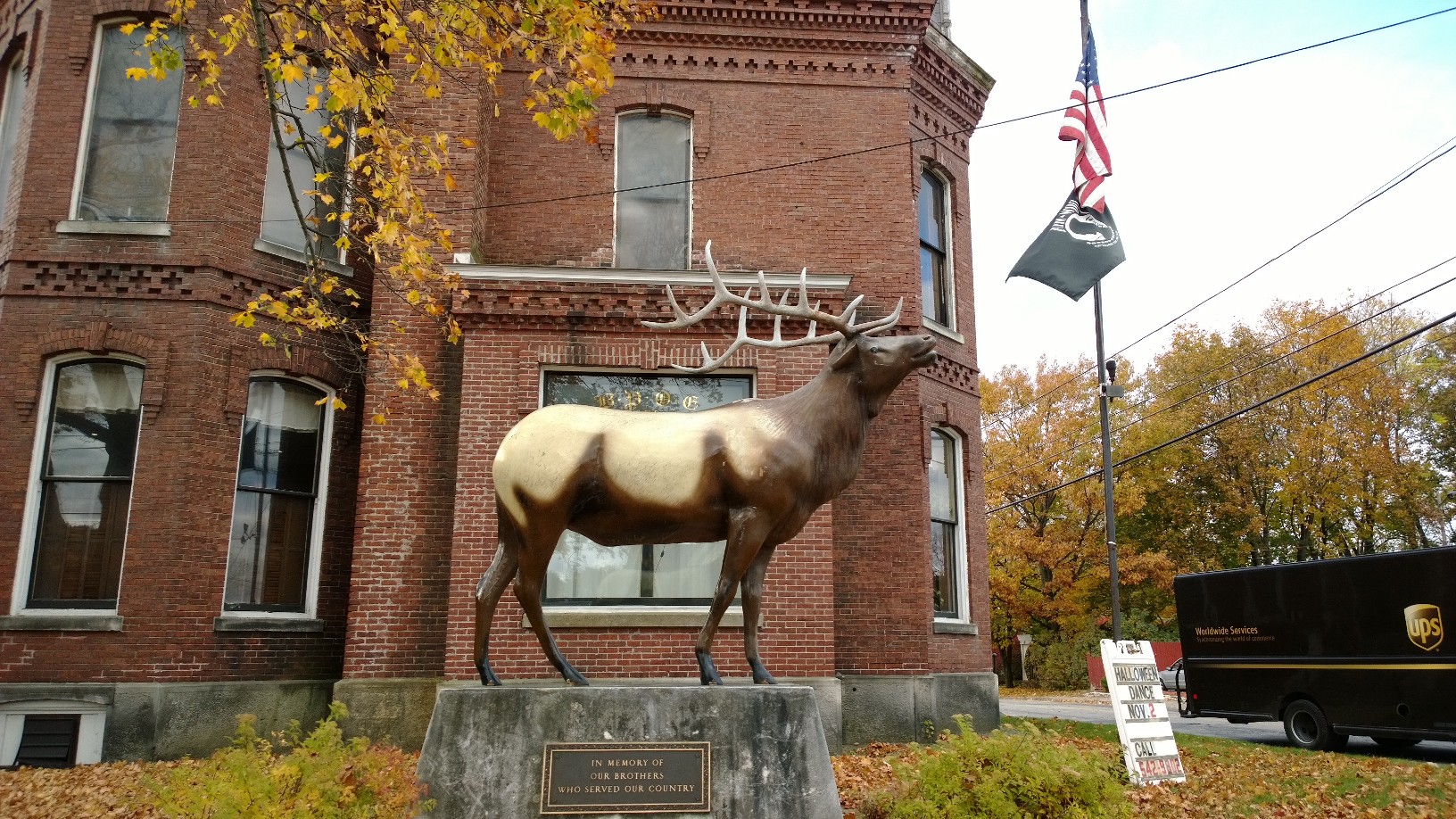
In Claremont, New Hampshire: The Elks’ elk.

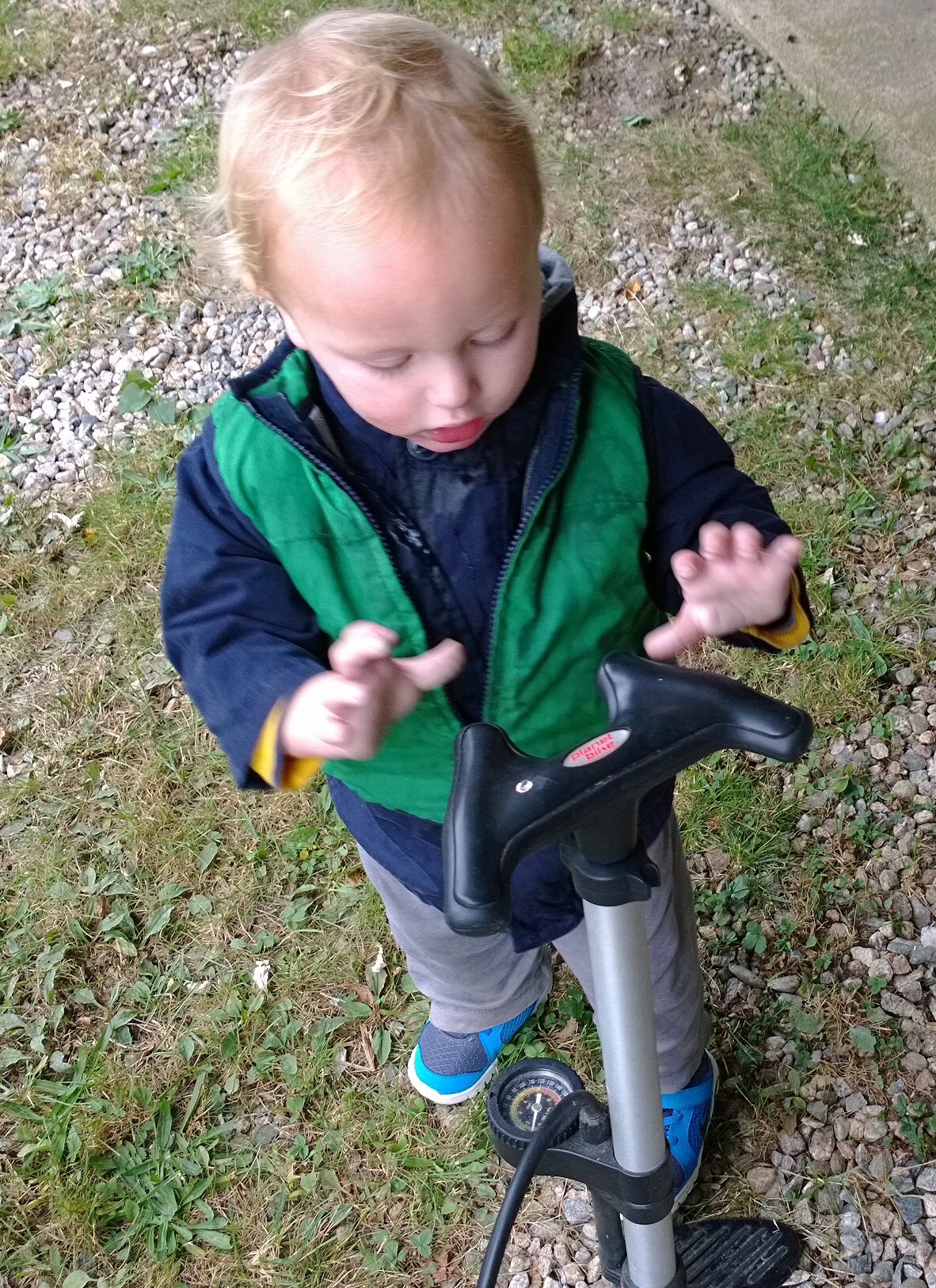
In Rhode Island: The Assistant Bicycle Inspector.

Now if I only had recent photos of Maine and Connecticut, I would have New England covered. Maybe next summer.

congress-st-planter

all-u-can-eat-brunch-vt

claremont-nh-elks

Boston-Harbor-Northern-Ave

French-style-house

flower-box-concord

pumping-the-bike-tire

In April, singer Will McMillan read a post at Suzanne’s Mom’s Blog, here, about research on why people feel joyful when singing with others.

Having dug into the physiological research and found that heartbeats often synchronize, Will wrote a blog post of his own and included an MP3 of singing “Blue Moon” with his frequent collaborator, Bobbi Carrey. “(They perform at Scullers in Cambridge this coming Thursday.)

It was in the comments at Will’s blog, here, that I found this YouTube recommendation — a deeply empathetic baby listening to a sad song. You see what music can do.

I hasten to add that for me, there are fewer happier moments than crying to a sad song. Don’t know how old you have to be to feel  happy-sad. I hope the baby feels good.

As the lowest of the “higher belts,” I’m exhibit A demonstrating that anyone can learn tai chi chuan.

It was really hard getting started. I couldn’t relate the moves to anything I knew before: not ballet, modern dance, yoga, ballroom dancing, folk dance … .

Then I learned that this kind of movement relates to nature. We practice moves called White Crane Spreads Wings and Ocean Breathing. We breathe like a tortoise taking a dive, we float our arms like a butterfly, and from a crouch postion, we rise like a phoenix. Now I get it.

For someone who nearly every year discovers that the lower back or a knee or the neck is far enough gone to require physical therapy, tai chi chuan has been a big help. It’s also great for exercising all your muscles and for balance. It’s constantly flowing.

Longevity in the class pays. If you just stick with it, eventually you can do some of the routines moderately OK, and you get to be referred to as a “higher belt” in front of brand-new students. Which is nice, even though you know it won’t last.

Photo: Zhen Ren Chuan

What a magnificent beast is the endangered snow leopard, so rare that pretty much the only way to get a gorgeous photo like the one below is to set up a camera with a spring that takes a picture when jostled!

The radio show Living on Earth recently had a story about snow leopards and how Tibetan monks are helping to save them.

Steve Curwood interviewed Tom McCarthy of Panthera, a nonprofit that protects wild cats.

“CURWOOD: So, Tom, your organization, Panthera, has enlisted the services of Buddhist monks to help conserve the snow leopard. Can you describe this program for us please?

“MCCARTHY: Yes. Correct. It actually came from a PhD research project of a Chinese graduate student … and one of the things in mapping [snow leopard] occurrence that she happened to notice was that snow leopard range corresponded very closely to where most Buddhist monasteries were in the region.

“Around each of the Buddhist monasteries, there’s a number of sacred mountains, sacred lakes that they routinely patrol to keep people from violating any of their regulations or for killing any animals. And so she kind of put two and two together …

“So our partners at ShanShui, the conservation organization, went out and formed a partnership initially with four different monasteries, and what Panthera and Shan Shui do is provide the monasteries with a little bit of extra training, some of the basic tools that they need to do snow leopard monitoring, so now they can go out and not only protect snow leopards, but also count snow leopards. They do an awfully good job of talking to their followers about protecting snow leopards and the value of snow leopards in the ecosystem, and the end result is we have a much stronger conservation ethic being imparted to the people across the plateau through the Tibetan monks.”

More.

Photo: Panthera
Camera trap photo of a snow leopard on the Tibetan plateau

Music Together

The-hammering-toy

When I arrived at Suzanne’s house after work yesterday, my grandson was having a bath. I hadn’t seen him for a few weeks. I stood in the bathroom doorway and smiled. When he saw me, he stared for a few moments. Then he got a funny little smile on his face and said, “Huh.”

Today we went with Suzanne to the Music Together class. I had decided to take a vacation day. His other three grandparents had already seen music class, and I was determined to get there, especially after hearing that last time he crawled into some unknown grandma’s lap for the lullaby!

Music Together is a great thing for babies and toddlers and their grownups. It’s franchised around the country. My husband and I attended one session a couple years ago with my older grandson in Arlington (where I believe Will McMillan now teaches, and wouldn’t I like to attend that one!)

Today’s class was chaotic and fun, with lots of rhythm and movement activities and little kids running around and banging percussive toys. They were all very good about putting the instruments back in the proper bins. (There’s a special bin called Taster’s Choice. That’s for the instruments that have gone in someone’s mouth during the exercises and thus need extra attention.)

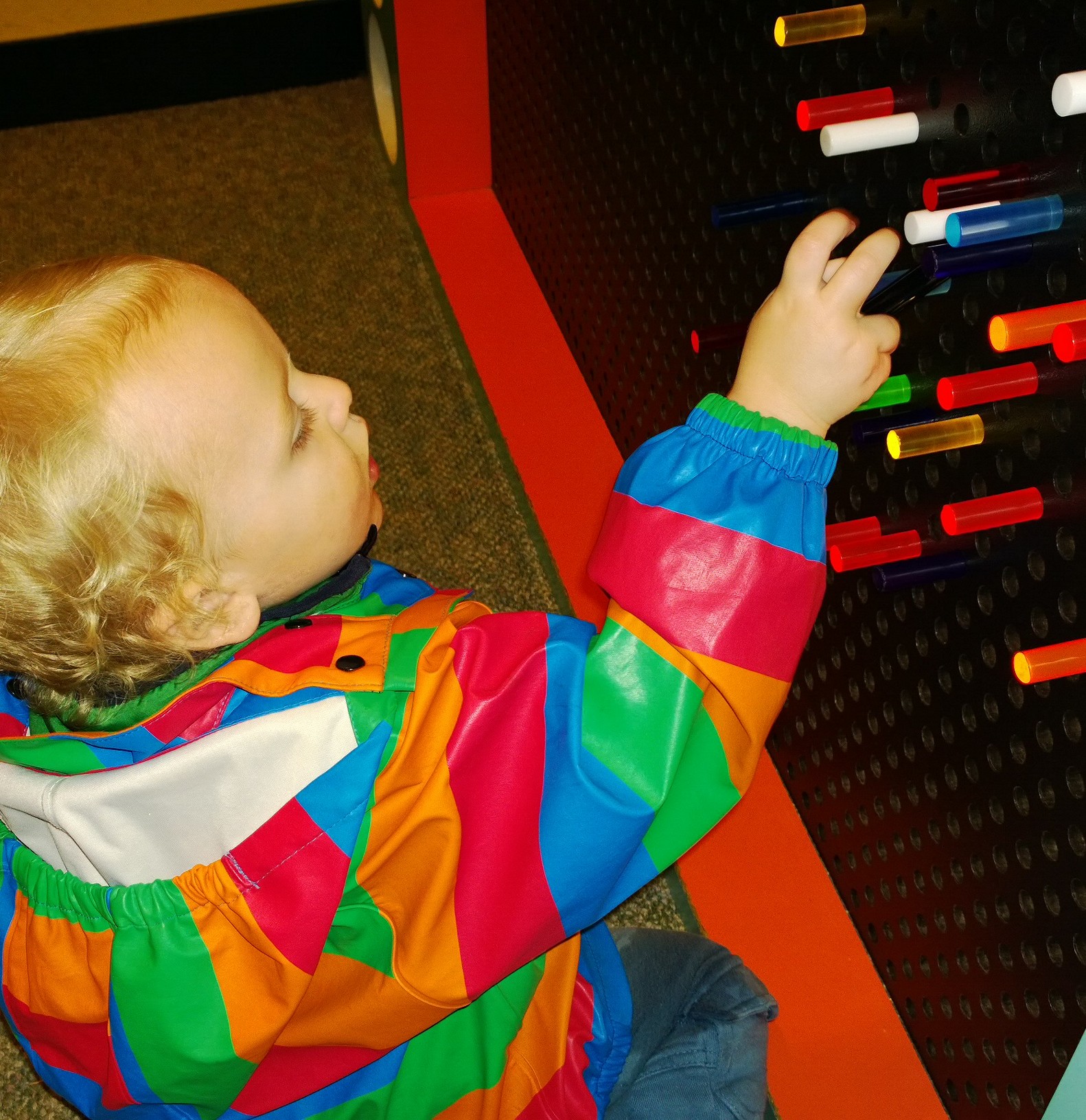
After the little man and I both had a nap, we went to the Children’s Museum. 🙂

Prov-RI-Children-Museum

Trust Vermont to figure out how to do this.

The state had a highway rest stop in Guilford that was overwhelmed with visitors. The toilets could not keep up. Portable toilets were brought in to help, and everyone hated them.

“State officials,” says the Federal Highway Administration website, “needed a solution that could be designed and built quickly for the next foliage season.

” ‘We were looking for an alternative because we couldn’t continue with that high level of frustration,’ said [Dick Foster, director of the Vermont Information Center Division of the state’s Department of Buildings and General Services.]

“To further complicate matters, the welcome center was slated to be replaced by a newer facility in 2000, so the ‘quick fix’ also needed to be low cost. Tom Leytham, an architect who had designed other rest areas in the state, suggested the concept of using a Living Machine to Foster. …

” ‘I’d heard about Living Technologies, who had come up with a very elegant, simple solution that cleaned wastewater through a natural process involving plants.’

“Leytham drove Foster to South Burlington, Vt., where Living Technologies had installed a Living Machine to treat municipal wastewater. …

“In December 1996, in response to an inquiry from state officials, Living Technologies proposed a sewage-to-reuse system to reduce flows to the leachfields by recycling treated wastewater back into the restrooms to flush toilets. The Living Machine could be installed to serve the existing facilities at the Guilford center, and because the system was a modular design, it could be moved to another rest area when the center was relocated.

“In only eight months, the system was approved by the Vermont Agency of Natural Resources, funded by the Federal Highway Administration (FHWA) and Vermont Department of Buildings and General Services, and installed by Living Technologies.”

The rest of the FHWA story by Molly Farrell, Liz Van der Hoven, and Tedann Olsen is here.

Katie Zezima at the NY Times adds more: “In a wing of the building, in the glass greenhouse, visitors look down on the vegetation from a grated ledge. The room, which offers spectacular mountain views, smells like a combination of mulch and chlorine.

“The building is heated and cooled by 24 geothermal wells. A similar system lies under the sidewalks to melt snow in the winter.” More from Zezima here.

Photo: Federal Highway Administration

http://www.fhwa.dot.gov/publications/publicroads/00mayjun/vermont.cfm
Asakiyume Bakes a Cake

I remember many days with Carole on the playground at recess playing house and gathering “grain,” which we pulled off a common weed and sometimes pretended to eat and sometimes buried — in case we might need extra food someday. Carole was a great kid to play with.

Asakiyume, whom I met in adulthood, is the kind of person I would have wanted to play with in childhood. She has a wild imagination that seems to fire on all burners 24/7. And now that she is old enough to carry out some wishes from age 10 or so, she is going right ahead with them.

For example: acorn cake. At Asakiyume’s blog, followers watched her leach the tannin out of her acorns over a period of days, changing the water repeatedly. We kept tabs as she next roasted the acorns, made acorn flour, and finally baked a cake.

“Today I baked an acorn cake,” she wrote on Nov. 3. “I used my ground-up, leached acorns, and a recipe from Hank Shaw (posted here). The body of this cake is equal parts acorn flour and wheat flour.

“And–it tastes fabulous. It has a flavor like molasses with a hint of ginger, and your tongue tingles a little afterward, like when you eat something peppery. …

“It’s a tiny childhood dream come true–feasting on the abundance of acorns! (Okay, helped by honey, oil, and eggs, not to mention that wheat flour, but still.)”

Read more here.

Photo: Asakiyume
Acorn cake with sugar outlining an oak leaf.