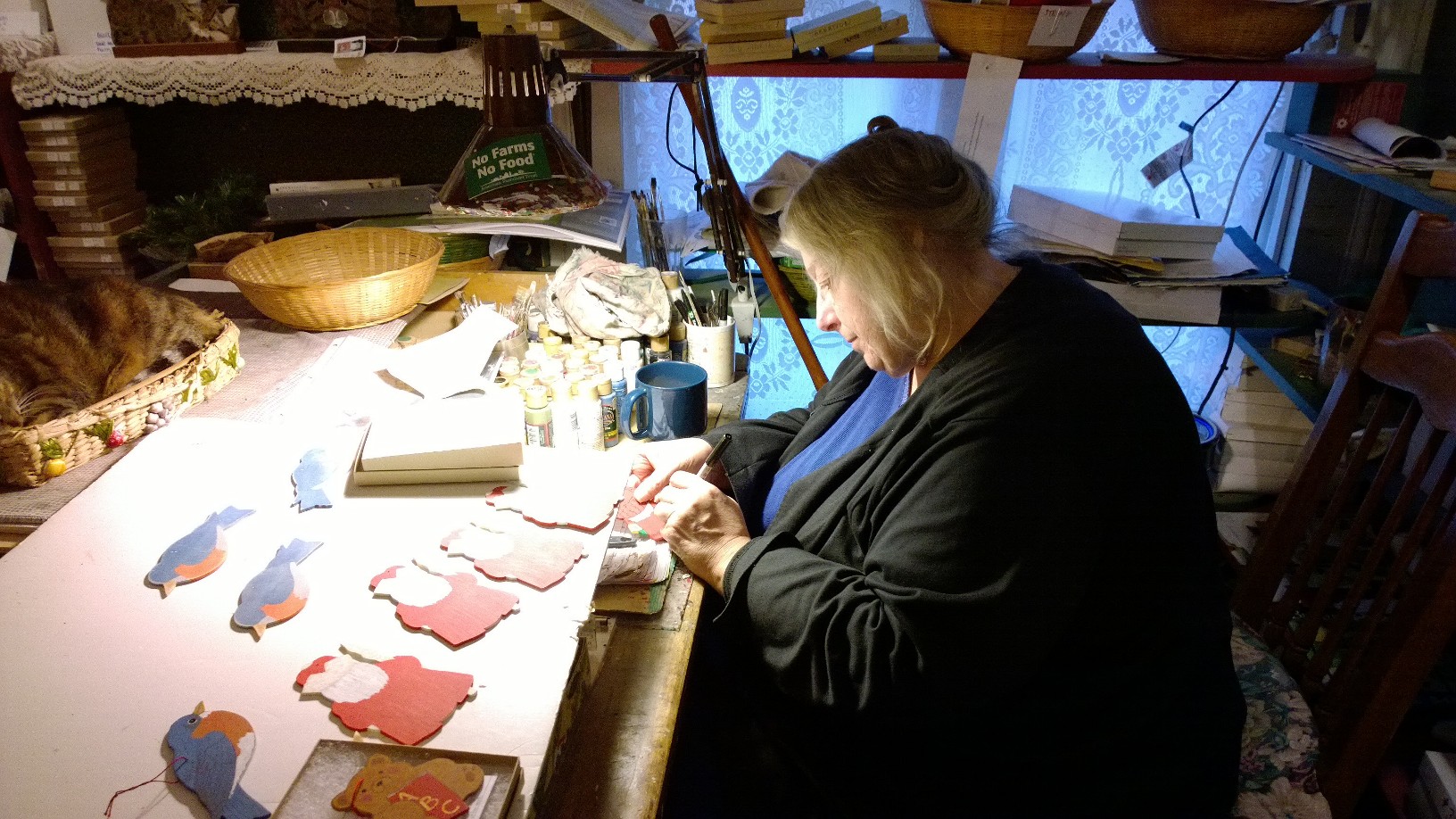
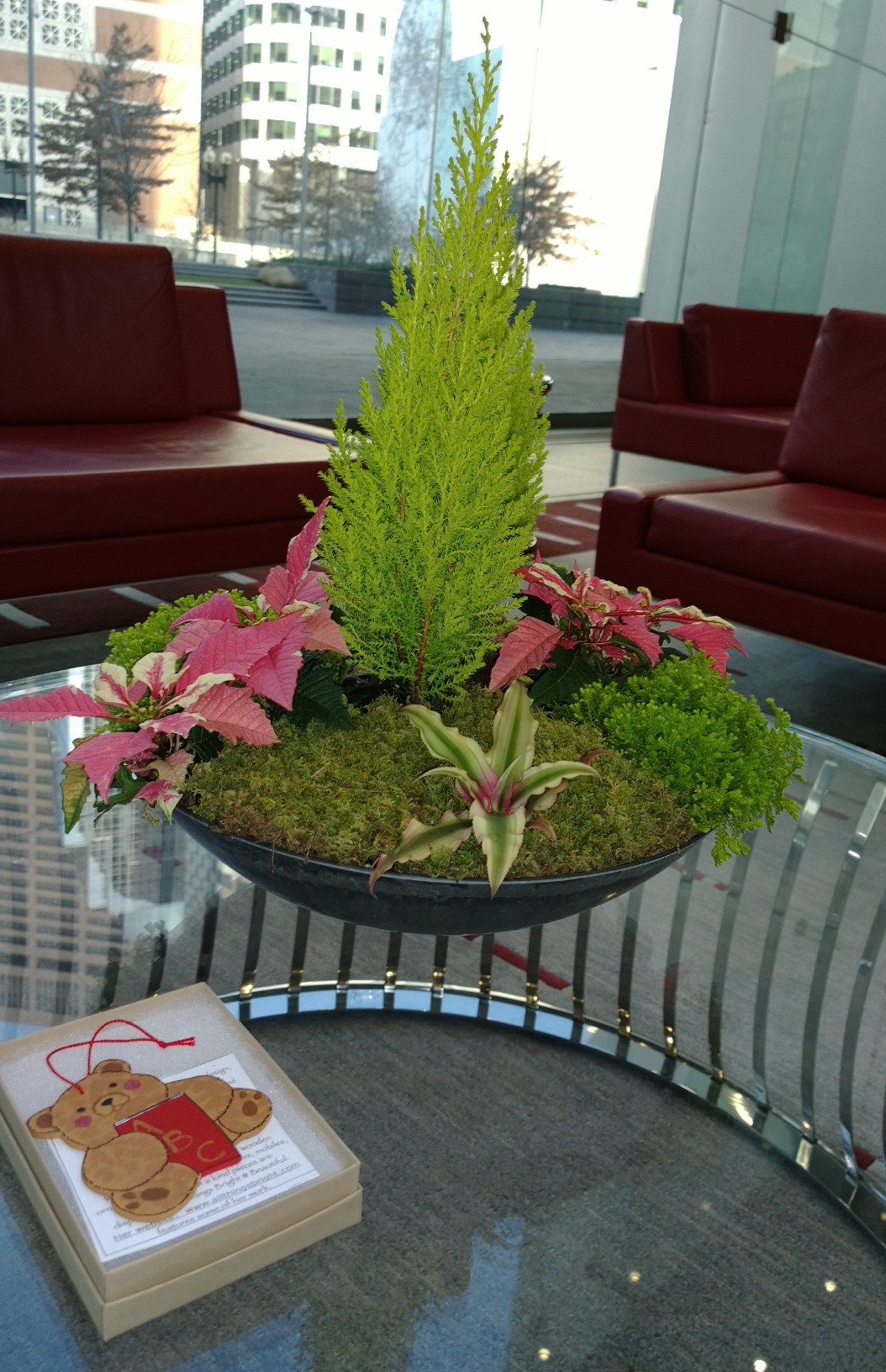
Gaelic McTigue, at All Things Bright and Beautiful in Waitsfield, Vermont, fills orders from around the world to create painted wooden ornaments. Here she is in her shop. Below is a bear ornament that she signed for two of our grandkids. (We got a Swedish elf ornament for our Swedish-American grandson’s tree.)
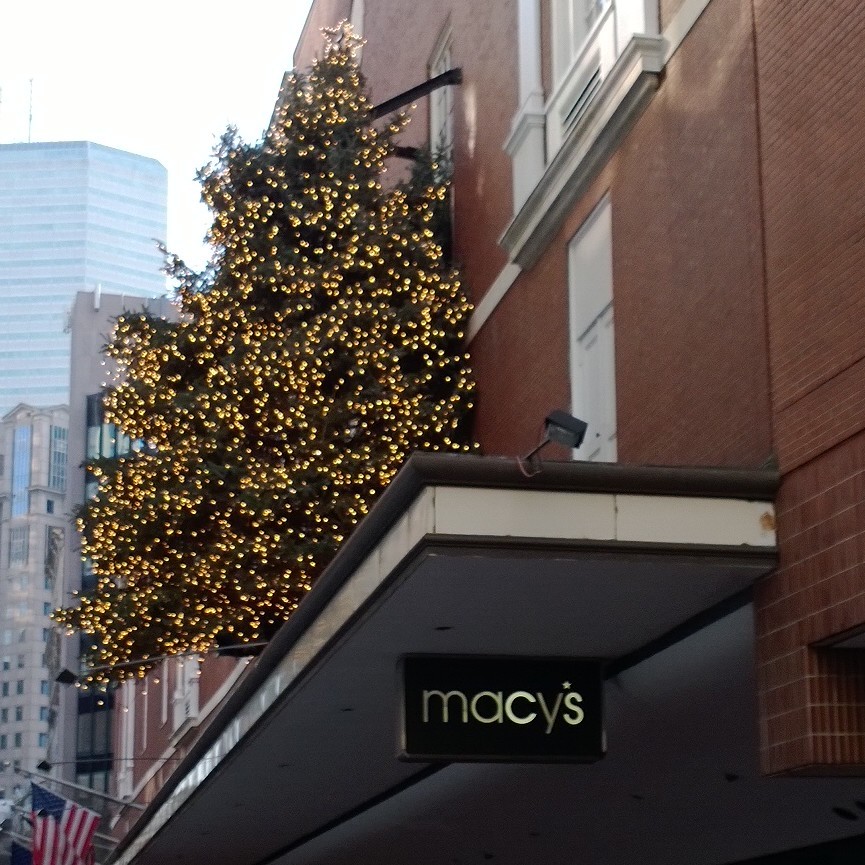
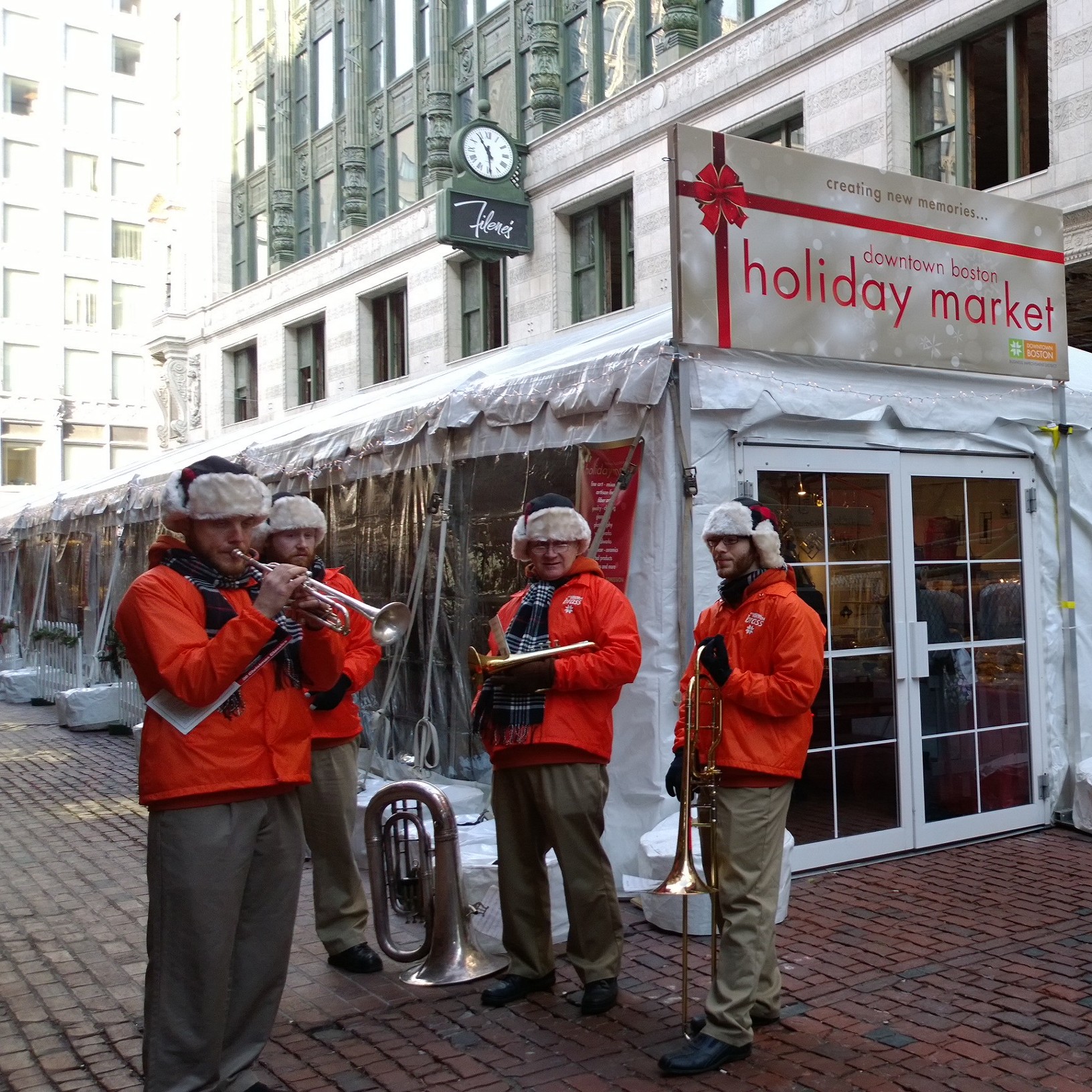
I’ve included a couple other seasonal photos: the Hampton Falls, New Hampshire, tree at Macy’s, the brass band starting to warm up at the craft market.
For a nice Advent carol, check out composer Jeff Fuhrer’s “What Are We Waiting For?” on http://www.soundcloud.com. I tried to upload the MP3 he sent but couldn’t figure out how. Catchy tune.
Francesca has published Pen Pal, an e-book for middle grades through adults. $3.99. (Paperback available by January 1.)
I can’t recommend the bookhighly enough. It’s the story of two unlikely pen pals who turn out to have a lot in common and, though living a world apart, actually end up helping each other in times of crisis.
Em is a girl in a marginalized community on the southern U.S. coast (think “Beasts of the Southern Wild”) who puts a message in a bottle. The message is ultimately received by Kaya, a young woman in a place that is an amalgam of Asian countries where minorities have struggled to preserve their language and culture. Kaya is a political prisoner because of her advocacy.
It’s an amazingly enjoyable and compelling story, not as didactic as I may have made it sound. Francesca even went to tutor English in East Timor last summer, capping off several years of research about various locales in Asia and on the Gulf Coast.
Here is the message in the bottle starts it all off:
“Dear Person Who Finds My Message,
“I live in a place called Mermaid’s Hands. All our houses here rest on the mud when the tide is out, but when it comes in, they rise right up and float.
“They’re all roped together, so we don’t lose anyone. I like Mermaid’s Hands, but sometimes I wish I could unrope our house and see where it might float to. But I would get in trouble if I did that, so instead I’m sticking this message in a bottle. If you find it, please write back to me at this address. Tell me what the world is like where you are.
“Yours truly,
“Em”
Francesca says, “The ebook of Pen Pal is out in the world at three out of the four locations it’ll be available at–Amazon, Barnes & Noble, and Kobo.”
If you like the book, enjoy its special website, here. And spread the word.
Aaron Cynic writes at Shareable, ” ‘Communication, collaboration, cooperation—those are skills, not just words,’ said Salim Al-Nurridinn, founder of the Healthcare Consortium of Illinois, while standing at the gate of the Cooperation Operation (Coop Op). As the sun slowly began to set on Chicago’s South Side, more than 100 people were gathered in front of a fence surrounding a brand new community garden. …
“What was once a toxic vacant lot is now home to raised garden beds filled with kale, basil, tomatoes, cabbage, carrots, and even a few stalks of corn. Many of the beds are made from repurposed boats donated by a nearby marina, a partnership that another local community organization called Friends of Pullman helped to broker. …
“Since the group began building the garden, long-time residents of the Pullman Neighborhood have been a part of the process. Charles Winston, who has lived in the neighborhood for decades, said he began volunteering his time from the beginning.
“ ‘I just came on over,’ he said. ‘I saw people over here so much and said, “I should be over here volunteering my services too.” If we can get everybody to do that, it’d be a wonderful thing.’ ” More.
The Christian Science Monitorcollects stories like these from all over the world — and there are lots of them — and features them in the Making a Difference section of the online paper.
Photo: Shareable
Salim Al-Nurridinn cuts the ribbon to open a new community garden created by volunteers on Chicago’s South Side.
At Narratively, Ben Fractenberg has a photo essay about torn posters in the subway, a kind of “underground” art.
He writes, “As a full-time reporter and photographer in New York City, I spend a lot of time taking the subway. While running from place to place, the eroded subway posters lining the walls of stations started to catch my eye. Many looked like abstract paintings, the textures and colors and lines almost perfectly placed. I started to photograph ones that stood out to me, and as I traveled the city as a general assignment reporter for DNAInfo.com New York, I captured them for more than a year.”
In the torn posters, Fractenberg sees Jackson Pollocks, Mark Rothkos, and threatening smoke. Reminds me of my three-year-old grandson, who likes to point out clouds that look like dragons.
(Narratively says: “Each week, we explore a different theme and publish a series of stories—just one a day—told in the most appropriate medium for each piece. … Every story gets the space and time it needs to have an impact—an approach we call ‘slow storytelling’ or ‘slow journalism.’ ” The site was named one of TIME’s “50 Best Websites of 2013.“)
Photo: Ben Fractenberg
Someone is trying to send a message. Are you tuned in?
The Globe‘s Callum Borchers wrote recently about an organization called Seeding Labs, which presented at the IDEAS conference in Boston.
Founder Nina Dudnick, he says, “collects and ships used lab equipment to developing countries.
“Last year, Seeding Labs hosted six scientists and researchers from Kenya, one of whom was a chemist, Mildred Nawiri, who is studying how certain vegetables that are indigenous to West Africa might help prevent cancer.
“On Wednesday, Dudnick pointed to Nawiri’s research as an example of work that is unlikely to be done in the United States, because the vegetables she is studying do not grow here.
“And whatever benefits she might discover could go unrealized without modern equipment. Before Seeding Labs, Nawiri was using techniques Western scientists employed in the 1800s, Dudnick said.”
Dudnick points out that “this talent really is everywhere. The problems that face us, like cancer, don’t respect boundaries drawn on a map, so why should our scientific community?”
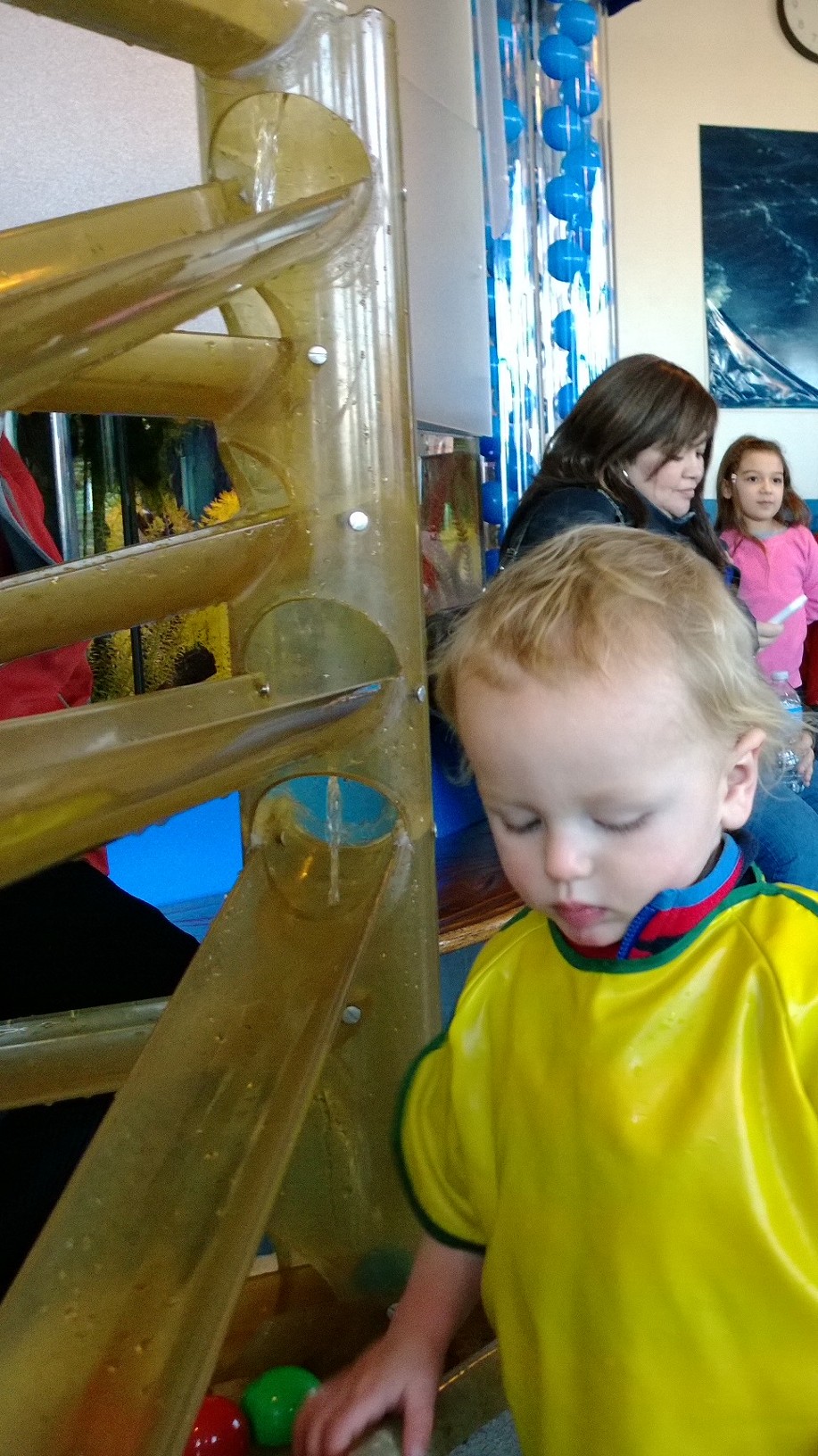
When you take your father’s mother (Farmor) and your mother’s father and mother (Morfar and Mormor) to the Children’s Museum, you start by showing them how the fluffy balls fly through tubes and out the top, and you show them the water room, where you have to wear a smock.
Then you run up and down the ramp to the second floor, up and down, up and down, and up and down some more, laughing and turning your head back to make sure they are all following at a lively pace.
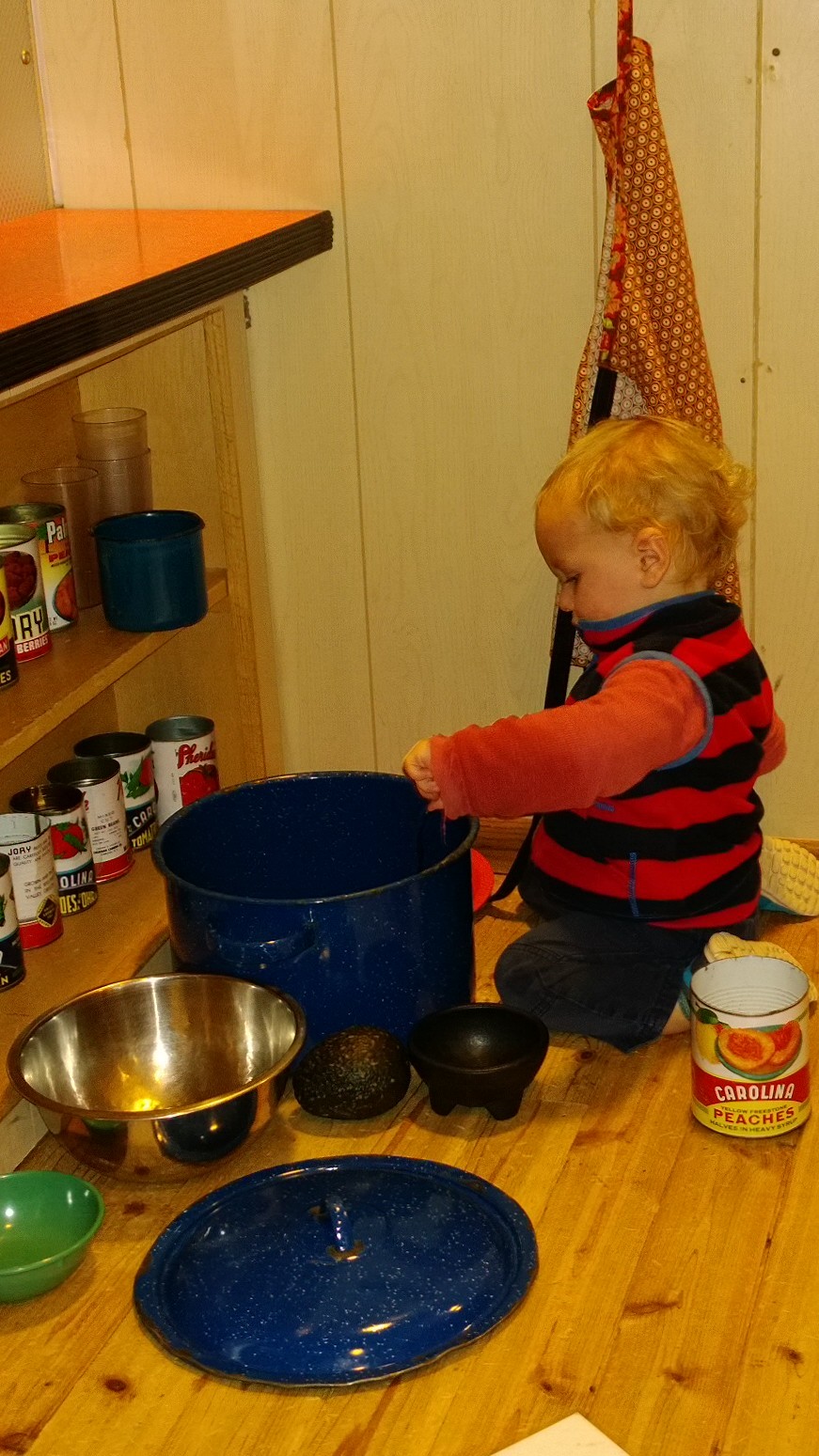
Once you are sure they will behave themselves and not go wandering off when you have work to do, you can settle into the kitchen and concentrate on putting the cheese wedge in the pot and stirring and taking it out and putting it back in and putting the lid on top and taking it out again and putting in a potato and stirring and shaking a can of tomatoes upside down until every last bit is in the pot with the potato and stirring and putting the lid on. Then, you know, you may need to take the stacked dishes and lay them all about on the floor and then restack them and put them neatly on the shelf.
It’s a lot, and you need to be sure the grandparents are sitting still and paying attention so you don’t have to worry about them for a while.
Free Arts NYC is one of several free arts programs around the country supported by people who believe every child should have arts opportunities. Too many school districts have cut back on programs that trigger the creative imagination, and children whose families can’t pay for extra classes often miss out the most.
When Suzanne and Erik were living in Harlem, Suzanne volunteered for Free Arts NYC at the Dream Charter School, having learned about it from her 92nd Street Y ceramics teacher. The teacher told her that the Y had actually been the organization responsible for bringing the concept to New York.
In childhood, whenever Suzanne wrapped up one arts class, she could hardly wait to sign up for the next one. She knows what the arts can mean to a child and has carried that appreciation into adulthood and the birthstone jewelry at Luna & Stella (the company behind this blog).
So from now until December 31, $5 of every Birthstone Charm Necklace will go to support Free Arts NYC. More about the promotion here, at Free Arts NYC, or here, at Luna & Stella.
The day after Thanksgiving is a day that many people’s thoughts turn from an unusually wonderful and gigantic meal to fitness.
In an increasing number of locales, people who have never worked out before are now working out with their dogs. Because dogs need fitness, too.
Bill Littlefield’s sports show on WBUR radio, which covers both traditional and offbeat sports, sends Only A Game‘s Karen Given to Hinsddale, Illinois, to interview K9 Fit Club president and founder Tricia Montgomery.
Says Montgomery, “K9 Fit Club is a place where pooches and peeps get together and have a healthy and happy lifestyle. We do exercises, we do workouts, we bond, we socialize and most of all we have fun.
“K9 Fit Club was originally developed in 2008 but we didn’t open the doors here until Aug 5, 2012. We started in Hinsdale, Illinois in our first location and now we have corporate facilities, we also have locations starting all the way from Monterrey City, Mexico, all the way to New York, into Raleigh- Durham, North Carolina, up into Florida, St. Louis, all across the country. …
“Our programs were developed by veterinarians, by personal trainers, by dog trainers, and by doctors and psychologists, actually. So we’re not just a bunch of people running around with a bunch of dogs jumping up beside us. Our programs have really been developed for people who have never worked out a day in their lives to people who are very, very fit. …
“I love what I do, how cool is this? I get to come to work every day with my dog and I get to have the coolest job working with dogs and people and helping change their lives and feel better about themselves.” More.
Earlier this month I wrote about a restaurant founded on gratitude. I liked something the owner said: “gratitude spills over,” meaning if someone does something nice for you it makes you feel like doing something nice for someone else. It got me thinking more about gratitude, and I decided to make a list.
Suzanne’s Mom is grateful for: A peaceful neighborhood to live in, shelter, food, clothing, other people, a way to make a living, music, art, theater, books, poetry, nature. And especially, my family and a baby who lights up with a megawatt smile when I arrive, a one-year-old who wants to snuggle on the rug with a book, and a three-year-old who exclaims with wonder, “Grandma! Are you my daddy’s mommy?!”
Jeremiah Gallardo, a Colorado native, clicked on yesterday’s post, and I thought I’d have a look at his blog, too.
I don’t know much about Colorado. The closest I got to knowing anything at all was having a college roommate from Boulder.
Jeremiah has a nice entry today about a German Christmas market, the Denver Christkindle Market, which he took photos of. He says it runs until December 25.
“The vendors are in little wooden houses,” he writes, “that were built days before the market event.
“My first stop at the market was the hand-blown glass vendor. I watched him make a glass icicle decoration in a few minutes, right before my eyes. I bought a green glass pickle decoration.
“Why on earth did I buy a green glass pickle? Because it’s linked to a German tradition where you hide a pickle deep inside the tree and the first child to find it gets to open an extra gift.”
You know, if I had a glass pickle, I might just try it myself.
More about the German market’s crafts and food at Jeremiah’s blog, WhiteLiger.net. You will like his pictures. And his enthusiasm.
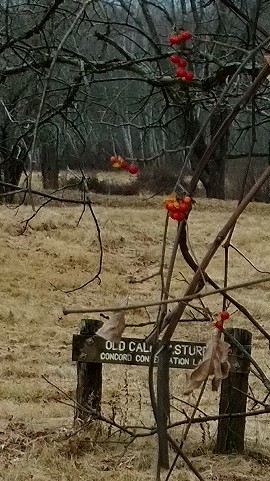
Thanksgiving wreath on the Christian Science church. Berries at the Old Cow Pasture.
One-man band playing “Nowhere Man” yesterday at Porter Square subway stop in Cambridge. Park Street station vendor.
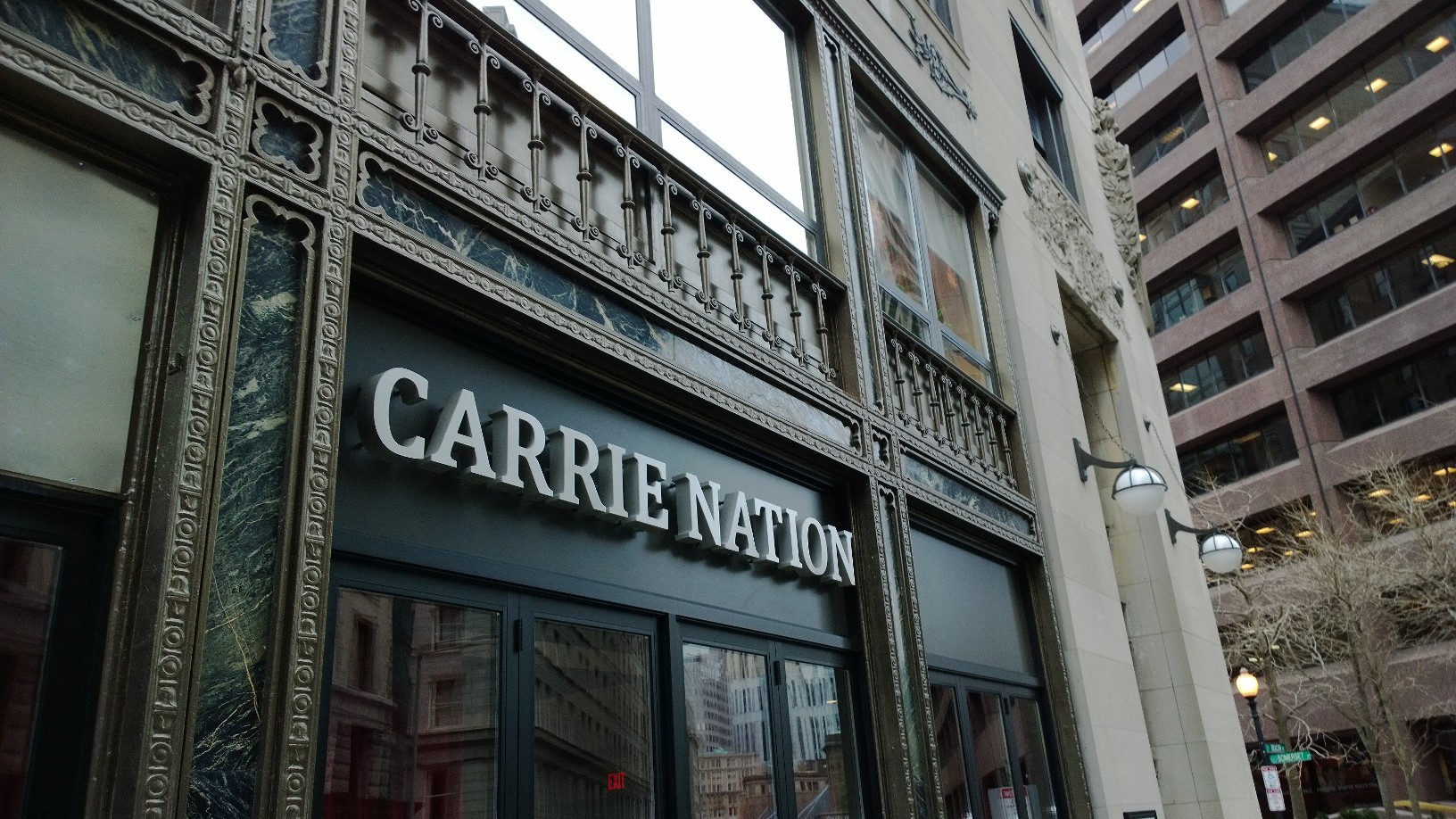
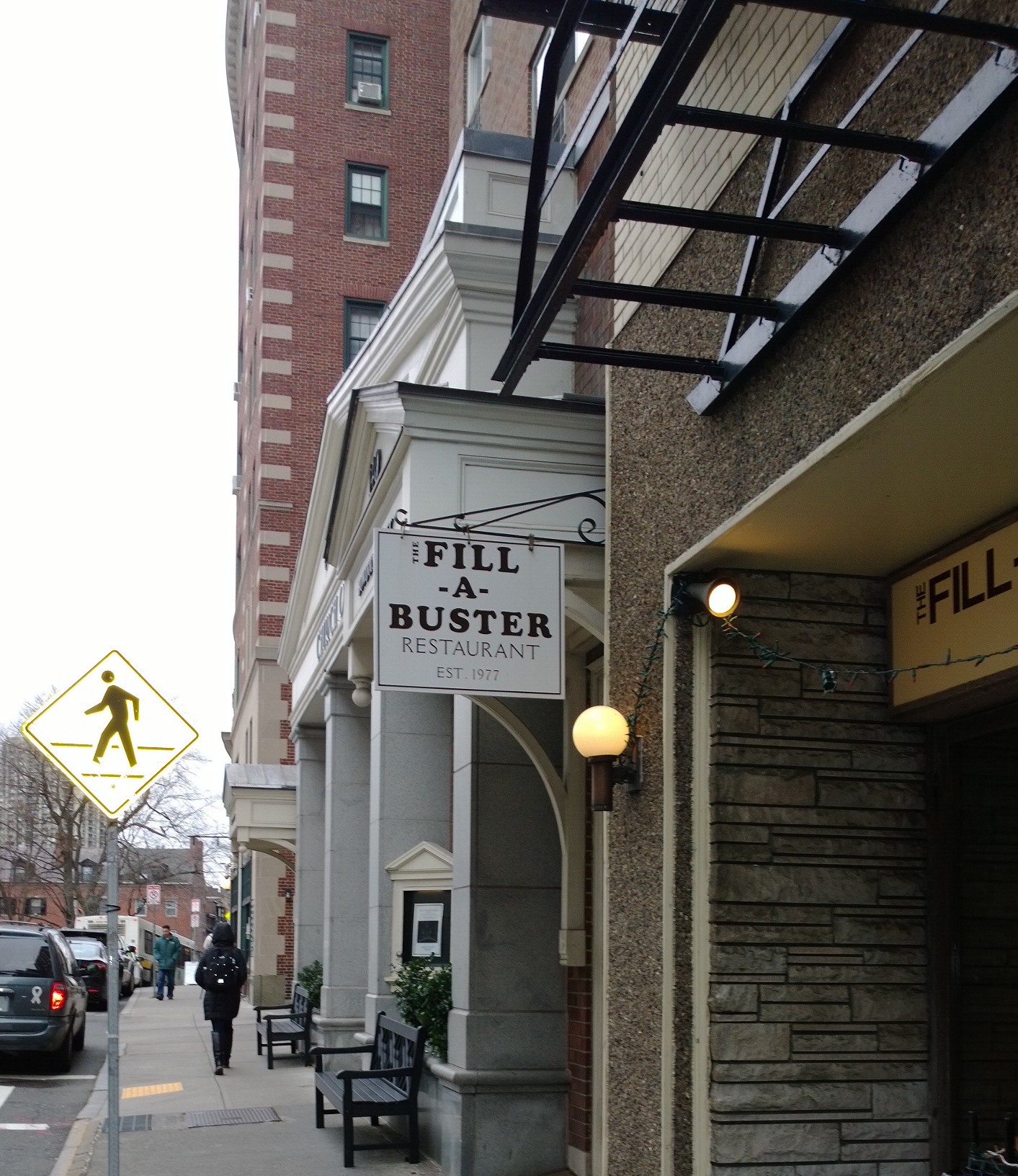
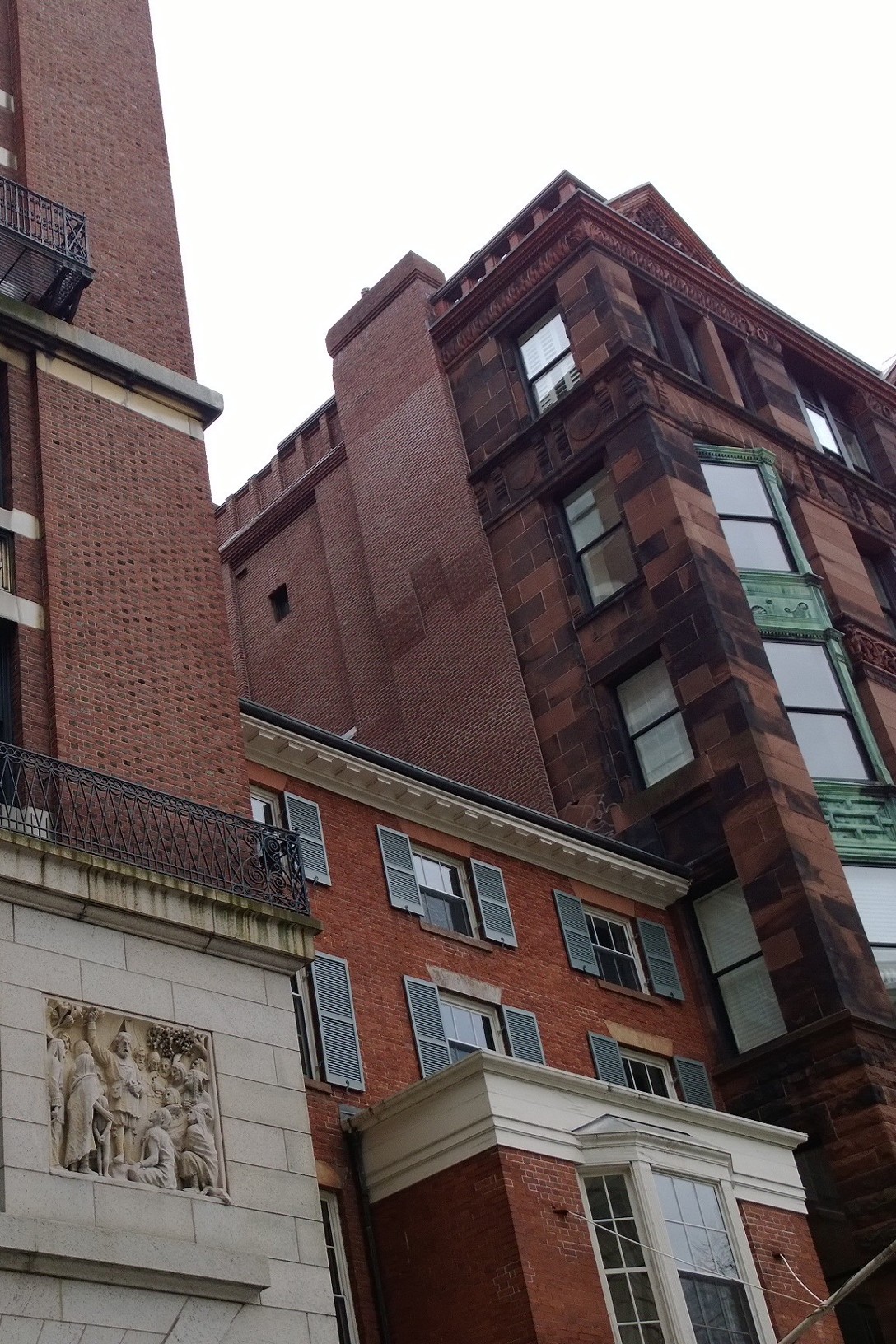
Carrie Nation, the Museum of African American History, and Fill-a-Buster on Beacon Hill.
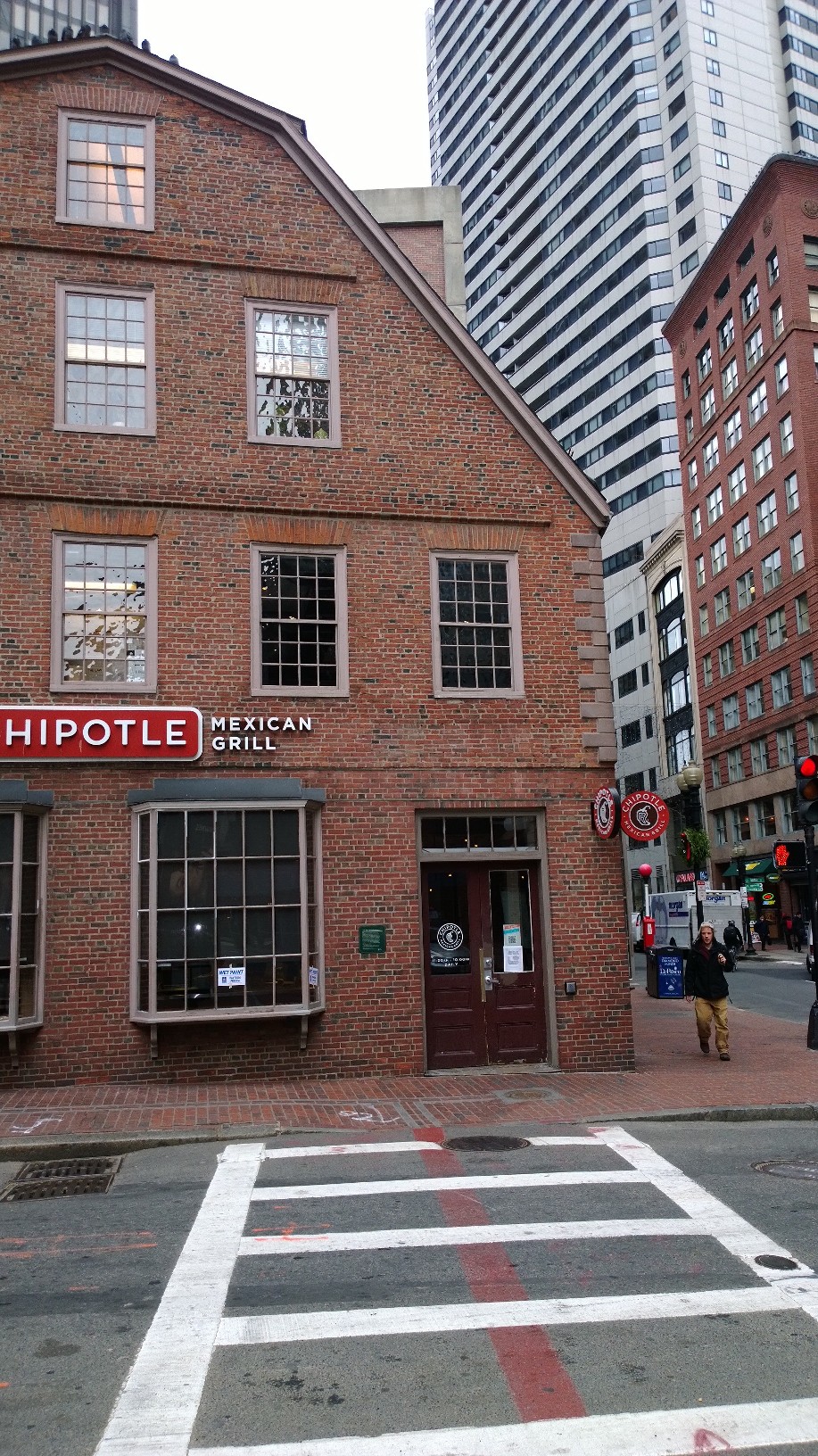
And last but not least, the building that once housed the publishers Ticknor and Fields, the American publishers for Charles Dickens. It may say Chipotle, but I know better.
Andrew Sullivan‘s Nov. 24 “Face of the Day” leads one to a delightful website about a photography adventure in Siberia.
“Two years ago,” writes Sasha Leahovcenco, “I had the amazing opportunity to go literally to the end of the earth to photograph people who never had their photo taken.
“At schools, churches, homes and hospitals I could give people a moment to forget their troubles and just smile for the camera. But while shooting with nomadic reindeer herding families it was me who was most deeply touched by the experience. For although my hosts had few material possessions they shared with me something rare in the world – a sense of peace and satisfaction with life.
“This March we are going back on a new journey across Chukotka. We are going to travel over 1,000 miles and reach out to the most unreached places in Chukotka. We will visit people who have never had visitors in their life, stopping by every village and tribe on the way, giving them warm clothes, shoes, gifts, and simply showing them grace and love.
“The very exciting part of the trip will be taking pictures of the natives, printing them on the spot, and handing them to the villagers. This will be the very first time that these people had ever had their photo taken. …
“Our documentary film about this journey, will bring the voices of this land to people all around the globe. We hope to engage humanity’s deep rooted fascination with nature and desire to understand humanity. Perhaps by getting a glimpse of this nomadic way of life we will reflect on this modern world and what in our lives is truly important.”
ArtsJournal.com is a great source of leads from around the world, which is why I sometimes come up with stories from far away places like Belarus. The ArtsJournal blog covers art, theater, film, books, dance, music, media — and interesting creativity tidbits from the world of psychology.
Recently a link to the British publication The Stage highlighted a story about UK policymakers taking steps to build the next generation of artists.
Nicola Merrifield writes that the national strategy, Building a Creative Nation, “is calling upon the UK’s 107,000 creative sector employers to each recruit a person aged 16 to 24 by 2016.
“The initiative is designed to ensure that young people are able to gain paid jobs in arts organisations. It will urge employers to join organisations such as the Royal Opera House and Ambassador Theatre Group in signing up to the Fair Access Principle, which encourages responsible recruitment practices.
“As part of the campaign, Creative and Cultural Skills, the sector’s leading body for skills development, will create 5,500 apprenticeships, paid internships and traineeships across the UK by 2016.
“This is part of CC Skills’ £15 million Creative Employment Programme launched earlier this year to combat unpaid internships in the arts sector, which aims to subsidise 6,500 training schemes for people aged 16-24. This scheme, which was financially supported by ACE, has seen employers take on 1,000 unemployed people so far.
“Industry leaders including former Royal Opera House chief executive Tony Hall, ticket provider Live Nation’s international chief operating officer Paul Latham and Dirty Dancing founding co-producer Michael Jacobsen are backing the Building a Creative Nation strategy.
“Pauline Tambling, joint chief executive of CC Skills, said: ‘We’re looking to build upon the work that our supporters have been doing to help young people into work across the creative industries, which has already achieved so much.’ ”
Photo: Diana Martin, Chatham Daily News
Benjamin Alexander studies at Canada’s National Ballet School
I loved the movie Billy Elliott, about an English boy who is drawn to the fun and beauty of ballet after his mother’s death casts a deep pall over the family. His macho dad and brother, coal miners toughing out a bitter strike during the austere Thatcher years, are appalled and even hostile. But it’s hardly a spoiler to say that art wins the day.
Recently I read an article about contemporary Billy Elliots and was intrigued. They all seemed very matter-of-fact about their interest.
Isabel Teotonio in the Toronto Star writes, “This year, Canada’s National Ballet School (NBS) has the highest percentage of boys in its entry-level Grade 6 class in its history: 65 per cent. …
“The phenomenon isn’t confined to NBS. According to the Australian Bureau of Statistics, dance was the 10th most popular ‘sport’ for boys aged 5 to 14 in 2012, with participation rates rising in recent years.
“And in the United Kingdom, an August survey of 1,000 children aged 2 to 12, done by retailer Mothercare and charity Save the Children, found more boys (8 per cent) than girls (5 per cent) wanted to become a dancer. In order of preference, the top jobs for boys were doctor, soccer player, dancer and teacher. For girls: doctor, teacher, soccer player and dancer.” More.
As I was poking around the web for more, I found this WordPress blog listing programs for boys. The blogger led me in turn to a nice story by Ellwood Shreve in the Chatham Daily News, here, about an enthusiastic NBS student, above.
It might be getting a bit cold for the outdoor classroom, but this article by Melanie Plenda in the Boston Globe suggests that not even snow will stop these preschoolers from learning about nature.
“In the back of the farmhouse at Drumlin Farm Community Preschool in Lincoln sit five chickens surrounded by a gaggle of preschoolers — eyes wide, waiting. The teacher opens the egg box door, and the students, staying slow and small like they were taught, peer in.
“ ‘And when they find an egg there,’ says Paula Goodwin, director of the school, ‘we ask them to make a nest with their hand, and they very gently pass the egg from one to another. And it’s a very special time, because they don’t need a lot of special instructions except to look for a child whose hands are in the shape of a nest. … It’s one of the magical moments in the school year. They are so generous with sharing the egg, and they may not have even learned each other’s names yet.’
“Drumlin is a nature- and farm-based preschool, which means that rain or shine, maybe not sleet but definitely snow and temperatures down to 15 degrees, the 14 3- to 5-year-olds are outside learning math, science, language, and how to be curious. Visiting captive wildlife, doing farm chores, and taking part in planting activities provide opportunities for all kinds of learning.” More.
Judging from my three grandchildren, I’m pretty sure no kid needs to “learn how” to be curious (“Poppa, what is the sun for?”), but we all hope for schools that continually encourage their curiosity.










 Suzanne's Mom's Blog