A program in Europe that deals with school dropouts and youth who are in trouble with the law is turning many around.
Katrin Bennhold writes for the NY Times about Dance United. “This is no ordinary dance company. The young people at Dance United have a background in trouble, not ballet. …
“Referred by schools, parents and more often youth services, they train six hours a day for six weeks with professional contemporary coaches in a highly disciplined dance boot camp. …
“On average, 7 in 10 make it onto the stage; of those, 8 in 10 return to mainstream education or work, and more than 3 in 4 do not commit offenses or become repeat offenders. One in 10 even goes on to study dance professionally, with one Dance United graduate, Matthew-Jay Pratt, now in his final year at the competitive Trinity Laban Conservatoire of Music & Dance in London.
“It is one of the most original and successful youth engagement programs in Britain, costing its private and public backers about $3,000 per person but saving society an estimated $128,000 in legal costs and welfare benefits, according to New Philanthropy Capital, a research firm that calculates returns for donors to charity. …
“Dance United started out in the 1990s, working with Ethiopian street children, youths in post-reunification Germany and young Catholics and Protestants in Northern Ireland. …
“Ask Trey what he has learned and he eagerly shows off his favorite move: a long sideways jump, his face and chest turned skyward and his arms wide open.
“But he has also learned about getting up in the morning, even when his mother is still asleep, and how to follow a healthy diet. …
“And Trey has learned about books and the power to take control of your own story.” More.
Cultural institutions are getting smaller. And more local.
We wrote about a library in a phone booth here and the Little Free Library here. You can see fully realized short films on YouTube and street art just around the corner.
Now folks in Somerville have launched a museum in a doorway. It’s The Mµseum.
From the website: “Judith Klausner (Co-Founder, Curator) is a Somerville MA artist with a love for small, intricate, and overlooked things. She first dreamed up the Mµseum in 2010, as a way to combine her love of serious miniature art with her passion for making art accessible, and her conviction that New England arts institutions should show the work of New England artists. Three years (and a lot of planning) later, she is delighted to see it become a reality. … Contact Judith at judith@themicromuseum.com.
“Steve Pomeroy (Co-Founder, Engineer) is a programmer and a builder, both by profession and by nature. He’s largely responsible for the engineering behind the Mµseum, from the solar-powered miniature track lighting to the 3D-printed doric columns and laser-cut façade typography. He formally studied computer science at the Rochester Institute of Technology where he discovered a love of communication protocols and formal computer languages. Contact Steve at steve@themicromuseum.com.”
There is something childlike and innocent about miniature enterprises. Didn’t you always think as a child you could take a few toys and tea cups and bags of flour and new sponges from around the house and set up a table on the street as an authentic store? You thought, Why not? Just do it.
It was good to have a little lawn when Suzanne and John were kids, but we gave up the hassle after they grew up. In place of a lawn we have a lovely ground cover called vinca. In spring the yard is entirely purple.
On the East Coast as fall approaches, many homeowners are thinking about taking advantage of cooler weather to rev up their lawns. But in the Southwest there’s a concerted effort to move away from the green carpet.
Ian Lovett writes at the NY Times that since 2009, Los Angeles “has paid $1.4 million to homeowners willing to rip out their front lawns and plant less thirsty landscaping.
“At least the lawns are still legal [there]. Grass front yards are banned at new developments in Las Vegas, where even the grass medians on the Strip have been replaced with synthetic turf.
“In Austin, Tex., lawns are allowed; watering them, however, is not — at least not before sunset. Police units cruise through middle-class neighborhoods hunting for sprinklers running in daylight and issuing $475 fines to their owners.”
In Las Vegas “in the last decade, 9.2 billion gallons of water have been saved through turf removal, and water use in Southern Nevada has been cut by a third, even as the population has continued to grow. …
“The idea that extensive grass lawns are wasteful has now taken hold with many people in this region, especially the young and environmentally conscious.
“And municipalities, hoping [the] savings can be expanded, have tried to entice more residents to dig up their lawns by offering more money. Last month, Los Angeles raised its rebate to $2 from $1.50 a square foot of grass removed. Long Beach now offers $3 a square foot.” Read more here.
Photos: Monica Almeida/The New York Times Top, Flowering artichoke plants in Mitch and Leslie Aiken’s drought-tolerant yard in Pasadena, Calif. Below, the couple survey the effect of desert plantings.
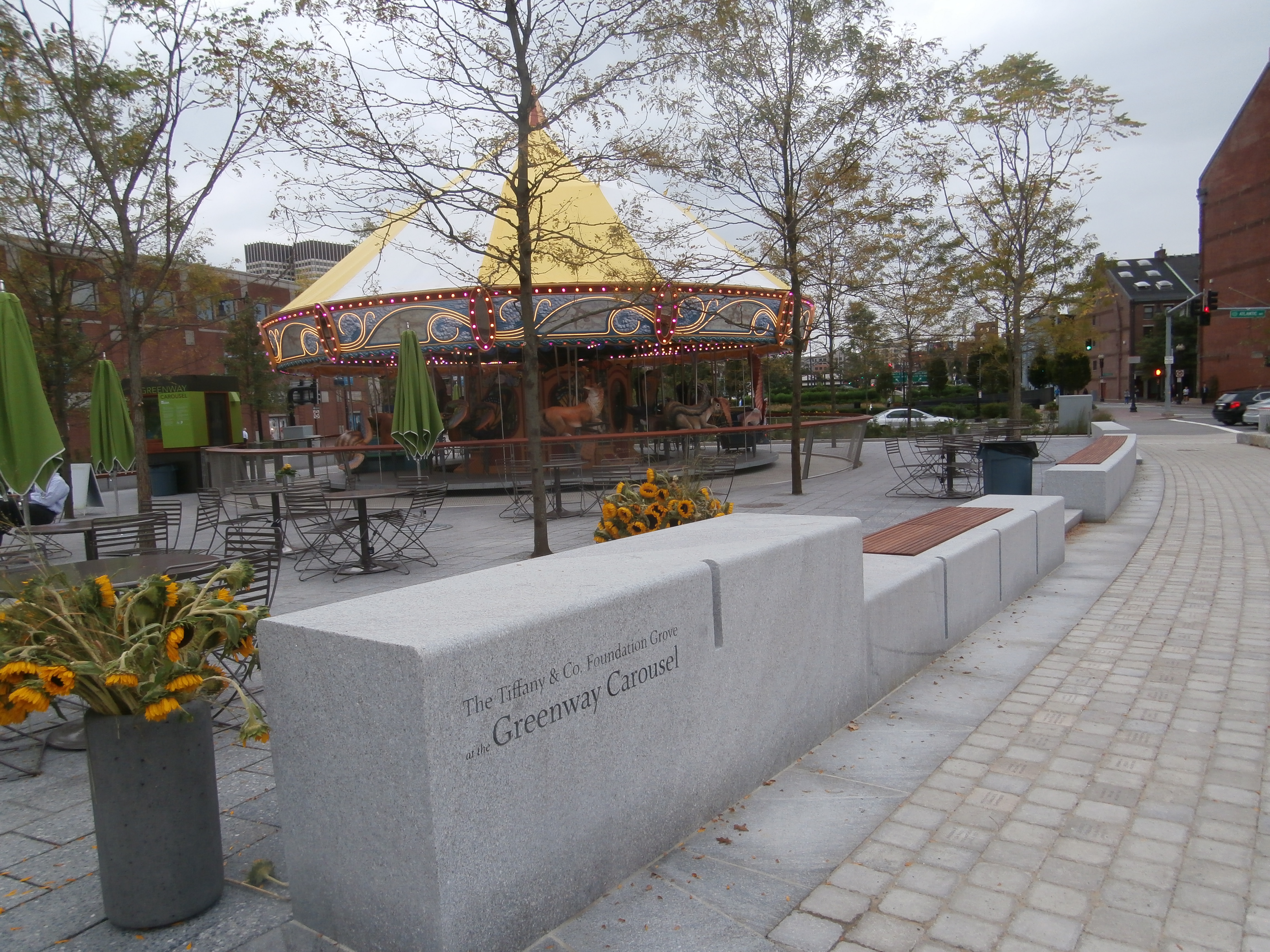
The Rose Kennedy Greenway just gets better and better. Not only is the new carousel a wonder, but little signs have begun to appear identifying the plantings, many of them quite exotic.
Now, if they would just decide to create bike paths or else enforce the rules about “no wheels,” we walkers would at least know where it was safe to walk while daydreaming.
Not sure which of many delightful aspects of this story I like best: that there are programs offering free swim lessons, that a teenager decided he needed to learn to swim, or that a dad whose son enrolled in lessons decided to take lessons himself and then gave back by teaching others.
Lisa W. Foderado writes at the NY Times, “After Hurricane Sandy brought the ocean to his doorstep, Kenrick Sultan felt a new sense of vulnerability. A shy 15-year-old, he has lived by water his entire life — but he never learned how to swim. …
“Having watched the waters of Hurricane Sandy creep up his street, Kenrick finally decided to conquer his fear of the water … Looking slightly terrified behind blue-tinted goggles, Kenrick lowered his slender frame into a pool at a nearby high school. Alongside him stood Ray Belmont, a volunteer instructor …
“Five years earlier, Kenrick’s best friend, Raynald Chance Belmont, 15, had learned from Swim Strong, which is administered and staffed entirely by volunteers. Because swim lessons typically cost as much as $1 a minute, learning to swim can be something of a luxury …
“Swim Strong is only one of a number of programs giving free or low-cost swim lessons to New Yorkers. The largest, by far, is a program called Learn to Swim offered by the city’s parks department, which provides free swim lessons at select pools through an online lottery system throughout the year. In the fiscal year that ended in June, the department taught 27,709 children and 1,110 adults to swim. …
“‘ After Chance learned to swim, his father, Ray Belmont, asked if he could sign up for lessons, too.
“ ‘It was always a goal,’ recalled Mr. Belmont, 39, a property underwriter. ‘It was huge for me. It was a big accomplishment. I’m two blocks from the ocean and before, if something happened to my children, I wouldn’t be able to help them. As an adult, there’s a different kind of fear. I had to overcome that by getting lessons for myself.’
“Like a number of Swim Strong alumni, Mr. Belmont decided to give back by volunteering as an instructor. He was eager to teach his son’s friend.”
I grew up with stories about elephant memories and how elephants held grudges. “If you give an elephant a stone instead of a peanut when you are little, he’ll get even next time he sees you, even years later.”
Now Megan Garber at The Atlantic says dolphins’ memories top all other animals’.
“Dolphins, it turns out, have the longest social memories of any species besides humans. And we’re learning more and more about how lengthy those memories can actually be.
“The researcher Jason Bruck, a biologist at the University of Chicago, wanted to test whether bottlenose dolphins in particular can, indeed, remember each other after a long stretch of separation. So he took advantage of something else about dolphins: the fact that they seem to have something like names. Sometime between their first 4 months and their first year of life, dolphins will develop a distinct whistle — one that will remain the same for the rest of its life. According to research published last month in the Proceedings of the National Academy of Sciences, dolphins use these whistles in pretty much the same way we humans use names: as ways both to identify themselves and to call each other. …
“While it’s unclear what his findings might mean about dolphins’ memories overall — he was testing name recognition, not circumstantial or emotional memories — there’s some reason to think that dolphins’ memories stretch beyond rote recognition itself.
“In tests that broadcast the signature whistles of ‘extremely dominant males,’ for example, Bruck found that females responded with ‘exceptional interest.’
” ‘There was also a lot of posturing from the males,’ Bruck noted. And ‘some young ones would just go ballistic.’
“In other words, dolphins may well have the capacity for relatively complex memories — memories that associate individuals with actions.”
It’s mainly weekends that I have time to upload photos, so I hope this isn’t too much.
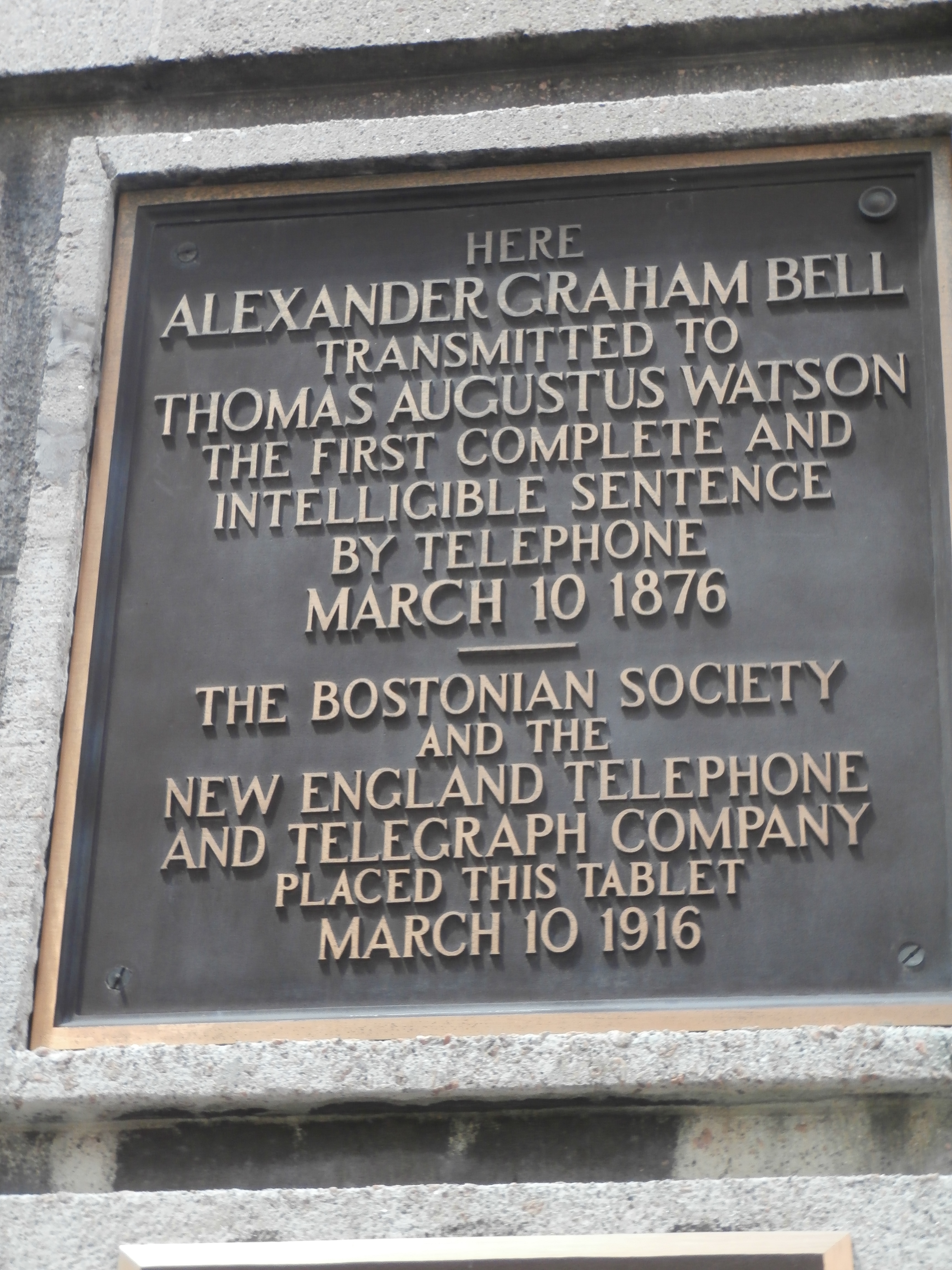
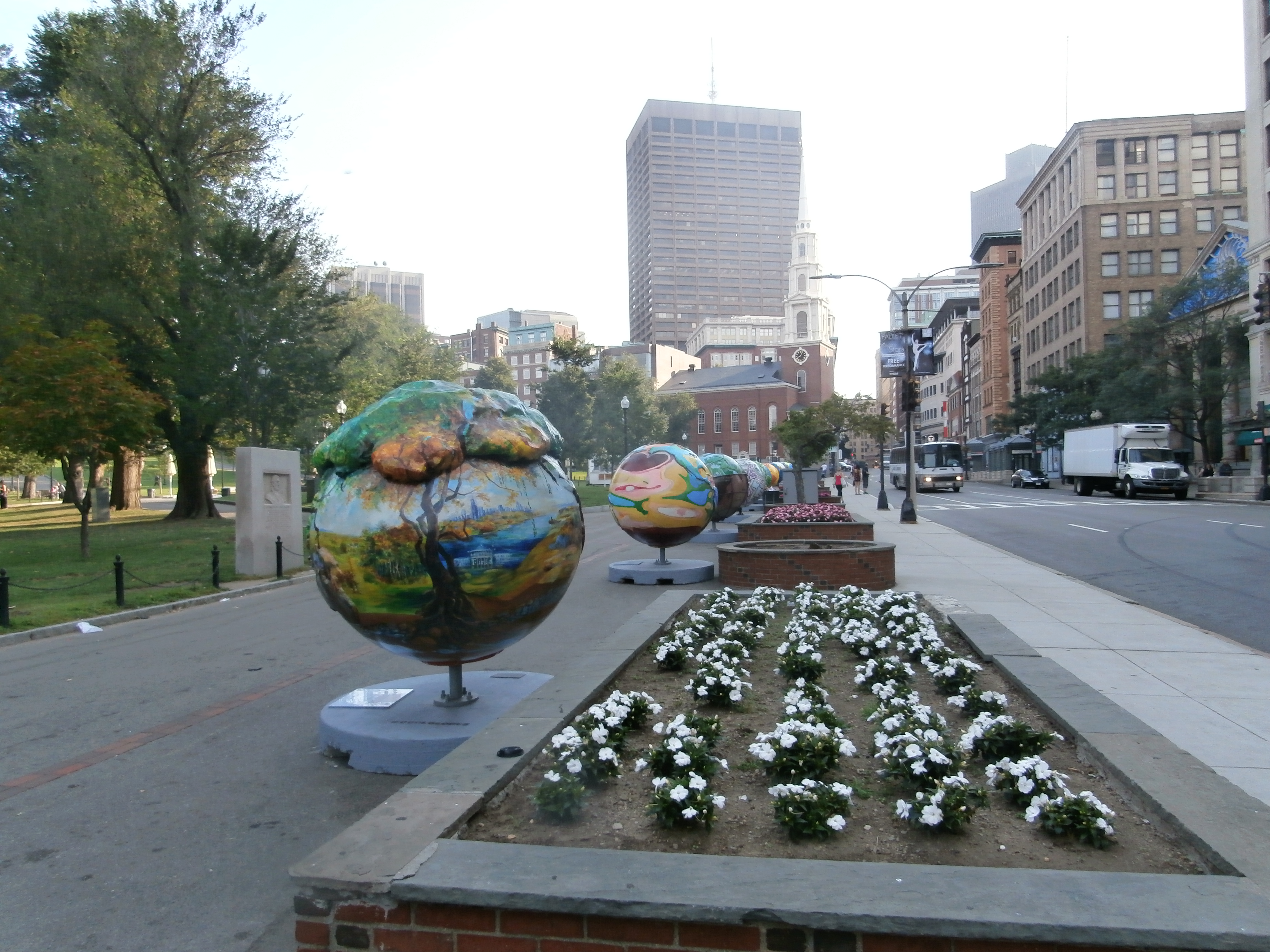
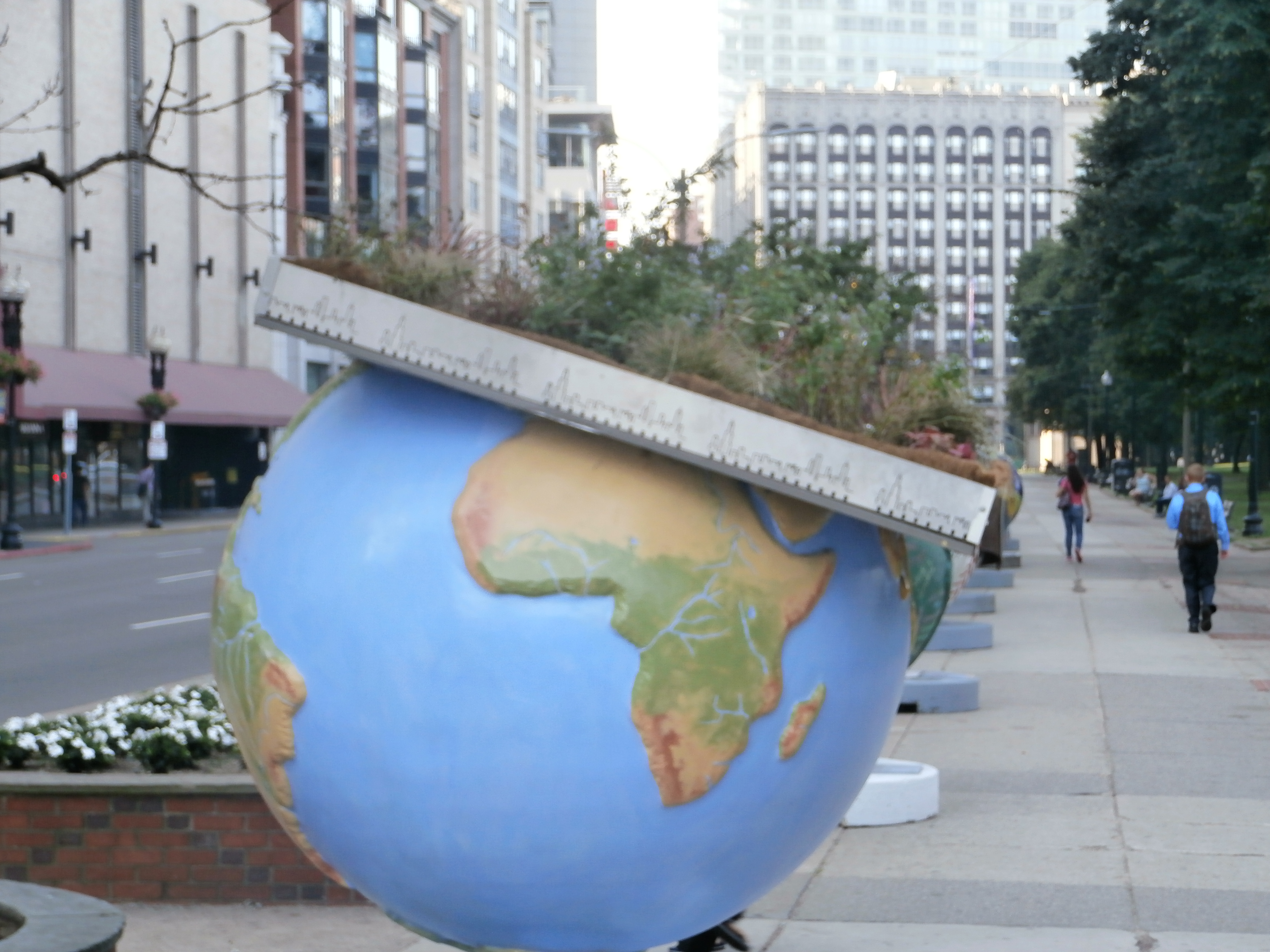
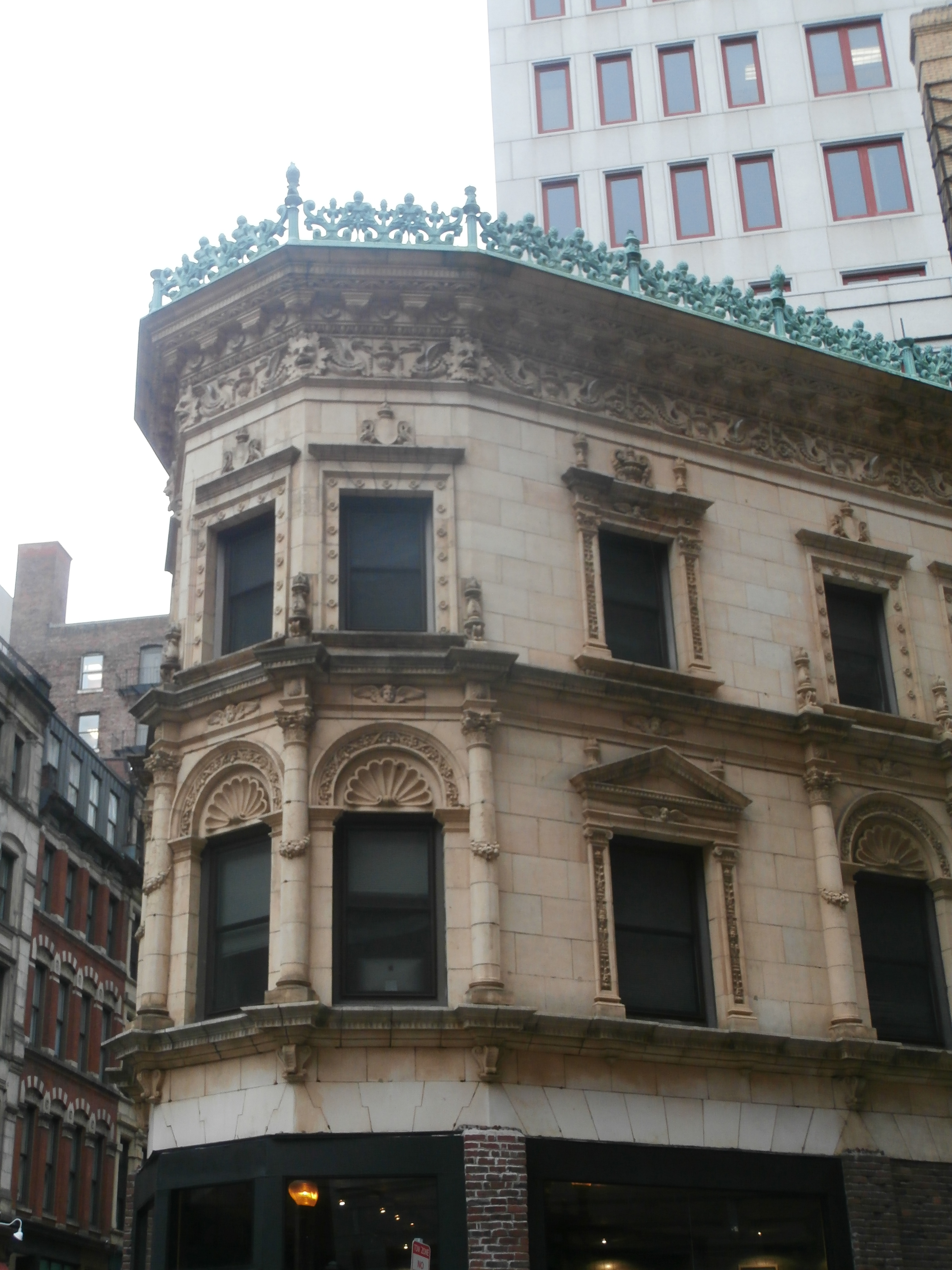
First is a plaque commemorating the discovery of the telephone, then a mysterious Greenway flower, extra pics of the traveling save-the-earth exhibit, a tai chi session at the Frog Pond, pensive frogs, interesting architecture near Downtown Crossing, and an early morning rooftop in Concord.
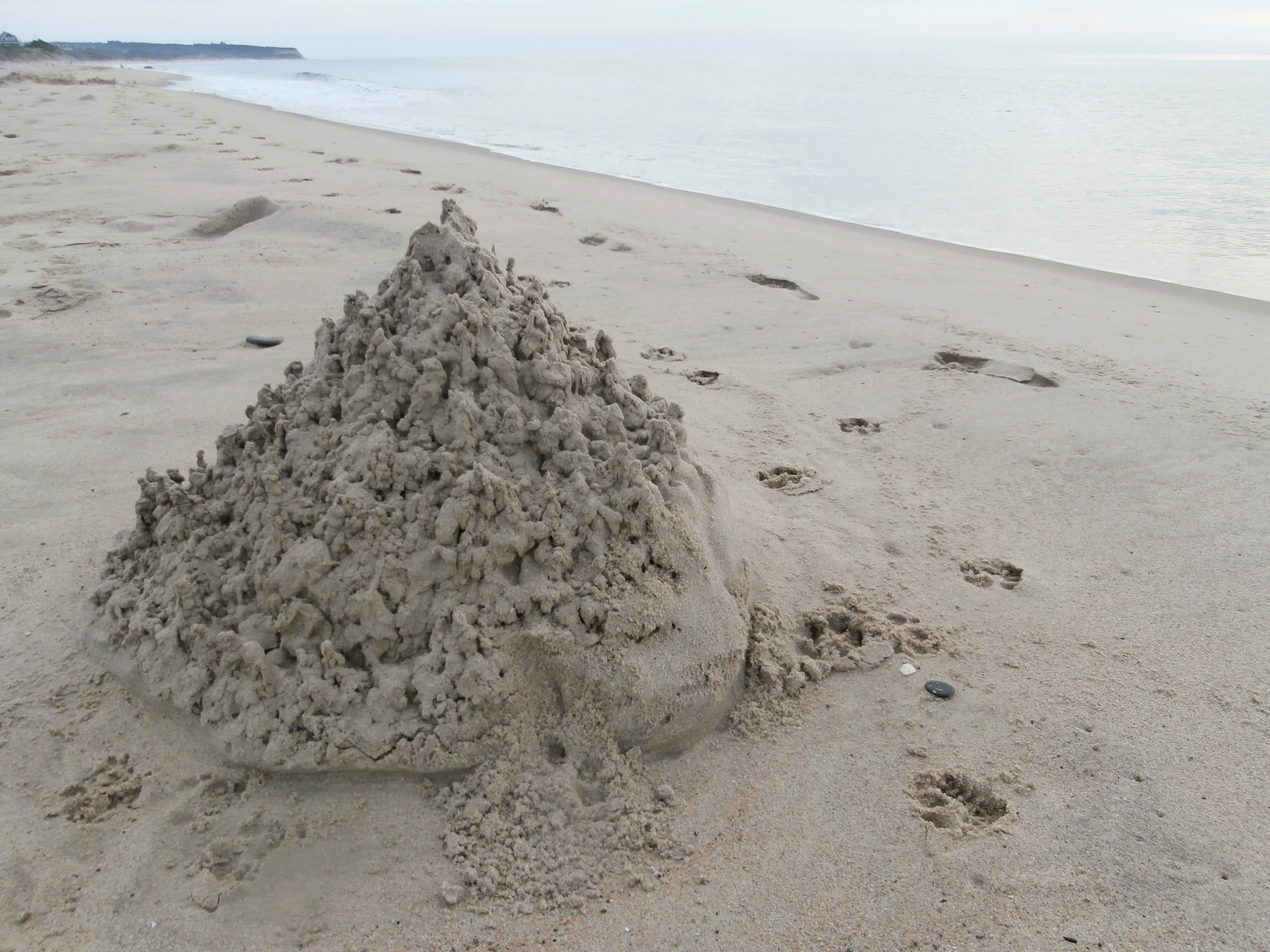
Here are a couple of Rhode Island sand castles from Crescent Beach (one made by inverting buckets, one made with the drip technique I favored as a kid) and an elaborate castle that Suzanne photographed when she was in Copenhagen earlier this month.
This website promises to teach you how to make the perfect sand castle. It involves keeping the sand moist at all times so the castle doesn’t crumble.
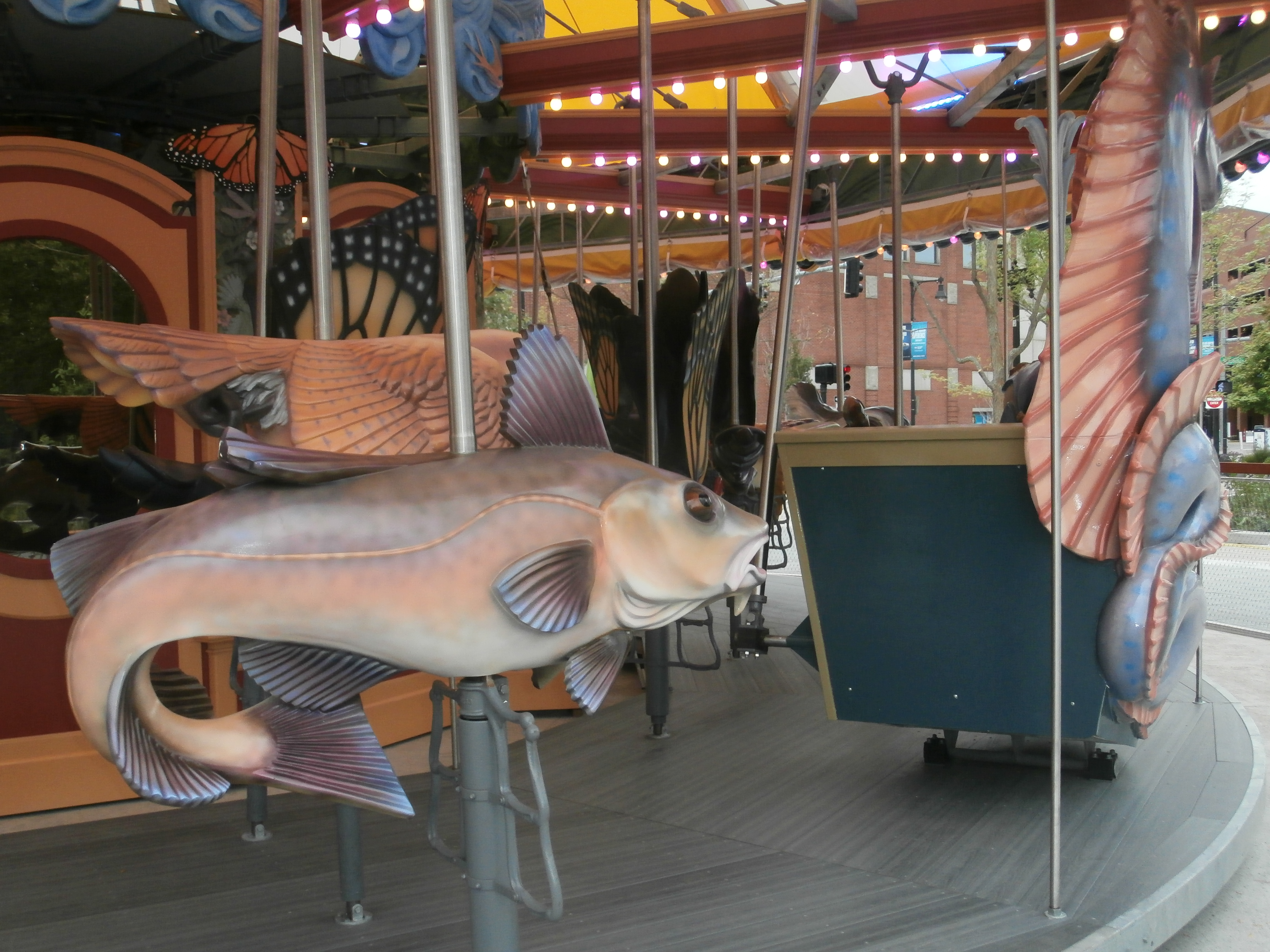
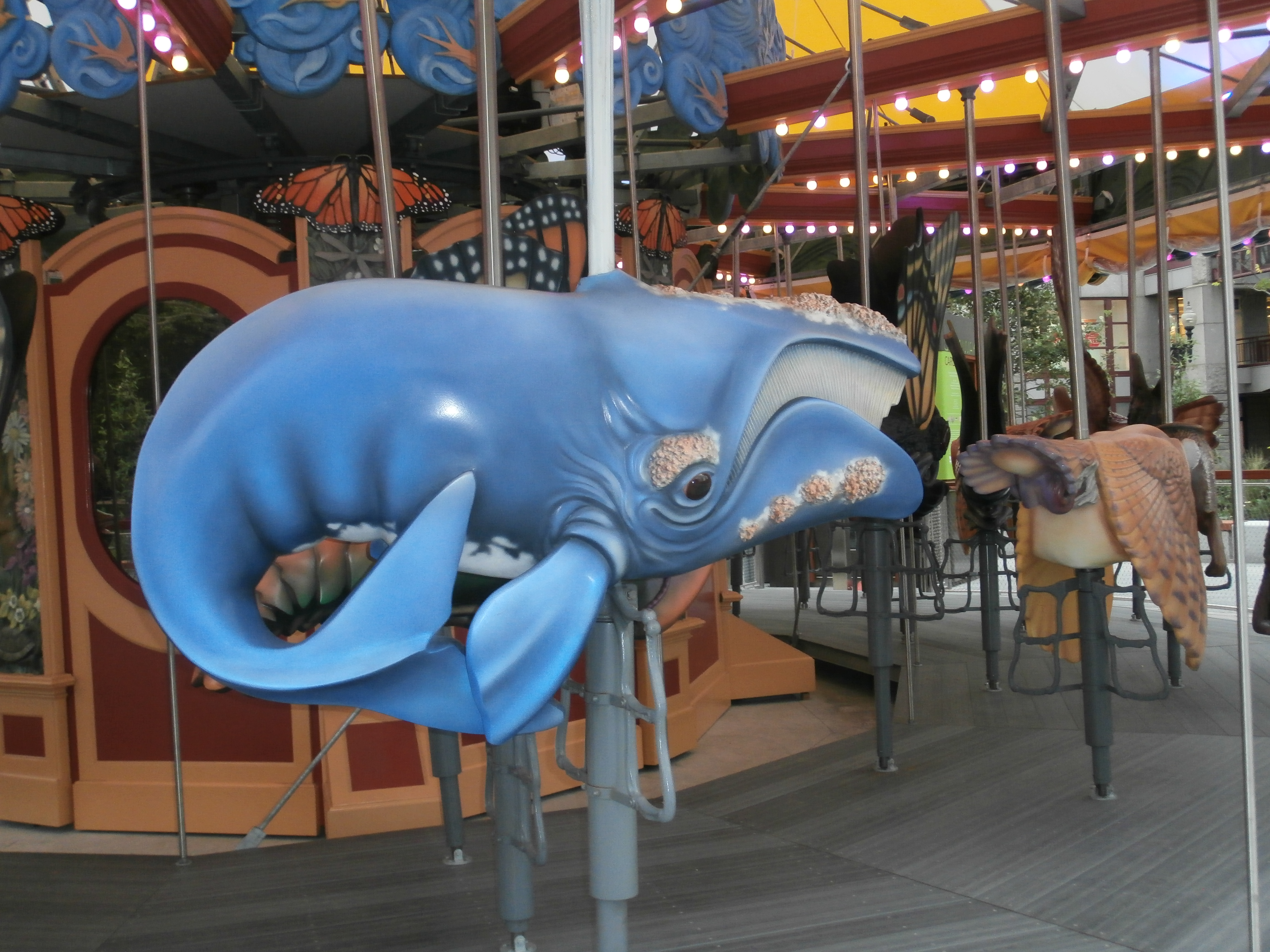
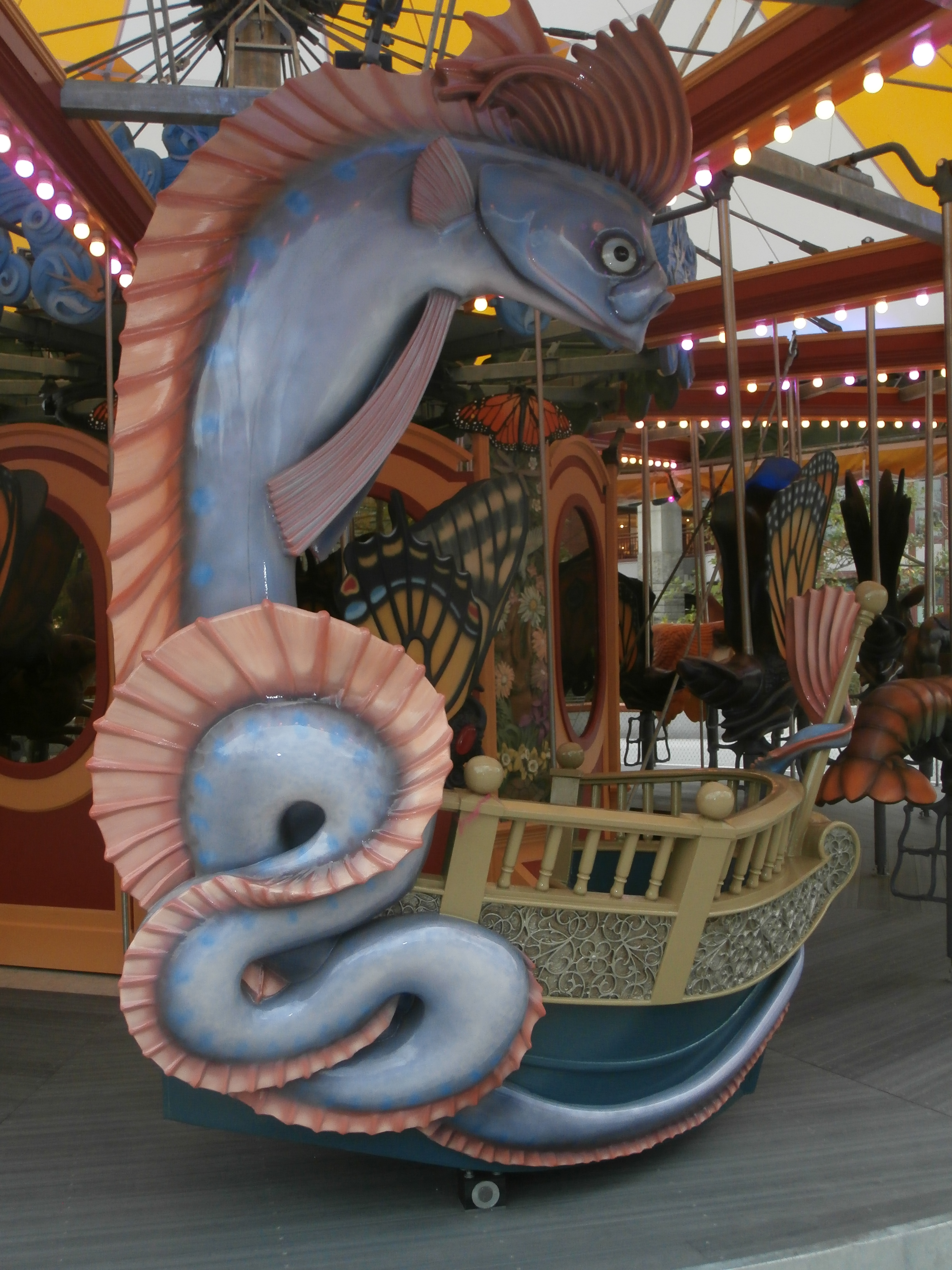
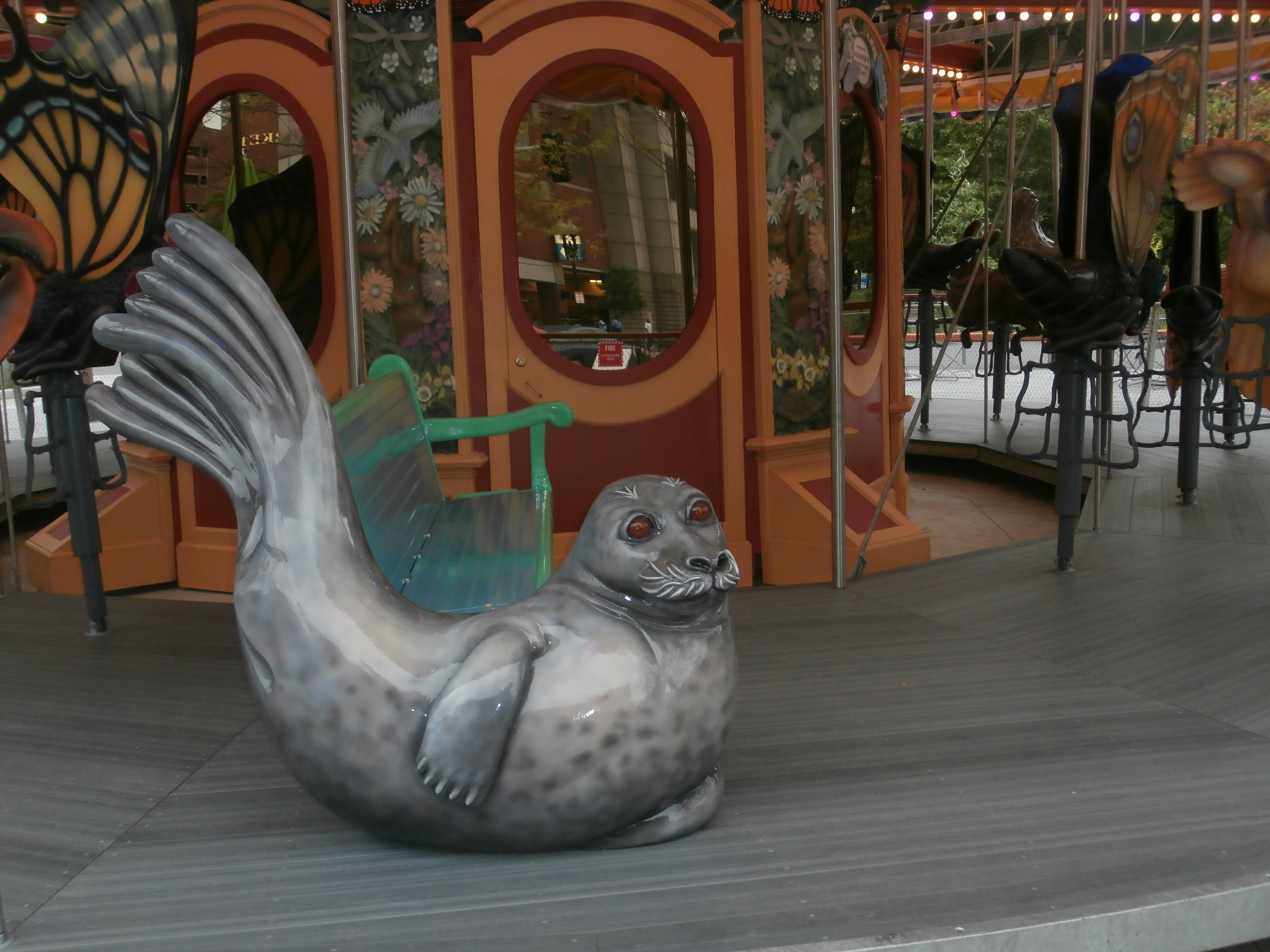
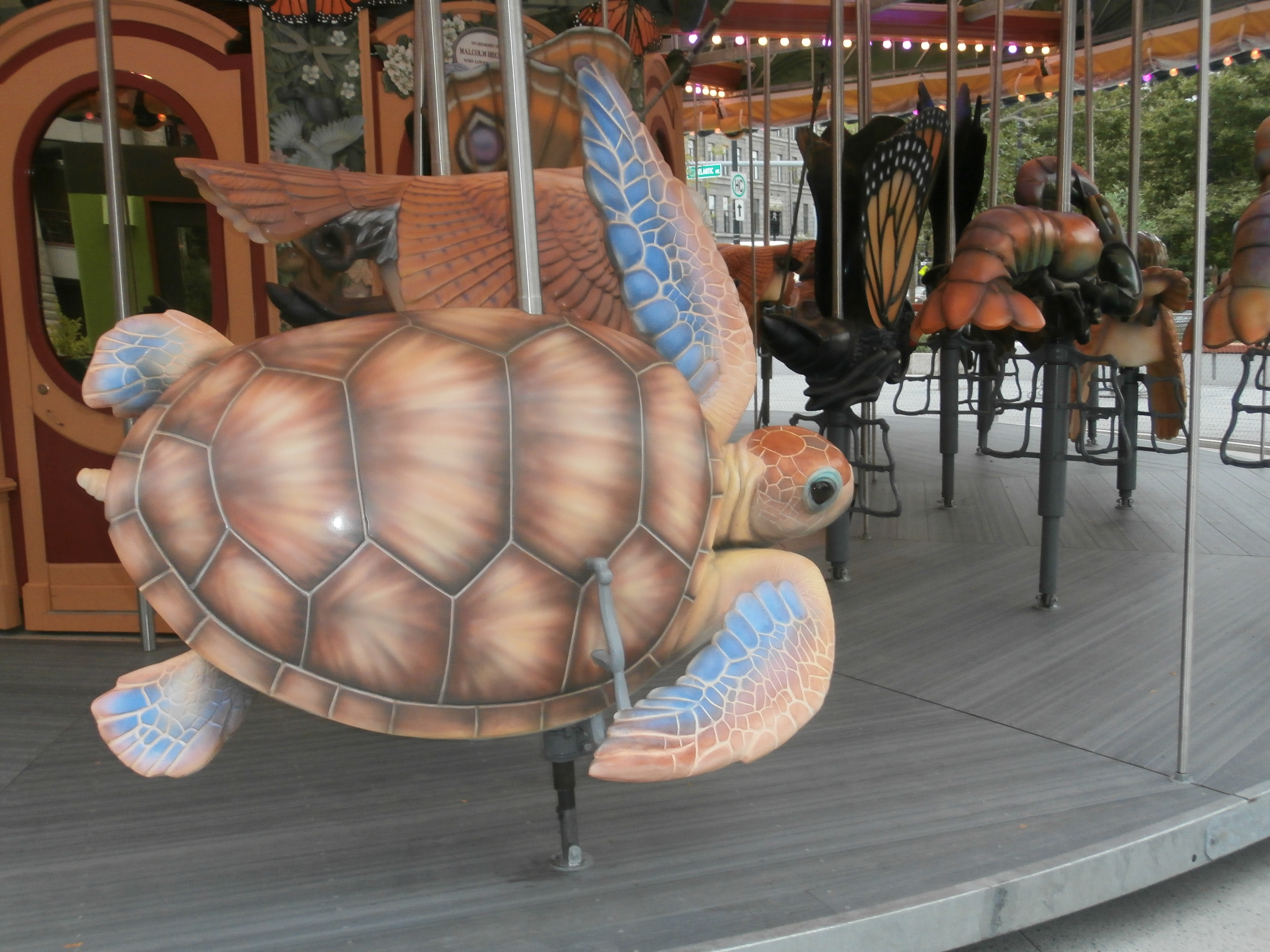
I was going to wait to post on this amazing carousel until the barriers were down and I could get close-up photos of the lobster, the cod, the whale, the deer, the butterflies, the sea turtle, and all.
But I see from my site stats that people are already searching on the topic.
Folks, the Greenway carousel is opening in Boston tomorrow, Aug. 31, 2013, at 10, with a $3 admission for a ride. Read about it here at the Rose Kennedy Greenway site. And be sure to check my post on the painstaking creation of the critters in Haverhill, Mass.
I’ve been taking pictures from behind fences. Better ones to come.
Libraries are busting out all over. We’ve blogged about the Little Free Library in Cambridge as well as Sam and Leslie Davol’s uni, which got invited to Kazakhstan — not to mention a library housed in an unused pay phone shelter.
Now it seems that a subway system in China is getting into the act.
Writes Zhang Kun at China Daily, “Shanghai’s Metro Line 2 is turning a new page with a library taking literally an online approach. Passengers will be able to select a book at one station, and return it to any of the other stations with customized bookshelves.
“Readers do not have to pay a deposit or any rent for the books and magazines they take. Instead, they are encouraged to donate 1 yuan (16 US cents) to charity at the bookshelf.
” ‘Now you can read a real book, rather than staring at the cellphone through the metro ride,’ said Zou Shuxian, a spokeswoman for the Aizhi bookstore, which initiated the project jointly with Hujiang.com” and the Metro Line.
“The Chinese Academy of Press and Publication released a survey recently that said the general public between the ages of 18 to 70 read 4.39 books in 2012, much fewer than in Western countries.”
The library “has been a resounding success with office workers. Waiting lines have developed during rush hour. … All the books have green tape on the cover to inform people about the program [and] to remind people it is borrowed and should be returned.”
I myself find it essential to have a book with me whenever I take the subway, but that’s largely because I ride the oldest system in America and it’s always breaking down.
My husband, who lived in Shanghai for about a year, says subways there are fast and efficient. I don’t think book lovers will have time to finish their books before their last stop. A lot of green tapes will be going home with commuters. You can’t keep a book lover down.
Did you like last week’s entry on stained glass windows that produce solar energy? Well, there’s more.
Kristine Lofgren writes at Inhabitat about an amazing solar chandelier.
“British artist Luke Jerram is known for his stunning art installations, which are often inspired by science. His latest project, unveiled [last year] at the Bristol and Bath Science Park, is the world’s largest solar chandelier! The 16.5-foot-tall chandelier is made of 665 glass bulbs that spin when exposed to light …
“The chandelier was created using glass radiometers rather than traditional light bulbs. As the sun hits each radiometer, it begins to turn, speeding up and slowing down as the light changes. The overall effect is a shimmering, gently moving piece of artwork. At night, it is lit up using electric light.” More.
By the way, Inhabitat also features a piece on a sculptural sound chamber that sings when the wind blows, here.
Kaili knows how much I want to believe that U.S. manufacturing is not dead. He sent me this example from Wired magazine — a story about the making of Statue of Liberty souvenirs.
Wired‘s Liz Stinson reports that of the many souvenirs you see in New York, most “come from overseas where they’re stamped out on machine-driven assembly lines. But a select batch—the ones you can buy on Ellis Island—were made in the United States, right here in New York City, with actual human hands.
“Colbar Art in Long Island City, Queens, creates prototype and custom molds, castings and original artwork, but the factory is most well known for being one of the largest producers of Statue of Liberty figurines in the world, and one of the last in the United States. …
“Ovidiu Colea’s story is the focus of a recent mini-doc made by NYC-based videographer Rebecca Davis.
“Davis, a video journalist at NBC, documented the Colbar Art crew during their daily routine of making statues, and it’s surprisingly fascinating to watch. ‘Growing up, one thing that had a lasting impression on my memory were the Mr. Rogers episodes where they’d go to the crayon factory and show you how the crayons were made,’ she explains. ‘I wanted to see from start to finish how these statues, as New Yorkers we see all over the place, how they come into being.’ ” Me, too.
And speaking of payment systems, community-supported agriculture has been around for years and, more recently, community-supported art. I blogged about the approach here in 2011, when the Cambridge Center for the Arts embraced the concept.
The NY Times has written about it, too. Randy Kennedy lays out the principles: “For years, Barbara Johnstone, a professor of linguistics at Carnegie Mellon University [in Pittsburgh], bought shares in a C.S.A. — a community-supported agriculture program — and picked up her occasional bags of tubers or tomatoes or whatever the member farms were harvesting.
“Her farm shares eventually lapsed. (‘Too much kale,’ she said.) But on a recent summer evening, she showed up at a C.S.A. pickup location downtown and walked out carrying a brown paper bag filled with a completely different kind of produce. …
“ ‘It’s kind of like Christmas in the middle of July,’ said Ms. Johnstone, who had just gone through her bag to see what her $350 share had bought. The answer was a Surrealistic aluminum sculpture (of a pig’s jawbone, by William Kofmehl III), a print (a deadpan image appropriated from a lawn-care book, by Kim Beck) and a ceramic piece (partly about slavery, by Alexi Morrissey).
“Without even having to change the abbreviation, the C.S.A. idea has fully made the leap from agriculture to art. After the first program started four years ago in Minnesota … community-supported art programs are popping up all over the country …
“The art programs are designed to be self-supporting: Money from shares is used to pay the artists, who are usually chosen by a jury, to produce a small work in an edition of 50 or however many shares have been sold.”
Read all about it, here. Could be risky if you really don’t want a sculpture of a pig’s jawbone. But if you look at it as supporting the arts, you are likely to be satisfied with that side of things — and there’s always a chance you will love what you get or find its value increase.
Photo: Zoe Prinds-Flash Drew Peterson’s prints and Liz Miller’s collages were among the art for members of this C.S.A., community-supported art, in Minnesota.
The music of avant garde composer Kenneth Kirschner is open source, free to experiment with.
Other musicians are looking for sales models that may render hidebound and unimaginative music labels obsolete.
Allan Kozinn of the NY Times describes what Rabbit Rabbit Radio is doing.
“With some help from George Hurd, a composer and music administrator, [Matthias Bossi and Carla Kihlstedt] produced a blueprint for Rabbit Rabbit Radio and started the Web page in February 2012. The plan was to release a new song for subscribers on the first of every month.
“Along with the song, Ms. Kihlstedt and Mr. Bossi, who are married to each other, began posting video clips, slide shows and photo albums; information about the making of the track; essays on various subjects; and lists that might include links to clips by other musicians whose work they admire or notes about restaurants they have discovered on tour. Past releases can be explored in their online archives.
“Subscribers pay $2 to $5 a month. (There is no difference in access; it’s a matter of paying what you can.) …
“So far, 18 months into the project, Rabbit Rabbit Radio has nearly 900 subscribers.”
Pay-what-you-can usually relies on some people paying more than they would ordinarily pay for the product. Theaters offer it occasionally, but they could never survive just on that. Panera Bread struggled with the model when it first tested it in St. Louis.
John has told me about a video-game payment model that requires people to pay small amounts for tools that can help them win the otherwise free game. Sometimes, he says, there’s a pop-up in the intense middle of the game that says you have to wait eight minutes to continue but if you want to keep going right now, you can pay a small amount.
I think if you are motivated enough, you will pay a small amount for almost anything. I hope the approach works for Rabbit Rabbit.
Photo: Gretchen Ertl for the NY Times
Matthias Bossi and Carla Kihlstedt, with their daughter, 4.




















 Suzanne's Mom's Blog