According to wikipedia, “The term chimera has come to describe any mythical or fictional animal with parts taken from various animals.” Which explains why it has been appropriated in genetics where it relates to the phenomenon of different creatures sharing T-cells.
Anyway, I have a brother who studies chimerism and its potential application for organ-transplant retention. I may not have this quite right, but I think if you could have enough of the cells of an organ donor in you when you get a transplant, you wouldn’t need to take antirejection drugs.
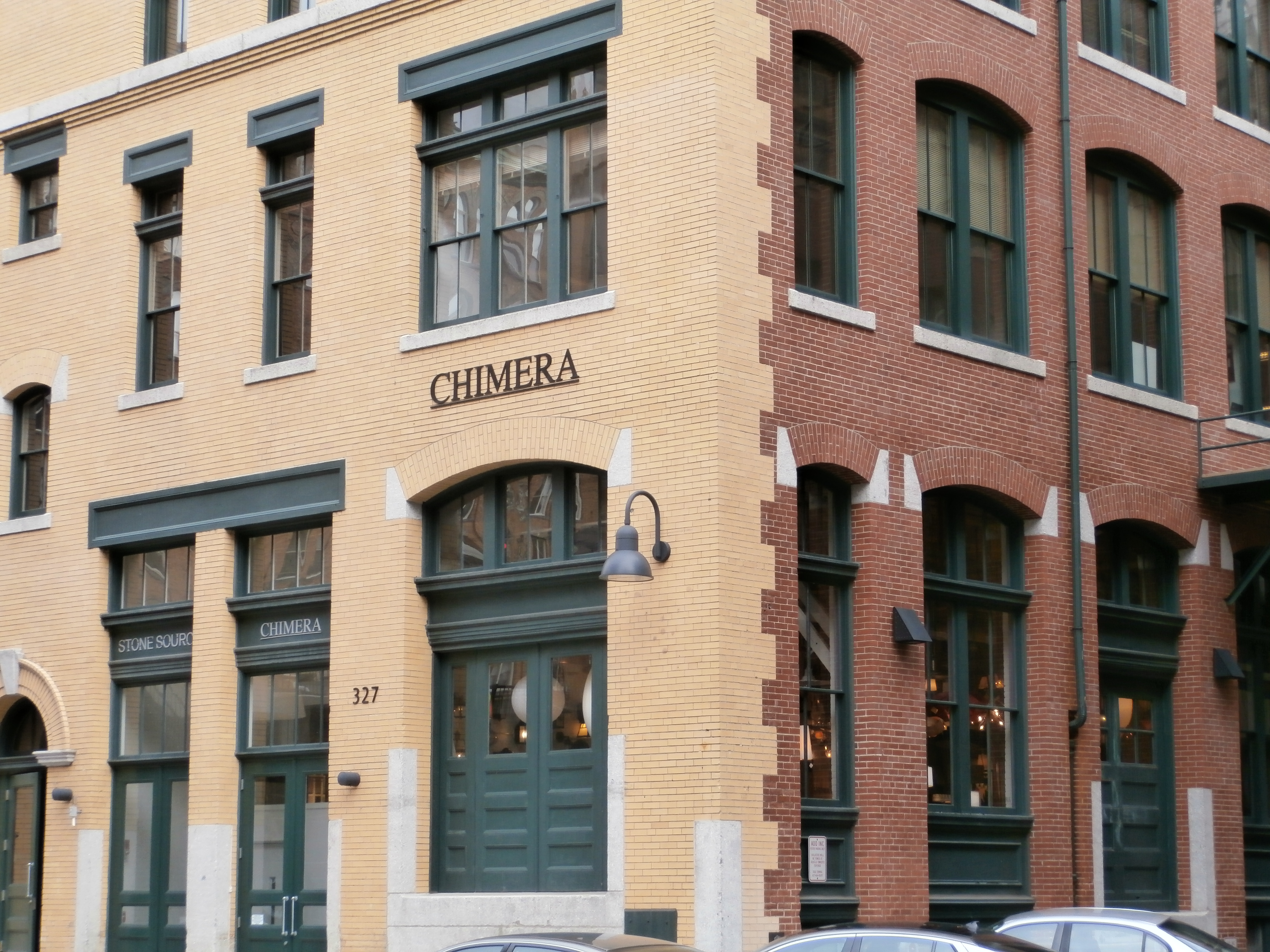
I had been trying to explain this to people when I decided to go out for a walk in Fort Point Channel. Eerily, this sign greeted me.
I think it’s an eclectic gift shop or interior decorator business.
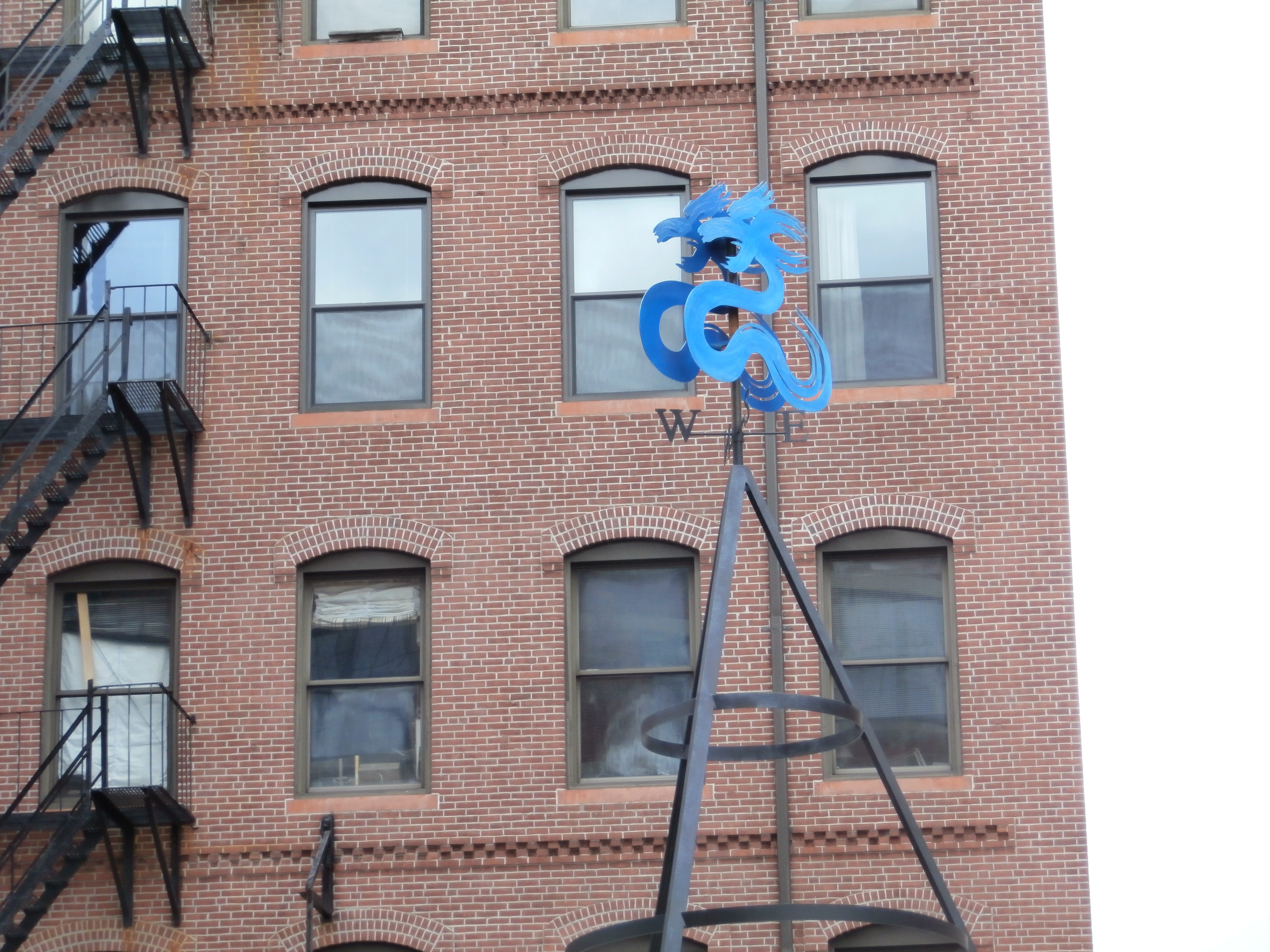
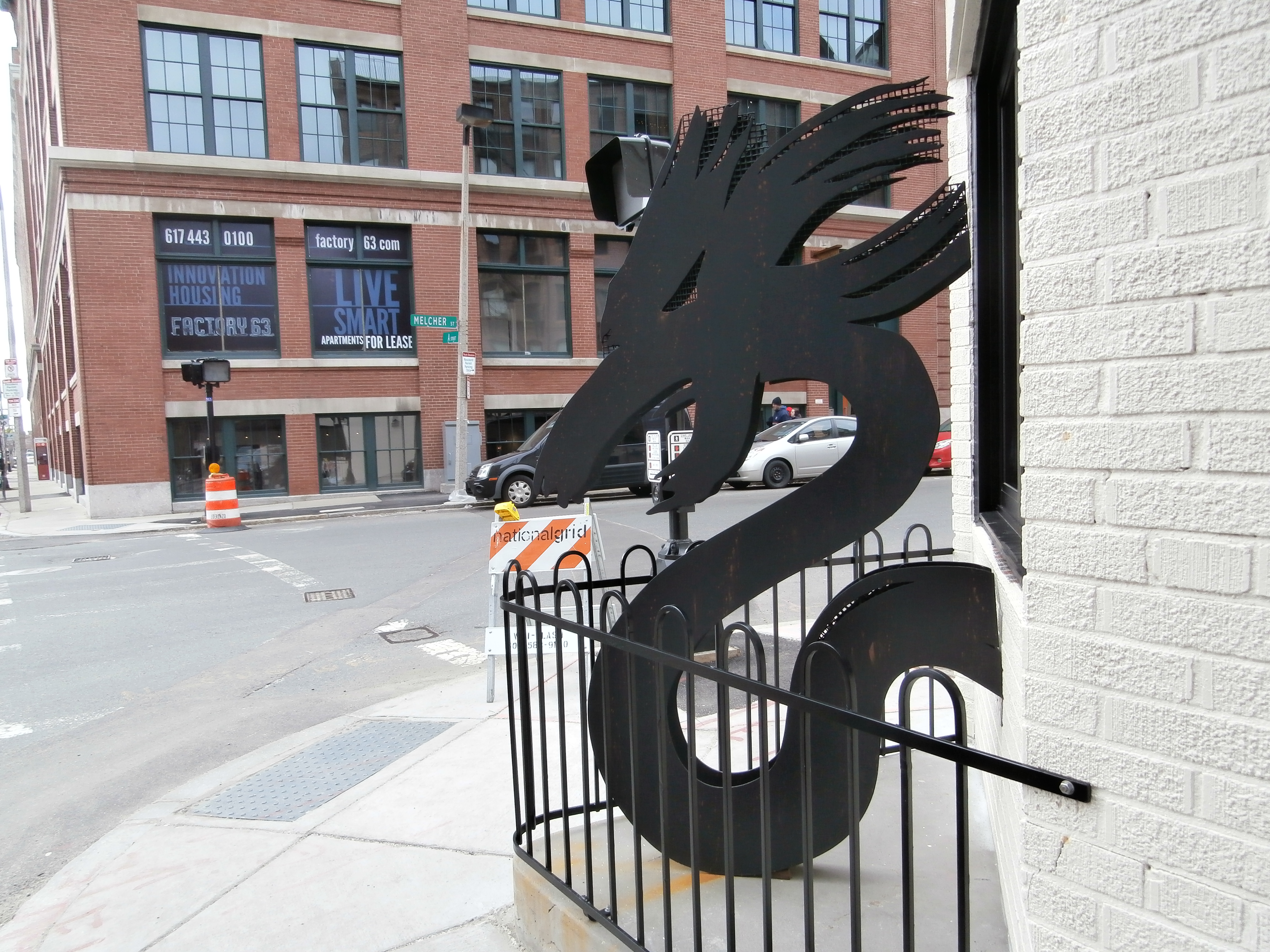
Other signs and portents on the same walk related to Suzanne and Erik’s Year of the Dragon baby.
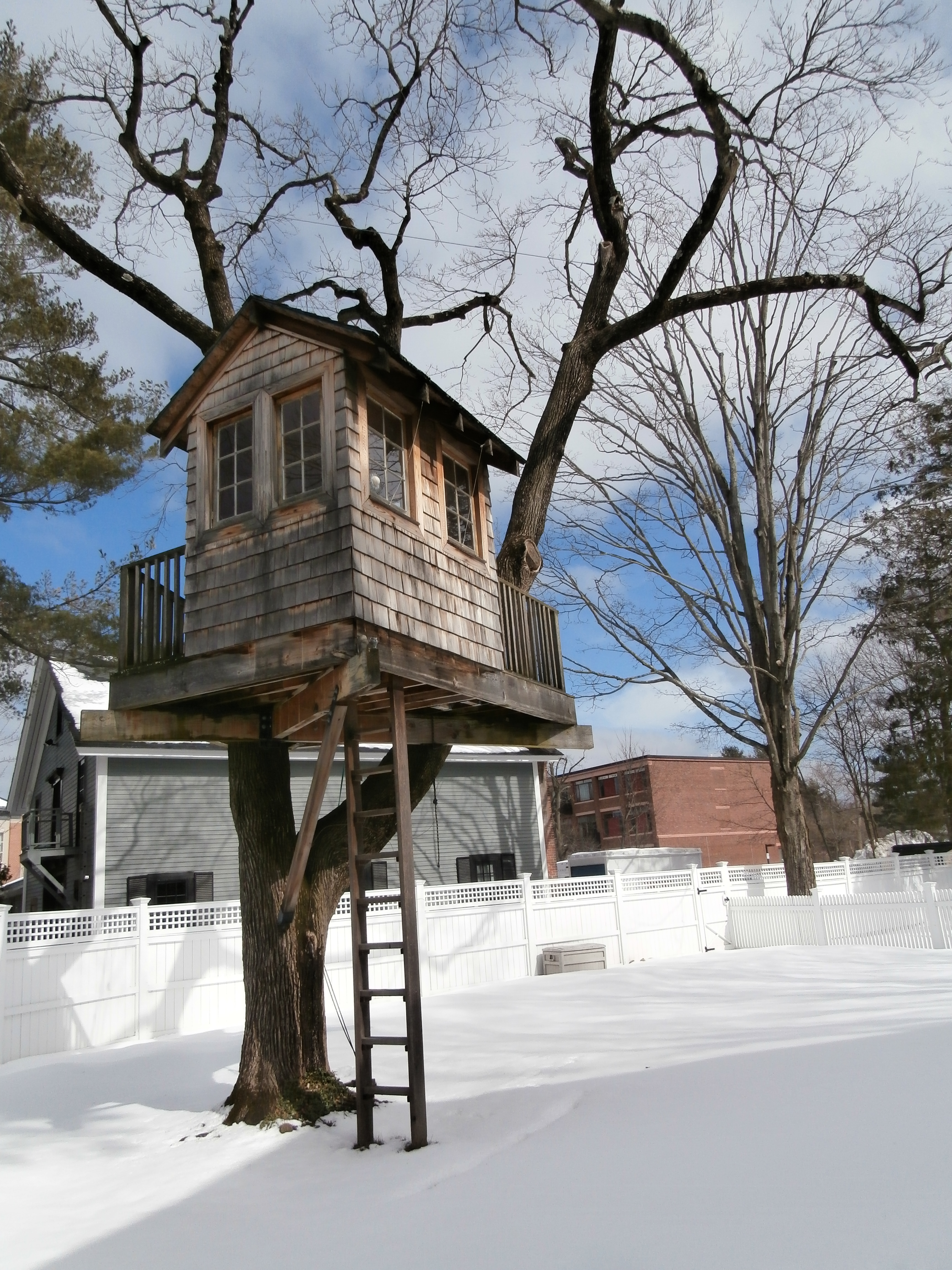
First, there is this house on the grounds of a private school near where I live. I snapped it on my walk.
Second, there is this house on a Hudson River Estate falling down around the ears of the latest, impecunious generation.
Photo of Rokeby, a 43-room house on the Hudson River, by Piotr Redlinski for The New York Times. New York Times story here.
Third, there is a tiny house that a Hampshire College student is living in as a senior project.
James Sullivan writes, “As a child, Hampshire College senior Nara Williams hated being told to pick up after herself. This semester, she’s learning to keep things tidy — very tidy.
“For her senior project, she is living in a 130-square-foot house to explore the realities and benefits of living small.
“A few weeks ago, Williams took delivery on a model home used as a showcase for the Tumbleweed Tiny House Co., a leader in the burgeoning ‘small house’ movement. …
“The housing project, Williams said, is her inquiry into ‘viable alternatives’ to the American dream. Blogging about the experience, she is raising questions about property ownership, material goods, consumption, sustainable living, and other issues in an era marked by housing and environmental concerns.”
Read about Rokeby, the Hudson River estate passed down through too many generations, and read about the tiny house, and pray that no one bequeaths you anything like the former. A tree house or a tiny house are what you want if you prefer to own property and not have property own you.
Update: Omigosh, a scathing memoir is just out on what it was like to grow up at Rokeby — reviewed in the Globe, here
Optics maven Gregg just tweeted this link from Wired‘s GeekMom blog.
In the 2010 entry, Judy Berna writes about discovering a clever artist/inventor called Rufus Butler while working in her local library.
“The whole thing started with a baby board book that joined our collection at the library. …
“When you move the book left to right, the picture actually moves. We took turns playing with it and more than one of us almost went into a trance by its hypnotic movements. …
“Then [my family and I] found ourselves in an art studio over the weekend, somewhere in the back woods of Massachusetts. Taking up one full window was a display of these amazing ‘moving’ discs. Each was a different picture and each moved in the same way the pictures on the library board books moved. …
“Once I got home I looked up their website, Eye Think. Eye Think’s founder, Rufus Butler, is an artist, filmmaker, and inventor. He was so fascinated with optical illusions that he began creating these new ways to trick the eye. …
“The spinning circles that caught my eye in the art store are called CiniSpinners and come in an impressive variety of pictures. When you click on the web page picture, a moving sample pops up. There’s a little girl skipping rope. And fingers playing a piano. …
“Many animals are represented too. A dragonfly hovers, a dolphin frolics in the water. An adorable penguin waddles to and fro. My nine year old and I had to click on every single one, just to see which one was the best. (My personal favorite: swimming man, with splashing water and all.)
“(Fun geek fact: After contacting Mr. Butler and sharing my enthusiasm for his products, he admitted that he himself had been the model for the swimming man. His wife videotaped him doing a swimming stroke as he laid across a kitchen chair, then he added the splashing water when he refined the picture in the studio.)” More.
We caught a bit about this movie on Link TV yesterday. I zeroed in on the contrasts. The documentary Mongolian Bling is about both the traditional life and the hip-hop life in Mongolia.
The film’s website says, “Forget about nomads and monks! It’s hip hop that’s making Mongolia move in the 21st century. Mongolian Bling jumps into the thriving music scene in the capital, Ulaanbaatar, and follows stars as they rap nationwide … But beyond this bling lies a failed democracy, and a dying ancient culture that the elders mourn the loss of. While many artists still aspire to the West, a handful are using hip hop to try and salvage their country’s flailing democracy, and bringing Mongolia’s rich musical history into their modern beats and rhymes.”
Poke around in the site, here, to learn more about the participants.
When you take pretty much the same walk every day, camera in hand, you may have trouble finding new things to photograph. You may look in vain for something different, puzzling, or mysterious.
But there is something to be said for combing the same territory over and over, as scientists are finding from studying the detailed record keeping of Henry David Thoreau.
“ ‘As far as I know, there is more information about the effect of climate change in Concord than any other place in the United States,’ said Richard Primack, a Boston University biologist who calls Concord a living lab for his research. …
Primack, writes Kathleen Burge at the Boston Globe, “has researched how climate change has affected the flowering times of plants, comparing modern data with the information Thoreau collected between 1852 and 1860. Primack and his lab found that for every 1 degree Celsius increase in mean spring temperature, plants bloom about three days earlier. …
“Primack came to his work about a decade ago, when he decided to change the direction of his research. He had been studying the effects of climate change on plants and animals in southeast Asia and decided, instead, to focus on his home state.
“But when he began searching for older records of plant flowering times in the United States, he came up short. Finally, after six months, someone told him about Thoreau’s journals.
“This was kind of a gold mine of data,” Primack said. “As soon as we saw it, we knew it was amazing.” More from the Globe.
Keep an eye open for the upcoming Thoreau exhibit at the Concord Museum April 12 to September 15, described here.
From the website: “The Block Island Poetry Project is turning 10, and we are so excited about it that we are outdoing ourselves with a 4-day celebration featuring the usual fun and extraordinary work which has become our hallmark. In addition, we are honoring our decade together with an anthology of poems written during, or as a result of, Poetry Project workshops.”
The website continues, “Unpretentious, textured, authentic, practical, frisky… that’s who we are at the Block Island Poetry Project, and that’s why our series is like no other.”
According to poets.org, Lee was “born in 1957 in Jakarta, Indonesia, to Chinese parents. His father had been a personal physician to Mao Zedong while in China, and relocated the family to Indonesia, where he helped found Gamaliel University. … ‘What characterizes [Lee’s] poetry is a certain humility … a willingness to let the sublime enter his field of concentration and take over, a devotion to language, a belief in its holiness.’ ” More on Lee, here.
The Coleman Barks website says that he is “the author of numerous Rumi translations and has been a student of Sufism since 1977. His work with Rumi was the subject of an hour-long segment in Bill Moyers’s Language of Life series on PBS.” More on Barks, here.
The featured poets will be joined by a range of other poets, teachers, editors, and publishers. Rhode Island’s new poet laureate, Rick Benjamin, will also stop by.
(Perhaps one of my favorite Rhode Island poets, Kate Colby, will get to this workshop some year.)
Don’t you love that term? I needed to know more and found it at the Governing blog.
“Darwin’s theory of natural selection was simple but significant,” write Emily Malina and Kara Shuler at the blog. “Variation occurs naturally within any population, and nature will favor and spread characteristics that are advantageous for survival. Like a species, a workforce can go through a similar evolutionary process driven by individuals with unusual but favorable behaviors.
“These outliers, or ‘positive deviants,’ sometimes bend the rules, but their practices enable their success and survival in the workplace. …
“This positive deviance approach is grounded in a systematic process that includes identifying outliers and the specific behaviors that contribute to their success, and then scaling those behaviors across the workforce. It can be especially useful when other efforts have failed to bring about the desired results, and it is more effective when the issue requires behavioral change instead of technical solutions.”
Asakiyume, I think you will like the example the authors give. It’s about some outlier prison-guard behavior in Denmark.
“Burned-out prison guards: The prison environment, with its stressful conditions and psychological burdens, has historically resulted in high absenteeism and early retirement among guards.
“Danish prison-system officials looking to address this problem began by observing the behaviors of resilient guards, those with five or fewer days of missed work. They found that ambiguity in inmate-intake protocols allowed for positive deviants to emerge. The rule called for guards to gather background information from new inmates, and the common approach was an interrogation-style interview.
“Instead, the deviant guards offered inmates a tour of the prison facility and engaged them in a conversation. This small but powerful difference not only better equipped the guards to deal with the stresses and mental challenges of their jobs but also improved behavior of the inmates under their supervision, as evidenced by fewer violent threats and greater enrollment in treatment programs.” More.
New York has solicited design concepts for giving its old payphones new life. Now the city is asking “the crowd” to pick its favorite.
As Amar Toor writes at The Verge, “The City of New York this week announced the six finalists in its Reinvent Payphones challenge — an initiative that invites students, urban planners, and designers to propose their visions for the payphone of the future. The finalists were selected as winners in six different categories, and are now in the running for the Popular Choice Award, to be determined later this month.
“Not surprisingly, interactive and digital features play a major role in most of the six designs, including NYC/IO, winner of the Community Impact category. Created by Control Group and Titan, the proposal calls for the city’s phone booths to be replaced with high-tech kiosks, replete with transparent screens that pedestrians could use to not only make calls, but find restaurants, pay parking tickets, or surf the web.”
And speaking of tapping the wisdom of crowds, Suzanne would love to have you vote on a logo for her new line at the birthstone jewelry company that hosts Suzanne’s Mom’s Blog. Targeted at young women and girls, the new line is going to be called Stellina — it’s the younger sister in the Luna & Stella family. The voting ends tomorrow, March 8. Do take a look at the logo designs, here, and vote if you have a minute.
Signs of a prehistoric camel have been found in the frozen north.
John rode a camel in Egypt a year ago, and my grandson still talks about it, but the camel found in Canada would have looked a little different. (Wikipedia has an image, here.)
Ian Austen writes at the NY Times, “A group of scientists reported on Tuesday that they had found fossilized remains of a giant camel, with a shoulder height of perhaps nine feet, in Canada’s frigid high Arctic.
” ‘It’s a surprise when you first hear it,’ said Natalia Rybczynski, a paleontologist at the Canadian Museum of Nature in Ottawa, who discovered the bone fragments in 2006. ‘But the Arctic in the winter was like a desert at that time.’ …
“The remains were found about 750 miles north of what was previously the northernmost known camel fossil, a giant found in Canada’s Yukon Territory in 1913.
“It’s just kind of stunning that it’s more than 1,000 kilometers away,” said Dr. Rybczynski, the lead author of a paper about the camel published Tuesday in the journal Nature Communications.
“She had accompanied a group of scientists to Ellesmere Island, which is in the Nunavut territory, who were studying the climate history of the region. At the time when the oversized camel lived, about 3.5 million years ago, the island was considerably warmer and covered by boreal forest. Still, it had unusually severe winters that lasted about six months, Dr. Rybczynski said.”
The NY Times had an article today about the subtleties of standup comedy in different languages.
Not only can jokes get lost in translation, but an immigrant from one country may be completely hilarious to an immigrant from another country while falling flat with temporary visitors from his own country.
Sarah Maslin Nir writes, “In a city where a priest, an imam and a rabbi really could walk into a bar on any given day — along with just about anyone from around the globe — what different cultures laugh at is as diverse as the city itself. …
“Cultural stumbles are a theme in immigrant comedy in New York, said Oleg Boksner, a Brooklyn comedian who is preparing a one-man show called ‘From Russia With Laughs.’ In it he has fun with his heritage through caricatures like the transplant from Communist Russia who tries to join in with the American custom of Halloween, but scares away trick-or-treaters with his Soviet-style treats: a raw potato and an onion. ‘I’ve had people from Mexico relate to it as well,’ Mr. Boksner said of his act, ‘because they relate to the difficulties of being an immigrant in one form or another.’
“But when he played before a crowd of Russian visitors at B. B. King Blues Club and Grill in Midtown a few years ago, those jokes bombed. …
“And every foreign comedian must tackle the thorny task of figuring out which jokes just will not translate. Take the Mexican one about the chicken who was the height of foolishness. Why? Because he was looking for a pencil when he was surrounded by pens! ‘Plumas’ in Spanish, means ‘pens’ but also, critical to the joke, ‘feathers.’ ”
Photograph: Yana Paskova/NY Times
Ali Sultan, a Yemeni-American comedian who lives in Minnesota and performed at the Comic Strip in Manhattan last month, claims to have studied at the University of I’ll Just Google It.
There was a lovely National Public Radio story the other day about the rediscovery of Gospel singing brothers 30 years after they thought their career was over.
“In 1970, brothers Gean and Tommie West, both reverends, started a gospel group together in Dallas. They called themselves The Relatives, pressed a few singles and amassed a good following.
“By 1980, The Relatives had gone their separate ways, and for three decades that was that. But a few years ago, a Texas DJ and record collector who’d heard their music came knocking, and brought up the idea of a reunion. Now, they’re releasing their first album of original work in 30 years, The Electric Word.”
Gean and Tommie spoke with and sang for NPR’s Scott Simon, here.
Read about the company that relaunched The Relatives, Heavy Light Records, here, at the Austin Chronicle.
At the Chronicle, Thomas Fawcett writes, “For co-owners Noel Waggener and Charisse Kelly, married roughly the same amount of time they’ve been collecting records together, 16 years, Heavy Light is a deeply personal endeavor. In 2001, Waggener founded Waxploitation! (now Soul Happening), dusty-fingered local DJs who fuel dance floors with rare funk 45s. Bonding with master of ceremonies Obatallah Hayter, the late Harlem-born pianist who rapped over records from his wheelchair, the pair had an epiphany. …
“The result, Heavy Light Records, has so far amassed more than 4,000 recordings, including a sizeable chunk licensed from the heirs of San Antonio businessman E.J. Henke, who owned several small labels, including the Harlem, Satin, and Warrior imprints.” Noel was the DJ who brought The Relatives back. Jim Eno produced “The Electric Word.” More.
Photograph: Andrew Shapter The Relatives teamed with members of members of Black Joe Lewis & the Honeybears to record the new album The Electric Word. Left to right: Matt Strmiska, Earnest Tarkington, Zach Ernst, Rev. Tommie West, Dale Burns, Rev. Gean West, Tyron Edwards.
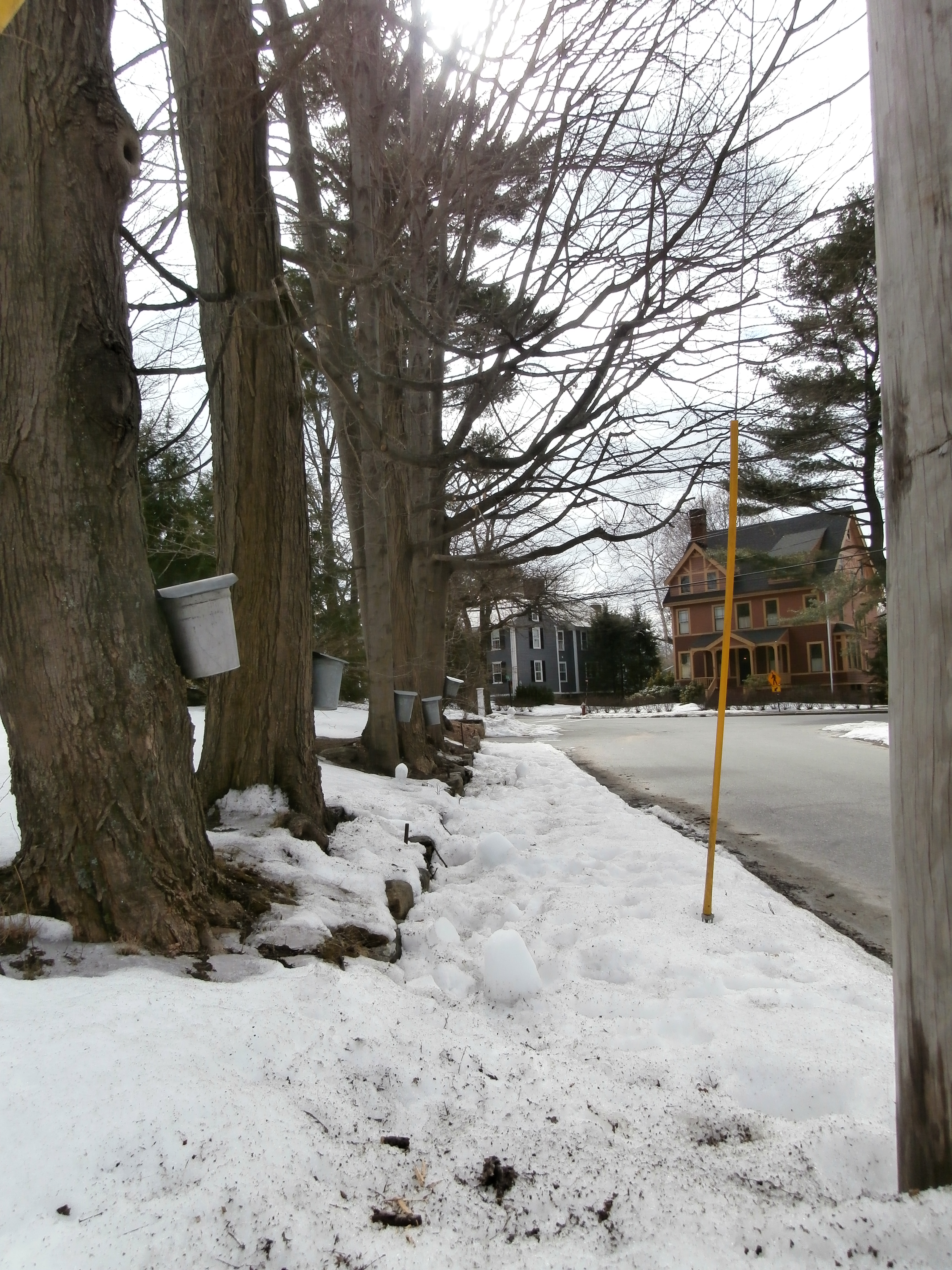
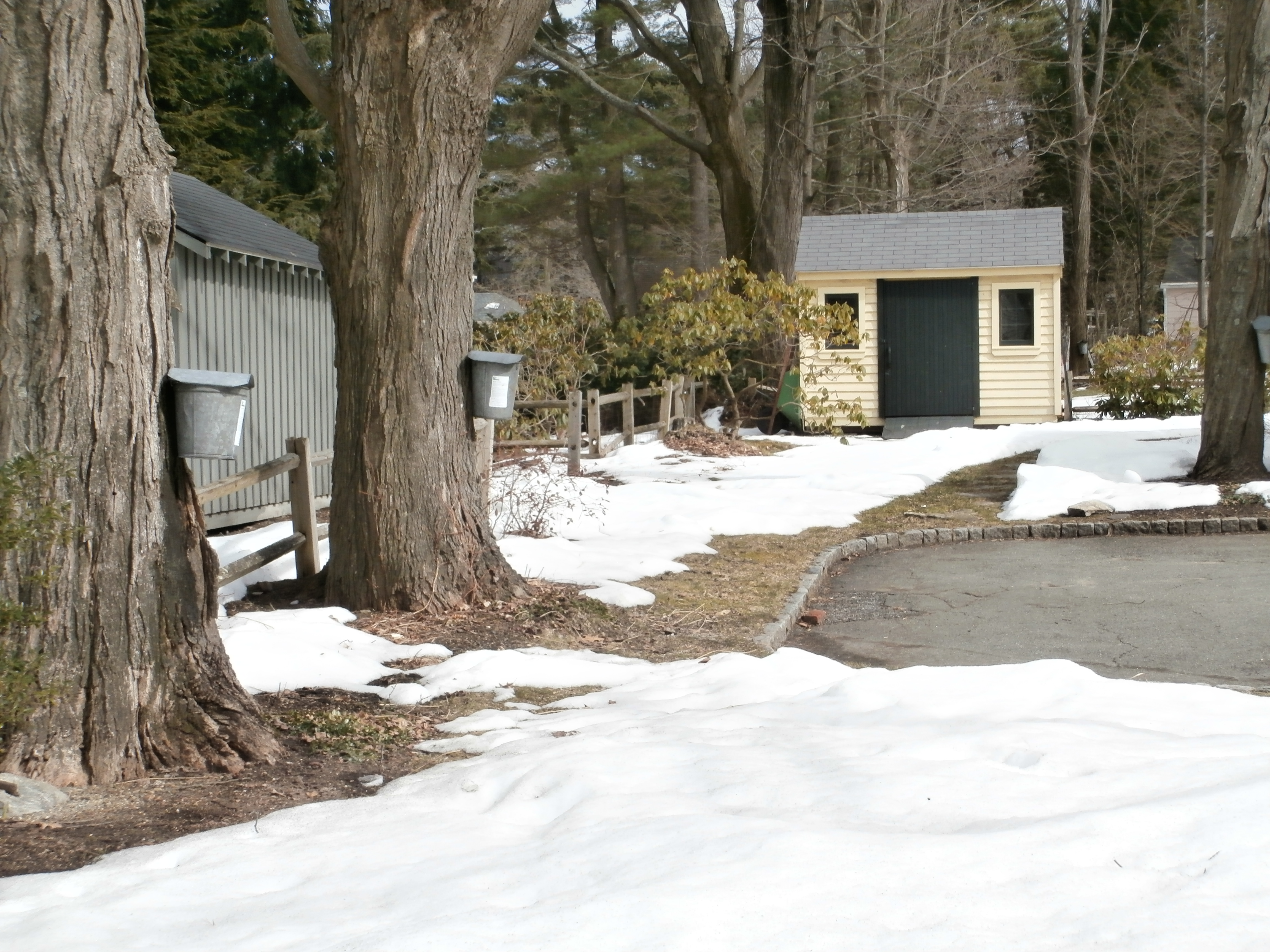
You know that spring is coming when there’s still daylight at Porter Square as the evening train arrives, when the chickadee changes its call from “chick-a-dee-dee-dee” to “hear me ” (listen), and when neighbors’ trees sprout sap-collecting cans.
My mother tried maple sugaring one year, but spent too much on stove gas to cook it down slowly.
Asakiyume, are you making maple syrup this year?
I will be looking for other signs of spring soon: motorcycles, lawnmowers, people washing cars in driveways, neighbors talking more, and the first crocus. But I already saw bluebirds. In the dead of winter, believe it or not. They were cleaning off the berries from the deciduous holly bushes. Astonishing!
The West Concord 5 & 10 is a crammed-to-the-gills, family-run institution, the place you go for what used to be called notions and sundries — and for anything you have tried and failed to find anywhere else.
But the 5 & 10 may be on its last legs as a result of long-term changes in shopping patterns and the collapse of a supplier that gave credit.
A cash mob was organized for today, and the faithful turned up in droves, promising to spend at least $20. Whether the show of loyalty can save the business for the family remains to be seen, but it must have warmed the cockles of their hearts.
Nancy Shohet West’s article Thursday in the Globe West helped to get the word out:
“According to [store manager Chris] Curtis, his main supplier, Arrow Wholesale Inc. in Worcester, which had provided quirky inventory to small, dime-store-type businesses all over the country for generations, went out of business. That loss, coupled with the decrease in business facing small neighborhood shops everywhere, as more consumers flock to malls, superstores or online, was draining the lifeblood out of the West Concord 5 & 10.”
Organizer Polly “Stadt said she and her 13-year-old daughter, Emma Hill, agreed that this was awful news. Browsing the shelves for inexpensive, amusing, or useful items was a tradition not only among adults in the community but among children Emma’s age as well. They decided something had to be done, and then Stadt remembered a tactic to save a local business that a friend in Texas had told her about: a cash mob.
“In a cash mob, according to the website www.cashmob.com, committed supporters ‘come together to shop in a locally owned establishment to support their favorite local business and support the area economy. Each ‘mobber’ spends an agreed-upon amount, usually $20.
“Stadt and her daughter said they decided a cash mob was just what the West Concord 5 & 10 needed, providing an influx of money and, more importantly, bringing attention to its plight. They talked to Curtis, chose a date — the first Saturday in March — and started putting out the word: Emma on Facebook, and her mother by e-mail and word of mouth.”
Now I’m just hoping we didn’t strip the shelves so customers in the weeks to come find nothing to buy.
More about a wonderful store and about how social media may help save it.
According to Doug Donovan at The Chronicle of Philanthropy, here. the number of volunteers in the United States is at its highest level since 2005.
“More than one-quarter of Americans did volunteer work in 2011, providing 7.9 billion hours of service worth $171 billion. …
“The 1.5 million additional volunteers boosted the national rate to 26.8 percent of the population, a half percentage point higher than 2010. But the dollar value dipped by $2 billion, as the average number of hours Americans volunteered in a year dropped to 32.7 from 33.9, the Corporation for National and Community Service reported.
“Robert Grimm, director of the Center for Philanthropy and Nonprofit Leadership at the University of Maryland, said the increase was mainly the result of the growth in the American population, not a response to the economy or other factors.”
Well, that’s too bad. People who don’t squeeze some sort of volunteer work into their lives are missing out. If you find an opportunity that works for you, it can be very satisfying.
Where I work, people have been volunteering for years at an inner city school, and the experience just gets better and better. Not only do we feel like we are really helping the kids improve their skills, but we enjoy building friendships with others in our organization as we ride the van to our destination.
I don’t want to make my volunteering to sound like a bigger deal than it is. Each person gives only about an hour and a half a month, overlapping with lunchtime. My point is that even a little bit can make a difference for someone, especially when combined with the efforts of others. One and one and 50 make a million.
Photograph: Mike Brown/The Commercial Appeal/AP Three volunteers share a laugh while they serve home-cooked meal to residents of Memphis Towers, an independent living community for the elderly and disabled in Memphis, Tenn, Dec. 10, 2012.
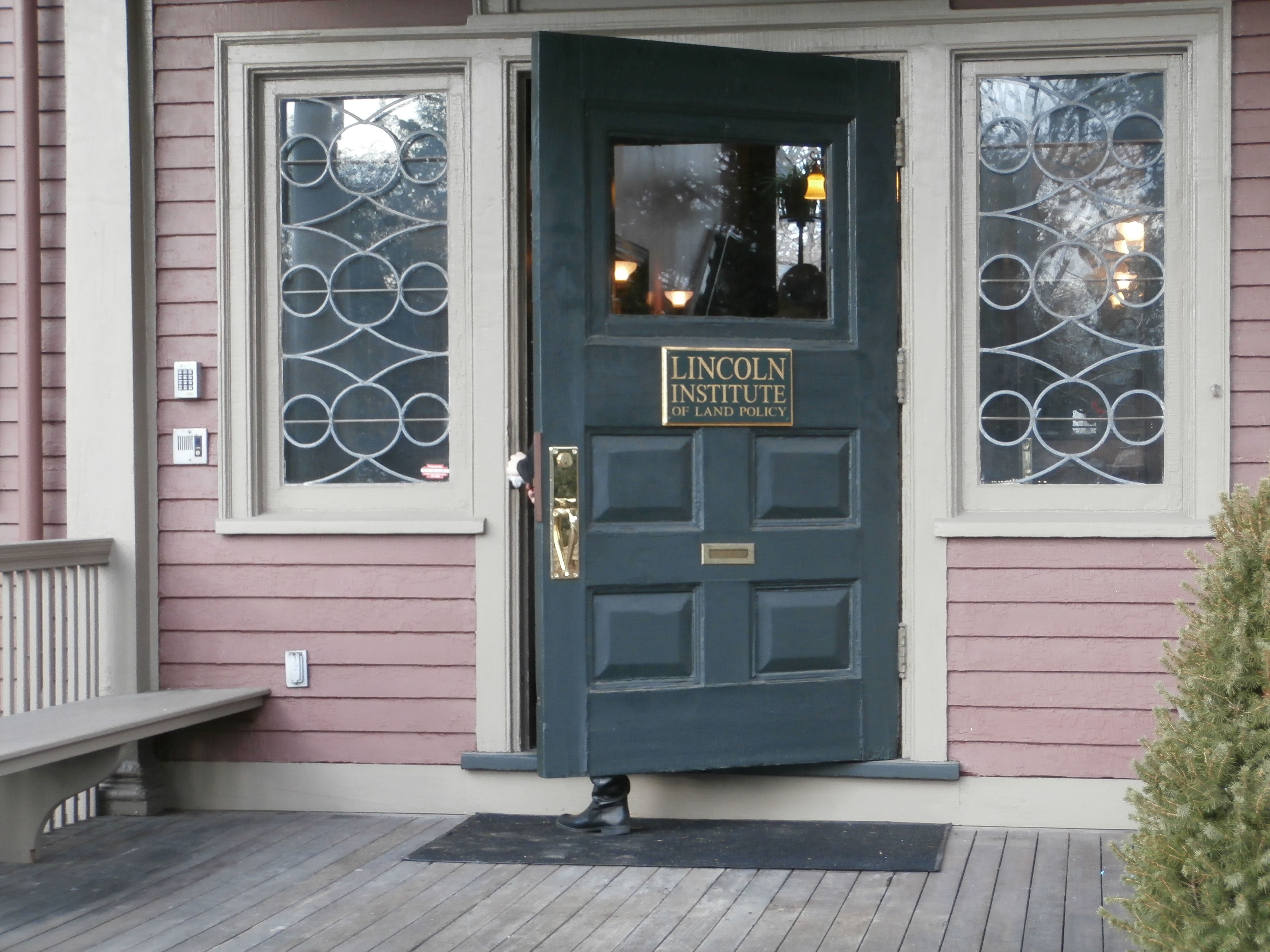
Because the lecture was on walkable communities, I walked to the Lincoln Institute of Land Policy today.
Julie Campoli was scheduled to talk about her book Made for Walking: Density and Neighborhood Form.
From the Institute’s website: “In this era of high energy prices, economic uncertainty, and demographic change, an increasing number of Americans are showing an interest in urban living as an alternative to the traditional automobile-dependent suburb. Many people are also concerned about reducing their annual vehicle miles traveled as a way to lower greenhouse gas emissions affecting climate change. …
“Researchers delving into the question of how urban form affects travel behavior identify specific characteristics of place that boost walking and transit use while reducing [vehicle miles traveled]. In the 1990s some pinpointed diversity (of land uses), density, and design as the key elements … After a decade of successive studies on the topic, these ‘three Ds’ were joined by two others deemed equally important—distance to transit and destination accessibility … Added to the list is another key player: parking.”
Campoli talked about all five elements, showed great pictures, and shared intriguing stories from successful communities. More.
By the way, if I had gone by car to the lecture instead of on foot, I would most assuredly have missed the possum, one of the more contemplative creatures in Cambridge today. He was still on his branch when I walked back after the presentation. But he had turned around.









 Suzanne's Mom's Blog


