Feeds:
Posts
Comments

One-Minute Soap Operas

Photo: ReelShort App/Crazy Maple Studio.
Want a short soap opera for Valentine’s Day?

Has there ever been a soap opera that wasn’t about romance? Even hospital dramas are mostly about jealousy and staff affairs. But given that typical plots take years to come to a resolution, entrepreneurial geniuses have popped up to meet a need.

Learn about the 60-second soap-opera episodes that are gaining a contemporary audience.

Claire Moses reports at the New York Times, “When Albee Zhang received an offer to produce cheesy short-form features made for phones last spring, she was skeptical, and so, she declined. But the offers kept coming. Finally, Ms. Zhang, who has been a producer for 12 years, realized it could be a profitable new way of storytelling and said yes.

“Since last summer, she has produced two short-form features and is working on four more for several apps that are creating cookie-cutter content aimed at women. Think: Lifetime movie cut up into TikTok videos. Think: soap opera, but for the short attention span of the internet age.

“The biggest player in this new genre is ReelShort, an app that offers melodramatic content in minute-long, vertically shot episodes and is hoping to bring a successful formula established abroad to the United States by hooking millions of people on its short-form content.

“ReelShort is owned by Crazy Maple Studio, a company in Northern California that is backed by the Beijing-based digital publisher COL Group.

“ReelShort’s titles include ‘The Double Life of My Billionaire Husband,’ ‘I Got Married Without You’ and ‘Bound by Vendetta: Sleeping With the Enemy.’ The shows are formulaic: The plotlines include romance and revenge, the characters are archetypical and the dialogues are simple.

“The extremely short genre became popular in the Asia-Pacific region during the pandemic, and Joey Jia, the chief executive of Crazy Maple Studio, took notice.

“ReelShort aims to get people hooked as quickly as possible, with much of the action happening in the first few super short episodes. ‘This is a pay-as-you-go model,’ Mr. Jia said. ‘If people are confused by the story, they leave.’

“The cost of making these features is relatively low, $300,000 or less, according to Crazy Maple Studios. The crews are small and partly made up of recent film graduates in Los Angeles, according to actors who worked on the productions.

“Viewers can watch dozens of minute-long episodes on ReelShort for free via multiple platforms, including YouTube and TikTok. But at some point, they must either pay or watch ads to unlock subsequent episodes. Sometimes people pay as much as $10 or $20 to keep watching, Ms. Zhang, the producer, said. …

“In the United States, ReelShort is trying to succeed where the short-form content company Quibi failed. … While Quibi focused on more highbrow content with A-list stars, ReelShort is doing the opposite: It’s giving people juicy plot points, from werewolves to evil step mothers to secret billionaire husbands to more werewolves.

“ ‘We learned a lot from Quibi,’ said Mr. Jia. … ‘To build a successful mobile app, you need to find out your core audience,’ he said. And that audience is women who love soap operas. …

“In total, more than seven million people downloaded ReelShort in the United States in 2023, on Apple and Android phones combined, according to data.ai. …

“Kasey Esser, a Los Angeles-based actor who has worked on short-form shows for ReelShort and other apps, described the format as this generation’s soap opera. He drew a comparison to channels with made-for-TV content, such as Hallmark.

“ ‘People know exactly the story they’re going to be getting, but they will still watch it,’ Mr. Esser, 34, said. ‘They will still love it.’

“For the actress Samantha Drews, ReelShort was a chance to play different types of characters. ‘I can say now that I’ve been cast in 15 to 16 features in the last few years,’ Ms. Drews, 25, said. ‘That’s not something every actor can say.’ “

More at the Times, here.
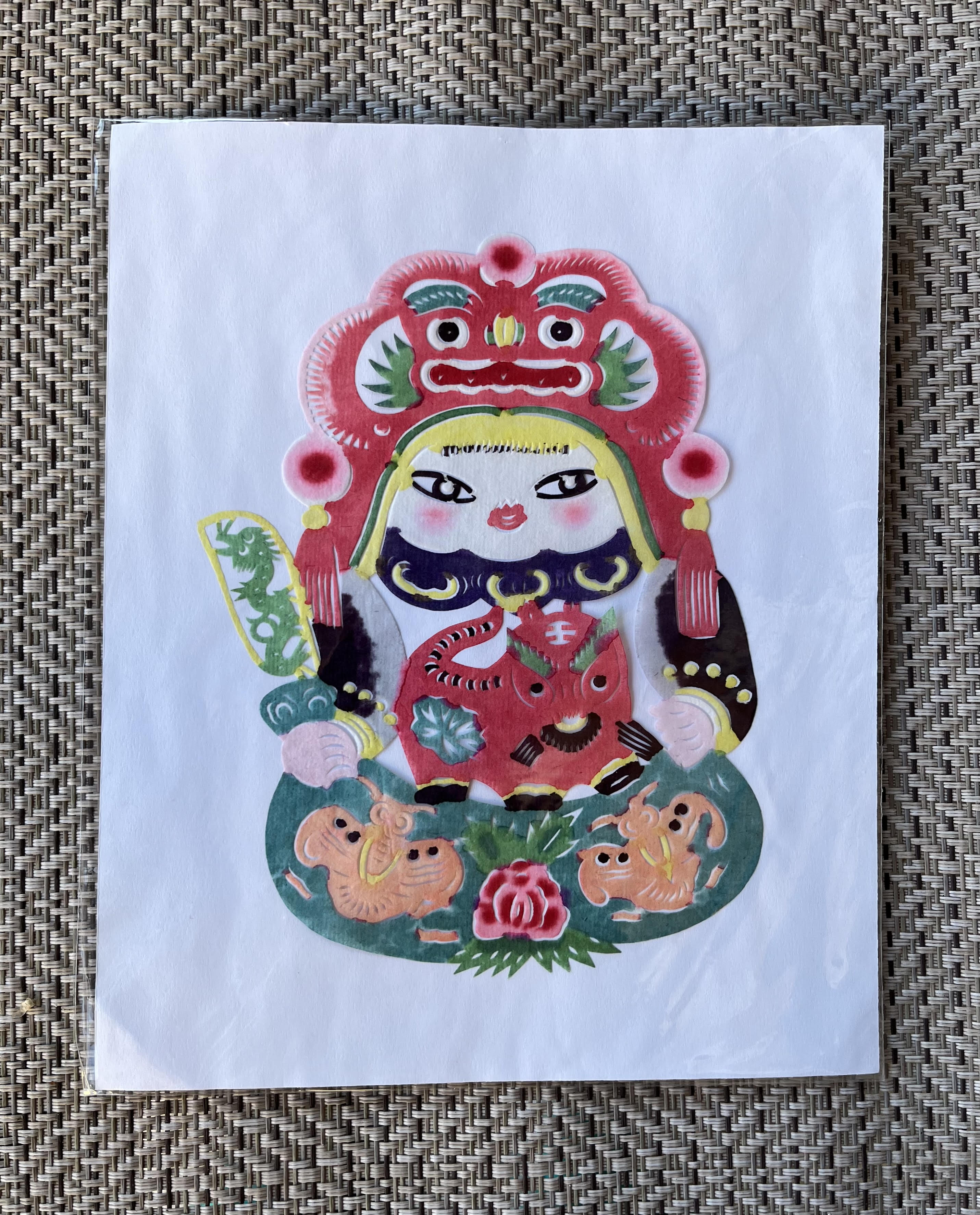
Photo: Suzanne and John’s Mom.
I’ve had this Chinese paper cut-out for years. I no longer remember where it came from.

Happy Year of the Dragon! The Wood Dragon to be specific. (In case you’re wondering, the other Chinese zodiac dragons are Water, Metal, Earth, and Fire.)

As China and much of the world celebrate the traditions of Lunar New Year, I want to share an article about a woman in China who is keeping another ancient tradition alive — paper cutting.

Ann Scott Tyson reports at the Christian Science Monitor, “With uncanny precision and attention to form, Yu Zeling snips away at the thin red paper. Her scissors seem to glide magically into place. After several minutes, she unfolds her creation: a bold and smiling Chinese zodiac pig.

“An award-winning master of the ancient Chinese folk art of paper cutting, Ms. Yu fills her studio with cutouts of animals, people, and scenes so vivid that they seem to leap from the walls. Rich with symbolism, her art embodies village life in Ansai, a rural district in Shaanxi province on China’s rugged Loess Plateau. Ansai is a center of paper cutting – recognized in 2009 by UNESCO as an Intangible Cultural Heritage of Humanity. …

“Ms. Yu and others are working to keep the folk art alive, even as it evolves away from its roots as adornment for farmhouses and local celebrations. Indeed, the Ansai native is serving as a rare bridge between the most skilled paper-cut artists of the 1980s – a golden era in paper cutting – and a new generation of heirs. …

“Growing up in a hamlet deep in an Ansai valley, surrounded by terraced fields, Ms. Yu came to paper cutting in the late 1970s as naturally as she breathed the earthy air. ‘We were very poor, and when it was time to celebrate the [Lunar] New Year, we all put paper-cuts in the windows,’ she says, recalling the holiday at her childhood home – a cave dug from a hillside – where her family of 10 eked out a living growing corn, beans, and sorghum. …

“The art originated in China in the centuries after paper was invented in A.D. 105. … Full of auspicious symbols from peasant life, the decorations heralded good weather, many offspring, long life, wealth, and happiness. …

“Just as Ms. Yu was beginning to learn paper cutting, after she left elementary school in 1978 at the age of 12, China’s shift toward market economics and social opening began allowing for a revival of traditional culture. Using discarded newspaper, Ms. Yu first practiced cutting the image of a Chinese national flag that she saw in a school textbook. She says she ‘cut it 100 times’ before she was satisfied. Then her aunt took over, introducing her to increasingly complicated traditional motifs. …

“Meanwhile, a research scholar named Chen Shanqiao began trekking from Ansai’s county seat into the hills and valleys to rural villages, rediscovering the true meanings embedded in the paper-cuts. Their power astonished him. In the mid-1980s, he recruited a few older village women who were masters in the craft to come teach at Ansai’s Cultural Center.

“Ms. Yu married farmer Jiang Zhicheng, who admired her passion and skill. Inspired, Mr. Jiang took a few of his wife’s works to the local market in 1987, but he couldn’t sell them. So he went farther, riding his bicycle more than 25 miles to Ansai’s Cultural Center. Seeing the fine pieces, Mr. Chen immediately bought the paper-cuts and invited Ms. Yu to come train with the master artists. …

“After years of training, Ms. Yu became a master in her own right, winning one award after another. Her works are on display in museums. But she’s humble about her achievements. ‘I was, and still am, a farmer,’ she says with a smile. … ‘I make paper-cuts based on life,’ she says. ‘Here in northern Shaanxi, we feed the pigs and till the land and care for the children.’

“Hoping to carry on and grow the folk art, Ms. Yu volunteers to teach at free community training sessions. Paper cutting is also taught in Ansai’s public schools. … As Chinese villages empty out and rural rituals fade, Ms. Yu is aware of the need to go beyond perpetuating traditions and embrace new paper-cut experiments. …

“The most elaborate paper-cut in her studio is a large and ornate circular design that weaves together layer upon layer of significance: In the center, a snake (man) encircles a rabbit (woman), symbolizing marriage. Surrounding them is a ring of pomegranates (the seeds of which represent many children), peaches (the Chinese name for ‘peach’ is also the word for ‘longevity’), and Buddha’s hands (a kind of citrus fruit representing bliss). A final outer rim, resembling a woven flower basket, also signifies longevity.”

More at the Monitor, here. Check out photos of the cutting process. No firewall.

Microplastics in Clouds

Photo: John and Suzanne’s Mom.

As everyone knows, it’s hard to avoid plastic. The other day I found on the floor tiny pieces of one of those mesh bags that oranges often come in. I may be overthinking everything, but I was stumped about how to dispose of it. If I flush it, it goes into our water system. If I put it out for the landfill, the result is ultimately the same. And now we’re hearing that plastic particles are even getting into the clouds.

Nicola Jones writes at YaleEnvironment360, “Plastic has become an obvious pollutant over recent decades, choking turtles and seabirds, clogging up our landfills and waterways. But in just the past few years, a less-obvious problem has emerged. Researchers are starting to get concerned about how tiny bits of plastic in the air, lofted into the skies from seafoam bubbles or spinning tires on the highway, might potentially change our future climate.

“ ‘Here’s something that people just didn’t think about — another aspect of plastic pollution,’ says environmental analytical chemist Denise Mitrano of ETH Zürich University, in Switzerland, who co-wrote an article last November highlighting what researchers know — and don’t yet know — about how plastics can change clouds, potentially altering temperature and rainfall patterns.

“Clouds form when water or ice condenses on ‘seeds’ in the air: usually tiny particles of dust, salt, sand, soot, or other material thrown up by burning fossil fuels, forest fires, cooking, or volcanoes. There are plenty of these fine particles, or aerosols, in the skies. …

“Until recently, when chemists thought of the gunk in our air, plastics did not leap to mind. Concentrations were low, they thought, and plastic is often designed to be water repellent for applications like bags or clothing, which presumably made them unlikely to seed cloud droplets. But in recent years, studies have confirmed not only that microscopic pieces of plastic can seed clouds — sometimes powerfully — but they also travel thousands of miles from their source. And there are a lot more particles in the air than scientists originally thought. …

“ ‘The people who invented plastics all those decades ago, who were very proud of inventions that transformed society in many ways — I doubt they envisaged that plastics were going to end up floating around in the atmosphere and potentially influencing the global climate system,’ says Laura Revell, an atmospheric scientist at the University of Canterbury in New Zealand. …

“Global annual production of plastics has skyrocketed from 2 million tons in 1950 to more than 450 million tons today. And despite growing concerns about this waste accumulating in the environment, production is ramping up rather than slowing down — some oil companies are building up their plastic production capacity as the demand for fossil fuel declines. To date, more than 9 billion tons of plastic has been produced, and about half of it has gone to landfills or been otherwise discarded. Some project that by 2025, 11 billion tons of plastic will have accumulated in the environment. …

“In recent years, several studies have suggested that microplastics (pieces less than 5 millimeters in length) and nanoplastics (smaller than approximately 1,000 nanometers) were being transported long distances through the air. In 2019, for example, researchers found microplastics in the Pyrenees that had arrived via rain or snowfall. In 2020, Janice Brahney of Utah State University and four coauthors published a high-profile Science paper revealing high amounts of plastic in federally protected areas of the United States. …

“Brahney’s extensive U.S. dataset also opened the door for modelers to figure out where, exactly, all this plastic was coming from. ‘It’s a really beautiful data set,’ says Cornell University’s Natalie Mahowald, who did the modeling work.

“Mahowald took the plastic concentrations Brahney had cataloged and mapped them against atmospheric patterns and known sources of plastics, including roads, agricultural dust, and oceans. On roadways, tires and brakes hurl microplastics into the air. Plastic winds up in agricultural dust, notes Mahowald, in part from plastics used on farm fields and in part because people toss fleece clothing into washing machines: the wastewater flows to treatment plants that separate solids from liquids, and about half the resulting biosolids get sent to farms for use as fertilizer. As for the ocean, Mahowald says, big globs of plastic in places like the Pacific Gyre degrade into microscopic pieces, which then float to the surface and are whipped up into the air by chopping waters and bursting air bubbles. …

“Exactly how aerosols affect climate has been a critical sticking point in climate models, and many of the details are still unknown. Different aerosols can change the climate by either reflecting or absorbing sunlight, which can depend, in part, on their color. Black soot, for example, tends to have a warming effect, while salt reflects and cools. Aerosols can land on the ground and change the albedo, or reflectivity, of ice and snow.

“Aerosols also affect cloud formation: different bits and pieces can seed more and smaller droplets of water or ice, making for different types of clouds at different elevations that last for different amounts of time. High-altitude, thin, icy clouds tend to warm the Earth’s surface like a blanket, while low-altitude, bright and fluffy clouds tend to reflect sunlight and cool the Earth.”

More at YaleEnvironment360, here. Rebecca of Fake Flamenco was speculating not long ago about clouds and whether they have started looking different. Do 20th century cloud photos from your region look different from those taken recently?

The Climate Generation

Photo: Alfredo Sosa/CSM Staff.
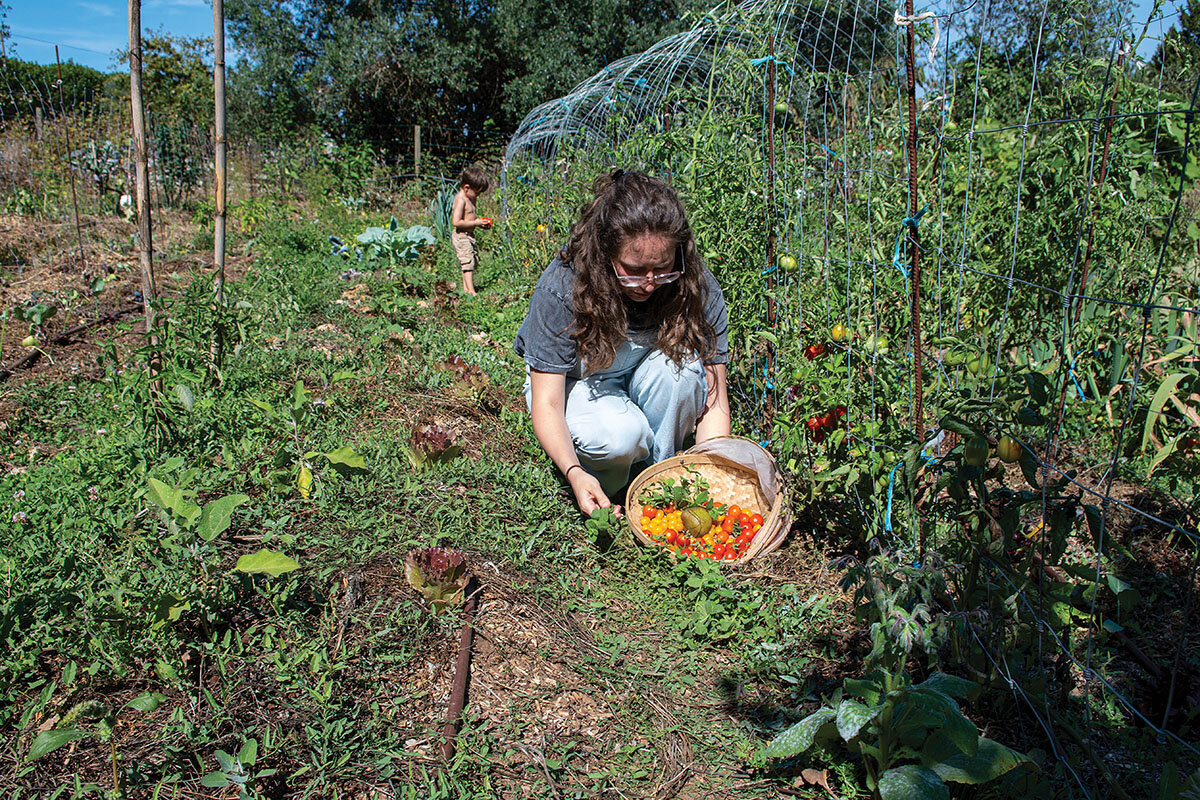
Rute Gabriel and her 3-year-old son, Isaac, pick tomatoes on their regenerative farming homestead, Projeto Liberta-te, in Porto de Mós, Portugal.

I’m impressed with the many young couples in today’s story who have chosen a life that is more friendly to the earth. My only question: how do people who are not 30 incorporate some of these principles into their daily lives?

Stephanie Hanes writes at the Christian Science Monitor, “For Rute Gabriel and Pipo Vieira, it was the tomato plant on their 25th-floor balcony in Toronto that convinced them to return home. 

“The couple, sweethearts ever since high school in this Portuguese region of stone-fenced fields and olive groves, were sharing an apartment with Ms. Gabriel’s grandmother. Their friends back home thought they had hit the jackpot. They had managed to move from the country to the city. They had immigrated to a higher-income country. And in the middle of the 2010s, they had jobs at a time when the global financial crisis – known here simply as ‘the austerity’ – was still hitting Portugal hard. 

“But the couple had a sense that something was wrong. They were in their 20s and working constantly in jobs they did not love. They missed the bright sunlight and rosemary-fresh scent of home, and had a growing unease about what felt like an unsustainable lifestyle – not only in their balance of life and work, but also in their lives and the environment. …

“Then one day, browsing the internet, Ms. Gabriel came across a YouTube video about ‘permaculture’ … a philosophy that focuses on re-integrating humans into their habitats in a way that’s mutually beneficial for people, the land, and animals.

“Ms. Gabriel was fascinated, she recalls. This was the sort of lifestyle she and Mr. Vieira were craving.  They tried to implement bits and pieces of permaculture at their high-rise apartment, putting a little tomato plant on their balcony, and then trying out ‘companion planting,’ in which they added peppers and carrots to the same container. …

“In 2016, they did what generations of young Europeans have avoided: They moved back not only to their homeland, but also to the countryside and an agrarian life. Their plan was to build a homestead and run Portuguese-language permaculture classes – to support themselves, to regenerate the land, and to help others create sustainable lifestyles. …

“Many of their friends thought they were crazy. … Over the past decades, some rural villages have dwindled to five, eight, or 20 people; schools have closed, and health clinics have shuttered. Portuguese farmers are the oldest in the European Union, with 51.9% above age 65, according to government data. Only about 6.4% are under the age of 40.

“But some in the Climate Generation – as we’re calling the cohort that was born since 1989 and into a world of accelerating impacts from a heating atmosphere – are bucking this trend. Government data shows a small but clear uptick in young people entering the agricultural sector over the past few years. And some are coming back to rural areas in Portugal to intentionally step onto the front lines of their country’s climate struggle, trying out new methods of climate-friendly food production. 

“The full size of this movement is hard to quantify because many of these young people hold other jobs and may not identify themselves as farmers for government statistical purposes. But it is recognizable. … The Climate Generation knows that what we eat, and how we grow it, has huge climate implications. Everything from shipping feed to making fertilizer to throwing wasted food in a landfill contributes to greenhouse gas emissions. But by focusing on rebuilding soil’s natural fertility, ‘regenerative’ farming practices can sequester carbon – a potential climate solution. …

“But food systems reflect something even more for the Climate Generation. Food is a tangible, everyday doorway into larger questions about how we relate to the earth and how we consume and share resources. Look at food closely, and it illuminates questions about how and why we work. It brings a tangible practicality to philosophical theories – about whether we keep demanding more by expanding and growing, about modern consumption and lifestyles, about what it means to continue extracting from a planet showing its limits in the form of wildfires, droughts, storms, and heat waves. …

“ ‘This is the future of humanity,’ says João Rodrigues, a 34-year-old artist-turned-farmer, standing by his tomato plants in the interior of Portugal. ‘To go small.’ ”

More at the Monitor, here. No firewall. The article has a lot of interesting detail.

Looking at Photos

We’re saying good-bye to our home of 42 years.

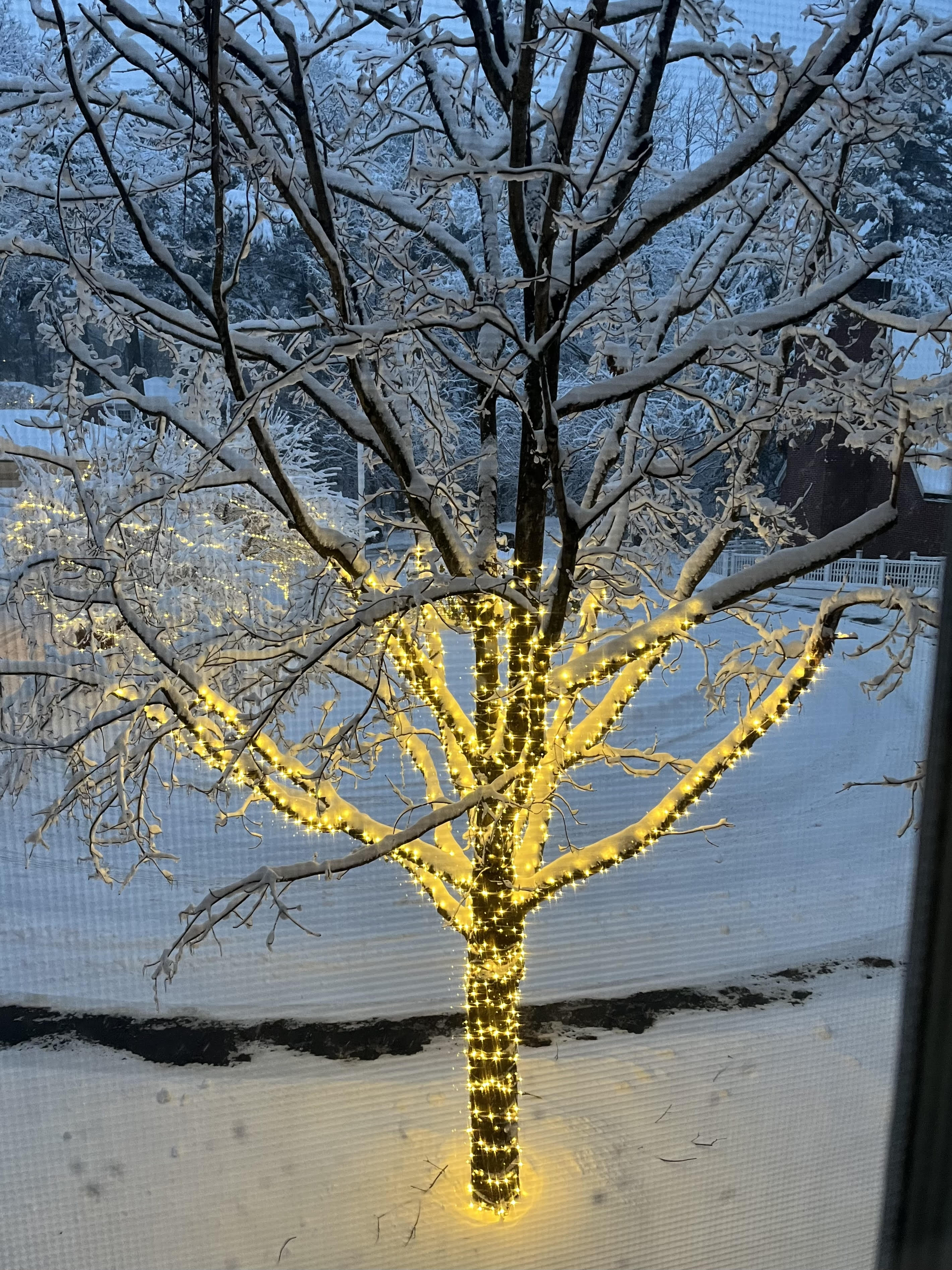
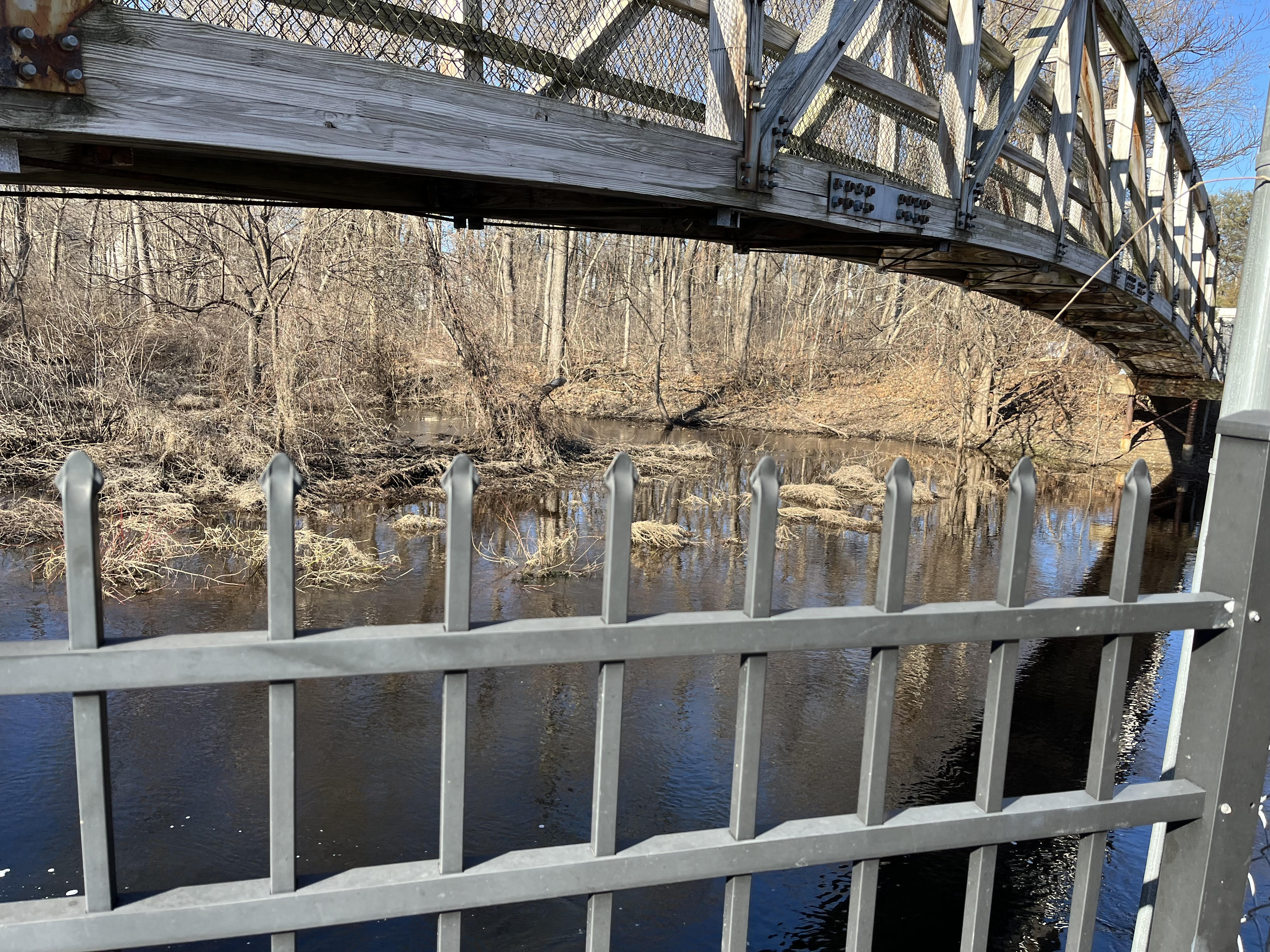
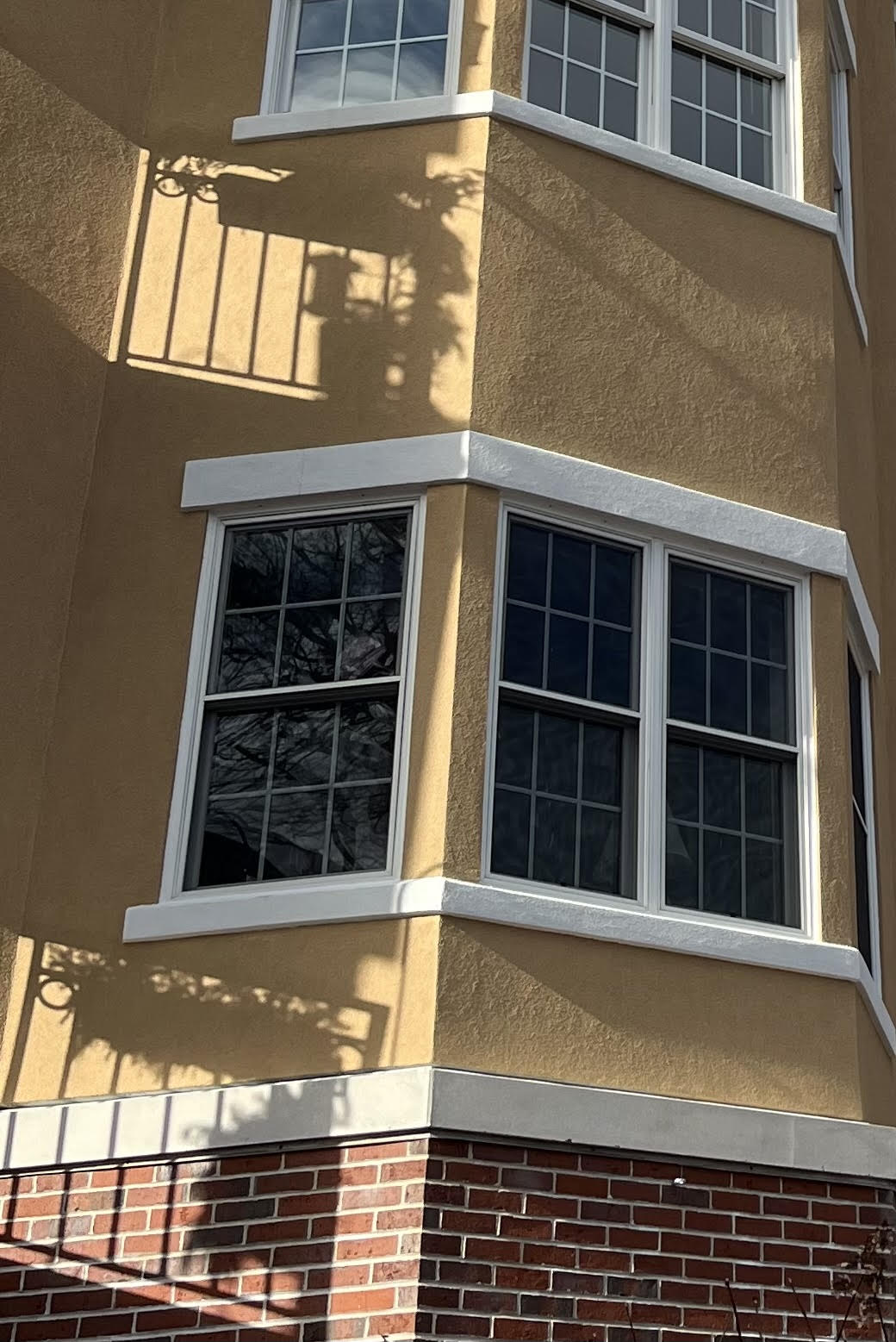
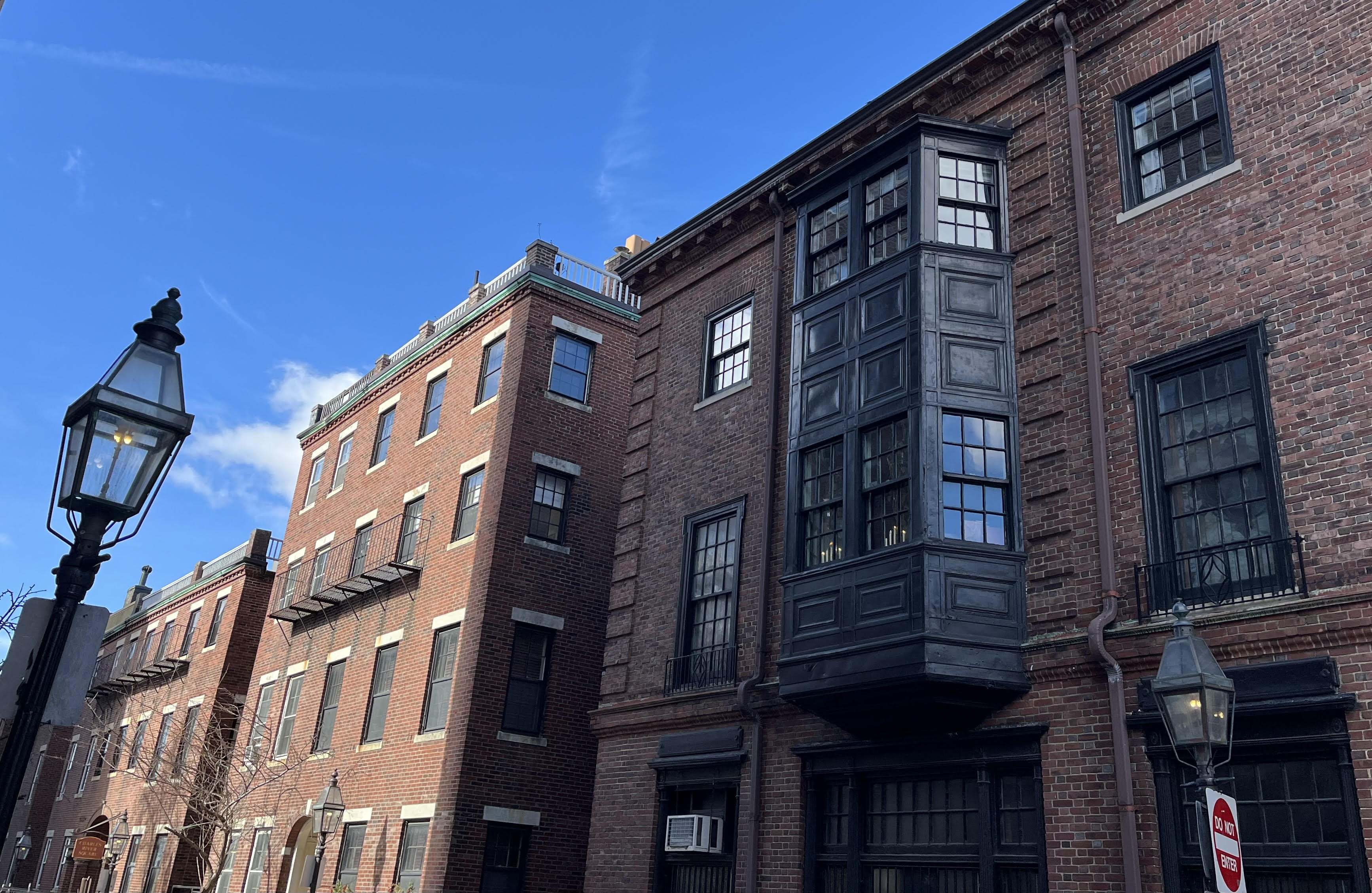
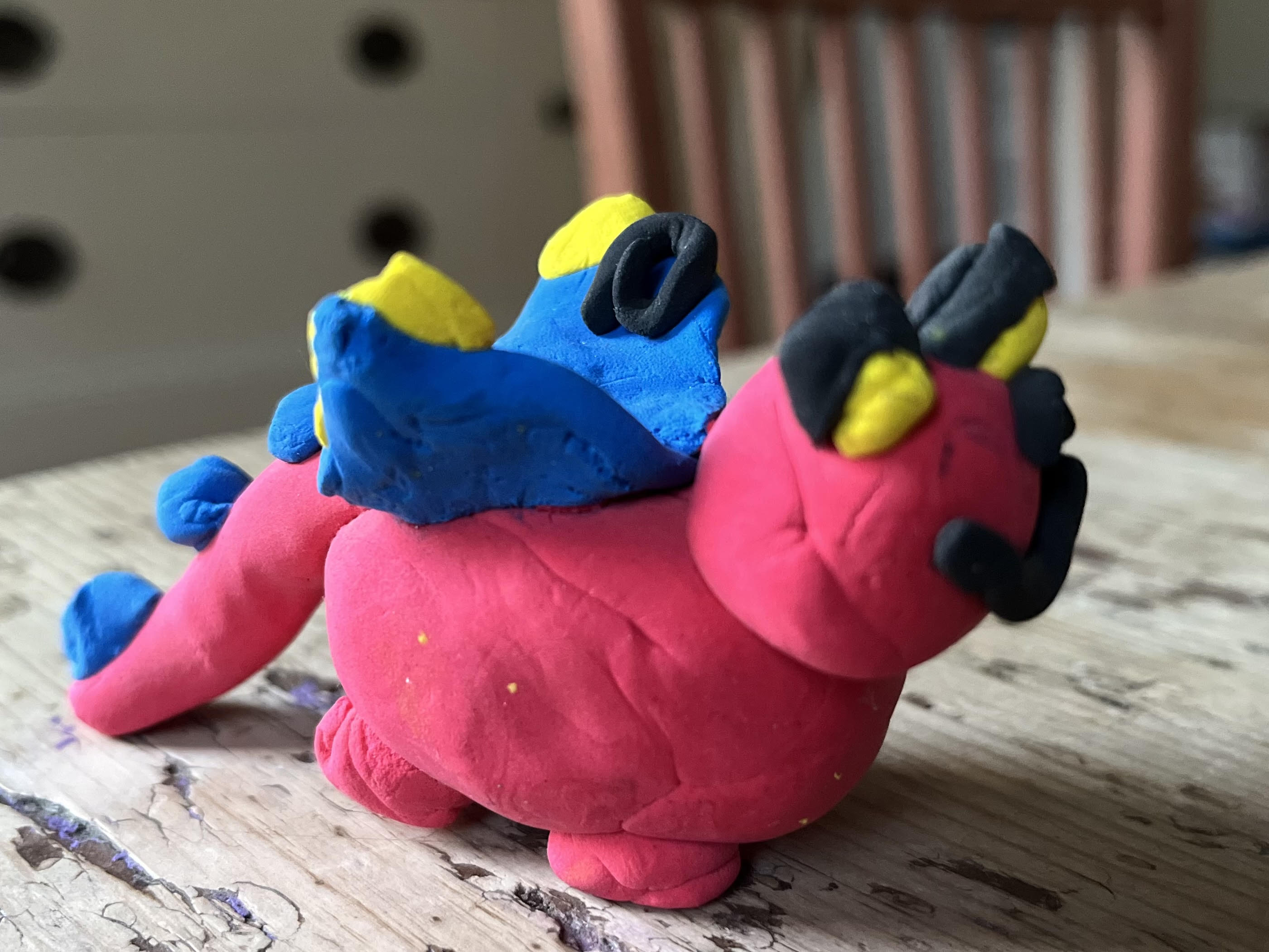
I haven’t posted photos for a while. Increasingly, I feel uninspired on cloudy, overcast days, and we have had a lot of those this winter. But here are the photos I did shoot. They were all all taken in Massachusetts, with the exception of the last one, my Providence granddaughter’s Model Magic dragon.

Happy Year of the Dragon!

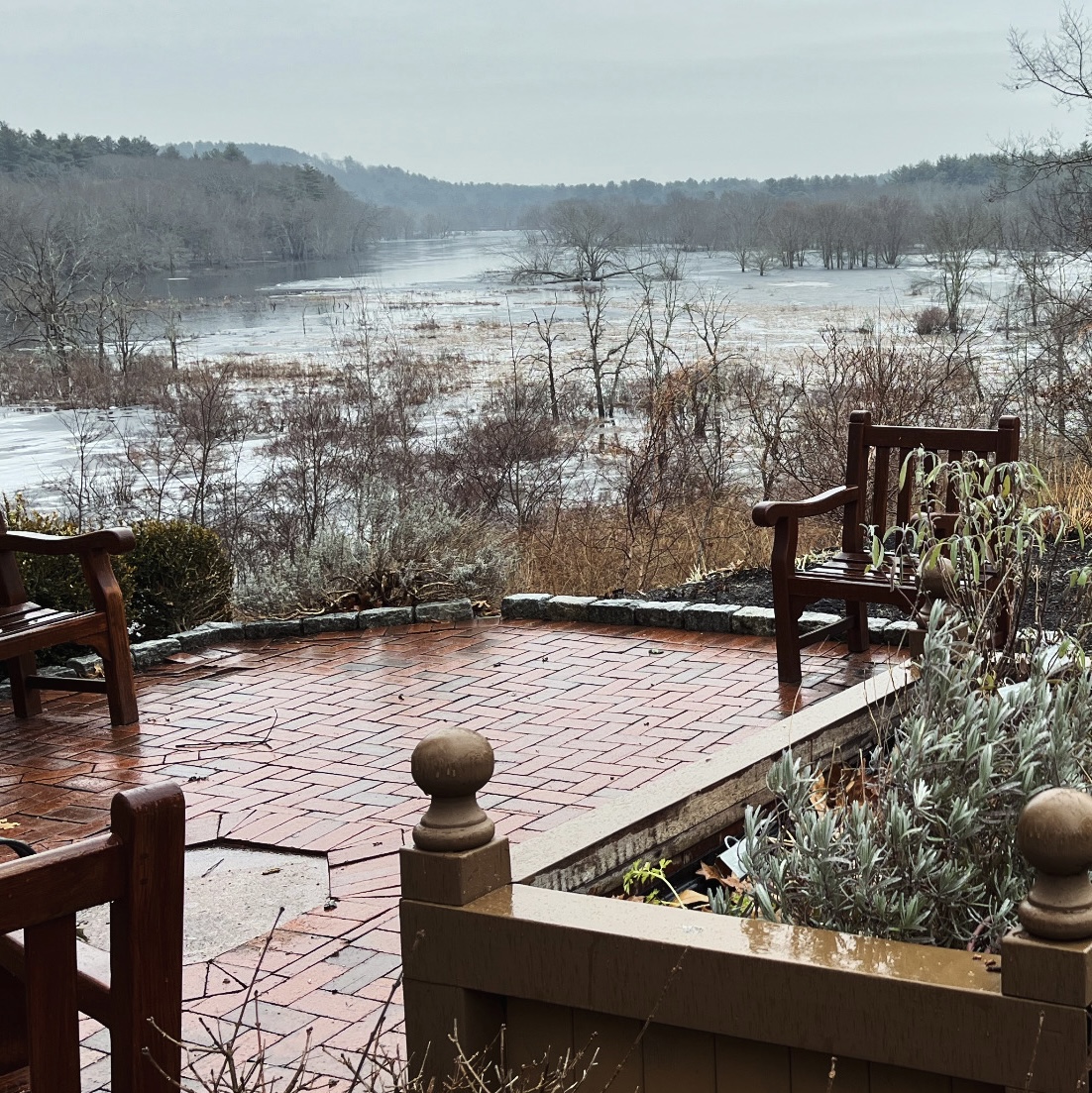
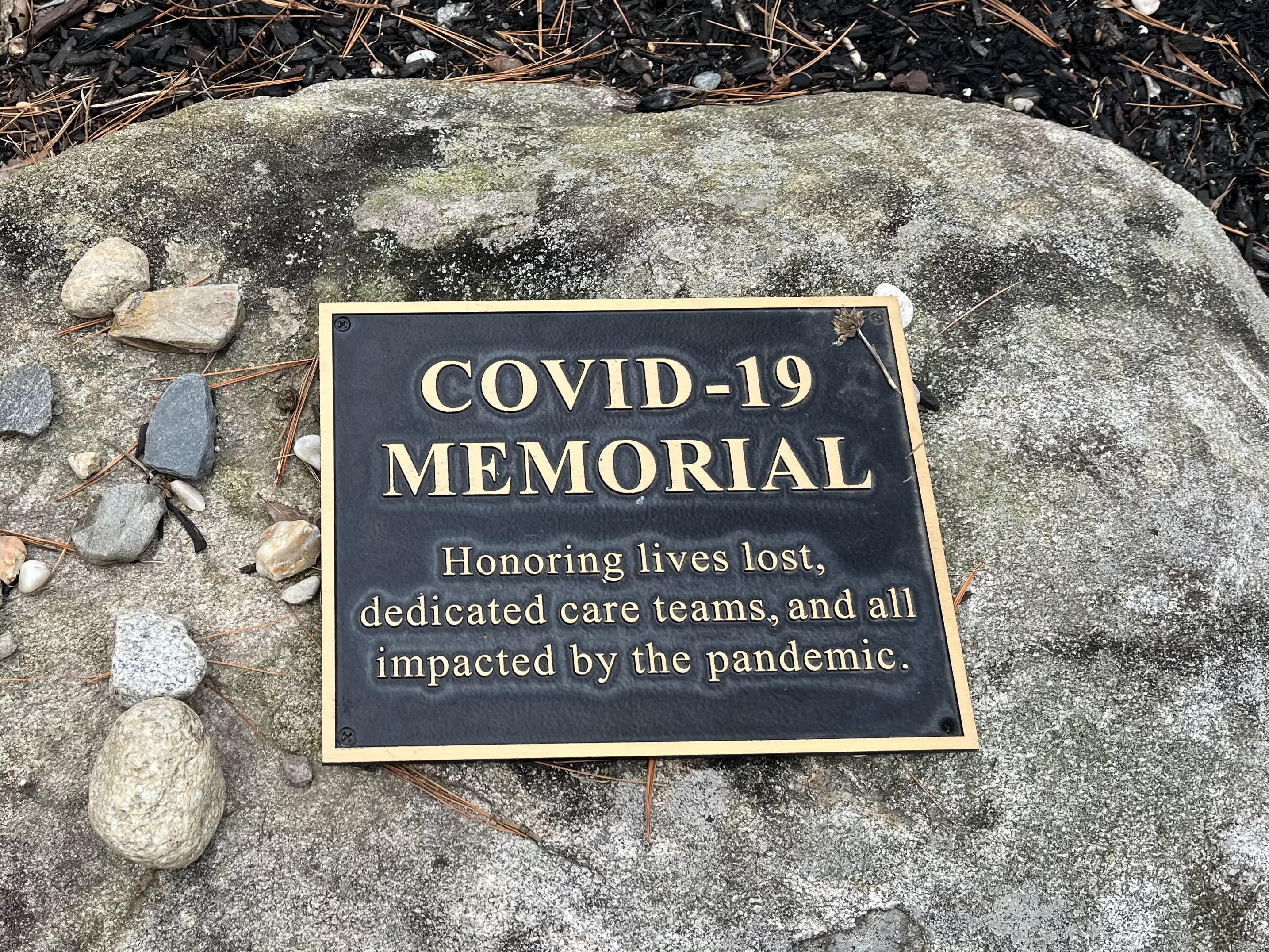
First comes the big snowfall we had in early January, then the bleak, rainy days that came after the snow melted. The river is the Sudbury. The river photo is followed by a memorial at the neighboring hospital, where everyone from our community goes, at least initially, when they have an emergency.

I think it’s good to be reminded what it was like in the early days of the pandemic.

Finally the sun came out. I took photos of the footbridge over Nashoba Brook, which was hurrying along as if it were spring already. Also in sunshine, a mossy-roofed shed caught my eye.

Do you see balconies next? After the balconies, is the train depot. I was there in the early morning to catch the train to Boston for annual checkups at MGH. While in town, I also took a shot of the Beacon Hill area off Charles Street.

PS All dragons smile, if we know how to look at them.

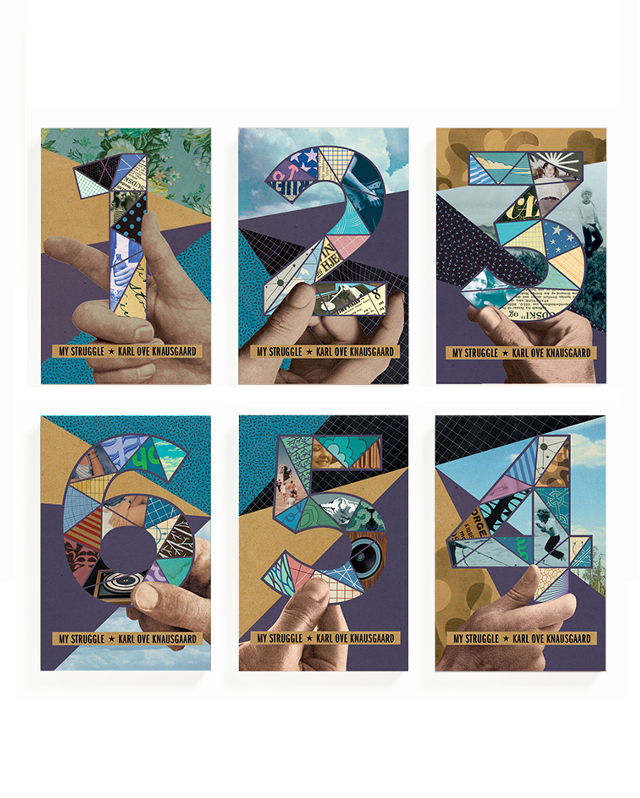
Art: Charlotte Strick.
All the decision-makers loved Strick’s cover for Karl Ove Knausgaard’s famed series. Until they didn’t. Read the story of “killed covers.”

Beginning authors often fantasize about the illustration they want for their cover, learning quickly the choice isn’t up to them. Meanwhile, illustrators may think they got the cover job — only to find out how a sales mentality can overrule good design.

Zachary Petit at Fast Company begins today’s story with one illustrator’s experience with a book series I have read.

Charlotte Strick was on a high,” he writes.  “She’d been tasked with designing the book covers for the English translations of Karl Ove Knausgaard’s six-part autobiographical novel, My Struggle — and she’d landed on a concept to tie the volumes together. Perhaps surprisingly, everyone else had, too. The collaged, Easter egg–laden set was an immediate hit in cover meetings at Farrar, Straus and Giroux, and the first book had hit shelves, but then Strick says a literary agent intervened. The books looked too artsy, and he wanted something more straightforward to reach the masses. So with only one installment on the market, the line got scrapped for a more traditional look — author photo with big, clean type, and a solid blurb.

“ ‘There’s nothing scarier than [someone saying], “this book is not going to sell with that cover,” ‘ Strick says. …

“Strick says that in general, the process begins with a designer receiving the manuscript and a jacket brief outlining the mandatory elements (e.g., title, author name, maybe a blurb), and comparison titles for reference. The timeline is usually tight, and when it comes down to it, the creative stakes are high: You’re essentially tasked with creating a single image to brand thousands of words that could have been years in the making. …

“From there, designers create comps, or a series of proposed designs for the team to weigh. The reasons why some comps meet untimely ends are many, from an editor or marketing lead’s personal preferences to genre conventions to performance metrics of similar approaches to the author’s best friend’s opinion or, maybe, the sheer fact that an exec has a cold that day. Of course, this isn’t to say that what hits the market is bad — in fact, I’d contend we’re in a golden age of book cover design, with each publishing season bringing a deluge of insanely great jackets. But at the end of the day, a lot of fantastic and fascinating work hits the cutting room floor.

“So as ‘Best Book Covers of the Year’ lists pop off this month, let’s celebrate the work that didn’t win the day. Here are some of the best book covers of 2023 that you did not see — with insight directly from the designers who created them. 

The version that ended up being scrapped is on left, the final version is on the right.

“ ‘I love the cover that was chosen so much (the big dark waves backdropping the brittle lines of sheet music evoke the sweeping story and emotional impact), but there is one outtake that is stuck in my head when I think of the book. There is one scene at the end that I can’t let go of: Music tying two people together is played, and images of people lost appear in redacted colors of light. Whether real or illustrative, this is the image that held everything that happened in the story in a suspended moment before the exhale of finishing the book. I wanted to create that scene but without any visual clutter of a setting, other objects in the room, or even people. In this outtake everything but the crucial information fades to black. It is the simplicity and starkness that I find so appealing.’ Math Monahan, illustrator of the Refugee Ocean’s first cover.

I’ll Be Seein’ Ya by Jon Robin Baitz is a play set in turbulent COVID times, examining the relationship between nostalgia and the ever-looming anxieties surrounding mortality and old age. I began with this painting by artist Perry Vásquez. The spontaneously combusted palm tree captured the sudden, disorienting, and solitary atmosphere of living alone in pandemic times, while also alluding to the LA forest fires. I enjoyed how this symmetrical, two-paneled composition suggests a ‘before and after’ sequence marking the initial spark and the gradual expansion into forest-fire-orange California sunset. —Cecilia Zhang.’ ”

I like Zhang’s concept more than the one that prevailed, but then, I would. I haven’t forgotten a negative experience I had with Jon Robin Baitz the time I was assigned to interview him for TheaterMania. He was really full of himself and rude because a stringer such as I was (who gets $70 for working hard on the writing) may not have had a chance to see the play.

But back to book covers. What are your reactions to book covers? Laurie Graves does get to pick hers and Asakiyume has done that, too. But when any of us put on our reader hats, we often get indignant about a cover we think was very misleading. Let me know if you can think of an example.

See more Befores and Afters at Fast Company, here.

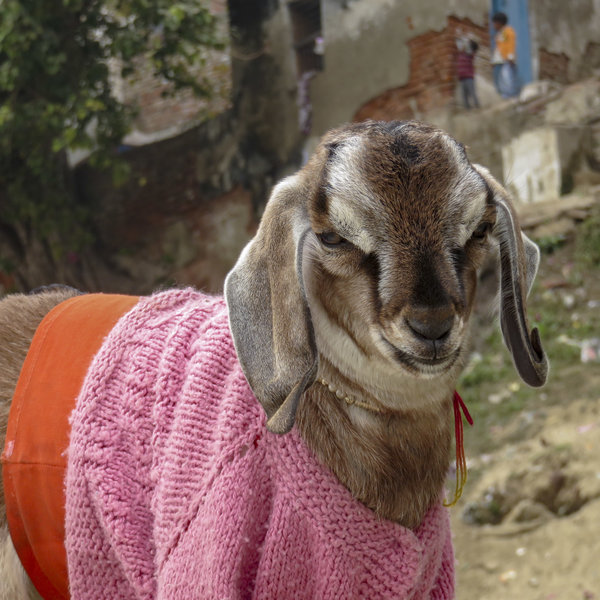
Photo: Goats in Sweaters.
New research suggests there is more to livestock than meets the eye.

Many pet owners would swear that their dogs are always thinking. Maybe it’s not only dogs. What farmyard animals do when responding to the circumstances around them also looks a lot like thinking.

David Grimm reports at Science about new research into what goes on in animals’ minds.

“You’d never mistake a goat for a dog,” he writes, “but on an unseasonably warm afternoon in early September, I almost do. I’m in a red-brick barn in northern Germany, trying to keep my sanity amid some of the most unholy noises I’ve ever heard. Sixty Nigerian dwarf goats are taking turns crashing their horns against wooden stalls while unleashing a cacophony of bleats, groans, and retching wails that make it nearly impossible to hold a conversation. Then, amid the chaos, something remarkable happens. One of the animals raises her head over her enclosure and gazes pensively at me, her widely spaced eyes and odd, rectangular pupils seeking to make contact — and perhaps even connection.

“It’s a look we see in other humans, in our pets, and in our primate relatives. But not in animals raised for food. Or maybe we just haven’t been looking hard enough.

“That’s the core idea here at the Research Institute for Farm Animal Biology (FBN), one of the world’s leading centers for investigating the minds of goats, pigs, and other livestock. … Scientists are probing the mental and emotional lives of animals we’ve lived with for thousands of years, yet, from a cognitive perspective, know almost nothing about.

“The work is part of a small, but growing field that’s beginning to overturn the idea that livestock are dumb and unworthy of scientific attention. Over the past decade, researchers at FBN and elsewhere have shown that pigs show signs of empathy, goats rival dogs in some tests of social intelligence, and … cows can be potty trained, suggesting a self-awareness behind the blank stares and cud chewing that has shocked even some experts. …

“The field faces challenges, however. …. Farm animals can be huge, many are hard to train, and traditional funders and high-profile journals have generally spurned such studies. But as scientists push past these obstacles. … What they learn could even change the way we house and treat these creatures. …

“In an enclosed L-shaped barn at FBN that houses more than 700 pigs … researchers are herding hulking hogs — just 6 months old but already 120 kilograms [265 pounds] — one by one into a run with a treadmill. Instead of a conventional treadmill’s control panel, there’s a grapefruit-size glowing blue button at snout height that the animals can press to run the machine for a few seconds. Today, however, no one seems very interested in working out.

“Like a person having second thoughts about their gym membership, most of the pigs step briefly onto the treadmill, then walk off, emitting squeals and deep, belchlike grunts as they exit through a door on the other side of the run.

“ ‘We have sports pigs, but also couch potato pigs,’ [Birger Puppe, director of FBN’s Institute of Behavioural Physiology] laughs. Katharina Metzger and Annika Krause, the postdoc and technician, respectively, running the study, tell me I may be making the animals nervous. Last week, they say, one pushed the button seven times and kept coming back for more.

“The goal is to train the pigs for an experiment that will test whether they’ll exercise just because it makes them feel good, a window into their emotions. ‘The idea comes from human sports physiology,’ Puppe says. ‘That exercise can improve mood.’

“A couple of decades ago, work like this would have been laughed out of the barn. There are an estimated 78 billion farm animals on Earth — a number that dwarfs monkeys, rodents, and humans combined — and we have lived with them longer than any other creature save dogs. Yet in an era where researchers are modeling rat brains on computers and showing that our canine pals may be able to intuit our thoughts, livestock remain a black box.

“That’s because, until recently, scientists didn’t take their cognition seriously. ‘When I went to my first research conferences, people didn’t understand why I was studying the minds of farm animals,’ says Christian Nawroth, a behavioral biologist at FBN. Why waste your time if it’s not going to improve milk or meat production, he recalls them asking.’ …

“After abandoning his early work with pigs because he found the animals too hard to train, he switched to goats, which seemed just as interested in him as he was in them. ‘They pay a lot of visual attention to what you’re doing,’ he says. ‘It may not seem like there’s a lot going on in their head, but they are processing information all the time, even if they’re just standing there looking at you.’ …

“In early work, he explored how goats measure up to dogs in a battery of cognitive tests. In an experiment known as the ‘impossible task,’ dogs confronted with a food bowl they can’t access turn to humans for help, a behavior that’s been chalked up to their intensive coevolution with us. But Nawroth showed that goats did the same. …

“Further experiments showed that goats, like dogs, could distinguish between pictures of happy and angry people, suggesting they are tuned into our emotional states; that they could locate food behind an obstacle more quickly if they watched humans move the food there first, a rare example of cross-species learning; and, in Nawroth’s most significant finding, that goats seem to understand what we mean when we point at something, a complex reading of our social cues that eludes even chimpanzees.”

Lots more at Science, here. I must say, this article is making me think more seriously about becoming a vegetarian! I think blogger Laurie Graves already is. Are you?

Image:Alan Fan Pei via Wikimedia Commons.
China National Expressway G2, Beijing to Shanghai. Who can you trust?

Back when I got my first full-time copyediting job, Wikipedia was new. We were not allowed to reference it for a citation. At the same time, Wikipedia required its own references to be to books and other long-accepted documents — nothing online.

Those days are gone, but the encyclopedia we can’t live without is still evolving, and differing constituencies struggle behind the scenes.

Consider the passionate world of roadmaps.

Stephen Harrison reports at Slate, “When Ben, also known as bmacs001, posted a TikTok video promising to ‘spill the tea’ on how the site treats road and highway articles, the Wikipedia contributor suspected that people would find the topic intriguing: ‘Forty of Wikipedia’s most prolific editors have seceded and made their own wiki, and I’m among them.’

“Ben was part of the contingent of Wikipedia editors who contributed to the site’s pages covering road and highway infrastructure — everything from Interstate 80 and Route 66 to tinier highways on the side of the Jersey Shore. ‘We’ve been chugging along doing our own thing on the ’pedia for the past two decades now, [but] our little corner of the site has come under attack,’ Ben said. … Wikipedia’s highway enthusiasts felt they had no choice but to break away and form a separate project: AARoads Wiki.

“With over 800,000 views and counting, the nearly four-minute TikTok video is a testament to how even extremely niche topics gain visibility on the platform. As the post’s top comment put it, ‘I’m so here for interstate Wikipedia drama.’ But behind this seemingly amusing clash of nerds is a far more pressing issue: how to reconcile 20 years of Wikipedia’s core principles and values with the practical demands of present circumstances. …

“Roadgeeks are drawn toward the immediacy of the subject matter — since many users drive on roads every day — while railfans gravitate toward the historical aspect, since locomotives aren’t nearly as common as they once were. …

One flashpoint that inspired the recent revolt was a strict interpretation of the site’s reliable sourcing policy. …

“Take the example of an article about West Virginia Route 891, a short east–west highway that ends on the Pennsylvania state line. A volunteer editor seeking to contribute content to the page might use information found on the West Virginia Department of Transportation’s website as a reference source. However, policy sticklers are likely to deny this usage because DOT is a primary source for highways (directly involved in the subject matter). According to the site’s policies, Wikipedia should be based mainly on reliable secondary sources, such as newspapers.

“Angry road editors like Ben are up in arms, claiming that this hard-line interpretation of the guideline does not reflect the realities of the situation. With local newspapers going out of business left and right, there are rarely any other sources to draw from for these kinds of articles. Why not allow Wikipedians to cite from DOT, which is responsible for publishing highway routes?

“Then again, it’s worth remembering that most of the time Wikipedia has good reasons for the prohibition against primary sources, especially with government entities. A state’s DOT content might generally be reliable — but allowing Wikipedians to cite from other primary sources, such as China’s Central Propaganda Department, is not a risk worth taking. The question is whether there is some way to recognize an exemption, granting that some types of primary sources may be reliable while still protecting the integrity of the rule.

“Wikipedia’s road editors have also struggled with the site’s prohibition against original research. … The policy has helped stop users from adding pseudoscience about Bigfoot excursions to the site, for example. But road editors are understandably frustrated when ‘no original research’ is applied to exclude maps. Why should someone have to search out a second source to confirm in words what the map communicates in visual form? …

“Finally, there’s the issue of Wikipedia’s notability guideline — the principle that only topics that are truly ‘worthy of notice’ should be included on the encyclopedia. Lack of notability is the reason why the proposed articles about many aspiring influencers get deleted every day. Roadgeeks tend to argue that highways are generally notable. …

“ ‘The people who want to destroy, the only work that they need to do is destroy. Creating involves a lot more work, so we’re trying to fight back against people who have more time for deleting stuff,’ Ben told me.”

More at Slate, here. You’re allowed a few articles for free there.

Photo: Philippe Ruault.
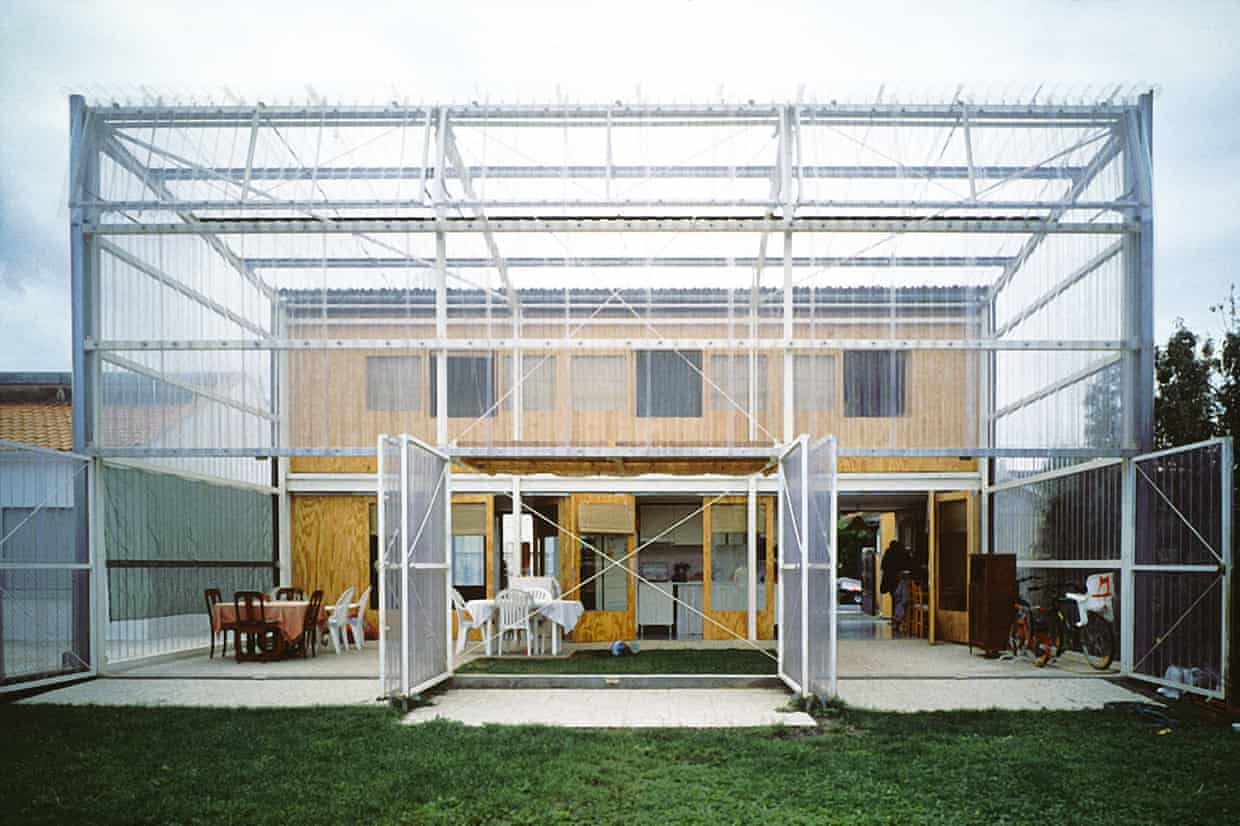
By adding a double-height conservatory at a family home in Floirac, Bordeaux, the architects “doubled the floor area their clients expected, while staying within a very limited budget,” the Guardian reports.

It’s generally considered cheaper and more efficient to tear down a building and build new than to renovate or reuse. Two acclaimed French architects have found the opposite, and their insights are timely. More people are realizing that standard construction practices are unnecessarily wasteful — and damaging to the planet.

Rowan Moore describes the architects’ approach at the Guardian. “The French architects Anne Lacaton and Jean-Philippe Vassal are famous for their belief in keeping existing buildings whenever possible, no matter how unpromising or unloved they may be. They follow, in effect, an architectural version of the Hippocratic oath – ‘first, don’t demolish.’ It’s a message that has never been more pertinent, as it dawns on the construction industry that constant demolition and rebuilding is an environmentally devastating activity.

“The husband-and-wife team have been putting this idea into practice for decades. … Keeping the already-there is not, though, their only concern, nor is it to do with sustainability alone. They like to use words such as ‘generosity,’ ‘kindness’ and, above all, ‘freedom,’ which means that they are always looking to find and create spaces additional to those asked for in a brief, ‘with no utility, no function,’ as Vassal puts it, ‘in which the user will feel the possibility to be inventive for themselves.’ …

“ ‘We really feel enclosed in a brief,’ says Lacaton, ‘that has so many rules, so many recommendations and impositions.’ … They strive against an attitude that ‘in architecture everything must be quantified… everything should be uniform.’ …

“In the early 1990s, they designed a new family house in their home city of Bordeaux, where they doubled the floor area their clients expected, while staying within a very limited budget. Their secret was to erect a double-height conservatory built like a simple greenhouse, which gave a sense of generosity and freedom to the rest of the house, a two-story structure with also basic construction. …

“[They have] a fondness for adapting humble and disregarded ways of building. ‘We found we were conditioned by our education as architects,’ says Lacaton, ‘to say that one way of constructing is the right one and the other one is not good. We discovered that we could use any tool, any material, anything if it’s used in an intelligent way.’ They also developed the idea of reusing the already-there, as with a seaside house in Gironde, south-west France. which was built among 46 pine trees, along with arbutuses and mimosas, without cutting any down. With the Palais de Tokyo in Paris, a 1930s building remodeled as a centre of contemporary art in two phases, in 2001 and 2012, they took pleasure in making only minimal alterations to its damaged interior. …

“Where they differ from other architects is in their attitude to control. In the John Soane museum, every detail and experience is minutely managed and directed. Contemporary practitioners often photograph their works unpopulated, at the precise moment between completion and inhabitation, where the perfection of their idea is most immaculate. For Lacaton and Vassal, it’s important to know when to stop, when to leave it to residents to occupy and embellish their homes. They enjoy and photograph the different things that people do to their spaces.

“Their way is humane and intelligent. It’s also invaluable. In Britain and elsewhere, there’s a desperate need to create more homes without incurring unacceptable bills for carbon emissions and energy consumption. Reuse is an obvious answer.”

More at the Guardian, here.

Photo:CHHA.

I’ve always thought that housekeepers, whether in an office building, a home, or a hotel, know more about clients than almost anyone. In their quiet efficiency, they are practically invisible to other people, which is why mystery writers and movie makers have noticed they are perfect for providing some surprise clue.

Housekeepers don’t give themselves away. There is no public competition in the realm of intelligence gathering. But there is one in another realm.

At the Washington Post, Dan Michalski wrote in November about big hotel chains’ annual Housekeeping Olympics.

“The arena was bouncing. Screams, clappers and vuvuzela horns echoed from all directions as competitors below scrambled around six queen beds, vigorously flapping white sheets and stuffing pillowcases as the clock ticked.

“The Housekeeping Olympics, held [at] the Michelob Ultra Arena at Mandalay Bay, were back for the first time since before the pandemic. The event was hosted by the Indoor Environmental Healthcare and Hospitality Association.

“Febe Rodriguez was competing for the Bellagio in bed-making.

She faced off against teams from six other Las Vegas hotels, as well as a housekeeping team from the Defense Department and two groups of hospitality workers from Canada. …

“The race was watched by clipboard-carrying judges who assessed time penalties for imperfect hospital corners and ill-measured bedspread fold-overs.

“Her co-workers and their families started chanting ‘Fe-be! Fe-be!’ as she made final tucks and thrust her arms in the air at the finish of what would turn out to be a gold-medal-winning performance. …

“The 33rd running of the Housekeeping Olympics consisted of six events: bed-making, a mop race, vacuuming, a buffer pad toss, a spirit dance and the executive challenge, where hospitality team bosses navigated a slalom course driving floor scrubbers.

“But this year’s competition almost didn’t happen. After three years of coronavirus-related cancellations, this previously annual event put on by the Ohio-based IEHA ran into the possibility of a casino workers strike, potentially the largest in history, just days ahead of the 2023 opening ceremonies.

“The hotel housekeeping landscape has also changed since the last time the event was held. Hotels have dealt with labor shortages and have cut back on daily housekeepingHousekeepers have been hit by a cashless economy that has chipped away at tipping. …

“Just weeks earlier, many of these same housekeeping workers picketed outside Mandalay Bay, Luxor, Park MGM, Bellagio and other casino properties. The Culinary Workers Union, which represents some 53,000 Las Vegas casino workers, was coordinating a potential walkout ahead of the city’s F1 Las Vegas Grand Prix.

“But the casinos and union came to a deal [that] included significant pay increases, better job security and improved working conditions. …

“ ‘Last week, we were angry,’ Rodriguez said. ‘But now we have the contract, so that makes the spirit wake up.’ ”

More at the Post, here.

Photo: juniperphoton via Unsplash.
In a world of increasing isolation and loneliness, a community can encourage people to say “hi.”

In retirement communities, I’m learning, there’s a big push to connect people with other people and combat isolation. When new residents go to the dining room, the hosts invariably ask, “Would you like to sit with some other folks?” That effort, I find, can either be helpful or strange. I had one elderly couple write down all the things I said about my history and our decision to move and then not recognize me the next day!

But I understand why the organization does it. Isolation is historically a problem for older people.

Nowadays it’s a problem for younger people, too, who often communicate through electronic media only and don’t gather in person.

Orla Barry writes at the radio show The World, “Loneliness can be as bad for your health as smoking 15 cigarettes a day, according to an international commission launched by the World Health Organization this month.

“Saying hello to a stranger may not seem like that big of a deal. But Åsa Koski, a social strategist with the Luleå municipality in northern Sweden, believes its impact could be greater than one might think. She started the Säg hej! (‘Say hi!’) campaign in Luleå to try and get people to interact more with each other to combat widespread loneliness.

“Luleå is a coastal city located around 93 miles south of the Arctic Circle. Winters there are long and cold and the average temperature can drop to 5 degrees Fahrenheit.

“But Koski, doesn’t think the weather alone is to blame for the isolation that many Swedes reportedly feel. Recent research by Sweden’s public health agency found that a third of 16-29-year-olds say they experience problems caused by loneliness.

“Koski thinks the continual urbanization of the town and an ever-growing dependence on digital technology are far bigger factors than the long dark winters. …

“California-born Lauren Ell is familiar with the Swedish reticence to engage in friendly banter with a stranger but she thinks it’s a generational thing. Ell first moved to Sweden as a foreign exchange student in 2006. Making friends with Swedish students was almost impossible, she said. 

“Like Koski, Ell thinks digital technology is part of the problem.

“ ‘Even back in 2006 gaming was really big and I remember a lot of my classmates would just go home and play video games all evening.’ Today, everyone is stuck on their phones, she said. Ell, who now lives in Skaulo, a small Swedish town north of Luleå, said she knows things aren’t that different in the US. But she said Swedes appear to have a natural tendency to keep to themselves or just mingle within their own social circles, and that makes it even harder for foreigners to integrate into the community.

“Swedish Italian filmmaker Erik Gandini believes other factors may be driving the problem of loneliness in Sweden.

“ ‘A long time ago, this country really embraced the idea of personal autonomy and independence,’ he said. Gandini was born and raised in Italy to a Swedish mother and Italian father. When he moved to Stockholm at the age of 20 he was struck by the number of people in their late teens already living alone.

“In 2021, Sweden recorded the lowest average age of young people leaving the parental home across the European Union — at 19 years. In Italy, the average age is closer to 30. …

“Gunnar Andersson, professor of demography at Stockholm University said Sweden’s ‘culture of individualism’ dates back centuries, with teenagers in rural communities typically leaving home to go and work on another farm. The strong welfare state allows young adults to live independently without the support of their parents. …

“It’s very different from the traditional Italian family structure that Gandini grew up in and in 2015 he made a documentary about the Swedish system called The Swedish Theory of Love. The film got a mixed response in Sweden. Gandini said it touched a nerve. 

“ ‘The idea is so strong in Sweden of making sure that you never need anybody else, it’s become something sacred here. Swedish people don’t like to see that criticized or questioned,’ he said.

“Gandini believes it’s a double-edged sword. The government changes in the 1970s led to greater female emancipation and pushed Sweden toward becoming a more modern society, he said, but that has left people more prone to isolation and loneliness.

“US native Lauren Ell said she often feels lonely living in Sweden. She never intended to live in the Nordic country long term, but 10 years ago, Ell fell in love with a Swedish man and moved to his hometown of Skaulo.

“In the last couple of years Ell, who now has two small children, set about trying to get to know her community better. She began organizing events to bring local residents together. … But Ell finds that just getting people to show up is not easy. It’s demoralizing, she said. …

“Ell, who’s 35, said she finds it harder to connect with Swedes who are her own age and younger. Many of her best conversations are with older neighbors in their 60s and 70s, she said. …

“Teachers in Luleå have reported that the campaign is already having an effect. Koski said students are now challenging each other to see how many ‘hi’s’ they can get in a day. A teacher told Koski that one student, who usually spends most of his time alone, admitted he was buoyed up when other students began to say ‘hi’ to him.”

More at PRI’s The World, here. No firewall.

Photo: Isabelle de Pommereau.
Eugen Vaida and an Ambulance for Monuments team repair the Church of St. Nicholas the Hierarch in Fântânele, Romania.

Today’s story is all about the Power of One. That is, one who organizes many. The setting is a post-Communist country that is struggling to build its economy and has little left over for preserving cultural monuments.

Isabelle de Pommereau writes at the Christian Science Monitor, “It is midday on a damp Friday. Eugen Vaida guides his team into the final phase of re-tiling the roof of a church, at the crest of a forested hill in this mountainous Transylvanian village.

“Village craftspeople and students from the city meticulously lay tiles on the roof timbers of the 18th-century Romanian Orthodox Church of St. Nicholas of the Hierarch. From the scaffolding, students respectfully and attentively watch Nicolae Gabriel Lungu, who is descended from a Romani family who all knew this skill. Soon an older woman summons the crew to share in a platter of clătite, thin cheese-filled crepes.

“Once bustling with families and culture, Mr. Vaida’s home region had become a string of largely empty villages surrounding abandoned stone churches. But now, watching this group interact, he has newfound hope. The repair by his group, Ambulance for Monuments, will help safeguard the church’s stunning outer frescoes. And the impact will ripple far beyond the building itself. 

“ ‘People are starting to understand the value of heritage,’ Mr. Vaida says. For the past seven years, he’s been driving around the country with a van equipped with tools and volunteers in a race against time to rescue endangered historic buildings. He has helped save more than 55 historical structures on the verge of collapse, from medieval churches and fortification walls to old watermills and UNESCO World Heritage Sites. He does so by impressing preservation methods and mindsets onto local communities. 

“ ‘I wanted to reconnect the members of the community to their roots, make them aware that those buildings are part of their cultural identity, and show them how they can continue the work we do,’ he says.

“Mr. Vaida offers a ‘best-practice example of how, with not so much effort, you can save the identity of Romania as a country,’ says Ciprian Stefan, director of the ASTRA Museum, Europe’s largest open-air ethnographic museum, in Sibiu.

“Romania’s rich cultural legacy of painted churches and fortified villages was shaped over centuries. But close to 600 historic monuments are in an acute state of degradation, victims of years of dictatorship, poor legislation, and plain neglect, experts say.

“Mr. Vaida experienced the destruction in a very personal way. He grew up playing with Romani and Hungarian friends, as well as the German Saxons who had literally built the region. When the 1989 collapse of communist dictatorship flung Romania’s doors wide open, half a million people left. The mass exodus tore the Romanian soul apart – and fractured Mr. Vaida’s own identity. Ambulance for Monuments is an attempt to reclaim both his identity and that of his country. …

“He, too, left for the city, to get an education, and he became a successful architect in Bucharest. But six years into the job, he quit to return home. The big city was not his future; his home village was.

“He soon discovered that many village craftspeople who had passed on their know-how from generation to generation had left for Western Europe. … Mr. Vaida wanted to use his architectural skills to save his region’s extraordinary architectural and cultural heritage. He started by teaching children about local history. …

“In 2016, he launched Ambulance for Monuments in hopes of connecting architectural students, craftspeople, and communities around a new effort to restore decaying historic buildings. …

“Volunteer students get hands-on practice in historical restoration; local craftspeople get jobs; and communities help house and feed the teams, and donate the material. … ‘It’s going from grassroots up, from down to up,’ says Mr. Vaida. …

” ‘He doesn’t go to villagers to ask for anything, but he goes there to give something,’ says Mr. Stefan. ‘The community stays in the shadows at first. When they see Eugen comes with material and manpower to restore their church, they say, “Let’s help him,” and, little by little, they come and help with housing, with food.’ …

“The task of rescuing Romania’s cultural legacy is huge, but Mr. Vaida sees signs of progress. … ‘People are moving back to the villages of their grandparents, because they feel they belong there,’ he says. ‘They are rediscovering old houses, their heritage, their villages, and are getting involved in the preservation of this type of living.’ ”

More at the Monitor, here. No paywall. Subscriptions solicited.

Photo: STR/Reuters/Landov.
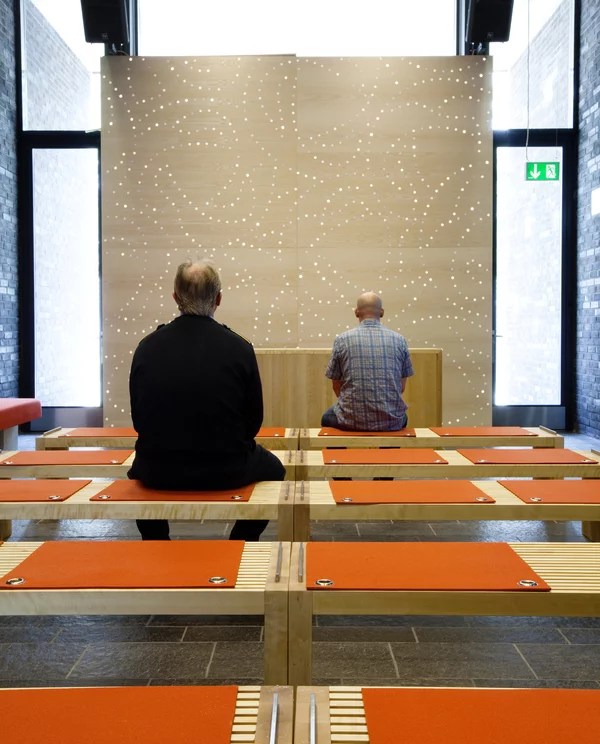
Two men sit inside the chapel at Halden prison in far southeast Norway in this picture taken in 2010. Prisoners here spend 12 hours a day in their cells, compared to many U.S. prisons where inmates spend all but one hour in their cell. NPR’s 2015 story is here.

Some years ago (2016), I wrote about research on Norway’s humane prisons. In a December 2023 Christian Science Monitor article, Troy Aidan Sambajon shows that some US prisons are moving in the same direction. Or at least testing the concept.

“Earlier this year,” he reports, “California Gov. Gavin Newsom announced a new vision for the San Quentin State Penitentiary, centered on rehabilitation and job training, inspired by another prison system that has halved its recidivism rate – in Norway. …

“About 2 out of 3 Americans released from jails and prisons per year are arrested again, and 50% are re-incarcerated, according to the Harvard Political Review. In Norway, that rate is as low as 20%. 

‘It has everything to do with your social safety net, your network, your support structure, and your job opportunities.’

“As more U.S. states seek to improve their correctional systems, the Norwegian model could prove key. It aims to create a less hostile environment, both for people serving time and for prison staff, with the goal of more successfully helping incarcerated people reintegrate into society. …

“ ‘Overcrowding, violence, and long sentences are common in U.S. prisons, often creating a climate of hopelessness for incarcerated people, as well as people who work there,’ says Jordan Hyatt, associate professor of criminology and justice studies at Drexel University. Correctional employees experience some of the highest rates of mental illness, sleep disorders, and physical health issues of all U.S. workers, a 2018 Lexipol report found. …

“Making a prison environment more humane will translate to a more efficient prison system overall, experts say. And the Norwegian model prioritizes rehabilitation and reintegration over punishment. Safety, transparency, and innovation are considered fundamental to its approach. Core practices aim to create a feeling that life as part of a community continues even behind walls and bars, says Synøve Andersen, postdoctoral research criminologist at the University of Oslo. 

“In some Norwegian prisons, incarcerated people wear their own clothes, cook their own meals, and work in jobs that prepare them for employment, says Dr. Andersen. They have their own space, too, since single-unit cells are the norm. …

“While they are separated from society, incarcerated people should experience normal, daily routines so they can have increased opportunities to reform without being preoccupied with fear of violence from other inmates, she argues.

“The principle of dynamic security means correctional officers also must have more complex social duties besides safety and security, including actively observing and engaging with the prison population, understanding individuals’ unique needs, calculating flight risks. …

“Washington state’s Lt. Lance Graham works within restricted housing and solitary confinement units, an environment he says lacks empathy and connection with those incarcerated. ‘We never had the opportunity to connect with the people in our care.’ 

“But when visiting Norway’s isolation units, he saw [that] their staff was much more engaged with the prison population and was much happier. 

“ ‘This program really promotes staff wellness, changing the relationship that you have with the people in your care,’ says Lieutenant Graham. ‘So you’re not going to have as many instances of fight or flight syndrome in your daily work. You reach common ground and talk like normal folks.’

“ ‘If you actually want to change the prison environment, invest in staff,’ says Dr. Andersen. ‘They’re there all the time. They’re doing the work.’

Amend, a nonprofit from the University of California, San Francisco, partnered with four states – California, South Dakota, Oregon, and Washington – to introduce resources inspired by Norwegian principles and sponsor educational trips to Norway for U.S. correctional leaders. 

“At California’s San Quentin, Governor Newsom hopes to emphasize inmate job training for high-paying trades such as plumbers, electricians, or truck drivers. … In Washington state, prison staff began developing supportive working relationships with the incarcerated in their care by developing individual rehabilitation plans. … In North Dakota, former Director of Corrections Leann Bertsch says after revamping the training and responsibilities of prison officers, interactions between staff and inmates felt respectful and calmer. …

“The Pennsylvania Department of Corrections collaborated with the Norwegian Correctional Services to pilot Little Scandinavia, a transformed housing unit operated at half the regular capacity to allow for individual cells. The on-duty officers at Little Scandinavia have reported enjoying their work much more now and there haven’t been any reports of violence since its opening in May 2022, says Dr. Andersen.

“Norway receives much attention for its low rate of recidivism, but some experts disagree on the measure as a rate of success. ‘[Recidivism] is not just a product of the correctional system. It has everything to do with your social safety net, your network, your support structure, and your job opportunities,’ said Dr. Andersen.”

More at the Monitor, here.

Photo: JSTOR.
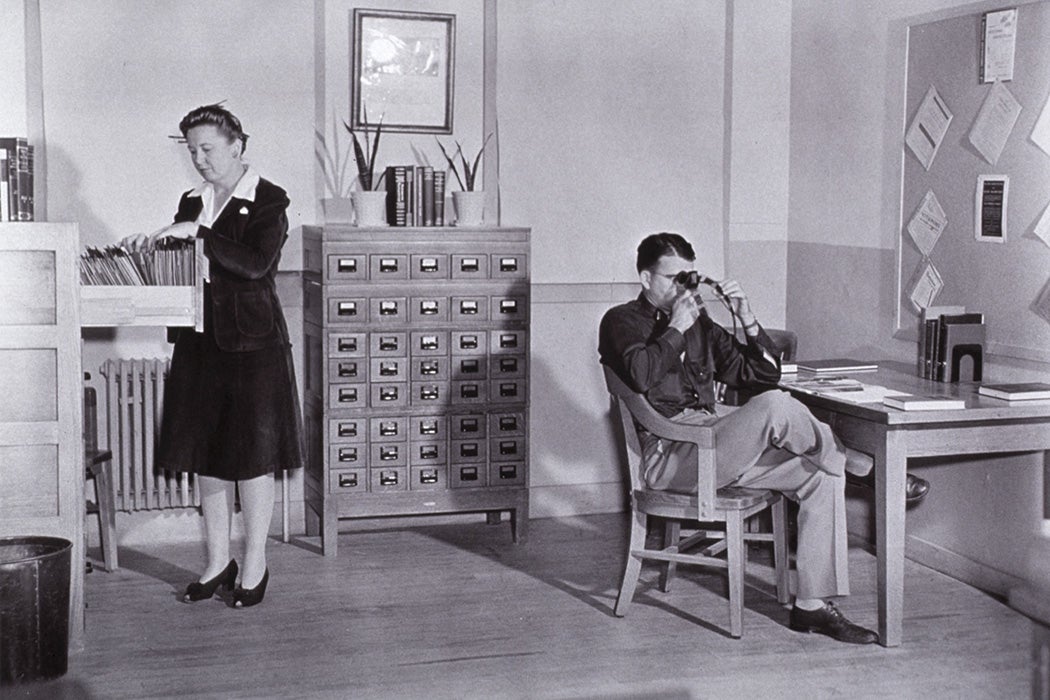
A librarian at the San Antonio Aviation Cadet Center and a patron examining microfilm. US librarians and the invention of microfilm were important to the war effort in the 1940s.

The enduring appeal of fictional detectives like Miss Marple has something to do with the idea that they are very unlikely sleuths. The “mild-mannered” (like Superman’s alter ego Clark Kent) are always undercover, and criminals never notice they are being casually but carefully observed.

Librarians, too, often described as “unassuming,” are not exactly James Bond material. But as we learn in today’s true story, they may provide vital intelligence in wartime.

Katie McBride Moench at JSTOR Daily writes, “In war, as in everything, information is power. And for the United States and its allies in World War II, an epic battle from an analog age, that meant obtaining and transmitting by hand useful intel. ….

“Enter the librarians, tapped by US government officials to help in this effort. These librarians adopted technology from other fields to photograph an array of documents, including those that were rare and/or archival, and found means of sending them across continents. They used both microfilm and microphotography — technologies that came to play a key role in the wars of the twentieth century.

“To the librarians of the World War II-era, microforms were a revelation; microfilm, for instance, was revolutionizing universities. Before its adoption, scholars generally traveled to sites housing materials they wanted or hired locals to do research on their behalf. Microfilm, the product of scaling text or graphics down into miniature forms, made it possible to streamline this process and ship scans anywhere. All that was needed was a microfilm reader on the receiving end to enlarge a scan to the point of readability. This innovation vastly broadened the scope of information researchers around the world could now access.

“It became clear to President Franklin Roosevelt in the months before the US entered the war in 1941 that there was a lag in intelligence gathering. To rectify this, Roosevelt tapped William ‘Wild Bill’ Donovan, a veteran and lawyer, to develop the Office of Strategic Services (OSS) — the precursor to the Central Intelligence Agency. Donovan worked with Archibald MacLeish, a Librarian of Congress who saw the potential for librarians to serve as valuable assets. …

“Under the auspice of the Interdepartmental Committee for the Acquisition of Foreign Publications (IDC), co-created by Donovan and Roosevelt, he enlisted the help of librarians and researchers from across the US.

Adele Kibre, the daughter of a connected Hollywood family, was one such recruit, working out of the IDC’s Stockholm office. Kibre attended the University of California, Berkeley; thereafter she went to the University of Chicago for graduate school, getting a PhD in medieval linguistics in 1930. Like many women of her day, she was denied a career in academia and instead conducted research for other scholars. On one such assignment, she visited the heavily restricted Vatican archives to photograph rare manuscripts; there she saw fellow researchers using microphotography.

“ ‘I acquired the habit of visiting the photographic studio in order to observe philologists, paleographers, and art historians rapidly filming their research materials with miniature cameras,’ Kibre is reported to have said, according to Kathy Peiss’s Information Hunters. Kibre followed suit with a microfilm-producing micro-camera and sent the films back to her employers. …

“Of course, microfilm was only part of the puzzle of increasing the information the US government gathered. … Kibre and IDC staff cultivated relationships with members of resistance movements and Allied sympathizers, creating a pipeline of scientific information leading to the US. Kibre was celebrated for the volume of sources she assembled. She relied on her experience talking her way into archives, museums, and rare books storerooms and on her knack for building relationships with the guardians of these institutions. She cultivated ties with government agencies, librarians, and booksellers sympathetic, or at least agnostic, to the Allied cause. …

“In total, the Stockholm station delivered more than 3,000 books and documents to the US during the war. … The IDC likewise established a station in Lisbon, where its work represented a collaboration between Ralph Carruthers and Reuben Peiss [uncle of author Kathy Peiss] of the OSS and Manuel Sanchez of the Library of Congress. 

“Arriving in Portugal in early 1943, Sanchez spent his first few days shaking the undercover agents trailing him. Once he evaded them, he began buying printed matter he believed would be of value to the Library of Congress. He also cultivated a partnership with the Andrade brothers; they owned a bookstore and were Allied sympathizers.

“The three men habitually crossed into Franco-controlled Spain to elude suspicion during book-buying expeditions. Meanwhile, Carruthers, an expert on microfilm, photographed thousands of pages of text, and Peiss, a librarian, developed systems of information classification and retrieval for the mass of intel collected. So extensive was their work that staff members worked ’round-the-clock shifts to photograph obtained documents, using micro-cameras to create microfilms that would be shipped on a Pan Am Clipper.”

More at JSTOR Daily, here. No firewall.

Photo: Charles Lawrence.
A renovated 1865 Woonsocket, RI, home now provides living space for homeless female veterans.

When one thinks of homeless veterans, one tends to think of men. I remember visiting a new space for veterans when I worked at Rhode Island Housing. Saccoccio & Associates were the architects for the historic renovation of the Heaton and Cowing Mill in Providence, which created 20 units of veterans housing. It was beautifully done, but it did not house women.

So I was interested to read about housing specifically for female veterans in nearby Woonsocket, Rhode Island.

Bella Pelletiere has the story at the Valley Breeze.

“Homeless female veterans in Woonsocket will now have a home to spend the holidays in, say representatives from Operation Stand Down Rhode Island.

“[In November] the historic house at 495 South Main St. was reopened as transitional housing for female veterans in honor of the late Marine Corporal Andrea Ryder.

“Operation Stand Down Rhode Island is Rhode Island’s primary nonprofit resource for homeless and at-risk veterans. OSDRI facilitates a combination of permanent supportive, transitional and recovery housing to low-income and disabled veterans and has 88 locations for housing throughout the state.

“Executive Director Erik Wallin told The Breeze that since 2010, OSDRI has been operating a six-unit facility in Johnston for female veterans. That facility was recently filled to capacity and they have been trying to find alternative ways to house female veterans, who are currently allowed to stay between 6 and 24 months. …

“In May, Wallin told news sources that lead paint had been discovered during renovations, but OSDRI was working with the city and painters to restore the building. Though it was a long process, he said they knew they wanted to restore this ‘magnificent piece of architecture’ for the veterans who were coming to live there.

He added that they wouldn’t house veterans in any building they wouldn’t put their own family members in. …

“OSDRI dedicated the home to Ryder, a Rhode Island native who enlisted in the Marine Corps after graduating high school and was diagnosed with stage three melanoma when she left the service. After numerous surgeries she appeared to be in remission. In 2014, Ryder learned both that she was pregnant and that the cancer had returned at stage four.

“Ryder give birth to her baby girl in 2014, and in 2020, she ultimately succumbed to her illness after spending some time in hospice.

“Wallin said that throughout the years, they had gotten to know Ryder and her family, hosting fundraisers and supporting her until she died. …

“Many officials attended the reopening of the [house], including Tony DeQuattro, president and chairperson of the board of OSDRI, Sen. Sheldon Whitehouse, and Ryder’s family members.

“Ryder’s mother, Donna Paradiso, as well as her daughter, Olivia, and husband, Dennis Bourassa, also came to celebrate the life of their loved one and her name that will live on at 495 South Main St.”

These stories of veteran homelessness are so sad. You just know every time a war starts up that some who serve will come back traumatized. Some will end up homeless. We never do enough for them, but organizations like Operation Stand Down keeping chipping away at the needs.

More at the Valley Breeze, here. No firewall.