Feeds:
Posts
Comments

Posts Tagged ‘art’

John recently reminded me about an organization started in Boston to help people with disabilities or experiencing homelessness to create and sell their art.

The Miami Herald is one of many outlets that have picked up the story.

Brittany Chandani writes, “When Harvard graduate Liz Powers received a grant for social work, she decided to help homeless or disabled artists by sharing their artwork with the Boston community.

“When Powers realized there wasn’t a professional marketplace to sell their works, she organized an annual art show. Customers, however, wanted more than a yearly show, leading Powers and her brother, Spencer, to develop ArtLifting.com, an online marketplace devoted to selling artworks created by homeless or disabled artists. ArtLifting, a project incubated at the Harvard Innovation Lab, selects artists from nonprofits and homeless shelters across the country; it curates their art to highlight the top pieces from each artist. …

“Upon finding an Instagram tag #ArtTherapy, Spencer contacted David McCauley of Rise Up Gallery in Wynwood [FL], who simultaneously contacted Spencer upon seeing his Instagram page for ArtLifting. The serendipitous moment made the perfect partnership. …

“McCauley, an artist who broke his C6 vertebrae in a diving accident, moved from New Jersey to Miami to establish Rise Up Gallery, a branch of the nonprofit foundation he created in New Jersey after his accident. The pop-up gallery exhibits quarterly at various locations. McCauley also conducts free art therapy workshops at Jackson Rehabilitation Hospital. …

“ArtLifting now features three Florida artists on its website: David McCauley, Laurie Kammer and Elizabeth D’Angelo. ”

More about the artists here. See art that is for purchase at ArtLifting, here.

Photo: Marsha Halper/Miami Herald Staff
David McCauley, a mixed-media artist and the founder of Rise Up Gallery, smooths the edge of one of his new artworks at ArtCenter / South Florida in Miami Beach. Rise Up Gallery is a nonprofit organization that provides free art therapy workshops.

Read Full Post »

Although my husband and I are not in any design field, we’ve enjoyed watching videos like Gary Hustwit’s Helvetica (the history of a typeface) and his Objectified (on industrial design). It’s  interesting to see how designers think about things like a new font or machine.

Recently at National Public Radio’s Weekend Edition, Ari Shapiro talked about a new typeface meant to represent Sweden.

He reports, “Nearly every country has a national flag, a national anthem, a national bird. Not many countries have a national typeface. Sweden recently commissioned a team of designers to come up with a font to represent the country on its websites, press releases, tourism brochures and more. …

“The typeface that [Soderhavet] designers created looks pretty much the way you would expect a Scandinavian typeface to look, too.

” ‘The Scandinavian tradition is pretty humble, easygoing and clean,’ says Stefan Hattenbach, one of the designers of the new Sweden Sans. Less is more, you could say.’

“He started by collecting images of old Swedish street signs and company logos. He pulled images of Swedish wallpaper, cars and furniture, and looked for what he calls the red thread running through it all.

” ‘There’s an expression in Sweden, too,’ Hattenbach says. ‘We say lagom, which is not too much and not too little.’ ”

The ancient Greeks had a similar expression: “Nothing in excess.” The only letter with a flourish is q. Says Hattenback, “Q is not used that much, so you can often be a little more playful with that.”

See what you think of Swedish Sans, below, and read the rest of the NPR story here.

Swedish Sans, by Soderhavet
A typeface to represent official Sweden

Read Full Post »

I do like stories about people who love their work so much that they never want to stop.

Perhaps it helps to have a talent like muralist Eric Bransby, who got to study with one of my favorite artists, Thomas Hart Benton. (Suzanne says I have a personal aesthetic, which is a polite way of saying I’m crazy about anything wavy, like Benton’s energetic American landscapes.)

Chloe Veltman writes at National Public Radio, “Eric Bransby is one of the last living links to the great age of American mural painting. He studied with one of this country’s most famous muralists — Thomas Hart Benton — and went on to create his own murals in prominent buildings across the west. The artist is now 98 and still painting.

“At his Colorado Springs studio, Bransby attacks a drawing with tight, sharp strokes, a pastel pencil grasped between gnarled fingers. His studio is unheated, but he doesn’t seem to notice the cold. He’s completely engrossed in the image taking shape on his easel. It’s a study for a new mural that he hopes to install at nearby Colorado College. He says he draws between two and eight hours every day.

” ‘Drawing has been a continuous thing for me, like exercises for a musician,’ he says. ‘It’s refreshing. I draw better. I paint better.’ …

“His parents didn’t encourage his artistic pursuits. It was during the Depression, and when he demanded that he get sent to art school, he remembers his parents said: ‘Well, he’ll do one year and he’ll come back so discouraged that we’ll make something else out of him.’

” ‘But that didn’t happen,’ Bransby says. ‘I found heaven.’ ” Read more here.

Photo: Nathaniel Minor/Colorado Public Radio
Eric Bransby, pictured above in his home in Colorado Springs, is still creating art at 98. “I try to make each mural a project that will somehow expand my abilities a little bit more,” he says.

Read Full Post »

My friend Bob says there is no bad weather, only bad clothing. So I headed out at lunch yesterday all bundled up to take some pictures.

The following is to be sung to the tune of “When You Walk through a Storm.”

When you walk in the cold
Hold your head up high
And don’t be afraid
You will freeze.

At the end of your walk
There’s a golden …

I think I’m stuck. Maybe songwriter Will McM will dig me out.

While I’m on the subject, here’s a 1980s attempt at a song about cold, to be sung to the tune of “I’m Looking Over a Four-Leaf Clover.” Suzanne’s elementary school music teacher actually used it in class.

What is the reason
That we’re all freezin’
And the birdbath is filled with ice?
Why does my Omni
Go sideways down the street?
Why do my children wear
Baggies on their feet?
What normal fellow
Whose brains aren’t Jello
Would keep fighting this cold war?
What is the reason
That we’re all freezin’
And what did we move here for?

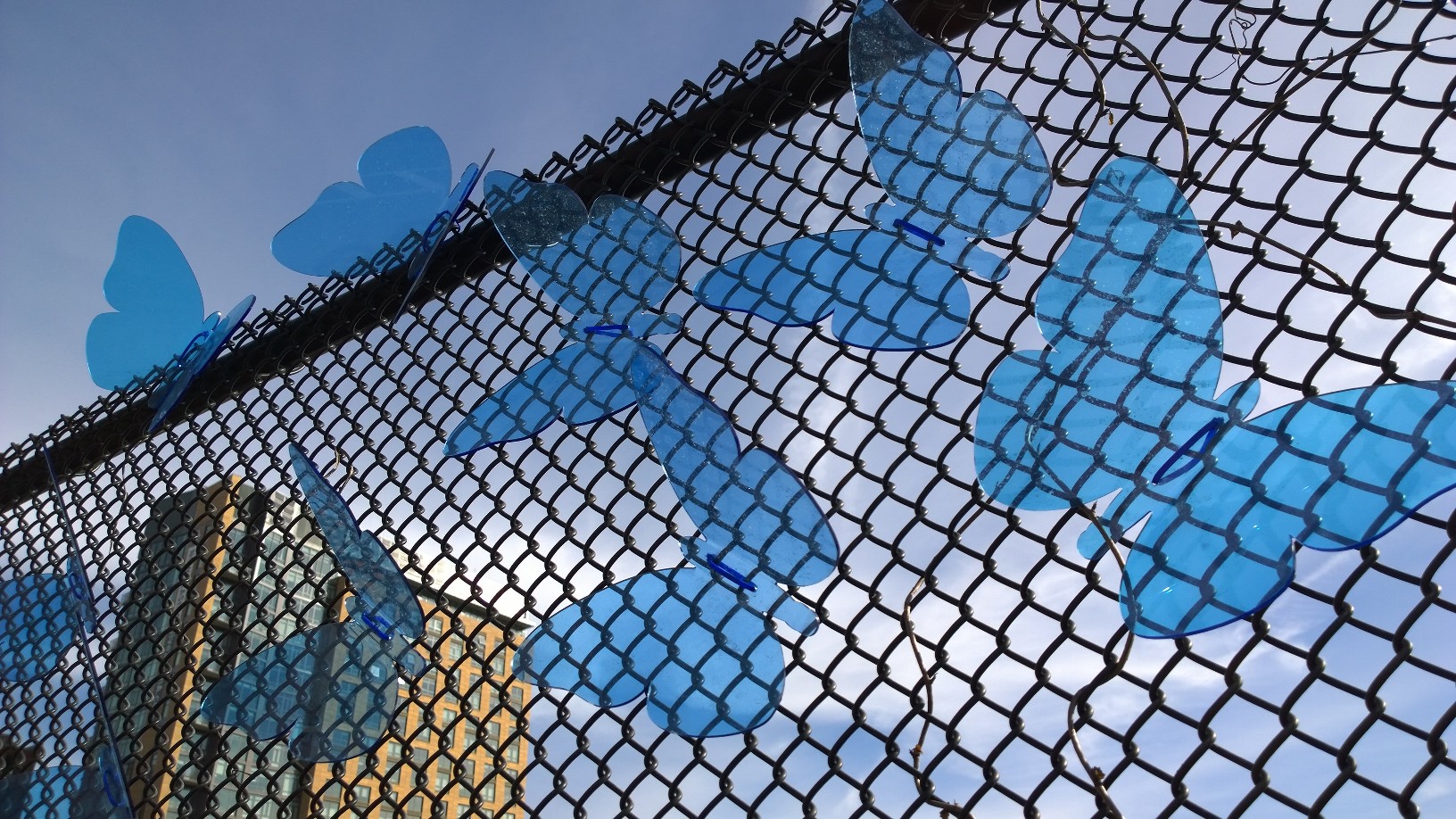
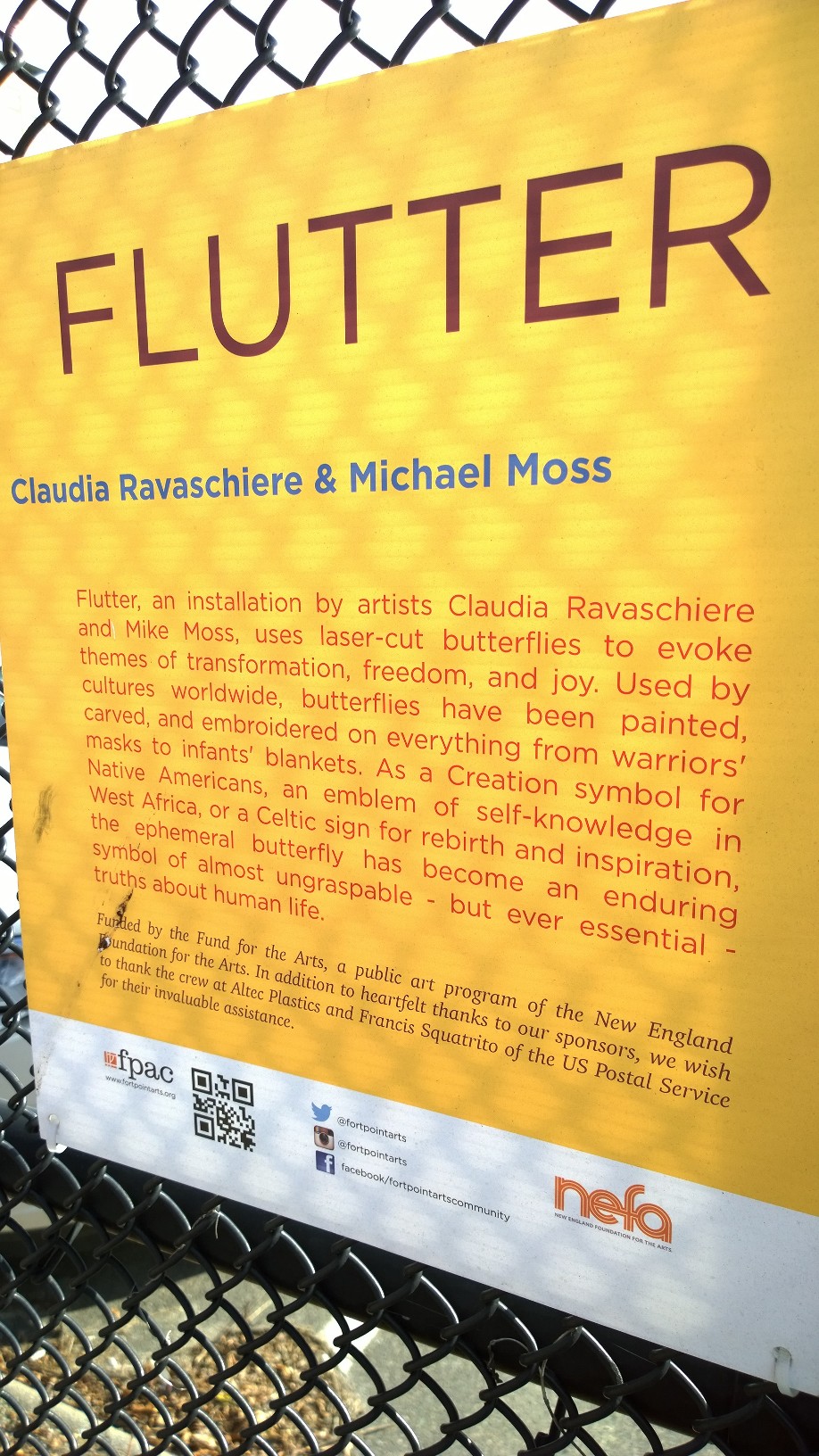
Believe it or not, I kind of like the cold. And I love getting out and taking pictures. Yesterday I noticed a yellow Fort Point Arts sign on an old chain link fence. Then I noticed the butterflies.

Read about Claudia Ravaschiere and Mike Moss’s installation, Flutter, here.

butterfly-art-fort-point

public-art-fort-point

Read Full Post »

Because I have tried and failed repeatedly to upload my video of this art installation, I offer instead a still shot from the Boston Cyber Arts website. The video would have shown you the generative art installation as the tadpole becomes a frog. Having been around a newborn and a two-year-old this week, I’ve been thinking a lot about how new beings grow into beings that are both different and the same.

Elder Brother is currently more interested in the washer-dryer than anything else on earth. I heard about a man who drives big rigs with ease and was obsessed with gear shifts as a toddler. Will Elder Brother grow into a washer-dryer inventor, repairman, or salesman? Will he just be the guy who is always happy to help out with the wash? Or will this tadpole grown into a man who has no interest in washer-dryers but, for reasons unknown to him, loves the smell of detergent? Time will tell.

Getting back to the art installation, there’s a good description on the Cyber Arts website: “Chunky Frog Time is a new generative art installation by Brian Knep, created for the Boston Harbor Islands Welcome Center located on Boston’s Rose Fitzgerald Kennedy Greenway. The … animation is of a frog swimming against the tide of time, cycling from tadpole to juvenile and back with each kick. Moving across an ever changing made-made landscape, the frog’s struggles represent the ebb and flow on the islands, as well as the relationship between nature and our idea of nature.

“Brian Knep is a media artist whose works range from large-scale interactive installations to microscopic sculptures for nematodes. He was the first artist-in-residence at Harvard Medical School, working side-by-side with scientists, using their tools and techniques to explore alternative meanings and ways of connecting to the world.”

More here.

Read Full Post »

Time for a new post on street art. Have you been following the Banksy-in-New-York saga? He was living in the city for a while last year, creating a new piece of street art every day. People ran around to find it, some New Yorkers even trying to charge admission. An HBO movie was made about it.

Banksy is always interesting, but today I want to tell you what street artist Stik has been up to.

The Londonist website says, “Street artist Stik has just finished creating the tallest piece of street art in the world — a 38.2 metre high mural on a condemned council tower block in Acton [a district in the west of London].

” ‘Big Mother’ depicts a mother and child looking forlornly from their council block at the luxury apartment complexes being built around them. The mural is visible from not only the Piccadilly Line, but also on some London flight paths.

“Stik, who was once homeless, said: ‘Affordable housing in Britain is under threat; this piece is to remind the world that all people need homes.’ ”

And I guess in this season a homeless mother and child is especially resonant.

Thank you to @ecpulford for retweeting the story from Bernadetta Keefe (@nxtstop1).

Stik’s website is here. His minimalist, wistful beings remind me a bit of Finnish artist Tove Jansson’s children’s books about the Moomin family.

First picture below, cover of paperback Finn Family Moomintroll

Second picture: Joyce/Division
The 38.2 metre mural has been painted on a tower block which is due for demolition in 2016. Image © Stik

Read Full Post »

concord-library-in-dawn-mist

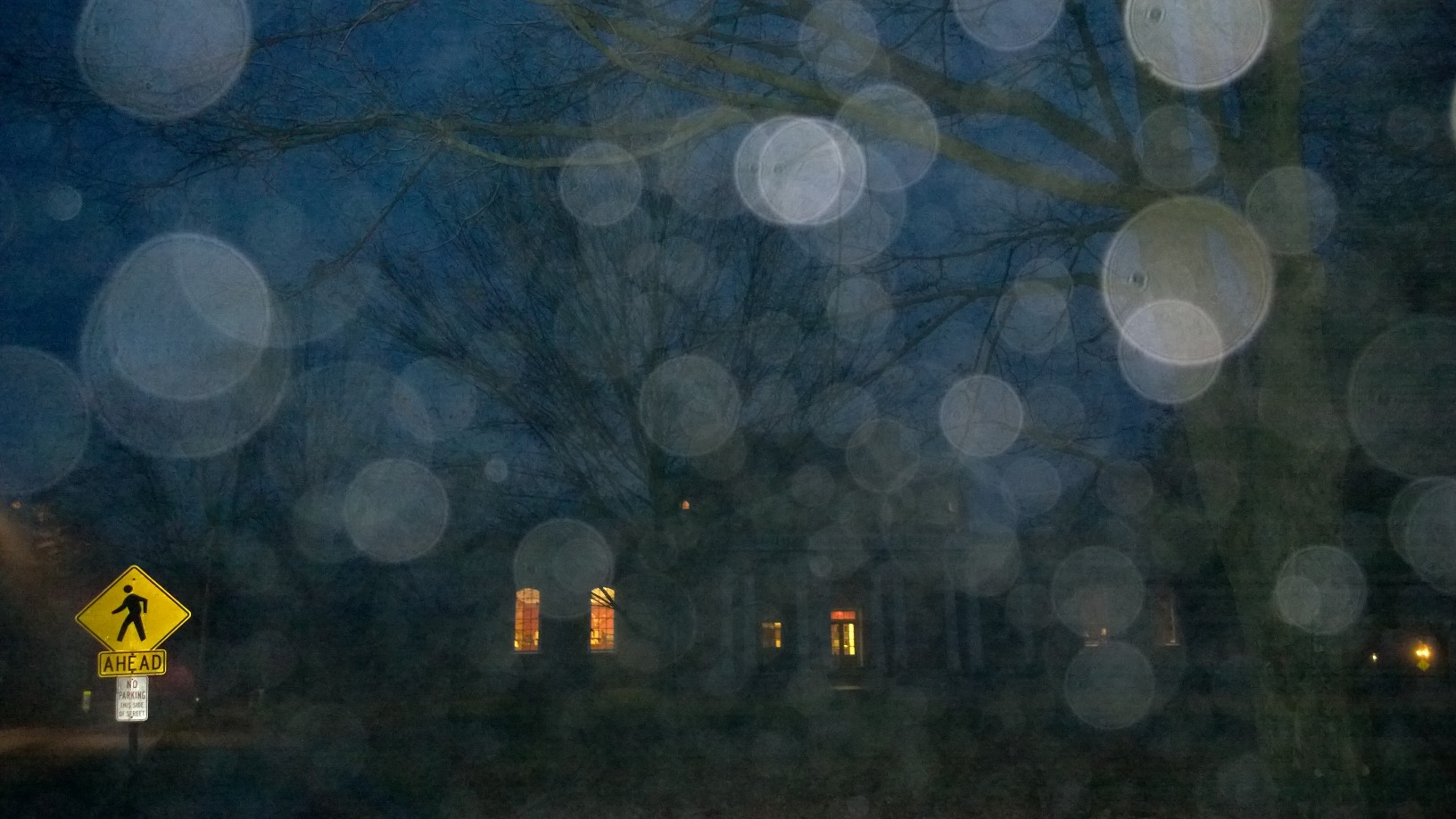
The photo of the library windows, above, was taken this morning. I was beyond thrilled to see the bubbles. It turns out that’s what happens when a flash meets a mist.

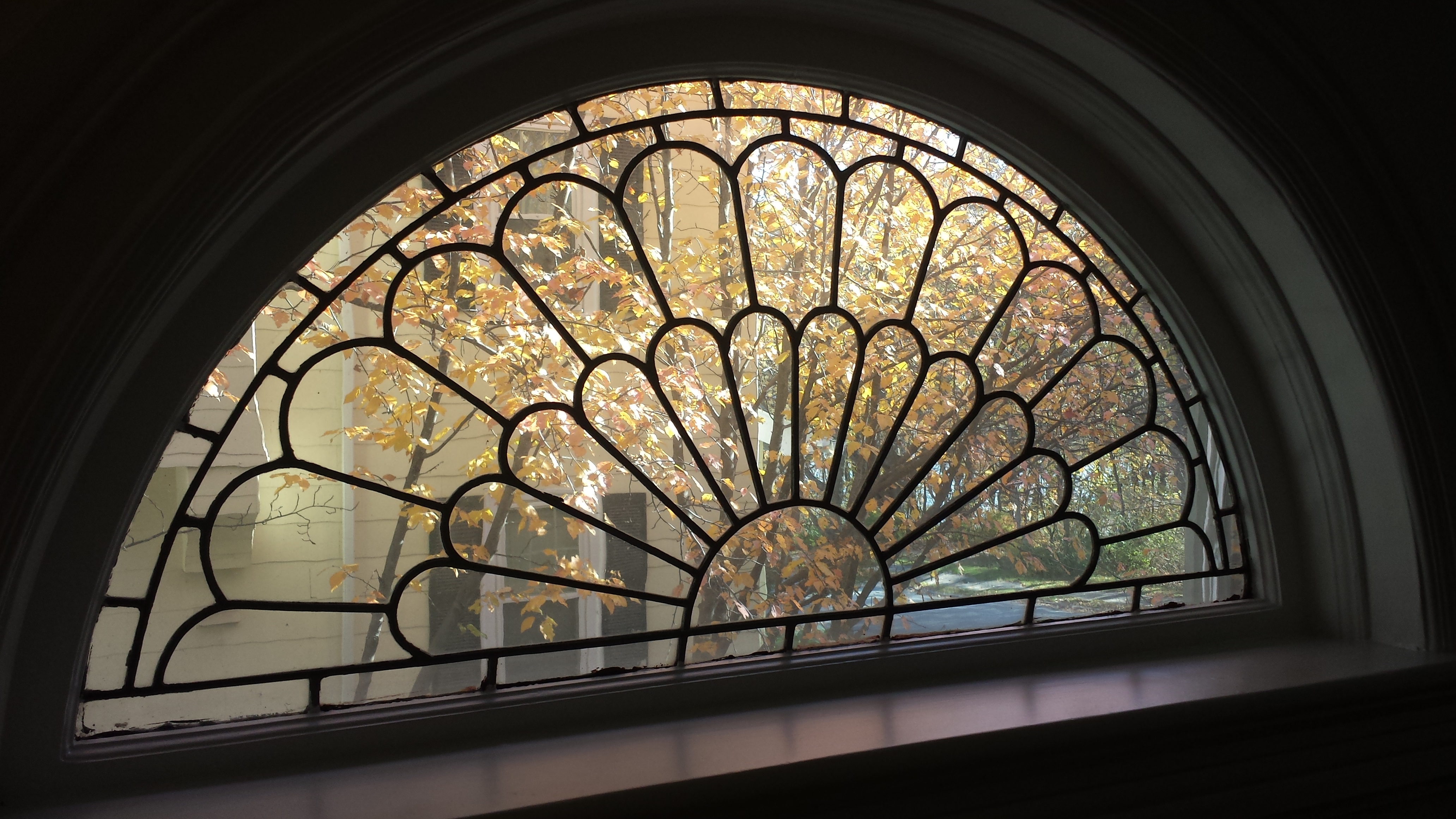
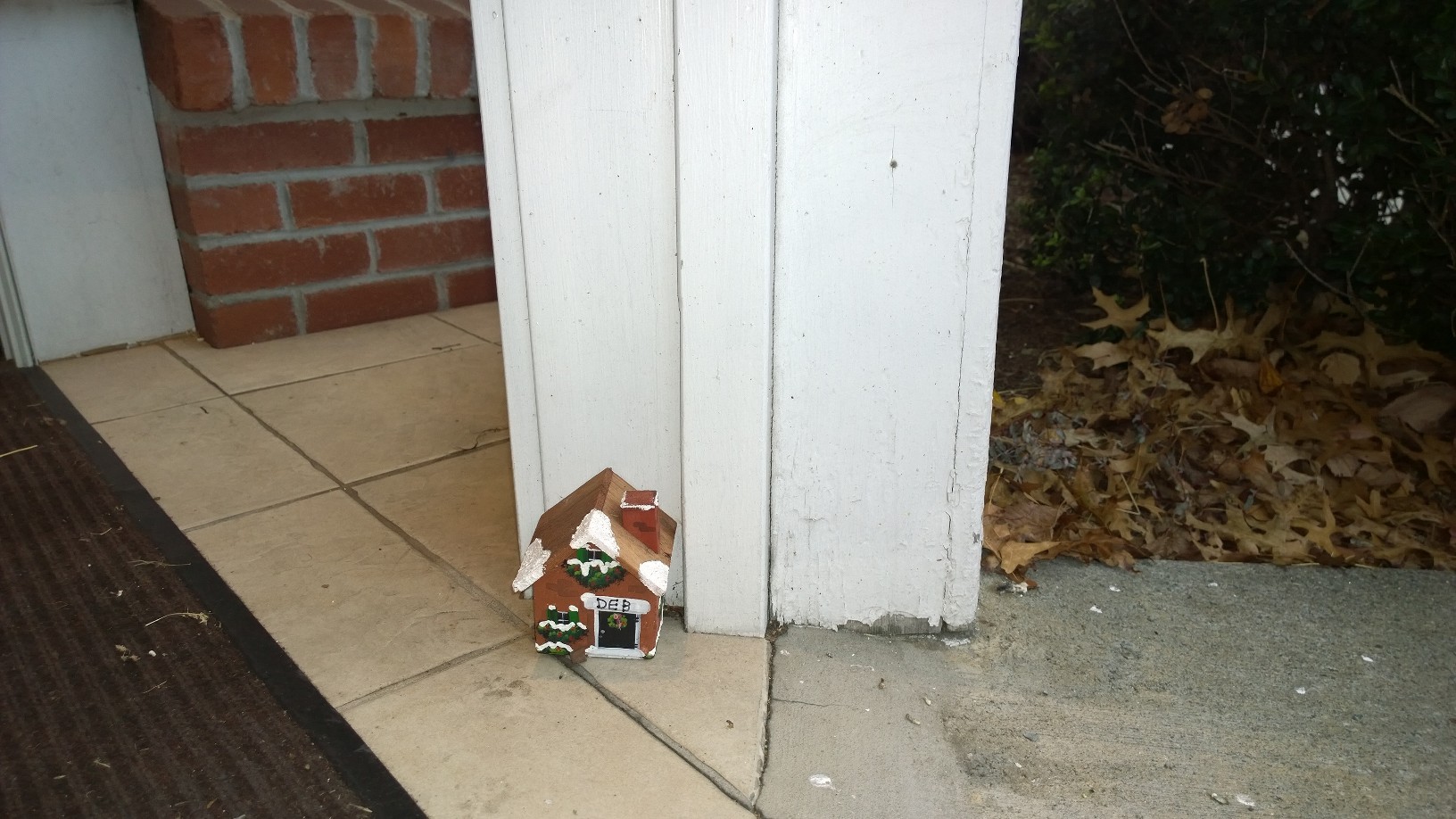
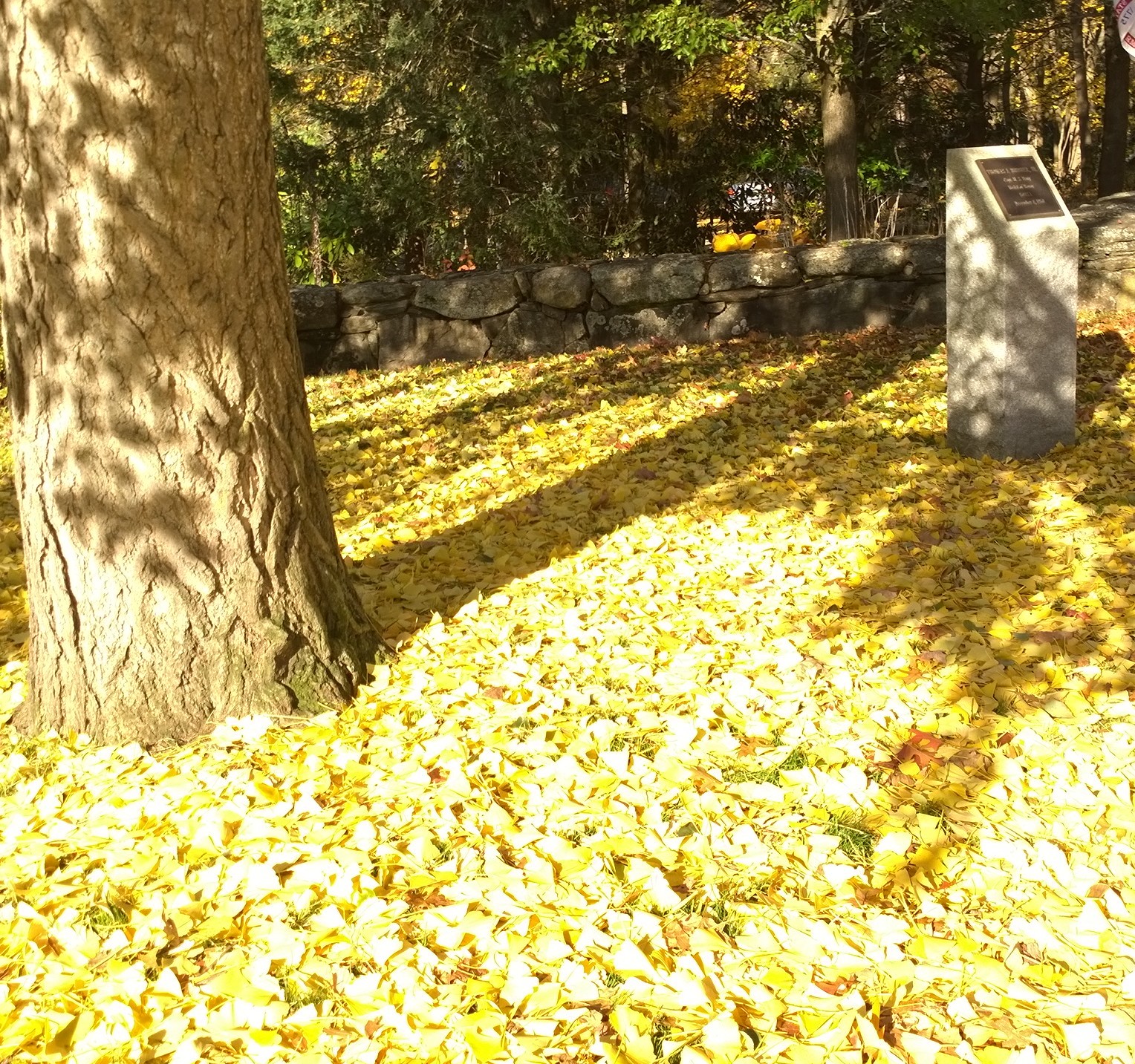
Suzanne took the lovely picture of leaves through a fan-shaped window in Rhode Island. The tiny house photo is from the entryway to a real estate office. The golden carpet is of ginkgo leaves. I took the shot of bittersweet growing on a Liberty Street fence Veterans Day near where the first shots were fired in 1775. The sculpture in front of the Umbrella Center for the Arts is by Nancy Arkuss. It’s called “Sid.” (Suzanne went through school with the artist’s son.)

20141110-foto-by-suzanne

realtor-entry


gingko-leaf-carpet-Concord-MA

111114-bittersweet-on-veterans-day


Sid-by-Nancy-Arkuss-at-Umbrella


Read Full Post »

110714-a-pigeon-that-I-pass-alas


When Suzanne was two, she and John used to watch a TV show with a theme song that went like this: “Stop the pigeon, stop the pigeon, stop the pigeon — now!”

One day we took the train to New York City, and in spite of the fact that Suzanne never saw pigeons where we lived, she took one look at the city’s official bird and started singing, “Stop the pigeon!”

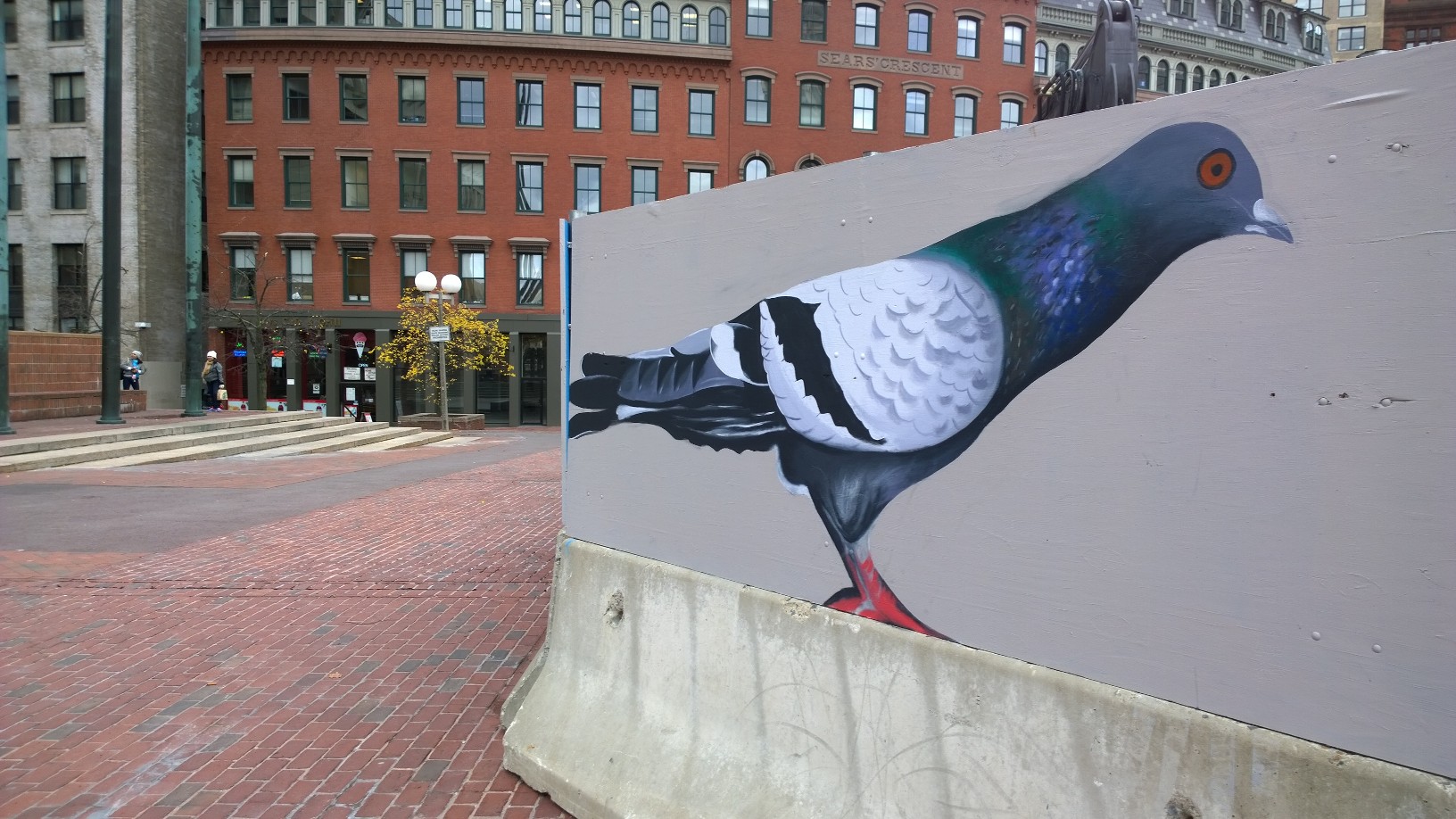
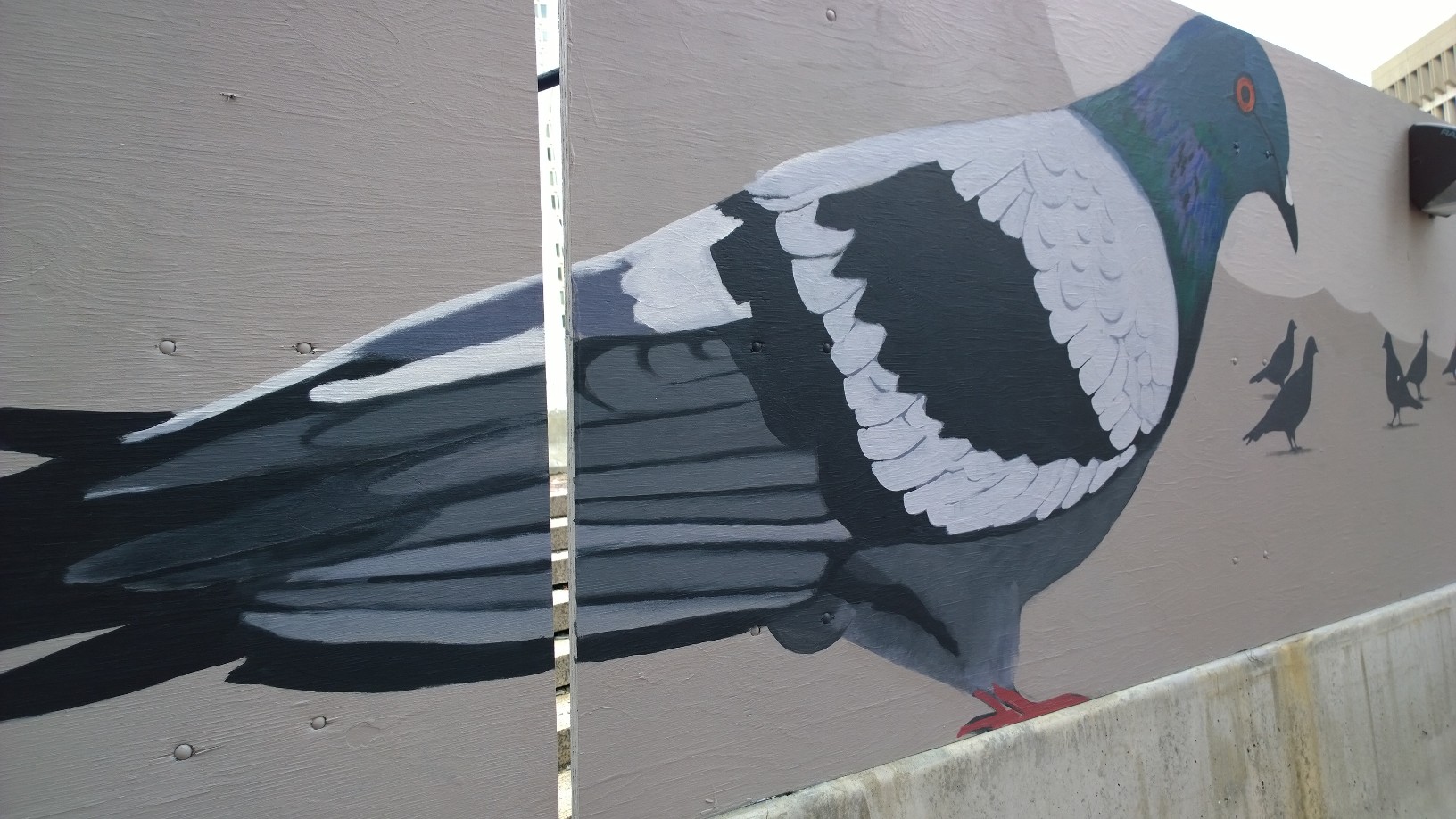
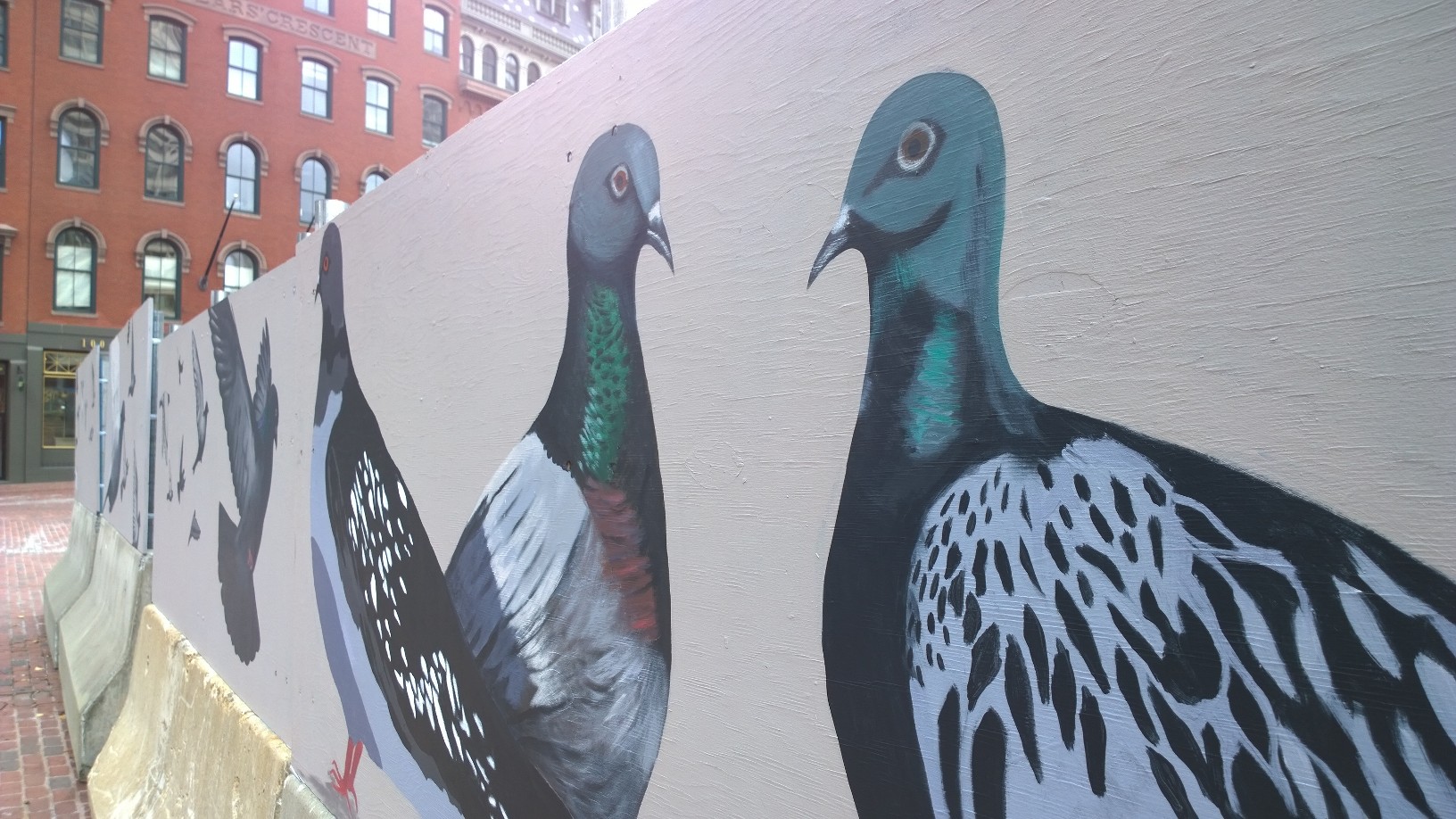
So unlike many people, I have some good feelings associated with pigeons, and I am getting a big kick from the pigeons I photographed near city hall yesterday.

Someone with a sense of humor has decorated the barrier around the construction site for the  new Government Center T stop with pigeon portraiture.

110714-peeking-thru-pigeons

110714-stop-the-pigeon-now


Read Full Post »

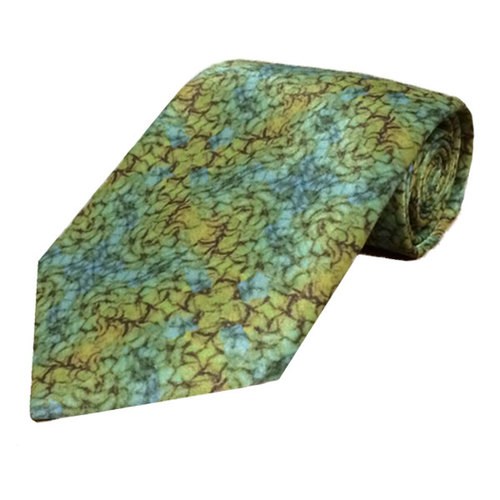
If you are a scientist who wears ties, or if you know one, consider designing your own at Vermont-based Cerebella. Past design ideas have resulted in frog-skin, moon-jellyfish, pollen-tetrad, and obelia (a tiny marine animal) neckties.

At Cerebella’s blog, Lucy Partman wrote on October 13 about how she ended up Chief Curator for the company.

“I grew up in New York City … going to museums— and I mean a lot of museums —especially the Met. … My parents … are designers and own a clothing store in Manhattan so dinner table discussions often involved fabric prints, shirt designs, sizes, quantities, and window displays …

“At LaGuardia High School of Music & Art and Performing Arts … I went from biology to painting, from art history to calculus.

“At Yale, I tried to continue this interdisciplinary education. I majored in both history of art and biology and constantly sought to intertwine these interests, passions. For example, I worked with conservators — who work in a hybrid art studio and science lab — at the Yale Center for British Art to conserve paintings …

“I founded an organization at the Slifka Center called Slifka Arts to provide students the opportunity to curate and exhibit student art. … Shortly after the opening of an exhibit I curated at the Slifka Center called Only in a Woman: Microscopic Images by Harvey Kliman, MD, PhD — which will soon be exhibited at Brown Medical School — Ariele [Faber, Cerebella founder,] contacted me regarding the exhibit and Cerebella. Our conversation has continued ever since.” More here.

Photo: Cerebella
Frog-skin Necktie. Each Cerebella textile pattern is designed by finding inspiration under the microscope.

Read Full Post »

In my part of New England, Daylight Savings is drawing to a close with cold, wet, dark presentiments of the season to come. Seems like a good time to think about the fun we had in October.

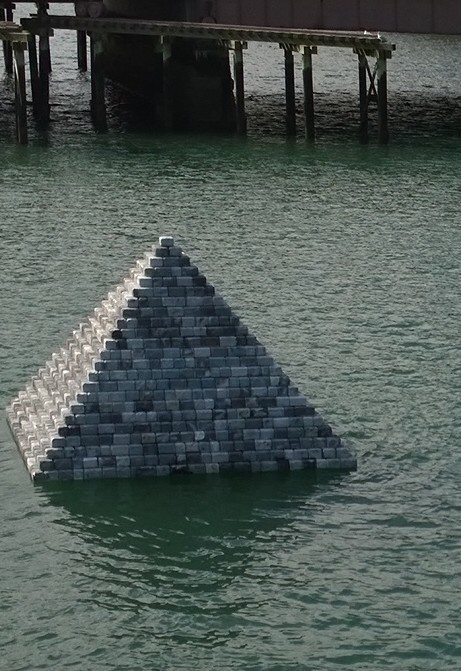
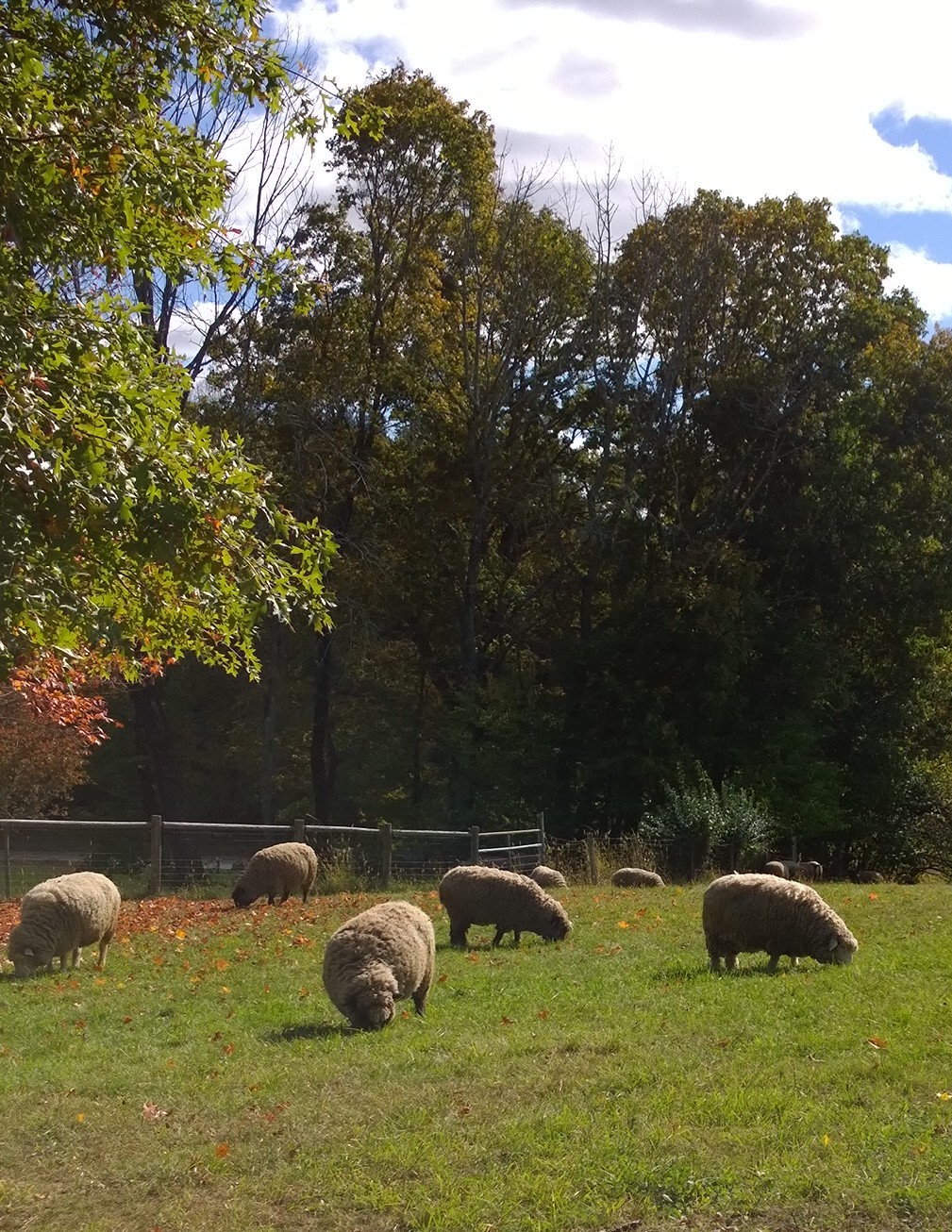
Artist Don Eyles floated a pyramid in Fort Point Channel until a storm blew up. Suzanne, my husband, and our middle grandchild visited the sheep and other animals at the Audubon Society’s Drumlin Farm.

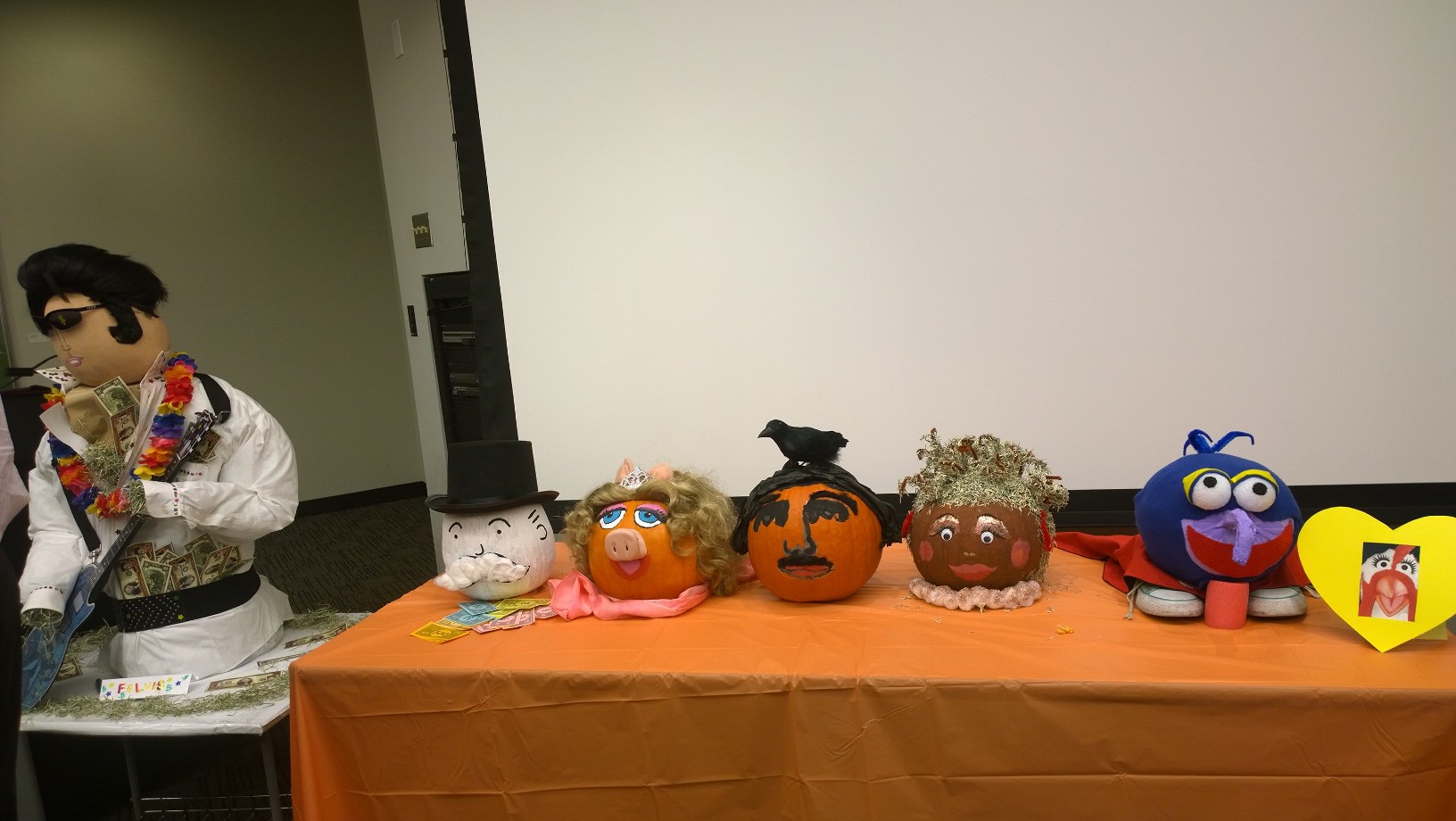
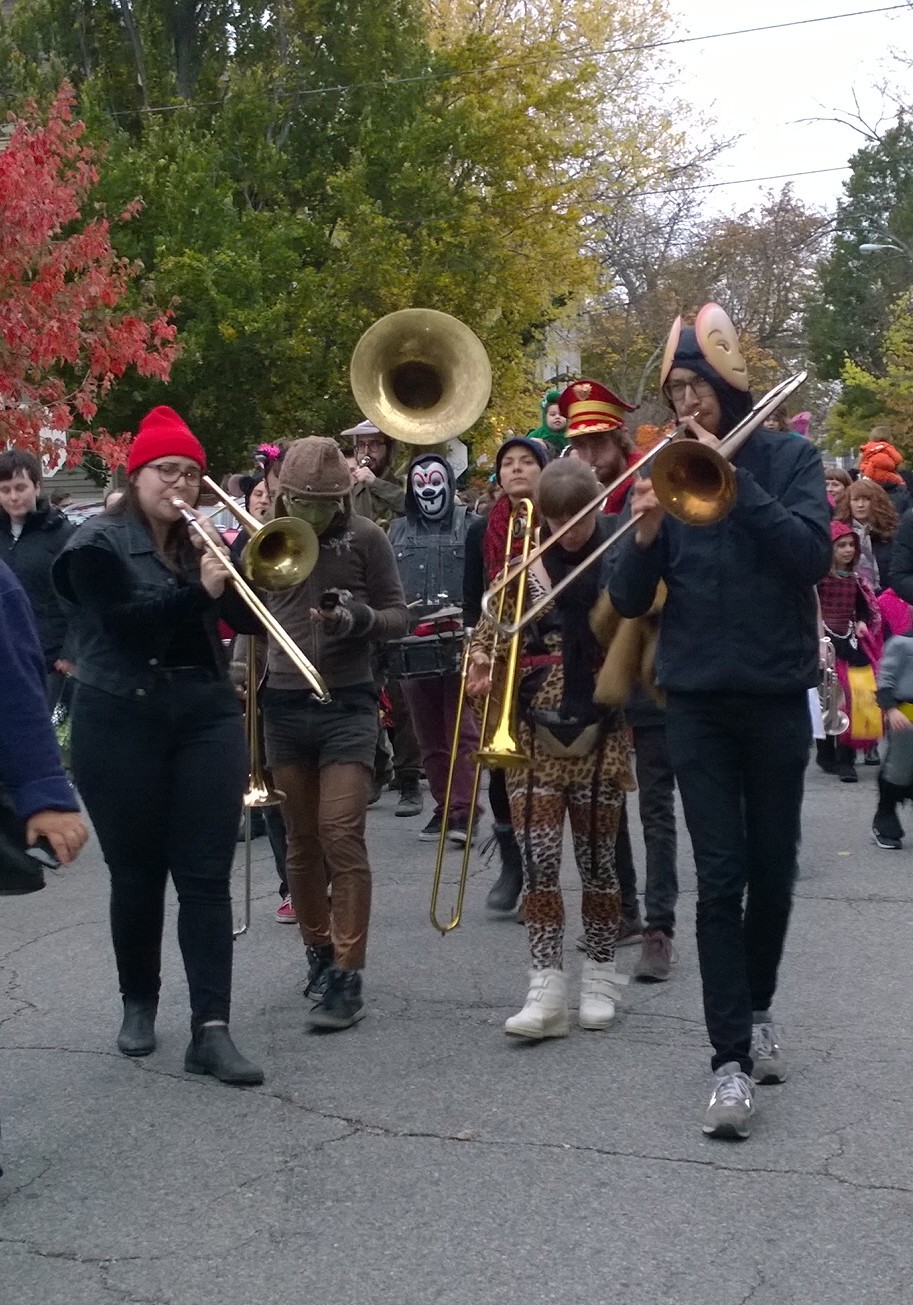
At work, we had a pumpkin-decorating contest. My team did Miss Piggy, porcine Muppet diva, to use the Wall Street Journal identifier. (Left to right, Elvis, the Monopoly Man, Miss Piggy, Edgar Allan Poe, Chia Pet, and Gonzo.) A Halloween band marched surrounded by babies, kids, and adults in costume all around blocked-off Providence thoroughfares near the Brown Street Park.

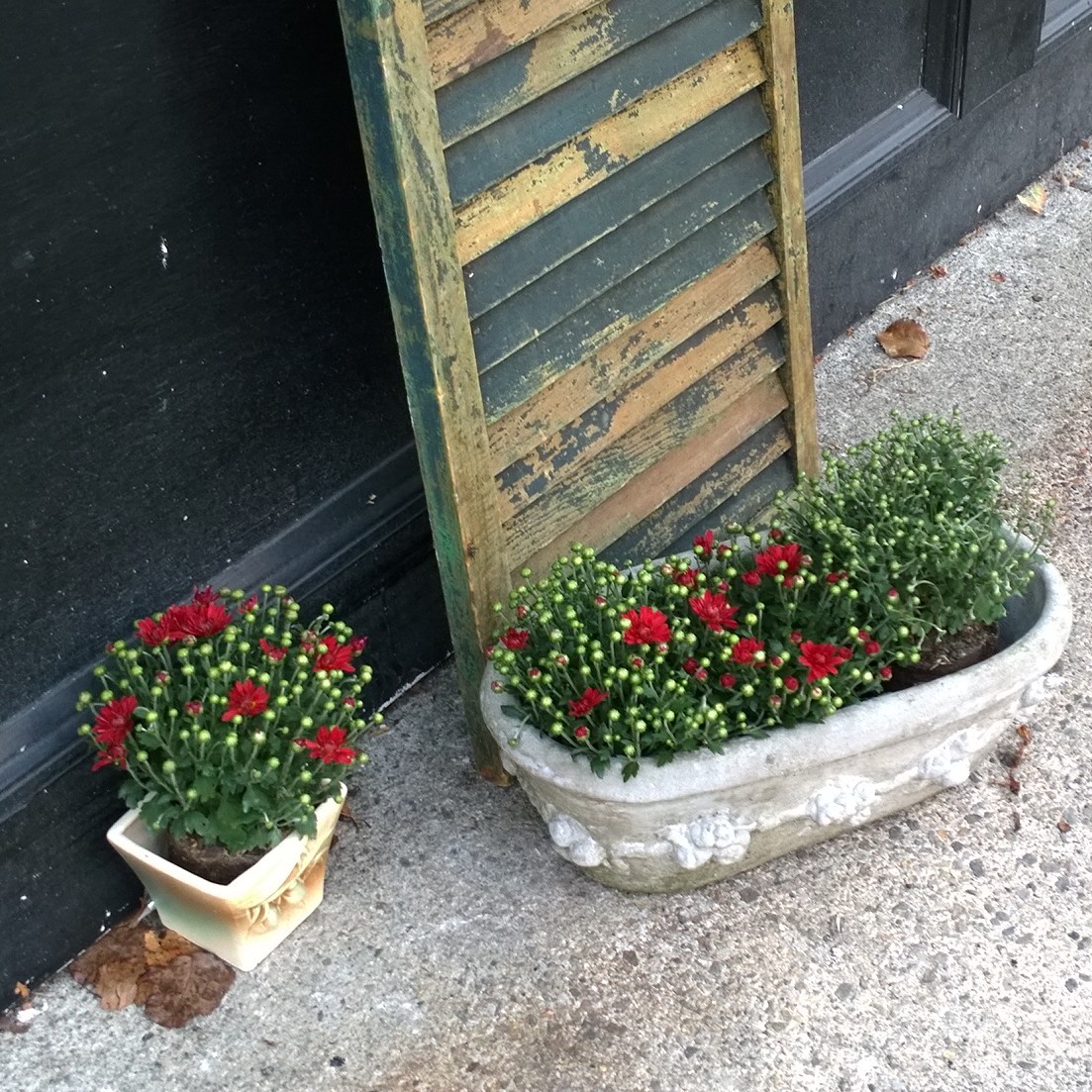
More quietly, chrysanthemums soaked up sunshine.

Here is a bit of background on the pyramid, in case you are interested.

“In 1998 Fort Point artist Don Eyles floated his first pyramid in Fort Point Channel, marking the water as a venue for art and opening the doors to years of temporary art installations to come. The installation was a bold move, made independently, and completely self-funded.”

“ ‘Consider the history that has passed along the cobbled streets of Boston — all the men and women, famous or unremembered, who have walked and rode here … always with granite cobblestones beneath their feet and wheels. I have long dreamed of making this history tangible, by constructing a great pyramid from the cobblestones uprooted by the City’s recent development.’ ”

More on the Pyramid and other Fort Point projects at tumblr, here.

pyramid-Fort-Point-Channel
101914-Drumlin-Farm-sheep
Halloween-team-bldg-at-work
Halloween-in-Providence
flower-pots-in-fall


Read Full Post »

Studio 360 interviewed a blind photographer the other day. He had not always been blind, and blindness has not stopped him from creating high-quality photographs, strange as that may seem. He gets by with a little help from his friends.

But then, which among us doesn’t?

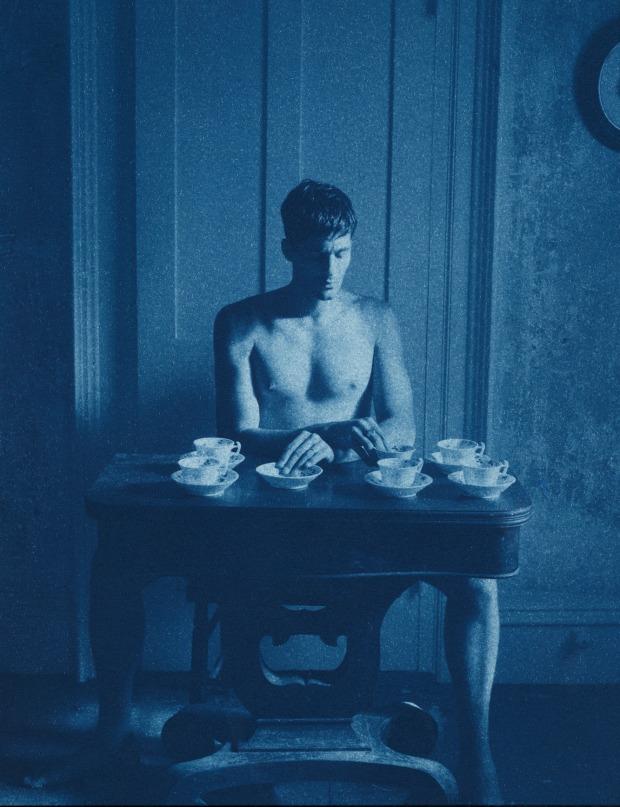
“In 1994, a stroke left the young photographer John Dugdale nearly blind, and over the years since, he has lost the remainder of his vision. But has never stopped taking photographs.

“ ‘I have a few wonderful people in my life that I trust to help me create the pictures that I see in my mind’ Dugdale tells guest host [Studio 360] Alan Cumming. He insists on releasing the shutter on every photo he takes. ‘It’s the most sacred time in my life whenever that shutter opens and closes — and it’s also the only time I’m quiet.’ …

“Dugdale contracted HIV in the mid-1980s. In the early 1990s he became ill with cytomegalovirus retinitis, an eye infection common in HIV patients, and it accelerated quickly. ‘I didn’t tell anyone, because I thought through magical thinking maybe it would go away,’ Dugdale explains. ‘In a matter of weeks I lost one eye.’ A stroke left him paralyzed for a year and left him with about 20% of his vision. … ‘I’m alive because my mother brought me elbow macaroni with Parmesan cheese and beans every single day for a year.’

“When Dugdale was released from the hospital, he almost immediately began working again. He tells Alan that the photographs ‘poured like a libation out of a vase. I barely even felt like I was making them. They just made themselves.’ …

“ ‘Being blind is not what you think,’ Dugdale tells Alan, ‘it’s not all darkness. My optic nerve still works and shoots a beautiful ball of brightly colored orange and purple and violet light and sparkling flashes all the time.” More at Studio 360, here. Check out some of Dugdale’s work, which continues to be in demand by prominent collections.

Photo: John Dugdale
“Untitled, Self-Portrait with Teacups” 1994

Read Full Post »

Art: Vita Wells
‘Flights of mind,’ 2007. Book, hair, lights, fan, key, screws, hinges, glue.

Maria Popova’s website, Brain Pickings, is a never-ending source of inspiration, and my only regret is that when her e-newsletter arrives each week, there never is enough time to savor it.

In a recent one, she was a reviewed Art Made from Books: Altered, Sculpted, Carved, Transformed, which she got at the library. The pictures are terrific and remind me of other items we’ve featured. (Remember the lead from Asakiyume about the stealth artist in Scotland who made sculptures from books and left them in libraries? I wrote about that here.)

“As a fervent lover of papercraft, book sculpture, and creative repurposing of physical books,” writes Popova at Brain Pickings, “I was instantly taken with Art Made from Books: Altered, Sculpted, Carved, Transformed (public library) — a compendium of extraordinary artworks from the around the world, using the physical book as raw material for creative contemplation and cultural commentary.

“Sensual, rugged, breathtakingly intricate, ranging from ‘literary jewelry’ to paperback chess sets to giant area rugs woven of discarded book spines, these cut and carved tomes remind us that art is not a thing but a way — a way of being in the world that transmutes its dead cells into living materials, its cultural legacy into ever-evolving art forms and creative sensibilities.”

Read more here, and be amazed by the other pictures of book art.

Art: Jennifer Khoshbin
“Prove It,” 2009, cut book.

Read Full Post »

I blogged about the two previous murals in Dewey Square, here, and now there is a third one. The first two were by artists who had shows at the nearby Institute for Contemporary Arts (the ICA). The new one is by an artist associated with the Museum of Fine Arts (MFA).

According to Geoff Edgers at the Boston GlobeJill Medvedow, ICA director, was not pleased that the Rose Kennedy Greenway Conservancy chose a different museum. “Really?” she said. “It’s walking distance to the ICA.”

WBUR radio’s “The Artery” covers more of the story: “Shinique Smith, the creator of the latest work, recalls seeing pictures on the Internet of that earlier mural by the Brazilian twins Os Gemeos. Standing in the grass below her piece, she told me she thought the wall was amazing, ‘and I wanted to do something like them.’ ” More here.

In case you’re wondering, Smith didn’t stand there painting it all herself like the Os Gemeos twins who did the first mural. Instead she gave a kind of map to skilled painters from a company that does this sort of thing, translating a smaller work into a giant one.

I took four photographs of the progress.

mural-1

mural-2


mural-3

mural-4


Read Full Post »

No matter how bad things get in the great world, there will always be someone who starts a quirky, individualistic project just for the love of it, reassuring us all.

In Providence recently, a few folks got together to resurrect an abandoned natural history museum partly to see what an early museum looked like, partly because it was a shame to throw it all out.

In the NY Times, Henry Founatain wrote,  “If museums are meant to preserve objects forever, then forever ended here in 1945.

“That year, Brown University’s natural history museum, which included multitudes of animal skeletons and specimens among its 50,000 items, as well as anthropological curiosities like rope made from human hair, was thrown away.

“It was a sad end to what had been a labor of love for John Whipple Potter Jenks, a Brown alumnus, taxidermist and naturalist who founded the teaching museum in 1871.

“But Jenks had died in 1894 — on the steps of the museum, no less — and what by then was known as the Jenks Museum fell into disarray. It was shuttered in 1915, and the objects were scattered or stored until most of them were hauled, in 92 truckloads, to a nearby dump in 1945.

“But now the Jenks Museum lives again, at least temporarily, in an exhibition that is as much about art as it is about science.

“A group of Brown graduate students, with help from a faculty adviser and a New York artist, has rounded up a few surviving odds and ends, commissioned artists to recreate some of the vanished objects, and installed it all in Rhode Island Hall, the home of the original museum. The exhibition, which also includes a recreation of Jenks’s office as it might have looked in the year of his death, will be on display until spring.” Read more here.

The Lost Museum will be on display in Rhode Island Hall on the Brown University campus, 60 George Street, the Jenks Museum’s original home, through May 2015.

Photo: Mike Cohea/Brown University
The office of John Whipple Potter Jenks, who founded the natural history museum at Brown University, was recreated for an exhibition called Lost Museum.

Read Full Post »

Yesterday my husband, my cousin Dennie, and I went to the Institute of Contemporary Art (ICA) to see a video installation of Icelandic musicians performing together but in separate rooms of a crumbling mansion on the Hudson River.

Museumgoers entered a large dark gallery at any point in the performance and fixed their eyes on whichever of the nine big screens caught their attention. We happened first upon the guitarist Ragnar Kjartansson in the bathtub singing at the loudest point in the cycle. We turned to each other with our mouths and eyes wide in a huge grin, it was so incredibly crazy and far out.

Here’s what the ICA says about the installation: “A celebration of creativity, community, and friendship, The Visitors (2012) documents a 64-minute durational performance Kjartansson staged with some of his closest friends at the romantically dilapidated Rokeby Farm in upstate New York. Each of the nine channels shows a musician or group of musicians, including some of Iceland’s most renowned as well as members of the family that owns Rokeby Farm, performing in a separate space in the storied house and grounds; each wears headphones to hear the others. …

“The piece itself sets lyrics from a poem [“My Feminine Ways”] by artist Ásdís Sif Gunnarsdóttir, Ragnar´s ex-wife, to a musical arrangement by the artist and Icelandic musician Davíð Þór Jónsson; the title comes from a 1981 album from Swedish pop band ABBA, meant to be its last.” More.

From “My Feminine Ways,” by Ásdís Sif Gunnarsdóttir,
“A pink rose
“In the glittery frost
“A diamond heart
“And the orange red fire
“Once again I fall into
“My feminine ways.”

I wrote about the crumbling Hudson River estate before, here.

My husband said Rokeby would have been a great setting for the Antiques Roadshow. Dennie, who is related to the owners of Rokeby, says her friends will never believe that she, a person who always disparages far-out art, was drawn in and ended up really liking “The Visitors.” We watched it twice. I’m still singing the most-repeated line,”Once again I fall into/My feminine ways.”

Read Full Post »

« Newer Posts - Older Posts »