Feeds:
Posts
Comments

Posts Tagged ‘art’

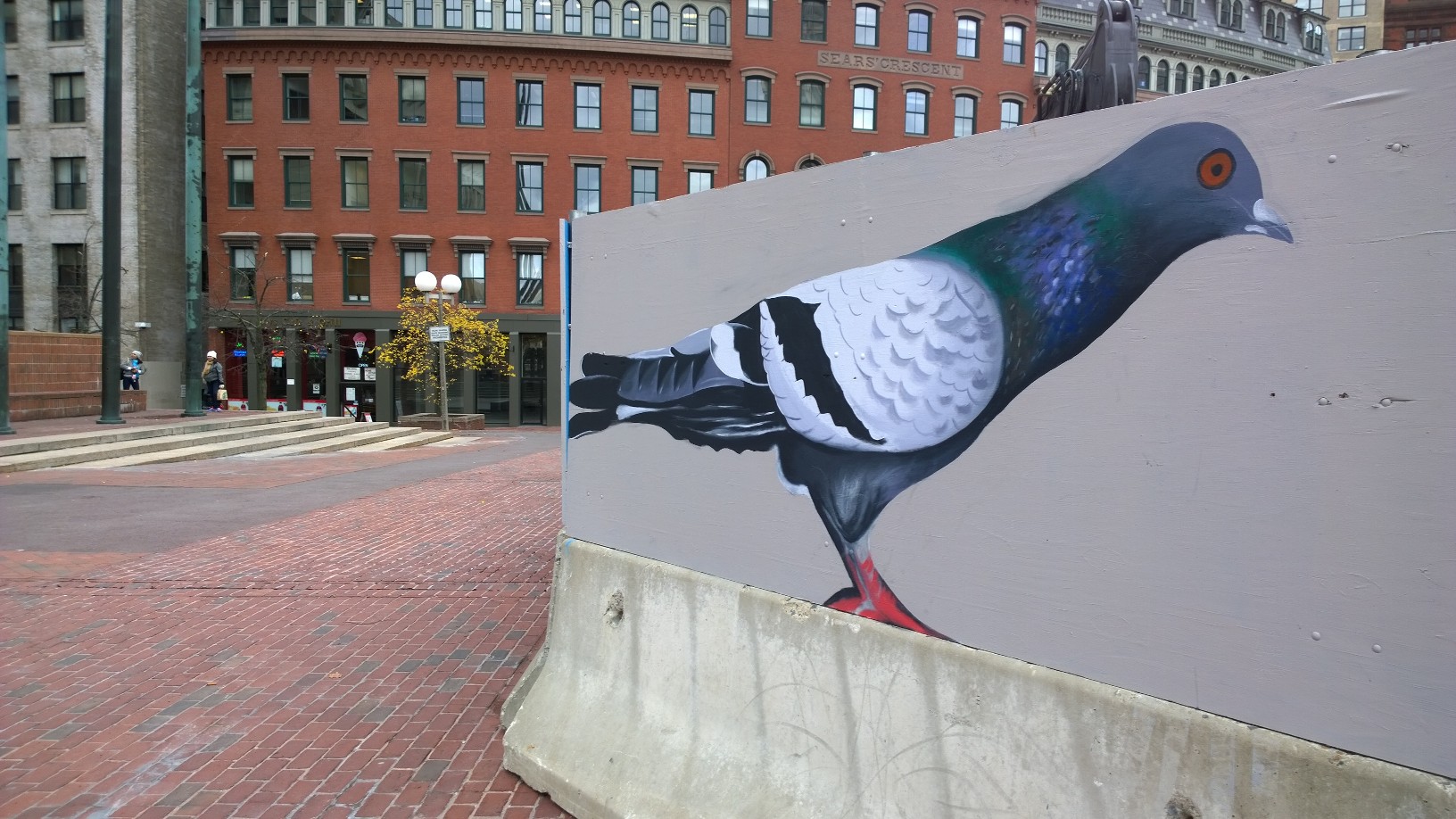
110714-a-pigeon-that-I-pass-alas


When Suzanne was two, she and John used to watch a TV show with a theme song that went like this: “Stop the pigeon, stop the pigeon, stop the pigeon — now!”

One day we took the train to New York City, and in spite of the fact that Suzanne never saw pigeons where we lived, she took one look at the city’s official bird and started singing, “Stop the pigeon!”

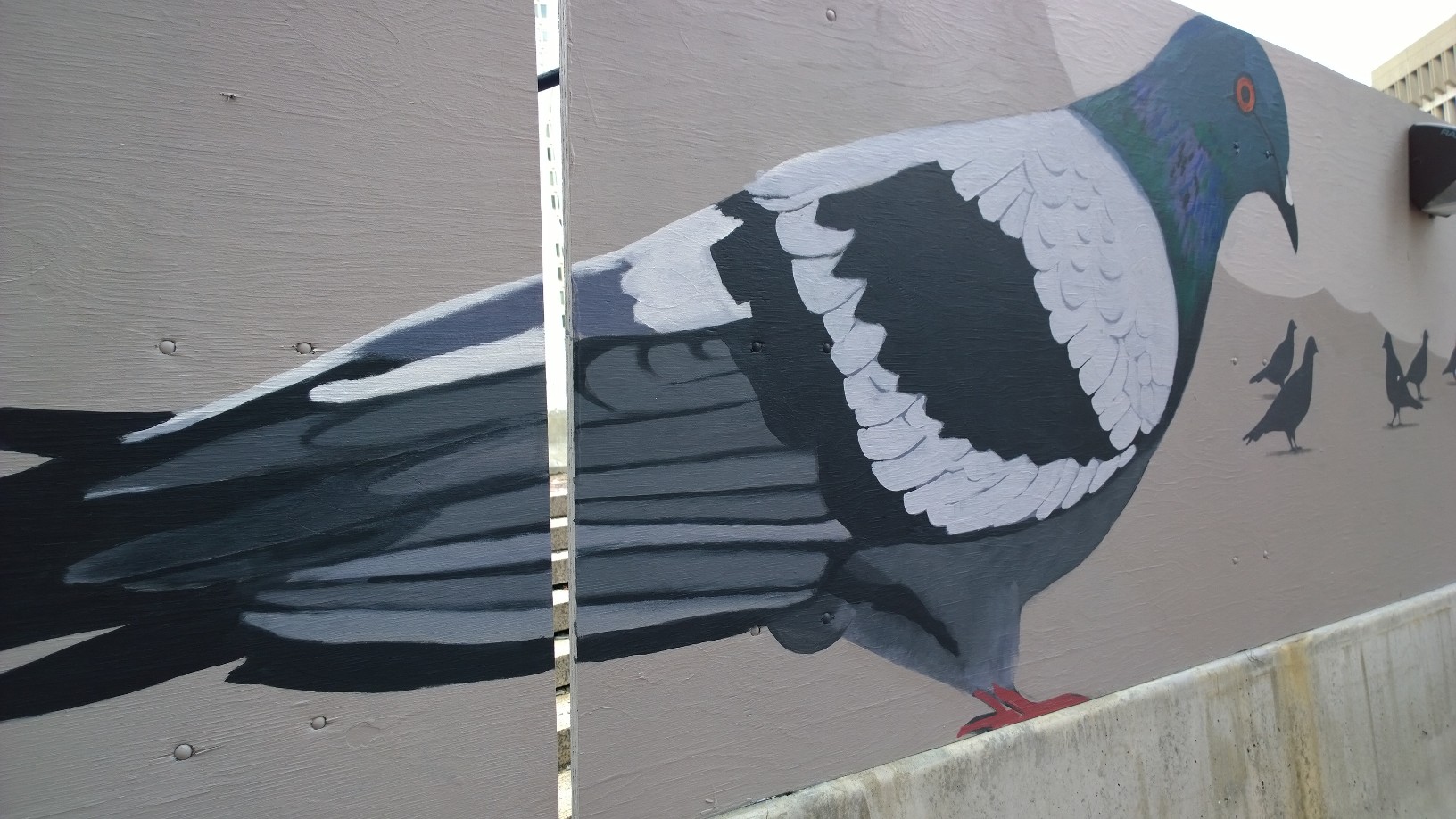
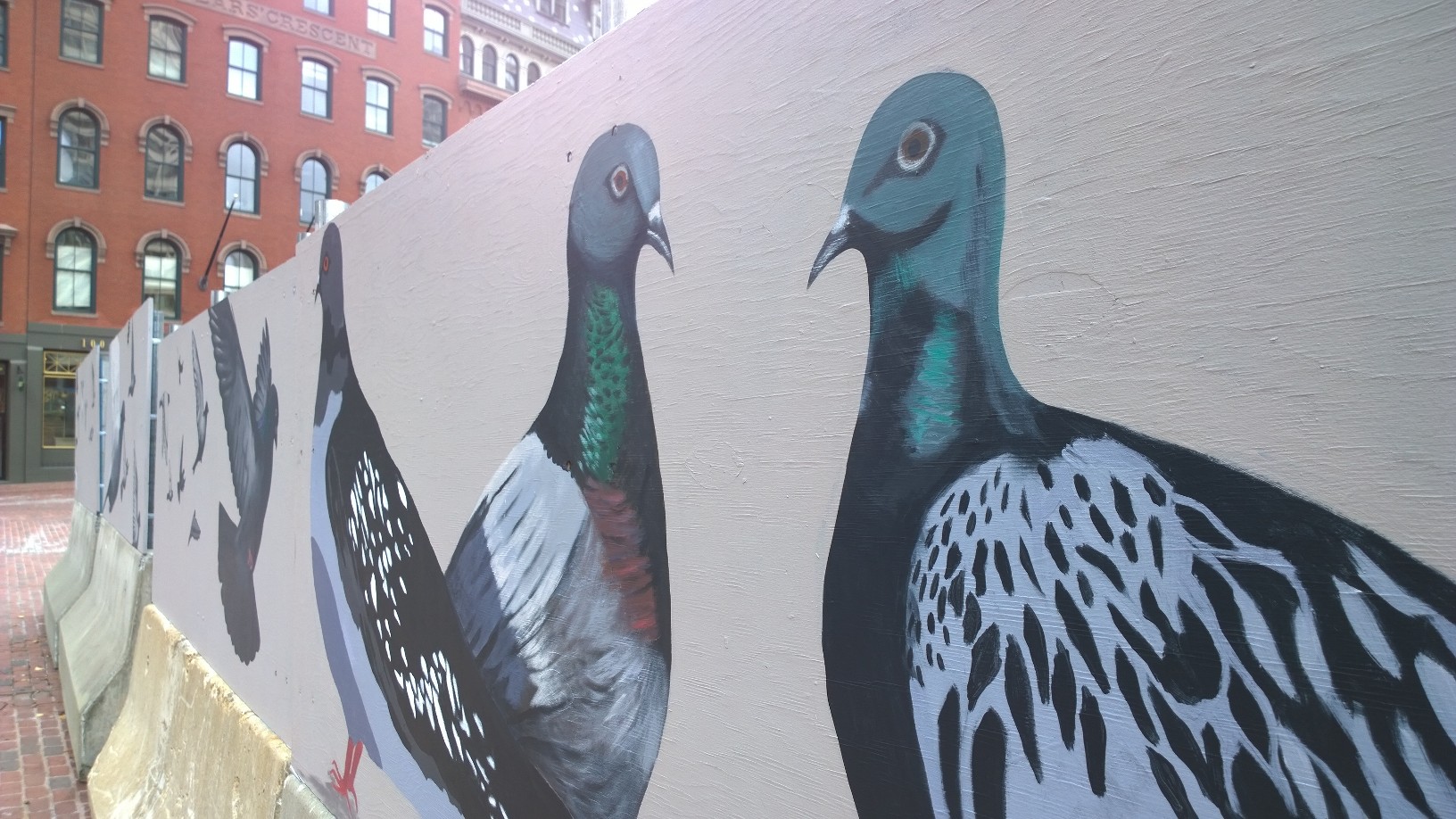
So unlike many people, I have some good feelings associated with pigeons, and I am getting a big kick from the pigeons I photographed near city hall yesterday.

Someone with a sense of humor has decorated the barrier around the construction site for the  new Government Center T stop with pigeon portraiture.

110714-peeking-thru-pigeons

110714-stop-the-pigeon-now


Read Full Post »

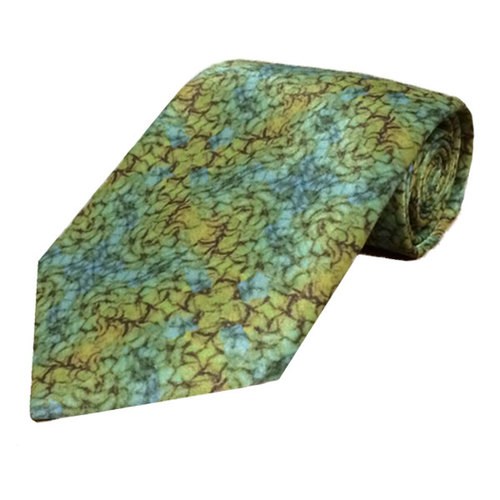
If you are a scientist who wears ties, or if you know one, consider designing your own at Vermont-based Cerebella. Past design ideas have resulted in frog-skin, moon-jellyfish, pollen-tetrad, and obelia (a tiny marine animal) neckties.

At Cerebella’s blog, Lucy Partman wrote on October 13 about how she ended up Chief Curator for the company.

“I grew up in New York City … going to museums— and I mean a lot of museums —especially the Met. … My parents … are designers and own a clothing store in Manhattan so dinner table discussions often involved fabric prints, shirt designs, sizes, quantities, and window displays …

“At LaGuardia High School of Music & Art and Performing Arts … I went from biology to painting, from art history to calculus.

“At Yale, I tried to continue this interdisciplinary education. I majored in both history of art and biology and constantly sought to intertwine these interests, passions. For example, I worked with conservators — who work in a hybrid art studio and science lab — at the Yale Center for British Art to conserve paintings …

“I founded an organization at the Slifka Center called Slifka Arts to provide students the opportunity to curate and exhibit student art. … Shortly after the opening of an exhibit I curated at the Slifka Center called Only in a Woman: Microscopic Images by Harvey Kliman, MD, PhD — which will soon be exhibited at Brown Medical School — Ariele [Faber, Cerebella founder,] contacted me regarding the exhibit and Cerebella. Our conversation has continued ever since.” More here.

Photo: Cerebella
Frog-skin Necktie. Each Cerebella textile pattern is designed by finding inspiration under the microscope.

Read Full Post »

In my part of New England, Daylight Savings is drawing to a close with cold, wet, dark presentiments of the season to come. Seems like a good time to think about the fun we had in October.

Artist Don Eyles floated a pyramid in Fort Point Channel until a storm blew up. Suzanne, my husband, and our middle grandchild visited the sheep and other animals at the Audubon Society’s Drumlin Farm.

At work, we had a pumpkin-decorating contest. My team did Miss Piggy, porcine Muppet diva, to use the Wall Street Journal identifier. (Left to right, Elvis, the Monopoly Man, Miss Piggy, Edgar Allan Poe, Chia Pet, and Gonzo.) A Halloween band marched surrounded by babies, kids, and adults in costume all around blocked-off Providence thoroughfares near the Brown Street Park.

More quietly, chrysanthemums soaked up sunshine.

Here is a bit of background on the pyramid, in case you are interested.

“In 1998 Fort Point artist Don Eyles floated his first pyramid in Fort Point Channel, marking the water as a venue for art and opening the doors to years of temporary art installations to come. The installation was a bold move, made independently, and completely self-funded.”

“ ‘Consider the history that has passed along the cobbled streets of Boston — all the men and women, famous or unremembered, who have walked and rode here … always with granite cobblestones beneath their feet and wheels. I have long dreamed of making this history tangible, by constructing a great pyramid from the cobblestones uprooted by the City’s recent development.’ ”

More on the Pyramid and other Fort Point projects at tumblr, here.

pyramid-Fort-Point-Channel
101914-Drumlin-Farm-sheep
Halloween-team-bldg-at-work
Halloween-in-Providence
flower-pots-in-fall


Read Full Post »

Studio 360 interviewed a blind photographer the other day. He had not always been blind, and blindness has not stopped him from creating high-quality photographs, strange as that may seem. He gets by with a little help from his friends.

But then, which among us doesn’t?

“In 1994, a stroke left the young photographer John Dugdale nearly blind, and over the years since, he has lost the remainder of his vision. But has never stopped taking photographs.

“ ‘I have a few wonderful people in my life that I trust to help me create the pictures that I see in my mind’ Dugdale tells guest host [Studio 360] Alan Cumming. He insists on releasing the shutter on every photo he takes. ‘It’s the most sacred time in my life whenever that shutter opens and closes — and it’s also the only time I’m quiet.’ …

“Dugdale contracted HIV in the mid-1980s. In the early 1990s he became ill with cytomegalovirus retinitis, an eye infection common in HIV patients, and it accelerated quickly. ‘I didn’t tell anyone, because I thought through magical thinking maybe it would go away,’ Dugdale explains. ‘In a matter of weeks I lost one eye.’ A stroke left him paralyzed for a year and left him with about 20% of his vision. … ‘I’m alive because my mother brought me elbow macaroni with Parmesan cheese and beans every single day for a year.’

“When Dugdale was released from the hospital, he almost immediately began working again. He tells Alan that the photographs ‘poured like a libation out of a vase. I barely even felt like I was making them. They just made themselves.’ …

“ ‘Being blind is not what you think,’ Dugdale tells Alan, ‘it’s not all darkness. My optic nerve still works and shoots a beautiful ball of brightly colored orange and purple and violet light and sparkling flashes all the time.” More at Studio 360, here. Check out some of Dugdale’s work, which continues to be in demand by prominent collections.

Photo: John Dugdale
“Untitled, Self-Portrait with Teacups” 1994

Read Full Post »

Art: Vita Wells
‘Flights of mind,’ 2007. Book, hair, lights, fan, key, screws, hinges, glue.

Maria Popova’s website, Brain Pickings, is a never-ending source of inspiration, and my only regret is that when her e-newsletter arrives each week, there never is enough time to savor it.

In a recent one, she was a reviewed Art Made from Books: Altered, Sculpted, Carved, Transformed, which she got at the library. The pictures are terrific and remind me of other items we’ve featured. (Remember the lead from Asakiyume about the stealth artist in Scotland who made sculptures from books and left them in libraries? I wrote about that here.)

“As a fervent lover of papercraft, book sculpture, and creative repurposing of physical books,” writes Popova at Brain Pickings, “I was instantly taken with Art Made from Books: Altered, Sculpted, Carved, Transformed (public library) — a compendium of extraordinary artworks from the around the world, using the physical book as raw material for creative contemplation and cultural commentary.

“Sensual, rugged, breathtakingly intricate, ranging from ‘literary jewelry’ to paperback chess sets to giant area rugs woven of discarded book spines, these cut and carved tomes remind us that art is not a thing but a way — a way of being in the world that transmutes its dead cells into living materials, its cultural legacy into ever-evolving art forms and creative sensibilities.”

Read more here, and be amazed by the other pictures of book art.

Art: Jennifer Khoshbin
“Prove It,” 2009, cut book.

Read Full Post »

I blogged about the two previous murals in Dewey Square, here, and now there is a third one. The first two were by artists who had shows at the nearby Institute for Contemporary Arts (the ICA). The new one is by an artist associated with the Museum of Fine Arts (MFA).

According to Geoff Edgers at the Boston GlobeJill Medvedow, ICA director, was not pleased that the Rose Kennedy Greenway Conservancy chose a different museum. “Really?” she said. “It’s walking distance to the ICA.”

WBUR radio’s “The Artery” covers more of the story: “Shinique Smith, the creator of the latest work, recalls seeing pictures on the Internet of that earlier mural by the Brazilian twins Os Gemeos. Standing in the grass below her piece, she told me she thought the wall was amazing, ‘and I wanted to do something like them.’ ” More here.

In case you’re wondering, Smith didn’t stand there painting it all herself like the Os Gemeos twins who did the first mural. Instead she gave a kind of map to skilled painters from a company that does this sort of thing, translating a smaller work into a giant one.

I took four photographs of the progress.

mural-1

mural-2


mural-3

mural-4


Read Full Post »

No matter how bad things get in the great world, there will always be someone who starts a quirky, individualistic project just for the love of it, reassuring us all.

In Providence recently, a few folks got together to resurrect an abandoned natural history museum partly to see what an early museum looked like, partly because it was a shame to throw it all out.

In the NY Times, Henry Founatain wrote,  “If museums are meant to preserve objects forever, then forever ended here in 1945.

“That year, Brown University’s natural history museum, which included multitudes of animal skeletons and specimens among its 50,000 items, as well as anthropological curiosities like rope made from human hair, was thrown away.

“It was a sad end to what had been a labor of love for John Whipple Potter Jenks, a Brown alumnus, taxidermist and naturalist who founded the teaching museum in 1871.

“But Jenks had died in 1894 — on the steps of the museum, no less — and what by then was known as the Jenks Museum fell into disarray. It was shuttered in 1915, and the objects were scattered or stored until most of them were hauled, in 92 truckloads, to a nearby dump in 1945.

“But now the Jenks Museum lives again, at least temporarily, in an exhibition that is as much about art as it is about science.

“A group of Brown graduate students, with help from a faculty adviser and a New York artist, has rounded up a few surviving odds and ends, commissioned artists to recreate some of the vanished objects, and installed it all in Rhode Island Hall, the home of the original museum. The exhibition, which also includes a recreation of Jenks’s office as it might have looked in the year of his death, will be on display until spring.” Read more here.

The Lost Museum will be on display in Rhode Island Hall on the Brown University campus, 60 George Street, the Jenks Museum’s original home, through May 2015.

Photo: Mike Cohea/Brown University
The office of John Whipple Potter Jenks, who founded the natural history museum at Brown University, was recreated for an exhibition called Lost Museum.

Read Full Post »

Yesterday my husband, my cousin Dennie, and I went to the Institute of Contemporary Art (ICA) to see a video installation of Icelandic musicians performing together but in separate rooms of a crumbling mansion on the Hudson River.

Museumgoers entered a large dark gallery at any point in the performance and fixed their eyes on whichever of the nine big screens caught their attention. We happened first upon the guitarist Ragnar Kjartansson in the bathtub singing at the loudest point in the cycle. We turned to each other with our mouths and eyes wide in a huge grin, it was so incredibly crazy and far out.

Here’s what the ICA says about the installation: “A celebration of creativity, community, and friendship, The Visitors (2012) documents a 64-minute durational performance Kjartansson staged with some of his closest friends at the romantically dilapidated Rokeby Farm in upstate New York. Each of the nine channels shows a musician or group of musicians, including some of Iceland’s most renowned as well as members of the family that owns Rokeby Farm, performing in a separate space in the storied house and grounds; each wears headphones to hear the others. …

“The piece itself sets lyrics from a poem [“My Feminine Ways”] by artist Ásdís Sif Gunnarsdóttir, Ragnar´s ex-wife, to a musical arrangement by the artist and Icelandic musician Davíð Þór Jónsson; the title comes from a 1981 album from Swedish pop band ABBA, meant to be its last.” More.

From “My Feminine Ways,” by Ásdís Sif Gunnarsdóttir,
“A pink rose
“In the glittery frost
“A diamond heart
“And the orange red fire
“Once again I fall into
“My feminine ways.”

I wrote about the crumbling Hudson River estate before, here.

My husband said Rokeby would have been a great setting for the Antiques Roadshow. Dennie, who is related to the owners of Rokeby, says her friends will never believe that she, a person who always disparages far-out art, was drawn in and ended up really liking “The Visitors.” We watched it twice. I’m still singing the most-repeated line,”Once again I fall into/My feminine ways.”

Read Full Post »

As usual, the Fort Point area is swimming in art this September. The few examples below don’t begin to scratch the surface, but they caught my eye: a longtime mural in a Farnsworth Street garage, a mosaic at Channel Center, and the rainbow-like installation “Shimmer” that draws a smile from many passersby.

Says the Fort Point Arts site, “ ‘Shimmer‘ is a temporary public art installation by Fort Point artists Claudia Ravaschiere and Michael Moss. Using the refractive qualities of florescent and jewel toned plexi glass, this piece activates the the Congress Street Bridge and changes the public perception of a familiar urban environment.  The piece is constructed to catch the natural and ambient light to create a luminous field of color and alternating hues. The visual impact of the’ Shimmer’ will change as the light changes throughout the day.”

Farnsworth-St-garage-mural-1

Farnsworth-garage-mural-2


Channel-Center-mosaic

art-installation-Fort-Point-Channel


Shimmer-art-installation-Boston


Read Full Post »

I was all set to blog about Providence PuttPutt, an artist-inspired, Kickstarter-supported pop-up entertainment for kids when I found out it was scheduled to last only for the summer and has just closed. Sigh.

So, sticking to a small-pleasures, quality-of-life theme, we turn once more to Denmark, where biking made a big jump in one year.

 at StreetsBlog Network writes, “For years the bike commuting rate has remained roughly steady at just over a third of trips. Then last year the city’s bike commute mode share increased from 36 percent to 41 percent. Meanwhile, driving declined 3 percent as a share of commuting trips.

“The unexpected increase had a lot of people baffled. But Mikael Colville-Andersen at Copenhagenize thinks he knows what happened …

What has happened is that 17 huge construction sites fell out of the sky all at once. Not something that happens every day. In addition, most of central Copenhagen — between 2012 and 2013 — was under further construction because of the upgrading of district heating pipes under many streets that had to be ripped up. …

Driving was rendered incredibly difficult. Copenhageners, being rational homo sapiens, chose other transport forms. Public transport has increased, too, but the bicycle is clearly the chariot of choice. It’s no surprise at all why cycling is booming.

“There you have it,” Schmitt adds. “If you want to improve cycling in your city, make it an awesome place to bike, sure, but don’t forget make it a terrible place to drive. ”

More here.

Photo: Mikael Colville-Andersen 
Biking in Copenhagen

Read Full Post »

Do you believe in miracles? Consider the snowflake, consider the soap bubble.

Our family is big on soap bubbles in summer. Wired magazine seems to be big on soap bubbles, too, with a recent article on an installation involving bubble magic.

Kyle Vanhemert writes, “Soap is pretty ordinary stuff – until you blow a bubble with it. Then it becomes something a little bit magical, shimmering with delicate, ever-changing color. Unsurprisingly, if you shine a light through that swirling orb, it makes for a pretty incredible show.

“That’s the gist of ‘Invisible Acoustics,’ an audiovisual installation by Royal College of Art graduate Dagny Rewera. For the project, Rewera created three apparatuses that combine light, sound, and soap to spectacular effect.

“First, a wand dips itself into a pool of water, creating a wet, soapy lens. A speaker plays tones and chords, vibrating the soap, while a light projects the proceedings on the ceiling above. …

“Each of the three units is set to play a different range of frequencies, making for three distinct sets of patterns unfolding overhead.” More here.

Art: Dagny Rewera 

Read Full Post »


Art: Salvador Dali

I was swept away by theater at age 10 as the understudy for Alice in Binny Rabinowitz’s adaptation of Alice in Wonderland. Ever since, I’ve been a fan of the little girl who was so clear-eyed about the unreasonableness of grownups.

So imagine my delight at Maria Popova’s essay on the many different ways the story has been illustrated, including by Salvador Dali.

“In the century and a half since Sir John Tenniel’s original illustrations, the Carroll classic has sprouted everything from a pop-up book adaptation to a witty cookbook to a quantum physics allegory, and hundreds of artists around the world have reimagined it with remarkable creative vision. …

“In 1969, Salvador Dalí was commissioned by New York’s Maecenas Press-Random House to illustrate a special edition of the Carroll classic, consisting of12 heliogravures — one for each chapter of the book and an original signed etching in four colors as the frontispiece. Distributed as the publisher’s book of the month, the volume went on to become one of the most sought-after Dalí suites of all time.”

See a splendid array at Brainpickings, here.

Art: Lisbeth Zwerger 

Read Full Post »

In a recent NY Times article, art critic Holland Cotter expressed skepticism that a show of new artists lumped together as “Arab” could work. (Some artists declined to participate for the same  reason.)  The artists in the New Museum exhibit are from “Egypt, Iraq, Jordan, Kuwait, Lebanon, Morocco, Saudi Arabia, Syria, Tunisia and the United Arab Emirates, not to mention Europe and the United States.”

But in the end, he was thrilled with the opportunity to see the new works.

“It’s a big show, intricately pieced together on all five floors of the museum, and starts on the street-level facade with a large-scale photograph of an ultra-plush Abu Dhabi hotel. The image was installed by the cosmopolitan collective called GCC, made up of eight artists scattered from Dubai to London and New York who make it their business to focus on the preposterous wealth concentrated in a few hands in a few oil-rich countries on the Persian Gulf.”

Cotter goes on to describe many of the pieces in detail, here, and concludes with some advice for visitors.

“To appreciate this show fully, a little homework can’t hurt. But really all you need to do is be willing to linger, read labels and let not-knowing be a form of bliss. In return, you’ll get wonderful artists, deep ideas, fabulous stories and the chance, still too seldom offered by our museums, to be a global citizen. Don’t pass it up.”

The show will be up until September 28.

Photo: Ruth Fremson/The New York Times

“Here and Elsewhere” show at the New Museum

Read Full Post »

Years ago, when I was expecting, I learned the baby would be a girl. My husband and I went right out and bought a beautiful dollhouse built by a teenage boy we read about in the local paper.

Recently, Nancy Shohet West wrote in the Boston Globe about a new dollhouse show. My husband said, “If you go, see if you can find someone who can repair dollhouses.” (Suzanne’s needs a face lift.)

But we didn’t read the article carefully. The show featured art works from artists contemplating the resonance of “dollhouse.”

Note the foreclosed house with a Banksy on an exterior wall (above it, the only entry by a male artist, with tiny soldiers), the Japanese-inspired house, and the 1950s domestic fantasy house, below. It was a fine show, but I didn’t find anyone to repair Suzanne’s dollhouse.

The exhibit was in a renovated warehouse where artists have studios and where there also is shared space for entrepreneurs. The business space is called the Wheelhouse, and it features a common area for eating and relaxing, small offices with names on glass doors, small conference rooms — and lots of art.

I was surprised. The last time my husband and I were in that building we were taking a stretch class with a classmate of Suzanne’s, and the Bradford Mill was so rickety one expected the staircase to collapse at any moment. Times change.

The dollhouse show is up until August 28. Read more about it here.

dollhouse-with-a-Banksy


Japanese-dollhouse


1950s-domestic-fantasy

Read Full Post »

Photo: Jake Naughton/The New York Times
Ayun Halliday creating a new issue of “The East Village Inky”  as part of the MTA Zine Residency

Remember the Amtrak Artist Residency? Here’s what might be called a “stealth residency,” organized by a librarian in New York and taking place on the New York subway system.

Colin Moynihan writes at the NY Times, “Thirteen people formed a sort of mobile salon just after noon on Friday, boarding an F Train in the Gowanus area of Brooklyn with the aim of riding for hours through three boroughs while writing and illustrating zines — self-published, photocopied periodicals usually made by hand. …

“The two-day event, called the MTA Zine Residency, had been organized by a librarian and an archivist at the Barnard College library, which they said has the largest circulating collection of zines in an academic library. …

“Despite the initials in its name, the event was organized without the knowledge or collaboration of the Metropolitan Transportation Authority, which runs the subway system. The peaceful takeover of the subway car reflected the do-it-yourself spirit that is a basic prerequisite to zine making, said the other organizer, the archivist Shannon O’Neill. …

“ ‘Remember the promise and betrayal of the #AmtrakResidency?’ the organizers of the subway project wrote, while announcing their own subway and ferry trips. ‘We won’t pay for your MetroCard, but we also won’t demand to own your stuff!’ …

“Transit officials had no objection to the activities. ‘As long as they abide by our rules of conduct, we certainly welcome them in the subway system to nurture creative self-expression,’ said a spokesman, Kevin Ortiz.”

More here.

I’m thinking of several artistic readers of this blog when I say you may want to get on board this train the next time it comes around.

Photo: Jake Naughton/The New York Times 
Composing zines on the F train on Friday during the MTA Zine Residency. 

Read Full Post »

« Newer Posts - Older Posts »