Feeds:
Posts
Comments

Posts Tagged ‘art’

Zachary Sampson has a nice article at the Globe today. It’s about a project in Boston enlisting passersby to help create a mural.

The mural “was created by artist Ernest McKinley English. He joined with ArtLifting — a Boston organization that works with homeless and disabled artists — to organize the project, which he said was meant to foster collaboration. …

“Liz Powers, cofounder of ArtLifting, said English’s vision dovetails with her organization’s purpose. ‘Both Ernest and ArtLifting have the mission of bringing people together through art, building community through art,’ she said.”

The mural “held a hidden message that would be revealed upon completion. …

“The part-in-a-whole ethic resonated with many of the artists who worked on the piece, both amateur and professional.

“ ‘I think the greatest message,’ [artist Randy] Nicholson said, ‘is as a community, we can accomplish what we can’t as individuals.’ ” More here.

Years ago, Suzanne and John helped paint a beautiful mural about our town for the commuter rail station. Their names were included in the credits and we always felt proud reading them when we passed by.

Photo: Michele McDonald for the Boston Globe
Sisters work on paint-by-numbers mural outside the Prudential Center.

Read Full Post »

If you like trompe l’oeil painting — that sleight of hand that makes you think you are seeing one thing when it’s really another — you will love “invisible” architecture.

Writes Mallika Rao at the Huffington Post, ” ‘Invisible’ architecture isn’t a novel concept … But it’s an evolving one. Given the pace of technological change, an architect is never done finding fresh ways to make a building disappear.”

Consider the picture below.

“The revelation is the technology the architects chose not to use,” says Rao. “No fancy LEDs or futuristic materials are needed to build “Invisible Barn,” as the parallelogram-shaped structure pictured in Socrates Sculpture Park is known. The brainchild of the New York-based architecture firm stpmj, it’s designed to be made of wood and sheeted with mirror film, at a cost of $5,000.

“The idea is to ‘blur the perceptual boundary’ between object and setting, according to a statement sent by the architects to The Huffington Post. Niches built into the structure mean the experience changes the closer you get — up close, you can see where true birch trees turn into reflected ones. …

“If it seems whimsical, that’s because the idea was hatched for the Folly contest, an annual event held by the Architectural League of New York. The name references the age-old concept of the ‘architectural folly,’ a fanciful, small building typically set in a garden as a conversation starter.” More here.

Photo: stpmj, an architecture firm

Read Full Post »

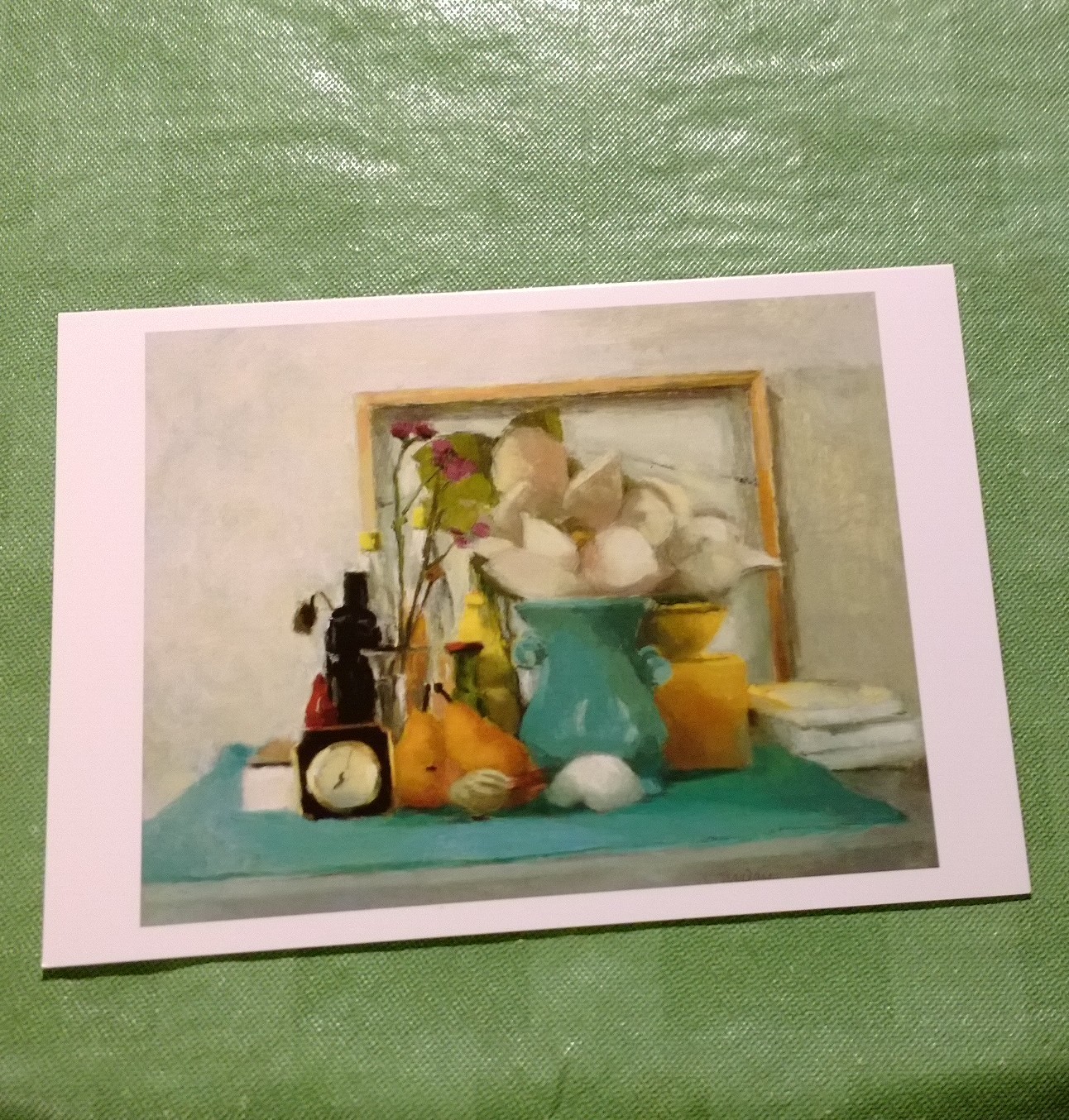
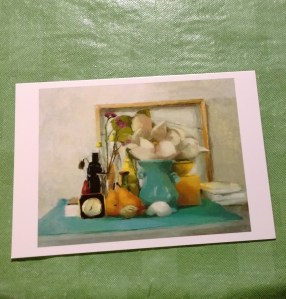
Fyfe-Day-repertoire-with-frame-cardGreeting card of Meredith Fyfe Day’s “Repertoire with Frame.”

Back in the early 1990s, I worked for Meredith Fyfe Day at Harte-Hanks newspapers, where we whipped into shape tottering stacks of press releases of wildly varying literacy.

That was Meredith’s day job. She was also a working artist. My husband and I have long enjoyed her shows, several of which were at the Whistler House Museum of Art in Lowell when Meredith was the artist in residence.

Recently a friend of hers tagged her on Facebook, which was how I learned that the Lowell Sun wrote an article on her latest artistic venture.

Reporter Debbie Hovanasian writes at the Sun, that Meredith “was recently awarded a grant from the Parker Foundation. The result is ‘Making Art with Artists,’ and Fife Day, who teaches painting at Middlesex Community College, couldn’t be more thrilled.

“During her prior experience teaching art to young students,’I could see the kids blossoming, even the tough kids who said they didn’t like art. I would encourage them and it would light a spark. They’d come back with such enthusiasm, and I fell in love with seeing that change in children,’ she said.

” ‘Making Art with Artists’ is a seven-week summer program offered on Tuesdays and Thursdays at no cost at Christ Church United on East Merrimack Street [Lowell, MA] …  with emphasis on fourth- to eighth-graders, she said.

“The program facilitates the teaching of art to under-resourced and under-served children, Fife Day said. The four teachers are experienced, working artists who will make a presentation of their own work to the students in two successive classes. …

“One of the program’s goals is for the children to adapt the techniques of the artists in order to make their own artwork as well as collaborative artwork, using their own and combined imaginations, Fife Day explained. It also aims to give children a positive alternative to high-risk behavior by giving them high quality educational opportunities …

“Fife Day is currently seeking community donors — food or funds — for a lunch program, which she plans to offer free of charge to the budding artists, a cost not covered within the grant.

“The day is structured so that the students work on individual projects in the morning and group projects in the afternoon. There’s also yoga after lunch and free time early morning and late afternoon, during which Fife Day is exploring having musicians and other volunteers willing to donate their time to entertain or supervise the children.

” ‘It’s about giving the children hope and letting them have fun believing in themselves, knowing that the next day can be as much fun as this one,’ she said.” More here.

Photo: Lowell Sun
Art by Meredith Fyfe Day

Read Full Post »

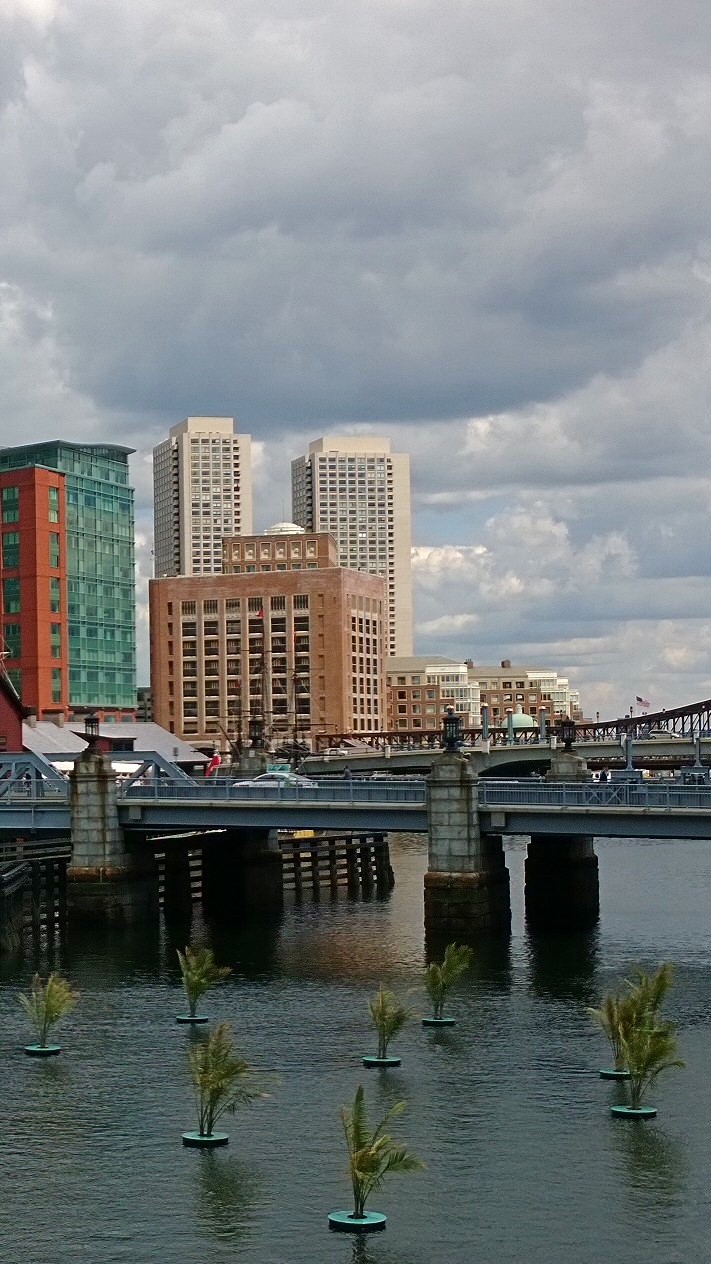
I love the Fort Point area of Boston, across a channel from where I work. But even on a moderately stormy day, the water rises so high it threatens to overflow the banks. So the thinking behind one of the latest art installations there is no joke.

Peter Agoos’s “Tropical Fort Point” ( April 28 – June 15, 2014) is part of the the spring public art series presented by the Fort Point Arts Community Inc. Agoos says about his floating palm trees, “The struggle for quality public open space in the neighborhood and the likelihood of climate change-induced rising sea levels are the conceptual parents of Tropical Fort Point.”

There are several other new presentations around the area. “I Wandered,” by Kate Gilbert and Karen Shanley, “celebrates the joyous arrival of spring and invites you to explore the Fort Point through poetry. Large graphic daffodils and select phrases from ‘I Wandered Lonely As a Cloud,’ William Wordsworth’s 1807 poem about discovering a ‘host of dancing daffodils,’ can be found in five different spots around the neighborhood—encouraging us to … reconnect with the lost art of meditative walking.”

“Silver Lining,” by Elisa Hamilton, “is an inclusive exploration of our relationship with hope that invites the public to engage in the brilliance of possibility.” See photos and artist statements at Fort Point Arts, here.

Agoos-Tropical-Fort-Point

palm-trees-visit-Boston


Read Full Post »

Some posts at Andrew Sullivan I only need to glance at briefly and bells go off: for example, this entry about an artist who works with coral.

Andrew quotes Amelia Urry writing about Courtney Mattison, who became enamored of coral while studying conservation biology at Brown University and moonlighting at the Rhode Island School of Design.

“Mattison’s newest piece, Our Changing Seas III,” says Urry at Grist, “depicts a hurricane-spiral of bleached corals coalescing to a bright center. You can read it as a message of hope or one of impending doom, depending on your disposition …

At the heart of Mattison’s artwork is her desire to inspire real-life changes in how people view and treat the world’s oceans and environments. Similar to the Our Changing Seas series, Courtney Mattison’s Hope Spots collection comprises 18 vignettes, each of which represents a vital marine ecosystem in its ideal form (that is, protected from various threats such as global warming or pollution).” Read more at Grist, here.

Art: Courtney Mattison
“Our Changing Seas III,” a ceramic coral reef

Read Full Post »

Photo of Lugano: Wikimedia Commons

Before Suzanne met Erik, she lived for a few years in Lugano, Switzerland. When I visited her, I took in the art museum and remember being exposed to the work of Austrian painter Egon Schiele for the first time.

Today Andrew Sullivan had a post about Museo d’Arte di Lugano, and naturally I zeroed in.

Andrew quotes Andy Cush on the museum’s latest exhibit: “36 ventilators, 4.7m3 packing chips, a new installation from the Swiss artist Zimoun … The artist filled a space inside Switzerland’s Museo d’Arte di Lugano with lots and lots of polystyrene packing peanuts, and uses 36 fans to whip them into a stormy frenzy.”

Watch the video of crashing packing-popcorn waves at Andrew Sullivan’s blog, here.

Lugano is a charming, Italian-speaking city. I passed through there as a teenager, with no premonition of my future connection to the place, just astonishment at palm trees in snow-capped Switzerland. Funny how things turn out.


Read Full Post »

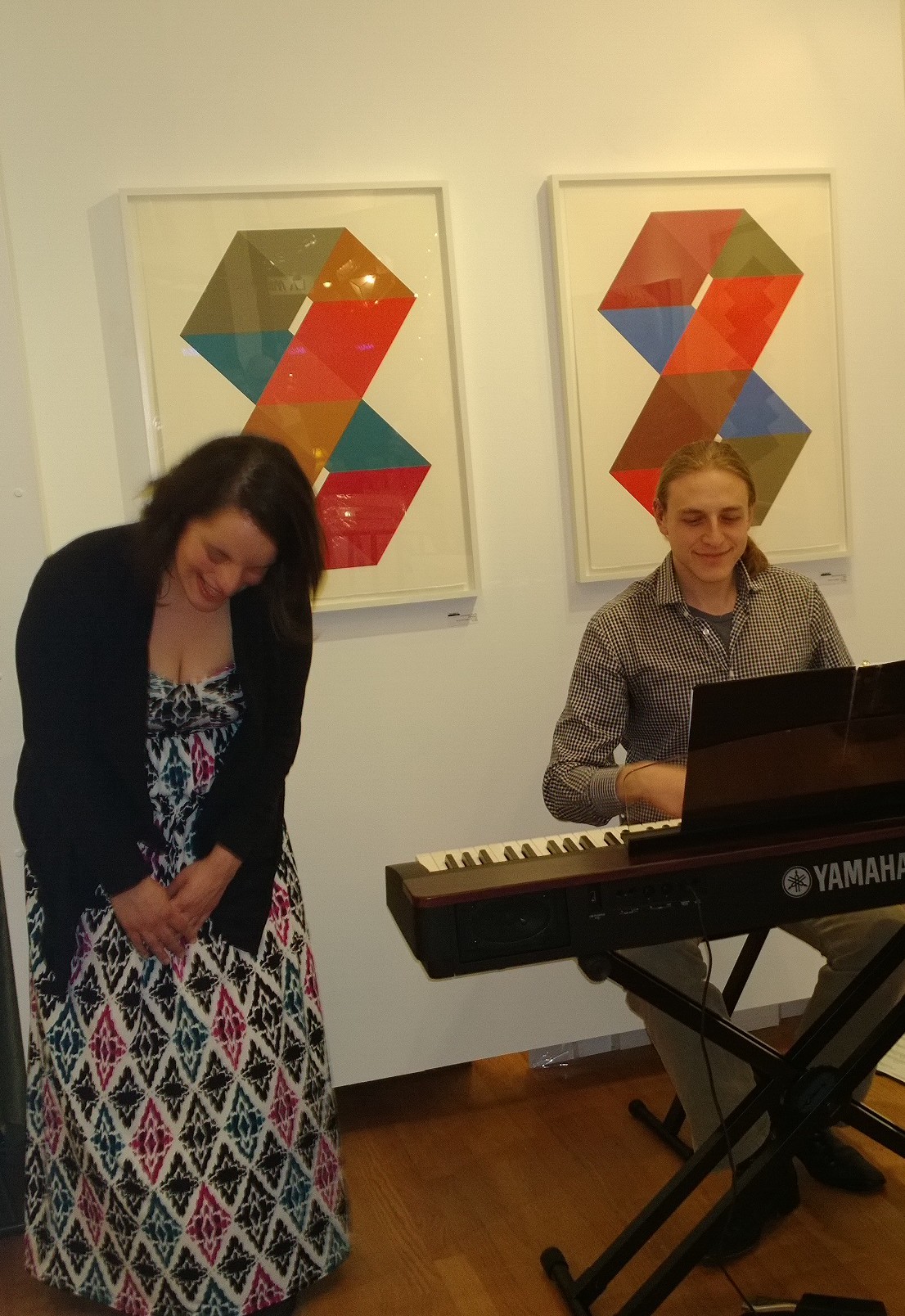
13Forest is an art and craft gallery in Arlington that invites Opera on Tap singers to perform at openings. Our daughter-in-law sent us an e-mail about this today, and we went. It was charming.

From Mark Adamo’s opera Little Women, the young performers sang Amy’s aria, Prof. Bhaer’s aria, and Beth’s, a gentle farewell. There was also a song based on a letter a soldier wrote to his wife before a battle in the Civil War.

A short and sweet event. Made us wonder why more galleries don’t do this.

Opera on Tap taking a bow at 13Forest Art Gallery. Read about the national organization bringing opera to the people here.

opera-on-tap-13-forest-gallery

Read Full Post »

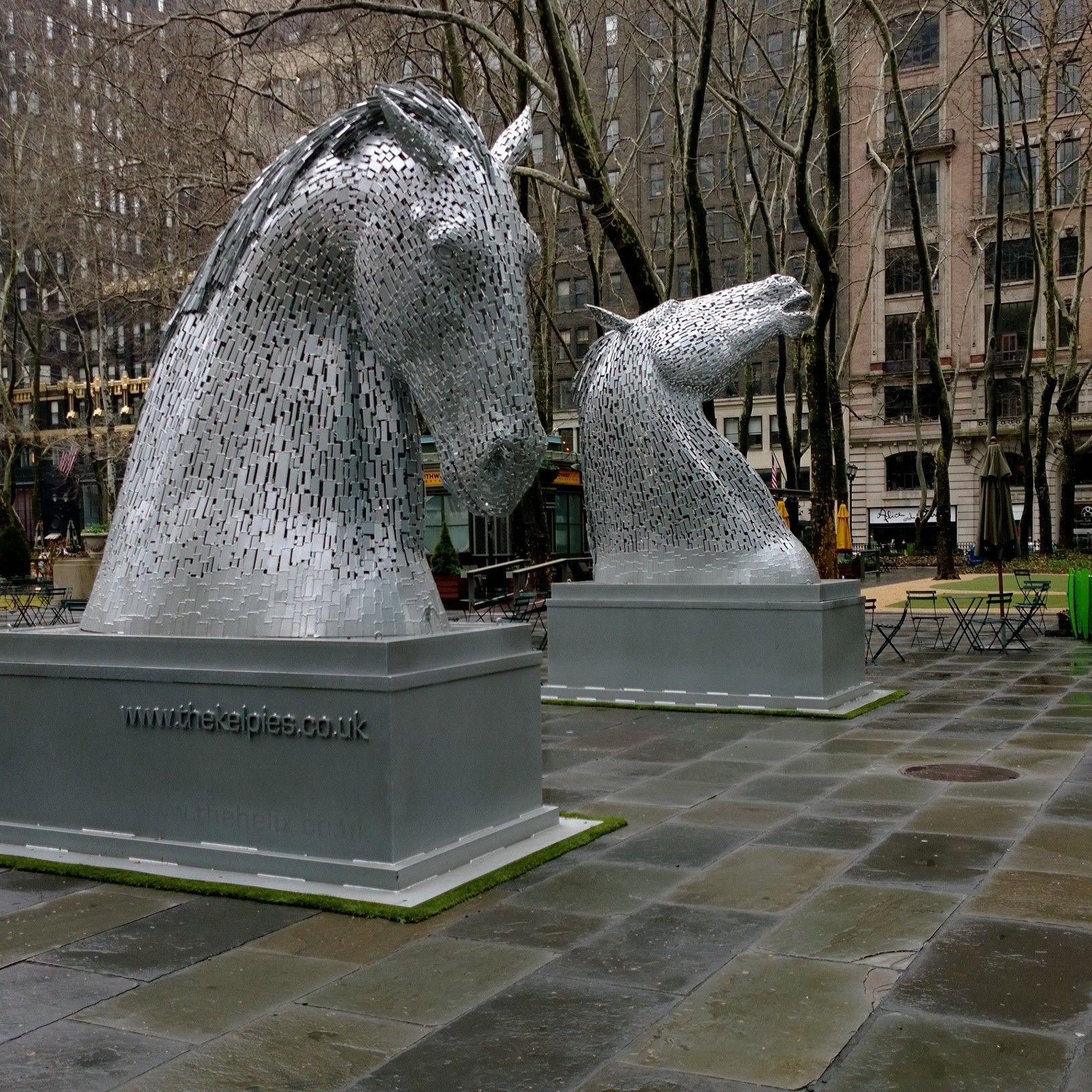
The last tidbit from my recent New York City trip is about the Kelpies on loan in Bryant Park, near the New York Public Library.

Kelpies are water spirits of Scottish folklore, typically taking the form of a horse. Artist Andy Scott was inspired by the legends to create giant ones for Helix Park in Falkirk, Scotland.

The ones in New York are smaller maquettes but still pretty huge.

The artist writes that he came up with an idea eight years ago about “mystical water-borne equine creatures. …

“Since then it has evolved dramatically and in the process the ethos and function has shifted from the original concept. Falkirk was my father’s home town and that inherited link to the town has been one of my driving inspirations. A sense of deep personal legacy has informed my thinking from the outset …

“The mythological associations behind the original brief have been absorbed by other sources of inspiration in the creative processes, and the ancient ethereal water spirits have been forged into engineered monuments. The Kelpies are modeled on heavy horses (two Clydesdales of Glasgow City Council actually served as models in the process), and it is this theme of working horses which captured my imagination and drove the project.”

The website adds that the Kelpies in New York City “were installed by Andy and his colleague Simon Chambers, with the assistance of the American Scottish Foundation, the Bryant Park Corporation, Mariano Brothers freight & cranes, Synlawn matting and the New York City Department of Parks & Recreation. Thanks to Creative Scotland for their funding assistance towards the costs of the transport and install.”

You really have to check out Scott’s website. The full-size sculptures are unbelievable. Click here.

Kelpies-Bryant-Park

Read Full Post »

Something fun from Studio 360: the mystery of the Toynbee tiles.

“For more than two decades, an unknown artist has been leaving a message in the streets of Philadelphia. The message is has been cut by hand into a linoleum tile, and pressed into the asphalt by the weight of passing cars. There are dozens of these around the city; old ones wear away, and new ones appear. The message is the same:

TOYNBEE IDEA
IN Kubrick’s 2001
RESURRECT DEAD
ON PLANET JUPITER

“The Toynbee tiles, as they’re called, have become a thing in Philly — you can even buy a t-shirt (the tiler isn’t getting royalties). For artists, the cryptic message inspires far-out forms of creativity, but perhaps nothing as ambitious as the ten-minute work by the rapper and ‘bedroom composer’ Raj Haldar, who performs as Lushlife.

“The work is in four parts, one for each line of the tiles’ message. By the end, the ‘Toynbee Suite’ has left behind anything resembling hip-hop, going out on a two-minute clarinet solo.

“But what exactly is the Toynbee message? Alfred Toynbee was a historian and philosopher of the 20th century, known for the 12-volume A Study of History. …

“A documentary film speculated that the tiler remained unseen by dropping the tiles from a car with cut-out floorboards.”

More on the mystery here, where you also can listen to the rapper’s tile-inspired music and check out a map showing where Toynbee tiles are located around Philadelphia.

Photo: Kimberly Blessing/flickr
A Toynbee Tile at 9th and Market Streets in Philadelphia, Pa.

Read Full Post »

An early stage in the creation of a Hari & Deepti light box

Do you ever click on the links to the right, in my blog roll? My Dad’s Records, for example, has old blues recordings you’d be hard-pressed to find anywhere else.

And This Is Colossal is a constant wonder. Today the art and visual-culture site posted illuminated paper light boxes that have to be seen to be believed.

Says Colossal: “Deepti Nair and Harikrishnan Panicker (known collectively as Hari & Deepti) are an artist couple [originally from India] who create paper cut light boxes. Each diorama is made from layers of cut watercolor paper placed inside a shadow box and is lit from behind with flexible LED light strips. The small visual narratives depicted in each work often play off aspects of light including stars, flames, fireflies, and planets. The couple shares about their work …

‘What amazes us about the paper cut light boxes is the dichotomy of the piece in its lit and unlit state, the contrast is so stark that it has this mystical effect on the viewers.’ ”

More.

Read Full Post »

One thinks of Iran as repressive, and having watched the doomed 2009 revolution unfold on twitter, I believe it is. But Iranian theater people seem to be managing to squeeze in some fun.

I blogged before about the Tehran production in a taxi, here. Now Studio 360 has a story on what might be called extreme improvisation. I take that back. There’s a script. But the actor doesn’t get to see it in advance.

“Actors face stage fright all the time,” says Studio 360, a radio show. “But consider this scenario: you show up to perform a one-person show, and you’ve never seen the script. You don’t know what it’s about because you promised not to do any research. It’s your first performance, and the only one you’ll ever have. The theater’s artistic director hands you a fat manila envelope with a script. And go.

“Also, the audience will decide whether you drink a glass of water that appears to have been poisoned.

“This is the premise of White Rabbit, Red Rabbit, by Iranian playwright Nassim Soleimanpour. ‘I did not know what was in front of me inside that envelope,’ says actor Gwydion Suilebhan. ‘What if this script is going to require that I disrobe? Or insult my mother? Or be rude or self-debasing?’ …

“Soleimanpour pulls his strings from afar, because — although the play has been performed in Toronto, Berlin, San Francisco, Brisbane, Edinburgh, London, and now Washington, DC — he really is in a cage. He doesn’t have a passport and can’t leave Iran, so he has never seen his play performed. ‘Nassim has given up the kind of control that is customary for playwrights,’ says Suilebhan, of working with actors and directors to realize the play. ‘At the same time, because he has put all of these restrictions on how it is to be performed, he has seized certain kinds of control that playwrights normally do not have. So he is literally embodying the ideas of control and submission and manipulation that he’s baked into his script.’ ” More.

Photo of Iranian playwright Nassim Soleimanpour found at the HuffingtonPost

Read Full Post »

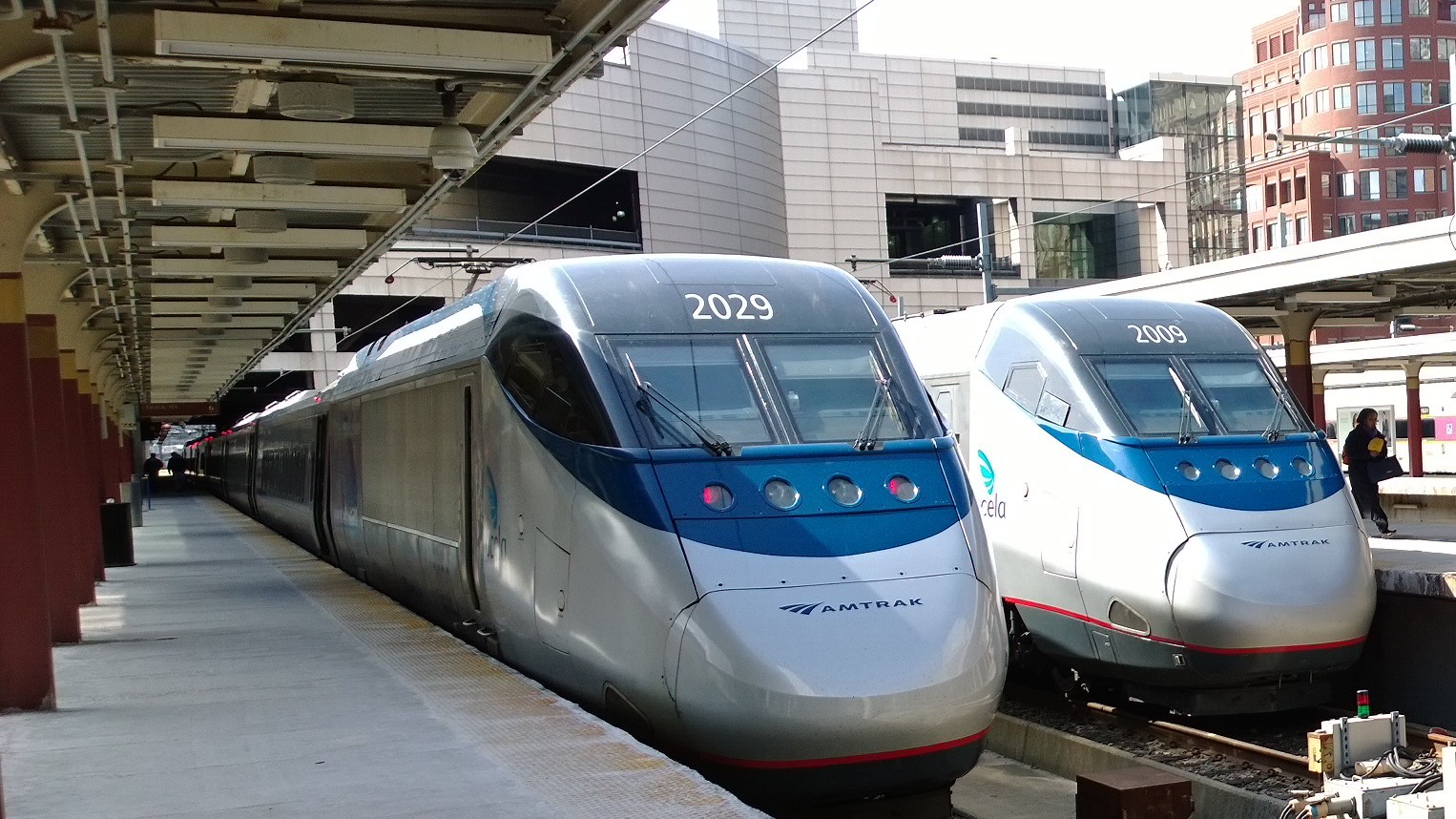
Amtrak-trains-Boston

I love Amtrak, and I love writing, but I don’t think I am ever going to do an Amtrak Artist Residency, so I am passing along the info so you can apply. It sounds like fun. Just glimpsing the exposed backs of houses along the tracks with their hints of the private lives lived in them is inspiration for a ream of stories.

William Grimes writes for the NY Times blog ArtBeat, “The wheels have begun moving on Amtrak’s plan to offer writers a rolling residency aboard their trains. … Up to 24 writers, chosen from a pool of applicants, will be given a round-trip ticket on a long-distance train, including a private sleeper-car room with a bed, a desk, and electrical outlets. …

“The idea was born in December when the novelist Alexander Chee, in an interview with the magazine PEN America, casually mentioned his love for writing on trains, and added, jokingly, ‘I wish Amtrak had residencies for writers.’

“When Jessica Gross, a writer in New York, echoed the sentiment on Twitter, Amtrak arranged for her to do a trial residency on the Lake Shore Limited from New York to Chicago. She agreed.

“Her account of the trip, ‘Writing the Lake Shore Limited,’ published by The Paris Review in February, grabbed the attention of The Wire, The New Yorker and The Huffington Post. Soon after, Amtrak decided to turn the trial run into a full-fledged program.” More on when and how to apply.

Even before that series of events, there was the Whistlestop Arts Train, you know. I blogged about the rolling public art project by Doug Aitken last July, here.

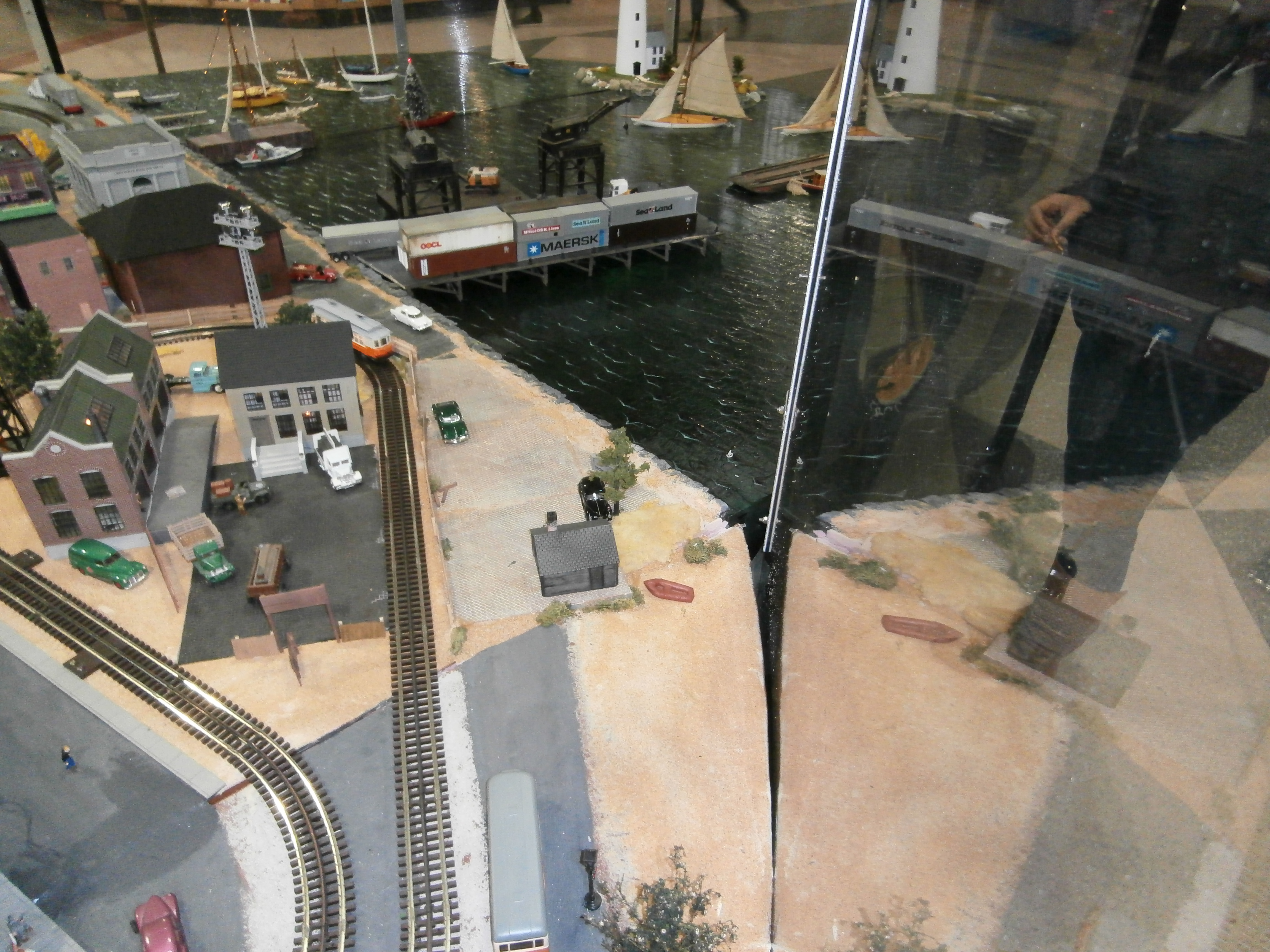
Trains for dreaming. Holiday model train layout at Amtrak’s South Station, Boston.

model-trains-Amtrak-S-Station

Read Full Post »

On Sunday, the Concord Bookshop had a guest speaker, bird maven David Allen Sibley.

There was a great turnout to hear him and to have him sign the new edition of his guide.

He talked about his painting process and his interest in perception as it applies to people who are convinced they see a bird they are looking for. From what he has read, he says, it’s very much like the phenomenon of witness identification of suspects — many factors may distort what witnesses think they see. (Consider the old guy in the play Twelve Angry Men, for example, who didn’t have his glasses on.)

When asked how 12 people who identified the probably extinct ivory-billed woodpecker in Louisiana in recent years could all be wrong, he tries to explain why it’s likely: They get only a glimpse, they are desperate to see it, they are being paid to find it, etc.

I want to believe they saw it, of course, but I thought his points were interesting.

Also interesting was the way he paints. He has a very good sense of the profile of the bird, having drawn birds since he was seven. So in the wild he looks for identifying markers, sketches in the profile, and adds the marks. Then he paints the bird in the studio. He does a lot of research, but once he has done all he can, he takes only about an hour to do each painting.

Read more at Sibley’s website, here, and at his Facebook page, here.

Below is a bird that a woman in the audience Sunday asked about, the Snowy Owl. The questioner wanted know whether the many Snowy Owls that were sighted around New England this winter would stay. He said that, no, they were already heading back to the Arctic and only came because there were a lot of babies hatched up north this year and not enough food to go around.

Art: David Allen Sibley
Snowy owl

Read Full Post »

Another good one from This Is Colossal: Janet Echelman’s suspended net creations.

According to This Is Colossal, “In the late 1990s artist Janet Echelman traveled to India as a Fulbright Scholar with the intention of giving painting exhibitions around the country.

“She shipped her painting supplies ahead of time and landed in the fishing village of Mahabalipuram to begin her exhibitions with one major hitch: the painting supplies never arrived.

“While walking through the village Echelman was struck by the quality and variety of nets used by the local fisherman and questioned what it might look like if such nets were hung and illuminated in the air. Could it be a new approach to sculpture? …

“Echelman is currently embarking on her largest piece ever, a 700-foot-long sculpture that will be suspended over Vancouver … In collaboration with the Burrard Arts Foundation, she’s seeking funding via Kickstarter to make it happen. There’s all kinds of great prints, postcards, and shirts available so check it out.”

More here, at This Is Colossal, where you can see lots more nets. They will make you feel happy.

Art installation by Janet Echelman

Read Full Post »

Whatever works.

Curator Scott Stulen pays attention to what attracts people. At the avant garde Walker Museum in Minneapolis, he actually tapped the popularity of cat videos — and created a mini sensation.

Now at the Indianapolis Museum of Art, Stulen is curator of the visitor experience.

Writes David Lindquist at the Indy Star, “Newly hired as the first-ever curator of audience experiences and performance at the Indianapolis Museum of Art, Stulen’s assignment is to attract people to the museum’s galleries as well as 100 Acres art and nature park, Tobias Theater, outdoor amphitheater and Lilly House and gardens.

“He comes from the Walker Art Center in Minneapolis, where his track record includes the surprise success of the Internet Cat Video Festival, which brought 10,000 people together in a field in 2012 and then 11,000 paying customers at the 2013 Minnesota State Fair. …

“The cat video festival debuted at Open Field, a space adjacent to the Walker where Stulen co-developed projects with the museum, independent artists and the public.

“ ‘We had the ability to do more experimental programs that didn’t make as much sense inside the museum, and had a lot more creative freedom,’ he said.” More here.

2013 Internet Cat Video Festival at the Minnesota State Fair.

Read Full Post »

« Newer Posts - Older Posts »