Feeds:
Posts
Comments

Posts Tagged ‘art’

Check out Big, Red & Shiny, “a non-profit arts organization and online art journal [set up to] commission and publish articles, essays and reviews that explore the theory, history and reception of art in its current conditions.”

A tweet sent me to BR&S, where I learned about a special art installation that was hung in the MassArt courtyard on Tuesday.

Stephanie Cardon of BR&S writes, “This is the story of how one student’s year long effort has brought solace and joy to a community when it is most needed. In spite of the crystalline air and brilliant sunshine, Tuesday morning was dark for Bostonians near and far. … Yet, serendipitously, it was on this day that Leah Medin poured a sheet of gold, soft as a caress and reaffirming as a cheer, onto many wounded hearts.

“Her gesture was simple, but took months of planning and painstaking work. While carefully conceived, her sculpture unintentionally came to represent the soaring expression of spirit many of us so desperately needed to find that very day.

“I met with Medin to talk about the timely unfurling of her piece, The Gold Divide, in MassArt‘s central courtyard. For those who witnessed it, the hushed voices spoke of awe and wonder and hope. I was curious to hear how the sculpture had come about, and how its transformation into a symbol affected her.

” ‘What happened Tuesday was everything I wasn’t expecting,’ she said about the overwhelming public response. After all, Medin had been planning this piece for over a year. It all started during her junior year abroad in Amsterdam, where she would ride her bike all around the city. As she biked, she took in the sun and the air.

“The fabric — 440 yards of gold crystal nylon organza stitched in 57 foot long panels — was inspired by these outings, by the sense of freedom and exhilaration they contained, by the light.  …

“On the day of the Boston Marathon, Leah Medin was still hard at work in an empty school, putting the finishing touches on the cloth, reinforcing its seams. When she heard what had happened off campus, while she was quietly and solitarily working to meet her deadline, she had a moment of doubt. ‘I called my mom. I wasn’t sure I should stick with it. She told me that now more than ever it was important to bring something beautiful to people.’

” ‘I’ve been waiting for this for a long time. Then, all of a sudden, there were all these eyes on it. On my baby! It was touching the surface and reaching inside the buildings, caressing the people, running along the ground.’ …

” ‘A lot of people have come up to me and said thank you. I don’t even know many of them. We give each other hugs.’ ” More.

See more of Leah’s work at leahmedin.com

Read Full Post »

I like street art and have blogged about it a lot (for example,  Slinkachu, Banksy, Egypt, Os Gemeos). It’s an expression of freedom, so even when it has a serious side, it is cheering.

I’m glad to learn about Street Art Utopia, an amazing site for browsing.

It’s not clear to me how you post something there. Although I see it has the supposed Banksy painting I photographed in Boston a while back, it’s not my picture. If you figure out how to participate at Street Art Utopia, let me know.

Thanks for the tip, Andrew Sullivan.

Photo: Flickr user ajhaysom
Street art by Adnate in Fitzroy, Melbourne, Australia


Read Full Post »

In addition to poetry, art often brings comfort. (Artists don’t usually want to make anyone “comfortable,” which has a different connotation.)

One reason art brings comfort is that creativity generates surprises, and surprises may bring delight.

So although I’m still preoccupied with Boston, I’ll leave Boston for today and write about Cleveland.

Thank you, Mary Ann, for pointing to the Gwarlingo blog, which recently said of the art scene in Cleveland,”prepare to be surprised.”

Blogger Michelle Aldredge writes in part, “It is possible to experience the best of Cleveland culture entirely on foot. …

“According to Ann Craddock Albano, the director of The Sculpture Center in Cleveland, the 550-acre area that encompasses the Cleveland Museum of Art, the Cleveland Botanical Garden, the Museum of Contemporary Art, the Cleveland Symphony, the Cleveland Institute of Art, the Cleveland Cinematheque, Cleveland Institute of Music, and numerous university and medical facilities is the most concentrated neighborhood of world-class cultural institutions in the country. …

“The latest jewel in the Circle’s crown is Farshid Moussavi’s new building for the Museum of Contemporary Art. MOCA is Moussavi’s first museum design, and also the first American project by the Iranian architect, whose firm, Farshid Moussavi Architecture, is based in London.

“A few blocks away from MOCA, at Case Western Reserve University’s Weatherhead School of Management building, silver planes slice through red brick like paper in a windstorm. While Frank Gehry opted for flamboyance, Moussavi wisely chose a simpler, less ostentatious design for MOCA—one that is unique and engages the surrounding neighborhood.” More.

BTW, I wouldn’t mind hearing what other folks do for comfort.

Photo: Michelle Aldredge
The zigzagging stairwell is the most eye-catching feature inside the new MOCA Cleveland

Read Full Post »

Anna%20Ancher.%20%22Breakfast%20before%20the%20hunt%2C%22%201903.%20On%20view%20at%20the%20%22A%20World%20Apart%3A%20Anna%20Ancher%20and%20the%20Skagen%20Art%20Colony%22%20exhibit%20at%20the%20National%20Museum%20of%20Women%20in%20the%20Arts.%20%28Courtesy%20Skagens%20Museum/%29

Anna Ancher painting from the Skagens Museum: “Breakfast before the hunt,” 1903.

Kristina often gives me her Women in the Arts magazine after she’s done with it. This time I was particularly taken with a story on a show in Washington called “A World Apart: Anna Ancher and the Skagen Art Colony.”

DeNeen L. Brown writes that among the 64 paintings and oil sketches, the depiction of light is breathtaking.

She says, “At its height in the 1880s and ’90s, Denmark’s Skagen Art Colony attracted dozens of artists who were drawn to the isolated fishing village by the light and the unspoiled land- and seascapes.

“While the exhibition focuses on Ancher, the most prominent woman, it also includes works by her husband, Michael Ancher, as well as Laurits Tuxen, Viggo Johansen, Christian Krohg, Oscar Bjorck, Holger Drachmann, Carl Locher and P.S. Kroyer, whose large-scale oil paintings capture the ‘heroic’ life of fishermen in Skagen. …

“Ancher, who was the only native of Skagen among the artists in the colony, became an icon in Denmark not only for her art but for breaking social boundaries. She was a wife and mother who painted at a time when most women abandoned work after they married and had children. She also painted during an era when women were prohibited from studying at the Royal Danish Academy of Fine Arts. …

“The Skagen colony artists became known as part of the modern breakthrough movement, shrugging off the academic tradition of neoclassical painting styles preferred at the Academy of Fine Arts in Copenhagen and building on realist, naturalist and impressionist movements to depict everyday life and everyday people in an unidealized way.” More.

In case you should be in Washington in the next few weeks, the show runs through May 12 at the National Museum of Women in the Arts.

Read Full Post »

Photo from FBI site: An empty frame in the Dutch Room of the Gardner Museum, where Rembrandt’s The Storm on the Sea of Galilee and A Lady and Gentleman in Black once hung.

The agent overseeing the FBI investigation into the 1990 Isabella Stewart Gardner Museum heist spoke at my workplace today (a real perk of my job).

I learned a lot. Did you know, for example, that because Mrs. Gardner’s will specified that no art was to be moved, sold, or replaced, the paintings had no insurance? They were not be replaced. The agent said that the usual scenario is that stolen art is held for ransom from the insurance company. The thieves probably didn’t dream that there was no insurance on Rembrandts and Vermeers.

Our speaker was quite entertaining (for example, showing a slide from the Simpsons cartoon in which Vermeer’s The Concert is found in Montgomery Burns’s mansion ). He answered many questions and punted others as the investigation is ongoing.

As you may have seen recently, the FBI announced that they knew who had stolen the art and at least two of the places it had been seen. They have not announced the names of the thieves but may do so once they work through all the leads the latest announcement has brought. The statute of limitations ran out on the theft after five years (Mass. Senator Ted Kennedy subsequently pushed through a federal law extending the limit to 20 years), but possession of stolen art is a crime not subject to time limits.

I learned that the museum had good security. As most locals know, the guards let the thieves in believing they were cops. When you have a Trojan Horse inside, security doesn’t help, the agent said. Nowadays guards in different museums call each other every 20 minutes just to check.

Extensive research has shown there has never been a museum theft like this, where the thieves stole so much of value and also so much of little value and took a leisurely 81 minutes to do so.

And perhaps there has never been a crime at a major museum where the paintings were not insured.

The agent believes the art will be recovered one day. Read the FBI dedicated site, here.

Photo: Simpsons

Read Full Post »

I enjoy blogging about my cousin the tree artist (here, for example). I’m a longtime fan.

Today I learned that one of Sally Frank’s miniprints has been accepted into the International Mini Print Exhibition at the Center for Contemporary Printmaking in Norwalk, Connecticut.

According to its website, “the Center for Contemporary Printmaking is the only nonprofit organization between New York City and Boston solely dedicated to the art of the print, including printmaking, papermaking, book arts, digital processes, and related disciplines.”

Sally Frank does many different kinds of prints and drawings. You can see how varied are the media she works in at her site, here.

Monotype: Sally Frank

trees-by-sally-frank

Read Full Post »

My mother took in renters, and the last guy who rented my brother’s old room was a serious tinkerer.

There was no space to move around among all the gadgets and spare parts, but he did manage to squeeze us in when we were around and show us a particularly cool invention.

It was a colorful display on a computer screen that responded to sound, loudness, and rhythm of music.

I was thinking about that guy as I read the story that James Sullivan wrote for the Boston Globe about Bill Sebastian, inventor of “a kind of optical synthesizer called the Outerspace Visual Communicator, or OVC.

“Designed to let the user ‘play’ with images as part of a musical composition, the original OVC was a custom-built keyboard featuring an array of sensors to be brushed with fingertips (‘like fingerpainting’). It created dynamic color changes in the lights on a structure overhead, such as a dome over a concert stage.

“Sebastian performed with the OVC in a few extended runs with Sun Ra and his big band, the Arkestra.”

Now Sebastian has built “a new visual synthesizer — this one in 3-D…

“For the past several months, two fellow engineers and computer programmers have been working …  on proprietary computer programs and prototypes of the new OVC, which, in place of the keyboard and buttons, is operated by hand controllers that look a bit like robotic arms fitted with valves (like those of a trumpet) and sliders (roughly analogous to the frets on a guitar). Sebastian envisions applications for the 3-D OVC ranging from planetariums to virtual reality headsets.” More.

Whatever happened to that guy at my mother’s house? What was his name again?

Photograph of Bill Sebastian, Visual Music Systems, by Dina Rudick, Globe staff

Read Full Post »

Longtime readers may recall I took a playwriting class a couple years ago. One of the assignments — which I blogged about here — was to listen in on a conversation in a public place and write it down word for word. Very awkward, but a good lesson in the random way people really talk.

Now the artist/cabby Daniel J. Wilson has taken the concept to an extreme, recording customers’ conversations and using them in his art.

Matt Flegenheimer writes at the NY Times that while driving a taxi in New York, Wilson “secretly recorded the conversations of his passengers, assembled the highlights into an audio collage of the back-seat musings and installed the final product in his taxi, playing the clips for his riders …

“ ‘It’s this world where people act like you don’t exist, even though you’re three feet away,’ Mr. Wilson, 35, said from the front seat of his cab recently. ‘You get this fragment of a person.’ ” More.

Much has been done with the invisibility theme in literature: Ralph Ellison’s Invisible Man, the powerful Mammy in The Sound and the Fury, the murderer disguised as an “invisible” waiter in an Agatha Christie novel — you can probably come up with more.

The Times article discusses the invasion of privacy. I think invasion of privacy might be the penalty for treating humans as invisible.

Photo: Hiroko Masuike/The New York Times
Victoria Reis, left, called Daniel J. Wilson’s audio collage “the least pretentious and most experimental” work she had seen all week, and tipped him.

Read Full Post »

If I come to work early, I often take a walk at lunch. I love the Greenway, which is especially nice in spring and summer. And the Fort Channel district (the Mayor likes to call it the Innovation District) seems to have something new to see almost every week — repurposed warehouses, galleries, restaurants, pocket parks.

Fort Point Arts got bumped from its space next to Flour (a yummy restaurant) on Farnsworth, so one lunchtime I made a point of checking out its new space off A Street.

I especially like that they show art depicting the Fort Point neighborhood — partly because walking there makes me attached to that part of Boston, and partly because Fort Point is changing fast. (About 18 years ago, when I went to an arts open house there, many artists had studios with beds on ledges and  tiny kitchens. Some artists were squatting in dangerous buildings with wires hanging down, no heat, no doors, no lighting. That world is gone.)

Laura Davidson was one of the featured artists when I was last in the Fort Point Arts shop. She had some block prints of her neighborhood that I admired.

Be sure to check her home page. Everyone should have a home page that looks like a treasure map.

Art:Endangered Neighborhood” reprint of 1995 view of Fort Point), 2012, Laura Davidson

Read Full Post »

I got this story from a recent post by Andrew Sullivan, who got it from Mark Frauenfelder at BoingBoing, who links to Leo Kent at Humans Invent.

It’s about Swiss artist/comedian Ursus Wehrli, who has written a book called The Art of Clean Up.

Leo Kent asks the artist how the book came about.

“I had already done two books before this one,” Wehrli answers. “The first two were about tidying up art and for the third one I devoted myself more to everyday situations or objects. I very often go to museums and I actually like modern art but I was standing in front of a piece by the very messy Swiss artist Jean Tinguely. He is famous for putting all sorts of colours, material and objects on a canvas and I tried to imagine what a cleaning lady would do if she had to clean up his studio.

“I imagined how she would not really know where the mess starts and the art begins so she would end up cleaning not only the floor and the tables but the artworks. I realised this was a fun approach because you really start to look at art very differently if you try to bring some order to it.” More.

More on Wehrli’s process here, at FastCoCreate.com, where Hugh Hart adds to the story.

(You just never know what will turn up next at Andrew Sullivan.)

Photo: The Art Of Clean Up

Read Full Post »

Facebook can be annoying, but I guess it does sometimes pay to be on it.

After “liking” a number of my cousin Sally Frank’s nature photos and art over the years, I finally figured out via Facebook that much of her work is on a WordPress blog — and she has had the blog longer than I have had this one.

Trees are a specialty. Often she will start with a photograph like the one below for inspiration. She then turns to printmaking, which you can learn about at her blog.

“Ms. Frank uses centuries-old printmaking techniques like etching and aquatint on copper plates, as well as innovative methods like solarplate intaglio. She says that although her work is grounded in drawing, she finds the unpredictable nature of printmaking inspirational and exciting.” More.

This photo reminds me of the strangler fig that I saw years ago in Costa Rica, a tree that wraps itself around a host and literally loves it to death. The host tree crumbles, and only the strangler is left — with an empty space inside.

Sally’s photo probably has a happier story — perhaps a nymph turned into a tree to escape danger.

Photo called “bound”: Sally Frank

Read Full Post »

According to wikipedia, “The term chimera has come to describe any mythical or fictional animal with parts taken from various animals.” Which explains why it has been appropriated in genetics where it relates to the phenomenon of different creatures sharing T-cells.

Anyway, I have a brother who studies chimerism and its potential application for organ-transplant retention. I may not have this quite right, but I think if you could have enough of the cells of an organ donor in you when you get a transplant, you wouldn’t need to take antirejection drugs.

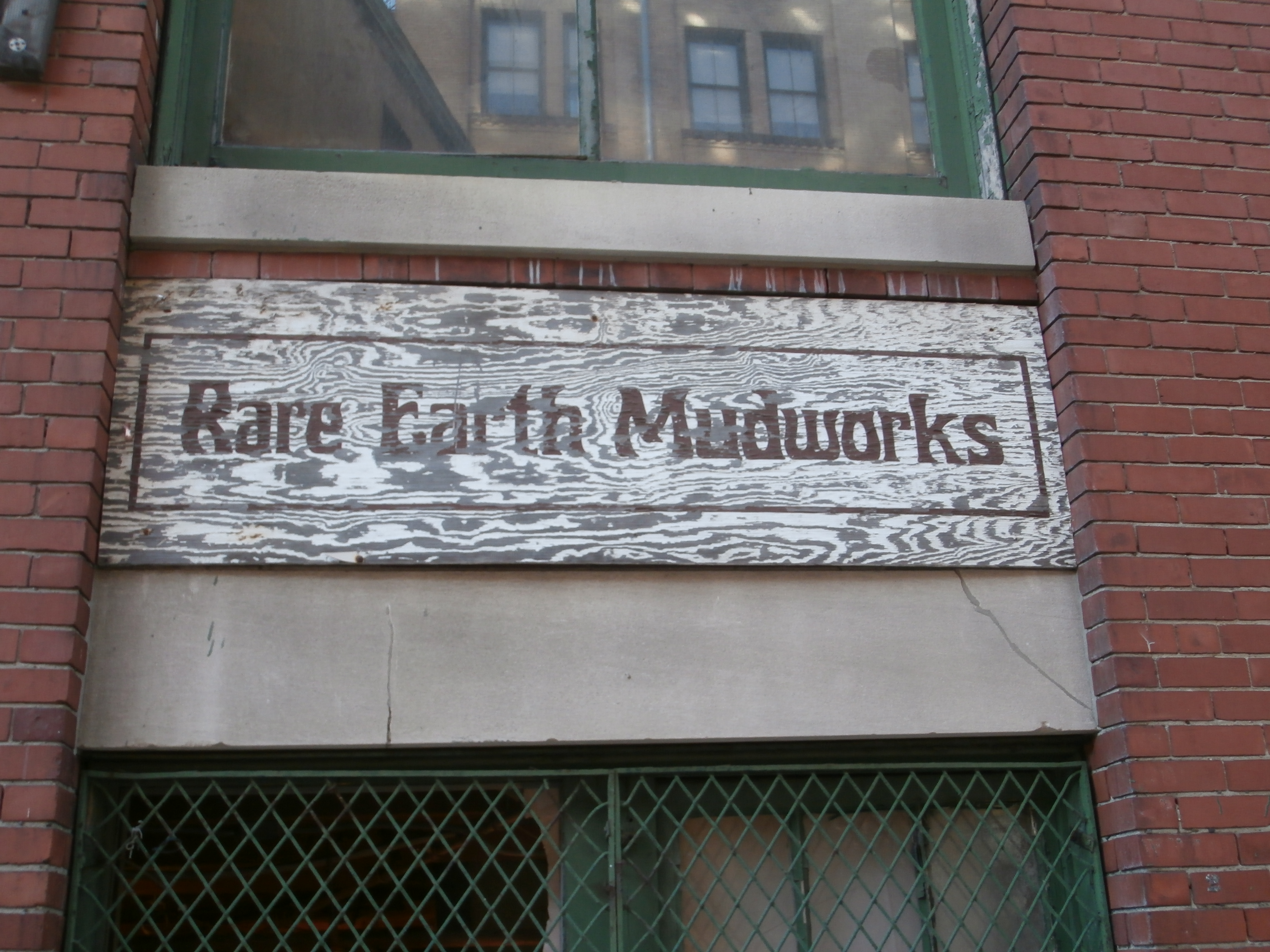
I had been trying to explain this to people when I decided to go out for a walk in Fort Point Channel. Eerily, this sign greeted me.

chimera

I think it’s an eclectic gift shop or interior decorator business.

Other signs and portents on the same walk related to Suzanne and Erik’s Year of the Dragon baby.

dragon on roof

dragon sculpture in fort point

Who is the dragon artist? I need to know more.

Read Full Post »

Today it’s a bit hard to imagine Cezanne, Matisse, Duchamp, and Van Gogh shocking anyone, but at the Armory art show in New York City 100 years ago, they did. Tom Vitale at National Public Radio has the story.

“On Feb. 17, 1913, an art exhibition opened in New York City that shocked the country, changed our perception of beauty and had a profound effect on artists and collectors.

“The International Exhibition of Modern Art — which came to be known, simply, as the Armory Show — marked the dawn of Modernism in America. It was the first time the phrase ‘avant-garde’ was used to describe painting and sculpture. …

“It was the Europeans — Van Gogh, Gauguin, Cezanne, Picasso, Matisse, Duchamp — that caused a sensation.

“American audiences were used to seeing Rembrandts and Titians in their galleries — ‘a very realistic type of art,’ says Marilyn Kushner, the co-curator of an exhibition called ‘The Armory Show at 100’ that opens in October at the New York Historical Society. …

“The most talked-about painting in the 1913 Armory Show deconstructed a human figure in abstract brown panels in overlapping motion. Marcel Duchamp’s Cubist-inspired Nude Descending a Staircase was famously described by one critic as ‘an explosion in a shingle factory.’

“In 1963, on the 50th anniversary of the Armory Show, Duchamp was interviewed by CBS reporter Charles Collingwood. The audio is now at the Smithsonian’s Archive of American Art.

“When Collingwood asked Duchamp if he had realized that the piece would create ‘such a “furor,” ‘ the artist responded: “Not the slightest.” …

“Duchamp went on in the 1963 interview to say that, at the time, artists had lost the ability to surprise the public.

” ‘There’s a public to receive it today that did not exist then. Cubism was sort of forced upon the public to reject it. You know what I mean?’ Duchamp said. ‘Instead, today, any new movement is almost accepted before it started. See, there’s no more element of shock anymore.’ ” More.

Photograph: Marcel Duchamp’s Cubist-inspired Nude Descending a Staircase was famously described by one critic as “an explosion in a shingle factory.” (Copyright succession Marcel Duchamp / ADAGP, Paris / Artists Rights Society (ARS), New York 2013)

Read Full Post »

I am grateful to my friend Mary Ann for posting a link to this story on Facebook today.

Julian Guthrie writes in the San Francisco Chronicle:

“Starting in the summer of 2000, a man named Someguy launched 1,000 blank, leather-bound journals into the world to encourage creativity and see how art could connect people.

“The journals trickled back in from places as far flung as Iraq — reaching 40 countries and 50 states — and were filled with gorgeous drawings, political musings, disturbing rants, and poetic vignettes of daily lives.

“The journals, registered and tracked online, were eventually turned into a book, displayed at museums in San Francisco (at the Museum of Modern Art), Los Angeles and Scottsdale, Ariz., and featured in a documentary.

“More than 12 years later, the global art experiment has a new twist: The idea has now been adopted by Bay Area children’s hospitals, where young patients use the journals as a way to connect with other children going through something similar.

“Brian Singer, the San Francisco artist whose handle is Someguy, has been touched by this latest chapter in his social experiment.

” ‘I have heard stories of the impact of these journals, of kids opening up in ways they hadn’t before,’ says Singer, who built a website, 1001journals.com, to help others start similar projects. …

“Singer, 39, who grew up in Cupertino, lives in Noe Valley and commutes by shuttle to his job at Facebook in Menlo Park, where he manages a design group. …

“He remains interested in the phenomenon of sharing among strangers and looking at how to connect people through a physical artifact. Tangible items ‘drive connections in the real world,’ he said.

“There are still many of Singer’s original blank journals out in the world that may one day return.

” ‘They travel on their own,’ Singer says, ‘like a message in a bottle.’ ”

Read more.

Image: San Francisco Chronicle

Read Full Post »

My husband, who has made a lot of business trips to Japan (and also has been reading my posts about 100-year-old workers), pointed me to something interesting at the Japan Times.

Jiji writes, “A business project focused on selling decorative leaves for use in Japanese cuisine is attracting overseas attention to Kamikatsu, a mountain town in Tokushima Prefecture. …

“The [Irodori, or bright colors] project, which succeeded in commercializing colored leaves grown in local mountains and fields and now claims members from nearly 200 farms, has become a vital industry in Kamikatsu, which has a population of less than 2,000. …

“The average age of the farmers involved in the project is 70, and many are women. Some earn more than 10 million [yen, more than $100,000] a year from the business.

“Irodori members use tablet computers to check for updated information on orders. The leaves are grown in their own mountains and fields, then distributed to markets across Japan via an agricultural cooperative. …

“According to the Japan International Cooperation Agency, which promotes international visits to Kamikatsu, the response to its English DVD on the Irodori project was huge. It has been translated into Bengali, Spanish and French.

“Tomoji Yokoishi, 54, who came up with the Irodori idea and is president of the managing company, said perceptional shifts are responsible for its success.

“The project turned regular leaves into a valuable resource and turned its elderly into a workforce, Yokoishi explained.”

I’m guessing that the phrase “for use in Japanese cuisine” doesn’t mean anyone eats the leaves. They are probably used to decorate tables where Japanese cuisine is served. Do you think?

Read the Japan Times article, here.

Art: Elaine Richards, 1994 7″ X 10″ Watercolor Collection B. Riff

Read Full Post »

« Newer Posts - Older Posts »