Feeds:
Posts
Comments

Posts Tagged ‘artist’

Photo: Hyla Skoptiz.
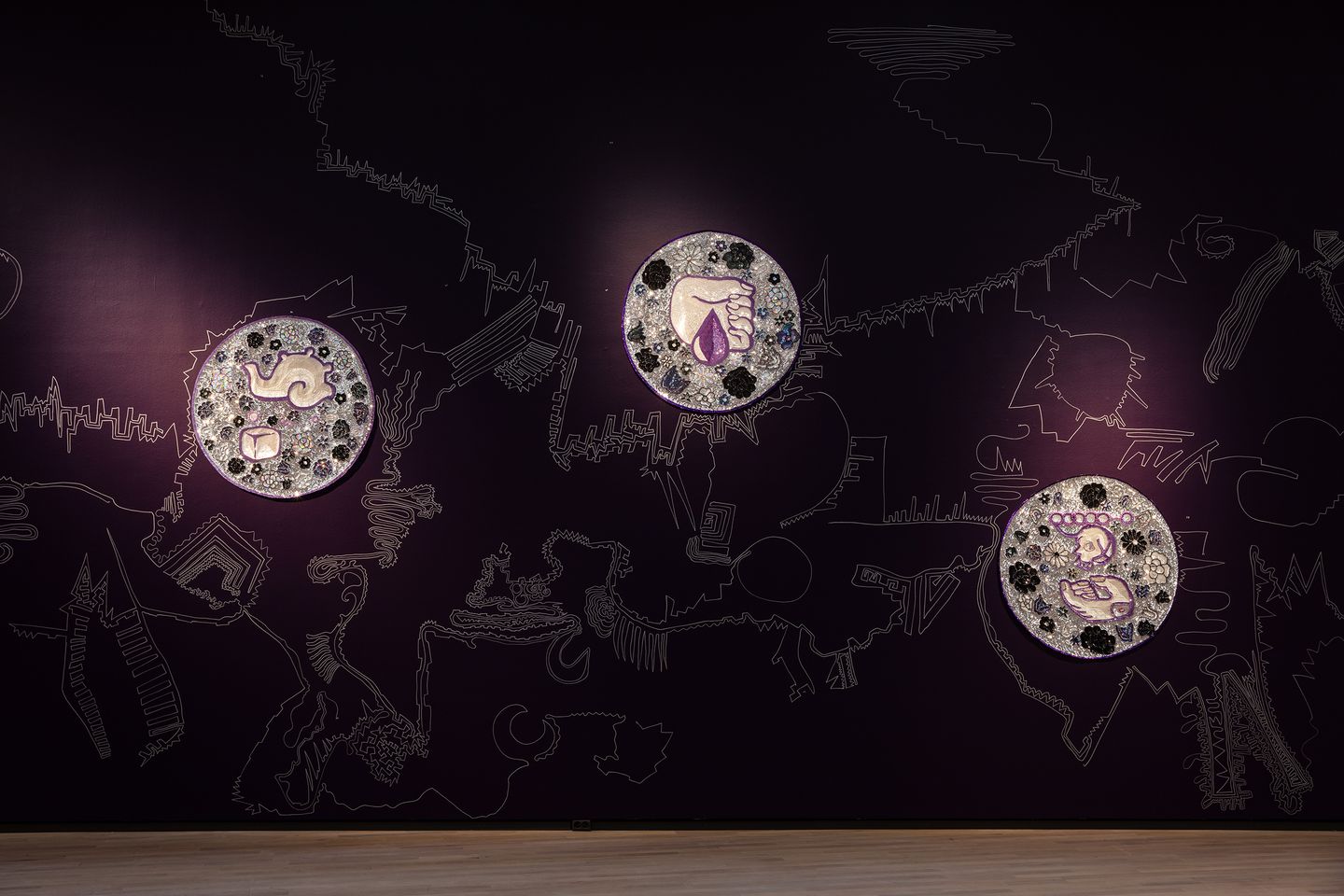
The spiral bronze sculptures of Nasher prize-winning Kosovar artist Petrit Halilaj draw inspiration from doodles he saw carved into desks of primary schools across the Balkans. 

Today’s story is about more than an art prize, although that is important in itself. It’s about people uniting against the bad things that happen in the world.

In one instance, the article notes how people came together after ancient Balkan hatreds burned up props for a Kosovo opera. In another we see how funders, sometimes folks under the radar like us, are rising up to protect the independent journalism exemplified by the story itself.

But let’s start with the prize. From Uwa Ede-Osifo at the Dallas Morning News (via KERA in North Texas), we learn about the most recent recipient of an award for excellence in contemporary sculpture.

“Kosovar artist Petrit Halilaj, whose work often contrasts the innocence of youth with the sober realities of war, has been named the winner of the 2027 Nasher Prize.

“At 39, Halilaj is the youngest recipient of the award, according to [an] announcement from the Nasher Sculpture Center.

“In a phone call from his Berlin home, Halilaj said history molds his art. He came of age in Kosovo in the 1990s amid a bloody conflict between ethnic Albanians and Serbians. He was 13 when he and his family, who are Albanian, had their house burned down by Serbian forces.

Later, at a refugee camp, a psychologist encouraged Halilaj to draw his fears and dreams.

“The drawings, among which Halilaj depicted vibrant birds and trees (suggesting a utopia of sorts), would inspire a 2021 exhibition at the Tate St. Ives in England. ‘Whatever we live [through], it makes [us] who we are,’ he said. …

“Other works by Halilaj that recall history and childhood include a series of bronze sculptures based on scribbles found on generations of school children’s desks in the Balkans. These sculptures were shown in 2024 on the roof of the Metropolitan Museum of Art in New York.

“Most recently, Halilaj staged Syrigana, an interdisciplinary opera based on a local legend, in the namesake Kosovar village.

“He learned of his Nasher win shortly after the opera’s June debut. It was a hectic time. A few days before the premiere, several props — ‘months and months of work and preparation’ he said — were set ablaze. They had been stored in locked containers.

“The culprit was not found, but Halilaj suspected the fire was related to Kosovo’s history of ethnic tensions. Still, he was undeterred and rallied a fleet of artists to re-create the destroyed materials. The collective dream we have to bring culture back,’ he said, is ‘way bigger than this attack.’

“Halilaj sees the Nasher Prize as supporting this dream. He plans to use the prize money — $100,000 — to support the Hajde! Foundation, a nonprofit he founded with his sister in 2014 to promote the arts in Kosovo. The organization has provided artists with spaces to present their work and revitalized cultural institutions that fell into disrepair amid the conflict.

“In partnership with Kosovo’s Ministry of Culture, Hajde! has mounted a restoration of an arts center in Halilaj’s hometown. Called the House of Culture, it was a beacon for artists until its closure around the late ‘80s. Halilaj estimates it will reopen in 2027. … Halilaj [wants] to invite both ethnic Albanians and Serbians as well as minority groups into the space.

“Halilaj’s art offers hope, said Carlos Basualdo, director of the Nasher Sculpture Center. ‘Works like this tell you about what art can do,’ Basualdo said, noting it can bring people together.

“In the decade since the Nasher Prize was established, it has become one of the art world’s most prestigious honors. Recent laureates have hailed from countries around the world, including Nigeria (Otobong Nkanga), the U.S. (Senga Nengudi) and Iran (Nairy Baghramian). Winners are selected by a jury of museum directors, curators, art historians and artists. …

“The prize began as an annual award in 2015 before switching to a biennial basis in 2023 to allow recipients more time to collaborate with the museumPlans for programming around Halilaj’s work in 2027 will be announced.” More here.

I don’t usually include all the funders of an article, but today I’m feeling I really want to thank to anyone who contributes to the cost of independent journalism:

“Arts Access is an arts journalism collaboration powered by The Dallas Morning News and KERA. This community-funded journalism initiative is funded by the Better Together Fund, Carol & Don Glendenning, City of Dallas OAC, The University of Texas at Dallas, Communities Foundation of Texas, The Dallas Foundation, Eugene McDermott Foundation, James & Gayle Halperin Foundation, Jennifer & Peter Altabef and The Meadows Foundation. The News and KERA retain full editorial control of Arts Access’ journalism.

Read Full Post »

Photo: Debra Brehmer/Hyperallergic.
Installation view of Nordic Utopia? African Americans in the 20th Century at the Chazen Museum of Art in Madison, Wisconsin, showing the suitcase owned by classical pianist Eugene Haynes.

Looks like there was a good show last fall in Madison, Wisconsin, at the Chazen Museum of Art. Since it’s come and gone, I won’t be able to see it, but I was interested to learn about it from Debra Brehmer at Hyperallergic. I hadn’t known about the warm welcome that Nordic countries gave to African American artists in the last century.

Brehmer wrote, “An old suitcase with a small leather handle summons the presence of the person who once carried it across oceans and nations. Surrounding it in a display case are a pair of shoes, gloves, a hat, and a Bible, all owned by the Julliard-trained Black classical pianist Eugene Haynes. The suitcase symbolizes the flight of Black artists to European countries during the civil rights era and beyond. Although Paris was a well-known hotbed of artistic expats, Nordic Utopia? African Americans in the 20th Century at the Chazen Museum of Art zeroes in on a far less charted corner of Black history: the artists who ventured north.

“Haynes spent summers and winters in Denmark from 1952 to 1962 while he performed across Europe. … Even the most accomplished Black artists found the Jim Crow conditions untenable — the US wasn’t only segregated, it was dangerous. 

“At this time, the Nordic countries of Sweden, Norway, Finland, and Denmark held the promise of racial equality, despite primarily White populations. And slowly, word spread. While many Black artists found solace in the Parisian avant-garde (Josephine Baker, James Baldwin, and Langston Hughes, among others), the Nordic regions, according to poet Gregory Pardlo, quoted in the exhibition catalog, were ‘hipper … for black intellectuals escaping the stifling air pollution of American racism.’ 

“One could get lost in the details of this research-heavy presentation, but an overall theme emerges: the need to get away, not just from an inhospitable place, but from the weight of always being defined by race. Distance from US discriminatory politics gave these artists room to experiment, to make art that wasn’t about being Black or the entrenched problems of their homeland. After he ventured to Scandinavia, the artist William H. Johnson painted van Gogh-influenced portraits, expressionistic sunrises, street scenes, and boats in a harbor. He had married Danish textile artist Holcha Krake. When he returned to the US in 1938, his art underwent a major stylistic shift as he produced folk art-influenced paintings that centered on Black life in Harlem and portraits of Black global activists, for which he is best recognized. …

“Harlem-born painter Herbert Gentry, who first spent five postwar years in Paris and then moved to Copenhagen and later Stockholm, chose cities with thriving jazz scenes as well as international art communities. Gentry often made abstract paintings on unstretched canvas that he could fold into suitcases for easy transport. Ronald Burns, who relocated to Denmark in 1965, pursued a Surrealist style of complex dreamlike compositions. Howard Smith, an artist and designer who arrived in Finland in 1962, worked across media with paper-cutting, laser-cut steel forms, porcelain sculpture, and collage. …

“Being in Europe, most of the artists absorbed the prevalent modernist influences, seeing themselves as part of a broader and more open public consciousness, an environment particularly supportive of Black swing and jazz musicians. … A brilliant documentary, Dancing Prophet (1971), shows dancer/choreographer Doug Crutchfield back home in Cincinnati in earnest conversation with his Baptist minister father about why he needs to leave the USA to pursue his dancing career.

To its credit, the exhibition does not offer simple conclusions.

“Instead it provides multiple perspectives on issues of expatriation, including the fact that racism also existed overseas. … Dexter Gordon expresses one attitude, quoted in wall text: ‘Since I’ve been over here, I felt that I could breathe, you know, and just be more or less a human being, without being white or black, green or yellow, whatever. Actually it’s very seldom that I’m conscious of color here in Europe.’ Artist Howard Smith, who lived in Finland for 14 years, suggests a different condition: ‘I got lonesome there … I need the spiritual input, I guess, of being around Black people.’ …

“Walter Williams first ventured to Denmark in 1955 on a fellowship. He previously earned recognition for his New York City urban scenes. The new landscapes of Denmark stirred him to paint sun-infused pastoral imagery. ‘Southern Landscape’ (1977–78) portrays a young Black girl in the foreground, standing in a field of blooming sunflowers. A bouquet of flowers sprouts from her shoulders. Butterflies surround her. In the background, another Black girl appears to be picking cotton in a field with a shanty behind her.”

“The exhibition was organized by the National Nordic Museum, Seattle.”

More at Hyperallergic, here. No firewall. Subscriptions encouraged.

Read Full Post »

Photo: Alex Barber/Contemporary Arts Museum Houston/Theaster Gates Studio.
“We Will Save Ourselves” (2024), a painting by Theaster Gates made with roofing materials.

I have blogged before about the unusual urban planner and artist Theaster Gates. Now the New York Times has done a deep dive on the many surprising facets of his work.

Siddhartha Mitter writes, “Theaster Gates is the kind of artist whose work is perpetually on view somewhere in the world. When we met for the first time, in May at his studio in Chicago’s Greater Grand Crossing neighborhood, he had just returned from opening exhibitions at the Mori Art Museum in Tokyo and the Contemporary Arts Museum Houston. …

“He is known for installations that use supplies and furnishings from old buildings, paying tribute to their past lives — as homes, stores, churches. These installations serve double or even triple duty: They are works of art in themselves, but they can also become venues for parties or performances. His sculptures and paintings employ construction materials like wood, rubber and roofing tar. He’s a master ceramist and a musician and singer who performs with his experimental group, the Black Monks, in which he’s known as the Abbot.

“For years, Gates has acquired archives, and he sees their stewardship as integral to his work. Many preserve Black American cultural memory, like the roughly 20,000-volume library that once belonged to the Johnson Publishing Company, publisher of Ebony and Jet, and the 5,000-record vinyl collection of Frankie Knuckles, the Chicago D.J. at whose late ’70s parties house music was born.

“He is currently advising an arts-led redevelopment project in Philadelphia and an initiative to preserve Houston’s Freedmen’s Town, a historically Black district in the city’s Fourth Ward. He chairs the diversity council at Prada, where he runs a mentorship program for designers of color, and he is developing partnerships in Japan with small family-owned businesses to produce incense and sake. …

“In his hometown, Gates is recognized as an entrepreneur who buys and restores properties on Chicago’s South Side. He puts these properties to unusual, sometimes less than practical use. The core of his holdings is a quiet half-mile stretch of South Dorchester Avenue, where he started acquiring run-down houses in 2006. He filled some with archives — thousands of art books purchased from a shuttered bookshop; LPs from a defunct record store. One house became his residence. …

“Salvage from the buildings goes into his art installations; proceeds from his art sales fund his building renovations and community programs. But they also stem from shared soil — his upbringing as the son of a roofer on Chicago’s West Side, his training as an urban planner — and commingle in his projects to the point where it would be artificial to separate them. …

“He rebuffs categories like ‘social practice’ — jargon for participative art with civic goals — but cites predecessors like Donald Judd, who made furniture as well as geometric objects, and the Fluxus movement, with its interest in everyday materials and spontaneous performances. He’s an inheritor of the legacy of Marcel Duchamp and his readymades, mass-produced and utilitarian objects that the French artist displayed as art. …

Gates sees himself as helping Chicago to ‘hold its Black self together.’

“A bureaucrat before he was ever an artist, Gates worked as an art planner for the Chicago Transit Authority from 2000 to 2005. After that, he began investing in Grand Crossing when he moved to the South Side to become an arts administrator at the University of Chicago, where he’s now a professor.

“ ‘The neighborhood had stigma, but the people were great and interesting,’ he said. He recognized the terrain: Black neighborhoods that faced disinvestment and crime but were once self-contained and self-possessed — places where, he said, ‘the Black doctor and lawyer and bus driver and maid were all on the same block, and they all went to the same church.’ By revitalizing these quotidian spaces — homes, a bank, a school, hardware stores that he has bought, often with their contents, when they were going out of business — he is summoning a kind of utopian memory in the service of new functions. … Through his investments in Grand Crossing — even when they take unconventional forms — Gates sees himself as helping Chicago to ‘hold its Black self together.’

“He took me down a side street edged by commuter rail tracks where in 2021 he opened Kenwood Gardens, a sanctuary with lawns, wildflowers and a pavilion that hosts house-music parties in the summer. It occupies 13 lots that were in decline — notorious, he said, for burned-out cars and prostitution. A wall encircling the garden is made partly from bricks that he saved from St. Laurence Catholic Church, a neighborhood anchor that the archdiocese sold and that was razed in 2014.

“ ‘When I built the perimeter wall, I didn’t own the property,’ Gates said. ‘I built the wall to stop the bad stuff.’ He then bought the lots, many loaded with tax arrears. ‘The city was quite happy to help us negotiate the land sales,’ he said, ‘because they would finally have a steward.’ Building his unauthorized wall, Gates said, was a case of tactical urbanism, as citizen initiatives that bypass city bureaucracy or goad it to action are called in the planning business. …

“[Gates] is too obviously sincere, even earnest, to come across as an operator. And yet he has both an aptitude and an appetite for policy and negotiations. In a famous deal, he purchased the former Stony Island State Savings Bank, a 1920s edifice facing demolition, from the city in 2012 for $1 and the commitment to restore it — which he funded in part by selling salvaged marble slabs at Art Basel for $5,000 each. …

“Romi Crawford, 58, a professor of visual and critical studies at the School of the Art Institute of Chicago, described how Gates enfolds transactions into his art as ‘contract aesthetics.’ Gates has fielded periodic criticism that he is too amenable to the rich and powerful. He rejects this. … ‘If you’re talking about protesting, there are people who are better protesters,’ he said. ‘If you’re talking about getting [things] done in the city, I can do it better than most artists. I can do it better than most developers.’ …

“But despite the busy world Gates has built for himself, its center is paradoxically calm. At the studio in Chicago, I’d been struck by the quiet. His operation has downsized, he said — from 65 employees at its peak, around 2016, which he admitted overwhelmed him, to just 15.

“Next to go might be his collection of buildings, though it could take a while. ‘I did not attempt to amass a real estate holdings situation,’ he said. ‘I was simply trying to prove the point that artists can change a place.’ “

For the the rest of the long profile, click here.

Read Full Post »

Photo: Joanna Hawkins/BBC.
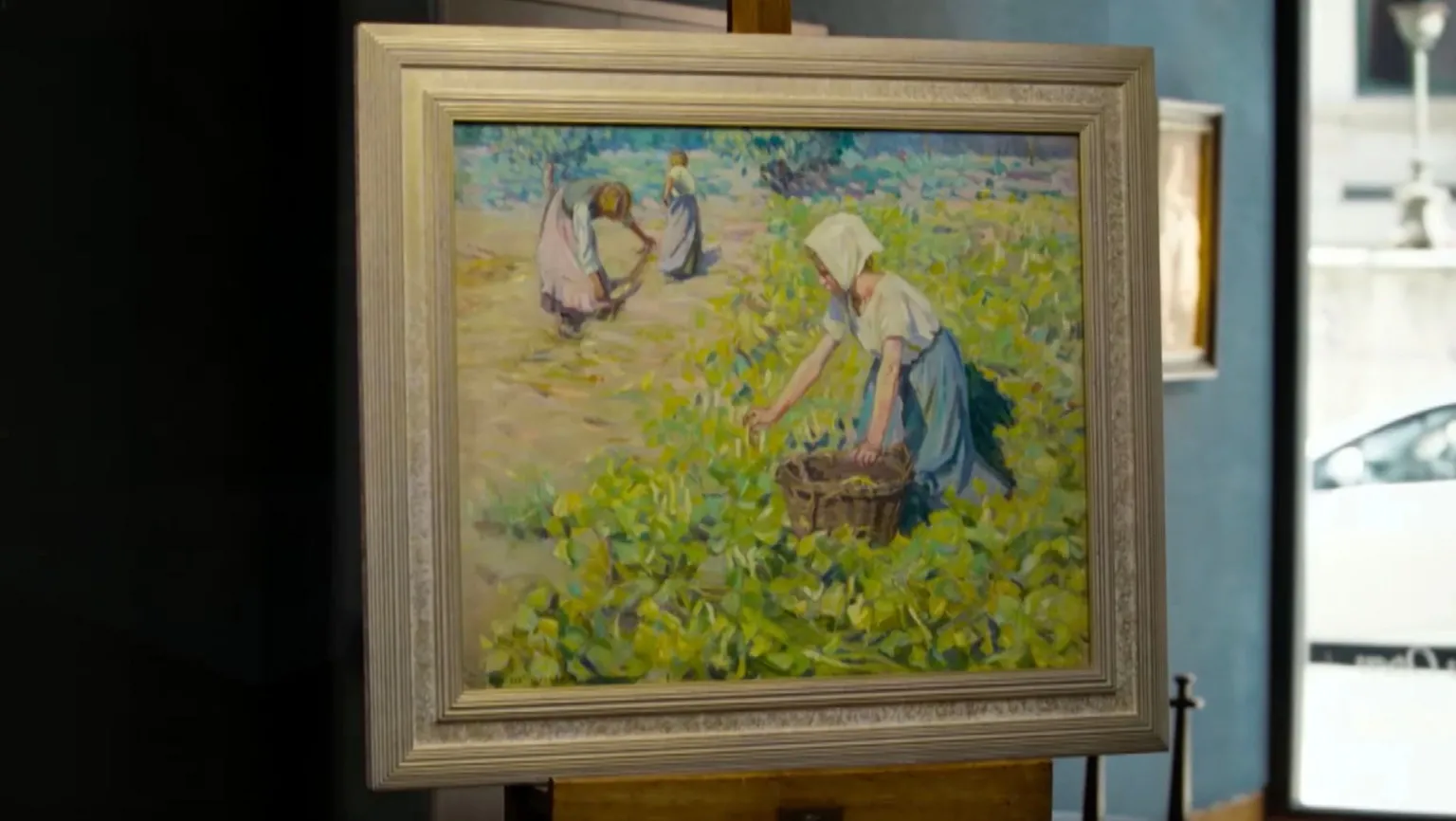
Artist David Taylor spotted this early 20th Century by Canadian impressionist Helen McNicoll at a UK auction house. It is valued at 150 times what it cost.

Let’s start 2025 with another fun story of a rediscovered treasure. The person who found it wasn’t just some guy. He was an artist who knew quality when he saw it and was willing to pay a large amount for it — just not as large an amount as it turned out to be worth.

David McKenna writes at the BBC, “A painting bought for just over £2,000 [~$2500] has been authenticated as a long-lost masterpiece worth £300,000 [~$374,000].

“The buyer, [Lincolnshire] artist David Taylor, said he had been ‘bowled over’ by the artwork while browsing a sale at a regional auction house.

“Experts on the BBC’s Fake of Fortune? were able to prove the painting, known as ‘The Bean Harvest’ and depicting a scene of women in a field, was a piece from the early 20th Century by Canadian impressionist Helen McNicoll. …

“McNicoll is one of Canada’s most celebrated female artists, achieving considerable international success during her career.

“Deaf from the age of two, McNicoll was known for her impressionist representations of rural landscapes.

“In 1915, her career was cut short when she developed complications from diabetes and died at the age of 35.

“It was revealed [in an October 2024] episode of Fake or Fortune? that the artwork had been exhibited in Canada five times between 1912 and 1913, but its whereabouts had since been unknown.

“During the episode, the show’s team — including presenters Fiona Bruce and Philip Mould — helped Mr Taylor to prove its authenticity.

” ‘I’d not heard of Helen McNicoll before we started investigating this painting,’ Bruce said. ‘But what a pioneer she was — a woman at that time, the early 20th Century, traveling abroad with her easel while profoundly deaf. I’m so glad we’ve been able to bring her name to wider attention.’ …

“Co-host Mould described the find as a ‘once-in-a-lifetime discovery,’ adding there was a massive desire on both sides of the Atlantic for the work of high-quality women artists.

“Canadian philanthropist Pierre Lassonde, a major collector of McNicoll’s work, flew over to London to see the painting in person. During the show, he said: ‘For a painting that has been missing for 110 years, I think it’s fantastic… I wouldn’t mind adding one more piece to my collection.’

“Mr Taylor described the experience as ‘an absolute adventure.’ “

More at the BBC, here. Find out more about the artist at Sotheby’s, where her painting was offered for sale in November.

Read Full Post »

Photo: Tamara Merino/The Guardian.
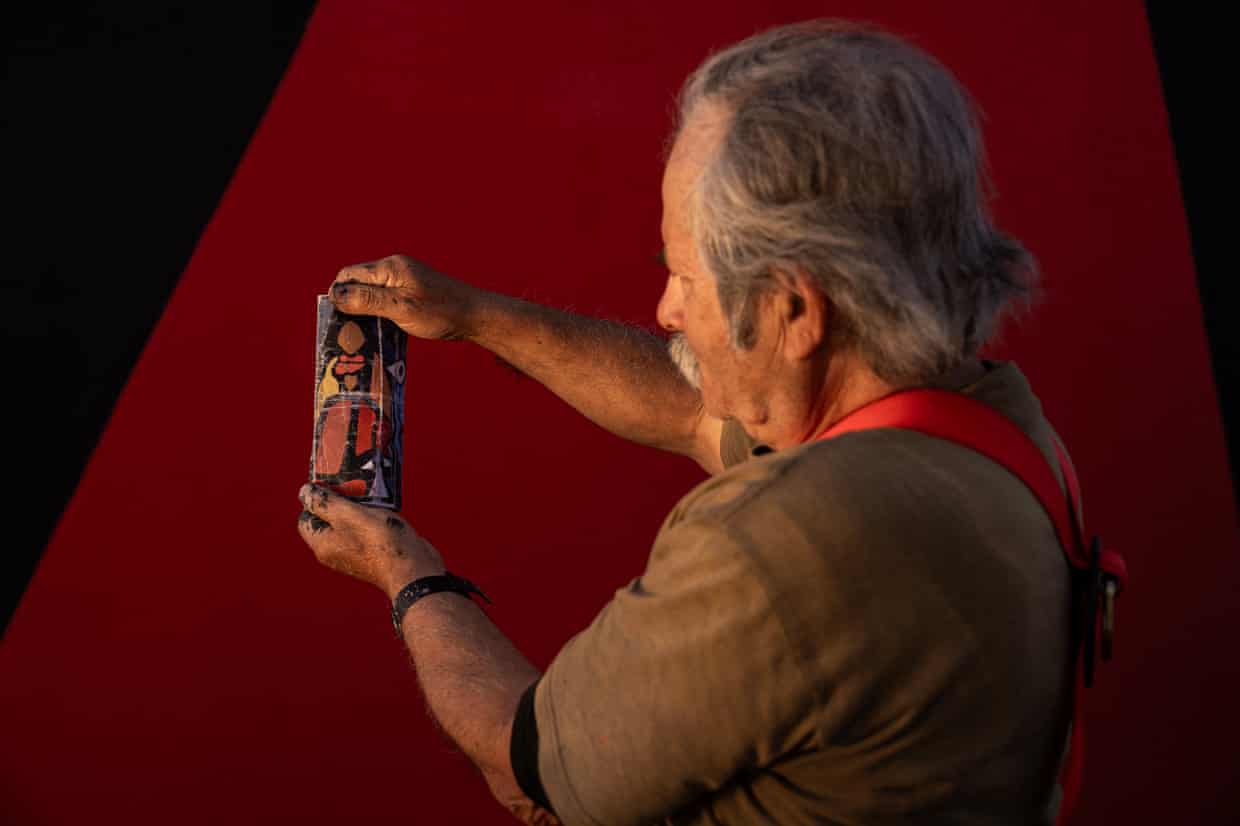
Chilean muralist Alejandro ‘El Mono’ González compares the dimensions between his mock-up and a recent mural. 

For a long time, I’ve been curious about murals and street art. (Search on those terms at the top of this blog if you are interested.) Whether the art is shared openly or under cover of darkness, it seems to convey messages we don’t usually hear from smaller, less public works.

At the Guardian recently, John Bartlett wrote that “in Chile, walls and public buildings are blank canvases to express dissent, frustration and hope.” Blogger and friend of Chile Rebecca will know all about that.

“Bridges across dry riverbeds in the Atacama desert,” Bartlett continues, “are daubed with slogans demanding the equitable distribution of Chile’s water, and graffiti on rural bus stops demand the restitution of Indigenous lands from forestry companies. Every inch of the bohemian port city Valparaíso is plastered with paint and posters. …

“One renowned street artist in paint-spattered jeans spent two weeks transforming a water tower at the country’s national stadium into a powerful symbol of Chile’s battle to remember its past.

“ ‘I have always had a strong social conscience,’ Alejandro ‘Mono’ González exclaims brightly. ‘The fight was born inside me, it just didn’t have an escape. There’s so much you can say with paint and a blank surface.’

“González, 77, has painted across Latin America and Europe, and his murals adorn hotels and public buildings in China, Cuba and Vietnam.

“González’s giant creations combine bright petals of color, separated by thick black lines, and resemble stained-glass windows.

“ ‘I wouldn’t say it’s cheerful, but they’re hopeful colors, which go beyond victimhood, pain and sadness,’ he said.

“The stadium was one of Chile’s most notorious detention centers, where thousands were held after Gen Augusto Pinochet’s 1973 coup d’état. …

“González talks animatedly about how colors vibrate and interact. … His approach reflects a selfless view of the collective.

“ ‘In the streets, anonymity is important,’ he says, ‘The individual isn’t, it’s the message that is interpreted by the viewer that I care about.’

“González was born in the city of Curicó, 120 miles (193km) south of Santiago, in 1947, the son of a laborer and a rural worker. At primary school, his friends named their energetic classmate ‘Mono’ – monkey. …

“After dark, González would go out painting with his parents, both committed members of Chile’s Communist party. In art, he found a release for his burning social conscience. González joined the communist youth ranks in 1965 to develop its propaganda activities, and painted his first mural at the age of 17 during socialist candidate Salvador Allende’s presidential campaign.

“He was among the founders of the Brigada Ramona Parra, a street art and propaganda collective named after a murdered activist, during the heady days of the Allende campaigns. ‘We’d go out every night, sometimes to paint murals, sometimes just to write ‘Allende’ on any blank surface,’ he remembers.

“After Allende won the presidency in 1970, a sinister black spider began to appear on walls, sprayed by the adherents of a fascist paramilitary group. A battle for the streets began, and it has never truly died away.

“In 2019, protesters thronged the streets of Chile’s cities demanding a host of improvements to their lives and an end to the country’s entrenched inequalities. … Those protesters included members of Todas, a collective of more than 100 female muralists who mobilized in a WhatsApp chat.

“ ‘We organized ourselves so we could occupy the walls,’ said Paula Godoy, 34, an artist and muralist from a southern Santiago suburb. ‘We were talking all the time – “Where is there a wall free? Where do we need to get this message across?” – it was a really beautiful period.’ …

“Half a century earlier, González was 24 when Pinochet seized power on 11 September 1973, deposing Allende. … González slipped into the shadows. He stopped wearing his glasses, shaved off his mustache, and went by the name Marcelo as he worked as a set designer in the Municipal Theatre in Santiago.

“When the end of the dictatorship neared, González helped design the most famous campaign in Chile’s political history, the NO campaign against Pinochet’s continued rule in a 1988 plebiscite. …

“ ‘Chile is very conservative and reactionary – we advance, and then we go backwards,’ he says, stepping back from the water tower and shielding his eyes. ‘But memory is the one constant. The most important thing is having a lasting effect. This will still be here in 50 years’ time, and people will still have their memory.’ ”

More at the Guardian, here. No firewall. Donations solicited.

Read Full Post »

Photo: Larkin Durey.
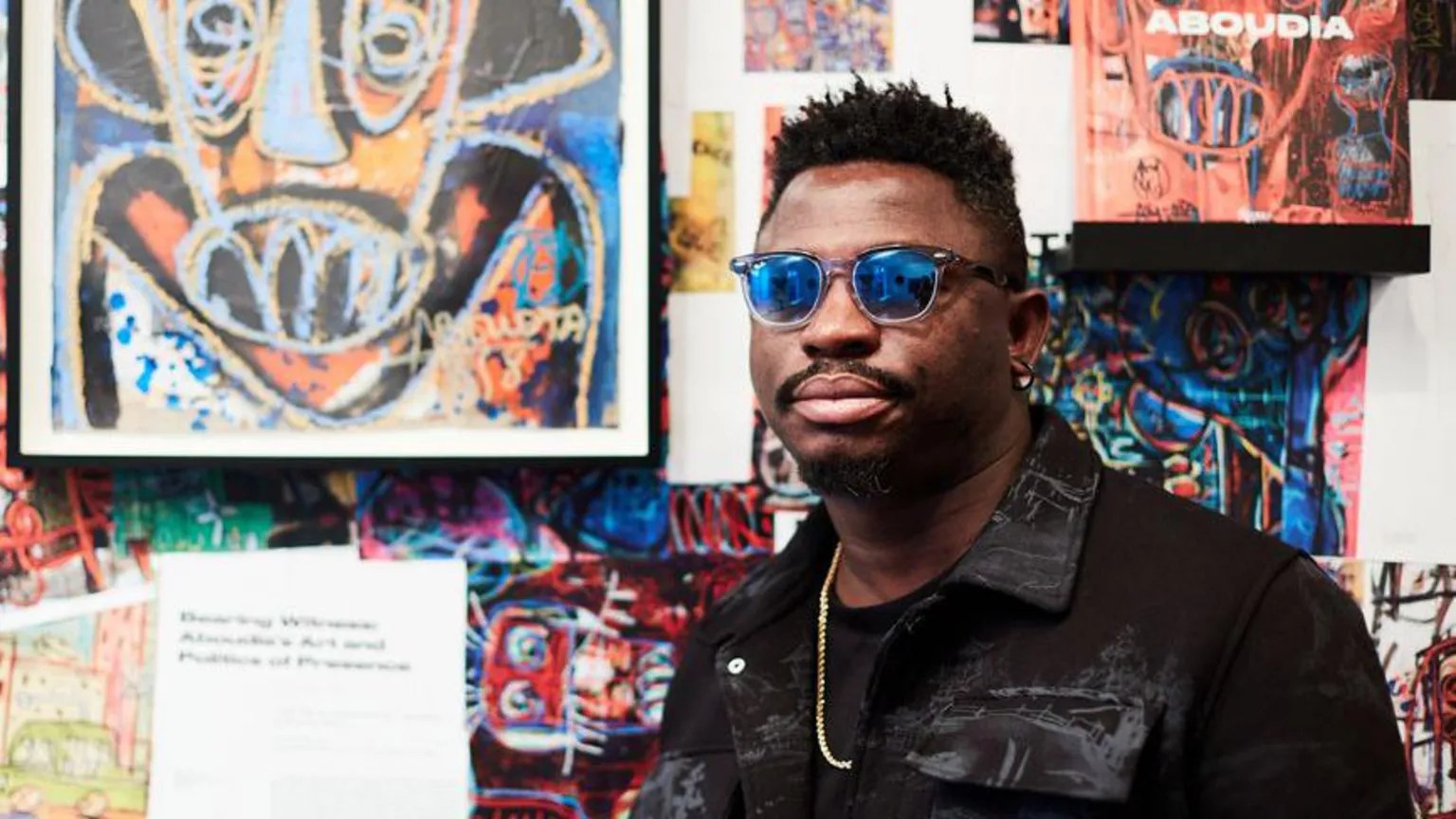
Aboudia’s work has been shown in exhibitions held in Abidjan, London, New York and Tel Aviv
. Hiscox Artist Top 100 says he sold more than even Banksy in one year.

The art world is becoming more international, and that’s a good thing. For too long, people have used their own world’s cultural references to judge the quality of art. And how can only one culture be the only worthy measure?

Wedaeli Chibelushi reports at the BBC about an African that is currently making a big splash internationally.

“Back in September, global art experts were taken aback by the name topping a fresh list of the world’s best-selling artists.

“Aboudia, a graffiti-inspired artist from Ivory Coast, had beaten well-known names, like Damien Hirst and Banksy, to sell the most pieces at auction the previous year.

“According to the Hiscox Artist Top 100, Aboudia, real name Abdoulaye Diarrassouba, had flogged 75 lots. One of these canvasses had gone for £504,000 ($640,000).

“Leading online marketplace Artsy called Aboudia’s triumph ‘striking,’ while The Guardian said market experts were ‘blindsided by the ranking.

“Months later, sitting in a London gallery plastered with his paintings, Aboudia tells me the survey results were no surprise to him. ‘Because if you work hard, the success is going to come,’ he says. …

“Aboudia’s mellow disposition clashes with the art surrounding him – his vividly colored, heavily layered canvases feature a cast of cartoon-like figures plucked from the streets of Abidjan, Ivory Coast’s largest city. Through a blend of oil sticks, acrylic paints and recycled materials like newspapers, Aboudia depicts the hardships of life in downtown Abidjan.

He particularly focuses on the children who live and work on the city’s streets.

“His eyewitness portrayals of Ivory Coast’s 2011 civil war are equally arresting. Figures gaze at the viewer with vacant eyes, while armed soldiers and skulls crank up the intensity. …

“Aboudia was born in 1983, in Abengourou, a small town around [124 miles] from Abidjan. In a 2012 essay, the artist said he was kicked out of his home aged 15 after telling his father he wanted to paint for a living.

“After being cast out, the young Aboudia pressed on and enrolled in art school. Due to a lack of financial support, he slept in his classroom after the other students went home for the day. These uncomfortable nights paid off — after graduating in 2003 the soon-to-be-star was accepted into Ivory Coast’s leading art school, École des Beaux-Arts.

“Abidjan’s École des Beaux-Arts would expose Aboudia to the Ivorian art icons whose influence can be found in his current work. For instance, Aboudia’s focus on his direct surroundings and his use of recycled materials can be traced back to Vohou Vohou, a modernist collective established in the 1970s by artists like Youssouf Bath, Yacouba Touré and Kra N’Guessan.

“Aboudia began to veer away from traditional styles of art, instead using untamed brushstrokes and earthy colors to recreate graffiti produced by Abidjan’s underprivileged children. In Aboudia’s words, these young, de facto street artists ‘draw their dreams on the world.’

“The children are his main influence, he says. …

“After establishing his core style, Aboudia would lug his paintings around the galleries of central Abidjan, hoping for a way in.

” ‘It was very hard. … They’d say: “Are you crazy? What is this work? You better go to London, to United States or Paris, because this work … here it doesn’t make sense,” ‘ Aboudia recalls.

“The adversity did not end there. In 2010, Laurent Gbagbo, the then president of Ivory Coast, refused to step down after losing an election to rival Alassane Ouattara. A civil war broke out, killing 3,000 people and forcing another 500,000 from their homes.

“Throughout the four-month conflict, Aboudia sought refuge in his basement studio, documenting the horrors he saw when venturing above ground.

“The war ended with Mr Gbagbo’s dramatic capture by UN and French-backed troops — and Aboudia emerged from his haven with 21 disconcerting paintings.

“Art-lovers and journalists from Ivory Coast and beyond lauded his work and Aboudia’s ascent to global success began. He was championed by renowned art collectors Charles Saatchi and Jean Pigozzi — and went on to exhibit his work at prestigious venues like Christie’s New York and the Venice Biennale.

“Aboudia’s first solo exhibition was at the setting for this interview, London’s Larkin Durey (then named the Jack Bell gallery). Owner Oliver Durey, who has now known Aboudia for over a decade, tells the BBC: ‘There is something we can all relate to in his paintings; hiding amidst the uncertainty and horror there are balanced moments of strength and beauty.’

“African art expert Henrika Amoafo [notes] reasons for his success … like his ‘authenticity, the really raw emotional power that he’s able to convey, the way that he speaks to urban life, the way that he speaks about conflict and its impact on children.’ …

“Aboudia’s rise also coincides with that of the African art market. In 2021, art analysis firm ArtTactic reported that the auction sales value of contemporary and modern African art surged by 44% to a record high of $72.4m. …

“Aboudia’s rise has led to him splitting his time between his country of birth and New York. When he is back in Ivory Coast, he pours his efforts into the Aboudia Foundation, an organization he launched to support the country’s children and young artists.

“This is yet another example of the star’s drive — but when I ask him if he has any plans lined up for his career, he … says he takes things one day at a time.”

More at the BBC, here. No paywall.

Read Full Post »

Photo: James Lee Chiahan/Procedure Press.
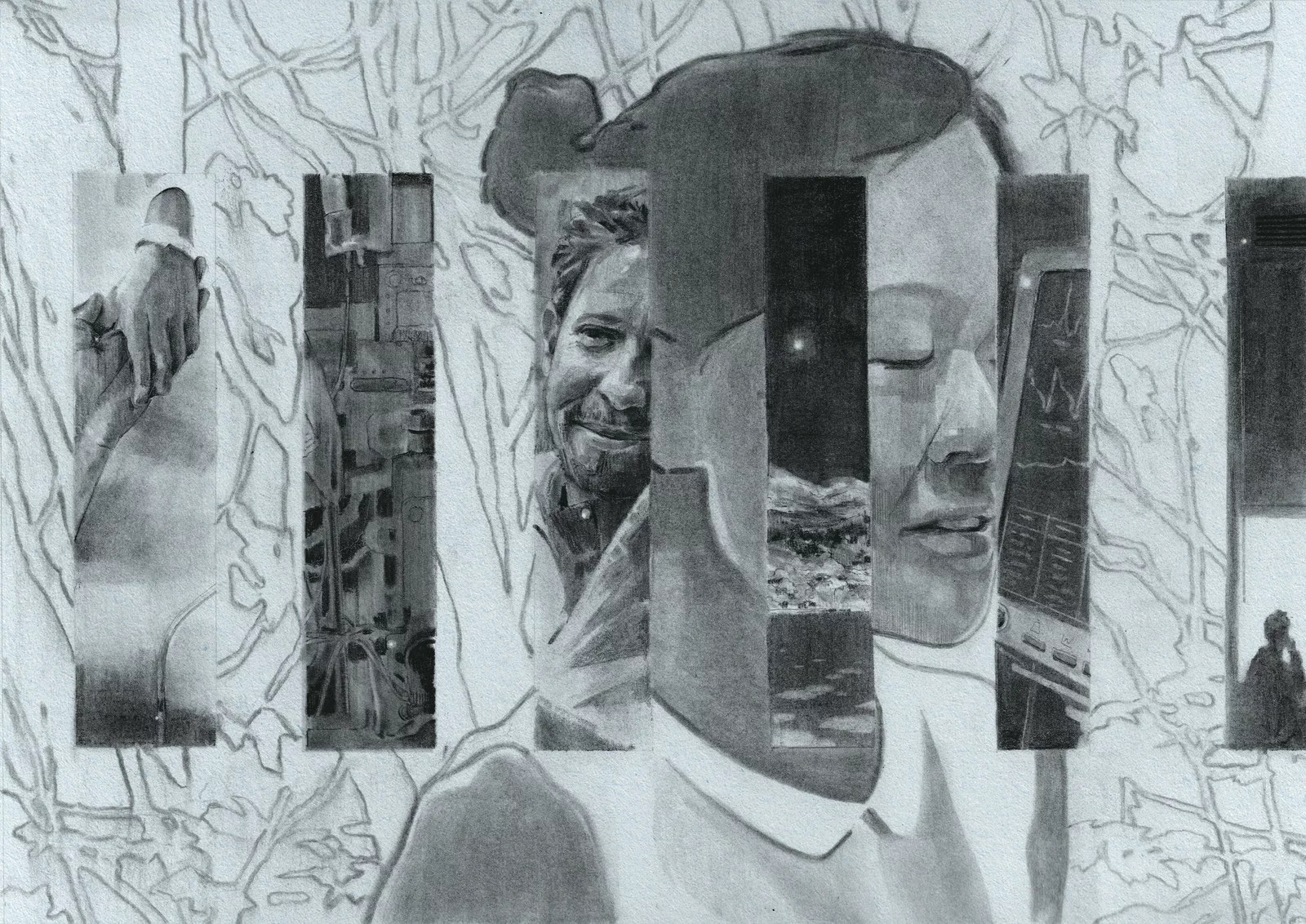
“Tone Shift,” by James Lee Chiahan. depicts musician Yoko Sen’s journey from being patient in the hospital to working to improve the sounds of ICU alarms around the world. Chiahan is a Taiwanese-Canadian artist currently working out of Montreal, Canada.

Those of us who have ever had a hospital stay know how difficult it is to get any sleep. Part of the reason is noise. Today’s article suggests that since artists started applying their creativity to the challenge, hospitals have new ways they could improve sounds and doctors have new ways to improve patient interactions.

Mara Gordon at NPR (National Public Radio) begins her story with Emily Peters, who had a rough time with the health care system when her daughter was born. “Peters, who works as a health care brand strategist, decided to work to fix some of what’s broken in the American health care system. Her approach is provocative: she believes art can be a tool to transform medicine.

“Medicine has a ‘creativity problem,’ she says, and too many people working in health care are resigned to the status quo, the dehumanizing bureaucracy. That’s why it’s time to call in the artists, she argues, the people with the skills to envision a radically better future.

“In her new book, Artists Remaking Medicine, Peters collaborated with artists, writers and musicians, including some doctors and public health professionals, to share [ideas] about how creativity might make health care more humane. …

“For example, the book profiles electronic musician and sound designer Yoko Sen, who has created new, gentler sounds for medical monitoring devices in the ICU, where patients are often subjected to endless, harsh beeping.

“It also features an avant-garde art collective called MSCHF (pronounced ‘mischief’). The group produced oil paintings made from medical bills, thousands and thousands of sheets of paper charging patients for things like blood draws and laxatives. They sold the paintings and raised over $73,000 to pay off three people’s medical bills.

“It’s similar to a recent performance art project not profiled in the book: A group of self-described ‘gutter-punk pagans, mostly queer dirt bags’ in Philadelphia burned a giant effigy of a medical billing statement and raised money to cancel $1.6 million in medical debt. …

“There’s very little in the way of policy prescription in this book, but that’s part of the point. The artists’ goal is to inject humanity and creativity into a field mired in apparently intractable systemic problems and plagued by financial toxicity. They turn to puppetry, painting, color theory, and music, seeking to start a much-needed dialogue that could spur deeper change.

Mara Gordon: What made you want to create this book?
Emily Peters: I think I’m always very curious why so many people – really the majority of everybody in any way involved in the health care system – feel so powerless. … And so the book came about as thinking about power and change. And then I realized that artists have this unique intersection where they are very powerful, they bring a lot of the things that were missing in health care, trying to build a better future.

MG: What is it about art that feels like a tool to challenge that feeling of powerlessness?
EP: The very first person I interviewed for the book was a photographer, Kathleen [Sheffer], who was a heart-lung transplant survivor. She used her camera in the hospital to try to be seen as more powerful, to be seen as a full person by these very fancy transplant surgeons who are whisking in and out of her room, viewing her as just a body. I saw that she had gained that power through being an artist.

“I had another conversation with a physician out of New York, Dr. [Stella] Safo. … She really highlighted that there’s this crisis of imagination. Everybody feels so demoralized that we can’t even imagine what we want to ask for to make it better.

“That’s a creativity problem. And the people who are creative are artists. They are really good at sitting in complexity and paradox, and not wanting everything to be perfect, but being able to imagine. And so that was the hypothesis: Oh, there’s something really interesting at this intersection between art and medicine. …

“MG: My favorite part of the book was the section where there’s a color palette, named for different medical phenomena: pill bottle orange, Viagra blue.… I think a lot of people in health care worry that too much color somehow distracts from the seriousness of medicine.
EP: So many of these things, somebody chose, and they didn’t do a huge amount of research on it. They just chose it, and we take it as gospel now.

“The white coat ceremony. [I had thought it must have started in] medieval Florence: they were putting white coats on medical students and welcoming them into the guild, it just feels like this ancient tradition. And it’s something that was invented in Chicago in 1989. A professor was complaining that the students weren’t dressing professionally enough. …

We surveyed a couple hundred people [and published the results online]: ‘What colors would you want to see in the hospital?’ I was expecting those soothing pastel tones. And it was totally different: it was neon purples and oranges and reds. Don’t assume what people want. We have the technology and the capability now to build in systems that give people some control and some agency over things like color. …

MG: Has anyone told you that they think that health care is too important for art?
EP: I’ve heard the criticism that this is just about wallpaper on a pig: ‘You’re talking about adding more sculpture gardens and increasing the cost of health care.’

“I did not want it to be a book about creating more luxurious hospitals. We have a crisis of financial toxicity, we have a crisis of outcomes. It’s specifically a book about fighting those things. …

“MG: Do you think medicine takes itself too seriously? Do we need more humor in health care?
“EP: You’re holding somebody’s heart in your hand – this is a very intense job. You’re trying to convince somebody to enter hospice – that is not easy. This is not an easy job. But that seriousness can feel almost like play acting and really inauthentic to people. …

“And that’s such a waste to me, because it is such a beautiful, incredible profession. We, as patients, also want you guys to be humans. We’re on your side.”

More at NPR, here. No paywall.

Read Full Post »

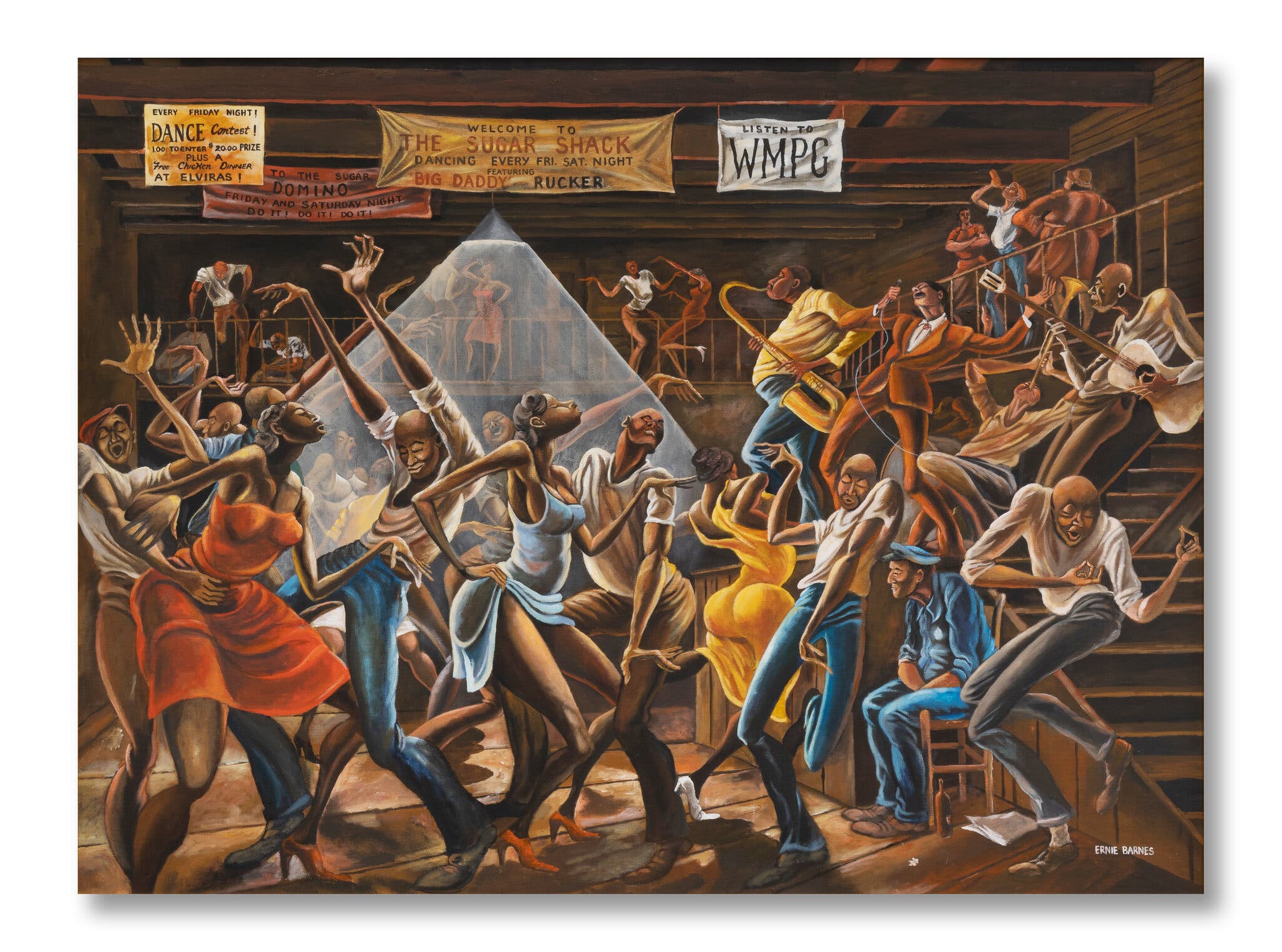
Art: Ernie Barnes.
Photo: Ernie Barnes Estate, Ortuzar Projects and Andrew Kreps Gallery.
Ernie Barnes’s “The Sugar Shack” (1976) sold well above its estimate at a Christie’s auction in 2022.

I’ve been thinking about artists whose popularity often seems to put them beyond recognition by the “academy.” Can they be taken seriously by serious people if they are popular? If their works are deliberately priced to be affordable, does that mean they are not valuable?

Adam Bradley writes at the New York Times about the long underappreciated artist Ernie Barnes, who is having “a moment” now that he has died.

Bradley writes that “in the 1970s, buying a print of Ernie Barnes’s ‘The Sugar Shack,’ the iconic 1976 dance club painting that adorns the cover of Marvin Gaye’s album released that spring, ‘I Want You,’ and appears in the credits for the classic sitcom Good Times (1974-79), required nothing more than mailing a $20 check to the artist’s West Hollywood studio.

“In 2022, the second of two originals — inspired by a childhood adventure of sneaking into a famed dance hall to watch couples drag and sway to the live performances of Clyde McPhatter or Duke Ellington — came up for auction at Christie’s, selling for $15.3 million. The buyer was the Houston-based energy trader and high-stakes gambler Bill Perkins, 54, who won a bidding war against 22 other prospects. This vast divergence of price belies a convergence of spirit: The countless individuals hanging inexpensive prints on the walls of bedrooms and barbershops share with Perkins (and no doubt with the other wealthy collectors who bid the painting up to more than 76 times its high estimate) an ineluctable desire for the nostalgia and affirmation that Barnes’s work conveys.

“Barnes, who died in 2009 at 70, left a paradoxical legacy. He was an artist of the people — most especially of Black people — selling reproductions at prices that enabled everyone to own something beautiful. He was also an artist to the rich and famous; he sold many of his original works to athletes, movie stars and musicians, from Kareem Abdul-Jabbar to Grant Hill, Diana Ross to Bill Withers, Harry Belafonte to Sylvester Stallone. He was among the most visible artists of the ’70s, with millions seeing his paintings on television each week; yet his work was excluded from major museum collections.

“The unprecedented price paid for ‘The Sugar Shack,’ Barnes’s most recognizable work, has changed everything — and nothing at all, inviting a wider (and whiter) audience to revisit an artist whose reputation among Black Americans is unassailable. More than a dozen years after his death, Barnes, long a popular painter, has become an important one, with all that term entails: a hot global market for his work (pricing out many of Barnes’s original collectors); newfound interest from museums; and, most immediately, a major gallery exhibition scheduled for next year at Ortuzar Projects in New York, which will invite a deeper look at Barnes’s varied career.

“Ernest Eugene Barnes, Jr., was born in Durham, N.C., in 1938, and grew up in a segregated neighborhood known as the Bottom. His father was a shipping clerk for Liggett & Myers Tobacco Company and his mother worked as a domestic.

“In his 1995 memoir, From Pads to Palette, Barnes recalls using sticks as a child to sketch undulating lines ‘in the damp earth of North Carolina.’ By the time he was in high school, Barnes had grown close to his full height of 6 feet 3 inches and finally gave in to the football coach’s entreaties for him to play offensive lineman.

“By 1956, he had 26 college scholarship offers; he enrolled at the historically Black North Carolina College (now North Carolina Central University), where he studied art. Though Barnes found support for his artistic endeavors on campus (he sold his first painting, ‘Slow Dance,’ a precursor to ‘Sugar Shack,’ for $90, to the recent alum and Boston Celtics guard Sam Jones), he often faced bigotry beyond it, and this led him away from art. The Baltimore Colts selected Barnes in the 1960 N.F.L. draft, and he played for four other teams in a six-year career before leaving the game because of the physical toll of injury and the psychic toll of delaying his true calling as a painter. …

“Barnes worked for a short period in the off-season as a door-to-door salesman, and as a construction worker building crypts. Then, with the endorsement of the business mogul and San Diego Chargers owner Barron Hilton, Barnes crashed the American Football League owners’ meeting to make a pitch to become the first official painter of a professional sports franchise. Many of the owners ignored him; one heckled him.

“But another, Sonny Werblin of the New York Jets, offered to pay him a player’s salary to become the team’s official painter. After a year, Barnes had built up enough of a portfolio for Werblin to sponsor Barnes’s first solo show, at the famed Grand Central Art Galleries in Midtown Manhattan. Barnes was 28. His work, which rendered football as modern-day gladiatorial spectacle, was stylized and dramatic. One could see within it the stirrings of his mature aesthetic: his loose and gestural handling of human form, his passion for portraying bodies in motion.

“His athleticism was far from incidental to his art. … Barnes understood the human body not from the outside in, in the studied manner of a draftsperson, but from the inside out, through his knowledge of how bone, muscle and ligament move in concert. …

“Barnes’s 1966 New York show might have marked his triumphant emergence into the artistic mainstream. Instead, it was greeted with indifference. ‘It was a shock to me,’ Barnes said decades later. If the art world was going to reject him, then he would reject it. ‘When I found out that I didn’t have to belong, really, to that world, he said, ‘that was much more assuring to me as a human being.’ …

“He expanded his subject matter to suit a broader audience, directing his eye for physicality toward everyday life. What does it look like to walk down the street with swagger, to hoist a heavy bag at day’s end, to jump double Dutch? Inspired in part by the Black Is Beautiful movement of the photographer Kwame Brathwaite and others, Barnes began producing works that would comprise a show titled ‘The Beauty of the Ghetto. It opened in 1972 at what was then known as the California Museum of Science and Industry and traveled the country for seven years. …

“In 1973, he met with the television producer Norman Lear, who was preparing a new program provisionally titled The Black Family. Lear was so taken with Barnes that he proposed not only using Barnes’s paintings on the show but also making the family’s eldest child, J.J. (who’d be portrayed by the actor Jimmie Walker), an artist himself. …

“ ‘His work is really about joy and positivity,’ says Ales Ortuzar, 47, who along with Andrew Kreps co-represents Barnes’s estate. ‘Those are two things that have traditionally been dismissed in the art world.’ Indeed, irony has no place in Barnes’s artistic worldview. His canvases are domains of earnestness and striving, of unalloyed celebration and pride. …

“ ‘There are a number of folks who will say, “Oh, his work has a $15 million price tag on it,” ‘ says [Derrais Carter, 39, a professor of gender and women’s studies at the University of Arizona and the curator of the Barnes exhibition at Ortuzar Projects]. ‘ “Let me pay attention to it.” And I’m like, “Well, Black folks never needed no $15 million to own that work.” It’s been in dens, college dorm rooms, on faded album covers, the whole nine. These [paintings] are like talismans, anchors of home.’ ”

More at the Times, here.

Read Full Post »

Photo: Christian Tunge via Henie Onstad Kunstsenter Museum in Norway.
Art by Guadalupe Maravilla: “Embroideries” (2019).

Today’s post is about the artist Guadalupe Maravilla, who has found his own way of using art-making as a healing practice. He is interviewed by Jareh Das at Ocula magazine.

“At the age of eight in 1984, Maravilla fled civil war in El Salvador and arrived in the U.S. undocumented. As an adult, he overcame colon cancer, which led him to learn about global healing practices from cultures as far-reaching as Mayan and Tibetan, alongside standard medical treatments like radiation and chemotherapy.

“Accordingly, his practice brings together often separate knowledge systems, from Western Cartesianism, which sees the mind and the body as separate entities, to non-Western and non-hierarchical approaches that look to nature and natural remedies for healing and tend to view humans as part of a wider cosmological system of equal parts.

“For Maravilla’s first exhibition in Europe, and most comprehensive to date, Sound Botánica at Henie Onstad Kunstsenter (18 March–7 August 2022), over 30 works comprising monumental sculptures, drawings, a large-scale mural, and instances of activated sound baths fill the institute, including four major bodies of work: ‘Tripa Chuca’ (2016–2020), ‘Embroideries’ (2019), ‘Disease Throwers’ (2019–ongoing), and ‘Retablos’ (2021), which are devotional [votive] paintings.

“Speaking to the ethics of artistic creation, both the retablos and embroideries were made with collaborators specialized in such forms, co-authored, and fairly compensated — all of which are important to Maravilla and his wider way of working.

Sound Botánica unfolds over two main gallery spaces with the most captivating and monumental works on view being Disease Thrower #4, #6, #7, #8, #9 (all 2019)—totem-like sculptures that each incorporate a sound gong, assembled from plaster of Paris made by microwaving tissues and plastic that hold together objects collected during the artist’s travels.

“The most recent Disease Thrower #13 (2021) is an astounding work measuring over two meters high made from cast aluminum, moulding vegetation and nature into a constellation of organic forms, some related to the healing and nutrition during Maravilla’s cancer treatment, with notable vegetable forms like squash placed besides real squash at the base of the sculpture.

“In the conversation that follows, Maravilla speaks about forced migration, how trauma manifests in the body and the collective, and disrupting boundaries between art and life, with a practice led by a personal commitment to create a more equal and equitable world.

Jareh Das: Some of your artworks, such as the series of monumental sculptures ‘Disease Throwers’, are activated through performative gestures. I notice they are made of materials like luffa sponges, anatomical models, gongs, glass bottles, and the invented plaster you create by melting tissues and plastic in a microwave.

“These are hybrid, totem-like sculptures that draw from your experience as a child who migrated undocumented to the U.S. They also bridge Indigenous cultures with ritual, and speak to your cancer treatments, which have included modern medical techniques alongside healing practices.

“How did you bring together these intersecting knowledge systems and develop an art practice centered on collective healing experiences, as the exhibition Sound Botánica at Henie Onstad Kunstsenter demonstrates?

Guadalupe Maravilla: I am interested in collective healing and the intersections between the Indigenous and the medical, and dismantling systems. My daily experiences are the core of my work. People often wonder how I can be so open about having cancer, being undocumented, and being a child of war.

“I escaped the civil war in the south of El Salvador in 1984 and migrated to the United States, which separated me from my family; this is very common with migration. Somehow, I made it to the United States — I feel very blessed to be in this position, as an artist now exhibiting all over the world.

“I have a teaching position as a professor and all these great things, so I think of how lucky I am, but I also think back to the kids who did not make it, particularly those who crossed with me. On the other hand, because I’m a cancer survivor too, I can make a direct connection between the trauma of the civil war and seeing violence as a kid and the illness that came to inhabit my body.”

More at Ocula, here. No paywall. You can also listen to an interview at PRI’s the World, here.

Read Full Post »

Photo: Brian Barlow.
Artist Jeffrey Gibson will represent the U.S. at the Venice Biennale in 2024, the first Indigenous artist to have a solo exhibition in the U.S Pavilion at the international art event.

One doesn’t think of State Department functionaries as knowing who in the US art community would be best to represent the country in an international exhibition, but if they tap knowledgable consultants and look at recipients of MacArthur “genius” grants, that should help them decide.

Chloe Veltman writes at National Public Radio (NPR), “The U.S. State Department has selected an Indigenous artist to represent the country at the 2024 Venice Biennale.

“Jeffrey Gibson, a member of the Mississippi Band of Choctaw Indians and of Cherokee descent, will be the first such artist to have a solo exhibition in the U.S. Pavilion at the prestigious international arts event.

“That’s according to a statement this week from the U.S. Department of State’s Bureau of Educational and Cultural Affairs, the government body responsible for co-curating the U.S. Pavilion, alongside Oregon’s Portland Art Museum and SITE Santa Fe in New Mexico. …

“The last time Indigenous artists appeared in the U.S. Pavilion at the Biennale was in 1932 — and that was in a group setting, as part of a mostly Eurocentric exhibition devoted to depictions of the American West. …

“Said Kathleen Ash-Milby, curator of Native American Art at the Portland Art Museum, and one of the co-commissioners of Jeffrey Gibson’s work in the U.S. Pavilion at the Venice Biennale, ‘It grouped native people together and didn’t really focus on their individuality as much. There were Navajo rugs on the floor. There were displays of jewelry. Many of the artists were not named.’

“Ash-Milby, who is also the first Native American curator to co-commission and co-curate an exhibition for the U.S. Pavilion at the Venice Biennale, told NPR her team selected Gibson because of the artist’s wide-ranging, inclusive and critical approach to art-making.

” ‘His work is multifaceted. It incorporates all sorts of different types of media,’ the curator, a member of the Navajo Nation, said. ‘But to me, what’s most important is his ability to connect with both his culture and different communities, and bring people together. At the same time, he has a very critical lens through which he looks at our history as Americans and as world citizens. Pulling all those things together in the practice of an American artist is really important for someone who’s going to represent us on a world stage.’

“Born in Colorado and based in New York, Gibson, 51, focuses on making work that fuses together American, Native American and queer perspectives. In a 2019 interview with Here and Now, Gibson said … ‘There’s this gap historically about these histories existing on the same level and being valued culturally. … My goal is to force them into the contemporary canon of what’s considered important.’

“A MacArthur ‘Genius’ Grant winner, Gibson has had his work widely exhibited around the country. Major solo exhibitions include one at the Portland Art Museum last year and, in 2013, at Boston’s Institute of Contemporary Art. His work is in the collections of high-profile institutions like the Museum of Modern Art in New York, the San Francisco Museum of Modern Art and the National Gallery of Art. Gibson participated in the 2019 Whitney Biennial. …

“The details of Gibson’s contribution for the 2024 Biennale are mostly under wraps. Curator Ash-Milby said the artist is working on a multimedia installation with the title ‘the space in which to place me’ — a reference to a poem by the Lakota poet Layli Long Soldier.”

Check out his art at NPR, here. No paywall.

See also Mark Trecka’s comments on poet Long Soldier at the Los Angeles Review of Books: “In ‘Three,’ Long Soldier writes: ‘This is how you see me the space in which to place me / The space in me you see is this place / To see this space see how you place me in you / This is how to place you in the space in which to see.’ The lines of this poem form a box on the page, in which the negative space is the center of attention.”

Read Full Post »

Photo: Mark McGuinness.
Mark McGuinness, a photographer, said the income from Ireland’s government allowed him to devote two days a week to making work for exhibitions.

It’s hard to say which part of the story on Ireland’s experiment with guaranteed income for artists I love most, but “cross-party support” sure feels like heaven.

Alex Marshall reports at the New York Times, “Ian Fay had toiled for years to make it as a comic book artist and illustrator, and last fall, he was ready to call it a day.

“Fay, 32, who lives in Kilkenny in southern Ireland and specializes in drawing muscly superheroes, was only earning enough money to pay his bills, he recalled recently. He couldn’t afford vacations. He was considering boxing up his art supplies and getting a job in a grocery store.

“Then, in September, a lifeline appeared in his email inbox. A message from Ireland’s government said that Fay had been selected for a program guaranteeing 2,000 artists a basic income. For three years, participants — including musicians, novelists and circus performers — would be paid 16,900 euros a year, about $18,200, no strings attached.

“Fay stared at the email in disbelief. The payments — in weekly installments of €325 — would cover his rent, and lower his anxiety about making ends meet, he said. For the first time in years, he added, he would have ‘time to practice and develop my craft.’ …

“The Irish pilot project is the latest sign of growing international interest in universal basic income — when governments pay ‌their citizens, employed or not, a lump sum each month. Proponents of the idea, including antipoverty groups, left-wing politicians and libertarian organizations, say guaranteed income ensures a population’s sustenance and health better than other social welfare policies. Opponents say it’s simply giving the work-shy cash for nothing.

“In early experiments in Finland, California and Germany, people were paid regardless of their profession. But several pilots are now focused on cultural workers, who can spend months, or even years, on unpaid projects. Painters, dancers and musicians often rely on precarious, part-time jobs to fund their passions, and basic incomes are seen as a way to let them focus on artistic pursuits.

“Last year, in the United States, a privately funded initiative called Creatives Rebuild New York began giving 2,400 artists $1,000 a month. Similar programs are underway in San Francisco and Minnesota. But of these artist-focused efforts, Ireland’s stands out because it is government-run and involves rigorous analysis of the recipients’ finances, work patterns and well-being to gauge the handouts’ impact. The recipients’ livelihoods will be compared with those of 1,000 artists in a control group, who are not receiving any payments.

“Catherine Martin, Ireland’s culture minister — a trained singer and former street busker — said in a telephone interview that the idea for the policy emerged three years ago during the coronavirus pandemic. With Ireland’s music venues, theaters and museums shuttered, Martin commissioned a task force to explore how the government could help cultural workers survive. Its main recommendation was a basic income trial. …

The pilot, which has cross-party support, has a budget of €33.8 million a year — and that’s on top of the €130 million that Ireland spends on culture via the Arts Council, its main arts funding body.

“Applications opened last April for people working in the visual arts, theater, literature, music, dance, opera, movies, circuses and architecture. … The applicants had to submit two pieces of evidence to show they were genuine cultural workers, such as membership in a professional body, proof of income from art sales or newspaper reviews. Martin said the government didn’t consider the quality of the applicants’ work.

“More than 9,000 people applied, with 8,200 deemed eligible. From that pool, 2,000 were randomly selected to receive payments and 1,000 for the control group. …

“Lydia Mulvey, 47, a screenwriter, said that she quit her job in a telecommunications firm as soon as she heard she’d made it into the program. Now she spends her time writing pilot scripts for thrillers and sci-fi shows, rather than trying to squeeze that into evenings and weekends. ‘I knew it’d be transformative and give me my life back,’ Mulvey said, although she added that, if she didn’t already own her own home, she’d struggle to live on such a low income, especially in Ireland’s squeezed property market.

“Mark McGuinness, 31, a photographer, said that before receiving the basic income he had spent the whole week seeking commercial photography work to pay his rent and the cost of supplies, and had let his artistic practice slip away. Now, he’d ‘clawed back’ two days a week to make work for exhibitions, he said. …

“Ireland’s government is sending recipients questionnaires every six months that ask about the state of their finances, artistic career and health. … Last year, those taking part received a survey to collect baseline data. It asked if they could adequately heat their homes, replace worn furniture or ‘afford a meal with meat, chicken or fish every second day.’ …

“Aengus Ó Snodaigh, a spokesman on cultural issues for the opposition Sinn Fein party, which supports the program, said he wanted data long before the trial concluded so artists didn’t face a ‘cliff edge’ at the end. He added that he had many questions about the program, including whether payments benefited early-career artists more than established names, and whether the handouts were having unintended consequences, like causing tensions in rock bands if some members were selected, but others weren’t.

“ ‘Maybe the money would be better spent on hardship funds for artists who can prove they can’t afford the mortgage, or can’t rent a studio,’ Ó Snodaigh said.

“Few recipients are taking the windfall for granted. Mulvey, the screenwriter, said she’d recently met television companies about developing shows, and was often working long into the night. ‘I keep reminding myself that three years is a really short time, and we’ve already had six months,’ she said, adding that she wanted to make sure ‘I don’t have to go back to a day job when this stops.’ ”

More at the Times, here.

Read Full Post »

Photo: Sarah Rose Sharp/Hyperallergic.
The only public mural commemorating iconic Detroit band MC5 remains intact, as housing for artists is built around it.

When you base housing development on what people can pay to live there, good things may happen. If only the development of the artist community in Fort Point, Boston, had been based on that principle! City planners of the past and their favored developers have pretty much ruined Fort Point — and all of Seaport — and set the area up for drowning in a future hurricane.

Sarah Rose Sharp opines at Hyperallergic, “Artists are fundamentally problem solvers. They are generally understood to be solving problems of a personal-expressive nature, or perhaps ones related to community, and occasionally political or environmental problems. They are not often considered the front line for solving, say, problems of city infrastructure. But maybe they should be.

“[Ten years ago] if you’d asked Oren Goldenberg what he does, he might have said ‘filmmaker’ or ‘producer,’ or he might have narrowed his eyes and asked: ‘Who wants to know?’ These days, however, the answer is a little more complicated. At some point in the last decade, Goldenberg stopped making films as a document, and stepped through the frame to build the world-as-document. … Our School (2005-2009) is a feature-length documentary that seeks to reveal the experience of going to high school for one day, from dawn to nightfall, in his home city of Detroit.

“ ‘When I was doing Our School, I’m like, should I just go be a teacher? What’s going to really help with the education crisis? It’s gonna be a teacher, right?’ said Goldenberg during a walking interview with Hyperallergic across the site of his latest undertaking. Ten years ago, the grounds we are walking on would have been identified by in-the-know Detroiters as Recycle Here!, a community-grown waste management center piloted by Matthew Naimi in a city that had famously suspended trash pick-up for decades, to say nothing of recycling. A lot has changed in ten years, and for the last seven, Goldenberg has been right at the heart of it.

“Nowadays, Recycle Here! is a recognized part of city infrastructure, but the facilities that surround it have undergone a startling transformation. In place of the crumbling outbuilding that once belonged to the former Lincoln automotive factory (still indicated by the adjoining Lincoln Street and its eponymous art park, also developed by Naimi and his associates), a new complex is emerging. Once a free space and favorite haunt of street artists, that has tragically claimed at least one life, the complex is on the home stretch of work that has stabilized the structure and secured facilities. The project is expected to launch this year with communal gathering spaces, a fresh venue for longtime neighbor Marble Bar, and 81 live-work units calibrated to hold the community that occupied the former structure.

“ ‘In doing this project, I’ve learned that our presumptions around development and construction are just wrong,’ said Goldenberg. ‘When you think of high-end developments, they create a projection of who can we attract, as opposed to who is here, because they need something that could pay the cost to renovate a historic building. …

“ ‘You have to create different models of verification,’ Goldenberg continued.

‘When we first started getting money here, people asked: Why is your commercial rent so low? I replied: “Well, it’s for Recycle Here! They’re already here, this is all they can pay.” ‘

“This isn’t the first time Goldenberg has taken an interest in housing. Brewster Douglass, You’re My Brother (shot 2010-11, released 2012) is a documentary about the first public housing for low-income Americans, erected in Detroit. …

“In another past project, Goldenberg once more explored community-building in a historic space. Though he created the video Make it History: the Downtown Synagogue, Goldenberg’s more notable legacy with the organization is arguably the series of after-dark House music dance parties, which sought to bring in new energy and a wave of younger constituents to the Isaac Agree Downtown Synagogue, built in 1921 and currently the last remaining free-standing synagogue in Detroit. …

“ ‘I think a lot of directors consider films holy, and worth more than the humans who make them,’ said Goldenberg. ‘I push very hard against that. I just don’t think it’s true. No one should die making your movie, no one should be exhausted. [This new movie] is different. People are going to live here.’

“In Detroit, the shattering of infrastructure, regulation, and ownership opened a window, one that is now rapidly closing as entrepreneurial forces have seized upon the city as a development opportunity. But for a minute, and maybe even a minute longer, there are so many problems that artists have been able to get their hands on and start to solve in the way that artists do: A way that places a completely different valuation on what community means, what a recycling center means, what a building means. Filmmakers and producers already know how to imagine a world into being, through the sheer power of belief. Goldenberg is showing what happens when that belief becomes a home that others can occupy.”

More at Hyperallergic, here. No firewall. Subscriptions encouraged.

Read Full Post »

Photo: Sony.
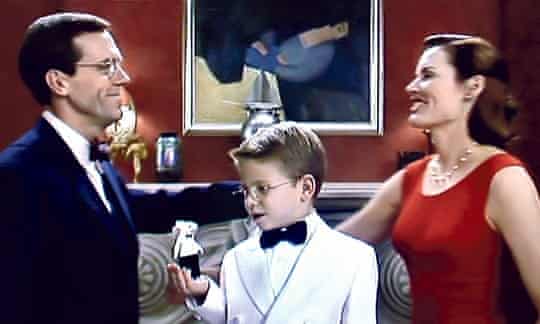
A scene from the children’s film Stuart Little with artist Róbert Berény’s long-lost painting hanging in the background.

Wouldn’t you love to discover a missing artifact while watching an old children’s movie with a kid? That is what happened to a Hungarian art researcher who thought he was just relaxing and off work.

I saw this 2014 report from Agence France-Presse in Budapest at the Guardian.

“A long-lost avant garde painting has returned to Hungary after nine decades thanks to a sharp-eyed art historian, who spotted it being used as a prop in the Hollywood film Stuart Little.

“Gergely Barki, 43, a researcher at Hungary’s national gallery in Budapest, noticed ‘Sleeping Lady with Black Vase,’ by Róbert Berény as he watched television with his daughter Lola in 2009.

“ ‘I couldn’t believe my eyes when I saw Berény’s long-lost masterpiece on the wall behind Hugh Laurie. I nearly dropped Lola from my lap,’ said Barki.

‘A researcher can never take his eyes off the job, even when watching Christmas movies at home.’

“The painting disappeared in the 1920s, but Barki recognized it immediately even though he had only seen a faded black-and-white photo from an exhibition in 1928. He sent a flurry of emails to staff at the film’s makers, Sony Pictures and Columbia Pictures, and received a reply from a former set designer on the film – two years later.

“ ‘She said the picture had been hanging on her wall,’ Barki said. ‘She had snapped it up for next to nothing in an antiques shop in Pasadena, California, thinking its avant garde elegance was perfect for Stuart Little’s living room.’

“After leaving Sony, she sold the painting to a private collector who has now brought the picture to Budapest for sale by auction.

“Berény, the leader of a pre-first world war avant garde movement called the Group of Eights, fled to Berlin in 1920 after designing recruitment posters for Hungary’s short-lived communist revolution in 1919. … According to Barki, the buyer at the 1928 exhibition, who was possibly Jewish, is likely to have left Hungary before or during the second world war.”

So what else can we learn about artist Róbert Berény? Here’s what Wikipedia says: “Róbert Berény (18 March 1887 – 10 September 1953) was a Hungarian painter, one of the avant-garde group known as The Eight who introduced cubism and expressionism to Hungarian art in the early twentieth century before the First World War. He had studied and exhibited in Paris as a young man and was also considered one of the Hungarian Fauves.

“A Berény painting titled Sleeping Lady with Black Vase, whose whereabouts had been unknown since 1928, was rediscovered by chance in 2009 by art historian Gergely Barki upon watching the 1999 American film Stuart Little with his daughter, where the piece was used as a prop. An assistant set designer had bought the painting cheaply from a California antique store for use in the film, and had kept it in her home after production ended. The painting was sold at auction in Budapest on 13 December 2014 for €229,500 [about $249,524].”

More at the Guardian, here. No firewall. Donations welcomed. Nicole Waldner’s blog has a lot more detail, here.

Read Full Post »

Art: Meredith Fife Day.
Studio Life.

The day job of artist Meredith Fife Day was for many years running a department at a community newspaper chain in Massachusetts. That is where I met her. She was my first boss in publishing. After retiring from the newspaper, Meredith focused on her art while teaching art at a local college during the day and working with the amazing nonprofit she founded, Making Art with Artists (MAwA). MAwA enabled low-income urban kids to practice art under the guidance of working artists. I wrote about the award Meredith received for that work here.

Recently, I asked her if I could do a post on her art, and she sent me these riches.

From her bio: “Her art reviews and essays have appeared in a variety of publications for more than 25 years and she chronicles her days through journaling. She writes poems which, like her paintings, are frequently in homage to observational response, memory and imagination.

“She has exhibited paintings for more than four decades in numerous invitational shows and national competitions. She earned an MFA degree from Boston University after receiving BA and MFA degrees from Louisiana State University in her native Baton Rouge. Meredith has been awarded fellowships at Virginia Center for the Creative Arts in Amherst, Va., and Auvillar, France, and Millay Colony for the Arts in Austerlitz, N.Y.  She has taught at Art New England/Mass Art summer workshops in Vermont and Cullowhee Mountain Arts in North Carolina.” 

Note how much the ficus plant below returns Meredith’s love by modeling for her on repeated occasions. And do you sense the joy the artist takes in homely things lifted to a spiritual level? I love her work.

Read Full Post »

Art: Lucille Corcos Levy.
A family scene in winter, probably South Mountain Road, Rockland County, NY. In the collection of Victor Lloyd.

Would someone please make a Wikipedia entry on artist/illustrator Lucille Corcos? I tried a decade ago, but a Wikipedia moderator took it down. I love the wavy aesthetic of her art — so full of energy and love of life.

At the time that I made my one and only Wikipedia entry, internet links were not considered good enough for citations, and that was the reason given for removal. I have since read that Wikipedia is prejudiced against posts about women and/or by women. I haven’t seen any statistics on that and don’t know if it used to be the case but is no longer.

Lucille Corcos (1909 to 1973) was a working artist who was the main breadwinner for her family, although artist husband Edgar Levy also had a following. She trained at the Art Students’ League in New York City and began professionally as a children’s book illustrator.

I knew the family when I was a child because my father wrote the Upjohn Company’s 10-year-anniversary book with artist Will Burton, who was a Levy neighbor. More recently, I noticed Corcos’s work in a museum. Still, there’s a huge Wikipedia entry for one of her artistic sons, and nothing for her.

I might as well share some of the information I collected on Corcos before giving up, starting with a fascinating book I read (Cipe Pineles Golden and Martha Scotford, Cipe Pineles: A Life in Design [New York: W.W. Norton & Co., 1999]).

“Lucille and Edgar left the city in 1941 with their son David,” wrote Martha Scotford. “Son Joel was born a couple years later. They moved to South Mountain Road in New City. … Corcos was a successful painter and illustrator by this time. In the 1930s, fashion, culture and home magazines published her work and her popularity continued into the 1960s.

“[Designer] Cipe Pineles’s close friendship with Corcos had begun when Pineles commissioned Corcos’s work for Seventeen and Charm. Her humor in personal interactions and in her art made her an engaging collaborator.

“Corcos’s paintings were densely packed with many small stories and commentary. The compositions had detailed multiple subjects; perspective and scale were distorted for practical and expressive purposes. This new modern primitivism was considered part of a native tradition in American art and its ‘unacademic’ nature was celebrated.

“Corcos’s subjects included rural landscapes and urban scenes, ranging from Christmas Eve, Rockefeller Center, to the Oyster Party to Everybody Meets the Boat. In addition to doing commissioned illustration, Lucille Corcos built her career as a fine artist and was a steady participant in New York gallery shows from 1936 to 1954. During the same time, she was a part of major exhibitions in Chicago, Pittsburgh, Philadelphia, Washington, D.C., and other institutions in New York.”

Click here for the Corcos books held in the University of Minnesota’s Children’s Literature Research Collections, where you can also find a write-up about her work for Fortune magazine and links to the pictures.

I remember the family’s actual Fire Island house (painted in 1950), here, and I want to point out that Everybody Meets the Boat is another classic Fire Island scene.

If any reader is better at research than I am, maybe you could find an article I heard was in the July 12, 1954, issue of Life magazine showing two Corcos paintings, one of her life in a wintery Rockland County, another of activities around the Fire Island house in summer.

Sorry this is all a bit jumbled. Maybe that’s the real reason the moderator deleted what I wrote at Wikipedia. Someone more knowledgable should tackle this worthy subject.

Read Full Post »

Older Posts »