Feeds:
Posts
Comments

Posts Tagged ‘artist’

After a father’s death, the family tries to find homes for his perfect metal miniatures.

Isaac Feldberg writes at the Boston Globe, “On any gift-giving occasion in the Megerdichian household, the most exciting presents to unwrap were always both the smallest and, funnily enough, the heaviest.

“Some boxes held metal miniature re-creations — a brass violin with horse-hair strings and a latched case; an aluminum piano music box that played ‘Raindrops Keep Falling on My Head.’ Others concealed stainless-steel jewelry, intricately detailed, immaculately formed. And others still contained children’s toys, like steel tractor-trailer sets to be nudged along the wooden floors of their Cambridge home.

“ ‘They were 14 ounces of love, 1 ounce of metal,’ says Robert Megerdichian, 63, of the tiniest pieces his late father, Abraham, bestowed upon the family throughout his lengthy career as a machinist. ‘He started off with a solid block of metal, brass, aluminum, copper, or stainless steel, and he gouged away, like a sculptor would, like an artist would, to create all of these objects.’

“Megerdichian’s description of his father as an artist has recently earned official validation, with museums across New England displaying an array of Abraham’s pieces. The Attleboro Area Museum of Industry, the Lynn Museum, and Boston’s Museum of Science all currently house some of his metal miniatures. Additional museum exhibits are set to open in the fall, including at Connecticut’s New Britain Industrial Museum. For more than half a century, however, Abraham’s creations were reserved for his loved ones. …
” ‘It was important to him to make things that made the people he cared for happy,’ ” said his son.

Read about Abraham’s history here. A great example of what the intersection of love and skill can give the world.

Photo: David L. Ryan/Globe Staff
Robert Megerdichian looks over a miniature Hoover vacuum cleaner crafted by his father.

Read Full Post »

Christo is known for making impossible-seeming public art, and just recently, he made some again. Margaret Rhodes reported the story at Wired magazine.

“It takes serious engineering to let 640,000 people walk on water. Luckily, that’s exactly the kind of technical and creative challenge that Christo — the artist who wrapped the Reichstag and dotted Central Park with 7,503 orange panels of fabric—excels at. …

“The new project, the ‘Floating Piers,’ comprises two miles of marigold-yellow walkways gently bobbing on top of Lake Iseo, a small lake in northern Italy, connecting the waterside town of Sulzano with two small islands. …

“Making them work was tricky. Marinas often use temporary, floating piers; a common technique involves propping them atop styrofoam cubes. ‘We discovered very soon that this cube system was perfect for us,’ says Wolfgang Volz, Christo’s project manager. So in the fall of 2014, Christo’s team ran a secret simulation of the Floating Piers in Germany. But the styrofoam blocks were too small and too dense.

“So they built their own blocks—220,000 in total. They’re about 20 percent bigger than the ones marinas use, and more buoyant. A Bulgarian company supplied the materials, and Christo hired four different manufacturing companies to ensure they’d have enough.

“Once Christo had his blocks, he, Volz, and a few dozen workers started connecting the cubes into 50- by 330-foot sections. They attached the cubes with giant screws, right on the water, in a corralled section of Lake Iseo.

“One by one, workers pushed the white styrofoam rafts out into the lake and anchored them to 5.5-ton concrete slabs arranged on the lake floor in a configuration conceived by Christo. ‘Very tedious work,’ Volz says. ‘Every day the same.’

“It took four months, with workers doing shifts of two weeks on, two weeks off the job. ‘The same as an oil rig schedule,’ Volz says.’ ” More here.

Temporary, like most of Christo’s work, the walkway was scheduled to come down early this month and get recycled. But it lives on in photographs — and the memories of those who visited and got a chance to walk on water.

Photo: Wolfgang Volz
Christo’s project the “Floating Piers” comprised two miles of marigold-yellow walkways on Lake Iseo in northern Italy. Visitors walked the path without handrails.

Read Full Post »

Artists seem to think differently from people who aren’t artists, which is why Renée Loth likes the idea of embedding a few in government.

“Imagine a dancer working with police officers to better interpret a suspect’s gait,” she writes. “Or a musician teaching a city parking clerk how to listen deeply. Or an abstract painter rearranging a tangle of contradictory street signs. That’s the idea behind Boston’s new artist-in-residence program, which will embed local artists inside city departments to promote creative thinking about municipal government. …

“ ‘Artists are all about asking questions,’ says Julie Burros, Boston’s cabinet-level chief of arts and culture. ‘They bring a unique set of tools to solving problems.’

“A jury of seven arts professionals and partners from the Massachusetts College of Art and Design [met in February] to winnow a field of 10 finalists to three artists, who will each receive a $20,000 stipend for a six-month residency. …

“Boston is in the throes of a comprehensive planning process that is working to inject fresh ideas into city transportation, housing, and zoning policies. Burros is directing the city’s two-year cultural plan, Boston Creates, and is a prime force behind the artist-in-residence program.

“But Boston is hardly in the vanguard of this approach. The concept dates back to at least 1976, when activist Mierle Ukeles accepted a nonsalaried position as the first artist in residence of the New York City sanitation department.

“Over the decades, Ukeles created artworks that engage questions of nature, class, and culture; her ‘Flow City,’ a video installation at a Hudson River transfer station, confronts visitors with their own role in the massive waste management task of city government. Environmental education is a dull, dutiful business — until it’s in the hands of a performance artist. …

“In 16th century Europe, wealthy rulers of church and state often commissioned artists to live and work in their courts — you might say that Michelangelo was embedded in the Vatican. Today’s artists in residence may not paint the ceiling of City Hall, but they will surely contribute to Boston’s renaissance.”

More at the Boston Globe.

Art: Pep Montserrat for The Boston Globe

Read Full Post »

When I was growing up in Rockland County, New York, my parents liked to buy art from artist friends and, when possible, offer other kinds of support. They hired the Hungarian-American artist André Dugo, for example, to paint a portrait of my brother Bo and me sitting in an armchair and reading one of the artist’s children’s books. We often read his book Pete the Crow or the books featuring a cardinal and a blue jay, or the one about the calf that ate the wrong kind of grass and puffed up like a balloon.

One day, Mr. Dugo came to our house to watch television with us. (We had one of the first TVs because my father was writing a story on Dumont for Fortune magazine.) We kept asking Mr. Dugo what he would like to see, and he kept saying he just wanted to see whatever we ordinarily watched.

As we worked our way through several programs, Mr. Dugo noted our reactions, sometimes asking questions.

Not many months after, a children’s book came out. It was called Tom’s Magic TV, and its premise was that a boy traveled through the TV screen and into adventures with sharks, circus clowns, puppets, cowboys and spacemen. Bo and I were not mentioned. The mother didn’t look like my mother. This was an early exposure to children’s-literature research — or poetic license.

I’m pretty sure that Gene Autry was the model for the cowboy adventure.

030916-Toms-Magic-TV-Dugo

Read Full Post »

I enjoyed this cheery article at Roads and Kingdoms/Slate on a family in Ghana who will design whatever kind of coffin is requested — like the potato chip coffin below.

Reporter Akinyi Ochieng describes seeing “coffins of all shapes and colors: a chili pepper, a cat, a scorpion. …

“Founded in the 1950s by Seth Kane Kwei, this is thought to be the oldest coffin shop specializing in abebuu adekai: proverb boxes.

“In the last 50 years, these fantasy coffins have become one of Ghana’s most unique cultural exports. The curious tradition of burying people in coffins shaped like everything from lobsters to busty women is primarily practiced in Accra and has spawned over 10 workshops in the capital city. Almost all of these are owned by former apprentices of Kane Kwei, who died in 1992. …

“The coffins intended for burial are made from a soft wood and cost about $700. The ones considered works of art and bound for homes and galleries, are made from mahogany. Those can sell for as much as $3,000. …

“ ‘When I started working, people used to call me a coffin maker or a carpenter,’ says [one family member]. ‘Over the years, I’ve become more actively engaged in the design process from start to finish. I think that’s what really helped me transcend just being a carpenter to being a true artist with a vision.’ ”

More from Akinyi Ochieng here. See some finished coffins, too.

Photo: Theophilus Mensah 
Design plans for an upcoming piece.

Read Full Post »

As an official member of his town’s tree committee, John has been working hard to promote the many benefits of an urban tree canopy both for quality of life and for the business environment.

Now here comes a really unusual idea for fans of urban greenery. You just need a large body of water.

At the website “Pop Up City,” describes Rotterdam’s floating forest, thought up by (who else?) an artist.

“Rotterdam will get its first ‘bobbing forest’ in 2016: a collection of twenty trees that are floating in the Rijnhaven, a downtown harbor basin.

“Inspired by Jorge Bakker’s artwork ‘In Search of Habitus‘, an aquarium filled with bobbers that grow small trees, Dutch designers and entrepreneurs from Mothership decided to carry out this idea in ‘real life’. After experimenting with a sample tree last year, an entire floating forest of twenty trees is scheduled to be ‘planted’ on March 16, 2016.” Check out some intriguing photos here.

My only question as a person who grew up in a hurricane corridor: What happens if there’s a storm?

Photo: Popupcity.net

Read Full Post »

Maria Popova at Brain Pickings finds the most wonderful books to blog about. In a recent post she extolled the wonders of fairy tale illustrations by Kay Rasmus Nielsen.

I was surprised to learn that’s a man’s name in Denmark. Wikipedia says, “Kay Nielsen was born in Copenhagen into an artistic family; both of his parents were actors – Nielsen’s father, Martinus Nielsen, was the director of Dagmarteater and his mother, Oda Nielsen, was one of the most celebrated actresses of her time, both at the Royal Danish Theater and at the Dagmarteater.

“Kay … received his first English commission from Hodder and Stoughton to illustrate a collection of fairy tales, providing 24 colour plates and more than 15 monotone illustrations for In Powder and Crinoline, Fairy Tales Retold by Sir Arthur Quiller-Couch in 1913. In the same year, Nielsen was also commissioned by The Illustrated London News to produce a set of four illustrations to accompany the tales of Charles Perrault; Nielsen’s illustrations for ‘Sleeping Beauty’, ‘Puss in Boots’, ‘Cinderella’ and ‘Bluebeard’ were published in the 1913 Christmas Edition.”

This is from Maria Popova: “As a lover of illustrated fairy tales and having just returned from Sweden, I was delighted to discover, thanks to the relentlessly wonderful 50 Watts, East of the Sun and West of the Moon: Old Tales from the North … illustrated by Danish artist Kay Rasmus Nielsen (1886-1957), whose work you might recall from [my list of] the all-time greatest illustrations of Brothers Grimm and the fantastic visual history of Arabian Nights. Originally published in 1914, this magnificent tome of 15 stories was recently reissued by Calla Editions, the same Dover imprint that revived Harry Clarke’s magnificent illustrations for Edgar Allan Poe, and features 25 color illustrations, along with a slew of black-and-white ones, in Nielsen’s singular style of haunting whimsy.”

There are more than 20 amazing Nielson illustrations here, at Brain Pickings.

Art: Kay Rasmus Nielsen
The North Wind went over the sea.

Read Full Post »

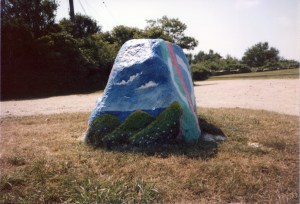
island-scene-on-Painted-Rock


Feeling the cold setting in?  Well here’s a summery scene on New Shoreham’s famed Painted Rock, one of my favorite pictures of the island’s constantly changing bulletin board. Wish I knew who the artist was.

John is behind the new tumblr blog featuring the Painted Rock in as many iterations as folks can dig out of the albums and send along.

Here’s what John had to say about it on the island e-board:

“Thanks for the kind comments and great pics submitted to paintedrockbi.tumblr.com The ‘mini cooper rock’ and the ‘hamburger rock’ are especially cool.

“There was also a question about me and the reason for the blog, so here goes.

“About 20 years ago my mother painted the rock early one morning to celebrate my sister turning 16 and my turning 21. Our summer home is a only short walk down Mohegan Trail from the rock, but if you took careful note of our ages, you might guess that my sister and I were not really morning people.

“So by the time we had rolled out of bed and made it down the street to look, it was already painted over. No photos were taken, but I know it’s there buried under all the layers. Now I am a parent, and it kind of reminds me of the many things we do for our children that no one ever really sees, but we keep doing anyhow.

“For many years I’ve been thinking about how best to document the many cool rock paintings. And last week I finally got around to doing something about it; hopefully the page will continue to get submissions and we can save the many small memories behind each coat of paint.”

Check it out: http://paintedrockbi.tumblr.com/

Read Full Post »

A few photos.

The Barrow Bookstore featured a Thoreau quote on its kale-decorated book barrow at Thanksgiving: “My Thanksgiving is perpetual … for my wealth is not possession but enjoyment.” This shop off Main Street is the place to go for gently used and out-of-print books.

A yellow rose was blooming on Beacon Hill as late as November 19.

Fort Point Arts has a new show by six contemporary mosaic artists using a variety of techniques and materials. One favorite example: Aesop’s wisdom about the fox, the grapes, and the crow, rendered as a mirror.

Finally, no matter how many times I have walked up and down School Street in Boston, I have failed until now to zero in on the reason it is called School Street. A Latin school was established there in 1635, before the founding of Harvard even, and many notables attended over the years. You should be able to read these names on the plaque in the sidewalk: Benjamin Franklin, Samuel Adams, John Hancock, Charles Bullfinch, and Ralph Waldo Emerson. Boston Latin is still going strong, but in a new location.

I love that the original Boston Lain was teaching Latin and Greek, languages I once knew a bit. I am also reminded that those languages were taught at outdoor hedge schools in 18th Century Ireland, when the English were blocking education by Catholics.

112915-thoreau-quote-barrow-bookstore

111915-rose-on-Beacon-Hill


112015-fort-point-art-gallery

112015-Aesop-fox-and-crow-mosiac


112515-Boston-School-Street

11-25-15-who-went-to-early-Latin-school


Read Full Post »

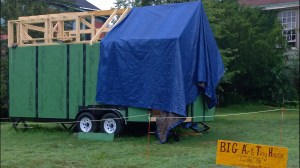
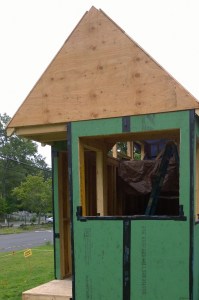
I’ve been watching a tiny house go up in front of the Umbrella Community Arts Center. It’s an art project that started in June and is supposed to wrap up next June.

The Umbrella said “Artist Miranda Aisling will be building a tiny house on the front lawn of The Umbrella and filling it with handmade items.”

I am now going to post the photos I have taken periodically, and I hope I get them in the right order. Even though the project is only half way, when I saw the new color today I said to myself, “Time to report.”

concord-tiny-house-1

072515-tiny-house-grows


070815-tiny-house-2

070815-tiny-house


072515-tiny-house-moving-along

082615-tiny-house-lantern


090415-tiny-house-growing

100315-Concord-tiny-house


100315-explains-tiny-house-art-project

101815-tiny-house-new-siding


110815-tiny-house-gets-roof

2115-tiny-house-at-half-way

Read Full Post »

Greg Cook has a lovely story at WBUR’s “The Artery” on Boston artist Nate Swain’s Zen garden.

Swain tells the reporter, ” ‘I worked driving a tour trolley in Charlestown, and I drove over that bridge every day to go to work, and looked down … I went down there not even knowing what I wanted to do.’

“At the edge of the Charles River, near the North Washington Street Bridge, by the dock in front of the Residence Inn by Marriott on the east end of the park, he’s been assembling ‘Low Tide City’ or ‘Barnacle City.’ It’s ‘a little city’ of bricks and stones that disappears under the river and appears when the tide goes out. ‘I realized it could be an art piece about sea level change,’ he says. ‘People could watch it flood and imagine Boston could do that if sea level rises.’

“And right under the Zakim Bridge, Swain realized he could rake the existing expanse of gravel he found there into patterns, much like a traditional Zen rock garden, to create ‘Zen Under the Zakim.’ He says, ‘If you really sit there and you listen to all the noise, some of the traffic, even though it’s really noisy, it does sound like ocean waves.’ …

” ‘I try to find places where I can do art without asking permission. In Boston, there’s so much bureaucracy. There’s no room for spontaneity. … With all the bureaucracy and the permission-asking, it sucks all the energy and all the inspiration out of the art piece itself.’ …

” ‘I have this theory,’ he adds, ‘if you put something up beautiful and colorful and fun, in good taste, uplifting, it will stay and everyone will love it and no one will bat an eye.’ ”

More here.

Photo: Greg Cook
Nate Swain’s “Zen Under the Zakim” in 2015.

Read Full Post »

Artists love a challenge. Tell them it’s impossible and they’ll find a way to do it.

As Ralph Gardner Jr. writes for the Wall Street Journal, a good example may be found at one to the most polluted waterways in America, Brooklyn’s Gowanus Canal.

“What is it about the Gowanus Canal,” Gardner asks, “that attracts art and artists? I visited a bit more than a year ago and spotted some sort of homemade art project floating in the middle of the canal. It was as if the anonymous artist was saying, ‘Take that, Superfund site!’

“A far more ambitious project alighted [in late September], when Diana Balmori, a celebrated landscape architect and urban designer, oversaw the launch of a floating landscape at the foot of the Whole Foods parking lot that overlooks the canal.

“ ‘The reason we picked the Gowanus Canal is the attempt to show that plant material can clean water,’ Ms. Balmori explained. At the same time, she acknowledged, ‘We picked the hardest.’ …

“The floating island was to be filled with multiple tubes. In a poetic twist, the tubes were to be made of the same culvert pipe used to dump pollution and sewage into the canal.

“Perhaps even more poetically, the goal of the experiment was to test the viability of creating large-scale ‘edible’ islands in polluted urban rivers to serve as a food source. Some plants were to be irrigated with distilled water, others with captured rainwater, and a hearty few even with water directly from the canal. …

“I was told that a duck had laid an egg on some earlier iteration of the project. And indeed, we stood there admiring the island’s three monarch butterflies, a beleaguered species in recent years, flitting about the plants.”

More at the Wall Street Journal, here, but there may be a firewall. The author is highly skeptical about anyone ever eating plants from this island, but you can tell he has a grudging admiration for an optimistic artistic vision that insists on a better future.

Photo: Cassandra Giraldo for The Wall Street Journal

Read Full Post »

It took a little poking around on the web as neither the Rhode Island State Arts Council nor the Block Island Airport seem to have published any information on the airport’s new exhibit, but I can finally share some tidings of artist Neal Personeus.

From Cape Scapes: “Neal began his interest in driftwood sculptures as a young boy on the beaches of North Truro in Cape Cod, Massachusetts. His original works were typically pirate ships in the sand made from the various flotsam and jetsam that Cape Cod Bay and the Atlantic Ocean would return to the land. By the time he was in his early teens, his works began to change towards wharf scenes and typical seaside shops perched upon interesting driftwood base pieces.

“When Neal was in his early twenties, he became an architectural and engineering draftsman. He rented a beachside cottage with some friends during the summer of 1984, and spent the entire vacation working beachside on his sculptures while watching the Olympics. It was during this time that he honed in on the type of works he would ultimately settle upon. Utilizing his interest in architecture, he would scour the beaches and dunes for beautifully bleached and unusually shaped base pieces, and then picture the style of house that would blend into and compliment the environment of the base piece.” More here.

You can find lots of Neal’s work on Pinterest if you search on Neal Personeus. And check out this Warwick Museum of Art poster featuring the piece called “Yeah … but the view” here.

Art: Neal Personeus
This humorous piece, currently in an exhibit of Personeus sculptures at the Block Island Airport, is called “Yeah … but the view.”

Read Full Post »

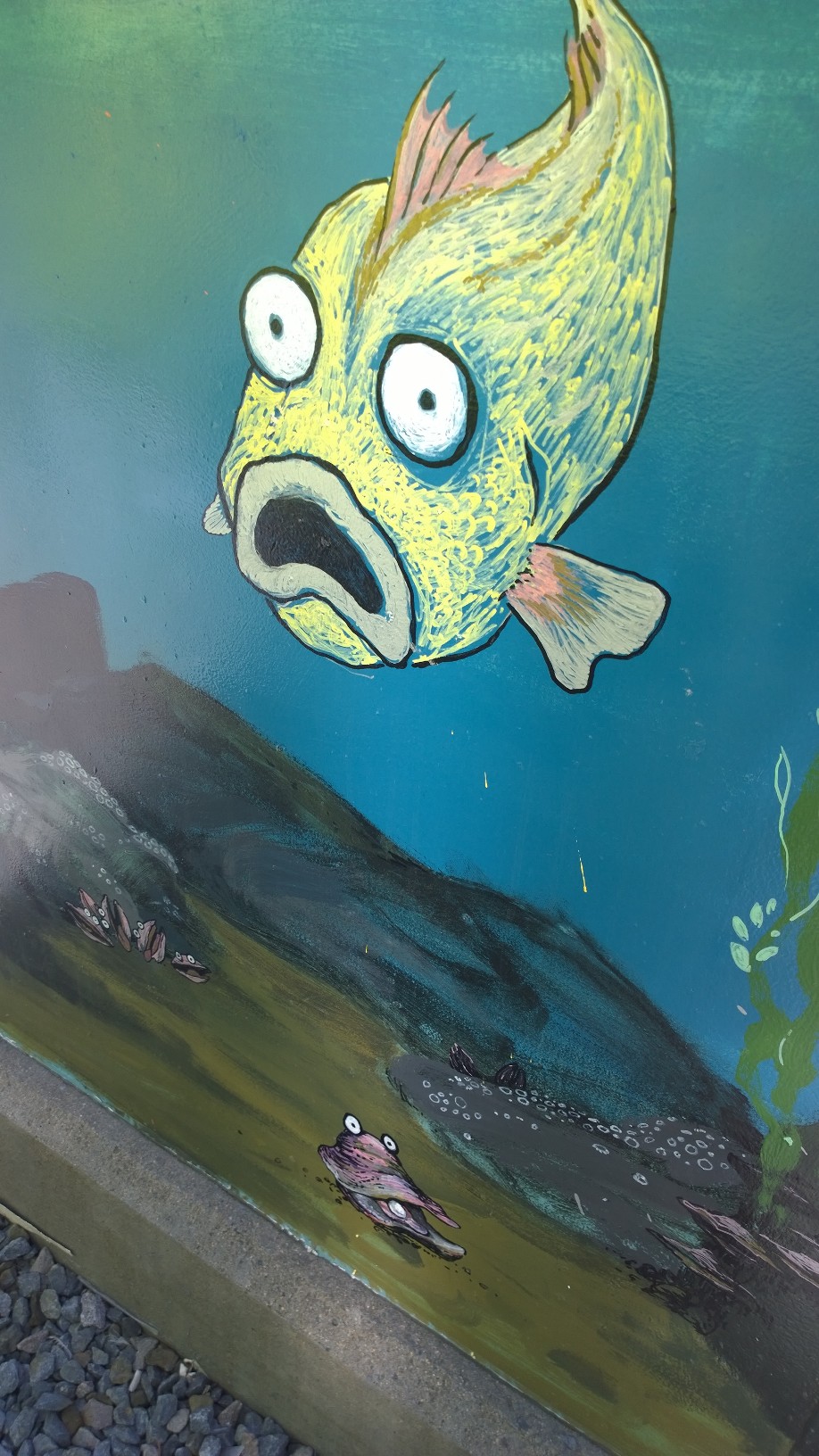
Adding appeal to a neighborhood by having local artists decorate utility boxes has become a thing. The adorable utility-box sea creatures below, however, have their work cut out for them as the only agreeable aspect of a heavily trafficked truck route between parking lots in South Boston.

I’ve taken photos of quite a few decorated utility boxes in the last couple years, and I think they work best in places where they support other amenities — trees, flowers, attractive storefronts. Otherwise they seem to be fish out of water.

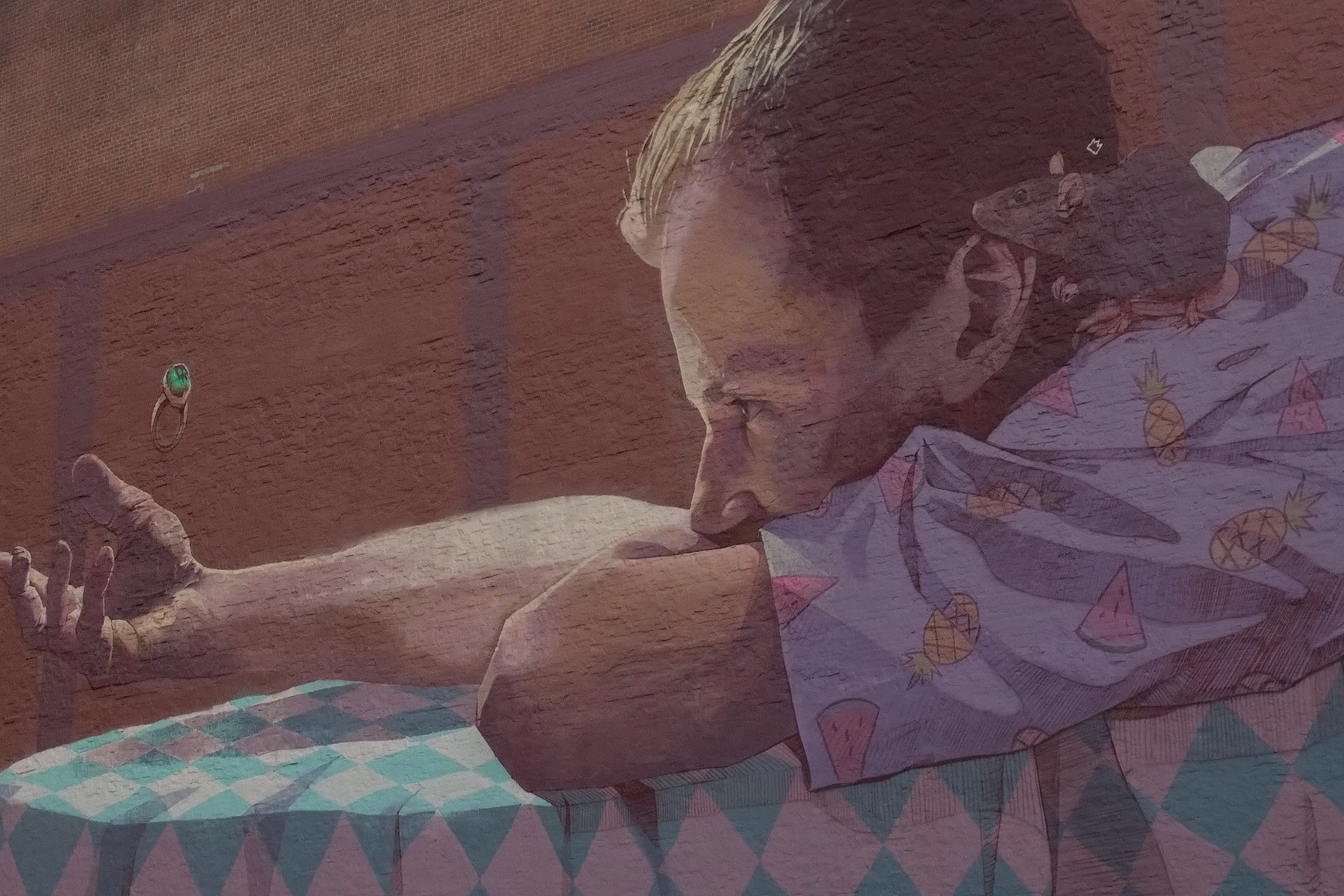
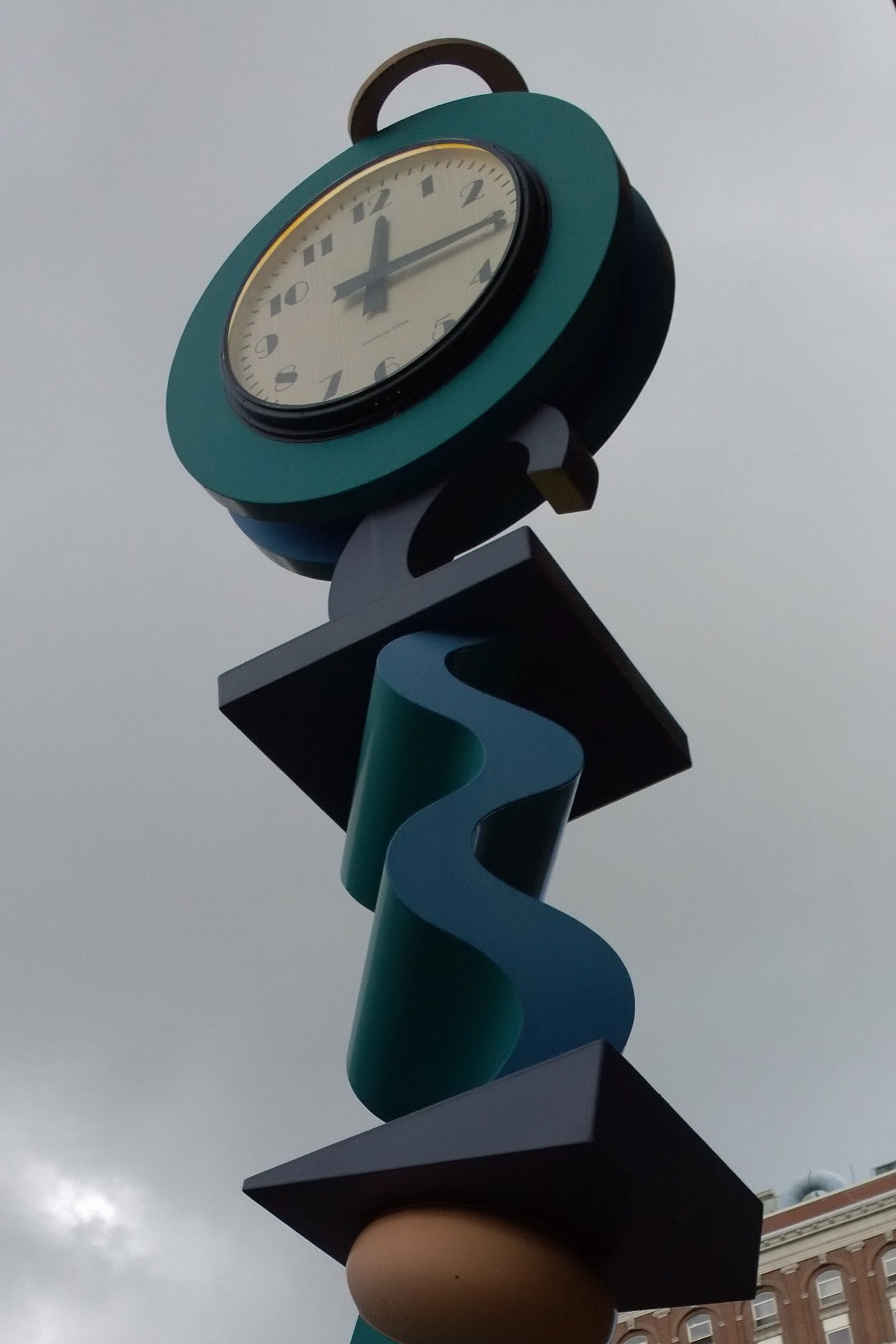
The unusual mural in downtown Providence is an example of street art with companions. The crazy Alice in Wonderland-type clock, for example, is nearby.

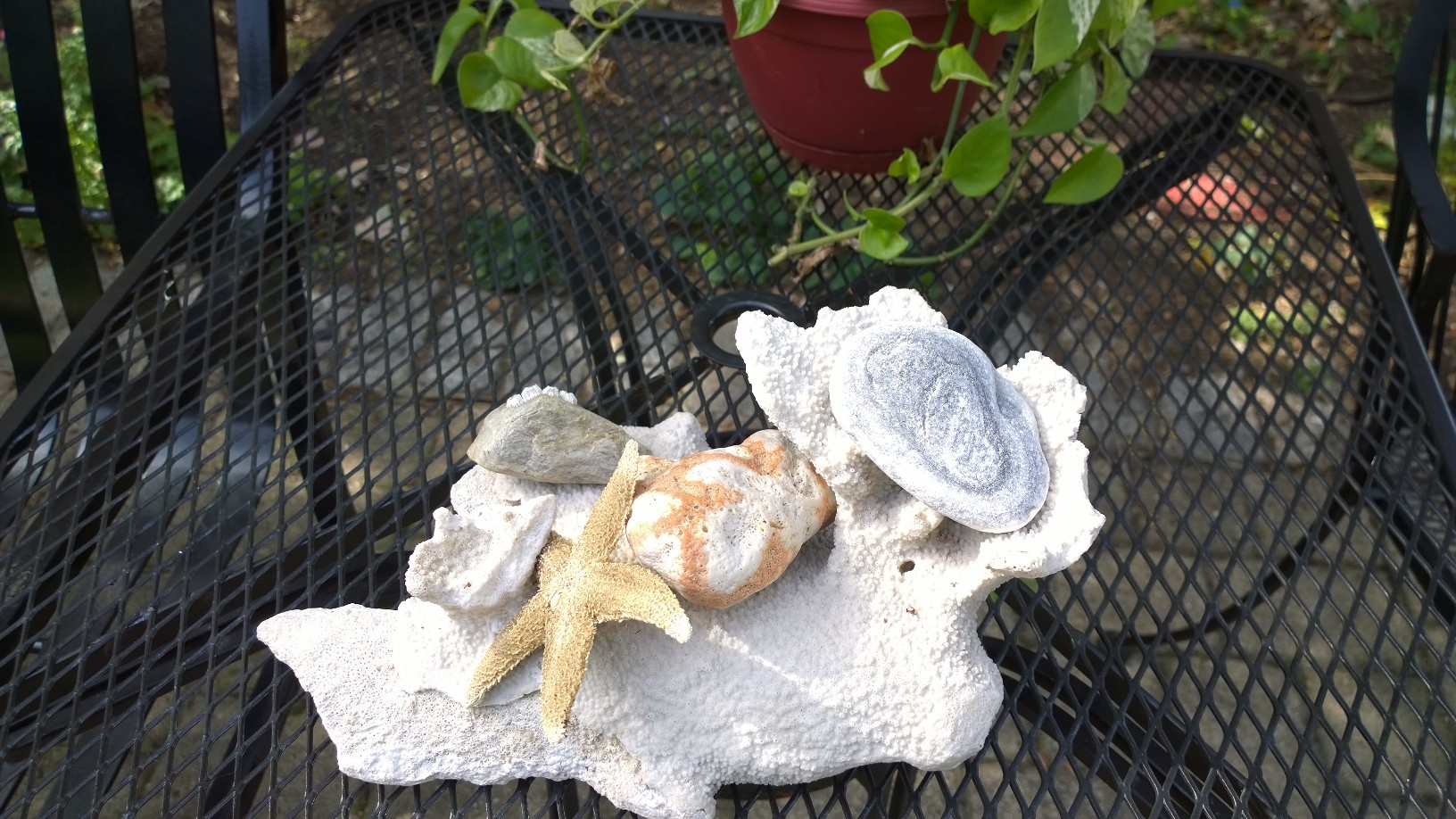
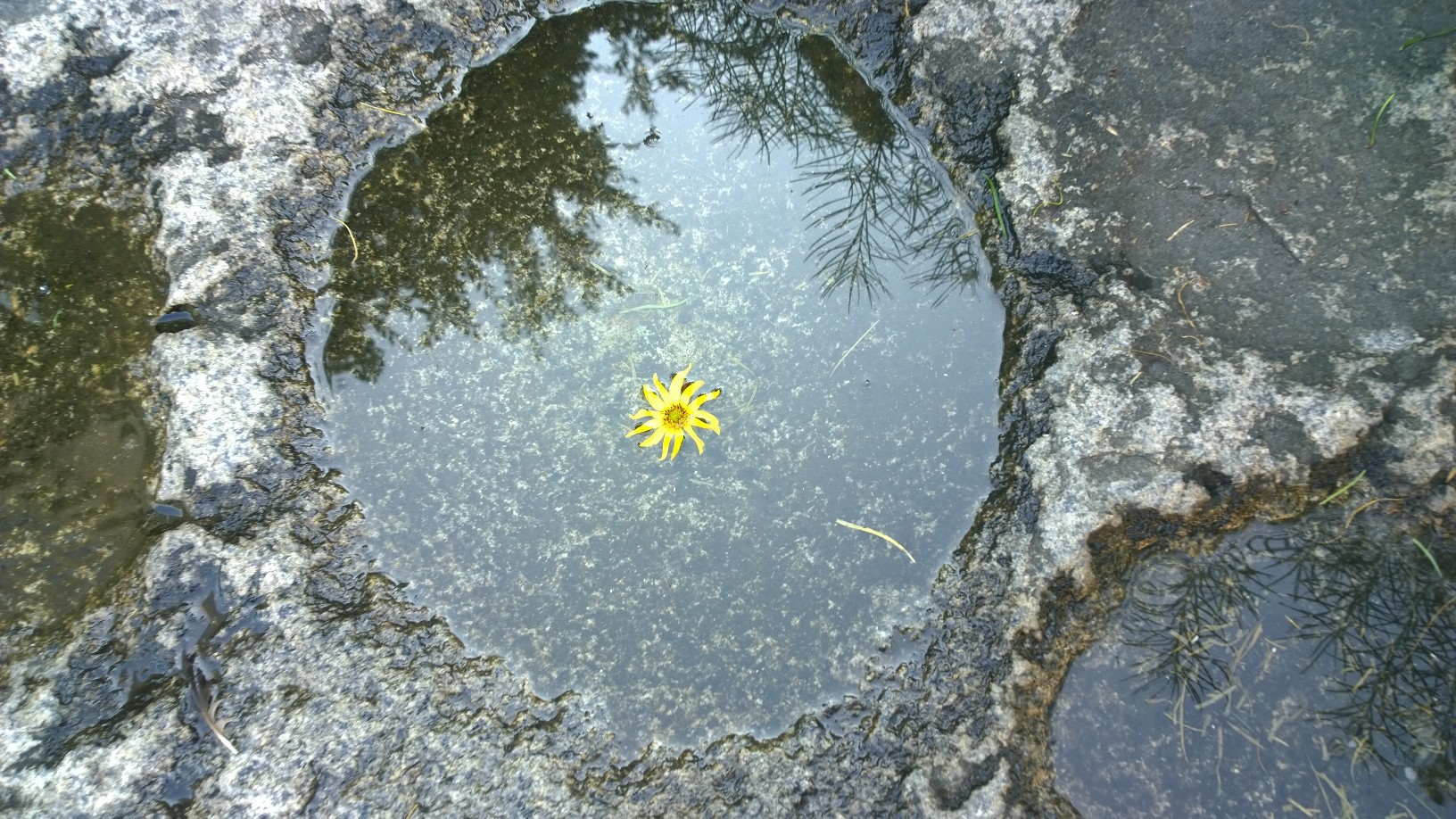
From other recent photographic undertakings comes shell art in Wormwood Park, sun-drenched crab apples, and a floating flower in the Greenway.

092515-utility-box-lobster

092515-fish-on-utility-box

092915-Providence-mural

092915-crazy-clock-in-Prov

092515-wormwood-park-display

092715-crabapples

082015-flower-in-Greenway-for-DS

Read Full Post »

Treehugger recently featured some rather magical lamps in the shape of mushrooms.

Kimberley Mok writes, “Whether they glow in the dark or are uncommonly rare, mushrooms are the incredible, unsung heroes of the natural world. They can bio-remediate oil spills, potentially cure diseases, and when used in your garden, can lessen its need for watering. Now, thanks to Japanese artist Yukio Takano, you can even have a LED version of them on your desk, transforming any mundane workspace into one of glowing, fungal wonder.

“Made with glass, salvaged driftwood and outfitted with energy-efficient LEDs and unique little light switches, Takano — who creates under the name The Great Mushrooming — seems to get the little details right enough to make these lamps look like the real thing (they come with hidden battery packs, to up the authentic-look factor, apparently). …

“Takano’s mushroom lights are one-of-a-kind, and while he sells at design fairs like Tokyo’s Design Festa, according to blogger tokyobling he doesn’t ship them abroad, due to the fragility of these glassworks. You can always feast your eyes over at Yukio Takano’s site The Great Mushrooming and visit the portfolio.”

More styles at Treehugger, here.

 Photo: Yukio Takano

Read Full Post »

« Newer Posts - Older Posts »