Feeds:
Posts
Comments

Posts Tagged ‘arts’

Like many of New England’s postindustrial cities struggling to reinvent themselves, Lowell has attracted a thriving artistic community to its old warehouses.

And as a magnet for generations of immigrants since the Merrimack and Concord rivers were harnessed to power cotton mills in the 19th century, the city has also attract a rich array of cuisines and cultures.

The late U.S. Senator Paul Tsongas helped to create a popular national park in Lowell. Today, others are building on the city’s arts reputation to attract tourists while strengthening ties among the various nationalities.

Yesterday I decided to check out one of the city’s newest festivals, “Creaticity.” Despite good weather, music, food, giant bubbles, and booths that featured artisans of many ethnicities, the event didn’t have anything like the attendance of the city’s 31-year-old folk festival. But you couldn’t expect that. It probably just needs time to get established.

Here are a few Lowell scenes to give you a taste. The last photo is an editorial comment on how challenging it can be to unlock all the inherent beauty of a city like Lowell.

091617-Lowell-retail-sign

091617-imprisoned-roses-Lowell

Read Full Post »

Photo: Craig Barritt/Getty Images for Sing For Hope
Jon Batiste performing on June 5 at the 6th Annual Sing for Hope Pianos Kickoff Event at 28 Liberty Plaza in Lower Manhattan. You may know Batiste from Stephen Colbert’s Late Show.

Many of the artists, musicians, and theater people who live and work in New York City believe in the importance of bringing the arts to children in underserved schools. And they are turning their beliefs into action by supporting Sing for Hope.

On June 5, Sing for Hope sent out a press release on the unveiling of 60 new artist-designed pianos destined to go to public schools after a summer on the streets.

“Late Show with Stephen Colbert bandleader and Sing for Hope Board Member Jon Batiste kicked off the performances at 12 noon, followed by a special performance of Bach’s Prelude in C performed by 45 pianists simultaneously on 30 Sing for Hope Pianos. Other performances included renowned pianist Michael Fennelly, who played Gershwin’s ‘Rhapsody in Blue.’

“Each year, Sing for Hope selects local and international artists to create unique piano artworks that are placed in parks and other public spaces for anyone and everyone to play. This year, through a special partnership with the New York City Department of Education, Sing for Hope will place all of the Sing for Hope Pianos in permanent homes in NYC public schools after the pianos’ time on the streets, benefiting an estimated 15,000 New York City school children. …

“This summer marks the placement of the 400th Sing for Hope Piano to date, making NYC host to more street pianos than any other city in the world. …

“In time for the big reveal of the 2017 Sing for Hope Pianos, the world’s first-ever mobile app for street piano discovery and engagement is now available. The app helps people to discover, visit and play the pianos – and then share their experiences via social media. Now in its third year, the app will allow people to take curated tours of the pianos, discover special concerts by artists and performers taking place at the pianos, and sign up to give their own pop-up performances on the pianos. The app, designed and developed by Craver Inc., is free to download and available in the App Store.”

More here.

Read Full Post »

Art: Neal Personeus
This humorous piece, exhibited in 2015 at the Block Island Airport, is called “Yeah … but the view.”

People know Rhode Island for its beaches, its cuisine — and, of course, its arts. Perhaps the cluster of arts activities started with the Rhode Island School of Design. Perhaps people who attended RISD stayed around after graduation. It’s hard to say.

But there is no doubt that the state saw what a treasure artists were and decided to create incentives to get them to stick around and contribute.

Dustin Waters has details in Charleston City Paper.

“Little Rhody has become a powerhouse when it comes to attracting artists and art lovers to its shores. And the method by which state leaders have leveraged Rhode Island’s tax code to benefit the creative community could serve as a model for other states looking to cultivate a stronger arts economy.

” ‘When artists populate an area, it tends to get energized,’ says Randall Rosenbaum, executive director of the Rhode Island State Council of the Arts.

“Targeting specific neighborhoods in need of revitalization, Rhode Island’s General Assembly realized that an excellent way to breathe life into these areas was to foster the growth of arts in these communities. Establishing designated arts districts throughout the state in 1996 with the goal of attracting and keeping talented artists, state leaders offered two tax incentives for artists who were willing to live and work in these districts, according to Rosenbaum.

“First, all works of art created in these districts could be purchased exempt from state sales tax. This tax break extended to dealers, galleries, and shops within each district. …

“The second benefit proved to be a major boon. [Income] received by artists from work produced and sold in a designated arts district was exempt from personal state income tax. B…

“Finally, in 2013, the Rhode Island General Assembly extended the sales tax incentive throughout the entire state. This decision came after a meeting between artists, politicians, and businesspeople who saw the plan as a way to turn the state’s creative community into an economic driver. …

“In a 2015 report to the Rhode Island General Assembly prepared by the Rhode Island State Council of the Arts, participating artists were surveyed to find out how they felt about the first year of business under the state’s new guidelines. Not surprisingly, the general consensus among the artistic community was positive.

“Almost 58 percent of artists surveyed reported that their sales increased from the previous year before the sales-tax exemption was instituted. …

“While Rhode Island hopes to spread the news about the state’s arts incentives, it wouldn’t be a bad idea for more states to start taking better care of their artists — before all the local creatives start heading up to Providence.”

More here.

Hat Tip: ArtsJournal.


Read Full Post »

I like stories like this since they give encouragement to cities that do a good job of supporting the arts. No doubt, once you list 20, the situation is already changing and other cities are emerging, but it’s still a good idea to give credit.

N. Rallo reports at Southern Methodist University’s National Center for Arts Research that the new study divides the pool of cities into small, medium, and large.

“SMU’s National Center for Arts Research (NCAR) announces its third annual Arts Vibrancy Index, which ranks more than 900 communities across the country, examining the level of supply, demand, and government support for the arts in each city.

“This year, 20% of the communities on the most-vibrant list appear for the first time – a total of eight new communities, including one new state, Alaska. … For the first time, community rankings are organized into three distinct lists based on size. …

“In addition to the Arts Vibrancy Index, NCAR provides scores for every U.S. county on its interactive map, based on measures of arts dollars, arts providers, government support, and socio-economic and other leisure characteristics. …

“Supply is assessed by the total number of arts providers in the community, including the number of arts and culture organizations and employees, independent artists, and entertainment firms. Demand is gauged by the total nonprofit arts dollars in the community, including program revenue, contributed revenue, total expenses, and total compensation. Lastly, the level of government support is based on state and federal arts dollars and grants. …

“Among cities with populations of 1 million or more, the five most vibrant arts communities are as follows:

Washington-Arlington-Alexandria, DC-VA-MD-WV
New York-Jersey City-White Plains, NY-NJ
San Francisco-Redwood City-South San Francisco, CA
Nashville-Davidson-Murfreesboro-Franklin, TN
Minneapolis-St. Paul-Bloomington, MN-WI …

“[Winning] communities with populations 100,000 to 1 million: …

Pittsfield, MA
Santa Fe, NM
San Rafael, CA
Missoula, MT
Burlington-South Burlington, VT …

“For small communities … the top five cities are:

Breckenridge, CO
Summit Park, UT
Bennington, VT
Bozeman, MT
Hudson, NY.”

More at SMU. How many of the cities do you know well? Have you enjoyed the arts there?

Another Hat Tip to ArtsJournal.

Photo: Southern Methodist University’s National Center for Arts Research

Read Full Post »


Photo: Los Angeles Times
Jackie DesRosier conducts a YOLA at HOLA (Youth Orchestra Los Angeles at Heart of Los Angeles) youth orchestra spring concert.

The arts have a mysterious capacity to touch people in ways that nothing else does. It’s as if most of what we do or even think about every day is on the surface of things, involving the small part of our brains that is conscious. The arts, however, can reach into the unconscious part and make hidden flowers bloom.

Read how, in Los Angeles, an arts program is helping students flourish.

Jessica Gelt writes at the Los Angeles Times, “It is one of the most densely populated areas west of the Mississippi. The poverty rate is over 35%, and more than a quarter of all households earns less than $15,000 per year. At least 30 gangs roam the streets, recruiting children as young as 9. The high school graduation rate is around 50%.

“That’s the state of affairs in Westlake, Pico Union and Koreatown, according to the organization Heart of Los Angeles. The group reaches more than 2,000 kids in those neighborhoods every year through after-school arts and athletics programs, but its crowning achievement is its partnership with the Los Angeles Philharmonic: Youth Orchestra Los Angeles at Heart of Los Angeles, or YOLA at HOLA. …

“The program provides intensive orchestral instruction, including classes on music creativity, singing and ensemble rehearsals, to 250 students in 1st through 12th grades. Classes take place daily. An hour of academic tutoring is thrown in each afternoon for good measure. …

“More than 350 families land on the waiting list for programs at HOLA every quarter, so Brown said HOLA wants to build a recreation center to serve more people. The statistics coming out of the HOLA’s academic enrichment, visual arts and music programs speak to why demand is so high.

“Of the 63 students in those programs who were high school seniors in 2015, 100% of them graduated, and 97% went on to college. …

“[HOLA Executive Director Tony] Brown and his staff are aggressive in preventing kids from falling between the cracks. They sometimes attend parent-teacher conferences to find out what support a child needs, and when a student disappears from their programs, a staff member might make a house call to help bring that student back. …

“Brown likes to tell the success story of a boy named Raymond who came through the program as a troubled middle-school student. His grandmother brought him to YOLA at HOLA because he was failing in school and in danger of joining a gang.

“ ‘This young man started playing the clarinet, and he played the heck out of it. Next thing you know he’s earned his way to playing in London with YOLA at HOLA and Dudamel,’ Brown said, referring to the youth orchestra’s 2013 trip overseas. Raymond is now attending UC Santa Cruz.”

Read why National Endowment for the Arts is crucial to this program, here.

Read Full Post »

Photo: @elliott.jerome, via Instagram
Installation view of Theresa Chromati’s
Tea Time, with audio accompaniment by Pangelica, at Museum of Contemporary African Diaspora Arts in Brooklyn.

For ten years, I was the editor of a magazine focused lower-income communities, and like this blog, it reflected a lot of my interests. One of the topics I was always on the hunt for was the role of the arts in community development. This study would have fit perfectly.

Isaac Kaplan writes at Artsy, “Arts advocates have long extolled the benefits of culture to personal and neighborhood welfare. While the contention is broadly accepted within the field, the existence of the link has largely been argued without an abundance of data and taken a backseat to economic justifications for arts funding.

“But a two-year study released this month by researchers from the School of Social Policy & Practice at the University of Pennsylvania has revealed a quantitative relationship between the presence of cultural resources in a neighborhood and key aspects of social well-being, particularly in less advantaged neighborhoods. The research was part of the school’s ongoing Social Impact of the Arts Project (SIAP).

“Professor Mark J. Stern and SIAP director Susan C. Seifert found that low- and middle-income residents across New York City with more access to cultural resources experience better education, security, and health outcomes compared to residents of neighborhoods with similar economic profiles but with fewer cultural resources. …

“The relative higher presence of cultural resources in lower-income neighborhoods is linked with several health, safety, and education benefits. These include a 14% decrease in indicted investigations of child abuse and neglect, an 18% decrease in felony crime rate and also a 17–18% increase in the number of students scoring at the highest level on standardized Math and English tests. …

“While the report is careful to note that such findings do not mean the arts are causing these outcomes, the link is nonetheless significant within a broader picture. …

“To reach their conclusions, the researchers compiled a ‘cultural asset index’ — an accounting of thousands of nonprofits, for-profits, employed artists, and cultural participants across New York City, drawing on numerous sources, including tax, grant, and administrative data.

“The study complements this data with interviews and discussions with individuals engaged with cultural enterprises across the entire city. …

“The study says that economically disadvantaged areas generally have fewer cultural resources than wealthier parts of the city. But less advantaged communities also had a stronger correlation between the prevalence of cultural resources and social well-being.”

Read more at Artsy, here.

Read Full Post »

Photo: Prezi
Something Shakespeare didn’t have to worry about: expensive energy for productions and emissions that increase global warming.

Christy Romer over at the UK website Arts Professional recently posted on the money British arts groups are saving by cutting their energy emissions — a win for them and a win for the environment.

“Arts Council England’s National Portfolio Organisations (NPOs) have saved £8.7m by cutting greenhouse gas emissions since 2012/13, according to a major new report by environmental charity Julie’s Bicycle. …

“The report draws on data submitted via an online reporting tool, an evaluation survey and case studies, ultimately concluding environmental action is making the sector more financially resilient.

“Compared to doing nothing, the reduction in energy emissions has saved £8.7m since 2012/13. The report predicts that if the 4.5% annual decrease continues until 2019/20, emissions will be 46% lower than in 2012/13 and £54m will have been saved in energy costs.

“Alongside a fall in the overall emissions output, and a fall in the amount of electricity and gas used, there has been a 210% growth in the generation of on-site renewable energy since the project started in 2012/13. …

“Julie’s Bicycle pledges to develop Arts Council England’s (ACE) approach to environmental sustainability at the operational, planning and policy development levels. …

“Darren Henley, Chief Executive of ACE, added: ‘Our collaboration with Julie’s Bicycle is introducing us all to new ways of working. … We all believe that art and culture can make the world a better place; this programme shows how our actions can make a real difference.’ ”

More at Arts Professional, here.

Read Full Post »

Research highlighted at Pacific Standard sometimes strikes me as a little lightweight, but I am happy to endorse a study that Tom Jacobs covered recently, because I have some personal experience. It’s about the benefits of both cultural activities and Internet usage for older people.

Jacobs writes, “A new British study of people age 50 and older finds a link between health literacy — defined as ‘the capacity to obtain, process and understand basic health information’ — and two specific behaviors: Regular use of the Internet, and participation in cultural activities.

“ ‘Loss of health literacy skills during aging is not inevitable, a research team led by Lindsay Kobayashi of University College London writes in the Journal of Epidemiology and Health. ‘Internet use and engagement in various social activities, in particular cultural activities, appear to help older adults maintain the literary skills required to self-manage health.’

“The study used data on 4,368 men and women age 50 or older who participated in the English Longitudinal Study on Aging. Their health literacy was measured two years after they joined the project, and again five years later, by having them read a fictitious medicine-bottle label and then answer four reading-comprehension questions.”

I am over 50, enjoy cultural events and the Internet, and understand most medicine bottle labels. So there you go. It’s all true.

Get the key details at Pacific Standard.

Photo: Popova Valeriya/Shutterstock 

Read Full Post »

You never know what will turn up at Studio 360, a radio show on the arts. A feature on November 21 explained how one of the legendary jazz greats toilet-trained his cat.

“The jazz musician Charles Mingus was a celebrated band leader and one of the most important composers of his generation. But at the same time he was recording The Greatest Jazz Concert Ever with Dizzy Gillespie and Charlie Parker, he was working on another masterpiece of sorts. He figured out how to get his cat, Nightlife, to poop in a toilet — and he decided he’d share his method with the world.

The Charles Mingus CAT-alog for Toilet Training Your Cat was a step-by-step guide available for purchase by mail. It’s full of charming advice and meticulous pedagogical detail:

“Here’s an excerpt from Step 1:

Once your cat is trained to use a cardboard box, start moving the box around the room, towards the bathroom. If the box is in a corner, move it a few feet from the corner, but not very noticeably. If you move it too far, he may go to the bathroom in the original corner. Do it gradually. You’ve got to get him thinking. Then he will gradually follow the box as you move it to the bathroom. (Important: if you already have it there, move it out of the bathroom, around, and then back. He has to learn to follow it. If it is too close to the toilet, to begin with, he will not follow it up onto the toilet seat when you move it there.) A cat will look for his box. …

“Reporter Jody Avirgan put the method to the test on four-month-old kitten Dizzy. His owners, Kevin and Nicole, even played Mingus throughout the process.”

More at Studio 360, here, including a recording of the show.

Photo: Jody Avirgan
Dizzy the cat is interviewed for Studio 360.

Read Full Post »

No matter how much you like your routine or how pleasant your surroundings, sometimes you just have to get up and go out. Today I needed a change of scene so, in spite of the freezing temperatures and high wind, I went to look at some art.

The Design Museum is not far from my office, and the folks there come up with lots of good projects. I blogged here about their Street Seats, an array of public benches designed by creative people from around the world.

This being Design Week in Boston, I decided to check out the exhibit space they are using in a new apartment building called 315 on A, a lovely renovation of an 18th century warehouse for coffee.

The new exhibit is called Green Patriot Posters and features handsome posters from professionals as well as the pretty impressive results of a school poster contest on the conservation theme.

Many of the posters explicitly reference WW II posters. You know: “Loose lips sink ships” and all that. Here, the posters urge viewers to pursue a more sustainable way of life and fight global warming. More.

Be sure to check the poster over the left shoulder of the woman speaker in this video. That was my favorite in the show because it made me laugh out loud. I think you can see a Paul Bunyan figure with an ax. He is looking at the tree he was going to cut with an uncertain expression as the tree is growing out of his foot.


Read Full Post »

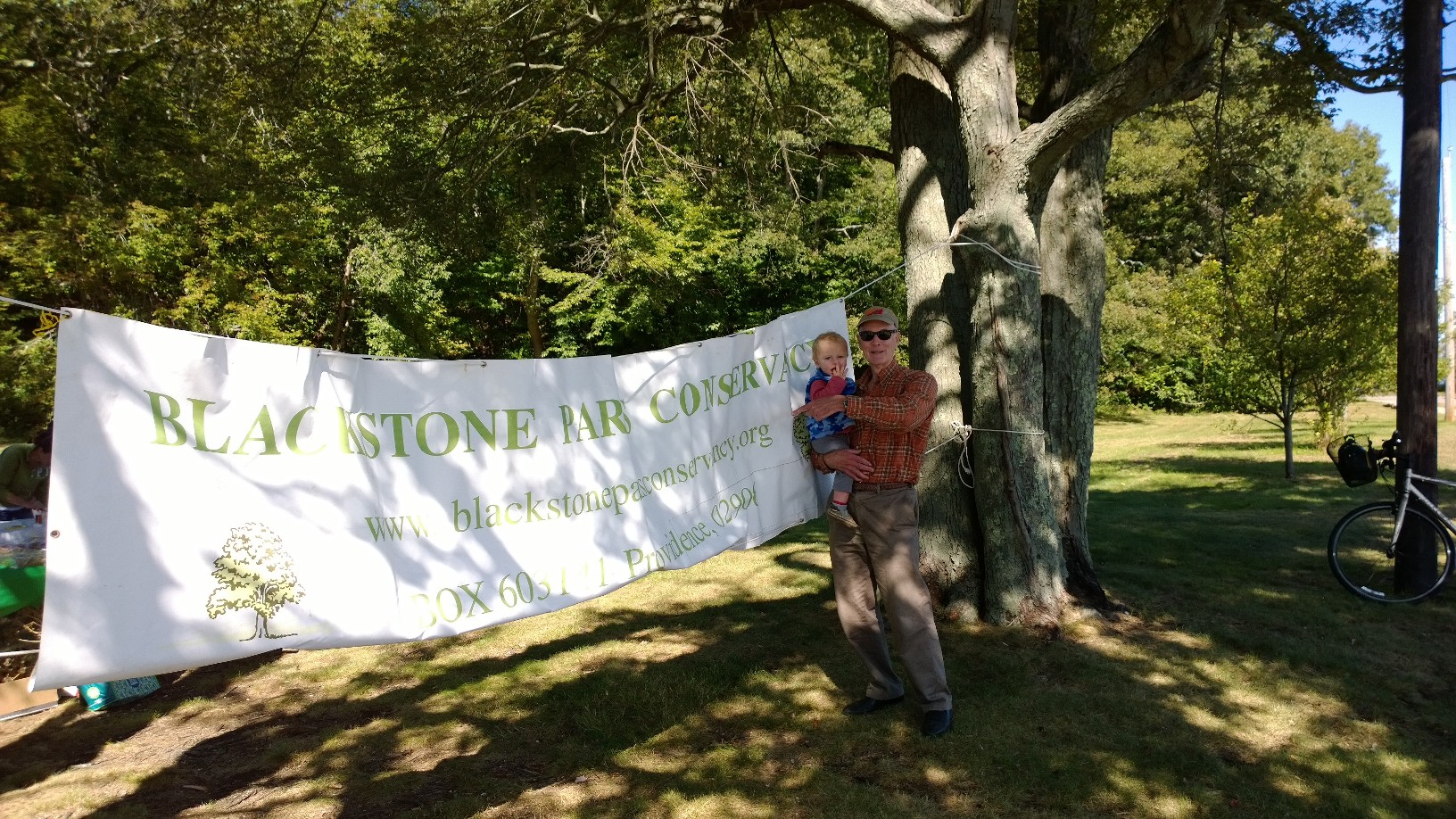
The Blackstone Parks Conservancy sent out this invitation, and we went.

“We invite you to attend the family event: Build your own Fairy House! This event was originally part of the summer series of family programs given by the Blackstone Parks Conservancy. Due to its rousing success, we are offering it again as part of Playful Providence, a citywide event organized by the Partnership for Providence Parks and the Providence Parks Department. Join us at the Field on River Road, across from the Narragansett Boat Club.”

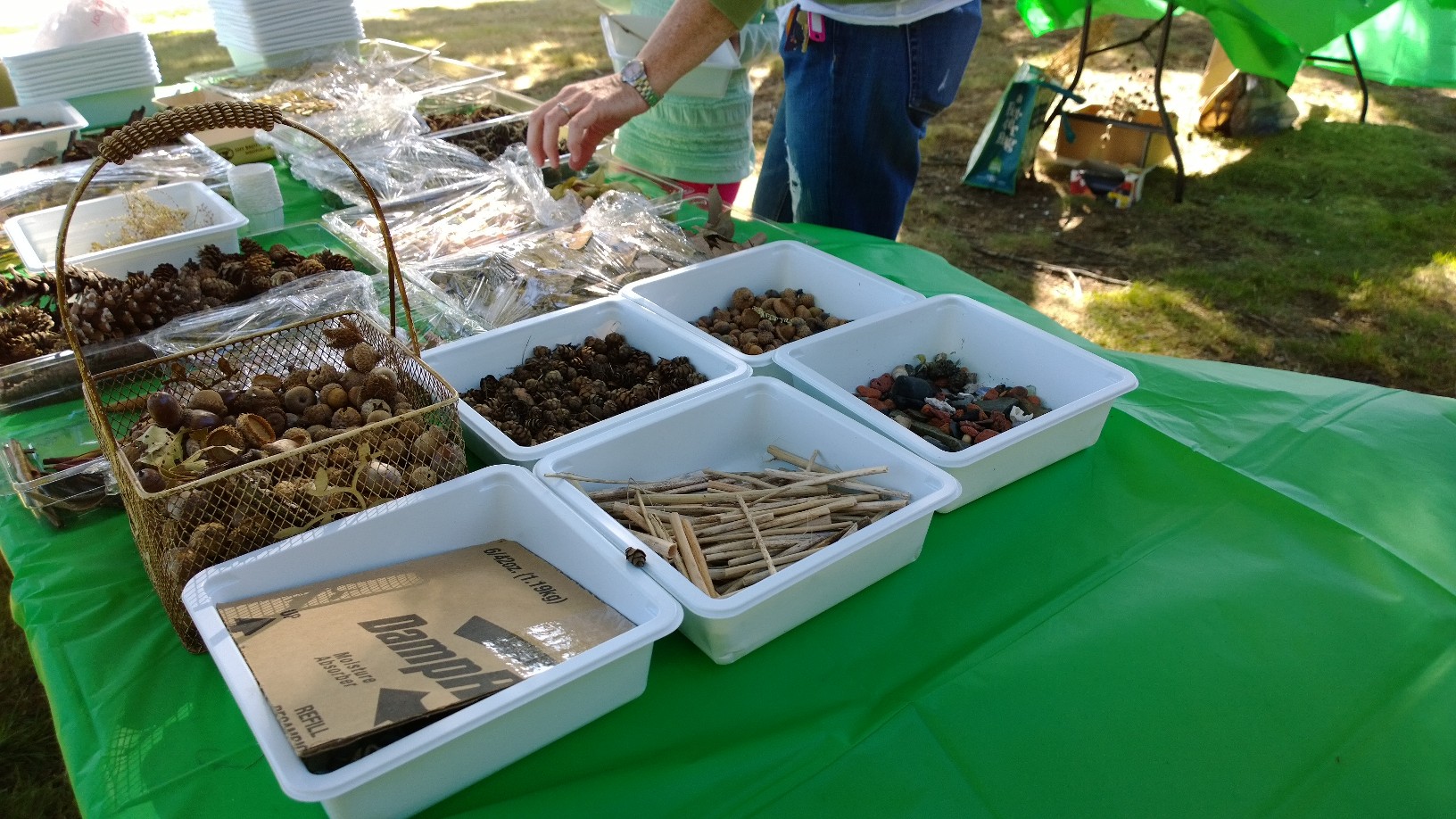
Cardboard forms that you could fold into houses were on hand. On top you could apply a layer of something like sand-colored Play-Doh, with actual sand in it. Next you could choose from a gorgeous array of seedpods, acorns, leaves, twigs, and other fruits of nature — and stick them into the “mortar” — the way a fairy would like them — before the clay dried.

Our middle grandchild was a little young for it, but he liked running around in the park and watching the rowing lessons on the Seekonk nearby.

I would like to try fairy houses again someday soon. Just collecting the pieces of nature to be used would be fun for a child.

Read about the conservancy and future events here.

blackstone-valley-fun

to-make-fairy-castles

Read Full Post »

Matadero was an old abandoned slaughterhouse in Madrid. Lately it has been “evolving into a cultural laboratory, where a new arts financing strategy is being tested.” So says Doreen Carvajal in the NY Times.

“Companies and institutions are providing financial support to supplement dwindling government arts subsidies, but with a twist: they don’t just send checks, they move in.

“Within the walled 59,000-square-foot center, there are public theaters and exhibition spaces that last year drew more than 500,000 visitors for music and art events and avant-garde plays. But five new residents are private institutions, including a designers’ association, a publishing house’s foundation and offices of Red Bull, the Austrian energy drink maker.

“They are in the compound rent-free for now, but have invested millions in the remodeling of pavilions there, as well as in programming, from art exhibitions to music festivals.

“These new partnerships are forged, out of necessity, here in Spain, where government support for culture has plunged by almost 50 percent over the last four years, a result of a lingering economic crisis that hit late in 2008.”

Some observers worry about the downsides of corporations having a big influence on what art gets shown, but haven’t the arts always had to have some help from patrons or companies?

Probably it pays just to be wary, to recognize when there is undue influence, and to push back. Certainly smaller, more experimental projects are unlikely to find a home under a Red Bull banner.

Read more at the Times, here.

Photo: Carlos Luján for The International Herald Tribune
Inside Matadero Madrid: A closer look at the arts complex.

Read Full Post »

Photo: Daniel Balter
Moby Disc, a creature sculpted from 6,000 CDs salvaged from landfills by Fireseed Arts.

Central Massachusetts is getting its own arts and music festival this weekend in Devens (what used to be the military base Fort Devens).

Nancy Shohet West writes at the Globe, “During her years as a university student in Austin, Texas, Monica Hinojos witnessed firsthand the way the city’s iconic festival, South by Southwest, grew meteorically from a music festival with 700 participants in 1987 to an amalgam of music, film and interactive media that drew 25,000 people to this year’s gathering in March.

“So it’s understandable that when Hinojos took up the reins as executive director for 3Rivers Arts, a Groton-based nonprofit whose mission is to support local artists and the arts while spurring the creative economy and enriching community life in the towns in and around Central Massachusetts, she arrived with grand visions.

“One of those visions will materialize this weekend in the form of ‘The Nines.’ The multistage music and arts festival’s inaugural edition kicks off Saturday at Willard Field in the Devens property off Route 2.

“Hinojos concedes the scale of the event might seem a little bit outsized for the normally low-key performance scene in the Nashoba Valley, but she says it is time to start building up local cultural offerings — and that’s why she’s choosing to do it with a bang.

“’ I had a vision of a music, film, multiart festival, modeled on South by Southwest,’ Hinojos said. ‘We want to provide a platform for artists in Central Massachusetts by which we can elevate their work. We have some world-class artists out here. My vision is to amplify their presence so that others throughout New England and the world can see it.’ …

“ ‘In the end, we found a little bit of something for everyone,’ she said. ‘Most of the musical performers are nationally touring, emerging acts …’

“Identifying local artists appropriate for the event was the job of 3Rivers Arts art director Christopher Cyr, a Rhode Island School of Design graduate now living in Pepperell. One of the studios he chose to highlight was FireSeed Arts of Framingham, known for its ‘art with a repurpose’ mission and focus on eco-design.

“ ‘We call it locally harvested trash,’ said Daniel Balter, a cofounder of FireSeed Arts. ‘We try to bring awareness to the role of repurposing trash as art. The Nines festival is a perfect opportunity to provide platforms for local artists, and create some great things.’ ”

“Gates open at noon; the music begins at 1 p.m. and will continue until 11 p.m. … www.theninesfestival.com or  800-653-8000. Children under 10 admitted free if accompanied by parent or guardian. ” More.

Photo: Colm O’Molloy for the Boston Globe
Monica Hinojos of 3Rivers and Benjamin Jachne of Great Northeast Productions are co-sponsoring The Nines music, comedy, arts festival in Devens.

Read Full Post »

Some artists have had an idea that spins off the “whistlestop” train tours that politicians since Lincoln have taken to connect to voters.

Randy Kennedy writes at ArtsBeat in the NY Times, “Chartered train trips tend to conjure images of flag bunting, stump speeches and glad-handing politicians.

“But a cross-country whistle-stop tour now being planned as a kind of rolling public art project by the artist Doug Aitken might give train travel considerably more cultural cachet.

“Mr. Aitken, who works in Los Angeles and whose pieces in video and film often explore speed and people in transit, has organized a three-week journey from New York to San Francisco, with 10 stops in between, called ‘Station to Station: a Nomadic Happening,’ which will include not only shows by visual artists but also music, poetry and food. …

“ ‘This really came out of a kind of restlessness, the feeling that art forms are too often segregated, music played in the same clubs and art shown in the same galleries and museums,’ Mr. Aitken said in an interview. ‘I felt like we needed to experiment with a new model.’ ’

The trip will go from September 8 to September 28. Read more to see if it will stop in your town.

Photo: Wikimedia Commons
President and Mrs. Roosevelt on a whistlestop tour.

Read Full Post »

I do love creative stealth projects. This one is not quite stealth because, although the perpetrators act under cover of darkness, they are known — and willing to be interviewed.

Taryn Plumb writes for the Boston Globe about graffiti artists with knitting needles in Ashland, Mass. “Armed with clews of yarn, they transformed a series of utilitarian light posts into colorful, whimsical, eye-luring structures.

“It’s called ‘yarn bombing,’ ‘guerrilla knitting,’ or ‘graffiti knitting’ — wrapping and otherwise decorating everyday structures with yarn under the cover of night. …

“It is a worldwide movement — the first international ‘yarn bombing day’ was observed on June 11, 2011 — that has emerged in the last decade, with elaborate designs hitting bicycles, statues, trees, steps, parking meters, phone booths, and subway interiors, filling potholes, and even draping entire buses and military tanks in various countries.

“In its local application, though, Ashland Creative wasn’t completely rogue. Organizer Andrea Green sought approval from selectmen.”

Plumb explains that the group’s main motive is to help reenergize the downtown as other local community-building initiatives are doing.

“And the response? Curiosity from both adults and kids, the latter of which have named their favorites and been more than happy to explore their texture.

“ ‘People have just been delighted to see the way ordinary functional objects have been transformed into fun, interesting works of art,’ said Green …

“ ‘People often have the perception that art has to be seen in museums,’ Green said, ‘but amateur artists can create it, and it can still entertain.’ ”

More.

Update 2/10/14: Got to add another great yarn-bombing story here, courtesy of Mary Ann.

Photo: Ashland Creative
Ulie Nardone participated in Ashland’s recent Wrap-It Up Art Project.

Update: Beagling sends along this version of yarn bombing.

Photo at the NY Times: Olek
“Charging Bull,” near Wall Street, was covered in crochet by artist Olek in December 2010.

Read Full Post »

« Newer Posts - Older Posts »