Back in January, I read Michelle Herman’s Slate column about taking up ballet late in life, and I’ve been wondering if she’s kept it up during the pandemic. Even professional ballet dancers have found it challenging to practice.
Here is how Herman got into ballet at age 62.
“The dance studio had just opened on my corner — I didn’t even have to cross a street to get there. So what I asked myself was just how lazy I would have to be not to try a class. I had fond, if vague, childhood memories of the weekly modern dance classes I took for five or six years at the famous Marjorie Mazia School in Brooklyn. …
“It had left its mark: The thought of a dance class did not fill me with despair or fury the way a Pilates class or the contemplation of a gym membership would have. Plus, I enjoyed dancing at parties. So maybe this would be fun, I told myself. Maybe I wouldn’t hate it.
“I didn’t hate it. I didn’t hate it so much that almost right from the beginning I was in tears. … There is no reason it should have felt so right to have one hand on the barre as I extended a foot that I was concentrating very hard on simultaneously turning out and pointing — concentrating not only on that pointed foot, but also on muscles throughout both that leg and the other leg, the one that was supposedly just standing still. And on my right arm in second position.
“I believe what happened that day was that I fell in love.
“There were only four of us in the room that first day. Three students (two old, as in over 50, and one young, as in under 20) and Filippo Pelacchi, the teacher (who was very young himself, although not in dancer years—he had just turned 28).
“If I cannot recreate every one of the 75 minutes of that first adult beginner class I took in the summer of 2017, it’s because by now I’ve spent approximately 84,000 more minutes in that studio—that is, 1,400 hours, something like 950 dance classes plus rehearsals for performances, and those minutes run together in my mind. But I do know this—that in that very first class, … I had a moment of what seemed like perfect clarity: My body and my mind were working as one. …
“I’m a writer and a teacher, so all my work is mental work. But in ballet there was what seemed to me a remarkable twist: I was living that mental work in my body. In my body — with which, even more remarkably (even more improbably), I was making art. …
“In ballet, there is no separating the body and the mind. I have to think hard to create the shapes, to make the movements, of ballet. Even standing still in first position — which to the observer doesn’t look like anything — requires the engagement of muscles that will not turn on without my express command, muscles that do not engage reflexively the way my muscles do when going about ordinary tasks. There is nothing ordinary, nothing of the daily life, about ballet. …
“And there is this: Almost from the start I saw that ballet would fulfill a longing I’d had as far back as I could remember, a longing that accounts for the pleasure I take in hosting and leading a Passover Seder although I am a firmly nonbelieving Jew. …
“Sometimes the ballet advice sounds a lot like life advice.
- Build a solid structure, Filippo tells us, and then find the open spaces where you can experiment, be yourself, and make it your own.
- With stability comes freedom. If you are strong in your center, the rest can move freely around it.
- Everything is connected. Everything you do is informed by what you have done before.
- Commit to the transitions, he urges us. Even though they are not the highlights, they are the platform for the highlights.
- And: No matter what happens, stay in it. Even if you forget or make a mistake, keep moving. “Here I am!” Own it. And then find your way back in.
- Search every moment for what is there. Especially in the pauses, you have time to find something new, the next thing.”
More at Slate, here.


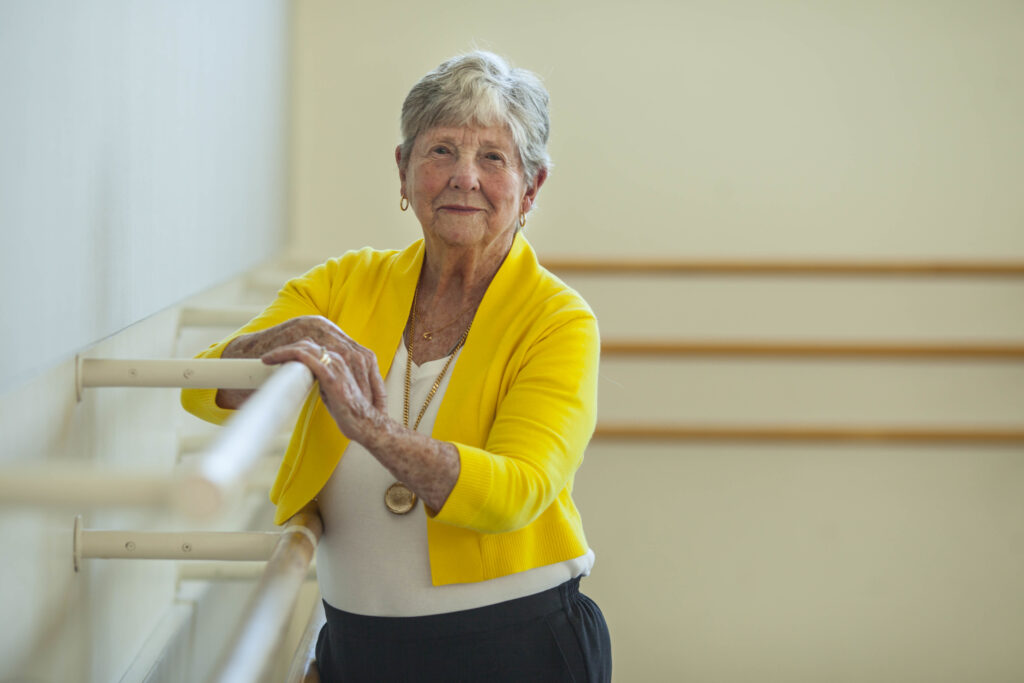
 Photo: Chris McKeen/Stuff
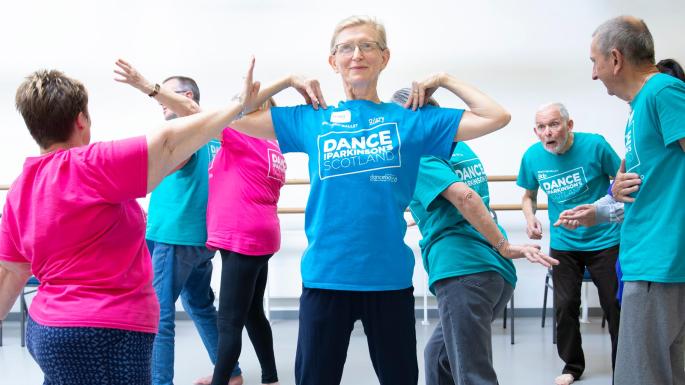


 Photo: MediaPunch/REX/Shutterstock/


 Suzanne's Mom's Blog