Feeds:
Posts
Comments

Posts Tagged ‘band’

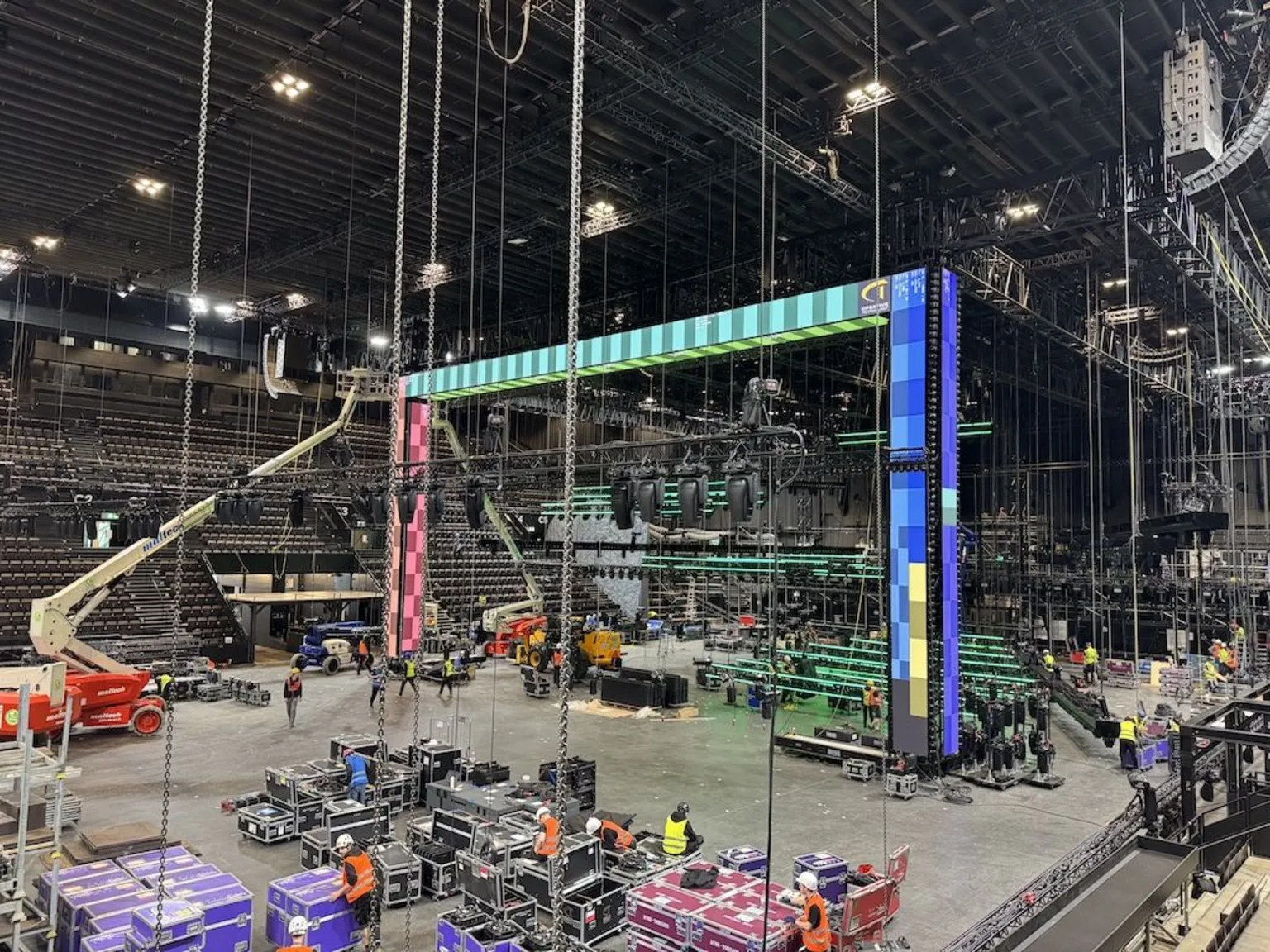
Photo: SRG/SSR.
Construction of this year’s Eurovision stage began in early April, three weeks before rehearsals kicked off.

You have to admire the ambition that goes into producing an extravaganza. Just envisioning it seems beyond the imagination of normal mortals. Today’s story describes the behind-the-scenes magic of the 2025 European song competition known as Eurovision, in which fans root for their own countries.

Mark Savage reports at the BBC, “Thirty-five seconds. That’s all the time you get to change the set at Eurovision. Thirty-five seconds to get one set of performers off the stage and put the next ones in the right place. Thirty-five seconds to make sure everyone has the right microphones and earpieces. Thirty-five seconds to make sure the props are in place and tightly secured. …

” ‘We call it the Formula 1 tire change,’ says Richard van Rouwendaal, the affable Dutch stage manager who makes it all work. ‘Each person in the crew can only do one thing. You run on stage with one light bulb or one prop. You always walk on the same line. If you go off course, you will hit somebody.’

“The stage crew start rehearsing their ‘F1 tire change’ weeks before the contestants even arrive. Every country sends detailed plans of their staging, and Eurovision hires stand-ins to play the acts. …

“As soon as a song finishes, the team are ready to roll. As well as the stagehands, there are people responsible for positioning lights and setting pyrotechnics; and 10 cleaners who sweep the stage with mops and vacuum cleaners between every performance. …

“The attention to detail is clinical. Backstage, every performer has their own microphone stand, set to the correct height and angle, to make sure every performance is camera perfect.

” ‘Sometimes the delegation will say the artist wants to wear a different shoe for the grand final,’ says Van Rouwendaal. ‘But if that happens, the mic stand is at the wrong height, so we’ve got a problem!’ …

” ‘It’s a big logistics effort, actually, to get all the props organized,’ says Damaris Reist, deputy head of production for this year’s contest. ‘It’s all organized in a kind of a circle. The [props] come onto the stage from the left, and then get taken off to the right. Backstage, the props that have been used are pushed back to the back of the queue.’ …

“What if it all goes wrong?

“There are certain tricks the audience will never notice, Van Rouwendaal reveals. If he announces ‘stage not clear’ into his headset, the director can buy time by showing an extended shot of the audience. …

” ‘There’s actually lots of measures that are being taken to make sure that every act can be shown in the best way,’ says Reist. …

“It’s no surprise to learn that staging a live three-hour broadcast with thousands of moving parts is incredibly stressful. …

“The shifts are so long that, back in 2008, Eurovision production legend Ola Melzig built a bunker under the stage, complete with a sofa … and two (yes, two) espresso machines.

” ‘I don’t have hidden luxuries like Ola. I’m not at that level yet!’ laughs Van Rouwendaal ‘But backstage, I’ve got a spot with my crew. We’ve got stroopwafels there and, last week, it was King’s Day in Holland, so I baked pancakes for everyone.’ “

More at the BBC, here.

This year the winner was Austria’s Johannes Pietsch, or JJ, and the song was “Wasted Love.”
Read Full Post »

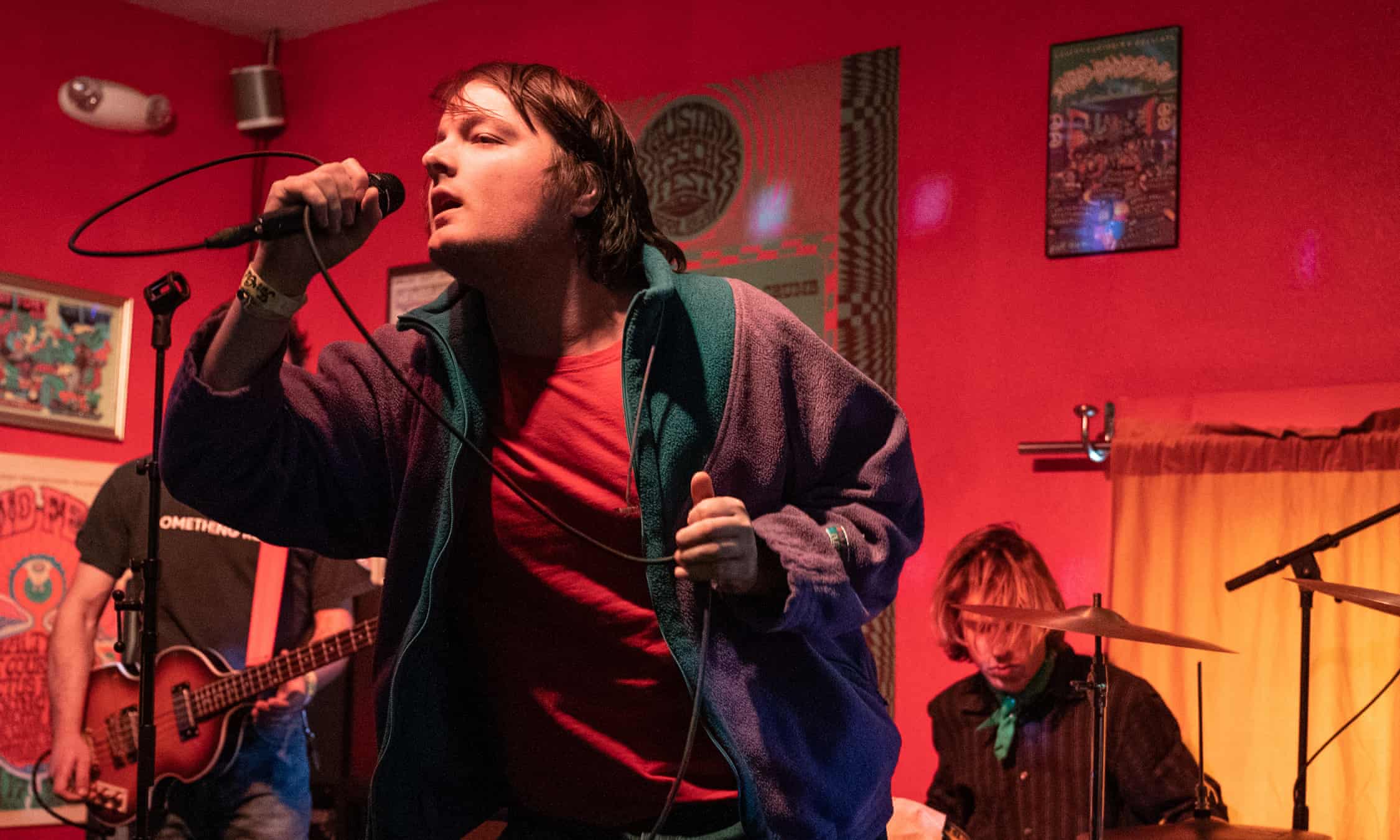
Photo: Lorne Thomson/Redferns.
A group called Personal Trainer performs in an Austin, Texas, record shop (above). Like NPR’s Tiny Desk Concerts, record shops provide a welcome venue for performers.

In the record industry, apparently, as long as performances feel a little different and surprising, it’s good for business. But how long do things stay surprising? Today’s article traces the rise of band performances in record shops and leads me to wonder, After record shops, what’s next?

Michael Hann writes at the Guardian, “At one end of Banquet Records in Kingston upon Thames the Dutch indie band Personal Trainer are performing a short set next to the album racks. … Afterwards, the band will sign the albums the fans have bought and everyone will depart a little happier: the fans with memories of an intimate show and signed records; the band a few quid richer, a few more sales made, maybe a few more fans won. And Banquet will have sold a few hundred quid’s worth of stock.

“It’s early August and the start of an intensive week for Personal Trainer – as well as Banquet, they will play record shops in London, Brighton, Portsmouth, Totnes, Bristol, Liverpool, Leeds and Nottingham. There will be festival shows, too, but only one conventional gig, an undersell in a tiny pub. This campaign is not launching with touring, at least not in the old-fashioned sense. …

“Artists have always gone to record shops to sign albums. And there have long been one-off promo shows in shops. But the idea of the in-store performance as a key part of an album launch dates back a decade or so, partly because physical sales of music were so low that the extra sales from a handful of appearances could dramatically affect chart position for bands with a loyal fanbase (physical sales still carry a greater chart weighting than streams or digital downloads).

“But also it’s because it’s one of the few routes left to promote a new album, says Tara Richardson, who managed the Last Dinner Party when they reached No 1 in the album charts earlier this year with their debut. ‘There’s no TV any more for bands,’ she says. ‘There’s only a Radio X session and a Live Lounge recording. So in the week of release you either put in shows, or you put in in-stores, and they’re the perfect thing to keep everyone busy in the week of release.’

“Labels favor in-stores, she says, not just for the chart position, but because it keeps the decks clear for a proper tour later in the campaign. Meanwhile in-stores tend to favor indie-ish bands, not least because independent record shops are now far more of a driving force in retail than the megastores. The Rough Trade chain, for example, hosts scores of shows. …

“With the right act and enough advance notice, in-stores can make a huge difference to sales and set the tone of an album campaign. ‘In the UK, the in-store has become part of the process of building a week-one launchpad for the campaign and building a chart position, because physical sales still leapfrog the streaming economy,’ says James Sandom, who works as a manager with bands including the Vaccines and Interpol. Sandom says the charts actually measure nothing of meaning any longer, but they still have use, because a high chart position will allow booking agents to demand higher fees, and get bands better spots on festival bills. …

“Simon Raymonde of Bella Union – Personal Trainer’s label – says it’s about building community. ‘I really like it when the shops are fully involved and they will be far more supportive of the record.’ …

“But for Rupert Morrison of Drift Records in Totnes, which staged one of Personal Trainer’s shows, in-stores becoming an institutionalized part of an album campaign risks losing what was once special about them. ‘Originally it was an American thing,’ he says. ‘Culturally outlying stores like Other Music in New York were melting people’s minds: the people there would talk about Laurie Anderson playing and Lou Reed cheering her on and helping with her pedals. They were these incredible, intimate, mind-blowing experiences, where you got completely different access to people. …

“ ‘I worry that like everything, once people see that something is a thing, it gets hammered and hammered.’ …

“Nevertheless, the results, for certain artists, can’t be argued with. Shed Seven had their first No 1 album earlier this year thanks to sales made at their in-store appearances in January. ‘You’re in a van, you’ve got one crew member to help, and you’re in Brighton at midday, then Southampton at teatime, Bristol the next lunchtime. And then you’re in Glasgow,’ says singer Rick Witter. ‘It’s intense.’

“But that No 1 changed perceptions of the band, Witter says. No longer were they a Britpop punchline, but a band with a No 1 album.”

More at the Guardian, here.

Read Full Post »

Photo: The Real West Virginia.
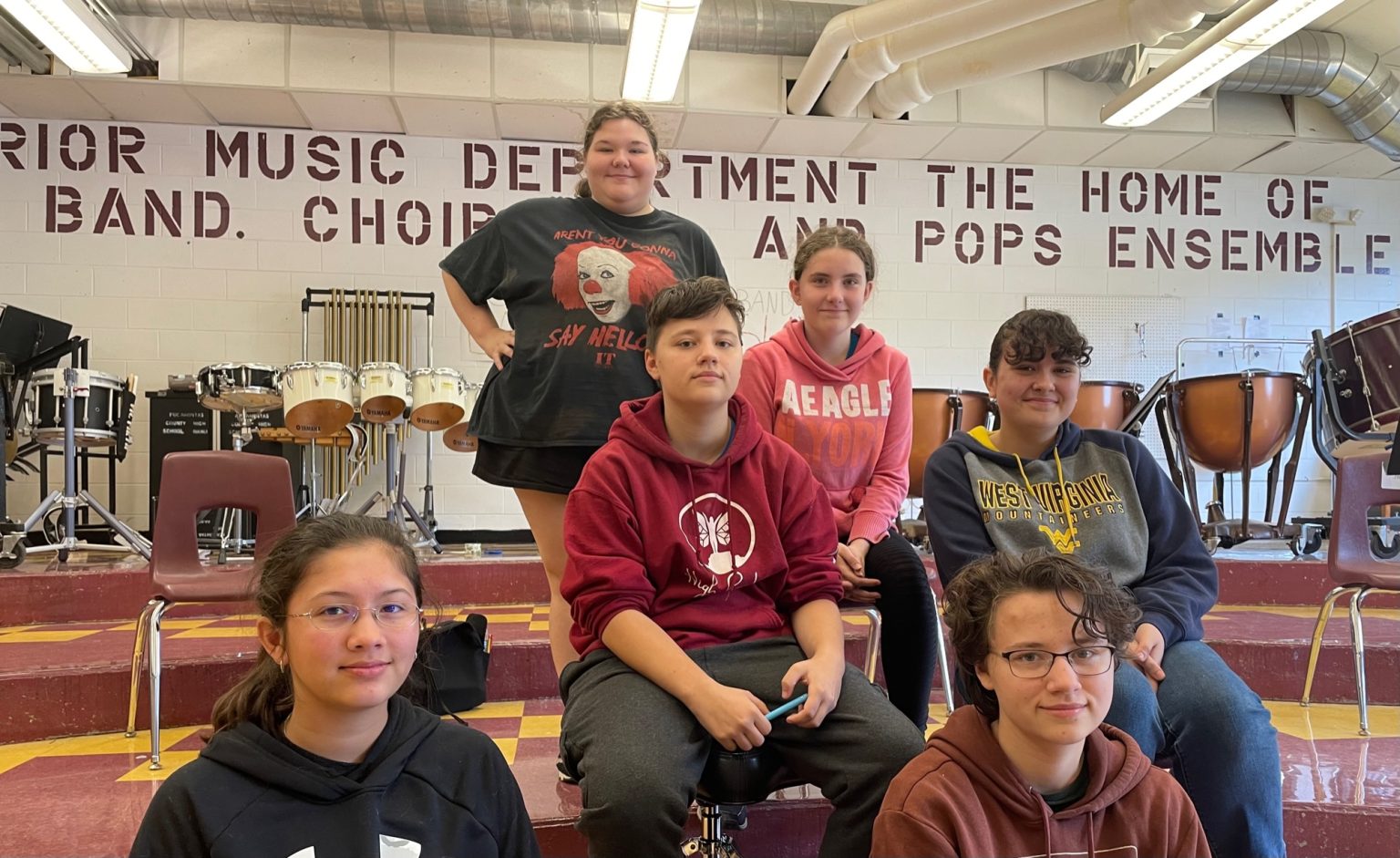
When the band teacher left, ten students decided to manage the band themselves.

This is the story of ten self-motivated students in West Virginia who didn’t want to give up band after the instructor left and no one else applied for the job.

Stephen Baldwin reports at the Real West Virginia, “Last year, the Pocahontas County High School Band had 38 student members and a full-time teacher. But over the summer, their director took another job and the school board had no applicants for the vacant position. 

“ ‘It was such a downer,’ remembers Jadyn Lane. ‘But we were given a choice.’ 

“Principal Joe Riley told them they could sign up for other electives, or find a way to make the band work.

“Most students signed up for other electives, but ten students decided to stay. … ‘It wasn’t an option to quit,’ says Hailey Fitzgerald. ‘I’ve been in the band for seven years. I love it! It’s too important for too many reasons.’ … 

“The students nominated Hailey as director, a position she accepted on the condition they would all work together and share responsibilities. They recruited Casey Griffith and Jennifer Nail-Cook to be their official faculty advisors. Casey does the paperwork, and Jennifer helps with the music. 

“ ‘They direct themselves,’ says Casey, who teaches math at Pocahontas County High School. ‘Have they told you about their rules?’ 

“Front and center on the band room whiteboard are a set of rules which they students created themselves. Rule 1–Be ready to play with your instrument within five minutes of arriving at class. Rule 2–Follow the director’s lead. (No complaining about which songs they’d play.) Rule 3–Keep the band room clean. (No sugary drinks which might hurt the instruments.) Rule 4–Take your instruments home on the weekend to practice. Rule 5–Only play your instrument. 

“In addition, they made a calendar of their upcoming gigs–football games, Homecoming, and Veterans Day. It included a daily countdown to each event so they’d be prepared. 

“Perhaps most importantly, they decided which instruments were necessary to make a band of this size work – clarinet, trumpet, alto, tenor, and drums. 

“But they still had one big problem. Most of them were drummers. And they weren’t a drumline. … How could they play those instruments with the people they had? 

“ ‘Several members switched instruments and some even learned brand new ones,’ Hailey says. ‘We aren’t even big enough to fill a closet, but we have instruments and uniforms and we are a band.’ 

“The time came last month for their first public performance. It was a home football game against Richwood. They had no idea what to expect. Would it work? Would the crowd cheer them on? Would they amp up the football team? …

“To their surprise, a group of students made posters for the band and hung them at the entrance to the football field. As they walked to the game, they saw the posters for the first time. 

“ ‘We thought some people didn’t even know we still had a band,’ says Jadyn. But their classmates had been paying attention and wanted to make their first game special. ‘This is the most support we’ve ever gotten.’ The Pocahontas County Warriors won the game. …

“Taking on the task of directing themselves has seen challenges and opportunities. 

“Kaidence says this version of the band is easier in some ways. ‘We can help each other directly with instrumentation.’ 

“ ‘It is hard to find music, though,’ Hailey adds. ‘The skill level isn’t the issue; it’s our size and instruments.’ …

“Hailey isn’t holding back as director. She set an aggressive schedule for the band. ‘We’ll do all home football games, a Veteran’s Day event, and ratings.’ 

“Ratings is an annual event which every band in the state is required to attend. They are graded on their performance. 

“ ‘If they didn’t do ratings this year, they’d be put on restrictions next year,’ adds Casey. ‘If you don’t do well at ratings, you get put on an improvement plan.’ …

“Hailey says the school board is still trying to find a band director. She appreciates that they’ve explored every option to find someone.  But even if they can’t, she’s not worried. ‘We’ll keep doing it,’ she says.

“ ‘Band is a weird family,’ her twin Miles chimes in, ‘but a family nonetheless.’ ” 

More at the Real West Virginia, here. I originally saw the story at the Post, here.

PS. If there is anything funky about the editing here, blame it on the fact that I just tested positive for Covid. Feeling icky.

Read Full Post »

Photo: Musicians In Exile.
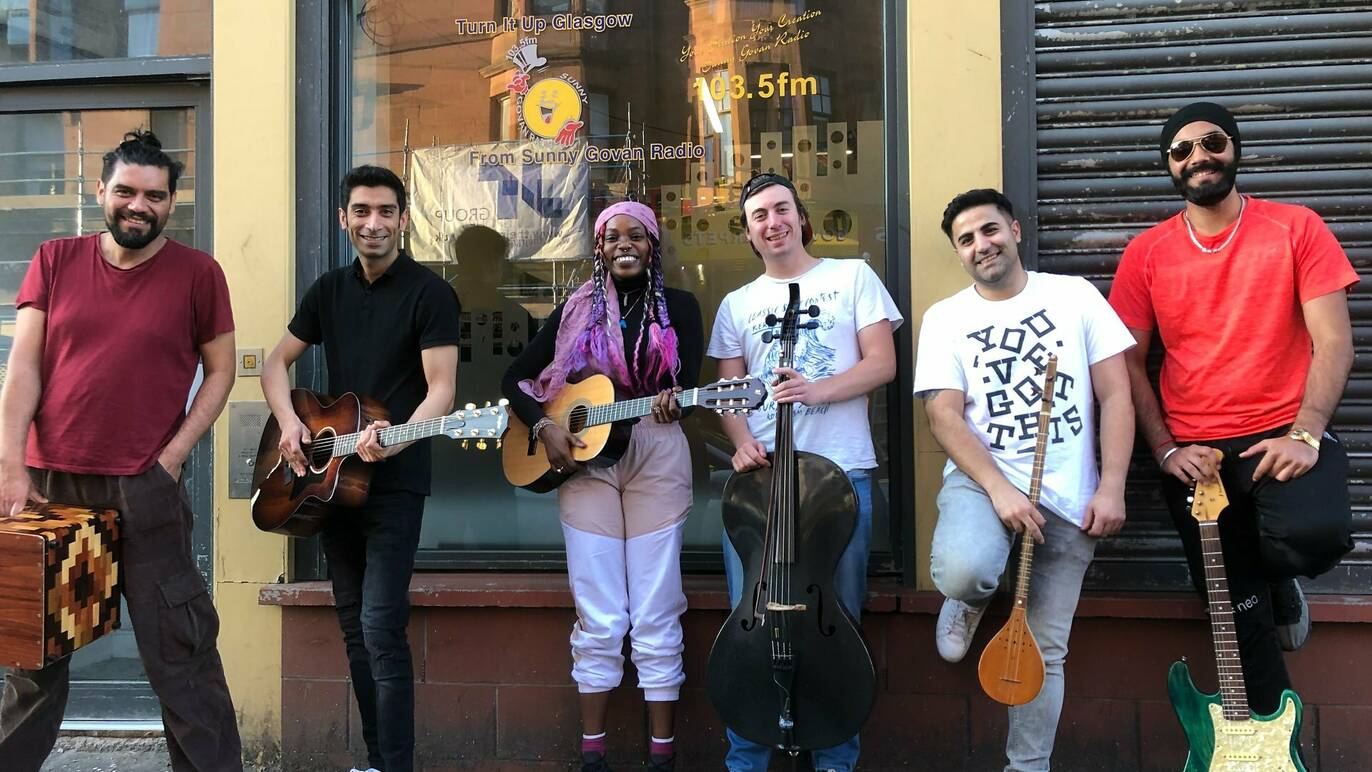
The Glasgow Barons.

When musicians bring their music to a new country, they influence and enrich the local music scene while healing themselves from the trauma of uprooted lives. Consider Musicians in Exile, a refugee orchestra in Scotland. Malcolm Jack wrote about it for Time Out.

“When Angaddeep Singh Vig arrived in Glasgow from India as an 18-year-old asylum seeker in January 2020, without any of his beloved musical instruments, he remembers feeling like ‘a guy without a soul.’ …

” ‘Music is part and parcel of my life,’ he says, and it has been ever since his father bought him a set of tabla hand drums aged just four. By his mid-teens Singh Vig had mastered not only that instrument but also the harmonium and flute, as well as singing. He had even begun teaching music. But when he and his parents were forced to flee India due to violent persecution by criminal gangs, they left with next to nothing, arriving in a strange and faraway land unable to work, study or begin rebuilding their lives.

“More than two years later, Singh Vig lives with his mother and father in temporary accommodation in Govan, as they continue their long and agonizing wait for leave to remain in the UK. But thanks to Musicians In Exile – Glasgow’s asylum seeker and refugee orchestra – he has got his soul back, and then some.

“Started in 2019, the project is the brainchild of Paul MacAlindin, a freelance conductor who has worked with orchestras and ensembles all over the world, from the New Zealand Symphony Orchestra to the Armenian Philharmonic and the Düsseldorf Symphoniker. From 2009 to 2014, MacAlindin was music director of the National Youth Orchestra of Iraq – a maverick mission to help young musicians in the country pull themselves out of the horrors of war. ‘And it worked,’ he says, ‘until the invasion of Islamic State.’

“The orchestra collapsed, and so did MacAlindin, ‘mentally and physically,’ he says, ‘because after investing all the energy of keeping that thing alive and then having it stopped in such a dramatic fashion, I was just left completely floored.’ He moved back to his native Scotland to heal, choosing Govan purely as a cheap place to put a roof over his head. There, quite by luck, he suddenly found himself among the diverse and in many cases displaced communities of the former shipbuilding district on the south bank of the River Clyde – which is also the location of a branch of the Home Office, and thus is home to a lot of asylum seekers and refugees.

“MacAlindin founded The Glasgow Barons – an award-winning ‘regeneration orchestra’ set up to help revitalize Govan through performances in local venues by musicians of all backgrounds. Musicians in Exile grew out of that, as a way of helping to give musician asylum seekers and refugees in the area a chance to gather every Tuesday evening to sing, play and share their talents, experiences, stories and songs. …

“If members don’t have instruments, then MacAlindin – who receives funding from the People’s Postcode Trust, the Robertson Trust, and Creative Scotland Lottery – sources and buys them one, however rare it may be (he’s currently in the market for an Albanian two-string plucked instrument called a çifteli).

During lockdowns, when sessions had to be moved online, he also helped his members to buy digital devices and access to the internet so they could keep communicating and playing together.

“Through Musicians in Exile, as well as the generosity of others in his local community, Singh Vig now not only has a tabla again, but also a harmonium, a violin, a mandolin and an electric guitar (which he quickly learned to play, despite never having touched one before). ‘Now I’ve got many souls,’ he laughs. His father and mother, who are also musicians, come along to sessions too – Singh Vig credits it with helping to pull them both out of a deep malaise and, in his father’s case, even clinical depression.

“Singh Vig and Musicians In Exile have played several high-profile concerts. They included … a pre-recorded video performance for the opening of the new parliamentary session in October 2021. It was broadcast in the chamber to an audience of dignitaries including, among others, The Queen. Singh Vig was impossible to miss, sat at the centre of the ensemble in a bright red turban and denim jacket. ‘The Queen is watching me,’ he remembers thinking. ‘I cannae believe it.’ “

More at Time Out, here.

Read Full Post »

Photo: Jeremy Copeland
Patrick Torres, Erik Miron, Bergen Moore, of the band Vignes Rooftop Revival, on the way to a gig in downtown Los Angeles.

Around the time Suzanne and Erik were planning their wedding, I met a musician’s mother in what I called my Cancer Dance Class. He and his band mates were Berklee grads, and they had a group called Shamus, which I can no longer find on the web. Suzanne loved their music as much as I did and even asked the band to play at her wedding.

Oh, ha, ha. You can just imagine how much they would have charged to bring all their instruments and band members by plane from California! (Suzanne settled on a local band called the Booze Beggars.)

I’m thinking that a band that travels by bicycle like the one in the following story might have been cheaper to hire than Shamus, although I admit I can’t see them bicycling from California to the East Coast.

Lisa Napoli wrote about the bicycling band at National Public Radio (NPR).

“Some musicians arrive at their gigs in a tricked out tour bus. Others, if they’re lucky, in a limo. But there’s a popular band based in downtown Los Angeles that relies on a lower-key, low-carbon form of transportation.

“In car-crazy L.A., the band members either bike, walk or skateboard to all of their gigs.

“The lively acoustic group, the Vignes Rooftop Revival, began by accident five years ago, on a rooftop of a loft building on Vignes Street in rapidly gentrifying downtown Los Angeles.

“A group of neighbors, including musician Erik Miron, would enjoy meals with other building residents, as the dramatic city skyline shimmered in the background.

” ‘After awhile the instruments would come out,’ said Miron, who came to Los Angeles to study music at the University of Southern California. ‘We’d start goofing around and it evolved into something where we decided to take it down from the roof to the bars and restaurants.’ …

“One gig led to another, and accompanied by a rotating cast of musical friends, the band now play 200 shows a year. …

” ‘It’s funny. We’re almost like an Amish jazz band,’ said Miron, who has a full, wiry beard that makes him look right out of Pennsylvania Dutch country. ‘We don’t use cars or electricity so much.’

“Miron said the Vignes Revival didn’t set out to be so green. He and the core members of the group just found it easier to get around without the use of a car. …

“Driving a car leaves him ‘mildly grumpy,’ while arriving by bicycle, he said, is a refreshing way to indulge his love of being outdoors.

” ‘It’s nice to move under your own power,’ he said, as he loaded up his guitar, banjo and trumpet in a trailer he hitches up to his bicycle. He also adds in a few succulents in pots adorned with the band’s logo for good measure. At each show, they give them away. …

“Bass player Bergen Moore uses different wheels to get to the show: a hand-made, hand-painted skateboard. That has been his preferred mode of transportation for a while, even when he lived in hilly San Francisco. Now, he’s got his instrument affixed with wheels, too. …

“Nary a pothole, nor the occasional motorist agitated at their speed, daunts these musicians. For a gig that was ten miles away, they made their way via a combo of human-powered transit and the Los Angeles Metro system.

“They do enjoy playing the tavern around the corner. Then, they get to indulge in an even simpler commute: walking.”

More at NPR, here.

Read Full Post »

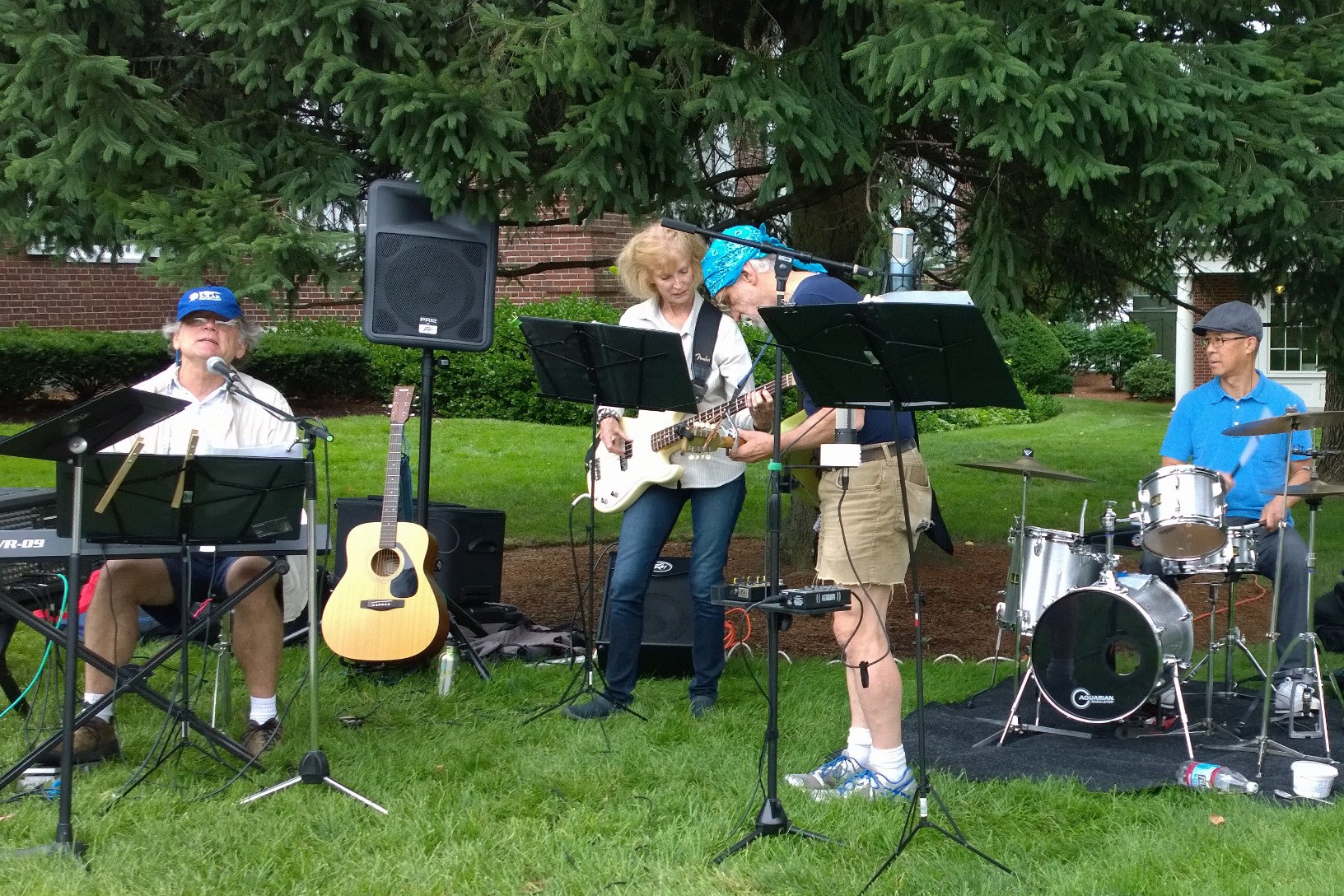
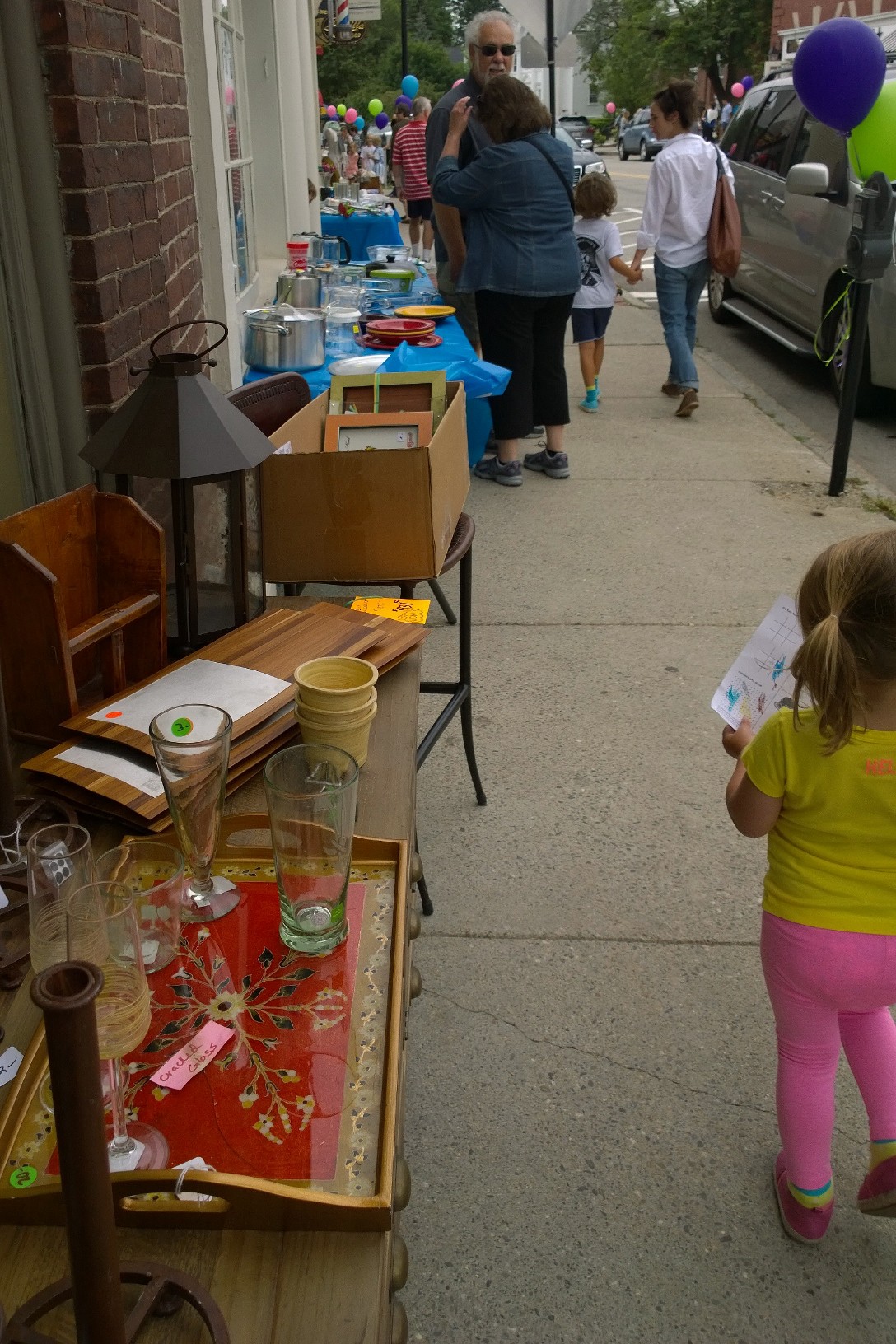
There was a band at the July 25 sidewalk sale, and I tried to capture the exuberance of a young lady who knew exactly what to do. Then I passed by and bought lots of sidewalk sale cut-price goodies.

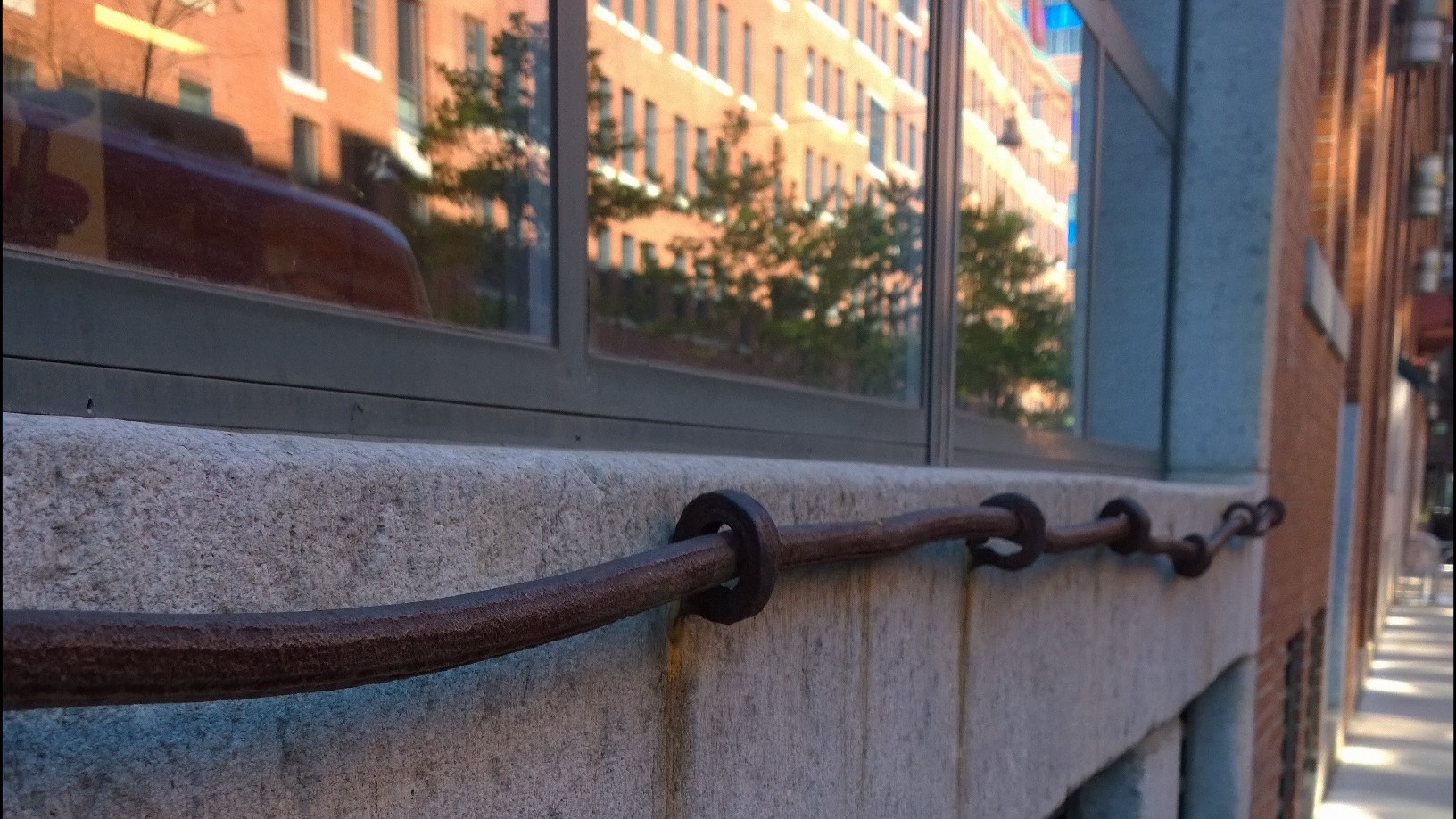
Next I’m posting three photos of the Fort Point section of Boston. I never tire of the old buildings. Do you like the iron railing and the way light is cast on one wall in the way we think of shadows being cast? Another building has a shadow of backwards words from a sign. If you look closely (and can read reverse images), you can almost see the word “industrial.” It’s a ghost. Very appropriate for Fort Point, where industry is now mostly a ghost among glass-box office buildings.

From there, we move on to Rhode Island on a gray day — a stone wall gate and a quiet harbor.

072515-band-at-sidewalk-sale

072515-sidewalk-sale

072315-fort-point-iron-railing

072315-light-cast-on-fort-point-bldg

072315-shadow-says-industrial

071915-gate-on-RI-dirt-road

071915-gray-day-old-harbor

Read Full Post »

otter-welcome

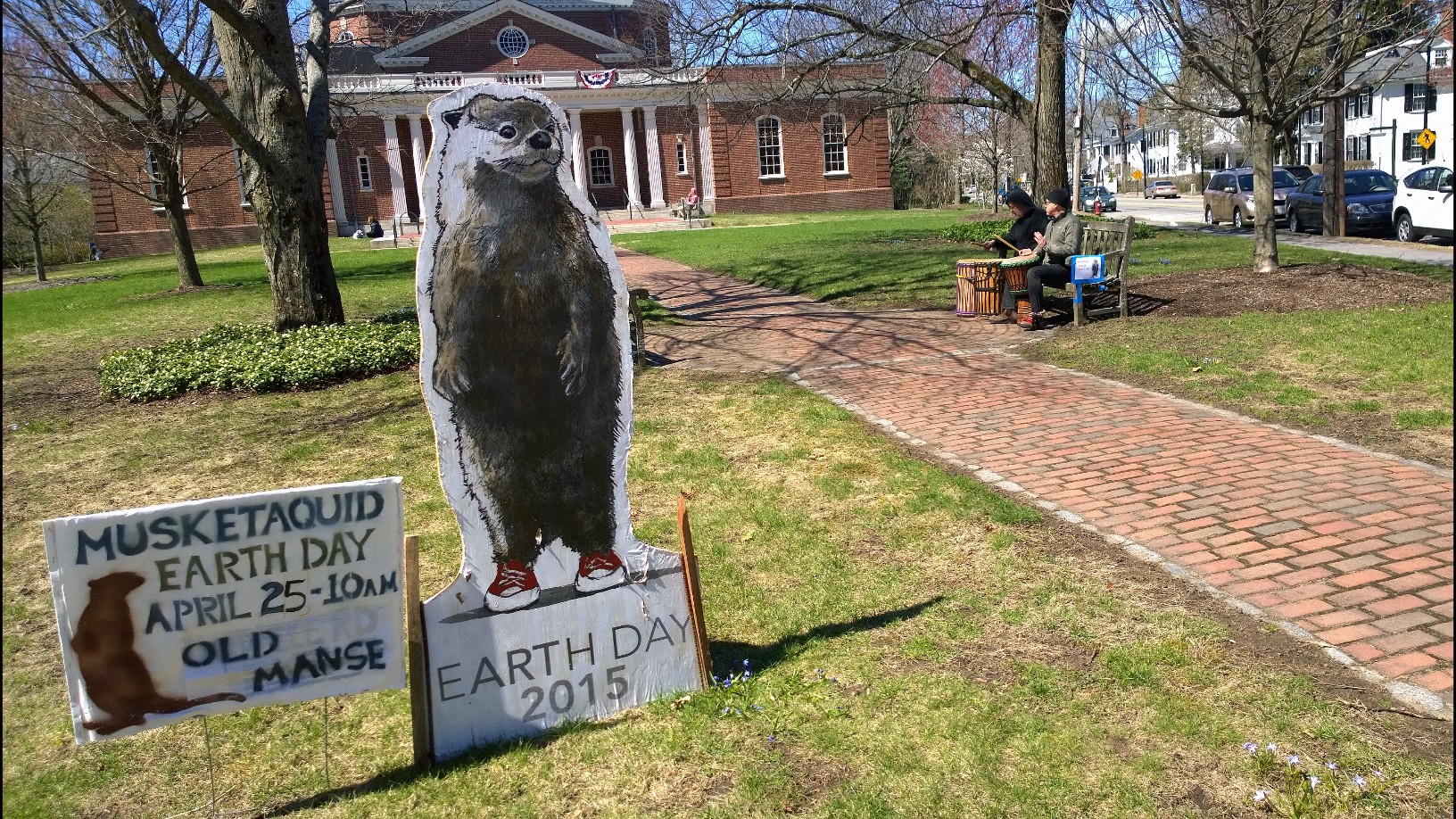
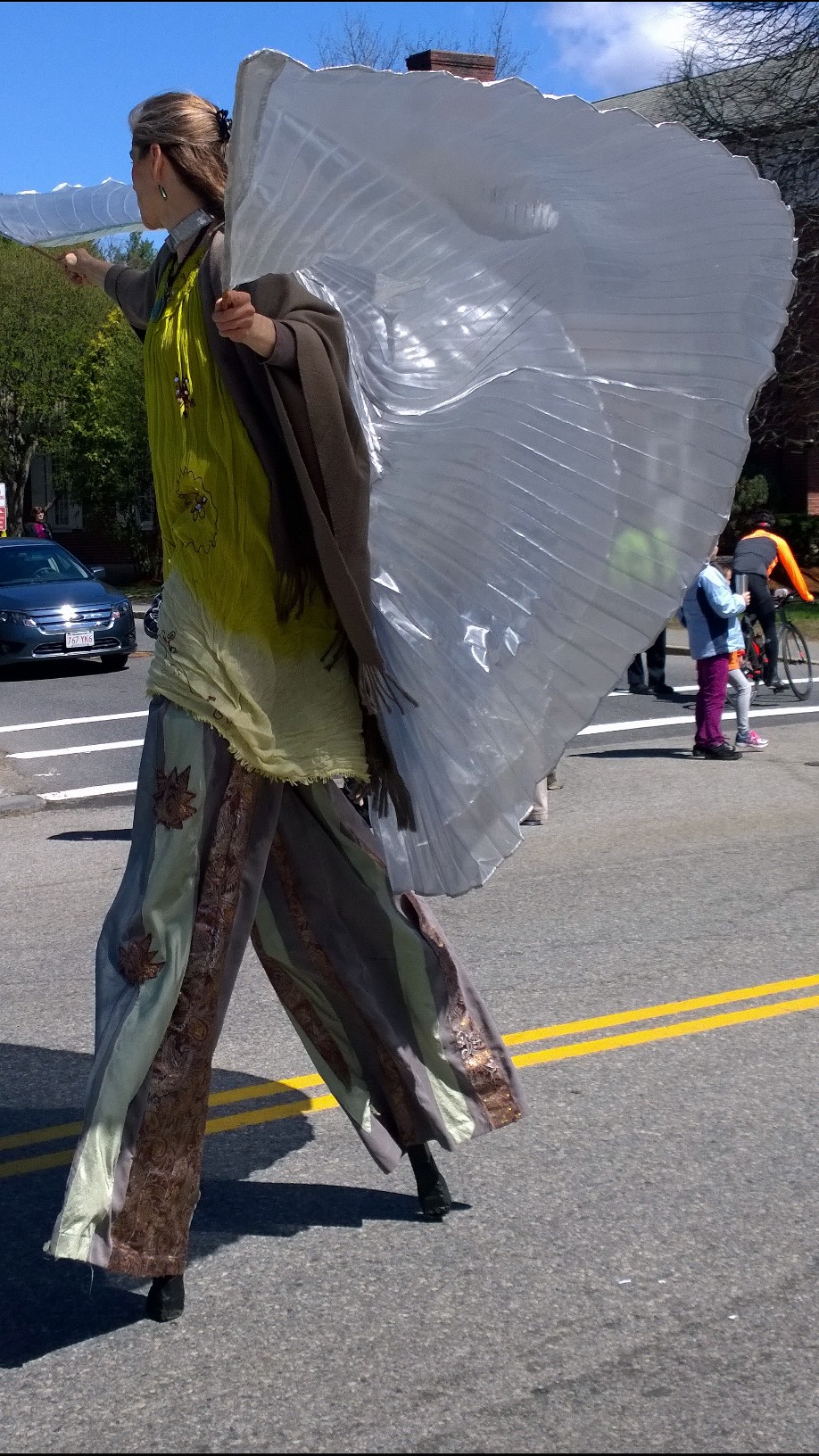
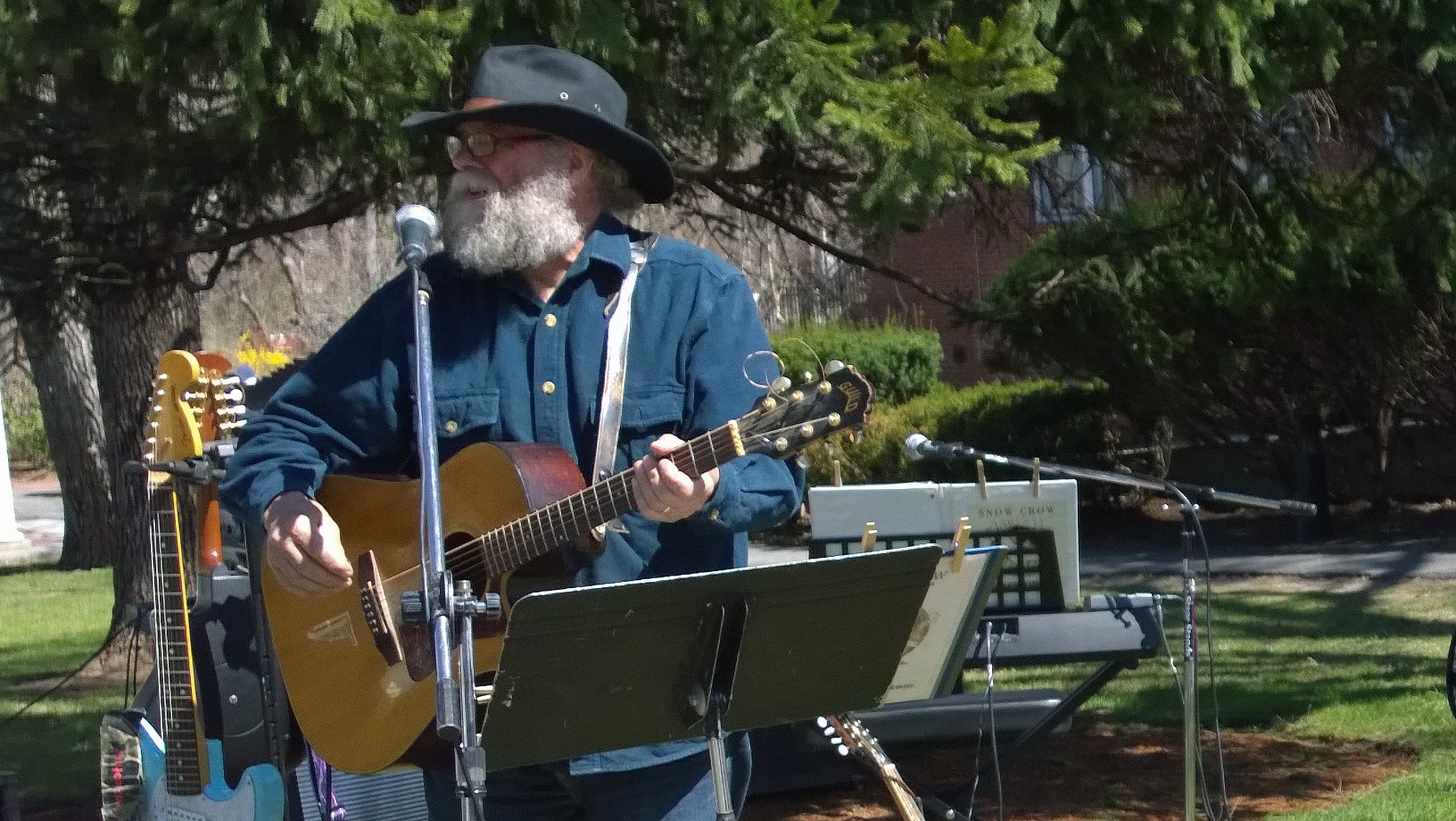
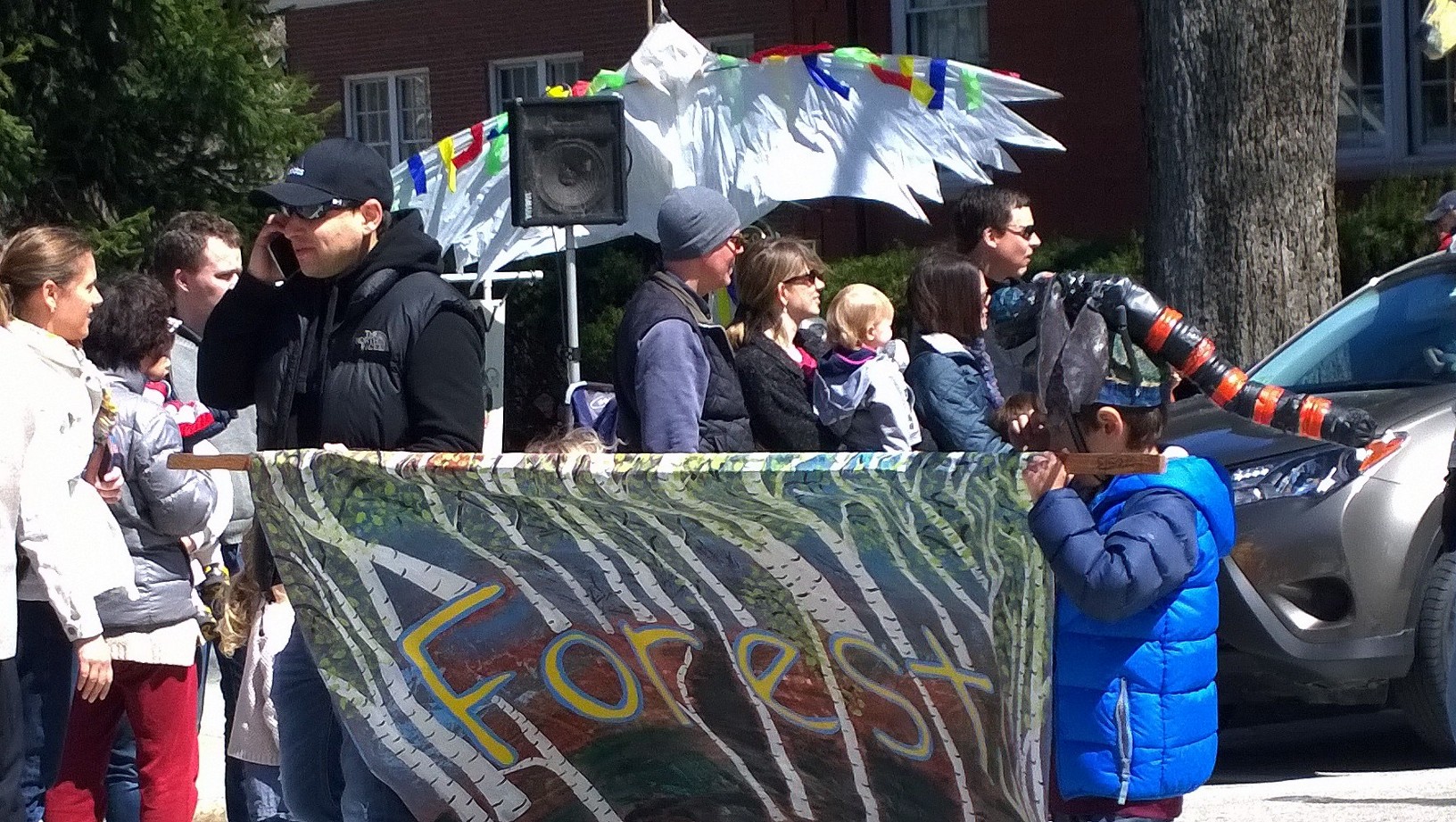
It was still chilly on Saturday, but a great day for the Musketaquid Parade celebrating the Earth. Bands, stilt walkers, homemade floats, drummers, tables for environmental advocates of all kinds.

Does the boy with the “forest” banner whose dad is on a cellphone remind you of the picture book Sidewalk Flowers?

In the afternoon, I helped my 3-year-old grandson dig holes for strawberry plants. (“It’s gonna be a flower. It’s gonna be beautiful!”)

joyous-drummers

perhaps-a-fox

stilts-and-wings

mariachi-band

Earth_Day-guitar

forest-and-cellphone

woodpecker-for-Earth-Day

Read Full Post »

After a delightful morning with my granddaughter and my older grandson, I went to Providence to hang out with my younger grandson and Suzanne and a good friend.

I caught up with them at the park, where the farmers market was winding down and a free summer concert was revving up: the annual Summit Music Festival. (Check it out here.)

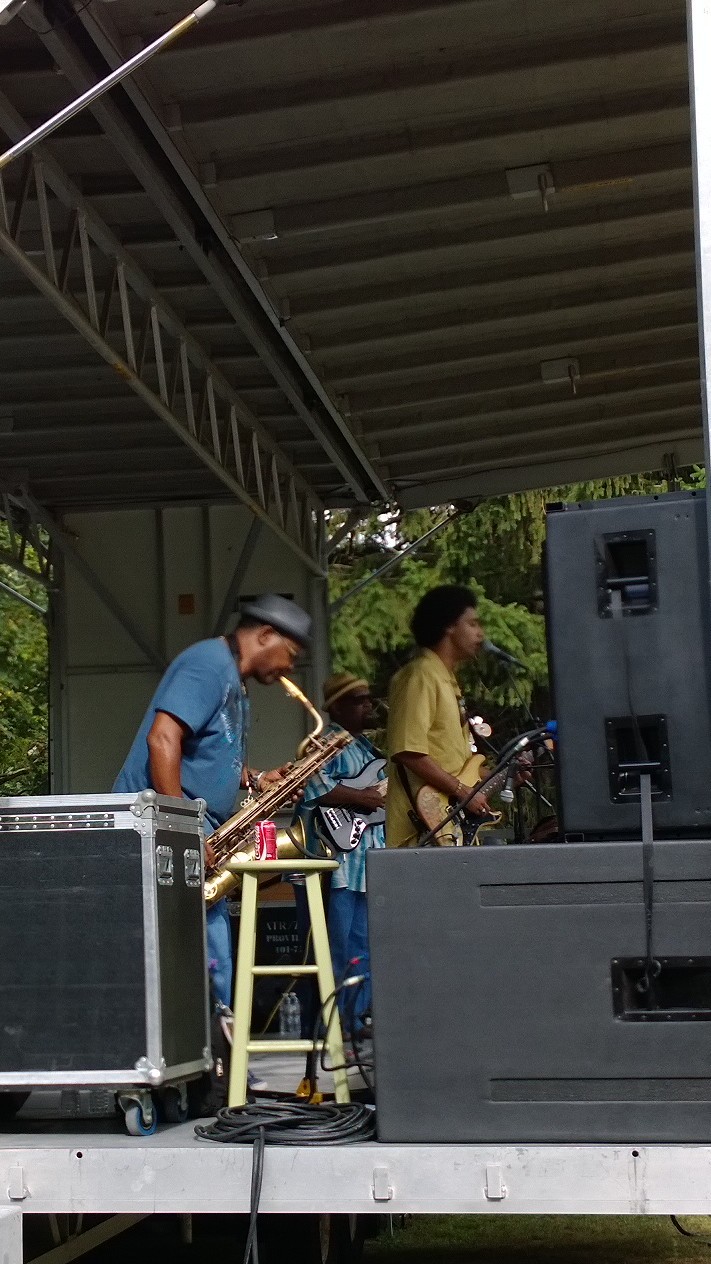
The four of us liked a blues group called the Selwyn Birchwood Band (pictured) and another band called Smith and Weeden. The ice cream eater below had reservations about a third performance. Everyone’s a critic.

We spent a chunk of time going “higher, higher” on the swing in the playground and watching a multi-ethnic group of small boys kick a soccer ball. (How brave it is to go up to boys you don’t know and ask to play!) We skipped the face painting, which was gorgeous but, to a 2-year-old, kind of pointless. We watched kids and grownups painting a mural wall.

live-music-Providence


concert-critic-with-ice-cream


paint-the-wall-providence

Read Full Post »

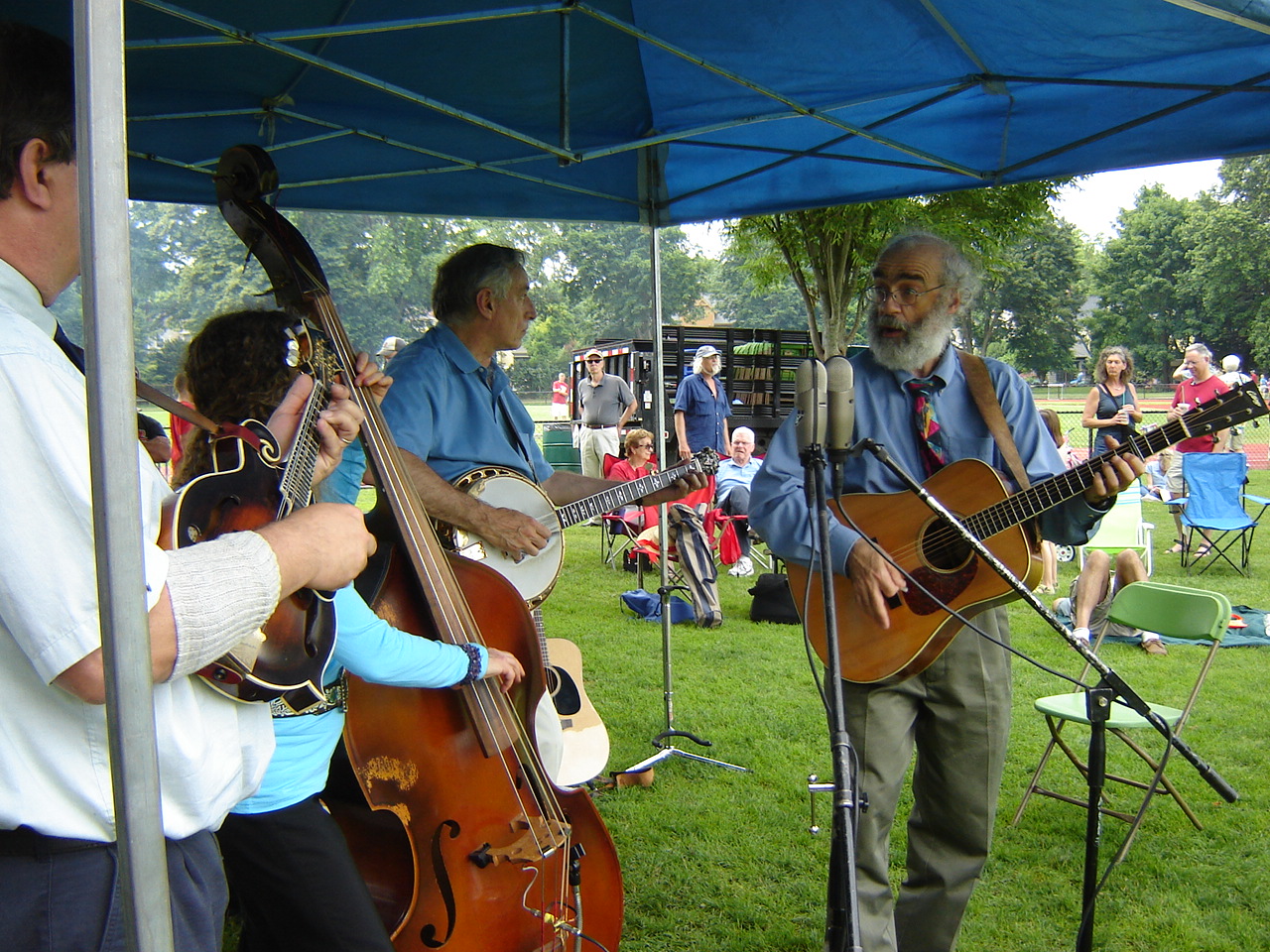
I haven’t been to Concord’s homey celebration in years, and yesterday was a good day to see it at its best. Please note the “burning building” with fake flames, which the fire department repeatedly doused, cooling off the children watching at a safe distance.


Read Full Post »

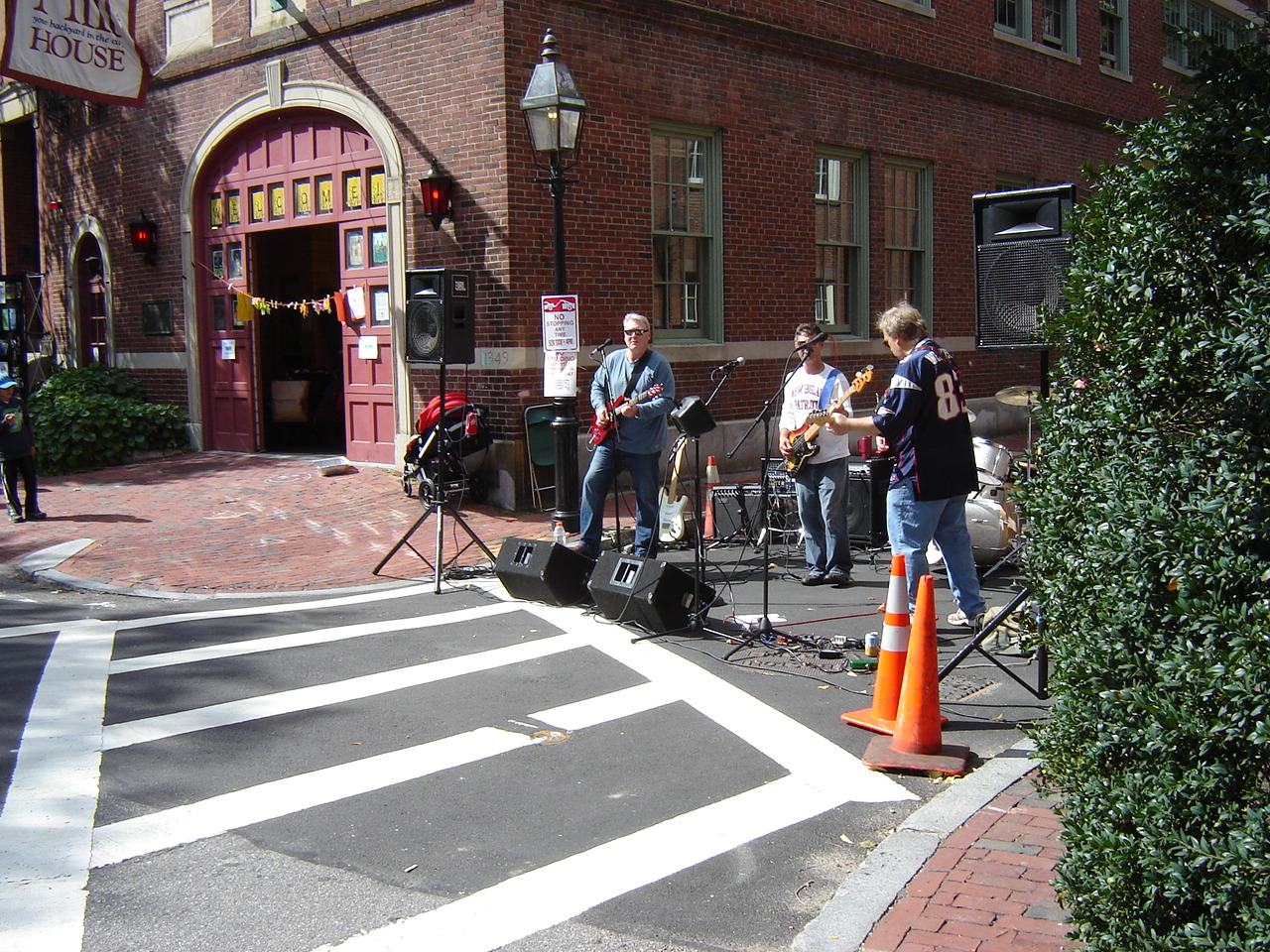
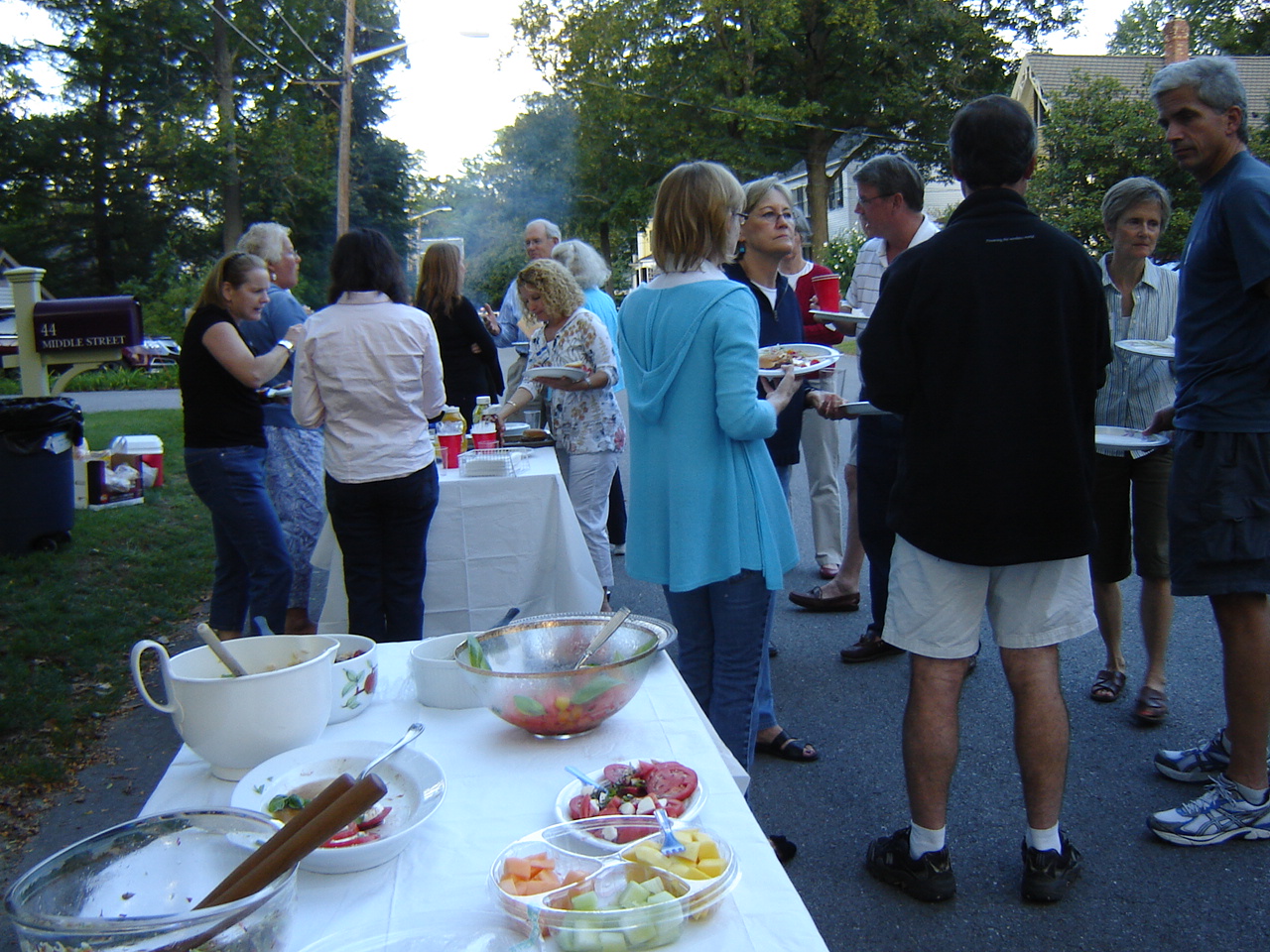
This is the time of year for walnut trees to bear fruit, for bees to bring in the last of the wine, and for block parties. Beacon Hill’s party is way more elaborate than any block party in Concord and is considered a time to raise funds for a cause. See if you can guess which party is which.

Orchard
by H. D.

I saw the first pear
as it fell—
the honey-seeking, golden-banded,
the yellow swarm
was not more fleet than I,
(spare us from loveliness)
and I fell prostrate
crying:
you have flayed us
with your blossoms,
spare us the beauty
of fruit-trees.

The honey-seeking
paused not,
the air thundered their song,
and I alone was prostrate.

O rough-hewn
god of the orchard,
I bring you an offering—
do you, alone unbeautiful,
son of the god,
spare us from loveliness:

these fallen hazel-nuts,
stripped late of their green sheaths,
grapes, red-purple,
their berries
dripping with wine,
pomegranates already broken,
and shrunken figs
and quinces untouched,
I bring you as offering.

Read Full Post »