Feeds:
Posts
Comments

Posts Tagged ‘ecology’

An Associated Press blurb in the Globe caught my eye today.

Here it is in its entirety: “Unity Plantation, Maine. A two-year quest by Unity College students to fit a black bear with a video collar has succeeded. The Morning Sentinel said Professor George Matula and about a dozen students trekked deep into a 4,000-acre patch of woods off Route 139 Thursday to fit the collar on a trapped bear. While one student kept the angry bear’s attention, another sneaked in from behind to deliver a shot to knock it out.”

I had to find out more. The website of Unity College, “America’s Environmental College” located north of Augusta in Waldo County, explains it wasn’t a professor-assisted prank.

“With permission from the Maine Department of Inland Fisheries and Wildlife, the Unity College Bear Study team does hands-on research to provide information on a bear population in Central Maine. Students work with faculty mentor George Matula and alumna mentor Lisa Bates ’08 to tag, tattoo and radio collar bears to collect data and monitor activity.” More at Unity College, here.

But about actually collaring the bear. …

Matt Hongoltz-Hetling  writes at the Kennebec Journal/Morning Sentinel, “Once Matula gave the all-clear, the students descended on the bear, intent and serious as each performed a well-defined role. They still spoke in whispers as they took blood samples, checked its vital signs and prepared to affix the all-important video collar to its neck. …

“One student, Leon Burman, cradled the bear’s head in his lap while he pulled back its lips, using a tattoo gun to leave an identification mark on the gums.

“[Student Jonah] Gula lifted the bear’s front right paw, inspecting a raw and red line defining the previous capture’s cable. Gula speculated later that it meant the bear was pulling at its snare more aggressively than most. The team treated it with a first-aid kit.” More here.

Photo: Mark Bennett

Read Full Post »

Some posts at Andrew Sullivan I only need to glance at briefly and bells go off: for example, this entry about an artist who works with coral.

Andrew quotes Amelia Urry writing about Courtney Mattison, who became enamored of coral while studying conservation biology at Brown University and moonlighting at the Rhode Island School of Design.

“Mattison’s newest piece, Our Changing Seas III,” says Urry at Grist, “depicts a hurricane-spiral of bleached corals coalescing to a bright center. You can read it as a message of hope or one of impending doom, depending on your disposition …

At the heart of Mattison’s artwork is her desire to inspire real-life changes in how people view and treat the world’s oceans and environments. Similar to the Our Changing Seas series, Courtney Mattison’s Hope Spots collection comprises 18 vignettes, each of which represents a vital marine ecosystem in its ideal form (that is, protected from various threats such as global warming or pollution).” Read more at Grist, here.

Art: Courtney Mattison
“Our Changing Seas III,” a ceramic coral reef

Read Full Post »

Photo: Masaki Miya et al. Wikimedia Creative Commons
Anglerfish use bioluminescence to attract their prey in the darkest depths of the ocean.

When John was little, he liked a book called Fish Do the Strangest Things. Strangeness is a great focus for a nature book, because everyone likes offbeat critters.

Steve Curwood, founder of the radio show Living on Earth, recently interviewed the author of a book that focuses on the strangeness of ocean life.

CURWOOD: “In an engaging new book called The Extreme Life of the Sea, biologist Steve Palumbi and his novelist son Tony deepen our understanding of how strange sea life has managed to survive against all odds. … Why did you write this book. Why now?

PALUMBI: “Well, the real reason is that we’re trying an experiment: can you take the narrative style and approach that a novelist would use and combine it with what a scientist would do? … You don’t really care about the plot until you care about the characters, and so we wanted to write a book that made you care about the characters.

CURWOOD: “Now, you write about the extreme life of the sea, the oldest, the hottest, the shallowest, to name a few. Why did you choose this approach?

PALUMBI: “Because it was a way of getting people’s attention to the really sort of amazing things that these critters do. Organisms in the sea live in some of the hottest places, they live in some of the coldest places, and how they do that is something marine scientists have paid a lot of attention to. So it was really a way to make it more engaging, more fun, and to let us move credibly between different kinds of organisms all in the same chapter. …

CURWOOD: “You had one extreme that you called immortal.

PALUMBI: “That’s an amazing jellyfish called turritopsis, and it has the remarkable ability to age in reverse. So when the environment is bad, this animal can essentially go from its adult body form back, back, back to its larval form, and then start all over again. … It’s called transdifferentiation. It’s the only critter known to be able to do that.”

More here, where you can read the rest of the transcript and listen to the recording. It’s all pretty amazing.

Photo: Eddie Welker, Flickr Creative Commons 2.0)
Clownfish

Read Full Post »

I used to love finding little red salamanders when I was a child.

I didn’t know they played an important role in the ecosystem, even balancing out processes that contribute to climate change. Of course, when I was a child, nobody talked about ecosystems or climate change. But I’m glad to learn salamanders are important. Small things often are.

Writes Richard Conniff in the NY Times, “According to a new study in the journal Ecosphere, salamanders play a significant role in the global carbon cycle. …

“The study — by Hartwell H. Welsh Jr., a herpetologist at the United States Forest Service’s research station in Arcata, Calif., and Michael L. Best, now at the College of the Redwoods in Eureka, Calif. — notes that salamanders’ prey consists almost entirely of ‘shredding invertebrates,’ bugs that spend their lives ripping leaves to little bits and eating them.

“Leaf litter from deciduous trees is on average 47.5 percent carbon, which tends to be released into the atmosphere, along with methane, when the shredding invertebrates shred and eat them.

“If there aren’t as many shredders at work and the leaves remain in place, uneaten, they are covered by other leaves. … The anaerobic environment under those layers preserves the carbon until it can be captured by the soil, a process called humification.

“At least in theory, having more salamanders in a forest should mean fewer shredding invertebrates and more carbon safely locked underground.”

Read how they tested their theory, here.

 Photo: Todd W. Pierson/University of Georgia

Read Full Post »

I’m grateful to Scott, a former colleague, for putting this cool thing on Facebook. Looking at these healthy, growing plants is especially warming today, now that the temperature has gone back to 15 F.

Tim Blank at Future Growing LLC (which produces vertical aeroponic food farms) writes, “When you hear about a farm that supplies all-natural, sustainable produce, using 90% less water and 90% less land, one that utilizes the most advanced vertical aeroponic technology on earth, you surely would not guess it would be an Amish farm.

“Yet in Topeka, Indiana, you cannot get produce that is more local, fresh, healthy, and sustainable — even in the middle of an Indiana blizzard — like you can get at Sunrise Hydroponics, an Amish farm.

“Sunrise Hydroponics is owned and operated by husband-and-wife team Marlin and Loretta Miller on their rural farm in Topeka. I have had the privilege of working with the Amish community for more than half a decade, and have come to learn that, while their lives seem simple to many outsiders, their homes, farms, and businesses are highly innovative. The Amish utilize cutting-edge and creative forms of technology to improve their lives, while still falling within the guidelines of their belief system.” Read more here.

Greenhouse at Sunrise Hydroponics

Read Full Post »

It might be getting a bit cold for the outdoor classroom, but this article by Melanie Plenda in the Boston Globe suggests that not even snow will stop these preschoolers from learning about nature.

“In the back of the farmhouse at Drumlin Farm Community Preschool in Lincoln sit five chickens surrounded by a gaggle of preschoolers — eyes wide, waiting. The teacher opens the egg box door, and the students, staying slow and small like they were taught, peer in.

“ ‘And when they find an egg there,’ says Paula Goodwin, director of the school, ‘we ask them to make a nest with their hand, and they very gently pass the egg from one to another. And it’s a very special time, because they don’t need a lot of special instructions except to look for a child whose hands are in the shape of a nest. … It’s one of the magical moments in the school year. They are so generous with sharing the egg, and they may not have even learned each other’s names yet.’

“Drumlin is a nature- and farm-based preschool, which means that rain or shine, maybe not sleet but definitely snow and temperatures down to 15 degrees, the 14 3- to 5-year-olds are outside learning math, science, language, and how to be curious. Visiting captive wildlife, doing farm chores, and taking part in planting activities provide opportunities for all kinds of learning.” More.

Judging from my three grandchildren, I’m pretty sure no kid needs to “learn how” to be curious (“Poppa, what is the sun for?”), but we all hope for schools that continually encourage their curiosity.

Photo: Porter Gifford

Read Full Post »

Photo: http://www.knollfarm.org/
Knoll Farm’s Icelandic sheep.

We stayed in a perfect little ski house — fitted up with everything you could imagine needing on a weekend, including toys for the grandkids. Our son and daughter-in-law rented it through Vacation Rental by Owner.

The drive up the steep road featured gorgeous mountain and farm views.

One farm had a sign out that sent us straight to our laptops once we got settled: “Knoll Farm, Center for Whole Communities.”

According to the Whole Communities site, “The Center for Whole Communities (CWC) fosters inclusive communities that are strongly rooted in place and where all people – regardless of income, race, or background – have access to and a healthy relationship with the natural world. …

“Through our programs and ongoing support we network more than 1,200 leaders working in 500 organizations and communities in 47 states.” More.

One of the center’s videos, below, explains the process community members in Waitsfield, Vermont, went through to reconnect “with the sun and the land” by getting off the grid and using only renewable energy sources.

A separate, related site describes the farm products: “We still have some gorgeous purebred Icelandic 2013 ewe and ram lambs, as well as mature ewes and rams for sale. Check out our Icelandic Breedstock pages for more information.

“Order whole and half shares of lamb for the holidays and winter supply anytime until November 4th. After that we will be selling cuts here at the farm and farmer’s markets.  Read more.

“Our farmstand has our grass-fed lamb and frozen organic blueberries in stock through the winter, or until we sell out. New hours: Open 8 am-6 pm every Saturday and Sunday. We also have our home-made blueberry jam, as well as free-range eggs, blankets and sheepskins.

“New Product: Heirloom quality pure wool blankets woven from our own Icelandic fleeces. Learn how to custom order your own Knoll Farm blanket.”

More here.

Read Full Post »

When a river is full of trash, polluted, and maybe locked in a below-street culvert,  returning it to glory may seem too great a task. But that is what cities around the country are doing, “daylighting” urban rivers, cleaning them up, and ensuring they become the featured assets they were meant to be.

Sometimes this starts with just one person.

John tweeted an article about such a person today. CNN’s Kathleen Toner and Erika Clarke wrote from Memphis, “In the past 15 years, Chad Pregracke has helped pull more than 67,000 tires from the Mississippi River and other waterways across the United States. But that’s just scratching the surface.

“He’s also helped retrieve 218 washing machines, 19 tractors, 12 hot tubs, four pianos and almost 1,000 refrigerators.

” ‘People intentionally dumped [these] in river and also littered,’ Pregracke said. ‘Even 100 miles away, [trash] will find its way into a creek or a storm drain and into, ultimately, the Mississippi River.’

“For Pregracke, removing this debris has become his life’s work. Sometimes called ‘The Rivers’ Garbageman,’ he lives on a barge about nine months out of the year with members of his 12-person crew. Together, they organize community cleanups along rivers across the country.

” ‘The garbage got into the water one piece at a time,’ Pregracke said. ‘And that’s the only way it’s going to come out.’

“It’s a dirty job, but Pregracke, 38, took it on because he realized that no one was doing it. It began as a solo effort, and over the years his energy, enthusiasm and dedication have helped it grow. To date, about 70,000 volunteers have joined his crusade, helping him collect more than 7 million pounds of debris through his nonprofit, Living Lands & Waters.”

More here. You can vote for Pregracke as Hero of the Year if you click there.

Read Full Post »

According to Christopher Joyce at National Public Radio, young whooping cranes learn from older ones, and when older cranes are unavailable, they can learn from ultralights.

“Being a wildlife biologist in the 21st century increasingly means rescuing rare animals from extinction. Among the success stories is the whooping crane. Seventy years ago there were only about 16 birds left on the planet. Now there are about 600.

“But breeding more birds isn’t enough. Scientists want to restore the crane’s way of life, too. And a team of ecologists at the University of Maryland have discovered something that suggests they are succeeding: Captive-bred are picking up tips from older birds about how to skillfully navigate south for the winter.

“It’s a sign that those whooping cranes are passing knowledge from one generation to the next and, in a sense, rebuilding their culture.”

So how do whoopers raised in captivity learn to follow and where to go when there are no older birds around?

“Workers drive around the enclosures in an ultralight, one-person aircraft … that moves along the ground. It’s the first step in teaching these birds to identify an as a mature whooper. Then when the birds are yearlings and it’s migration time, they’re shipped up north, to Wisconsin.

” ‘The ultralight in Wisconsin not only circles on the ground and teaches them to follow,’ [Greg Smith of the U.S. Geological Survey] says, ‘but it also ultimately lifts up into the air’ and accompanies the whooping cranes on their great migration, which lasts between 50 and 100 days.”

More.

Photo: Joe Duff/Operation Migration USA Inc.
This young whooping crane is on its first fall migration, guided by an Operation Migration ultralight aircraft. Each whooper in this population wears an identification band, and many carry tracking devices that record their movements in detail.

Read Full Post »

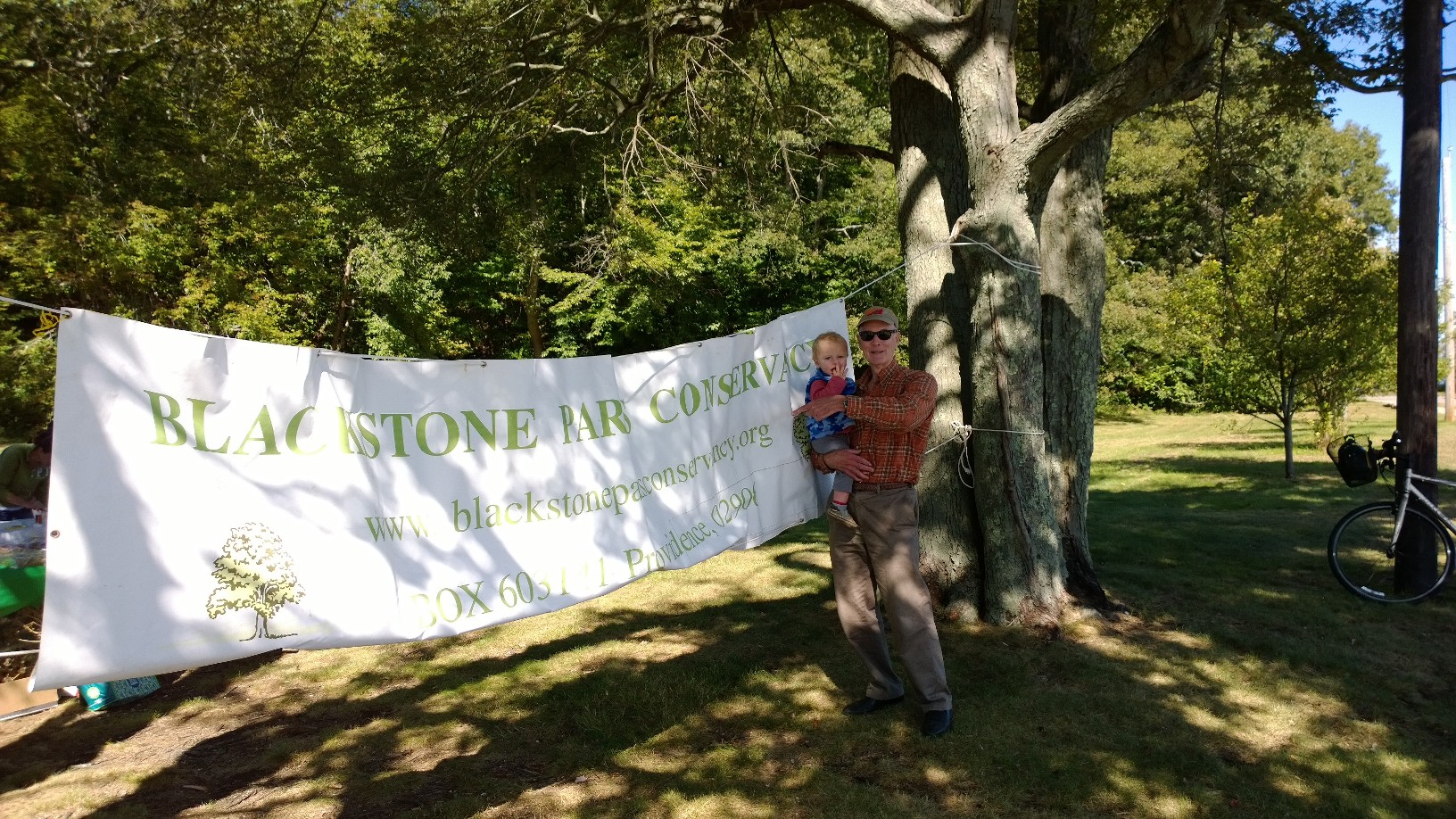
The Blackstone Parks Conservancy sent out this invitation, and we went.

“We invite you to attend the family event: Build your own Fairy House! This event was originally part of the summer series of family programs given by the Blackstone Parks Conservancy. Due to its rousing success, we are offering it again as part of Playful Providence, a citywide event organized by the Partnership for Providence Parks and the Providence Parks Department. Join us at the Field on River Road, across from the Narragansett Boat Club.”

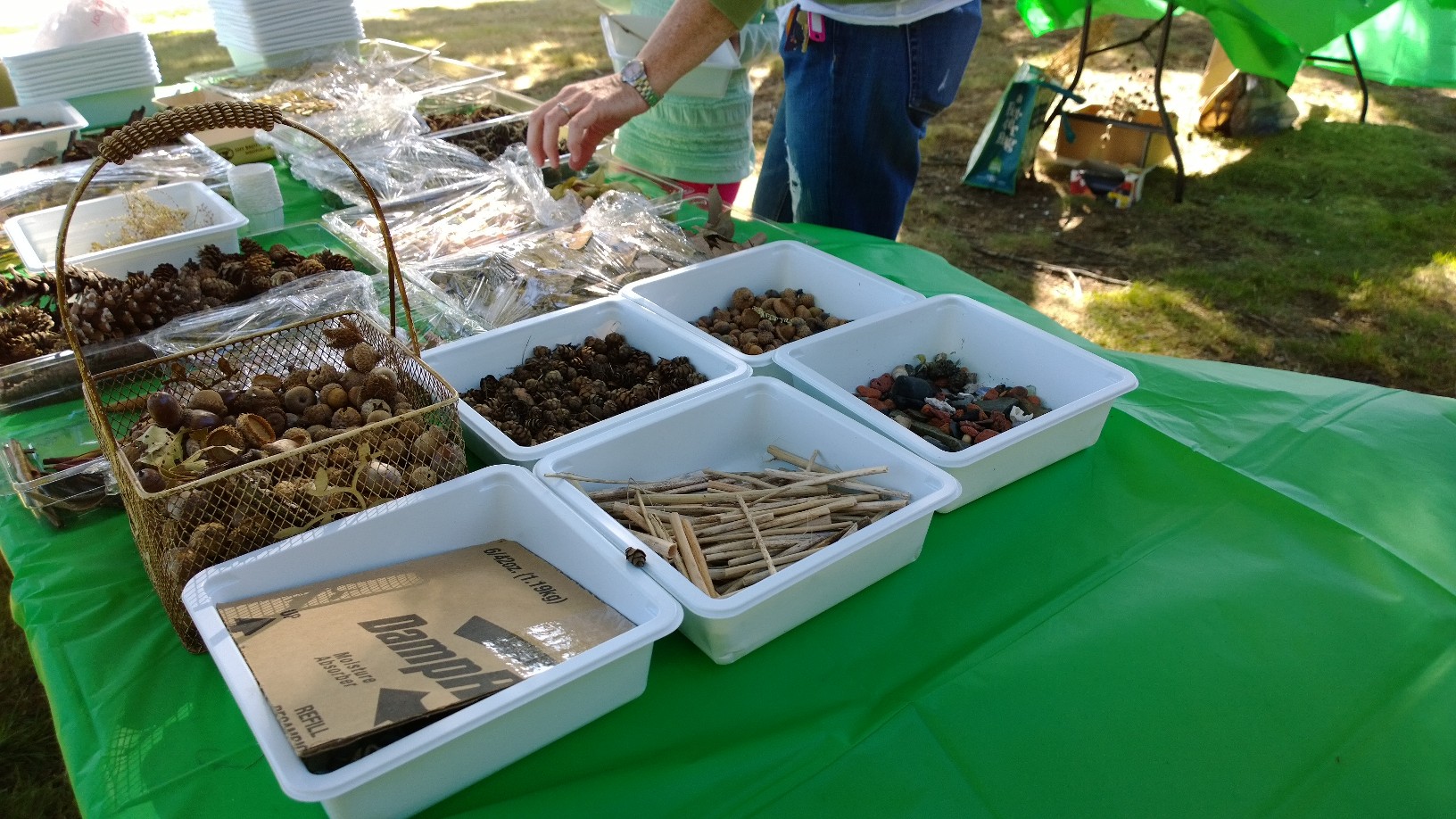
Cardboard forms that you could fold into houses were on hand. On top you could apply a layer of something like sand-colored Play-Doh, with actual sand in it. Next you could choose from a gorgeous array of seedpods, acorns, leaves, twigs, and other fruits of nature — and stick them into the “mortar” — the way a fairy would like them — before the clay dried.

Our middle grandchild was a little young for it, but he liked running around in the park and watching the rowing lessons on the Seekonk nearby.

I would like to try fairy houses again someday soon. Just collecting the pieces of nature to be used would be fun for a child.

Read about the conservancy and future events here.

blackstone-valley-fun

to-make-fairy-castles

Read Full Post »

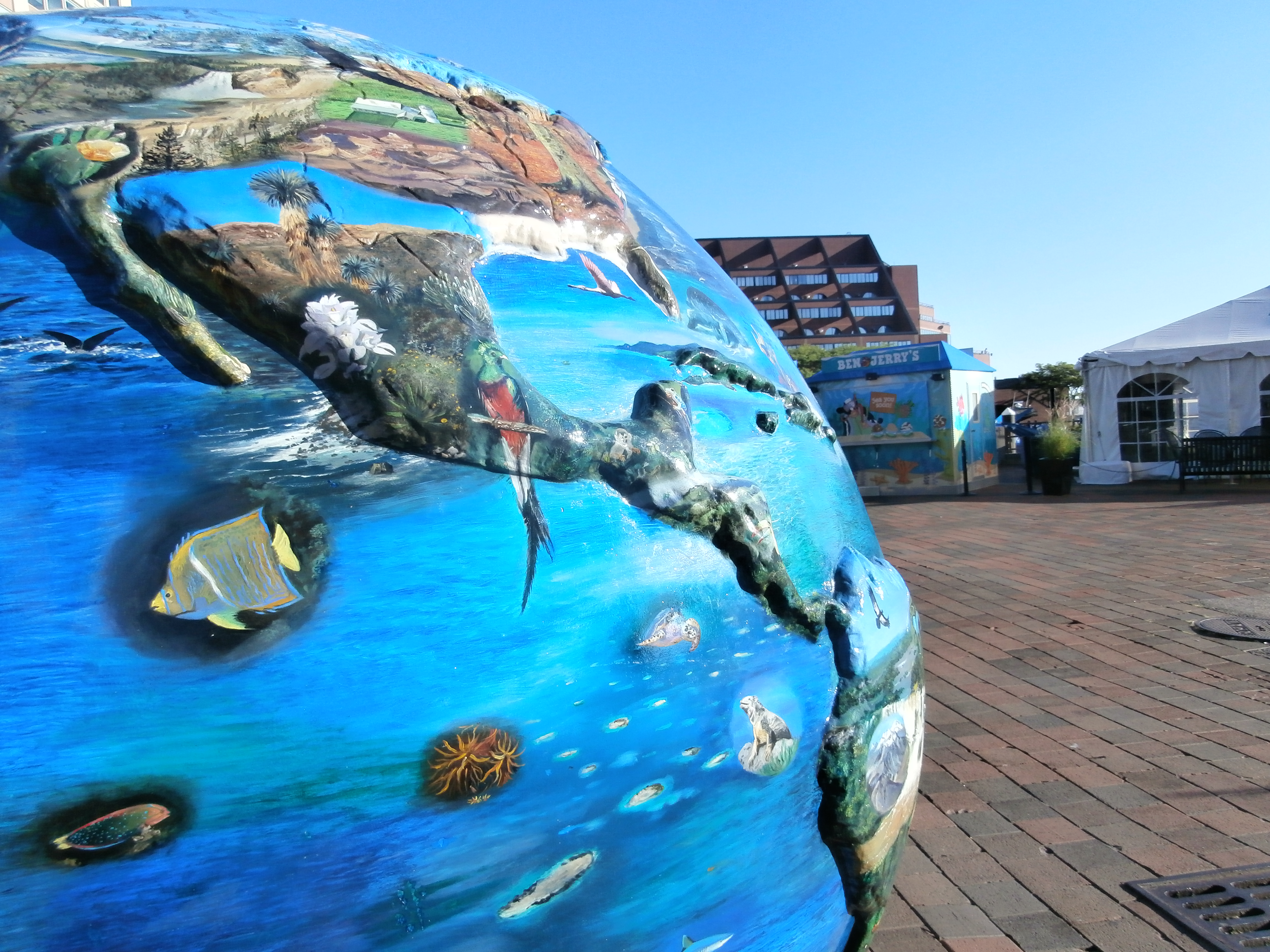
Cate McQuaid, my favorite Boston Globe art critic, who usually covers more esoteric subjects, explains some large artsy globes seen around Boston in recent days.

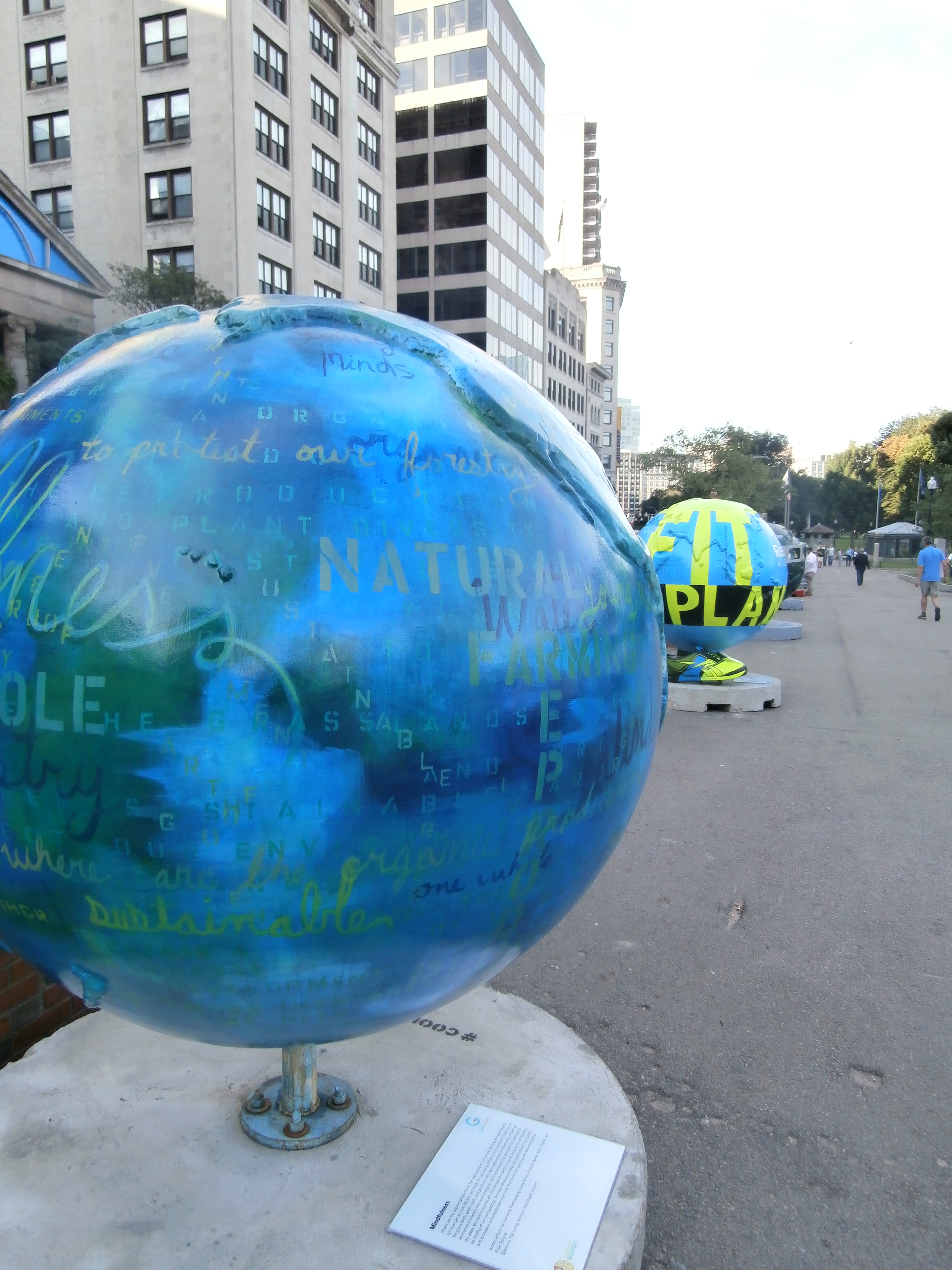
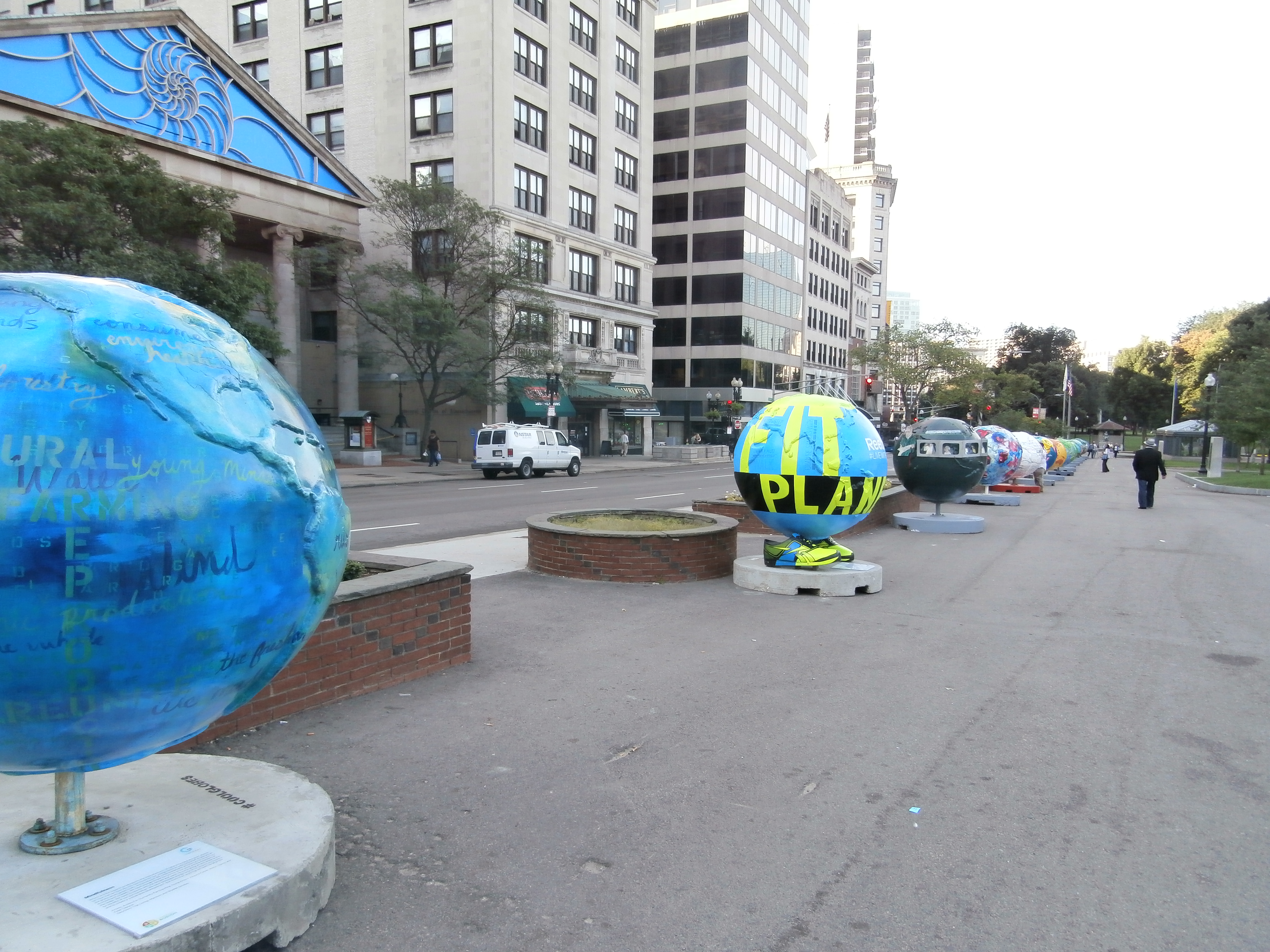
“Huge, colorful orbs line up in a row down the Tremont Street side of Boston Common. It looks like a giant might be marshaling his marbles. Get up close, and you’ll see that the spheres, each 5 feet in diameter, are globes, fancifully decorated and proffering solutions to climate change.

“ ‘Cool Globes: Hot Ideas for a Cooler Planet’ has landed in Boston. The public art project, for which artists designed globes with green strategies to contend with environmental issues, originated in Chicago in 2007 and has traveled the world.”

Environmental activist Wendy Abrams, says McQuaid, is the initiative’s founder.

“Abrams cites two inspirations for the project, the wrecked cars that Mothers Against Drunk Driving pointedly deploy in their Crash Car Program, and the painted cow sculptures that showed up in the streets of Chicago in 1999 — a public art project that prompted Boston to follow suit with painted cod.”

Read about individual artists’ Cool Globe themes, the outreach to students, and more, here.

The first two photos below are near the Park Street subway station. The third is in front of the aquarium, and I am not sure if it is part of the traveling series.

cool-globes-boston

globes-for-a-coller-planet

globe-at-aquarium

Read Full Post »

I was reading an article by Kathleen Wolf, a social scientist whose “work is based on principles of environmental psychology and focuses on the human dimensions of urban forests and ecosystems.”

The following words struck me: “Interviewees say that merely looking at trees tends to reduce mental and physical stress. A walkable green environment is also thought to increase life satisfaction in later life and even longevity.” Hmm.

So to borrow some words from local honcho H.D. Thoreau, “I went to the woods to see if I could live” longer.

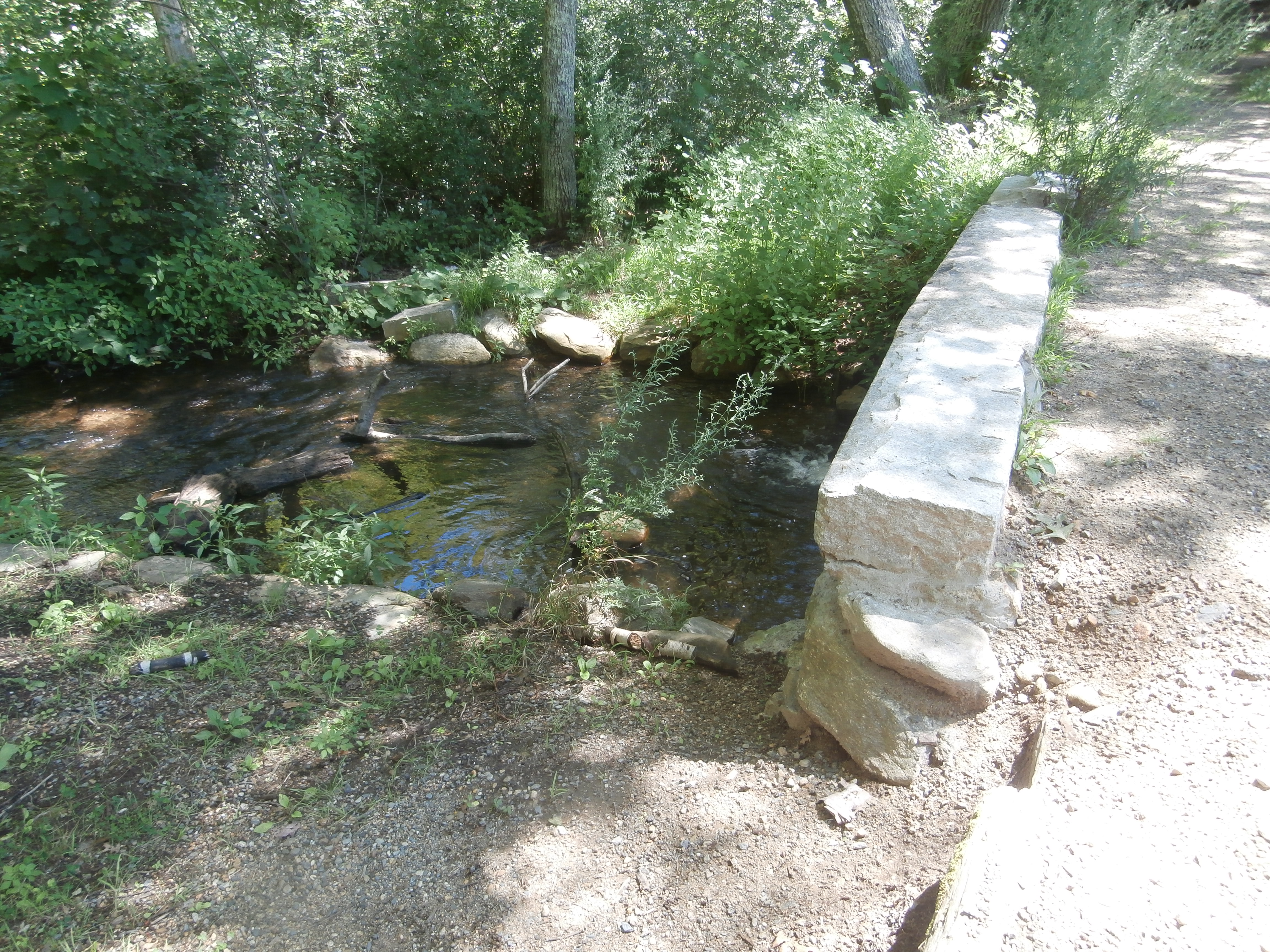
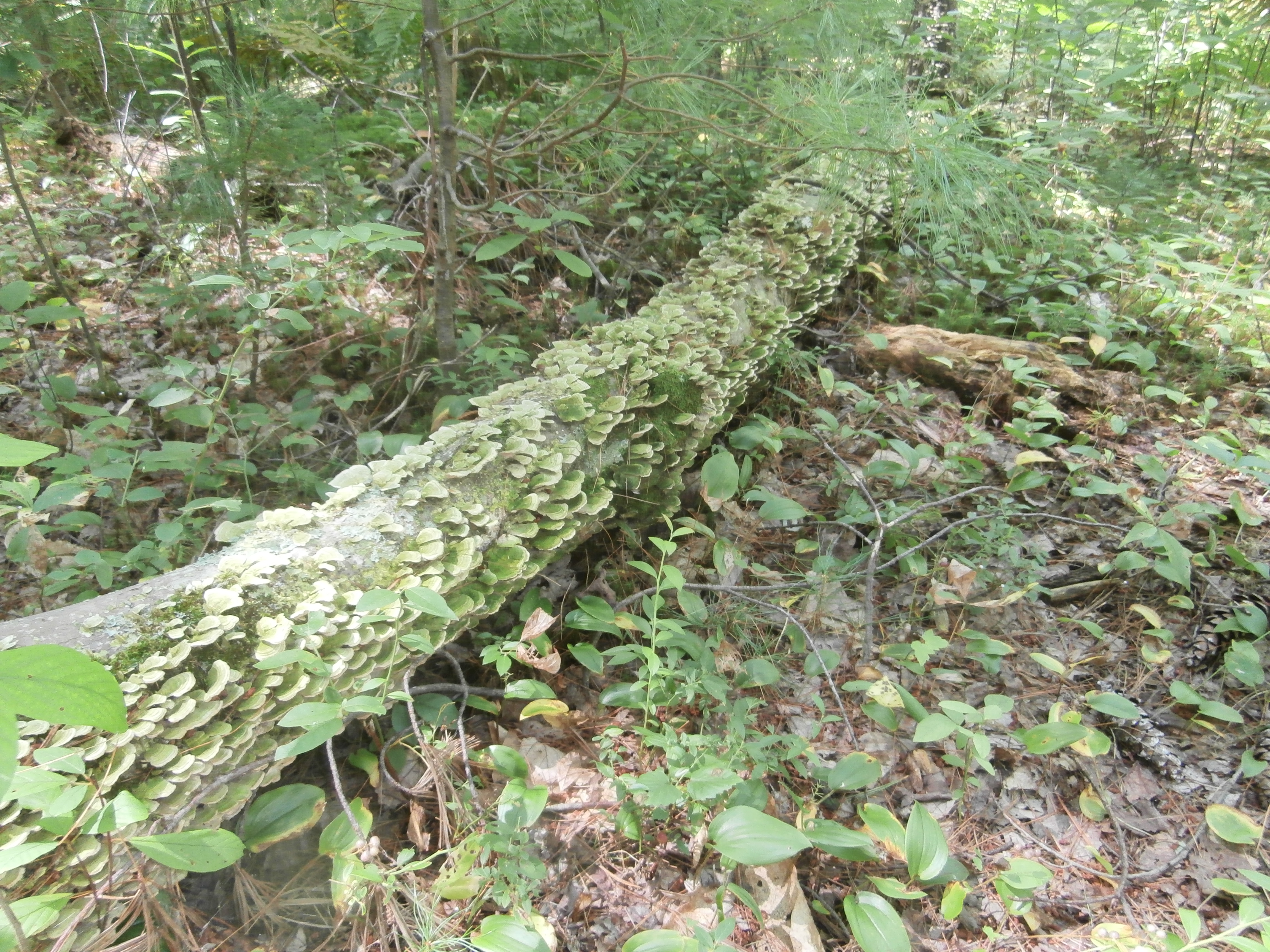
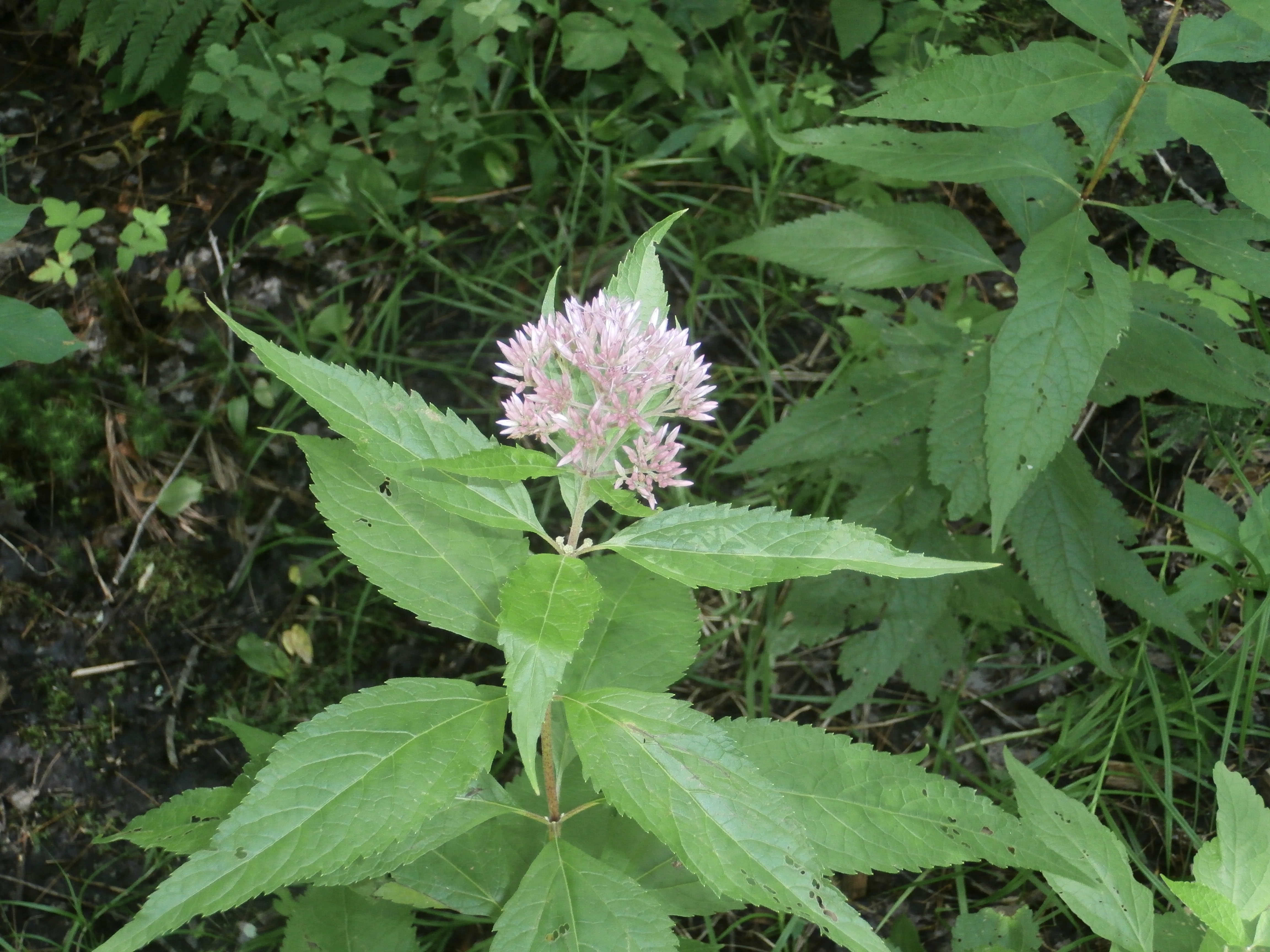
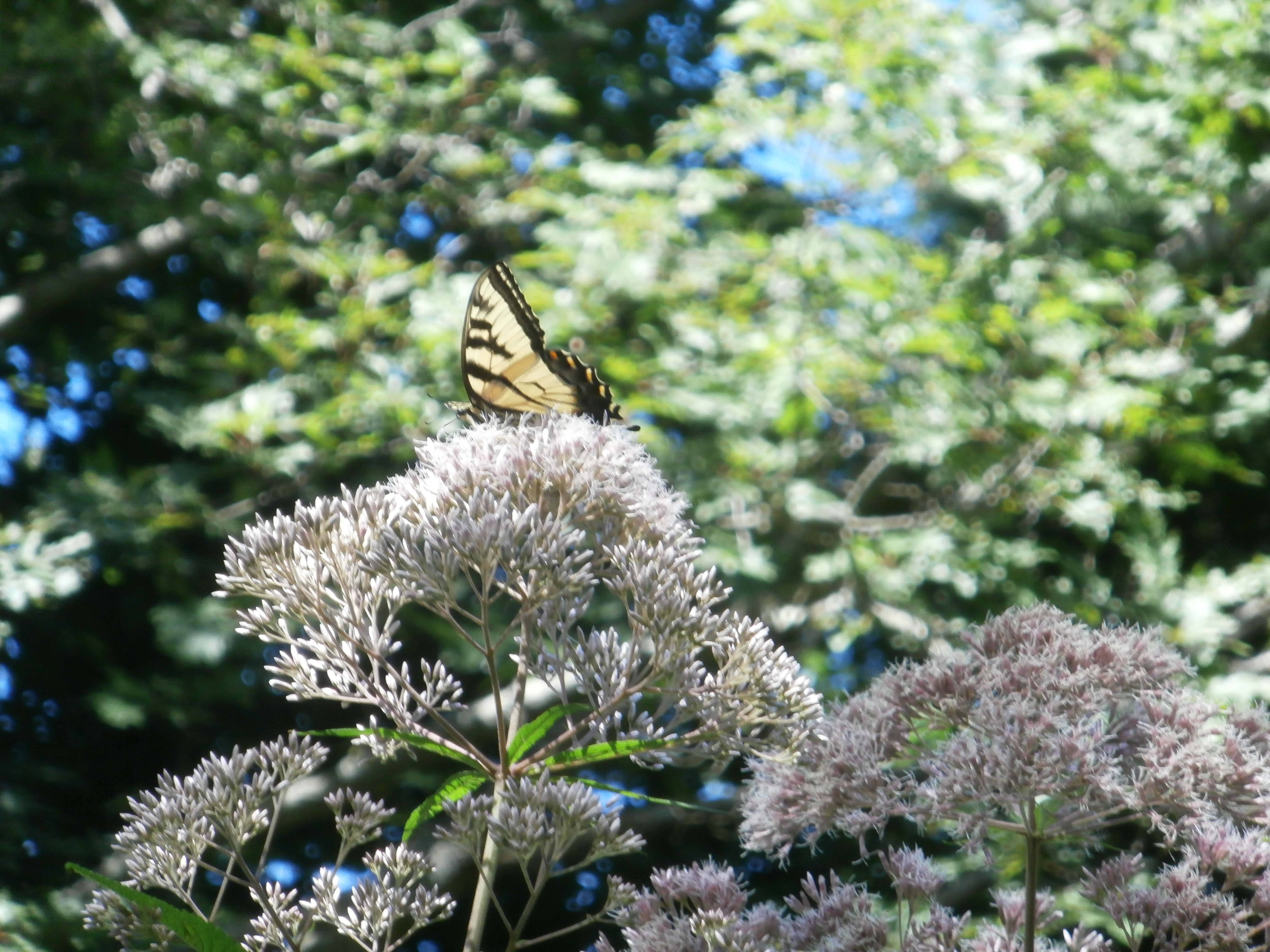
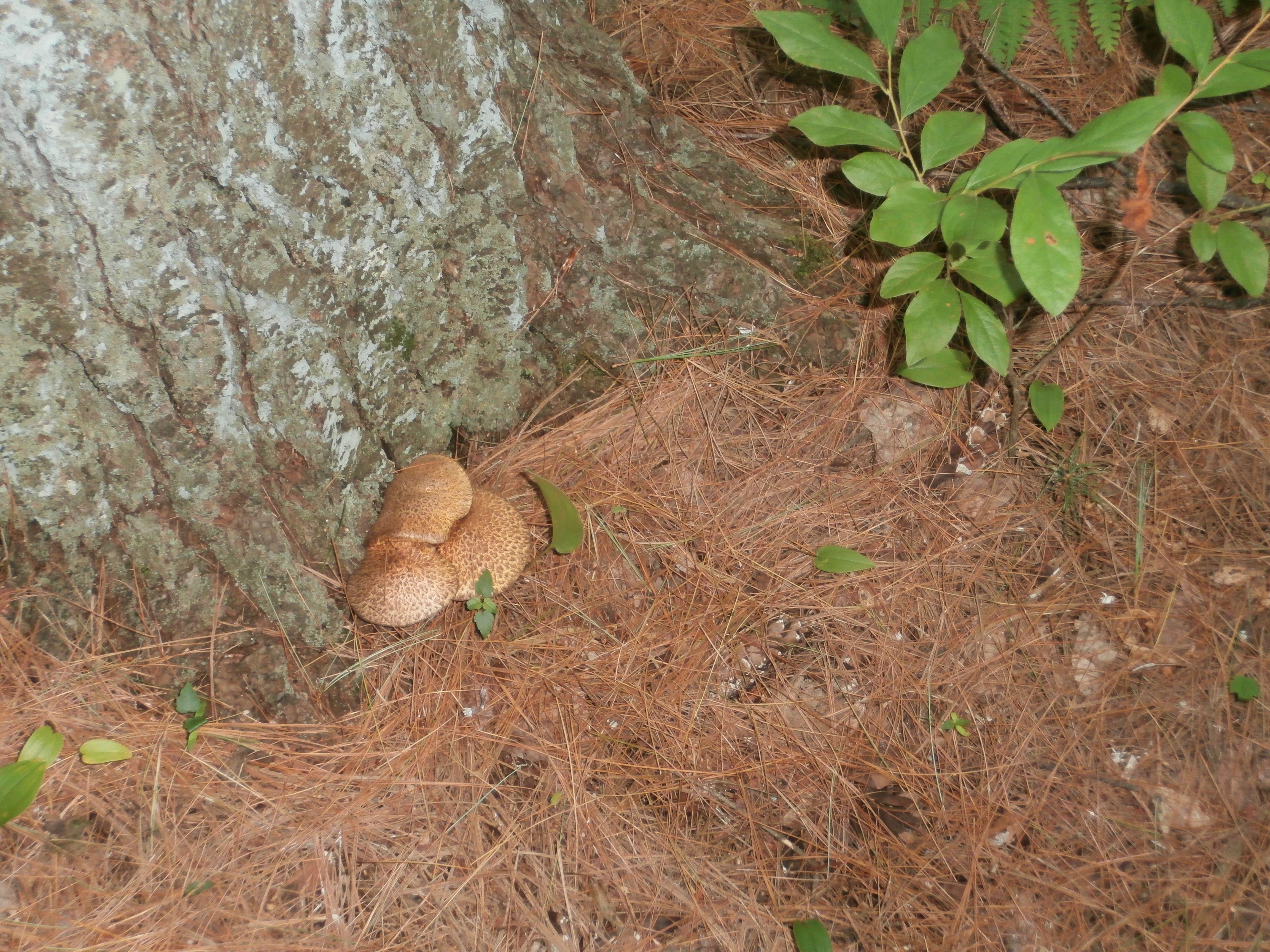
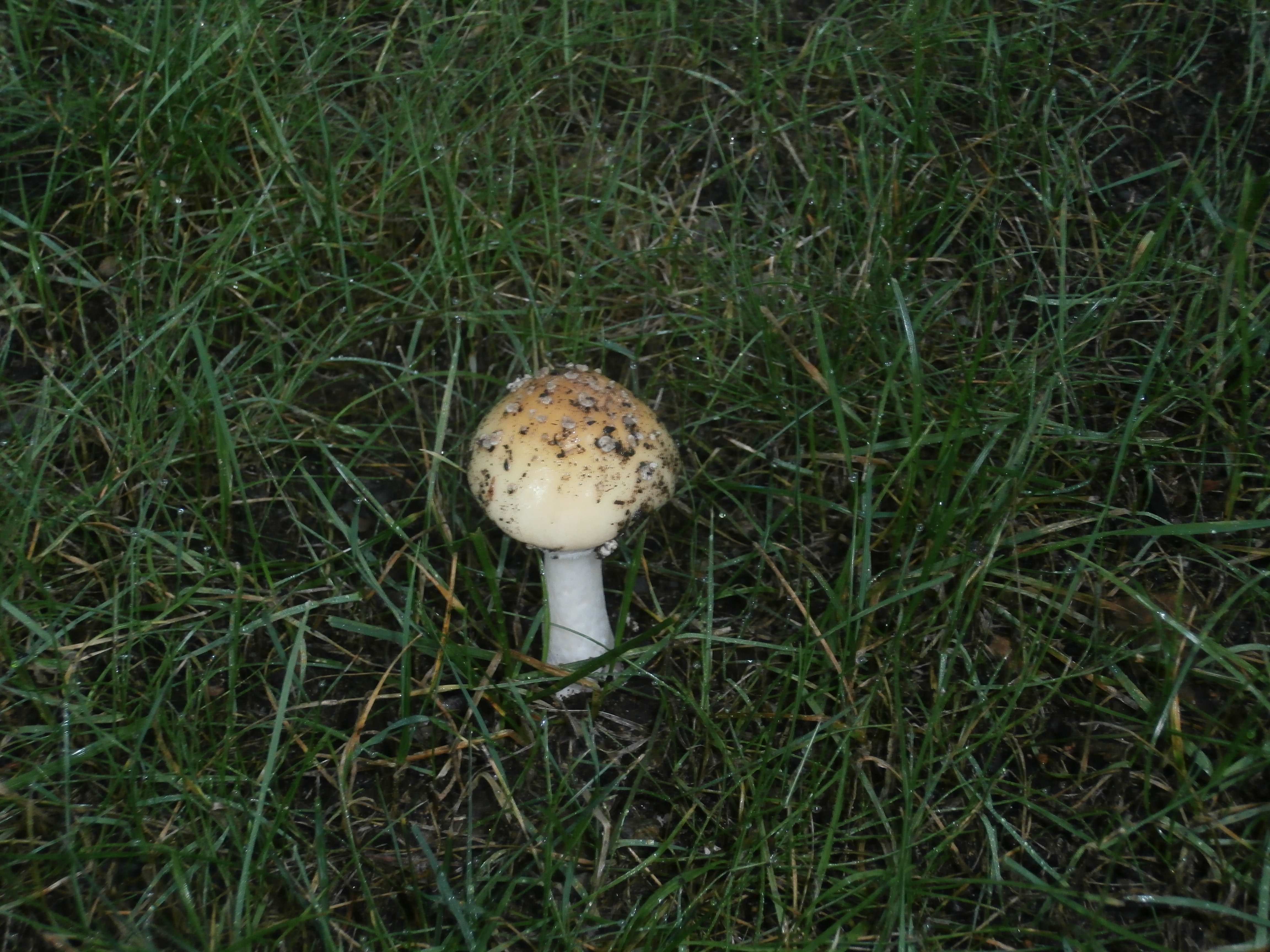
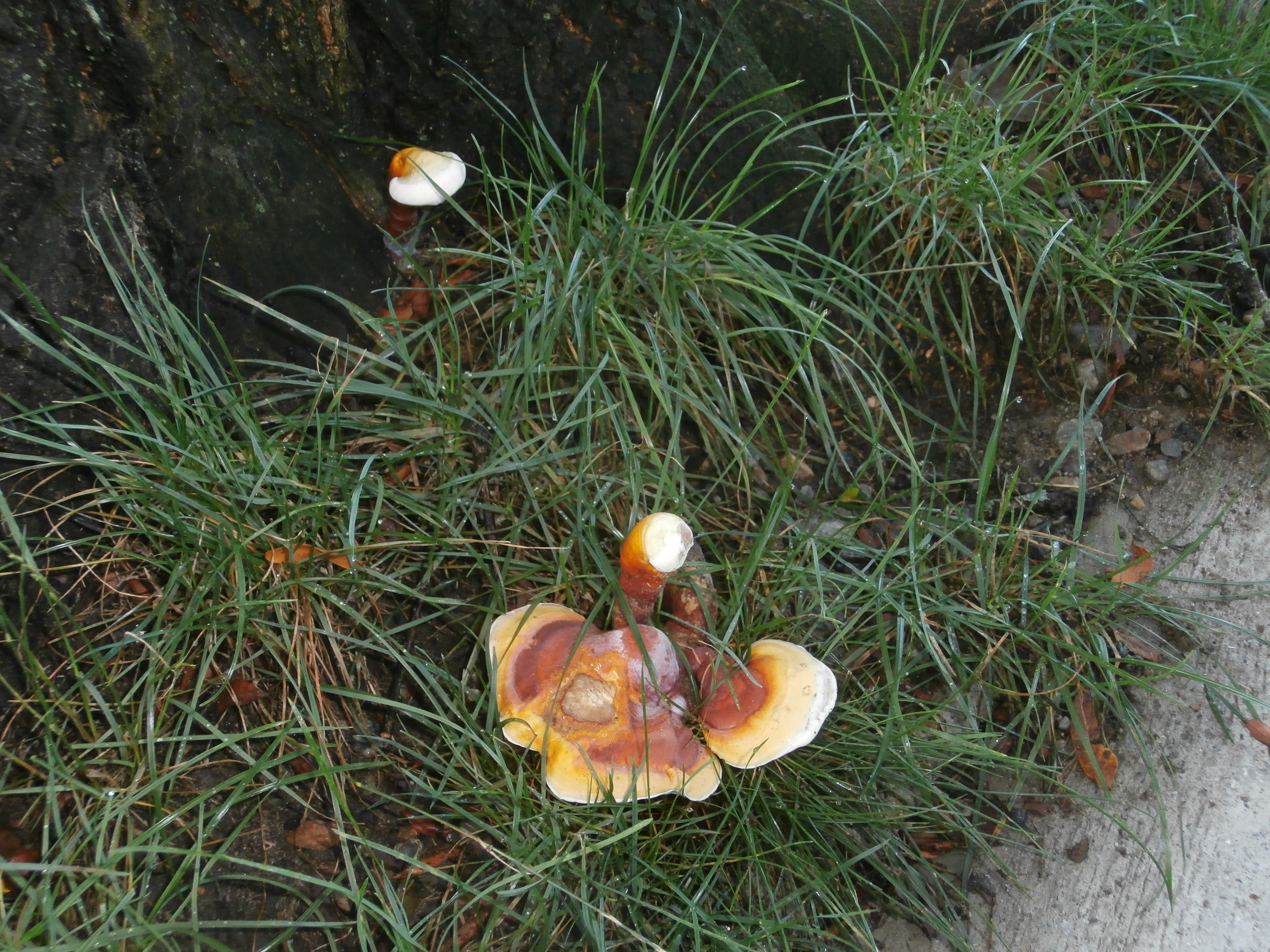
Photos include the Hapgood Wright Town Forest, Joe Pye Weed, an Eastern Tiger Swallowtail, a log like a scaly snake, and various fungi indicating mysteries beneath the surface.

hapgood-wright-town-forest

scaly-snake-log

joe-pye-weed

10-fott-weed-and-swallowtail

fungus

lonely-mushroom

something-is-below-the-surface

Read Full Post »

On the radio show “Living on Earth,” Bruce Gllerman interviewed Antioch education professor David Sobel recently about helping kids grow up to care about nature.

“Research shows that adults who are strong environmental stewards were allowed to explore nature unfettered as kids. …  Sobel says educators are too focused on rules and making sure that students learn correct scientific terms instead letting kids be kids. …

“SOBEL: Kids should have alone time in the woods. If it gets crazy, then there should be some adult intervention. … There needs to be a large quotient of being outdoors, in the meadows and in the woods, as well as the more didactic, pictorial experience of IMAX and National Geographic.

“GELLERMAN: So basically, take the kid kayaking.

“SOBEL: Take the kid kayaking. Take the kid berry-picking.

“GELLERMAN: Well, [with] a lot of parents — you say ‘berry-picking’ and they’ll say, ‘Oh my gosh, they’ll pick something poisonous!’ I know I take my kid mushrooming, and I tell other parents, and they look at me like ‘Oh my God, should we call the police on this guy?’

“SOBEL: Exactly. It’s fascinating how shocked and disapproving other parents are about [that] kind of behavior. … One of the things in childhood that seems to shape environmental behaviors in adulthood is parents taking their kids mushroom picking and berry picking: selecting a natural resource for consumption …

“GELLERMAN: You know, Professor, if I were asked, I could trace my environmentalism to when I was just maybe four years old. And my mother gave me a spoon, put me in the garden, and I started digging to China. Do you have a memory like that?

“SOBEL: The analogous memory that I recount is a snow day when I was about eight years old. And my friends and I decided we would play this game where they were gonna go off and I was gonna to follow them fifteen minutes later. And in the midst of tromping through waist-deep snow all by myself, my glasses were fogging up, I had one of those little epiphany moments: that I was out here, all by myself, in the snowy wilderness, and wasn’t this great! It’s a recurrent phenomenon that kids have these great moments, somewhere in early to middle childhood, that often connect them to the natural world.”

More at the website, where you also can listen to the recording of the interview.

Photo: Flickr CC/your neighborhood librarian
Walking in the woods. 

Read Full Post »

If you can’t photograph the ivory-billed woodpecker in Louisiana or Cuba or wherever it is rumored to have survived, the next best thing is to find a brand new species. That’s what Simon Mahood did in Cambodia.

Thomas Fuller writes about it in the NY Times. “The discovery of new fauna conjures up images of Livingstone-like explorers trekking through malaria-infested jungles. But scientists working in Cambodia have reported a new species of bird in a decidedly less remote environment: the outskirts of Phnom Penh.

“Simon Mahood, the lead author of an article released Wednesday in the Oriental Bird Club’s journal Forktail, says the bird’s primary habitat is about a 30 minutes’ drive from his home in Phnom Penh, ‘allowing for traffic.’

“ ‘I’ve always wanted to discover a bird species, but I never expected it would happen like this,’ Mr. Mahood, who works for the Wildlife Conservation Society in Cambodia, said by telephone from Phnom Penh. ‘I certainly didn’t expect to be standing in flip-flops and shorts a half an hour from home.’

“Roughly the same size as a wren, with white cheeks and a cinnamon cap, the bird was named the Cambodian tailorbird by the team that documented the discovery. Tailorbirds get their name from the way they build their nests, by threading spider silk or other fibers through a leaf, creating a sort of cradle.” More.

Photo: Ashish John/Wildlife Conservation Society
The Cambodian tailorbird was found near Phnom Penh.


Read Full Post »

At Public Radio International’s “The World,” David Leveille has a story on research at Ellesmere Island in northern Canada.  There, University of Alberta biologist Catherine La Farge is finding that some frozen plants are able to begin growing again after 400 years on ice.

“Cold as it may be during the winter,” writes Leveille, “it’s a part of the world where glaciers are melting and ice sheets are breaking up due to climate change.

“One glacier there is called the Tear Drop glacier. As it has melted, some interesting plant life was exposed.”

La Farge’s results, published in the Proceedings of the National Academy of Sciences “suggest that bryophytes, representing the earliest lineages of land plants, may be far more resilient than previously thought, and likely contribute to the establishment, colonization, and maintenance of polar ecosystems.” Who knows what else is under the glacier and about to be thawed out.

More.

Photo: Catherine La Farge
In vitro culture of Aulacomnium turgidum regenerated from emergent Little Ice Age plants beneath the Tear Drop Glacier, Sverdrup Pass, Ellesmere Island, Nunavut.


Read Full Post »

« Newer Posts - Older Posts »