Feeds:
Posts
Comments

Posts Tagged ‘education’

When I was a teacher in Pennsylvania hoping to get accreditation, a supervisor from the teachers college where I took classes came to observe me at work. It was quite a long time ago, and the only thing I recall is that he remarked that I needed to do more with my classroom bulletin boards.

There I was, trying to do creative things with 11-year-olds in language arts (the play within the play from A Midsummer Night’s Dream springs to mind), but his checklist required him to observe the bulletin boards.

So imagine my delight when I saw an article today about a study suggesting teachers may be putting too much emphasis on bulletin boards and wall decorations.

Jan Hoffman writes at the NY Times, “That bright, cheery look has become a familiar sight in classrooms across the country, one that has only grown over the last few decades, fed by the proliferation of educational supply stores. But to what effect?

“A new study looked at whether such classrooms encourage, or actually distract from, learning. The study … found that when kindergartners were taught in a highly decorated classroom, they were more distracted … than when they were taught in a room that was comparatively spartan.

“The researchers, from Carnegie Mellon University, did not conclude that kindergartners, who spend most of the day in one room, should be taught in an austere environment. But they urged educators to establish standards.

“ ‘So many things affect academic outcomes that are not under our control,’ said Anna V. Fisher, an associate professor of psychology at Carnegie Mellon and the lead author of the study, which was published in Psychological Science. ‘But the classroom’s visual environment is under the direct control of the teachers. They’re trying their best in the absence of empirically validated guidelines.’ ”  Hence the impetus for the study. Read more here.

Photo: Psychological Science
In a new study, 24 kindergartners were taught in two classroom settings: one unadorned, the other decorated with posters and artwork.

Read Full Post »

At my husband’s college reunion yesterday, we heard a former classmate talk about a wonderfully innovative school he founded  in San Diego (High Tech High).

After hearing that a fairly typical class project was developing a genetic bar code to identify endangered species in the bush, my husband wondered how such an inventive school can function in today’s teaching-to-the-test world. I myself figured that whatever the kids absorb from meaningful projects and cutting-edge teaching they absorb deeply enough to pass tests if they need to.

And when I think of the lengths to which test mania is going, I think more schools should learn from High Tech High. Consider the latest testing aberration: robots grading essays.

Les Perelman at the Boston Globe gives examples:

” ‘According to professor of theory of knowledge Leon Trotsky, privacy is the most fundamental report of humankind. Radiation on advocates to an orator transmits gamma rays of parsimony to implode.

“Any native speaker over age 5 knows that the preceding sentences are incoherent babble. But a computer essay grader, like the one Massachusetts may use as part of its new public school tests, thinks it is exceptionally good prose.

“PARCC, the consortium of states including Massachusetts that is developing assessments for the Common Core Curriculum, has contracted with Pearson Education, the same company that graded the notorious SAT essay, to grade the essay portions of the Common Core tests. Some students throughout Massachusetts just took the pilot test, which wasted precious school time on an exercise that will provide no feedback to students or to their schools.

“It was, however, not wasted time for Pearson. The company is using these student essays to train its robo-grader to replace one of the two human readers grading the essay, although there are no published data on their effectiveness in correcting human readers.

“Robo-graders do not score by understanding meaning but almost solely by use of gross measures, especially length and the presence of pretentious language. The fallacy underlying this approach is confusing association with causation. A person makes the observation that many smart college professors wear tweed jackets and then believes that if she wears a tweed jacket, she will be a smart college professor.” More here.

Uh-oh. Sounds like the children’s book Petunia. Fortunately, a timely explosion taught the silly goose that books have pages you need to read, that carrying a book under your wing doesn’t make you smart.

More explosions needed.

Photo: blog.spoongraphics.co.uk

Read Full Post »

A Syrian actor who visited a refugee camp, felt compassion for the children, and returned to help them put on a play decided to start at the top. Only the best playwright would do.

From the Zaatari refugee camp in Jordan, NY Times reporter Ben Hubbard describes the scene: “On a rocky patch of earth in this sprawling city of tents and prefab trailers, the king, dressed in dirty jeans and a homemade cape, raised his wooden scepter and announced his intention to divide his kingdom. His elder daughters, wearing paper crowns and plastic jewelry, showered him with false praise, while the youngest spoke truthfully and lost her inheritance.

“So began a recent adaptation here of King Lear. For the 100 children in the cast, it was their first brush with Shakespeare, although they were already deeply acquainted with tragedy. All were refugees who had fled the civil war in Syria. …

“ ‘The show is to bring back laughter, joy and humanity,’ said its director, Nawar Bulbul, a 40-year-old Syrian actor known at home for his role in ‘Bab al-Hara,’ an enormously popular historical drama that was broadcast throughout the Arab world.

“Last year, he and his French wife moved to Jordan, where friends invited him to help distribute aid in Zaatari. …

“Children he met in the camp made him promise to return, and he did — with a plan to show the world that the least fortunate Syrian refugees could produce the loftiest theater. …

“The mere fact that the play was performed was enough for the few hundred spectators. Families living in nearby tents brought their children, hoisting them on their shoulders so they could see. …

“The crowd burst into applause, and a number of the leading girls broke into tears. Mr. Bulbul said they were overwhelmed because it was the first time anyone had clapped for them.”

More here, at the NY Times, where you can also see a slide show and watch a video about the refugee-camp theater initiative.

Photo: Warrick Page for The New York Times

Read Full Post »

Holmes-School-Dorchester-MaA new employee goes to the Oliver Wendell Holmes School in Dorchester with the team I’m on. He can’t get over how great it is to work for an organization that gives you time to do this. We go out once a month from January to June, and other teams go once a month so that we cover every week.

I started eight years ago with the team that read picture books to a room of first graders. Then I read for a few years with fifth or fourth graders who received chapter books from the librarian. These were students whose teachers thought they would appreciate the extra reading. We all read aloud, with the adult volunteers only taking a turn if the story seemed to lag.

Holmes is a minority-majority urban school with many dedicated teachers who are tolerant of the extra work it takes to herd volunteers. (We also have volunteers who work on math.)

This year, the team I’m on includes the woman who started the whole relationship with Holmes 20 years ago and is now retired. We are assigned to read copies of printed passages and help the children answer multiple-choice questions from tests they have had in the past.

Given the current nationwide emphasis on testing and these third graders’ tendency to keep guessing wildly, I consider it my role to focus on the thought process and deemphasize getting the right answer. I ask, Why do you think that’s the answer? How did you get there?

The administrators often tell us that we make a difference. We’re probably just a drop in the bucket. But, you know, One and One and 50 Make a Million.

More employers should make it so easy to improve the world in which they operate. Other employees probably spend the hour and a half it takes to go out, tutor, and get back once a month in less valuable ways.

Read Full Post »

Do you remember a blog post about a photography and interview initiative called the Humans of New York? I wrote about it here.

It seems that a frustrated parent of a high school student who had no Spanish teacher decided to let it all out when asked what she was feeling, and the Humans of New York entry about her went viral. Now the school district must save face and choose among many offers of help.

Brandon Stanton saw Annette Renaud on the subway and asked to  interview her. As Soni Sangha writes for the NY Times, Renaud was upset.

” ‘We’ve got a new mayor and a new chancellor … So we aren’t blaming them. But they need to know how impossible they’ve made it to help our kids. Trying to get something fixed in these schools is like praying to some false God. You call and email hoping that God is listening, and nothing happens.’

“Someone was listening,” says Sangha. “The post immediately went viral, with 150,000 likes on the Humans of New York Facebook page, it was shared more than 16,000 times, and it had strangers from across the city and the country pledging to call the school in protest on behalf of the students. Someone in Michigan started a change.org petition calling on the school to hire a foreign language instructor; another Connecticut petition asked the Department of Education to help the students — it has more than 1,000 supporters. …

“ ‘We continue to work closely with the school community to ensure students have access to the courses they need,’ said Marcus Liem, deputy press secretary of the New York City Education Department. Mr. Liem said that officials from the department were planning to meet with the school’s administration about this and other issues even before the posting, but that those meetings have now been moved up.” Read it all here.

Photo: Nicole Bengiveno/The New York Times
Alejandra Figueroa, a senior at the Secondary School for Journalism, believes the loss of her Spanish teacher jeopardizes her chances for an Advanced Regents diploma.

Read Full Post »

It might be getting a bit cold for the outdoor classroom, but this article by Melanie Plenda in the Boston Globe suggests that not even snow will stop these preschoolers from learning about nature.

“In the back of the farmhouse at Drumlin Farm Community Preschool in Lincoln sit five chickens surrounded by a gaggle of preschoolers — eyes wide, waiting. The teacher opens the egg box door, and the students, staying slow and small like they were taught, peer in.

“ ‘And when they find an egg there,’ says Paula Goodwin, director of the school, ‘we ask them to make a nest with their hand, and they very gently pass the egg from one to another. And it’s a very special time, because they don’t need a lot of special instructions except to look for a child whose hands are in the shape of a nest. … It’s one of the magical moments in the school year. They are so generous with sharing the egg, and they may not have even learned each other’s names yet.’

“Drumlin is a nature- and farm-based preschool, which means that rain or shine, maybe not sleet but definitely snow and temperatures down to 15 degrees, the 14 3- to 5-year-olds are outside learning math, science, language, and how to be curious. Visiting captive wildlife, doing farm chores, and taking part in planting activities provide opportunities for all kinds of learning.” More.

Judging from my three grandchildren, I’m pretty sure no kid needs to “learn how” to be curious (“Poppa, what is the sun for?”), but we all hope for schools that continually encourage their curiosity.

Photo: Porter Gifford

Read Full Post »

Concerned about education? Observe children. They can lead the way.

More and more educators are taking the approach Sugata Mitra tried when he put computers in the slums of India and watched children teach themselves.

Joshua Davis writes at Wired about another success story in an impoverished part of Mexico.

For 12-year-old Paloma Noyola Bueno, who grew up next to a garbage dump where her father scavenged for a living, school was a bright spot, even when it was all rote memorization. …

“As she headed into fifth grade,” writes Davis, “she assumed she was in for more of the same—lectures, memorization, and busy work. Sergio Juárez Correa was used to teaching that kind of class. …

“On August 21, 2011—the start of the school year — he walked into his classroom and pulled the battered wooden desks into small groups. When Paloma and the other students filed in, they looked confused. Juárez Correa invited them to take a seat and then sat down with them. …

” ‘You do have one thing that makes you the equal of any kid in the world,’ Juárez Correa said. ‘Potential. … And from now on,’ he told them, ‘we’re going to use that potential to make you the best students in the world.’ ”

And so began his effort to teach differently, to help children discover they could think for themselves.

It’s a long article but worth reading to understand the approach that led to a transformed class — with exceptional test results as a sort of minor spinoff.

Read it here.

Photo: Peter Yang
These students in Matamoros, Mexico, didn’t have reliable Internet access, steady electricity, or much hope—until a radical new teaching method unlocked their potential.

Read Full Post »

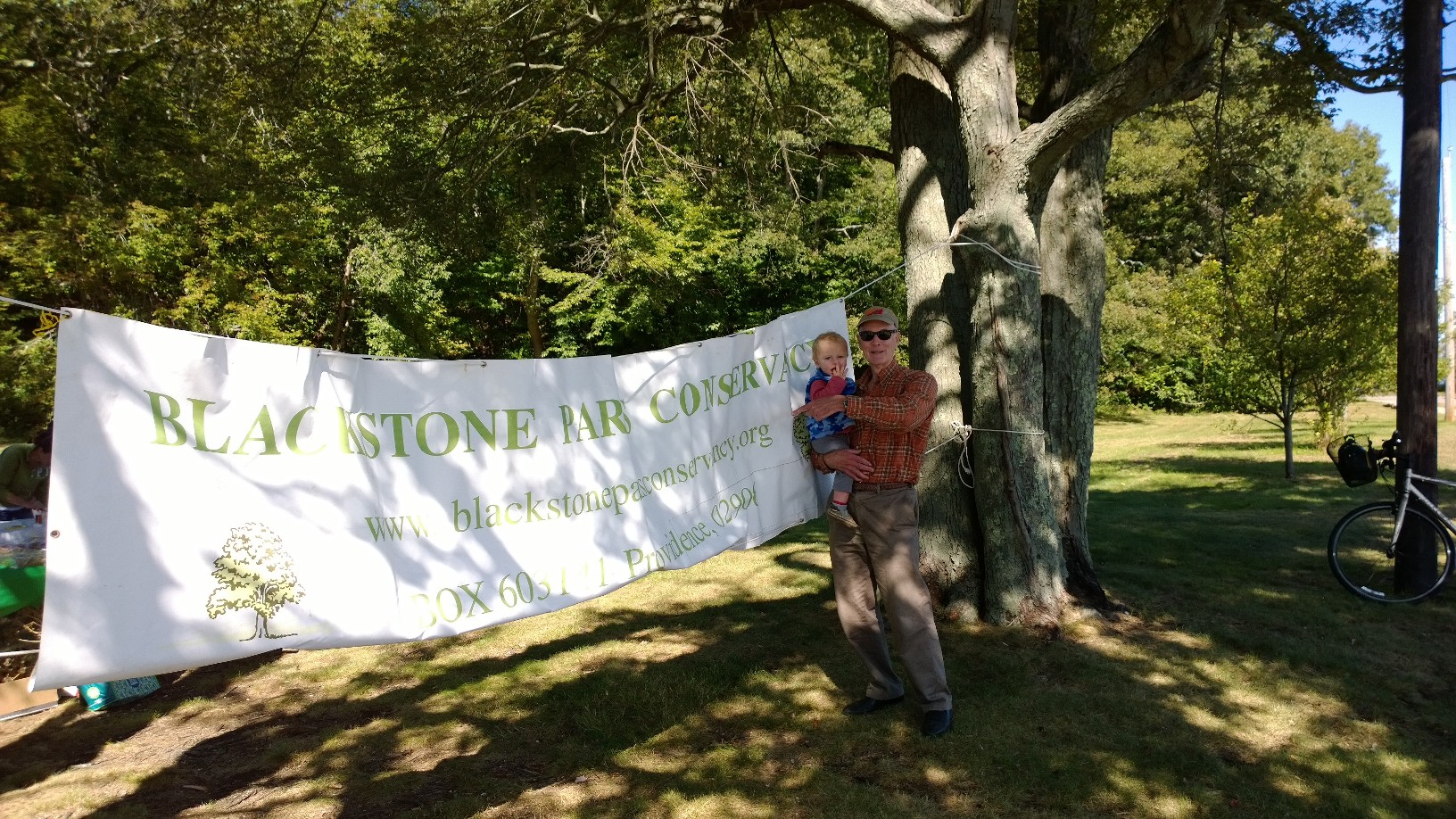
The Blackstone Parks Conservancy sent out this invitation, and we went.

“We invite you to attend the family event: Build your own Fairy House! This event was originally part of the summer series of family programs given by the Blackstone Parks Conservancy. Due to its rousing success, we are offering it again as part of Playful Providence, a citywide event organized by the Partnership for Providence Parks and the Providence Parks Department. Join us at the Field on River Road, across from the Narragansett Boat Club.”

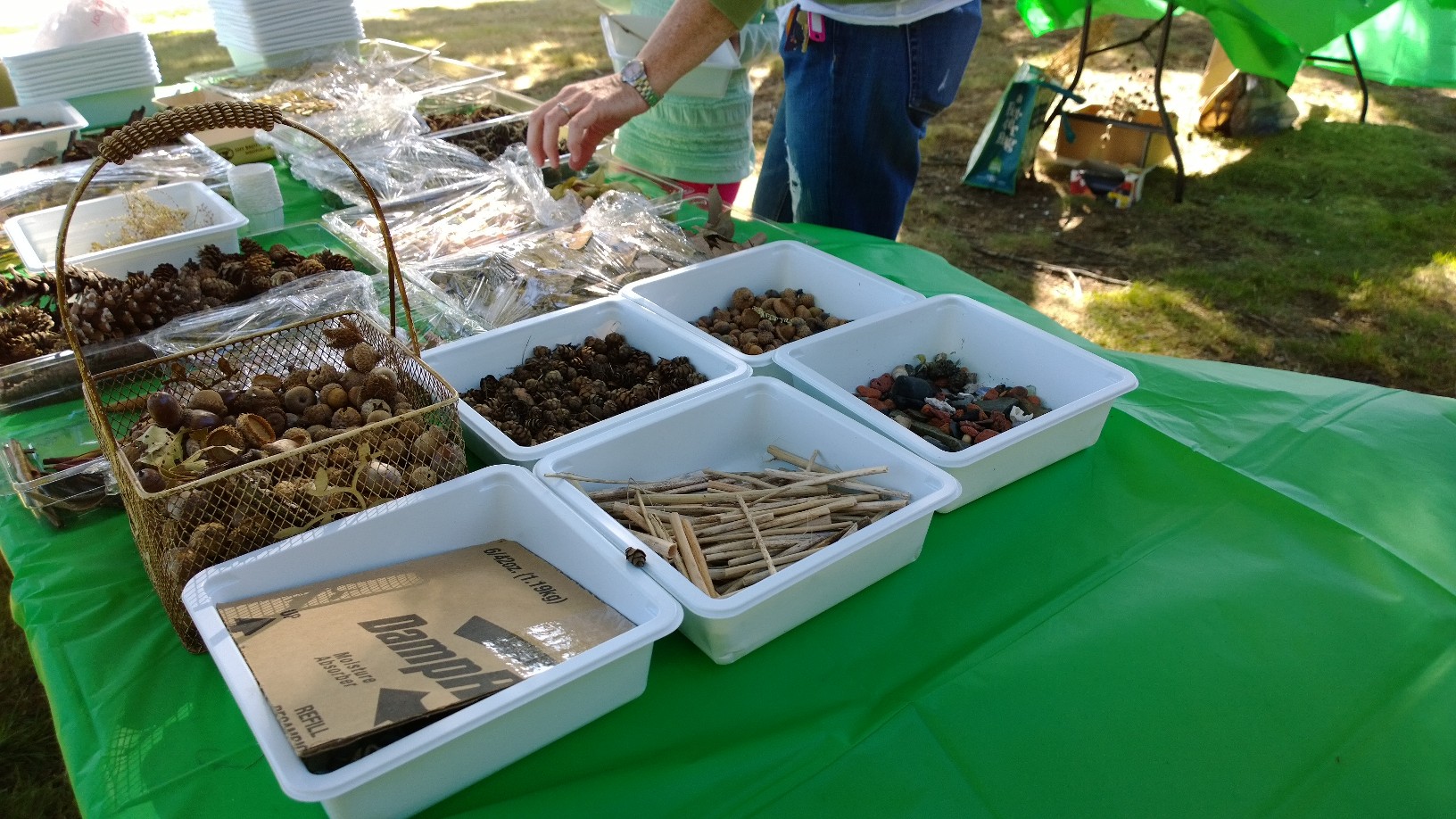
Cardboard forms that you could fold into houses were on hand. On top you could apply a layer of something like sand-colored Play-Doh, with actual sand in it. Next you could choose from a gorgeous array of seedpods, acorns, leaves, twigs, and other fruits of nature — and stick them into the “mortar” — the way a fairy would like them — before the clay dried.

Our middle grandchild was a little young for it, but he liked running around in the park and watching the rowing lessons on the Seekonk nearby.

I would like to try fairy houses again someday soon. Just collecting the pieces of nature to be used would be fun for a child.

Read about the conservancy and future events here.

blackstone-valley-fun

to-make-fairy-castles

Read Full Post »

John sent two articles about roles that grandparents are playing in children’s lives — in this case, grandmas.

The blog Microtask details Professor Sugata Mitra’s cool insights about the Grandma Effect.

“The theory is that grandmas are good at encouraging kids. They praise them and say things like: ‘Now that is clever dear, I’d never have been able to analyze the molecular structure of DNA all by myself!’ Supervising village children, Indian grandmothers got some impressive results: test scores almost doubled in two months …

“And the next step? The ‘Granny Cloud.’ While working at Newcastle University, Professor Mitra recruited over 200 UK grandmothers as volunteers. Broadcasting via webcam each ‘grandmother’ spends at least an hour a week encouraging classes of Indian school children. Some of the Indian locations are so remote that the Granny Cloud is the only access kids have to education.” More.

The second link that John sent has more on the Granny Cloud. Jane Wakefield writes for the BBC: “Jackie Barrow isn’t a granny yet but as a retired teacher she felt she might qualify for an advert in The Guardian newspaper calling for volunteers to help teach children in India.

“She did, and today, three years on, she is reading ‘Not Now Bernard’ via Skype to a small group of children in the Indian city of Pune.

“They love it and are engaged in the experience as she holds up an Easter egg to show them how children in the UK celebrated the recent holiday.” More.

Good work, Prof. Mitra! (Or as my grandson would say when I manage to attach the bike helmet properly, “Good work, Grandma!”) Everyone knows grandmas are cheerleaders, but Prof. Mitra took it to the next step.

Photo: Three-year-old photographer
Grandma saying, “Very creative camera work, Dear!”

grandma-art-photo

Read Full Post »

I like to listen to a jazz radio station out of Worcester, WICN.

The other day the announcer mentioned an effort funded by TD Bank’s charitable foundation to collect old school instruments and refurbish them for a new generation.

If you live near Worcester and have been wondering what to do with those drums and violins, consider dropping them off at 50 Portland St. If you don’t live near Worcester, you might consider looking for a similar program in your town — or even starting one. Other TD Banks might help out. Banks in general can be good sources of such community support.

Here’s what the website says: “WICN 90.5, the NPR jazz station in Worcester, and Worcester Public Schools continue their collaboration called Instrumental Partners. The program collects used musical instruments from Central New England residents for the benefit of public school students. ‘We’re approaching 100 instruments donated so far!’ said WICN General Manager Gerry Weston. Instrumental Partners began in 2012.

“All instruments are accepted: brass, wind, string, percussion, acoustic, electric, etc. Worcester Public Schools Performing Arts Liaison Lisa Leach said, ‘We are very excited about this collaboration and putting instruments in the hands of young people who are unable to purchase or rent them, but still have the desire and work ethic to make music an integral part of their developing lives.’ ” More.

If you want to call first, the number is 508 752 0700.

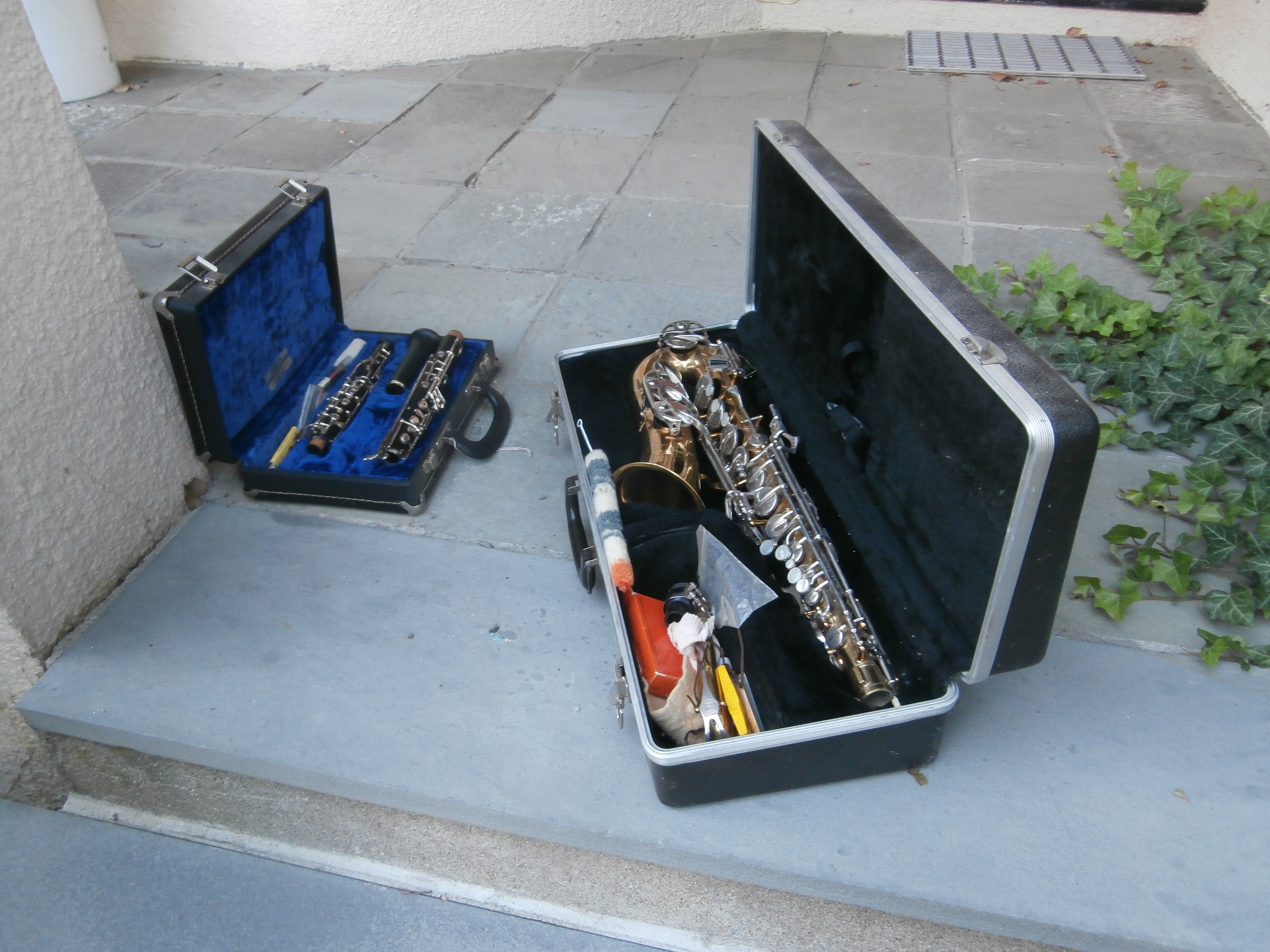
12/27/13 Update. Today I took the oboe and the alto sax below to WICN for the Worcester Public Schools music program. Now a new generation of children will play them.

school-instruments-sax=oboe

Read Full Post »

On the radio show “Living on Earth,” Bruce Gllerman interviewed Antioch education professor David Sobel recently about helping kids grow up to care about nature.

“Research shows that adults who are strong environmental stewards were allowed to explore nature unfettered as kids. …  Sobel says educators are too focused on rules and making sure that students learn correct scientific terms instead letting kids be kids. …

“SOBEL: Kids should have alone time in the woods. If it gets crazy, then there should be some adult intervention. … There needs to be a large quotient of being outdoors, in the meadows and in the woods, as well as the more didactic, pictorial experience of IMAX and National Geographic.

“GELLERMAN: So basically, take the kid kayaking.

“SOBEL: Take the kid kayaking. Take the kid berry-picking.

“GELLERMAN: Well, [with] a lot of parents — you say ‘berry-picking’ and they’ll say, ‘Oh my gosh, they’ll pick something poisonous!’ I know I take my kid mushrooming, and I tell other parents, and they look at me like ‘Oh my God, should we call the police on this guy?’

“SOBEL: Exactly. It’s fascinating how shocked and disapproving other parents are about [that] kind of behavior. … One of the things in childhood that seems to shape environmental behaviors in adulthood is parents taking their kids mushroom picking and berry picking: selecting a natural resource for consumption …

“GELLERMAN: You know, Professor, if I were asked, I could trace my environmentalism to when I was just maybe four years old. And my mother gave me a spoon, put me in the garden, and I started digging to China. Do you have a memory like that?

“SOBEL: The analogous memory that I recount is a snow day when I was about eight years old. And my friends and I decided we would play this game where they were gonna go off and I was gonna to follow them fifteen minutes later. And in the midst of tromping through waist-deep snow all by myself, my glasses were fogging up, I had one of those little epiphany moments: that I was out here, all by myself, in the snowy wilderness, and wasn’t this great! It’s a recurrent phenomenon that kids have these great moments, somewhere in early to middle childhood, that often connect them to the natural world.”

More at the website, where you also can listen to the recording of the interview.

Photo: Flickr CC/your neighborhood librarian
Walking in the woods. 

Read Full Post »

Photo: nfait.wordpress.com

New research featured at WBUR radio’s “Only a Game” suggests that frequent physical activity in school boosts learning.

“Mid-morning on Tuesday at the South Lawrence 5th Grade Academy in Lawrence, Mass., a row of students prepares to learn science more efficiently…by stepping.

“At this kind of school within a school, the daily schedule for these fifth graders includes not one physical education class, but three. The students break during the day for physical activity, which, according to Kevin Qazilbash, the school’s principal, is not to say academics are being de-emphasized.” More.

“The curriculum at the South Lawrence 5th Grade Academy is based in part on the notion that exercise improves brain function and stimulates learning. According to Dr. Majid Fotuhi, the Chairman of the Neurology Institute for Brain Health and Fitness in Baltimore, studies support the idea that exercise can improve learning efficiency for children. …

“ ‘It’s so exciting,’ Fotuhi told Bill on … Only A Game. ‘There are actual new cells that are born in the memory parts of your brain. Literally, new cells are born, this has been shown in animal studies. So exercise is the best thing for [the] brain, especially for the memory part of the brain.’ …

“Though no study prescribes a perfect amount of exercise, Fotuhi offers guidelines to parents and educators.

“ ‘My recommendation would be at least one hour a day for children who are 6-12 and for high school kids, two hours a day,’ Fotuhi said. ” More.

I myself find that walking around helps me think, and I remember my father doing that, too. He was a writer. There is something about moving around while puzzling out how to express a complicated thought that is more productive than sitting in front of a computer (or in his case, a typewriter).

Photo of Dr. Fotuhi, Johns Hopkins

Read Full Post »

She’s a mild-mannered school teacher in Pakistan — unless education for girls is threatened, and then, watch out! She’s the Burka Avenger!

Salman Masood and Declan Walsh have the story at the NY Times: “Cartoon fans in Pakistan have been excited by the arrival of the country’s first caped crusader, in the form of a female superhero who flies through the air, battling villains using pens and books.

“The heroine, Burka Avenger, is certainly an unusual role model for female empowerment in Pakistan: a woman who uses martial arts to battle colorful villains …

“But the cartoon, in which a demure schoolteacher, Jiya, transforms into the action heroine by donning a burqa, or traditional cloak, has also triggered an awkward debate about her costume.

“ ‘Is it right to take the burqa and make it look “cool” for children, to brainwash girls into thinking that a burqa gives you power instead of taking it away from you?” asked the novelist and commentator Bina Shah in a blog post.

“The criticism has not overshadowed the broader welcome that Burka Avenger, which aired [in Islamabad] for the first time on Sunday evening, has received. With slick computer animation, fast-paced action and flashes of humor that even adults can appreciate, the character could offer Pakistanis a new cultural icon akin to Wonder Woman in the United States.”

And she is generating some thoughtful discussions about the role of girls and women and the importance of education for girls.  The show’s maker, pop star Aaron Haroon Rashid, points out that the burka is merely the heroine’s disguise.

(An excellent disguise indeed, used effectively by the playwright Tony Kushner in Homebody/Kabul, about a Western woman who leaves home and disappears in Afghanistan.)

Read more about the cartoon show here.

Read Full Post »

Solving a problem by definition means making something better. But for many years, disciplinary action in schools made things worse. Now more communities are testing the potential of “restorative justice,” an approach focused on helping a perpetrator change for the better.

It was at a neighborhood picnic that I first heard from a couple neighbors that they were restorative-justice volunteers.

They told me that if a student spray paints someone’s garage, let’s say, the police get called in, and the kid may end up with a record.

Under restorative justice, however, police, perpetrator, victim, school personnel, and community volunteers hear the case and agree on suitable compensation — in this case, it might be repainting the garage. The youth sees face to face how the victim feels. Change is possible with the community involved.

Patricia Leigh Brown writes at the NY Times about a restorative justice program in Oakland, California, where a high school’s “zero tolerance” policies had ridden roughshod over underlying causes, leading to escalation of problems.

She writes about youth adviser Eric Butler, whose “mission is to help defuse grenades of conflict at Ralph J. Bunche High School, the end of the line for students with a history of getting into trouble. He is the school’s coordinator for restorative justice, a program increasingly offered in schools seeking an alternative to ‘zero tolerance’ policies like suspension and expulsion.

“The approach … encourages young people to come up with meaningful reparations for their wrongdoing while challenging them to develop empathy for one another through ‘talking circles’ led by facilitators like Mr. Butler.” More.

In one talking circle, participants discovered that a girl in trouble for uncontrolled aggression had just lost a brother to gun violence. She had not told anyone or sought support. She began to learn other ways to deal with her anger.

Photo: Jim Wilson/The New York Times
Mr. Butler with a student at Ralph J. Bunche High School in Oakland.

Read Full Post »

As a scientist with young children, Gregg often tweets ideas for engaging kids in science. Recently @gfavalora tweeted about a website with instructive and fun videos. It’s called The Kid Should See This.

The site describes the video below thus:

“To celebrate World Ocean Day 2013, director and animator Akiko McQuerrey created a Papa Cloudy stop-motion music video: Overfishing Song from Papa Cloudy’s Restaurant.

Overfishing—catching fish faster than they can reproduce—is an urgent and devastating issue, and may be the single biggest threat to ocean ecosystems… The global fishing fleet is operating at 2.5 times the sustainable level—there are simply too many boats chasing a dwindling number of fish.

“What can we do to help? With more sustainable practices, our oceans can be healthy and plentiful for everyone. Recommendations from the Monterey Bay Aquarium suggest that we select sustainable fish from restaurants and stores, and diversify the kinds of fish we eat beyond just the popular choices.

“To help make these choices easier, they created a Monterey Bay Aquarium Seafood Watch pocket guide and mobile app. They even have recipes and more information about how to solve our ocean challenges.”

More videos here.

Read Full Post »

« Newer Posts - Older Posts »