Feeds:
Posts
Comments

Posts Tagged ‘environment’

I like win-win stories like this one from National Public Radio. It’s about a new crop with a lot of monetary potential — and distinct advantages for the environment.

“It doesn’t require any land or fertilizer. Farming it improves the environment, and it can be used in a number of ways. So what is this miracle cash crop of the future? It’s seaweed.

“Charlie Yarish, professor of ecology and evolutionary biology at the University of Connecticut, loves seaweed. In nature, he says, when seaweed turns a rich chocolate color, that means the plant is picking up nitrogen, a process called nutrient bioextraction. …

“Many plants and animals cannot survive when there is too much nitrogen in the water, but seaweed is able to ‘capture’ the nitrogen, as well as contaminants in the water.

“A United Nations report says that nearly 16 million tons of seaweed were farmed in 2008 — most of it in Asia. Yarish helped a company called Ocean Approved start the United States’ first open-water kelp farm in the Gulf of Maine in 2006 … Now, he’s helping to create a seaweed farm off the coast of Connecticut.

“Bren Smith owns and runs the Thimble Island Oyster Company, off the coast of Branford, Conn. After his business was hit hard by Tropical Storm Irene last year, ruining about 80 percent of the shellfish crop, Smith started looking around for something more resilient to farm. That’s when he found Yarish, who agreed to help set him up in the seaweed farming business. …

” ‘There’s no barns, there’s no tractors. This is what’s so special about ocean farming. It’s that it’s got a small footprint and it’s under the water. I mean, we’re so lucky; I feel like I stumbled on this just great secret that we then can model and spread out to other places,’ ” Smith says. …

” ‘The plan is to actually split it into a couple different experimental markets — one for food, one for fertilizer, one for fish food. I’m [also] working with a skin care company in Connecticut, and then one for biofuel,’ Smith says. He’s even hoping he can someday fuel his own boat with biofuel from the seaweed.”

Craig LeMoult has the whole story here at NPR, where you also can listen to the audio.

Photograph by Ron Gautreau
Oyster fisherman Bren Smith on his boat.

Read Full Post »

In a recent article in the NY Times, Kathryn Shattuck described a festival that took place on “600 acres of pasture and test plots at the Land Institute on the outskirts of Salina, Kansas. …

“Each autumn for 34 years, during its annual Prairie Festival, this nonprofit research organization has become a Mecca of sorts for those whose passions run to sustainability, farming and feeding the world.

“For two days, Friday evening through Sunday afternoon, lectures and walking tours, interspersed with art installations and musical performances, focused on climate change, agricultural practices and what the institute’s president, Wes Jackson, called ‘getting over the hump’ in the use of carbon-based energy sources. …

“Jackson, a plant geneticist who co-founded the institute in 1976, calls the festival ‘an intellectual hootenanny,’ where ideas collide with music, art, food like bison chili, and bread and beer made from Kernza, the institute’s trademarked perennial wheatgrass.

“But the democratic casualness of the environment — listeners sprawled on hay bales, children frolicking on the hillside — belied the seriousness of purpose as college hipsters and wizened hippies shared space with revered scientists and conservationists like David Orr, an environmental studies professor at Oberlin; Fred Kirschenmann, a distinguished fellow at the Leopold Center for Sustainable Agriculture at Iowa State University who is also the president of the Stone Barns Center for Food and Agriculture in Pocantico Hills, N.Y.; and Douglas Tompkins, who has preserved more than two million acres of wilderness in Chile and Argentina.”

Read all about it here.

Photograph: Steve Hebert for the New York Times
Sleeping under the stars at the Prairie Festival 

600 acres of pasture and test plots at the Land Institute on the outskirts of Salina, Kansas

Read Full Post »

Conrad Wilson recently posted an intriguing story at National Public Radio. It’s about a a practical approach to sustainability: converting sewage to energy.

“It turns out,” writes Wilson, “a sewer — the place where a city’s hot showers, dishwashing water and organic matter end up — is a pretty warm place. That heat can generate energy — meaning a city’s sewer system can hold tremendous potential for heating and cooling.

“It’s just that unexpected energy source that Brainerd [Minn.] hopes to exploit.

“Scott Sjolund, technology supervisor for Brainerd Public Utilities, is standing on the corner of 6th Avenue and College Drive in Brainerd, as sewage rushes unseen through underground pipes.

” ‘Everybody heats water up … and all that gets drained down the sewer, and that’s potential energy that could be extracted. That’s part of the equation,’ Sjolund says.

” ‘Actually extracting it in an economical fashion,’ Sjolund says, is the equation’s critical second part.

“The idea for this project comes from Brainerd-based company Hidden Fuels. In 2009, the business partnered with the city and the school district and received a $45,000 grant from the federal stimulus package.

“Hidden Fuels’ Peter Nelson says the first phase of the project involved installing sensors in the city’s sewers. For more than a year, the company and the city measured the temperature and amount of sewage running through the system to create a thermal energy map.

” ‘It shows that there’s a significant amount of energy — literally enough to heat hundreds of homes — within the streets of the city of Brainerd,’ Nelson says.

“Earl Wolleat, director for buildings and grounds with the Brainerd School District, says there’s enough energy running in just one of the sewer pipes to heat the entire high school. That could save tens of thousands of dollars every winter.”

Read more.

Public Utilities’ Scott Sjolund at a sewer site. Photograph: Conrad Wilson

Read Full Post »

A guy at the office reads a different blog I write, a blog for work, and knows the types of stories I like. Recently he e-mailed me about a new documentary in which the solutions to our economic problems are tackled by “just folks.” Add this to the growing list of proofs that “one and one and 50 make a million.”

“In Fixing the Future, host David Brancaccio, of public radio’s Marketplace and NOW on PBS, visits people and organizations across America that are attempting a revolution: the reinvention of the American economy. By featuring communities using sustainable and innovative approaches to create jobs and build prosperity, Fixing the Future inspires hope and renewal in a people overwhelmed by economic collapse.

“The film highlights effective, local practices such as: local business alliances, community banking, time banking/hour exchange, worker cooperatives and local currencies.” That’s what the film’s website says anyway. Read more. And if you see the movie, please let me know.

 Photographs: http://fixingthefuture.org

Read Full Post »

Alice Feiring has an interesting story in Newsweek.

She writes that Kazi Anis Ahmed of Bangladesh, the 41-year-old cofounder and president of a company called Teatulia, was getting his doctorate in comparative literature when his father suggested expanding the family media and construction business into tea farming. The location he had in mind was the barren northwest of the country, not far from India’s tea-growing region.

Kazi Anis Ahmed liked the idea but felt strongly that any farm of his should be organic. Additionally, says Feiring, the family’s “mission was to provide jobs to the region. …

“The lack of agricultural tradition proved a blessing because the land was virginal, not ravaged by the government-supported, synthetic-fertilizer-dominated ‘Green Revolution.’ After reading the poetic One Straw Revolution by the master Japanese farmer, Masanobu Fukuoka, Ahmed went one step beyond organic and tried to do low-intervention farming.

“The tea garden functions on minimal irrigation. They installed a plethora of plants next to the tea plants to feed and aerate the soil. What now exists is a breathtaking vision. The barren area has been transformed into an Eden with a resurgence of wildlife never seen before — recently, a pair of monkeys was spotted. The animals had not been seen in the area for decades.”

Read more at the Daily Beast. (Thanks for alerting me to this lovely story, Asakiyume.)

Photograph: Habibul Haque, Teatulia

Read Full Post »

Not long ago, I listened to a certain “Living on Earth” radio broadcast with amazement. A woman was explaining how she made up her mind to live without plastics. She did not make the effort sound easy, but she did make me think of ways I might cut back.

The “Living on Earth” account begins,”We live in a plastic-filled world. It’s used in almost everything, from cars to chewing gum to prescription drug bottles. Five years ago, Beth Terry decided to stop consuming plastic and she’s survived to tell the tale. Host Bruce Gellerman talks with Terry about her new book, ‘Plastic Free: How I Kicked the Plastic Habit and How You Can Too.’ ”

Terry tells the host, “Five years ago, almost to the day, I stumbled across an article about the plastic pollution problem in the ocean. And what completely blew my mind, and broke my heart, was this photo I saw of a dead albatross chick on Midway Island, thousands of miles from civilization — halfway between the United States and Japan. And it was just the carcass; it was full of plastic pieces. Like the plastic that I used on an everyday basis — things like bottle caps, things that didn’t come from the middle of the Pacific Ocean — they came from us. I just had to change. …

“I didn’t commit to stop using the plastic I already had, first of all, and I don’t recommend that anybody go through their house and purge the plastic and throw it away, because that’s just so wasteful, I think. But when my computer broke and it couldn’t be fixed — my first step is always to try and fix things and make them last as long as possible — but, when it couldn’t be fixed, I looked on Craig’s List and I found a secondhand computer.”

My own worry about plastics is how unstable the components are and how chemicals may escape into the air we breathe and the water we drink. When plastics are heated, as in a microwave, they can be dangerous. Please use ceramic containers for warming food in your — er — plastic microwave.

Read more of Terry’s alternatives to buying new plastics at “Living on Earth.”

Photograph: Beth Terry, with the plastic she collected in the first half of 2007.

Read Full Post »

Photograph: South End Knitters

Today I am thinking about the South End Knitters, the stealth street artists who wrap their knitting around parking meters and fire hydrants and telephone poles.

Writes Linda Matchan in the Boston Globe, “The South End Knitters’ weekly meetings at a Washington Street café seem innocuous, but don’t be fooled. Over knitting needles and yarn at the long table they’ve commandeered, they are contemplating something far more mischievous than a sweater. They’re graffiti knitters, and they’re plotting their next target. …

“As with graffiti, no two tags in the yarn-bomber subculture are alike. They range from sleeves on parking meters to tubes on tree limbs to sweaters on statues: A recent high-profile example is the neon pink sweater that the New York street knitter Olek crocheted in December for the 16-foot ‘Charging Bull’ statue on Wall Street.”

What put me in mind of the South End Knitters was an extraordinary post at the WordPress blog Pickled Hedgehog Dilemma, which describes a crochet effort that is drawing a lot of attention to the plight of vanishing corals.

Concerned about the effect of global warming on reefs, Margaret Wertheim and her twin sister got an idea that involved “crocheting corals. They used a crocheting technique invented by mathematicians in 1997 to model hyperbolic shapes called hyperbolic crocheting. … This ended up being a perfect technique for producing coral reproductions. …

“They crocheted a lot of corals,” continues Pickled Hedgehog, ” then they did something to change the world. They shared their corals with art museums. They got a community in Chicago to crochet with them. Then the crafting became a movement and groups all over the world started to crochet corals.”

Read Pickled Hedgehog Dilemma’s illustrated summary here. And if you have the time, this TED talk is super.

Pickled Hedgehog Dilemma

Read Full Post »

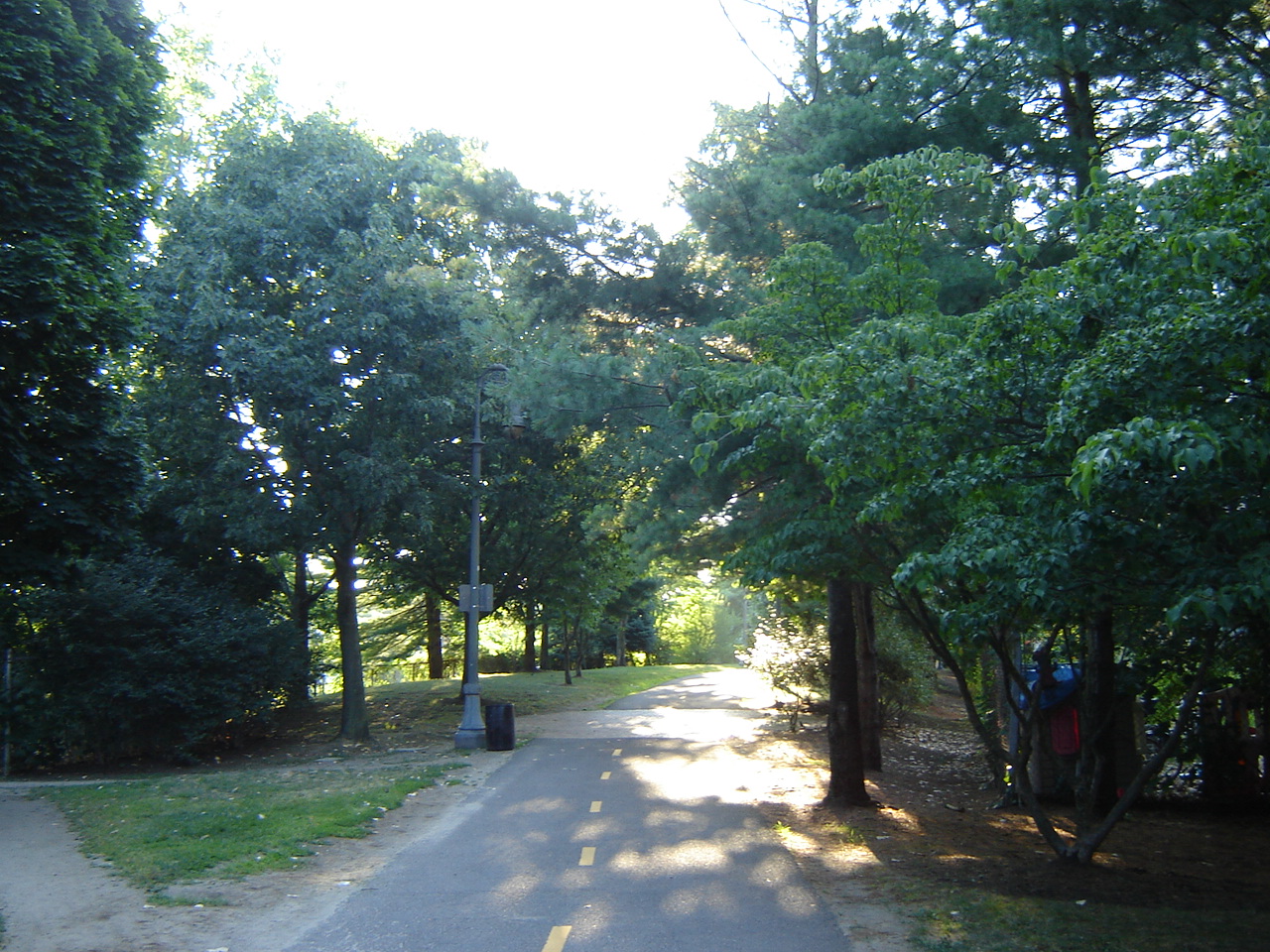
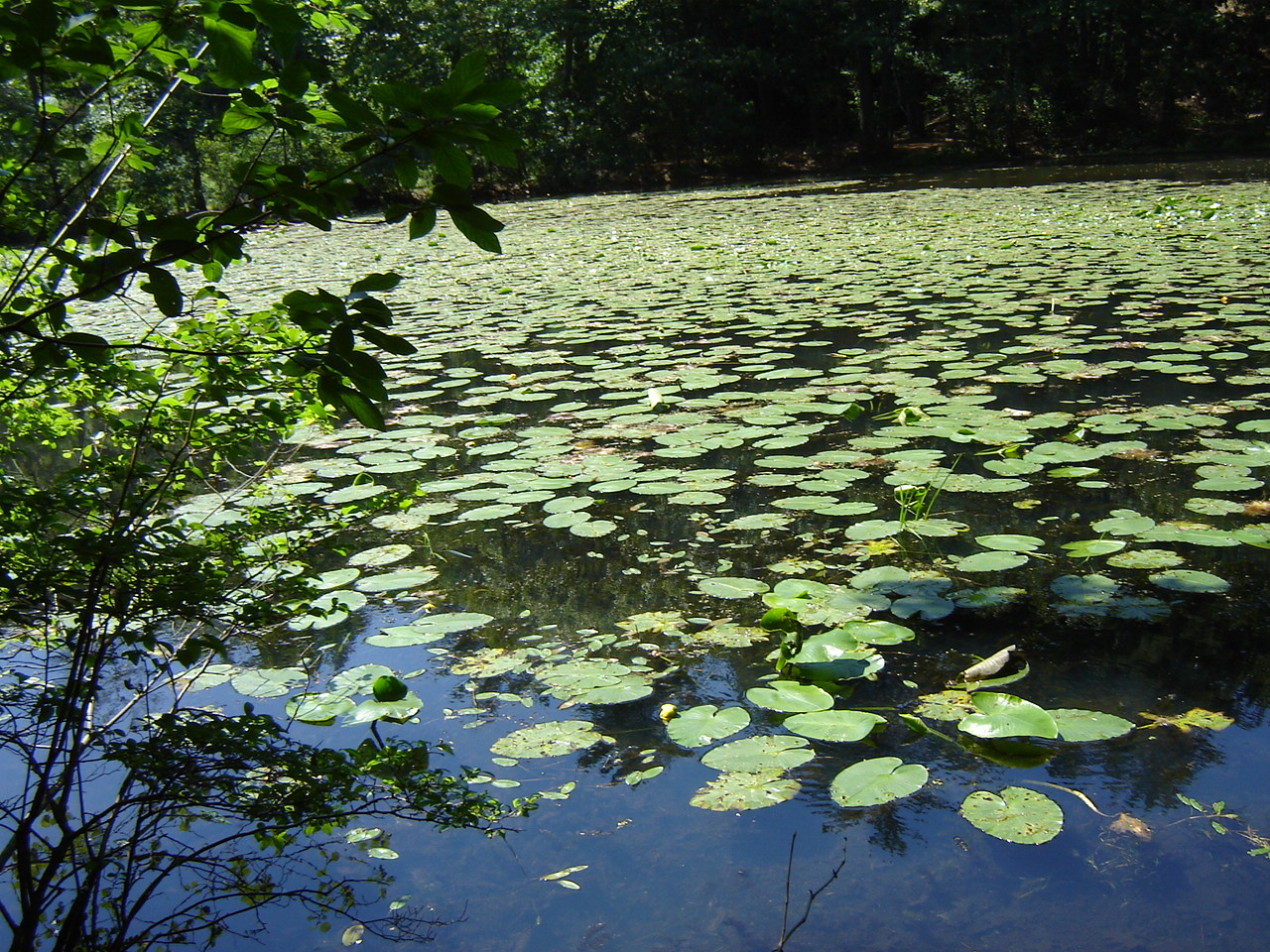
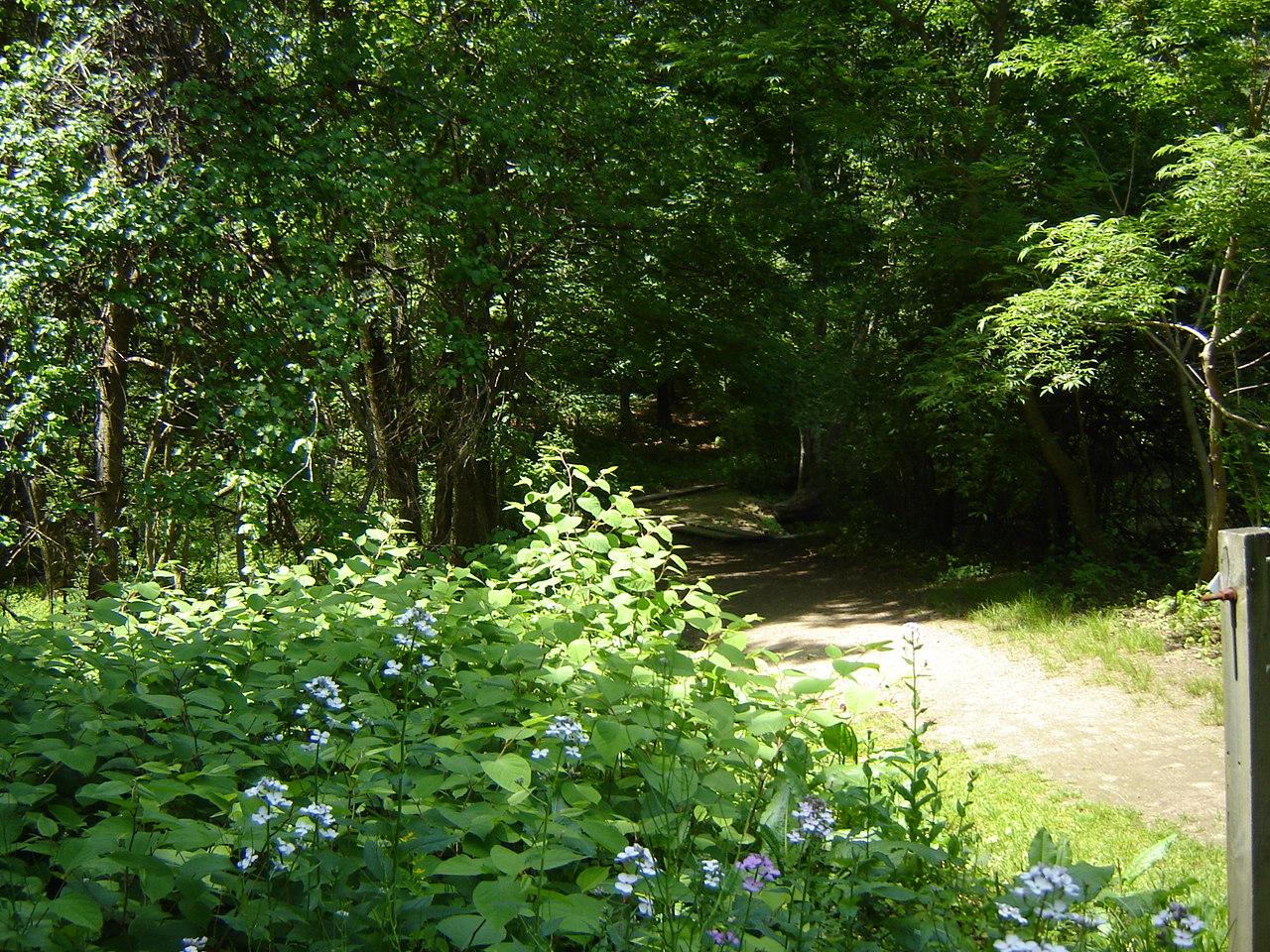
The bike path between the Alewife and Davis Square subway stops is lovely early on a summer day.

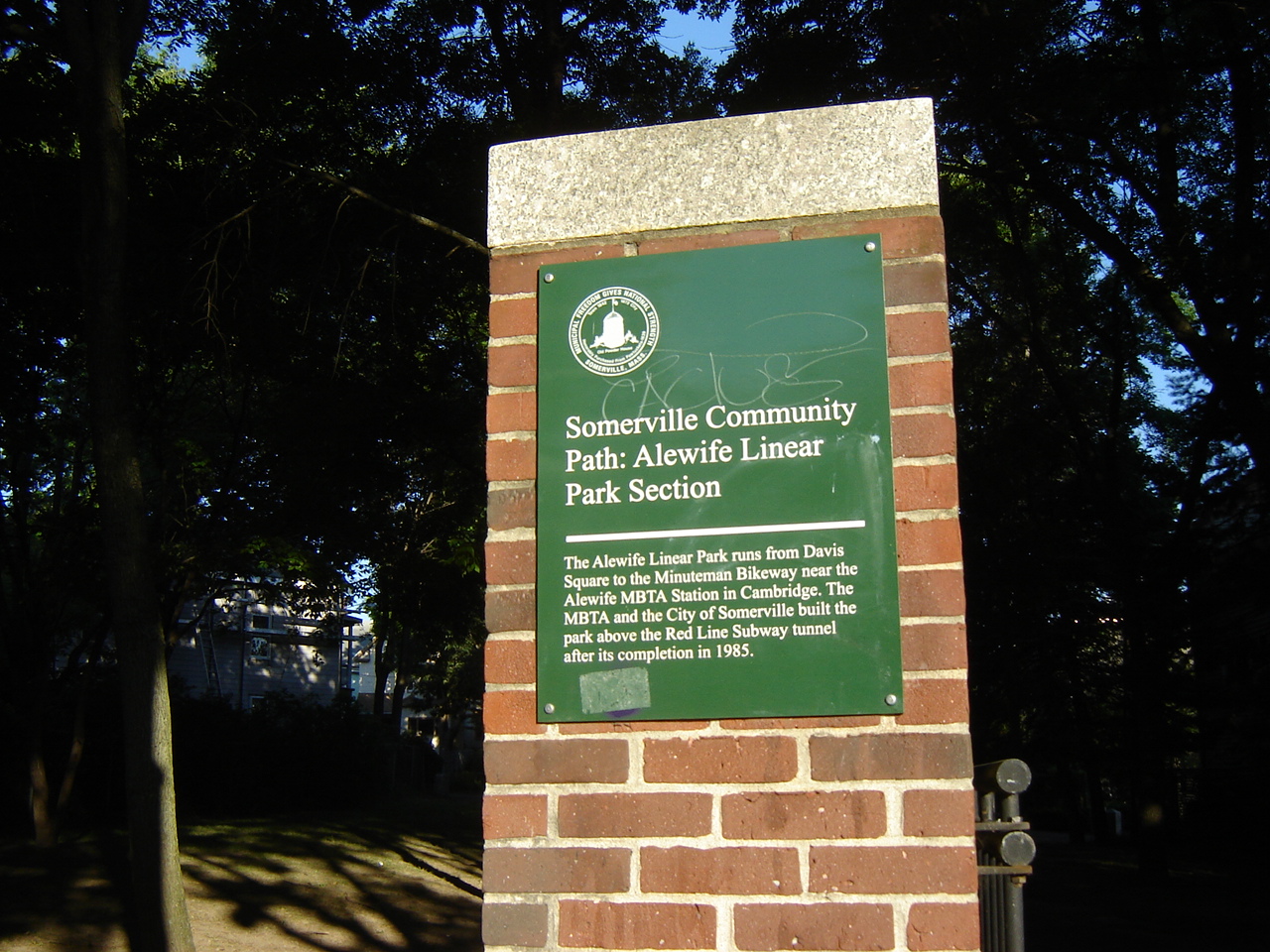
The path is part of the Minuteman Bikeway, I think. But a sign said it was the “Somerville Community Path: Alewife Linear Park Section.”

Today people were enjoying walking their dogs at 7 a.m., biking, commuting on foot to the T, and pushing strollers.

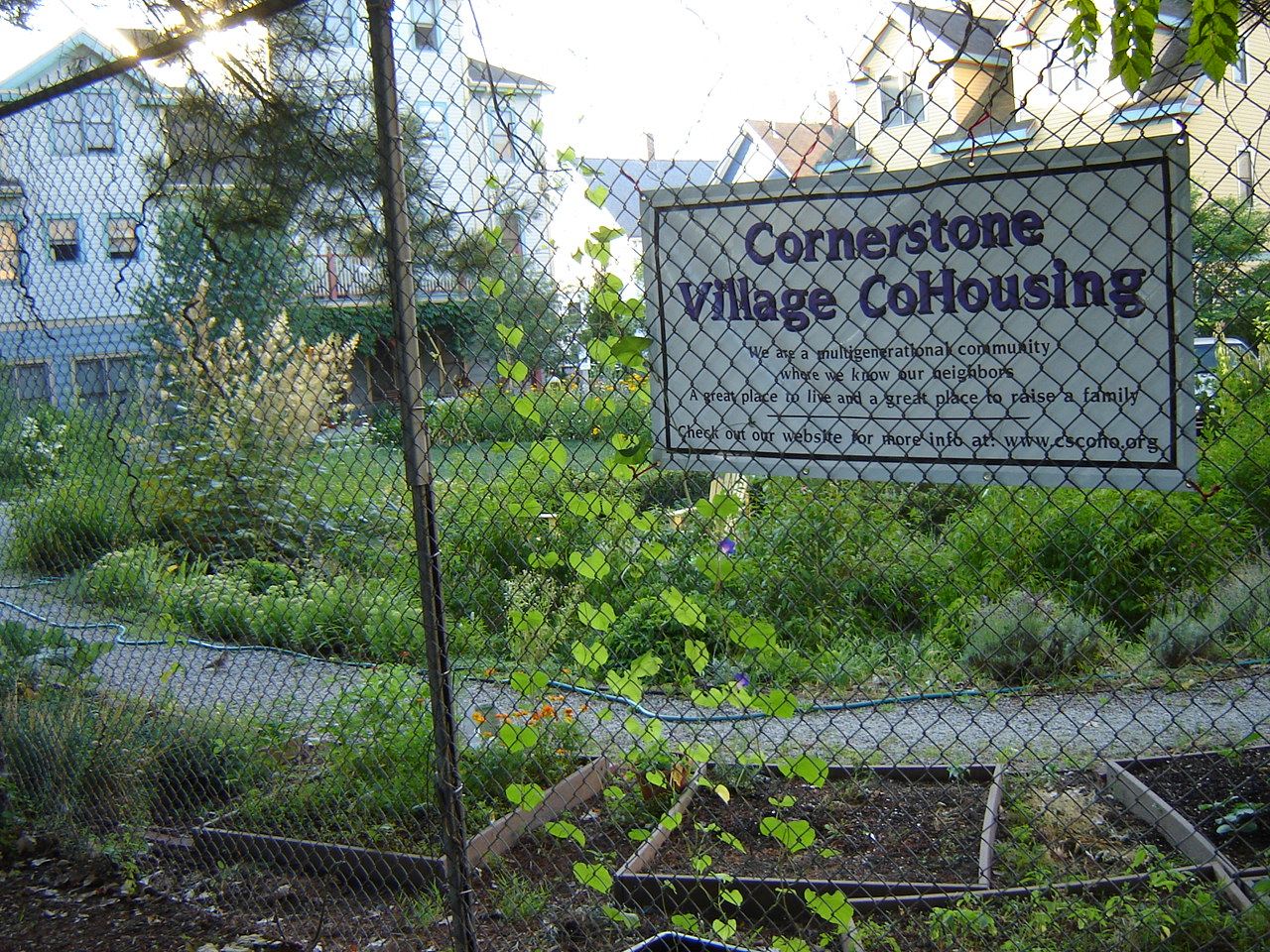
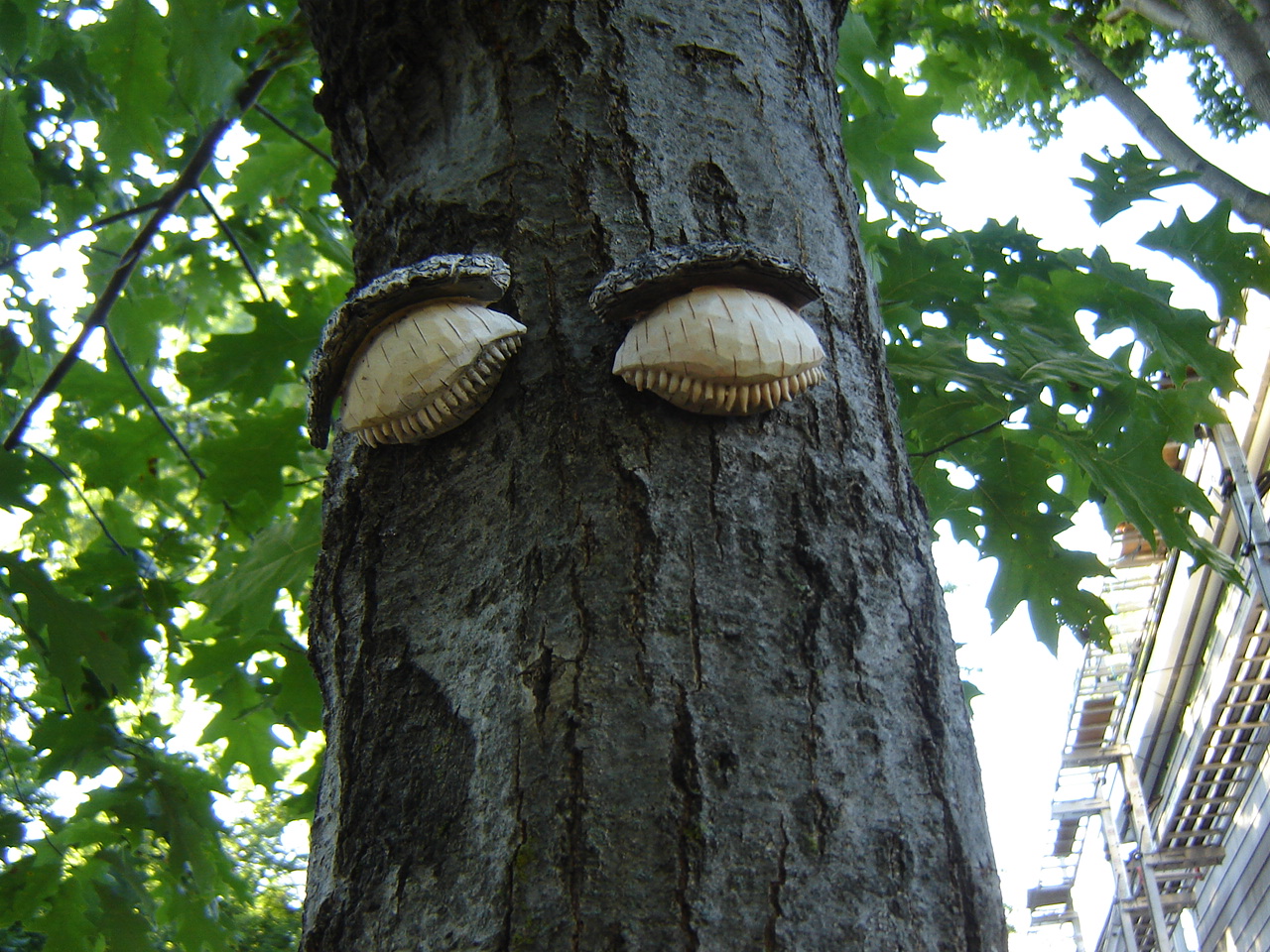
I loved it all, especially discovering a co-housing community along the way (kind of like a commune, but not quite) and a tree with eyes.

Read Full Post »

A sunny day for outings. First to the fabled Korean grocery, where salmon and pickled radish were cheap — if you don’t count the gas for the trip.

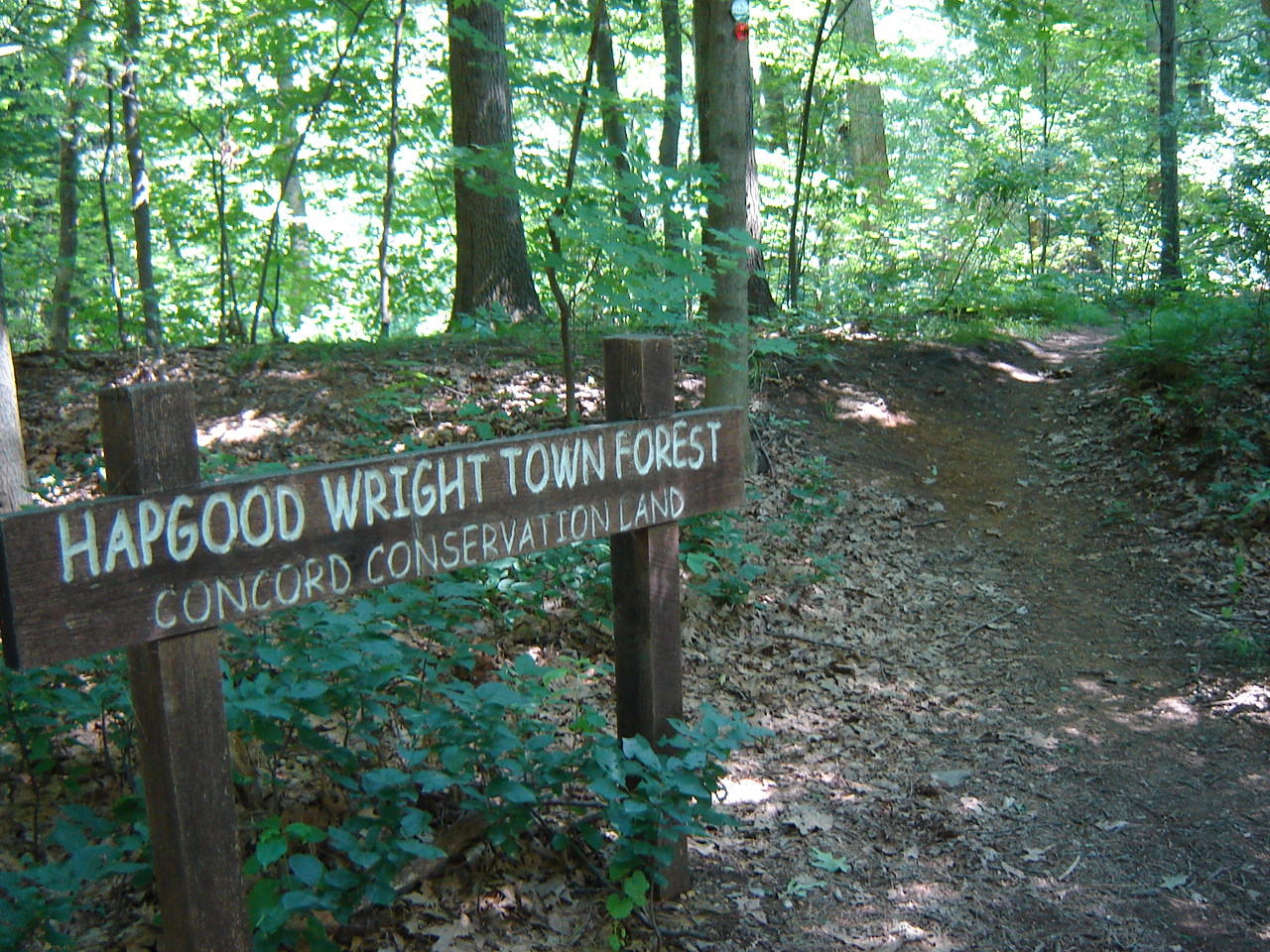
Then to the town forest for a walk with the Father in Chief.

Read Full Post »

At some point in my childhood, family friends raised goats. It seemed exotic. The Gordon children drank goat’s milk. And we learned that goats will eat anything when my brother tried to pat a goat and lost his mitten.

In addition to mittens, goats eat weeds, and increasing numbers of individuals and groups are deciding to use goats instead of herbicides to control weeds.

Evan Allen writes in the Boston Globe, “According to the US Fish and Wildlife Service, the use of goats to control invasive species, already common out West, is becoming more common across the East Coast.

“Goats love woody shrubs and vines, making them ideal weed-whackers. Using goats cuts down on the need for herbicides, and, unlike tractors, goats don’t require diesel fuel to do their job. And nimble goats can easily maneuver across rocky or marshy surfaces that humans and machines can’t safely reach.

“ ‘Folks are looking for long-term means of control,’ said Eric Schrading, private lands coordinator at the Fish and Wildlife Service. ‘As the last 30-plus years have gone by, we’ve started to, maybe not abandon chemical control, but use that as only one tool in the toolbox.’ …

“In Wellesley, the goats were shuttled out to the Boulder Brook Reservation in a bright pink truck driven by a crew from the Goat Girls: Hope Crolius, owner of the Amherst-based business, and two of her goatherds.” Read more here.

For a video about goat weed control, check out this clip from Bear Creek Park in Colorado.

Read Full Post »

You probably think of the Connecticut River as being in Connecticut. And so it is. But it flows through most of the New England states, so protecting it results in protecting a large chunk of the Northeast. Its 7.2 million acre watershed runs through Connecticut, Massachusetts, New Hampshire, and Vermont.

The Christian Science Monitor recently added to its Change Agent series an article on the U.S. Interior Department’s May 24 designation of the Connecticut River as the first National Blueway.

Correspondent Cathryn J. Prince writes, “Between 40 and 50 local and state entities, both public and private, from four states will work together to preserve the 410-mile-long Connecticut River and its watershed. …

“It took the cooperation of between 40 and 50 local and state, public and private, organizations from four states to make the designation possible. While it doesn’t mean more federal funding, it does mean better coordination between these groups to promote best practices, information sharing, and stewardship.

“National Blueway is more than a label, says Andy Fisk, executive director of the Connecticut River Watershed Council.

“ ‘There are no turf wars here, but there are a lot of folks on the dance floor,’ Mr. Fisk says. ‘It’s important to recognize that this is a new way in how you get things done. It’s not one entity that will get things done, it’s diversity.’ ” Read more here.

Photograph: John Nordell, Christian Science Monitor

The Connecticut River, as photographed from the French King Bridge in Gill, Mass. The river and its watershed have been named the first National Blueway, an effort to coordinate the work of nonprofit groups and governments to protect and wisely use the entire 410-mile river and its 7.2 million acre watershed.

Read Full Post »

I caught Public Radio International’s Living on Earth program Saturday morning and felt reassured to hear about a new generation of environmentalists.

The story that caught my attention was on the National Environmental Education Foundation (NEEF), which recently “announced the three winning high schools for the Sustainable Energy Award, sponsored by Samsung: Northwest Pennsylvania Collegiate Academy, Erie, Pa.; Boston Latin School, Boston, Mass.; and Secondary Academy for Success, Bothell, Wash.”

The judges found that the three schools “demonstrated a school-wide effort to achieve energy savings through the creative and innovative use of technology. Each school will receive $10,000 to further their initiatives.”

For example, in 2008, an environmental group at Boston Latin “conducted an energy audit of the school with help from the local utility NSTAR. Improving on the score of 59 out of 100 meant a strong energy efficiency initiative. The school turned off the lights in vending machines after school, lowered the hot water temperature, and replaced hundreds of light bulbs in the auditorium ceiling with more energy-efficient bulbs. …

“The school has had two fundraisers that generated more than $12,000 to support their initiative. With help from the Facilities Department of the Boston Public Schools, the school implemented a $75,000 lighting retrofit that saves 200,000 kWh and $33,000 a year. The school also installed a 28-panel PV array on its roof through a partnership with the City of Boston’s energy department and the Massachusetts Technology Collaborative. The system displays real-time data on electricity generated, and the school is putting this data online for study by other students.”

One thing that stands out is the effort to involve a lot of students, not just a small green group. Making the effort  broader should help it expand. More here.

Photograph: National Environmental Education Foundation

Read Full Post »

Years pass, and I forget how delightful Drumlin Farm is and how close. The Audubon Shop there is also a wonder. You find things in the shop that you don’t find anywhere else. All nature related.

It must have been years since I visited, because it looks like the “new” entrance and parking lot have been there a long time.

It’s a good place to go on a day that feels like summer.

Read Full Post »

I got an intriguing tip from a WordPress blog, The Yoga Hub, about Yale students who found a microbe that eats plastic. The discovery spells hope for breaking down plastics in landfills.

Bruce Fellman writes in the Yale Alumni Magazine, “A group of student bioprospectors from Yale has struck environmental gold in the jungles of Ecuador. The students, through the annual Rainforest Expedition and Laboratory course taught by molecular biochemistry professor Scott Strobel, have discovered a fungus with a powerful appetite for polyurethane. That common plastic often winds up buried in landfills, where it can remain, largely unaltered, for generations.

“In the September issue of Applied and Environmental Microbiology, Jonathan Russell ’11 and his colleagues describe how they isolated, from plants collected during the class’s two-week spring trips, a fungus they identified as Pestalotiopsis microspora—and then discovered its unique polyurethane-digesting talents.” More here.

Sounds promising, but I can’t help worrying about the possible unintended consequences of introducing a microbe to places where it is not native. Maybe cutting back on plastics is still the way to go.

Photograph: Yale University

Read Full Post »

A friend is helping to build a playscape, a playground for all ages and abilities that takes advantage of the natural environment‘s restorative qualities.

My husband and I went to see where the playscape is emerging with a boost from the state’s Community Preservation Act. It is located over by Gowing’s Swamp, a lovely wooded area with native plants once cataloged by Thoreau. We walked on a hilly woodland path around the swamp and took note of Canada Mayflowers like tiny bottle brushes and a starlike white flower with six long, narrow leaves growing out from the stem at the same height. (If I’d had my camera, I’d have uploaded a picture at MisterSmartyPlants.com.)

The Sudbury Valley Trustees oversee Gowing’s Swamp, and have this to say about it:

“Gowing’s Swamp, named by Thoreau for its landowner in the mid-1850’s, is an 8.9 acre acidic wetland complex located in a protected, glaciated hollow on the eastern side of a glacial kame known as Revolutionary Ridge.  A kettlehole bog, at the southern end of the wetland, contains specialized plant communities that are locally rare in Southern New England.  The natural area provides habitat for a diverse range of wildlife.

” ‘Unlike any other bog in New England, Gowing’s Swamp found its way into American literature by virtue of significant passages in Thoreau’s Journal,’ says botanist Ray Angelo, and has been visited and studied regularly over the last 160 years by Concord naturalists, literary and historical scholars, and has been the subject of ongoing scientific studies.” More here.

Photograph of Gowing’s Swamp: Sudbury Valley Trustees

Read Full Post »

« Newer Posts - Older Posts »