Feeds:
Posts
Comments

Posts Tagged ‘Festival’

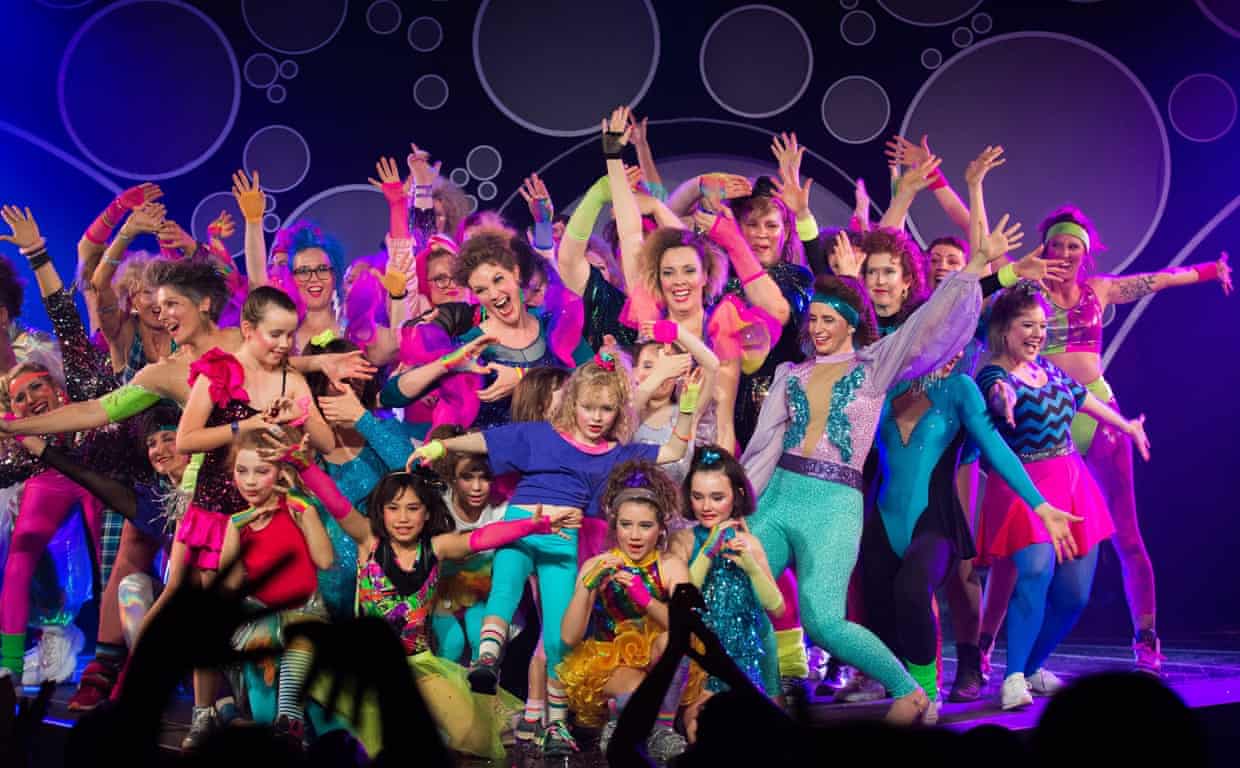
Photo: Barbara Lowing/Common People Dance Project.
Goofing around on stage is the whole point at Australia’s Common People Dance Eisteddfod.

You could pull many different lessons from today’s story, but one that stands out to me is the way that a mother’s insecurity can warp a young child’s self-image, making a revolution necessary. The revolution may turn out playful and silly, a childlike release like a new dance style in Australia.

Dee Jefferson interviews an enthusiast called Bryony Walters, whose mother used to shame her about her weight. Bryony tells Jefferson it “affected her relationship with exercise, and movement in general. ‘It always seemed like a punishment that I was inflicting upon myself. … It wasn’t a thing you were engaging with to have fun or to feel good.’

“But when she saw a post in her community Facebook group about dance classes for a DIY eisteddfod, Bryony’s curiosity was piqued. …

“Neridah Waters and her Facebook post set off the amateur dance revolution known as Common People Dance Eisteddfod. Now in its seventh year, the project invites people of all ages, abilities and bodies to dance together – to 80s and 90s music, while wearing leotards, sequins, sparkles and glitter – culminating in a dance-off as part of the Brisbane festival. ….

“Waters, a stalwart of Brisbane’s alt cabaret scene, describes the project as a mix between Young Talent Time, sports carnivals, 80s gameshow ‘It’s a Knockout’ – and, of course, the Australian Rock Eisteddfod Challenge: a nation-wide high school competition that was popular in the 80s and 90s.

“Bryony, who has performed in five Common People Dance Eisteddfods, says it’s a ‘rare and special’ opportunity to ‘engage in really joyful movement in circumstances where the concern isn’t how you look.’ …

“Like Bryony, Amanda [Dell] came to Common People with an unfulfilled childhood dream of dancing. This year, she is dancing for Southside, one of seven teams of between 30 and 65 people competing in the eisteddfod, each performing their own routine of around five minutes – featuring moves with names like Jazz on Ya Face, Chicken Chicken Pelvis and Aunty Pat’s Christmas Trifle.

“Waters, who came up with the idea for the eisteddfod during a middle-of-the-night burst of inspiration, had no idea it would snowball into an annual juggernaut attracting hundreds of participants. Back in 2019, she was experiencing a lull in her career after becoming a mother. She’d been teaching community dance classes that were attracting middle-aged men and shy people who ‘wanted me to teach them seriously, from scratch, how to dance,’ she says.

“ ‘I wanted to do something more theatrical. I wanted participants who were as silly [as me].’

“As soon as she posted her alternative rock eisteddfod idea ‘it went nuts.’ she says. ‘People understood immediately the sense of humor behind it.’

“Starting off in her local community hall, the project spiraled into classes and teams in different suburbs. Brisbane festival came on board to host the eisteddfod as part of their program, and before the inaugural event the dancers of each team marched through the streets of South Bank to converge in a dance battle outside the festival’s Spiegeltent – set to Survivor’s ‘Eye of the Tiger.’

“Amanda, who was part of the march – wearing a leotard for the first time, not to mention in public – remembers it being nerve-racking. ‘The way that women think about their bodies, that’s a big thing to do,’ she says. ‘But you’ve got the power of the group. And that day is one of the best days of my life – it was just such joy and excitement.’

“Waters says, ‘We had women who were size 20 or 24 in leotards who looked like superhero versions of their suburban selves.’ …

“From the get-go, Common People Dance Eisteddfod has predominantly attracted middle-aged women. … Some are former dancers looking to let their hair down, most are amateurs or people who have never danced. Whatever their reasons for coming, they stay for the sense of community, the confidence boost – and the endorphins.

“Amanda, who describes the last few years of her personal life as ‘a shocker,’ rarely misses a class. ‘I know that no matter how I’m feeling beforehand, I will feel better afterwards,’ she says. ‘Having people that you meet with regularly, who you can rely on for that emotional support and friendship and fun – those things are invaluable.’

“For some, the eisteddfod is life-changing. Waters tells me about Zak, a shy teenage boy who slowly came out of his shell doing Common People’s living-room dance parties during lockdown. When IRL classes resumed, Waters encouraged him to take more of a leading role – culminating in him dancing and lip-syncing to a packed house for the eisteddfod.

“A couple of months later, Zak decided he wanted to run for school captain. ‘His mum said “Are you sure?” and he said, “Mum, look, I stood in front of 1,500 people and did the dance battle. I can do anything now,” ‘ Waters says. ‘And so he did it – and he ended up becoming school captain.’ “

More on the Brisbane Dance Festival at the Guardian, here. The Guardian has no paywall, but please consider donating to them — any amount.
Read Full Post »

Photo: Wigtown, Scotland, Book Festival.

Book lovers who are traveling this year may want to think about visiting one of the “book towns” profiled recently in National Geographic. Ashley Packard collected seven that sound charming.

“1. In the Welsh village of Hay-on-Wye, where sheep outnumber people and books spill onto the streets, a quiet revolution began. Antiquarian and academic Richard Booth inadvertently launched a global movement when he began filling the empty buildings of Hay-on-Wye with secondhand books.

“What started as a single decision in 1961 to fill his sleepy hometown with secondhand books to sell in numerous empty buildings, turned into the birthplace of a global literary mecca uniting villages, bibliophiles, and dreamers alike. …

“Hay-on-Wye became the first ever ‘book town,’ supporting patrons who flocked to the shops. Booth, who crowned himself ‘King of Hay,’ inspired others to turn literature into lifelines for their little towns and villages. As word of his success spread, more towns around the world embraced the concept for their communities. Before long, the International Organization of Book Towns was formed in April 2001, though it had existed without the official designation for decades prior.

“The organization aims to raise public awareness of book towns through online information and a biennial International Book Town Festival. It supports rural economies by facilitating knowledge exchange among booksellers and businesses, encouraging the use of technology, and helping to preserve and promote regional and national cultural heritage on a global scale.

“By definition, a book town is ‘a small, preferably rural, town or village in which secondhand and antiquarian bookshops are concentrated.’ … Today, there are dozens of towns with the designation, from Pazin, Croatia, to Featherson, New Zealand. These selected and approved locations take pride in their history, scenic beauty, and contributions to the literary world. …

“2. In a small village tucked away in the hilly countryside of Belgium, Redu is now celebrating its 41st anniversary since becoming the second book town in 1984. This idyllic village is described as, ‘fragrant with the scent of old paper.’ … It, along with its hamlets Lesse and Séchery, were recently added to the ‘Most Beautiful Villages in Wallonia‘ list in July 2024.

“3. [In Scotland] nestled on a hill overlooking the sea along a rugged coastline, woodlands, and forests, lies Wigtown, celebrating 20 years as ‘Scotland’s Book Town.’ … It has 16 different types of book shops, many secondhand, that participate in an annual Spring Weekend in early May, a community festival in July, a market every Saturday from April through late September, and the annual Wigtown Book Festival in late September through early October. The 10-day literary celebration was founded in 1999 and now features more than 200 events, including music, theater, food, and visual arts. 

“4. Turup [in Denmark] is situated 37 miles north of the Danish capital of Copenhagen, between the sea and a fjord, and has a population of 374 people. Here, locals put out the best and most high-quality secondhand books from donations out for sale along the rural roads of the 10 different shops (if you can call them that) for purchase. These ‘bookshops’ include a garage, a workman’s hut, a disused stable, a bookshelf on a farm entrance, and even a newly restored railway station. Some of these stalls process transactions on a self-help and honesty basis where customers leave their change in a jar in exchange for their purchases. The Torup Book Town Association hosts an annual Nordic Book Festival with book readings from authors, contemporary short films, cultural events, and more. 

“5. Surrounded by stunning landscapes, rolling hills, and vineyards is the quaint town of Featherston [New Zealand] … became officially recognized as a book town in 2018. It is famously known for the annual book festival held in May. They have initiatives dedicated to fostering community growth, inspire reading, writing, and idea-sharing across Wairarapa and Aotearoa, New Zealand.

“6. Offering year-round bookstalls and literary festivals, the village of St-Pierre-de-Clages is home to Switzerland’s only book village. ‘Le Village Suisse du Livre,’ translated to ‘The Swiss Book Village,’ is home to a large secondhand market, along with authors, thematic exhibitions, activities for children, and a renowned Book Festival that has been hosted every last weekend of August since 1993. … This festival takes place over three days and attracts visitors from all over French-speaking Switzerland and neighbors. It offers insight into book professions such as calligraphy and old printing techniques, a welcoming space for writers and publishing houses to meet, and various artists to display their work.

“7. The former garrison town of Wünsdorf [in Germany] is known as ‘book and bunker city’ due to the historical sites, buildings, book shops, cafes and tea rooms, and lively cultural life. Nestled about 12 miles south of Berlin, the town offers year-round events, readings, exhibitions, military vehicle meetings, and currently five different bunker and guided tours. Wünsdorf was established as an official member of the International Organization of Book Towns in 1998 thanks to its three large antiquarian shops that boast of a wide array of literary treasures on topics such as poetry, philosophy, classical literature, and many more.”

More at National Geographic, here. Great photos, as you would expect from National Geographic.

Read Full Post »

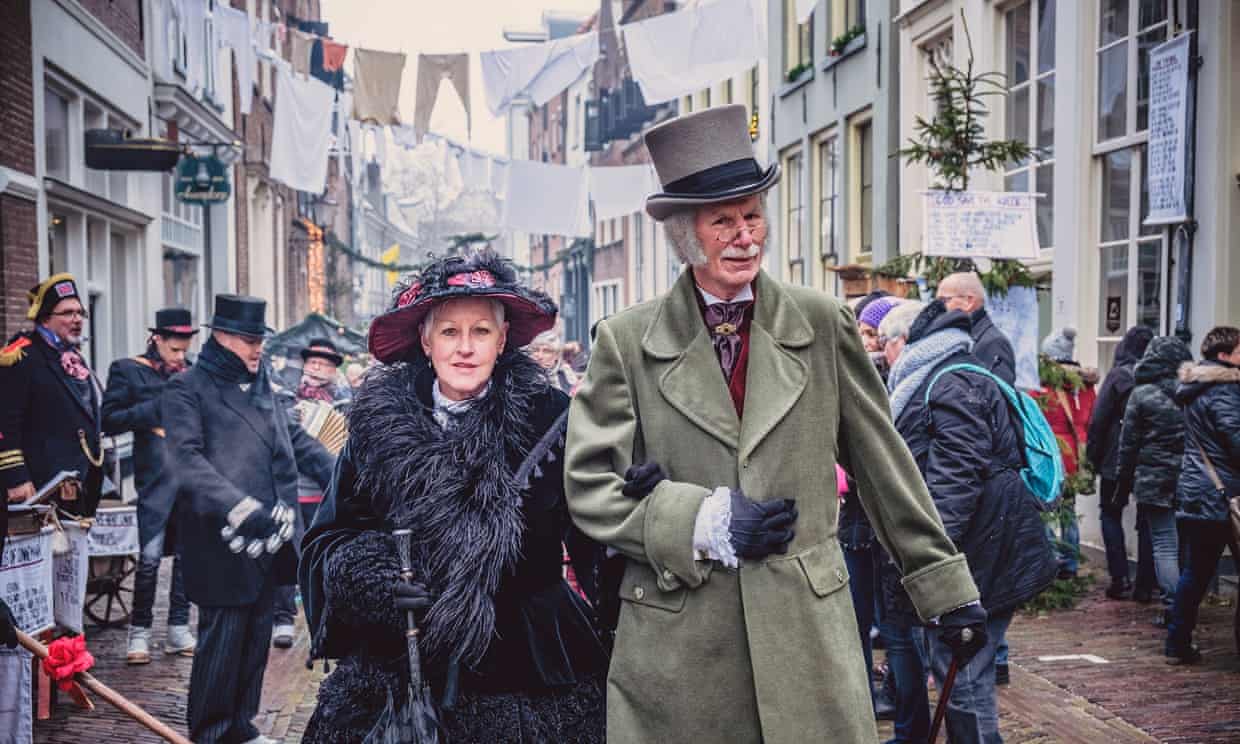
Photo: Sander Korvemaker.
Despite no known historical connection with Charles Dickens, this Dutch town plays host to an annual Dickens festival, the world’s largest.

Today’s story about a town that loves Charles Dickens drew me in because I also love Dickens. That is, I love his novels. With the exception of The Old Curiosity Shop and Barnaby Rudge — neither of which I liked — I have read them all multiple times. But I have also read about the man himself and am pretty sure he was not a very nice guy.

The surprising Dickens festival that Senay Boztas writes about at the Guardian focuses on both the novels and the guy.

Boztas reports, “Soon after limited Sunday trading started in the Netherlands, an anglophile shopkeeper in the small city of Deventer decided it could all be a bit more fun.

“ ‘My 82-year-old mother, Emmy Strik, is England-minded because my grandfather always went to England and read a lot of Dickens,’ said her daughter, Liesbeth Velders, who now runs the Dille & Kamille homeware store. ‘So when we were going to open on Sunday, she decided to make it a fancy-dress party – except the fancy-dress party got a bit out of hand.’

“Decades later, Strik’s experiment in literary frivolity has gone further than she could have imagined. The event she began in 1991 to commemorate Charles Dickens has run for 33 years, with a two-year break during the Covid pandemic.

“Despite no known historical connection with the author, Deventer, in the eastern province of Overijssel, now plays host to what is believed to be the world’s largest Dickens festival. This weekend [in December 2023], 950 volunteers will fill the streets of the ancient Bergkwartier, performing street theatre and selling hot punch and Victorian treats. There are strict rules for actors and traders: no [sneakers], modern watches or mobile phones.

“Among the expected 125,000 visitors will be Ebenezer Scrooge, Tiny Tim, Queen Victoria, Miss Havisham, beggars, thieves and, for the first time, Dickens himself.

“Ojon van Strijland, a bookseller and volunteer at the Dickens Kabinet museum, said he and Strik had learned while on a trip to Kent, where Dickens spent much of his childhood, that authenticity was essential.

“ ‘Years ago, Emmy and I went to [the city of] Rochester’s Dickensian Christmas festival to seek inspiration but there were things there we would not want,’ he said. ‘There were people walking around with Christmas lights on, Santa hats and polyester costumes.’ …

“Strik amassed almost 1,000 authentic costumes, collected enough Dickensian items to fill a museum and grew the Dickens Festijn with commercial sponsorship and support from Events dEVENTer. She has now – largely – handed over the reins to her daughter.

“ ‘We can’t roast chestnuts in big drums any more; there’s a fist-thick book of rules from the fire brigade and the police, but it’s still a real festival,’ said Velders.

“The festival has huge local status. One couple’s 50th wedding anniversary is being incorporated into this year’s edition, while 62-year-old system administrator Wessel Lindeboom is polishing insults in multiple languages for his dream role of Scrooge. …

“At a time when Dutch children’s reading skills are declining, some hope the festival will encourage a wider love of literature. ‘A lot of the visitors have never read a Dickens book but everyone recognizes Scrooge, who walks around calling “humbug!” and insulting people,’ said Velders. ‘There are also storytellers who recount the story of the books.’ …

“The mayor of Deventer, Ron König, hopes visitors will have an enormous amount of fun but also take home a more profound message. ‘The festival beautifully portrays the differences between rich and poor, an issue we are still trying to tackle.’ …

“Peter Jan Margry, professor of European ethnology at Amsterdam University, believes this kind of event provides a welcome break, particularly in dark days. …

“ ‘The festival of Christmas is also about stepping out of your own time into an atmosphere of carols and Christmas trees and a flight from reality,’ he said. ‘But it’s also a form of occupying yourself, a type of tourism, stepping out of your daily life, that you see in all fantasy and live action role-playing. … It’s about stepping into another world.’ “

I hope my blogging friends at Cook and Drink will weigh in on this aspect of life in their beautiful and surprising country.

More at the Guardian, here. No firewall. Subscriptions encouraged.

Read Full Post »

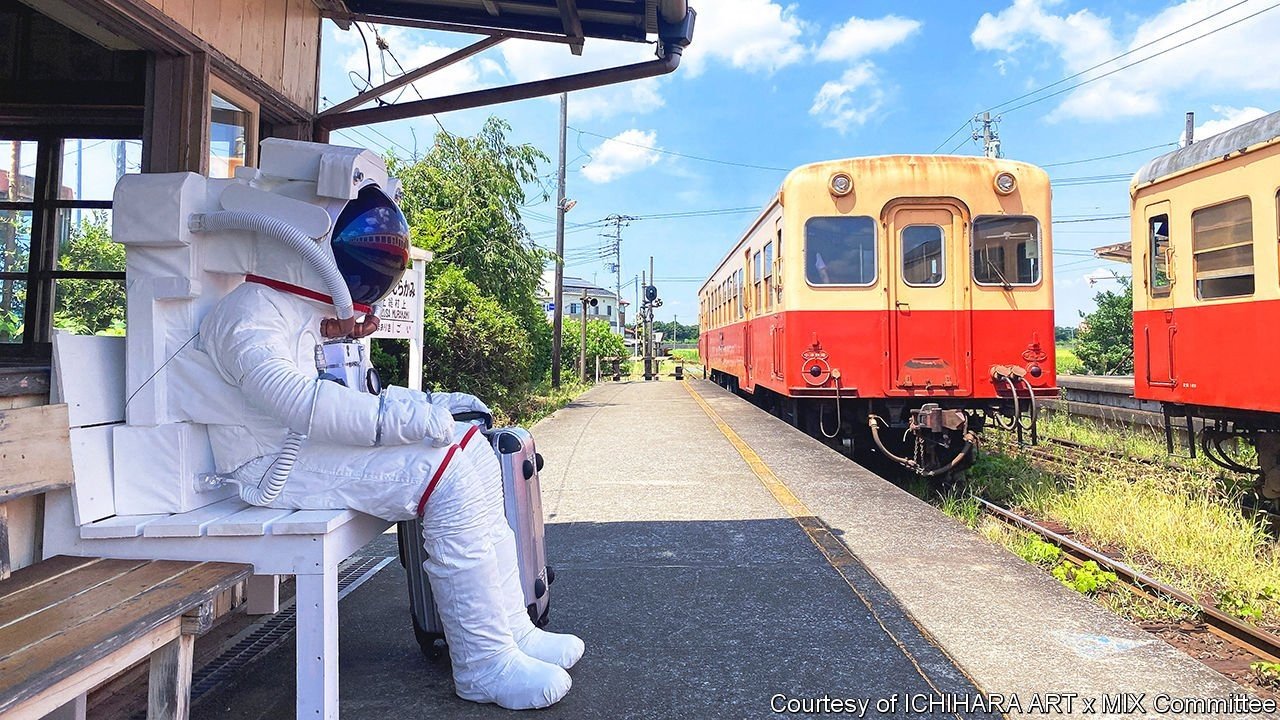
Photo: Ichihara Art x MIX Committee.
An astronaut greets passengers at Kazusa-Murakami station. Leonid Tishkov titled his installation “Mr. Murakami’s Last Flight,” or “Waiting for A Moon-Bound Train.

Today I have a couple links to something fun happening in Japan, where whimsical art in the countryside is drawing tourists.

At the Economist we learn that “a cosmonaut sat for most of the winter on a platform at Kazusa-Murakami station in Chiba, a rural Japanese prefecture next to Tokyo. As they waited for trains, local grandmothers would chat with the inanimate installation, the work of the Russian artist Leonid Tishkov. Visitors to an abandoned clothing factory in the nearby village of Ushiku found a multimedia labyrinth assembled by the Japanese artist Nakazaki Toru, using objects and memories retrieved from the site: old sewing machines, mannequins draped in fabric samples and recorded interviews with the family that once ran the place. These were two of over 90 pieces created for a triennial festival known as Ichihara Art x Mix, held in the Ichihara area of Chiba in late 2021.”

Alan Gleason at Artscape Japan continues the story: ” ‘Art x Mix’ may seem a curious title for the triennial art festival in Ichihara, Chiba Prefecture. However, the event does boast an unusual blend of elements that serve the art it showcases very well. One is the verdant, rolling landscape of the Boso Peninsula. But even more central to the festival’s identity, and perhaps the key to its success, is a tiny privately operated train line, the Kominato Railway.

“The festival is a fairly new event. First held in 2014, its third edition was scheduled for 2020 but delayed by a year due to the Covid pandemic. Sponsored by the city of Ichihara, the program itself is planned and directed by a team under Fram Kitagawa, Japan’s reigning outdoor art festival impresario. …

“Operating since 1917, the [Kominato] line is a living anachronism, a holdover from the days — well into the postwar era — when trains got everyone everywhere in Japan. As roads improved and rural areas emptied out in a mass migration to the cities, passengership plunged and, one by one, Japan’s local railways shut down.

“How has the Kominato Railway survived? At least partially thanks to the vision and marketing savvy of its management, it would seem. In the last decade the company has carried out what it calls ‘reverse development’ of its stations, restoring them to their appearance in days of yore; enlisted the help of residents along the line to keep brush trimmed back and the station yards attractive; purchased used diesel rolling stock from closed lines in other parts of the country; and, in 2015, introduced the Satoyama Torocco (from ‘truck,’ a small rail car used in mining or logging).

Satoyama, literally ‘villages and hills,’ is a buzzword the city and the railway favor to highlight the pastoral beauty of rural Ichihara. The Torocco is a special train outfitted with open-air passenger cars and a miniature steam locomotive that is actually a diesel. …

“Ichihara Art x Mix is a brilliant initiative on the city’s part, not least because it gives the Kominato Railway pride of place as an art object in itself. The trains — at most two cars in length — trundle slowly along a single narrow-gauge track at roughly one-hour intervals, making the 40-kilometer trip from Goi, on Tokyo Bay, up the Yoro River Valley to its southern terminus in the Boso highlands in one and a half hours. …

“The other defining factor in the festival’s allure is the Yoro River itself, which twists and turns its way through the highlands, carving deep ravines and creating some impressive cliffs and waterfalls in the bargain. …

“In typical kitchen-sink festival fashion, the organizers have installed works all over the area — far too many to see in a day, or even two or three. … A car is certainly the most efficient mode of transport, but also the least rewarding. The train is a pleasure in itself, but its sparse schedule, and the distance between the stations and many art venues, will limit the number of destinations you can easily get to. A good compromise is the festival’s free shuttle bus, which travels around two circuits that cover most of the major venues. …

“Ushiku: In a copper-clad former sundries shop, Chinese artist Ma Leonn’s Mobile Photo Studio has a hilariously retro stage set inspired by prewar kamishibai (‘paper play’) storytellers; staff will kindly photograph visitors posing against this backdrop. …

“Satomi Elementary School: The dark, cavernous gymnasium is the perfect setting for a ‘playback’ of Artists Breath, a tour-de-force display of multiple videos with corona-related messages by artists from around the world. …

“Tsukizaki Village: Sitting in the middle of a fallow rice field is Dutch artist Elmo Vermijs’s cryptically titled installation Mirror of Soil. But that is precisely what it is: a shallow concave hemisphere scooped out of the ground that functions as a ‘sound mirror.’ Stand on the raised platform smack in the center of the pit, and it’s true — you will hear a faint murmur you did not hear before, which the artist describes as the ‘sounds of nature.’

“Just down the road stands an imposing edifice, the now-vacant residence of one of the village’s more eminent citizens. Currently it is home to Turkish artist Ayse Erkmen’s installation Inventory. Erkmen videotaped the process by which the entire contents of the house — not just furniture, but decades of accumulated bric-a-brac — were removed, sorted, and placed in wire crates that now line the path from the gate to the house. Running this gauntlet of family heirlooms, one encounters everything from wall clocks and electric fans to old swords, stuffed birds, dolls, and souvenirs of the kind that all postwar families of means used to acquire on holiday excursions. The experience will give anyone who has lived in Japan a twinge of nostalgia; we all have friends whose parental homes were full of just this sort of stuff. Inside the house, the artist has placed video monitors in each room that play back her recordings, striking a poignant contrast between the on-screen activity and the silence of the emptied rooms.

“The ancient but well-preserved stations along the Kominato Railway are also part of the fun. Each one features at least one prominent outdoor art object, and one extremely eccentric public toilet. The toilets are the brainchild of architect Sou Fujimoto, who appears to have thoroughly enjoyed himself designing facilities customized to the ambience of each stop. Kudos go to Itabu station’s Toilet in Nature, a pristine white throne that sits in a glass box surrounded by a 200-square-meter garden. It’s for women only, by the way. Privacy is ensured by a curtain and the 2-meter-high log fence around the garden.

“Greeting every train at Kazusa-Murakami — an unmanned station that is the first and last stop on the line just outside the Goi terminus — is Russian artist Leonid Tishkov’s astronaut.”

More at Artscape Japan, here. No firewall.

Read Full Post »

Between August 21 and 26, in Karlskrona, Sweden, the Carl International Film Festival will have 30 boat-in screenings.

You already know that drive-in movies are back in style. (Remember this March post?) Today I have a Forbes article describing how the idea of using vehicles for social distancing has expanded in Europe.

Sarah Turner writes, “While many of Europe’s arts festivals have been cancelled this year, including Edinburgh, Bayreuth and Glastonbury, others have turned to 1950s America for inspiration with drive-in performances.

Nowhere more so than Germany, which is, appropriately enough, still the heartland of Europe’s car industry which got on board the trend early with festivals in Leipzig and Dusseldorf, partnering art films with innovative venues.

“The Kunstfest Weimar festival, founded in 1990, encompasses  music, theatre and dance to fine arts and film. One of the three strands to this year’s festival is coronavirus and its impact on both society and individuals. To reflect this, six specifically created productions will be staged at a new venue, the Alte Feuerwache drive-in cinema. …

“In the U.K., various drive-in concepts are also taking shape. In early July the unabashedly feel-good Nightflix festival is part music concert, part film screening with cover bands and classic movies. There are two venues, Colchester in Essex and Newark in Nottinghamshire; options include Abba tribute bands and screenings of Grease, Moulin Rouge and Joker. Around 350 cars will be able to attend each performance, with the modern festival essentials of sourdough pizza and halloumi fries also being on hand.

“The Henley Festival, usually a bastion of black ties and crowd-pleasing performances, is putting on an Alternate Festival between July 9-12 with car-based comedy, theatre and karaoke. After Henley the Car Park Festival will be going on the road, venues include Dudley, Manchester, Northampton and Newbury while film and comedy-based The Drive-In Club will take place at London’s Alexandra Palace.

Live Nation will be putting on drive-in concerts with — among others — Dizzee Rascal and Kaiser Chiefs and the cult musical Six, based on the wives of Henry VIII. …

“In Cornwall, Wavelength magazine will have clifftop drive-in cinema experience at Watergate Bay from late July through to the end of August 2020 alongside a host of on-site socially-distant options including street food, live music, tombola popcorn stands and craft beer bars.

“Held at Trebelsue Farm, with space for over 200 cars and vans, The Wavelength Drive-In Cinema Series will start on Friday 24th, the Cornish-set surf film Blue Juice and continues into late August.

“But it’s Scandinavia that is taking the most innovative approach to the notion of the drive-in festival. Between August 21 and 26, in the Swedish town of Karlskrona, the Carl International Film Festival will have 30 boat-in screenings. Taking place in the Salto Fish Harbour with two LED screens, up to 100 boats will be allowed in, drawing attendees from around 1,600 nearby islands, with food delivered to boats from harbourside restaurants.” More at Forbes, here.

Speaking of social distancing by boat or car, I recently suggested to a friend who can’t go farther than her yard or her car that in winter we should park our cars somewhere six feet apart, open a window, keep the heat running — and continue our weekly visits.

Read Full Post »

nahkofinal2

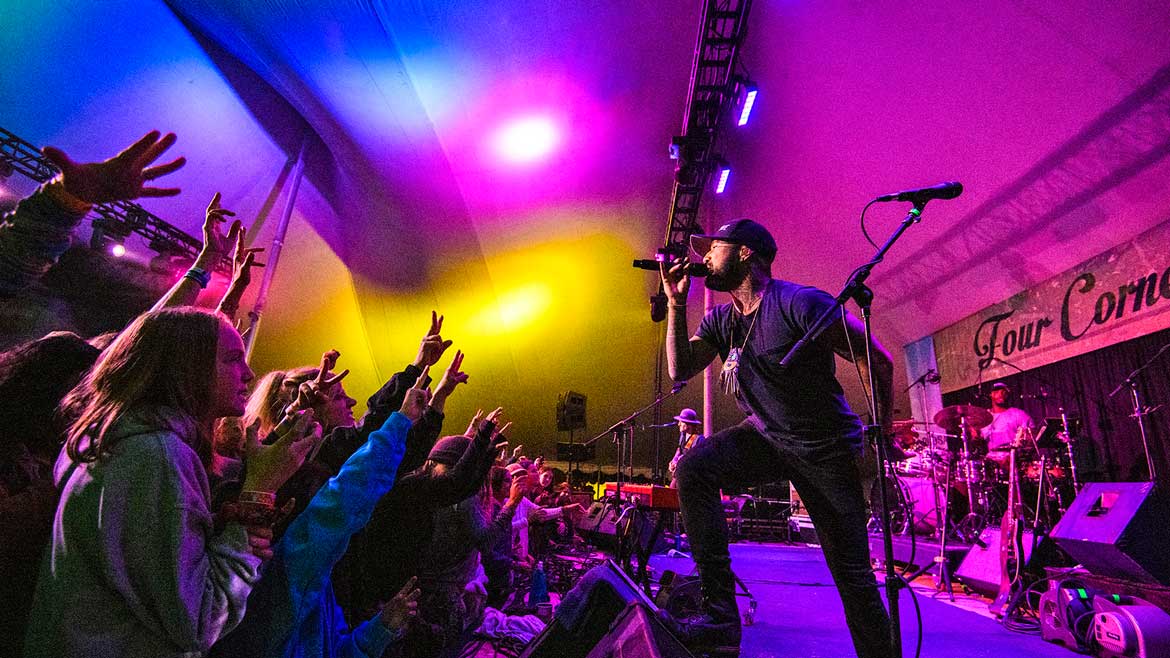
Photo: Michael Pierce
Nahko & Medicine for the People performs at the Four Corners Folk Festival in 2018. Recently, a local radio station agreed to take ownership of the festival.

There’s an Allen Ginsberg poem I love to the effect that sometimes things mysteriously appear just when they are needed. I thought of that poem when I read about a small radio station in Colorado’s Four Corners area taking on live shows it never imagined it could afford.

Braeden Waddell wrote about this at Current last summer.

“Public radio station KSUT in Ignacio, Colo., will assume ownership of two annual music festivals Sept. 30 as part of an agreement with local nonprofit organization FolkWest.

“No money will change hands as part of the arrangement. KSUT Executive Director Tami Graham said that the transfer of the Four Corners Folk Festival and the Pagosa Folk N’ Bluegrass Festival, both three-day events held in Pagosa Springs, Colo., was ‘an incredible donation’ to the station.

“The organizations had developed a relationship through a partnership of more than two decades, with KSUT sponsoring FolkWest in exchange for live studio sessions featuring artists playing for the festivals.

“ ‘My biggest goal with the acquisition of the festivals is just to maintain a really high level of production quality and a great experience for the musicians as well as the attendees,’ Graham said. …

“The decision was made after FolkWest Executive Director Crista Munro took on a new position heading the Sisters Folk Festival in Sisters, Ore. …

“ ‘It was a bittersweet moment for me, knowing that my chapter at the helm of FolkWest would be ending,’ Munro said in a post on KSUT’s website. ‘KSUT always seemed like a natural choice to take over our events. They do an amazing job with everything they produce, and Tami Graham brings a ton of live music production experience to the table.’ …

“Munro told Current that KSUT ‘believed in the vision’ she and her husband had for the festivals. ‘If it were anyone else taking this on, I would be a lot more nervous,’ she said. …

“In an interview with the Colorado Bluegrass Music Society, Munro said that the Folk N’ Bluegrass festival brings in about 2,000 attendees per day and the Four Corners Folk Festival draws nearly double that. …

“KSUT does not plan to make any ‘significant changes’ to the festivals but does aim to expand FolkWest’s Pagosa Folk N’ Bluegrass Jam Camps, which provide three days of music classes for adults and children.

“ ‘There’s a lot of grant funding available for music education … to support bringing in world-class stringed instrument musicians, for example, that want to want to teach and work with adults and youth,’ said Graham. … ‘This is just a perfect fit.’ ”

More here.

Read Full Post »

Photo: Simon Buckley
Grandad, an artist who has experienced homelessness, is one of 33 people behind the “Doodle on Ducie Street” mural, part of the International Arts and Homelessness Festival and Summit in Manchester, UK. The event used art as part of a holistic approach to tackling homelessness.

So many initiatives to address the world’s problems feel like a drop in the bucket, but I have to believe that the bucket can be filled — even if it’s only one drop at a time, even if some drops spill out along the way and have to be replaced. Little things mean a lot if they hit a person just at the moment of receptivity.

In England, a homelessness summit last fall tested the potential of art to spark conversations between haves and have-nots and also to give homeless people a reason to get up in the morning. Helen Lock has the story at the Guardian.

“Two armchairs are facing each other in the Whitworth art gallery in Manchester. Denise Harrison, a mental health blogger with past experience of homelessness, is sitting in one of them, waiting for questions.

“A member of the public sits down opposite her, and tentatively asks if she thinks it’s OK to give money to people on the street, as charities discourage it. ‘It’s down to personal choice – you shouldn’t feel bad if you do or if don’t,’ replies Harrison. ‘Some worry it’s enabling addictions, but it’s also providing someone with the option to pay for shelter. On the street, someone can end up with several free McDonald’s burgers but nowhere to sleep that night.’ …

“Dialogues are part of a performance artwork called Are You Sitting Comfortably? by the artist Emma Turner, who felt the public were becoming inured to homelessness in Manchester. The official number of rough sleepers was 278 in 2017, a 41% increase on the previous year, but the true number of its homeless people – counting those in temporary accommodation – is likely to be much higher.

“As Harrison says of her time suffering with alcohol addiction and sofa surfing after the breakdown of her marriage: ‘It’s scary how quickly a situation that was so abnormal became normal, my new normal. It can happen to anyone.’

”The work was part of the inaugural International Arts and Homelessness Festival and Summit, running 12-18 November [2018], which explored a potentially contentious idea: the role of arts and culture in tackling homelessness.

“Manchester was chosen for the event because the city council’s homelessness strategy for the next five years explicitly includes a commitment to increasing access to arts, and because of how the city’s cultural sector has stepped forward to provide support for the council’s plan. …

“Third sector organisations began working together to approach the council, consulting businesses, universities, cultural organisations and the faith sector, as well as people with experience of homelessness. Their findings underpinned the new Manchester Homelessness Charter. … Officials will now work towards what is described as a jigsaw of homelessness support approaches, rather than focusing exclusively on immediate needs such as shelter and healthcare. This includes the chance to meet people, build skills and have fun. …

“But how would this approach work in practice when the crisis is so severe? Beth Knowles, an adviser on homelessness for the mayor’s office, reiterated that the call for a more holistic approach came from homelessness services themselves – even frontline providers such as the night shelters.

“ ‘I’ve spoken to some about trialling the jigsaw approach,’ she said, ‘and while it might not seem the most immediate thing when you’re trying to find beds, some see the value in maybe having some singing or photography sessions on site, because it’s worked well.

‘Of course, not every council officer is going to see this as a priority. But to do something, it doesn’t have to be a priority. It’s part of a whole package. It’s about what that individual needs and offering it.’

“[According to Amanda Croome, chief executive of the Booth Centre, a day facility for people who are homeless or at risk,] ‘We find that if you put someone into a flat and they have no support network, no interests and nothing to do, then very often in six months they’ll be back on the street. What the arts do is give people a new perspective.’

“Lawrence McGill has become an avid gardener since first becoming a regular visitor to the Booth Centre, filling salvaged containers with soil and seeds. He has also written poetry, and a song, ‘Spinning Plates,’ about juggling life’s hardships. ‘My life started the day I stepped into this place.’ ”

Read about other aspects of the festival, including a description of the “immersive opera” Man on a Bench, here.

Read Full Post »

image-1

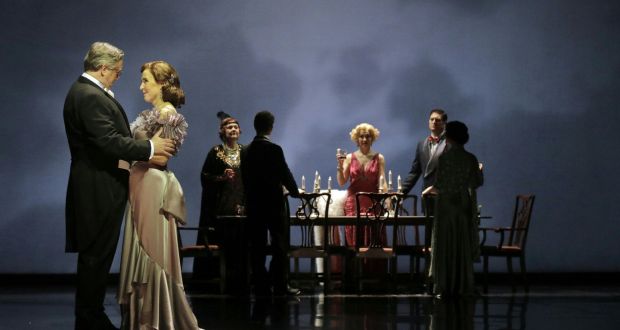
Photo: Cory Weaver
Wexford Festival Opera:
Dinner at Eight, by William Bolcom, got its European premiere at last fall’s event.

Back in the 1990s, I worked with a woman whose father was an opera buff. He loved opera so much that, although he had no real connections in the field, he managed to organize a high-quality company in the part of New York State where he lived. Westchester, if I remember correctly.

It wasn’t his day job: it was what he did for love. In another example of opera lovers who go out of their way to lend support, US Supreme Court Justice Ruth Bader Ginsburg has taken small, non-singing parts on stage, attracting some new audiences.

At the Irish Times, David McLoughlin has another example of what some folks will do for opera.

“Never intimidated by the weight of cultural heritage, each new generation of Irish artists continues to reimagine, reinvent and reinvigorate. The arts are constantly changing, finding new forms of expression and igniting new flames. …

“Wexford Festival Opera was founded on an idea and ethos which still remains at its core today, 67 years later – to present rarely performed operas, to unearth and shine a light on hidden gems.

“I was once told by the then chairman of a leading American opera company that the reason Wexford has rightly survived is because from the outset its rationale was plain wrong.

“He was right: the dream by a small group of local people, including a GP, a hotelier and a postman, in the early 1950s, of bringing international singers to a remote corner of Ireland to present rarely performed operas, wouldn’t even get past the first page of a modern-day feasibility study.

“But they weren’t dissuaded, and the minor detail of no real financial underpinning was from the outset not even considered a hindrance. The dream they were determined to see become a reality was enthusiastically shared and championed by the local community, who volunteered their time and skills. …

“The festival opened up not just Wexford itself, but Ireland and its arts sector, to the international performing world in a way no other cultural venture had done up until then – nor, I would argue, since. The spin-off has been enormous – artistically, culturally, and economically, generating [$14 million] annually. …

“Wexford is often defined as what it is not: a national opera company. It isn’t. Wexford is an annual festival, an international event, proudly Irish, presenting Irish and international audiences with a distinctly international repertoire, featuring Irish and international performers and attracting an audience that stretches well beyond these shores. It makes a vital contribution to the profile, development and reputation of the Irish opera sector. It may be niche but it’s broad enough to accommodate new audiences.”

More at the Irish Times, here. It will be interesting to see how this festival fares after Brexit, when Ireland will still be part of the European Union and its closest neighbors won’t.

Read Full Post »

Like many of New England’s postindustrial cities struggling to reinvent themselves, Lowell has attracted a thriving artistic community to its old warehouses.

And as a magnet for generations of immigrants since the Merrimack and Concord rivers were harnessed to power cotton mills in the 19th century, the city has also attract a rich array of cuisines and cultures.

The late U.S. Senator Paul Tsongas helped to create a popular national park in Lowell. Today, others are building on the city’s arts reputation to attract tourists while strengthening ties among the various nationalities.

Yesterday I decided to check out one of the city’s newest festivals, “Creaticity.” Despite good weather, music, food, giant bubbles, and booths that featured artisans of many ethnicities, the event didn’t have anything like the attendance of the city’s 31-year-old folk festival. But you couldn’t expect that. It probably just needs time to get established.

Here are a few Lowell scenes to give you a taste. The last photo is an editorial comment on how challenging it can be to unlock all the inherent beauty of a city like Lowell.

091617-Lowell-retail-sign

091617-imprisoned-roses-Lowell

Read Full Post »

screen-shot-2017-04-28-at-153802

Photo: SWG3/Facebook
Y
ardworks takes place May 6 and 7
, 2017, in Glasgow, Scotland.

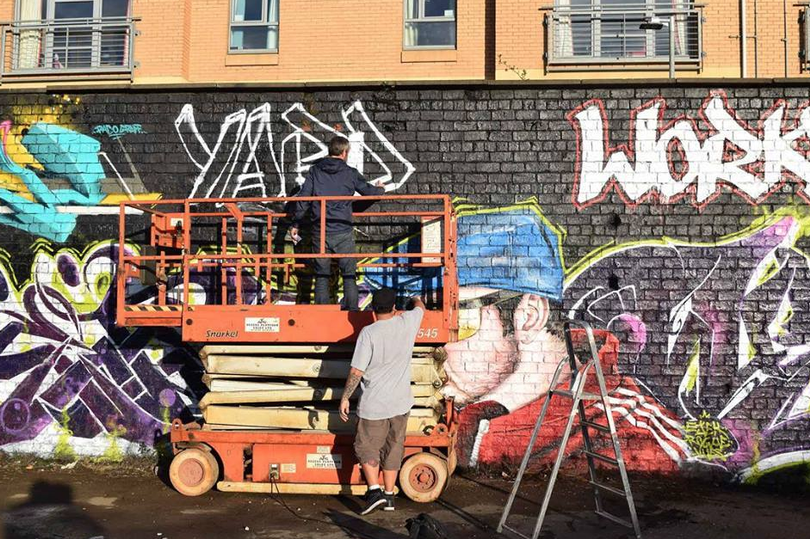
Melita knows I like artistic graffiti. In fact, we are both such fans of Lata_65 (graffiti for old folks) that we intend to try our hand at spray painting if the organization ever comes to the Boston area.

Today Melita shared a link on Facebook about graffiti in Glasgow.

Gregor Kyle wrote at GlasgowLive, “Scotland’s first dedicated graffiti festival will take street art into the heart of the community in Glasgow and open up new opportunities for young people across the city.

“Next weekend (May 6 and 7) in Finnieston, SWG3 will host over 30 of the world’s finest graffiti artists and 50 of Scotland’s street artists at the Yardworks Festival. …

“One of its main aims is to strengthen SWG3’s bond with the local community and the city of Glasgow as a whole.

“School and youth groups have been invited, with the days featuring specialist graffiti workshops and a ‘Creation Station’ for children which will allow everyone the chance to try their hand at painting. …

“ ‘It’s Scotland’s first graffiti festival and the scale of it now, the way it has grown, it’s massive now,’ explained Gaz, who is himself a graffiti artist and part of the management team at SWG3. …

“Most Glaswegians will know SWG3 as a club and concert space but by day it is a thriving hub for artists, filled with studio spaces and workshops. Slowly but steadily it has progressed over the years with the scale and ambitions of its projects growing bigger and bigger.

” ‘The yard is now basically a massive canvas for the artists,’ continued Gaz. ‘We have rendered the walls, wrapped containers in sheet metal – at no small expense – and every surface will be perfect for the artists to paint on. …

” ‘We are trying to build a sense of community in the area, which can be hard sometimes when you have a transient population with some of the students maybe only staying in the flats here for a term and then moving on.

“ ‘Finnieston has this reputation as this hipster area; what people forget is that there is this core population here and in the likes of Partick and Anderston who have lived here a long time. …

“ ‘The Commonwealth Games in Glasgow were fantastic for the city. They drew people together and, through a number of projects, connected me with a lot of other artists and graffiti writers that I didn’t know in the city.

“ ‘We will be looking to run workshops in the summer for young people and will try to play our part in improving the area and bringing the community together.’ ”

More at GlasgowLive, here.

Read Full Post »

Sometimes it just takes one person to be a catalyst. Internationally known jazz musician Danilo Pérez is a catalyst for a growing jazz scene in his native Panama. He has a special focus on getting young people excited about jazz and giving them a chance to become musicians.

At the NY Times, Melena Ryzik writes, “Even in jazz, which has a long tradition of mentorship, Mr. Pérez, 49, has emerged as a singular figure. Nearly 30 years after he left his native Panama to study jazz composition at Berklee [College of Music in Boston], he has made promoting musicianship in Panama — using music as a springboard, cultural unifier and teaching tool — his life’s work.

“In 2005, a year after he started [a] jazz festival with his family, he created the Danilo Pérez Foundation, a nonprofit center for music education and outreach; the festival, which draws as many as 30,000 people over its six-day run each January, provides money for the foundation. The club, which opened last February at the new American Trade Hotel, a luxe outpost of the Ace Hotel chain, is, in his view, the last piece of the puzzle.”

Read more.

Photo: Jennifer Shanley
Danilo Pérez (right) directs the Berklee Global Jazz Institute inaugural class.

Read Full Post »

The Upper Midwest has some unusual races. One year in Minnesota, for example, my husband and I went to an outhouse race, and I wrote up the experience for an East Coast community paper.

Today I read in the NY Times about a Wisconsin race. Mitch Smith writes, “In Spain, they run bulls. In Kentucky, thoroughbreds. But here in America’s Dairyland, llamas are the four-legged athletes of choice.

“On Saturday afternoon, the llamas converged on this tiny town in the corn-covered hills of western Wisconsin, as they do each September. A llama named Lightning, a 14-year-old with swift feet and a bit of a temper, claimed the heaping basket of tomatoes and peppers that goes to the speediest camelid.

“To the roughly 1,900 residents of Hammond, the Running of the Llamas is something far more than an annual excuse to watch South American pack animals lope down Davis Street. In the 18 years since a local bar owner first let the llamas loose, the event has become a source of communal pride and identity in a state where it seems every dot on the map has its own quirky festival.

“ ‘It makes our town unique,’ said Ariel Backes, 16, the reigning Miss Hammond. ‘It just shows small towns are the best.’ …

“Some llamas were eager to race, sprinting swiftly behind the handler holding its reins. Others were compliant but unenthusiastic, making their way past the cheering fans, lined up four and five deep on some stretches of sidewalk, at more of a brisk walk than a run. And a few llamas were downright uninterested, forcing their handlers to practically drag them to the finish line.” More here.

Suzanne and Erik’s two-year-old fed a llama this summer. I can’t quite picture that llama wanting to do anything but eat.

Photo: Colin Archdeacon on Publish September 14, 2014.
This llama-racing event is in its 18th year in Hammond, Wisconsin.


Read Full Post »

After a delightful morning with my granddaughter and my older grandson, I went to Providence to hang out with my younger grandson and Suzanne and a good friend.

I caught up with them at the park, where the farmers market was winding down and a free summer concert was revving up: the annual Summit Music Festival. (Check it out here.)

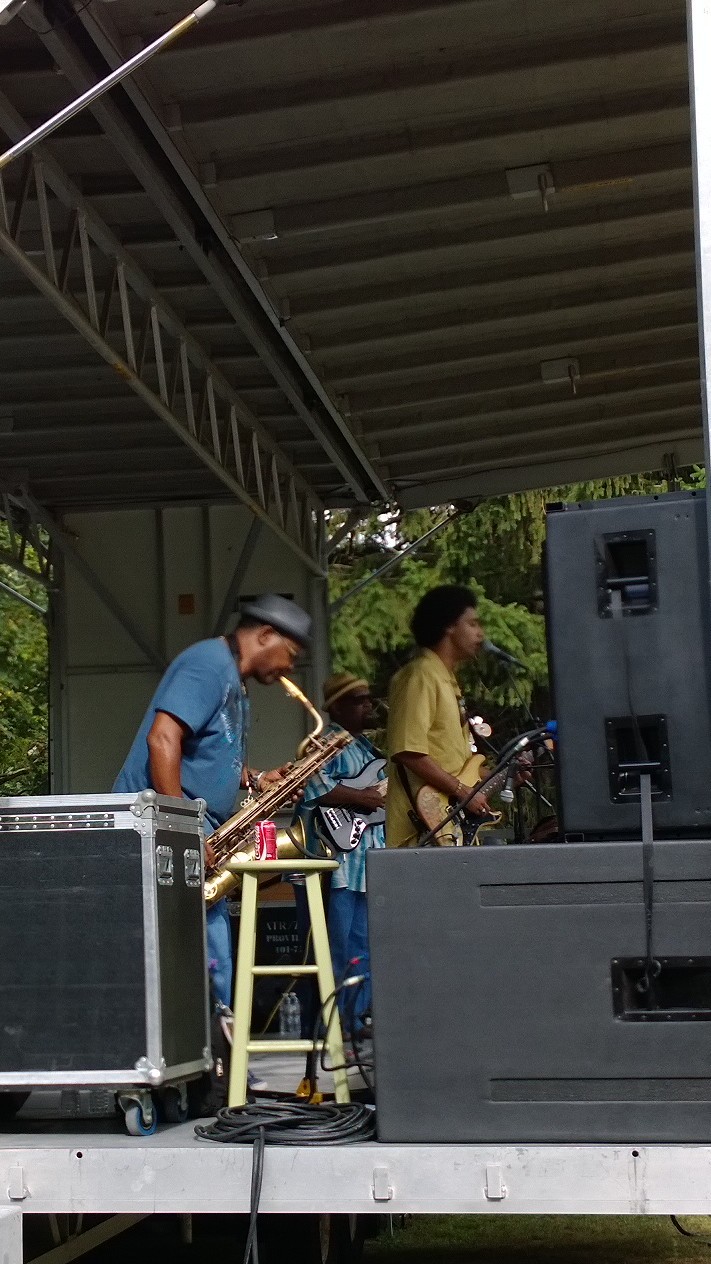
The four of us liked a blues group called the Selwyn Birchwood Band (pictured) and another band called Smith and Weeden. The ice cream eater below had reservations about a third performance. Everyone’s a critic.

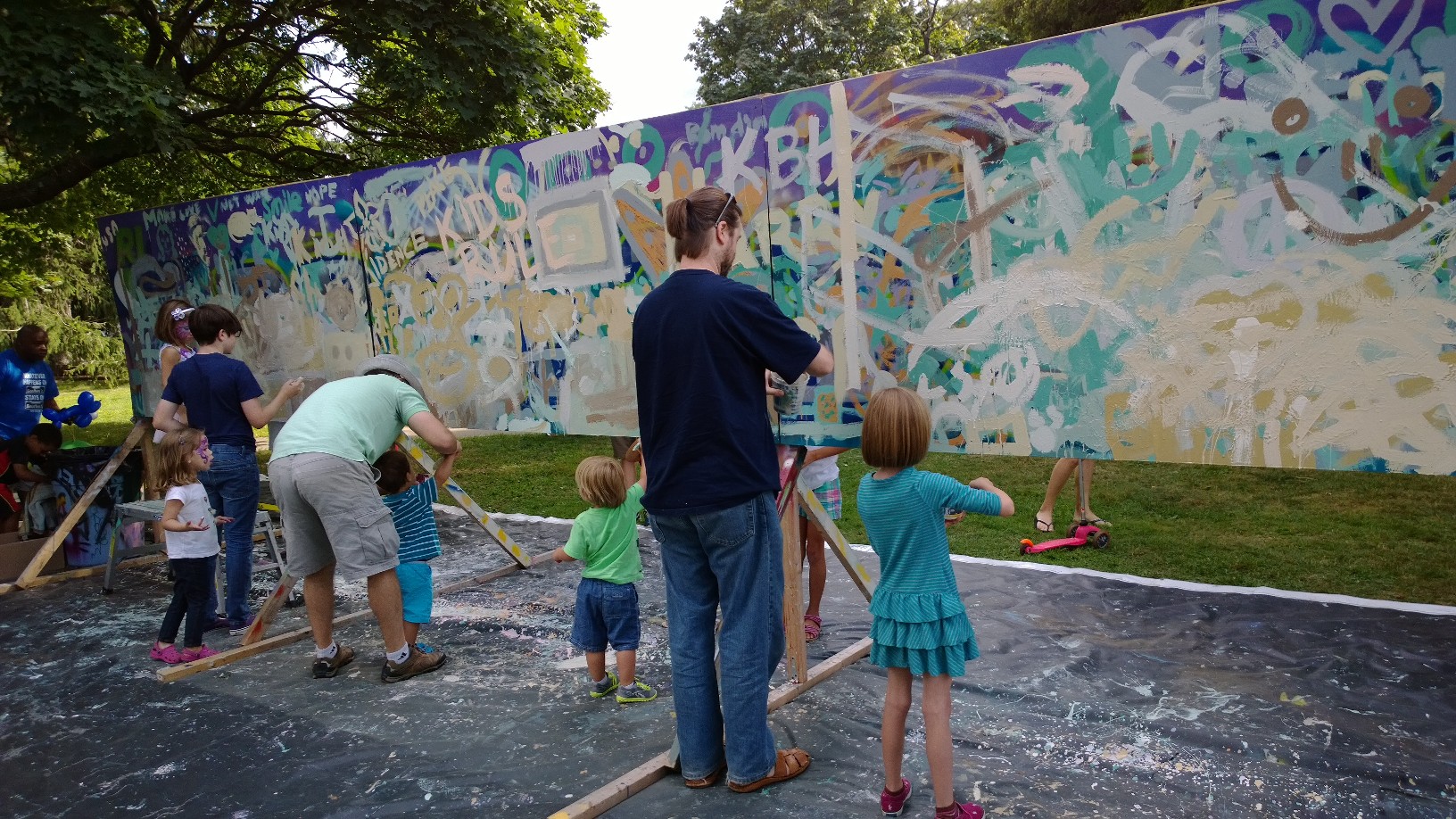
We spent a chunk of time going “higher, higher” on the swing in the playground and watching a multi-ethnic group of small boys kick a soccer ball. (How brave it is to go up to boys you don’t know and ask to play!) We skipped the face painting, which was gorgeous but, to a 2-year-old, kind of pointless. We watched kids and grownups painting a mural wall.

live-music-Providence


concert-critic-with-ice-cream


paint-the-wall-providence

Read Full Post »

You don’t have to love everything that someone calls a poem to believe that it’s a great thing to encourage poetic expression and enjoyment of poetry in all walks of life.

One of the memorable aspects of Jason Elliot’s book on Iran, Mirrors of the Unseen, at least for me, was how many ordinary people in that country were interested in the great poets of their culture and could recite ancient verse.

Meanwhile, in Miami, there’s a poetry festival that aims to touch everyone.

William Grimes at the NY Times says, “If you live in Miami and you do not read, recite or listen to a poem in April, something has gone seriously wrong. For the third year, the O, Miami Poetry Festival will flood the city with words, using any pretext to accomplish its mission of putting all 2.6 million residents of Miami-Dade County in contact with at least one poem. …

“Poems will be pasted on the mirrors of public bathrooms and positioned at congested intersections, so drivers stuck in traffic jams can get some uplift while their engines idle. …

“One of last year’s most popular events, run with WLRN, the local public radio station, was a poetry contest in which citizen-poets were asked to contribute lines dedicated to the theme: ‘That’s so Miami.’ The winner in the ‘best ode to Miami Spanglish’ category was Lauren Fernandez: ‘Exciting and Extravagant/Guajiros in Bentleys./Tostones and Champagne. That’s so Miami.’

“This year contestants must pick a location between the Palm Beaches and the Keys and enshrine it in verse, incorporating the words “this is where.” Winners will see their work published in The Miami Herald. …

“Ivan Lopez, an actor, will dress as the poet and revolutionary José Martí, mount a white horse and ride down Calle Ocho handing out roses with poems attached. That’s so Miami.”

More  at the Times.

Photo: Ting-Li Wang/NY Times
Reading poetry. Can you identify the poet? Hint: He’s not so Miami.

Read Full Post »

I find lots of great links at Andrew Sullivan’s blog. Besides having an excellent staff, he seems to have half the world forwarding cool stuff to him. Otherwise, I probably would never have stumbled on Feature Shoot, which showcases work from up-and-coming and established photographers.

In one article, Amanda Gorence writes, “Photographer Fernando Decillis traveled to Pasto, Colombia for the elaborate Carnaval de Negros y Blancos, a five day festival celebrating the Epiphany that has been a tradition since 1912. …

“El Desfile Magno [the great parade] is a mind-blowing display of immaculately crafted floats made by incredibly talented artists. The artists are usually honored with this task through family ties and only after years of studying the traditional craft. … Decillis gives us a front row spot to the festivities, the artists and the giant masterpieces of Pasto’s celebrated tradition.

“Decillis was born in Montevideo, Uruguay. He is based in Atlanta mixing it up with a variety of advertising, editorial and conceptual work.” More, here.

Photograph: Fernando Decillis

Read Full Post »

Older Posts »