Feeds:
Posts
Comments

Posts Tagged ‘forest’

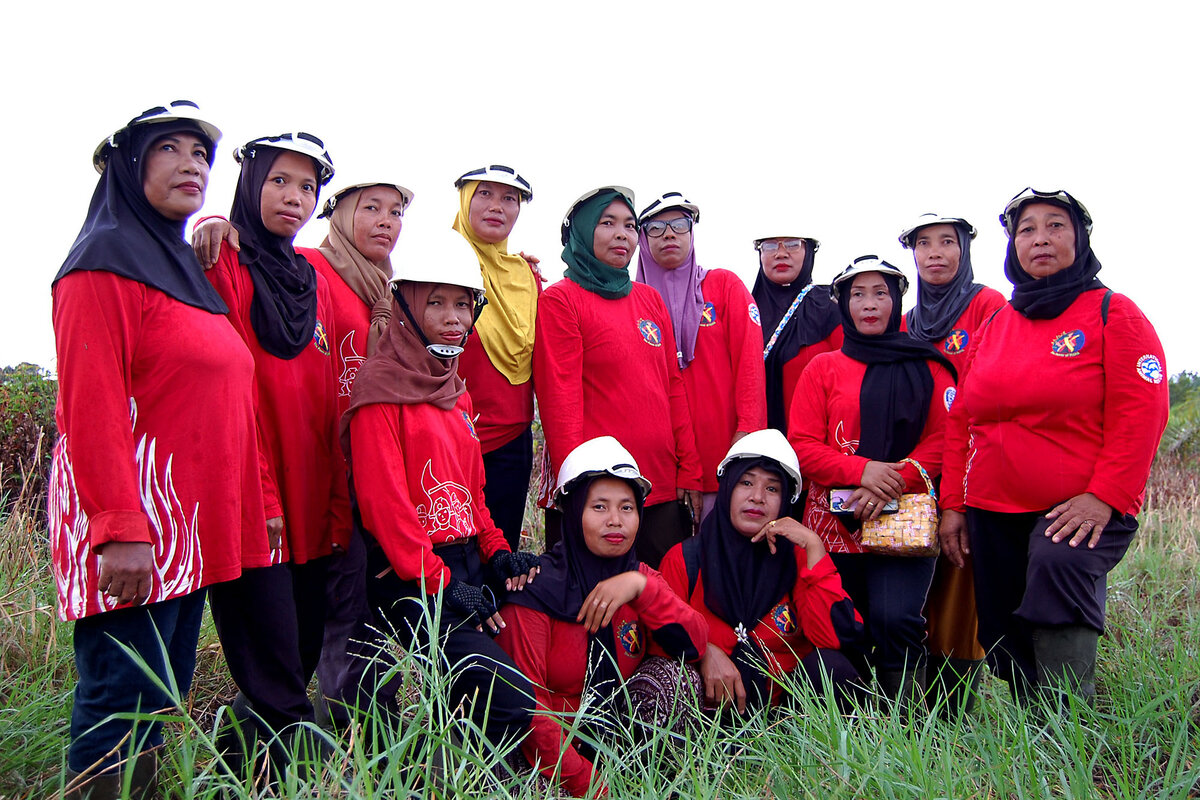
Photo: Lindsey McGinnis/The Christian Science Monitor.
Power of Mama patrollers, who routinely put out palm oil fires in Indonesia.

In Indonesia, women have answered the call to do something about wildfires. Because in Indonesia, careless and illegal palm-oil logging routinely causes fires, endangering orangutans. And not just orangutans.

Lindsey McGinnis and Sara Miller Llana report the story at the Christian Science Monitor.

“The women adjust hard hats over hijabs and pull on knee-high boots. Then they set off into what was once a dense forest of rubber and bamboo trees but is now a patchwork of small-scale palm oil fields. Everyone knows who they are. Their scarlet, elbow-patched uniforms with flames snaking up the torso, and the image of a firefighter emblazoned on the chest, give it away.

“This is the Power of Mama.

“Across Kalimantan, the Indonesian part of the island of Borneo, lush rainforest hosting carbon-rich peatland and one of the country’s most significant populations of orangutans meets illegal logging and palm oil farms. That adds up to wildfires.

“So Power of Mama members have started patrolling for fire risks, urging farmers to follow the rules about slash-and-burn clearing, and challenging stereotypes about women’s roles in rural Indonesian life along the way.

“Female forest rangers in Indonesia are rare, says Eulis Utami, director of a nongovernmental organization called Hutan Itu Indonesia, or Indonesia is Forest, which aims to educate Indonesians about their tropical rainforest, the world’s third-largest. But when women are given training and information, she says, ‘They protect the forest with their whole hearts.’

“In untouched forests of West Kalimantan, orangutans build their nests high up in trees. Hornbills soar through the vines with deep swoops of their wings. The chirps of songbirds mingle with the ‘o-ho!’ calls of gibbons.

“But this habitat is shrinking. West Kalimantan has lost more than a third of its tree cover since 2000.

“Indonesia is the world’s largest producer of palm oil, and nearly all of it comes from either Sumatra or Kalimantan. The farms have wreaked havoc on peatlands, one of the world’s most important carbon sinks. When the bogs are cleared, the water table sinks and soil becomes highly flammable.

“A new consciousness about the risks of fire spread rapidly to this community in 2019, when agricultural burning amid drought conditions sparked fires that raged for months. Millions of acres of peatlands and rainforest burned. And it kept many of the mothers who would eventually form the Power of Mama up at night, worried about the effects of smoke and haze on their children’s health.

“The Power of Mama was launched in 2022 by Yayasan International Animal Rescue Indonesia (YIARI), whose long-term goal is to save the critically endangered orangutan. …

“YIARI intentionally made women part of the solution. Male farmers have been impervious to NGOs trying to convince them to protect the forests, but they listen to their wives, says Anna Desliani from YIARI. ‘Women have influence in their families,’ she says.

“One of the newest branches is in the community of Sungai Putri, which counts 2,000 residents. Farmers here have long tended rice paddies but many switched to more lucrative oil palm trees in 2017.

“ ‘It’s sad because … before it was real forest,’ says Misnati, a patroller who, like many Indonesians, has just one name. She says she misses the sounds of gibbons and the cooler air the forest brought. She also felt more protected from fire and floods when the forest served as a buffer zone.

“The Power of Mama doesn’t aim to stamp out cultivation – in fact, most of its members’ husbands toil in palm oil now. But they have been educated on the risks of clearing land by burning, of overcultivating, and of smoking in a highly flammable field. And that knowledge gives them an authority that many had never known. …

“When it comes to forests, the discussion is always ‘heavy,’ explains Ms. Utami. It’s about deforestation, wildfire, conflict. That’s why Indonesia is Forest, which introduces young town dwellers to the rainforest, focuses on positive narratives that make people want to protect Indonesian biodiversity.

“The Power of Mama is, in its own way, cultivating a similar enthusiasm.

“On this rainy day, the women aren’t on high alert. They walk the land and talk with farmers. Passing a patch of blackened vegetation, Misnati recalls her proudest moment: when she figured out how to connect a hose to a water pump and put out a fire here last year. …

“Before the Power of Mama, ‘I’d never venture this far into the land alone,’ she says. ‘I’ve gotten to know the landscape even though I’ve lived here my whole life.’ …

“ ‘We need to be a role model, to set an example,’ says another patroller, Lita, sporting an upcycled crossbody purse made of plastic detergent sachets she collected from her neighbors. Other women are wearing them, too. ‘If we don’t do this, who will?’ ”

More at the Monitor, here. Nice pictures. No paywall.

Read Full Post »

Photo: Patrick Zachmann/Magnum Photos.
The real miracle: Reconstructing the intricate wood frame of Notre Dame’s roof.

When the unthinkable happens to a beloved cultural icon, what’s next? In the days and weeks after the great fire of Notre Dame Cathedral broke hearts around the world, plans began to take shape.

Joshua Hammer writes at GQ, “Some time after six in the evening on April 15, 2019, Rémi Fromont was sitting at the Brasserie Saint-Malo, a lively café in Montparnasse, Paris, when his phone rang.

“ ‘Notre-Dame is on fire,’ ” said a friend on the other end of the line. … Fromont leapt out of his chair, got on his bike, and pedaled north toward the cathedral. …

“About an hour after his arrival, Fromont, with thousands of Parisians at the scene and millions watching around the world, looked on as the 750-ton spire, made of 1,230 oak beams, blazed, teetered, snapped like a matchstick, and crashed through the roof. Spectators broke into tears of disbelief and horror. …

“The day after the fire, French president Emmanuel Macron made a promise: Notre-Dame would rise again in the next five years.  …

“None of the many priceless paintings, sculptures, and windows that filled the church’s interior — though they were stained by smoke and singed by fire — had been wrecked beyond repair. …

“The roof frame was a different story. Known in French as the charpente, it was an ingenious assemblage of triangular-shaped trusses, each one consisting of horizontal and vertical beams and diagonal rafters designed to support the heavy roof cover and distribute the weight over the walls beneath it. Built from thousands of pieces of wood and assembled without nails, it was a singular achievement, one of the oldest surviving all-wood structures in the world. …

“During World War I, German artillery shells had reduced the cathedral in Reims, another Gothic masterpiece, to charred wood and rubble. In 1919, the architect Henri Deneux launched the restoration, reconstructing the church’s roof with reinforced concrete, a decision that was controversial at the time.

“Fromont had not warmed to Deneux’s approach. He believed that the roof’s charpente could be rebuilt exactly as the medieval carpenters had done it. The approach was not without risks — Fromont had told me, ‘Wood burns. I’m not going to say the opposite’ — but certain measures could be put into place to mitigate its vulnerability.  …

“The roof’s charpente was perhaps [Notre Dame’s medieval woodworkers’] greatest creation. Yet Fromont told me that, until recently, it had never been the subject of serious scholarly study. …

“In 2012, Fromont, then a 35-year-old scholar at Paris’s École de Chaillot, decided to address that absence. For his advanced degree, Fromont proposed spending a year surveying every inch of the charpente. When they were at last granted permission, he and his partner on the project, Cédric Trentesaux, entered the cathedral’s south transept and climbed a winding staircase into the triangular south gable. There they squeezed through an aperture and entered a medieval realm barely visited in over 800 years. …

“The two men emerged from the project with the most extensive blueprint of the 800-year-old structure that had ever been created. ‘It wasn’t a lot, but it was enough,’ Fromont said. …

“There was some skepticism that the charpente could be re-created in its original glory, but Fromont found an ally in François Calame, France’s leading apostle of traditional carpentry. In the early 1990s, as a young carpenter, Calame had visited Maramures‚ a remote region in western Romania. Isolated from a fast-changing world during Nicolae Ceausescu’s 24-year dictatorship, artisans there had kept the old ways of carpentry alive.

“Like in Romania, traditional French axmen used hand tools: the hache de grossière, a long-handled, narrow-bladed axe used to remove large amounts of wood, and the doloire, a broad-bladed, short-handled axe designed for precision chipping following the grain of the wood. It’s slow and physical work: Squaring lumber by hand can take much more time than doing it with buzz saws. For that reason, by the 20th century, axes had all but disappeared as a construction tool. Yet their proponents extol the end result: more pliable, stronger beams, and imperfections that reflect the extensive labor and love of craft. ‘This is a kind of magical work because you feel the material,’ Fromont told me. ‘You smell it and touch it.’ ”

Read what happened next in Paris. The long and fascinating article is at GQ, here. No firewall.

Read Full Post »

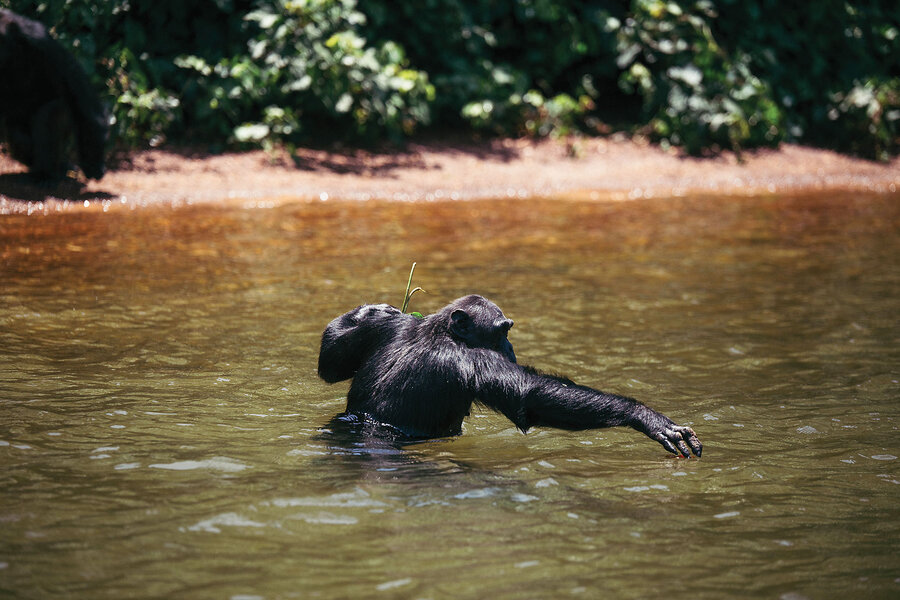
Photo: Kang-Chun Cheng.
A chimpanzee swimming near the Ngamba Island sanctuary in Uganda.

Exercise instructors like to tell you how everything in your body connects to everything else. For example, moving your eyes as if trying to look behind you can help your neck turn a little farther in a neck exercise.

Interconnectedness is also true of nature. Consider Uganda, where work is being done to simultaneously protect chimpanzees, tropical forests, small-farm agriculture, and families.

Kang-Chun Cheng writes at the Christian Science Monitor, “From the shade of a banana tree, Samuel Isingoma explains why he is sacrificing his precious jackfruit to chimpanzees.

“ ‘Since I support and give fruit to the chimps, they don’t disturb anything else,’ says Mr. Isingoma, who has planted 20 jackfruit trees on his 17-acre plot in the western Ugandan village of Kasongoire. The trees’ bounty is solely for the primates. …

“Uganda is East Africa’s largest sugar cane producer and has one of the fastest-growing populations on the continent. The need to make space for homes and farms is reducing the forest cover that helps sustain chimpanzees.

“James Byamukama, an executive director at the Jane Goodall Institute, says it’s critical to have discussions within communities rather than try to impose solutions. Community monitors from the institute’s Uganda chapter have recommended that farmers plant crops that aren’t so palatable to wildlife. So about eight years ago, Mr. Isingoma started planting coffee beans, leaving behind the maize he used to cultivate.

“Now he is taking the institute’s advice one step further by giving his fruit over to hungry chimps.

“As a result, Mr. Isingoma says, ‘I feel there isn’t much of a human-wildlife conflict.’ “

The nonprofit We Stand for Wildlife expands on the connections between farming and forests.

“When over 1000 Ugandan small holder farmers adopted WCS conservation farming practices they increased crop-based income 15 fold and halted clearing on 2700 hectares [6671.845 acres] of riverside forest.

“Following the end of the civil war in 1986 refugee families began to return to their lands in the Murchison-Semliki region of Uganda that contain the last remaining natural forest in the country outside of protected areas. These riverside forests form corridors connecting the national parks and are vital habitat for chimpanzees.

“To feed their growing families farmers began to clear the forest to plant crops. Traditional agricultural practices quickly exhaust the soil and farmers are forced to deforest new areas. Between 2006 and 2010 WCS sound science showed that farmers were clearing nearly 8,000 ha of forest each year. Unless this changed the forest and its resident chimpanzee would soon disappear.

“In an attempt to avert this deforestation trend WCS joined forces with the Jane Goodall Institute and the Chimpanzee Trust. Initially we hoped that we could help farmers to capture the value of their trees by selling their stored carbon in the voluntary REDD+ market place. But the high cost of certifying the carbon for sale and the low price of forest carbon made this idea untenable.

“At WCS we adapted our plans and began offering farmers training in zero tillage farming that conserves nutrients and soil moisture, which is critical as rains become less predictable with climate change.

Farmers who adopted the less capital intensive conservation farming methods saw their maize yields increase 2-fold and their net revenue by 15-fold.

“Today over 1000 farmers are using conservation farming technique that preserve soil fertility and crop productivity dramatically reducing the need to clear more forest. Analysis of forest cover change using the Global Forest Watch interactive mapper shows that deforestation has visibly declined in areas under conservation farming. In lila was forest before the start of the REDD+ project; in green the forest still today and although it is difficult to quantify a 1 to 1 cause and effect relationship it show that deforestation was a lot less where our Private Forest Owners/conservation farmers live.”

More at the Monitor, here, at WCS, and at the Jane Goodall Institute. No firewalls.

Read Full Post »

Photo: Imagine China via AP Images.
A solar-covered parking lot at the plant of Anhui Quanchai Engine Co., Ltd. in Chuzhou, China.

We have to keep a close watch on our innovations, even the ones we think are good. Take solar. Sometimes you read about aggressive solar companies decimating wooded lots to build an array. What? Trees are even better than solar at fighting global warming.

Let’s consider places where solar doesn’t harm anything. How about over a parking lot?

Richard Conniff writes at YaleEnvironment 360, “Fly into Orlando, Florida, and you may notice a 22-acre solar power array in the shape of Mickey Mouse’s head in a field just west of Disney World. Nearby, Disney also has a 270-acre solar farm of conventional design on former orchard and forest land. Park your car in any of Disney’s 32,000 parking spaces, on the other hand, and you won’t see a canopy overhead generating solar power (or providing shade) — not even if you snag one of the preferred spaces for which visitors pay up to $50 a day.

“This is how it typically goes with solar arrays: We build them on open space rather than in developed areas. That is, they overwhelmingly occupy croplands, arid lands, and grasslands, not rooftops or parking lots, according to a global inventory published last month in Nature. In the United States, for instance, roughly 51 percent of utility-scale solar facilities are in deserts; 33 percent are on croplands; and 10 percent are in grasslands and forests. Just 2.5 percent of U.S. solar power comes from urban areas.

“But that doesn’t necessarily make it smarter. Undeveloped land is a rapidly dwindling resource, and what’s left is under pressure to deliver a host of other services we require from the natural world — growing food, sheltering wildlife, storing and purifying water, preventing erosion, and sequestering carbon, among others. And that pressure is rapidly intensifying. By 2050, in one plausible scenario from the National Renewable Energy Laboratory (NREL), supplying solar power for all our electrical needs could require ground-based solar on 0.5 percent of the total land area of the United States … 10.3 million acres.

“Because it is more efficient to generate power close to customers, some states could end up with as much as five percent of their total land area — and 6.5 percent in tiny Rhode Island — under ground-based solar arrays, according to the NREL study. If we also ask solar power to run the nation’s entire automotive fleet, says Margolis, that adds another 5 million acres. It’s still less than half the 31 million acres of cropland eaten up in 2019 to grow corn for ethanol, a notoriously inefficient climate change remedy.

“The argument for doing it this way can seem compelling: It is cheaper to build on undeveloped land than on rooftops or in parking lots. And building alternative power sources fast and cheap is critical in the race to replace fossil fuels and avert catastrophic climate change. It’s also easier to manage a few big solar farms in an open landscape than a thousand small ones scattered across urban areas.

Despite the green image, putting solar facilities on undeveloped land is often not much better than putting subdivisions there.

“Developers tend to bulldoze sites, ‘removing all of the above-ground vegetation,’ says Rebecca Hernandez, an ecologist at the University of California at Davis. That’s bad for insects and the birds that feed on them. In the Southwest deserts where most U.S. solar farms now get built, the losses can also include ‘1,000-year-old creosote shrubs, and 100-year-old yuccas,’ or worse. The proposed 530-megawatt Aratina Solar Project around Boron, California, for instance, would destroy almost 4,300 western Joshua trees, a species imperiled, ironically, by development and climate change. … In California, endangered desert tortoises end up being translocated, with unknown results, says Hernandez. …

“The appeal of parking lots and rooftops, by contrast, is that they are abundant, close to customers, largely untapped for solar power generation, and on land that’s already been stripped of much of its biological value.

“A typical Walmart supercenter, for instance, has a five-acre parking lot, and it’s a wasteland, especially if you have to sweat your way across it under an asphalt-bubbling sun. Put a canopy over it, though, and it could support a three-megawatt solar array, according to a recent study co-authored by Joshua Pearce of Western University in Ontario.

“In addition to providing power to the store, the neighboring community, or the cars sheltered underneath, says Pearce, the canopy would shade customers — and keep them shopping longer, as their car batteries top up. If Walmart did that at all 3,571 of its U.S. super centers, the total capacity would be 11.1 gigawatts of solar power — roughly equivalent to a dozen large coal-fired power plants. Taking account of the part-time nature of solar power, Pearce figures that would be enough to permanently shut down four of those power plants.

“And yet solar canopies are barely beginning to show up in this country’s endless acreage of parking lots. The Washington, D.C., Metro transit system, for instance, has just contracted to build its first solar canopies at four of its rail station parking lots, with a projected capacity of 12.8 megawatts. 

“New York’s John F. Kennedy International Airport is now building its first, a 12.3 megawatt canopy costing $56 million. Evansville (Indiana) Regional Airport, however, already has two, covering 368 parking spaces, at a cost of $6.5 million. According to a spokesperson, the solar canopy earned a $310,000 profit in its first year of operation, based on premium pricing of those spaces and the sale of power at wholesale rates to the local utility.

“Rutgers University built one of the largest solar parking facilities in the country at its Piscataway, New Jersey campus, with a 32-acre footprint, an 8-megawatt output, and a business plan that the campus energy conservation manager called ‘pretty much cash-positive from the get-go.’ ”

Lots more info at YaleEnvironment360, here.

Read Full Post »

041217-shadows-stripe-forest-floor

Photo: Suzanne and John’s Mom.
Some living things benefit the planet more the older they get.

Those of us who were enthusiastic about planting zillions of trees to store carbon have been learning that the trees need to be part of a healthy ecosystem to do the most good. A collaboration among hundreds of forest ecologists offers keys to what works.

Patrick Greenfield writes at the Guardian, “Forest conservation and restoration could make a major contribution to tackling the climate crisis as long as greenhouse gas emissions are slashed, according to a study.

“By allowing existing trees to grow old in healthy ecosystems and restoring degraded areas, scientists say 226 gigatonnes of carbon could be sequestered, equivalent to nearly 50 years of US emissions for 2022.

But they caution that mass monoculture tree-planting and offsetting will not help forests realize their potential. …

“The research, published [in November] in the journal Nature as part of a collaboration between hundreds of leading forest ecologists, estimates that outside of urban agricultural areas in regions with low human footprints where forests naturally exist, they could draw down large amounts of carbon.

“About 61% of the potential could be realized by protecting standing forests, allowing them to mature into old growth ecosystems like Białowieża forest in Poland [check out the new Polish administration’s environmentalism] and Belarus or California’s sequoia groves, which survived for thousands of years. The remaining 39% could be achieved by restoring fragmented forests and areas that have already been cleared.

“Amid greenwashing concerns around nature’s role in climate crisis mitigation, the researchers underlined the importance of biodiversity helping forests reach their carbon drawdown potential, warning that planting huge numbers of single species would not help and urgent cuts to fossil fuel emissions were needed.

“Rising numbers of forest fires and higher temperatures due to the climate crisis would be likely to reduce the potential, they said. ‘Most of the world’s forests are highly degraded. In fact, many people have never been in one of the few old growth forests that remain on Earth,’ said Lidong Mo, a lead author of the study. ‘To restore global biodiversity, ending deforestation must be a top priority.’

“At Cop26 in 2021, world leaders pledged to halt and reverse deforestation by the end of this decade, although data shows that countries are currently off track. Brazil, Colombia and Indonesia are among nations making progress, however. The researchers said meeting this target, along with making good on UN climate and biodiversity agreements, was crucial to forests reaching their full potential.

“ ‘Conserving forests, ending deforestation and empowering people who live in association with those forests has the power to capture 61% of our potential. That’s huge. It’s potentially reframing forest conservation. It’s no longer avoided emissions, it’s massive carbon drawdown, too,’ said Tom Crowther, the head of the Crowther Lab at ETH Zurich. …

“ ‘It can be achieved by millions of local communities, Indigenous communities, farmers and foresters who promote biodiversity. It could be agroforestry for cacao, coffee or banana, natural regeneration, rewilding or creating habitat corridors. They’re successful when nature becomes the economic choice.’ …

“The research follows a controversial 2019 paper on the potential of forests to mitigate the climate crisis, which was also co-authored by Crowther, that provoked intense scientific debate among forest ecologists. … Several scientists felt that potential for nature to help meet climate goals had been overstated and the paper advocated for the creation of mass tree-planting, driving greenwashing concerns.

“Simon Lewis, a professor of Global Change Science at University College London who was a leading critic of the 2019 paper, said the new estimate was much more reasonable and conservative.

“There is a lot of spin and bluster about what trees can do for the environment. To cut through this always ask: what is the amount of carbon taken up by a hectare of land, and over what time period, he said. … ‘There is still only a finite amount of land to dedicate to forests, and ability of trees to sequester carbon is limited. The reality is that we need to slash fossil fuel emissions, end deforestation, and restore ecosystems to stabilize the climate in line with the Paris agreement.’

“Crowther acknowledged that he had been overzealous in the messaging around the 2019 paper. … ‘The fact that it was so much carbon I think gave people the idea that [the study] was suggesting that tree planting could be an alternative to cutting emissions, which categorically cannot be.’ ”

More at the Guardian, here.

Read Full Post »

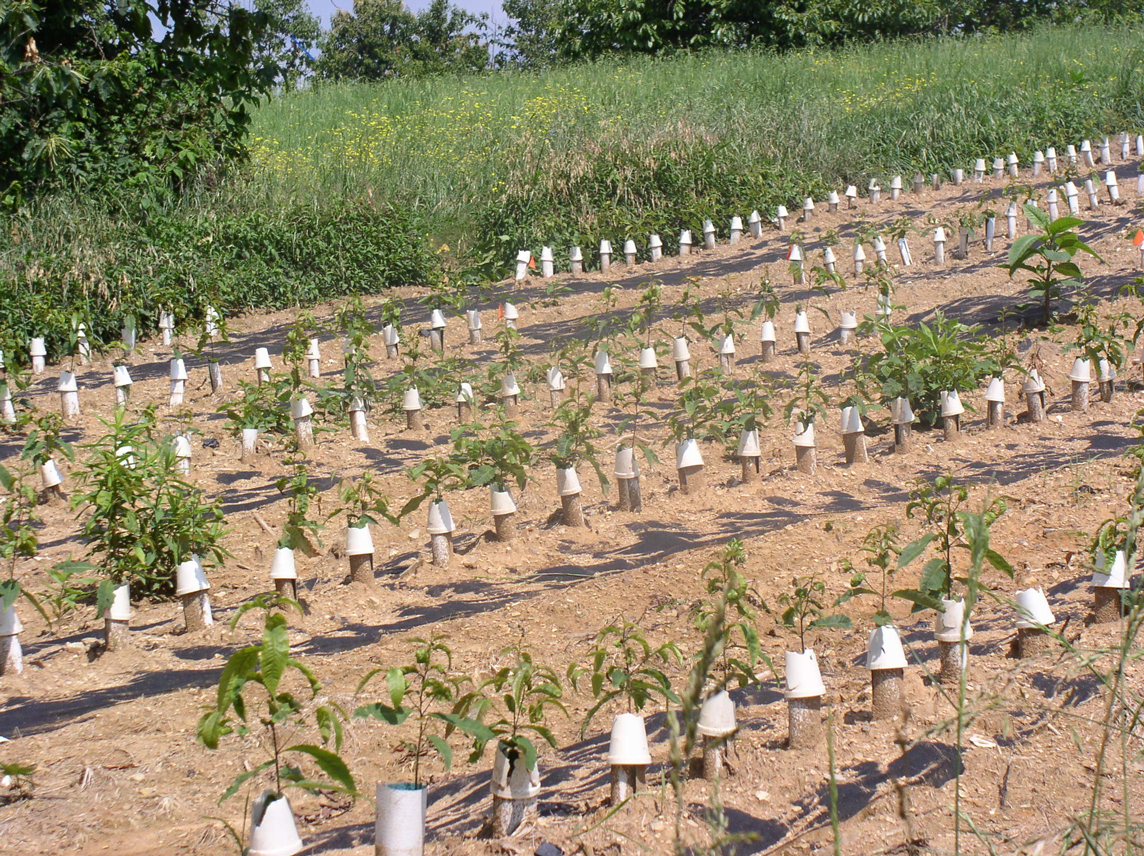
Photo: The American Chestnut Foundation via Living on Earth.
Towering American Chestnuts were once a staple of life for people across Appalachia and elsewhere in the Eastern United States. An initiative in mining country aims to bring them back.

Growing up, I heard from my father about how sad he was as a kid when American Chestnuts began to die off. Children really do not like loss. Thomas Brannon in today’s article was a kid who loved chestnuts, too. He is one of the people working to restore the trees that covered his grandparents’ land before they sold the mining rights.

Elena Shao starts the New York Times story with the director of operations at a tree-planting nonprofit.

“Michael French trudged through a thicket of prickly bramble, unfazed by the branches he had to swat away on occasion in order to arrive at a quiet spot of hilly land that was once mined for coal. Now, however, it is patched with flowering goldenrods and long yellow-green grasses and dotted with tree saplings.

“The sight, he acknowledged, would seem unimpressive to most. Yet it might be Mr. French’s most prized accomplishment. To him, the young trees symbolize what could be a critical comeback for some of the country’s vanishing forests, and for one tree in particular, the American chestnut.

‘I don’t see it how most people see it,’ he said. ‘I look at this and I see how it’s going to be in 80 to 100 years.’

“By then, Mr. French envisions that the chestnut, a beloved tree nearly wiped out a century ago by a blight-causing fungus, will be among those that make up an expansive forest of native trees and plants.

“Billions of chestnuts once dominated Appalachia, with Americans over many generations relying on their hardy trunks for log cabins, floor panels and telephone poles. Families would store the trees’ small, brown nuts in attics to eat during the holiday season.

“Now, Mr. French and his colleagues at Green Forests Work, a nonprofit group, hope to aid the decades-long effort to revive the American chestnut by bringing the trees back onto Appalachia’s former coal mines. Decades of mining, which have contributed to global warming, also left behind dry, acidic and hardened earth that made it difficult to grow much beyond nonnative herbaceous plants and grasses.

“As coal continues to decline and many of the remaining mines shut down for good, foresters say that restoring mining sites is an opportunity to prove that something productive can be made of lands that have been degraded by decades of extractive activity, particularly at a moment when trees are increasingly valued for their climate benefits. Forests can capture planet-warming emissions, create safe harbor for endangered wildlife species and make ecosystems more resilient to extreme weather events like flooding.

“The chestnut is a good fit for this effort, researchers say, because the tree’s historical range overlaps ‘almost perfectly’ with the terrain covered by former coal mines that stretched across parts of eastern Kentucky and Ohio, West Virginia and western Pennsylvania.

“Another advantage of restoring mining sites this way is that chestnut trees prefer slightly acidic growth material, and they grow best in sandy and well-drained soil that isn’t too wet, conditions that are mostly consistent with previously mined land, said Carolyn Keiffer, a plant ecologist at Miami University in Ohio. …

“ ‘We humans brought in the nonnative fungus that killed the tree,’ Dr. Keiffer said, referring to the parasitic fungus that was accidentally introduced to North America in the late 1800s on imported Japanese chestnuts. … ‘Maybe we can be the ones to bring the trees back.’

“That calling has always motivated Thomas Brannon, even as a third grader in the 1940s planting trees with his siblings on his family’s land in eastern Ohio, the property that Mr. French visited in August.

“ ‘If I can make that 230 acres look better, then that’s enough for me,’ Mr. Brannon said.

“His grandparents sold mining rights to parts of the property in 1952, and nearly four decades of coal mining followed. In 1977, the federal government passed the Surface Mining Control and Reclamation Act, requiring mining companies to return land to the general shape it had before the mining activity.

“As a result, mining companies would backfill excavated land, packing rock material tightly against the hillside so it wouldn’t cause landslides, said Scott Eggerud, a forester with the Office of Surface Mining Reclamation and Enforcement, the agency that enforces the mining law. To prevent erosion, mining companies would plant aggressive, mostly nonnative grasses that could tolerate the heavily compacted soil. …

“In theory, compacting land and greening it up quickly was a good idea, in terms of preventing erosion and water contamination, said Sara Fitzsimmons, chief conservation officer at The American Chestnut Foundation. But it made re-establishing forests difficult. …

“When Green Forests Work arrived on the Brannon property in 2013, they focused on undoing some of the damage done to the land, bringing in bulldozers with giant ripping shanks that dig three to four feet deep into the soil, loosening up the dirt and pulling up rocks.

“By springtime, the group had planted upward of 20,000 seedlings, a mix of 20 different native tree species including the American chestnut, the Virginia pine and a variety of oaks.

“They also planted 625 chestnuts in a one-acre space they called a progeny test to evaluate the health of hybridized chestnut trees — fifteen-sixteenths American chestnut and one-sixteenth Chinese chestnut — that were crossbred by scientists at the American Chestnut Foundation, a nonprofit group formed in the 1980s.”

More at the Times, here. Still more at the environmental radio show Living on Earth. No firewall.

Read Full Post »

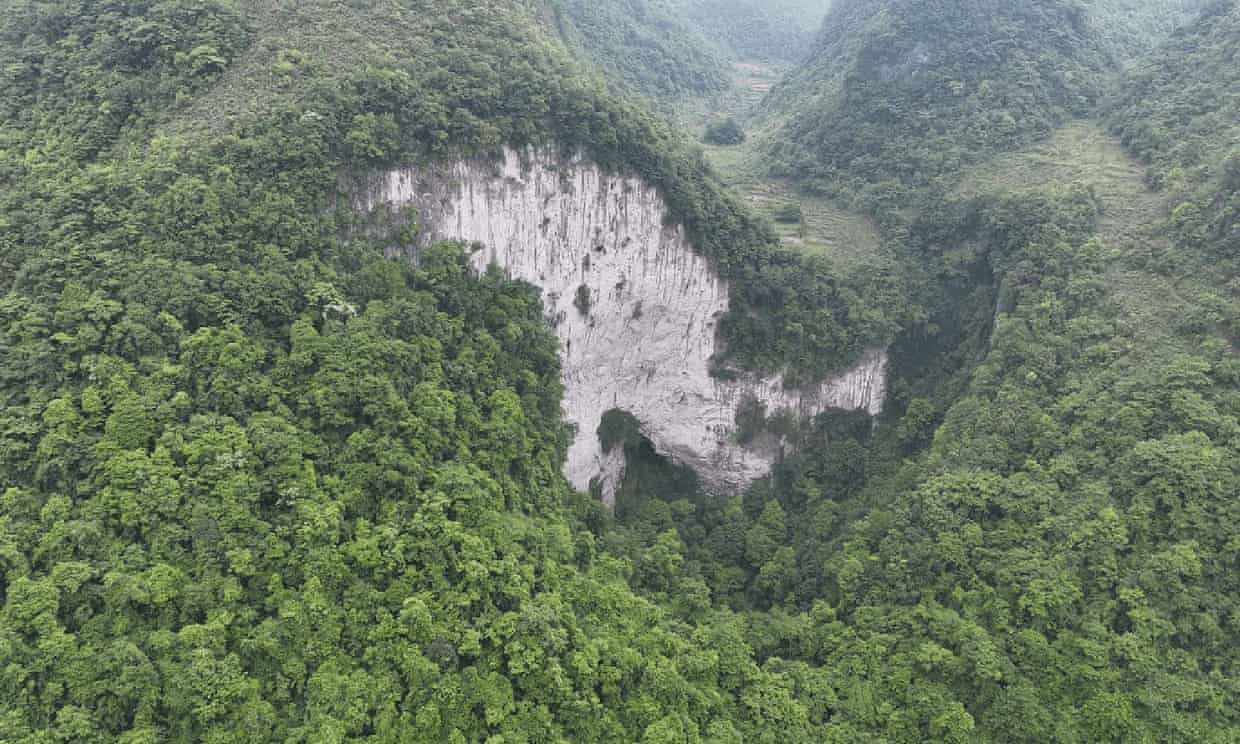
Photo: Guangxi speleology research team 702 via the Guardian.
Cave explorers have come across a sinkhole, or karst, in a semi-autonomous region of southern China. Previously known only to locals, it is 306 metres (335 yards) in length, 150 metres (164 yards) wide and 192 metres (210 yards) deep. It has a forest at the bottom.

When I was a kid spending summers on Fire Island, we all thought the Sunken Forest the most magical place ever. But just imagine if a forest were so removed from the world that it harbored previously unknown species! Scientists in China are beginning to study a forest of tantalizing possibilities at the bottom of a huge sinkhole.

Stephanie Pappas reports at Live Science, “A team of Chinese scientists has discovered a giant new sinkhole with a forest at its bottom. 

“The sinkhole is 630 feet (192 meters) deep, according to the Xinhua news agency, deep enough to just swallow St. Louis’ Gateway Arch. A team of speleologists and spelunkers rappelled into the sinkhole on Friday (May 6), discovering that there are three cave entrances in the chasm, as well as ancient trees 131 feet (40 m) tall, stretching their branches toward the sunlight that filters through the sinkhole entrance. 

” ‘This is cool news,’ said George Veni, the executive director of the National Cave and Karst Research Institute (NCKRI) in the U.S., and an international expert on caves. Veni was not involved in the exploration of the cave, but the organization that was, the Institute of Karst Geology of the China Geological Survey, is NCKRI’s sister institute. …

“Veni told Live Science, [that] southern China is home to karst topography, a landscape prone to dramatic sinkholes and otherworldly caves. Karst landscapes are formed primarily by the dissolution of bedrock, Veni said. Rainwater, which is slightly acidic, picks up carbon dioxide as it runs through the soil, becoming more acidic. It then trickles, rushes and flows through cracks in the bedrock, slowly widening them into tunnels and voids. Over time, if a cave chamber gets large enough, the ceiling can gradually collapse, opening up huge sinkholes. 

” ‘Because of local differences in geology, climate and other factors, the way karst appears at the surface can be dramatically different,’ he said. ‘So in China you have this incredibly visually spectacular karst with enormous sinkholes and giant cave entrances and so forth. In other parts of the world you walk out on the karst and you really don’t notice anything. Sinkholes might be quite subdued. … Cave entrances might be very small, so you have to squeeze your way into them.’ 

“In fact, 25% of the United States is karst or pseudokarst, which features caves carved by factors other than dissolution, such as volcanics or wind, Veni said. About 20% of the world’s landmass is made of one of these two cave-rich landscapes. 

“The new discovery took place in the Guangxi Zhuang Autonomous Region, near Ping’e village in the county of Leye, according to Xinhua. Guangxi is known for its fabulous karst formations, which range from sinkholes to rock pillars to natural bridges and have earned the region UNESCO world heritage site designation.

“The sinkhole’s interior is 1,004 feet (306 m) long and 492 feet (150 m) wide, Zhang Yuanhai, a senior engineer with the Institute of Karst Geology, told Xinhua. … Chen Lixin, who led the cave expedition team, told Xinhua that the dense undergrowth on the sinkhole floor was as high as a person’s shoulders. Karst caves and sinkholes can provide an oasis for life, Veni said.

‘I wouldn’t be surprised to know that there are species found in these caves that have never been reported or described by science until now,’ [team leader] Lixin said.

“In one West Texas cave, Veni said, tropical ferns grow abundantly; the spores of the ferns were apparently carried to the sheltered spot by bats that migrate to South and Central America.

“Not only do sinkholes and caves offer refuge for life, they are also a conduit to aquifers, or deep stores of underground water. Karst aquifers provide the sole or primary water source for 700 million people worldwide, Veni said. But they’re easily accessed and drained — or polluted.” More at Live Science, here. No firewall.

The Washington Post offers more on the forest. Reporter Marisa Iati writes, “Large sinkholes are known in Chinese as ‘tiankeng,’ or ‘heavenly pits.’

“The sinkhole near Ping’e village is known to local residents as Shenying Tiankeng, or ‘the bottomless pit.’ From a distance, the cliff looks like a pair of soaring wings, the Guangxi Daily newspaper reported.

“The researchers arrived at the sinkhole May 6 and saw dense trees blocking the bottom of the pit, the newspaper reported. They used drones to explore the area and then rappelled and hiked to the bottom for several hours, passing dense thorns and fig plants. They found three caves in the wall that may have formed early in the sinkhole’s evolution, Zhang Yuanhai, senior engineer at the Institute of Karst Geology of China Geological Survey, told Chinese state-run news agency Xinhua.

“While trees exist in other sinkholes, Veni said they can only grow if the hole is shallow enough and has a big enough opening to let in sunlight. The newly explored sinkhole is almost definitely home to small animals, such as insects, that are currently unknown to scientists, he said.”

More at the Post, here.

Read Full Post »

Photo: Andy Nelson/Special to the Christian Science Monitor.
On a hiking trail in Ashland, Oregon, signs of a controlled burn. Says Brian Hendrix, who works for an outreach program that helps homeowners protect their properties from wildfires, “We try to help residents see that their own safety is linked to their neighbor’s safety.”

When Martin Kuz interviewed residents of Ashland, Oregon, for the Christian Science Monitor, he found that the shared determination to prevent wildfires tamped down ideological fires.

He reports, “A municipal water tank built into the forested hills above Ashland offers postcard views of the mountain valley town on clear days. This warm September morning is not, alas, such a day. Wildfires burning elsewhere in Oregon and to the south in California have blurred the blue skies, turning the city into a soup bowl of ash-gray smoke.

“Standing atop the storage tank, Chris Chambers points toward Hald Strawberry Park, visible through the haze about a half-mile away and encircled by homes. Drought has browned its grass and many of its pine and madrone trees. The parched land presents a fire threat to the town’s 21,000 residents – and, he explains, another chance to better protect them from the flames.

“ ‘I want to burn that whole thing. It’s an island of fuel,’ says Mr. Chambers, the wildfire division chief for the city fire department. … ‘There’s a choice: We can burn the land on our terms, or we can let nature burn everything – and we won’t like the effects.’

“The prospects for his plan appear bright in a town that over the past quarter century has emerged as a leading light in the American West for its sustained, communitywide approach to wildfire prevention. Since the late 1990s, acceptance among Ashland’s residents of the need for collective vigilance has grown in tandem with the number, scale, and intensity of infernos across the region. …

“ ‘Calling these huge fires of recent years natural disasters – they’re very much not natural disasters,’ says Mr. Chambers, who joined the fire department in 2002. …

‘We have to think of these fires and climate change as human-made disasters and realize we can unmake them. And, really, we have to if we want to live in the West.’

“This summer delivered more proof of that charred reality. … Propelled by ferocious winds, the Almeda Fire gutted the neighboring towns of Talent and Phoenix, leveling 2,500 homes. The calamity brought into tragic focus the principle of shared responsibility that Mr. Chambers and other fire safety officials promote as they seek to lower wildfire danger and enhance forest health.

“The emphasis on collaboration has drawn together the city, U.S. Forest Service, and conservation groups to restore the town’s watershed, a heavily forested area that slopes down from the 7,500-foot peak of Mount Ashland. The innovative initiative has enabled the partners to treat 13,000 acres of land through prescribed burning, selective logging, and brush clearing.

“Local officials have cultivated broad support in recent years to strengthen homebuilding and landscaping standards to improve wildfire safety. Fire Adapted Ashland, an education and outreach program, works with homeowners to safeguard properties and distributes small grants to individuals and neighborhood groups to replace flammable vegetation and trim trees.

“The culture of solidarity in the former timber town, now best known for hosting the Oregon Shakespeare Festival, has attracted fire safety officials from other Western states and as far away as England and Spain. They learn that an informal policy to persuade rather than dictate guides the city’s strategy. …

“The bitter struggle over clear-cutting and spotted owl habitat in Oregon, Washington, and California resulted in tight logging restrictions on federal lands as popular sentiment shifted toward saving old-growth forest. 

“In the ensuing decades, the ban on most timber operations – along with the enduring practice of extinguishing wildfires as quickly as possible – has deepened the crisis of ailing forests. The added impact of climate change and drought has burdened Western states with an estimated 6.3 billion standing dead trees. The competition for water and sunlight in clogged forests stunts the growth of young trees and diminishes the capacity of older, more fire-resistant trees to withstand flames and disease.

“ ‘The bias for a lot of the public is that any tree is a good tree,’ [Kit] Colbenson says. ‘But what you end up with is a forest that has more fuel and is more susceptible to big fires.’ …

“Forest Service and city officials raised the idea of restoring the 15,000-acre watershed through brush removal, controlled burning, and limited tree thinning to reduce fire danger and preserve the town’s sole water source at the time.

“The initial discussions elicited angry opposition from critics who suspected a Forest Service plot to revert to clear-cutting. Masked protesters stormed the agency’s local office in 1996. …

“Years of meetings followed as federal and city officials sought input from environmental groups and timber interests to forge solutions. A mutual willingness to keep talking dissolved the distrust that prevailed at the outset, and by 2001, the Forest Service and Ashland had agreed to rejuvenate 1,500 acres in the watershed. …

“The collaboration has won praise as a national model and subdued the town’s memories of the timber wars by striking a rare balance between ecology and economics. Environmentalists have come to accept that selective logging and brush thinning can increase the watershed’s resilience to fire while sustaining ample habitat for wildlife, and the funding has benefited timber companies that work under [Lomakatsi Restoration Project] supervision.

“ ‘I won’t ever say we’ve got it all figured out,’ says Mr. Chambers, who envisions expanding the project area and treating portions of the land on a 10-year rotating basis. ‘But there’s been a commitment to finding common ground.’ ”

More at the Monitor, here.

Read Full Post »

Photo: Ben Raines/ Alabama Press Register.
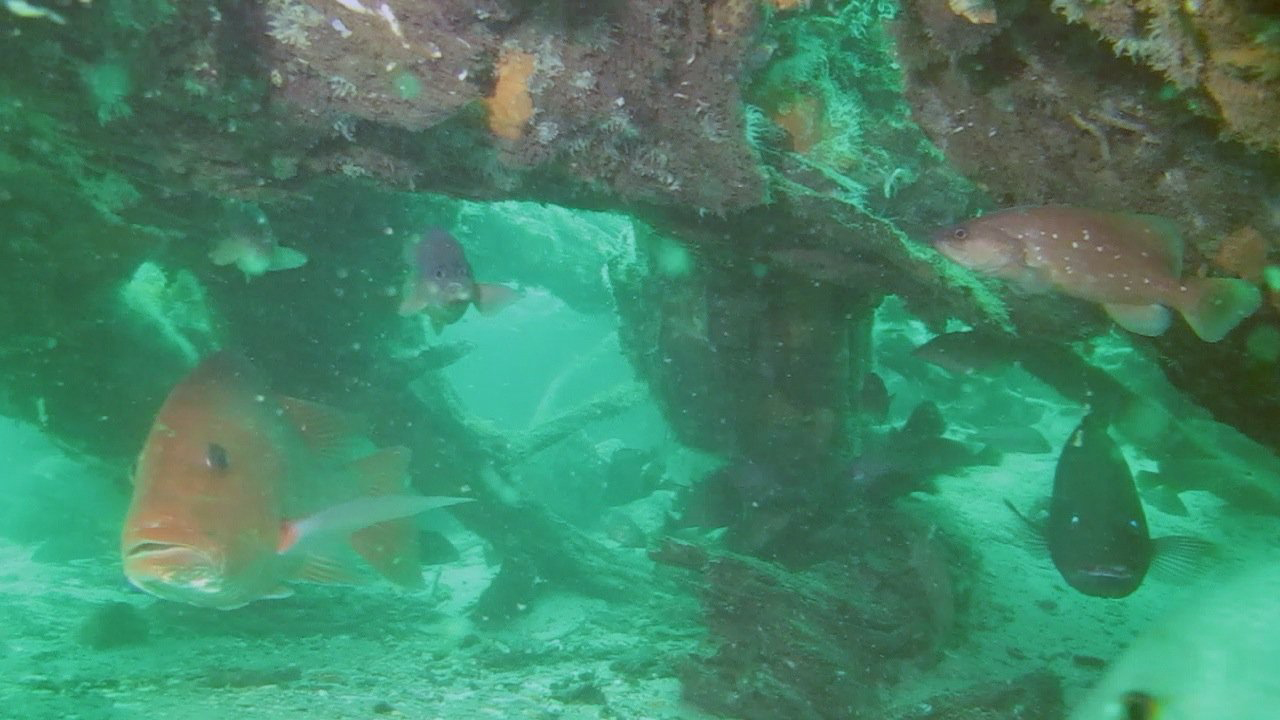
“Sixty feet beneath the waters off the Gulf coast of Alabama lies a forest of cypress stumps more than 50,000 years old,” says Living on Earth. “Fish hide among the roots of the trees.

Hello from Hurricane Central. The guy in charge of New Shoreham’s power company says to expect that Henri will cause a loss of electricity, so if I break my perfect 10-year-plus record of daily blogging, you’ll know why.

Meanwhile, let’s think about scuba diving in an ancient, submerged forest in the Gulf of Mexico.

Living on Earth host Steve Curwood interviewed Ben Raines in 2012 about this and reposted the story and video because of new urgency to get the area classified as a marine sanctuary before it’s exploited.

“STEVE CURWOOD: Deep beneath the surface of the Gulf of Mexico, off the Alabama coast, lie ancient cypress trees that only a handful of people have ever seen. One of those lucky few is Ben Raines, director of the [South Alabama Land Trust].

“BEN RAINES: For many years I was the environment reporter for the paper down here, the Press-Register, and so I had a buddy who owned a scuba diving shop, and he used to taunt me with this tale of an underwater forest that he had been diving on one time, and I pestered him for years and years and years, and he finally agreed to take me out there.

“He heard about it from a fisherman who just noticed a ledge on his bottom machine as he was riding across the gulf. So he started fishing there and catching a lot of Red Snapper. And he gave the numbers, the GPS coordinates, to my buddy that owns the dive shop and asked him to go out there and see what it was. He hit the bottom and said there’s a bunch of trees.

“CURWOOD: Now how deep is deep for an underwater forest?

“RAINES: Well, this is about 60 feet. Of course, all over the Earth, we know sea levels have gone down hundreds of feet. So we have a delta, a river delta here. Further up in the delta, about 80 miles inland, there’s sand dollars all over in these limestone bluffs. So we know sea level was that high at one time. Now we’ve got these trees 60 feet underwater, so sea level was that low, and it’s just a fascinating push and pull of the ocean through the climatic change over the eons.

“CURWOOD: So when did you finally get to visit the forest?

“RAINES: I got out there a year ago last August. …

The way we dive here, we’ll drop the anchor over whatever the GPS number is. And then we swim down the anchor line to get to the spot because the water’s a little murky — otherwise you get lost.

“I went down the anchor line, and when I hit the bottom, there it was. The first stump. And it was about as big around as a garbage can lid, but it had that very distinctive irregular shape that a Cypress trunk has. … Then it was surrounded by ‘knees.’ You know, Cypress trees have knees — you see them in the swamps — that stick up out of the water to kind of help hold them in place, and here was a Cypress tree on the bottom of the ocean. And I swam a few feet, and there was another one, and a few feet more, another one, and I quickly realized they were all around me in every direction. …

“It’s totally enchanting. You know, these trees are covered in anemones and crabs and shrimp — and then you have these huge clouds of Red Snapper and Grouper following you around. I was down there one day swimming along the ledge where the biggest stumps are, and I turned around and there was this huge funnel shape of fish behind me, I mean it must have been 200 Snapper, and they were just following me around. When I stopped, they would stop. When I turned around, they all fell in behind me. …

“[Groupers] come right up to you. And some of the fish that are down there, the trigger fish, will actually come up and chew on your camera. You have to shoo them away. They just seem to have no fear. …

“From the moment I hit the bottom and saw the stumps, it was just exhilarating. You knew you were in this sort of ‘land of the lost,’ this place that shouldn’t exist, but here it was, and I got the camera out, I hit the record button, and I never turned it off, and that’s exactly what I’ve done every dive I’ve made down there. And now I’ve been going down there with three cameras, you know, setting them up in different locations just to kind of capture this place while it’s there, because if we get a storm, it could theoretically come into the Gulf and change everything out there and bury this place up again. You know, it may be a very ephemeral place. We may only get to see it for a little while. …

“I cut some sections out of them, gave them to Christine DeLong at LSU, and she had them radio carbon dated, and they had to do them three times in all I think because they didn’t believe the results. So they expected them to be 12,000 years old, which was the last ice age. Instead they came back radio carbon dead each time they tested them, which means they’re 50,000 years old or longer. …

“We had another team come out from University of Southern Mississippi, and we had them do a sonar survey so we could try and get an extent of it because I’ve only been swimming around 300 yards of it. It turns out it’s spread close to a mile. …

“CURWOOD: We first aired this story back in 2012 and the fight to protect Alabama’s underwater forest from business interests continues. Scientists and advocates have asked the Biden administration to designate the site a marine sanctuary.”

More at Living on Earth, here.

Read Full Post »

062620-clouds-and-blue-sky

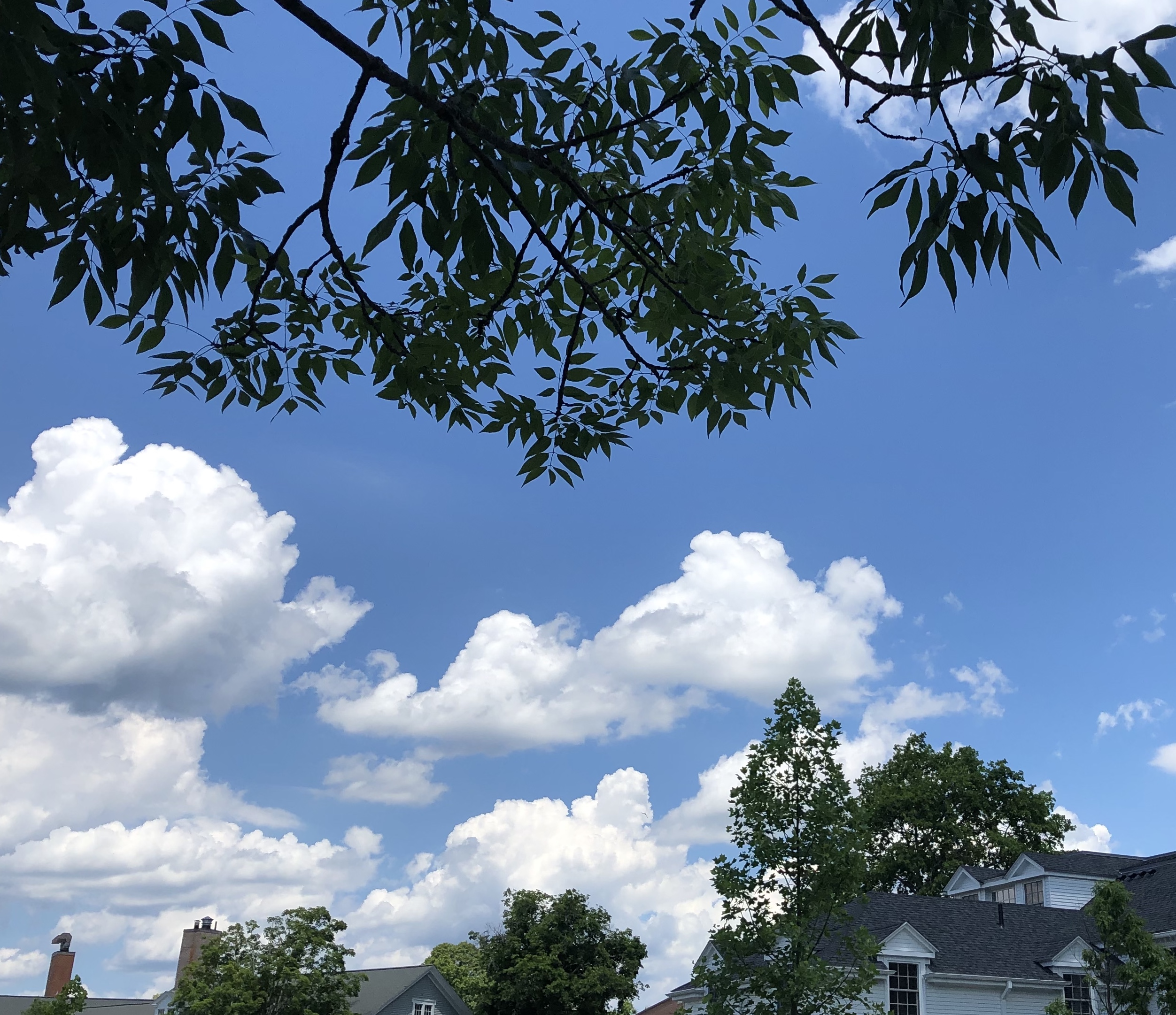
Hello, summer clouds — so beautiful! I was discussing them with my friend Nancy yesterday, and she told me she had signed up some years ago with the UK-based Cloud Appreciation Society, which sends her a daily cloud picture and a few words on cloud science or cloud mythology. Consider joining if you need a daily pick-me-up in quarantine.

The next two pictures reference my growing appreciation of fungus. Then comes a bright red intruder in the forest, reminding me of the lamppost that Lucy found in the wintry Narnia woodland after emerging from the wardrobe.

The doorknob in the tree made Suzanne think of a handy panic button (I think she is tired of lockdown), but I’m pretty sure it leads into a home. Probably not a hobbit home, since they prefer burrows underground. Maybe it belongs to Owl.

I love the little red squirrels that have started to appear in our region. John thinks global warming may be bringing them up from the south. Clue me in if you know.

The decidedly unscenic bug repellent had been abandoned along the bike trail. I didn’t touch it as I am a Covid germaphobe, but I got a laugh: I’d been slapping mosquitoes for the whole walk.

In the town of Lincoln, yarn stretched between trees caught my eye. A bit further along the conservation trail, there was a helpful explanation.

The tippy old wooden building is next to Orchard House, a childhood home of author Louisa May Alcott. The building was named the School of Philosophy by Louisa’s hippy father Bronson and continues to offer presentations and lectures in normal times. (I put up my photo of Louisa in her coronavirus face mask for yesterday’s post.)

Speaking of adapting to the times, you will note that the Colonial Inn (founded in 1716) has marked off six-foot segments on its brick walk for safe distancing.

The Art Deco frieze on the old Emerson school building welcomes visitors to what is now the Umbrella Center for the Arts.

I don’t think I need to explain the last three. Sometimes readers give me their reactions to one or two pics. I do get a kick out of that — should you feel moved to comment.

Read Full Post »


Photo: Ginny Fordham
Berklee professor Steve Wilkes gathers sound at the White Mountain National Forest in New Hampshire. A recent project also captures Cape Cod.

Berklee professor Steve Wilkes and his collaborator David Masher have created some amazing soundscapes that capture the music of the natural world. Their work is described at the Hear the Forest website:

“Hear The Forest is an effort to initiate the process of building an aural-map – essentially, an audio time capsule – of New Hampshire’s White Mountain National Forest.  Supported by the National Forest Service and the Arts Alliance of Northern New Hampshire, this work will be performed by Berklee College of Music Professor, Steve Wilkes, as part of the 2017 Artist-in-residence program. …

“In addition to his field ecology and sound recording work, Wilkes will offer several public programs, including workshops that will provide residents and visitors with information on contributing to the ongoing sound file collection on the White Mountain National Forest. …

“ ‘I hope to be able to express and communicate to others this profound sense of inspiration – and to help everyone slow down a bit, and really listen,’ ” Wilkes says. More here.

You might also like hear an interesting interview with Wilkes that was broadcast at WGBH. The station provides this intro: “Nature is rich with dynamic sounds, like the roaring of waterfalls or the sweetness of birdsong.

“Berklee professor Steve Wilkes … captured the still whispers of buzzing bugs, the martian-like atmosphere at the summit of Mount Washington and the laughter of children enjoying the park — all essential sounds to create a ‘digital aural map’ of the forest, which he calls Hear The Forest. Callie Crossley speaks with Wilkes about his project.” More here.

I like the idea of encouraging others to contribute their own nature recordings to the White Mountains project. It feels like something anyone could do if they just paid attention — and paying attention is the whole idea.

Read Full Post »

I’ve mentioned before that John is active on the Arlington Tree Committee. He’s been behind a major push to inventory the town’s trees, aided by local government support and the legwork of many residents.

Other members of the committee have been using Facebook to link to interesting research on the value of trees to communities.

Science Daily, for example, reported on a study by Adam Dale et al. of the University of Florida Institute of Food and Agricultural Sciences (UF/IFAS) suggesting the best ways to keep trees healthy and sustain their economic value.

“Heat from city sidewalks, streets, and parking lots, along with insect pests, can damage trees planted in urban landscapes. Thus, it is critical to plant trees in the right places so they will do well in harsh urban environments, a University of Florida Institute of Food and Agricultural Sciences researcher says.

“More than half the world’s people and 80 percent of the U.S. population live in urban areas. Trees benefit these residents by filtering the air, reducing temperatures and beautifying landscapes. According to a new study led by Adam Dale, a UF/IFAS assistant professor of entomology, these benefits are reduced when trees are planted in unsuitable urban landscapes. However, guidelines can be developed to lead urban tree- planting decisions in a more sustainable direction.” Check out the researchers’ “Pace to Plant” technique here.

At the Toronto Star,

“Using data from Toronto, a team of researchers has found that having 10 more trees on your block has self-reported health benefits akin to a $10,000 salary raise or moving to a neighbourhood with a $10,000 higher median income or being seven years younger.

“By comparing satellite imagery of Toronto, an inventory of trees on public land and general health surveys, the team, led by University of Chicago psychologist Marc Berman, found that people who live on a tree-lined block are less likely to report conditions such as high blood pressure, obesity, heart disease or diabetes.

‘Their findings appeared [in 2015] in the open-access journal Scientific Reports.” More at the Star here.

And I’d be remiss if I didn’t mention that research social scientist Kathleen L. Wolf has written extensively on the value of trees: for example, in this Communities & Banking article on how “the urban forest” benefits local businesses.

Photo: Tyler Jones, UF/IFAS
Numerous studies show trees improve health and quality of life in communities and make shopping at local businesses more appealing.

Read Full Post »

At first I saw no art. I didn’t enter the woods where the sign was, and I thought, “Maybe I have the wrong time.”

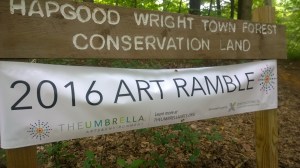
But the Hapgood Wright Town Forest is a work of art in itself, and I was up for a walk. The hilly pine-needle paths, the pond, the sounds of bullfrogs, wind in the trees, unfamiliar bird calls — all lovely. Then bit by bit, I began noticing pieces of art, part of the 2016 Art Ramble, which can be seen in the woods until September 5. How good of artists to do this!

The Umbrella Community Arts Center explains on its website, “This collaborative project with the Concord Department of Natural Resources celebrates all the arts. Sculpture, poetry, dance, and dramatic readings encourage the intersection of art, nature, and community in a historic natural setting.

“The arts offer a doorway for exploring our relationship with nature and place. An exhibit map will guide you through the exhibit at your own pace. And our calendar of special events and activities offers numerous opportunities to engage with the artists and with nature along the trails.

“We invite you to visit often, reflect, and play.  Share your experiences via writing and drawing in the journals provided along the trail.  Or make your own art using natural materials in the forest.”

[Nancy, this sounds like an event you organized last year.]

Curator Ursula Ziegler says, “It’s been a rumble-tumble-fantastic-interesting road, and it has already exposed us to so many interesting-important dialogues, thoughts, and ideas. Beyond the visible part of art works in a public space, there is an equally important but less visible part, which are the conversations, networks, and structures that are created within our local community and beyond.”

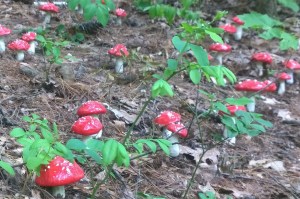
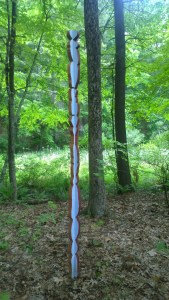
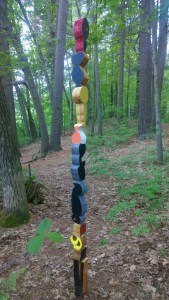
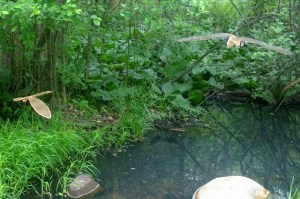
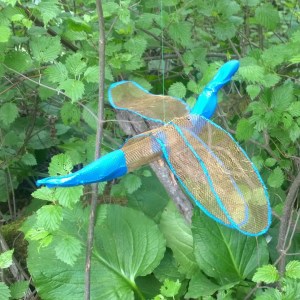
I took some pictures of ceramic toadstools, a QR code I don’t know how to use that would have identified an artist, sapling-like totems (or totem-like saplings), a small sculpture of a boy attached to a tree, fluttery dragonflies and the sign I missed on entering.

060316-toadstools-town-forest-art

060316-QR-code-town-forest-art


060316-art-blends-in-at-town-forest

060316-totem-at-town-forest-art


060316-boy-on-tree-art

060316-dragonflies-town-forest-art


6tag-060316-dragonfly

060316-town-forest-art

Read Full Post »

Here is my latest photo roundup, but the picture I’d hope to start with will not appear.

I thought I was in the 1960s film Blowup. I spent ages (well, at least 30 minutes) zooming in on a photo I took of what I’m pretty sure was a bluebird. When I finally found the bird in the background of woodland twigs and leaves, he was so blurry I couldn’t use the picture to confirm the identification. So no photo of a bluebird for this post.

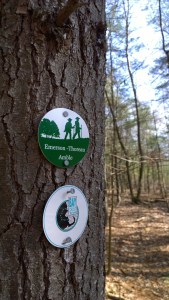
I have two other photos from walking in the town forest, one of Fairyland Pond and one of trail markers, including the Emerson-Thoreau Amble.

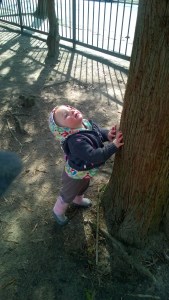
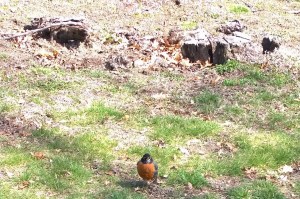
Next is my youngest granddaughter chasing a squirrel up a tree on Easter (love the shot my husband got). My oldest granddaughter is captured mid-Easter-egg hunt. The robin stayed stock-still for his portrait that afternoon.

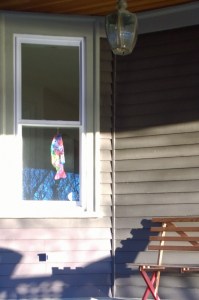
The window fish was painted by my younger grandson at his Montessori nursery school. As usual, I couldn’t resist shooting shadows.

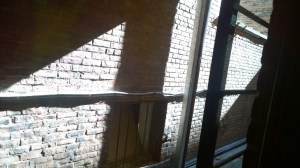
Now, about the shadows on brick. For nearly three months, until the moment when the sun shone through the alley (like the sun that shone on the keyhole to Smaug’s back door in The Hobbit), I thought the window in the renovated building was smack up against a wall and there was nothing to see there. What a lovely surprise!

I’m wrapping up today’s collection with a license plate from the Pawnee Nation. Since the Pawnee Nation is in Oklahoma and the car was in Providence, I’m intrigued and hope to learn more. Here’s the tribe’s website.

033116-pond-in-town-forest

033116-trail-in-woods


032716-squirrel-went-up-tree

032716-Easter-basket


032716-robin-Blackstone-Blvd

032916-grandson-fish-decoration


032216-sudden-light-narrow-alley

033016-Pawnee-Nation-car-license


Read Full Post »

The radio show Living on Earth recently reported how negotiations among environmental activists, the timber industry, indigenous people, and the British Columbia government protected 85 percent of a huge Canadian forest.

“Eighty-five percent of the Great Bear Rainforest in British Columbia is now protected … Steve Curwood discusses [the compromise] with reporter Andrew MacLeod of the magazine The Tyee, who explains what’s been protected and what’s open for logging.

MACLEOD: “It’s an area of 6.5 million hectares between the top end of Vancouver Island and the Alaska Panhandle. So it’s an area, about the size of Ireland, and it’s quite remote. There are only about 1,400 people who live there. So much of it has never been logged. This is usually described as the largest intact temperate rainforest in the world, a very lush, mossy, moist year-round ecosystem. … We’re talking trees that five or six people put their arms around. Some of these cedars can be in 20 feet in diameter …

CURWOOD: “Tell me what is the [forest’s] Spirit bear?

MCLEOD: “They are a subspecies of black bear. They are a genetic variant that comes out white, so it’s a white black bear. There are also Grizzly bears there, there are whales, wolves, and just a relatively pristine ecosystem up there.

CURWOOD: “And who calls them Spirit bears? …

MACLEOD: “My understanding is that it goes back through the First Nations, there have always been these genetic variant bears there and they’re seen as special.”

When Curwood asks why the timber industry agreed to the negotiation, MacLeod explains that the campaign to protect the forest helped to avoid extended confrontation.

“Lots of First Nations people will tell you they’ve been on the land for thousands and thousands and thousands of years and it’s been sustainable, it’s been healthy, that it’s really only last 150 years of colonialism where you’ve seen clear-cuts and destruction and species driven to extinction. On the other hand, there are lots of people from First Nations who are working in the logging industry today as well. Over time, First Nations have sort of reestablished their rights. There have been some precedent-setting cases just in the last few years that have recognized aboriginal title does exist.” More here.

Of possible interest: Read how Wabanaki diplomacy smoothed a similar negotiation process in Maine, here.

Photo:  Elsen Poulsen/Animals Asia, Flickr CC BY-NC 2.0
A white Spirit bear fishing

Read Full Post »

Older Posts »