Feeds:
Posts
Comments

Posts Tagged ‘hmong’

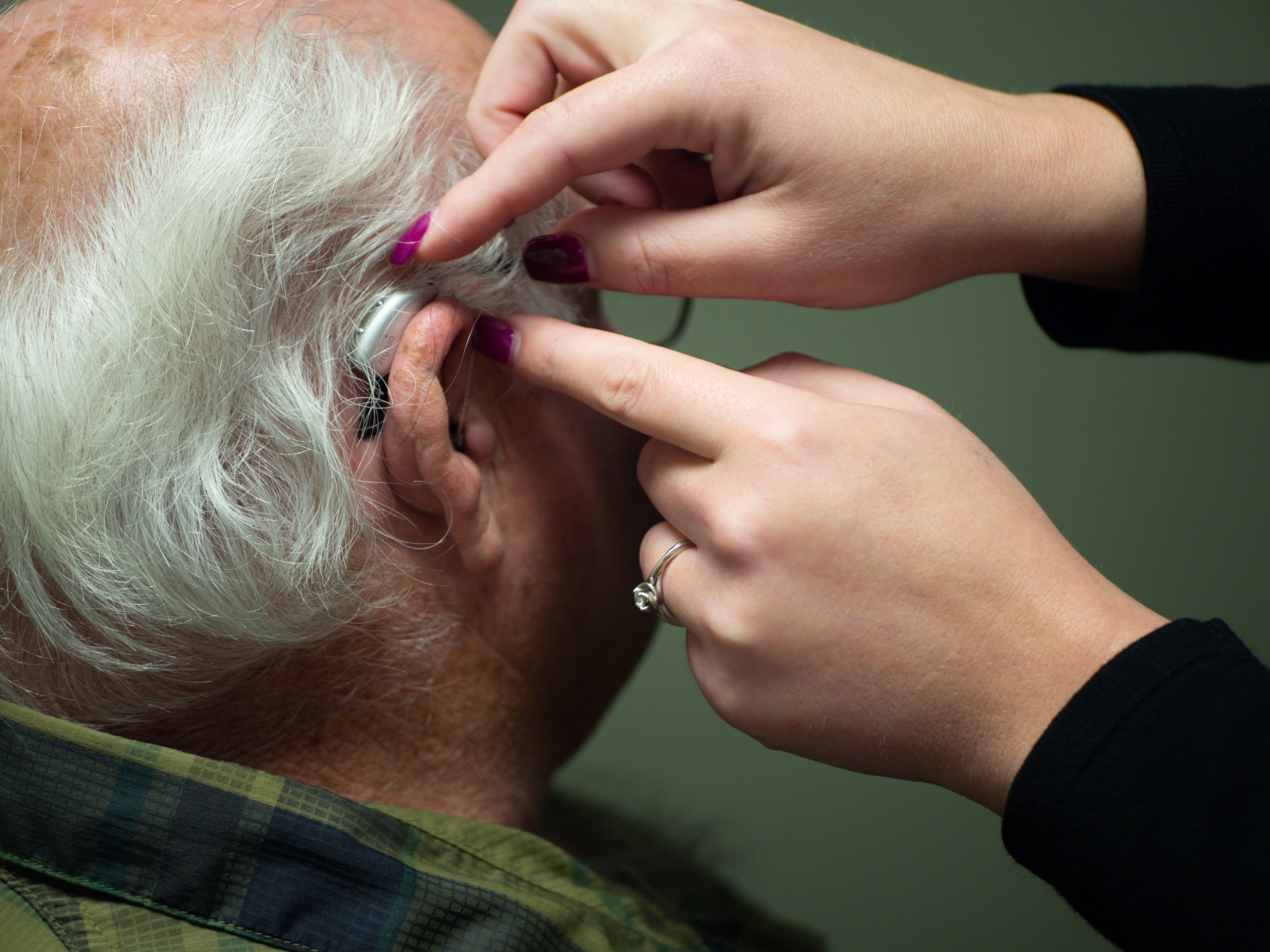
Photo: Anthony Camerlo/Unsplash.
Can you get a hearing test if the only language you know is rare?

Where we live now, it’s more common than not for people to need hearing aids. Whether those people actually wear their hearing aids is another issue, but folks around them seem tolerant of having to repeat — or shout.

One thing I never thought about until I read today’s article is the fact that getting an audiology test can be a problem if you speak an uncommon language.

Lina Tran reports at WUWM, “About four years ago, Maichou Lor was living in New York completing a postdoctoral fellowship, when family members back home in Wisconsin kept telling her that her dad’s hearing was getting worse.

“ ‘He wasn’t responding to conversations even though he had a hearing aid,’ said Lor, now an assistant professor of nursing at the University of Wisconsin-Madison. ‘I brought him in to see his doctor through the ENT clinic here at UW-Health.’

“Lor and her father are Hmong; she joined him at the appointment as an interpreter, since he doesn’t speak English. At the clinic, his physician told Lor there was a limit to what he could offer him.

“ ‘I told her that there was a limitation in the test,’ said Burke Richmond, an assistant professor in the ear, nose, and throat division [at] the University of Wisconsin-Madison. …

“Part of the evaluation is a word recognition test, which assesses when speech is loud enough for someone to understand. It helps doctors identify the severity and type of hearing loss and come up with a treatment plan, such as whether hearing aids will work or if a cochlear implant is viable.

“During the test, patients listen to a recording of words, with instructions to repeat the words as they hear them. But, for the most part, the test is only available in the most common languages. … Few clinics are equipped to treat Hmong-speaking patients. …

“After Lor and Richmond met, they undertook a years-long, interdisciplinary collaboration that resulted in the first Hmong hearing test of its kind.

“Hearing evaluations typically involve a couple different tests. In one of them, patients listen to beeps and tones and press a button when they hear it. ‘That’s easy enough to explain to someone who speaks a different language,’ said Jennifer Ploch, a clinical audiologist involved with the project, then at UW-Madison. …

“When Lor and her father came through his office, Richmond knew about Lor’s research on health disparities. He asked if she wanted to make a Hmong word test with him. …

“The English test is designed to use everyday words like ‘bat’ and ‘kick’ that anyone would understand. At the same time, it shouldn’t be possible for test-takers to predict or guess what the words are without actually hearing them. Historically, one of the ways audiologists have accomplished that is by writing the word list so that it reflects the phonetic make-up of the language.

“ ‘If the language has a bunch of S’s, you want to have a bunch of S’s in the words,’ explained Lynsey Wolter, an associate linguistics professor at the University of Wisconsin-Eau Claire, who led the writing of the Hmong word list. ‘But not too many because then someone will just guess.’

“But no one had studied how frequent different sounds are in Hmong.

“ ‘And there are a lot,’ Wolter said. ‘There are about twice as many consonant sounds in Hmong as in English. Hmong is also a tonal language. The intonation of the word — whether the tone is higher or lower, going up or going down — can change the meaning.’ …

“Wolter said it was critical to work with native Hmong speakers, so she quickly brought two of her students onboard. … Kao Lee Lor, then a senior, was one of the student collaborators. She always loved languages and grew up hearing many of them at home, reflecting the places her parents had lived before immigrating to Wausau, Wisconsin. They were born in Laos and grew up in a Thai refugee camp. They enjoyed television shows, films, and music in Thai, Hmong, and Hindi. …

“To pick words for the list, the students dug through Hmong texts, entering all the words into a massive spreadsheet.

“ ‘We compiled a bunch of different Hmong folklore and folktales, Hmong kids’ books, anything we could find,’ Lor said. Some of the tales were familiar to her and her collaborator, oral traditions that had been passed down from their grandparents and parents. But there was little time to appreciate the stories in a new light; their focus was gathering as many words as they could.

“ ‘Once we were able to extract these words from these texts, we were able to break these words up into [their] parts, and then count the frequency of how much these consonants, sounds, vowels, and tones occurred,’ Lor said. …

“With numbers on how frequent different sounds are in the language, the linguistics team picked words to meet those targets. They wrote four lists of 50 words each, and sent it back to the UW-Madison researchers.

“Word lists in hand, the researchers asked the Hmong community to nominate clear, fluent speakers. Then, to validate the list, they tested the Hmong test against the English version on a group of bilingual speakers. They published their results in December.”

More at Milwaukee’s WUWM, here. No firewall. And for more on Hmong people in America, read the lovely memoir The Late Homecomer.

Read Full Post »

Photo: Brian Peterson
Hmong writer Kao Kalia Yang with her father, Bee Yang. The daughter’s lyrical book about Bee Yang’s unconsciously artistic storytelling,
The Song Poet, will be turned into a youth opera in Minnesota.

When I was working at a magazine that focused on the concerns of lower-income communities, I sometimes tried to get the voices of immigrant authors in there. One such author was Kao Kalia Yang, a Minnesota Hmong writer whose work I greatly admired.

Yang spent her early childhood enduring the privations of a refugee camp in Thailand but eventually moved with her family to St. Paul, where poverty and a strange new culture made life difficult in whole new ways.

One of Yang’s lyrical memoirs focuses on her father and the way he sang stories about life in the old country that brought other Hmong immigrants to tears. Now it’s being turned into an opera for young people.

Jenna Ross writes at the Star Tribune, “Author Kao Kalia Yang’s father has been a farmer, a refugee, a machinist. But in a book about his life, Yang elevated his true vocation — poet. Soon, his story will be an opera.

“The Minnesota Opera announced [in April] that it’s creating a youth opera based on ‘The Song Poet,’ Yang’s acclaimed 2017 memoir about her father, Bee Yang, who composed and sang songs about life and politics, love and family.

“It’s the first time a Hmong story will be translated to the operatic stage, Yang said. … The book follows a young boy [Yang’s father] whose father dies, who grows up in a warn-torn country, who tries to find the place his father was buried. The tale begins in Laos, moves to a refugee camp in Thailand, then makes its way to Minnesota. …

“For its Project Opera, a youth vocal training program, the Minnesota Opera is scouting for stories that connect with young audiences and reflect the Twin Cities community, said Jamie Andrews, the company’s chief learning officer. When he sat down with ‘The Song Poet,’ he knew it would make an incredible opera.

“ ‘Kalia’s writing is just so lyrical and beautiful — so singable,’ Andrews said. … ‘The Song Poet’ becomes the third opera commissioned for Project Opera, which will premiere it at the Lab Theater in Minneapolis in 2021. …

“Bee Yang has performed traditional song poetry, or kwv txhiaj, since he was 12 years old, becoming a keeper of Hmong history. ‘When I began singing song poetry, I discovered I could share our stories of hurt and sorrow, of missing and despair, of anger and betrayal,’ he said in the book.

“This daughter’s telling of his story — and how it shaped her own — won the Minnesota Book Award for memoir and creative nonfiction. The 39-year-old author and Harding High School graduate is best known for her 2008 book ‘The LateHomecomer: A Hmong Family Memoir,’ which nabbed two Minnesota Book Awards. After graduating from Carleton College, Yang earned an MFA in creative nonfiction at Columbia University. …

“To ensure that the cast is diverse, the opera company will reach into the Hmong-American community, Andrews said. It’s working with the Saint Paul Music Academy and talking with Theater Mu, an Asian-American troupe. ‘It’s not just a Hmong cast,’ Andrews said. ‘But we’re doing some strategies already now for 2021, to build those connections and find those kids.’ …

“When Yang was young, she took the occasional field trip to the Ordway or the Guthrie. ‘You’d go in knowing that you’d be entering into a different culture,’ she said. ‘I couldn’t have imagined, as a child, walking into a place and seeing something from the Hmong story represented.

“I hope that for those young Hmong people who get to see this, it opens up possibilities for them. Not just Hmong — but all refugee children.’ ” More.

I highly recommend Yang’s memoirs. Maybe some of you will check them out.

Read Full Post »

A Lancaster, Massachusetts, woman who came to the country at age 12 without a word of English is giving back by helping immigrants get a start in farming — and her model is being picked up around the nation.

Jane Dornbusch at the Boston Globe writes, “Maria Moreira, 62, is fond of the proverb ‘Necessity is the mother of invention.’ When her kids were small and she and her husband had a dairy farm in this Central Massachusetts town, she had plenty of milk, hungry kids to feed, and a need to make a little money.

“So she started a business making a soft Portuguese cheese — she calls it simply Portuguese fresh cheese — that reflected her roots in the Azores, where she was born.

“That was in 1986. A year earlier, she had seen another need, and, in her own inventive way, she’d set about meeting it. Moreira and her husband, Manny, had a 70-acre field, not far from their farm, that they used to grow corn.

“A Hmong woman, an immigrant from Laos, approached Moreira about using a small corner of the field to grow her own crops. Soon, word spread, and little by little the entire field was given over to immigrant farmers, each in charge of his or her own plot. Today, says Moreira, 275 farmers are growing more than 75 kinds of vegetables at what is now called Flats Mentor Farm. …

“Gus Schumacher, former Massachusetts commissioner of food and agriculture, came to know Moreira’s work when he served as a USDA undersecretary in the late ’90s. He notes that she was among a handful of leaders — others included John Ogonowski (one of the pilots killed on 9/11) and Jennifer Hashley, of New Entry Sustainable Farming Project — supporting refugees and immigrants in establishing themselves as farmers and market gardeners. It’s a movement that has since gained momentum nationally, he says. ‘But it all started in Massachusetts.’ ”

More at the Globehere.

Photo: Joanne Rathe/Globe Staff
Maria Moreira, of Flats Mentor Farm, holds some lemon basil.

Read Full Post »

hmong-church-providence


New-Shoreham-plunge-010115-Sandra-M-Kelly


Here are a few recent photos from Rhode Island and Massachusetts. I took all but the shivery January 1 New Shoreham plunge, which is the work of Sandra M. Kelly. I doubt I would have been brave enough even to go watch these hardy souls freeze on such a cold day.

What can I tell you about the other photos? The Hmong church near my grandson’s play school was a surprise. I knew about Hmong refugees in California, Minnesota, and Central Massachusetts. Didn’t know they were in Providence. A wonderful book about the Hmong immigrant experience is The Late Homecomer, by Kao Kalia Yang, who grew up in St. Paul.

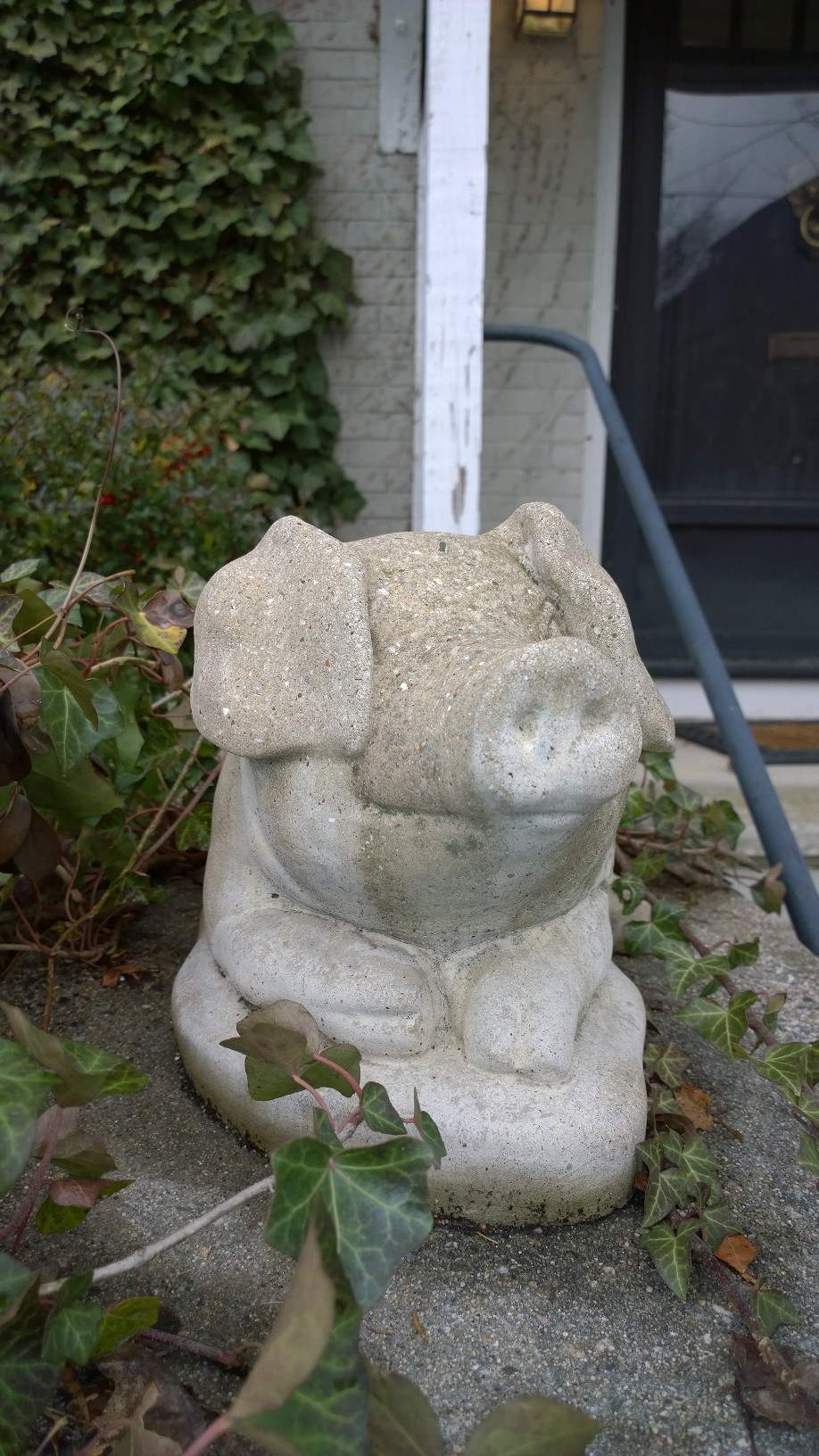
I include a porcine household god from Providence, a bathrobe in the guest room where I awaited the arrival of my new granddaughter in December, and two aspects of the Seekonk River on January 1.

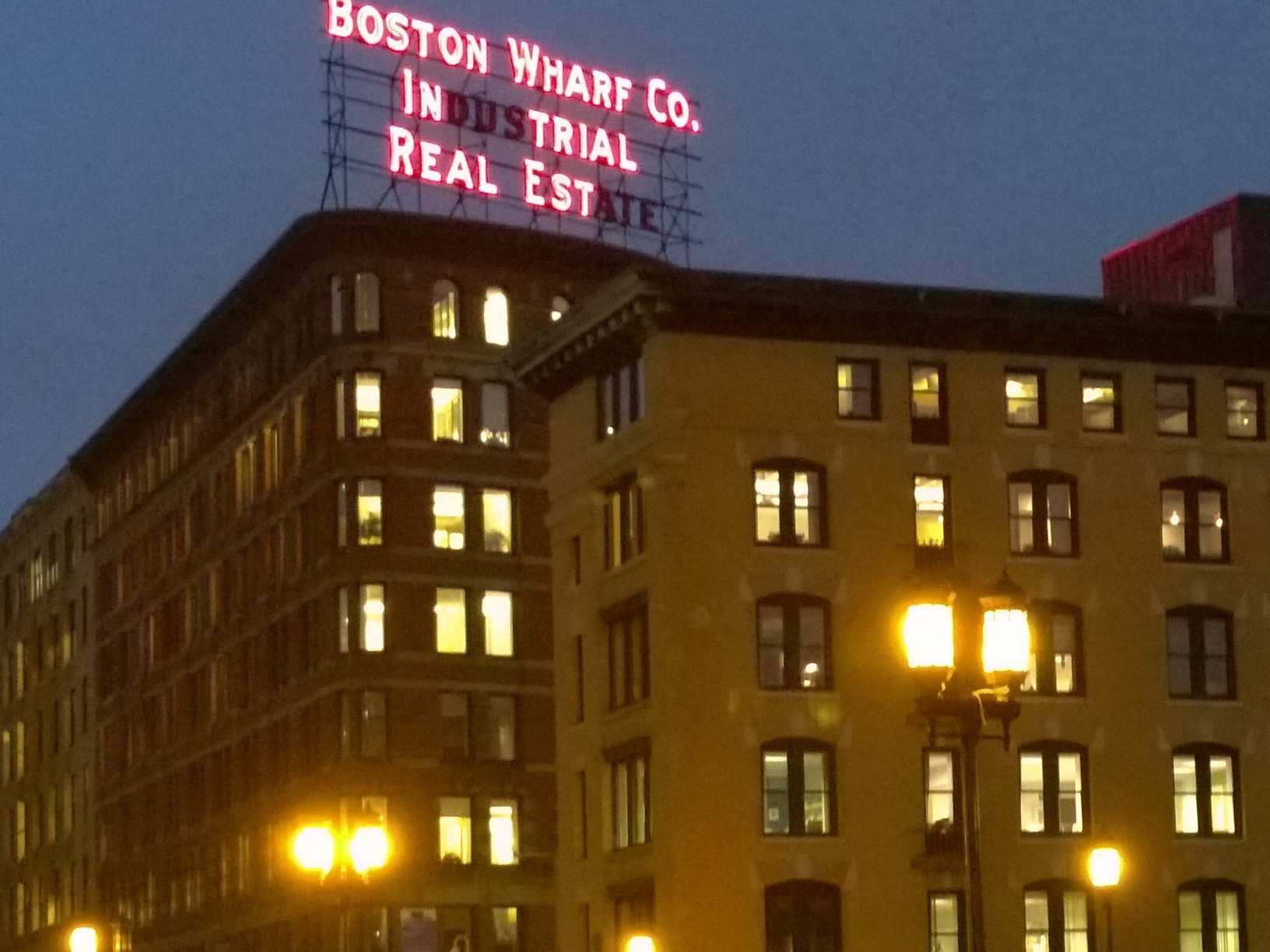
The photo I call “In Trial Realest, a Message from Beyond,” is one I was determined to capture while the sign was broken. It called to me from my office window as it lit up at dusk. I’m glad I caught it when I did, because the neon letters are now all working, and its message is no longer as interesting.

household-god


room-on-third-floor

Jan1-on-the-Seekonk


010115-Seekonk-River

in-trial-realest

Read Full Post »

My husband and I like Colin Cotterill’s quirky mystery books about Dr. Siri Palboun of Laos. The series starts with The Coroner’s Lunch, in case you are interested.

Cotterill has been involved in several worthy causes in Laos, including one addressing the abysmal lack of children’s books in the country. You can read how he got started on his quest for children’s books, here. That work is now handled by Sasha Alyson at Big Brother Mouse, who writes:

“Do you remember the excitement of rushing home to read a book that you hoped would never end? Many Lao children have no such memories, because they’ve never seen a book that was fun or exciting to read. Some have shared textbooks; others have never seen a book at all. We sometimes have to explain how books work: ‘Look, if you turn the page, there’s more!’ ”

Big Brother Mouse is a “Lao-based, Lao-owned project.” More.

Cotterill also works with http://www.copelaos.org to help victims of land mines left over from the CIA’s “secret war.”

And, pointing out that more than 75 percent of children in the far north of Laos have no schools, Cotterill funds efforts to get hill tribe students into teachers colleges. More.

Art: Colin Cotterill at http://www.colincotterill.com

Read Full Post »