Feeds:
Posts
Comments

Posts Tagged ‘jail’

Photo: Noam Brown.
Bending the Bars artists Kashdatt, Chuckie Lee and ZQ recording in the studio. 

Given that the US leads the world in numbers of people incarcerated (1,808,100), more than even China, that’s a lot of human beings we can’t just forget about. We need to find ways for them to be engaged in the world and not give up hope, for our own sakes as well as theirs.

Monica Uszerowicz writes at the Guardian about an experiment in Florida that was organized by inmate advocates and received no help from the system.

“In ‘Locked Down,’ a song by the San Diego-based poet and rapper, Chance, she sings with both foreboding and care: ‘Every day that you wake up you’re blessed / love every breath, ’cause you don’t know what’s next.’

“Chance wrote the song – originally a poem, its title a callback to Akon’s ‘Locked Up’ – while imprisoned in Phoenix, Arizona, during the beginning of the Covid pandemic and subsequent lockdown (‘six feet apart in a five-by-five,’ she raps in the same song, alluding to the virtual impossibility of social distancing in the American prison system). … She shared with me in a recent phone call, ‘It’s crazy how they maintained control and instilled fear within us. When you’re locked up, you ask yourself … are you going to be angry, or are you going to find what your calling and purpose is?’

” ‘Locked Down’ is also one of 16 tracks on Bending the Bars, a hip-hop album featuring original songs by artists formerly or currently incarcerated in Florida’s Broward county jails (with the exception of Chance, a Florida native). Bending the Bars was organized by the south Florida abolitionist organization Chip – the Community Hotline for Incarcerated People – which was initially founded to support inmates during the early days of Covid.

“Nicole Morse, a Chip co-founder and associate professor at the University of Maryland Baltimore County, says the organization began fielding calls in April 2020, primarily from Broward, the county just north of Miami-Dade; the calls were primarily about medical neglect, abuse and an atmosphere of abject fear. …

“In 2021, the data Chip had gathered was used to support a lawsuit filed by the American Civil Liberties Union of Florida and Disability Rights Florida on behalf of individuals suffering from Covid in the Broward county jail.

“Something more hopeful was emerging from those hotline calls, too: creativity. ‘People wanted to share their latest poetry or a song they were developing,’ Morse said. ‘Art was helping people survive an incredibly desperate time.’

“Noam Brown, a children’s musician and Chip committee member, began dreaming up the idea of an album. … Chip hoped to create a platform for the wealth of talent they continually encountered. The organization began fundraising, applying for grants and putting the word out that they were producing an album; Gary Field, an incarcerated organizer, writer and scholar, became the executive producer, helping to connect the artists with Chip.

“Musicians on the inside used two phones to record their songs – one as the microphone to record their vocals, the other to listen to the beat. ‘The challenges were phenomenal,’ Field shared in a phone call. ‘People couldn’t even talk to their families, never mind collaborate on something as complicated as producing a studio album. We were in the middle of a pandemic. There were four phones and 40 inmates trying to use them.’

“Spaces with two easily accessible phones were limited; the duration of any prison phone call is restricted. But Chip covered the costs of the calls, while Brown’s brother, Eitan, worked as the sound engineer, and the Grammy-winning children’s artists Alphabet Rockers helped create beats. Artists who were already out were able to spend time in the studio, including Chance, who returned to south Florida after her release.

“After reconnecting with a former classmate, the two attended a meeting for Chainless Change, a Lauderhill-based non-profit advocating for those affected by the criminal legal system. ‘It was divine – I don’t believe in accidents; I knew I was being called to go back to Florida’ Chance said. She began working with the group and helped organize a poetry event, where she met Field, Brown and Morse. She asked if they had room on the album for one more.

“The result is nearly an hour of uniquely south Floridian hip-hop and R&B, both of which are constellations of so many genres – Caribbean beats, southern bass, Deep City soul, Miami drill – poetic musings on love, loneliness and hope, and demands for systemic change to the draconian and brutal conditions of the Florida prison system. While Morse noted that the album’s sound quality was impaired by technical limitations, Bending the Bars is polished and clear, an accomplishment owed partly to its production and mostly to the ingenuity of its artists: singers, rappers and collaborators like J4, Corvette Cal and Chuckie Lee, all of whom alchemized the tracklist into a textural tapestry: playful, mournful, educational and intentionally dotted with prerecorded interjections from the prison phone line (‘you have one minute remaining’). 

“Field, whose song ‘Tearing Down Walls and Building Bridges’ closes the album, studied political science at Columbia University and received his master’s from Gulf Coast Bible College, and has contributed 2,000 pages of writing to the Massachusetts Institute of Technology civic media project Between the Bars. He knows, intimately, the significance of the writing process.

” ‘I remember, as an inmate back in 2010, what a profound sense of gratitude the opportunity to write gave me,’ he shared. …

“The system often censored mail or blocked phone calls during the recording process. … ‘We had to develop a set of strategies to overcome those barriers,’ they said. ‘The project was made without the cooperation of any prison or jail. Every strategy we came up with for how to get through to people … we can now share those strategies with loved ones of incarcerated folks who don’t have any additional privileged access.’ “

More at the Guardian, here.

Read Full Post »

Photo: Moriah Ratner for the Washington Post.
At the home of the Cosmetology & Barber apprenticeship program, four instructors teach incarcerated people on mannequins, No sharp blades allowed.

I’ve always been interested in prison programs that help the incarcerated learn skills that can help them find work on the outside and avoid recidivism. It seemed so stupid to lock people up for months or years and then dump them on the side of the road somewhere with not much more than a toothbrush to get on with life.

Today’s focus is on teaching cosmetology skills to people who might be interested in eventually pursuing a license. A license requires serious application, but sometimes the effort starts with a little encouragement.

Samantha Chery writes at the Washington Post, “When Chet Bennett accepted a job in 1998 to teach incarcerated people in D.C. how to style hair, he was ‘scared to death.’ A native Washingtonian and Howard University alum, Bennett had never even seen the inside of a jail before his first day of work. Now, the 56-year-old is glad he took the chance.

“He makes weekly visits to the jail’s hair-care room, a small salon on the fifth floor of the city’s Correctional Treatment Facility, complete with dryer chairs and four shampoo bowls. At the home of the Cosmetology & Barber apprenticeship program, four instructors teach incarcerated people on mannequins, and the student stylists comb, braid and loc the hair of fellow jail residents, relatives and other clients from outside the facility.

“Since Bennett founded the program, he’s won a Legacy of Service Award and graduated thousands of hairstylists, many of whom now work in salons or have their own studios. …

“Teaching jail residents comes with logistical challenges: They aren’t allowed to use shears or razor blades, paint nails, or dye hair due to the facility’s restrictions, and they don’t have enough time during their short sentences — which typically run a year or less — to finish their necessary training for licensing.

“People trying to complete the 1,500 training hours required to receive a cosmetology license have the option to transition from the jail salon to Bennett’s off-site beauty school, the Bennett Career Institute near Catholic University, after finishing their sentences.

“When Angelina Millner was jailed in 2005, in her mid-30s, the cosmetology program improved her styling technique and helped her find work after her release.

“Despite homelessness and other personal battles, she said, Millner was able to attend Bennett’s school in 2012 to get her license, and now does business as Mo’ Hair by Angelina. She recalled how gratifying it felt to return to the jail in 2020 — as a teacher instead of a resident: ‘I just had to stay on the straight and narrow ever since.’

“Bennett said he has learned it’s best to reserve judgment. He doesn’t look at his students’ records, hoping to give them a clean slate. … There’s ‘something that we’ve all done and have fallen short, but by grace and mercy, we were allowed to straighten our ways and continue to move on,’ he said. ‘It has meant so much for me to know that I can go into a facility and give people a second chance.’ ” More at the Post, here.

Some years ago, in one of the English as a Second Language classes where I volunteered, a student decided to go for a cosmetology license at a Rhode Island training school. It was a pretty serious commitment of time and money. It took her more than a year. Watching her, I learned it’s not something you can be casual about and still be successful.

Looking up Washington DC licensing, I found these details: you are required to be “at least 17 years old. Have a High School Diploma or GED. Have completed and been credited with 1,500 hours of fundamental training.”

One place describes its course thus: “The General Cosmetology Course at Bennett Career Institute is a comprehensive 1,500-clock-hour program designed to provide instruction in a wide range of cosmetology skills and techniques.

“Students will learn about sanitation and sterilization, decontamination, and infection control practices, as well as hair cutting, coloring, perms, and other chemical services. The curriculum also covers hair styling techniques and other occupational requirements such as manicures, pedicures, and facials. BCI’s General Cosmetology Curriculum is designed to meet the requirements of the District of Columbia Board of Barber and Cosmetology, preparing students for a cosmetology operator’s license. …

” Individuals who obtain a license can provide a variety of beauty services such as shampooing, cutting, coloring, styling hair, apply makeup, dress wigs, perform hair removal as well as provide nail and skin care services.” More here.

Once you have a license and keep it up-to-date, you may go into completely different kinds of jobs, but you always have that to fall back on.

Read Full Post »

Photo: STR/Reuters/Landov.
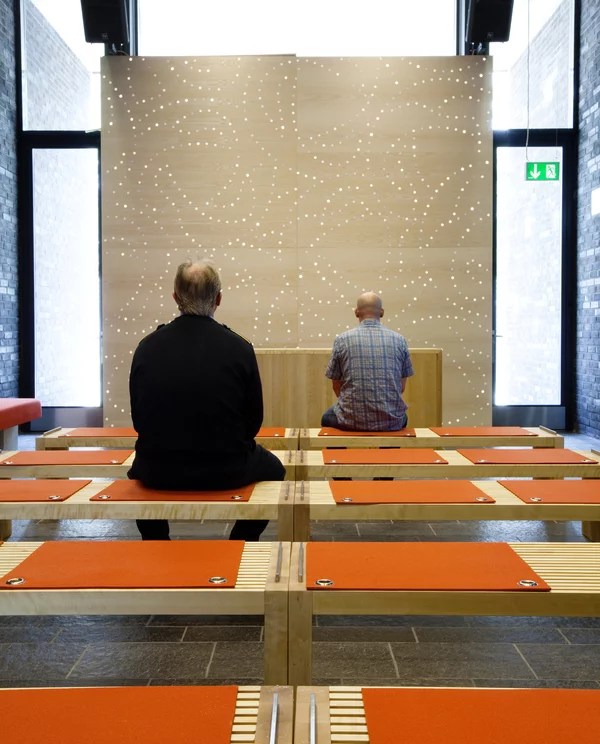
Two men sit inside the chapel at Halden prison in far southeast Norway in this picture taken in 2010. Prisoners here spend 12 hours a day in their cells, compared to many U.S. prisons where inmates spend all but one hour in their cell. NPR’s 2015 story is here.

Some years ago (2016), I wrote about research on Norway’s humane prisons. In a December 2023 Christian Science Monitor article, Troy Aidan Sambajon shows that some US prisons are moving in the same direction. Or at least testing the concept.

“Earlier this year,” he reports, “California Gov. Gavin Newsom announced a new vision for the San Quentin State Penitentiary, centered on rehabilitation and job training, inspired by another prison system that has halved its recidivism rate – in Norway. …

“About 2 out of 3 Americans released from jails and prisons per year are arrested again, and 50% are re-incarcerated, according to the Harvard Political Review. In Norway, that rate is as low as 20%. 

‘It has everything to do with your social safety net, your network, your support structure, and your job opportunities.’

“As more U.S. states seek to improve their correctional systems, the Norwegian model could prove key. It aims to create a less hostile environment, both for people serving time and for prison staff, with the goal of more successfully helping incarcerated people reintegrate into society. …

“ ‘Overcrowding, violence, and long sentences are common in U.S. prisons, often creating a climate of hopelessness for incarcerated people, as well as people who work there,’ says Jordan Hyatt, associate professor of criminology and justice studies at Drexel University. Correctional employees experience some of the highest rates of mental illness, sleep disorders, and physical health issues of all U.S. workers, a 2018 Lexipol report found. …

“Making a prison environment more humane will translate to a more efficient prison system overall, experts say. And the Norwegian model prioritizes rehabilitation and reintegration over punishment. Safety, transparency, and innovation are considered fundamental to its approach. Core practices aim to create a feeling that life as part of a community continues even behind walls and bars, says Synøve Andersen, postdoctoral research criminologist at the University of Oslo. 

“In some Norwegian prisons, incarcerated people wear their own clothes, cook their own meals, and work in jobs that prepare them for employment, says Dr. Andersen. They have their own space, too, since single-unit cells are the norm. …

“While they are separated from society, incarcerated people should experience normal, daily routines so they can have increased opportunities to reform without being preoccupied with fear of violence from other inmates, she argues.

“The principle of dynamic security means correctional officers also must have more complex social duties besides safety and security, including actively observing and engaging with the prison population, understanding individuals’ unique needs, calculating flight risks. …

“Washington state’s Lt. Lance Graham works within restricted housing and solitary confinement units, an environment he says lacks empathy and connection with those incarcerated. ‘We never had the opportunity to connect with the people in our care.’ 

“But when visiting Norway’s isolation units, he saw [that] their staff was much more engaged with the prison population and was much happier. 

“ ‘This program really promotes staff wellness, changing the relationship that you have with the people in your care,’ says Lieutenant Graham. ‘So you’re not going to have as many instances of fight or flight syndrome in your daily work. You reach common ground and talk like normal folks.’

“ ‘If you actually want to change the prison environment, invest in staff,’ says Dr. Andersen. ‘They’re there all the time. They’re doing the work.’

Amend, a nonprofit from the University of California, San Francisco, partnered with four states – California, South Dakota, Oregon, and Washington – to introduce resources inspired by Norwegian principles and sponsor educational trips to Norway for U.S. correctional leaders. 

“At California’s San Quentin, Governor Newsom hopes to emphasize inmate job training for high-paying trades such as plumbers, electricians, or truck drivers. … In Washington state, prison staff began developing supportive working relationships with the incarcerated in their care by developing individual rehabilitation plans. … In North Dakota, former Director of Corrections Leann Bertsch says after revamping the training and responsibilities of prison officers, interactions between staff and inmates felt respectful and calmer. …

“The Pennsylvania Department of Corrections collaborated with the Norwegian Correctional Services to pilot Little Scandinavia, a transformed housing unit operated at half the regular capacity to allow for individual cells. The on-duty officers at Little Scandinavia have reported enjoying their work much more now and there haven’t been any reports of violence since its opening in May 2022, says Dr. Andersen.

“Norway receives much attention for its low rate of recidivism, but some experts disagree on the measure as a rate of success. ‘[Recidivism] is not just a product of the correctional system. It has everything to do with your social safety net, your network, your support structure, and your job opportunities,’ said Dr. Andersen.”

More at the Monitor, here.

Read Full Post »

Photo: Riley Robinson/Monitor Staff.
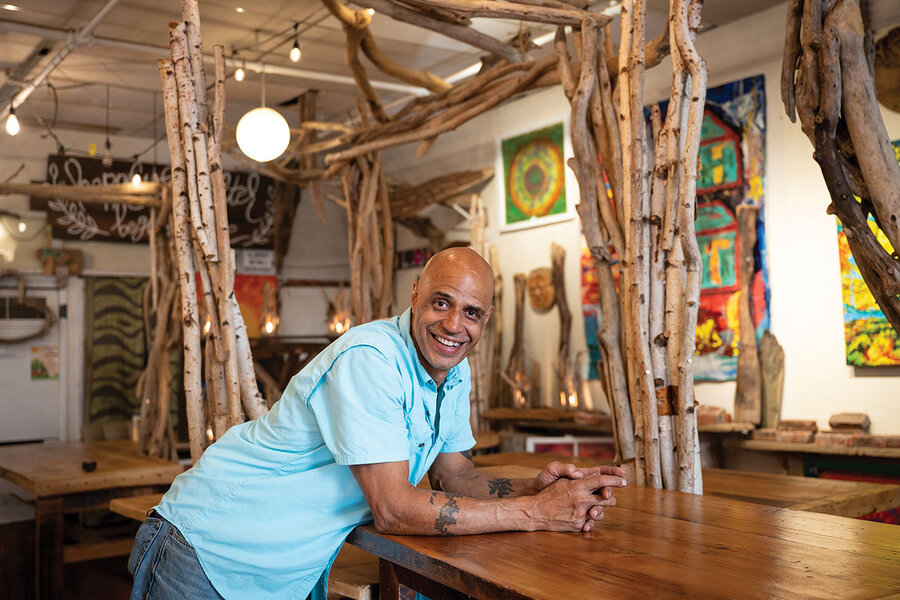
Artist Danny Killion poses in his gallery, Weathered Wood, in Troy, New York. He is one of many who have benefited from the Prison Arts Program.

Some folks have no sympathy for people in prison and would begrudge any type of cultural program that might help them. “If they wanted to do [art, music, a GED …], they shouldn’t have committed the crime.”

But many of us know that life circumstances and not always conscious decisions can accumulate until someone is in big trouble. I like the Norwegian approach to corrections, here, and the often small but meaningful work that is done in the US.

Troy Aidan Sambajon wrote about an example at the Christian Science Monitor.

On a long table, Jeffrey Greene prepares bundles of colored pencils for delivery to Connecticut state prisons. …

“Finished artwork lines the shelves of this airy warehouse, home to the permanent collection of the Prison Arts Program. Mr. Greene reaches up to a high shelf and retrieves a model RV, rendered in detail down to the windowsills. The shingles were cut from cardboard with a nail clipper and glued with a mixture of floor wax and nondairy creamer. Another artist unraveled a prison blanket and crocheted the threads into a 3D horse. …

“[Mr. Greene] has known his students for years, even decades. He can describe the medium they use and the metaphors their pieces convey, and has seen how the artistic process helps students deal with issues like depression, anxiety, and post-traumatic stress disorder.

‘Art unsettles habitual modes of thought and gives you the opportunity to think differently,’ says Robin Greeley, professor of art history at the University of Connecticut.

” ‘It can disrupt your whole routine and can create a sense of wonder.’

“The Prison Arts Program is one of the oldest correctional arts programs in the United States. It’s the longest-running program of Community Partners in Action, a criminal justice nonprofit based in Hartford. …

“Mr. Greene never intended to work in the prison system. After graduating from Hamilton College in New York, he volunteered to teach art workshops in prison on a whim. But he’s never forgotten the impression left by his first day on the job. 

“ ‘Everyone’s developing in this artificial, man-made, absurd, adversarial environment. It’s ridiculous,’ recalls Mr. Greene. …

“ ‘What drives Jeff really is the ability to show the humanity of the prison, of the people that are incarcerated,’ says Beth Hines, director of Community Partners in Action. ‘They know they can count on him when they get out.’

“In each prison he visits, Mr. Greene instructs his students to create art that only exists because they exist. He says it’s about more than finding a hobby while behind bars: ‘They are people that are coming out into the world with this incredible empathy and curiosity.’ Even if they never leave the prison system, he adds, that mindset can have a positive effect on others. …

“For years, Natasha Kinion felt like she’d been swallowed alive in prison. ‘I was guilt-ridden. I was shameful. I was really broken,’ she says in a phone interview. 

“A mother of four who has experienced domestic abuse and substance addiction, Ms. Kinion spent 13 years at York Correctional Institution in Connecticut. There she started making abstract art. 

“ ‘It took me at least the first six years of my incarceration to really open up and allow the healing process to start,’ says Ms. Kinion. …

“Mr. Greene helped Ms. Kinion send her artwork to her children. Her daughter Mayonashia Jones once received a drawing of a butterfly trying to fly with broken wings. She remembers thinking of her mom and wondering, ‘Has she always felt like that?’ …

“Since her release in 2019, Ms. Kinion has published a book about her journey, titled Stand Up You’ve Been Down for Too Long, and has opened her own digital art company, Dezigning Deztiny. 

“ ‘I never told him this … but Jeff is really my hero,’ says Ms. Kinion.

“Danny Killion had little interest in art when he was robbing banks in Connecticut. Then he was caught and sentenced to 12 years in prison. ‘Prison can be a very cold, hard environment,’ says Mr. Killion. …

“He spent 10 years in the Prison Arts Program, learning to concentrate on the artistic process and find solace in a concrete cell. 

“ ‘I’ve never met anyone who’s a more profound teacher,’ says Mr. Killion, who finished his sentence in 2007. As he found his feet in society, Mr. Greene would drop by, offering art materials and a listening ear.

“After working in construction, Mr. Killion began creating furniture using driftwood from the Hudson River. In 2013, he opened his own art studio and gallery, Weathered Wood, in Troy, New York. He traces his transformation back to those first classes with Mr. Greene. …

“This year, Mr. Killion unveiled his first public commission, a sculpture of twisted scrap metal depicting a man breaking through chains, installed at Old New-Gate Prison, a historical site in East Granby, Connecticut. Mr. Greene was there too, both men now standing outside prison gates.”

More at the Monitor, here.

Read Full Post »

Photo: Reuters.
An inmate reads the Bible in prison, where she and fellow inmates have access to a small library as part of a La Paz, Bolivia, program to spread literacy and offer the chance to get out of jail earlier.

Sharing stories like today’s, I can see why someone could accuse me of being a Pollyanna. But it’s not that I think people convicted of crimes will be completely transformed if shown a little kindness. It’s more that I see no harm in testing how small kindnesses might add up, especially for people who may have experienced few kindnesses.

In 2017, Philip Reeves at National Public Radio conducted an interview in a Brazil prison about a program that Bolivia is now testing.

“Brazil’s prisons are dangerous places,” Reeves, noted, “blighted by overcrowding and drug gangs. But literacy is offering a way to shorten some inmates’ sentences: Read books, reduce your time behind bars. …

“REEVES: About 30 men are sitting behind desks in a classroom. They’re writing with pens and paper. The teacher is standing up front issuing instructions. … We could be in any school anywhere but for a couple of details. One, a wall of iron bars separates the teacher from her class. Two, the paper each man’s writing could win him a little bit of his life back. … These are inmates in a giant penitentiary in southern Brazil called the Casa de Custodia de Piraquara. …

“MARILDA DE PAULA SOARES: (Through interpreter) I am an educator. I really believe people can change.

“REEVES: Marilda de Paula Soares is the class teacher. Her students are participating in a project pioneered by the southern Brazilian state of Parana. Prisoners get four days lopped off their sentences for each book they read. To get those days of freedom, they must write a short paper about the book. They’re doing that now. Soares says each prisoner’s paper must explain …

“SOARES: (Through interpreter) … what’s caught their eye, a specific character, the language, the theme …

“REEVES: … in sufficient detail to ensure that cheating is … impossible. Douglas Seixas, an inmate here, says it’s true. You really can’t skip the reading. …

“SEIXAS: Because we need to read a book to understand. If you not read the book, no, no way.

“REEVES: Only certain books qualify under the reading program, including foreign and Brazilian classics and kids’ books for prisoners learning to read. Books with very violent themes are banned. … There’s a maximum of 12 books a year. That adds up to a month and a half remission. Admilson Rodrigues is doing 10 years for drug trafficking but is steadily whittling down his sentence by reading. … Rodrigues said he loved Gone With The Wind and also Les Miserables. Les Miserables seems particularly popular here. Rodrigues believes that’s because it’s about an ex-con who’s trying to create a new life on the outside. …

“REEVES: Is this project window dressing by Brazilian officials? Are they trying to put a gloss on a dysfunctional penal system where inmates sometimes wait years before being tried? It’s hard to know. Yet, prisoners here do seem to be benefiting. Edson Reinehr says he’s on his fourth book, which is about the adventures of Mowgli the wolf boy.

“EDSON REINEHR: Helps a lot because to keep the mind — occupied mind inside the cell instead of thinking about other bad things.

“REEVES: Staff here say the project’s about much more than just helping prisoners pass the time and get a little remission. Teacher Agda Ultchak says it’s about fundamentally changing lives.

“AGDA ULTCHAK: (Through interpreter) We hope to create a new perspective on life for them. This is about acquiring knowledge and culture and being able to join another universe.”

Meanwhile, at Reuters, Monica Machicao reports on a version of the program that was launched recently in Bolivia.

“The state program ‘Books Behind Bars’ offers detainees a chance get out of jail days or weeks in advance of their release date.

Bolivia does not have a life sentence or death penalty, but pre-trial detention can last for many years due to a slow judicial system.

“The program has been launched in 47 prisons that do not have resources to pay for education, reintegration or social assistance programs for prisoners, the Andean country’s Ombudsman’s Office says.

“So far, 865 inmates are sifting through prose, improving their reading and writing skills. One of them is Jaqueline, who has already read eight books in a year and has passed four reading tests.

” ‘It is really hard for people like us who have no income and who do not have family outside,’ she said. ‘There are people here, for example, who are just learning how to read and write.’ …

“With a daily salary of 8 bolivianos ($1.18), incarcerated Bolivians are forced to work to be able to eat and pay the high court costs to be released. The country’s prisons and jails have long suffered from overcrowded and unsanitary conditions, with some detainees staging protests over the lack of health care, according to Human Rights Watch. …

“Said Mildred, an inmate at the Obrajes women’s prison in the highland city of La Paz, ‘When I read, I am in contact with the whole universe. The walls and bars disappear.’ “

More on Brazil’s program at NPR, here, and on Bolivia’s at Reuters, here.

Read Full Post »

Photo: John Walker
Melvin Smith, who completed the Transition from Jail to Community (TJC) program at Fresno County Jail, is now clean and running his family’s well-drilling business.

Here’s another example of a program that has been helping ex-offenders reintegrate into society.

Brianna Calix reports at the Fresno Bee, “The last time Melvin Smith was arrested, he was so hungry and tired that he prayed to God the authorities would keep him in Fresno County Jail instead of releasing him.

“Smith was arrested 14 times in 2013 for drug use, auto theft and vandalism. In Fresno County, law enforcement arrested him 41 times since 1999. ‘I was wild,’ he said. In jail, his ‘celly’ asked him where he saw himself in five years. Smith’s goal was to reunite with his family.

“He’s been out of jail for four years, sober for five years and his probation ends in June. He runs his grandfather’s well and pump company, goes to church with Fresno Police Chief Jerry Dyer and is about to buy a home with a pool for his family. For birthdays, he takes his family on trips to places such as Universal Studios, Magic Mountain and Disneyland.

“During that last stint in jail, Smith went through the Transition from Jail to Community program. It helps inmates who are more likely to re-offend prepare for life after incarceration.

“The TJC program, as it’s known, was started in 2013. The men who complete the program have a dramatically lower recidivism rate than the rest of the jail population, in part due to the support system the program builds for them.

“ ‘We’ve had programs for many years in the jail,’ Sheriff Margaret Mims said. ‘This one was very different.’ …

“Inmates have to opt into the program voluntarily, and not just any inmate can qualify. Forty or fewer people participate in the program at a time. The jail houses between 2,600 and 2,900 inmates.

“Jail staff evaluate each inmate based on how many times they’ve been arrested in Fresno County, their age and how old they were when they first were arrested. Based on that score, staff evaluate the inmate’s risk to re-offend. Only medium-to-high-risk inmates qualify.

“If the inmate agrees to participate in the program, he signs a contract pledging to participate, follow the rules and stay engaged with supervision upon release.

“In a typical housing unit, the inmates tend to group by race, said Michelle LeFors, Fresno County Jail’s inmate services director.

“ ‘Not in the TJC,’ she said. ‘You’ll see mixed races sitting together, sharing a meal with each other. … They work with each other as opposed to against each other. If you ask the inmates, they’ll tell you they leave their politics at the door.’ …

“As a gang dropout in jail, [inmate Clinton S. ] constantly worried about his safety. But that’s not the case in the TJC program. …

” ‘Everyone in here is pretty much in here for the same reason. There is perks that they come over here for, but everyone obviously wants to change because being in jail is not cool. It gets old. You grow up quick.’

“The program has helped transform his mindset and taught him to persevere and that his consequences have actions.

“So far, his biggest takeaway in the program is to ‘not give up.’ ”

More here. See also the recent post on my cousin’s work to rehabilitate 18- to 24-year-old prisoners. So encouraging.

Read Full Post »

bn-vu227_nyches_m_20171025125530Photo: Bess Adler for The Wall Street Journal

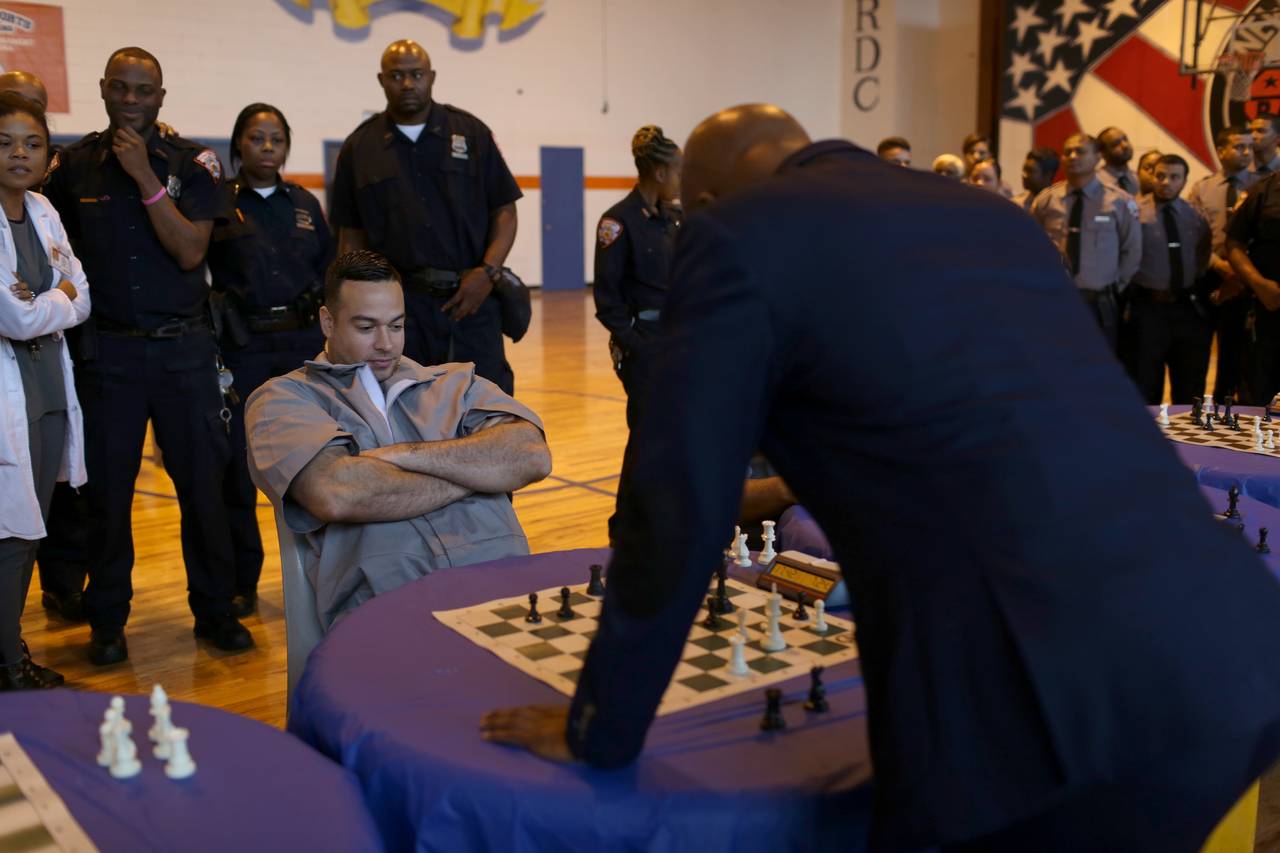
Rikers Island inmate Camilo Arcelay faced off against chess grandmaster Maurice Ashley at the Rikers Island jail complex.

I like articles about better ways to prepare prison inmates for a return to society. In this 2015 post, for example, I wrote about a jailhouse debate club that beat Harvard, raising the spirits and aspirations of prisoners at the Eastern New York Correctional Facility.

Today’s story concerns a serious chess competition in a notorious New York City prison.

Zolan Kanno-Youngs at the Wall Street Journal writes, “On a rainy afternoon at the Rikers Island Jail Complex [in October] five men and one woman wearing tan uniforms sat in front of chess boards surrounded by an audience of correction officers and fellow inmates.

“Maurice Ashley, a 2003 U.S. Chess Federation grandmaster of the year walked from one board to the next, simultaneously playing six games. One by one, he eliminated the inmates — except for Camilo Arcelay, 37 years old, who used his king to take Mr. Ashley’s last pawn. That left Mr. Arcelay and Mr. Ashley with a king as their last piece.

“The result was a draw — enough for Mr. Ashley, who also judged the event, to name Mr. Arcelay the winner of the first chess tournament, which is slated to become an annual event at Rikers Island.

“ ‘To be in a situation that I’m in right now in jail, it leaves me speechless,’ Mr. Arcelay said, referring to his chess victory. ‘Because I’ve made so many bad decisions to be here.’

“The final round of the 2-month tournament is part of a series of programming designed to educate and reduce idleness funded by a $38.9 million New York City initiative.

” ‘It teaches them how to think, how to strategize, in an environment that is conducive to those things,’ said James Walsh, department of corrections deputy commissioner of adult programming & community partnerships.

“While this was the first official tournament at Rikers, chess has long been popular behind bars. Carl Portman, 53, the author of Chess Behind Bars, and the manager of prisons chess for the English Chess Federation, said the game’s history in prisons dates to World War II, when inmates would create chess pieces from scrap materials, and differentiate the two sides by using coffee powder to dye some pieces. …

“At Rikers, the seed for the tournament was planted two years ago when corrections officer Gregory Lamb bought a chess set so he could play with 16- and 17-year-old inmates. Prison officials soon asked him to organize sessions with adult inmates twice a week. That evolved into the tournament organized by the corrections’ Adult Programs Unit that began two months ago with 800 inmates participating.

“ ‘Inmates are probably the best chess players because they play all day,’ Mr. Lamb noted. …

“During the games, inmates stood on bleachers cheering, critiquing and moving their arms on imaginary boards as if they, too, were participating.

“ ‘Society wastes so much when we don’t channel the energy and capabilities of those who have been incarcerated,’ Mr. Ashley said.”

More at the WSJ, here.

Read Full Post »

My cousin Alex Frank is on a mission to reform the criminal justice system, starting with young men. She has worked in prisons on a variety of programs for some years now and is seeing measurable results.

A recent Boston Globe editorial expressed hope for the latest initiative. “Early next year, one of the most important criminal justice reform experiments in the country will spread to a stately brick jailhouse in Billerica.

“The Middlesex Jail and House of Correction will become one of the first in the nation to create a dedicated, service-rich cell block for young men.

“Inmates, ages 18 to 24, will gather in peace circles to talk through conflict. They’ll learn how to budget for rent and transportation. And they’ll get the chance to hold their children during visiting hours. ….

“The idea is that 19- and 24-year-olds are fundamentally different than 35- and 40-year-olds — less mature, yes, but also more malleable, and better positioned to change.

“It’s an idea borne out by decades of neuroscience research, which shows the brain is still developing into the mid-20s. And Middlesex Sheriff Peter Koutoujian, who is launching the unit, understands that research intuitively.

“He calls himself a ‘recovering young adult,’ who was adrift as a young man and didn’t get serious until his mid-20s. …

“Koutoujian says it only makes sense to keep impressionable young offenders away from the older inmates they mix with now. … Tailored services, he says, can make a real difference. A separate unit he established for military veterans is showing strong early results and garnering national attention.

“For this new project, Koutoujian is leaning heavily on the Vera Institute of Justice, a New York-based organization that helped create the nation’s first comprehensive unit for young adults at a tough prison in Cheshire, Conn., known as ‘The Rock.’

“The Cheshire unit hasn’t had a single fight between prisoners or attack on a guard since it launched early this year, and just a fraction of the disciplinary issues that normally arise among young adults in prison.

“Alex Frank, a senior program associate at Vera who has worked on both the Connecticut and Middlesex projects, says any serious effort to reduce mass incarceration in this country ‘requires a focus on young adults.’

“Eighteen-to-24-year-olds account for 10 percent of the American population but 21 percent of prison admissions, she notes. And their recidivism rates are much higher than for other age groups. Whatever we’re doing now is clearly failing. …

“The most expedient approach may be creating the sort of separate cell block Koutoujian is preparing to launch in Middlesex in February. …

“UTEC, an impressive, Lowell-based organization already working to rehabilitate some of the toughest young men in the region, will play a central role. Gregg Croteau, the executive director of the nonprofit, says his group will aim to smooth the transition to the outside — offering job training in jail, for instance, followed by work at a UTEC-run cafe after release. More.

See also this Lowell Sun article, which quotes Alex: “This project goes beyond simply improving living conditions for young people, and seeks to transform facility culture for everyone who lives and works in their facility … By providing meaningful opportunities for young adults to be successful and investing in their potential, supporting and reimagining the role of staff, Middlesex Jail & House of Correction is transforming the current correctional culture to promote equity, accountability, restoration, and healing.”

I think reader Asakiyume, who volunteers in a prison, knows exactly what Alex is saying about prison culture.

Photo: UTEC
Young people from the nonprofit UTEC in Lowell, Massachusetts, have been actively engaged in pushing for criminal justice reform. In February, they will start working with the Middlesex sheriff on a promising prison intervention.
organizing_banner2

Read Full Post »

A recent post at Asakiyume’s blog reminded me of Young at Heart, the senior-citizen chorus that inspired a movie I recommended to readers in 2011.

Asakiyume wrote, “One of the women I work with at the jail is in the choir there. I got permission to go in for the performance. The jail choir group is called the Majestics, and they’ve been mentored by a senior-citizen choir called Young at Heart, all of whom were wearing T-shirts that said ‘We put the “zen” in “senior citizen.'”

“Young at Heart performed as the opening act … Then the Majestics took the stage. There were six women, and they covered a great age range (three in their twenties, two in their thirties-forties, and one who was even older than me) and ethnically diverse (two Black, one Hispanic, three White). They sang well-known songs with lots of different flavors (hip-hop, pop, blues, soul), and all the choir members were featured at least once … The entire thing was a huge success; the audience was **so** supportive. …

“At the end the programs director called for an encore, and there hadn’t been a song laid by for that, but the Young At Heart choir sang “Forever Young” … Each time someone sang a solo, he or she linked arms with one of the members of the Majestics and brought them forward, and I could see tears in my student’s eyes and I had tears in mine, because–as the chaplain who was present pointed out–that song is a benediction, and it was so great to hear those words of blessing and hope and expectation directed at the audience in the jail:

May you grow up to be righteous
May you grow up to be true
May you always know the truth
And see the lights surrounding you
May you always be courageous
Stand upright and be strong
And may you stay
Forever young”

-@-

So lovely. Such songs take on extra meaning when sung by seniors or by people who feel hopeless.

The Young at Heart movie, which I still hope you’ll see, was also full of resonance. And it exposed me to popular music like Coldplay’s “I will try to fix you.” Whenever that song comes on the radio, I see in my mind’s eye the old guy with the oxygen tank who drew tears from his audiences. He is surely gone now, but not that memory.

That the chorus has gone beyond inspiring seniors and their families to inspiring prisoners who have little to make them feel positive or hopeful — well, it’s just too amazing.

More at Asakiyume’s blog, here.

Read Full Post »

Photo: Craig F. Walker/Globe Staff
From left, Army veteran Kevin Faherty speaking with Paul Connor, veteran services coordinator, and Middlesex County Sheriff Peter Koutoujian in January.

A sad fact of war is that those who serve too often come back suffering from emotional trauma or addiction.

Fortunately, there are understanding people who can help them move on. We just need more of them.

Kevin Cullen at the Boston Globe describes what one Massachusetts sheriff is doing to make veterans’ lives more hopeful.

“For the past year, with hardly any attention, Middlesex County Sheriff Peter Koutoujian and his staff have developed an innovative approach that is transforming lives for the better, lowering recidivism rates and raising the odds that those who have served their country can become more responsible, productive citizens.

“[Jan. 13] marked the first anniversary of the Housing Unit for Military Veterans at the Middlesex jail and house of correction, the first of its kind in New England, and really the only one quite like it nationwide. Its acronym is HUMV, or Humvee, an armored vehicle that once protected many of the younger vets in the unit. …

“Koutoujian tapped Paul Connor, an Army veteran, to run the unit. They got a waiver from the state, so that pre-trial prisoners and inmates already serving their sentences could be housed together. The HUMV is set up like a barracks, bunks lined up in the self-contained unit. …

“The men in the unit are broken down into squads, sharing chores and other duties, which builds camaraderie and accountability. …

“Connor’s veteran status makes a real connection with those in the unit. His decade of sobriety, meanwhile, makes him a role model. Like the vast majority of inmates in the general population, most of the vets in the HUMV have struggled with alcohol and substance abuse. …

“Amy Bonneau, a social worker from the Boston Vets Center, runs a support group at the HUMV.

” ‘For a lot of these guys, their underlying issues can be traced back to their service,’ she said. ‘If we don’t treat what got them here, they end up coming back. What we see is the camaraderie that this unit fosters makes them more willing to take the treatment seriously. It’s more than helping themselves. They don’t want to let down their brothers.’

“Connor, still a captain in the National Guard, puts it in terms that everybody in the unit understands.

“ ‘In boot camp, they break you down,’ he said. ‘A lot of these guys come in here broken. We are building them back up.’ ”

More here.

Read Full Post »

Photo:

At my former magazine we focused on lower-income issues, which meant we sometimes published research on topics such as prison reform, the criminalization of addiction, and job programs for ex-offenders.

Recently, I saw an article that reminded me of those efforts. It’s about an unusual fine-dining restaurant in Cleveland.

Jenn Hall covers the story at Paste, “Though the numbers vary by state, roughly three-quarters of ex-convicts are rearrested within five years, and more than half of those return behind bars. Ask Brandon Chrostowski about it, and he’ll tell you that it’s more than a problem. It’s a civil-rights issue — and that’s why he decided to do something about it.

“For diners at Edwins Restaurant in Cleveland Shaker Square, fine French cuisine is an initial draw. The setting is nouvelle-chic, befitting a Francophile menu that garners praise. Bar service is sophisticated, with a wine list that runs deep. But the reason to return goes beyond the plate. In almost every position, both front and back of house, ex-offenders are training to launch new careers.

“It’s the only white-tablecloth restaurant of its kind in the U.S.

“The trainees are part of Edwins’ six-month Restaurant and Leadership Training Program, of which Chrostowski is founder and CEO. (Edwins is a portmanteau of ‘education’ and ‘wins.’) Covering everything from mother sauces to white-tablecloth service, the program aims not just to equip ex-offenders with skills, but also to power them with the confidence to apply them.

“It’s a program borne of careful planning. Chrostowski first had the idea in 2004, secured approval to operate as a 501 (c) (3) in 2008, and then spent six years perfecting the pedagogy before opening the restaurant’s doors in 2013. Now, 20,000 diners visit Edwins each year.

“But job prep and a fine French meal is just one part of the story. Ultimately, Edwins is a support network for those determined to challenge statistics. So while participants indeed learn a perfect braise, they also get help with everything from reinstating their driver’s license to securing medical care. It’s a humanizing approach to a sobering problem, and perhaps that’s why it’s working. The Edwins-alumni recidivism rate stands at just 1.2 percent. …

“Asked what drives him, he says it’s about paying forward a break he was given. Growing up in Detroit, Chrostowski had a legal run-in and was lucky to land probation instead of a prison sentence. That ‘aha’ moment primed him to take stock, find a mentor and launch a fine-dining career …

“Though he reads like an optimist (and is when it comes to a belief in transformation), Chrostowski sees himself as a pragmatist. Given the chance, he says, many ex-offenders have the capacity and strength to rebuild. They just need that all-critical chance.”

To read Hall’s interview with Chrostowski, click here.

Read Full Post »

When people are serving time for a crime, how much better for society — both during their sentence and after they get out — if they have some useful work while inside.

Patricia Leigh Brown writes at Atlas Obscura, “Justin King spends most of his hours in a cinderblock dormitory room for minimum-security prisoners, sleeping on a metal bunk bed and being constantly monitored by surveillance cameras.

“But on a crisp California morning with coastal fog hanging on the hillsides, King, who is serving time for selling methamphetamines, and three of his fellow inmates at the Mendocino County jail huddle together in a 175-acre vineyard to pick plump sangiovese grapes. The only visible difference between the prisoners and the other field workers are the GPS tracking devices wrapped around their ankles.

” ‘Hey dude!’ King, 32, called out to his fellow inmate, Meliton Rangel, as King eyed a promising group of clusters wet with dew. ‘I hit clump city here!’

“The men’s enthusiasm for grapes with just the right sugar levels and tannins is a variation on the concept of work release, in which inmates deemed low security risks are employed by private companies. …

” ‘They’re hard workers,’ [Vineyard owner Martha] Barra says of her new employees, who wear “civilian” clothes in her magazine-esque vineyard. ‘They have to meet the same punctuality and performance requirements as everybody else.’ …

“The work is notoriously grueling: At first, Rangel, a stiff-legged 37, said he was going to quit. That changed when he received his first paycheck—his first one ever. ‘This has really helped me out,’ he says. ‘It feels very good to work.’ …

“In the Mendocino program last year, four of the six inmates who worked on the grape crew at Redwood Valley Vineyards have indeed stayed out of jail. Three now have full-time jobs. One now works at the vineyard full-time, rebounding from tough years of drug addiction and homelessness. …

” ‘There’s peace of mind out here,’ King says.”

More here.

Photo: Olivier Vanpé /Wikimedia Commons
Clusters of ripe and unripe Pinot noir grapes.

Read Full Post »

Because I believe in Pete Seeger’s notion that “one and one and 50 make a million,” I’m drawn to stories of individuals making small contributions that could add up to something big.

So here is a story from Forbes, of all places, about several women in Detroit quietly working toward rescuing the city.

Denise Restauri writes, “As we drive through Detroit, on the surface I see a city that’s been abandoned by its residents, filled with poverty and crime. But when we stop and meet store owners, artists and women who went from being homeless to employed, I see a city that’s energized with entrepreneurship, hipster creativity and potential.

“Suddenly I understand what Veronika Scott, the 24-year-old who is sitting in the driver’s seat, often called ‘the crazy coat lady,’ means when she says, ‘I love Detroit.’

“Veronika is empowering Detroit with a disruptive business model. She’s the CEO and Founder of The Empowerment Plan, a non-profit organization that employs homeless women and trains them to become full-time seamstresses who produce coats that turn into sleeping bags which are given to homeless individuals across the nation.

“She doesn’t just employ these women — she educates and equips them with the professional skills and knowledge needed to compete in Detroit’s new economy and evolving job market.”

Restauri goes on to describe five other female-powered enterprises in her Forbes post.

JJ Curis, 32, is gallery director at the Library Street Collective, which helps struggling artists. The five James Sisters, 25-32, cofounded DROUGHT to make organically grown produce accessible to all.

Amy Kaherl, 32, is the executive director of Detroit SOUP, a novel idea that involves inviting people to pay for a dinner where they can hear pitches from local charities and vote on which one should get the evening’s donations, or micro grants.

Cheryl P. Johnson, 53, is the CEO of COTS: Coalition On Temporary Shelter. And LaKeisha Blackwell, 41, is jail diversion coordinator at Northeast Guidance Center. Read about the women here.

Photo: Forbes
Veronika Scott wears the Empowerment Plan’s sleeping bag coat.

Read Full Post »

I liked Jacki Lyden’s story at National Public Radio about some unusual artists in the 1960s.

“If you traveled by way of Florida’s Route 1 in the 1960s, you might have encountered a young, African-American artist, selling a lushly painted oil landscape from his car. They weren’t allowed in galleries during Jim Crow segregation — but motels, office buildings and tourists would buy their vivid works.

“Together, they formed a loosely associated band around Fort Pierce, Fla., that came to be known as The Highwaymen. At $20 a painting, they made their way out of agricultural jobs like citrus-picking and defined the cultural look of an era.

“Their paintings departed from an earlier tradition of landscape painting in Fort Pierce. A.E. ‘Beanie’ Backus, considered the father of the landscape movement there, caught the clouds and savannahs and inlets that were falling to developers in the mid-century. He would teach many youngsters who came to his studio, including the teenage Alfred Hair, leader of The Highwaymen.

“These artists would take off in their own direction. But success has brought enduring tensions on their home turf, raising questions about art, race and cultural legacy. …

“The who’s who of The Highwaymen can be tricky. (A curator named Jim Fitch coined the name in the ’90s and it stuck.) Gary Monroe, author of The Highwaymen, Florida’s African-American Landscape Artists, counts 26 original painters — 18 of whom are still living. That’s how many were inducted into the Florida Artists Hall of Fame in 2004.”

Lots more.

Photograph: Gary Monroe
Alfred Hair (left) and Robert Lewis

Read Full Post »

An Associated Press story on an “innovative program that allows inmates to reduce their sentences in exchange for generating power” caught the attention of NPR today. It seems that prisoners may volunteer to help “illuminate the town of Santa Rita do Sapucai [Brazil] at night.

“By pedaling, the inmates charge a battery that powers 10 street lamps along a riverside promenade. For every three eight-hour days they spend on the bikes, [the volunteers] get one day shaved off their sentences.

“The project in the southeastern state of Minas Gerais is one of several across Brazil meant to cut recidivism by helping restore an inmate’s sense of self-worth. Prisoners elsewhere can trim their sentences by reading sentences — in books — or taking classes.

“Officials say they’ve heard a few complaints the initiatives are soft on criminals, but there’s been little criticism in the country’s press or in other public forums.” Read more at National Public Radio.

Here is what such a bike might look like.

Photograph: Eric Luse, The Chronicle / San Francisco

Read Full Post »

Older Posts »