Feeds:
Posts
Comments

Posts Tagged ‘learning’

As a kid of 10 or so, I played in the woods, frequently all alone. It was magical.

As an adult, I wonder if it’s no longer considered safe. I don’t ever hear of children playing in the woods. That’s why I was interested to read about a growing movement called Forest Schools.

Siobhan Starrs writes for the Associated Press, “In the heart of north London lies the ancient Queens Wood, a green forest hidden away in a metropolis of more than 8 million residents. The sounds of the city seem to fade away as a group of children plays in a mud kitchen, pretending to prepare food and saw wood.

“These aren’t toddlers on a play date — it’s an unusual outdoor nursery school, the first of its kind in London, following a trend in Scandinavia, Germany and Scotland. It allows local children to learn, and let their imagination run free, completely surrounded by nature. …

“Each morning a group of children gather at the Queens Wood camp, which the nursery team prepares each morning before the children arrive. A circle of logs provides a place to gather for snacks, stories and songs. The mud kitchen provides an opportunity to make a proper mess and have a sensory experience, a rope swing provides some excitement and a challenge, and several tents are set up for naps and washing up.

“In a clearing in the woods, a fallen tree trunk can be transformed by imagination into a rocket train, calling at the beach and the moon, with leaves for tickets.

“A 2-year-old, Matilda, finds a stick — but in her mind it’s not a stick. It’s a wand. She says she is a magic fairy who can fly. Then suddenly the stick has become a drum stick, and a gnarled tree stump her drum. She taps away contentedly, the rhythm all her own.” Read more here.

Speaking of fallen tree trunks, I particularly remember a big tree that fell in the forest after a storm and the fun a friend and I had making up stories on it.

Photo: Matt Dunham/AP
Forest schools are increasing in popularity in the United Kingdom.

Read Full Post »

My friend Jean Devine is always up to something interesting. A Brown U grad, with an MBA from Simmons, she used to work in investor relations but in recent years has been testing the waters of social entrepreneurship.

Her latest initiative, with Barbara Passero of Sandpiper Creative, is called meadowscaping and is intriguing on many levels.

With access to a Waltham church lawn for a summer youth program, Jean and Barbara will work with kids to convert the yard into a meadow that uses native species from Garden in the Woods and provides a habitat to the bugs and other small creatures that make a healthy environment.

From the Meadowscaping for Biodiversity website: Meadowscaping “is an outdoor, project-based, environmental education program that provides middle school youth with real-world experiences in STEAM learning (Science, Technology, Engineering, Arts and Math), while inspiring and empowering them to address challenges to the environment and our society.

“Today, few children spend time experiencing Nature and the benefits of outdoor recreation, education, and contemplation. Founder and former Director of the Children and Nature Network (C& NN) Richard Louv coined the phrase nature-deficit disorder to describe the negative effects of reduced outdoor time on children’s development. …

“Children who spend little time outdoors may value nature less than children who spend time outdoors in free play. Similarly, children who feel part of something bigger than themselves may … understand their dependence on a clean environment and know that they are responsible for caring for the Earth as their home.” More here.

The idea behind the meadowscaping summer program is that children, both at a young age and as they become adults, can actually do something about the environment.

Remember our post “The Doctor Is In” about the woman who sets up in a Providence park to listen to your worries about global warming (here)? Stop worrying and do something, say the meadowscape entrepreneurs. Give up lawn chemicals, plant a meadow, provide a home for tiny necessary critters, and work to make change.

white-iris-in-morning

Read Full Post »

When I was a teacher in Pennsylvania hoping to get accreditation, a supervisor from the teachers college where I took classes came to observe me at work. It was quite a long time ago, and the only thing I recall is that he remarked that I needed to do more with my classroom bulletin boards.

There I was, trying to do creative things with 11-year-olds in language arts (the play within the play from A Midsummer Night’s Dream springs to mind), but his checklist required him to observe the bulletin boards.

So imagine my delight when I saw an article today about a study suggesting teachers may be putting too much emphasis on bulletin boards and wall decorations.

Jan Hoffman writes at the NY Times, “That bright, cheery look has become a familiar sight in classrooms across the country, one that has only grown over the last few decades, fed by the proliferation of educational supply stores. But to what effect?

“A new study looked at whether such classrooms encourage, or actually distract from, learning. The study … found that when kindergartners were taught in a highly decorated classroom, they were more distracted … than when they were taught in a room that was comparatively spartan.

“The researchers, from Carnegie Mellon University, did not conclude that kindergartners, who spend most of the day in one room, should be taught in an austere environment. But they urged educators to establish standards.

“ ‘So many things affect academic outcomes that are not under our control,’ said Anna V. Fisher, an associate professor of psychology at Carnegie Mellon and the lead author of the study, which was published in Psychological Science. ‘But the classroom’s visual environment is under the direct control of the teachers. They’re trying their best in the absence of empirically validated guidelines.’ ”  Hence the impetus for the study. Read more here.

Photo: Psychological Science
In a new study, 24 kindergartners were taught in two classroom settings: one unadorned, the other decorated with posters and artwork.

Read Full Post »

There is a constant drumbeat in the news these days about the cost of college. Of course, it’s not really news. Families have struggled to pay for generations, and there have always been students who worked their way through (Suzanne’s dad, for one). And there have always been a few institutions seeking ways to help them.

Lisa Rathke writes in the Boston Globe about today’s “work colleges,” which believe that working your way through has many advantages, especially if all students are in the same boat.

She writes, “After college, many students spend years working off tens of thousands of dollars in school debt. But at seven ‘Work Colleges’ around the country, students are required to work on campus as part of their studies — doing everything from landscaping and growing and cooking food to public relations and feeding farm animals — to pay off at least some of their tuition before they graduate.

“The arrangement not only makes college more affordable for students who otherwise might not be able to go to school, it also gives them real-life experience while teaching them responsibility and how to work together, officials said. …

“With rising college costs and a national student loan debt reaching more than $1 trillion, ‘earning while learning’ is becoming more appealing for some students. But the work-college program differs from the federal work-study program, which is an optional voluntary program that offers funds for part-time jobs for needy students.

“At the seven Work Colleges — Sterling College, Alice Lloyd College in Pippa Passes, Ky., Berea College in Berea, Ky., Blackburn College in Carlinville, Ill., College of the Ozarks in Lookout, Mo., Ecclesia College in Springdale, Ariz., and Warren Wilson College in Asheville, N.C. — work is required and relied upon for the daily operation of the institution, no matter what the student’s background.” Read more.

Photo: Sterling College via Associated Press
At the seven Work Colleges, it’s not optional: Students must hold jobs during their undergraduate careers and pay off some of their tuition before they graduate.

Read Full Post »

Holmes-School-Dorchester-MaA new employee goes to the Oliver Wendell Holmes School in Dorchester with the team I’m on. He can’t get over how great it is to work for an organization that gives you time to do this. We go out once a month from January to June, and other teams go once a month so that we cover every week.

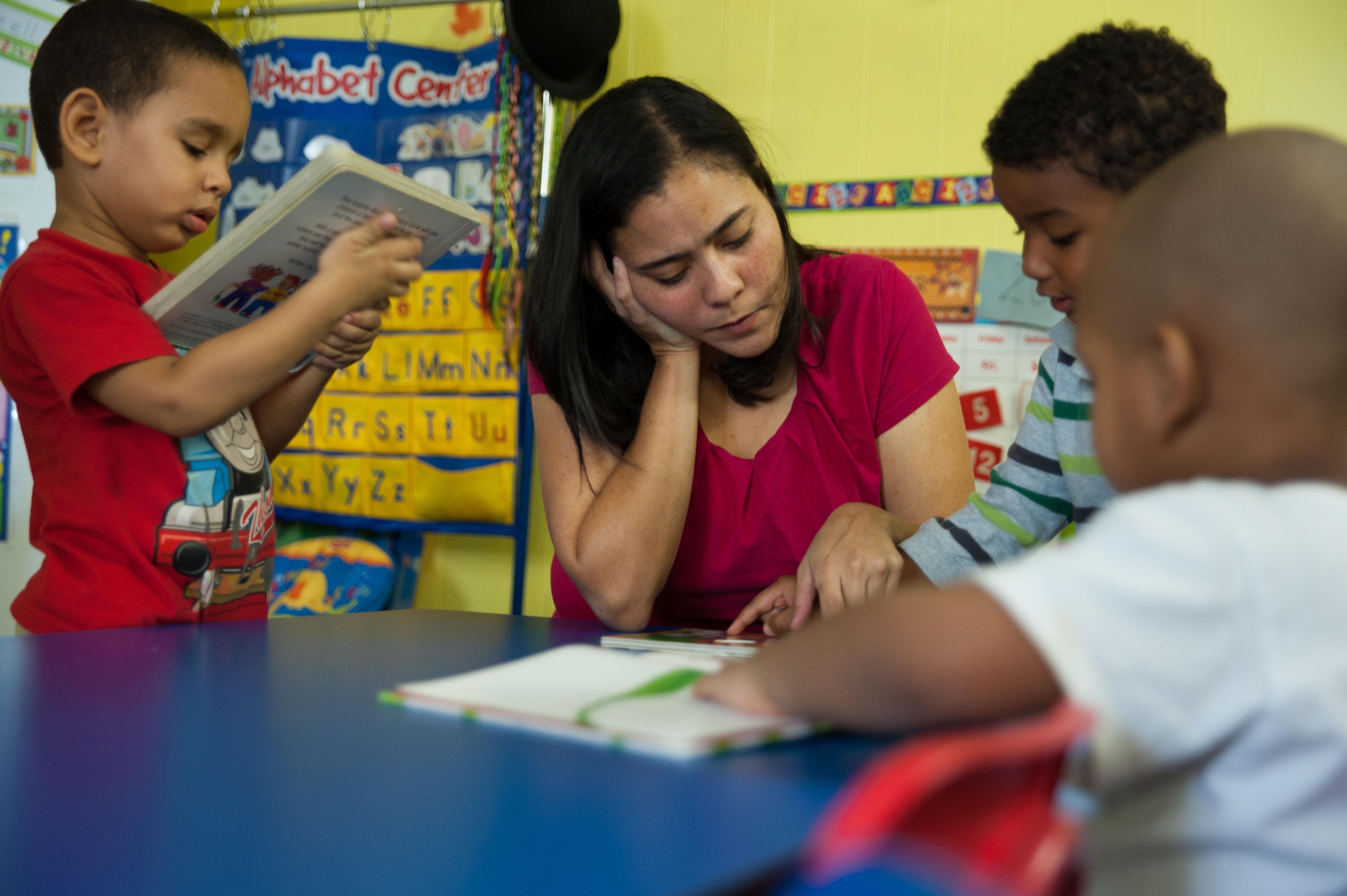
I started eight years ago with the team that read picture books to a room of first graders. Then I read for a few years with fifth or fourth graders who received chapter books from the librarian. These were students whose teachers thought they would appreciate the extra reading. We all read aloud, with the adult volunteers only taking a turn if the story seemed to lag.

Holmes is a minority-majority urban school with many dedicated teachers who are tolerant of the extra work it takes to herd volunteers. (We also have volunteers who work on math.)

This year, the team I’m on includes the woman who started the whole relationship with Holmes 20 years ago and is now retired. We are assigned to read copies of printed passages and help the children answer multiple-choice questions from tests they have had in the past.

Given the current nationwide emphasis on testing and these third graders’ tendency to keep guessing wildly, I consider it my role to focus on the thought process and deemphasize getting the right answer. I ask, Why do you think that’s the answer? How did you get there?

The administrators often tell us that we make a difference. We’re probably just a drop in the bucket. But, you know, One and One and 50 Make a Million.

More employers should make it so easy to improve the world in which they operate. Other employees probably spend the hour and a half it takes to go out, tutor, and get back once a month in less valuable ways.

Read Full Post »

Do you remember a blog post about a photography and interview initiative called the Humans of New York? I wrote about it here.

It seems that a frustrated parent of a high school student who had no Spanish teacher decided to let it all out when asked what she was feeling, and the Humans of New York entry about her went viral. Now the school district must save face and choose among many offers of help.

Brandon Stanton saw Annette Renaud on the subway and asked to  interview her. As Soni Sangha writes for the NY Times, Renaud was upset.

” ‘We’ve got a new mayor and a new chancellor … So we aren’t blaming them. But they need to know how impossible they’ve made it to help our kids. Trying to get something fixed in these schools is like praying to some false God. You call and email hoping that God is listening, and nothing happens.’

“Someone was listening,” says Sangha. “The post immediately went viral, with 150,000 likes on the Humans of New York Facebook page, it was shared more than 16,000 times, and it had strangers from across the city and the country pledging to call the school in protest on behalf of the students. Someone in Michigan started a change.org petition calling on the school to hire a foreign language instructor; another Connecticut petition asked the Department of Education to help the students — it has more than 1,000 supporters. …

“ ‘We continue to work closely with the school community to ensure students have access to the courses they need,’ said Marcus Liem, deputy press secretary of the New York City Education Department. Mr. Liem said that officials from the department were planning to meet with the school’s administration about this and other issues even before the posting, but that those meetings have now been moved up.” Read it all here.

Photo: Nicole Bengiveno/The New York Times
Alejandra Figueroa, a senior at the Secondary School for Journalism, believes the loss of her Spanish teacher jeopardizes her chances for an Advanced Regents diploma.

Read Full Post »

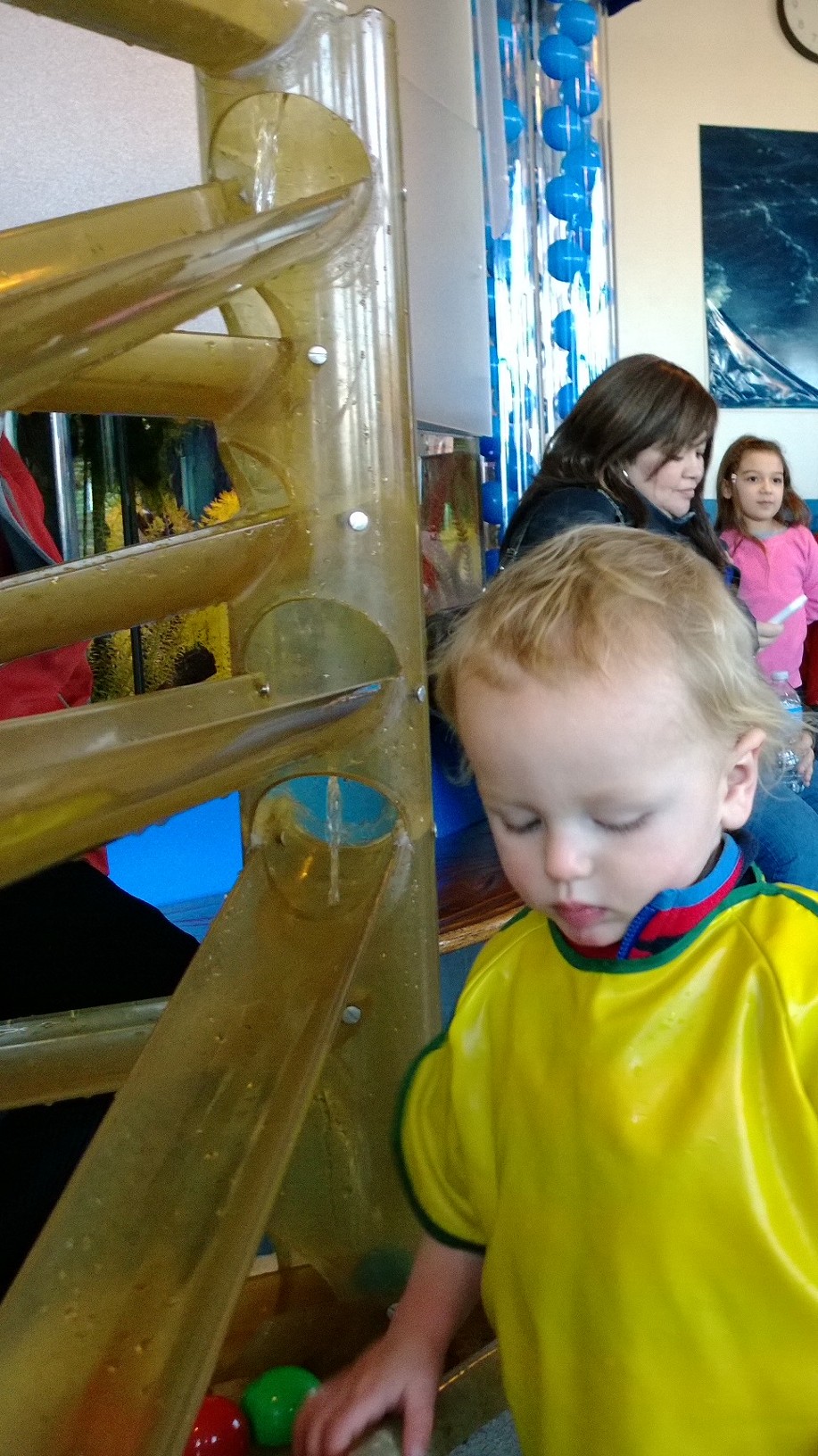
112913-children-museumWhen you take your father’s mother (Farmor) and your mother’s father and mother (Morfar and Mormor) to the Children’s Museum, you start by showing them how the fluffy balls fly through tubes and out the top, and you show them the water room, where you have to wear a smock.

Then you run up and down the ramp to the second floor, up and down, up and down, and up and down some more, laughing and turning your head back to make sure they are all following at a lively pace.

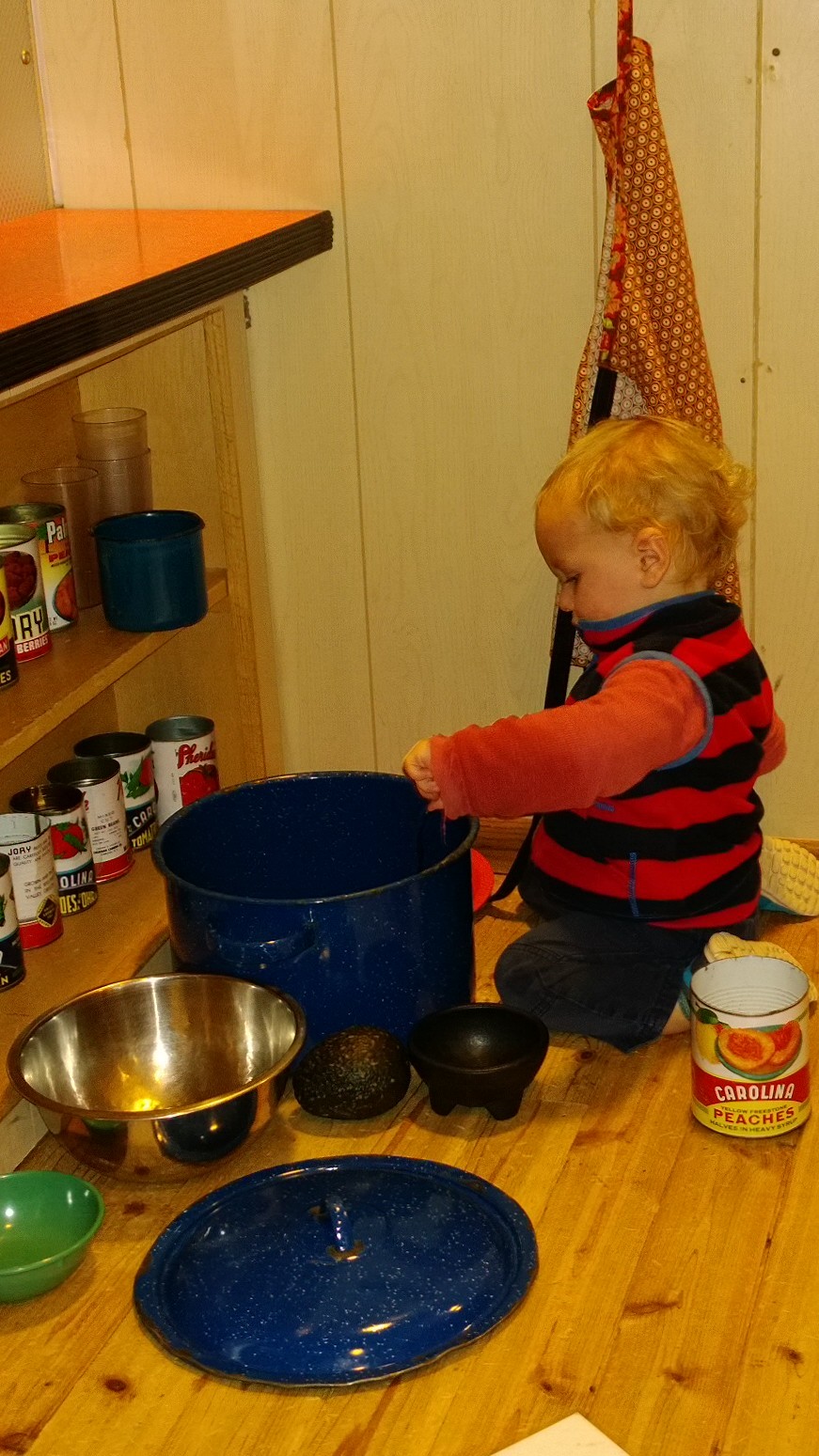
Once you are sure they will behave themselves and not go wandering off when you have work to do, you can settle into the kitchen and concentrate on putting the cheese wedge in the pot and stirring and taking it out and putting it back in and putting the lid on top and taking it out again and putting in a potato and stirring and shaking a can of tomatoes upside down until every last bit is in the pot with the potato and stirring and putting the lid on. Then, you know, you may need to take the stacked dishes and lay them all about on the floor and then restack them and put them neatly on the shelf.

It’s a lot, and you need to be sure the grandparents are sitting still and paying attention so you don’t have to worry about them for a while.

kitchen-things-you-can-touch

Read Full Post »

It might be getting a bit cold for the outdoor classroom, but this article by Melanie Plenda in the Boston Globe suggests that not even snow will stop these preschoolers from learning about nature.

“In the back of the farmhouse at Drumlin Farm Community Preschool in Lincoln sit five chickens surrounded by a gaggle of preschoolers — eyes wide, waiting. The teacher opens the egg box door, and the students, staying slow and small like they were taught, peer in.

“ ‘And when they find an egg there,’ says Paula Goodwin, director of the school, ‘we ask them to make a nest with their hand, and they very gently pass the egg from one to another. And it’s a very special time, because they don’t need a lot of special instructions except to look for a child whose hands are in the shape of a nest. … It’s one of the magical moments in the school year. They are so generous with sharing the egg, and they may not have even learned each other’s names yet.’

“Drumlin is a nature- and farm-based preschool, which means that rain or shine, maybe not sleet but definitely snow and temperatures down to 15 degrees, the 14 3- to 5-year-olds are outside learning math, science, language, and how to be curious. Visiting captive wildlife, doing farm chores, and taking part in planting activities provide opportunities for all kinds of learning.” More.

Judging from my three grandchildren, I’m pretty sure no kid needs to “learn how” to be curious (“Poppa, what is the sun for?”), but we all hope for schools that continually encourage their curiosity.

Photo: Porter Gifford

Read Full Post »

John sent two articles about roles that grandparents are playing in children’s lives — in this case, grandmas.

The blog Microtask details Professor Sugata Mitra’s cool insights about the Grandma Effect.

“The theory is that grandmas are good at encouraging kids. They praise them and say things like: ‘Now that is clever dear, I’d never have been able to analyze the molecular structure of DNA all by myself!’ Supervising village children, Indian grandmothers got some impressive results: test scores almost doubled in two months …

“And the next step? The ‘Granny Cloud.’ While working at Newcastle University, Professor Mitra recruited over 200 UK grandmothers as volunteers. Broadcasting via webcam each ‘grandmother’ spends at least an hour a week encouraging classes of Indian school children. Some of the Indian locations are so remote that the Granny Cloud is the only access kids have to education.” More.

The second link that John sent has more on the Granny Cloud. Jane Wakefield writes for the BBC: “Jackie Barrow isn’t a granny yet but as a retired teacher she felt she might qualify for an advert in The Guardian newspaper calling for volunteers to help teach children in India.

“She did, and today, three years on, she is reading ‘Not Now Bernard’ via Skype to a small group of children in the Indian city of Pune.

“They love it and are engaged in the experience as she holds up an Easter egg to show them how children in the UK celebrated the recent holiday.” More.

Good work, Prof. Mitra! (Or as my grandson would say when I manage to attach the bike helmet properly, “Good work, Grandma!”) Everyone knows grandmas are cheerleaders, but Prof. Mitra took it to the next step.

Photo: Three-year-old photographer
Grandma saying, “Very creative camera work, Dear!”

grandma-art-photo

Read Full Post »

On the radio show “Living on Earth,” Bruce Gllerman interviewed Antioch education professor David Sobel recently about helping kids grow up to care about nature.

“Research shows that adults who are strong environmental stewards were allowed to explore nature unfettered as kids. …  Sobel says educators are too focused on rules and making sure that students learn correct scientific terms instead letting kids be kids. …

“SOBEL: Kids should have alone time in the woods. If it gets crazy, then there should be some adult intervention. … There needs to be a large quotient of being outdoors, in the meadows and in the woods, as well as the more didactic, pictorial experience of IMAX and National Geographic.

“GELLERMAN: So basically, take the kid kayaking.

“SOBEL: Take the kid kayaking. Take the kid berry-picking.

“GELLERMAN: Well, [with] a lot of parents — you say ‘berry-picking’ and they’ll say, ‘Oh my gosh, they’ll pick something poisonous!’ I know I take my kid mushrooming, and I tell other parents, and they look at me like ‘Oh my God, should we call the police on this guy?’

“SOBEL: Exactly. It’s fascinating how shocked and disapproving other parents are about [that] kind of behavior. … One of the things in childhood that seems to shape environmental behaviors in adulthood is parents taking their kids mushroom picking and berry picking: selecting a natural resource for consumption …

“GELLERMAN: You know, Professor, if I were asked, I could trace my environmentalism to when I was just maybe four years old. And my mother gave me a spoon, put me in the garden, and I started digging to China. Do you have a memory like that?

“SOBEL: The analogous memory that I recount is a snow day when I was about eight years old. And my friends and I decided we would play this game where they were gonna go off and I was gonna to follow them fifteen minutes later. And in the midst of tromping through waist-deep snow all by myself, my glasses were fogging up, I had one of those little epiphany moments: that I was out here, all by myself, in the snowy wilderness, and wasn’t this great! It’s a recurrent phenomenon that kids have these great moments, somewhere in early to middle childhood, that often connect them to the natural world.”

More at the website, where you also can listen to the recording of the interview.

Photo: Flickr CC/your neighborhood librarian
Walking in the woods. 

Read Full Post »

Back in first-grade, we learned to read from books featuring invariably blond, blue-eyed children. Today, primers have more variety, but multicultural pleasure reading, where it exists, is not always available to poor children.

Leslie Kaufman wrote recently at the NY Times that a  “nonprofit called First Book, which promotes literacy among children in low-income communities, announced the Stories for All project, a program intended to prod publishers to print more multicultural books. …

“In a 2012 study, the Cooperative Children’s Book Center at the University of Wisconsin-Madison evaluated some 3,600 books, looking for multicultural content. Of the books examined, 3.3 percent were found to be about African-Americans, 2.1 percent were about Asian-Pacific Americans, 1.5 percent were about Latinos and 0.6 percent were about American Indians.” More.

First Book picked two winning publishers in its first Stories for All competition — HarperCollins and Lee & Low Books — and purchased $500,000-worth of books from them. The books “will be available beginning in May through the First Book Marketplace, a website offering deeply discounted books and educational materials exclusively to schools and programs serving kids in need.”

Among the books are:  “Shooter”, Walter Dean Myers (HarperCollins); “Tofu Quilt”, Ching Yueng (Lee & Low Books); “In the Year of the Boar and Jackie Robinson”, Bette Bao Lord (HarperCollins); “The Storyteller’s Candle: La Velita de Los Cuentos”, Lucia Gonzalez (Lee & Low Books); “El Bronx Remembered: A Novella and Stories”, Nicholasa Mohr (HarperCollins); and “Passage to Freedom: The Sugihara Story”, Ken Mochizuki (Lee & Low Books).

More information at FirstBook.org.

Photograph: Strategies for Children

kids--teacher

Read Full Post »

Photograph: Melanie Stetson Freeman/Christian Science Monitor
Eric Schwarz, chief executive of Citizen Schools, advocates ideas such as an extended day, hands-on learning, and adult mentors in classrooms.

At work, we have a relationship with an after-school enrichment organization called Citizen Schools. One day a teacher brought in a Citizen Schools group for a special event that my friend Lillian and I attended.

At the end of the program I said to Lillian, “Do you see that girl second from left? Don’t we know her?” And then we both realized the sixth grader had the previous year been in a reading-enrichment program where we volunteer.

It makes you think. There are young people in urban public schools who understand the importance of education and will grab every opportunity they can get.

But about Citizen Schools: “Eric Schwarz is remaking public education in the United States using a simple formula: Extend the school day, give kids adult mentors, and let them get their hands dirty,” writes Gregory Lamb at the Christian Science Monitor.

“The program, called Citizen Schools, has succeeded so well that Mr. Schwarz has been invited to the White House to explain how it works ..

“Now at work in 14 US inner-city school districts and on one Indian reservation, Citizen Schools is seen as a model for making dramatic improvements at low-performing schools. To do that it partners not only with AmeriCorps, the quasi-governmental service organization, but with some of the biggest names in US business …

“The idea is to level the playing field for students who grow up in low-income households.

” ‘In this country we have a growing achievement gap based on family income. It’s actually a bigger gap than it was 50 years ago,’ Schwarz says in an interview at the Citizen Schools headquarters in a renovated brick building on Boston’s waterfront, just one pier away from the replica of the historical Boston Tea Party ship. ‘The reason, I think, is not that poor kids are learning less, but that rich kids are learning more because their families are giving them all these opportunities to get violin lessons, go to robotics camp, get extra coaching and tutoring, and have lots of chances to be [around] successful adults.

” ‘Those opportunities are incredibly unequally provided in our society, and Citizen Schools changes that.’ ”

More.

Read Full Post »

Erik’s mother saw yesterday’s post on poetry slams and sent this.

“I do not know if you are aware of a competition held in England in April for young people 14-18 years old who recite poems by heart. You can read about it on www.poetrybyheart.org.uk. I found out about it when I read a Swedish newspaper where they suggested it would be good if they had this type of competition in Swedish schools too.”

When I was in school, we were obliged to memorize both poetry and Bible verses. I still remember poems and verses going back decades, even some lines in French. The trend away from any sort of “rote learning” has an unfortunate side.

Having beautiful words and cadences in your head can help you so much with your writing. (It also helps when you are standing in a long line with nothing interesting to think about.) Educators threw out the baby with the bathwater when they decided kids should understand, not just memorize, historical facts, science, and math. Understanding is good, and sometimes it comes from memorization.

I’m going to reuse a funny little poetry recitation that I posted once before. Jim Clark, Poetry Reincarnations, copyrighted the animation and explains it on YouTube.

Read Full Post »

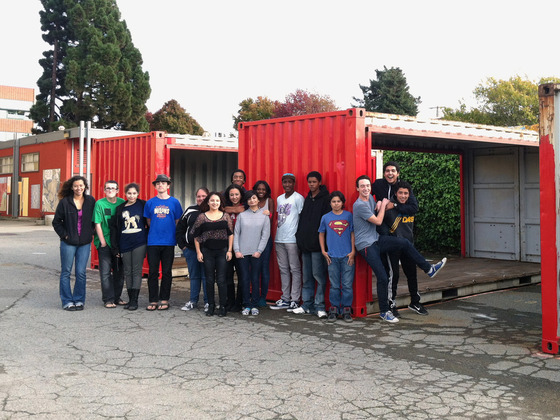
I’m not sure where I first read about Studio H, but I think you will be interested in this high school that engages students in hands-on construction from design to delivery.

The website explains: “Studio H is a public high school design/build curriculum that sparks community development through real-world, built projects. Originally launched in rural Bertie County, North Carolina, Studio H is now based at REALM Charter School in Berkeley, CA.

“By learning through a design sensibility, applied core subjects, and industry-relevant construction skills, students develop the creative capital, critical thinking, and citizenship necessary for their own success and for the future of their communities.

“Over the course of one semester, students earn high school credit and have the opportunity to design, prototype, and build a full-scale community project. Our students have designed and built some crazy chicken coops for families in need, and a 2,000-square-foot farmers market pavilion.”

More here.

Photographs: http://www.studio-h.org

Read Full Post »

Catch this story on National Public Radio today?

Jake Scott, a math teacher and wrestling coach in Silver Spring, Maryland, draws students in with clever ways to memorize formulas.

“Keeping control of the class is one thing, but holding their attention through complicated calculations and theorems is another challenge altogether. So Scott gets a little extra help from his alter ego, 2 Pi.

“About three years ago, Scott started infusing rap into his lessons.”

He describes to NPR’s David Greene his early lack of success in school, his time on the streets, the help he received from taking up wrestling, and the reasons he eventually got into math.

” ‘You know, when my dad lost his sight, I started doing accounting for him, and math was the one area that I was able to succeed in,’ Scott says. ‘Because of my time in the streets, my vocabulary wasn’t very extensive, and so I shied away from English. I was bored to death by history. Math, on the other hand — I didn’t need to know how to speak well in order to do well in math, so that was very helpful, when I look back. It helped me to grow in my appreciation for numbers.’

“Scott says that one of his most important goals as a teacher is to make meaningful connections with his students. This drive to connect with the kids in his classroom influenced him to begin rapping as 2 Pi.

” ‘I mean, I think that we can preach to kids until they turn blue and we turn blue, but if there’s no connection, then there’s no response,’ Scott says. ‘I mean, I constantly search for ways to connect with students — with the language, with conversations, music.” Read more here.


Read Full Post »

« Newer Posts - Older Posts »