Feeds:
Posts
Comments

Posts Tagged ‘libraries’

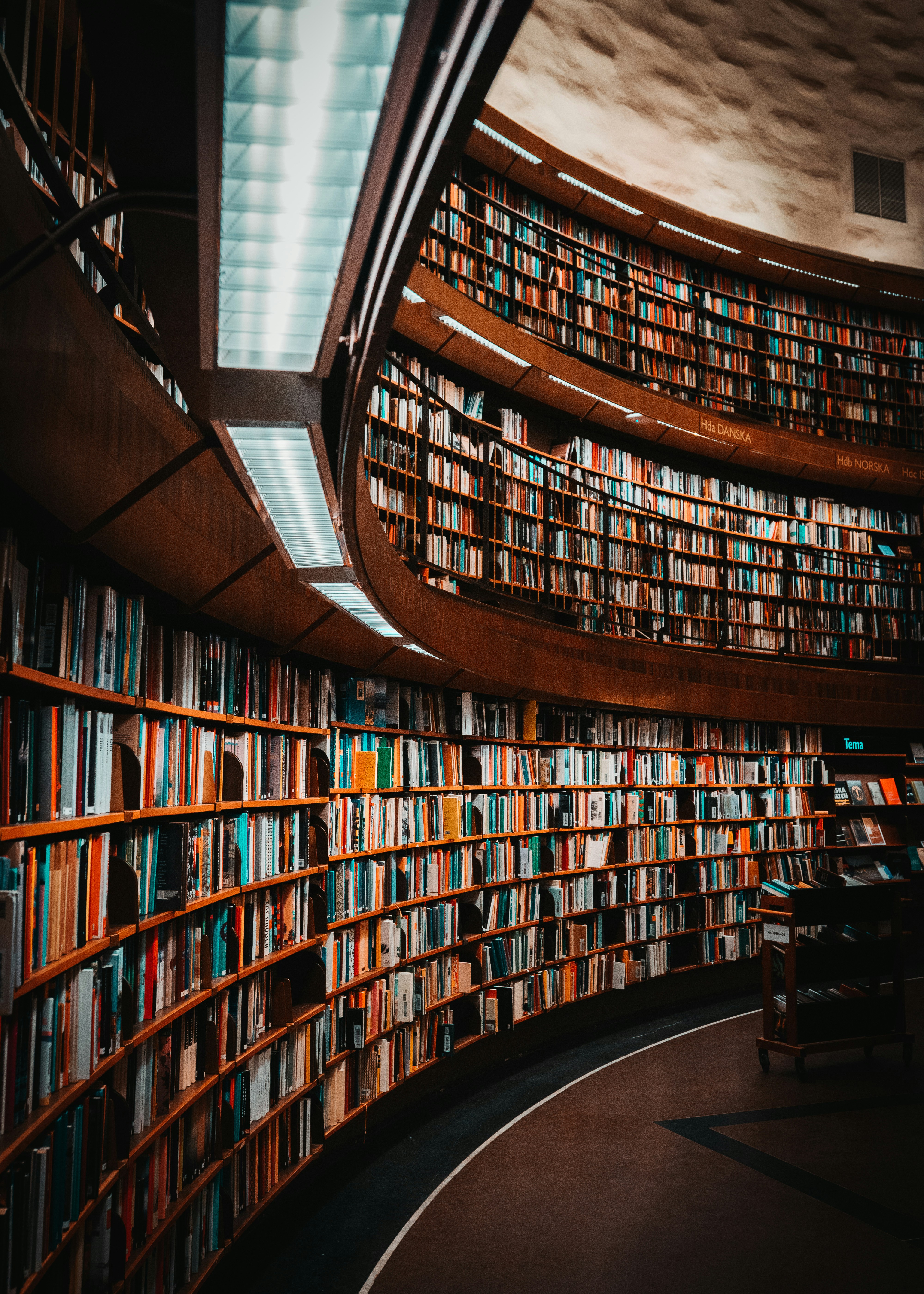
Photo: Emil Widlund/Unsplash.

Funny how quiet, unassuming institutions like libraries keep getting in the news! Today’s story is one example. But it’s not about libraries as sanctuaries during riots or about mild-mannered librarians standing up to book banning. It’s about the way libraries run themselves and how companies could learn something from them.

Criag Shapiro writes at Fast Company, “Walk into a library and you’ll feel it right away. It’s quiet but alive. People are reading, learning, applying for jobs, finding shelter, escaping for a moment into a story. No one’s selling anything. Yet the value being created is enormous.

“In 2022 (the most recent year for which we have data), there were 671 million visits to public libraries in the United States. … Despite changes in media habits, younger generations use libraries more than any other cohort (54% of Gen Zers and millennials in the U.S. reported visiting a physical library in the past year). And that’s not counting the millions more who use the myriad digital services public libraries offer. …

“We’re living in a time of rapid change. Trust in institutions is slipping. … AI is transforming the nature of work. Economic pressure is rising for employees, founders, and leaders alike. Against that backdrop, it’s tempting to think only in terms of efficiency, cost-cutting, and optimization.

“But there’s a deeper opportunity. What if long-term success is more about building environments where people feel inspired, curious, and connected? That’s what libraries do. And that’s what the best organizations of any kind are learning to do, too.

“Libraries don’t ask you to justify your interests. You can check out a book on astrophysics or attend a poetry reading. No one’s measuring your productivity. The door is open, and the invitation is simple: Explore.

“Great companies operate with a similar principle. They give people space to think. To chase ideas that might not have an immediate return. Not because it’s soft or unfocused, but because it leads to better breakthroughs. 

“On the way to becoming a company worth more than $2 trillion, Google famously gave employees ‘20% time,’ encouraging them to pursue passion projects without immediate commercial goals. This freedom led directly to innovations like Gmail, Google Maps, and AdSense. …

“A library is not about monetization. Yet its value shows up everywhere: literacy rates, employment readiness, civic health. The best organizations understand this. They offer more than a product. …

“Patagonia demonstrates this principle powerfully through its environmental activism, which goes far beyond selling outdoor gear. The company’s bold stances — from suing the government over environmental policies to donating profits to climate causes — might seem risky from a traditional business perspective. Yet Patagonia’s sales have quadrupled in the past decade to more than $1 billion annually. Patagonia’s commitment to meaning over pure profit resonates deeply with its community, strengthening brand loyalty and trust. …

“Libraries recognize that people are more than readers or borrowers. They offer after-school programs for children, job training for adults, and social services for those in need. They understand visitors have complex lives, and that growth rarely follows a single, predictable path.

“The best organizations understand this, too. Work is not just work. It’s identity. It’s purpose. It’s how people spend the majority of their waking hours. When leaders recognize that … people stay longer. They perform better. They build things they’re proud of. …

“Healthy people build healthy organizations. The modern library is more than books. It hosts résumé workshops. Offers tax help. Provides warmth in the winter. It meets people where they are. That’s a powerful concept for any organization.

“Consider Airbnb. What began as a way to find short-term lodging is steadily evolving into something broader: a platform for travel, connection, and cultural exchange. Now the company is expanding from where you stay to how you explore, offering everything from pasta-making in Rome to wildlife walks in Nairobi. It’s a bold attempt to transform a transactional service into a layered, participatory ecosystem that reflects the ways travelers want to feel at home in the world. 

“What if you stopped thinking of your offering as a single product or service? What if you thought of it as a foundation people could build from?

“Libraries remind us that value isn’t always immediate or measurable in quarterly reports. But it’s real. The impact accumulates over time, quietly compounding. The same can be true for any organization willing to think more expansively.

“Invest in culture. Make room for imagination. Support your people. Serve your community. Not because it looks good, but because it works.” More at Fast Company, here.

At this moment of pervasive anxiety in the US, I’m not sure businesses or employees can relax enough to experiment with being like libraries and librarians. What do you think? Is the analogy a stretch?

Read Full Post »

Photo: Oodihelsinki.
Veera the robot on patrol at $116 million Oodi library in Helsinki, Finland. Last year, the average Finn visited libraries nine times and borrowed 15 books.
Finns really love libraries.

Whenever I write about libraries, I think of blogger Laurie and the young adult fantasy series she wrote called the Great Library Series. Laurie is someone who appreciates the power of books, the magical power of reading.

Apparently the Finns do, too.

Oliver Moody reports at the Times [of London], “In the €100 million [~$115 million] Oodi library, which looms over central Helsinki like a cruise ship from the future, robots called Tatu, Patu and Veera trundle back and forth between the shelves and the reading rooms.

“Against this backdrop, foreign visitors might be surprised to see how many children and teenagers are engaged in an almost unsettlingly archaic activity: reading and borrowing books. …

“Last year the average Finn visited them nine times and borrowed 15 books, resulting in the highest lending figures for 20 years.

“The appetite for children’s and young adults’ literature has risen to a record for the third year in a row, with a total of 38 million loans in 2024. That works out at about 40 books or other pieces of material, such as audiobooks, for each person under the age of 18. …

“Even by the standards of a country that is often ranked as the most literate on the planet, the numbers are remarkable. In Britain, the total number of loans has fallen to less than half of what it was at the turn of the millennium, despite a tentative recovery in the wake of the pandemic, and about 40 libraries a year are closing.

“Visits to German public libraries are still about a fifth lower than they were before the advent of Covid-19 and about one in five of them has shut down over the past decade.

“The most obvious explanation for the phenomenon is that Finland values its libraries and invests accordingly. The state spends about €60 [~$70] per capita on the public library system each year, approximately four times as much as the UK and six times as much as Germany.

“Where other countries rely on corporate skyscrapers or shopping centers for their visions of architectural modernity, Finland often looks to its libraries, such as Oodi and Vallila in Helsinki, the main Metso library in Tampere, or the revered 20th-century designer Alvar Aalto’s projects in Rovaniemi and Seinajoki.

“They have traditionally served as engines of social mobility and integration. Erkki Sevanen, professor of literature at the University of Eastern Finland, grew up in a working-class family in Eura, a thinly populated district of villages 110 miles to the northwest of Helsinki.

“ ‘My parents and relatives did not used to read books, but there was a fine and well-equipped public library in our home village,’ he said. ‘It opened a whole world of classical literature and philosophy for me in the 1960s and 1970s.’

“Sevanen said the public libraries were a significant part of the reason he had ultimately pursued a university career, and that today they perform a similar function for immigrants to Finland. …

“The roots of this culture predate Finland’s independence in 1918. Like large parts of Scandinavia and continental northern Europe, it was profoundly influenced by Lutheran Protestantism and its insistence that each individual should engage with the texts of scripture for themselves.

“ ‘The ability to read was a requirement for everyone who wanted to get married. To demonstrate their reading skills, people were tested at church gatherings,’ said Ulla Richardson, professor of technology-enhanced language learning at the University of Jyvaskyla.

“The movement gathered steam in the 19th century, when Finland was a semi-autonomous duchy in the Russian empire and the new public libraries were focal points for an emerging sense of national identity.

“They remain important hubs for Finnish society, providing a space in which people can be alone and together at the same time. ‘Many Finns tend to consider libraries almost as sanctuaries,’ Richardson said.

“Alongside computers and internet access, they offer board games, video games, musical instruments, sewing machines, seasonal theatre passes and even sports equipment in some cases. These services are particularly valued by families with straitened financial means, who might not otherwise be able to afford school textbooks or other media.

“ ‘The libraries are spaces that children and teens can access freely, especially if they don’t have other places to go,’ said Richardson. ‘These days we also have self-service libraries open when there are no personnel working.’ ” More at the Times, here.

The point about libraries helping immigrants acclimate reminds me that when I was still volunteering onsite instead of online (before Covid), we would take classes of immigrants to the nearest public library in Providence and explain how to get a library card.

Read Full Post »

Photo: Nick Migwi/ CNN.
“I think that libraries are great equalizers,” says Book Bunk co-founder Angela Wachuka in Nairobi, Kenya.

Like many of you, I’m a big fan of reading books. In my family, I’ve always been known for gifts of books — books that I nearly always have read first so that I know they are right for the recipient. My aunt said she looked forward to the gifts no one else gave her on her birthday.

When I was a train commuter, I bought lightweight paperbacks to read while traveling, but after retirement, I became a devotee of the library, a place of magic, as blogger Laurie Graves knows more than most.

In recent years, Kenyan fans of libraries have been working to make them as accessible and lovely as possible.

Abdi Latif Dahir writes at the New York Times, “In 1931, the first library in Kenya’s capital, Nairobi, opened its doors — to white patrons only. Nearly a century later, Kenyans dressed in the slinky gowns, flapper headpieces and tweed suits of that era streamed into the now-dilapidated space in a celebration that was part fund-raiser for the remodel of the iconic building, part reclamation of the city’s public libraries as ‘palaces for the people.’

“ ‘Our public libraries can be glamorous spaces of storytelling,’ said Angela Wachuka, a Kenyan publisher. But, she added, ‘we are here to also reclaim history, to occupy its architecture and to subvert its intended use.’

“The restoration of the McMillan Memorial Library and others in the city was the brainchild of Wachuka and the novelist Wanjiru Koinange, who founded Book Bunk, a Kenyan nonprofit, in 2017 to restore and reclaim the city’s public libraries. The aim was to leave behind their excluding past and remake them into inclusive spaces. … Among their goals is to bring more books in African languages to the libraries, and incorporate services catering to those with visual, physical or reading disabilities. …

“As the guests streamed into the gala, in December, organizers urged them to think of themselves as ‘rebellious gate-crashers’ who, while dressed as those in the past, were about to embark on a radically different future in which libraries are an essential public good.

“Nairobi, a fast-growing city of over four million people, has very few bookstores or well-funded libraries. Book Bunk’s work comes amid heated conversations about urban design and about how corruption and colonial systems continue to shape the way public infrastructure and spaces are designed and who gets access to them.

“ ‘In the case of Nairobi, there’s almost an acceptance that certain social divisions should exist across social classes and different societal groups,’ said Constant Cap, an urban planner who has collaborated with Book Bunk in the past.

“Restoring public libraries, he said, could be an opportunity to break those barriers and bring together people from different socio-economic, ethnic, racial and religious backgrounds.

“For Wachuka and Koinange, the journey began a decade ago as they searched for a venue to host an event for the Kwani? [a literary magazine] literary festival. The two thought the McMillan library — built by Lady Lucy McMillan as a memorial to her American husband, Sir Northrup McMillan, and later bequeathed to the Nairobi City Council — would be an ideal venue given its centrality and connection to the city.

“But when they walked in, Wachuka said, they were surprised to see its crumbling state: Its interior neoclassical architecture was fading, its floors and walls were in ruinous condition and its collections were gathering dust.

“While they found another location for the event, the two immediately began researching the history and management structure of the McMillan library, and soon after, left their jobs to focus full time on its restoration.

“One of their earlier discoveries was that the McMillan library was the first of a series of other libraries built in the city. Only two were still open: the Makadara and Kaloleni libraries, in the city’s low-income eastern suburbs.

“After forming a partnership with the Nairobi city administration in 2018, Book Bunk first focused on restoring the two smaller libraries, prioritizing the needs of the communities there.

“The two branches have since reopened, with the Makadara library hosting storytelling sessions, film screenings, music performances and a literary festival. The Kaloleni branch is in a neighborhood built in the 1940s by Italian prisoners of war, and has become a hub for youngsters to do their homework and participate in workshops that help them, for example, learn how to make money using their creative talent.

“Joyce Nyairo, a Kenyan academic and cultural analyst, said that the restored libraries have the chance to be ‘great equalizers,’ particularly for people from disadvantaged backgrounds.”

More at the Times, here. I love the idea of asking Kenyans to envision themselves as “gate crashers” into spaces that should always have been theirs. Makes me think of One-Eyed Connelly, a famous gate crasher whose name my father borrowed for a pigeon that was always walking through our open doors.

Read Full Post »

Permission to Stay Warm

Photo: Henry Nicholls/Reuters.
Residents take shelter inside London’s Roehampton Library, Dec. 14, 2022. The library is being used as a “warm bank,” according to CSM, welcoming members of the community to spend time there in the winter months as an alternative to heating their homes amid increased energy costs.

After Russia invaded Ukraine a year ago, oil prices and heating costs went up for everyone. And rather than help people out, oil companies gave their windfall profits back to themselves. In the long run, that can only help to spur alternative energy development. But meanwhile, folks are just trying to keep warm.

Natasha Khullar Relph writes at the Christian Science Monitor, “String lights, boxes full of postcards to share a story, or a sign on the door that lists the top five David Bowie songs with the message, ‘Come in and argue’: There are many ways to make people happy to come out of the cold and into a public warm space, says Maff Potts. The key, he adds, is to make sure they feel welcome and not judged.

“ ‘What gets people in is that it’s not a church. It’s not a charity,’ says Mr. Potts, who founded Camerados, a social movement that’s been opening public living rooms in communities across the United Kingdom since 2015. ‘There’s no fixing, no answer. There’s just permission.’ …

“While the U.K. Health Security Agency is encouraging people to warm their homes to at least 18 degrees Celsius (64.4 F), more than 3 million low-income households cannot afford to heed this advice.

According to analysis by the Joseph Rowntree Foundation, around 710,000 households across the U.K. cannot pay for warm clothing, heating, and food, with approximately 2.5 million households – a fifth of all low-income households – going without both food and heating.

“And with power prices hitting record levels and energy costs double what they were last year, warm spaces have popped up all over the country. To avoid any potential stigma, they’re being presented as communal spaces where people can come to chat rather than charitable offerings of heat or food. While the main reason someone would go to a warm space or public living room is most likely to be warmth, it’s the camaraderie and conversation that keeps people there. …

“Britain’s poor people face the worst winter in living memory, tweeted former Prime Minister Gordon Brown in December. ‘A year ago we talked about people having to choose between heating and eating, now many can’t afford either,’ he wrote. Two-thirds of the country will be in fuel poverty come April, which includes 70% of pensioners [retirees] and 96% of single-parent families with two or more kids, he noted. …

“If you’re struggling to pay to heat your home, you only really have three options, says Matt Copeland, NEA’s head of policy: You could rack up debt with your energy supplier, ration your energy and use less than you need to stay warm, or simply turn off the heating, the impact of which can be significant. Research shows that more people die from cold homes than they do from alcohol’s short- and long-term effects, Parkinson’s disease, or traffic accidents.

“ ‘We know of households with prepayment meters who just can’t afford to top them up at all,’ says Mr. Copeland. ‘They’re going days, weeks, and sometimes months without access to energy.’ …

“Where the government is failing, communities are stepping up. ‘It is completely absurd that one of the 10 richest countries in the world can’t put a sufficient priority on things and make the right choices so that we have somewhere to keep people warm,’ says Mr. Potts of Camerados, whose public living rooms are now being used as templates for warm spaces around the country. After almost 30 years of working with people at the margins, Mr. Potts says he doesn’t have faith that the solution lies in the civil service. …

“An LGBTQ+ community space in Brighton. A bakery in North Yorkshire. A gaming cafe and ‘geek culture’ store in Ipswich. A vegetarian restaurant in Tunbridge Wells. A brewery in Devon. A former shoe store in Worcestershire. Warm spaces are popping up all around the country, in all manner of ways, in a community effort that started organically, from the grassroots, without a central organizer.

“In addition to community halls and churches, hotels, hairdressers, and cricket clubs are opening up their doors for anyone who needs some warmth, some company, and perhaps even a drink. Even legendary soccer club Manchester United has gotten in on the action and is offering Old Trafford, the club’s stadium, as a free warm hub, with its restaurant, the Red Café, opening its doors on Monday and Wednesday evenings ‘to help those facing difficult months ahead.’

“The Warm Welcome campaign, an organization that has encouraged thousands of faith groups, charities, and businesses to provide such public spaces, said they’d seen 80,000 people use their facilities during December’s cold snap. The campaign notes that there are now warm spaces in every town and city in the country, and lists over 3,200 venues on their website, which include spaces run by local authorities, charities, and businesses. …

“ ‘What we have in Brighton and Hove is a tremendous community-mindedness among residents. Despite the stark reality facing residents this winter, people have stuck together and they’ve really helped each other through some of the starkest problems,’ says Brighton and Hove City Council Leader Phélim Mac Cafferty, who notes there are more than 40 warm spaces available to the public across the city. …

“This nationwide response to the energy crisis is unique in how much of a community effort it is. The effort to create warm spaces was neither government- nor council-led, nor the work of any one particular organization. As the need became obvious, first volunteers, then organizations, and later local councils jumped in feet first.”

More at the Monitor, here. No firewall.

Read Full Post »

1584999155004-gettyimages-161025682

Photo: Karl Gehring/Denver Post via Getty Images
According to
Vice, the FCC needs to clarify whether libraries lose their subsidized rates during Covid-19 social distancing if they offer wifi away from their buildings.

Libraries, as usual in a crisis, are stepping up. Remember the critical role of the Ferguson Library during the 2014 riots in Ferguson, Missouri? I’ve been following that library on social media since then, and I’m impressed with what it does for the community and how fast it responds to needs.

Now, during social distancing, libraries are offering wifi hotspots via bookmobiles. Karl Bode reports at Vice, “As millions of Americans hunker down to slow the spread of coronavirus, the lack of affordable broadband access has become a far more pressing problem.

“The FCC’s 2019 Broadband Deployment Report states that 21.3 million Americans lack access to any broadband whatsoever, be it cable, DSL, fiber, or wireless. Recent studies suggest that number is actually twice that thanks to inaccurate FCC broadband availability maps.

“It’s a problem that is notably worse in many low-income and minority communities, long-neglected by the nation’s incumbent broadband monopolies.

“For many Americans, the local library is their best and sometimes only opportunity to get online. But with many schools and libraries closing to protect public health, these users are losing access to a valuable resource in a time of crisis.

“In a letter to the FCC [March 19] the American Library Association (ALA) floated a solution: why not turn the nation’s 16,557 public libraries into free, communal broadband Wi-Fi hotspots, then extend that access into the broader communities that surround them?

“American libraries are subsidized by the FCC E-Rate program, which helps them obtain and deliver broadband access to bridge the digital divide. But the ALA said libraries were worried that the [current administration] —which has taken aim at the program in recent years — would penalize them for extending broadband access to users that are technically not on library property. …

“The ALA urged the FCC to waive E-rate restrictions so libraries could not only offer Wi-Fi access via local libraries, but could also provide broadband service to disconnected communities via bookmobiles and mobile hotspots without running afoul of FCC rules. …

“Former FCC lawyer Gigi Sohn told Motherboard that the FCC has more than $1 billion in available funding from the last round of E-rate subsidies, and could easily waive E-rate restrictions during a crisis. …

“On Monday the FCC issued a statement making it clear that libraries would not be penalized under E-Rate rules for extending Wi-Fi access beyond their property boundaries. …

“While the FCC said it was ok for libraries to leave their hotspots running during the pandemic, the agency simply ignored libraries’ questions as to whether they’d be penalized for extending access into the broader community. …

” ‘We are pleased that the FCC, in response to our request, has clarified that schools and libraries may leave their Wi-Fi networks on for community use without jeopardizing their E-rate funding,’ the The SHLB Coalition said in a statement. ‘The SHLB Coalition now encourages the FCC to take the next step and grant the Petition of the Boulder Valley School District to permit schools and libraries to extend their broadband services to surrounding residential consumers.’ ”

More at Vice, here.

Read Full Post »

photo

Photo: The Art Newspaper
ProjectArt provides free after-school arts classes to children and teens at public libraries in major US cities.

When Suzanne lived in Harlem in the early 2000s, she loved her volunteer gig at a free arts program for kids who were not getting arts education in the city schools. Today I still follow FreeArtsNYC on Facebook, where I especially love the quotes from children inspired by the program.

As Tess Thackara writes at UK-based The Art Newspaper, “Exposure to the arts gives us the tools to know ourselves and others better. It bolsters our self-esteem, helps us communicate and improves our performance in academic or professional areas of our lives. … Yet, since the 1980s, access to arts education for American schoolchildren has been on the decline — particularly in school districts with high populations of minority students. …

“But where the American public school system is failing children, non-profits are stepping in to fill the void, and one in particular has ambitious plans to become the largest free art school for children in the country.

“[ProjectArt], an initiative founded by Adarsh Alphons in Harlem in 2011, is expanding to New Orleans and San Francisco, bringing arts access to two cities with large communities of homeless young people and giving the organisation a presence in a total of eight cities across the US. …

“Its executive director, Diana Buckley Muchmore, who has led the organisation’s daily operations since last November, volunteered with ProjectArt in its early days, and one experience impressed on her the impact that art can make in a child’s development.

“Joining her friend Alphons in teaching a class of ten students in a Harlem community center, Buckley Muchmore met a boy named Malikai. ‘He was non-verbal, very quiet, but I connected with him through a sculpture he was making out of foil and through this art-making, he slowly started to open up to describe his work,’ she remembers. …

“Since then, Buckley Muchmore has watched as ProjectArt has embraced a model, adopted in 2012, of partnering with the country’s public library systems. The libraries give them free space, access to existing communities and materials to inspire the children’s creations. ‘There are 16,000 public libraries in the US; there are 14,000 Starbucks — to give you an idea of the magnitude of libraries,’ she says.

“Artist-teachers, who go through a competitive review and interview process, receive a studio in a library, in addition to payment, and make their own work throughout the year, often in collaboration with the students. Students showcase their work in an exhibition at the end of the school year.

“In the meantime, the organisation is working to serve the particular needs (and capitalise on the assets) of its newest cities. In San Francisco … [Buckley Muchmore has] an eye on big companies like Airbnb and Adobe, which she hopes to approach for corporate funding. (The organisation also receives grants from foundations and individual donors.) …

” ‘In terms of less populated communities, we’ll get there too,’ says Buckley Muchmore. ‘Eventually, we’ll be in all the cities that have libraries.’ ” More here.

The model is a little different from Free Arts NYC, which relies more on volunteers, but it’s similar to one my friend Meredith founded in Lowell, Mass., which had practicing artists doing the teaching. In all three models, the classes are free for students.

Oh! And do add “Muchmore” to your list of interesting names!

Read Full Post »

In our town, the library has launched a big campaign to raise money for an addition that will meet the evolving needs of library users. It’s already a wonderful library, and because it is the purview partly of the town and partly of an independent corporation, it has been protected from the budget cuts that have plagued many municipal libraries.

Libraries will always be important for books, but today they are also multiservice community centers that people trust. I think, for example, of the Ferguson Library, which sheltered frightened residents during days of violent clashes after the death of Michael Brown.

At the Nonprofit Quarterly (NPQ), Steve Dubb adds, “Libraries have continued to grow as their role as community hubs deepens. Here at NPQ, we have profiled libraries that have become maker spaces, supported gardening, and rented out musical instruments. …

“Yet another growing role, Emily Nonko reports in Next City, is in social service provision. Nonko notes that up to 30 libraries nationally, including in places like Chicago, Brooklyn, Denver, San Francisco, and Washington DC, have social workers on staff. A Chicago Tribune article last year mentioned  that Justine Janis, a clinical social worker at the Chicago library, was leading a national monthly conference call of social service workers on library staff.

“Nonko in particular focuses on efforts in San Francisco and Denver. [For instance, in] 2019, Denver Public Library budgeted for a team of 10, including four social workers and six peer navigators. The team, Nonko adds, supports all 26 branch locations.

“[Denver social worker Elissa] Hardy explains the Denver program’s rationale: ‘In social work we have this term called a “protective factor.” The library is a protective factor for people, which is basically a place or a thing where we’re helping to support people, and not change things negatively for them.’

“Certainly, anything that increases social supports is likely to improve public health. As the Brookings Institution and the Robert Wood Johnson Foundation have argued, the US underspends on social supports (and overspends on clinical care). In the American Journal of Managed Care, Ara Ohanian notes that, ‘On average, OECD [Organization for Economic Cooperation and Development] nations spend $1.70 on social services for every $1 on health services; whereas the US spends just 56 cents.’ …

“Libraries, of course, are just one piece of a larger puzzle, but they do make a difference. Leah Esguerra, who was the first clinical social worker hired by the San Francisco library system, tells Nonko that, ‘The idea was to reach out in a way that’s compassionate.’ Now, Nonko explains, the San Francisco Public Library now has a team of five that supports Esguerra. These social workers inform patrons about resources and services and have helped at least 130 people find stable housing.”

More at NPQ, here. My local library is not planning those kinds of services, but it’s positioning itself for the future. And to that end, it has interviewed an impressive range of constituencies, sometimes more than once. Very soon there will be new items available like seeds and tools you need only once in a while. There will be spaces just for teens or for adults to have coffee and chat. There will be improved areas for children, a shared garden, and more.

Read Full Post »

Photo: Goodman-Paxton Photographic Collection/Kentucky Digital Library
A Pack Horse Librarian returning over the mountainside for a new supply of books.

Here’s another story about dedicated book people making sure that books get to people in remote places. This one is from the 1930s Depression in the United States.

Eliza McGraw writes at Smithsonian, “Their horses splashed through iced-over creeks. Librarians rode up into the Kentucky mountains, their saddlebags stuffed with books, doling out reading material to isolated rural people. …

“The Pack Horse Library initiative, which sent librarians deep into Appalachia, was one of the New Deal’s most unique plans. The project, as implemented by the Works Progress Administration (WPA), distributed reading material to the people who lived in the craggy, 10,000-square-mile portion of eastern Kentucky. …

“In 1930, up to 31 percent of people in eastern Kentucky couldn’t read. Residents wanted to learn, notes historian Donald C. Boyd. Coal and railroads, poised to industrialize eastern Kentucky, loomed large in the minds of many Appalachians who were ready to take part in the hoped prosperity that would bring. ‘Workers viewed the sudden economic changes as a threat to their survival and literacy as a means of escape from a vicious economic trap,’ writes Boyd. …

“There had been previous attempts to get books into the remote region. In 1913, a Kentuckian named May Stafford solicited money to take books to rural people on horseback, but her project only lasted one year. …

“Unlike many New Deal projects, the packhorse plan required help from locals. ‘Libraries’ were housed any in facility that would step up, from churches to post offices. Librarians manned these outposts, giving books to carriers who then climbed aboard their mules or horses, panniers loaded with books, and headed into the hills. …

“Carriers rode out at least twice a month, with each route covering 100 to 120 miles a week. …

“The books and magazines they carried usually came from outside donations. [Lena Nofcier, who chaired library services for the Kentucky Congress of Parents and Teachers at the time] requested them through the local parent-teacher association. She traveled around the state, asking people in more affluent and accessible regions to help their fellow Kentuckians in Appalachia. …

” ‘ “Bring me a book to read,” is the cry of every child as he runs to meet the librarian with whom he has become acquainted,’ wrote one Pack Horse Library supervisor. ‘Not a certain book, but any kind of book. The child has read none of them.’ …

“Some mountain families initially resisted the librarians, suspicious of outsiders riding in with unknown materials. In a bid to earn their trust, carriers would read Bible passages aloud. Many had only heard them through oral tradition, and the idea that the packhorse librarians could offer access to the Bible cast a positive light on their other materials.”

More here.

Read Full Post »

You probably know that a library is a haven. But in case you didn’t, here is a story about what libraries mean to New Yorkers these days.

Winnie Hu writes at the NY Times, “Matthew Carter’s summer hideaway … does not require a car ride or a small fortune to keep up.

“Mr. Carter, 32, an adjunct professor of music at the City College of New York, simply holes up at the Inwood Library in northern Manhattan with his research books. It is quiet, air-conditioned and open every day.

“ ‘I’m a total leech of public libraries,’ he said. ‘It’s my summer hangout. It’s where I spend the majority of my time, and where I’m most productive.’ …

“Far from becoming irrelevant in the digital age, libraries in New York City and around the nation are thriving: adding weekend and evening hours; hiring more librarians and staff; and expanding their catalog of classes and services to include things like job counseling, coding classes and knitting groups. …

“Sari Feldman, president of the American Library Association, said library workers had shown people how to file online for welfare benefits and taught classes in science, technology, engineering and math to children who could not afford to go to summer camps. …

“A recent contest to recognize neighborhood libraries underscored their vitality: 18,766 online and paper nominations were submitted in one month, up from about 4,300 when the yearly competition was started in 2013. Nearly every library was nominated at least once. Some received hundreds of nods.

“One young man wrote that he was homeless when he started going to the Arverne branch of the Queens Library, where the staff not only helped him study to become a security guard but also hired him to work as a mentor to teenagers. Today, that man, Richard Johnson, has two jobs and his own apartment.

” ‘Ever since becoming a member of the Queens Library, I have been bettering my life,’ he wrote in his statement. …

“The recent gains by libraries have delighted Christian Zabriskie, a librarian and executive director of Urban Librarians Unite, an advocacy and education group that organizes an annual ‘read-in,’ in which people take turns reading nonstop for 24 hours, to support the libraries.

“ ‘In New York City, there is somebody using library materials every second, every day of the year,’ Mr. Zabriskie said. ‘It’s showing that libraries are the fabric of society.’ “

More here.

Photo: Alex Wroblewski for The New York Times
The Inwood Library in northern Manhattan is quiet, air-conditioned and open every day.

Read Full Post »

In a delightful post at BookRiot.com, blogger David Attig offers some of his research on bookmobiles and libraries in out-of-the-way places.

In one example, he writes about “a delightful twist on the Pack Horse Library. Since 1990, teacher-turned-mobile-librarian Luis Soriano has brought books to thousands of children in rural Colombia, all from the back of a donkey. The biblioburro, as Soriano calls it, helps poor children have access to more books and thus a chance at a better education. ‘That’s how a community changes and the child becomes a good citizen and a useful person,’ Soriano told CNN. ‘Literature is how we connect them with the world.’ Soriano and his biblioburro are the subject of a children’s book by Monica Brown and John Parra, proceeds from the sale of which go to support Soriano’s work.”

“Derek Attig writes and teaches about book culture, technology, and history,” says BookRiot. “In addition to writing a book about bookmobiles in American life, he blogs at Bookmobility.org.”

Read the whole post at BookRiot, where you will find a Works Progress Administration bookmobile visiting Bayou De Large, Louisiana, pack horse librarians posing in Hindman, Kentucky, a booketeria in a Nashville supermarket, a vending machine library at a Bay Area school, a library at Amsterdam Schiphol Airport, and more.

Photo: Luis Soriano

Read Full Post »

Art: Vita Wells
‘Flights of mind,’ 2007. Book, hair, lights, fan, key, screws, hinges, glue.

Maria Popova’s website, Brain Pickings, is a never-ending source of inspiration, and my only regret is that when her e-newsletter arrives each week, there never is enough time to savor it.

In a recent one, she was a reviewed Art Made from Books: Altered, Sculpted, Carved, Transformed, which she got at the library. The pictures are terrific and remind me of other items we’ve featured. (Remember the lead from Asakiyume about the stealth artist in Scotland who made sculptures from books and left them in libraries? I wrote about that here.)

“As a fervent lover of papercraft, book sculpture, and creative repurposing of physical books,” writes Popova at Brain Pickings, “I was instantly taken with Art Made from Books: Altered, Sculpted, Carved, Transformed (public library) — a compendium of extraordinary artworks from the around the world, using the physical book as raw material for creative contemplation and cultural commentary.

“Sensual, rugged, breathtakingly intricate, ranging from ‘literary jewelry’ to paperback chess sets to giant area rugs woven of discarded book spines, these cut and carved tomes remind us that art is not a thing but a way — a way of being in the world that transmutes its dead cells into living materials, its cultural legacy into ever-evolving art forms and creative sensibilities.”

Read more here, and be amazed by the other pictures of book art.

Art: Jennifer Khoshbin
“Prove It,” 2009, cut book.

Read Full Post »

A Little Free Library has come to Cambridge.

Writes Jan Gardner at the Sunday Globe, “About a block from the Cambridge Public Library, its Lilliputian cousin is perched atop a post on the sidewalk. At this Little Free Library, open since mid-October, there are no due dates, late fees, or library cards. Made out of recycled wood, it consists of a single shelf that holds about 20 books.

“The library’s founders are Laura Roberts and Ed Belove who put it in front of their house at 1715 Cambridge St. so they can keep an eye on it. …

“Sabrina Françon, a student at the nearby Harvard Graduate School of Design, sees the Little Free Library as an example of tactical urbanism, a trend she is studying. She wants to determine whether small playful citizen projects like the Little Free Library influence a neighborhood’s social capital.” Roberts reports to Françon what she sees from the window.

“The little library had its origins on Facebook. A friend of Roberts posted a message about Little Free Library, a nonprofit that started in Wisconsin three years ago. Founder Todd Bol built the first library in tribute to his late mother, a book lover.”

More from the Globe. You may also want to read my earlier post on the concept here. By the way, have you ever noticed that the Globe posts weekday articles fast, but Sunday Globe articles like this one may wait until Tuesday.

Photograph: Laura Roberts

Read Full Post »

I remember trying some years ago to persuade a certain lobster fisherman I know that fiction has value. A recent Boston Sunday Globe article has left me feeling validated.

Washington & Jefferson College’s Jonathan Gottschall writes, “Fiction seems to be more effective at changing beliefs than nonfiction, which is designed to persuade through argument and evidence. Studies show that when we read nonfiction, we read with our shields up. We are critical and skeptical. But when we are absorbed in a story, we drop our intellectual guard. We are moved emotionally, and this seems to make us rubbery and easy to shape. But perhaps the most impressive finding is just how fiction shapes us: mainly for the better, not for the worse. Fiction enhances our ability to understand other people; it promotes a deep morality that cuts across religious and political creeds.”

Read more here.

As Dickens said in Hard Times, it’s important to make room for Queen Mab among all the hard facts.


Read Full Post »

The other day John brought up the topic of Andrew Carnegie. Whatever else might be said about this 19th Century steel baron, you have to give him credit for putting so much of his fortune into philanthropy, especially libraries.

Today John Wood is carrying on that work in impoverished countries around the world. As Nicholas Kristof writes in the NY Times, “Wood’s charity, Room to Read, has opened 12,000 … libraries around the world, along with 1,500 schools. …

“He has opened nearly five times as many libraries as Carnegie, even if his are mostly single-room affairs that look nothing like the grand Carnegie libraries. Room to Read is one of America’s fastest-growing charities and is now opening new libraries at an astonishing clip of six a day. …

“He also runs Room to Read with an aggressive businesslike efficiency that he learned at Microsoft, attacking illiteracy as if it were Netscape. He tells supporters that they aren’t donating to charity but making an investment: Where can you get more bang for the buck than starting a library for $5,000? …

“ ‘In 20 years,’ Wood told me, ‘I’d like to have 100,000 libraries, reaching 50 million kids. Our 50-year goal is to reverse the notion that any child can be told “you were born in the wrong place at the wrong time and so you will not get educated.” ‘ ” Read more.

Photograph of John Wood: Room to Read

Read Full Post »

The other day on an American Public Media radio broadcast, I heard a story about Better Block Houston and its approach to urban revitalization. “The Better Block is a national movement which originated in the Oak Cliff neighborhood of Dallas. Better Block projects have improved neighborhoods in Chicago, Dallas, Fort Worth, Portland, and Memphis.”

Concerned residents focus on a vision for one block and throw a daylong event showing the potential.  The idea is that visitors might come to see the event and its special one-day amenities and would then notice cool things about the area and decide to return. New businesses might decide to move in. Sounds like wishful thinking, but the Better Block folks claim the approach is attracting more foot traffic and business.

“The ‘Better Block’ project provides a one-day living workshop of how a ‘Complete Street’ works, by actively engaging the community, helping them to visualize better outcomes for the future, and empowering them to provide feedback in real time. Better Block is a fun and interactive demonstration of a ‘Complete Street’ — and what it can do for a neighborhood. Complete Streets …  are designed and operated to enable safe access for all users. Pedestrians, bicyclists, motorists and transit riders of all ages and abilities must be able to safely move along and across a complete street. Complete Streets make it easy to cross the street, walk to shops, and bicycle to work. They allow buses to run on time and make it safe for people to walk to and from train stations.”

In Boston, a young couple I know, Sam and Leslie Davol, had an idea to set up a temporary library in Chinatown, which had not had a branch library in decades. Their project made use of a storefront that had been vacant during the economic downturn.

Leslie just sent out an e-mail about what they’re working on next: The Uni Project.

“Many of you know the Storefront Library, which Sam and I undertook in a vacant storefront in Boston’s Chinatown last year. That project had a big impact on us, just as it did on the Chinatown community. Since then, we’ve helped several local groups take over the books and Chinatown’s library advocacy, and we’ve spent time exploring a broader need for places like libraries in urban neighborhoods and cities generally. …

“The Uni is a portable infrastructure that will allow us to quickly deploy and create staffed, open-air reading rooms in almost any available urban space. The Uni is based on a system of cubes, and the books inside those cubes are just the start. Like libraries, we plan to use the Uni to provide a compelling venue for readings, talks, workshops, and screenings, through partnerships with local organizations and institutions. And the best part, once we fabricate this lightweight infrastructure, we can keep it running, serve multiple locations, and even replicate it.” Read about The Uni Project here.

8/11/12 update on Uni Project here. Now it’s even in Kazakhstan.

Read Full Post »