After a delightful morning with my granddaughter and my older grandson, I went to Providence to hang out with my younger grandson and Suzanne and a good friend.
I caught up with them at the park, where the farmers market was winding down and a free summer concert was revving up: the annual Summit Music Festival. (Check it out here.)
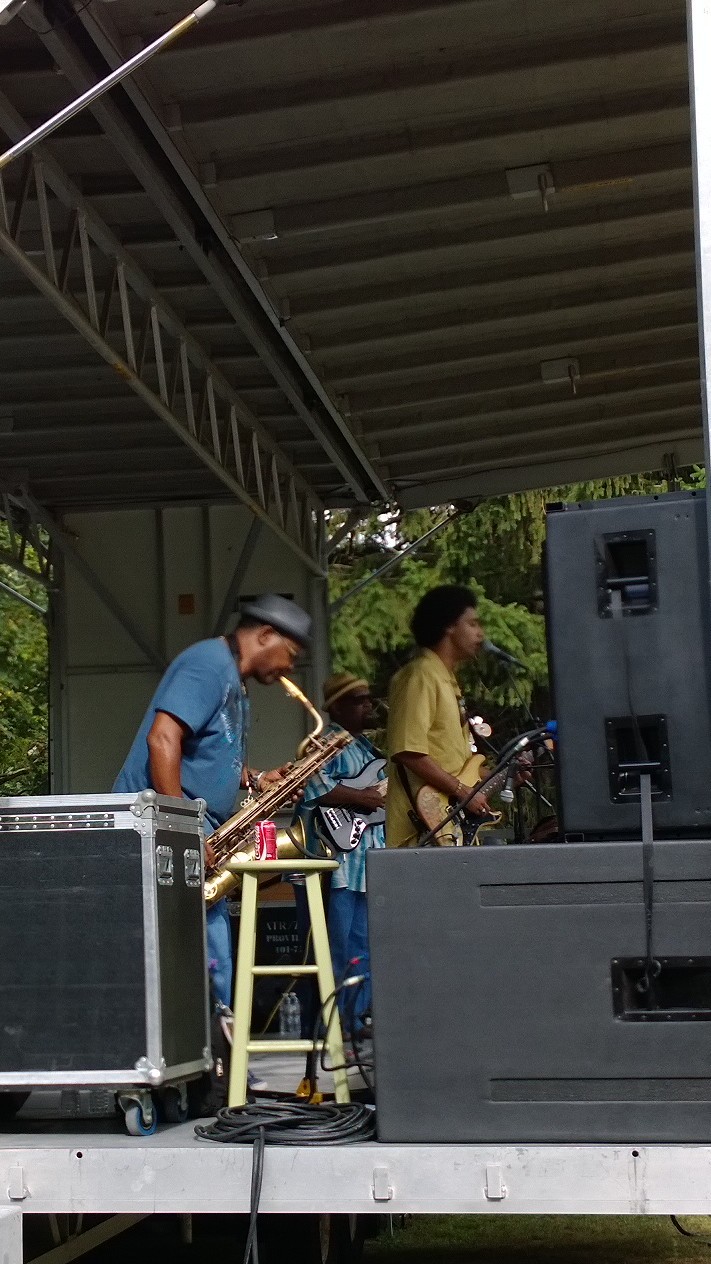
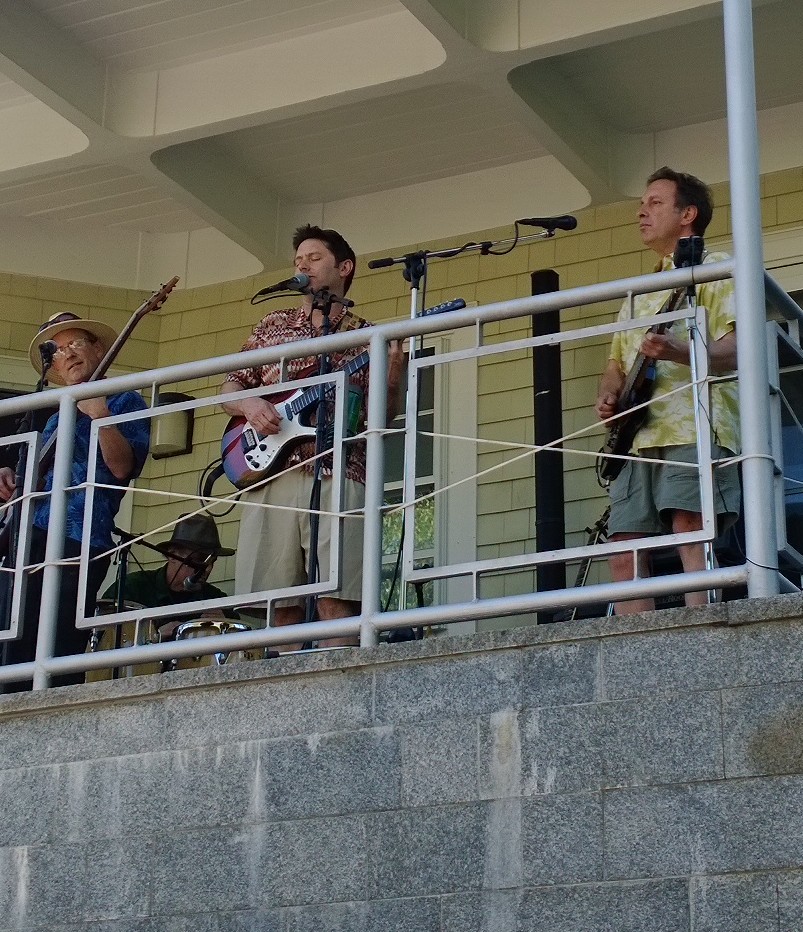
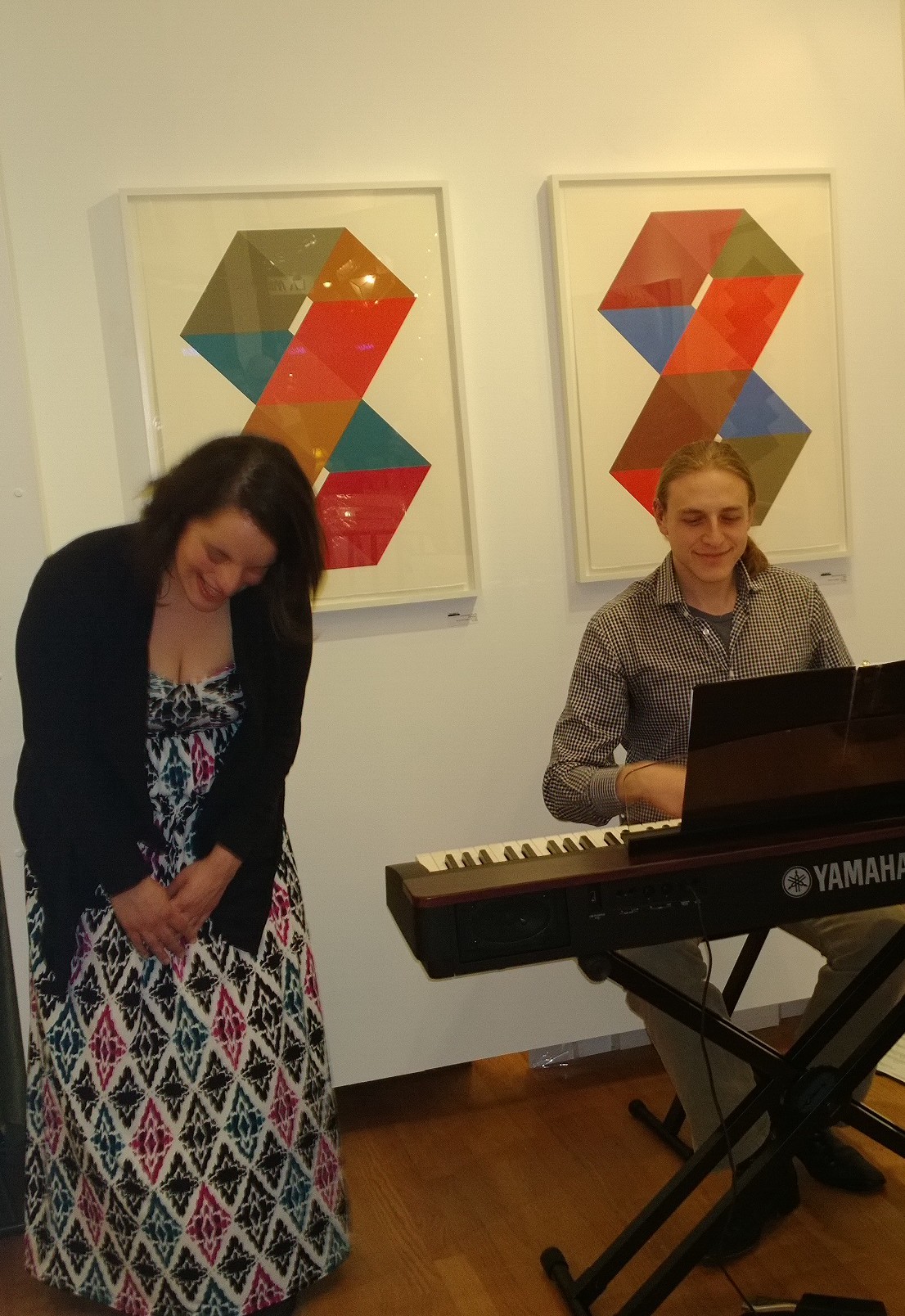
The four of us liked a blues group called the Selwyn Birchwood Band (pictured) and another band called Smith and Weeden. The ice cream eater below had reservations about a third performance. Everyone’s a critic.
We spent a chunk of time going “higher, higher” on the swing in the playground and watching a multi-ethnic group of small boys kick a soccer ball. (How brave it is to go up to boys you don’t know and ask to play!) We skipped the face painting, which was gorgeous but, to a 2-year-old, kind of pointless. We watched kids and grownups painting a mural wall.
In case you missed it, there’s a new movie about using elderly people’s favorite music to call them back from dementia or Alzheimer’s.
The website for Alive Inside: A Story of Music and Memory says the movie is an “exploration of music’s capacity to reawaken our souls and uncover the deepest parts of our humanity. Filmmaker Michael Rossato-Bennett chronicles the astonishing experiences of individuals around the country who have been revitalized through the simple experience of listening to music.”
The documentary follows “social worker Dan Cohen, founder of the nonprofit organization Music & Memory, as he fights against a broken healthcare system to demonstrate music’s ability to combat memory loss and restore a deep sense of self to those suffering from it. Rossato-Bennett visits family members who have witnessed the miraculous effects of personalized music on their loved ones, and offers illuminating interviews with experts including renowned neurologist and best-selling author Oliver Sacks (Musicophilia: Tales of Music and the Brain) and musician Bobby McFerrin (‘Don’t Worry, Be Happy’).”
At the Washington Post, Michael Sullivan writes, “The benefits of music to enliven and awaken the senses are not limited to those with dementia. ‘Alive Inside’ also focuses on a woman who suffers from schizophrenia and bipolar disorder, and on a man with multiple sclerosis. The scenes in which they and others are shown listening to music that has personal meaning are absolutely joyous, but they also might move you to tears.
“As the movie makes clear, none of these conditions are reversible. Music isn’t a cure for anything. But it does seem to be a key to unlocking long-closed doors and establishing connections with people who have become, through age or infirmity, imprisoned inside themselves.” More.
Hmmm. It seems that in addition to making wills, we should all be writing lists of the music that we have enjoyed in our lives so that people know what to play. Should I go with “Swan Lake” and “The New World Symphony” or “For the Beauty of the Earth” and “Mary’s Boychild”? Or how about the Platters and Elvis and Nina Simone and Edif Piaf or musicals like Nine and Chess. Anything in a minor key.
Claire swims in Walden Pond before work. I take a lazy walk. Other people run or go to the gym. But in Brooklyn, you have the option of a dance party at a club.
Stacey Anderson has the story at the NY Times: “It was a typically raucous scene in Williamsburg, Brooklyn … . However, not all was familiar at this rave called Daybreaker, held at the club Verboten. For a start, the 400 young participants wore athletic clothing and pressed office wear rather than skimpy dresses and droll T-shirts. Some were bright-eyed, but just as many yawned and clutched cups of coffee. …
“The Daybreaker dance party, which runs from 7 to 9 a.m. three times a month, is one of two new early electronic diversions finding audiences in Brooklyn and Manhattan. Branded as both a morning workout option and a wholesome inversion of dance culture, the events are novel beyond their sunrise start times: They are alcohol-free, with coffee and fruit-infused water distributed at the bar instead of the customary club libations. The event, which had its debut in December and moves from place to place, darkens its spaces to mimic the typical rave experience, quite convincingly.
“ ‘It’s like a casino in here; there’s no idea of time,’ said Malcolm Ring, 24, a financial analyst. He woke at 5:30 a.m. to attend this Daybreaker party, his first. ‘I would normally go for a run right now, but this is more enjoyable.’ ”
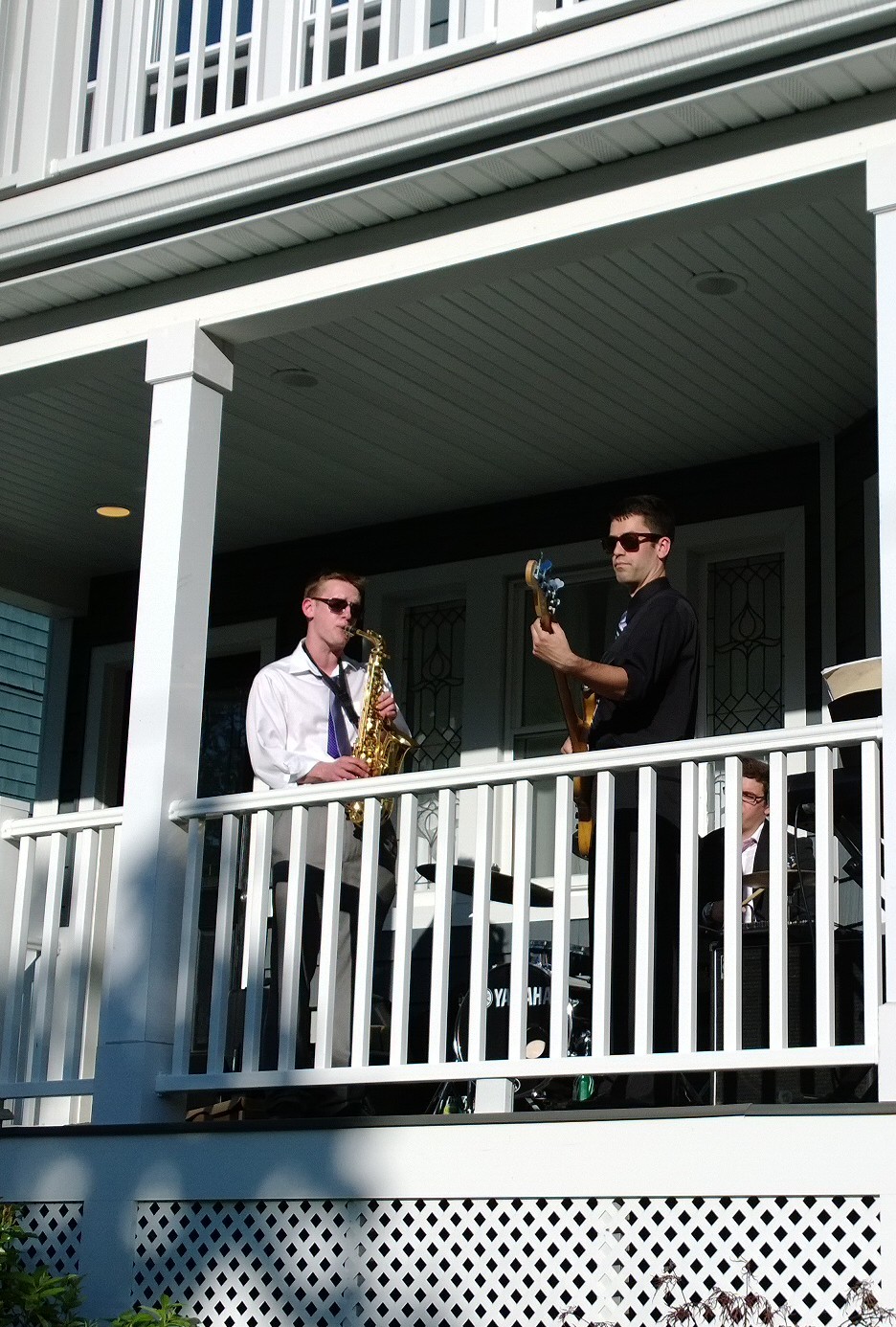
The rainy Saturday turned out to be gorgeous, so we went to the Somerville PorchFest and ran into some people we know.
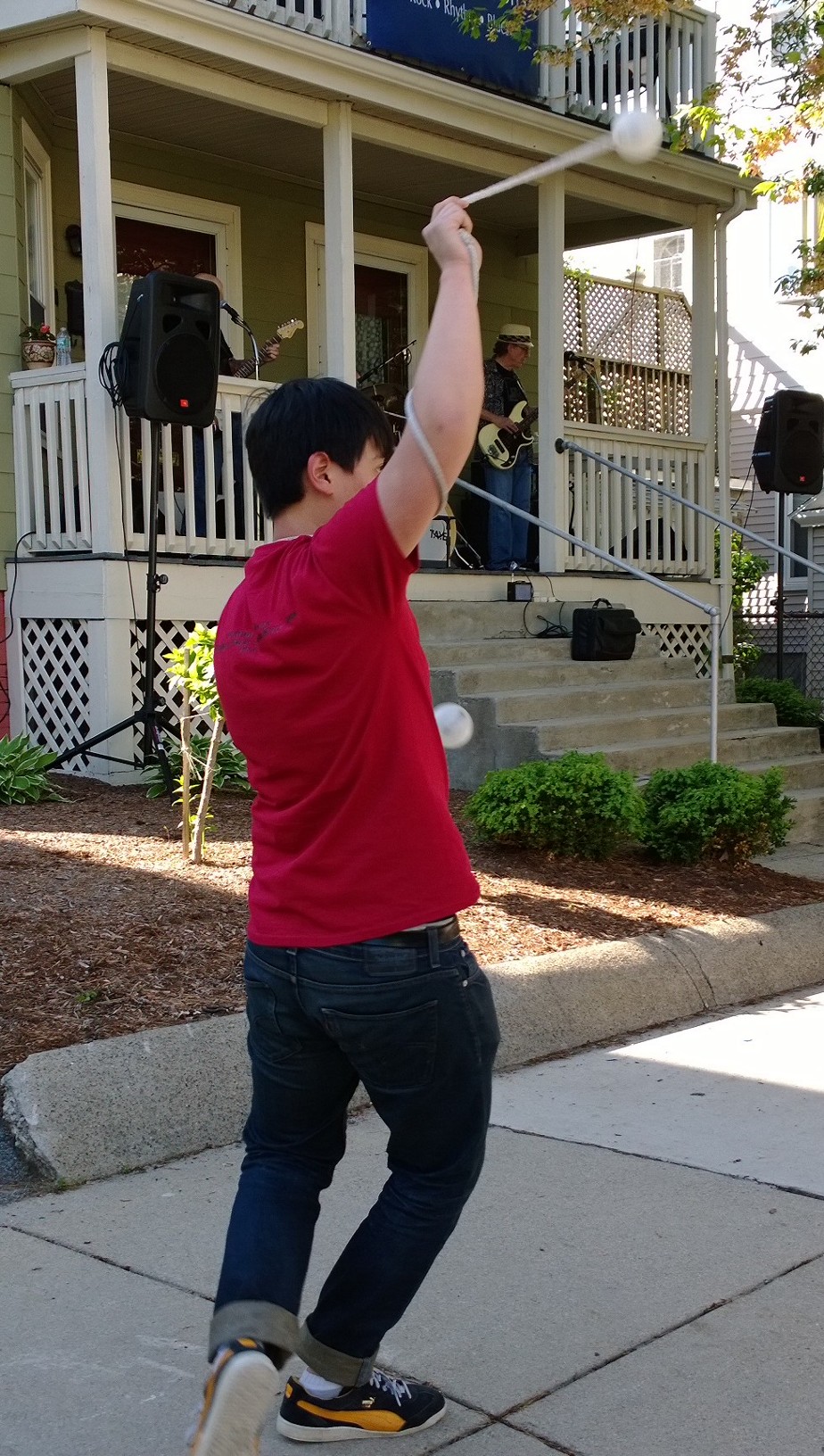
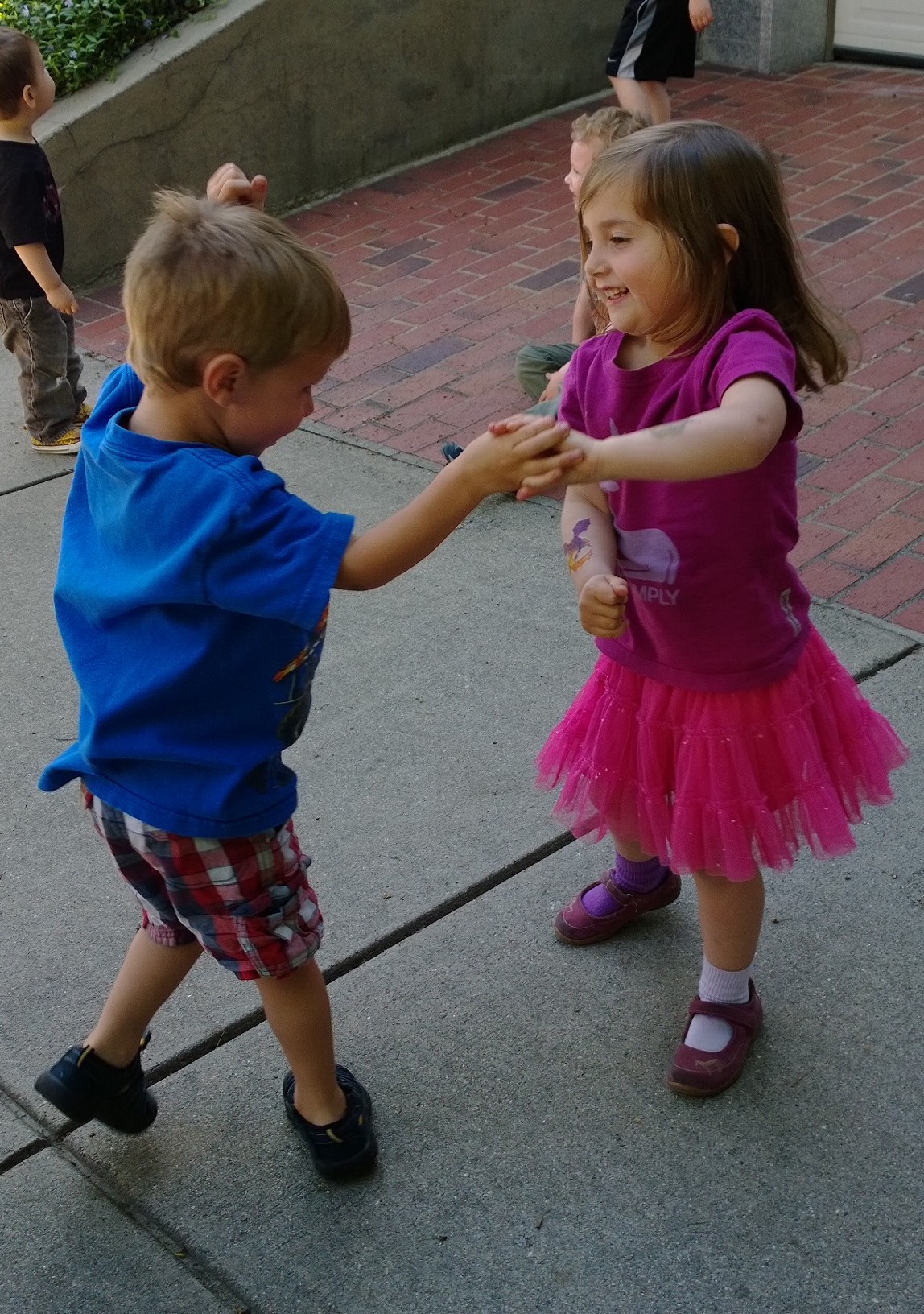
A variety of bands play on porches around the town. Neighbors sit on their steps to listen, families and college students wander in, entertainers entertain, and almost everyone is moved to dance.
My grandson and his best friend are pictured cutting a rug.
Longtime concert pianist Byron Janis recently wrote an essay for the Wall Street Journal about programs using music to help veterans with PTSD and other traumas to heal.
“Can music heal?” he asks. “There’s been a great deal of study by neuroscientists on the different ways music acts upon the brain, affecting our behavior, memory and the like. …
“I recently witnessed the healing effects of music first hand. As part of their ‘National Initiative for Arts and Health in the Military,’ I was invited by Americans for the Arts to visit the Walter Reed National Military Medical Center and participate in ‘Stages of Healing.’ This program, created by Dr. Micah Sickel, helps patients learn how to play a musical instrument and facilitates live performances whose aim, according to the hospital, is to ‘enhance the healing process’ …
I knew what I wanted to play for them—two Chopin waltzes and ‘A Hero’s Passing By’ … I then played two songs from a musical I had written about the Hunchback of Notre Dame. One was a love song and the other is titled ‘Like Any Man,’ which I felt very much suited the occasion. The Hunchback sings that although he is so disabled, he is just like any man.” Read more.
I can think of a few people I know who would love to conduct an orchestra just once.
A couple years ago, I was telling Suzanne and Erik how the Melrose Symphony Orchestra had a drawing at the Holiday Pops concert for an audience member to conduct the last number, and Erik said he would really love to do that. Given that he won a business-plan competition yesterday, he might feel like conducting an orchestra right now. Since there’s no orchestra handy, the next best thing might be an electronic simulator.
Writes Liz Stinson for Wired, “Most of us will never get the chance to conduct a real symphony orchestra, and that’s probably for the best. But a fake symphony orchestra made up of towering speakers, motion controllers, and touchscreens? Totally doable.
“A new installation at the Mendelssohn Museum in Leipzig, Germany lets you do exactly that, no music school required. The Mendelssohn Effektorium, by design studio WhiteVOID, is an interactive installation that allows you to have complete control over a virtual symphony. In this world you’re Felix Mendelssohn-Bartholdy, and your instruments come in the form of 13 upright speakers with digital displays on them.
“Each of these speakers corresponds to a certain instrument group: woodwinds, brass, percussion, vocals and so on. It’s up you how much spotlight each instrument gets and how fast the tempo moves.” More at Wired. Be sure to play the video demonstration of someone conducting this way.
Photo: WhiteVOID
A Leap Motion sensor calculates your speed based on the pendulum interval of your movements and adjusts the tempo accordingly.
13Forest is an art and craft gallery in Arlington that invites Opera on Tap singers to perform at openings. Our daughter-in-law sent us an e-mail about this today, and we went. It was charming.
From Mark Adamo’s opera Little Women, the young performers sang Amy’s aria, Prof. Bhaer’s aria, and Beth’s, a gentle farewell. There was also a song based on a letter a soldier wrote to his wife before a battle in the Civil War.
A short and sweet event. Made us wonder why more galleries don’t do this.
Opera on Tap taking a bow at 13Forest Art Gallery. Read about the national organization bringing opera to the people here.
Something fun from Studio 360: the mystery of the Toynbee tiles.
“For more than two decades, an unknown artist has been leaving a message in the streets of Philadelphia. The message is has been cut by hand into a linoleum tile, and pressed into the asphalt by the weight of passing cars. There are dozens of these around the city; old ones wear away, and new ones appear. The message is the same:
TOYNBEE IDEA
IN Kubrick’s 2001
RESURRECT DEAD
ON PLANET JUPITER
“The Toynbee tiles, as they’re called, have become a thing in Philly — you can even buy a t-shirt (the tiler isn’t getting royalties). For artists, the cryptic message inspires far-out forms of creativity, but perhaps nothing as ambitious as the ten-minute work by the rapper and ‘bedroom composer’ Raj Haldar, who performs as Lushlife.
“The work is in four parts, one for each line of the tiles’ message. By the end, the ‘Toynbee Suite’ has left behind anything resembling hip-hop, going out on a two-minute clarinet solo.
“But what exactly is the Toynbee message? Alfred Toynbee was a historian and philosopher of the 20th century, known for the 12-volume A Study of History. …
“A documentary film speculated that the tiler remained unseen by dropping the tiles from a car with cut-out floorboards.”
More on the mystery here, where you also can listen to the rapper’s tile-inspired music and check out a map showing where Toynbee tiles are located around Philadelphia.
Photo: Kimberly Blessing/flickr
A Toynbee Tile at 9th and Market Streets in Philadelphia, Pa.
Mario Aguilar writes at Gizmodo, “Riding a bike is a musical experience in more than a metaphorical way: Brakes squeal, spokes click, derailleurs clang. Composer Johnnyrandom sampled himself ‘playing’ his bicycle and the results are positively gorgeous. …
“It’s hard to believe that all of [the] sounds are made by a bicycle. Some of them are strictly the byproduct of the bike’s mechanical operation, like the sound it makes when you release a brake lever. Others are created when you play different parts of the bike with a musical accessory.
“For example, Johnnyrandom records the low-pitched flutter of a pick scratching on a spinning wheel, and tunes the bicycle’s spokes so he could play them with a bow like a string instrument. After capturing the sounds with a portable recorder, the different sounds were arranged and sequenced using software. This two-minute mix gives you a feel for the wide sonic that he was able to create.”
In typical bloggy fashion, I got this from Andrew Sullivan, who got it from Gizmodo (which also has a kinoscope of Frank Zappa, on the old Steve Allen tv show playing a bicycle, and a video of how Johnny Random works), who got it from This Is Colossal. Where will this message in a bottle land next?
(Be sure to check my post on composer Kenneth Kirschner, here, for more contemporary music using unusual instruments.)
Cynthia-Marie Marmo O’Brien has a nice story at Narratively on a close-knit Latino subculture in the Bronx.
“Generations of Nuyoricans — Puerto Rican New Yorkers — have found familia in a little house on an overgrown patch of the South Bronx,” O’Brien writes. The place is known as La Casita.
She continues, “Today I am relaxing with some of the regulars under the hanging branches of trees separating us from the busy life on the street; they have picked grapes from overhead and are making wine.
“I came here with César Colón-Montijo to experience plena, a musical genre indigenous to Puerto Rico. In his scholarship, Colón-Montijo, an ethnomusicologist who the regulars consider part of la familia, describes plena as a way through the South Bronx’s difficulties. Plena has always been a call-and-response form of song; its origins are usually attributed to striking workers. …
“La casita is the classic liminal space: neither Puerto Rico nor New York; neither a secular sanctuary for all nor a performance place for legends. It is all four. Puerto Rican flags fly and an original album cover of John F. Kennedy’s 1960s speeches is displayed along with other memorabilia. No topic is too big or small for plena’s repertoire; there’s even a plena about JFK. After the city’s Puerto Rican Day Parade every June, the music royalty of the island flock here.”
Read more here and see how people use music to transport themselves to Puerto Rico while still in the Bronx.
Photos: Emon Hassan Jose Rivera (left) during a jam session at the Casita. On the right, demonstrating how an out-of-tune piano can still make music.
The Israeli who was once a successful animator but turned to singing, Asaf Avidan, is playing at the Somerville Theatre tonight. James Reed wrote about him at the Boston Globe, and I was intrigued enough to check out his latest video. See the two little boys, below. Avidan is the one who gives them a large crystal when they are busking on toy instruments.
Reed writes, “To fall in love merely with Asaf Avidan’s voice, which is easy to do, would be missing the bigger picture. … It’s the voice of resignation and resilience, beautiful but often brutal, and it just so happens that Avidan’s high timbre gives his performances an androgynous allure that leaves you hanging on every word.
“That much is true. But also at play is the fact that Avidan, a 32-year-old singer-songwriter with a substantial following in Europe and his native Israel, is particularly adept at deconstructing heartache in the most poetic of terms. That’s evident on ‘Different Pulses,’ his soulful latest album.”
The singer says, “The way I sing came from the reason I started singing. I was a successful animator up until about 2006, and because this reason to sing the blues [after a breakup] was so sudden in my life and so painful, I really needed for it to be physically difficult. I would find myself going higher on the scales, making it more difficult and screamy. I think that level of emotion brought me to these high scales, and that’s what people hear now. They hear the emotion.” More at the Globe.
When John played saxophone in high school, I got it in my head that I should set a good example about practicing by going back to piano and seeing if I could make more progress than I did as a child.
In the first lesson, the teacher asked me what what I wanted to learn to play, and I said Boogie Woogie. So we did a little bit of that, and I thought I would really learn it. In the next lesson, she said, “You don’t want to learn this, it’s so repetitious.” So I studied what the teacher liked, which was classical. It fizzled out after a few years because I didn’t like to practice any more than John did.
Anyway, I still like Boogie Woogie, and was tickled when the FortPointer tweeted this new Boogie written especially for Fort Point. What happy music! It makes you want to jump right up and — well — boogie.
Listening to the lone WICN radio host early Saturday morning reminded me of when I was a WGMC radio host in Greece, New York — until Suzanne was six months old and starting to reach over the baby seat to grab the turntable.
I was never sure if anyone was out there listening, but I liked doing it anyway.
Kind of like blogging.
At 5:30 a.m., the WICN host was playing a series of mellow tunes. He seemed to be enjoying the music, which means he didn’t talk much. I appreciate that kind of host so much more than the ones who love to hear themselves talk.
WICN, “Jazz Plus, for New England,” is a rare boon to jazz lovers. Having been to the studio recently to donate school instruments, I couldn’t help thinking that the hours before dawn on a Saturday must be pretty bleak and lonely in that industrial part of Worcester.
The only thing I was able learn about the host after Googling around was that his last name is Chandler. It was nice to think of Mr. Chandler enjoying the music in that barren neighborhood before 6 a.m., and I wish I had told him that someone was listening and appreciated the way he rode the records, transitioning so smoothly.
You can listen to WICN online, here, if you don’t live near Worcester. Send the station an e-mail to tell a host you’re listening. It’s a small outfit. I’m still waiting to hear back from my own e-mail.
If you are free during a weekday, be sure to catch a live performance by Pamela Hines andArnie Krakowsky (below) on January 29.
Update 1/27/14: WICN General Manager Gerry Weston e-mails that the early morning host was “Osay Chandler, he’s out of Pittsburgh.”
Photo: WICN
Join pianist Pamela Hines and her special guest on January 29 at 2 p.m. Arnie Krakowsky, a professional tenor saxophone jazz musician, will perform live with Hines in the WICN studio.
Album cover for The Bathrooms are Coming!, a 1969 American-Standard musical (Blast Books)
I heard a great Studio360 show today. It was on the industrial musicals once used by corporations to get the sales team charged up to go out and sell.
“In the 1950, 60s, and 70s, a subgenre of musical theater entertained thousands. It had showstoppers composed by some of the brightest talent in the business. But instead of selling out Broadway houses, these shows played to packed hotel ballrooms and convention halls. …
“ ‘It was to build morale and build a sense of being on a team,’ explains Steve Young. ‘You weren’t isolated, you were a part of a greater whole that was looking out for you.’ A writer for David Letterman, Young has made himself the curator of the world’s largest collection of corporate musical theater performances. ‘Sales Training,’ a groovy number from 1972, includes specs for York air conditioner’s new line. ‘Once in a Lifetime’ breathlessly heralds the arrival of the 1958 Ford Edsel.
“Writing these musicals was no simple task and corporations spent lavishly to attract top talent. In 1966, John Kander and Fred Ebb wrote Go Fly a Kite for General Electric (in which Benjamin Franklin meets modern utility executives) — they went on to win a Tony for Cabaret. …
If you like musicals, you really must listen to the whole Studio360 show. It’s too funny.
You don’t want to miss “PDM (Power Distribution Management) Can Do”
from Go Fly a Kite — General Electric, 1966, by John Kander, Fred Ebb, and Walter Marks, or “An Exxon Dealer’s Wife.” Be sure to catch the song composed to sell Edsels and the haunting American-Standard number “My Bathroom” from 1969. (“My bathroom, my bathroom is a private kind of place.”)
Studio360’s show,”Curtain Call: Industrial Strength Musicals,” may be found here.
Lots of creative people need a little push to just sit down and do it.
If I recall writer Anne Lamott’s advice in Bird by Bird correctly, she says that in addition to writing a little every day and embracing terrible first drafts, the most important thing is a group of other creative types with whom you meet on a regular basis to say what you have done since last time.
So it doesn’t surprise me that there are popular musicians who are grateful to be allowed into a songwriting challenge called “The Song Game.”
Acacia Squires wrote about it for National Public Radio: “Bob Schneider finished writing ‘The Effect,’ a song from his latest album, Burden of Proof, in just a few days. That’s how he does it: For 12 years, the Texas musician has beaten back the urge to procrastinate by writing a song once a week, every week. It began casually, just him and a friend sharing their songs with one another. …
“Now it’s grown into an Internet-based, deadline-driven songwriting motivation strategy which Schneider calls ‘The Song Game.’ It’s a game without winners or losers — just productivity. He’s filled five studio albums with songs from the game since 2001, and says he still needs it all these years later.
” ‘There’s the critical voice inside your head and it stops people from writing,’ he says. ‘I try to eliminate that voice by saying, “Look, I’m gonna write a song. I’m gonna try to make it interesting.” ‘ …
“One of the ground rules of the game: fail to submit a song every week, and Schneider will cut you from the invite-only email list. And here’s another rule: the phrase. To keep songwriters from working ahead, he sends a short phrase to the group that has to be in the next week’s song.”
Read more here and see what well-known songs started out with the word of the week from Schneider.
Photo: Chris Miller Singer and songwriter Bob Schneider, founder of “The Song Game”