Feeds:
Posts
Comments

Posts Tagged ‘nature’

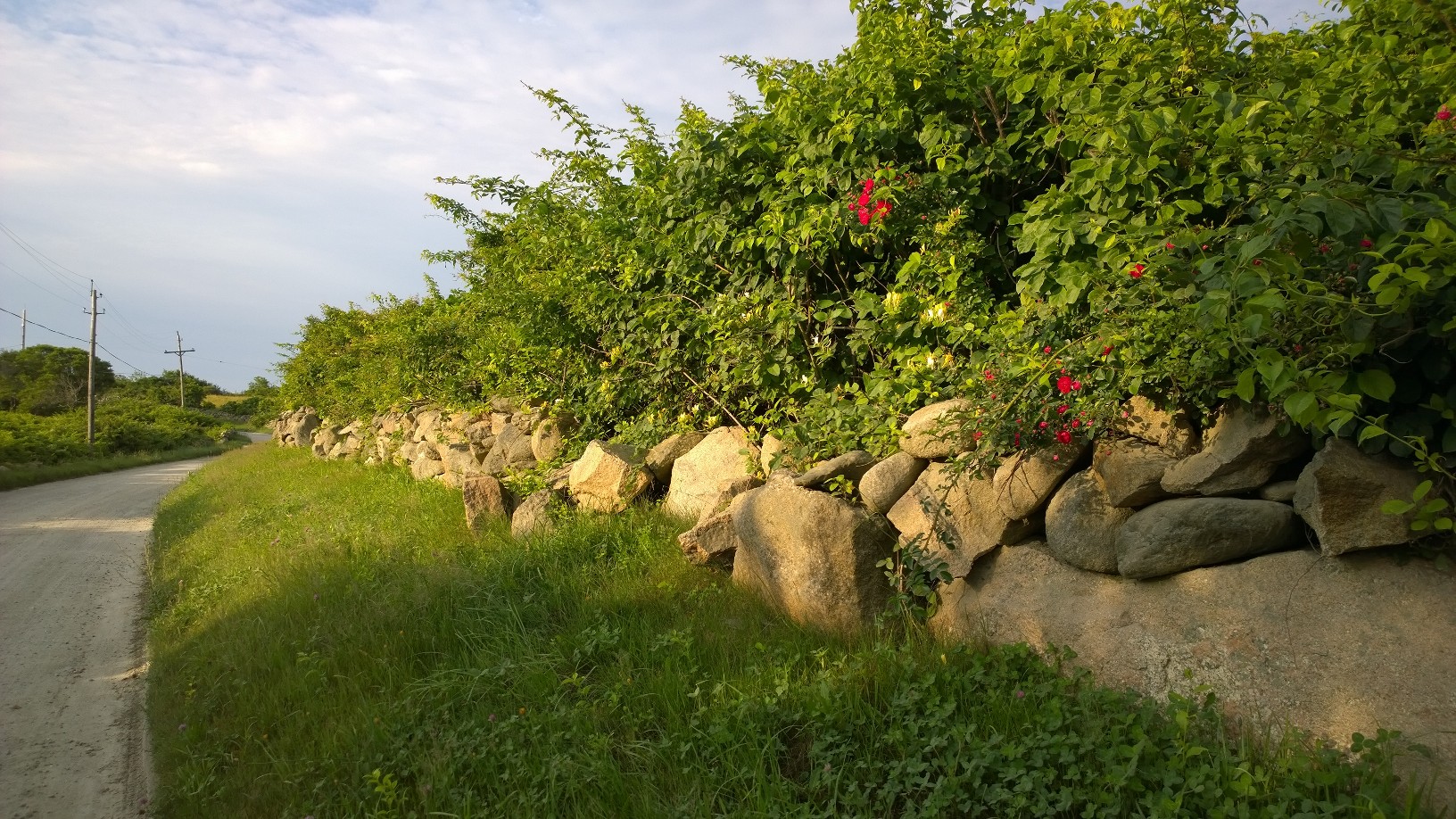
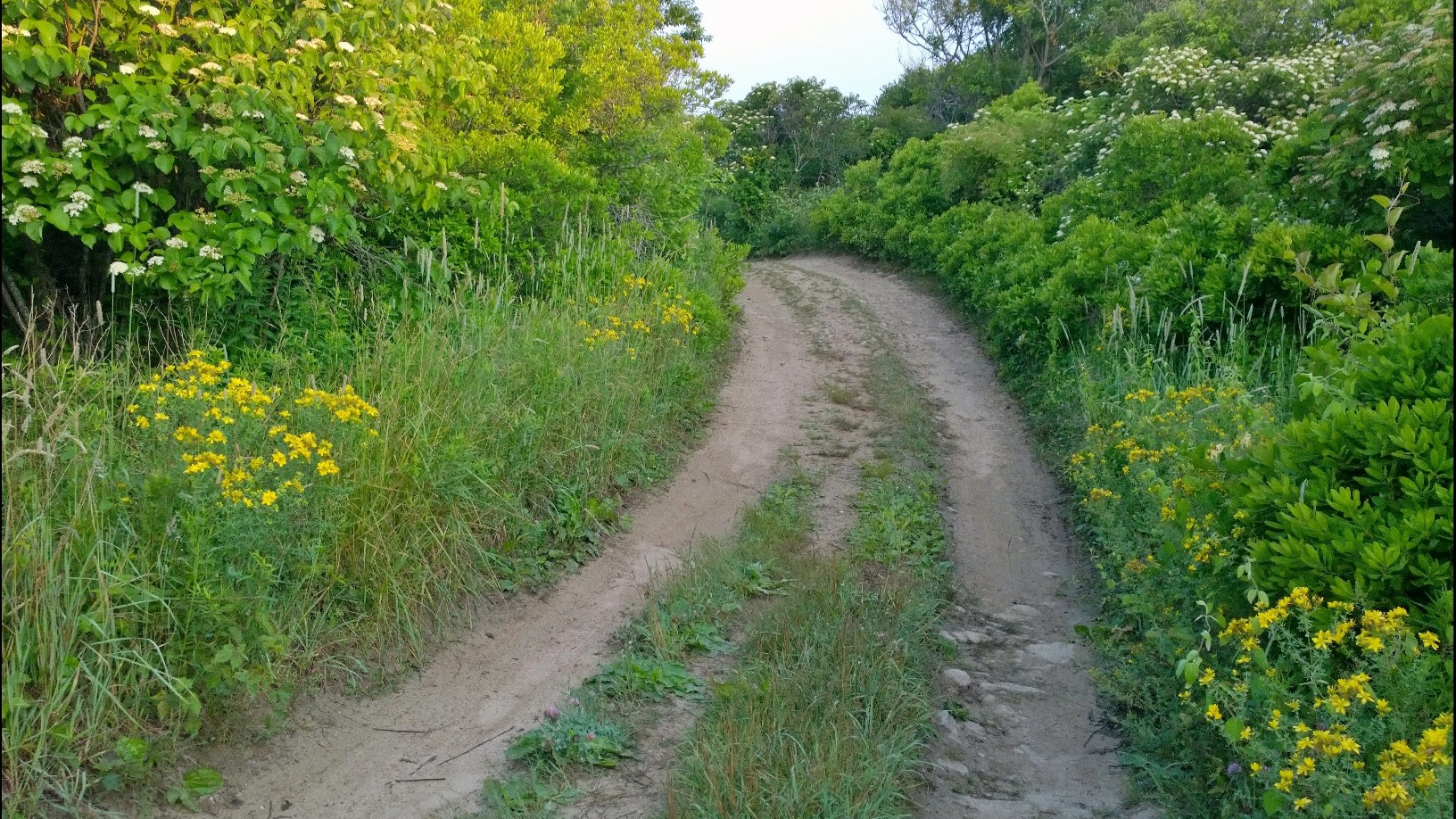
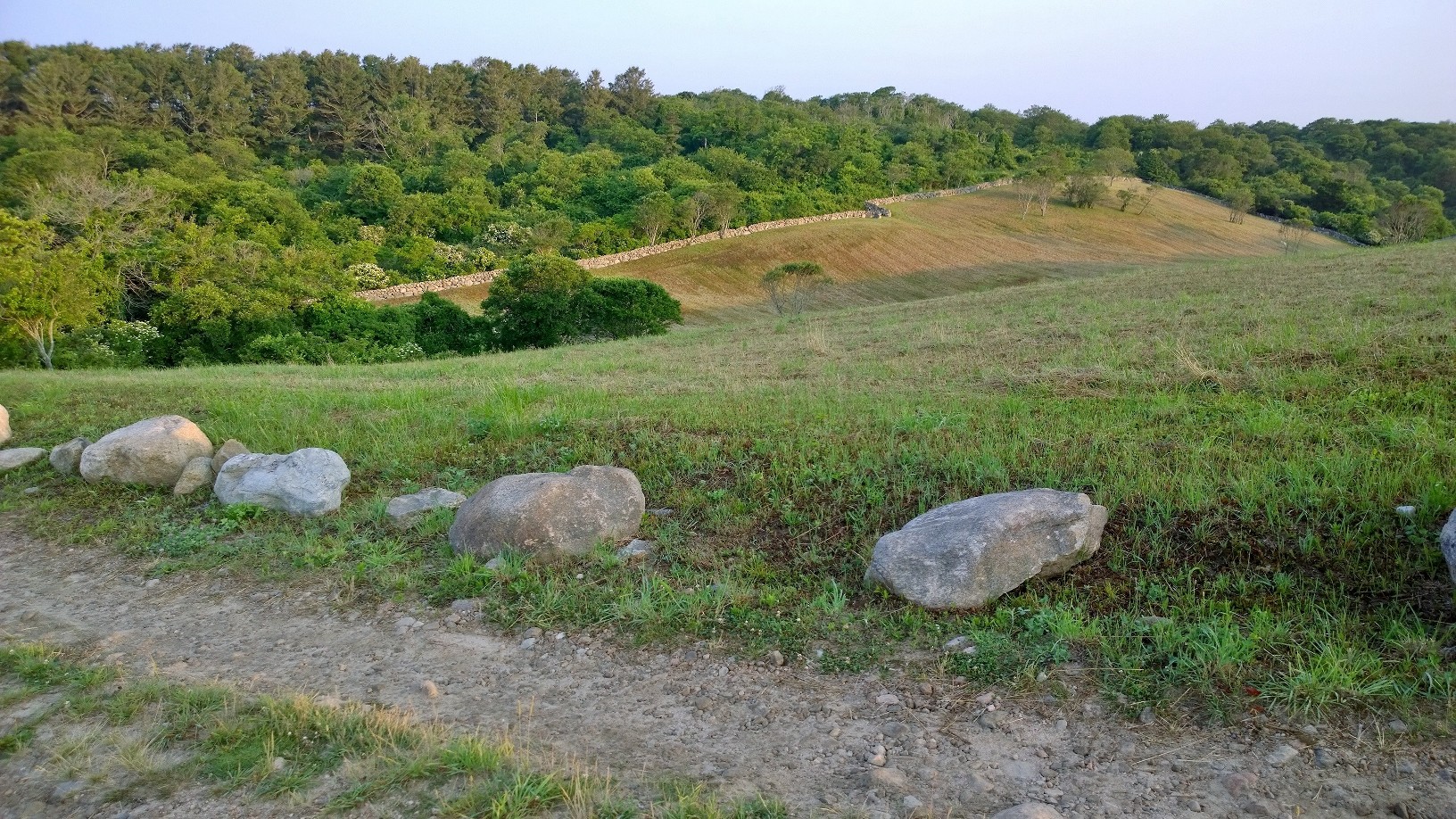
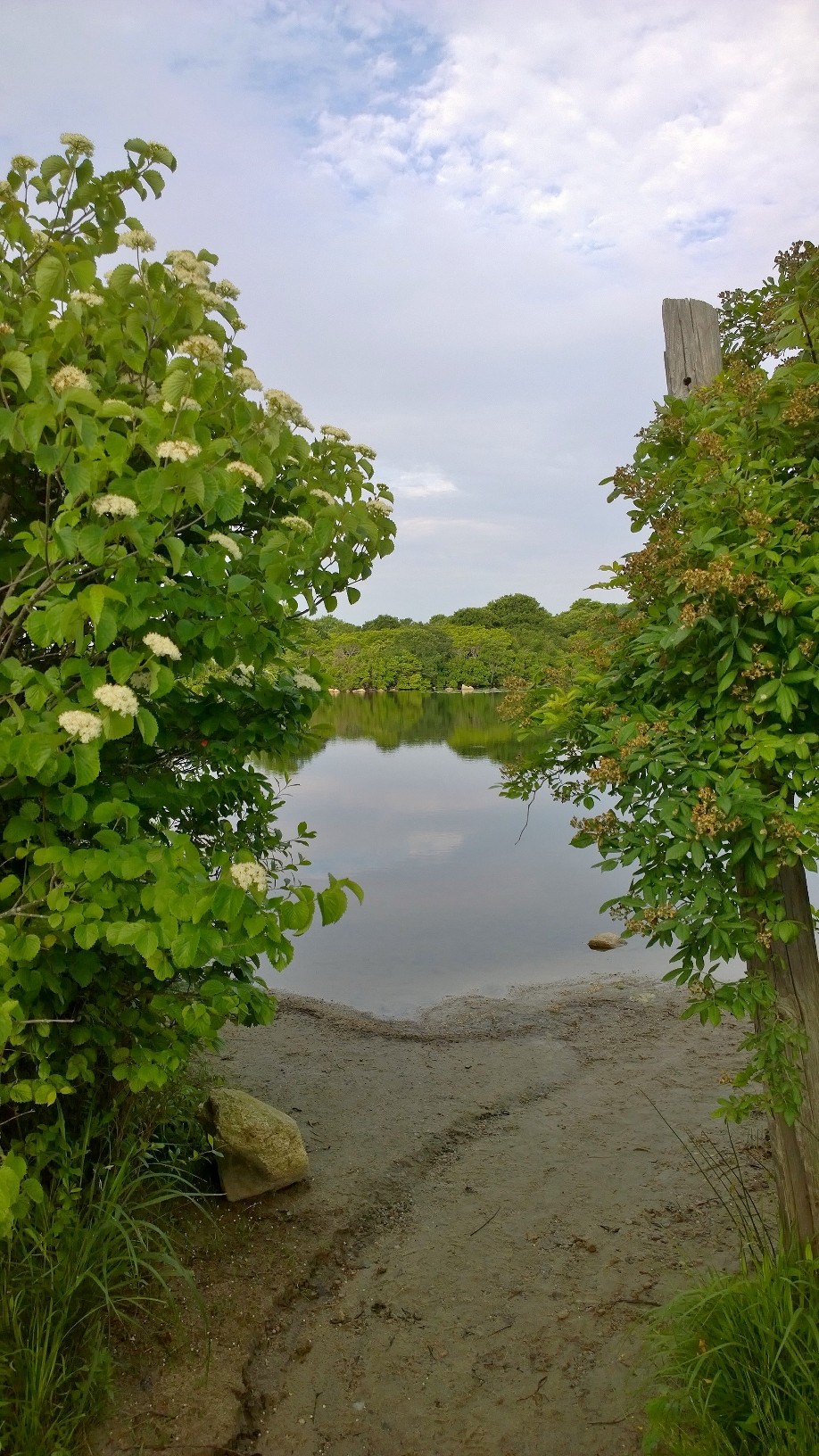
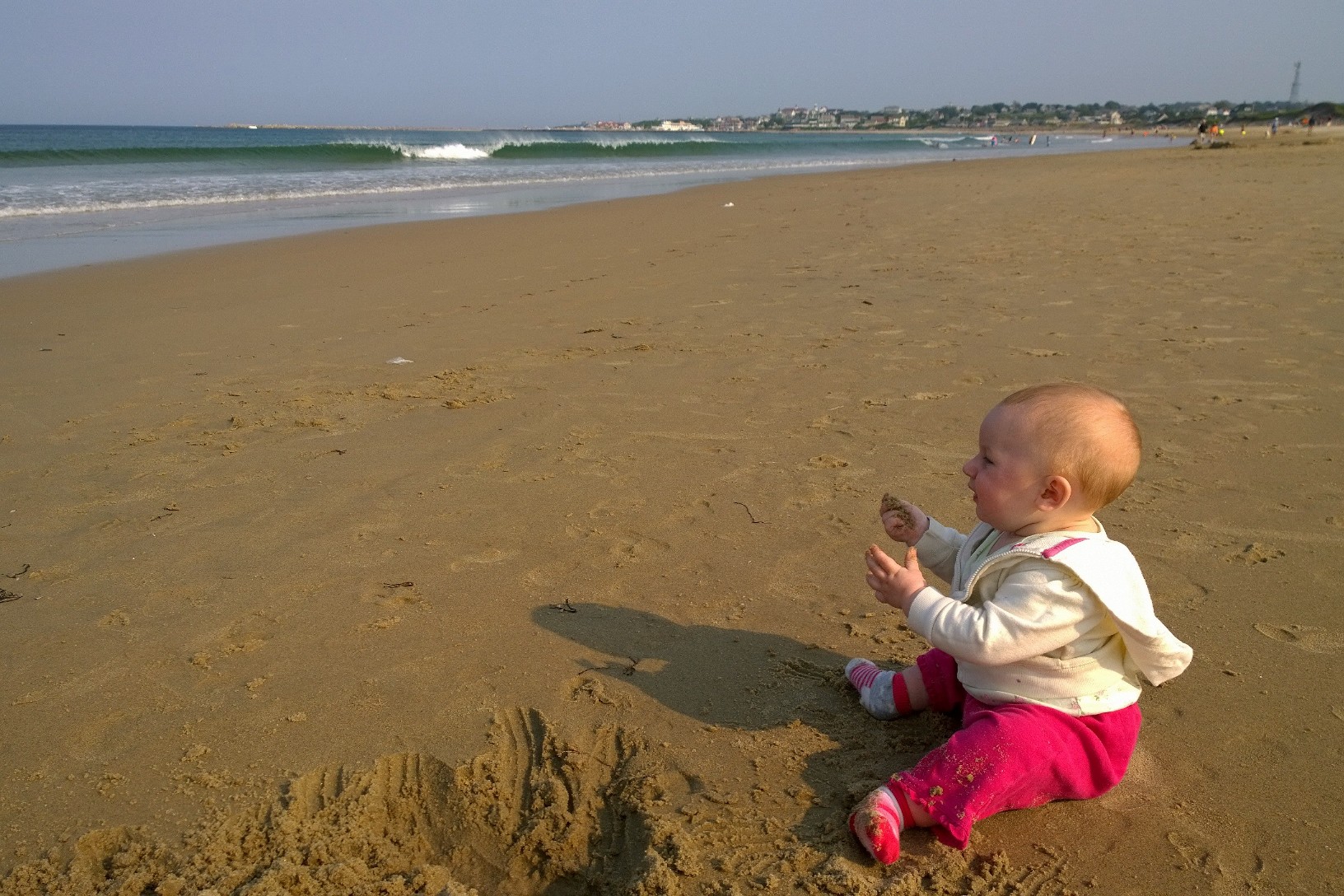
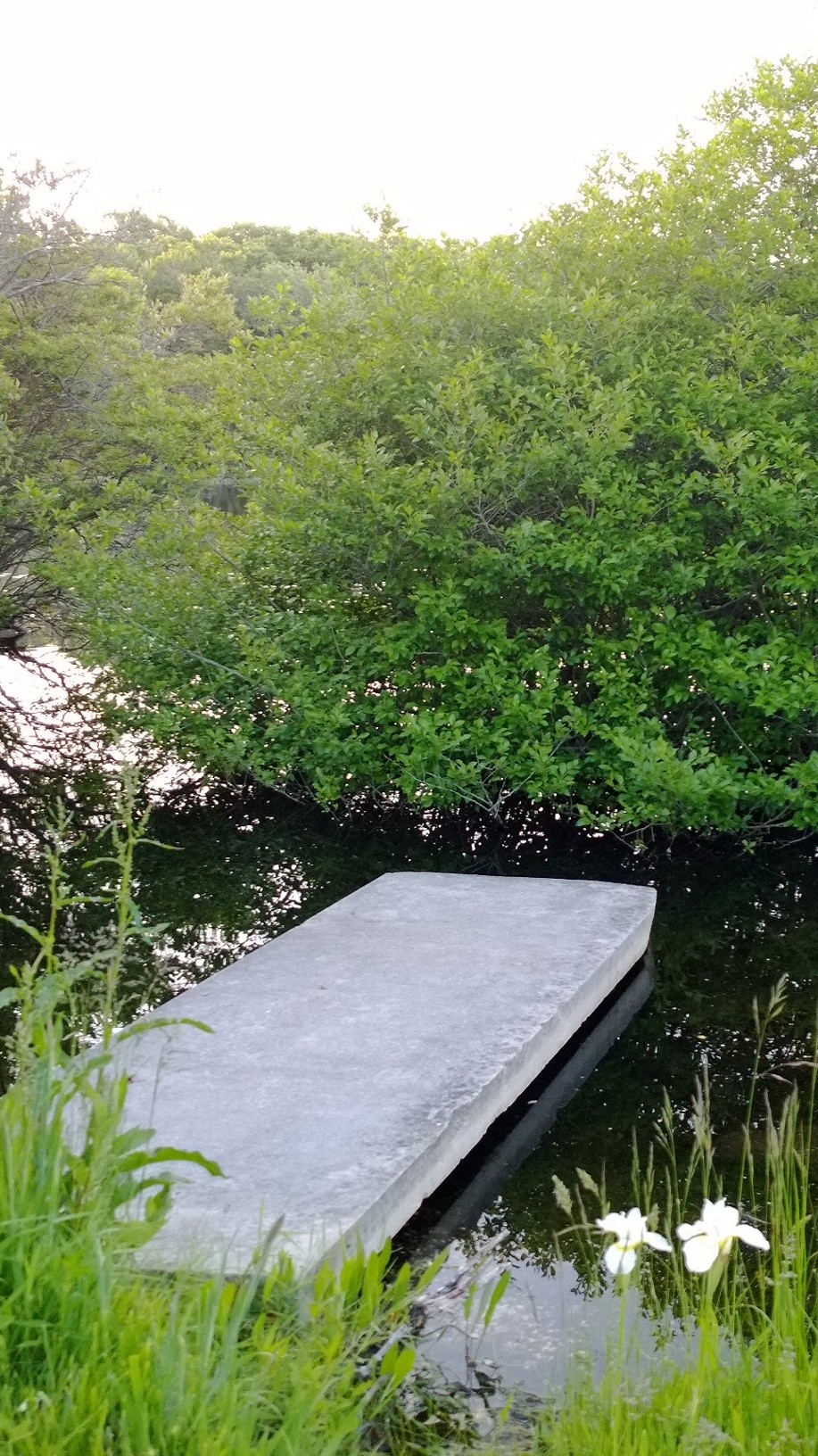
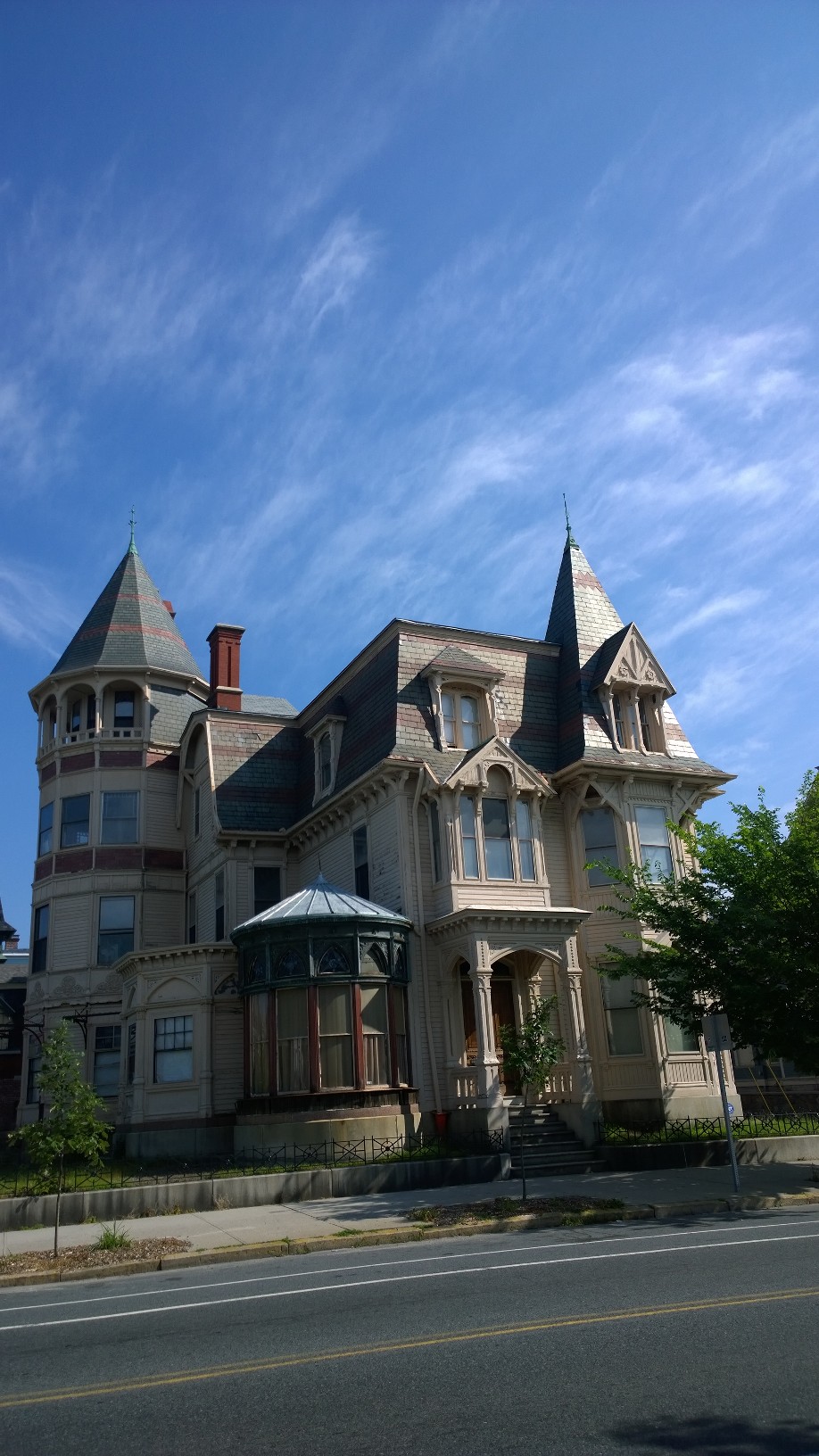
The little state with the big heart. Showing an intriguing old house in Providence, and island scenes in early morning and late afternoon.

This is the peaceful side of things, contrasting with the stories we just heard from an exhausted policeman we know who spent the last five days trying to control unruly 4th of July crowds, working from 5 a.m. to 11 p.m. “And we have only two cells to put them in,” he said in exasperation.

So hard to understand why, with all this beauty around them, people would do so much damage to themselves.

Providence-fixer-upper

stone-wall-morning

country-road-70515

fields-New_Shoreham

John-E-tughole

looking-down-the-bluffs

070515-beach-late-afternoon

Read Full Post »

In a move that will benefit the environment, farmers are placing increased emphasis on the quality of their soil and cutting back on ploughing. It took a kind of soil evangelist to create the revolution.

Erica Goode has the story at the NY Times.

“Gabe Brown is in such demand as a speaker that for every invitation he accepts, he turns down 10 more. …

“Mr. Brown, a balding North Dakota farmer who favors baseball caps and red-striped polo shirts, is not talking about disruptive technology start-ups, political causes, or the latest self-help fad.

“He is talking about farming, specifically soil-conservation farming, a movement that promotes leaving fields untilled, ‘green manures’ and other soil-enhancing methods with an almost evangelistic fervor.

“Such farming methods, which mimic the biology of virgin land, can revive degenerated earth, minimize erosion, encourage plant growth and increase farmers’ profits, their proponents say. And by using them, Mr. Brown told more than 250 farmers and ranchers who gathered at the hotel for the first Southern Soil Health Conference, he has produced crops that thrive on his 5,000-acre farm outside of Bismarck, N.D., even during droughts or flooding.

“He no longer needs to use nitrogen fertilizer or fungicide, he said, and he produces yields that are above the county average with less labor and lower costs. ‘Nature can heal if we give her the chance,’ Mr. Brown said.” More here.

Sounds like wisdom that even a backyard farmer could embrace.

Photo: Brandon Thibodeaux for The New York Times
“My goal is to improve my soil so I can grow a better crop so I can make more money,” [says Texas farmer Terry] McAlister, who farms 6,000 acres of drought-stricken cropland. 


Read Full Post »

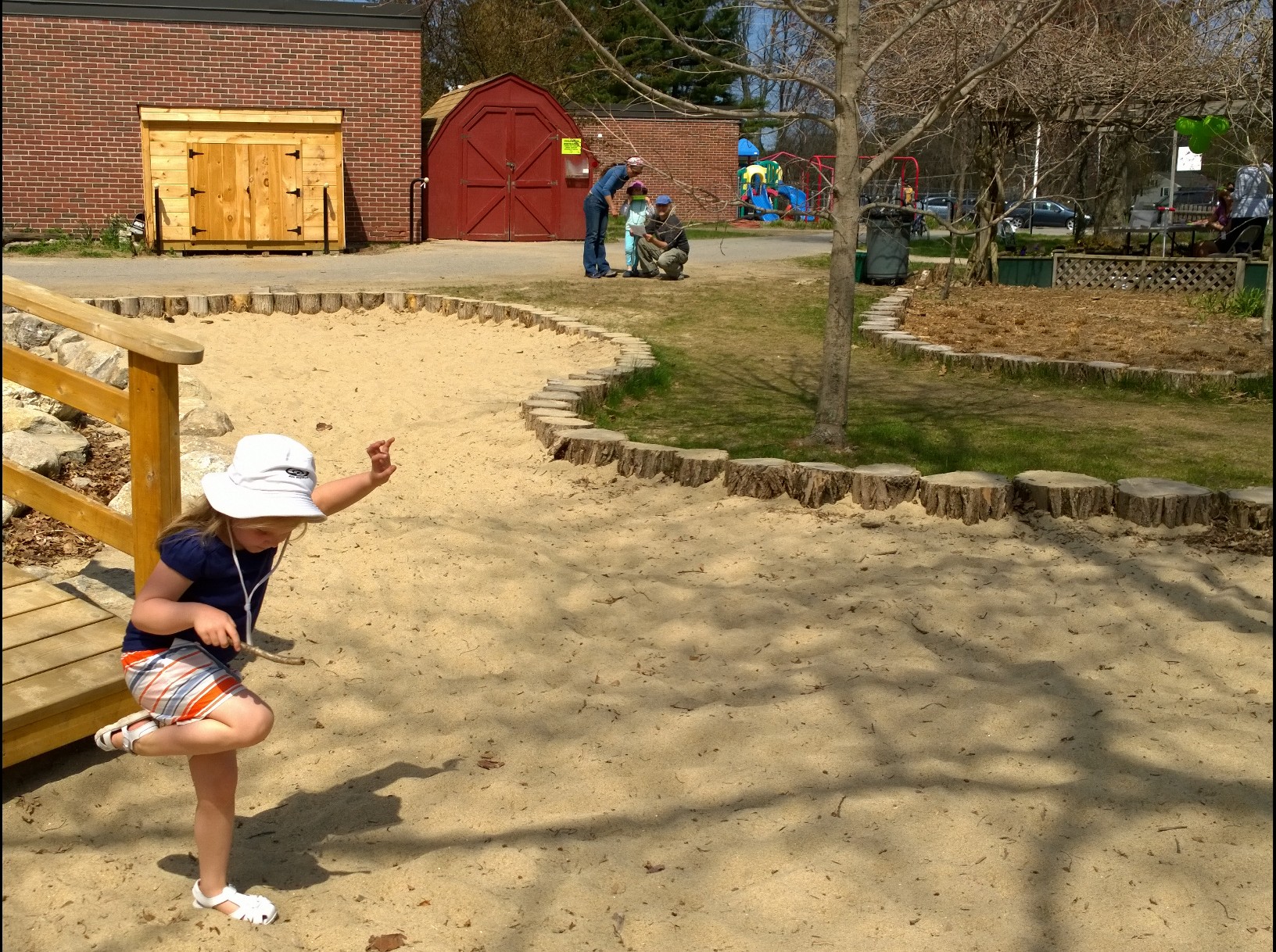
giant-sandbox-at-playscape

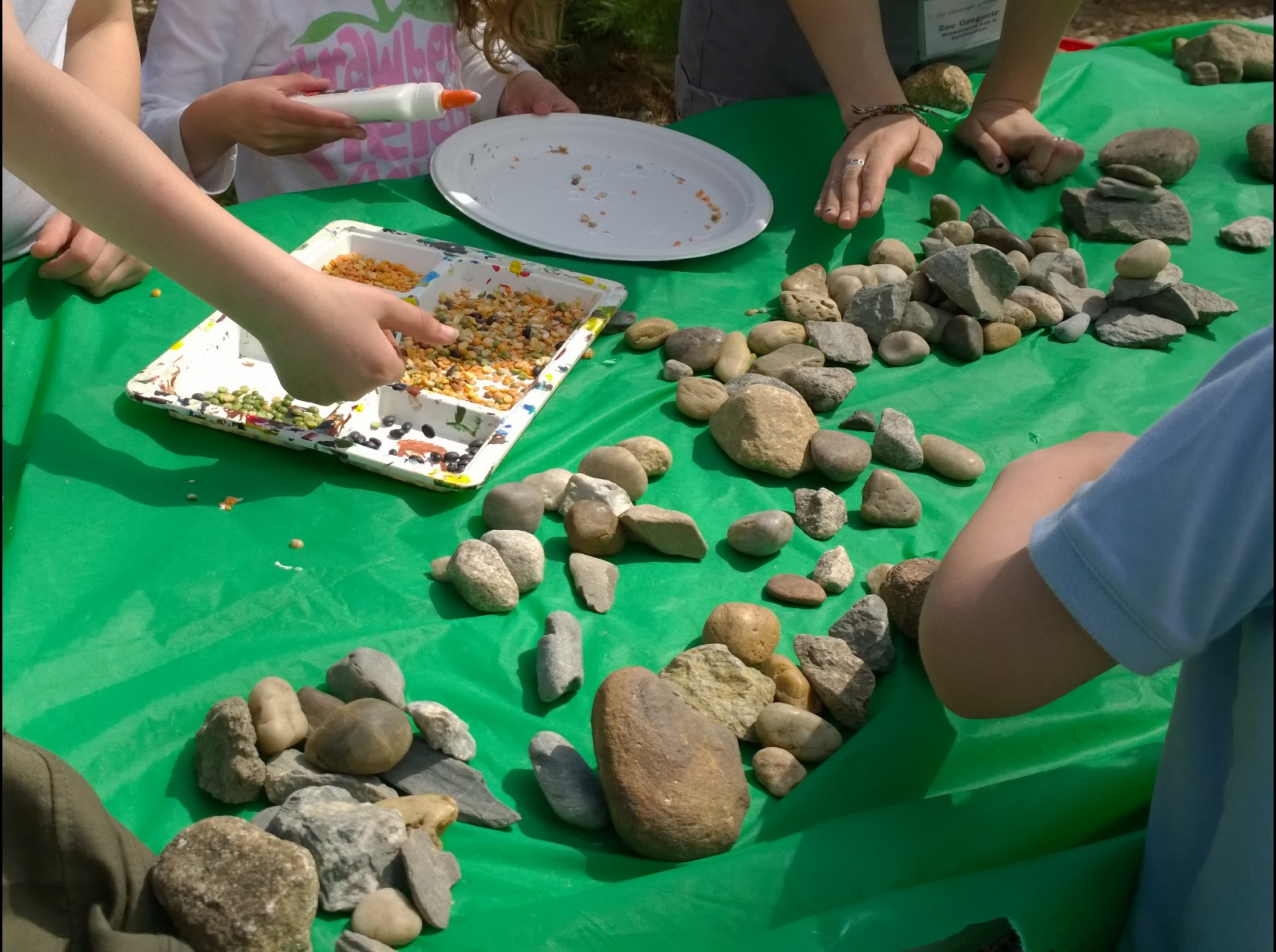
gluing-nature-collage

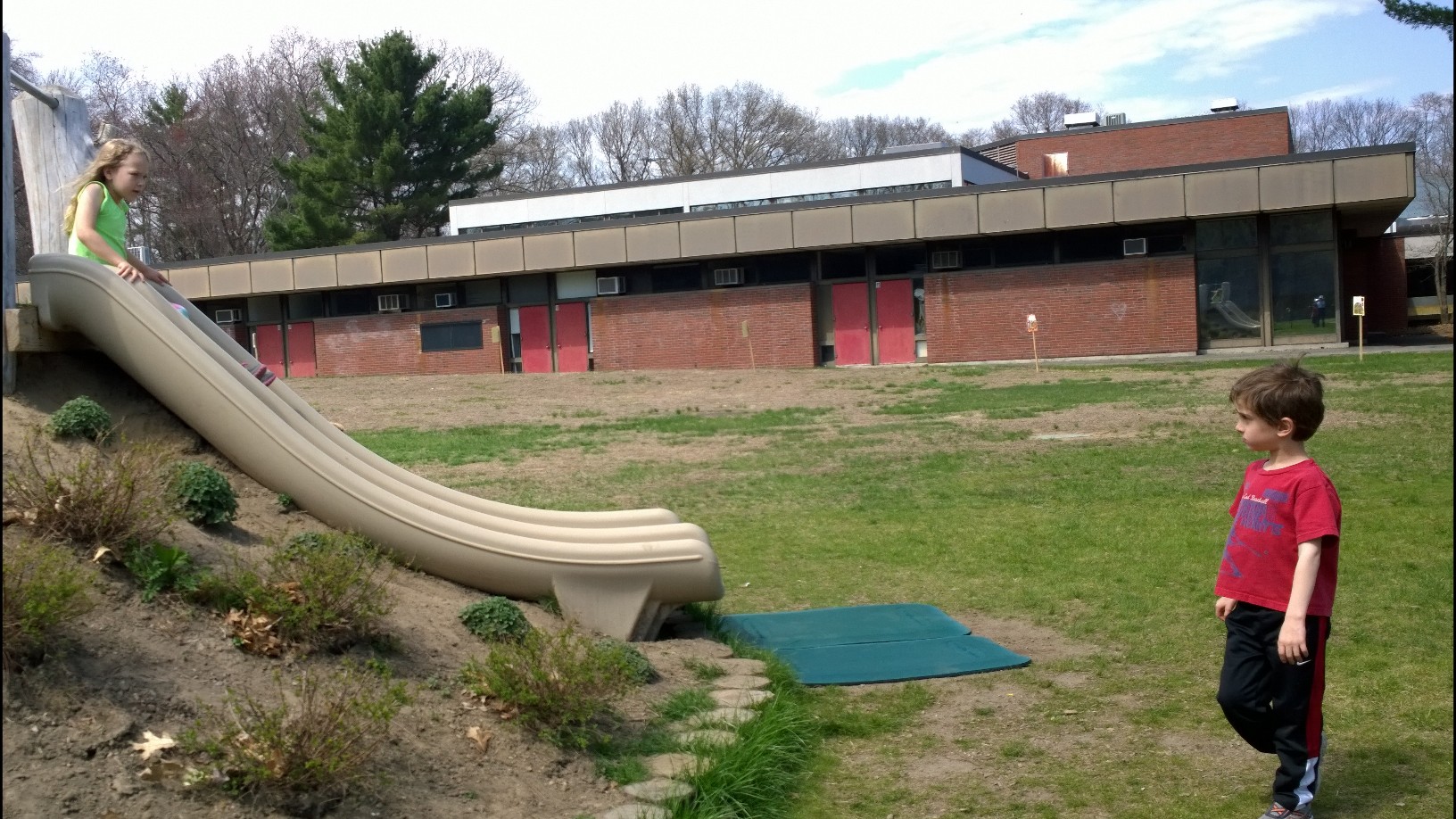
slide-at-Ripley-Playscape

I wrote about the early stages of the Playscape at the Ripley School three years ago, here. The idea of the playscape was to incorporate nature activities into a playground. An open house was held last Sunday, and I saw lots of children, parents, and grandparents checking it out.

Perhaps because it was early in the season, perhaps because an open house seems to call for planned activities, it was hard to see if there were enough attractions available for exploring nature on quieter days. Of course, I grew up on the edge of an orchard, a forest, and a mountain, and no one told us kids how to have fun there. Anything less in nature play seems sparse.

One thing I liked was not really an interaction with nature except that you had to walk through a field to engage. It was the story walk for Lynne Cherry’s picture book on a groundhog who learns to make his own garden rather than help himself to other people’s. The laminated page spreads on posts around the field were charming and had lots of useful details about plants and seeds.

A gardening friend on my commuter train was very glad to hear the groundhog learned to grow his own food and leave hers alone.

Read Full Post »

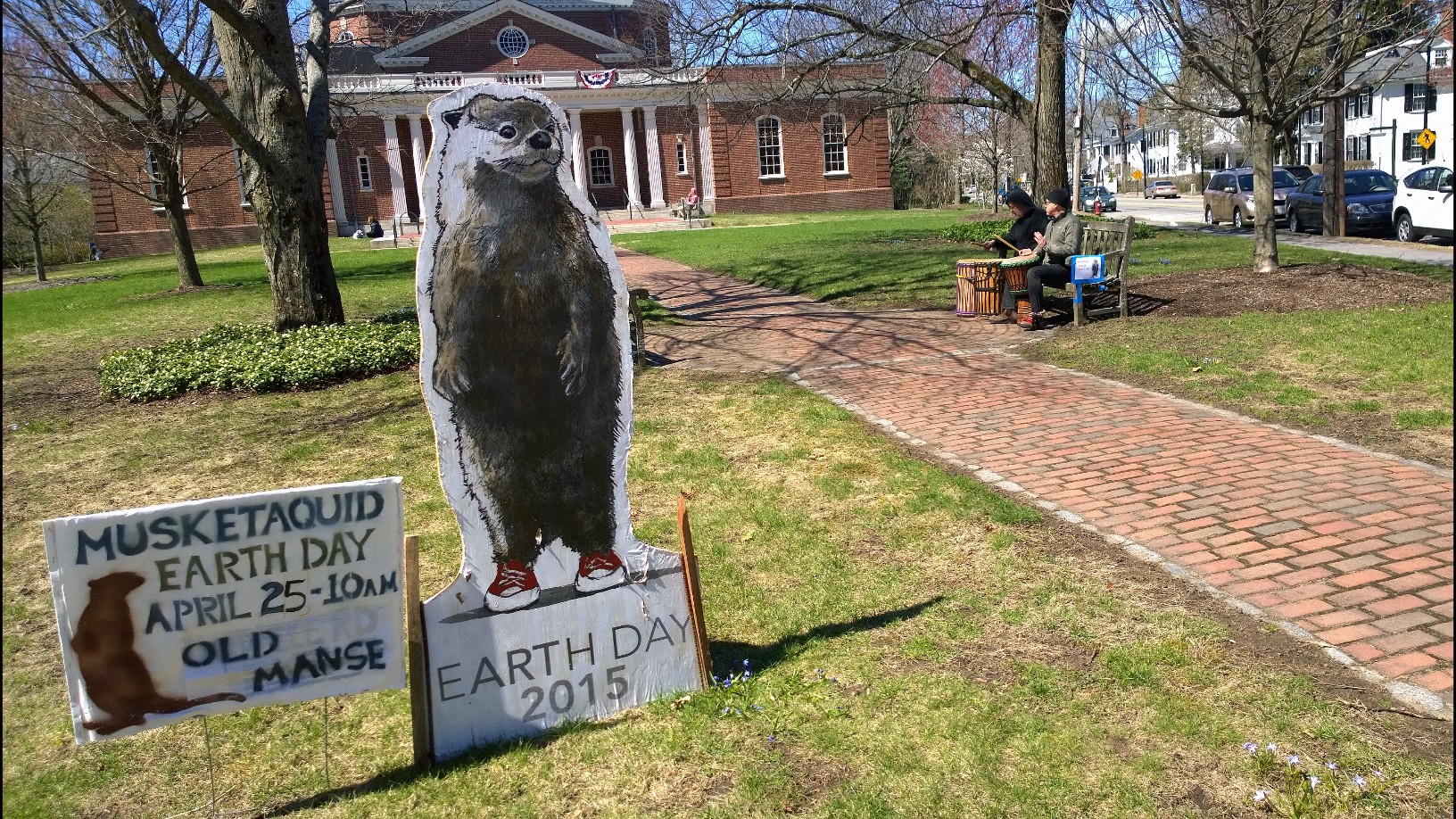
otter-welcome

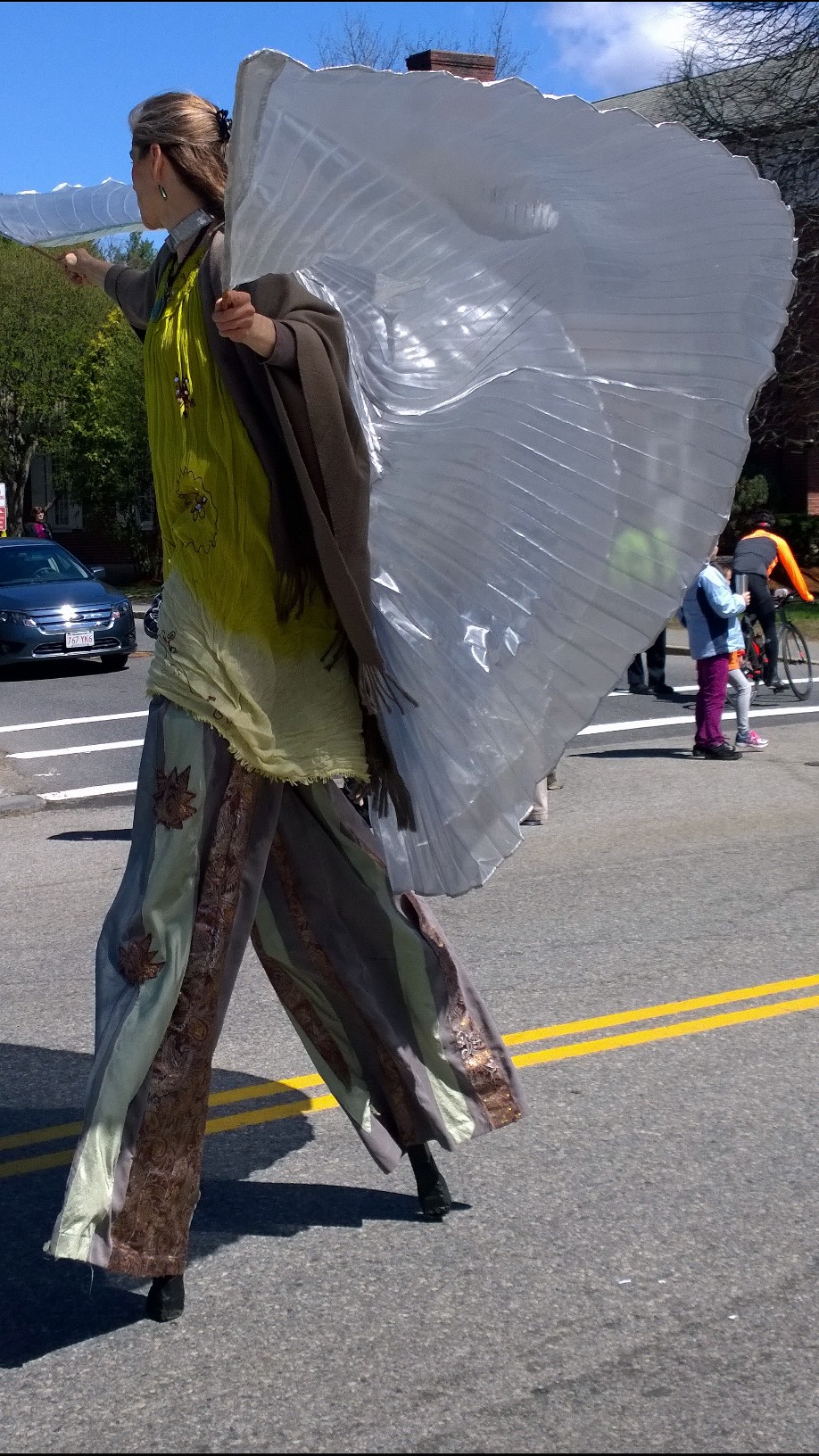
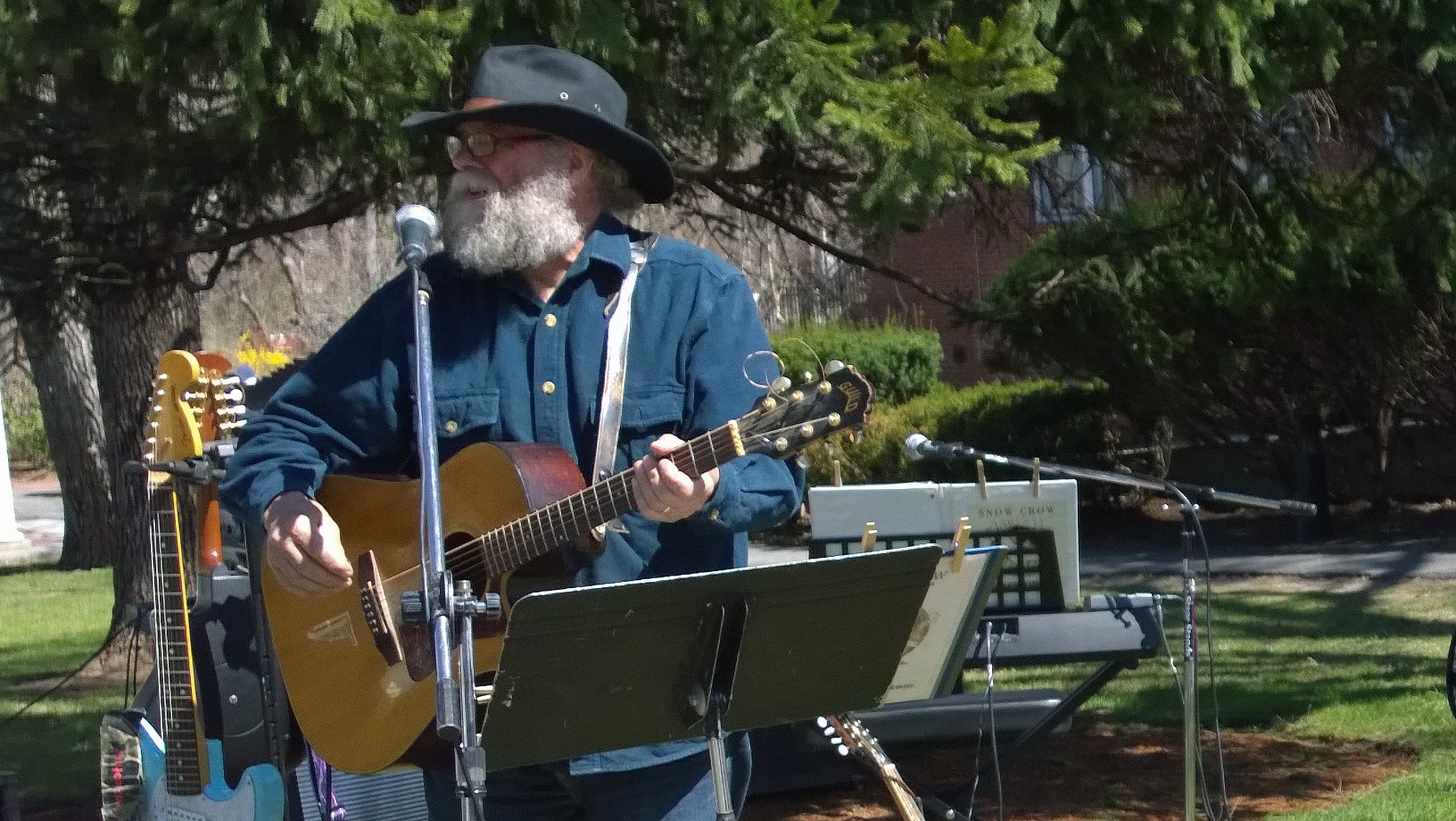
It was still chilly on Saturday, but a great day for the Musketaquid Parade celebrating the Earth. Bands, stilt walkers, homemade floats, drummers, tables for environmental advocates of all kinds.

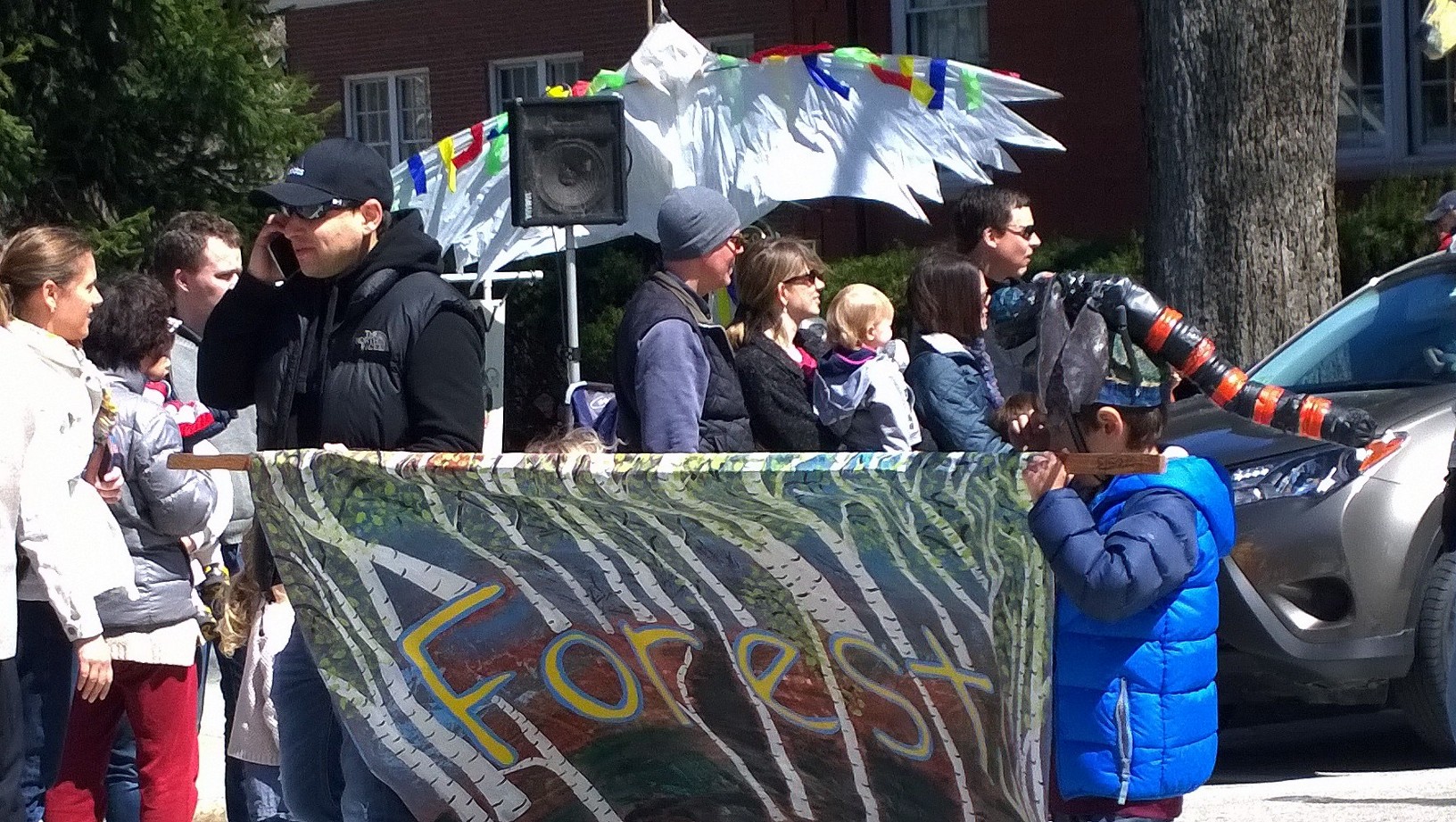
Does the boy with the “forest” banner whose dad is on a cellphone remind you of the picture book Sidewalk Flowers?

In the afternoon, I helped my 3-year-old grandson dig holes for strawberry plants. (“It’s gonna be a flower. It’s gonna be beautiful!”)

joyous-drummers

perhaps-a-fox

stilts-and-wings

mariachi-band

Earth_Day-guitar

forest-and-cellphone

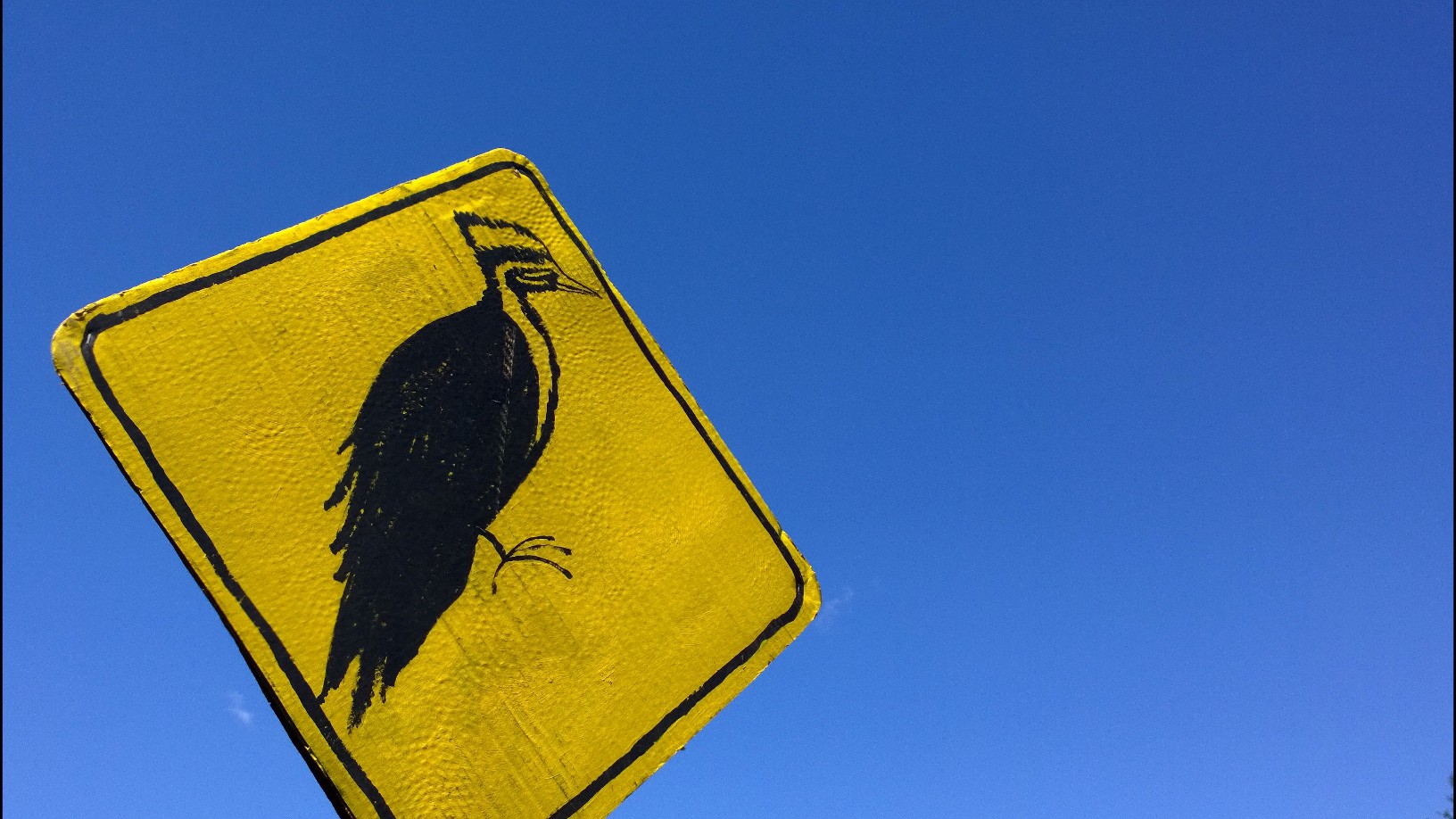
woodpecker-for-Earth-Day

Read Full Post »

Over at TreeHugger, Kimberley Mok has a post on an Italian filmmaker’s study of breathtakingly beautiful marine life.

“The ocean is a mysterious place,” she writes, “full of wondrous creatures and hidden delights, waiting to be discovered. The very nature of this massive body of fluid is primordial and seen as a symbol of the subconscious in many cultures. Italian filmmaker Sandro Bocci, also known as Bolidesottomarino, recently released a sneak peak at a ‘non-verbal’ film he’s working on, titled ‘Porgrave.’ Showing captivating scenes of vibrantly coloured underwater organisms, it’s a close-up look at a ‘microworld’ that many of us never get to see — or may never get to see, if ocean acidification, pollution and habitat loss continues at today’s alarming rate.

“According to Bocci’s website, Julia Set Collection, the film is influenced by thinkers like Alan Moore, Jan Hanlo, Don DeLillo, Kurt Vonnegut, Alfred Van Vogt, and is

an experimental film orbiting scientific and philosophical reflections on time and space, and that through various shooting techniques, fields of magnification, and an exciting soundtrack, weaves a web between science and magic.”

Please click here. The photos are extraordinary.

Photo: Sandro Bocci

Read Full Post »

I read Maria Popova’s review of this children’s book on the universe a while ago and have been thinking about it ever since.

She writes, “There’s something at once incredibly empowering and incredibly humbling in knowing that the flame in your fireplace came from the sun.

“That’s precisely the kind of cosmic awe environmental writer Elin Kelsey and Toronto-based Korean artist Soyeon Kim seek to inspire in kids in You Are Stardust (public library) — an exquisite picture-book that instills that profound sense of connection with the natural world. Underpinning the narrative is a bold sense of optimism …

“Kim’s breathtaking dioramas … mix tactile physical materials with fine drawing techniques and digital compositing to illuminate the relentlessly wondrous realities of our intertwined existence: The water in your sink once quenched the thirst of dinosaurs; with every sneeze, wind blasts out of your nose faster than a cheetah’s sprint; the electricity that powers every thought in your brain is stronger than lightning.

“But rather than dry science trivia, the message is carried on the wings of poetic admiration for these intricate relationships:

“Be still. Listen.
“Like you, the earth breathes.” More here.

Popova adds these thoughts from particle physicist and cosmologist Lawrence Krauss:

Atoms come in different types called elements. Hydrogen, oxygen and carbon are three of the most important elements in your body. … How did those elements get into our bodies? The only way they could have got there, to make up all the material on our Earth, is if some of those stars exploded a long time ago, spewing all the elements from their cores into space. … So, most of the atoms that now make up your body were created inside stars! The atoms in your left hand might have come from a different star from those in your right hand. You are really a child of the stars.

Art: Soyeon Kim
From the children’s book You Are Stardust

Read Full Post »

Suzanne’s friend Sara Van Note is heading off to Central America to research a story, but before leaving, she filed this report on a wasp that is being used to fight the emerald ash borer.

“A swampy forest in the floodplain of  the Merrimack River is one of the first places in New Hampshire where the dreaded emerald ash borer was discovered. These days, Molly Heuss of the New Hampshire Division of Forestry and Lands knows just how to find the tree-munching beetles lurking in green and black ash. …

“In recent years, the emerald ash borer has chewed its way through tens of millions of ashes across 24 states and two Canadian provinces, and counting.”

So scientists have decided to use a parasitic wasp to combat the menace.

“The parasites are descendants of wasps brought to the US from China, where the borer is also from. And they are very tiny. ‘About the size of a pin,’ says entomologist Juli Gould, of the US Department of Agriculture in Massachusetts. …

“The borers themselves were discovered in North America in 2002. They probably got here by stowing away in shipping crates. Scientists here knew nothing about them at the time, so Gould says they began working with colleagues in China to find a way to control the bugs.” More here.

Using the parasitic wasp is a last-ditch effort, and other scientists worry that the wasp could end up doing other things that are less desirable. That’s always a possibility, as Erik pointed out the other day when I showed him an article in the Providence Journal about a local effort to beat back a winter moth infestation. The article said that the parasitic fly Cyzenis albicans dines only on winter moths, so no worries. But Erik was skeptical. The best laid plans of mice and men …

Photo: John Cameron
Mountain Ash in New Hampshire

Read Full Post »

The radio show Living on Earth (LOE) reported recently on work to restore seaweeds that are a key part of the ecosystem.

From the LOE website: “Ripped from the seafloor by strong swells, massive amounts of kelp recently washed ashore in southern California. But the uprooted algae may actually be a sign of successful kelp restoration efforts. Marine biologist Nancy Caruso discusses the fragile ecosystem and how she and a community are helping to rebuild the majestic kelp forests.”

Radio host Steve Curwood interviewed Caruso. She recounts how she began 12 years ago with a group of students and volunteers “to restore the kelp forests off of Orange County’s coast.”

After a storm, she says, big holes get ripped in the forest of kelp, often 10 feet high. Then “new life can grow from the bottom up, and so if we see this happen, which we’re seeing right now, the kelp returns immediately after this event, then we know that our restoration efforts are successful, and after 30 years of our local ecosystem not having healthy kelp forests, we can rest assured that it’s now restored.”

To Curwood’s question about how restoration is done, Caruso answers, “It was actually quite an effort because I had the help of 5,000 students from ages 11 to 18 as well as 250 skilled volunteer divers, and we planted this kelp in 15 different areas in Orange County. There’s a spot down in Dana Point. It’s the only kelp forest that was left in Orange County so we would collect the reproductive blades from those kelp plants, and I would take them into the classrooms for the students to clean them and we would actually stress them out overnight. We would leave them out of water in the refrigerator, kind covered with paper towels, and then the next morning we would put them back in the ice-cold seawater and the kelp blade would release millions of spores” that would then be raised in nurseries and returned to the ocean.

“All those animals that get washed up on the beach inside the wrangled tangled kelp become a food source for shorebirds that live along our coast.”

More from Living on Earth here. For more on the importance of seaweed, see also Derrick Z. Jackson’s article in the Boston Sunday Globe: “Eelgrass Could Save the Planet.”

Photo: NOAA’s National Ocean Service
Kelp forests can be seen along much of the west coast of North America.

Read Full Post »

And speaking of schools that develop a love of the natural world, check out this story from the radio show Living on Earth.

“On the other side of the world, in the tourist paradise of Bali, there’s a school that the U.S. Green Building Council named the greenest school on Earth for 2012. It’s called the Green School, and it educates some 300 students from 25 different countries. Living on Earth’s Bobby Bascomb went to check out what’s so green about the school.”

Among the people he spoke with was Charis Ford, director of communications for the Green School.

“BOBBY BASCOMB: It rains a lot in Bali. Humidity and bugs typically destroy a bamboo structure in about 4 years, but the Green School buildings should survive 20 years or more.

“CHARIS FORD: We use treated bamboo, but it’s been treated with salt essentially. We heat water and we submerge the bamboo poles into the saltwater and it makes the bamboo unpalatable to termites and mold and funguses and other things that would biodegrade the bamboo. …

“FORD: All the building companies that he spoke with were like well, ‘You have to have walls. All schools have to have walls,’ and John [Hardy, a Canadian jewelry designer who moved to Bali in the 1970s and founded the school] said, ‘Why do they have to have walls?”’ They rubbed their chins and scratched their heads and said, “’Well, where are the kids going to hang the art?’ As it turns out, you don’t have to have walls. And we don’t have walls and we’re quite happy about it.

“BASCOMB: Just outside the classroom, a chicken wanders through a patch of green beans. Gardens are everywhere, integrated throughout the campus. They mimic a natural forest ecosystem using edible plants, a design called permaculture.

“FORD: When you wander around Green School’s campus, you might think it looks kind of like it’s wild, but then as you tune in and look at the plants that you’re around, you’ll see that that’s a bean trellis, and that’s a guava tree, and that’s ginger. Even though it looks like a jungle setting, you get a little closer and you see that’s chocolate — cacao pods — hanging from a tree next to you.” Lots more here. You also can listen to the recording of the radio interview.

Photo: Mark Fabian
On extremely hot days a canvas envelope can be pulled around a wall-less Green School classroom so cool air can be piped in to keep kids comfortable. 

Read Full Post »

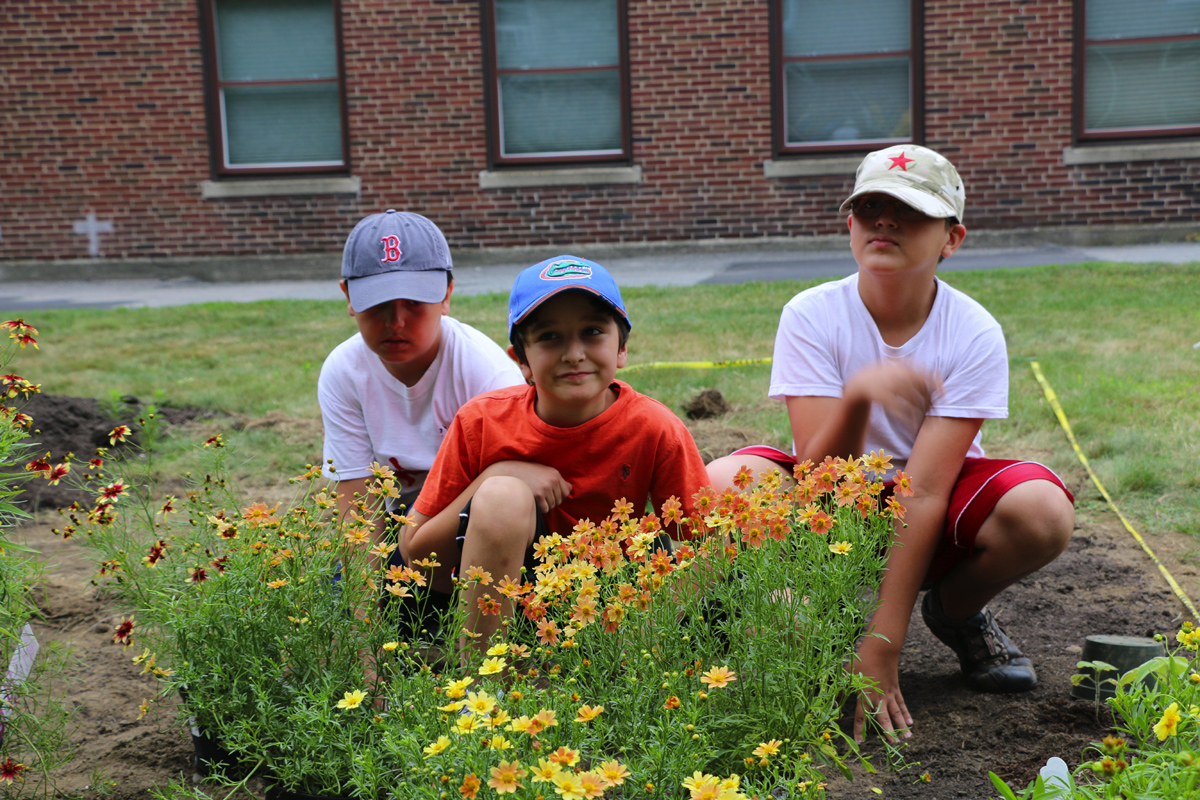
In June I wrote (here) about my friend Jean Devine’s latest venture, “Meadowscaping for Biodiversity.” Jean hoped to get middle-grade kids involved in creating a meadow where once there was lawn juiced with chemicals — and learning how meadows provide habitat for many small creatures. She conducted a pilot program over the summer with her collaborator Barbara Passero and an 8th grade science teacher, Steve Gordon.

Jean e-mails her friends and fans, “We’re delighted to announce that our 8-week summer pilot of “Meadowscaping for Biodiversity” in Waltham, MA, was a great success! The three of us, along with a strong soil turner and a landscape designer, worked with a few boy scouts (and their mothers) to repurpose a 400 square foot plot on the east lawn of Christ Church Episcopal (750 Main St. across from the Waltham Public Library) into a meadow filled with native plants.

“Why did we do this? To engage youth in fun, project-based, outdoor education, while providing native plants as habitat — especially food source — for bees, caterpillars, butterflies, birds, etc.

“The end result? An aesthetically pleasing product and proof that Meadowscaping for Biodiversity, a generative/environmental education program, pays a solution forward to the next generation by inspiring, engaging, and empowering students to be problem solvers and stewards of the Earth. All involved, including the vendors who supplied plants and garden materials, were able to see that this program helps heal the Earth and improve outdoor educational opportunities for youth ‘one meadow at a time.’ Now all we have to do is convince funders, teachers, city planners etc. of the benefits of this program!”

If you fit any of those categories or just want to learn more, contact information is here.

biodiversity-kids

Read Full Post »

Fireflies are not as ubiquitous as they used to be, and that’s a concern. They are like the canary in the mine. If fireflies go, other species go.

What has caused the decline? Lawn chemicals? Rapid urbanization? Scientists want to know.

NY Times reporter Alan Bllinder writes from Greenville, South Carolina, about a crowdsourced research project to help figure out what’s going on.

“As dusk faded over the home of Jeremy Lyons and his sons on a recent evening here, one ritual of the Southern summer — the soft hiss of a can of mosquito repellent — signaled that the start of another was near.

“And although Raine Lyons, 6, grimaced, coughed and flinched during his dousing with bug spray, he soon stood near a chain-link fence in his backyard and shouted, in speedy succession: ‘Found one! Found one! Found one!’ Mr. Lyons, perched on his knee next to Raine, was almost completely silent as he tapped the screen of his cellphone again and again and again.

“There, on a weeknight in a South Carolina backyard, a father and his son, in their different ways, were counting fireflies. But an evening among fireflies was not merely a modest round of summertime nostalgia; instead, it was part of a multiyear quest by Clemson University researchers to measure the firefly population and investigate whether urbanization, especially here in the fast-growing South, threatens the insects.” Read how they are going about it here.

I hope we can reverse the decline of fireflies. I have so many happy memories of them from my childhood and my children’s childhood.

Photo: Jacob Biba for The New York Times
Raine Lyons counting fireflies alongside his father, Jeremy, in Greenville, S.C., as volunteers in the Vanishing Firefly Project of Clemson University.

Read Full Post »

My friend Jean Devine is always up to something interesting. A Brown U grad, with an MBA from Simmons, she used to work in investor relations but in recent years has been testing the waters of social entrepreneurship.

Her latest initiative, with Barbara Passero of Sandpiper Creative, is called meadowscaping and is intriguing on many levels.

With access to a Waltham church lawn for a summer youth program, Jean and Barbara will work with kids to convert the yard into a meadow that uses native species from Garden in the Woods and provides a habitat to the bugs and other small creatures that make a healthy environment.

From the Meadowscaping for Biodiversity website: Meadowscaping “is an outdoor, project-based, environmental education program that provides middle school youth with real-world experiences in STEAM learning (Science, Technology, Engineering, Arts and Math), while inspiring and empowering them to address challenges to the environment and our society.

“Today, few children spend time experiencing Nature and the benefits of outdoor recreation, education, and contemplation. Founder and former Director of the Children and Nature Network (C& NN) Richard Louv coined the phrase nature-deficit disorder to describe the negative effects of reduced outdoor time on children’s development. …

“Children who spend little time outdoors may value nature less than children who spend time outdoors in free play. Similarly, children who feel part of something bigger than themselves may … understand their dependence on a clean environment and know that they are responsible for caring for the Earth as their home.” More here.

The idea behind the meadowscaping summer program is that children, both at a young age and as they become adults, can actually do something about the environment.

Remember our post “The Doctor Is In” about the woman who sets up in a Providence park to listen to your worries about global warming (here)? Stop worrying and do something, say the meadowscape entrepreneurs. Give up lawn chemicals, plant a meadow, provide a home for tiny necessary critters, and work to make change.

white-iris-in-morning

Read Full Post »

Someone has finally recognized seaweed for the artistic creation it is.

That someone is Josie Iselin, whose book An Ocean Garden: The Secret Life of Seaweed was reviewed by Dana Jennings in the NY Times Science section Tuesday.

Jennings begins, “The secret to finding unsuspected beauty, artists and naturalists will tell you, is in knowing how to slow down and really look. The writer and photographer Josie Iselin certainly knows how to do that, as she shows in her beguiling new book, An Ocean Garden.

“In her introduction Ms. Iselin … writes, ‘I fell in love with seaweed at the kitchen counter.’ (She would bring back samples and study them there.) And it vexes her that others don’t share in her tidal pool crush. …

“The 100 color photographs here, though, just might convince some people …  The book focuses on seaweeds found in Maine and California, both states she has lived in; the species names tickle the tongue in the same way that the seaweeds themselves can tingle bare feet: knotweed and bladderwrack, bull kelp and green scrap, pepper dulse and sugar kelp, Turkish towel and Irish moss.” Read more about the book, here.

We’re headed to the beach this weekend with John and his little ones. Maybe we will be able to identify some seaweeds there.

Photos: Josie Iselin
Clockwise from top left, seaweeds from Josie Iselin’s new book: Macrocystis, Ulva lobata, Calliarthron tuberculosum, Egregia menziesii, Gloiosiphonia verticillaris and coralline algae.

Read Full Post »

The Globe travel section had some fun recently with unusual sleeping structures offered to travelers. This goes beyond accommodations on stilts in the South Seas.

Diane Bair and Pamela Wright report, “Cradled in a ‘human nest’ made of twigs and branches, on a hillside above the Pacific Ocean, we drifted off to dreamland to the sounds of barking sea lions and crashing waves, a relaxation mix tape made by Mother Nature herself.

“This is camping? Nope. It’s a kind of ‘glamping,’ a.k.a. glamorous camping. While the human nest isn’t wildly luxurious, it’s certainly unique, one of the hallmarks of the glamping experience. ‘Yurts, treehouses, domes, eco-pods, barns, bell tents, cabins, and safari tents — whatever you choose, it’s going to be original,’ says Katie Stearns of Glamping Hub, an online site with 1,200 listings. In addition, ‘you have an incredibly unique access to nature,’ Stearns says.”

Click here to see photos of an Oregon tree-house for grownups, glass igloos in Finland, and lots of other imaginative places to bed down around the world.

Photo: Boston Globe
“Dreamcatcher” bubble, part of a colony of five bubbles set in a Provencal pine forest near Marseille

Read Full Post »

Photo: Masaki Miya et al. Wikimedia Creative Commons
Anglerfish use bioluminescence to attract their prey in the darkest depths of the ocean.

When John was little, he liked a book called Fish Do the Strangest Things. Strangeness is a great focus for a nature book, because everyone likes offbeat critters.

Steve Curwood, founder of the radio show Living on Earth, recently interviewed the author of a book that focuses on the strangeness of ocean life.

CURWOOD: “In an engaging new book called The Extreme Life of the Sea, biologist Steve Palumbi and his novelist son Tony deepen our understanding of how strange sea life has managed to survive against all odds. … Why did you write this book. Why now?

PALUMBI: “Well, the real reason is that we’re trying an experiment: can you take the narrative style and approach that a novelist would use and combine it with what a scientist would do? … You don’t really care about the plot until you care about the characters, and so we wanted to write a book that made you care about the characters.

CURWOOD: “Now, you write about the extreme life of the sea, the oldest, the hottest, the shallowest, to name a few. Why did you choose this approach?

PALUMBI: “Because it was a way of getting people’s attention to the really sort of amazing things that these critters do. Organisms in the sea live in some of the hottest places, they live in some of the coldest places, and how they do that is something marine scientists have paid a lot of attention to. So it was really a way to make it more engaging, more fun, and to let us move credibly between different kinds of organisms all in the same chapter. …

CURWOOD: “You had one extreme that you called immortal.

PALUMBI: “That’s an amazing jellyfish called turritopsis, and it has the remarkable ability to age in reverse. So when the environment is bad, this animal can essentially go from its adult body form back, back, back to its larval form, and then start all over again. … It’s called transdifferentiation. It’s the only critter known to be able to do that.”

More here, where you can read the rest of the transcript and listen to the recording. It’s all pretty amazing.

Photo: Eddie Welker, Flickr Creative Commons 2.0)
Clownfish

Read Full Post »
« Newer Posts - Older Posts »