Feeds:
Posts
Comments

Posts Tagged ‘norway’

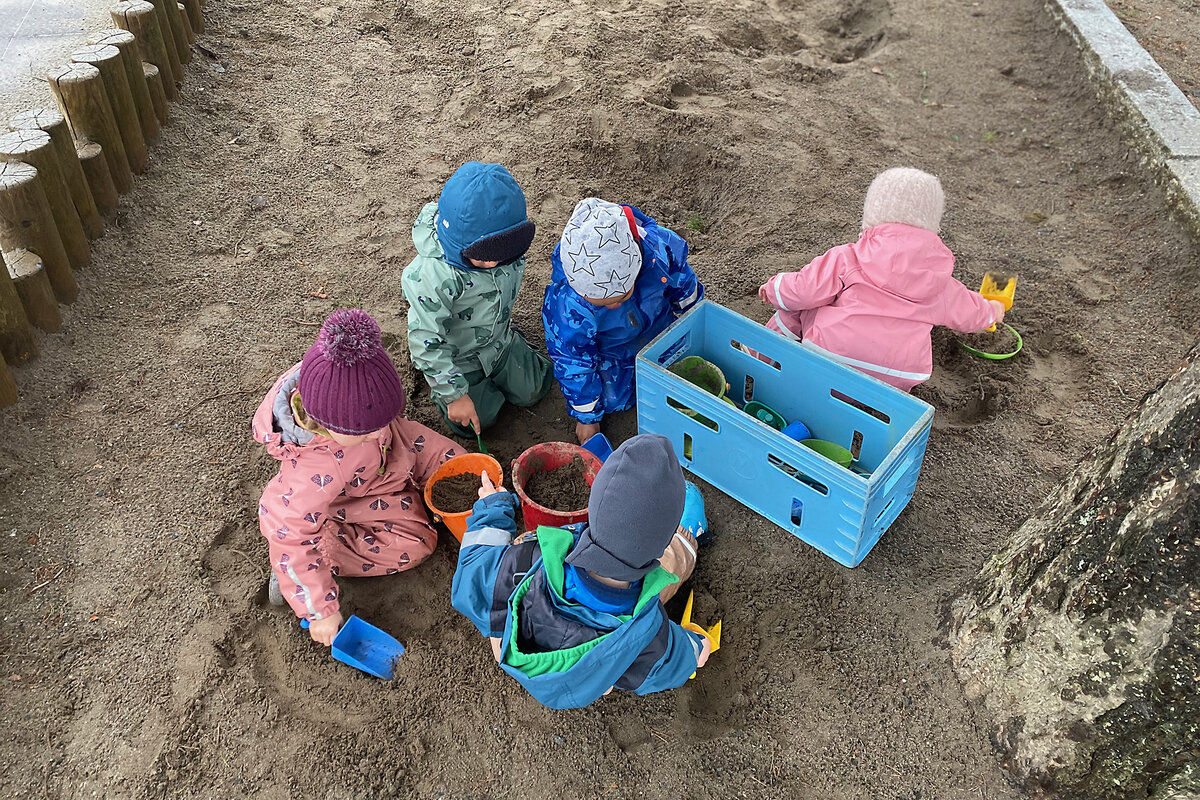
Photo: Jackie Mader/The Hechinger Report.
In Norway, a joyful, secure childhood is a legal right.

I was intrigued by today’s story on Norway’s approach to childhood. One point that made me smile was that the children in early-education programs take naps outdoors, bundled up in sleeping bags. My younger grandson took naps that way. Maybe because he’s half Swedish. Those Northerners don’t believe in bad weather.

Jackie Mader writes at the Hechinger Report via the Christian Science Monitor, “Just north of Oslo, Sylvia Lorentzen’s two child care programs straddle a narrow, winding road that leads up to the lush forests that encircle parts of Norway’s capital.

“In Norway’s system of universal child care, children ages 5 and under immerse themselves in nature. In the winter, those in Ms. Lorentzen’s care learn to ski and sled. In the summer, they swim, canoe, and rock climb – and then rest in hammocks.

“Around age 4, they learn how to safely use a knife. Then they huddle together outside, whittling wooden figures out of sticks to practice. By age 5, they are cutting logs with a saw and building fires. Toddlers nap outside, bundled inside puffy, miniature sleeping bags affixed to their strollers.

“Universal child care is ‘both seen as an investment for the society and an investment for the child,’ says Kristin Aasta Morken, a program leader in the city of Oslo. Public funding covers 85% of operating costs for child care programs in Norway. Parents pay about $182 per month.

“In the United States, it’s parents, mostly, who cover the costs for this care – though some employers and local jurisdictions may offer partial reimbursement.

‘Social differences are something Norway does not accept.’

“ ‘Kindergarten is so important to level out social inequities,’ says Robert Ullmann, head of a consortium of child care centers. ‘In Norway, we think it’s democratic that everyone can have the same opportunities and move out of being poor. Social differences are something Norway does not accept.’ …

“ ‘A really important pillar of Norway’s early ed philosophy is the value of childhood in itself,’ says Henrik D. Zachrisson, director of the Centre for Research on Equality in Education at the University of Oslo. ‘Early ed is supposed to be a place where children can be children and have the best childhood possible.’

“It’s an idea that undergirds Norway’s nationalized approach to its ‘kindergartens,’ which here serve children age 5 and younger, including toddlers and infants. …

“On a drizzly morning earlier this year at Preståsen Kanvas-barnehage, one of Mr. Ullmann’s kindergarten programs in south Oslo, children roam around an expansive play yard, building sandcastles under the canopy of a large pine tree. Others zoom down a hill on bikes.

“In another playground on campus, children shriek as they splash through a large puddle. This draws more children hoping to play. Rather than caution the children about getting wet, a teacher walks over and hands them buckets to have at it.

“Children with disabilities, who are often segregated in American child care programs, are included in activities. Some of them have a city-funded aide who attends to their needs.

“In some rooms, posters on the wall show pictures of common items or common requests, so children still learning Norwegian can point to what they need. In one room, children are learning about the Muslim holiday, Eid al-Fitr. …

“Ironically, Norway’s policies have been inspired in part by American studies that found troubling language skills gaps between higher- and lower-income children. Other influential American scholarship also revealed high educational returns from investing in early childhood programs.

“ ‘The argument I’ve heard is that if you don’t send your children to kindergarten, then you steal some possible experiences from them,’ says Adrian Kristinsønn Jacobsen, a doctoral candidate at the University of Stavanger in Norway who studies early childhood science education rooted in experiencing nature.

“There are important contexts affecting each country’s approach, however. Norway is home to about 5.5 million people, and about 82% are ethnically Norwegian. This population lives in an area roughly the size of Montana. Norway is also a top producer of oil, which helped generate a per capita household income that was over $104,000 in 2022, according to the International Monetary Fund.

“The U.S., on the other hand, has 62 times the number of residents that Norway has and a far more diverse population. In 2022, per capita household income in the U.S. was about $77,000.

“In Norway, nearly 1.4% of the country’s gross domestic product goes toward early childhood programs. The U.S. spends less than 0.4% of its GDP, according to the Organization for Economic Cooperation and Development.

“Public funding covers 85% of operating costs for child care programs in Norway. As of this summer, the tuition parents pay has been capped at about $182 per month. This applies to both public and private programs, and includes in-home kindergartens, which preserve a certain amount of choice for parents. Programs receive funding on a per-child basis. Kindergartens that care for children under 3 years old receive twice the funding of those ages 3 to 5, since toddlers and infants require more individualized care.

“Norwegian children are guaranteed a spot in a kindergarten after they turn 1 year old – about the time many parents’ paid leave ends. If parents decide not to send their children to a kindergarten, they receive financial assistance to stay home.

“Norway’s understanding of kindergarten is deeply ingrained in its culture. But these benefits, signed into law in the Kindergarten Act of 2006 – which repeats the word ‘play’ 56 times – also express some of the country’s deeply held values.

“Child care programs must acknowledge ‘the intrinsic value’ of childhood, according to the 63-page law. ‘The Kindergarten must be based on fundamental values in the Christian and humanist heritage and tradition, such as respect for human dignity and nature, on intellectual freedom, charity, forgiveness, equality and solidarity, values that also appear in different religions and beliefs and are rooted in human rights,’ the law declares. …

“The law proclaims, too, that kindergartens should ‘promote democracy and equality and counteract all forms of discrimination.’ ”

More at the Monitor, here.
Read Full Post »

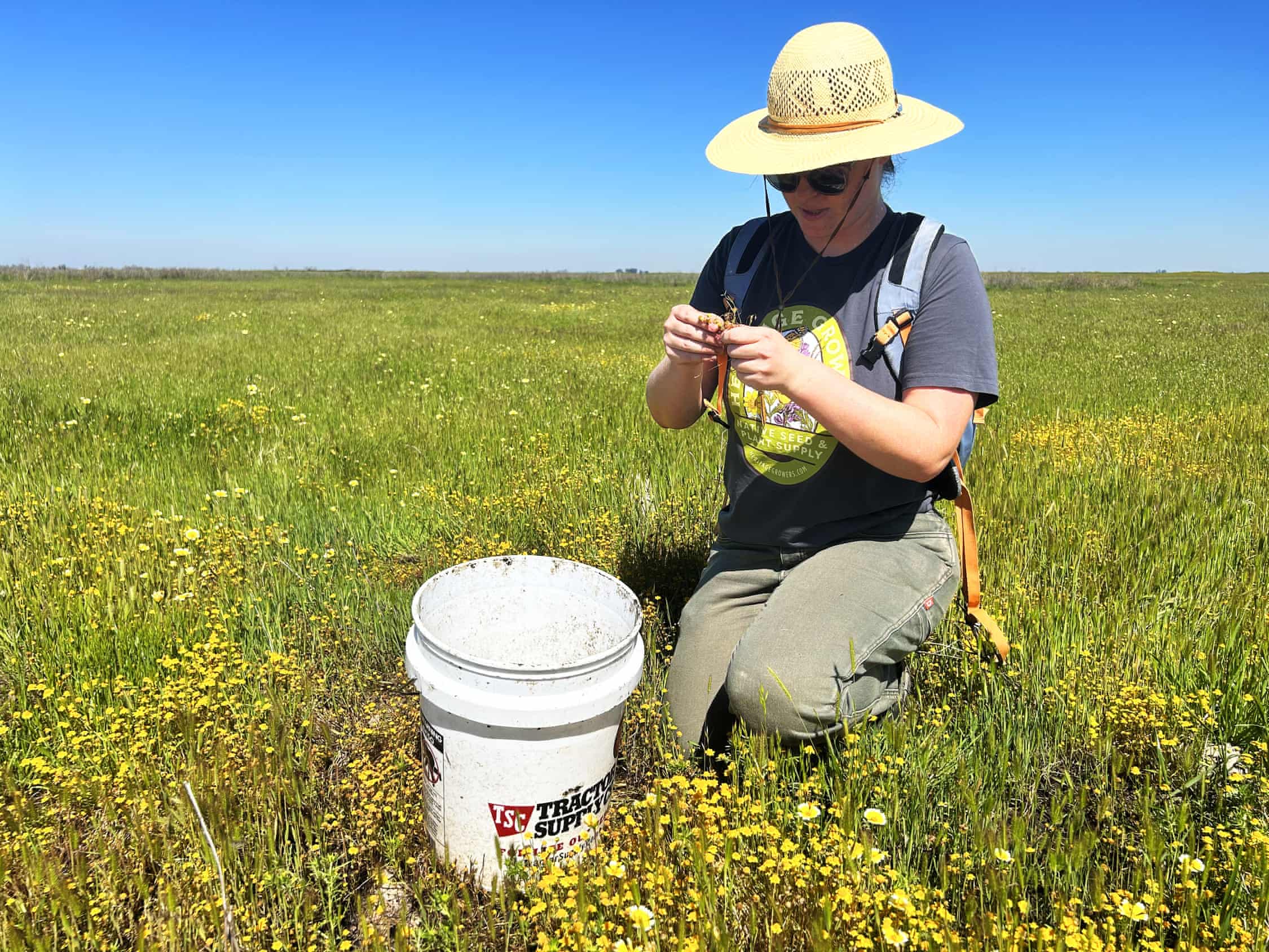
Photo: Dani Anguiano.
Haleigh Holgate, seed collection manager at Heritage Growers, inspects a seed in the San Luis national wildlife refuge complex on March 2025. Only the correct species will do.

I have blogged about seed banks in various countries (search on “seed bank”), and particularly about the global one that will keep seeds safe forever — if it stays frozen.

Today we learn what’s going on in California, where Heritage Growers is focused on local flora.

Dani Anguiano reported at the Guardian, “Deep in California’s agricultural heartland, Haleigh Holgate marched through the expansive wildflower-dotted plains of the San Luis national wildlife refuge complex in search of something precious.

“She surveyed the native grasses and flowering plants that painted the Central valley landscape in almost blinding swaths of yellow. Her objective on that sweltering spring day was to gather materials pivotal to California’s ambitious environmental agenda – seeds. …

“As a seed collection manager with the non-profit Heritage Growers native seed supplier, Holgate is tasked with traveling to the state’s wildlands to collect native seeds crucial for habitat restoration projects.

“The need has become particularly acute as California aims to conserve 30% of its land by 2030, with the governor pledging to restore ‘degraded landscapes’ and expand ‘nature-based solutions’ to fight the climate crisis. …

“But the rising demand for seeds far outpaces the available supply. California faces an ‘urgent and growing need’ to coordinate efforts to increase the availability of native seeds, according to a 2023 report from the California Native Plant Society. There simply isn’t enough wildland seed available to restore the land at the rate the state has set out to, Holgate said.

“Bridging the gap starts with people like Holgate, who spends five days a week, eight months of the year, traveling with colleagues to remote spots across the state collecting seeds – an endeavor that could shape California’s landscape for years.

“That fact is not lost on the 26-year-old. It’s something she tries to remind her team during long, grueling, hot days in the oilfields of Kern county or the San Joaquin valley. …

“Seeds play a vital role in landscape recovery. When fires move through forests, decimating native species and leaving the earth a charred sea of grey ash, or when farmlands come out of production, land managers use native seeds to help return the land to something closer to its original form. They have been an essential part of restoring the Klamath River after the largest dam removal project in US history, covering the banks of the ailing river in milkweeds that attract bees and other pollinators, and Lemmon’s needlegrass, which produces seeds that feed birds and small mammals.

“California has emphasized the importance of increasing native seed production to protect the state’s biodiversity. … Three-quarters of native vegetation in the state has been altered in the last 200 years, including more than 90% of California wetlands, much of them here in the Central valley.

“For the state to implement its plans, it needs a massive quantity of native seeds. … Enter Heritage Growers, the northern California-based non-profit founded by experts with the non-profit River Partners, which works to restore river corridors in the state and create wildlife habitat.

“The organization takes seed that Holgate and others collect and amplifies them at its Colusa farm, a 2,088-acre (845-hectare) property located an hour from the state capital. (The ethical harvesting rules Heritage Growers adhere to mean that they can take no more than 20% of seeds available the day of collection.) …

“Currently, the farm is producing more than 30,000 lbs of seeds each year and has more than 200 native plant varieties.

“The goal, general manager Pat Reynolds said, is to produce source-identified native seed and get as much of it out in the environment as possible to restore habitat at scale. …

“The benefit of restoring California’s wildlands extends far beyond the environment, said Austin Stevenot, a member of the Northern Sierra Mewuk Tribe and the director of tribal engagement for River Partners.

“ ‘It’s more than just work on the landscape, because you’re restoring places where people have been removed and by inviting those people back in these places we can have cultural restoration,’ Stevenot said. ‘Our languages, our cultures, are all tied to the landscape. … It’s giving the space back to people to freely do what we would like for the landscape and for our culture,’ he said. …

“The mission is worthwhile, Holgate said. The seeds she collects are expensive, but if they can be amplified and expanded, native seeds will become more abundant and restoration projects can happen more quickly.

“ ‘We can restore California faster,’ she said. … ‘I know that when I’m dreaming about a certain species, I should go check that population and see what’s happening. And normally there’s something going on where it’s like grasshoppers came in and ate all the seed, or the seed is ripe and ready, and I gotta call in a crew,’ she said. ‘I’ve really put my whole heart into this job.’ “

More at the Guardian, here. No firewall at this outstanding news site, but please support it.

Read Full Post »

Photo: Ajit Niranjan/The Guardian.
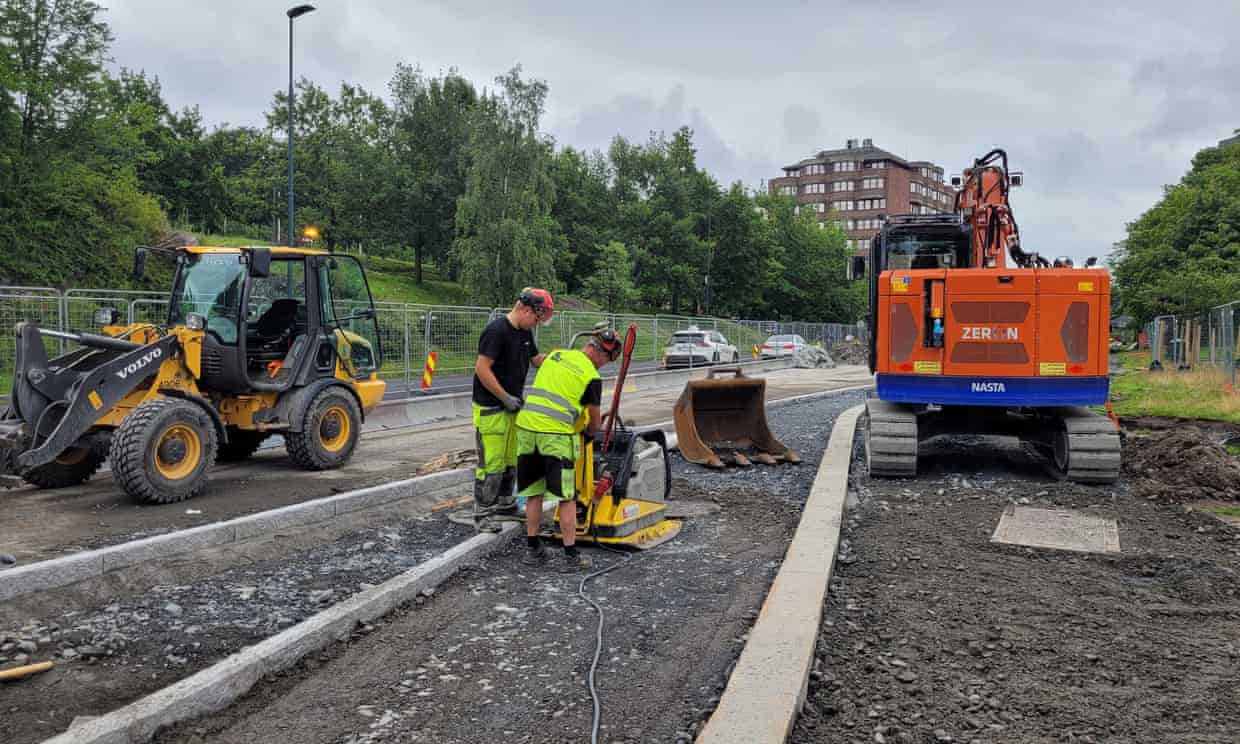
The electric machinery at an emissions-free building site in Oslo, Norway, makes for quieter construction.

Whether we realize it or not, our noisy world is making us a little more jittery than we need to be. It’s not just the clangor and clash of big cities but near airports, hospitals with medivac helicopters, and construction sites.

Despite Norway’s reputation as one of the biggest oil producers, it is leading the way with electric vehicles, even at construction sites.

Ajit Niranjan has the story at the Guardian.

“Tafseer Ali felt no need to raise his voice as the pair of diggers lumbered past him, their treads weighing heavy on the rock and asphalt. Quiet electric machines like these make it easy to work in the city center, the construction manager said – and keep the neighbors happy. …

“The peaceful streets of Oslo are growing even calmer as the city drives noisy machines off municipal building sites. For locals and builders, the drop in decibels is a welcome side-effect of a goal to keep city-managed construction projects free from toxic emissions. The mandate, which is the first of its kind in the world, came into effect on 1 January.

“ ‘I don’t think we’re going to get to 100%, because not all [electric] machines are available on the market,’ said Ingrid Kiær Salmi, an engineer from Oslo’s urban environment agency, speaking to the Guardian at a building site in the city center last year. ‘But I think we’re going to get pretty close.’

“Construction is one of the biggest sources of urban air pollution, but even forward-thinking cities such as Oslo have struggled to clean it up. The Norwegian capital has led the way in replacing the petrol and diesel that powers its construction equipment with biofuels, which do little to heat the planet but still foul the local air. It is now moving to battery-powered machines.

“The latest data shows Oslo’s municipal building sites were 98% free from fossil fuels in 2023; three-quarters were powered by biofuels and less than one-quarter by electricity. For projects run by the urban environment agency, which has more recent data through to October 2024, two-thirds of machine hours were powered by electricity and one-third by biodiesel.

“The proportion of its projects powered by electricity has more than doubled in the past two years as new machines have come on to the market. …

“Electric vehicles are nothing new to Norwegians, who are more likely to drive a car with a big battery than one with a combustion engine, but the market for clean diggers [excavators] and wheel loaders still has a way to go. The building industry has pushed back on Oslo’s pioneering plans for moving too fast. …

“The requirement that all machinery on building sites must be emission-free is ‘at this point, neither effective nor cost-efficient,’ said Stine Marie Haugen, from the Norwegian construction and civil engineering contractors’ association.

“ ‘Currently, very few countries in Europe have a strong focus on emission-free machinery, which means that access to such equipment is somewhat limited,’ she said. ‘Only a few countries bear the development costs of bringing these machines to market.’

“But by taking on these costs, Norway and a handful of other countries are making clean machines cheaper and more attractive for cities around the world. Manufacturers say the early demand from procurement policies like Oslo’s has encouraged them to develop new electric machinery and make existing ones better.

“As the volume of vehicles increases, costs will come down – but ‘like with all new technology, there is a green premium,’ said Tora Leifland, the head of public affairs at Volvo Construction Equipment. A battery-powered machine can cost twice as much as a diesel one, she said, though it will save money on fuel and do little to inflate the overall costs of a construction project.

“There are also benefits that are harder to capture, such as quieter working conditions on-site and reduced disruptions to local communities and businesses.”

More details at the Guardian, here. No firewall. Contributions to support the Guardian‘s reliable journalism are solicited.

Read Full Post »

Photo: Brian Otieno/The Guardian.
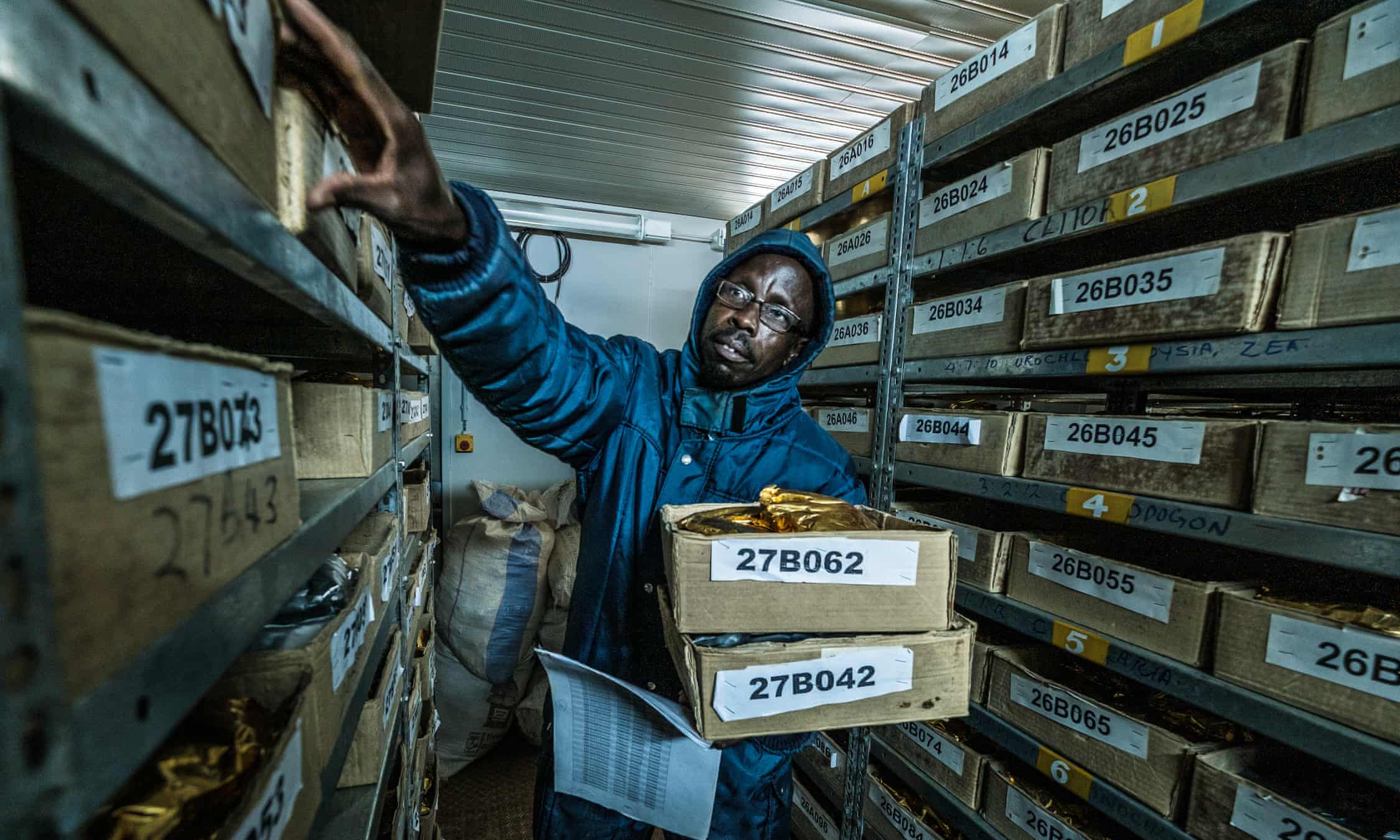
John Okemer, a seed technician, arranges some of the thousands of seeds stored inside Kenya’s gene bank. 

As our wounded planet hurtles through space, what should we take with us to replicate the better things as needed? Noah took two of each animal, bird, fish. Some of our contemporaries are taking seeds.

Caroline Kimeu writes at the Guardian, “On a winding road in the densely forested Kikuyu highlands of south-central Kenya lies a nondescript government building: the Genetic Resources Research Institute. Opened in 1988, during the country’s ‘green revolution,’ this little-known national gene bank was set up to hold and conserve seeds from the traditional crops that were in danger of disappearing as farmers and agricultural industry moved to higher-yield varieties.

“For decades, it has collaborated with researchers studying crop genetics and others working to develop improved varieties. But as the climate crisis worsens food insecurity, the repository of about 50,000 seed and crop collections could become a lifeline for farmers.

“ ‘We were established as a conservation unit, but these are unusual times with climate change, so we’ve had to diversify our work to respond to needs,’ says Desterio Nyamongo, who runs the institute. ‘Given the erratic weather these days, smallholder farmers need a diverse mix of crops.’

“Through a project with the Crop Trust organization the gene bank is now playing a part in the comeback of indigenous crops that are resistant to drought and pests, but fell from favor and have been neglected for decades.

“It stores backups of its most unique seeds at the Svalbard global seed vault in Norway, where it has been sending collections since 2008. The international repository contains more than a million seed samples from around the world.

“Matthew Heaton, the project manager for Crop Trust’s Seeds for Resilience program, says: ‘National gene banks can be overshadowed by the larger international ones, but they are best positioned to quickly improve local resilience and nutrition because their collections are adapted to local needs and growing conditions.’

“The national gene bank is a small operation, with few staff and limited funding, and its cold rooms, which plant scientists say contain only a third of the country’s plant diversity, are almost full. The Seeds of Resilience project, launched in 2019, has supported national gene banks in Ethiopia, Ghana, Kenya, Nigeria and Zambia with financial and technical support to keep resilient, healthy and nutritious crop collections, and to increase their support for farmers. …

“Farmers from the village of Obucuun in rural Busia county, on the border of Kenya and Uganda, say that before sourcing new sorghum varieties from the gene bank, growing the cereal had become challenging. Attacks by flocks of weaver birds, which can ravage entire cereal fields, increased in frequency after the wild grasses preferred by the birds became more scarce as a result of the climate crisis.

“Ruth Akoropot, a 50-year-old farmer from the area, spends hours each day watching over her crops during peak hours of attack, after studying the birds’ behavior patterns for years.

“ ‘If you don’t do that, your crop will be wiped out,’ says Akoropot, who runs the women’s sorghum farmers association, which sells bales of the grain to Kenya’s national beer brewery. …

“Most of Busia’s population rely on farming for food and to make a living, but … a number remain vulnerable to food insecurityFlooding in April and May [in 2024] swept away farmers’ seeds and yields, exacerbating poor agricultural productivity. Old improved crop varieties sourced from the gene bank, such as Kenya’s red-headed sorghum okoto, which farmers say is less prone to bird attacks, have become community favorites in Busia after decades of disuse. …

“Tobias Okando Recha, an impact researcher for the Seeds of Resilience program, says: ‘These are crops that farmers don’t need to pump a lot of fertilizer on. With just a little fertilizer, the yield is good and they are more [resilient] than hybrid varieties. …

“Plant scientists say that while the divide between farmers and seed conservationists is narrowing, more needs to be done. …

“ ‘The gene banks are not museums, but a resource for the future,’ says Heaton. ‘By linking them with farmers, we can swiftly build local resilience and food security.’ ”

More at the Guardian, here.

Read Full Post »

Photo: STR/Reuters/Landov.
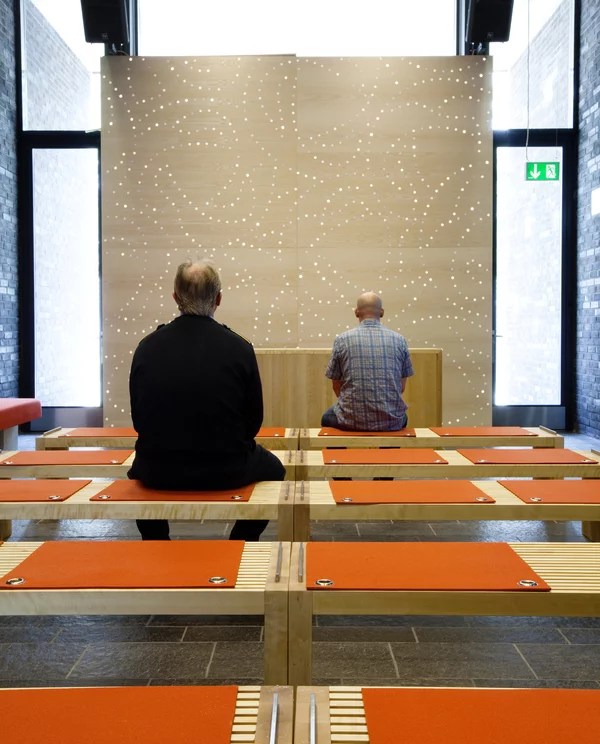
Two men sit inside the chapel at Halden prison in far southeast Norway in this picture taken in 2010. Prisoners here spend 12 hours a day in their cells, compared to many U.S. prisons where inmates spend all but one hour in their cell. NPR’s 2015 story is here.

Some years ago (2016), I wrote about research on Norway’s humane prisons. In a December 2023 Christian Science Monitor article, Troy Aidan Sambajon shows that some US prisons are moving in the same direction. Or at least testing the concept.

“Earlier this year,” he reports, “California Gov. Gavin Newsom announced a new vision for the San Quentin State Penitentiary, centered on rehabilitation and job training, inspired by another prison system that has halved its recidivism rate – in Norway. …

“About 2 out of 3 Americans released from jails and prisons per year are arrested again, and 50% are re-incarcerated, according to the Harvard Political Review. In Norway, that rate is as low as 20%. 

‘It has everything to do with your social safety net, your network, your support structure, and your job opportunities.’

“As more U.S. states seek to improve their correctional systems, the Norwegian model could prove key. It aims to create a less hostile environment, both for people serving time and for prison staff, with the goal of more successfully helping incarcerated people reintegrate into society. …

“ ‘Overcrowding, violence, and long sentences are common in U.S. prisons, often creating a climate of hopelessness for incarcerated people, as well as people who work there,’ says Jordan Hyatt, associate professor of criminology and justice studies at Drexel University. Correctional employees experience some of the highest rates of mental illness, sleep disorders, and physical health issues of all U.S. workers, a 2018 Lexipol report found. …

“Making a prison environment more humane will translate to a more efficient prison system overall, experts say. And the Norwegian model prioritizes rehabilitation and reintegration over punishment. Safety, transparency, and innovation are considered fundamental to its approach. Core practices aim to create a feeling that life as part of a community continues even behind walls and bars, says Synøve Andersen, postdoctoral research criminologist at the University of Oslo. 

“In some Norwegian prisons, incarcerated people wear their own clothes, cook their own meals, and work in jobs that prepare them for employment, says Dr. Andersen. They have their own space, too, since single-unit cells are the norm. …

“While they are separated from society, incarcerated people should experience normal, daily routines so they can have increased opportunities to reform without being preoccupied with fear of violence from other inmates, she argues.

“The principle of dynamic security means correctional officers also must have more complex social duties besides safety and security, including actively observing and engaging with the prison population, understanding individuals’ unique needs, calculating flight risks. …

“Washington state’s Lt. Lance Graham works within restricted housing and solitary confinement units, an environment he says lacks empathy and connection with those incarcerated. ‘We never had the opportunity to connect with the people in our care.’ 

“But when visiting Norway’s isolation units, he saw [that] their staff was much more engaged with the prison population and was much happier. 

“ ‘This program really promotes staff wellness, changing the relationship that you have with the people in your care,’ says Lieutenant Graham. ‘So you’re not going to have as many instances of fight or flight syndrome in your daily work. You reach common ground and talk like normal folks.’

“ ‘If you actually want to change the prison environment, invest in staff,’ says Dr. Andersen. ‘They’re there all the time. They’re doing the work.’

Amend, a nonprofit from the University of California, San Francisco, partnered with four states – California, South Dakota, Oregon, and Washington – to introduce resources inspired by Norwegian principles and sponsor educational trips to Norway for U.S. correctional leaders. 

“At California’s San Quentin, Governor Newsom hopes to emphasize inmate job training for high-paying trades such as plumbers, electricians, or truck drivers. … In Washington state, prison staff began developing supportive working relationships with the incarcerated in their care by developing individual rehabilitation plans. … In North Dakota, former Director of Corrections Leann Bertsch says after revamping the training and responsibilities of prison officers, interactions between staff and inmates felt respectful and calmer. …

“The Pennsylvania Department of Corrections collaborated with the Norwegian Correctional Services to pilot Little Scandinavia, a transformed housing unit operated at half the regular capacity to allow for individual cells. The on-duty officers at Little Scandinavia have reported enjoying their work much more now and there haven’t been any reports of violence since its opening in May 2022, says Dr. Andersen.

“Norway receives much attention for its low rate of recidivism, but some experts disagree on the measure as a rate of success. ‘[Recidivism] is not just a product of the correctional system. It has everything to do with your social safety net, your network, your support structure, and your job opportunities,’ said Dr. Andersen.”

More at the Monitor, here.

Read Full Post »

Photo: Espen Finstad/Secrets of the Ice.
Melting glaciers are revealing older and older artifacts. Archaeologists discovered the arrow above in Norway’s Jotunheimen Mountains. Made out of freshwater pearl mussel, it’s one of the best preserved findings so far.

I hesitate to say that anything about climate change has an upside, but we might as well enjoy the things that keep being revealed — at least until we reach the more important goal of controlling global warming.

At Hyperallergic, Maya Pontone reports on melting glaciers in Norway and the latest Bronze Age discoveries.

“Archaeologists trekking through the Jotunheimen Mountains in Norway’s Innlandet County,” Pontone writes, “came across a remarkable find — an intact shell arrow dating back to the Early Bronze Age. Fastened with an arrowhead made of freshwater pearl mussel, the well-preserved hunting tool dates back 3,600 years and is one of eight shell arrows that have emerged from melting ice in Norway in recent years.

“On September 13, archaeologist Espen Finstad and his research team came across the artifact while checking a site as part of a routine monitoring job they typically run at the end of the field season. While the discovery of the ancient weapon was an unprecedented surprise that day, it is just one of hundreds that the Secrets of the Ice glacial archaeology team has uncovered over the past decade due to climate change.

“ ‘The glaciers and ice patches are retreating and releasing artifacts that have been frozen in time by the ice,’ Lars Holger Pilø, co-director of the archaeology program, told Hyperallergic. …

“The archaeologists have been continuously rescuing artifacts from Innlandet’s glaciers and ice patches since the fall of 2006, when the first ‘big melt‘ hit the Jotunheimen Mountains, located northwest of Oslo. [It’s the] home of the mythological jötnar, the rock and frost giants in Norse folklore. …

“ ‘Now the artifacts are exposed and deteriorating fast, so we are in a race against time to find and rescue the artifacts,’ Pilø said.

“So far, the Secrets of the Ice research team has mapped 66 ice sites and recovered approximately 4,000 finds including hunting gear and tools, textile remnants, transportation equipment, and clothing materials. The team has also found biological specimens such as antlers, bones, and dung.

“ ‘Arrows with shell arrowheads only became known in Europe when they started melting out of the ice in Norway,’ Pilø explained about the recent discovery. …

“As global warming transforms Norway’s mountainous landscape, Finstad, Pilø and their fellow glacier archaeologists are rushing to collect the exposed artifacts, which continue to get older as the ice continues to melt.

‘Most of the ice here in Norway will be gone in this century,’ Pilø said. ‘You can say that we are melting back in time.’

“Just last week, the team recovered another arrow, this one with an intact quartzite arrowhead, that is ‘probably 3000 to 3500 years old,’ according to Pilø. The team also found an iron horse bit with remnants of a leather bridle, a Medieval horseshoe, a Viking age knife, and an arrowhead for a crossbow bolt this month.

“ ‘The finds are incredible, but the reason they are melting out is sad,’ Pilø said, explaining how the ice melt will lead to drastic changes in Norway’s landscape, local wildlife, agriculture, tourism, and hydro-electrical power plants dependent on glacial water.

“ ‘It will be a very different world,’ he lamented.”

Feel free to revisit my February post about amateur archaeologists in Norway — the three buddies who under cover of darkness have found hundreds of previously unknown rock-carving sites. Click here.

More from Hyperallergic, here.

Read Full Post »

Photo: Science Norway.
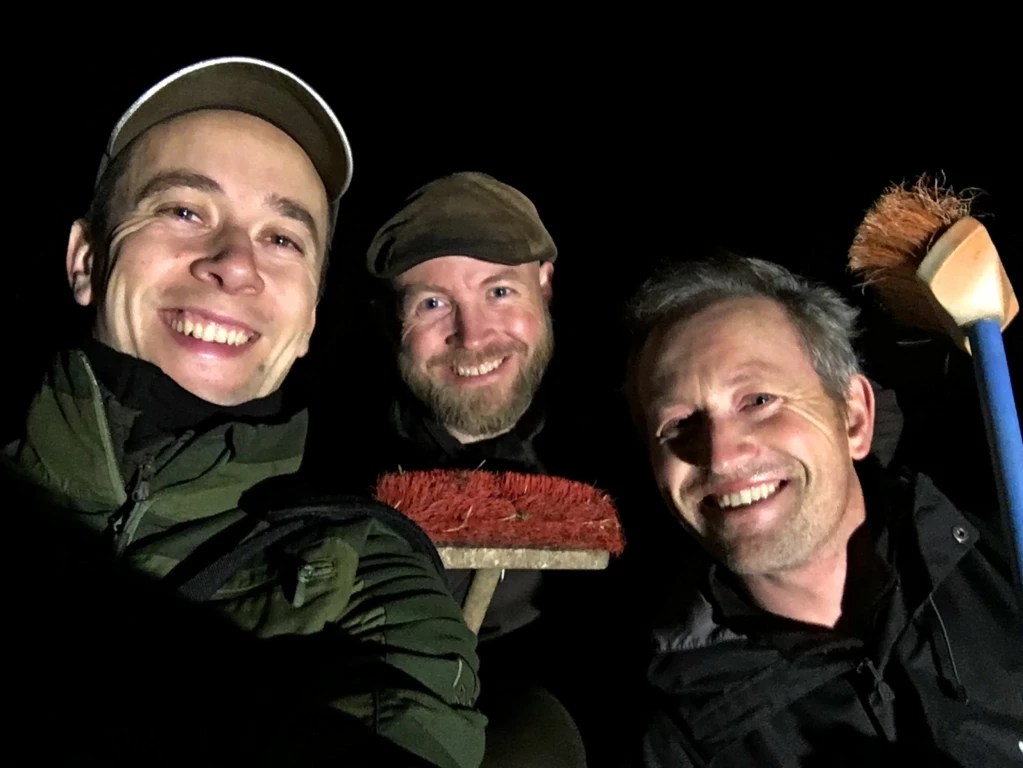
According to Science Norway, all it took was a smart hypothesis and a few brooms. Together, the three friends have discovered hundreds of previously unknown rock carving sites in the Østfold landscape in the last 3-4 years.

Some good buddies hang out in a bar together. Some go bowling together or maybe running. The buddies in today’s story hunt Bronze Age petroglyphs. At night.

Lisa Abend writes at the New York Times, “It was December and the first snow of the season was falling when the three friends set out on their weekly hunt through the fields of Ostfold, in southeastern Norway. … Tromping across the blanketed farmland, the men came to a low outcrop of rock, a few feet wide. With a child-size plastic broom, they brushed away the newly fallen snow from the stone to reveal the outline of a ship, its curved keel carved into the granite roughly 3,000 years ago.

“It was just one of more than 600 Bronze Age rock carvings, known as petroglyphs, that Magnus Tangen, Lars Ole Klavestad and Tormod Fjeld have discovered. Since making petroglyph hunting their collective hobby in 2016, the three enthusiasts have transformed knowledge about prehistoric art in Norway, more than doubling the number of carvings known in their home region. And although they are motivated, in part, by the pleasures of friendship and the outdoors, their findings have also lent serious weight to theories about the mysterious petroglyphs’ meaning.

“Rock carvings from the Bronze Age (which in Scandinavia began around 2,000 B.C.) are common in parts of Sweden and Norway. Regions in both countries have been declared UNESCO heritage sites because of the density and the diversity of the images, which include human figures, animals, geometric shapes and, frequently, ships. Yet because they are commonly cut into granite that is low to the ground and easily obscured by leaves or snow, they often go unnoticed.

“Petroglyphs are also easier to see when the sun is not overhead — a realization that has been one of the keys to the three friends’ success. Because the hunt for them is a hobby rather than a career — Tangen is an archaeologist working in a different field, Fjeld a graphic designer, and Klavestad a landscape architect and artist — they make time for it at night. …

“The thrill of the hunt has naturally led them to speculate on the carvings’ meaning. Because the petroglyphs tend to be more visible in the slanted rays of dusk, or with angled artificial lights, Tangen said he believed that their creators had made deliberate use of shadow and light in their work. Thanks to the sun’s changing angle, petroglyphs can look different depending on the hour of the day, or season, he explained. ‘I think the images have to do with the awakening of people’s minds to time,’ he said.

“That is in keeping with findings from professional archaeologists about rock art and stone monuments, in places like British Columbia and Scotland, whose features are visible only at certain times of year. There is also evidence for another one of Tangen’s theories: that some of the images were meant to be seen in flickering light, so that they appeared almost animated.

“Kristin Armstrong-Oma, a professor of archaeology at the University of Stavanger, said that ‘in excavations around some carvings, archaeologists have found signs of burning or charcoal.’ That suggested fire was being used, almost like a movie camera. ‘The living flames give the carvings a feeling of movement,’ she said.

“The petroglyph-hunting trio got their start in 2016, when Fjeld, the graphic designer, was walking his dog in the countryside and found a strange mark in a rock. He wondered if it was made by humans, or nature. Trying to identify it online, he came across a website with photos of petroglyphs, and contacted its owner, Tangen, who suggested Fjeld’s find could be a Bronze Age cup mark — a simple, round carving that is a common motif in prehistoric art.

“His interest piqued, Fjeld started paying better attention on his walks, and soon found a carving that was unmistakably made by human hands: an image of a ship. ‘That was very, very fun,’ Fjeld said. ‘So I started going on a regular basis.’

“Tangen, who had made similar discoveries while walking his own dog, joined him, and before long suggested that they invite Klavestad, a local enthusiast who had found his first carving when he was 10.

“ ‘We didn’t know each other, but I hadn’t met anyone else with so much passion for it,’ said Klavestad. ‘We are, all three, very dedicated.’ “

More at the Times, here.

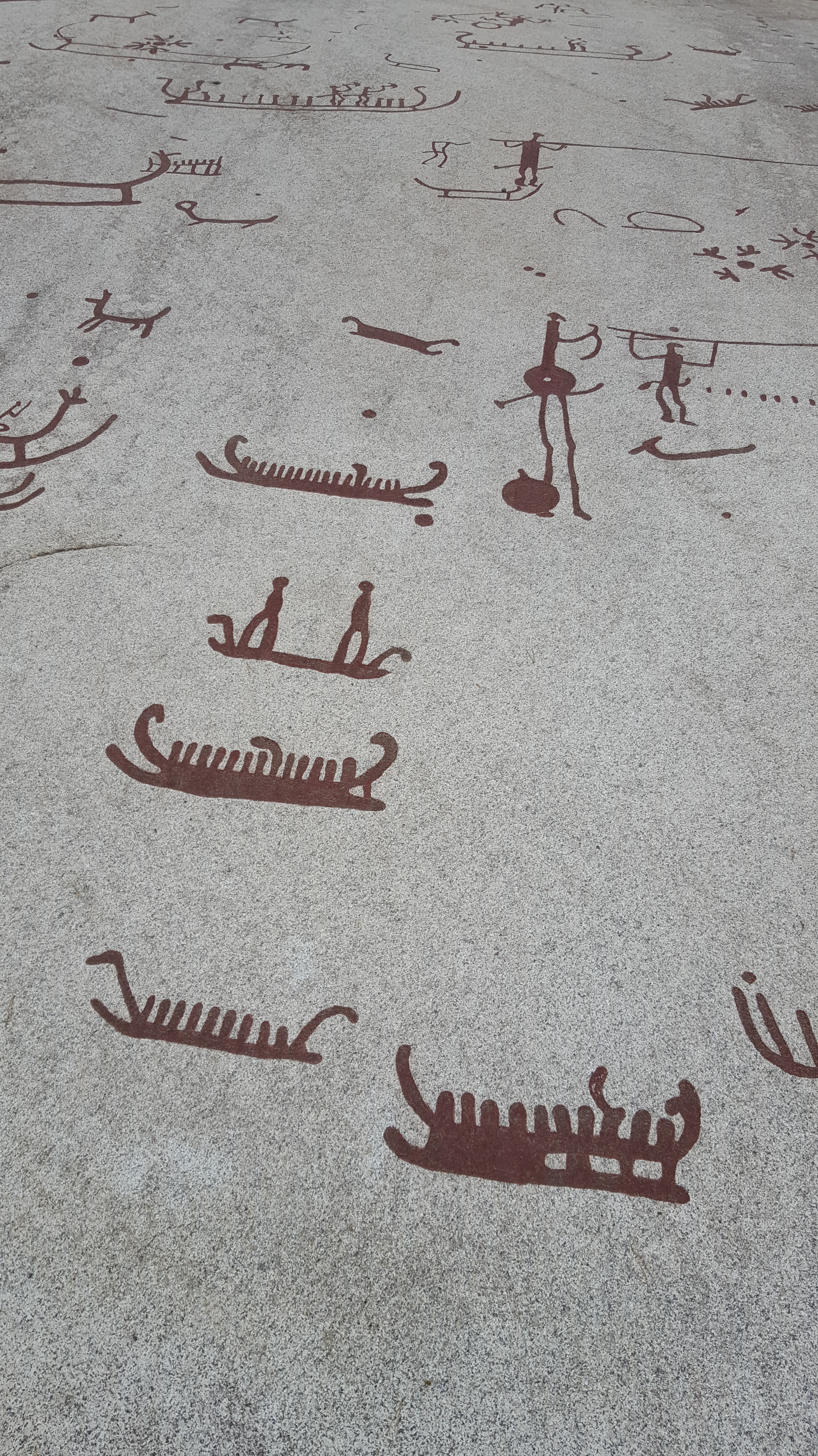
Petroglyphs I saw in 2017 at a UNESCO-protected World Heritage Site in Sweden. Some have been painted red to make them more visible for tourists, a practice which has drawn criticism.

060217-petroglyphs-by-Stuga40-Sweden

Read Full Post »


Photo: Michael Miller / OCA.
Venice Biennale Sámi Pavilion artist Máret Ánne Sara and her brother, Jovsset Ante Sara.

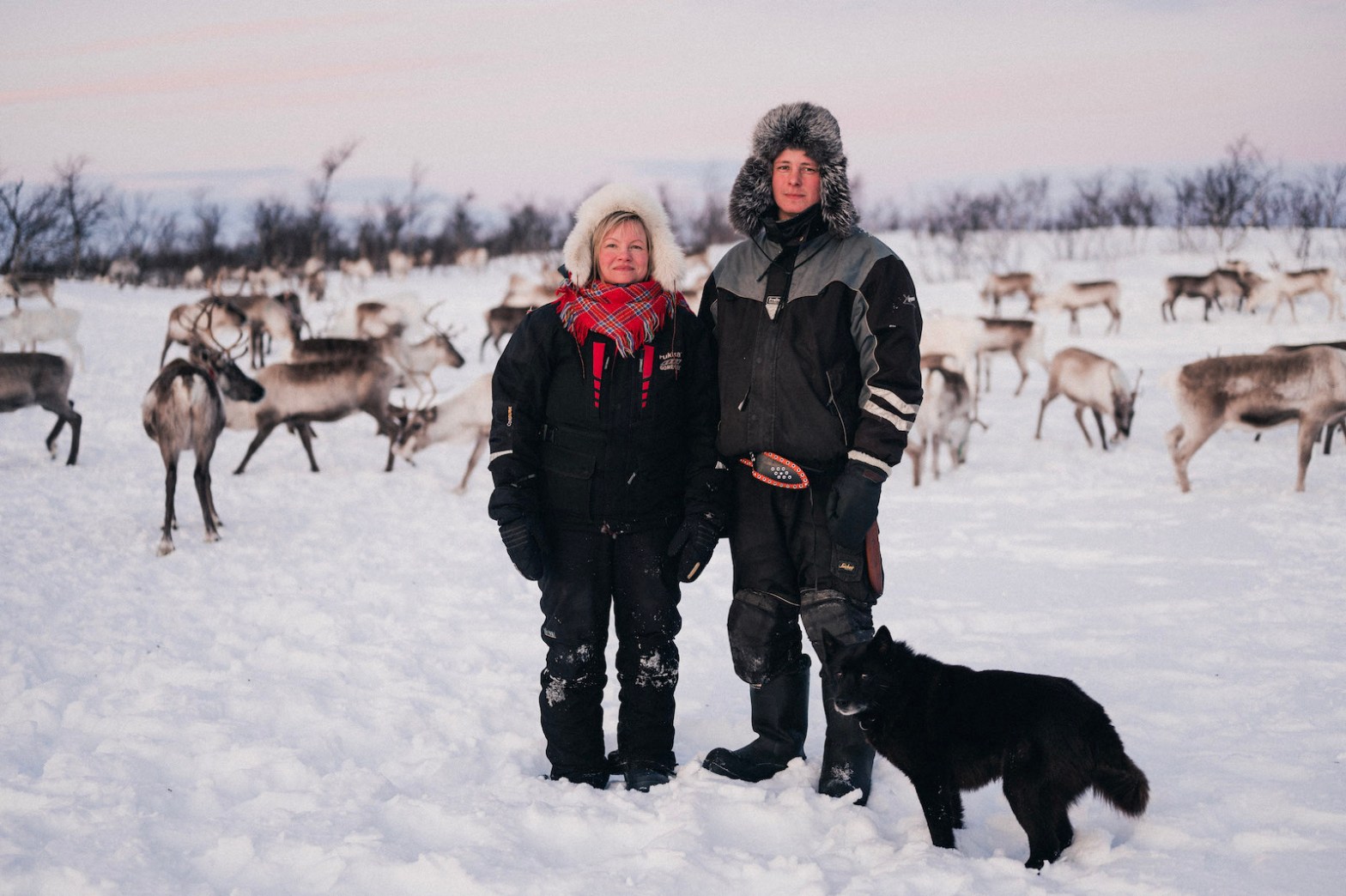
The Sámi are indigenous people of Finland, Norway, and Sweden. Today’s post is about the art some of them have chosen to present to the world at the Venice Biennale this year.

Anna Souter reports at Hyperallergic, “Sámi artist Pauliina Feodoroff says that ‘to be Indigenous is to be site-specific.’ For centuries, colonial governments have deliberately represented the site-specific Indigenous landscapes of the European Arctic as empty wildernesses. In reality, these are the ancestral lands of the Sámi people. Far from empty, they are ecologically diverse sites of culture, care, and collective endeavor. 

“At this year’s Venice Biennale, the Nordic Pavilion will be transformed for the first time into the Sámi Pavilion. The project undermines the nationalistic structure behind the Biennale, instead recognizing the sovereignty and cultural cohesion of Sápmi, the Sámi cultural region, which covers much of the northernmost areas of Norway, Sweden, and Finland, as well as part of Russia. The three contributing artists — Pauliina Feodoroff, Máret Ánne Sara, and Anders Sunna — draw attention to the ongoing colonial oppression and discrimination experienced by Indigenous Sámi under local and national governments across the Nordic region. 

“Feodoroff’s family members are Skolt Sámi reindeer herders, originally from the part of Sápmi within the Russian border. They were pushed into Finland after World War II, into a reputedly toxic area ravaged by mining and fallout from Chernobyl. Feodoroff’s work for the Sámi Pavilion will combine performance and video installations to explore non-colonial modes of physical expression, emphasizing the close relationship between the body and landscape in Sámi culture.

“Feodoroff has no artist studio; instead she sees the landscapes with which she works as her expanded studio. Her creative practice is inseparable from her work as a land defender. … She laments and resists the logging of old, slow-growth forests for one of Finland’s key exports: toilet paper. The bathos is not lost on Feodoroff and local Sámi reindeer herders, who are bypassed by the transaction, gaining nothing but a degraded landscape and poorer survival rates for their reindeer. 

“To protect and restore remaining old-growth forests, Feodoroff is attempting to use the art market to buy back land to be owned and managed collectively by Sámi people. Purchasing one of her works is framed as a contract through which the collector buys the right to visit an area of land in Sápmi; in return, the artist pledges to protect that land. …

“In 2015, the Norwegian government introduced mass reindeer culling quotas for Sámi herders, hitting younger herders such as artist Máret Ánne Sara’s brother particularly hard. Throughout a lengthy and expensive legal process, Sara has supported her brother’s appeal against the ruling, showing solidarity and resistance through her artistic project ‘Pile o’Sápmi’ (2016-ongoing).

“In 2016, Sara piled 200 reindeer heads outside the Inner Finnmark District Court and topped the pile with a Norwegian flag. The work refers to the 19th-century white settler policy of controlling the Indigenous population of Canada by slaughtering millions of buffalo and piling their bones in enormous heaps. …

“Sara’s work emphasizes that reindeer herding is at the heart of both Sámi culture and the complex ecologies of Sápmi. Her installation for the Sámi Pavilion incorporates preserved dead reindeer calves as bittersweet symbols of both loss and hope. …

“Anders Sunna’s painting and sound installations speak directly to his own history. ‘My paintings tell stories of what happened to my family,’ he says. ‘Today our family has no rights at all, we have lost everything.’ Located on the Swedish side of Sápmi, Sunna’s family has been refused its ancestral right to herd reindeer because of the competing interests of local Swedish landowners. … Sunna’s family has been practicing what he describes as ‘guerrilla reindeer herding’ for 50 years.

“Sunna’s paintings borrow motifs from international protest movements, news footage of riots, and his artistic origins as a graffitist. His move into the fine art world is helping to bring his family’s story to an international audience. For the 2022 Venice Biennale, he has created five paintings depicting episodes from the last five decades of the Sunna family’s struggles. … Sunna tells stories of oppression and even despair in the face of relentless attacks on his family’s rights, but he also hopes for a better future for the next generation.

“Before I visited Sápmi to meet the Sámi Pavilion artists in February 2022, I felt disillusioned with the power of the art world to enact change; despite countless artworks raising awareness of climate breakdown, for example, society has failed to make meaningful changes. But across Sápmi, I met individuals who believed in the capacity for art — and for the Venice Biennale — to make a difference. …

“The stories told in the Sámi Pavilion have rarely been presented on an international stage; and though often deeply personal, they speak to issues that affect us all. The Arctic is warming four times faster than the rest of the world; it is a litmus test for our environmental future. Indigenous knowledge and Indigenous land management could lead us toward a safer ecological future.”

More at Hyperallergic, here. For related posts, search on “Sámi” at this blog.

Read Full Post »

Photo: Erika Page/The Christian Science Monitor.
“Craig Watson (left), Keela Hailes (center), and Shannon Battle – seen here at the office of Free Minds Book Club & Writing Workshop in Washington on June 21, 2021 – form a network of support for formerly incarcerated individuals
,” reports the Monitor.

If you were following this blog five years ago, you might have caught the post about Norway’s enlightened prison system, which focuses less on punishment than on rehabilitation (here). Whenever I read about the system in the US and remember Norway’s impressive success, I just feel sad.

In this country, it’s pretty much up to nonprofits and volunteers to reacclimate ex-offenders to society and prevent recidivism. Today’s story is about one such effort, one that a certain US prison allows to enter its walls.

Erika Page reports at the Christian Science Monitor, “Craig Watson only showed up at that poetry workshop back in 2015 because his prison compound’s championship basketball game was canceled. ‘I was just sitting there, like, “I don’t write poems. I don’t rhyme,” ‘ he recalls, chuckling.

“The facilitator from Free Minds Book Club & Writing Workshop told him to forget about rhyming and just express himself. The blank page in front of him began to fill up. Poetry offered an outlet for expressing difficult feelings about a childhood marked by violence. During community ‘write nights,’ Free Minds members gave him positive feedback, and he began to lean into that network of support.

“Free Minds, founded in 2002, operates book clubs and writing workshops in prisons around the United States and at the jail and juvenile detention center in Washington, offering constructive connections among its nearly 2,000 members. Members never ‘graduate’ but remain part of the organization for life; thousands are on its waitlist.

When incarcerated people are released, Free Minds helps them find their feet back home through its reentry program. 

“When Mr. Watson returned from prison through the Second Look Amendment Act in 2019, he had 22 years of catching up to do. Free Minds helped him with practical things, like finding his first job, but most important, the organization became an extended family that kept Mr. Watson from becoming another statistic.  

“Every year, the U.S. releases 7 million people from jail and more than 600,000 from prison. Of the latter, more than two-thirds are rearrested within three years. Many return to communities of historical underinvestment with limited education and weak social support. Criminal records make the job search difficult, and drug use and suicide rates are high, according to a report by the Office of Disease Prevention and Health Promotion. 

“Free Minds offers its 330 reentry members workshops, coaching, counseling, group support, and connections to opportunities. But during the pandemic, Mr. Watson, who was serving as a Free Minds poetry ambassador, noticed he wasn’t hearing from a lot of reentry members.

“So in January, he presented his idea: a formalized peer support program, with the goal that every reentry member would have someone to talk to who had been through it themselves. Today, Mr. Watson is one of 12 peer supporters guiding others through the emotional and logistical challenges of starting over after incarceration. That level of peer involvement is key to the success of reentry, experts say. …

“Mr. Watson traces his journey as a peer supporter back to a time in solitary confinement in 2005. In many prisons, incarcerated people sent to solitary confinement end up doubled up in cells together. His cellmate had just learned of the death of his mother. Mr. Watson sat with the man, though he barely knew him. The two talked, heart to heart. Mostly, Mr. Watson listened. When his time in solitary confinement ended, Mr. Watson voluntarily stayed longer, to be there for his new friend. 

“ ‘I know how important it is to have somebody when you’re going through something,’ says Mr. Watson. …

” ‘The prison system is designed to break ties, to separate the person who is incarcerated from their community,’ says Tara Libert, co-founder and executive director of Free Minds. She says that peer support does the opposite. ‘They repair, restore, and create new community connections which are essential to successful reentry.’ …

“The peer supporters say that helping others helps them heal, too.

“ ‘After talking with them, we understand what our family was going through – our mothers, our sisters, our brothers,’ says Mr. Watson. ‘That’s where that connection really builds.’ ” 

More at the Monitor, here.
Read Full Post »

5a02fc547cf894b93111471106b232fbbae99b276aa2fe181f1a978c62c0ad35

Photo: Vidar Ruud / NTB scanpix
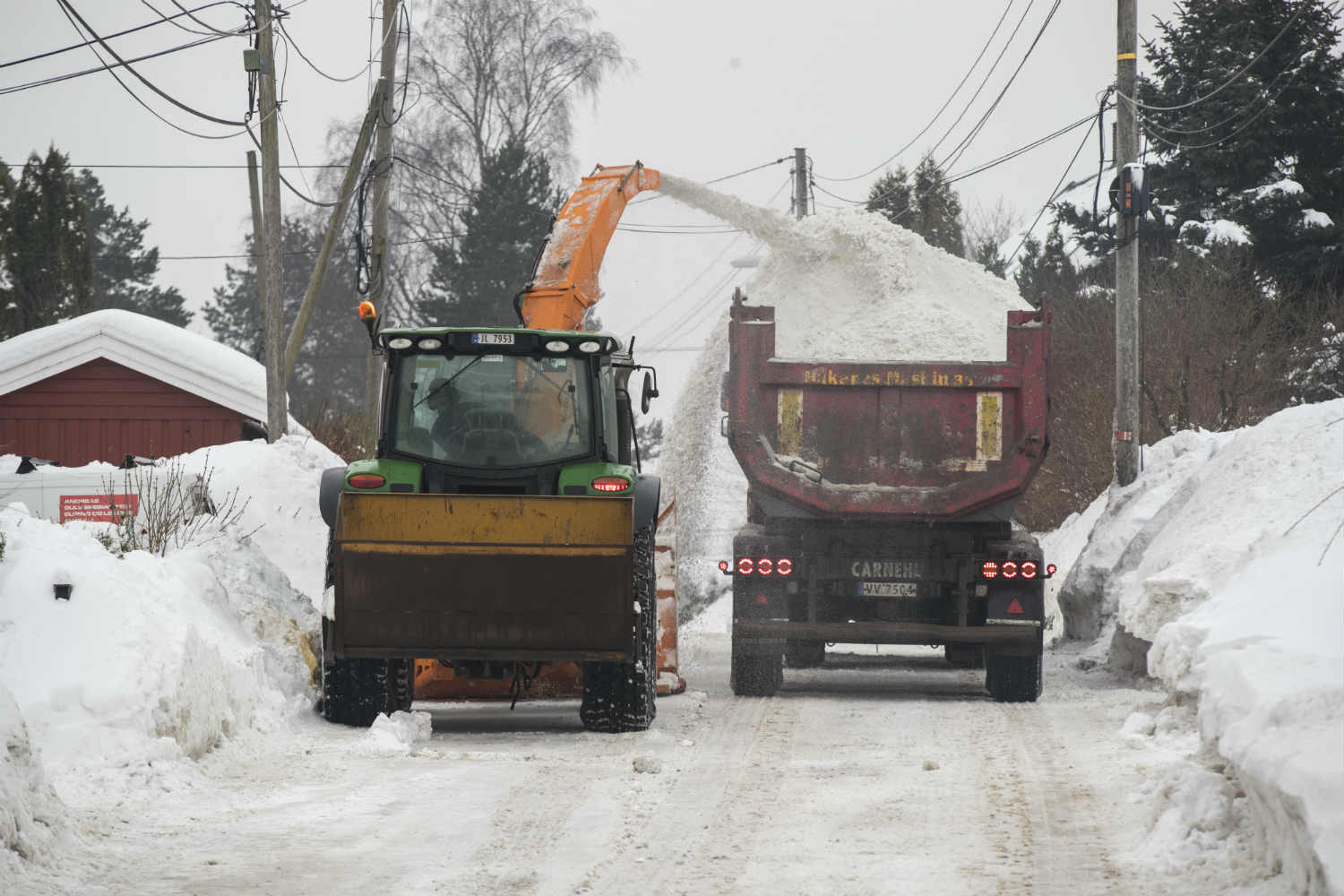
Snow being cleared in Oslo, Noway, in 2018.

As I write to you from a New England village where snow piles are removed by heavy equipment in the middle of the night, I’m remembering that even the “melting machines” of Norway cannot keep up with the challenge.

Here’s a 2018 report from the Norwegian version of The Local.

“According to the Norwegian Meteorological Institute, 2018 has seen twice as much snow as expected, compared to normal levels, and up to 10,000 people are reported to have complained to the city’s Urban Environment Agency (Bymiljøetaten) about the hazardous nature of [Oslo’s] roads and paths, writes broadcaster NRK. …

” ‘In the last few weeks it has been difficult to get around our city, especially for those who aren’t so good on their feet. The plowing budget is almost used up and the Urban Environment Agency has therefore requested more money,’ Lan Marie Berg, head of Oslo Municipality’s environment and traffic department, told NRK.

“The municipality has therefore agreed to allocate an extra 53 million kroner (5.4 million euros) for clearing snow this year. … The Urban Environment Agency will also be given funding to remove ice and snow from paths and roads in residential areas.

“According to the agency, 750 cars have been towed in the capital this winter to allow ploughing vehicles to access necessary areas. 25,500 tonnes of grit had already been spread by the end of January, a significant increase on the 15,000 tonnes spread throughout the entirety of last winter, writes NRK.

“In Oslo, an ice melting machine located at the city’s harbour — nicknamed ‘Terje’ — takes care of much of the snow removed from streets. But with the machine having reached capacity, other solutions must be found by the municipality, including piling snow in streets and parking lots.

” ‘We cannot continue to transport all snow from Oslo at the moment, because deposit sites are closed. In some places, snow must therefore be placed at the side of the road,’ said Urban Environment Agency director Gerd Robsahm Kjørven to NRK. …

” ‘It is snowing now and the snow must be removed. That’s why we’re making the money available, and we’ll have to find space for it before we produce a revised budget for the municipality,’ Robert Steen, a councillor on Oslo Municipality’s finance committee, told NRK.” More here.

Ya gotta do, what ya gotta do. Monday night I was in Providence and, going to bed early, had no idea that a street-parking ban went into effect at midnight. I moved my car into Suzanne and Erik’s driveway at 5 a.m. and, fortunately, hadn’t gotten a ticket by then. I had to walk extra carefully as I had not brought along my lovely Nordic boots with the studs on the bottom. I can definitely relate to the environment and traffic department head’s comment about “those who aren’t so good on their feet”!

Read Full Post »

Photo: NRK2
Need to calm down? There’s always “National Knitting Night” on “Slow TV” in Norway. How about the 7-hour train ride video or the 134-hour cruise? If you prefer, you can watch a video of salmon leaping endlessly or hours of logs burning.

Is the speed of modern life getting to be too much for you? Consider slowing the pace, maybe watching Norway’s soothing “Slow TV” for a few hours.

According to Seth Doane at CBS, “It’s television’s version of taking a deep breath … a very long, very slow, deep breath. It’s called ‘Slow TV,’ and it’s a surprising smash-hit in Norway.

“It began with the broadcast of a train journey from the coastal city of Bergen to the capital, Oslo. The formula was simple: put a few cameras on a train and watch the scenery go by — for seven hours. Rune Moklebust and Thomas Hellum are the brains behind the whole thing.

” ‘Did you know where this journey would lead, how successful it would be?’ asked Doane.

” ‘No idea at all,’ said Moklebust. ‘It’s normally one of those ideas you get late night after a couple of beers in the bar, and when you wake up the next day, Ahh, it’s not a good idea after all.’

“But much to their surprise, there was a green light from their bosses at Norway’s public broadcaster NRK2. …

“About a quarter of all Norwegians tuned in to watch some part of that train trip. … Since the train, in 2009, they’ve experimented with other slow ideas, and folks at all levels have taken notice. …

“A ‘National Knitting Night’ started, of course, with shearing the sheep; knitting the sweater came much later in the 13-hour broadcast. The shows, Doane noted, ‘get slower, and slower, and slower.’ …

The show titled ‘Salmon Swimming Upstream’ ran 18 hours — and afterward, the head of the station said it felt ‘too short.’ …

“Rune Moklebust thinks one image sums up their approach: ‘Once we passed a cow on one of our journeys, and we put a camera on it. And the camera just kept rolling, and we didn’t cut away. And then you keep it, and you keep it, and then you keep it, and then, suddenly a story evolves: What is this cow doing? Why is it walking there? Where is it heading? Why is the cow alone? So suddenly, there comes a story out of it, and you have to see what happens.’ ”

More at CBS, here. Check out the photos. I liked the one of cows watching a girl knitting in a field.

Hat tip: John sent the link to the story on CBS.

Read Full Post »

98989420_04ba6d56-1f9e-40c2-a5e0-e5d9484b2294 Photo: Penny Dale/BBC Africa
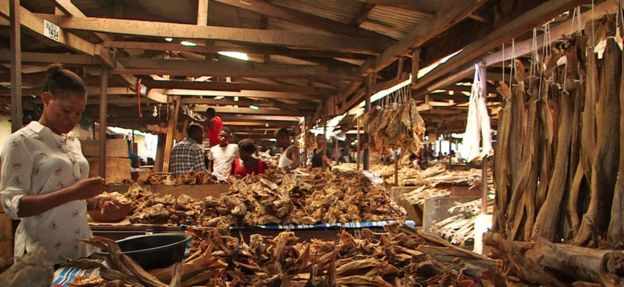
In Nigerian markets the smell of stockfish — a culinary stable that comes from Norway — permeates the air.

I was interested to learn that something called “stockfish,” from Norway, has become a staple of the Nigerian diet. Penny Dale and Victoria Uwonkunda of BBC Africa have the story.

” ‘The taste of stockfish is life. We can’t cook without stockfish.’

“That’s the verdict of women at the bustling Onyingbo market in Nigeria’s commercial capital, Lagos, as they carefully choose pieces of the specially dried cod. …

“The smell of stockfish is pungent. … As the moisture drips out, the flavour of the fish deepens to create a rich, intense and complex taste.

“It is perfect for a Nigerian palate, which favours big and bold flavours such as fermented locust beans and chilli pepper, says young chef Michael Elegbde.

“Based in Lagos, Mr Elegbde is a rising star in Nigeria’s culinary world — and his signature dishes revolve around stockfish. Growing up, he spent a lot of time helping his grandmother in the kitchen, and she loved stockfish as a key ingredient in traditional dishes. …

“It was only later in life — when he had followed in his grandmother’s cooking footsteps — that he discovered the fish that he had grown up with actually came from almost half-way round the world, in the cold Arctic waters off the coast of Norway. …

“Between January and April, millions of cod migrate from the Barents Sea to breed in the fjords — and the climate is perfect for the natural drying process.

” ‘You need both cold and dry weather, and you need sun. We have everything here. We are gifted from God,’ laughs Erling Falchs, whose family business Saga Fisk has been in the stockfish trade for six generations.

“After gutting, cod is hung out on huge wooden A-frames, up to 10 metres high, and left to dry for three months in in the cold, crisp winter air. No salt, no additives – just in the same way that it has been dried since the time of the Vikings.

“Although Nigeria has a long coastline teeming with other species of fish, people say the stockfish has a unique taste and so it is Norway’s biggest export market for the fish. …

“It was the Biafran civil war in Nigeria 50 years that really set the scene for stockfish to become a must-have ingredient in Nigerian cuisine. In the course of three bloody years, more than a million people died — mostly from hunger. It was a humanitarian crisis on an unprecedented scale, and churches and relief agencies from all over the world joined together to fly in emergency supplies.

“Norway’s contribution was stockfish. It doesn’t need refrigeration, and it is full of protein and vitamins — perfect to combat kwashiorkor, the malnutrition that characterised the Biafran war.”

Read more at the BBC, here.

Read Full Post »


Photo: Balazs Koranyi/Reuters 
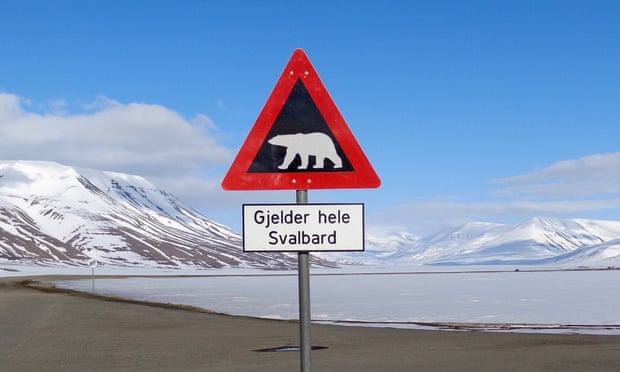
A sign warns residents of the arctic Svalbard islands in Norway of the danger from roaming polar bears. Norway is planning to expand its oil operations in the Arctic. 

Norway has a reputation for environmentalism. Unless you are talking about oil. Now some of the country’s leading lights are suing the government because of its plans to start drilling in the Arctic. A Norwegian whose writing I admire is one of them.

David Crouch reports at the Guardian, “Norway’s best-known author has lashed out at ‘the shortsightedness and stupidity’ of plans to expand oil exploration into the Arctic, as campaigners prepare to sue the government for placing future generations at risk from climate change.

“Karl Ove Knausgaard, whose bestselling memoir has been a global literary sensation, is fronting a campaign to mount a legal challenge against moves by Norway to open up the Arctic to oil companies.

“Oil and gas extraction in the Arctic has nothing to do with worthwhile goals such as alleviating poverty, Knausgaard said. ‘Norway is one of the richest countries in the world – it’s all about greed. … I never believed that my government actually would do such a thing. … It just makes me want to cry.’ …

“The campaign aims to make use of a recent change to the constitution which obligates the state to take action to ensure natural resources are managed ‘on the basis of comprehensive long-term considerations,’ including safeguarding the environment for future generations. …

“The campaign by Norwegian environmentalists aims to mirror similar legal challenges in the Netherlands and in the US, where lawsuits have attempted to hold governments to account over climate change. In April, the Dutch Urgenda foundation launched the first case in the world to use human rights and tort law to hold a government responsible for failing to reduce carbon emissions fast enough.

“ ‘Where do we draw the line if not in the Arctic?’ said Åsne Seierstad, the bestselling Norwegian author and another signatory to the petition. ‘No economic policy is more short-term than relying on profits from the very areas that are worst affected from climate change.’ ”

More here.

Read Full Post »

Photo: Pedro Alvarez for the Observer
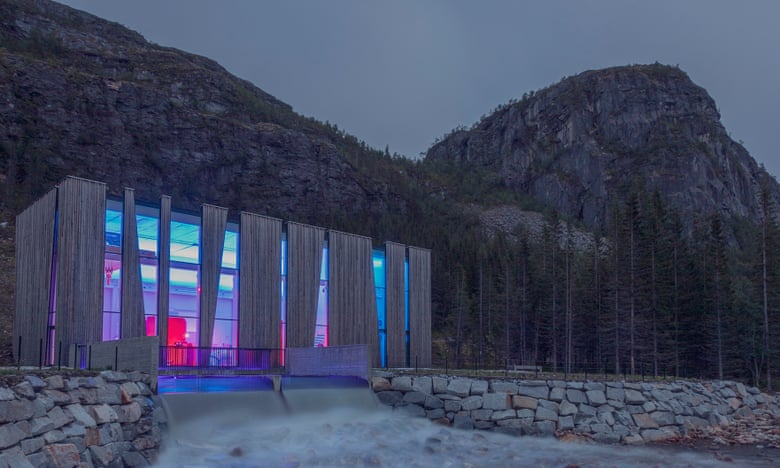
Øvre Forsland hydroelectric station in northern Norway.

So while we’re on the subject of removing pollutants using artistic sculptures, how about an article on creating clean power in an artistic energy plant?

Stuart Dredge writes at the Guardian about “an unusually handsome hydroelectric plant” on the edge of a forest in northern Norway.

“Located in the Helgeland district in northern Norway, [Ovre Forsland is] a small hydroelectric power station capable of supplying 1,600 homes with power.

“Designed by Norwegian architecture firm Stein Hamre Arkitektkontor, it sits on a riverbed at the edge of a forest, with an exterior that aims to reflect the irregular shapes of the spruce trees forming its backdrop. …

“Says Torkil Nersund, production manager at the plant’s owner, energy company HelgelandsKraft … ‘This region is known for its spectacular nature, so we thought the building should try to live up to the surroundings.’ …

“ ‘Øvre Forsland does not only serve hydropower to people in the region. Its purpose is also to bring attention to hydropower, the history around it and the benefits,’ says Nersund. …

“Øvre Forsland is also angling for the attention of people who come to Helgeland for its hiking trails and beautiful scenery. Those visiting the power station can look through a tear in the building’s exterior that reveals its innards: the turbines. …

“The emphasis on this harmony, and on renewability in general, can be seen in the fabric of Øvre Forsland itself. The architects used Kebony wood, sustainable softwood that has been treated with a bio-based liquid to make it more like hardwood. …

” ‘We hope that the Government also sees that hydro power has a great future ahead and that they facilitate the development of Norwegian hydro,’ says Nersund.”

More here.

Hat tip: @VictoriaLynden on twitter.


Read Full Post »

Photo: STR/Reuters /Landov
Prisoners at Halden in Norway have private rooms, which all have a fridge, desk and flat-screen TV. Inmates who don’t follow the rules and attend classes and counseling are sent to conventional prisons. NPR story here.

A perhaps surprising finding: In Norway, spending time in prison, where there are intensive job-training opportunities, results in 27 percent less recidivism than being sentenced to something lighter, like community service or probation.

As reported last summer in Science Newsline, “The research project ‘The Social Costs of Incarceration’ is the largest study of imprisonment and return to a normal life that has ever been conducted in Europe.

“In the study, researchers looked at prison sentences linked to recidivism. In addition, the researchers looked at the extent to which former inmates have returned to work. What makes the project unique is linking large administrative data sets to data sets from the courts.

“They have done this to measure the effect of what happens when the criminals have received different penalties for the same offense because they randomly met different judges in court with different leniency towards incarcerating. In other words: if a judge incarcerates differently for the same offense, what will be the consequences for the offender in the long term?

” ‘The results show that the Norwegian prison model with extensive use of labour training while serving time, gives surprisingly good results,’ says Professor Katrine Løken at the Department of Economics, University of Bergen (UiB), who led the research project.

“The study shows: Five years after conviction, there is a 27 per cent lower risk that convicts who have been in prison have committed new crimes, compared to those who were given more lenient penalties, like probation and community service. For the 60 per cent of inmates who had not been employed for the last five years preceding the conviction, the decline in criminal activity is even bigger. … The study is published as a Working Paper in Economics at the University of Bergen.”

Løken doesn’t necessarily think the answer is sending more people to prison; providing more job training outside of prison might be.

” ‘A relevant question is whether we should aim for full package of job-training outside prison. But research shows that work training outside of prison is more difficult to enforce. It appears that a certain element of coercion is needed to get offenders on a new track.’

“Katrine Løken stresses that the research does not take a stand on the principle of imprisonment, but simply says something about how prison is perceived for the individual, and shows the effects of different sentencing.”

Many studies show that incarceration in the United States leads to more crime, not less. Different kinds of prisons, for sure.

More here.

Read Full Post »

Older Posts »