Feeds:
Posts
Comments

Posts Tagged ‘organic’

Photo: Riley Robinson/Staff.
Organic farmers Kayleigh Boyle and Doug Wolcik stand in a hoop house at Breadseed Farm in Craftsbury, Vermont.

‘I have long believed this is a bipartisan issue,’ says John Klar, a Vermont farmer who in 2022 ran for a Vermont state Senate seat as a Republican.

One reason I like the Christian Science Monitor is that it’s so good at searching out stories of divided Americans coming together. Today’s example features a diverse group of Vermont farmers promoting sustainable practices and eat-local values.

Stephanie Haines writes, “Kayleigh Boyle and Doug Wolcik knew all the reasons not to farm in Vermont: the short growing season, the hilly terrain, the dirt roads that make it hard to get products to market.

“Even the size of most farms here is a problem. For decades, farms across the United States have gotten larger as agricultural policies pushed growers to consolidate and scale up their operations. Vermont’s farms, however, have stayed relatively small. According to conventional wisdom, that means unprofitable.

“But small was what the couple wanted. Ms. Boyle is from Vermont, and while studying at Emerson College in Boston, she worked an office job connected to the local food movement. But she quickly realized she wanted to be outside with her hands in the earth.

“Mr. Wolcik graduated from the University of Massachusetts Amherst, where he studied sustainable agriculture and community food systems. He, too, realized he wanted a life close to the soil.

“They met while working at a nonprofit farm outside Boston and soon discovered they shared a dream about buying their own acreage to grow food and flowers. They weren’t interested in a massive operation. Instead, their vision included no-till growing methods, hand tools, and a desire to build a ‘human scale’ production system.

“They also wanted to make their living entirely from their farm – something increasingly difficult to do in New England. Over the past 60 years, the region has lost 80% of its farmland. …

“They spent years saving money and scouring Zillow listings and USDA soil surveys online. They eventually found a 16-acre property at the edge of Vermont’s rural Northeast Kingdom, complete with a house and a flat, 2-acre plot that got a lot of sun. In September 2020, they decided to take the plunge.

“And they’ve thrived. ‘We’ve just far exceeded any expectations that we set for ourselves,’ says Mr. Wolcik. ‘We’re selling everything we can. We can’t even grow enough. There’s such demand for it, from restaurants to retail to wholesale to markets,’ he says. ‘We can’t produce enough product fast enough.’

“Some of this is because of the couple themselves: Ms. Boyle’s sense of marketing, Mr. Wolcik’s attention to detail and innovation, and the experience and high standards they share as growers.

“But it is also because, when they bought these rare flat acres, they joined a community actively building a new storyline around farming, food, and resilience in New England.

“Here, in this part of little Vermont, statewide population 648,000, a coalition of farmers, nonprofits, and residents is eschewing mainstream beliefs about what makes agriculture successful and what it means to create a prosperous economy.

“Instead, they are building a system in which farmers are able to make a living and residents can eat healthy food grown nearby. They are intentionally moving away from a global supply chain vulnerable to market shocks – everything from pandemics to tariffs to natural disasters. …

“Across the country, communities on all sides of the political spectrum are reimagining the way Americans produce and value what they eat, tapping into a simmering belief that something is amiss with how detached, both economically and nutritionally, we have become from this fundamental human sector. …

“Subsistence farming gave way to commercial dairying and gardening for market. Refrigeration, and the resulting large-scale grocery stores, meant individuals didn’t need to spend their time growing food. Urbanization and competition from out-of-region farms followed.

“Still, what we think of as the modern food system is largely a phenomenon of recent decades. This includes a global supply chain, factory farming, and ultraprocessed foods, which now make up more than 50% of the calories in the American diet, according to the Johns Hopkins Bloomberg School of Public Health. What people tend to think of as the ‘local food movement’ is also relatively new. 

“[Although fascination] with locally grown organic foods became popularly associated with progressives – and was regularly criticized as elitist – there was also an emerging libertarian and conservative desire for a different, more localized sort of food system.

“ ‘I have long believed this is a bipartisan issue,’ says John Klar, a Vermont farmer who in 2022 ran for a Vermont state Senate seat as a Republican, a bid that fell short. ‘If there’s one thing that should bring Americans together, it is local, healthy food.’

“To him, the small farm is inherently conservative – a rejection of what he sees as dangerous globalism. It is a return to self-sufficiency, and far more environmentally and climate friendly, he says, than the traditionally liberal causes of electric vehicles and solar farms. …

“ ‘Both sides have been lulled by modernization of agriculture and the technological sirens,’ says Mr. Klar. ‘But both sides are coming back and coming together. These things don’t lend themselves to the red-blue dichotomy.’ ”

More at the Monitor, here. No paywall. Lots of cool pictures.
Read Full Post »

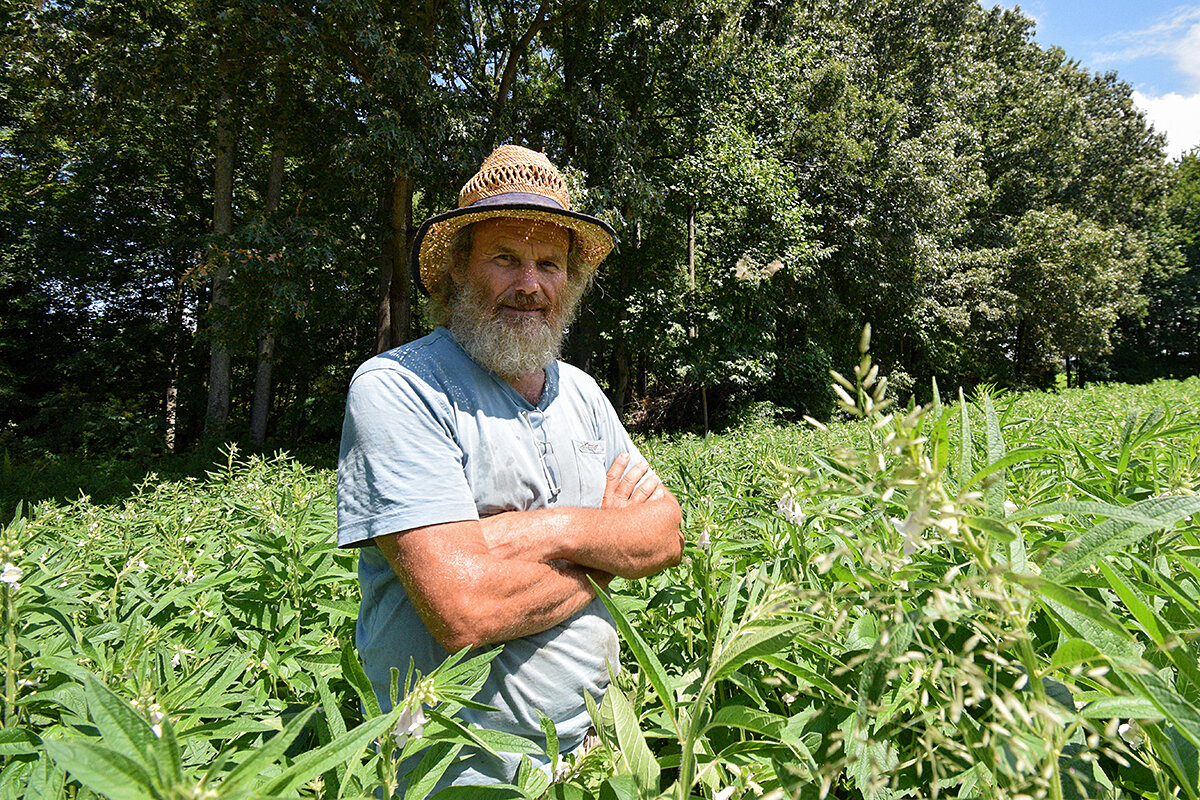
Photo: Sophie Hills/The Christian Science Monitor.
Heinz Thomet stands in a field of sesame on his farm in Newburg, Maryland, Aug. 17. Mr. Thomet tries to grow nearly everything he eats.

I love the first line of today’s story about “one of only two commercial rice farmers in Maryland.” Because who knew there were rice farmers anywhere in the US? Don’t you think of rice farmers as being almost entirely in places like Japan and Vietnam?

Sophie Hills writes at the Christian Science Monitor, “Heinz Thomet is one of only two commercial rice farmers in Maryland. The other is Nazirahk Amen of Purple Mountain Organics. Not one to accept the status quo, Mr. Thomet grows six varieties of rice on his farm in southern Maryland, where most fields are planted with soybeans and corn. Mr. Thomet didn’t start growing rice until sometime during the past decade. His explanation for why he added the crop is simple: ‘I eat rice.’ …

He is the sort of person who has utter faith in natural processes but none in institutions.

“He’s always been a farmer, from growing up on a farm in Switzerland to working on a famed biodynamic farm in the United States as a young man. Since 2000, he’s farmed in Newburg, Maryland. There, in addition to the rice, he grows barley, Sichuan peppers, bananas, grapes, bitter lemons, oats, kiwis, sesame seeds, figs, and more, depending on the season. 

“It’s difficult to make a profit on rice in Maryland. Farm-to-table was a natural concept for Mr. Thomet even before the movement expanded out of California in the early 2000s.

And though small-scale, direct-to-consumer farming is difficult to justify commercially, Mr. Thomet’s main concern remains the quality of the food he grows and stewardship of his land.

“In this case, that means successfully producing rice – a crop grown by few others on the East Coast. ‘Nothing of what I do makes sense for a cheap food system, but if you recognize a decentralized food system as food security, then I start to make sense,’ says Mr. Thomet. ‘If you look at diversified farms as part of the resilience towards a global weather pattern change, then I start to make change.’

“In an era of climate disruptions that are changing where everything from coffee and cacao to mustard and olives can be successfully grown, a decentralized food supply – like the one Mr. Thomet espouses – is getting a second look.

“After decades of factory farming and reliance on a global food chain that sends bananas, grapes, mangoes, and avocados thousands of miles to stores, returning to the idea that food should be grown where it is eaten is no easy task. And rice-growing is a useful case study.

“It’s unusual to find rice farmers anywhere on the East Coast, says Raghupathy Karthikeyan, Newman endowed chair of natural resources engineering at Clemson University in South Carolina. Rice production in the U.S. now takes place mainly on commercial farms in the Midwest and the South. But Mr. Thomet and fellow farmer Mr. Amen are holding on, despite the tight profit margin for small-scale, organic farmers.

“Both Mr. Thomet and Mr. Amen grow upland rice, a method that doesn’t use water for weed control, instead requiring labor-intensive weeding. While both sell their rice, neither grows enough to register on the U.S. Department of Agriculture census. Historically, Maryland farms mainly grew tobacco, and South Carolina was rice country. But the end of slavery and changing weather patterns made rice-farming less profitable. At one time, about 225,000 acres in South Carolina were planted with rice. Today, it’s somewhere between 25 and 50 acres. In Maryland, it’s 2.

“Agriculture in Maryland, as in most of the U.S., doesn’t supply much of the produce purchased in the state. Maryland farms produce more grain than other crops, and most of that is used for livestock feed and seed. 

“Mr. Thomet’s interest is in locally grown crops for food, and he has a loyal base of customers, including restaurants. 

“For Mr. Thomet, it’s not just about protecting the locavore movement. It’s also about stewardship. He quotes the motto of his family’s farm, Next Step Produce: ‘Committed to growing nourishing food in harmony with nature.’ …

“He eats what he grows and tries to grow whatever he wants to eat. In fact, Mr. Thomet has a nearly complete food system growing on the 30 acres he cultivates. The one thing he can’t grow is sugar cane, so he grows sweet sorghum instead, which is made into molasses. 

“Day length, sun exposure, and night temperature in Maryland are all sufficient for rice to thrive, he says. Next Step Produce starts the rice in a greenhouse and then transplants it, allowing for more growing days so the farm can grow higher-yield varieties.

“Whether upland or lowland, rice is no longer profitable to grow in South Carolina – the historical center of U.S. rice-farming – unless it’s grown as a hobby, says Dr. Karthikeyan, who’s leading a study on climate-resilient rice production. The remaining commercial rice farms he’s aware of in the U.S. all grow lowland rice in paddy fields.

“Rice is a labor-intensive crop, even if you flood it, says Dr. Karthikeyan. The yield gap between upland and lowland rice is large, making it hard to turn a profit growing commercial varieties upland. That extra labor limits how many acres of rice Mr. Thomet plants, since they’re weeded by hand. It’s also reflected in the price, he says.

“Still, in his eyes, everything comes down to priorities and societal values. There’s no good reason everyone shouldn’t have access to nutritious, locally grown food, he says. Next Step Produce, which he runs with his wife and daughters, was certified organic for two decades until last year, when a red-tape snarl was the last straw for Mr. Thomet. But his customers don’t care about the label at this point, he says. They know his growing practices. …

“Benjamin Lambert, the executive chef at Modena, a restaurant in Washington, D.C., has bought from Mr. Thomet since 2007, when he met him at a local farmers market. ‘As a chef, you look for good ingredients,’ he says, standing in the restaurant, a James Beard Award hanging just behind him.”

More at the Monitor, here. No firewall. Subscriptions solicited.

Read Full Post »

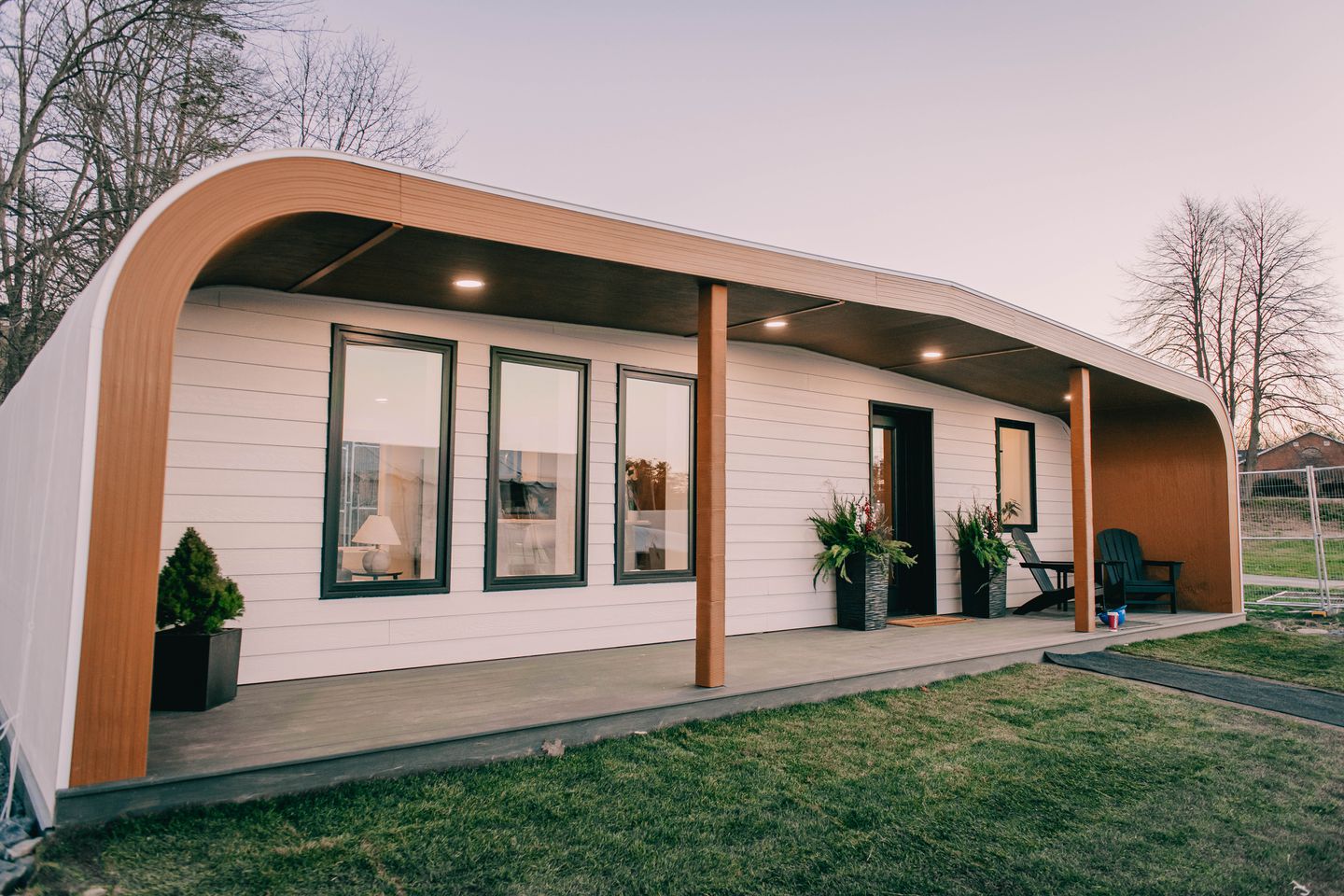
Photo: MJ Gautrau/ University of Maine.
BioHome3D, the first 3D-printed home made entirely of organic, renewable materials, was unveiled on Nov. 21 at the University of Maine’s Orono campus.

I wonder if writer Laura Graves, blogging from what she calls the Hinterlands of Central Maine, has heard about this initiative in her state. It actually looks like a good idea for any state (or nation). See what you think.

Maya Homan writes at the Boston Globe, “How do you create lots of affordable housing with limited materials, labor, and other resources? One group of researchers at the University of Maine has come up with a proposed solution: hook up a 3D printer.

“The United States faces rising rents and housing shortages, intensified by the COVID-19 pandemic, but Maine has its own unique, overlapping challenges: The state needs another estimated 20,000 homes to meet the current demand for low-income housing. It also has the oldest average population in the nation, with a median age of 44.7, an issue that exacerbates the state’s labor shortage. With pandemic-related supply chain issues and rising costs of raw materials, the already-expensive housing market has surged.

“Enter BioHome3D, the first 3D-printed home made entirely of organic, renewable materials.

“The prototype, which was created by the University of Maine’s Advanced Structures and Composites Center, has been in the works for three years, according to founding director Habib Dagher. It is 600 square feet in total, with a modern, unvaulted barrel roof, and a wide front porch with white shiplap exterior walls. The interior contains an open-concept kitchen, living, and dining area with grooved wooden walls and tall windows. The single bedroom doubles as an office, and a tiled bathroom completes the space.

“The materials used to manufacture the 3D-printed home also help address another issue in Maine: the shuttering of several pulp and paper mills that once processed residual sawdust and other byproducts from local sawmills. …

“Dagher said, ‘We asked ourselves, could we print a home with that material?’ The answer, thus far, has been yes.

“The prototype, which was unveiled Nov. 21 at the University of Maine’s Orono campus, is now undergoing tests to see how the building fares during Maine’s harsh winters. …

“Dagher’s lab is building on over two decades of research into using biomaterials to create sound structures. Though Dagher’s lab is not the first to 3D print a house, they are the first to use a 3D printer to create the entirety of the structure, as well as the first to use environmentally friendly and reusable materials.

“ ‘The walls, the floor, the roof are all bio-based, and it’s 100 percent recyclable,’ Dagher said. …

“While there are certain drawbacks to using engineered materials over natural ones — fire safety being one — Dagher said the homes have displayed an added durability throughout different climates, as well as increased resistance to termites. …

“The homes are designed using modular construction, meaning that individual rooms are manufactured indoors and driven to the construction site, where they can be quickly assembled. Dagher hopes that this method will help cut down on construction time, as builders will not be as impacted by weather conditions.

“As the project is still in the testing phase, there aren’t yet definitive estimates for how many people will be needed to construct the homes, or how much each tiny house will cost to manufacture. However, Dagher said the use of sustainable materials and the ability to 3D print the structure ‘really changes the game in terms of how we think of housing content and how we think of construction.’

“Though the research process is far from over, ‘we’ve learned a lot,’ he said. ‘We’ve learned what not to do, as well as what to do, and the learning has not ended.’

“The lab’s next steps are to build a manufacturing plant (which Dagher affectionately nicknamed the ‘factory of the future’) to be able to produce the homes en masse. Once the factory is up and running, they hope to be able to 3D print a home within 48 hours, and move on to larger projects like housing developments.

“ ‘There’s a lot of potential, not only to solve a crisis in Maine, but to assist in a solution to the housing crisis nationally as well,’ he said.”

More at the Globe, here. See also my 2018 post on a different kind of 3-D house in the Netherlands, here.

Read Full Post »

072719-Jae-has-healing-plants

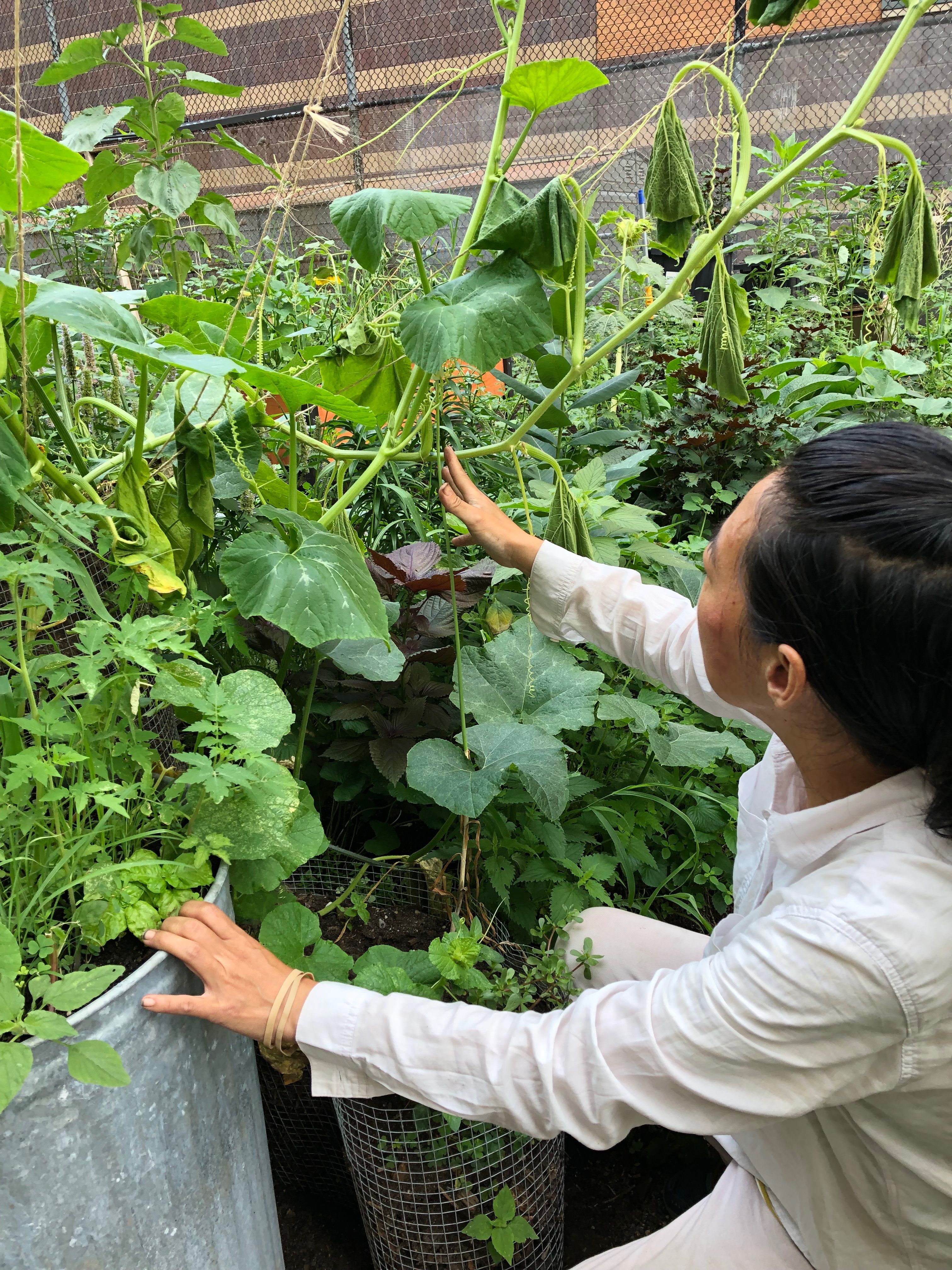
When in New York, I like to walk from the Upper West Side to Central Park in the morning. I often walk east on the West 101 Street path that goes past the Frederick Douglass Houses. On the right is a playground and a popular little swimming pool (three feet deep, lifeguards provided), and on the left is a big field for sports and an empty lot converted to a garden.

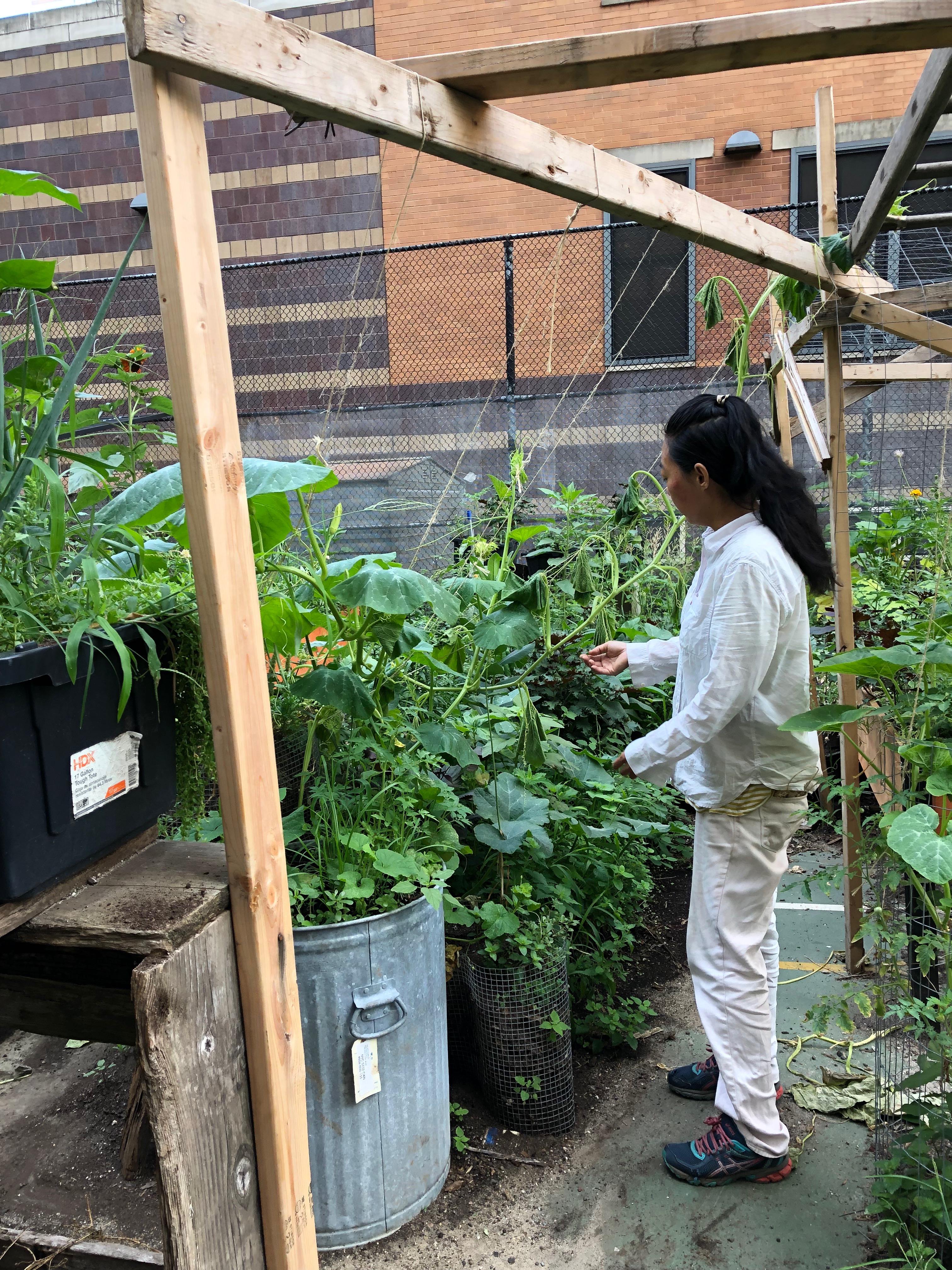
When the garden fence was open recently, I stopped in and talked to Jae the gardener, whose passion for growing and feeding people is an inspiration.

Jae says she used to overthink food shopping, experiencing a kind of paralysis in the market as she asked herself, Where was this fruit grown? Who grew this vegetable? Were they paid a fair wage? Were pesticides used?

But she found her calling when she started growing her own food. First she helped gardeners by learning to compost, and she is still crazy about the whole idea of composting. “That’s where I come from as a gardener. I love worms!”

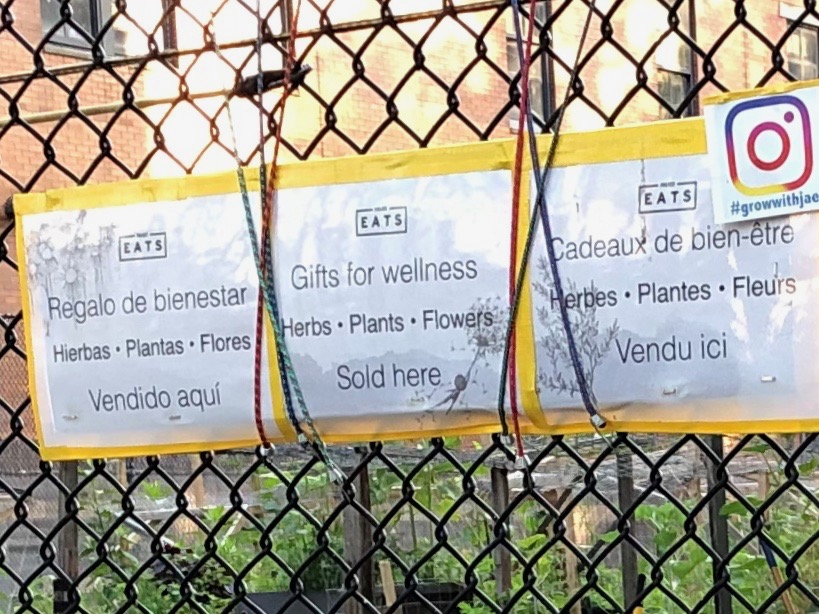
A full-time volunteer, Jae is eager to show visitors around the converted tennis-court farm. The garden has been built on top of the court, starting with piles of compost. Although her partner organization, Project EATS, notes the garden is not an official production farm this year, Jae sells some produce in hopes of saving up to hire a Haitian neighbor as a full-time gardener at some point. (“I don’t speak Haitian, he doesn’t speak English, but we both speak Farm.”) She gives half to the partner organization.

Jae has a completely organic approach (no pesticides or herbicides), and she expresses a feeling of awe at how nature works without such interventions. She shows how Mother Nature has let her plants flourish despite the views of “schooled farmers” that there was inadequate sun in that space.

When I told Jae I come to the city to visit my sister, who has cancer, she said my sister should come enjoy the garden’s healing aura and should bless the plants by breathing out carbon dioxide to help them grow.

I left Jae hand-removing squash borer eggs. (“Look how symmetrically they are laid! Isn’t it beautiful?) As beautifully as those eggs are laid, she knows she has to destroy them to protect the squash plants. Follow Jae on Instagram, @growwithjae .

Jae’s partner organization describes its own mission thus: “Social inequalities lead to health inequalities and ill-being in our communities. They affect our access to fresh food, life expectancy, physical and mental well-being, quality of education, employment opportunities. income, and share of public resources. They shape our behavior and expectations, and what we perceive and believe is possible for our communities, our society, and us.

“To achieve its mission of a fair society, Project EATS is a neighborhood-based project that uses art, urban agriculture, partnerships, and social enterprise to sustainably produce and equitably distribute essential resources within and between our communities. Especially those where people live on working class and low-incomes.

“To do this, we bring diverse neighbors together to take agency over the use of land in their neighborhood, provide the infrastructures and support for a community to develop their resources into productive spaces. We share knowledge and skills that support the ability of people to turn these relationships and resources into sustainable social enterprises employing community residents and stimulating local economies.”

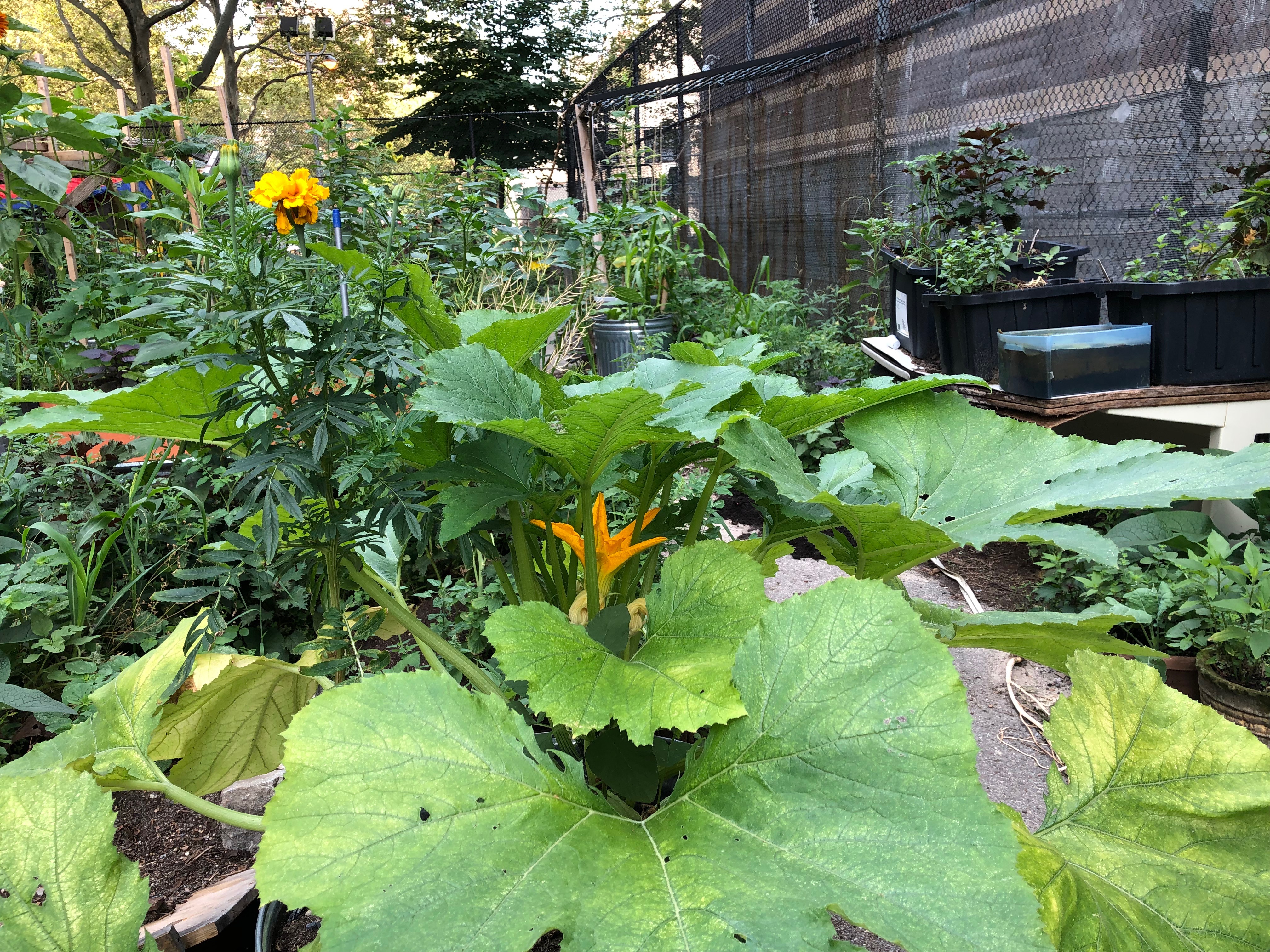
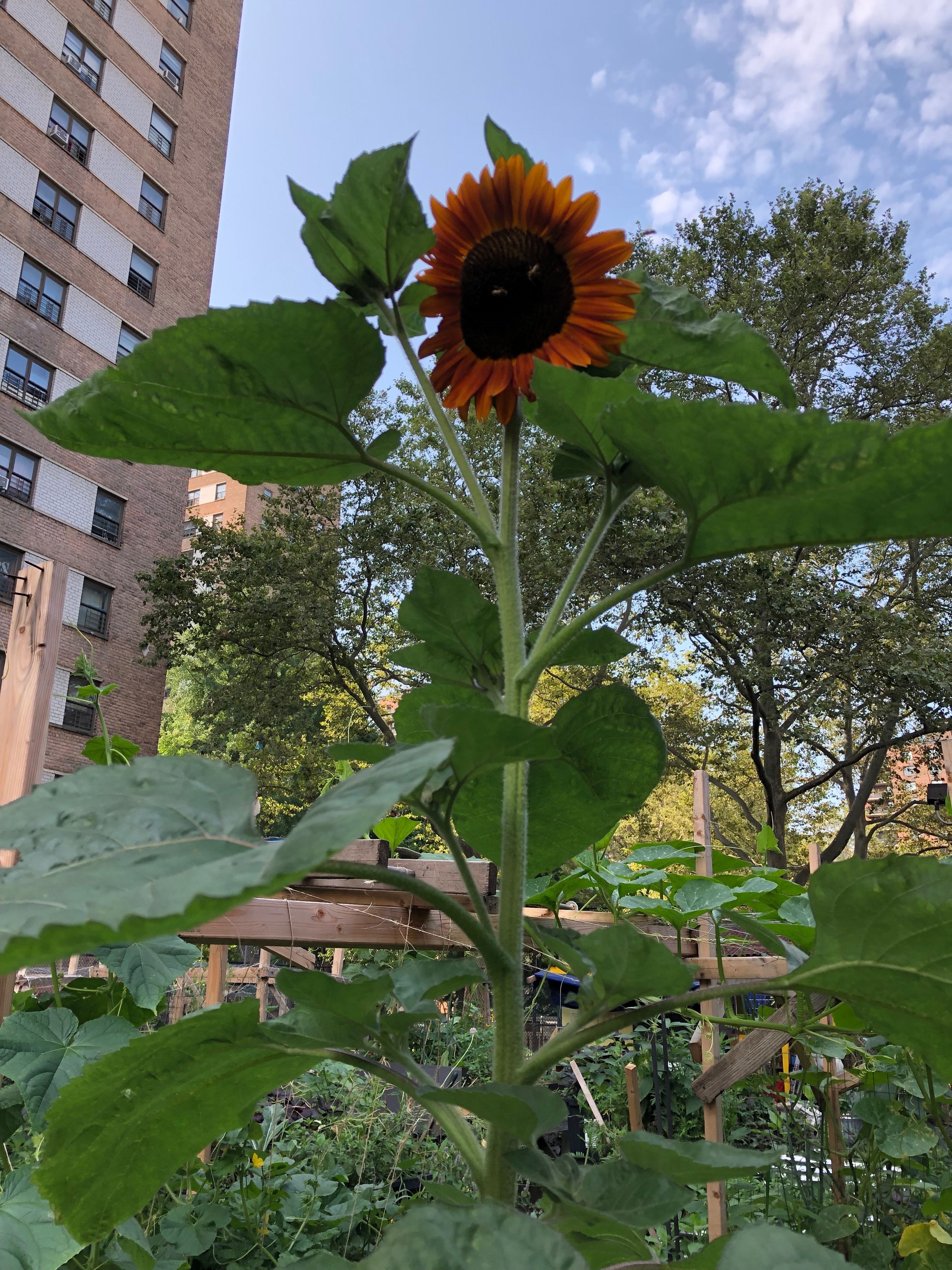
Note the happy sunflower, one of several that Jae rejoices in, especially as she was told there was not enough sun to make gardening worthwhile in that space.

072719-squash-west-101-st-NYC

072719-Jae-in-organic-garden

072719-checking-squash-for-borers

072719-Jae-loves-her-sunflowers

Read Full Post »

Missing the excitement of the summer Olympics? As these Vermont farmers show, any determined and organized group can have their own “Olympics” and have a lot of fun.

Jessica Rinaldi writes at the Boston Globe, “With the world’s attention focused on the Olympic Games in Brazil, a decidedly different type of competition was held in a small corner of New England, as farmers took to the field for the second annual Farmer Olympics in Vershire, Vt.

“After taking part in warm-up events that included a hay bale toss, the crowd gathered for an opening ceremony where a quartet performed the Olympic theme song on kazoo. When the competition began, 60 farmers sprinted up a hill, empty bins and shovels in hand, for the manure relay. The event was sponsored by the Northeast Organic Farming Association of Vermont. In the end it was a team from Cedar Circle Farm in East Stepford who took the gold. Their team’s name? Soil’d.

Click here for a terrific collection of photos from the second annual Farmer Olympics.

Photo: Northeast Organic Farming Association of Vermont
Competing in the Farmer Olympics, Vershire, Vermont.

Read Full Post »

Photo: Leigh Vincola, ecoRI News
David Kuma, left, is learning to farm under the tutelage of Ben Torpey.

In this story from Leigh Vincola, an ecoRI News contributor, several good things are happening simultaneously.

“David Kuma set out to grow more of his own food as he learned about industrial agriculture and all of its poisons. His father, a biologist, always had a garden growing up, so an innate knowledge of plants followed his curiosity.

“Born in Brooklyn, N.Y., raised partially in rural Illinois and then in Attleboro, Mass., Kuma understands urban, rural and suburban lifestyles and how plants can fit into each.

“Today, Kuma is one of three participants in the Southside Community Land Trust’s (SCLT) farm apprentice program …  Acknowledging that it has been historically difficult for minority populations to enter into commercial growing, the program’s mission is to provide organic farming experience and education to those who are interested.

“Kuma is partnered with Ben Torpey at Scratch Farm, a small-scale, chemical-free operation at Urban Edge Farm. Urban Edge is a state-owned, 50-acre piece of land managed by SCLT, where seven separate farms grow and share resources. The farm was established to give new farmers access to land and a community to learn from. As part of his paid apprenticeship, Kuma spends a full day on the farm two days a week and is learning a lot quickly. …

“From transplanting and cover crops to solarizing and low-till cultivation, Kuma is learning what it takes to run a small-scale farm naturally. His eyes have been opened to the importance of soil health.

“ ‘There’s a lot more to it than putting seeds in the ground,’ he said.

“For Torpey, having an apprentice is rewarding.

“ ‘Dave comes with a intuitive sense of plant biology and his curiosity reminds me that what we’re doing is fun,’ Torpey said. ‘It encourages me to experiment with new things.’ ” More here.

Don’t they both look happy? Nature can do that to you.

Photo: Scratch Farm


Read Full Post »

Looking through a pile of magazines recently, I found a 2011 newspaper article I had cut out about Hardwick, Vermont. It’s about reinventing the local culture around food and food-related businesses.

Dirk Van Susteren wrote at the Boston Globe, “If there were a ‘Locavore Capital of America’ one would expect it to be in sunny California or perhaps somewhere in the heartland … But, surprisingly, in rocky northern New England, just 45 miles from the Canadian border, is a place that could contend for that honor: Hardwick, a former quarrying town that until recently knew more pain than promise.

“In recent years Hardwick, population 3,200, located along a tumbling stretch of the Lamoille River, has seen a half-dozen innovative agricultural enterprises crop up, many with mission statements including such words as ‘community-based,’ ‘sustainable,’ and ‘organic.’

“The town, always a bit scruffy, and with a high jobless rate, might be on a green trajectory. And people are taking notice.

“Among the new operations here or in nearby towns: Jasper Hill Farm, which makes artisanal cheeses and provides aging, distribution, and marketing services to local cheesemakers; High Mowing Seed Co., an organic seed business, whose owner likes traveling around the country to tell the Hardwick farm and food story; Highfields Center for Composting, a soil-making business that collects its raw materials from restaurants, farms, and schools; Pete’s Greens, a CSA (community-support ed agriculture) farm that grows organic vegetables in gardens and greenhouses; and, finally, Vermont Soy, a tofu and soymilk producer.

“The area also has dozens of small-scale producers, from orchardists to maple sugarmakers. Their products sell at farm stands, at the summer farmers’ market, and at Buffalo Mountain Food Co-op and Cafe, a landmark in its 36th year. …

“Monty Fischer, the executive director of the Center for an Agricultural Economy, the nonprofit organization that helped spur these farm efforts, has kept count. ‘People from 40 states and 40 countries have come to ask about our agricultural cluster,’ he reports, from his downtown office.”

Read about the 2011 federal grant for the Vermont Food Venture Center, an incubator facility, the organic North Hardwick Dairy, where sunflowers are grown as a value-added crop, mead maker Caledonia Spirits, and more here.

And if anyone has been up there recently, I sure would love to know if the food culture is still going strong.

Photo: Wikipedia
North Main St., Hardwick, Vermont

Read Full Post »

The radio show Living on Earth is a font of useful and interesting environmental knowledge.

In a recent show, host Steve Curwood spoke with “agronomist Frank Forcella about how he modified the common sand blaster to simultaneously fertilize and weed food crops.”

Curwood introduces the topic thus, “If you’ve ever weeded a garden, you know it’s a backbreaking job, and if you have row upon row of crops, it’s, well, it’s easier to use herbicides. But then the crop is not organic. Enter a team of soil scientists for the U.S. Department of Agriculture who harnessed a common tool of the building trades to blast away those unwanted weeds without chemicals. Joining me to explain this breakthrough is Frank Forcella. He’s an agronomist with the USDA’s North Central Soil Conservation Research Laboratory.”

Forcella then tells Curwood how he got the idea. “One of my hobbies here in Minnesota is growing apricots, and 2007 happened to be a wonderful year for apricot production in Minnesota.

“We ended up with about a five gallon bucket worth of apricot pits, and I was wondering what can we do with apricot pits. One of the things you can do with them is to grind them up and use then as a grit in sandblasters, and I was talking about that with one of the fellows who works with me, Dean Peterson, on our way out to our field plots. Both of us work on weeds, and we had more or less simultaneously had the idea, ‘I wonder if you could use sandblasters to kill weeds.’ Initially we thought that had to be the dumbest idea in the world, but it was one of those ideas we just couldn’t get out of our heads.”

Read how a dumb idea led to a great invention here.

Photo: Frank Forcella
The four-row grit applicator in action, driven by Charles Hennen.

Read Full Post »

Here’s an update on the Wooly Pig farmers I blogged about in 2012. (See that here.) At that time, they were raising chickens in Connecticut. They have since joined forces with other young farmers and are now part of the Letterbox Farm Collective in Hudson, New York. If you have Facebook, that’s the best place to see their photos and learn what they are up to. (Click here.)

From the Letterbox Farm About page: “We are a group of people growing meals and medicine on shared land in the Hudson Valley. We take our time and listen.”

If you don’t have Facebook, you might enjoy the pictures at a Turnquist Photography post called “Young Farmers of the Hudson Valley.”

The photographer writes, “We were recently contacted by Chronogram Magazine, a tremendous monthly publication circulated in and around the Hudson Valley based out of Kingston, NY. They asked that we photograph some young farmers local to the Hudson area for an article being written for their September issue. … It was a true honor to be considered for this assignment, especially after meeting these amazing people who UNDERSTAND what it means to eat responsibly.

“My first stop was just outside of the Hudson city limits to Letterbox Farm Collective.” (Turnquist photos here.)

Letterbox farmer Nichki’s Aunt Sandra sent me a photo of a spring farmers market that the collective attended in Rhinebeck. I’m told they can hardly keep up with the demand from restaurants for duck eggs, rabbits, and quail.

Read Full Post »

The Globe has a good story today on Whole Foods, which hired an urban farming company to grow an anticipated 10,000 pounds of food per year on the roof of its Lynnfield, Massachusetts, store.

Erin Ailworth writes, “The soon-to-open Whole Foods Market in Lynnfield will offer its customers something the company says no other major grocery chain has offered before: ‘rooftop produce,’ picked from a field atop the store. …

“Whole Foods and its contractors say the commercial roof garden is an experiment that, if it succeeds, could encourage other grocers to do the same, boosting efforts to expand rooftop gardening. Such gardens not only insulate buildings, lowering heating and cooling costs, but also decrease storm-water runoff, which can overwhelm sewer systems and carry pollutants into waterways.

“And they yield fruits and vegetables that do not need to be trucked or flown, cutting transportation costs and emissions, including of greenhouse gases. The rooftop produce — a tiny fraction of Whole Foods’ inventory — will be sold in the Lynnfield store or used in its prepared foods.

“A green roof, however, is not cheap. It can cost up to 60 percent more than a traditional roof, according to the Sustainable Cities Institute, a program of the National League of Cities. …

“Whole Foods began thinking about the project three or four years ago, [Robert Donnelly of Whole Foods] said, and at first planned to build a basic green roof — essentially, a lawn atop the store. Then the company came across Green City Growers and Recover Green Roofs, two Somerville companies that partnered on a 4,000-square-foot garden above the Ledge Kitchen & Drinks restaurant in Dorchester. (That garden provides about 75 percent of the veggies and herbs served at the Ledge.)

“Whole Foods’ plans quickly became more ambitious as company officials realized the 45,000-square-foot roof (nearly an acre) provided plenty of space for farming.” More. There’s also a fun video at the Globe site showing the construction of the roof farm.

Suzanne’s Mom’s Blog had another roof garden post here; a post about Glide Memorial’s roof garden here; and a related entry about the Guardian Environment Network, here.

Photo: David L. Ryan/Globe Staff
Workers dumped soil into containers on the Lynnfield Whole Foods roof, which was reinforced to bear the extra weight.

Read Full Post »

This post’s for my daughter-in-law, who not only loves to cook but is also pretty savvy about healthful eating. I should know. I had a yummy something with orzo and mushrooms for Tofu Tuesday at my son’s house last night.

Today’s story from the NY Times is on the expanded distribution goals of a company with inventive food options currently popular with celebrities.

And, as Stephanie Strom writes, the offerings are not just for vegans.

“Organic Avenue, the tiny purveyor of high-end juices, fresh salads and specialty foods like cashew scallion cream cheese and Thai collard wraps, has hired a new chief executive with the goal of turning its new owner’s dreams of a national chain into reality.

“Martin Bates … will take charge of Organic Avenue in June. …

“ ‘I drink green juices and have done for the last year or so, but living the life of a vegan is not for me. I think there are lots of other people like me out there.’ …

“We want to grow this business around helping people who want food that’s better for them,” [investor Jonathan] Grayer said. ‘That doesn’t mean they have to be vegan. They certainly don’t have to favor raw. They don’t even have to be organic; they just have to want to be healthier.’ ”

Bates, who turned around the Pret a Manger chain, said that he is up for the challenge.

“Perhaps tellingly, he said his favorite Organic Avenue product was Dragon’s Breath, a juice that incorporates ginger, lemon and cayenne pepper. ‘Caution,’ the company’s Web site warns. ‘This shot is not for the faint at heart!’ ” More.

We are into dragons around here. I’ll have to see if I am brave enough to drink Dragon’s Breath.

Photo: Michael Falco for The New York Times
Organic Avenue, which caters to a celebrity-studded clientele, hopes to appeal to a range of healthy eaters

Read Full Post »

Photograph: http://americanflatbread.com/lareau-farm. Lareau Farm is home to American Flatbread in Waitsfield, Vermont.

@@@

A few of my readers will see “Waitsfield, Vermont” and think “skiing.” That’s because they were skiing there a couple weeks ago.

But this post is about the man who launched American Flatbread in Waitsfield in 1985, franchising his restaurant concept in other states and using his business success as a platform to advocate for the environment and other causes.

“In the fall of 1979,” writes Mike Ives for the Christian Science Monitor, “George Schenk stuffed all his worldly possessions into his pickup truck and moved from upstate New York to central Vermont. After settling in the sleepy ski town of Waitsfield, he began working as a dishwasher, freelance photographer, and live-in baby sitter.

“He also apprenticed at local restaurants and learned from chefs who were cooking in ways that emphasized local and regional ingredients. By 1985, Mr. Schenk was selling his own ‘flatbread,’ a variation on the brick oven-style pizza he’d eaten as a teenager, topped with Vermont produce.

“Serving nutritious food, he realized, was a good way to promote the kind of community values he’d absorbed in his Connecticut childhood and the ecological principles he’d embraced in his previous careers as a farmer and forester. …

” ‘I felt as though the environmental dimension of food needed a voice,’ Schenk recalls.

“Today, American Flatbread operates three popular Vermont locations, exports frozen pizzas nationwide, and is franchising its restaurant concept in other states.

“But profit isn’t Schenk’s only priority: For more than two decades he has donated thousands of his flatbreads to the poor and sick. He’s also held an average of eight benefit bakes each year to raise money for those in need.”

Although his political views and “civil disobedience” actions have often raised hackles, the people who know him best defend him.

“They insist his commitment to his employees and community is sincere and unwavering,” writes Ives. ” ‘I don’t always agree with George, but I always appreciate him,’ says Amy Shollenberger, former executive director of Rural Vermont, a nonprofit farm advocacy group. ‘He loves everybody, wears his heart on his sleeve — and walks his talk.’ ”

Read more.

Brian Mohr/EmberPhoto
George Schenk founded American Flatbread pizza as a way to showcase local produce and advocate for both community and global causes.

Read Full Post »

My friend’s great niece doesn’t come from professional farmers, but the gardening gene goes back at least to her Italian great grandfather. Now, having graduated from a liberal arts college and worked for various park services, she is — like a surprising number of young people today — going into farming.

At a farm blog, she describes raising organic chickens in Connecticut.

“Hi! Nichki and Laz from The Wooly Pig here, taking over the Barberry Hill Farm blog for an entry!

“We are young aspiring CT farmers who were lucky enough to meet Kelly and Kingsley last March and over the past several months they have become our good friends and farming mentors. This fall, the Goddards have been so kind as to lend us their pasture and their expertise so that we can raise our very first batch of chickens for our community.

“Our birds are pasture raised, which means they are brought up outdoors with plenty of access to fresh vegetation, open air, and sunlight.

“They are fed a strictly organic diet — an added cost for us that we feel is a worthwhile investment in our customers’ health. …

“We can’t thank our customers enough for supporting local, sustainable agriculture. Your good decisions help build strong, healthy communities right here in Connecticut. …

“For more information on our chickens, please contact us by email at TheWoolyPig@gmail.com.”

Read the engaging Barberry Hill Farm blog here. And if you live near Madison, Connecticut, get your chickens from The Wooly Pig

Photograph from http://www.barberryhillfarm.com.

Read Full Post »

Alice Feiring has an interesting story in Newsweek.

She writes that Kazi Anis Ahmed of Bangladesh, the 41-year-old cofounder and president of a company called Teatulia, was getting his doctorate in comparative literature when his father suggested expanding the family media and construction business into tea farming. The location he had in mind was the barren northwest of the country, not far from India’s tea-growing region.

Kazi Anis Ahmed liked the idea but felt strongly that any farm of his should be organic. Additionally, says Feiring, the family’s “mission was to provide jobs to the region. …

“The lack of agricultural tradition proved a blessing because the land was virginal, not ravaged by the government-supported, synthetic-fertilizer-dominated ‘Green Revolution.’ After reading the poetic One Straw Revolution by the master Japanese farmer, Masanobu Fukuoka, Ahmed went one step beyond organic and tried to do low-intervention farming.

“The tea garden functions on minimal irrigation. They installed a plethora of plants next to the tea plants to feed and aerate the soil. What now exists is a breathtaking vision. The barren area has been transformed into an Eden with a resurgence of wildlife never seen before — recently, a pair of monkeys was spotted. The animals had not been seen in the area for decades.”

Read more at the Daily Beast. (Thanks for alerting me to this lovely story, Asakiyume.)

Photograph: Habibul Haque, Teatulia

Read Full Post »