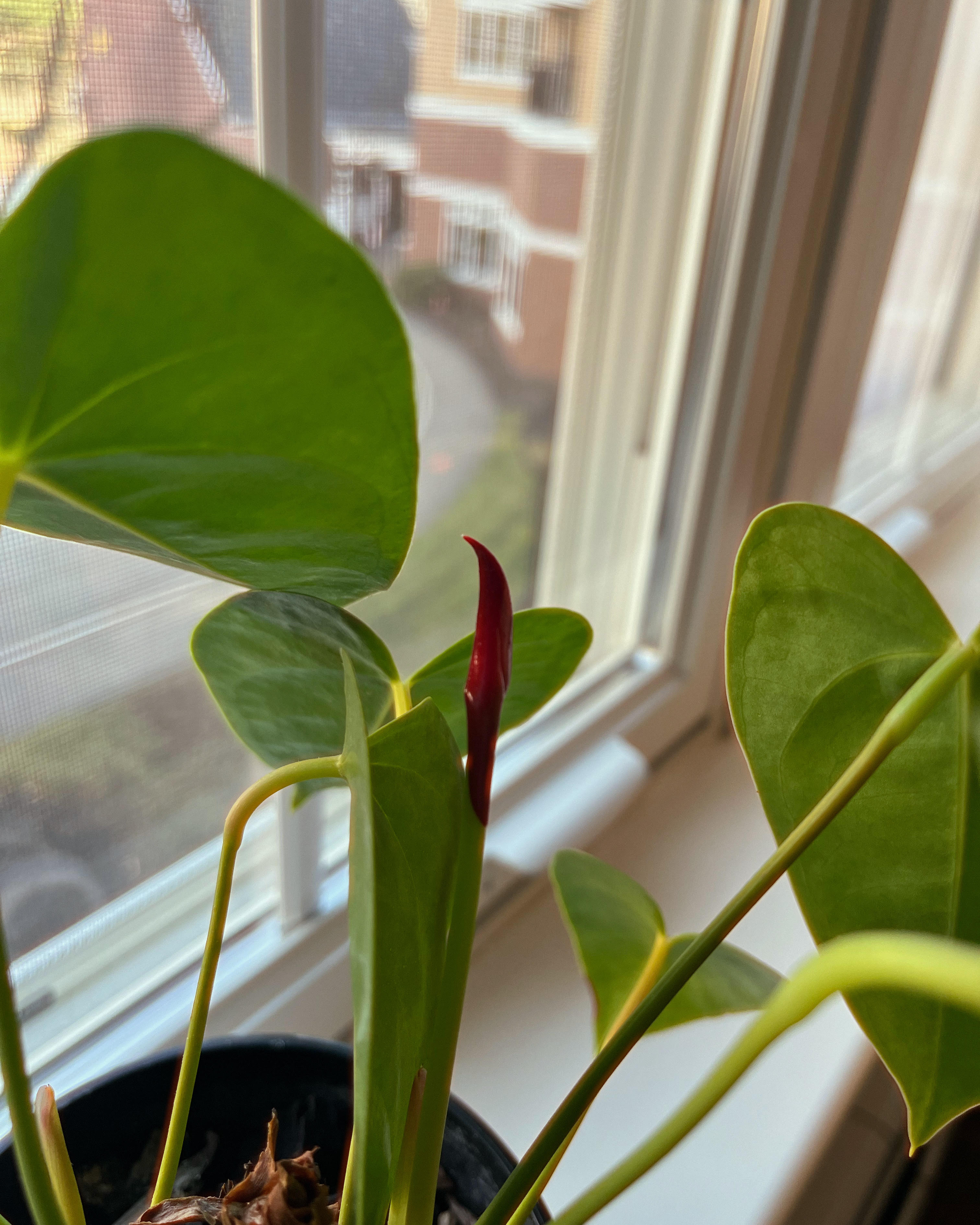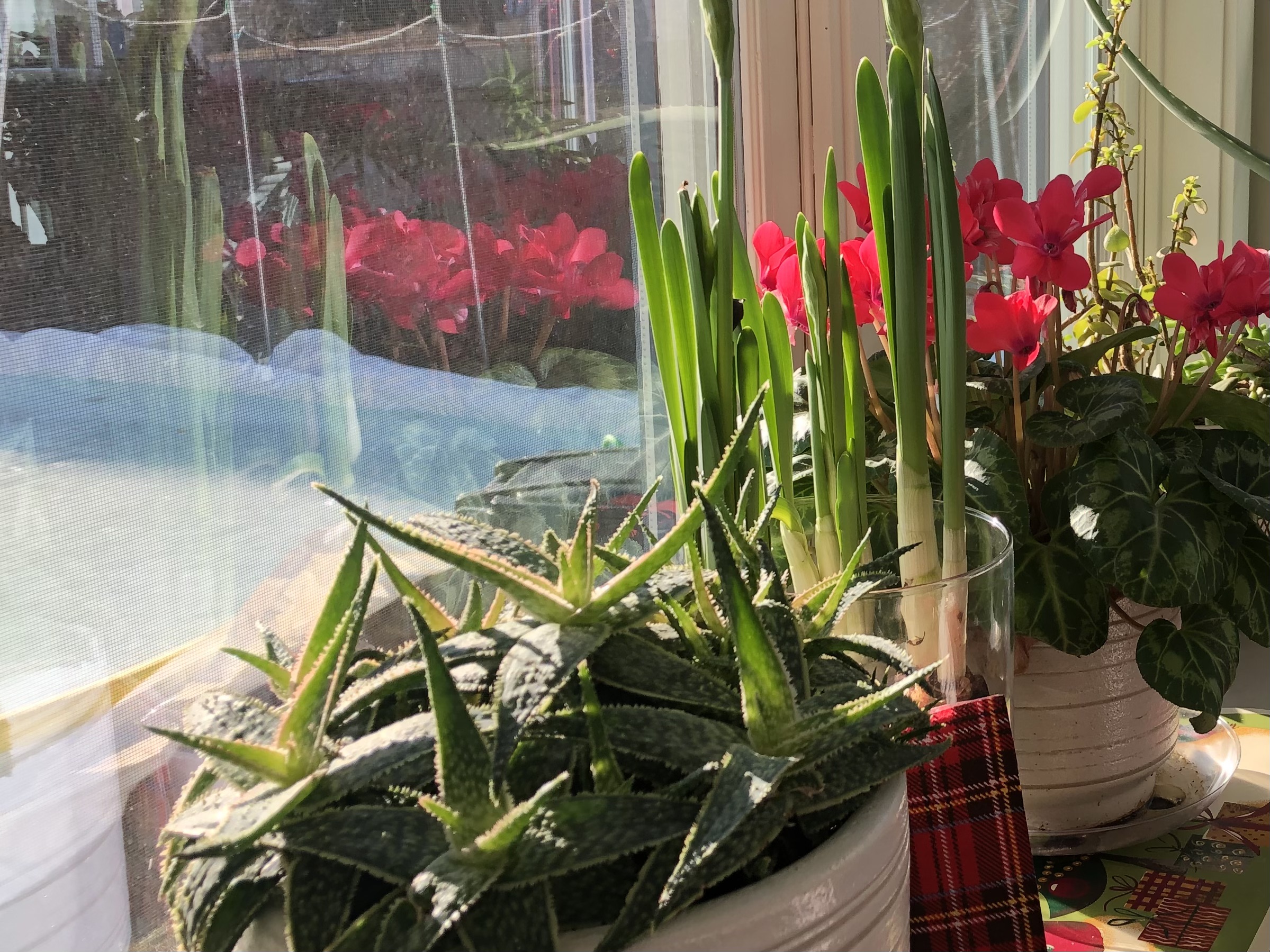
I have a great attachment to my anthurium (above), which my niece and nephew gave me in early 2020 after my sister died. The plant told me her name was Gladys. I like to wish her Good Morning and ask how she’s doing.
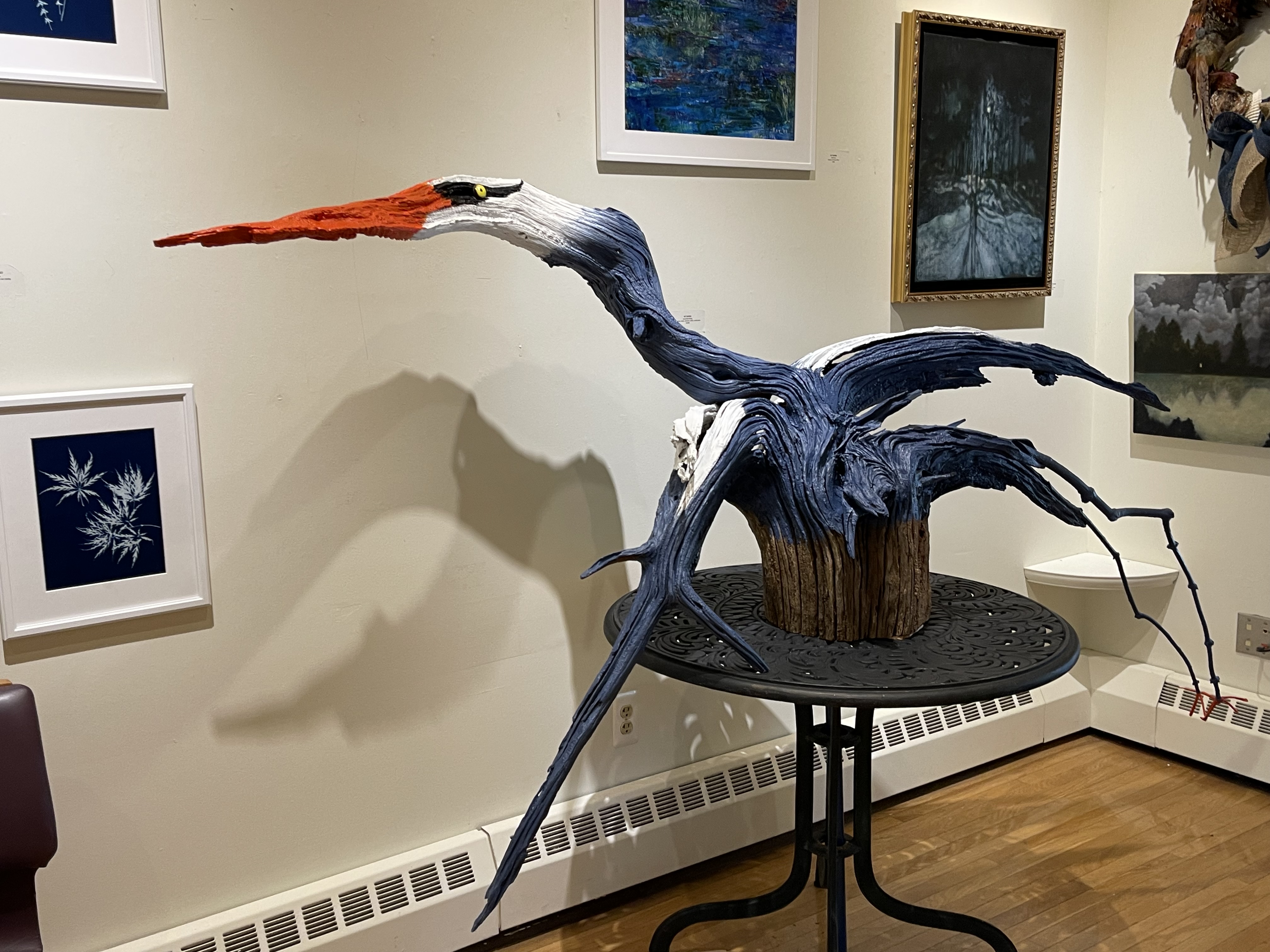
Artist Kit Howard Burns, a college classmate, saw a great blue heron in the root of a fallen tree. Isn’t it great?
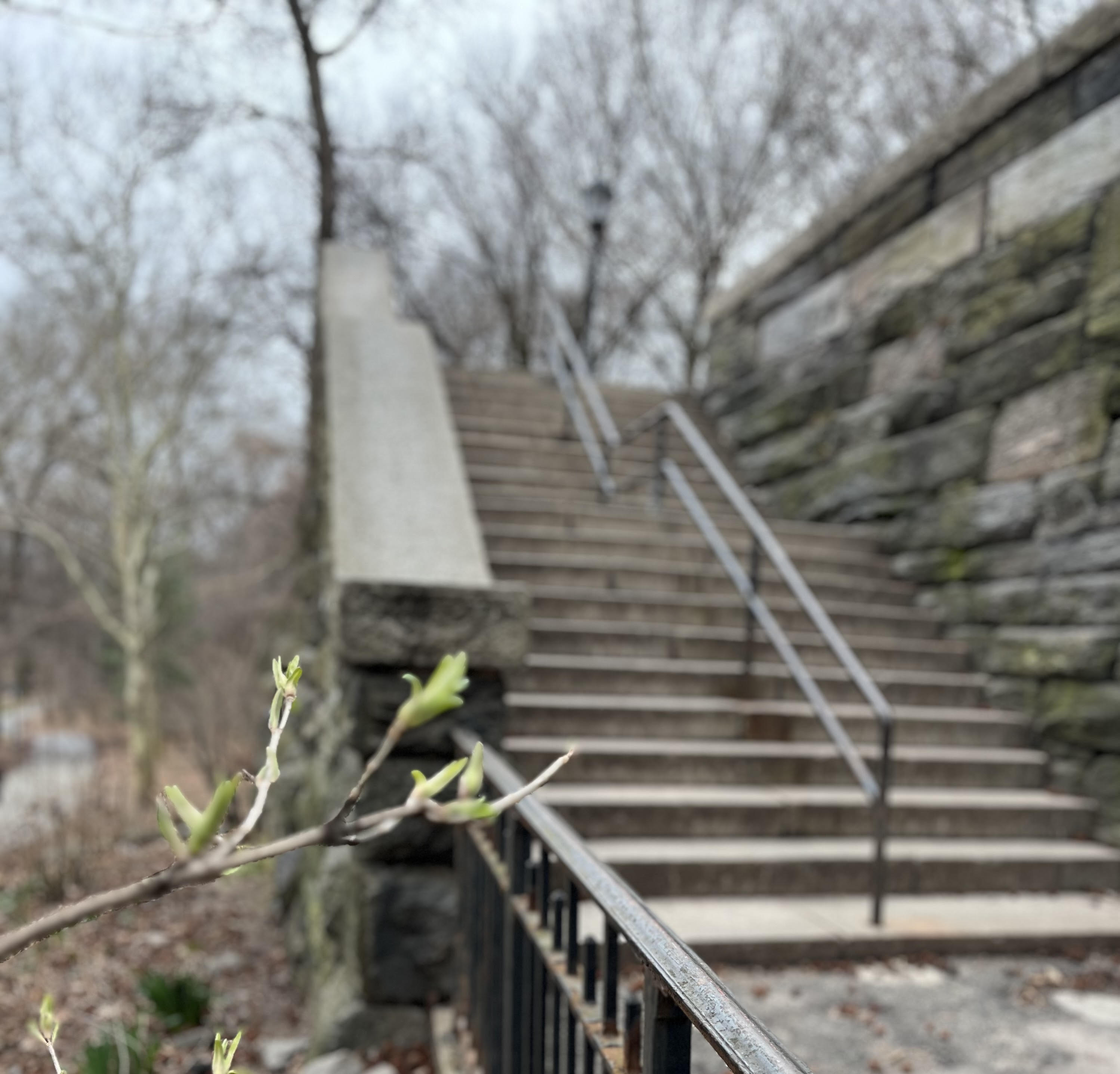
Next, you may think you see a bench, but it’s really a story of sun and shadow. I look everywhere for these stories in winter, when they may appear only for a few moments.
The annual gingerbread competition at the Colonial Inn inspired the next artwork, Verrill Farm’s version of the Barbie movie. My husband pointed out the pretzel fence, which I missed at first.
I’m still trying to figure out the characters I saw in the bushes near Jeanne’s house. Tell me what they are, if you know. The woman looks like a Disney gal, but are those soldiers that I see climbing a nearby branch? They look dangerous.
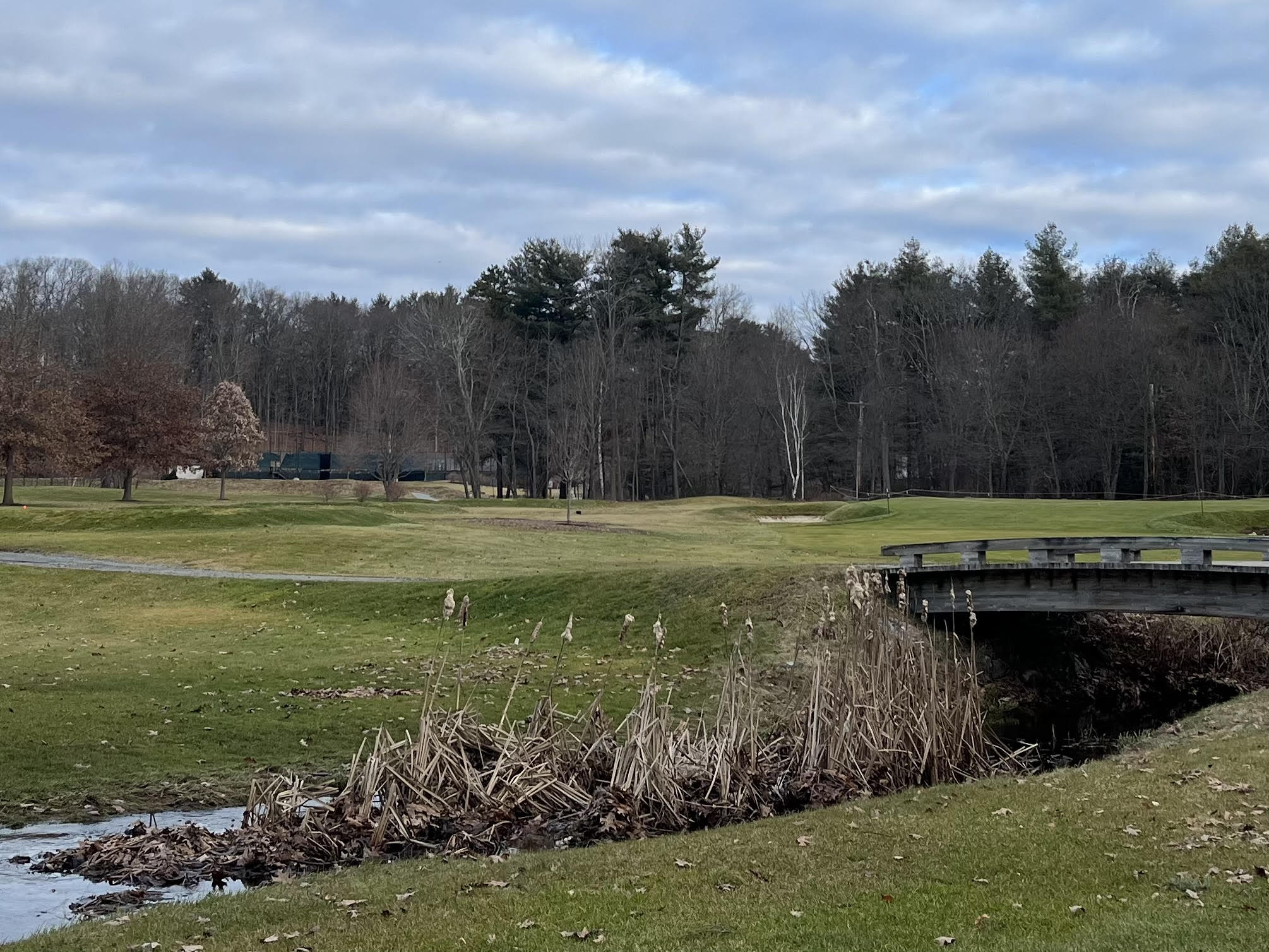
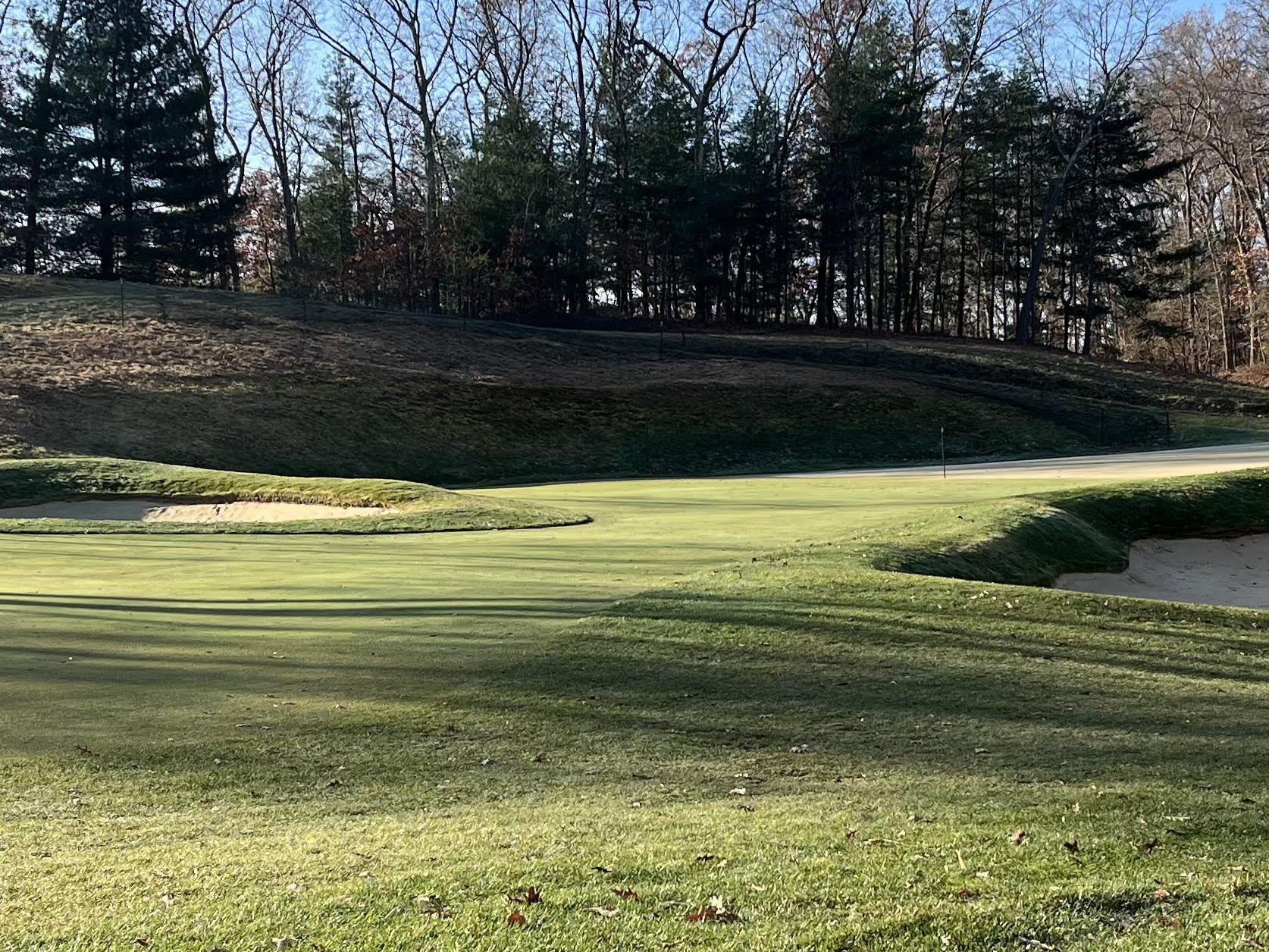
On New Year’s Day, I took advantage of the cold and quiet to trespass on the temporarily unused golf course. Nearly every day I walk along the road that runs beside it, and I always feel tempted to disobey the “No Trespassing” signs. I wonder if 2024 is going to be a year of disobedience.
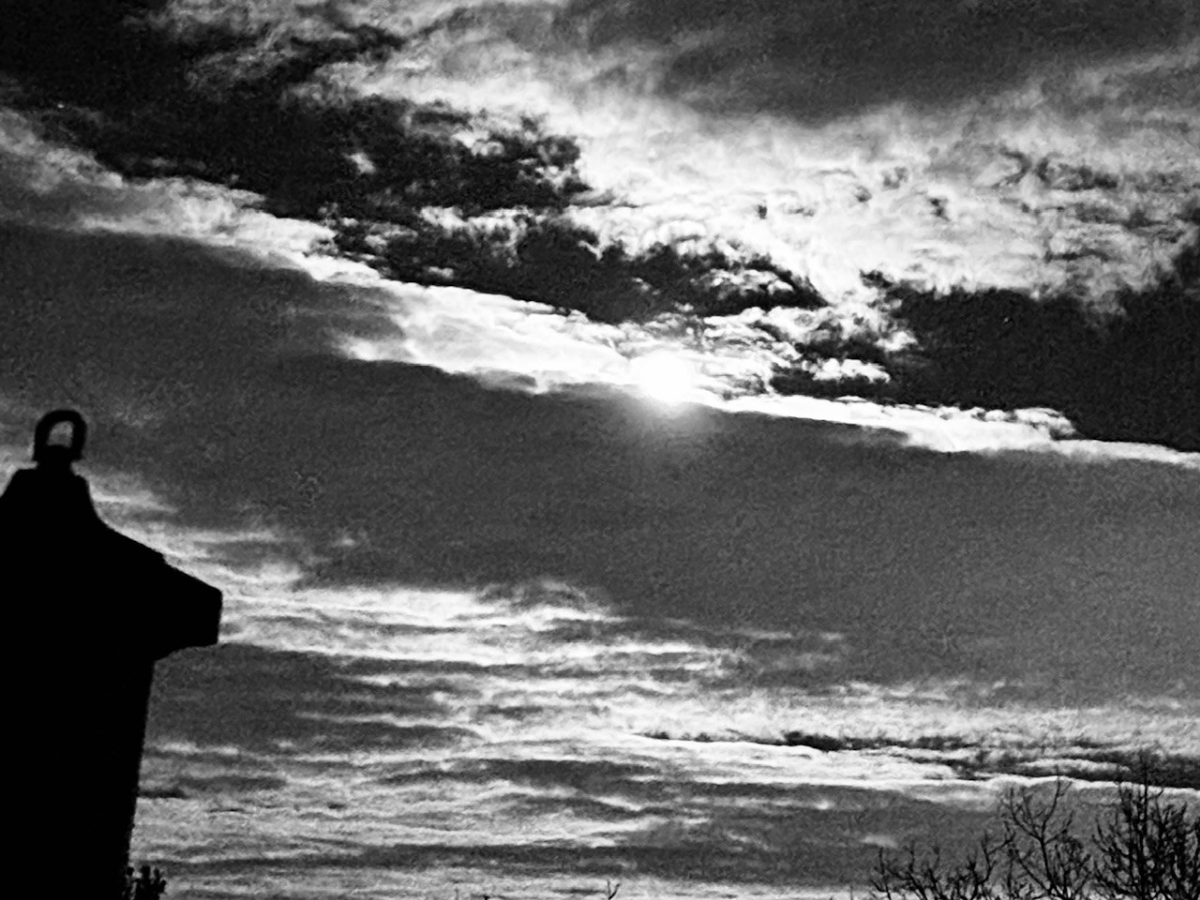
Neighbor Lynne Stinson’s beautiful photo of the moon coming through clouds says to me 2024 could be almost anything.
Finally, here’s a version of “My Way” you may like. I never cared much for the song when it was all about Frank Sinatra doing it his way, but notice how much more meaningful it seems in Spanish. I heard this on the jazz station, wicn.org. Check it out.
I’m taking it a bit easy as I recover from Covid, but I wanted to show you how things have looked around here lately. The photos are mostly from my routine walks along the road by the golf course. Sometimes I take golf course pictures and send them to Lynn in Florida, where she can play all year. I love the long early-morning shadows. Soon the hills and sand traps will be covered in snow.
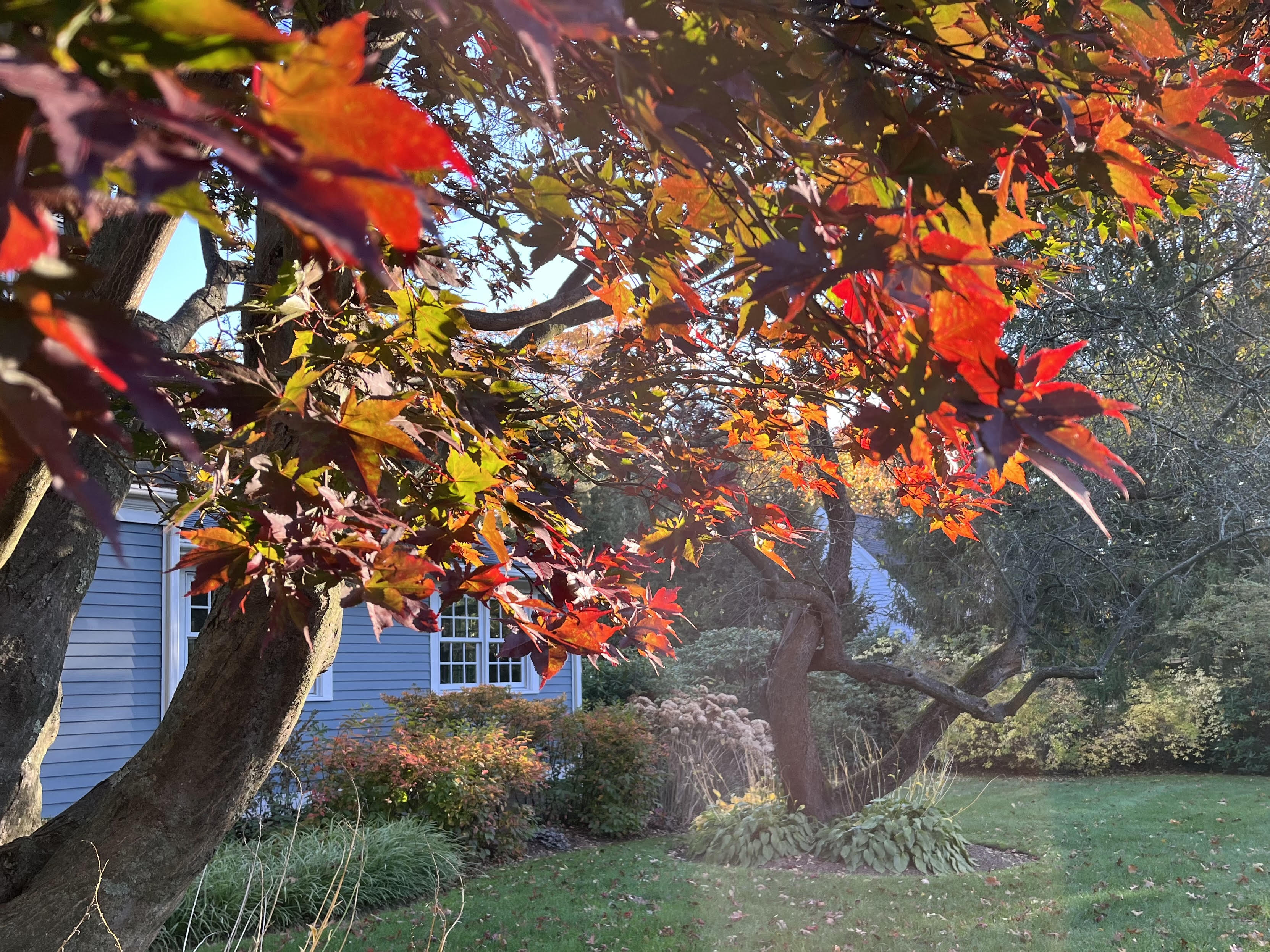
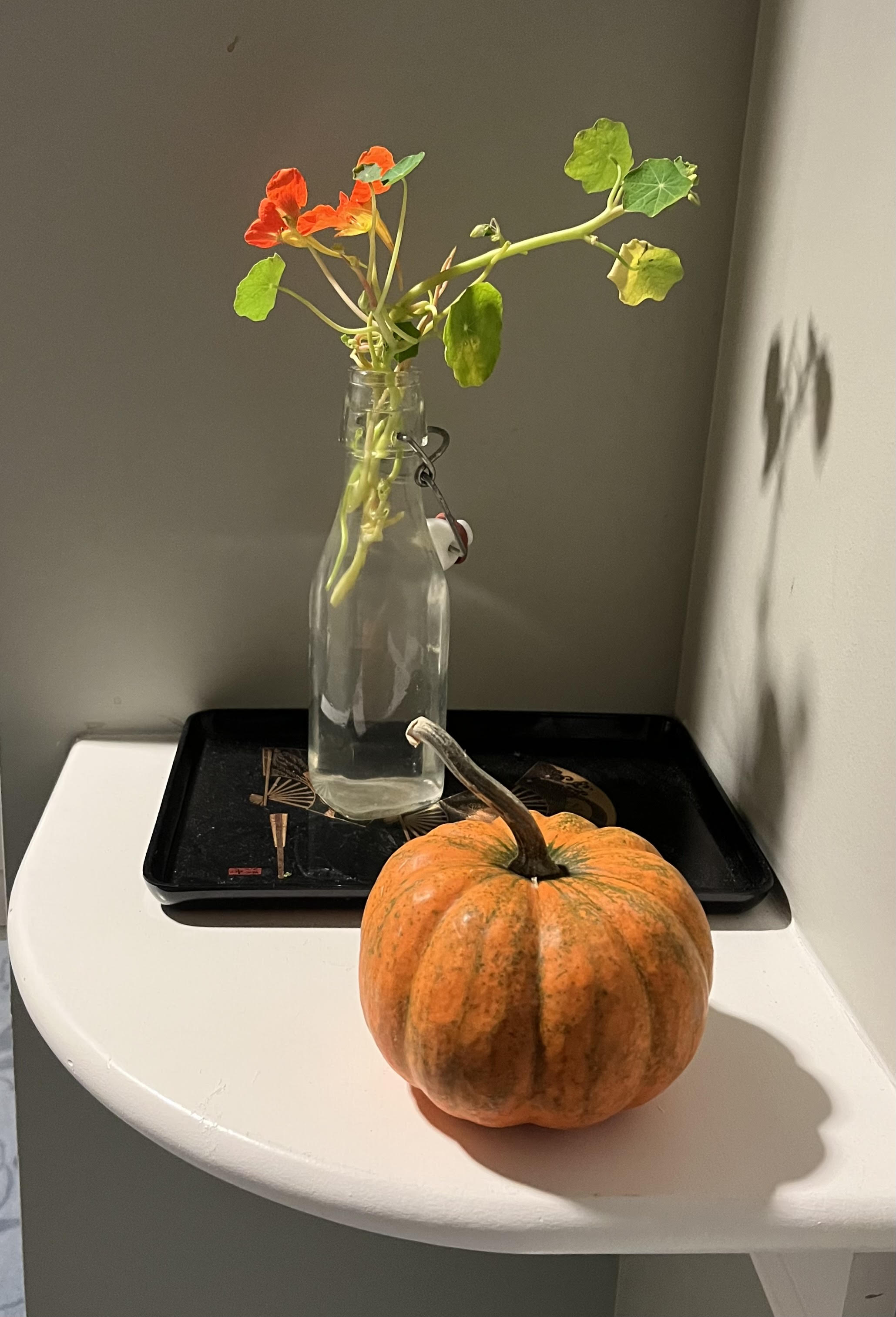
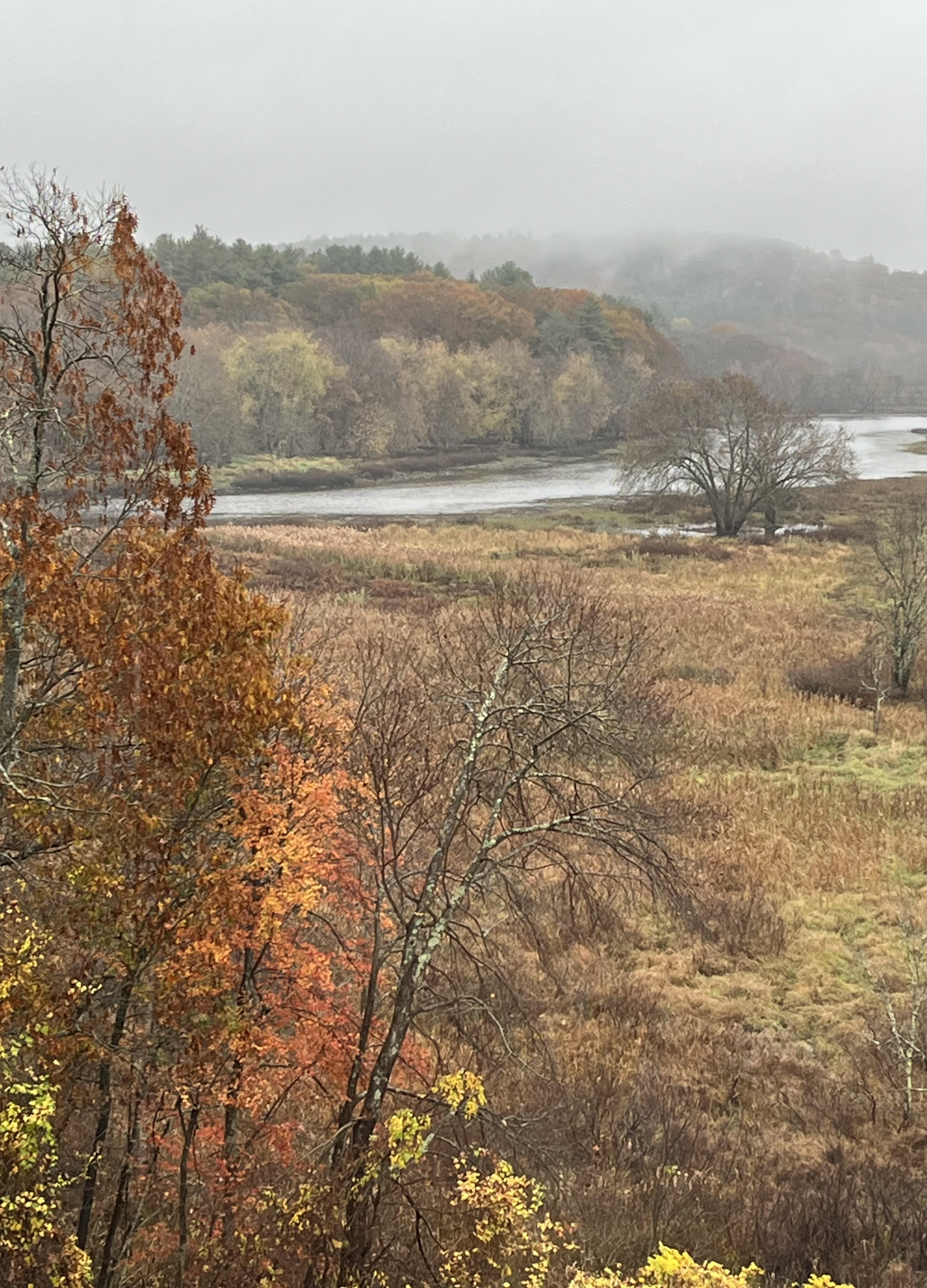
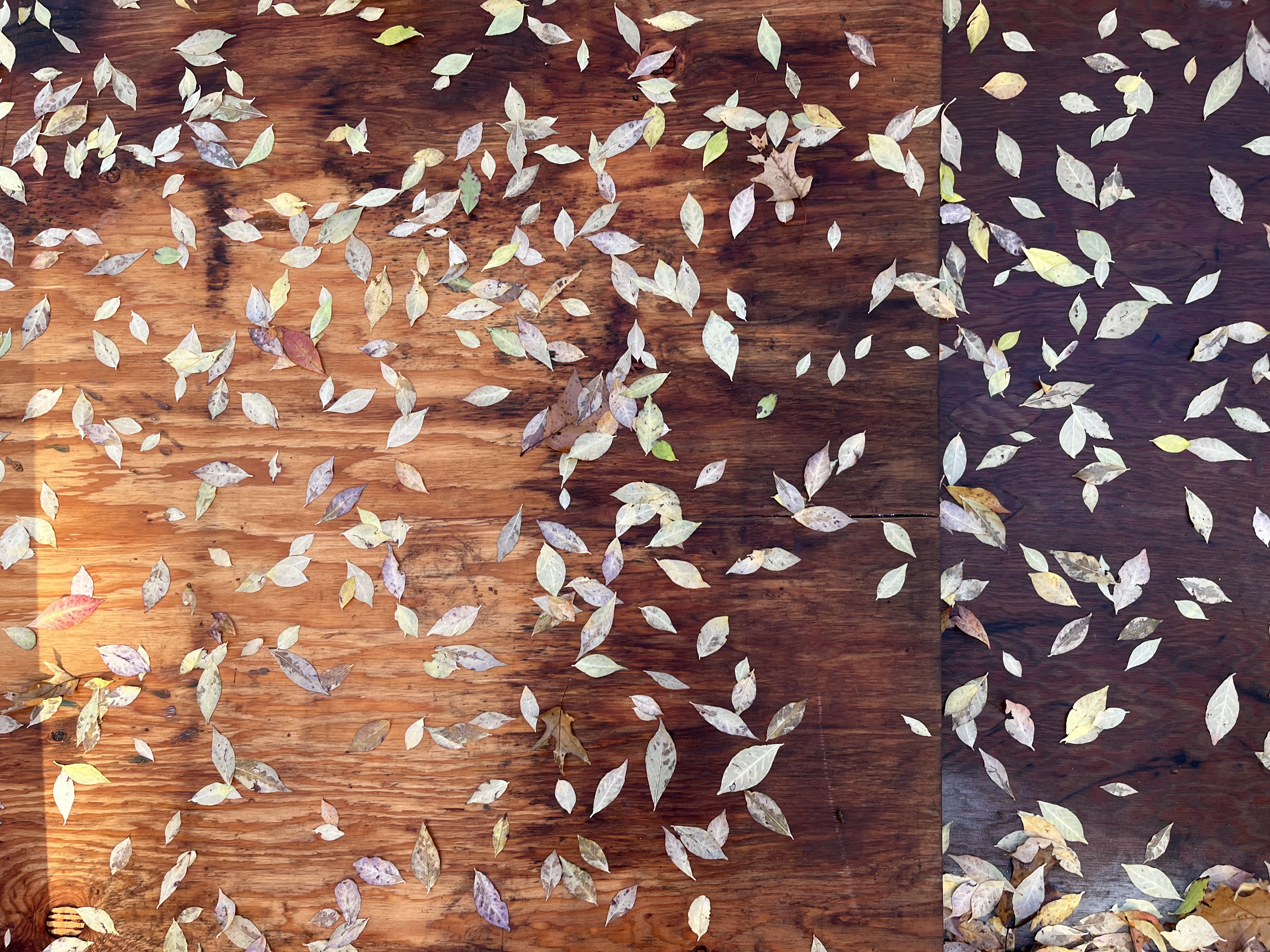
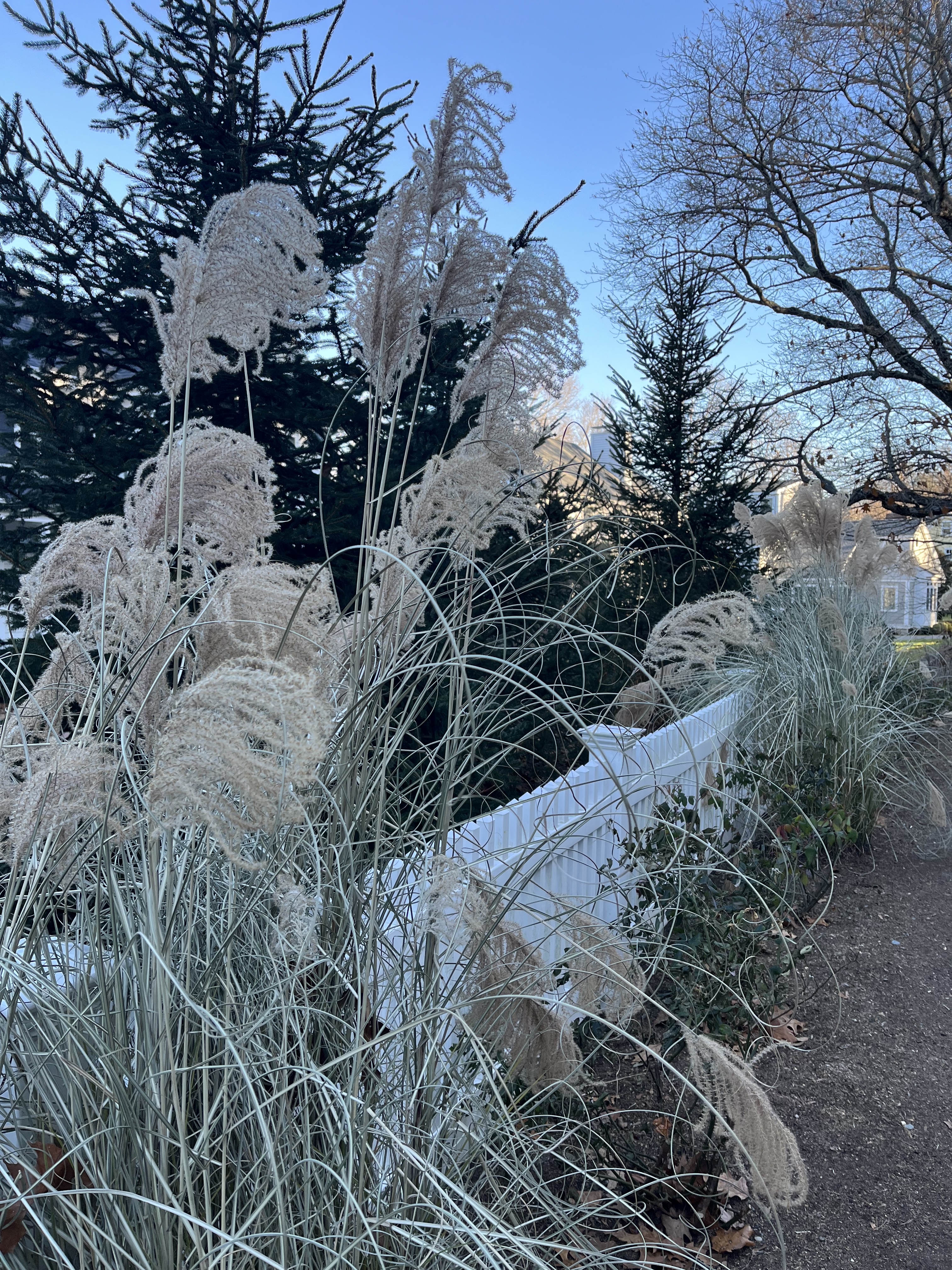
The other photos include samples of fall color that came late this year, the foggy river, wet leaves, a last nasturtium, and feathery grasses.
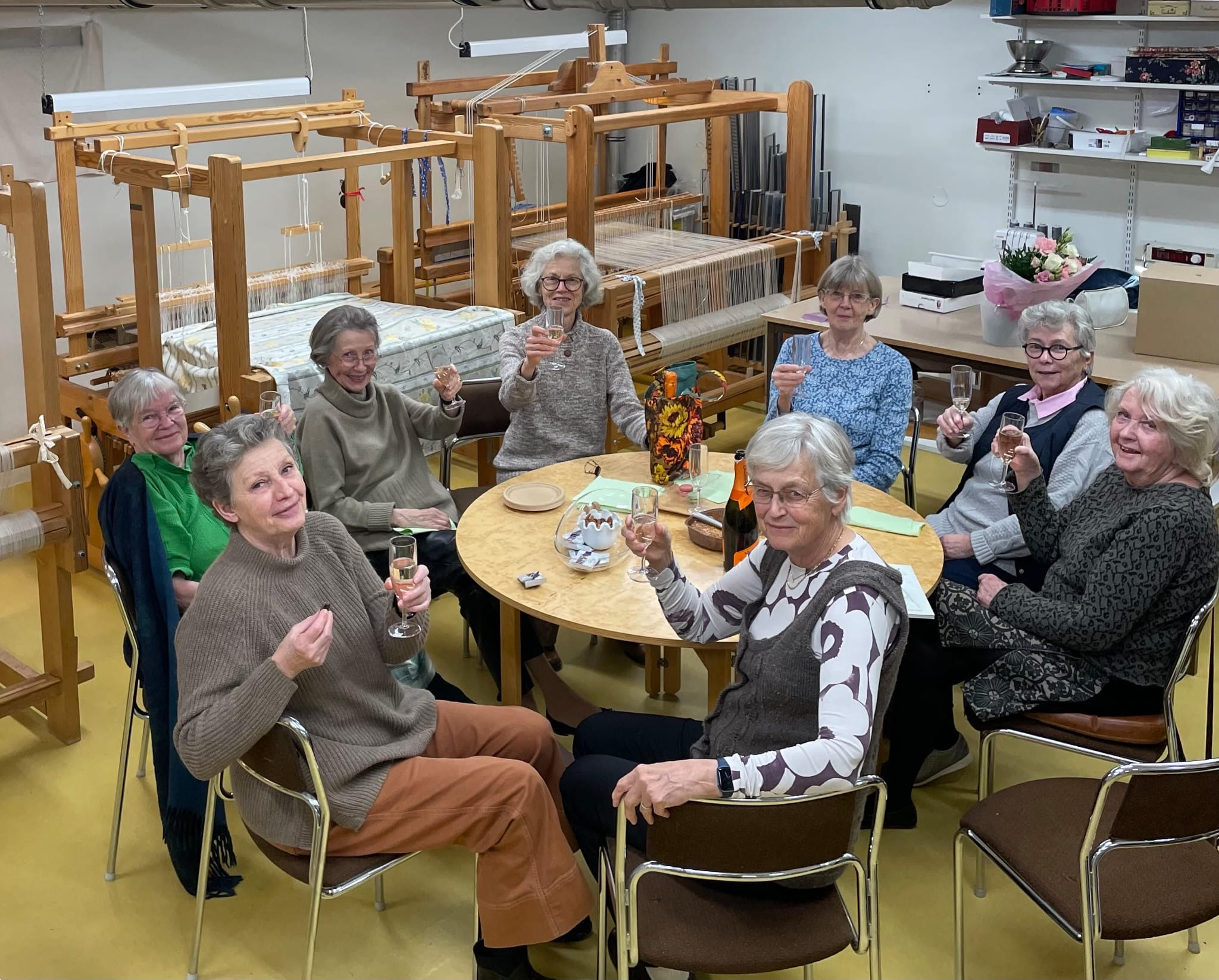
Erik’s mom sent the last picture. She, too, has moved into a retirement place, but in Sweden. The photo shows her lifting a glass with other residents celebrating their 80th year. Don’t you love the looms?
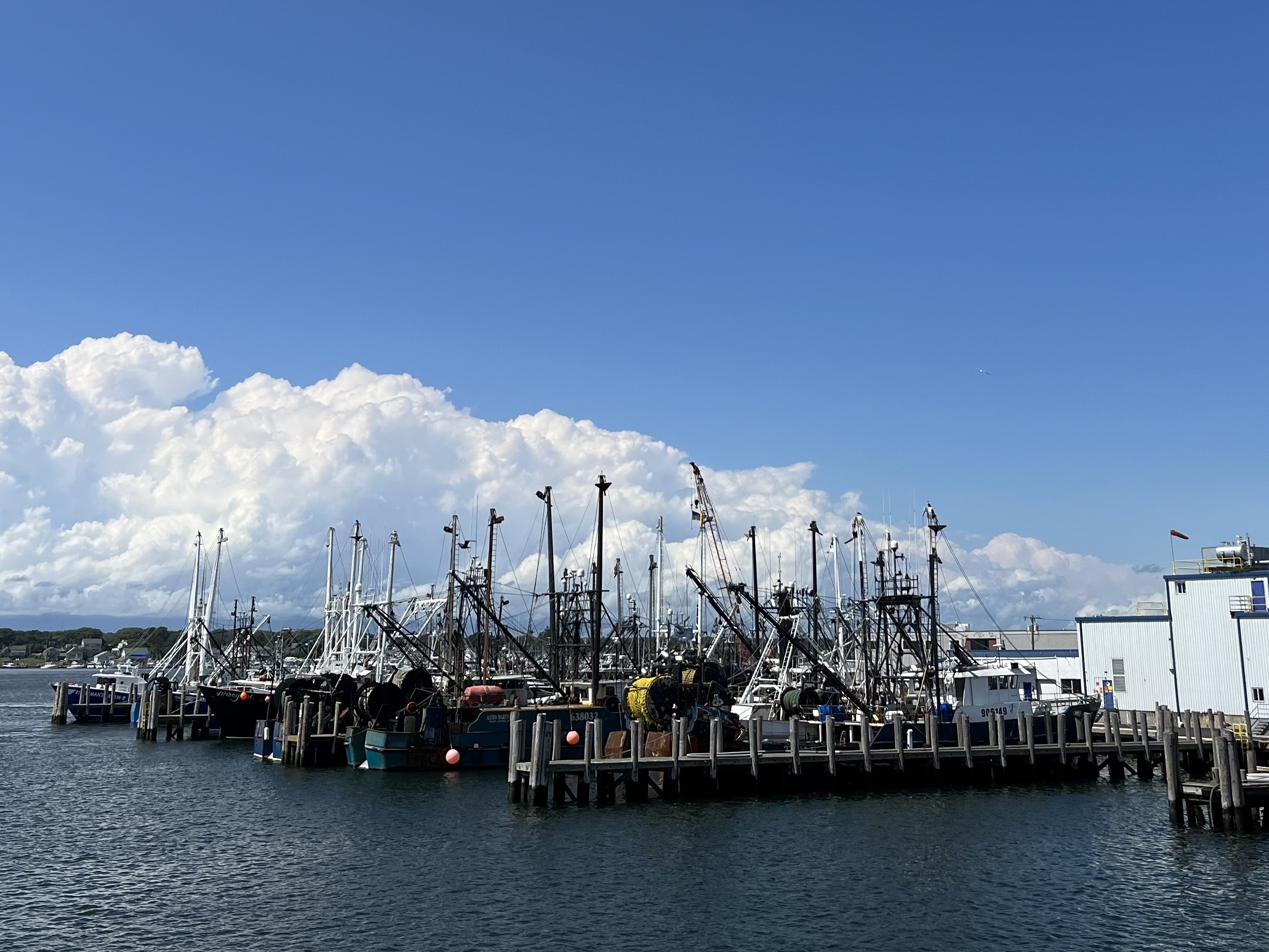
Photos: John and Suzanne’s Mom. Above, the fishing flee in Galilee, Rhode Island. And some rather decent clouds.
Summer always seems to be the best time for photos. In winter I have to look harder. Here are a few recent shots from New England: specifically, from Massachusetts and Rhode Island.
A luau at our new Place had an unusual approach: Hawaiian food, Caribbean music. Well, OK, I thought, I do like the sound of a steel drum.
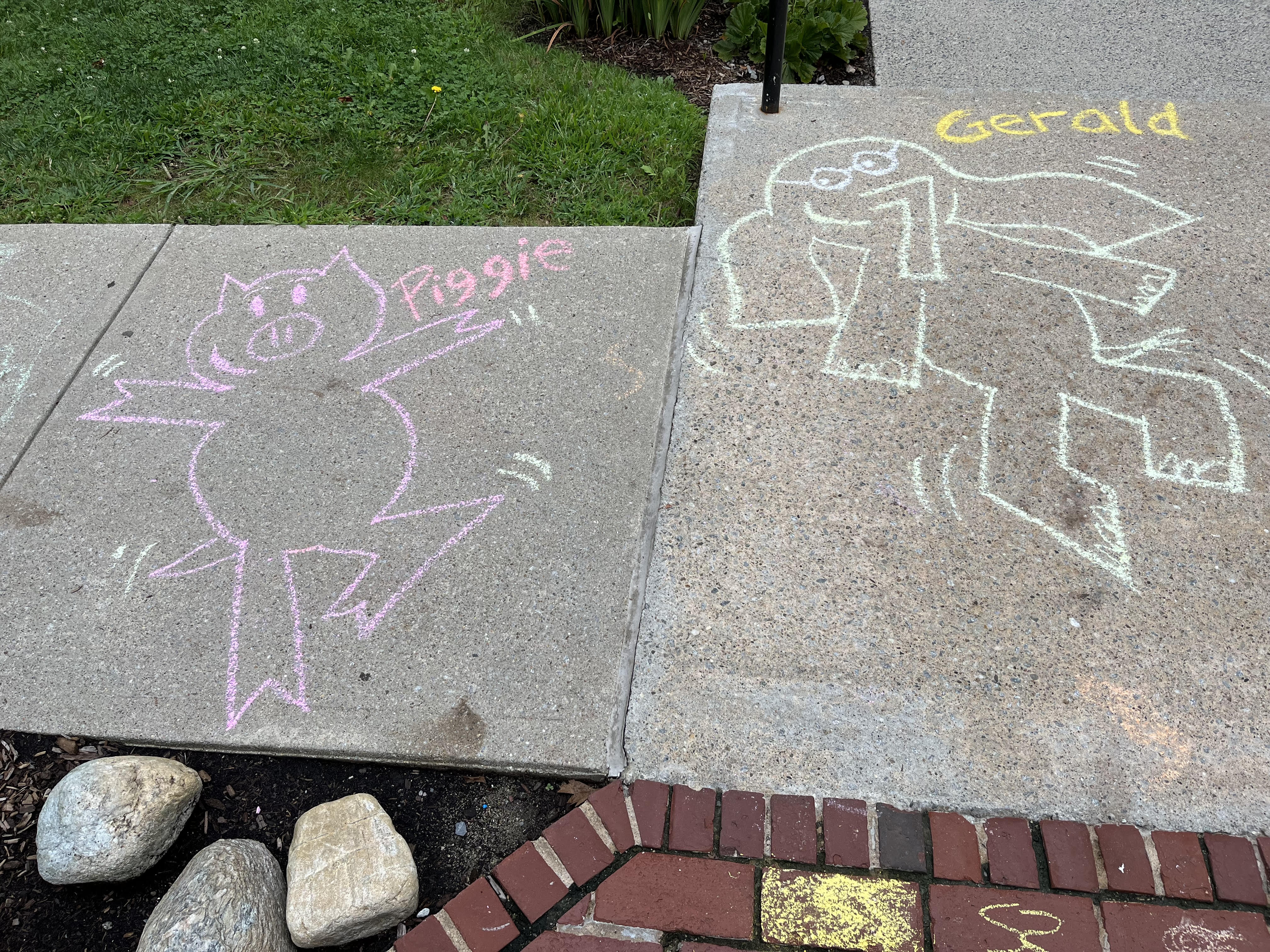
A very decent artist brought Gerald and Piggy to the front walk of the Fowler Library.
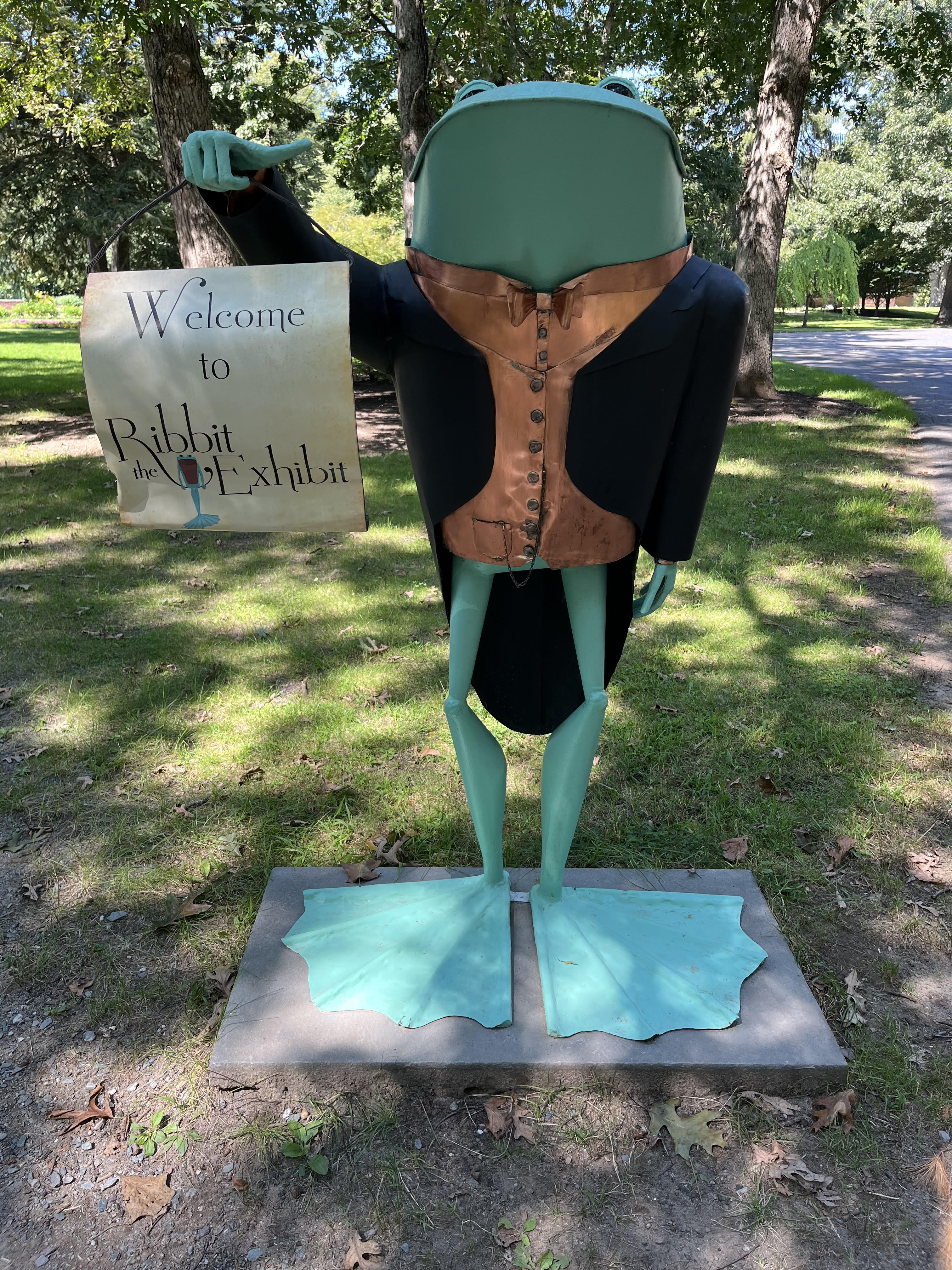
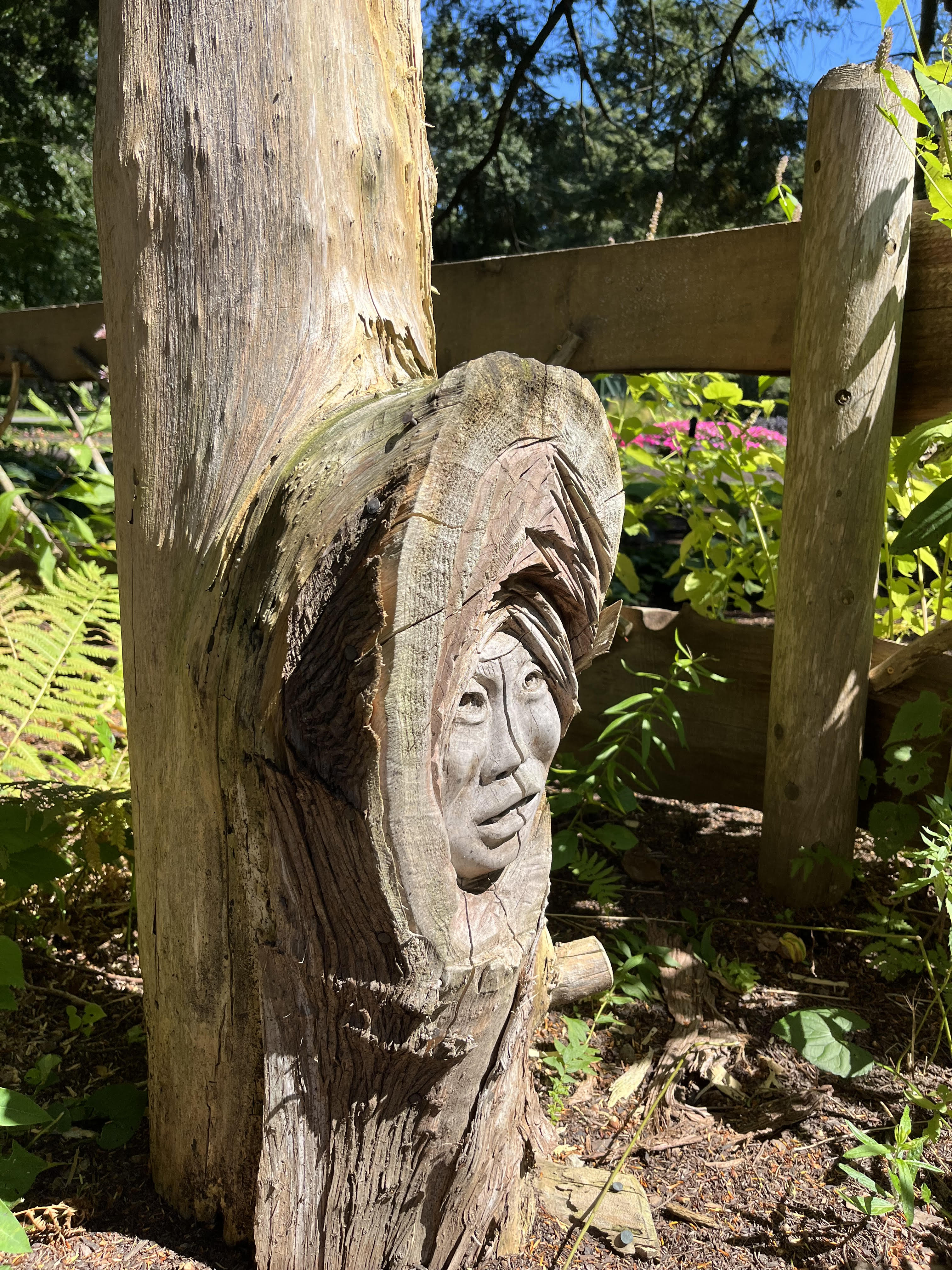
Frog characters welcomed both children and adults to Mass Horticultural Society’s Elm Bank gardens. Nancy and I liked the pollinator garden with its tinkling waterfalls and shady benches a lot more than the formal gardens. I also admired an interesting totem-like carving there.
My other photos are just odds and ends that caught my eye. Let me know if you would like more explanation of any.
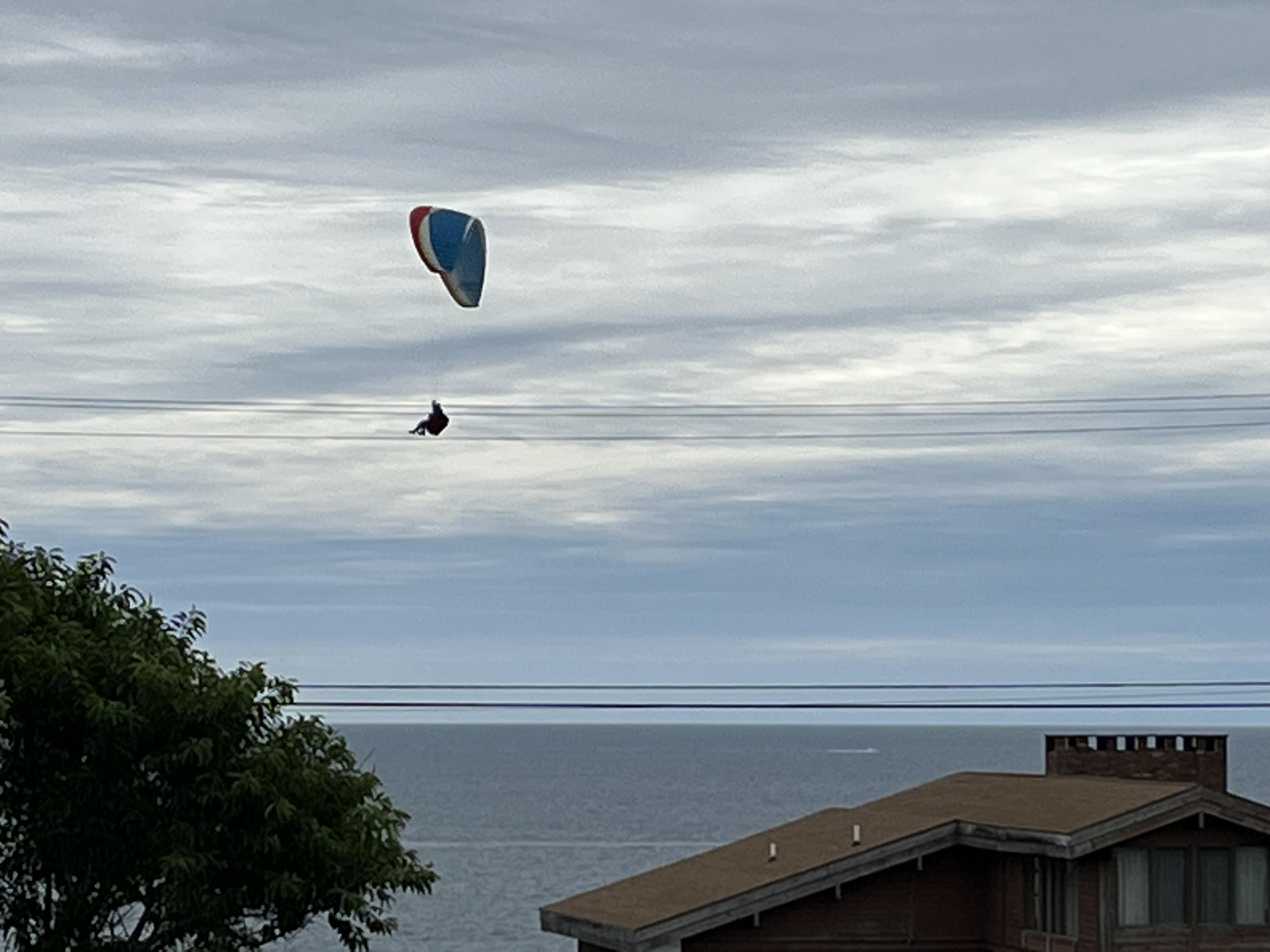
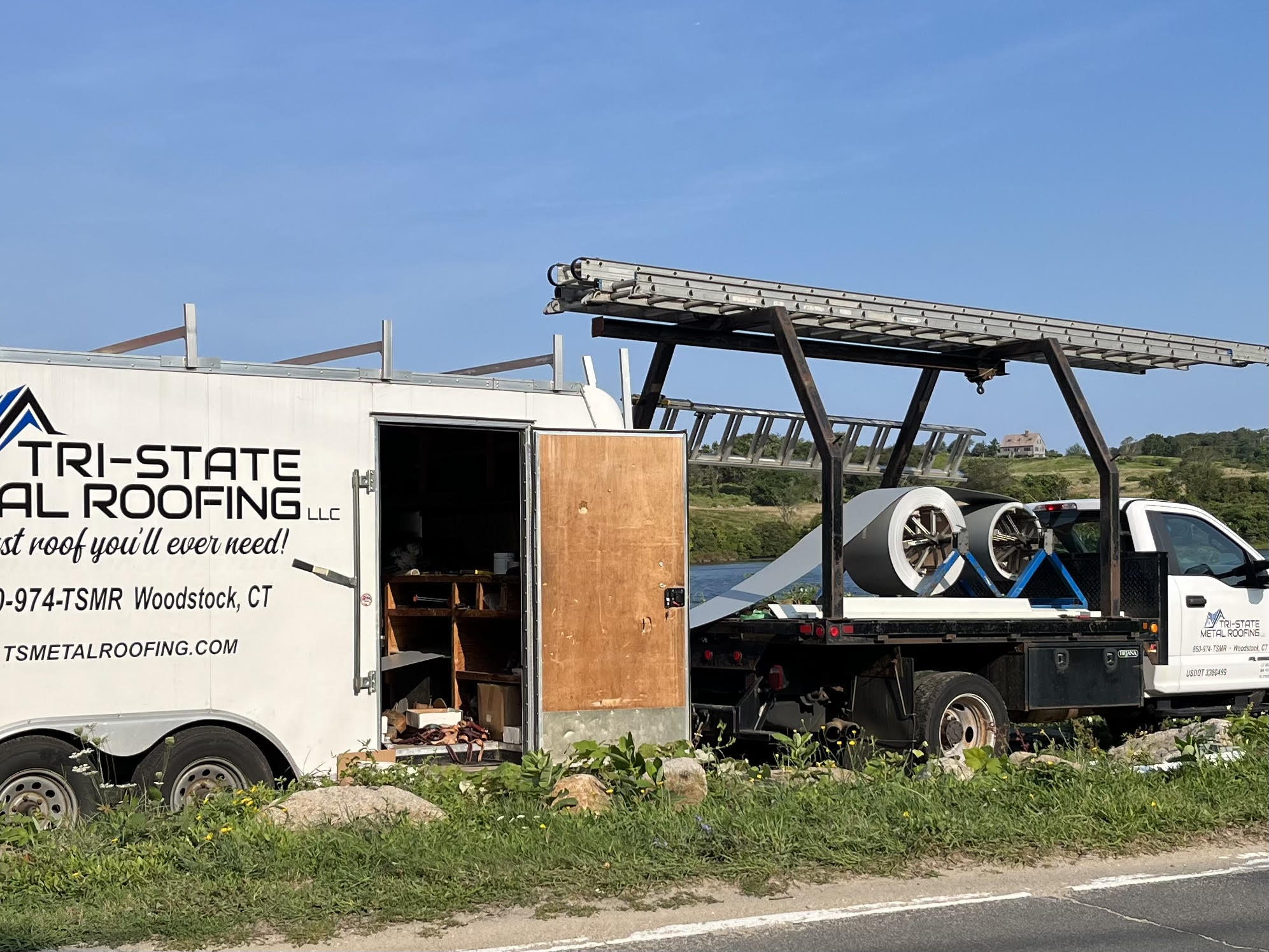
I do need to explain that the person floating along the bluffs was likely in a motorized parachute. Frightening! And the truck is included because I was fascinated that metal roofing comes off a giant roll that looks to me like nothing so much as chewing gum.
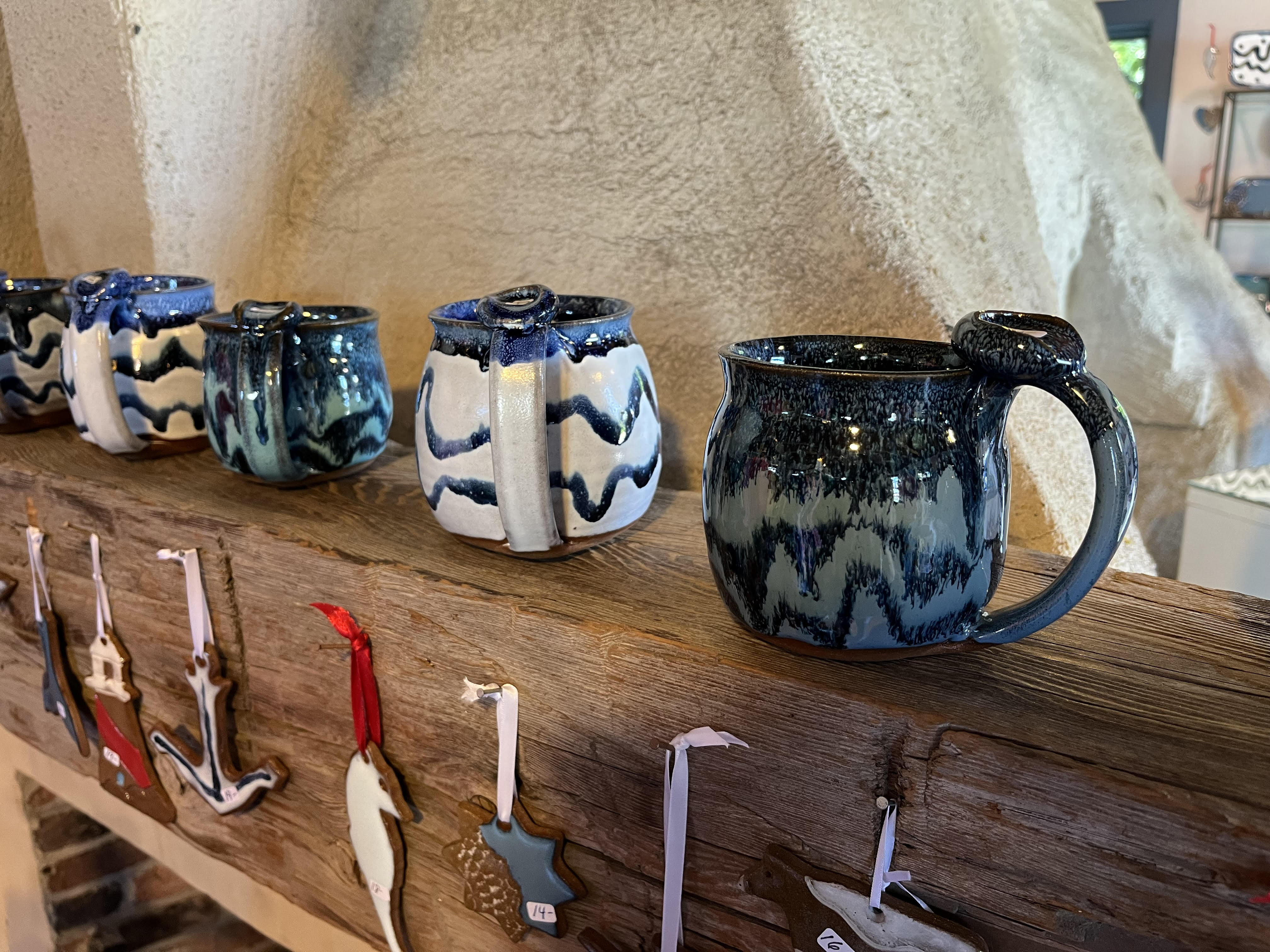
I’ll wrap up with a word on Joan Mallick’s popular “blue pottery. ” As Joan is unwell and no longer able to work, I think her distinctive mugs, plates, planters, and Christmas ornaments are likely to become collectors’ items.
The last shot shows my husband’s clematis trying to get into the house.
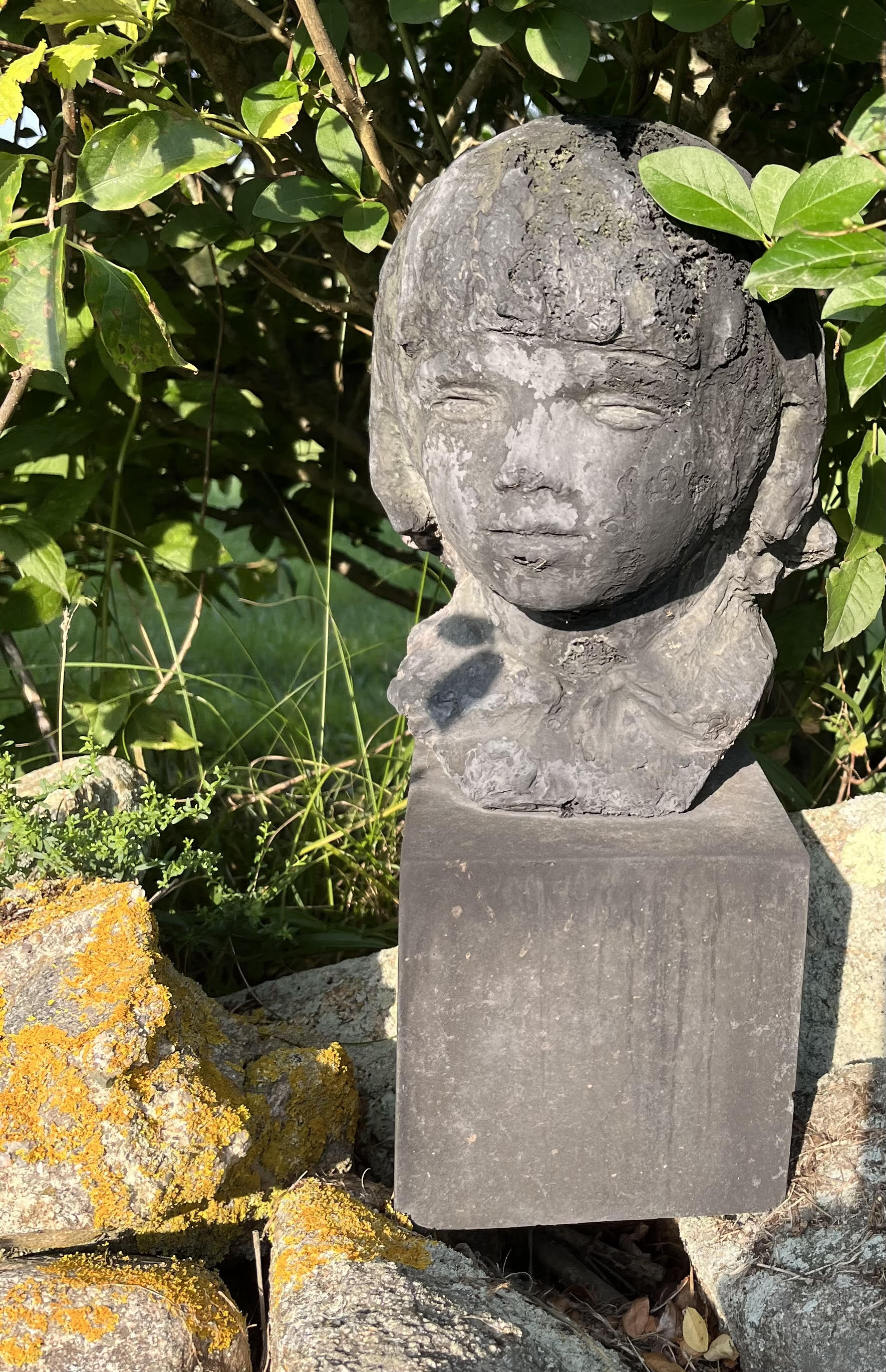
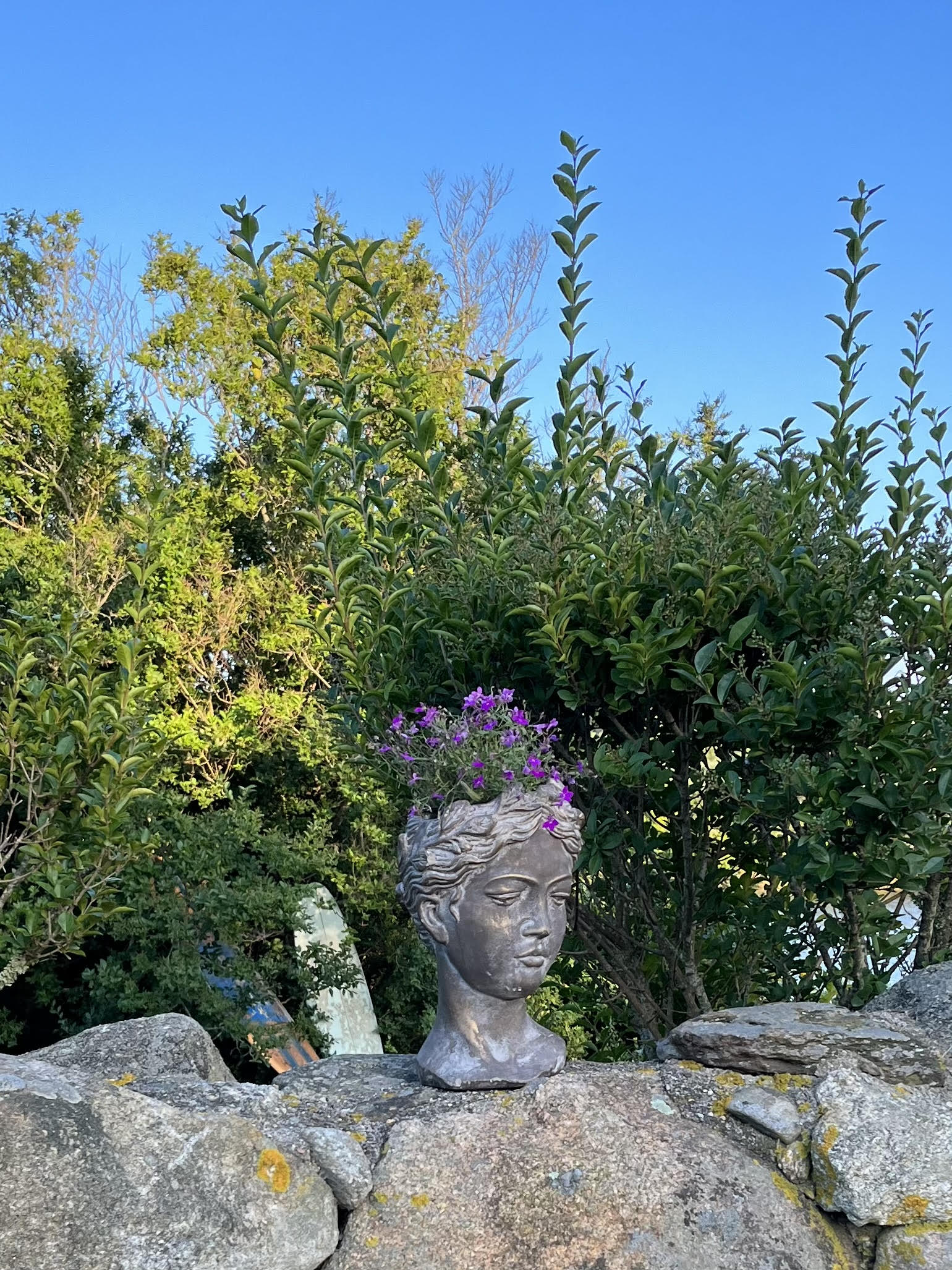
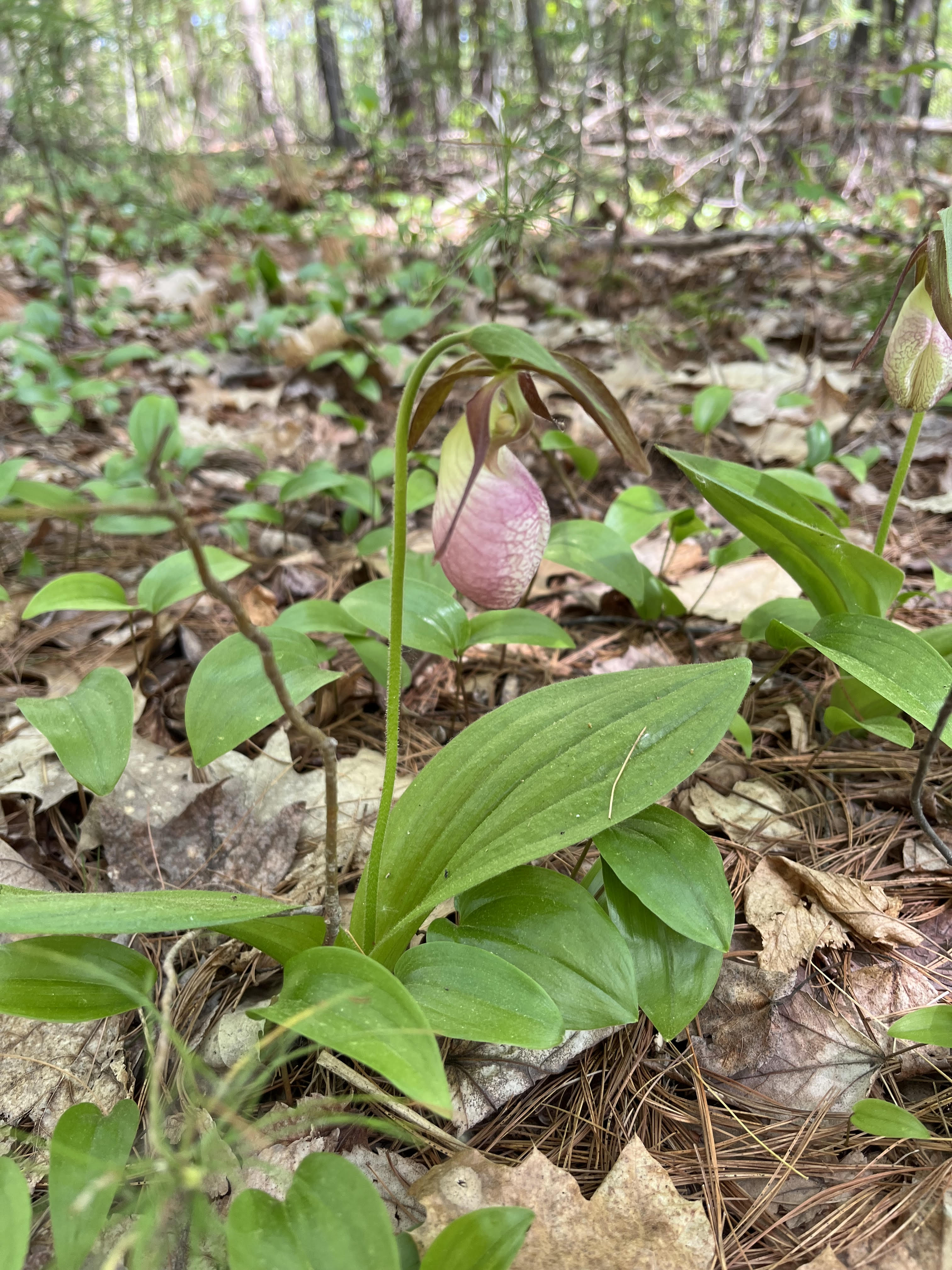
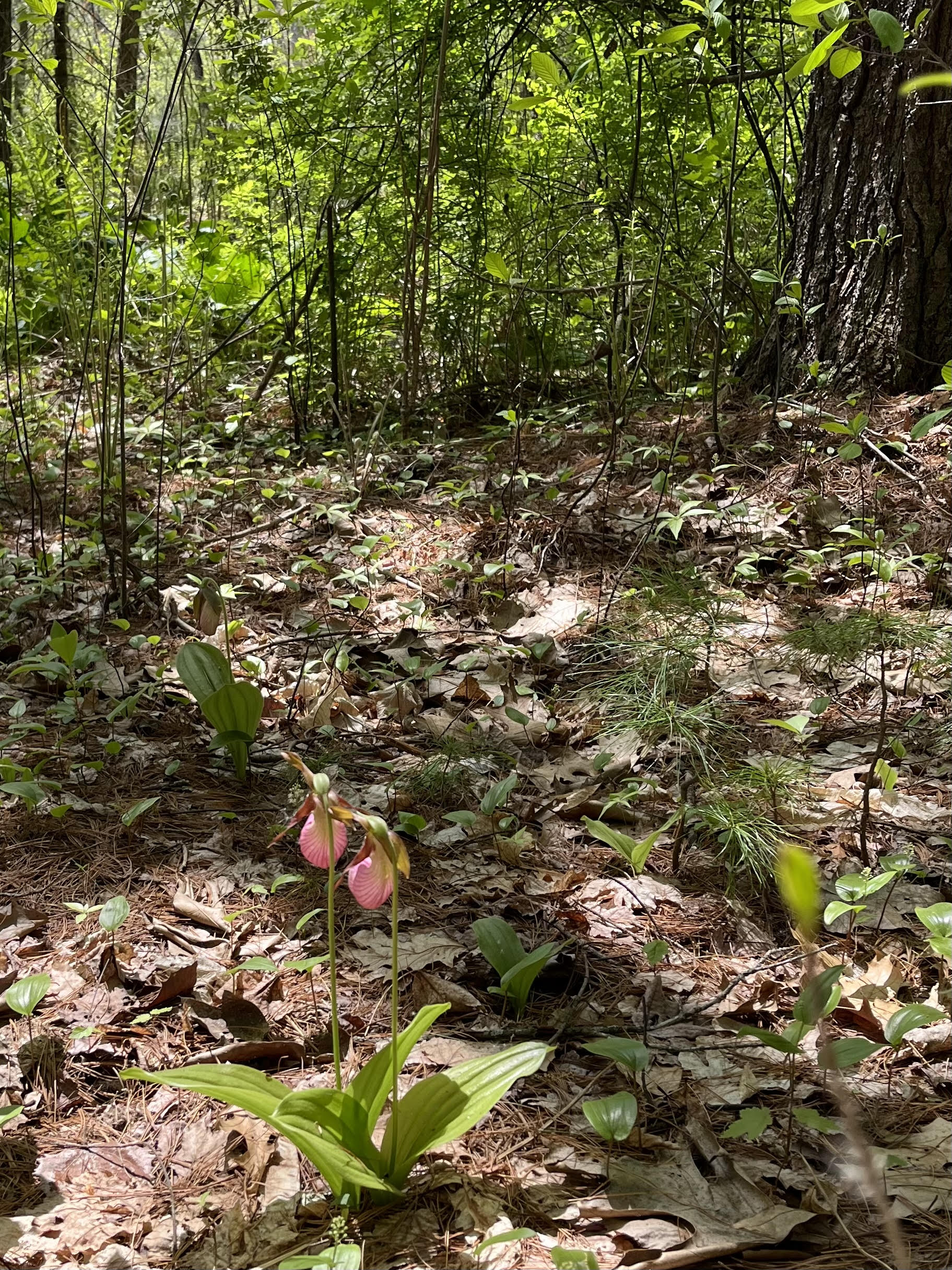
Most of the photos and videos from my walks this spring are self-explanatory. The lady slippers are gone now, but it was exciting to revisit the spot where so many of them grow together.
Yellowwood leaves and blossoms move in the breeze like a magical curtain.
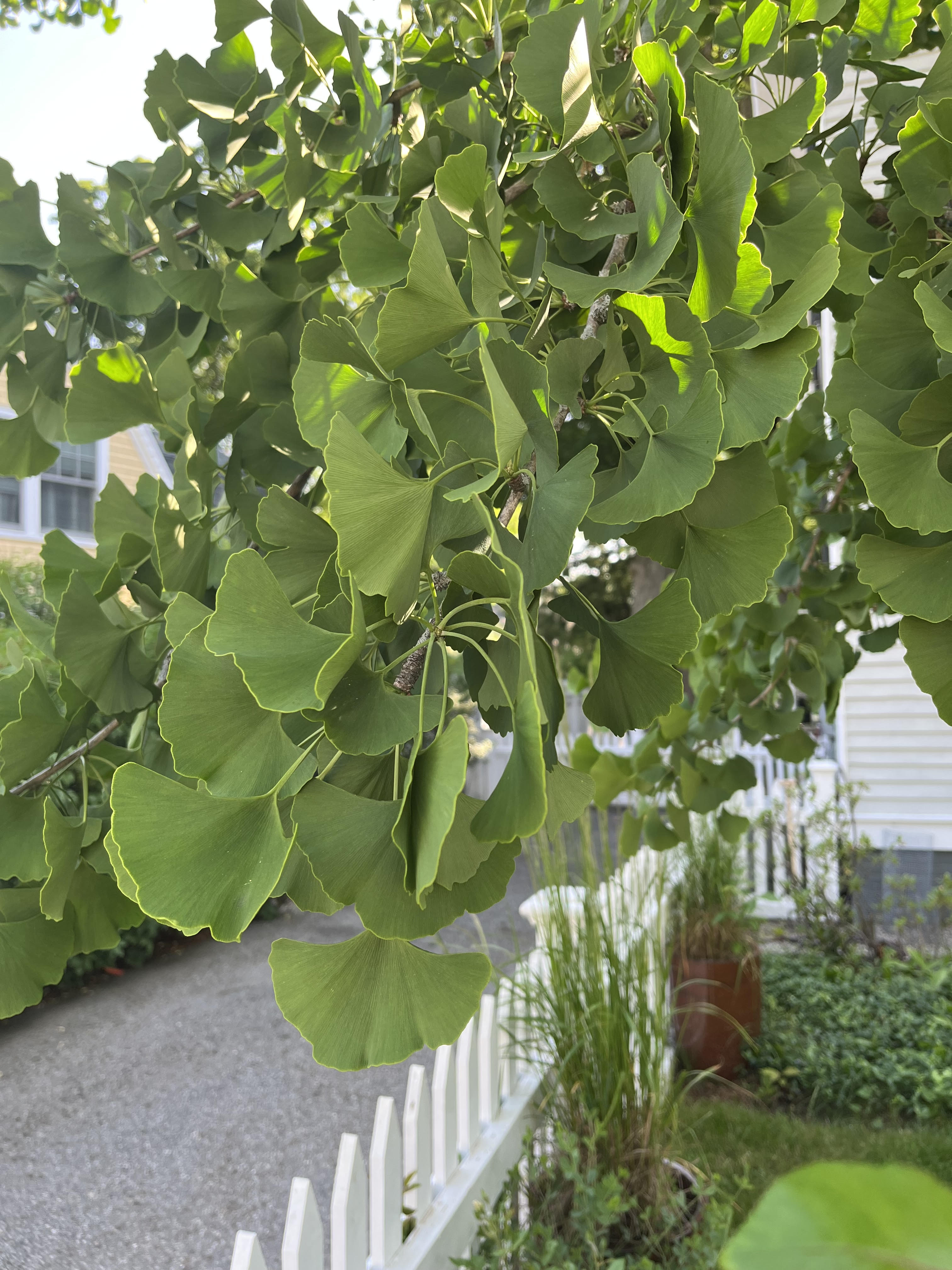
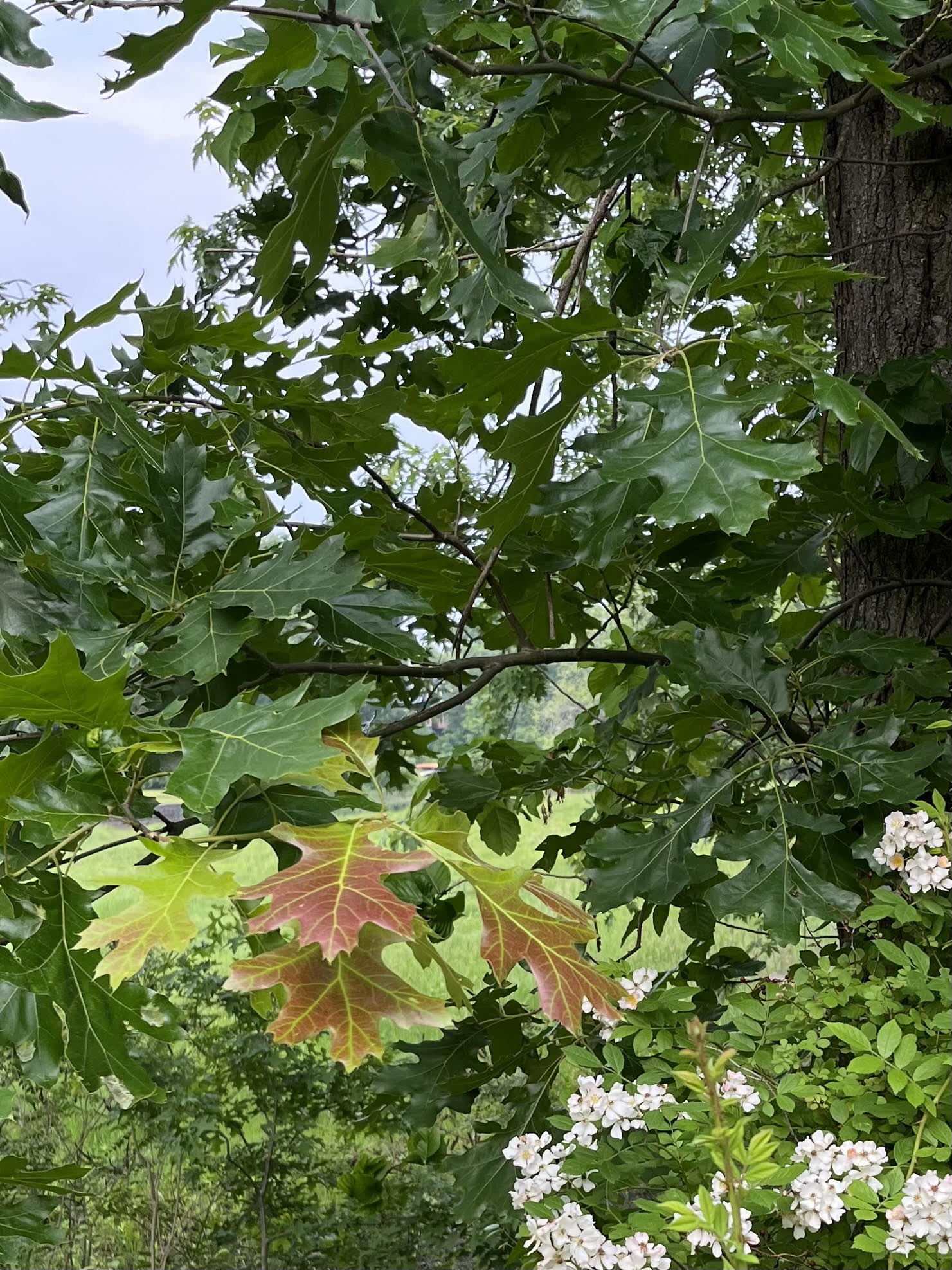
I was really into leaves — ginkgo leaves, oak leaves, tulip tree leaves.
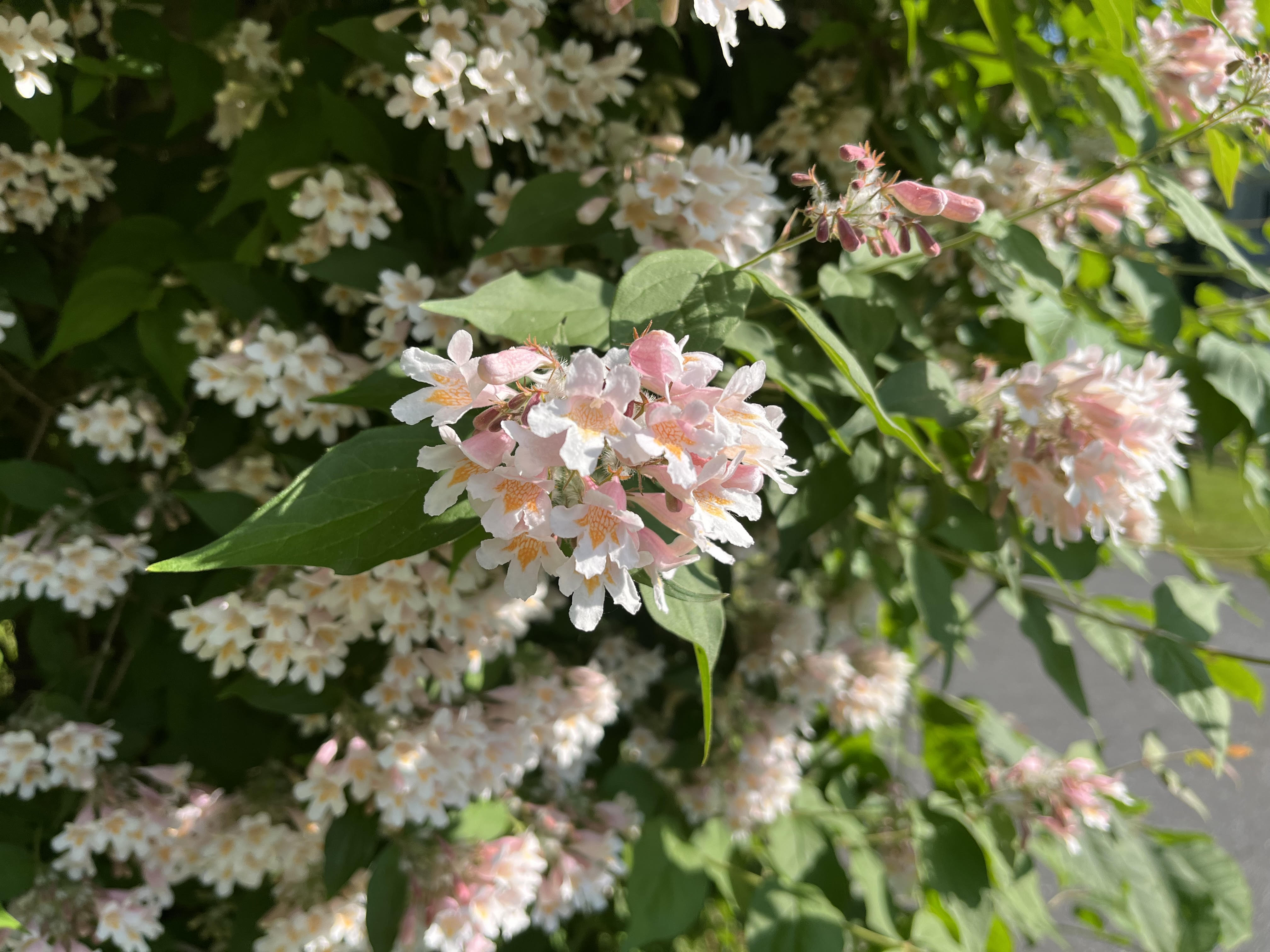
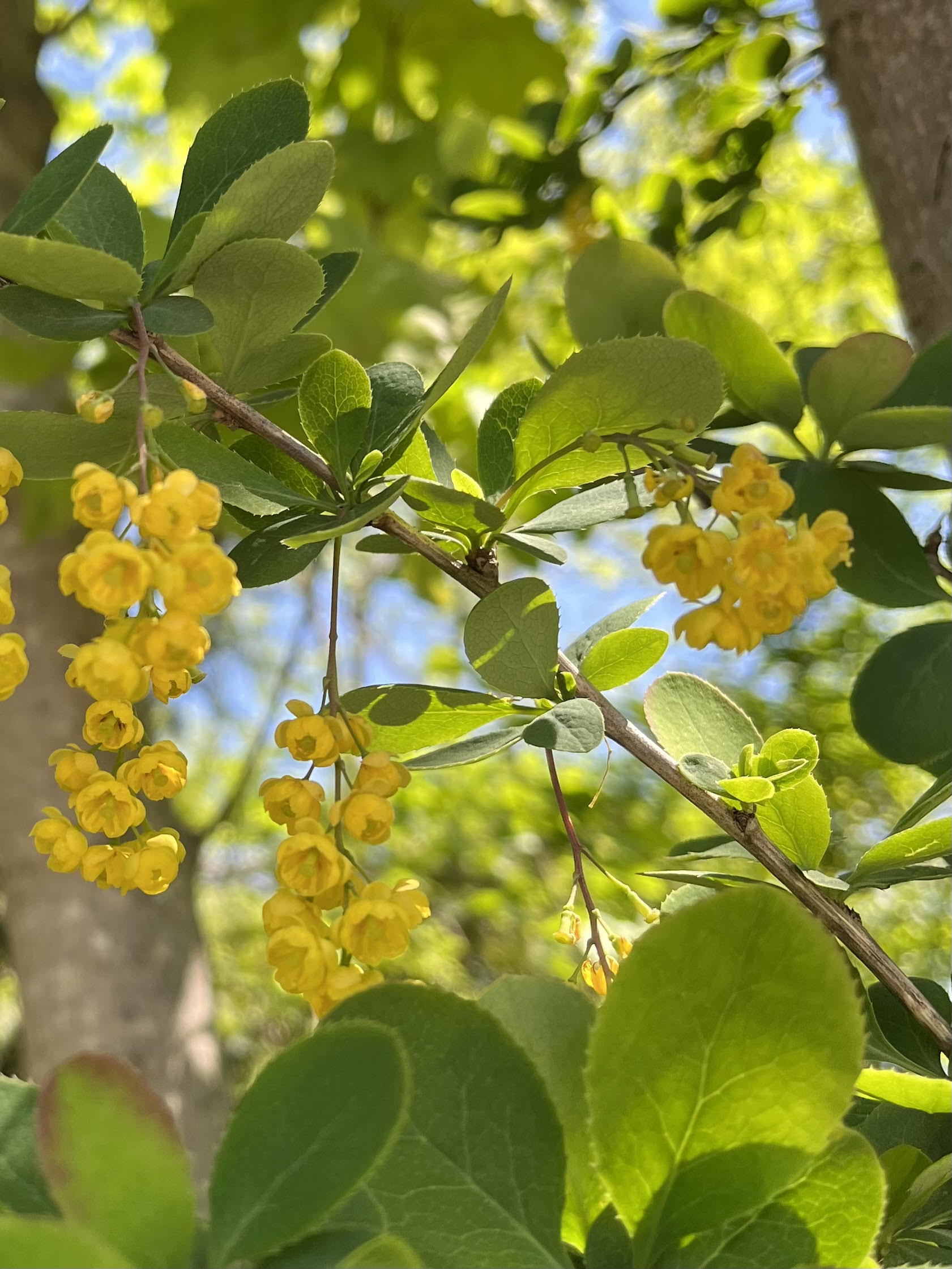
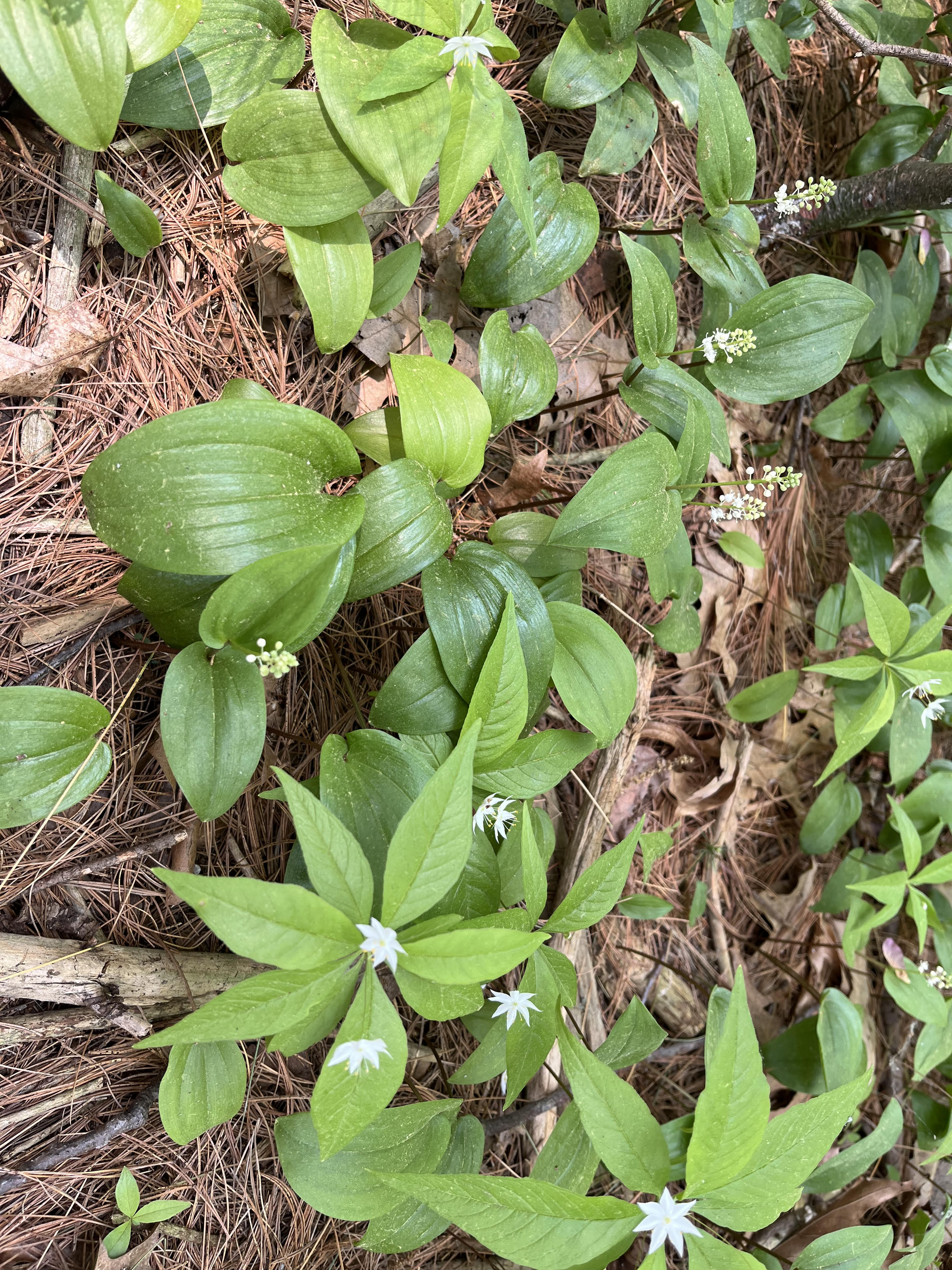
Below, Beauty bush, barberry blossoms — and in the woods, Canadian mayflower and starflower.
When do people get interested in researching family history? Some people never. Others — like my cousin who has made his genealogy hobby an obsession — very young. In today’s article, a 71-year-old from Massachusetts got the bug when he started going through the photos his grandfather took in France.
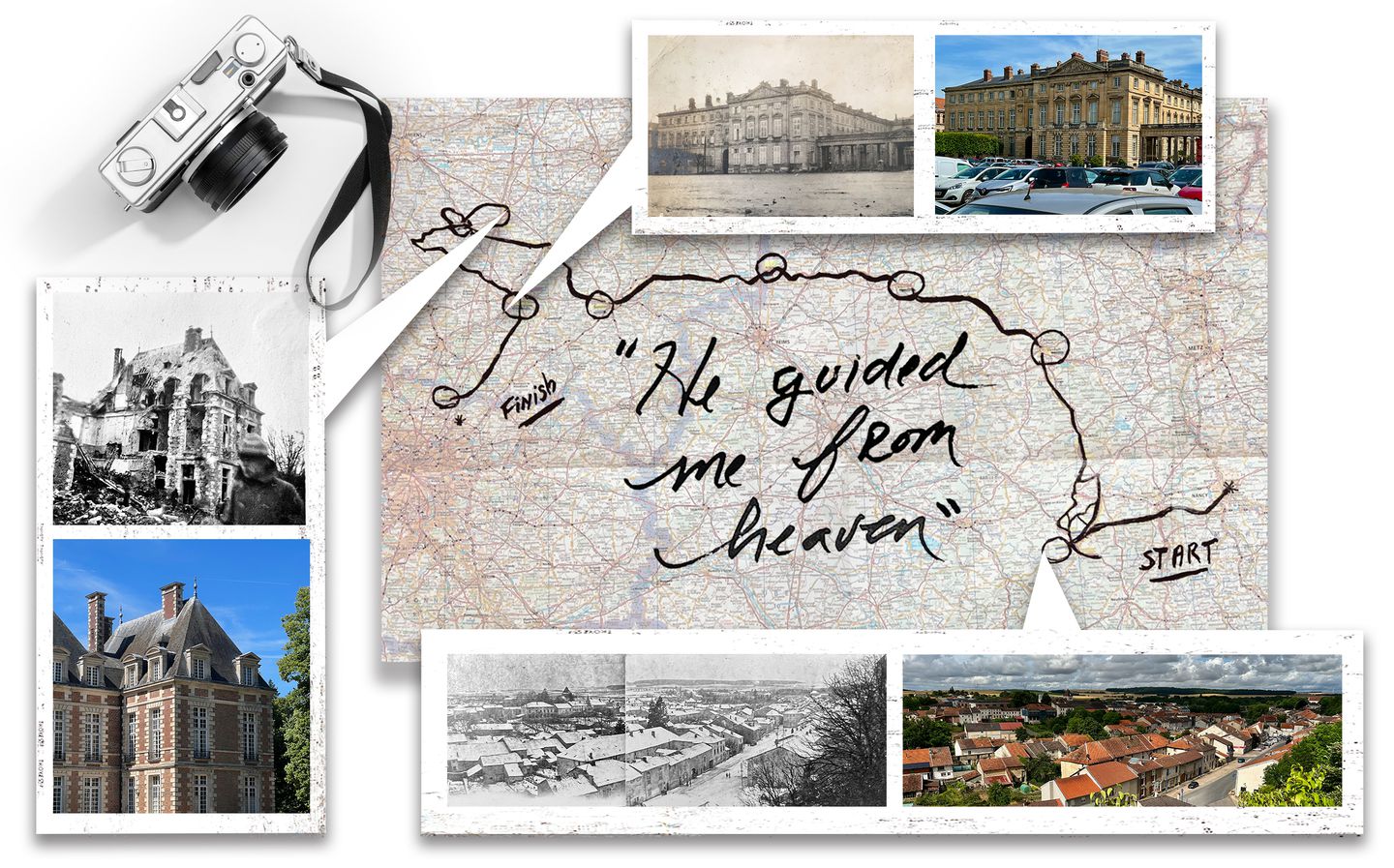
Travel writer Christopher Muther reports for the Boston Globe about Brett Hawkes and the stacks of old photos he used to re-create his grandfather’s journeys in WWI.
“For the better part of a century, the boxes and their mostly-forgotten contents collected dust while occupying real estate in attics throughout Massachusetts.
“But for Brett Hawkes … they inspired a once-in-a-lifetime journey that spanned 600 miles across the French countryside.
“Hawkes received the boxes of old photos and letters when his mother passed away in 2013. He said he glanced at them occasionally, but otherwise, they remained stored away, collecting another decade of dust. He came upon them again in the winter of 2022 while cleaning his office, but this time, the more he studied them, the more he was drawn to what he saw.
The pictures, taken in 1917 on the frontlines of the war in France, showed soldiers fighting in trenches, bombed buildings, and previously idyllic fields transformed into hastily-dug cemeteries.
“But his grandfather also took pictures of everyday life in the small towns where he was stationed. There are pictures of friends he made, soldiers playing football in a snowy field, and peaceful streets.
“ ‘I stared at these old photos and thought, “Oh my God, look at these churches bombed to the ground.” I started wondering what they look like now,’ Hawkes said. ‘I happened to find a photo he took of a famous chateau, and I Googled it and saw it was all renovated.’
“That’s when the idea for his trip took root. He devised a plan to find the locations of as many of the photos as possible — thankfully, his grandfather had labeled the towns where pictures were taken — and re-create his grandfather’s 1917 route in France. …
“Alton Hawkes entered the war just months after America’s entry and was sent for further training in Abainville before being stationed in the villages of Warmaise, Chepoix, and Broyes, about 70 miles north of Paris.
“Brett said his grandfather, who studied engineering, was also an avid amateur photographer and collector, which made reconstructing the route easier. He also had letters that his grandfather had written home to his family, outlining some of his more benign activities.
“ ‘What boggled my mind was that he took these photographs of the destruction and fighting that would be classified today,’ he said. ‘The more I learned, the more I became emotionally involved. It’s part of the reason why Ancestry.com and 23andMe are so popular. People want to feel an emotional connection with the past.’
“Hawkes has two skills that made the trip possible. The first was years of cycling experience. When he was 16, his neck was broken in a severe car accident. As a result, the right side of his body was paralyzed. Over time he regained the use of his body, but the former athlete continued walking with a limp. While he could no longer run or play sports, he could cycle, which remains his passion.
“His other skill is the ability to speak French and a general love of French culture. He brushed up on his French before the trip, but he spoke no English for three weeks on the road.
“ ‘Being able to speak French helped form bonds and broke down barriers with the people I met,’ he said. …
“Those meetings with residents are what made his trip a success. He would roll into small farming towns and seek out cafes where he would strike up conversations with locals. If the town was too small for a cafe, he knocked on the doors of houses that his grandfather had photographed, or he would seek out the mayor of a town he was visiting for assistance in finding buildings or bridges.
“ ‘I’m an older guy. I wasn’t threatening. I couldn’t punch myself out of a paper bag,’ he said. ‘I think that helped a lot.’
“When word spread through these tiny towns of the American retracing his grandfather’s WWI route, strangers would show up at bed and breakfasts where Hawkes was staying with information about locations in the photographs and stories about the war that had been handed down. …
“ ‘I started to really go through a transition. It became more than a vacation, it became a passion. It was an incredible experience. It’s hard to explain, but that’s really what happened. I went through a transformation.’
“He found the field where the French government awarded his grandfather the Croix de Guerre for his bravery in battle. In one photo, his grandfather stood on a pile of rubble that had once been a church. Hawkes found the location with a new church in its place. It was the same with historic buildings that had been repaired or rebuilt. Just like his grandfather, the younger Hawkes was there to document it all.
New Zealand Christmas Tree, also called ironwood, according to my PictureThis app. The video shows only one very spread-out tree, our “magic tree.”
We spent last week in the Azores, courtesy of Suzanne’s organizational skills, Erik’s driving skills, and the kids’ school vacation.
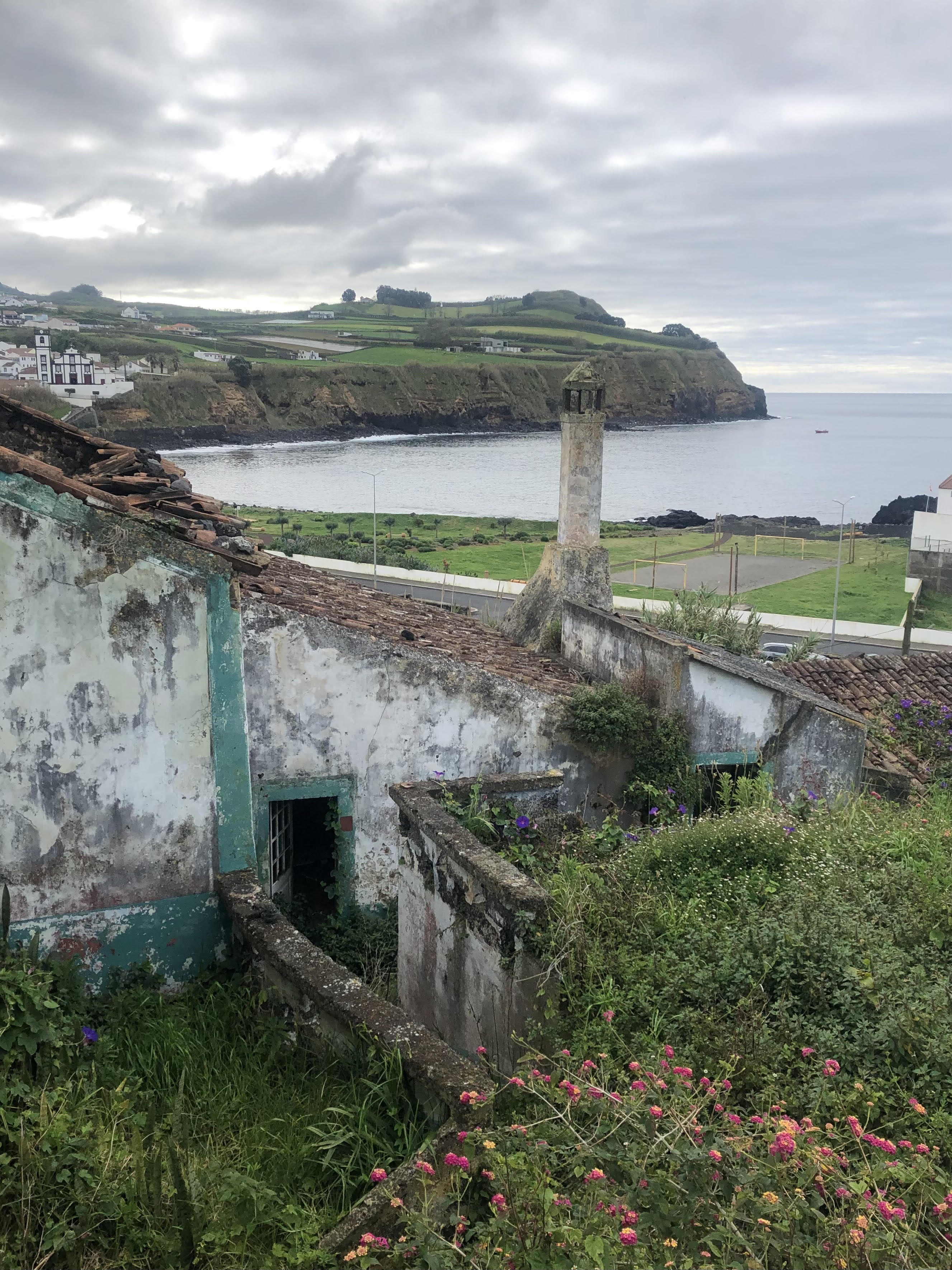
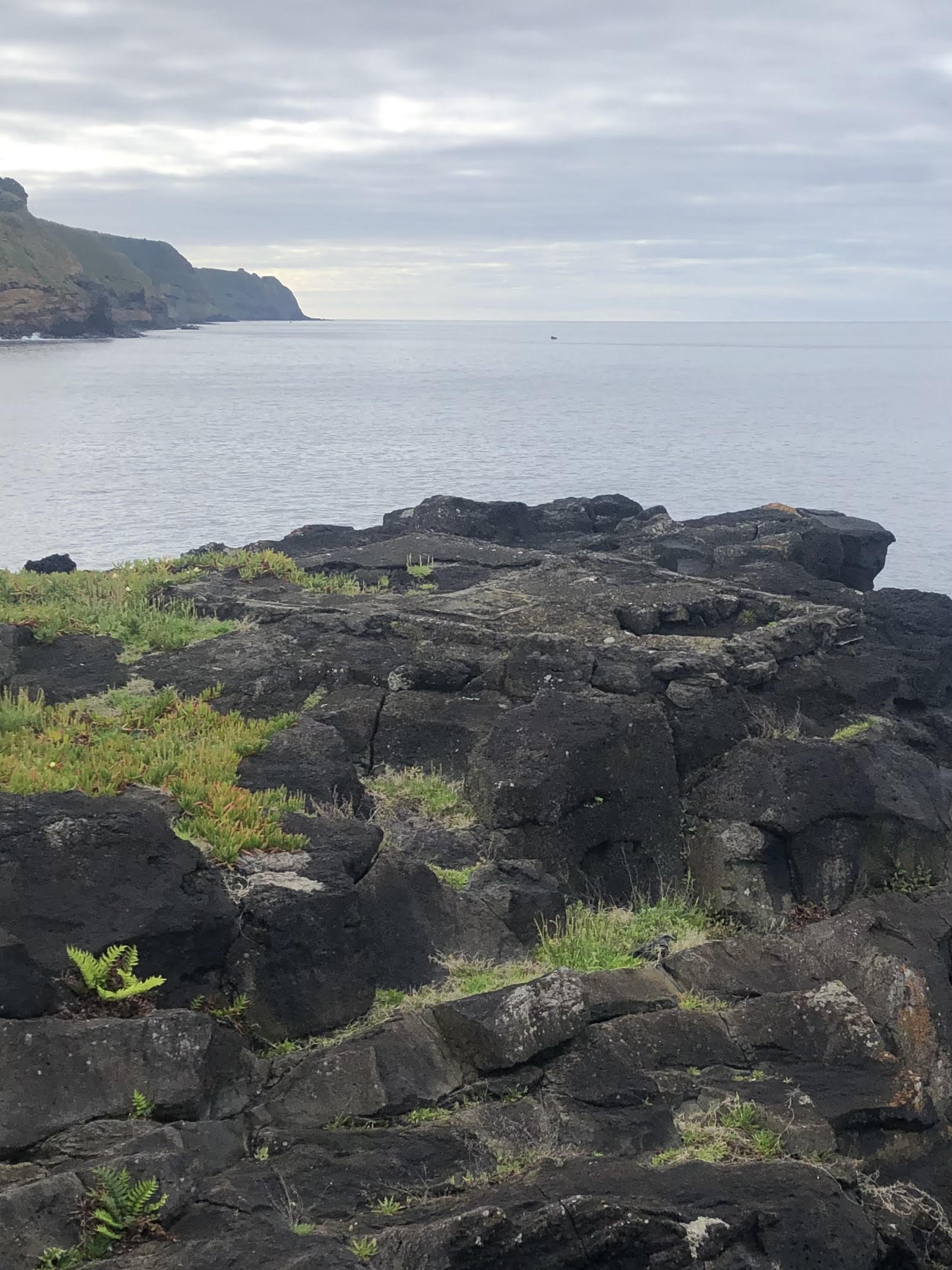
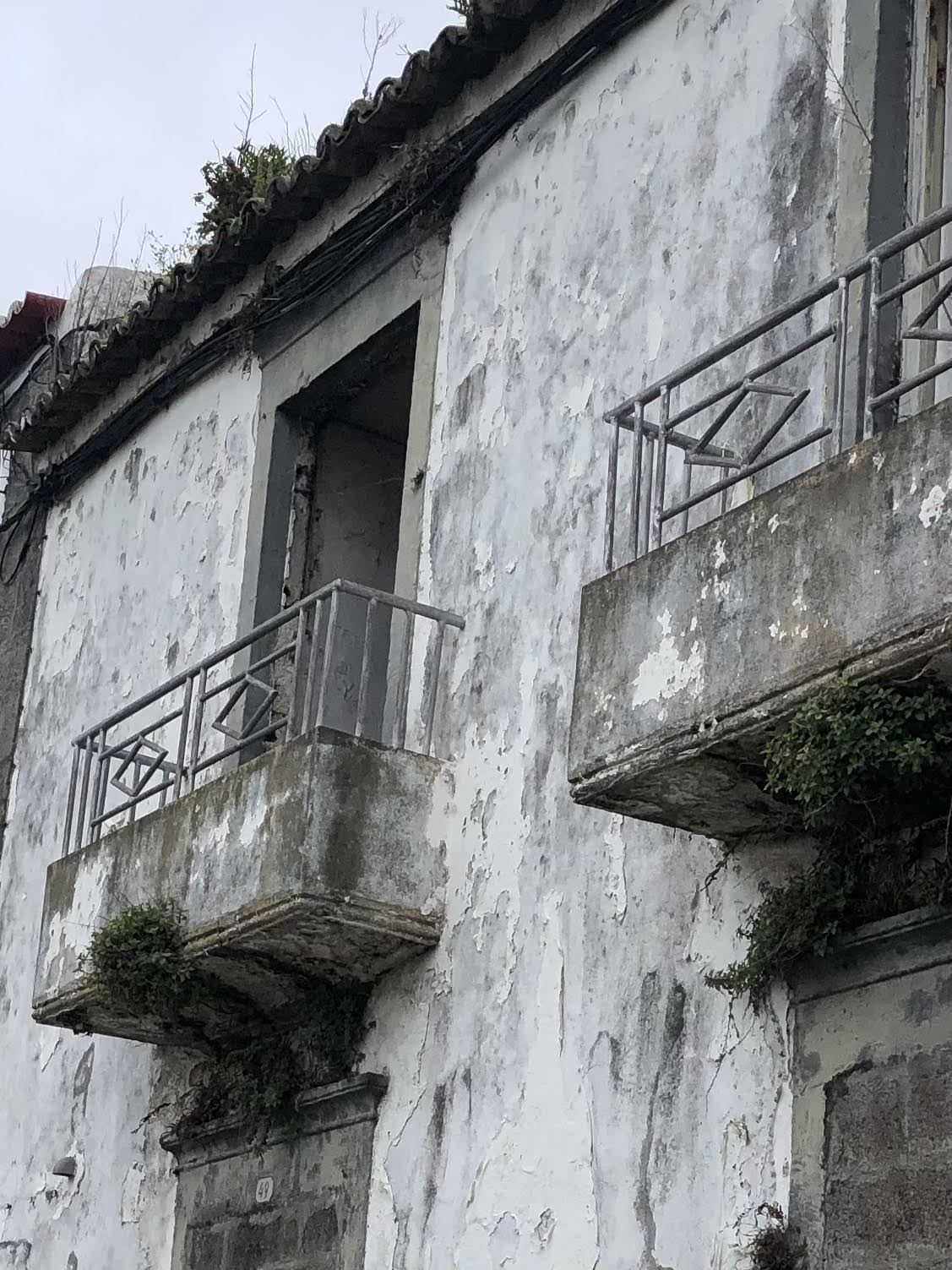
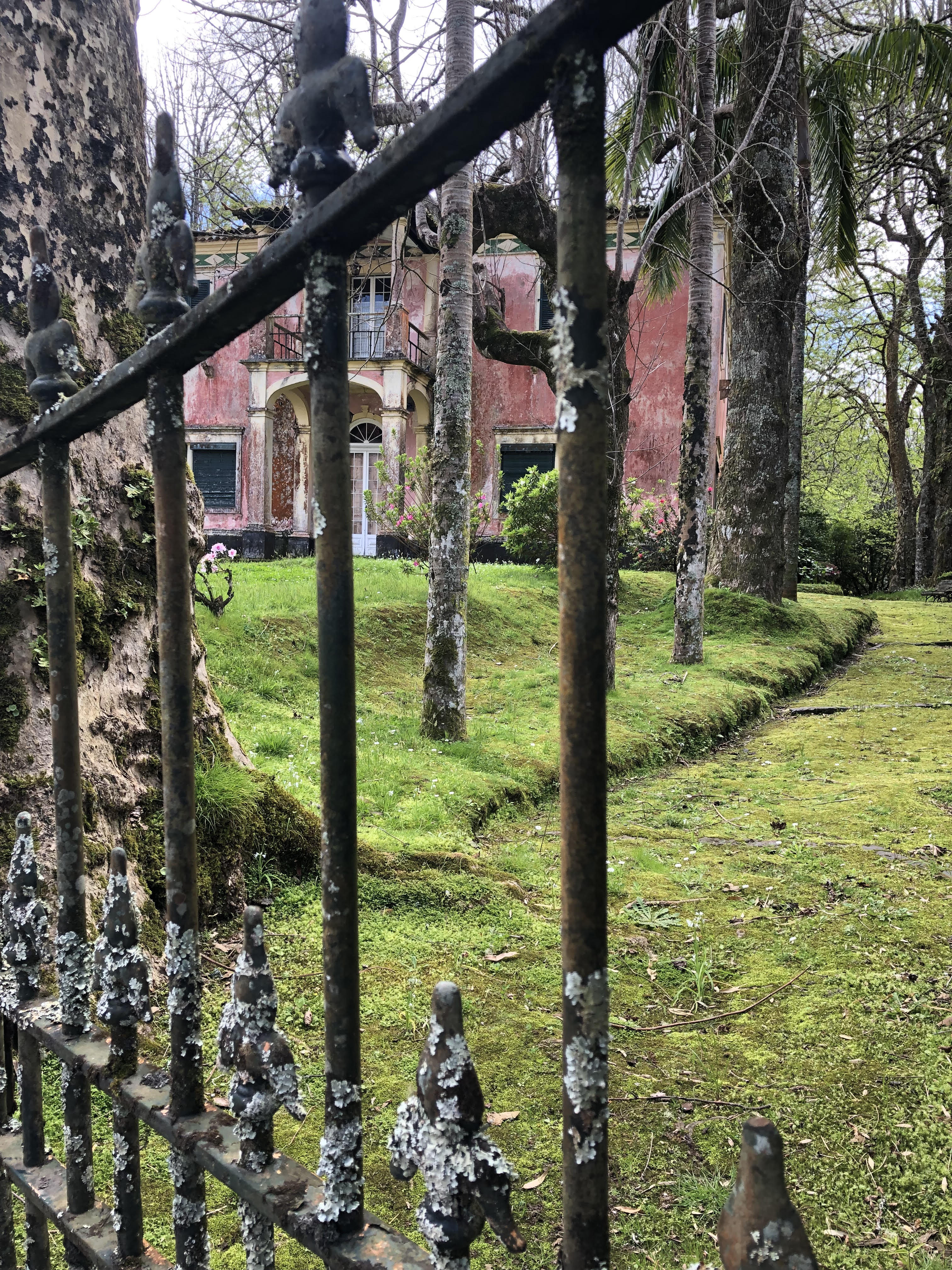
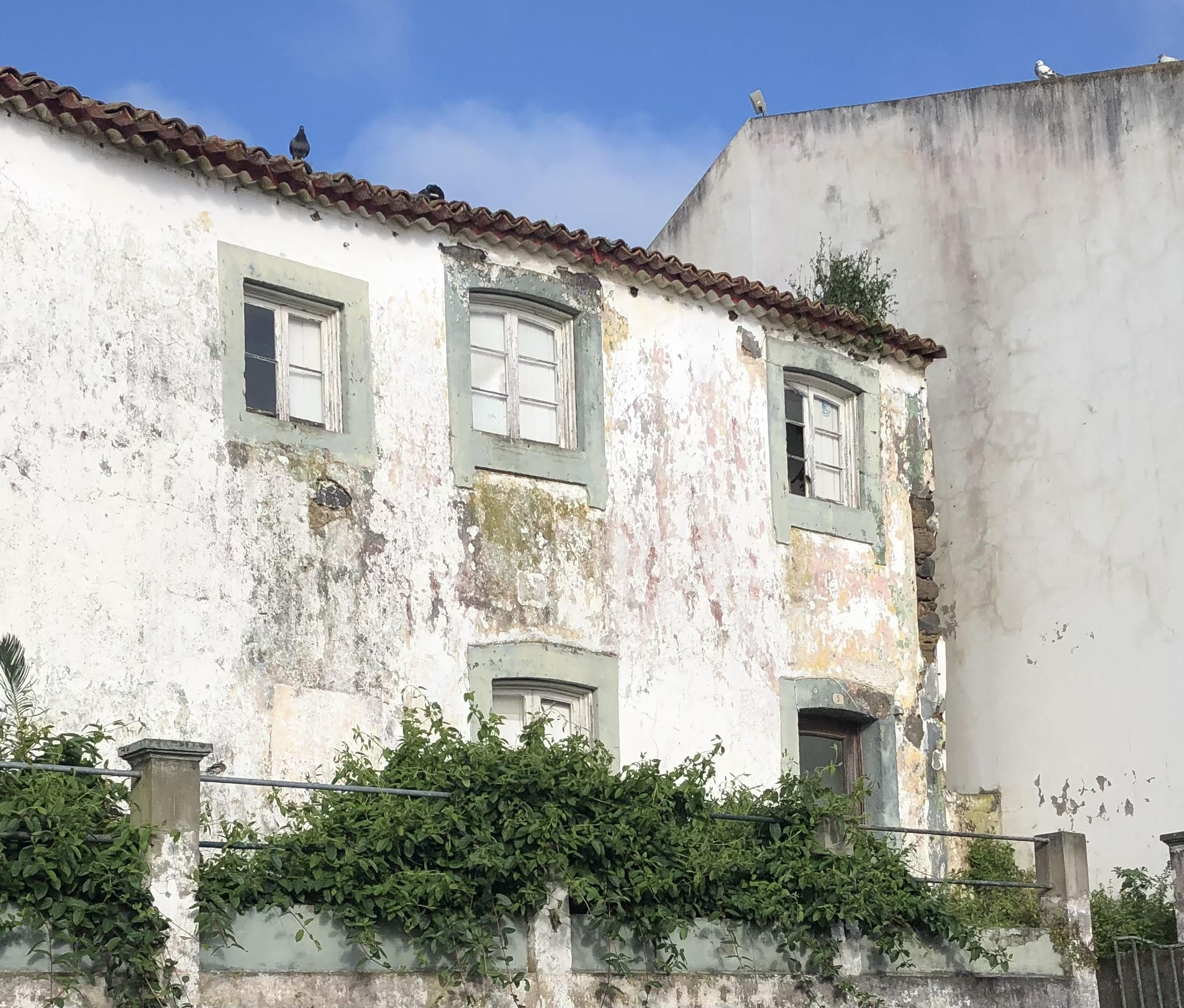
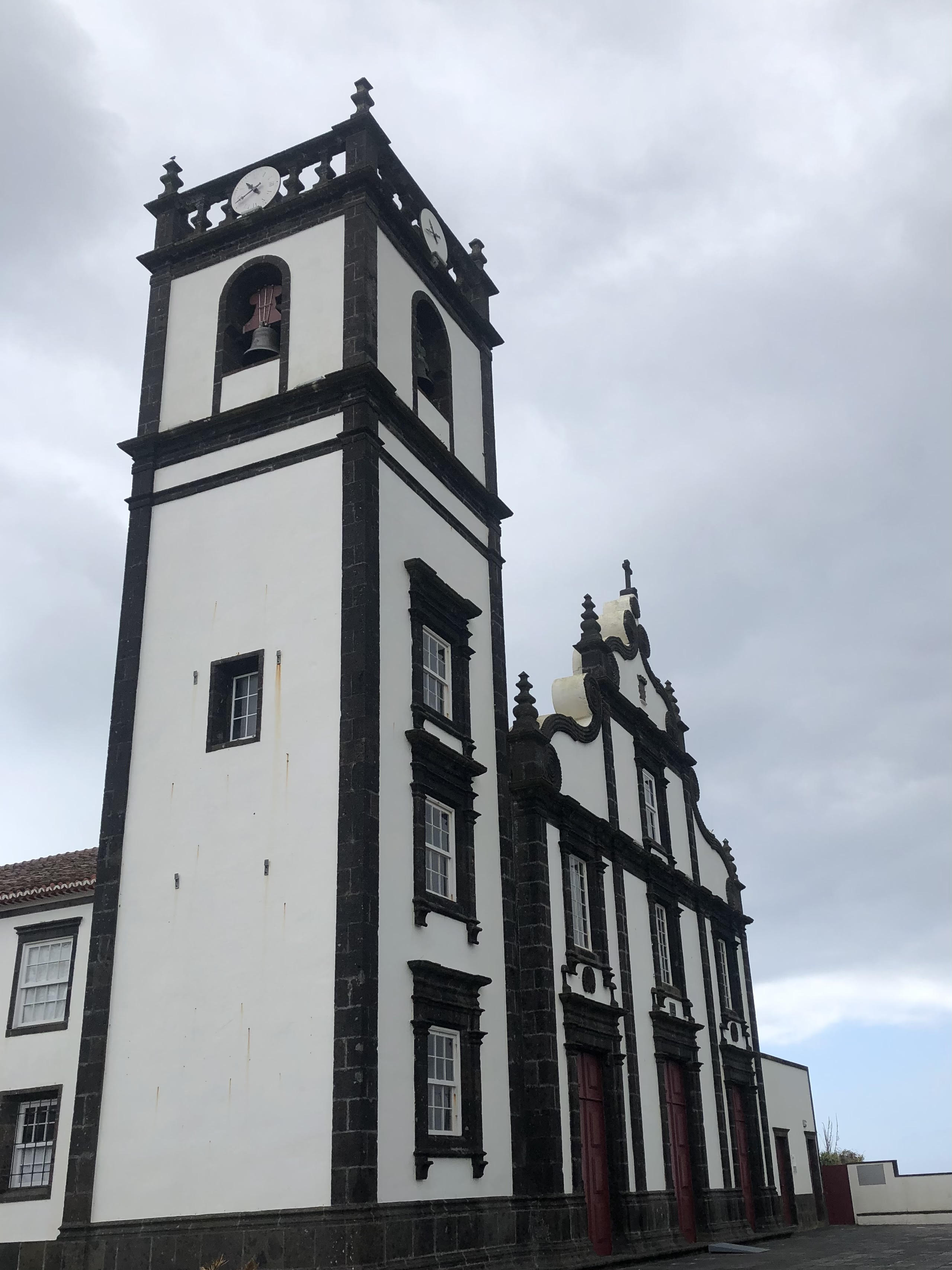
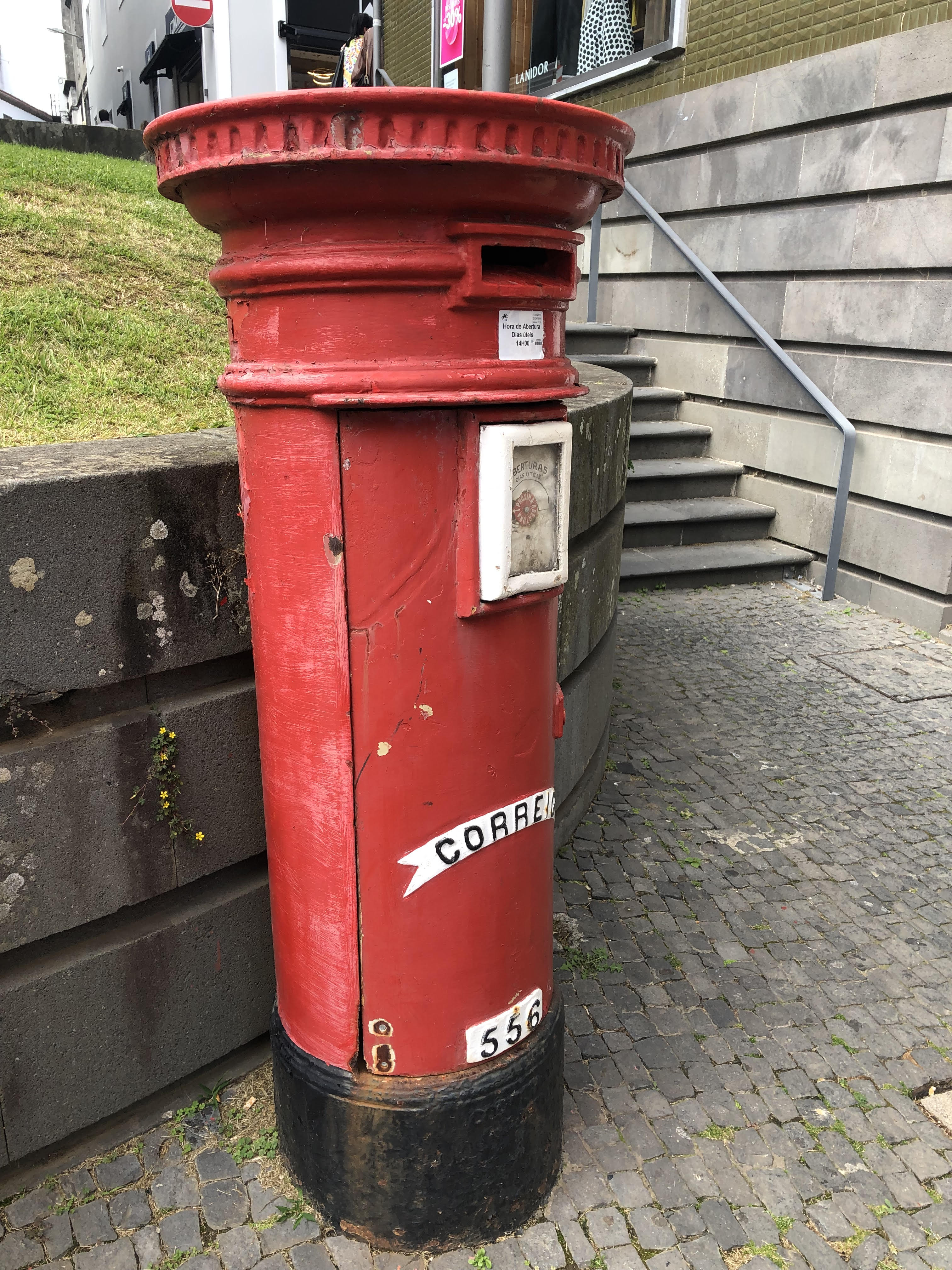
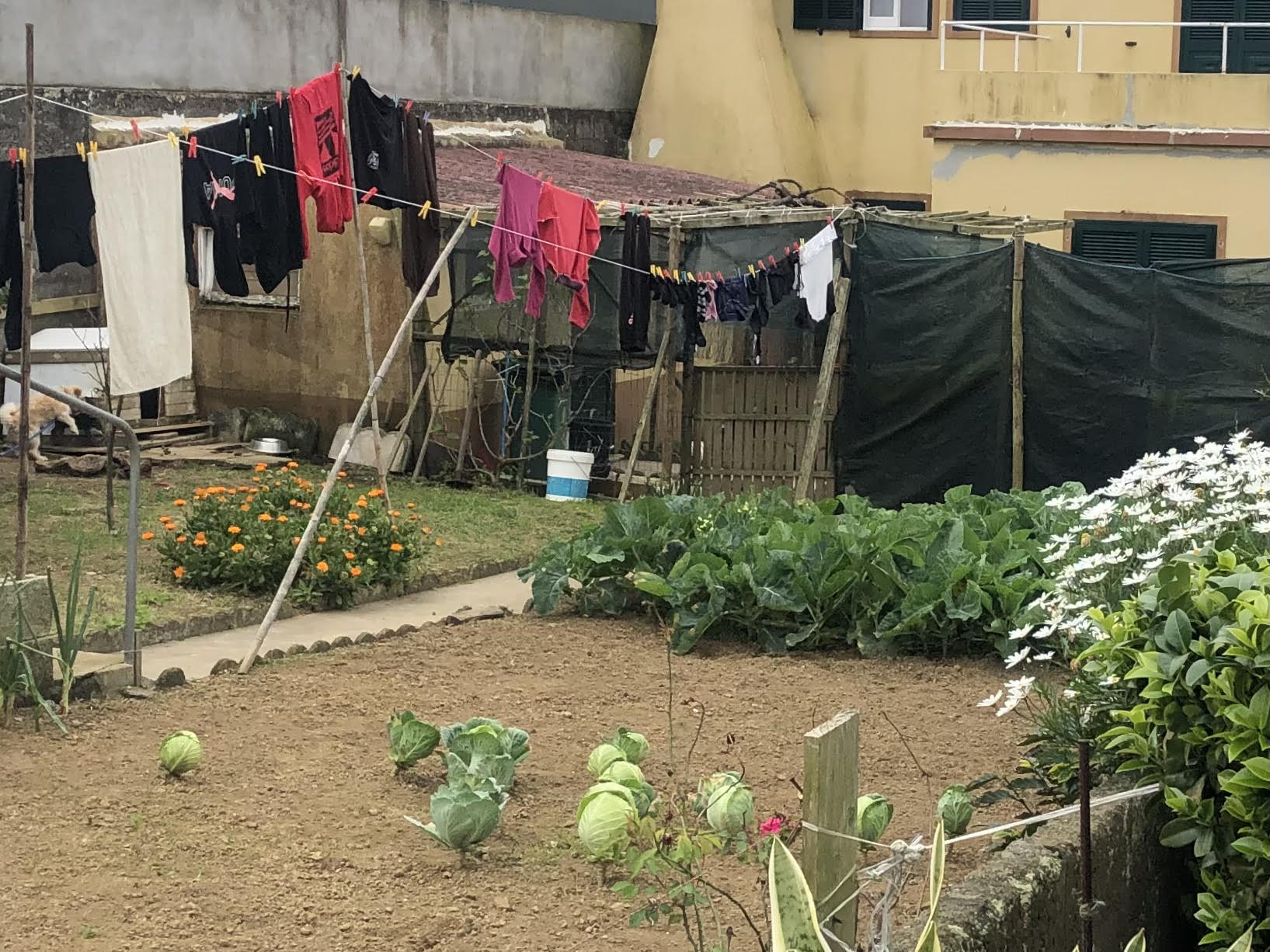
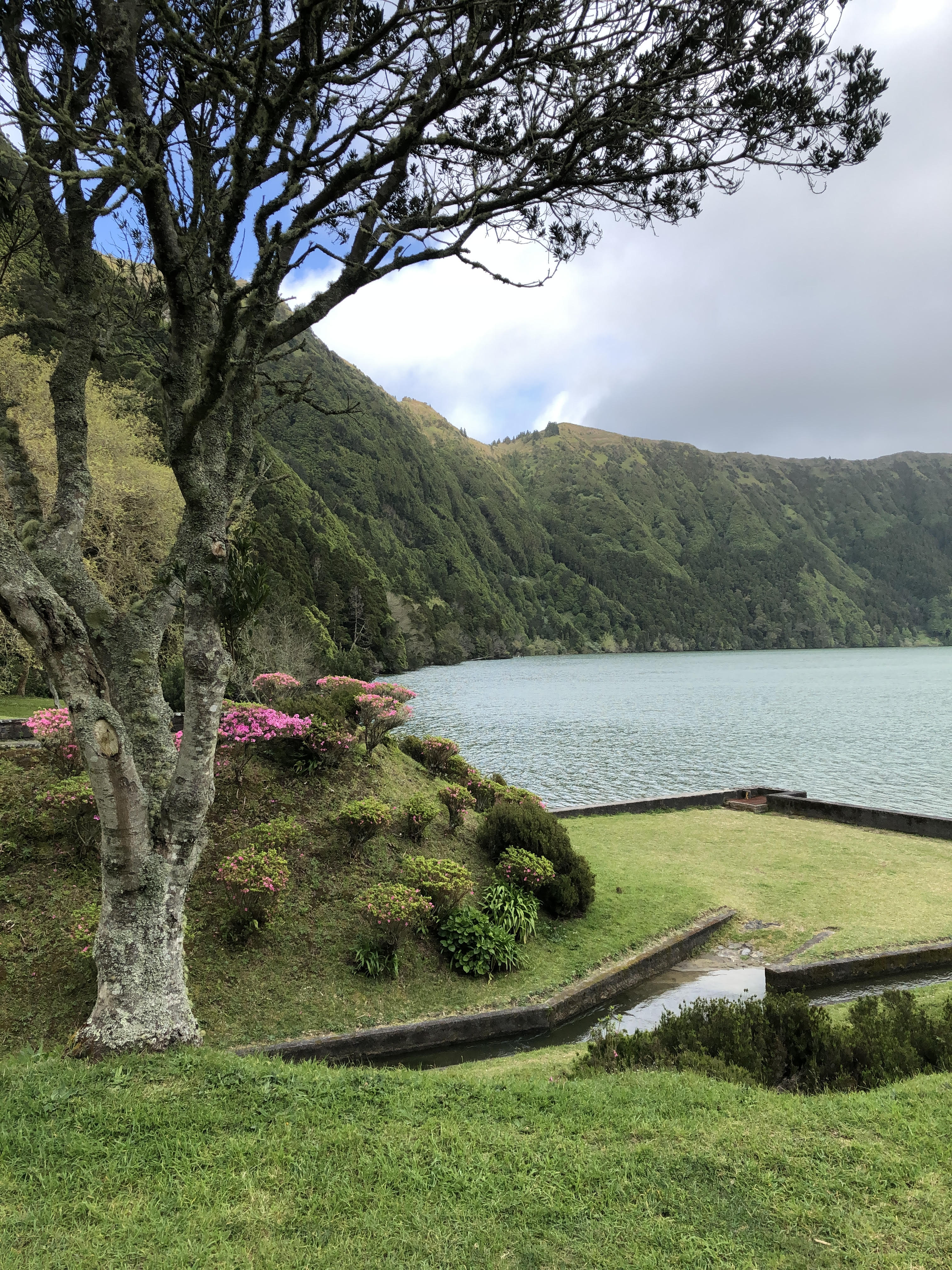
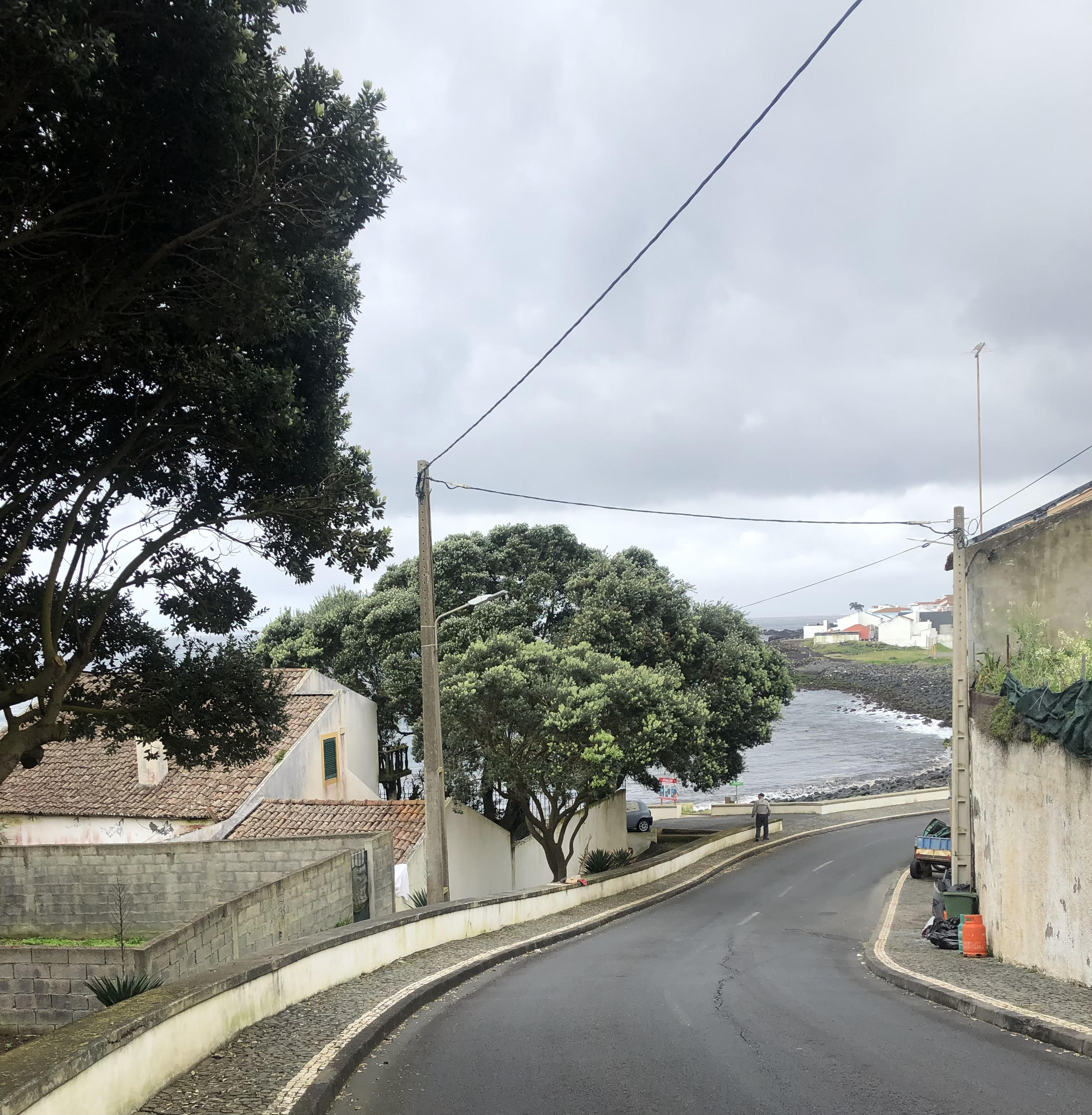
It was beautiful. The Azores are a group of nine volcanic islands in the North Atlantic. The temperature was 50s and 60s F. We were on Sao Miguel island only. I have a lot of pictures to show you, crossing my fingers that you like derelict buildings as much as I do. There were plenty of spiffy modern buildings — some probably vacation homes for people who can handle frequent air travel — but for me, the crumbling, mossy ones were more picturesque.
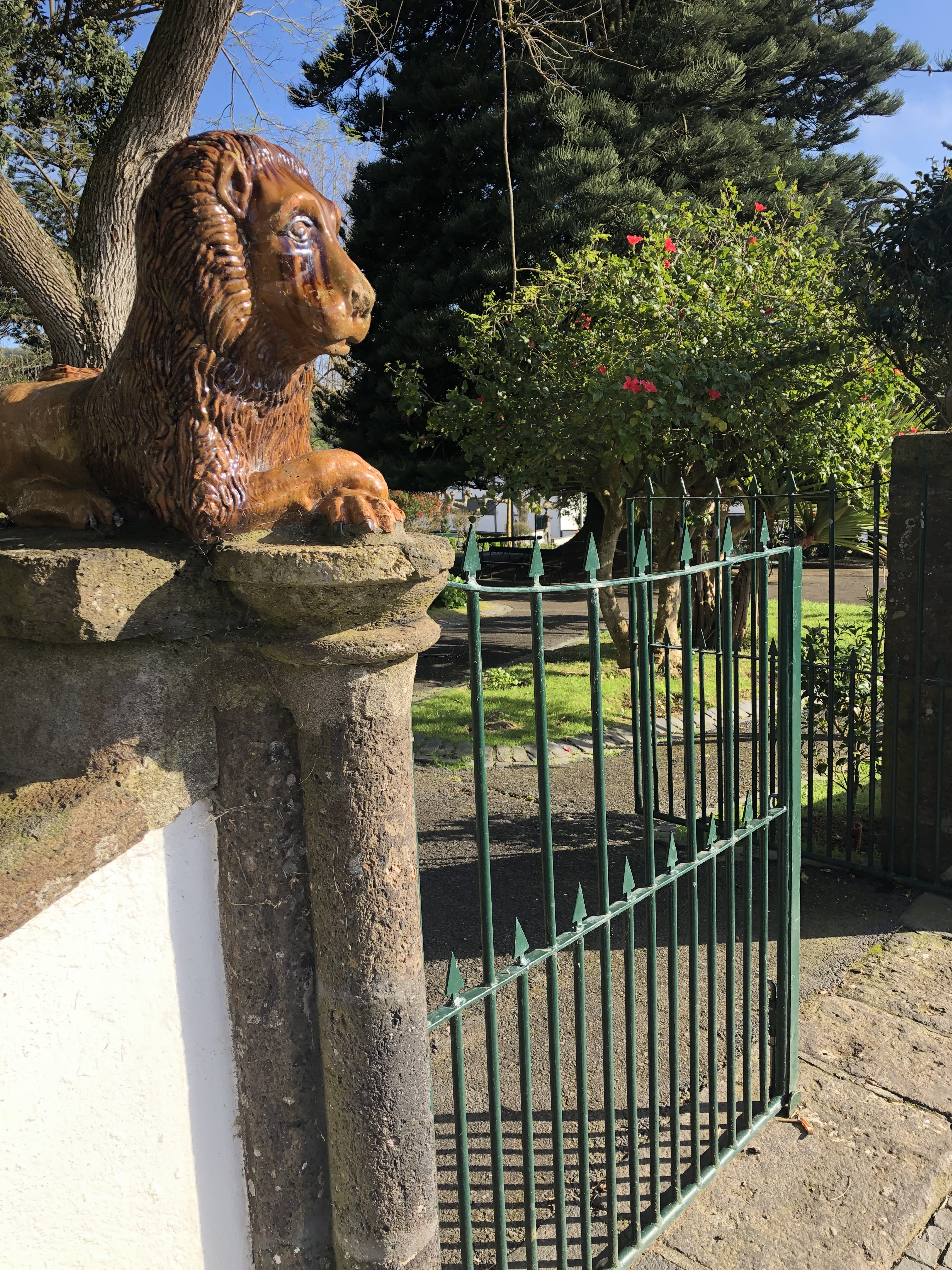
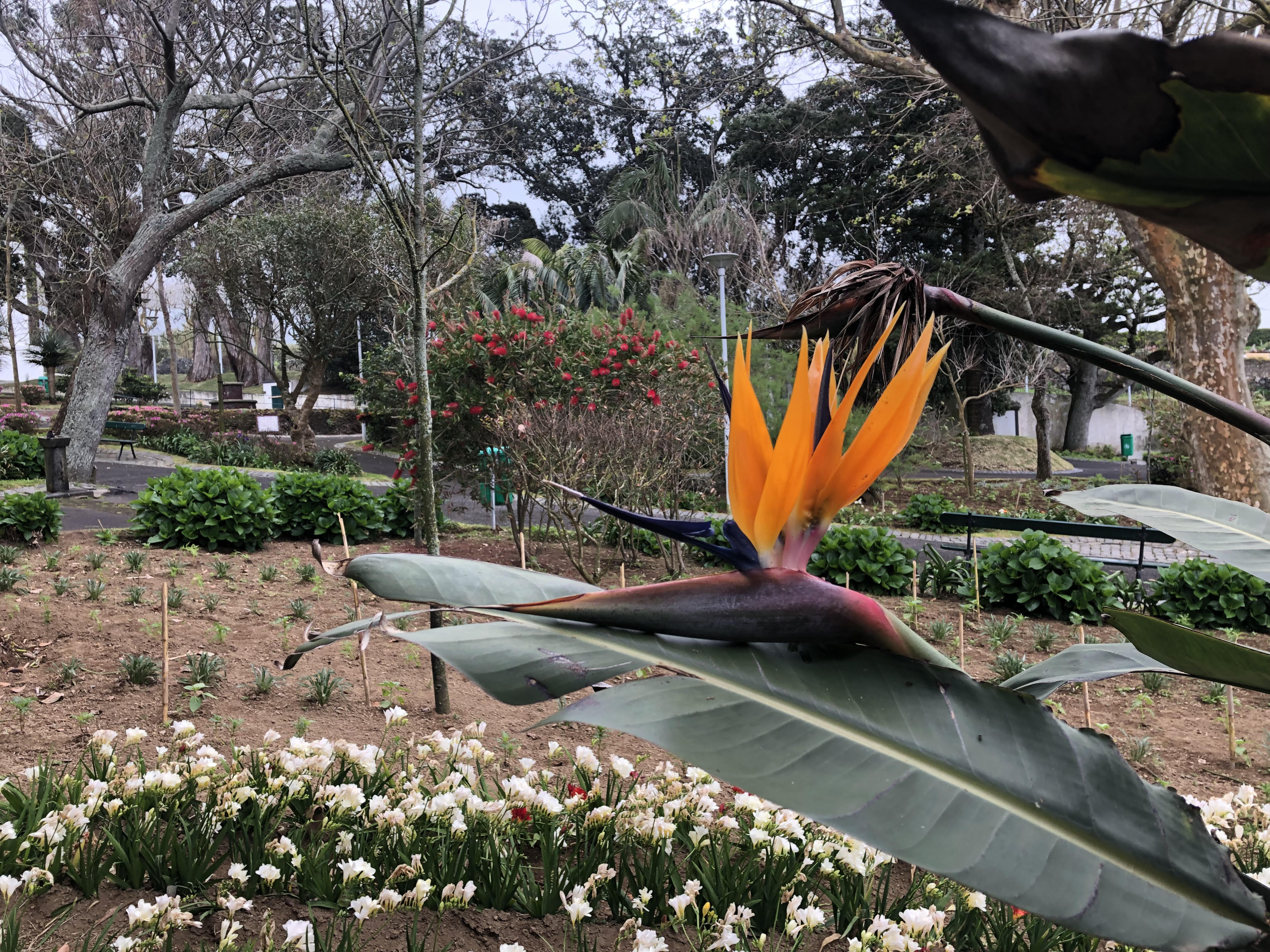
The entrance to the “magic tree” park features a lion gate. The lions are made in the local ceramics factory, where we bought tiles. The flower is bird-of-paradise.
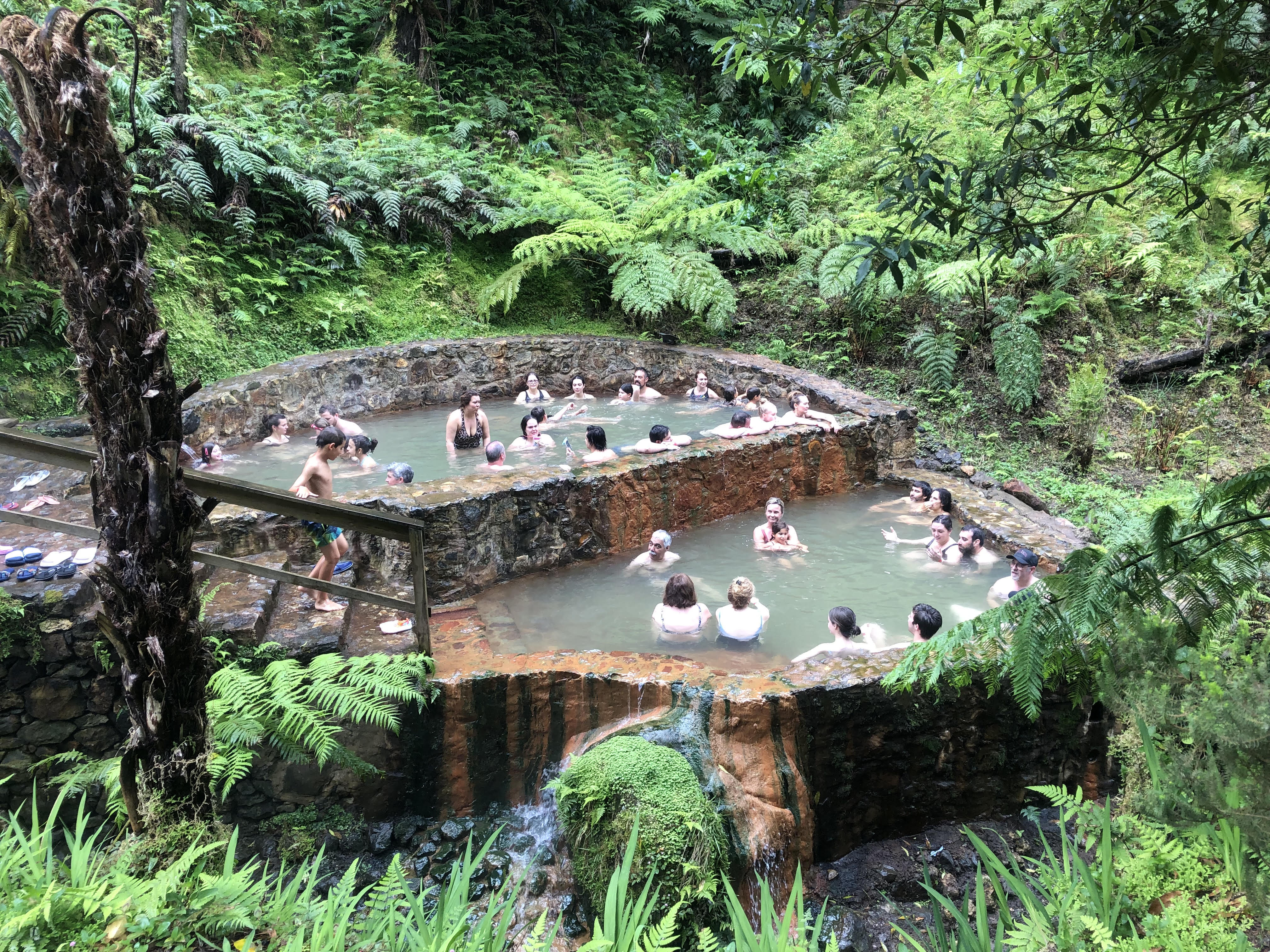
We loved the volcanic hot springs everywhere. Some family members went in a muddy one (muddy from iron in the water). It was about the temperature of a hot tub, 102 F. I joined them when they tried the clear hot springs. Fences protected visitors from the boiling ones.
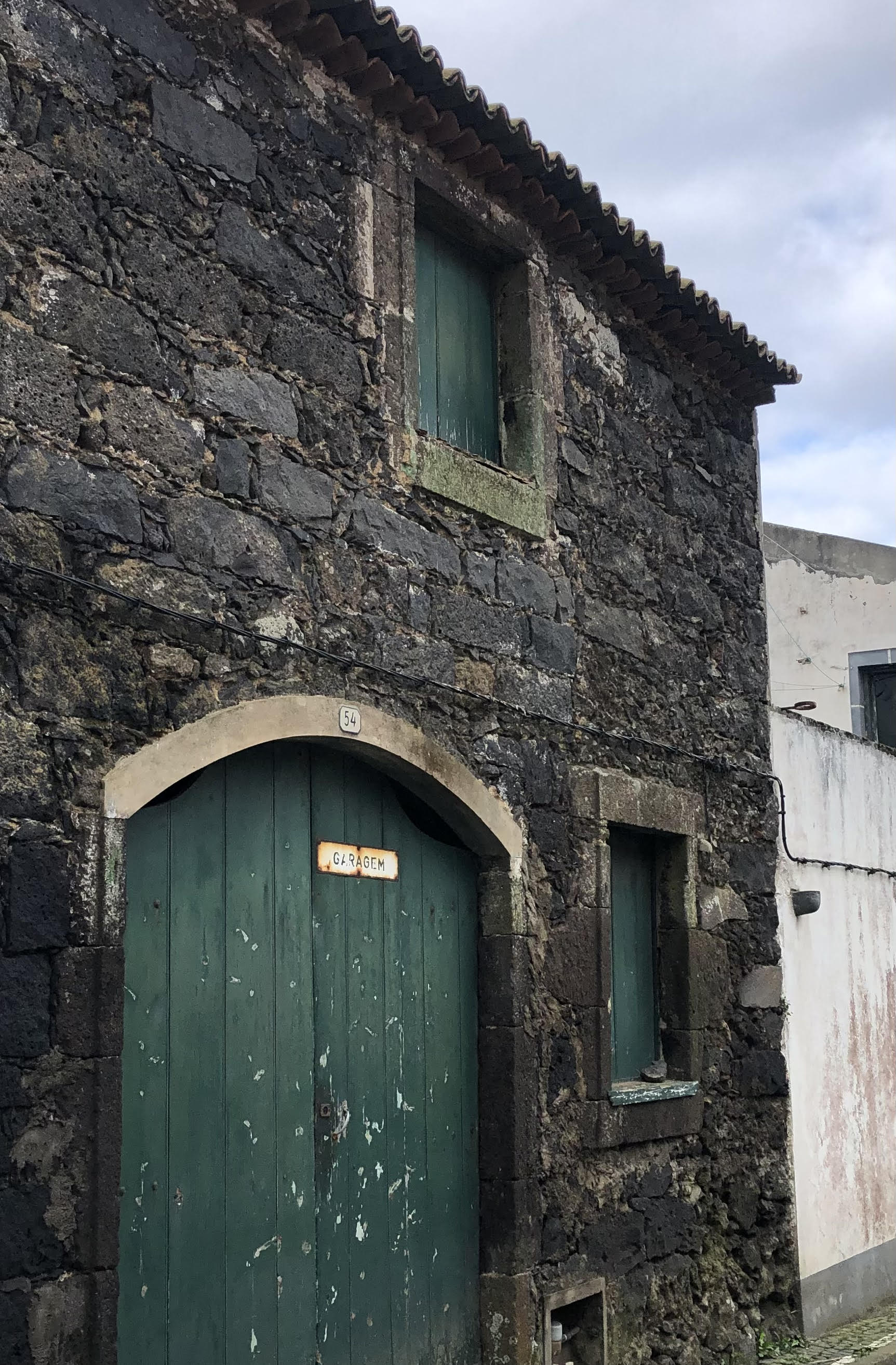
The streets are very narrow. I couldn’t imagine getting in an out of the green garage door below. The sidewalks are nearly nonexistent, and everything stops when the fish van with its loud horn gets stuck behind a grocer loading boxes.
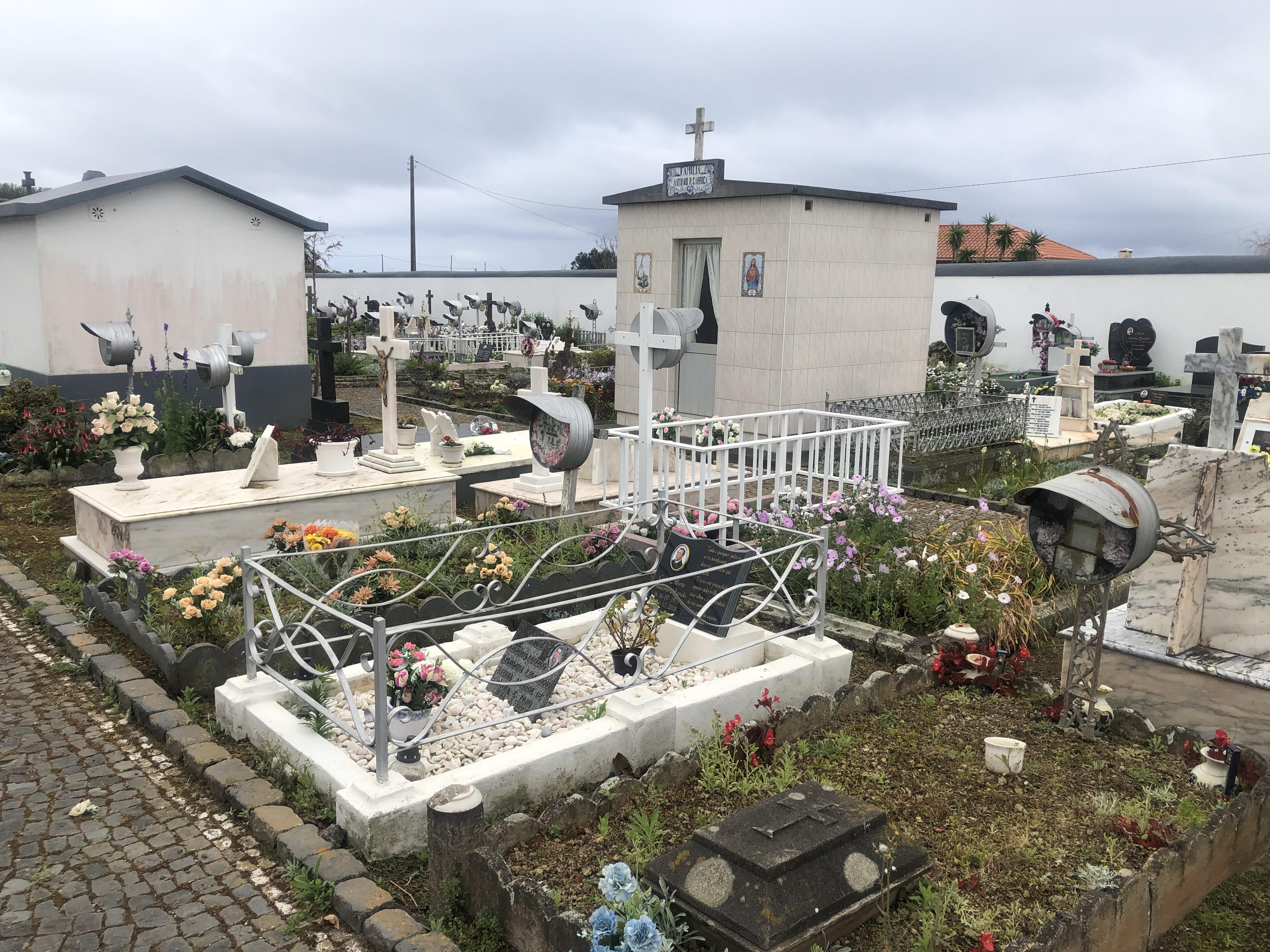
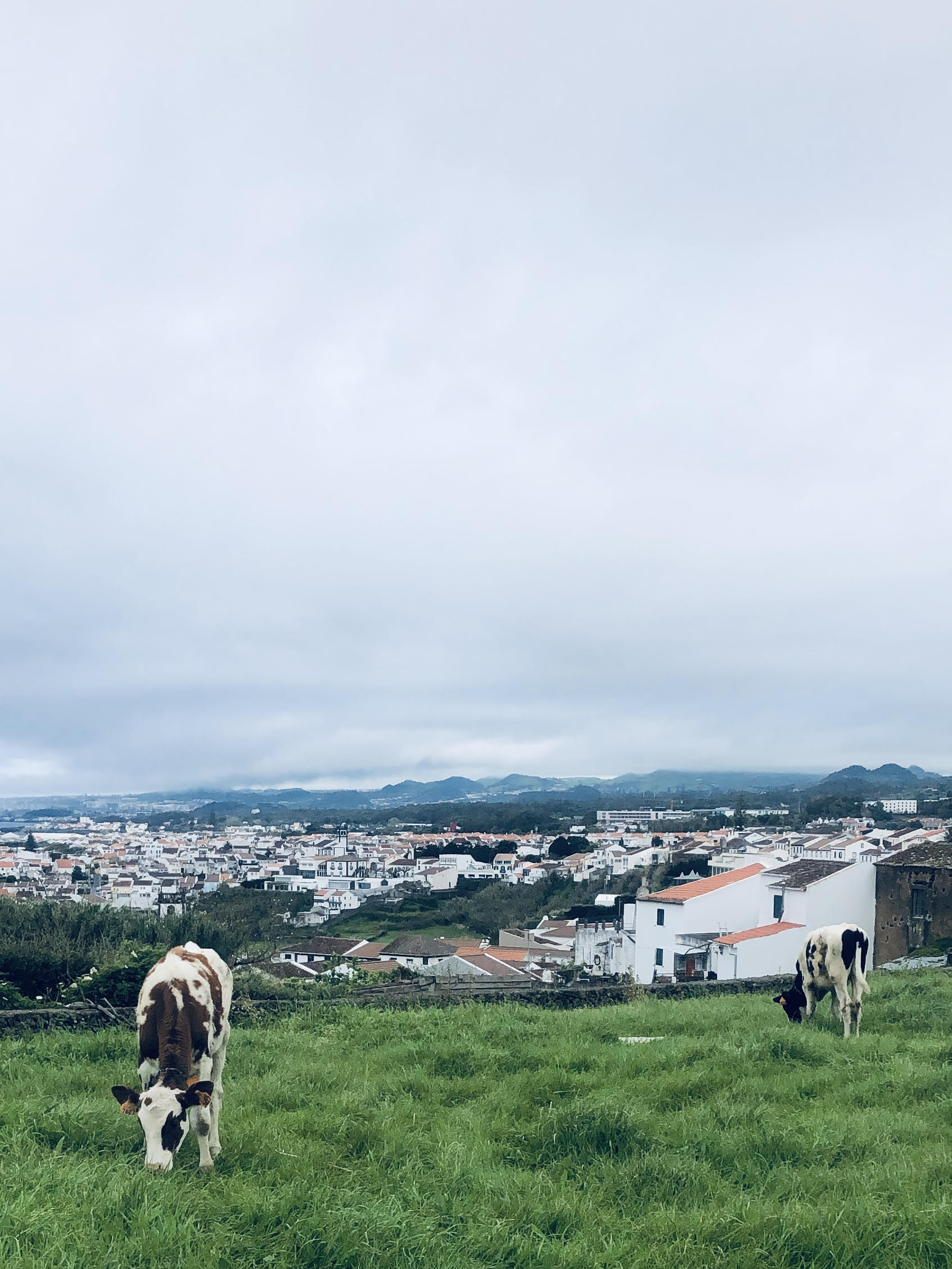
The cemetery was unlike any I have seen before. Nearby, I saw cows grazing. There are more cows than people in the Azores (125,000 as of 2020). Wonderful cheeses. I think I have identified the main dairy cows as Holstein Friesians.
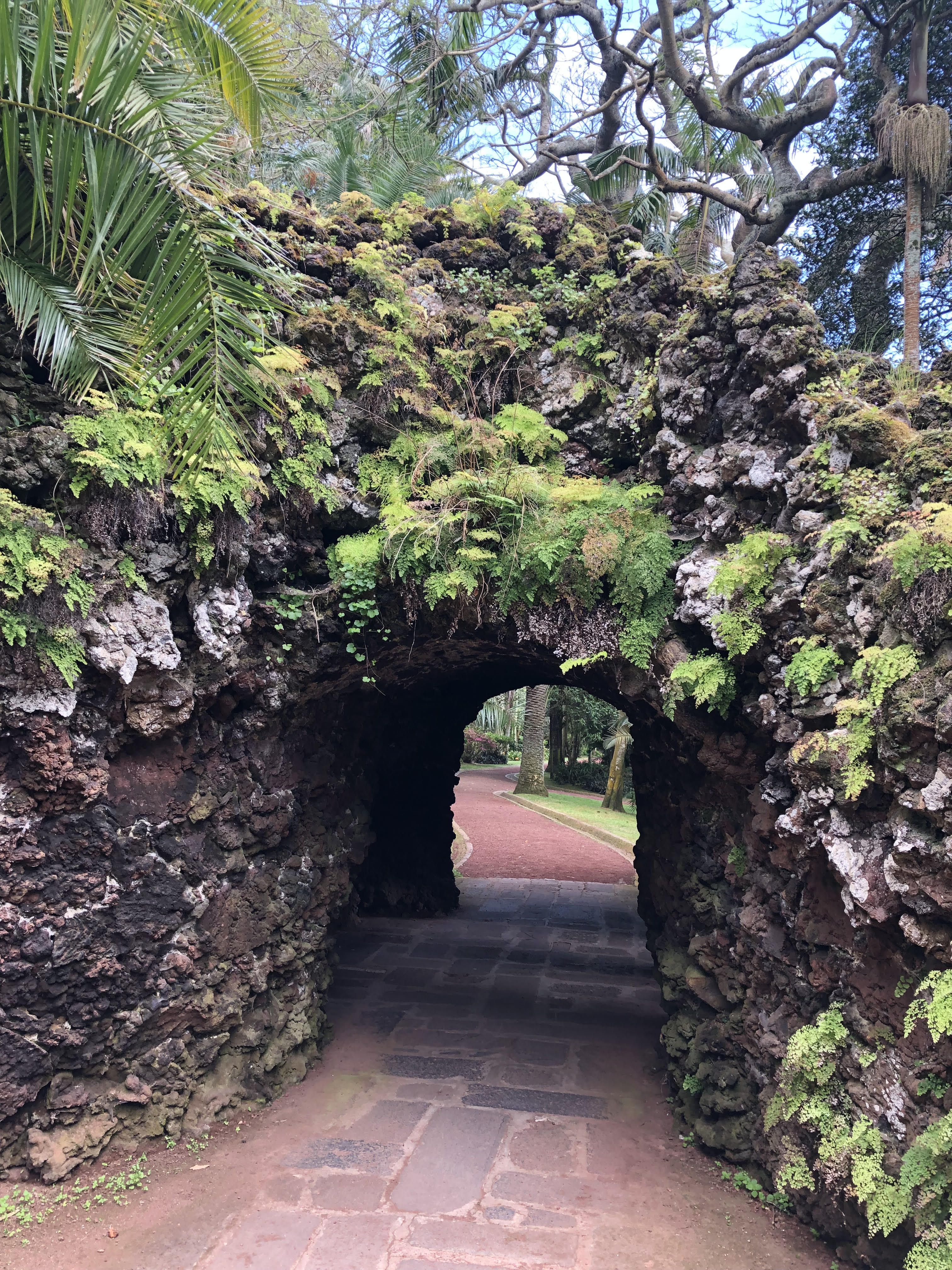
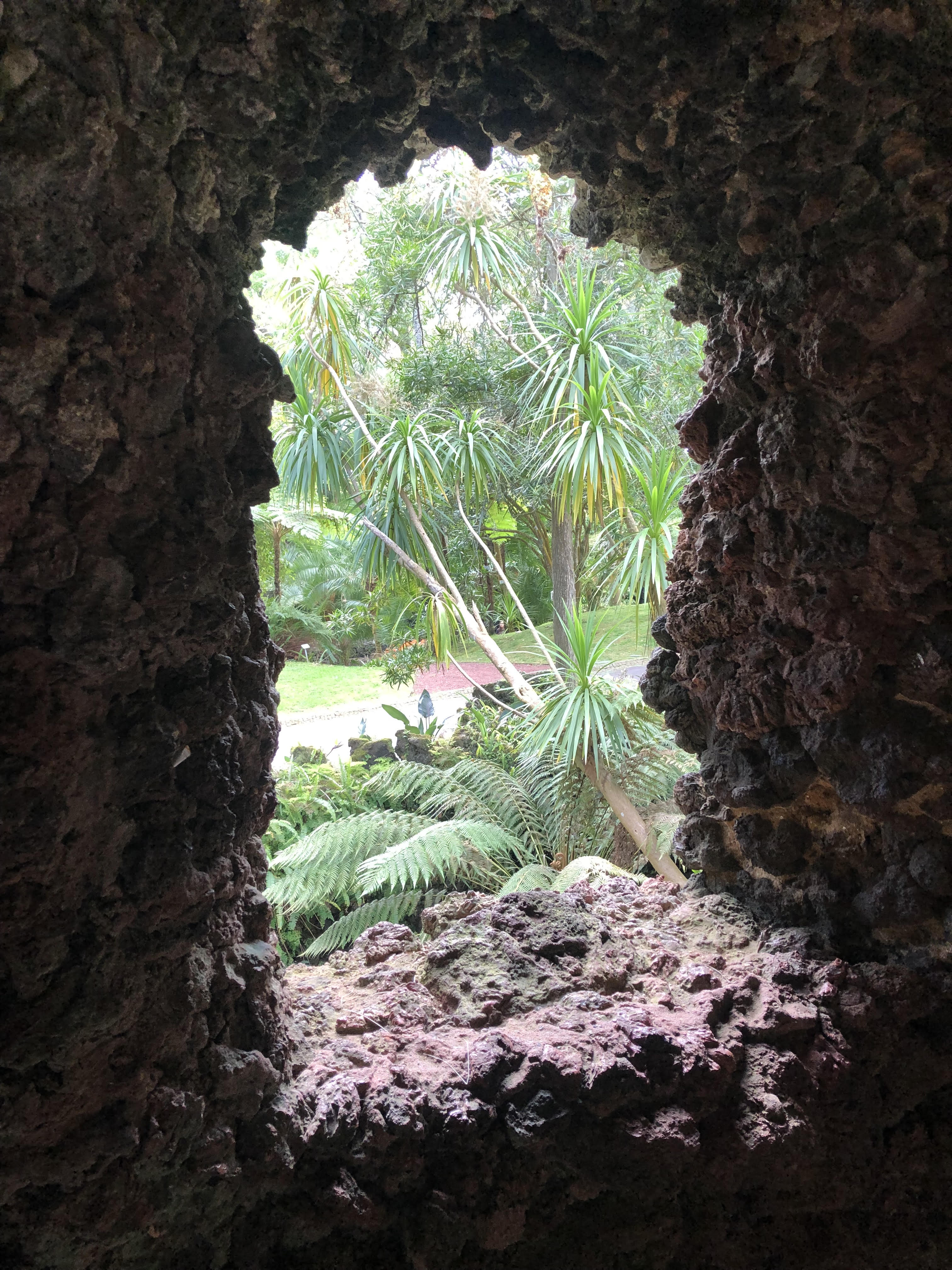
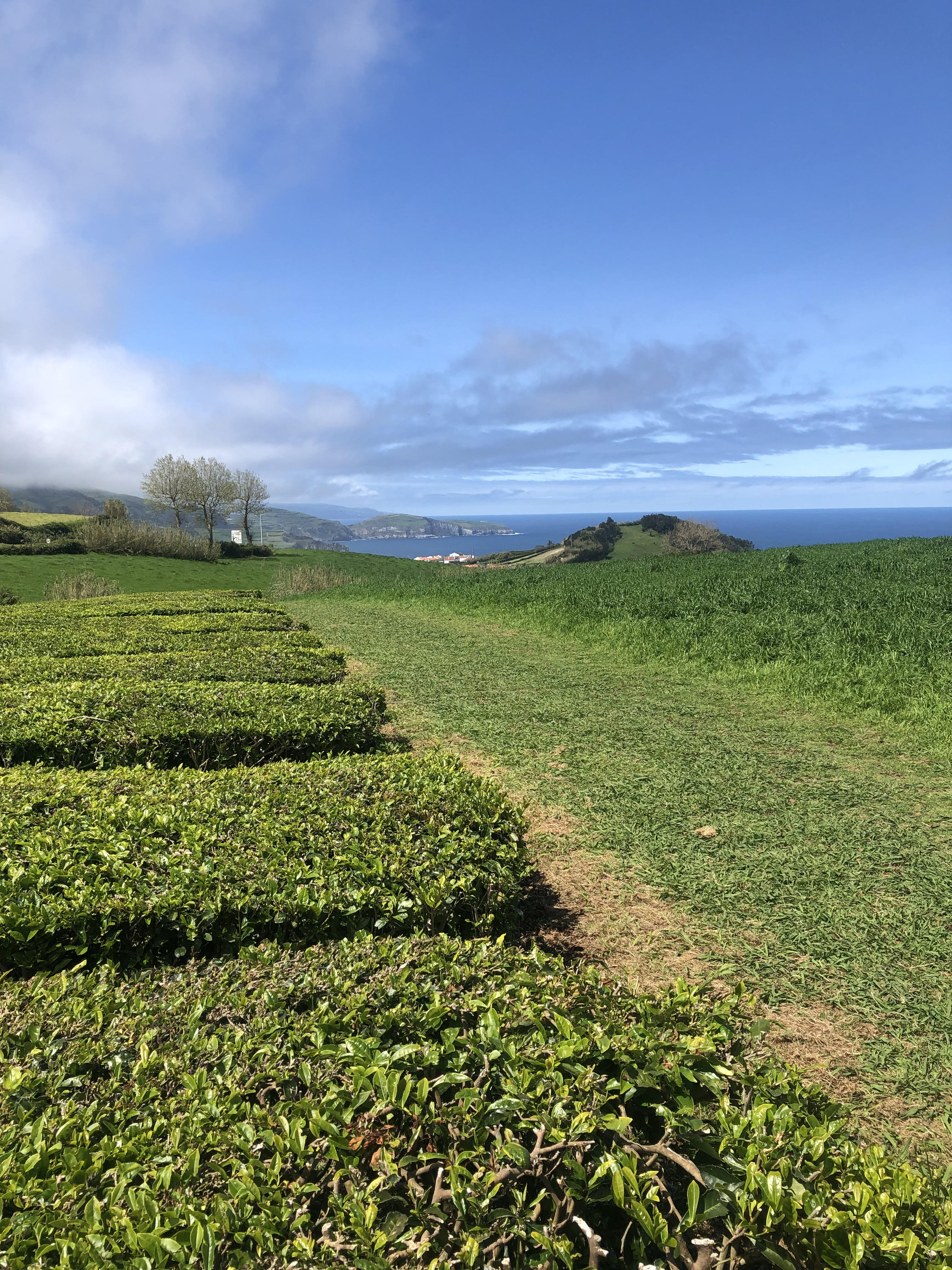
The grotto is in Porta Delgada in one of the many botanical gardens (really the whole island was a botanical garden). Next is the tea plantation, the only one in Europe (Europe because the Azores are part of Portugal).
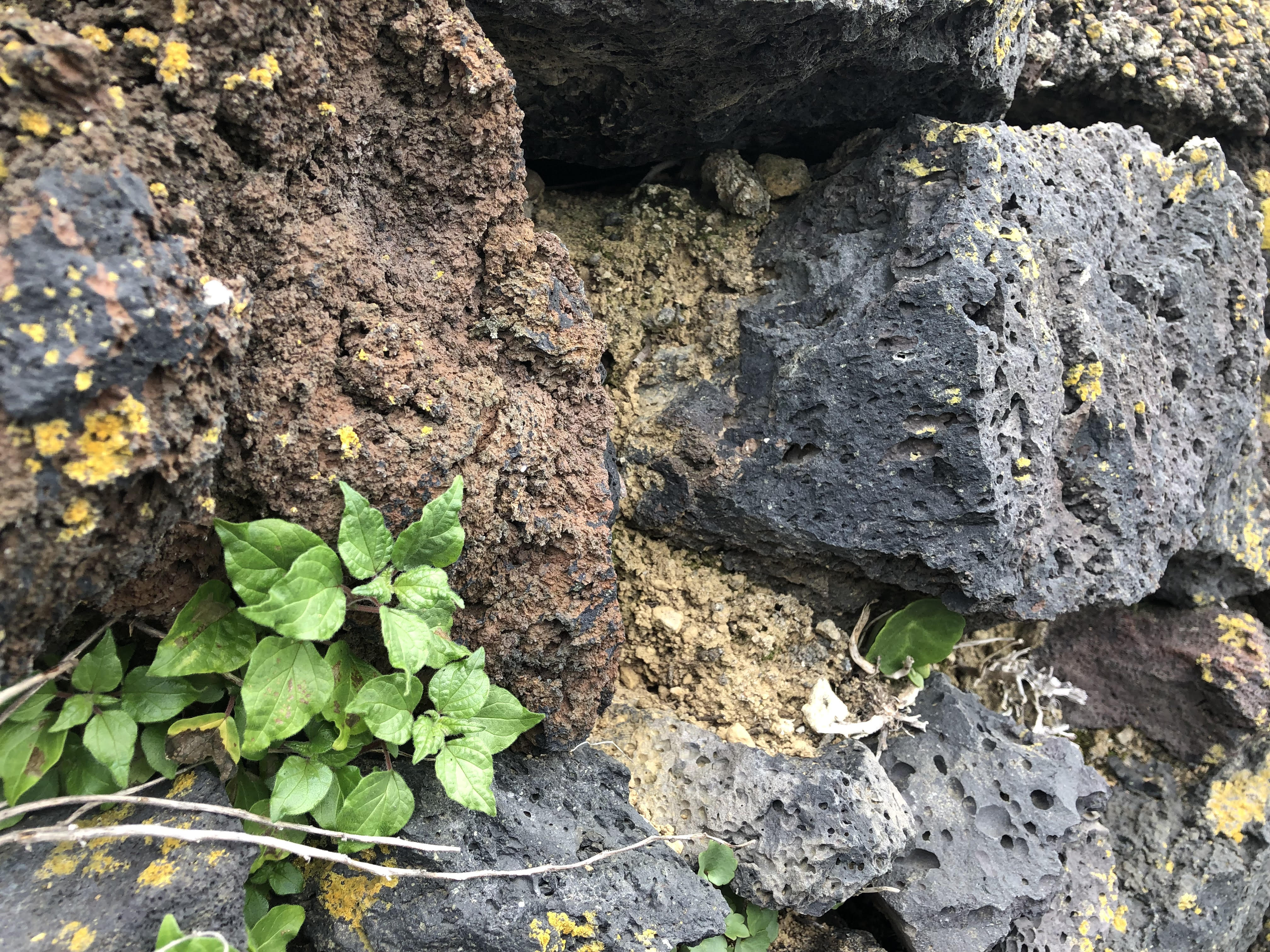
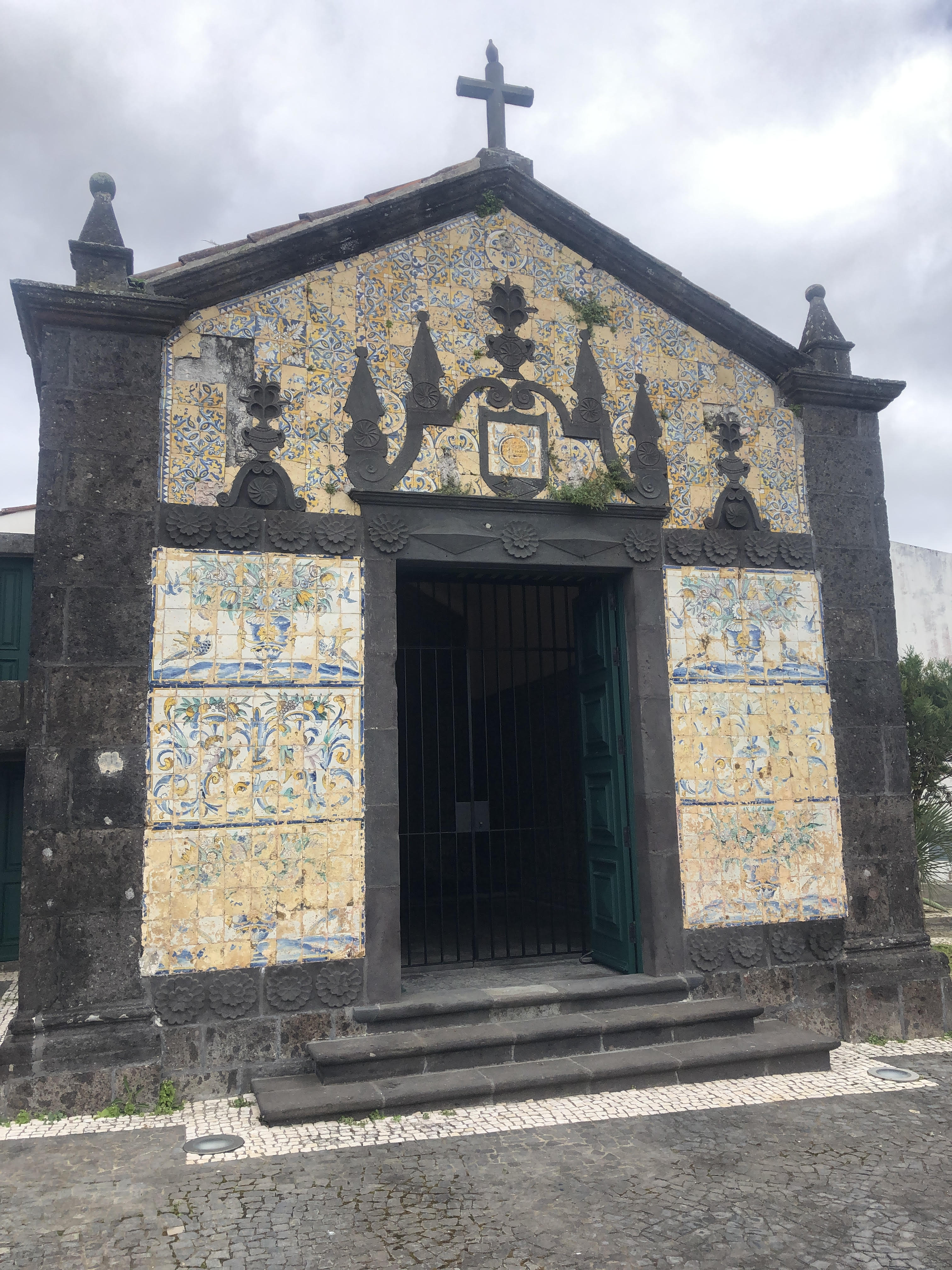
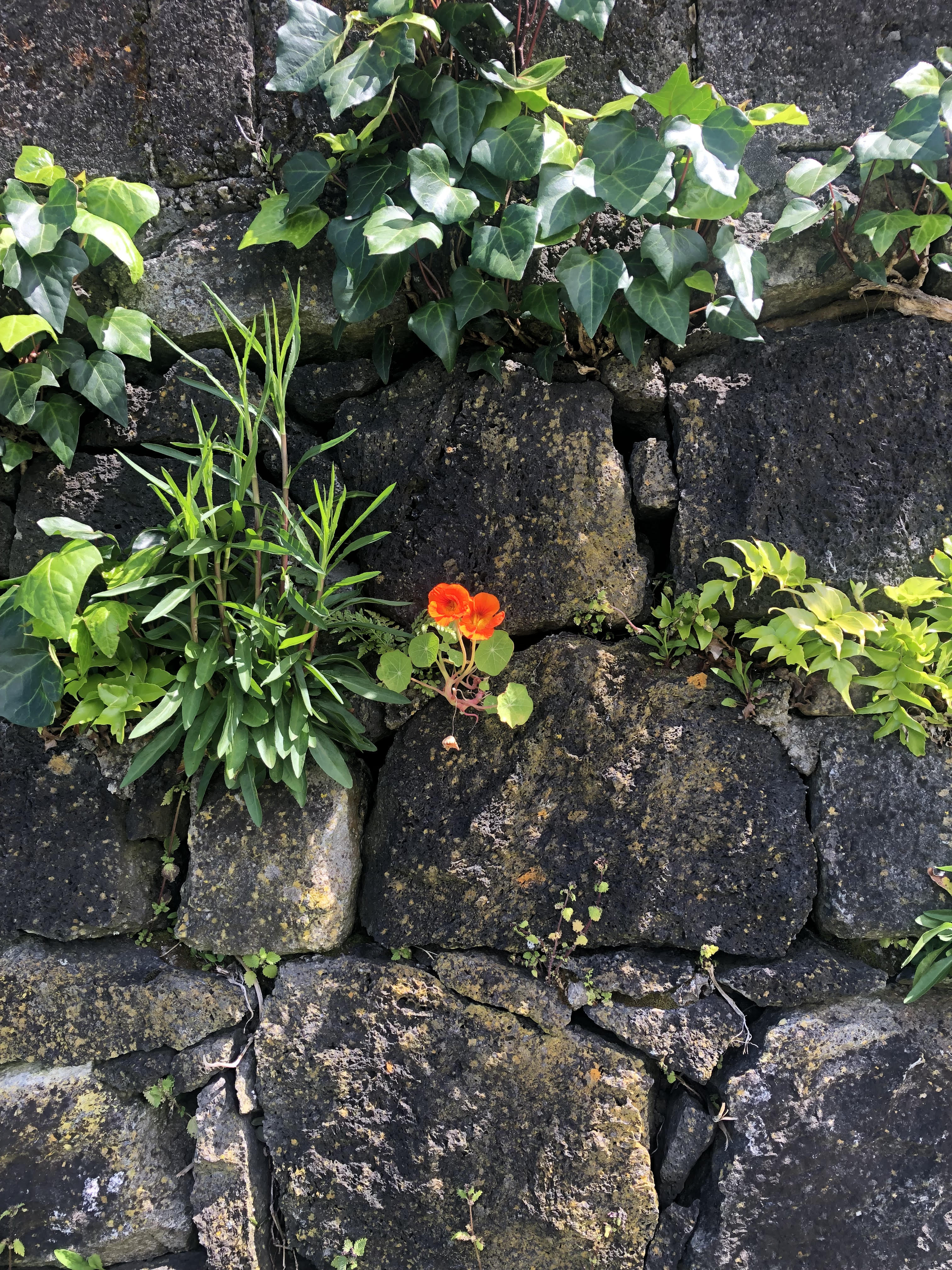
Check out the close-up of the ubiquitous volcanic rock, basalt, used for everything. Water and gases in lava formed the fossil bubbles. The black ornamentation on churches and chapels is “basaltic relief.”
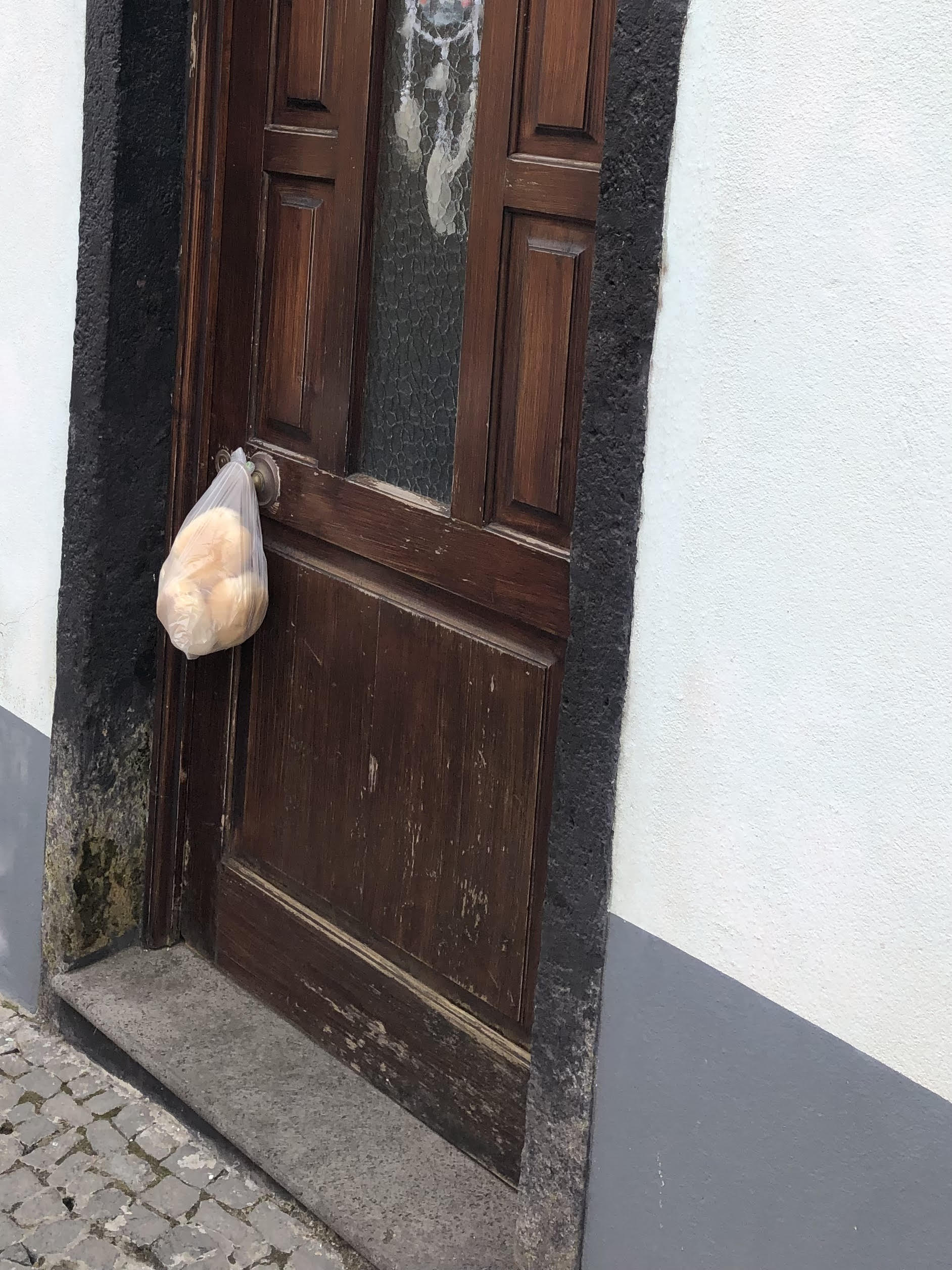
Many homes have early morning bread deliveries that get hung on doorknobs or left on the doorsill.
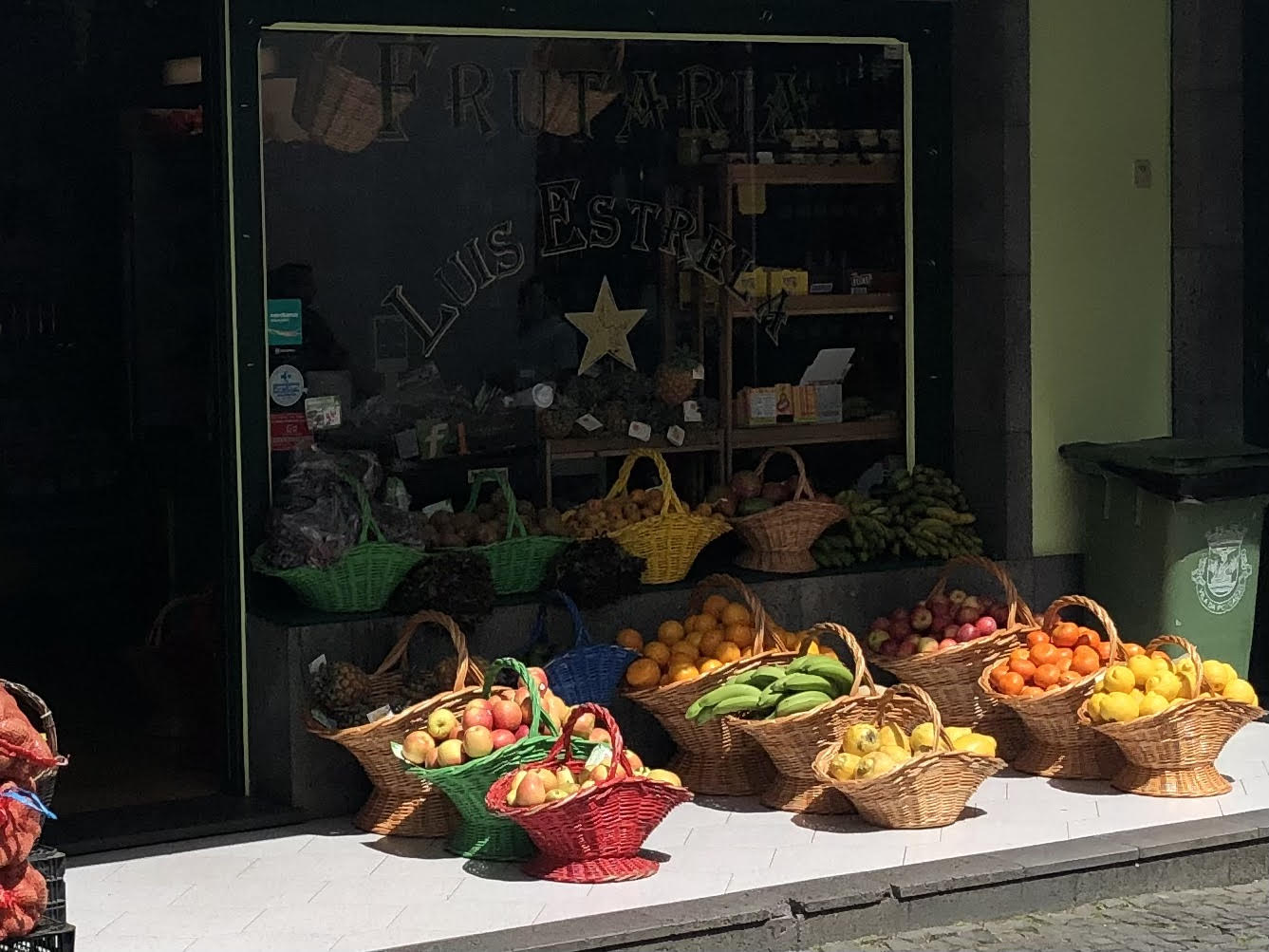
My granddaughter, 8, edited the photo of a market’s fruit baskets.
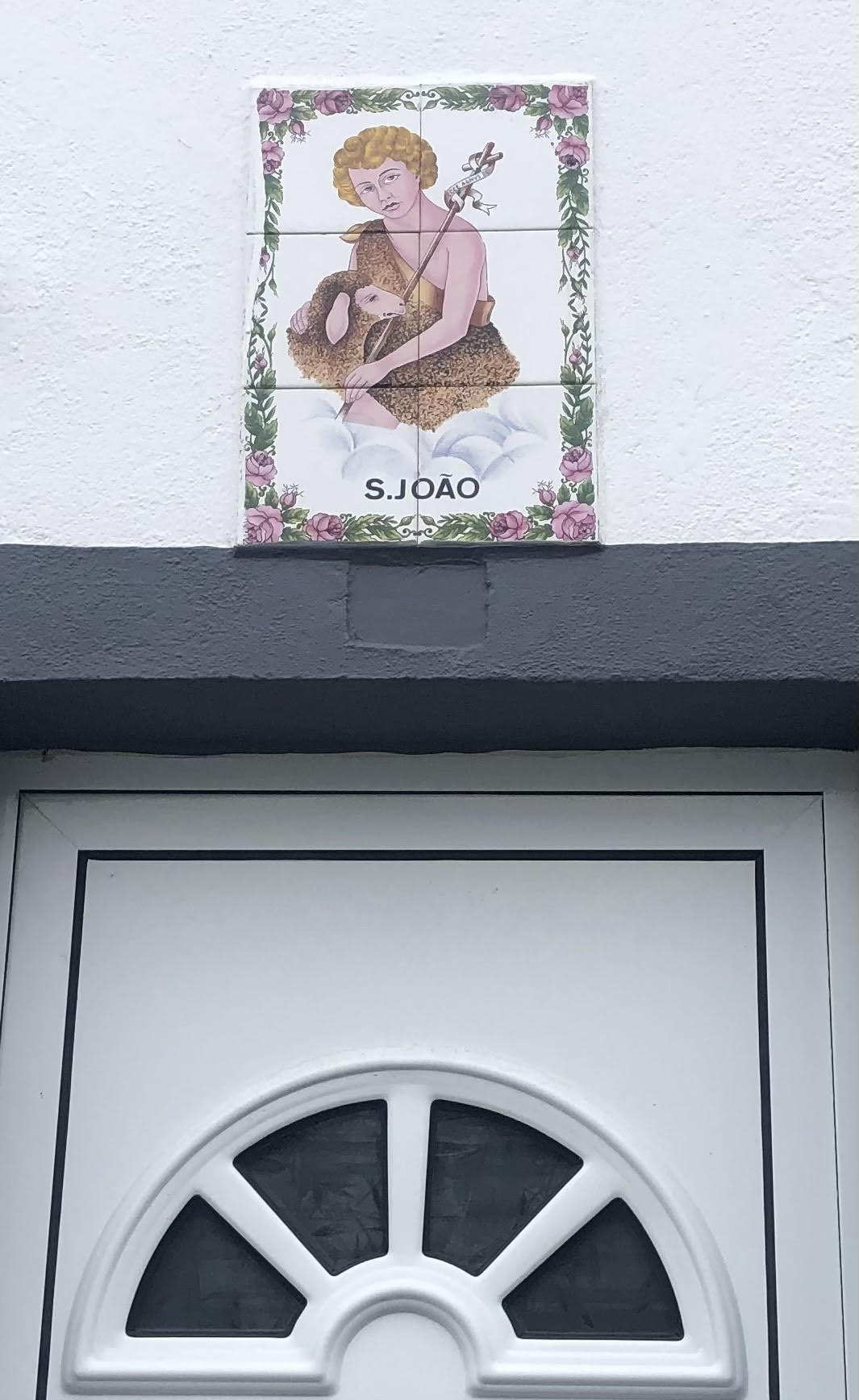
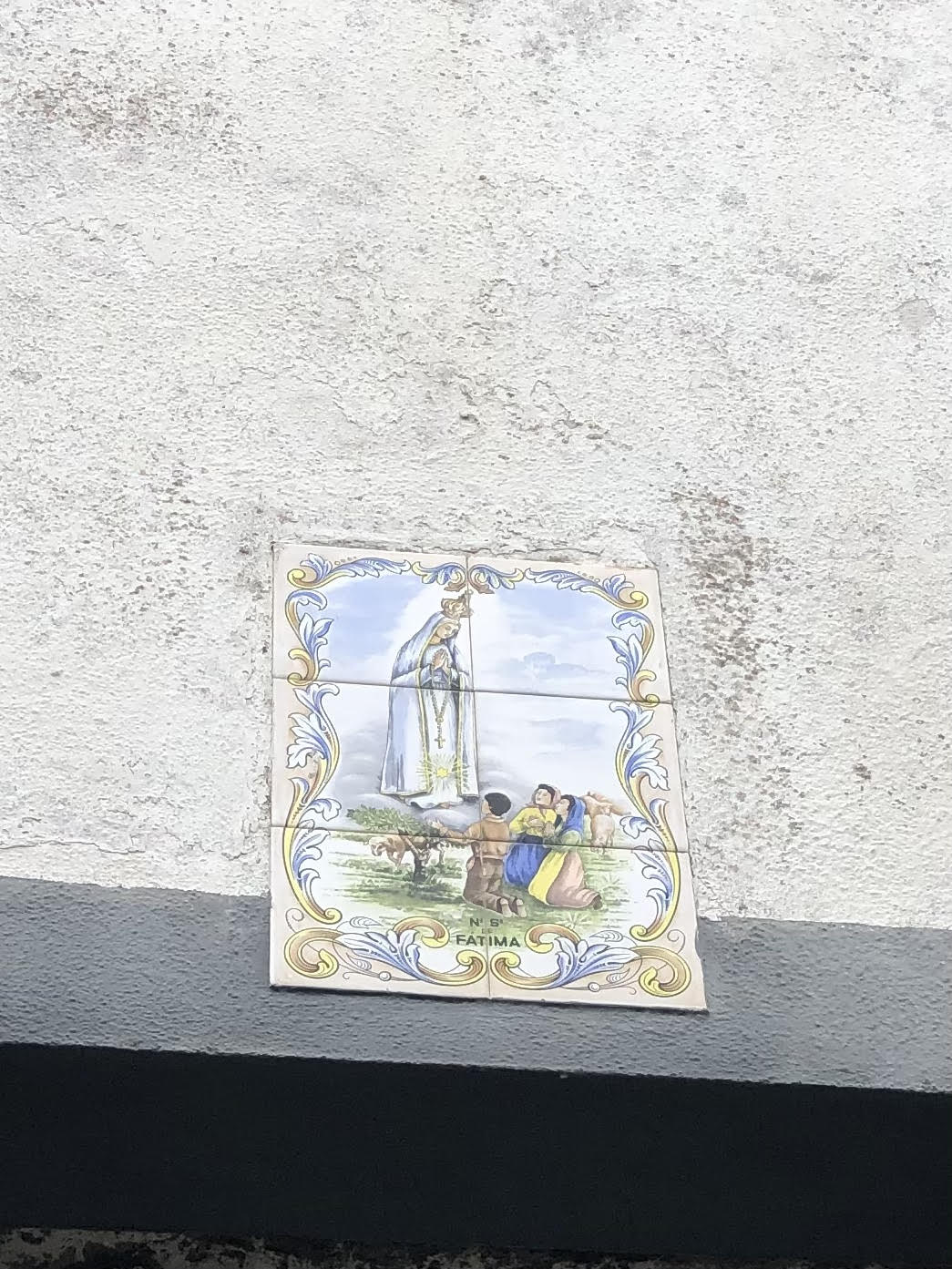
Nearly every home has some kind of saint watching over it, in the form of a ceramic plaque handmade in the factory on Sao Miguel.
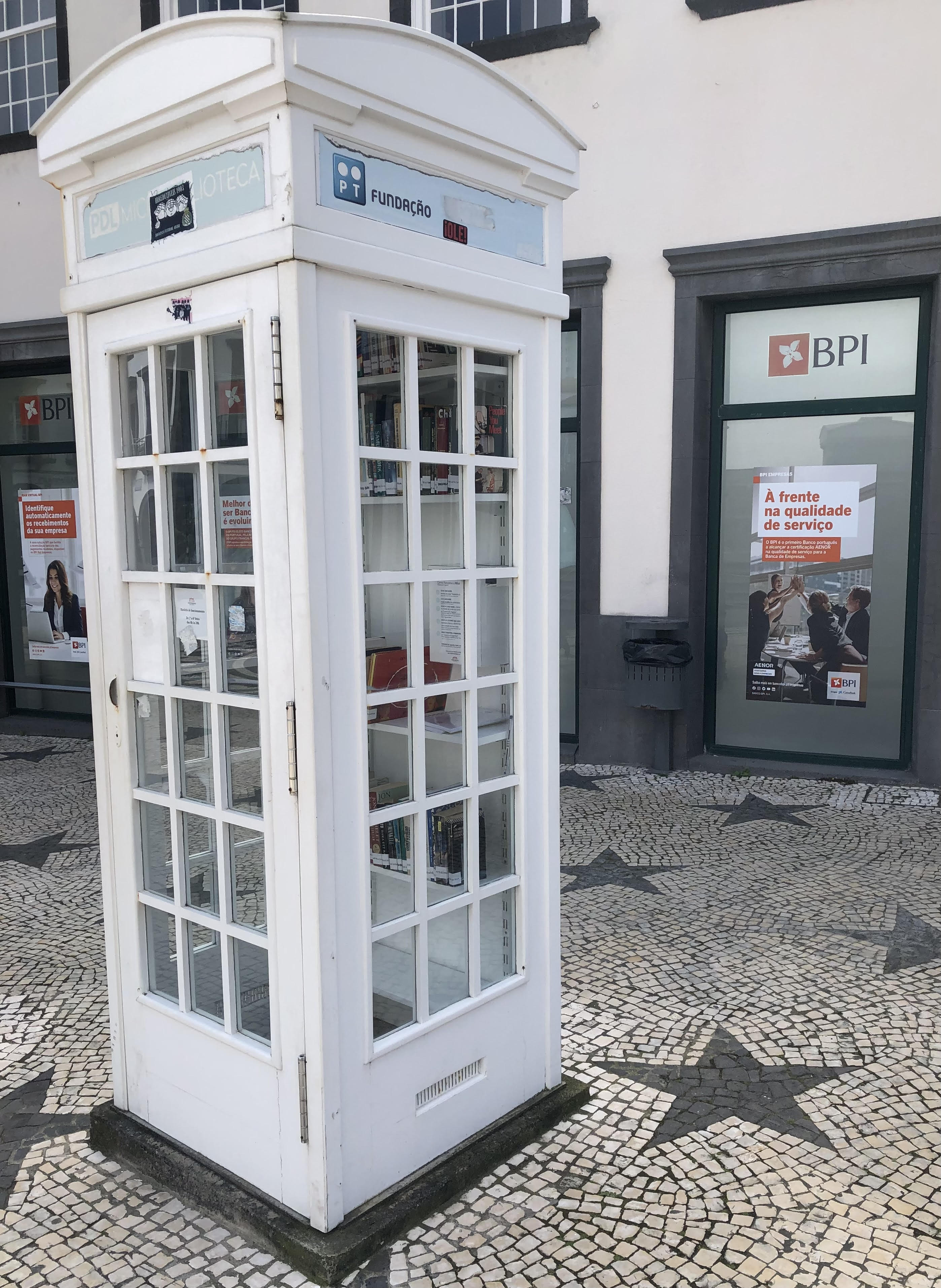
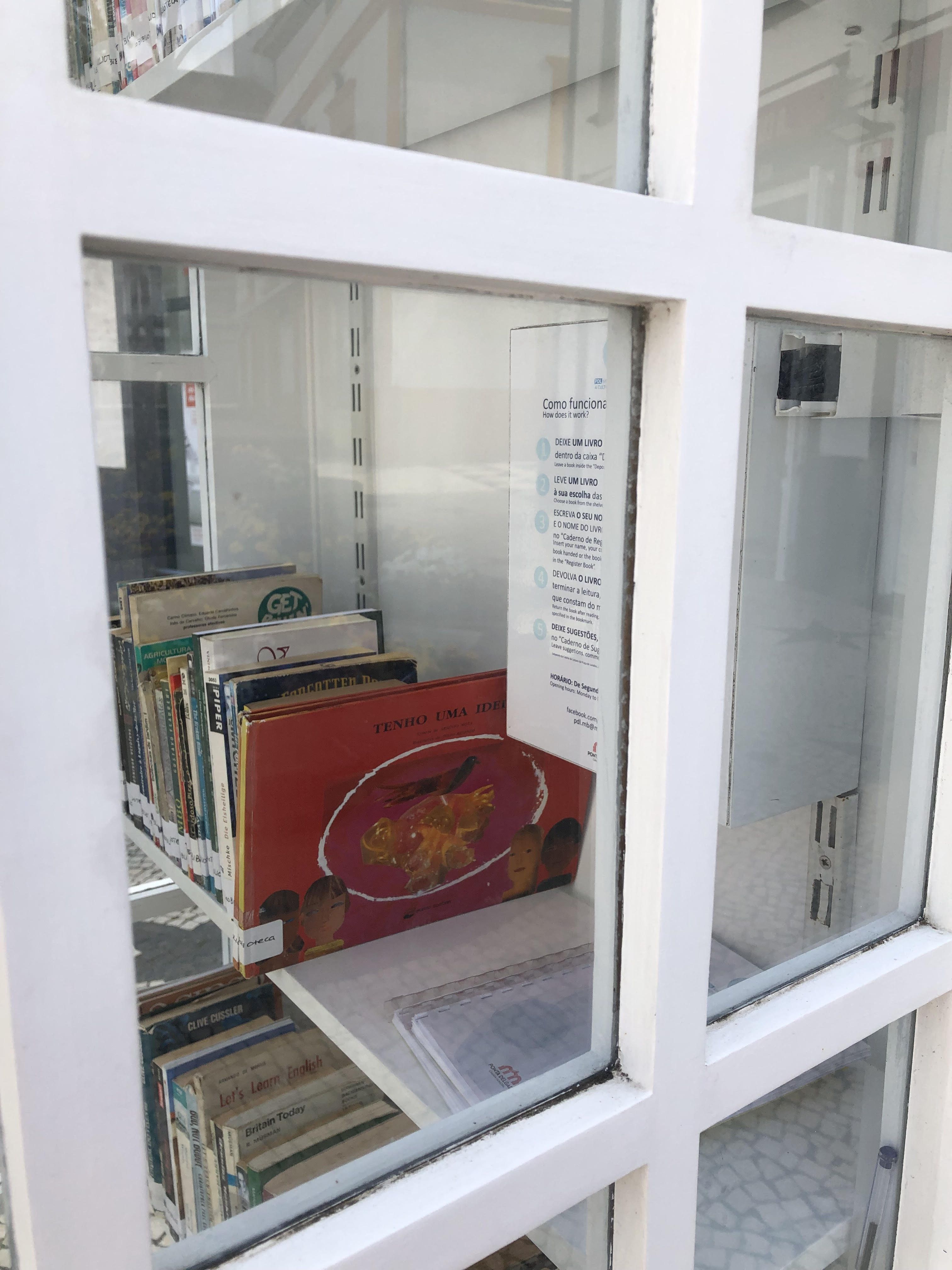
A phone booth had been turned into a little library in Porta Delgada.
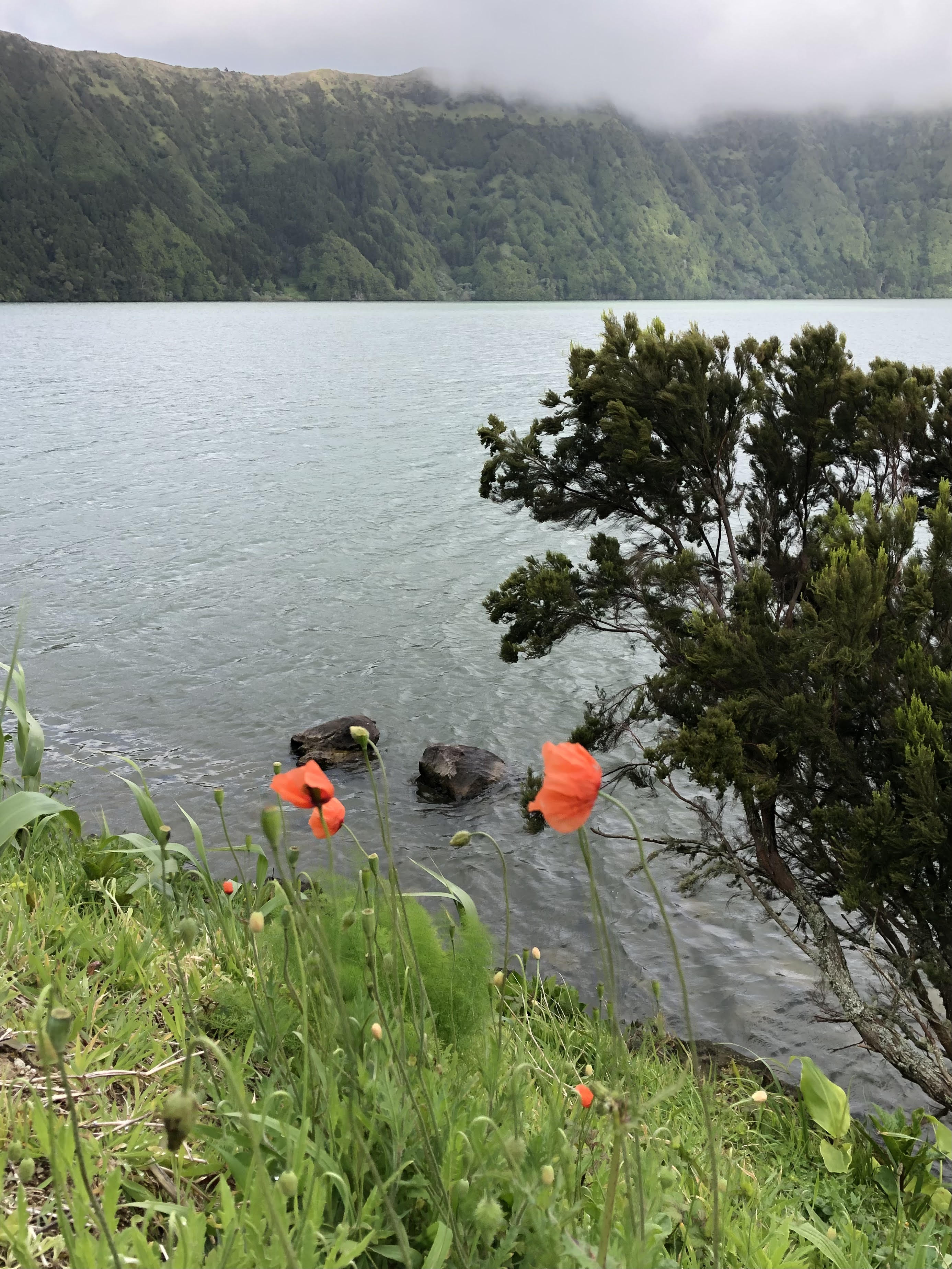
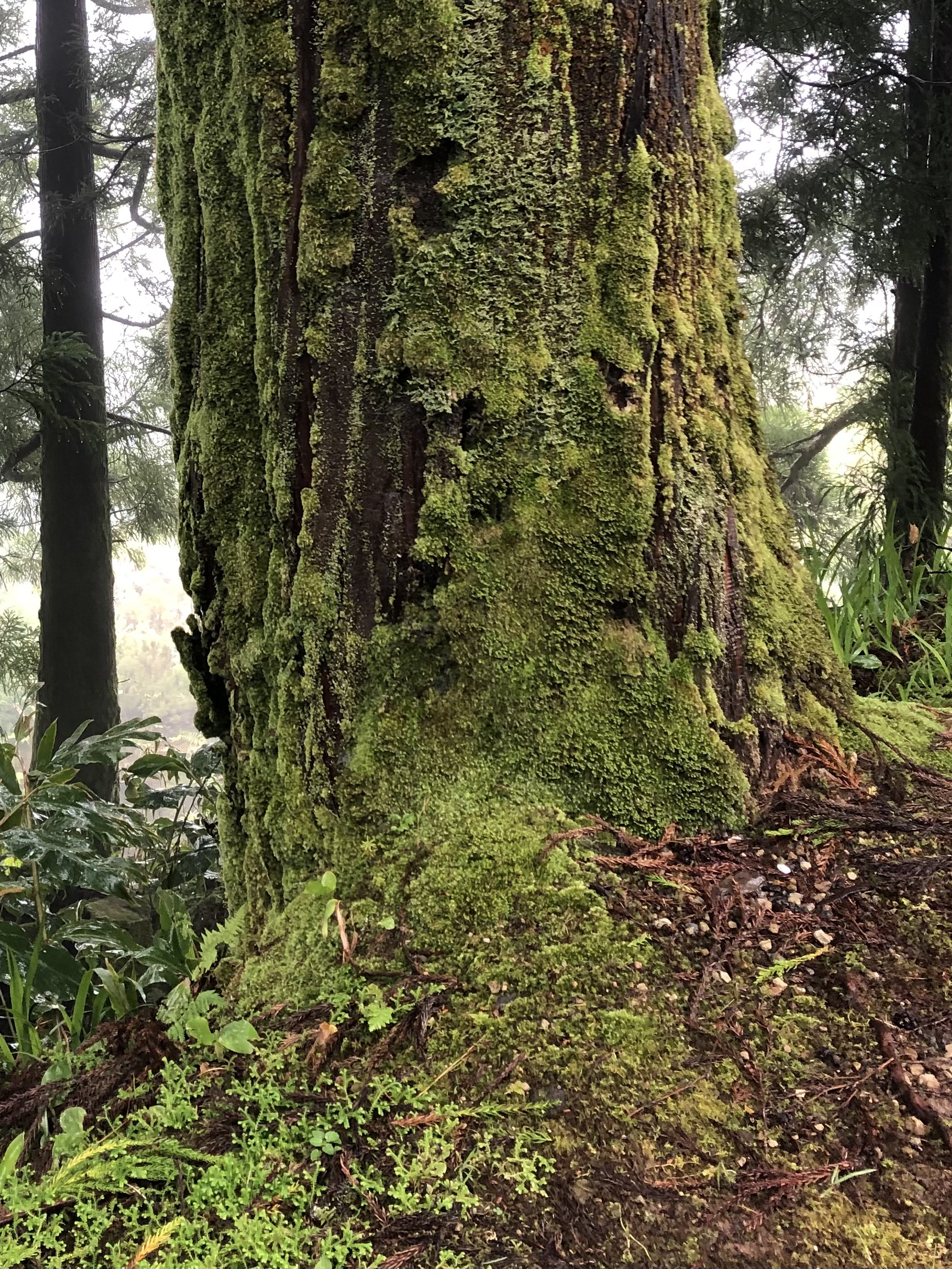
Nasturtiums, poppies, fresh-air laundry, moss. I worked hard at capturing one of each of these common sights.
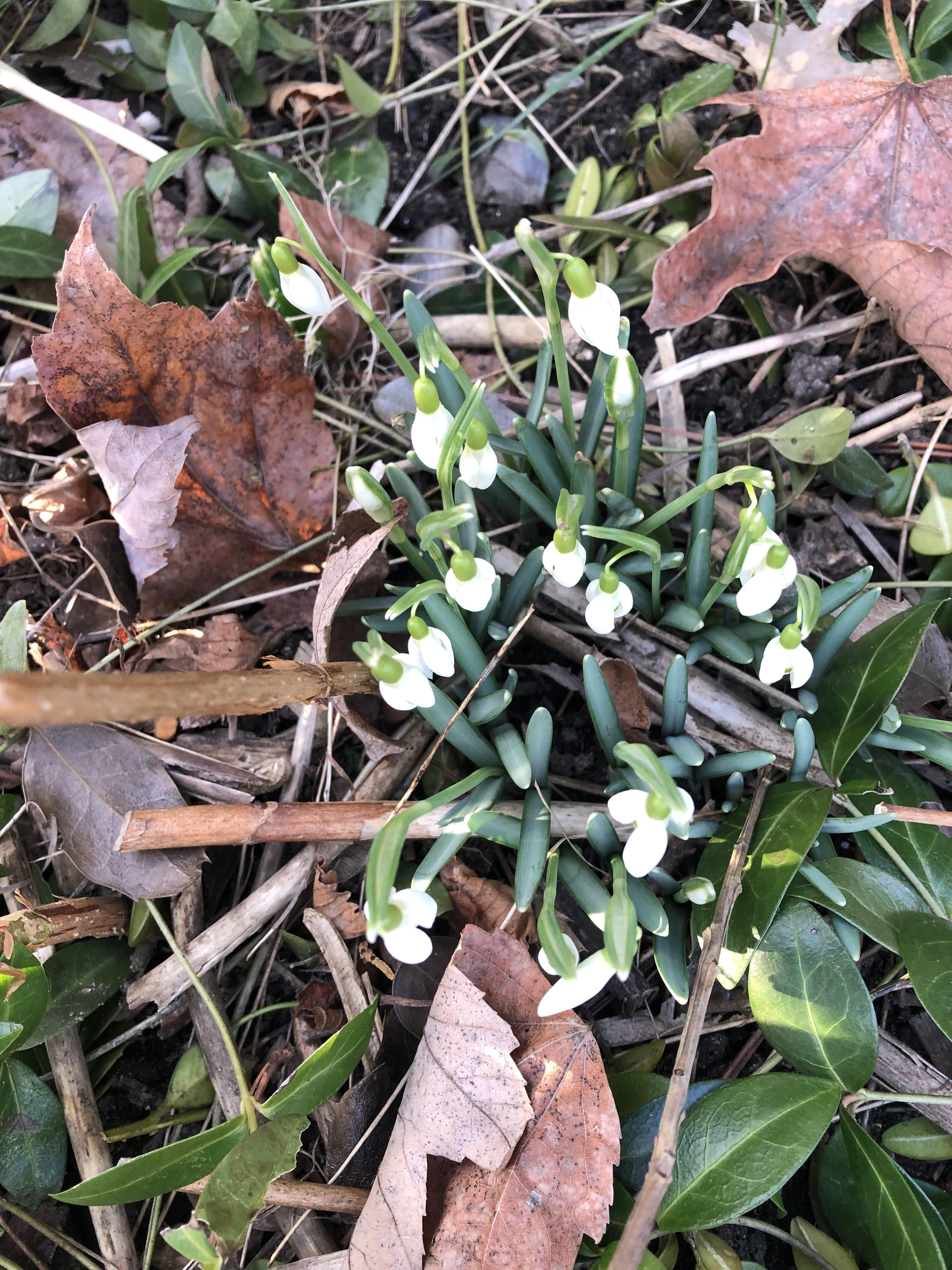
Photo: Suzanne and John’s Mom. Snowdrops arrive in Massachusetts.
I haven’t posted photos for a while, and now I’m realizing that today’s selection goes way back to early January, when Erik’s mother was still visiting from Sweden. She showed me a garden-like cemetery in Providence where she loves to run — and where we were greeted by the largest gang of wild turkeys I have ever encountered!
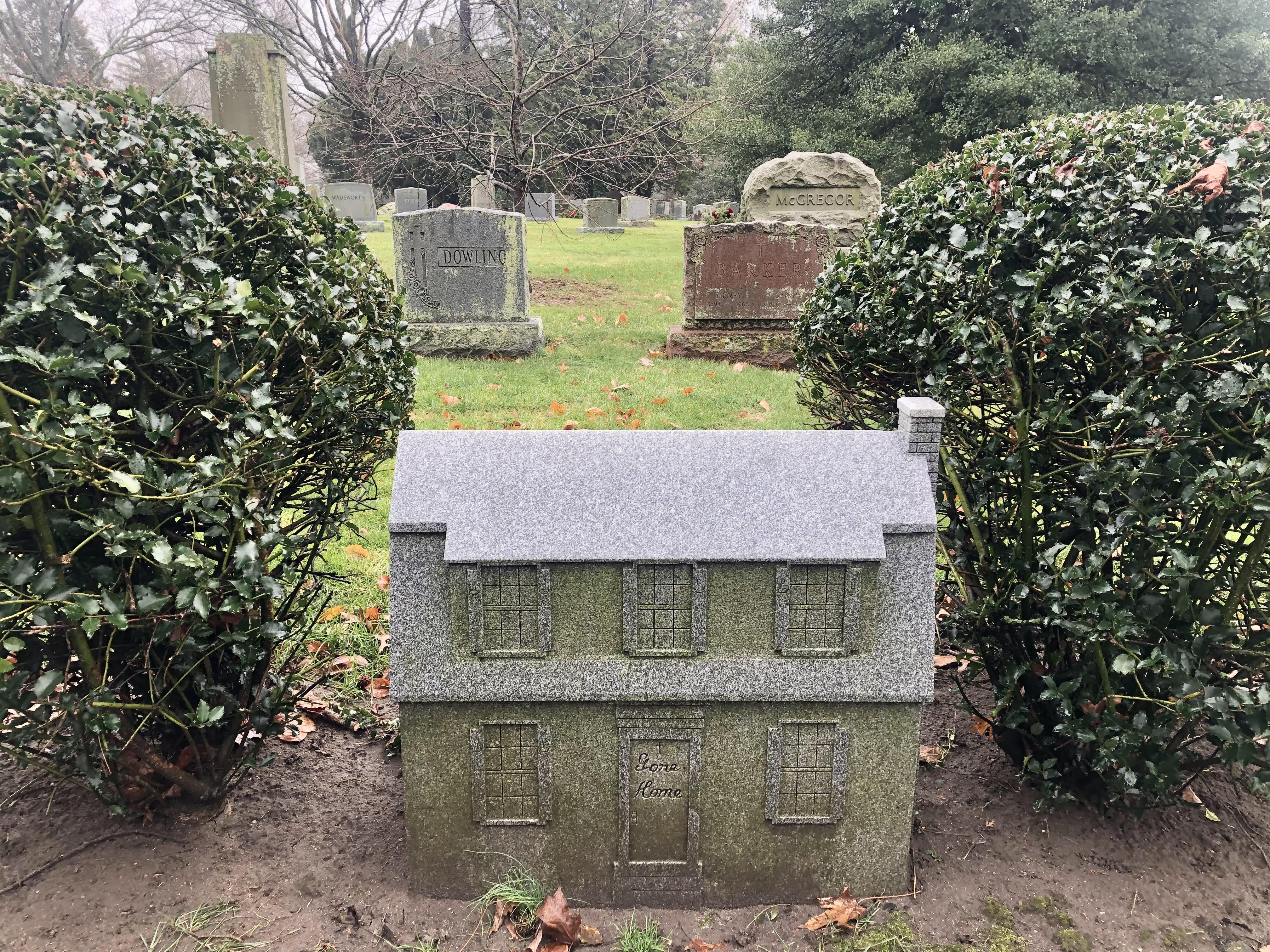
I particularly liked the unique headstone below: someone must have felt OK about having a final home in this park.
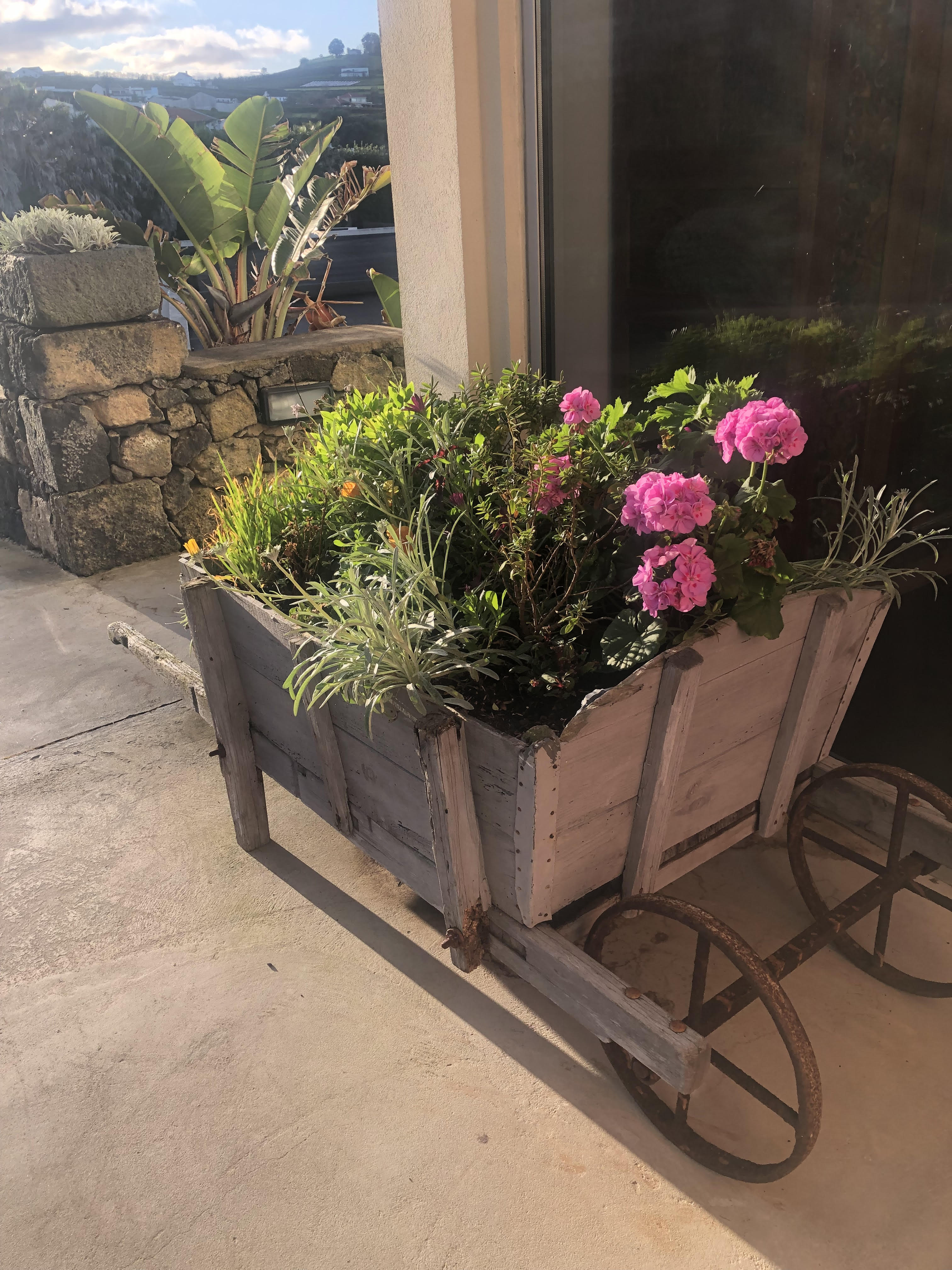
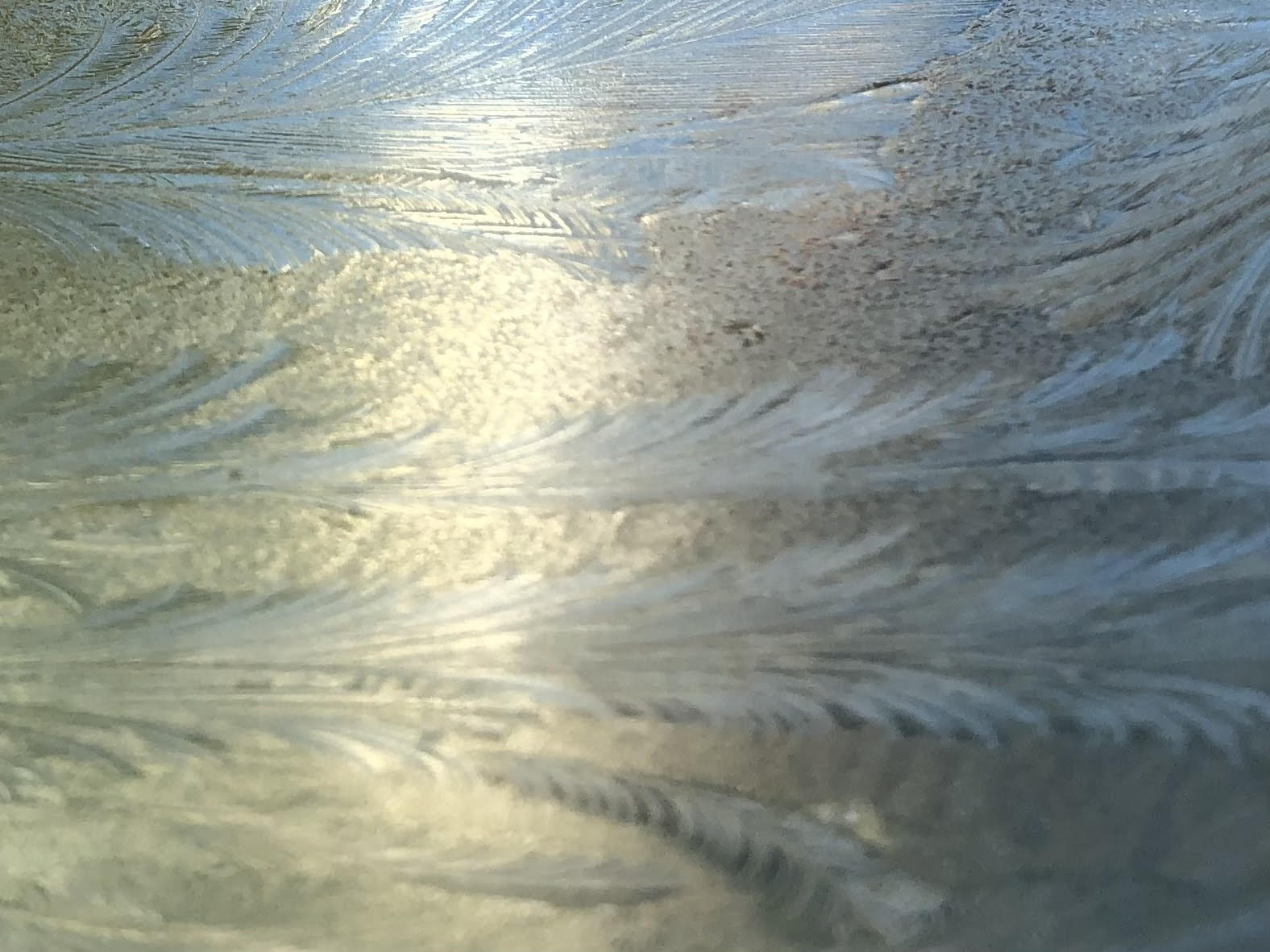
The next photo shows my frosty windshield in February. But indoors at John’s house, warm floral colors were defying the frost.
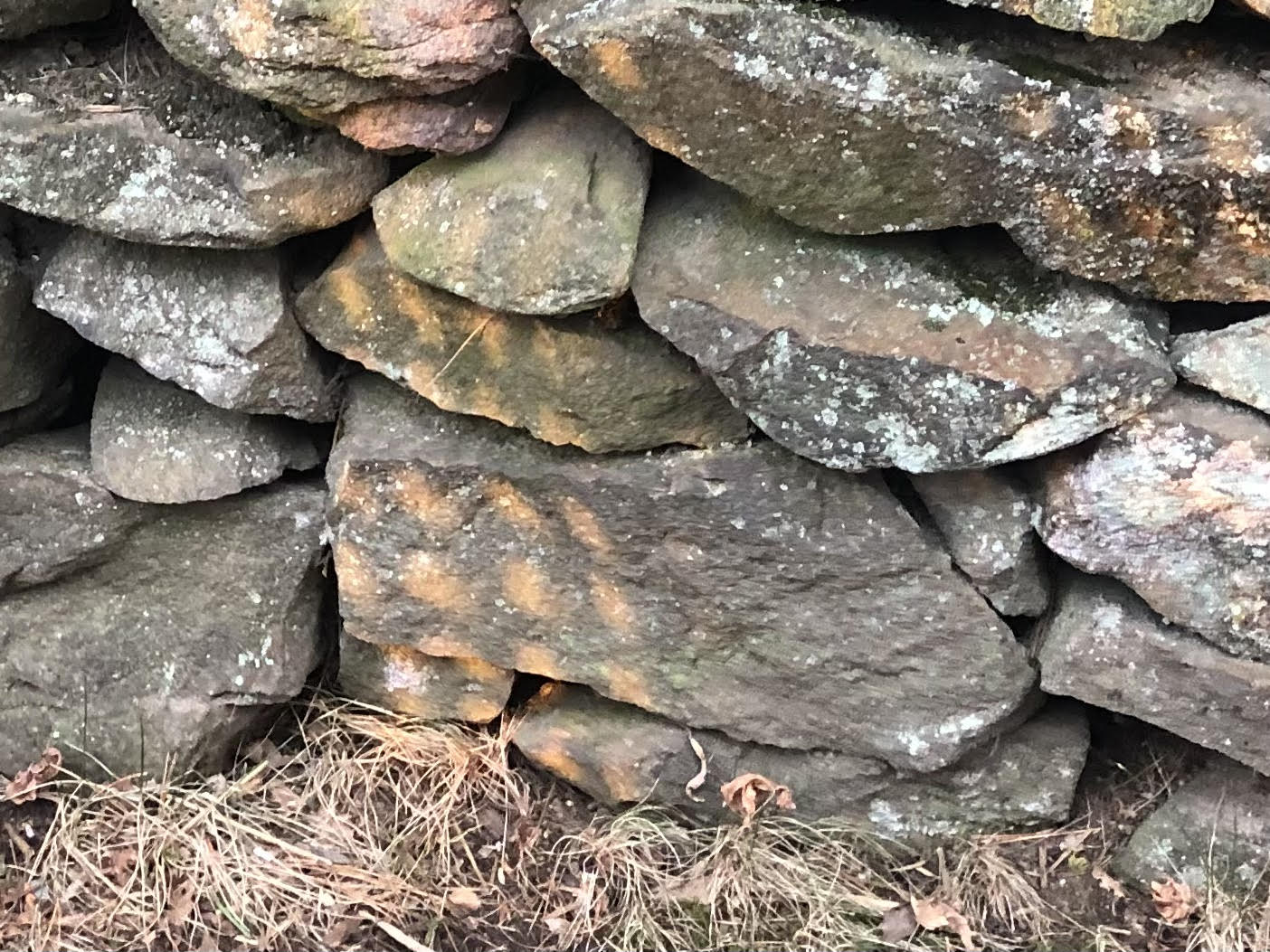
Note that Suzanne’s stone wall has a light pattern on it. It comes from the sunrise over the river in Providence and through her fence. I have to be quick with the camera as the pattern disappears fast.
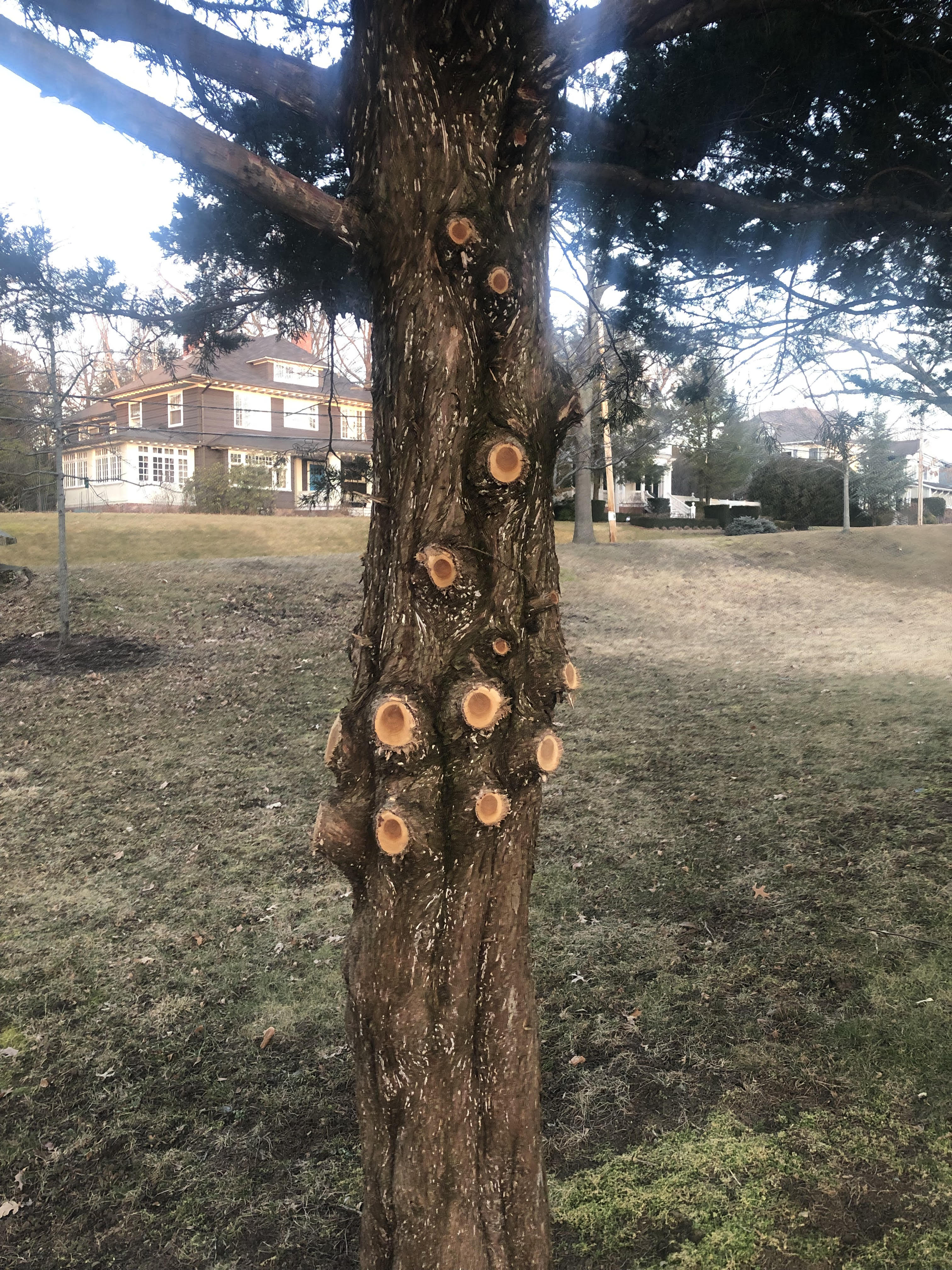
The tree of many eyes was also in Providence. Kind of weird and interesting.
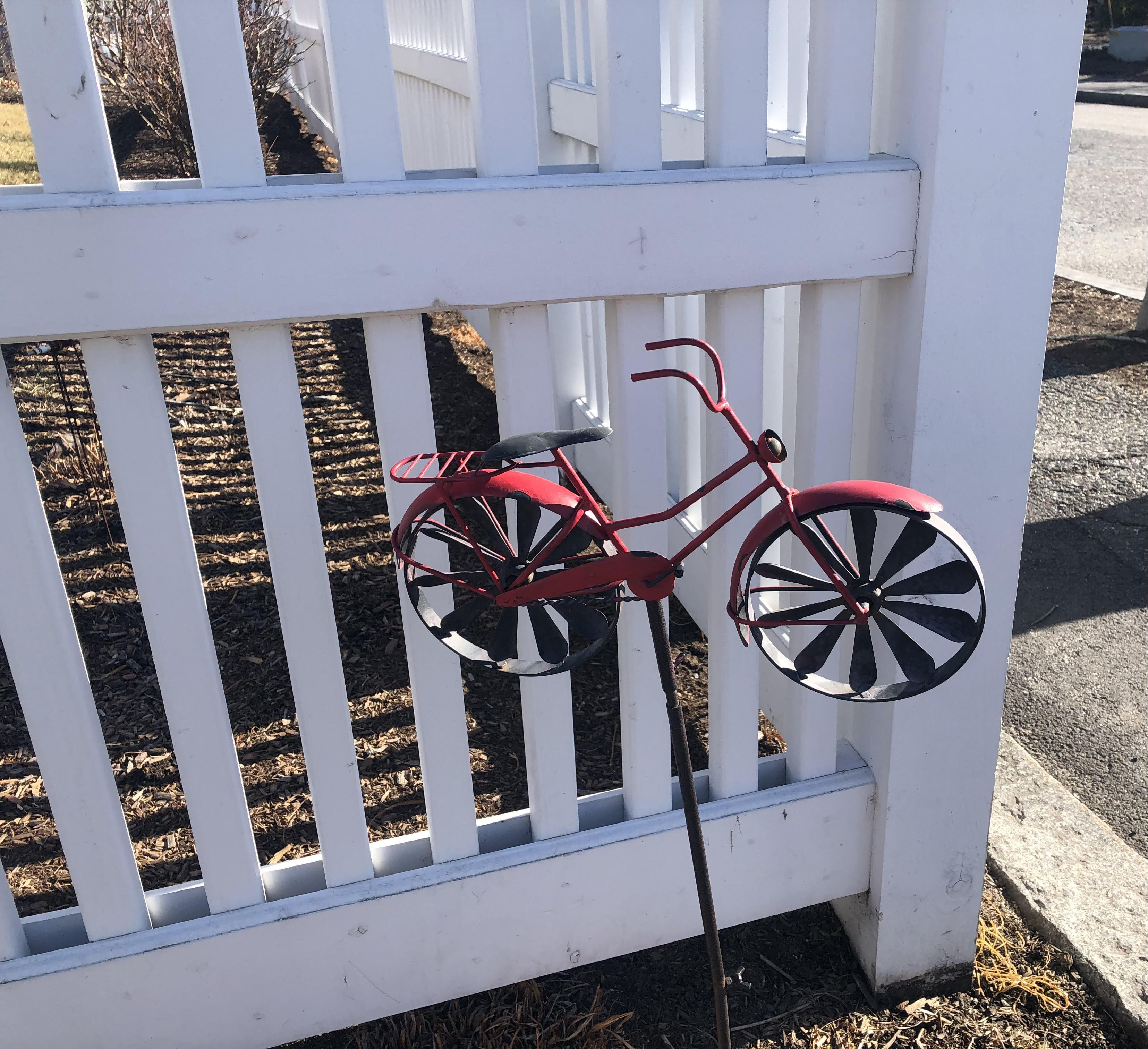
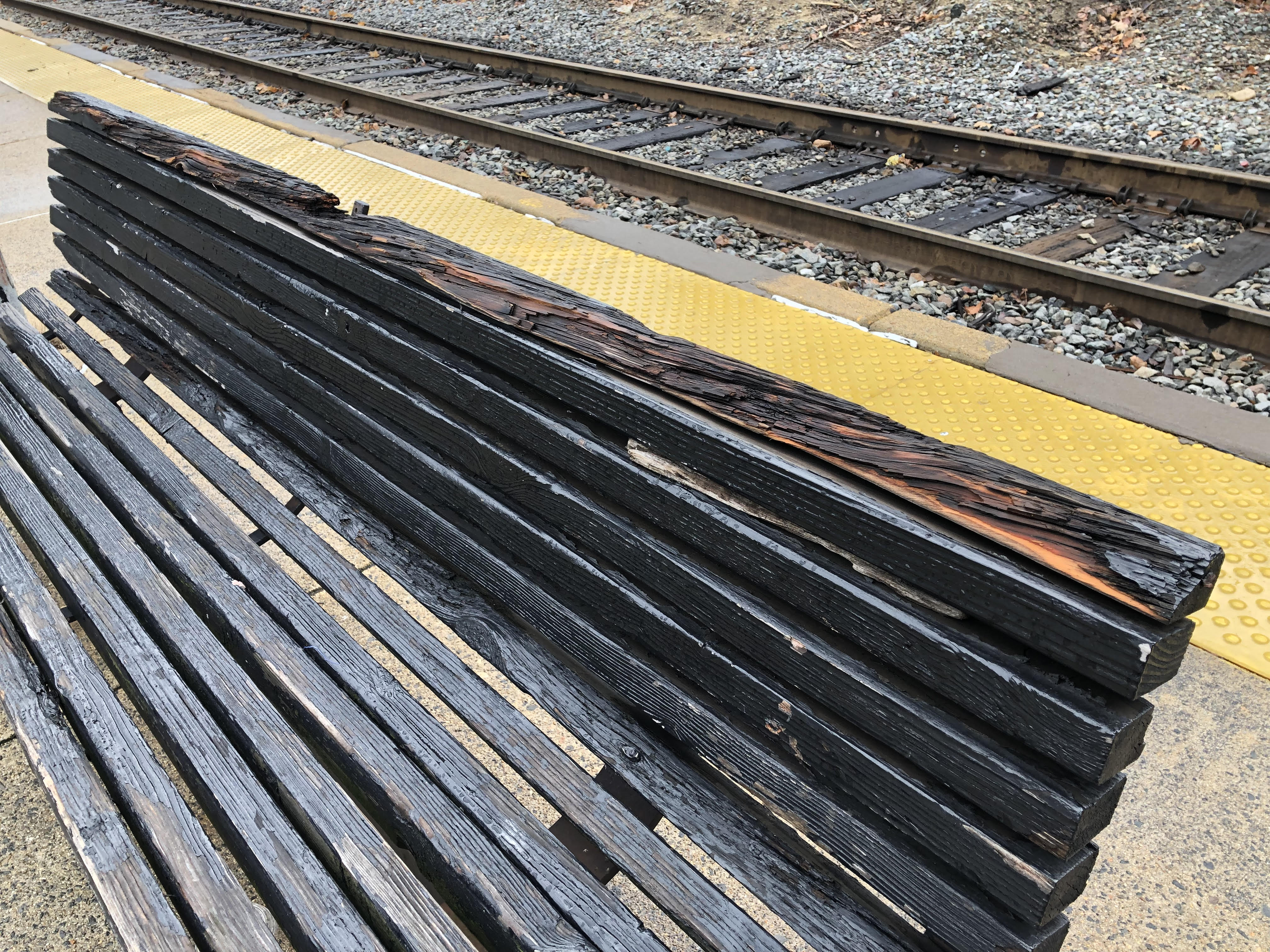
The tiny bicycle is ready for a windy ride. The chewed-up bench at the commuter rail station suggests to me that the train is often late.
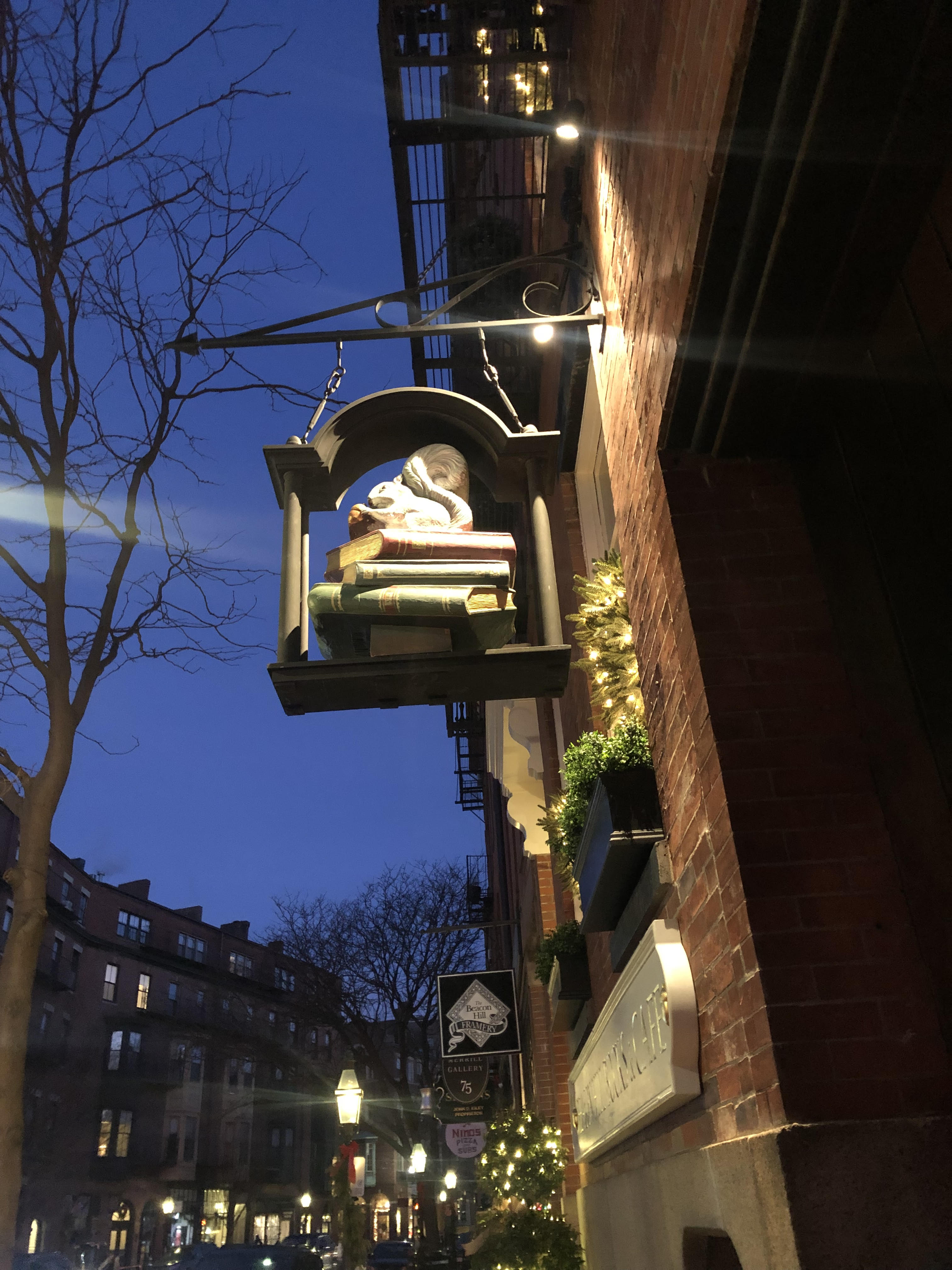
The book store with the literary squirrel in Boston is part of the indie book store resurgence I wrote about recently, here.
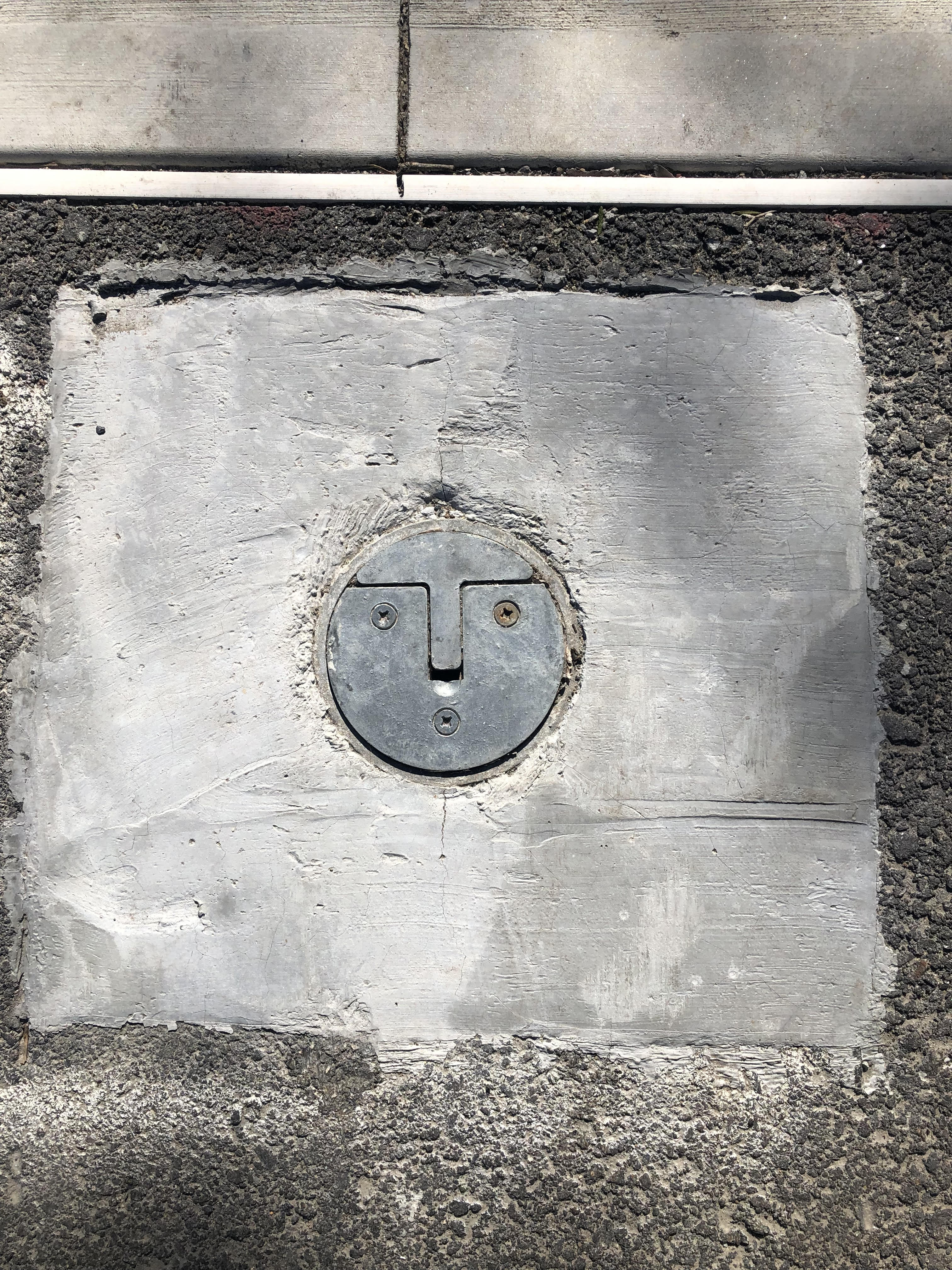
There was a mechanical face in the sidewalk near the park. Conducting surveillance, I suppose.
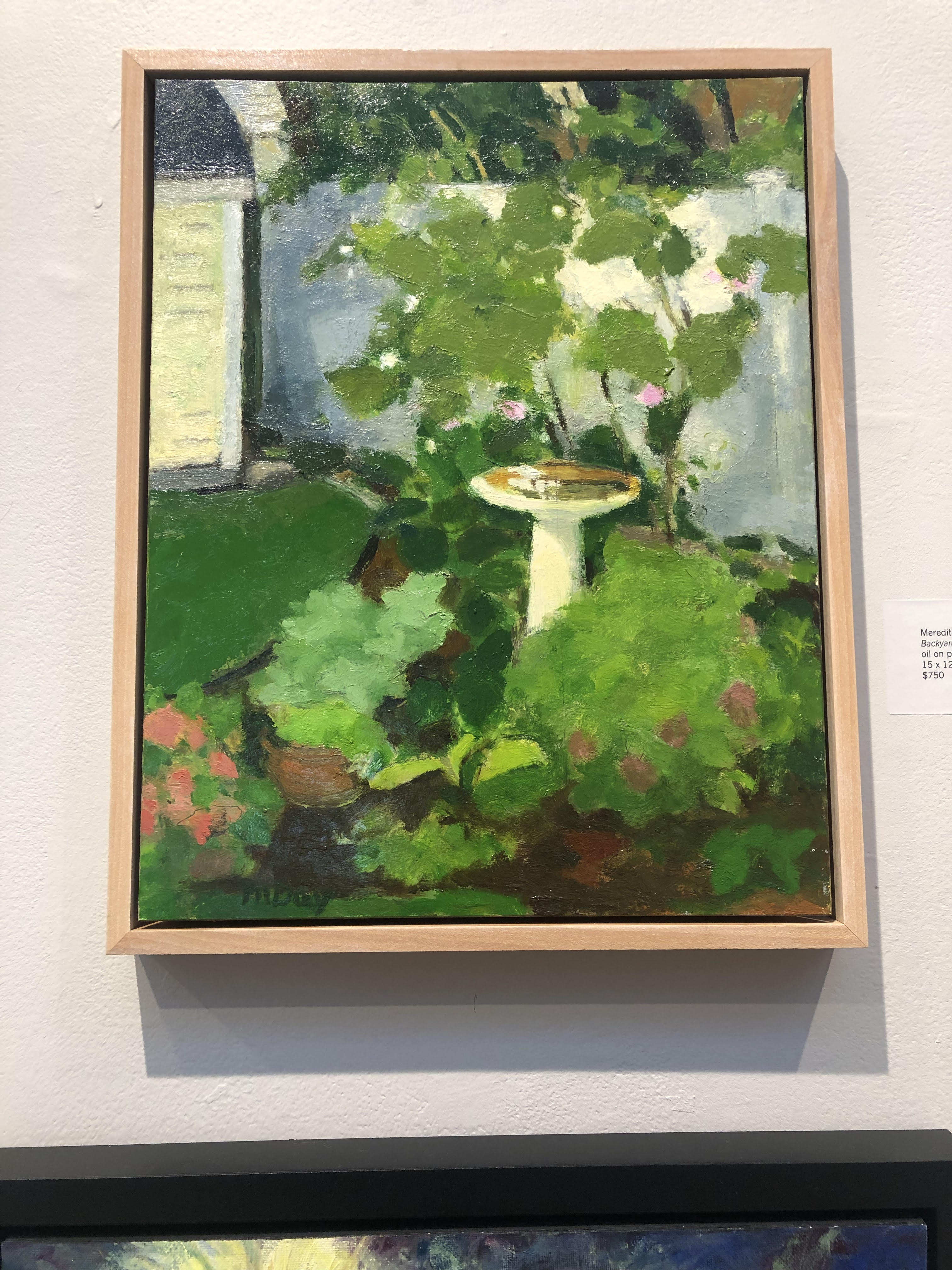
Finally, a spring treat: Meredith Fife Day’s lovely contribution to a recent exhibit at Concord Art.
For the first time in years, I’m at home for Halloween. I’ve been alternating between Suzanne and John’s homes, which has been a lot of fun. Besides, all the children in my neighborhood grew up and moved away, so there have been no trick-or-treaters on my street for a long time.
Now some young families have moved in. I want to see the little ones in their costumes — and avoid driving on such a night. I’ll let you know if I get any takers for the candy, Goldfish cracker bags, or juice boxes.
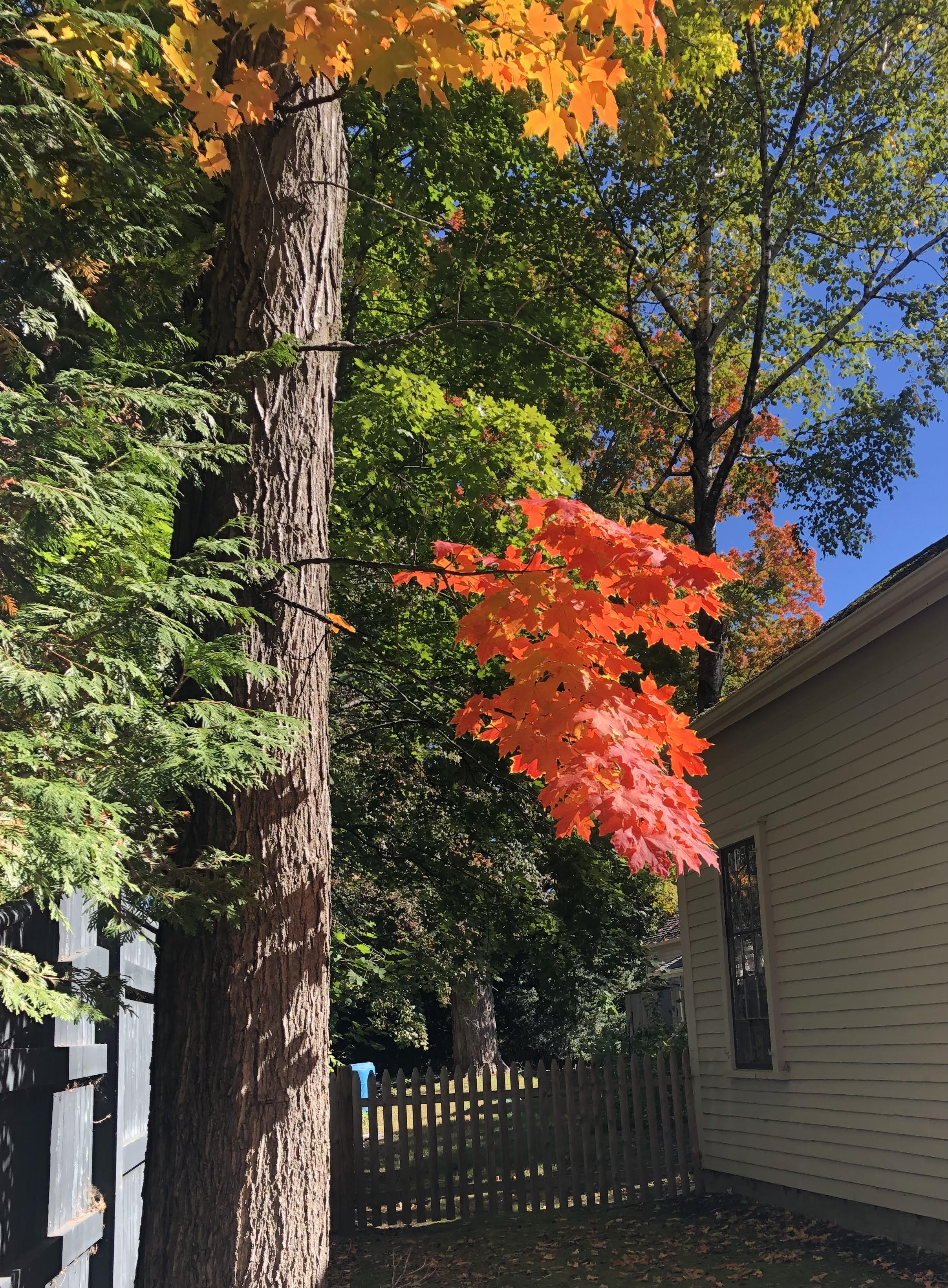
Meanwhile, I want to share a few photos of the season and hope you like some even if you don’t like Halloween.
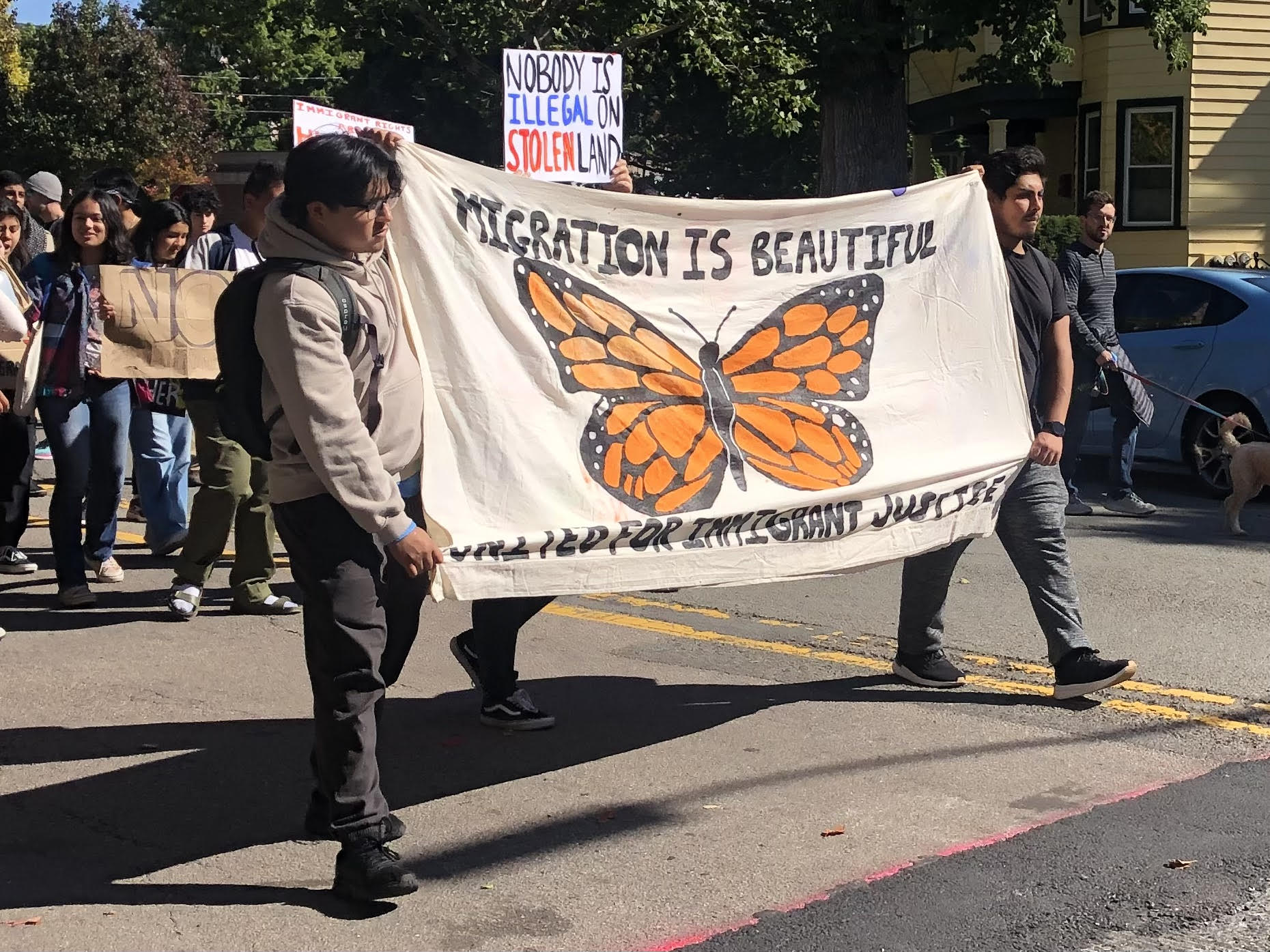
I’m starting with the Honk Parade in Somerville. It is on the Columbus/ Indigenous People’s Weekend every non-Covid year.
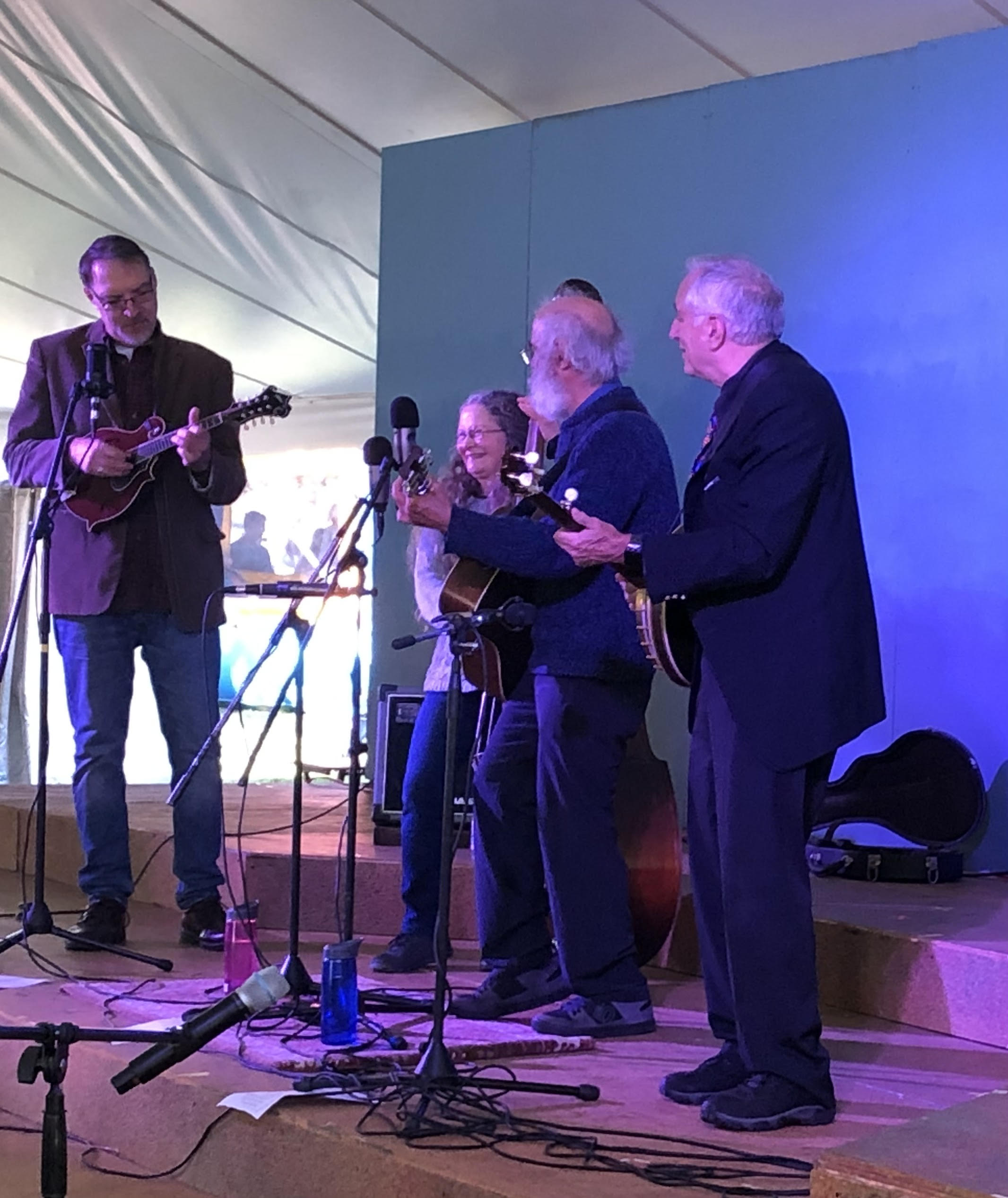
The band playing at a local church’s fall festival is the wonderful bluegrass group Southern Rail. I can’t resist putting one of their videos at the end of this post.
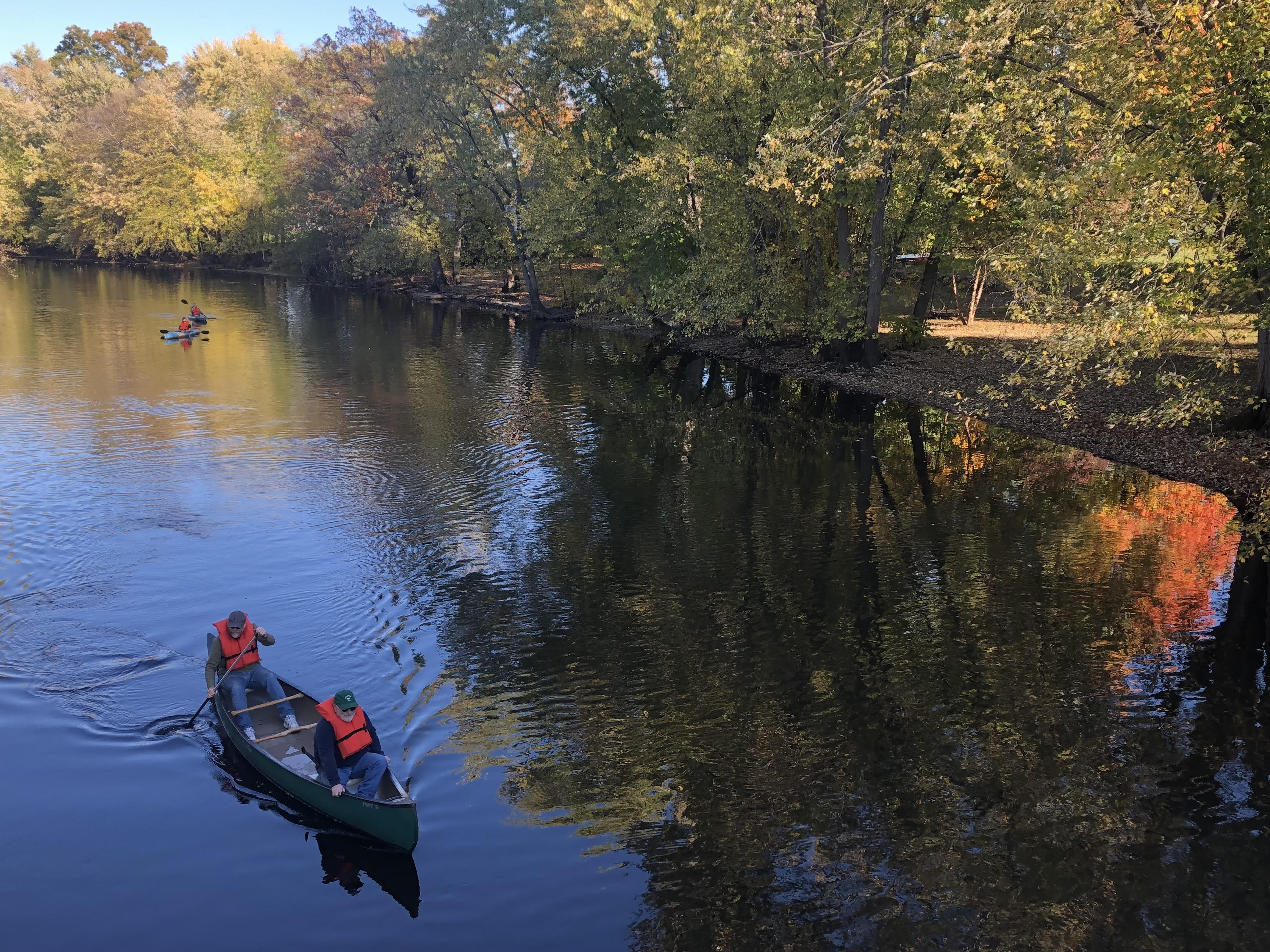
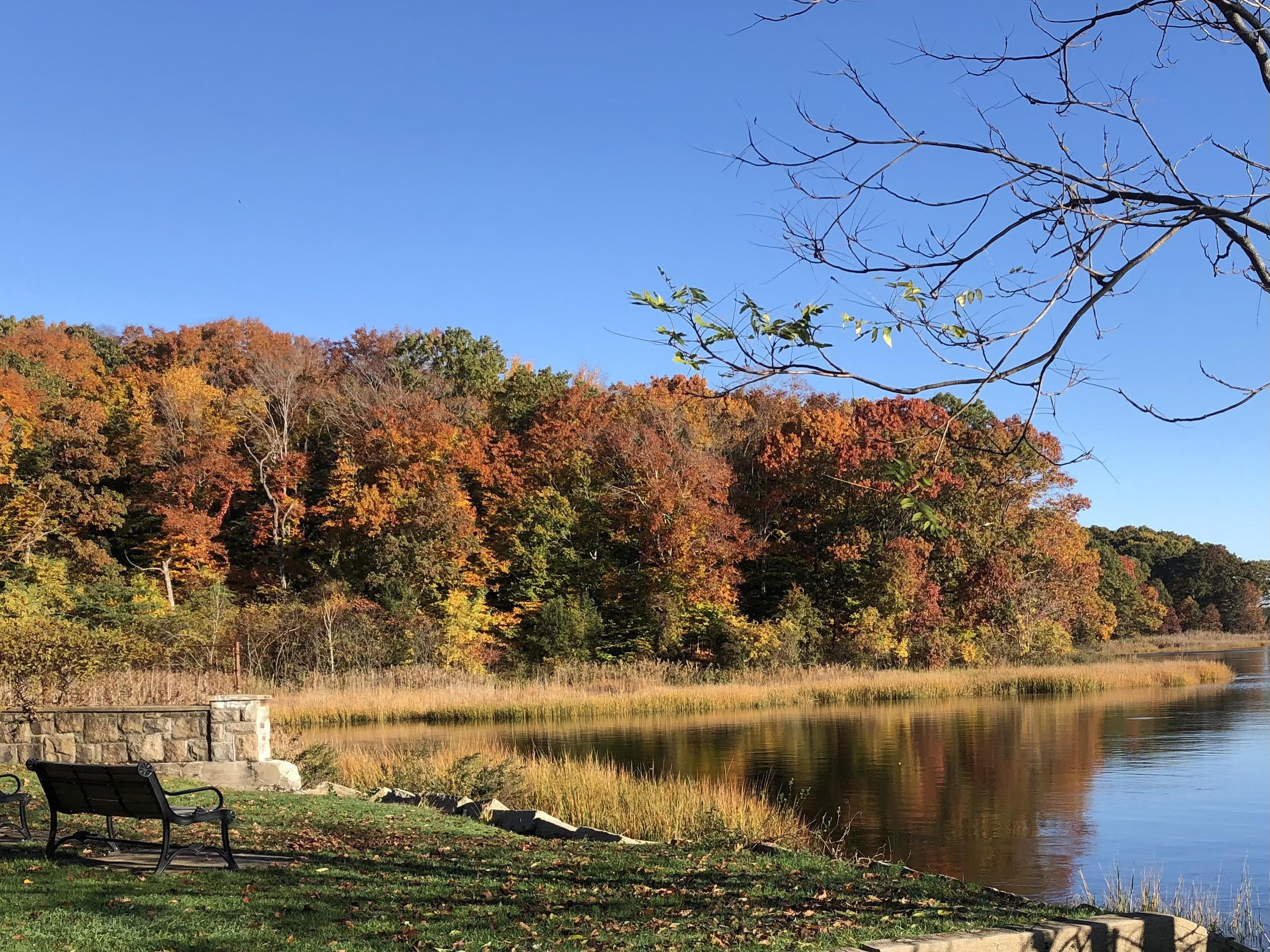
The boaters are enjoying the Sudbury River in Massachusetts. The meditative bench is on the Seekonk River in Rhode Island.
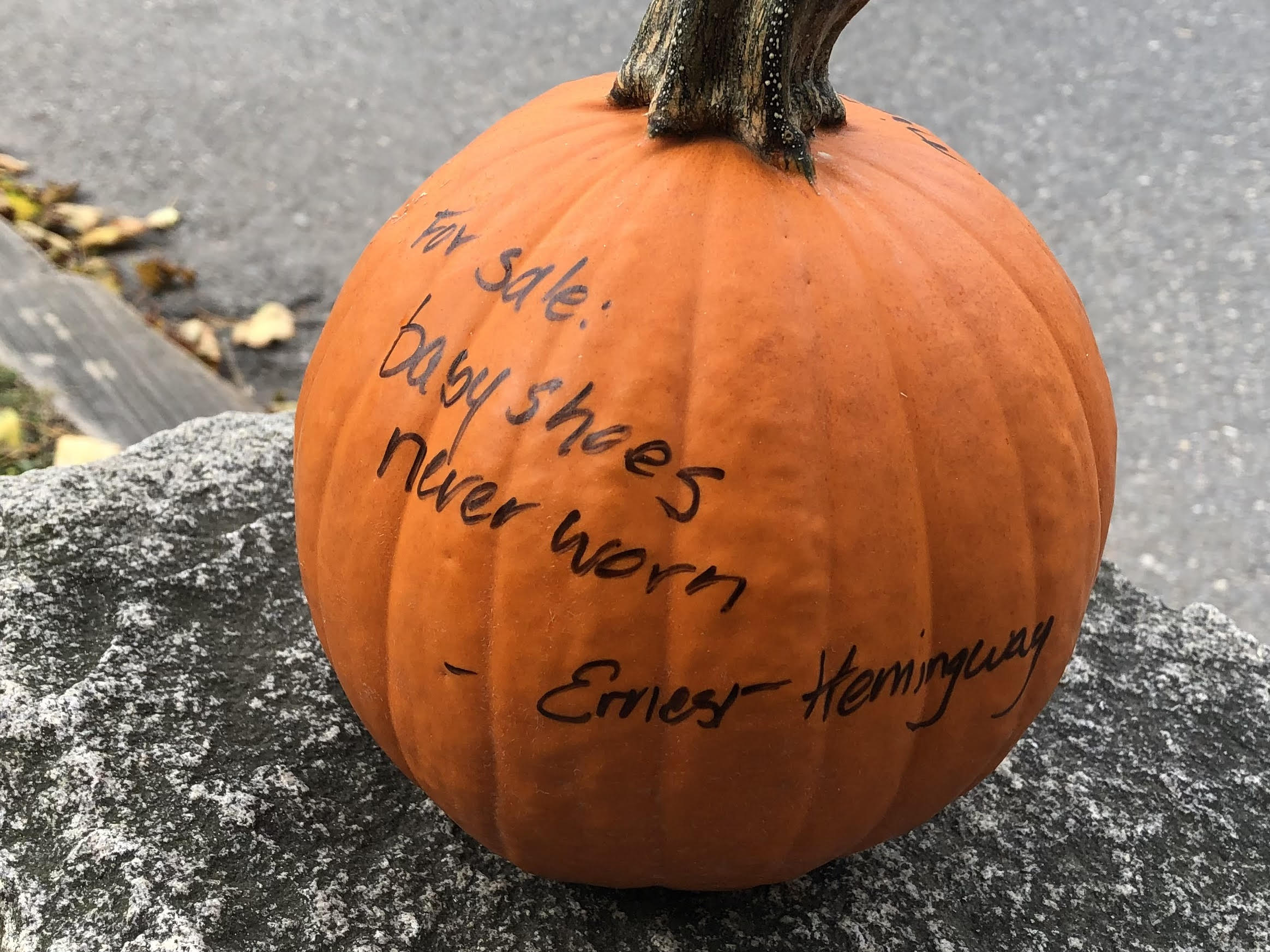
I love the idea of six-word novels. The creative woman on Sudbury Road had numerous “novels” on pumpkins this year.
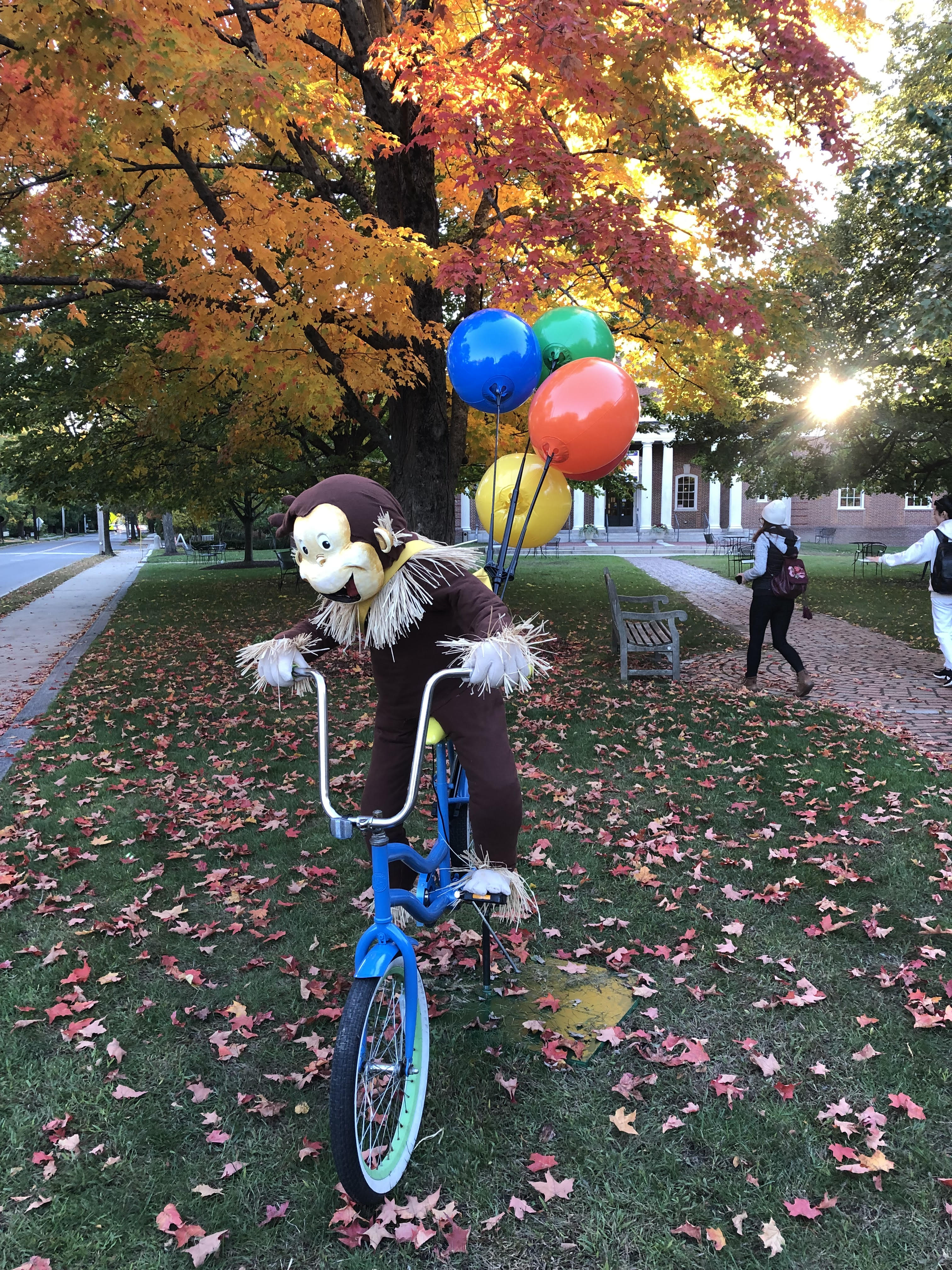
Across the street from her yard, the public library featured children’s story books. I’m sure you recognize Curious George.
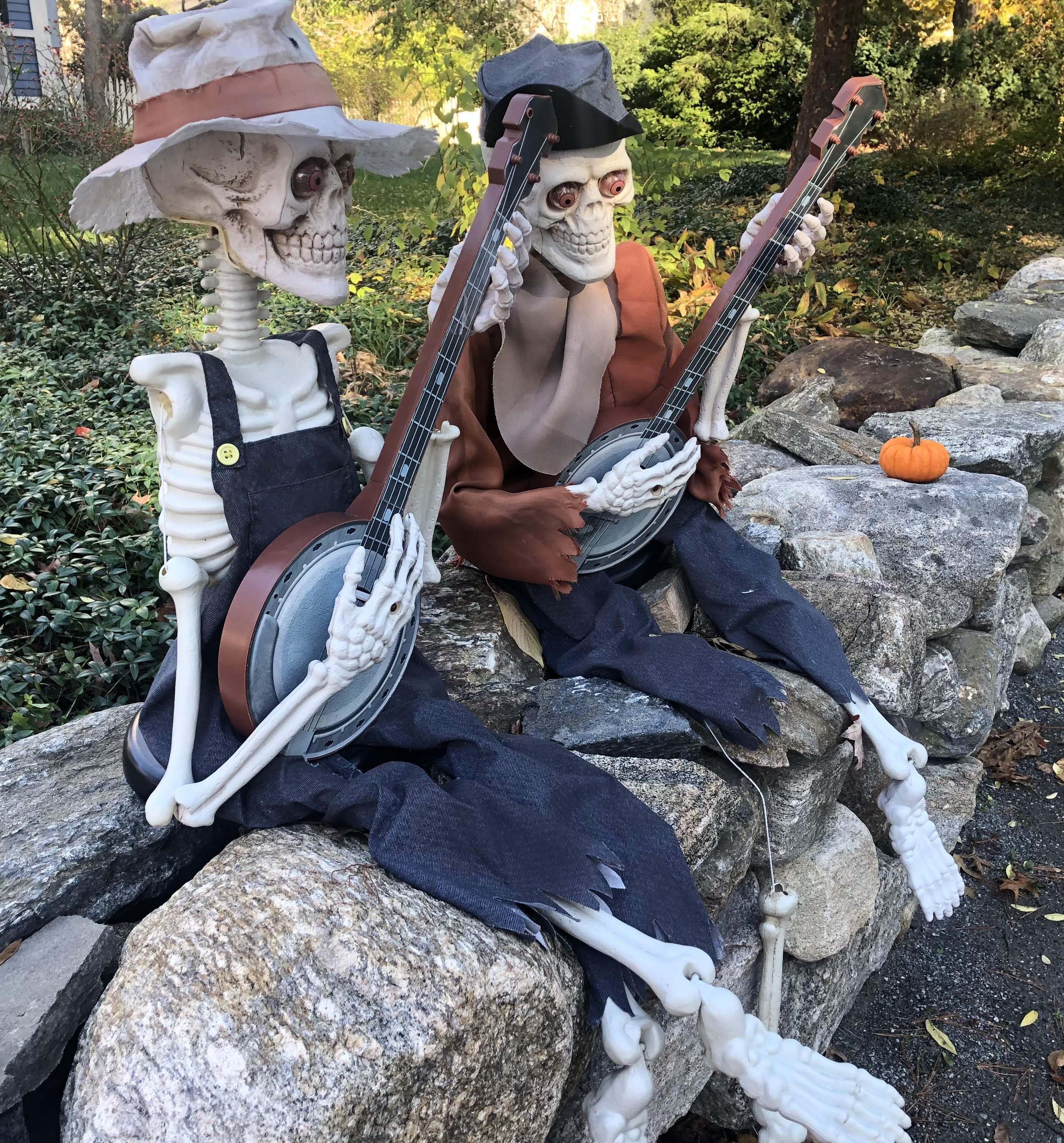
Don’t know who the banjo players are, given they lack any features, but one seems to be a Union soldier.
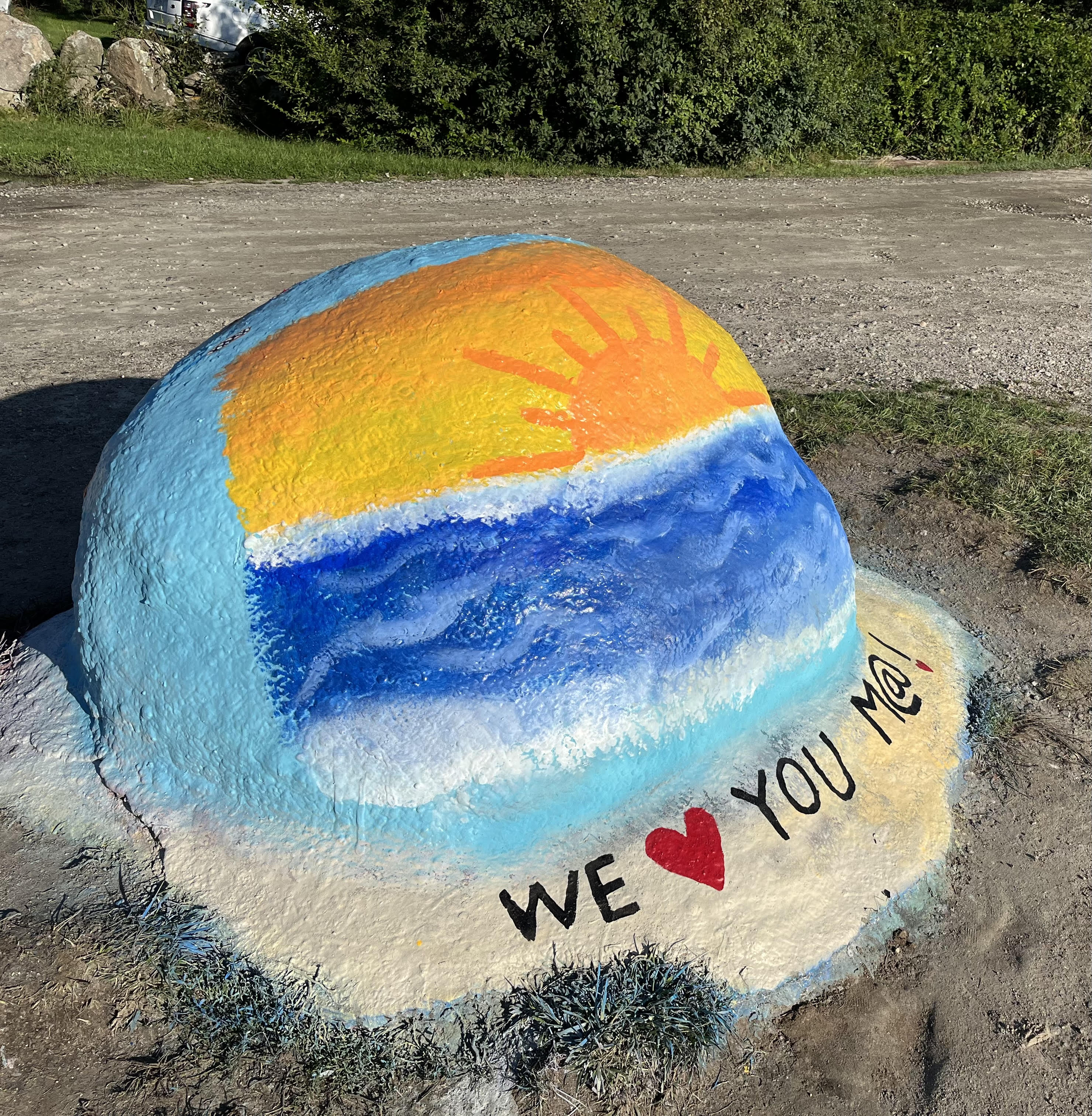
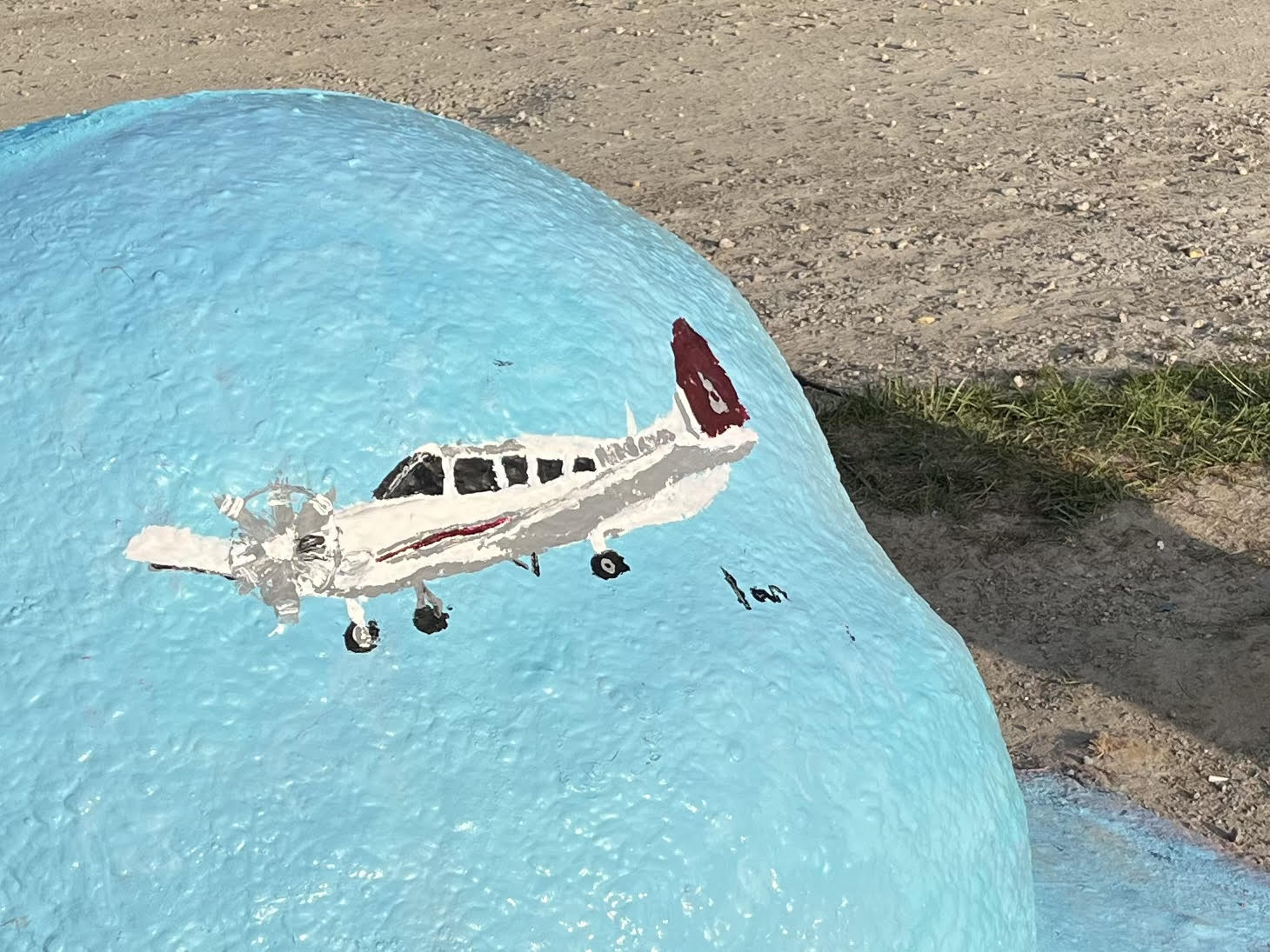
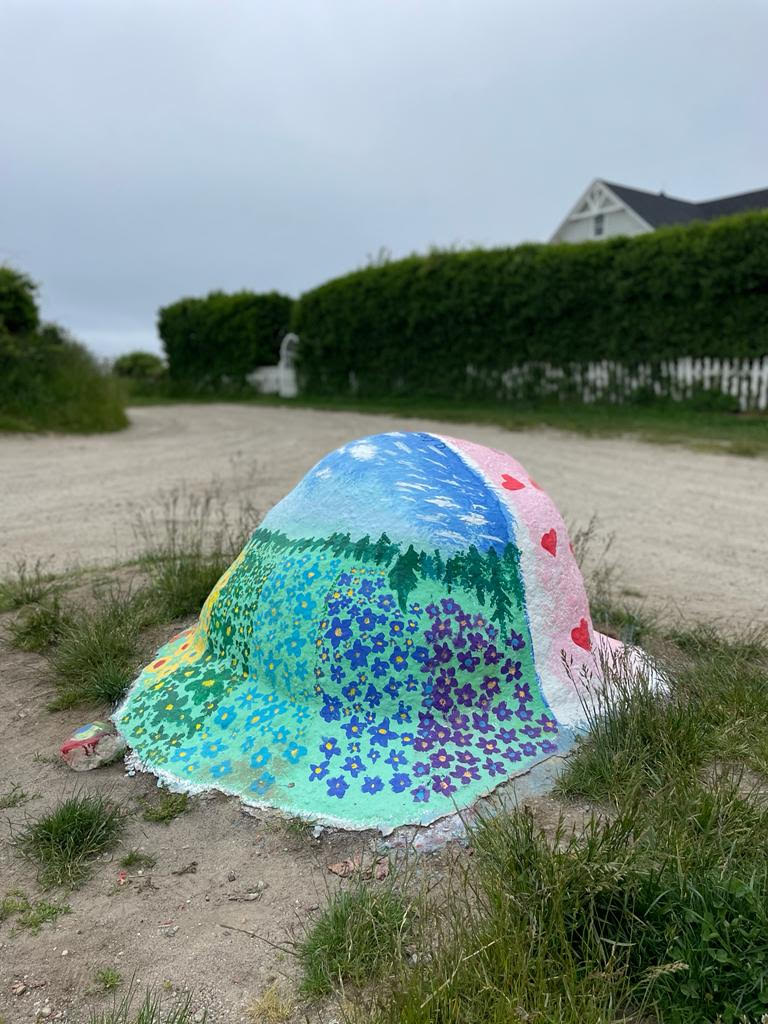
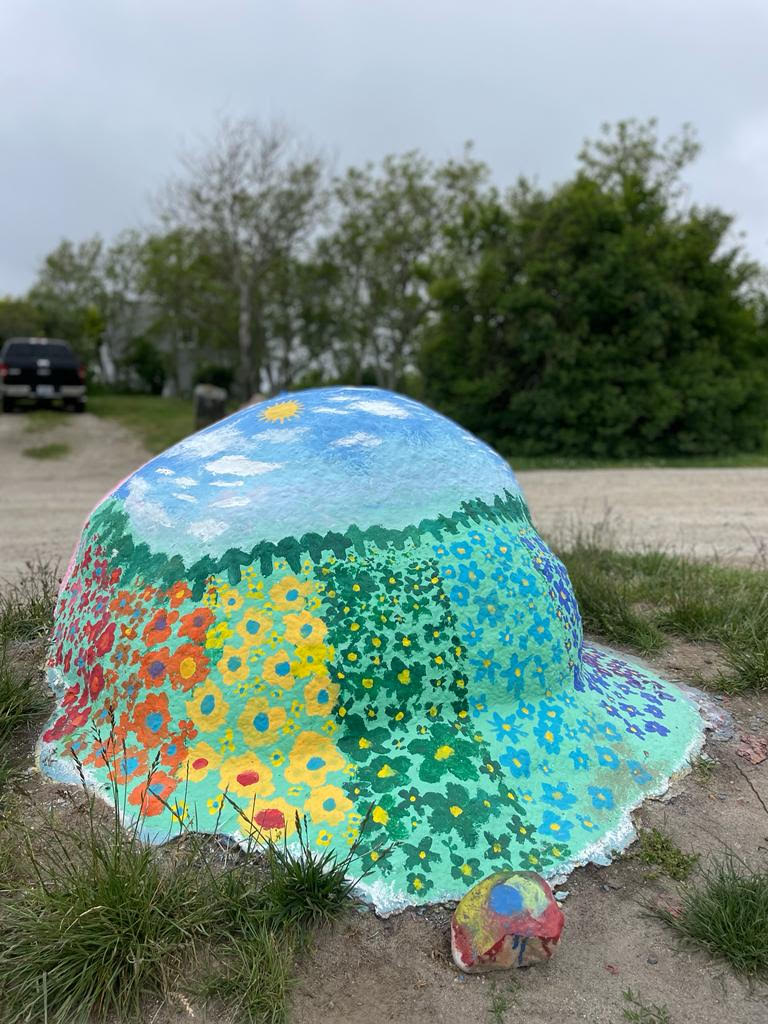
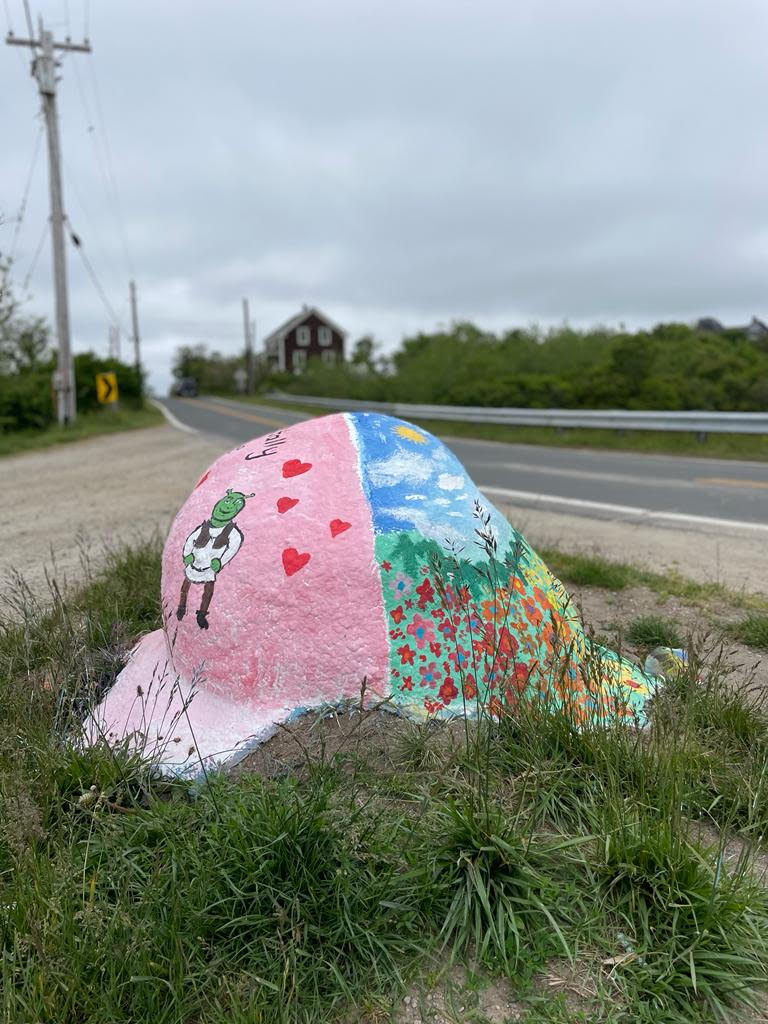
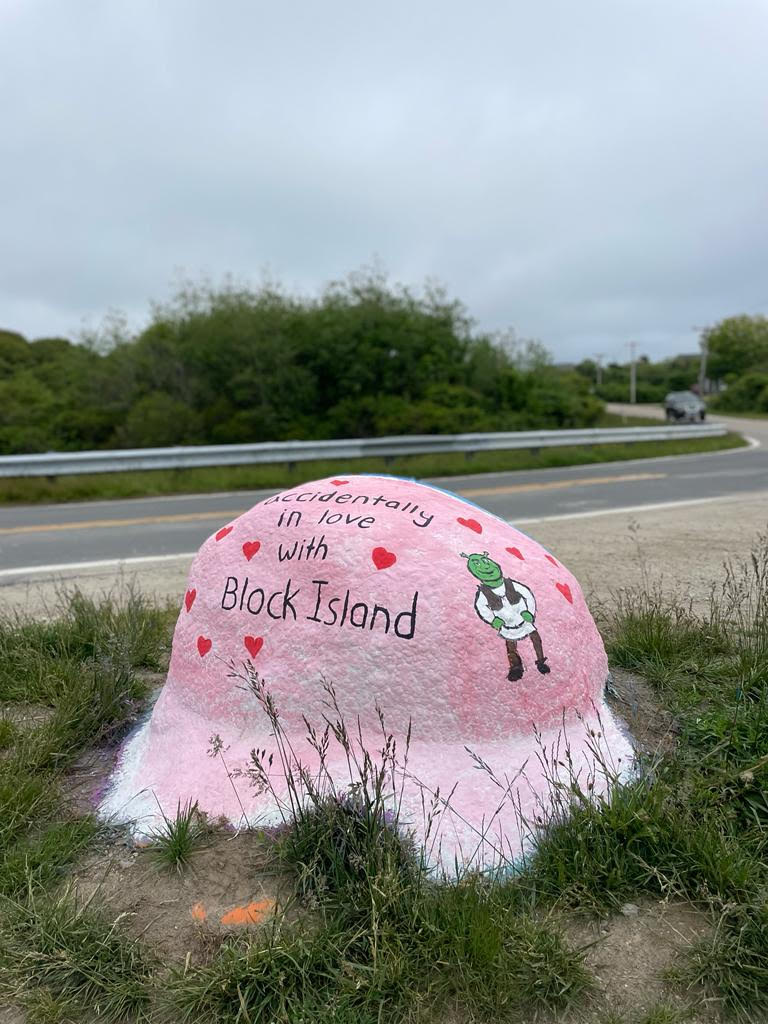
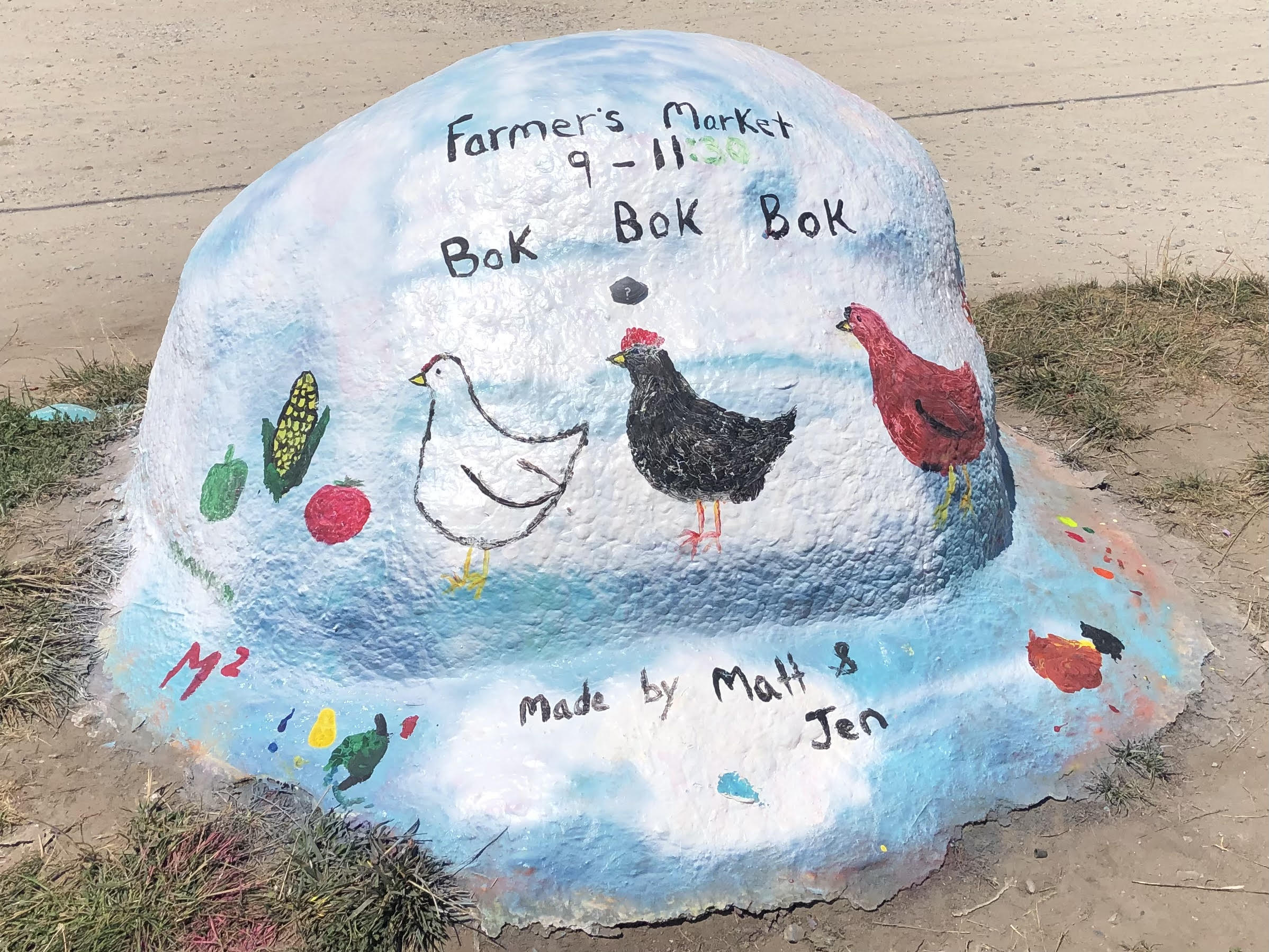
Photo: Suzanne. The Painted Rock gets the best art in the off-season. This was in early June.
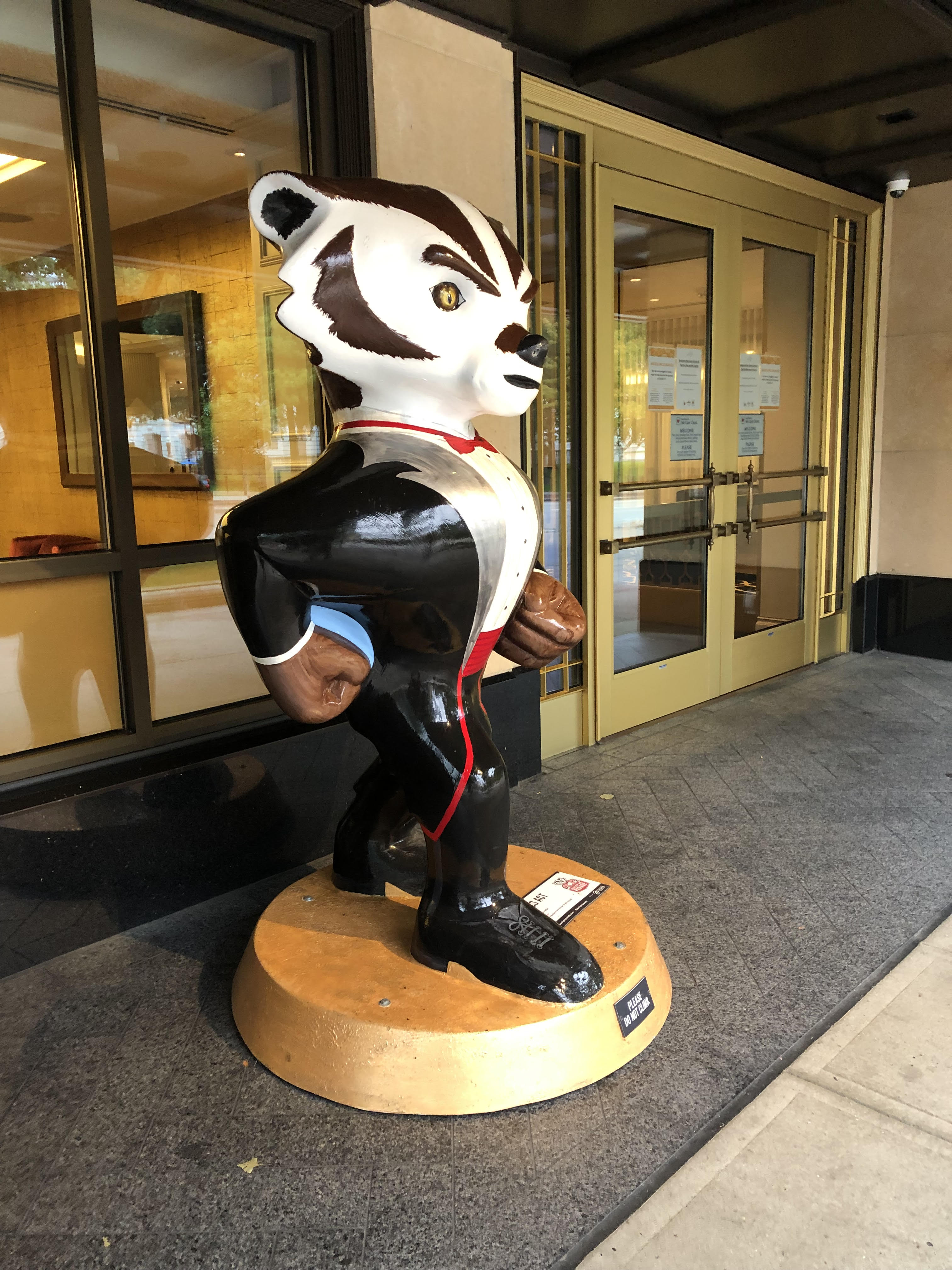
Today I’m rounding up a few photos from summer in New England (although, of course, the badger photo was not taken in New England but on that wedding trip).
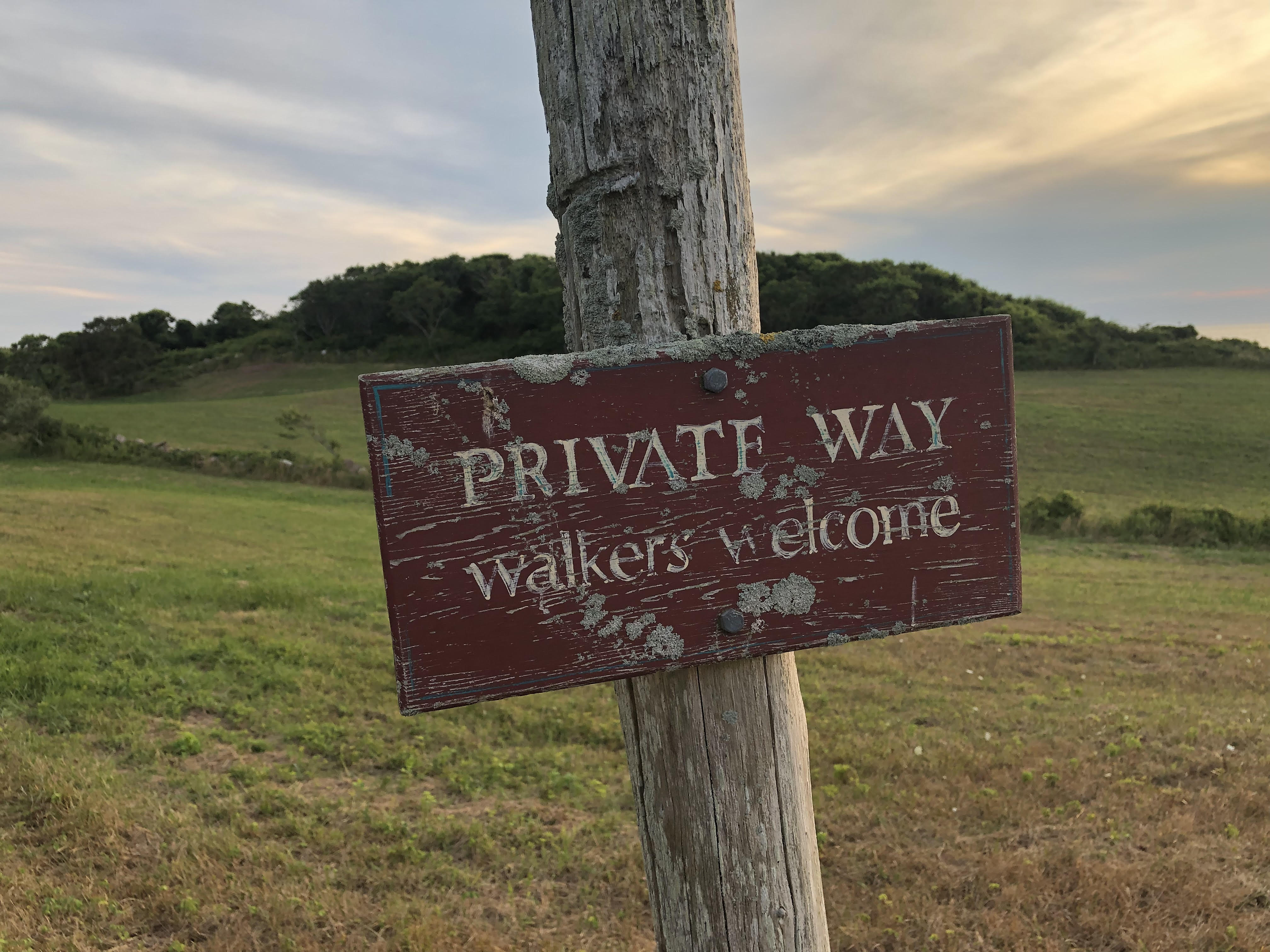
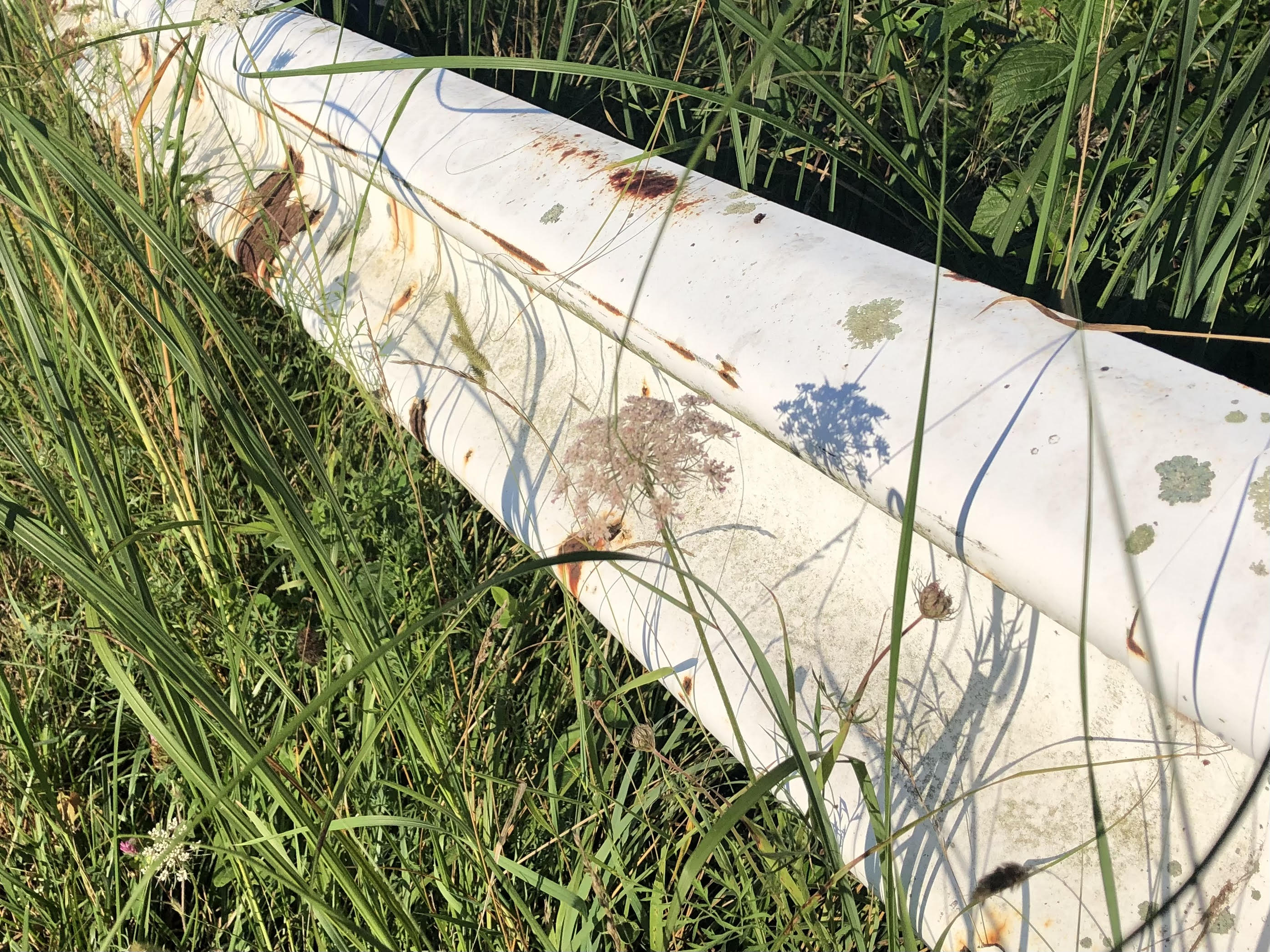
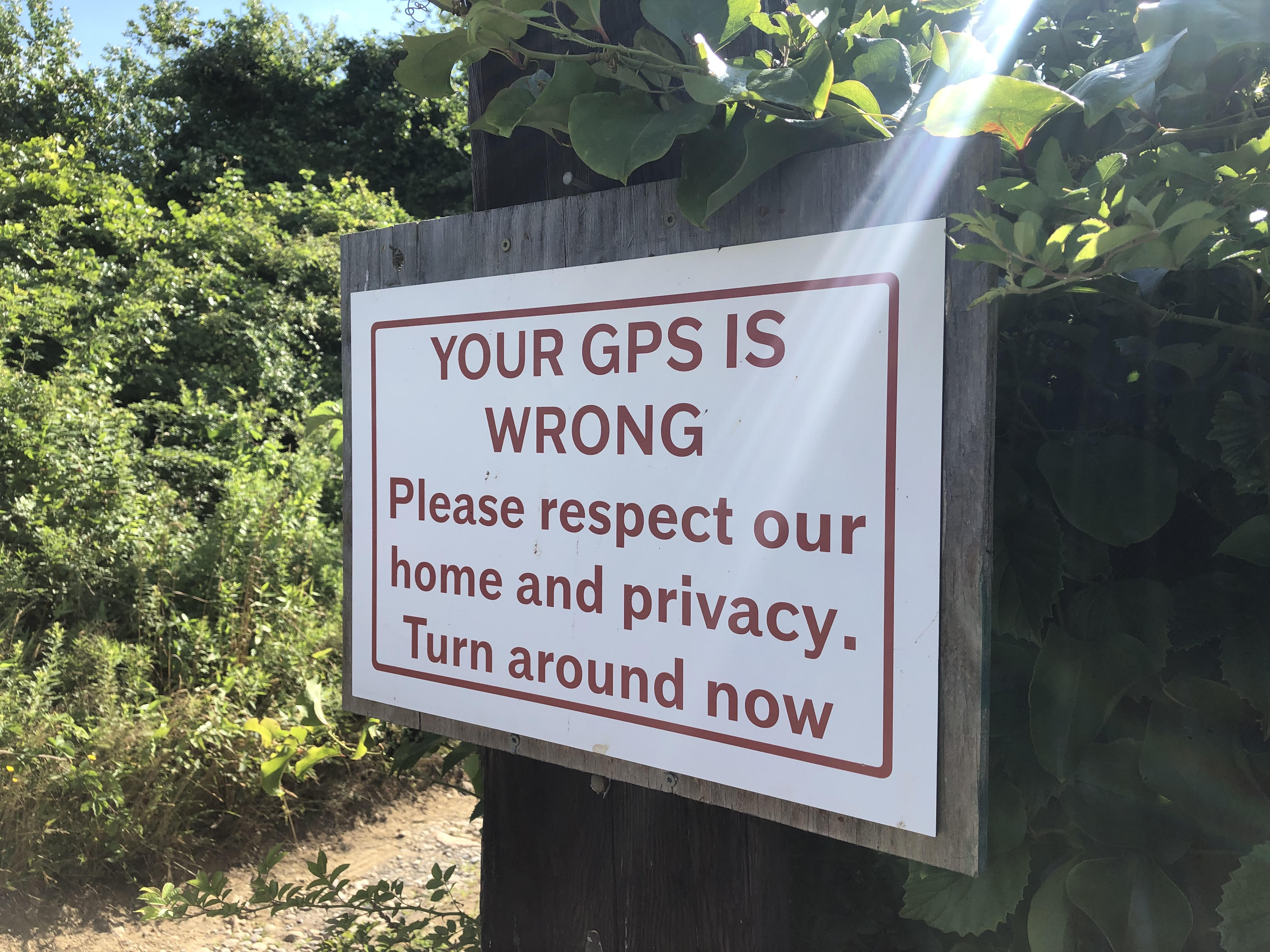
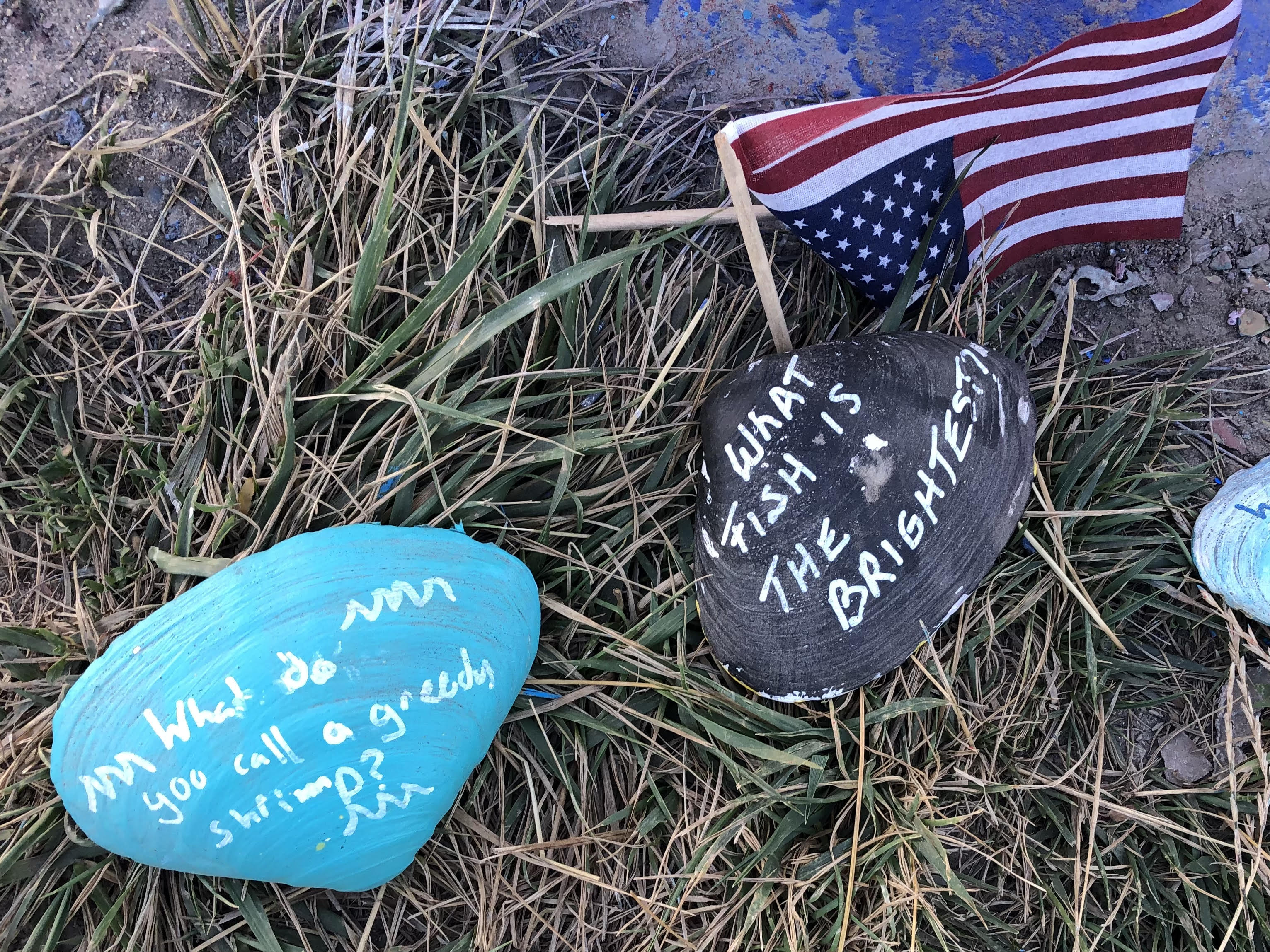
There are four photos of some really artistic work on the Painted Rock. Next comes a typical island clothesline in the mellow light near sunset. That’s followed by a pile of rocks that someone (a child?) collected at the edge of the Tug Hole, a sign showing that some landowners are welcoming, and a sharp Queen Anne’s Lace shadow on a guard rail. Those photos were all taken in New Shoreham,, Rhode Island.
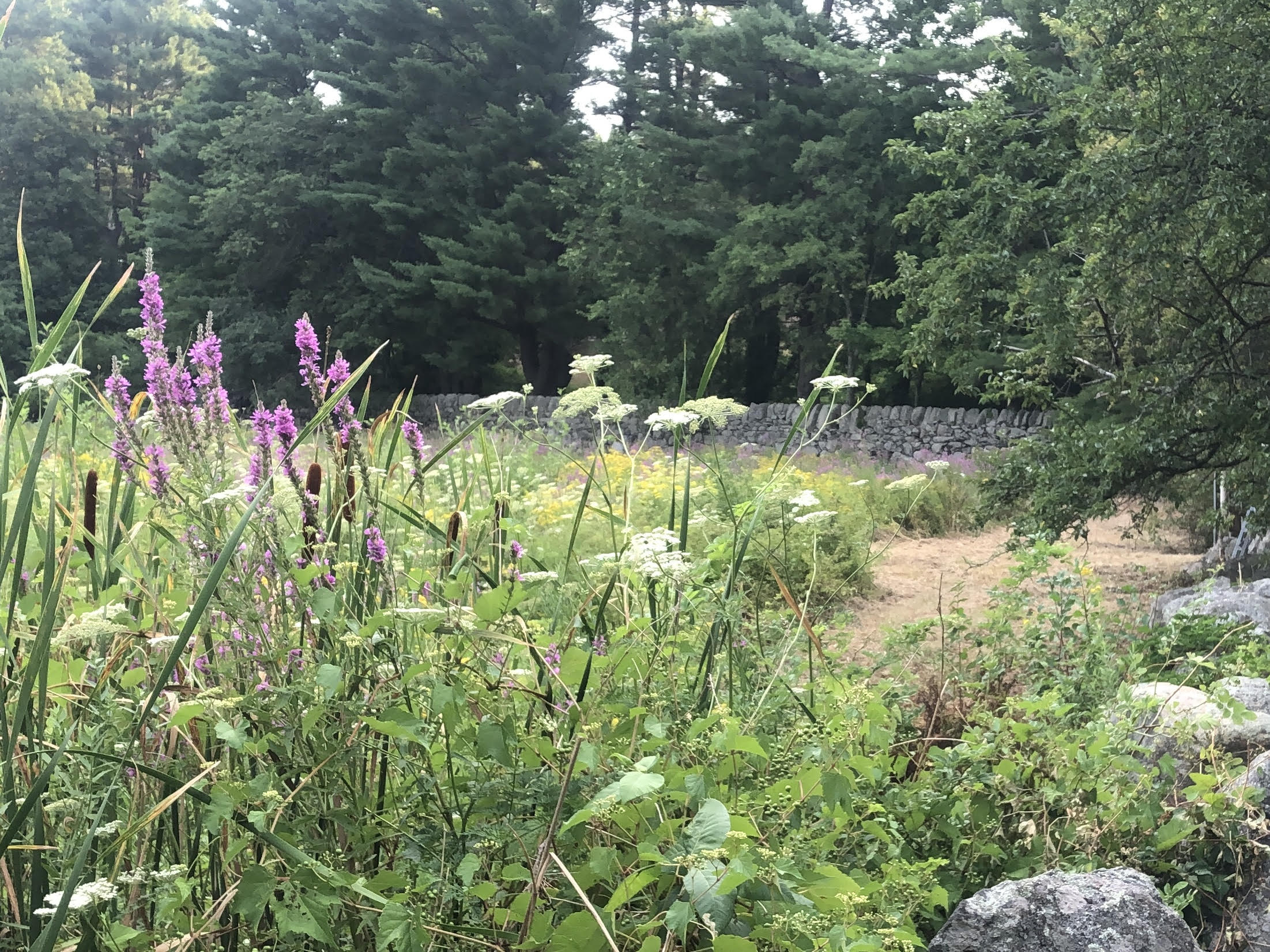
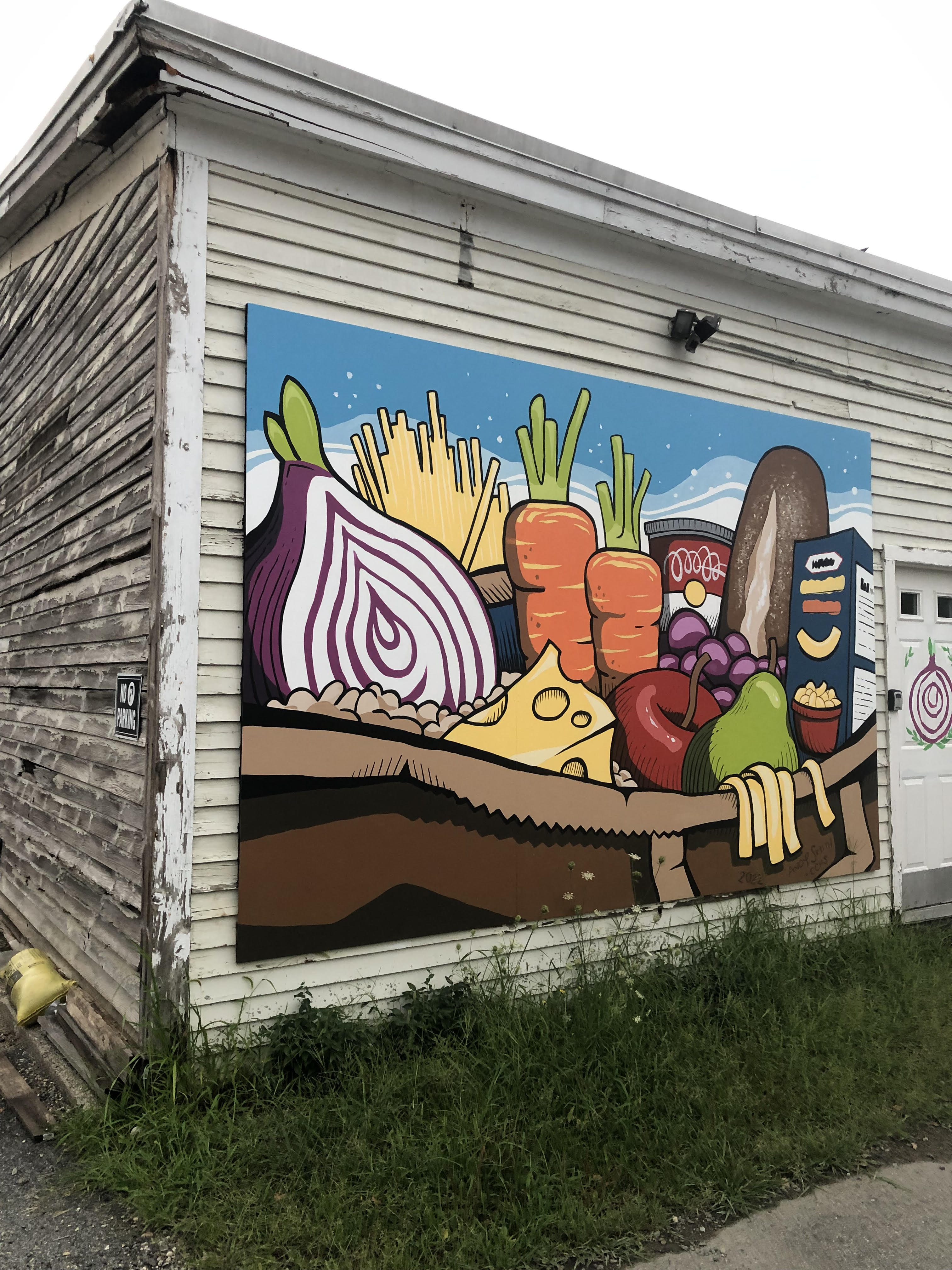
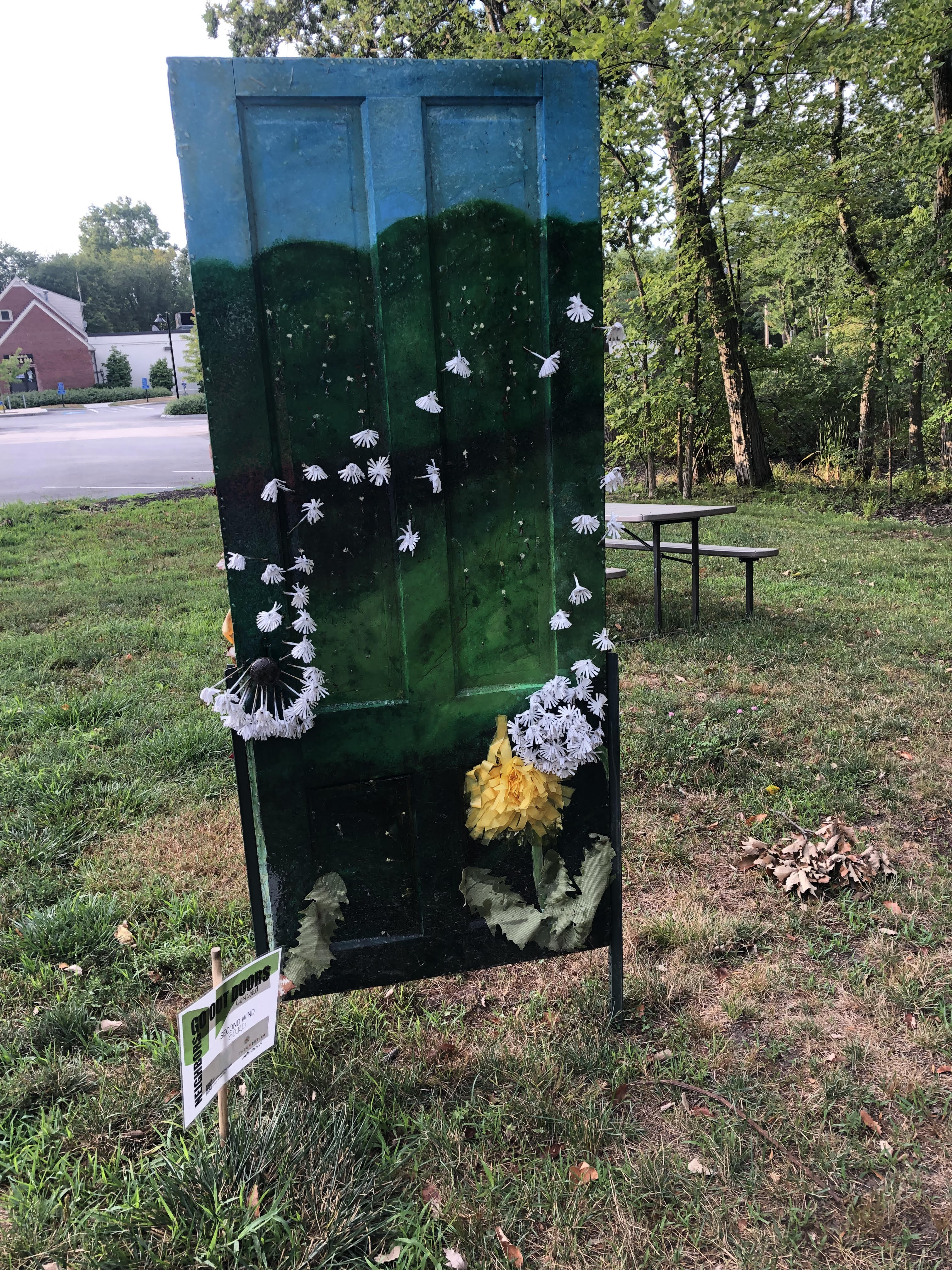
The next few are from Massachusetts: Purple Loosestrife near a stone wall, a food-themed mural, a painted door with 3-D touches, and a juvenile red-tailed hawk at Minuteman Park. There were three of the young hawks horsing around that morning. They threw me off the identification until I learned that red tails whistle and that the tail isn’t red in the first year.
It’s a hot July, but we’ve had a good breeze and I’ve been able to take walks and shoot photos regularly by heading out early. So walk this way.
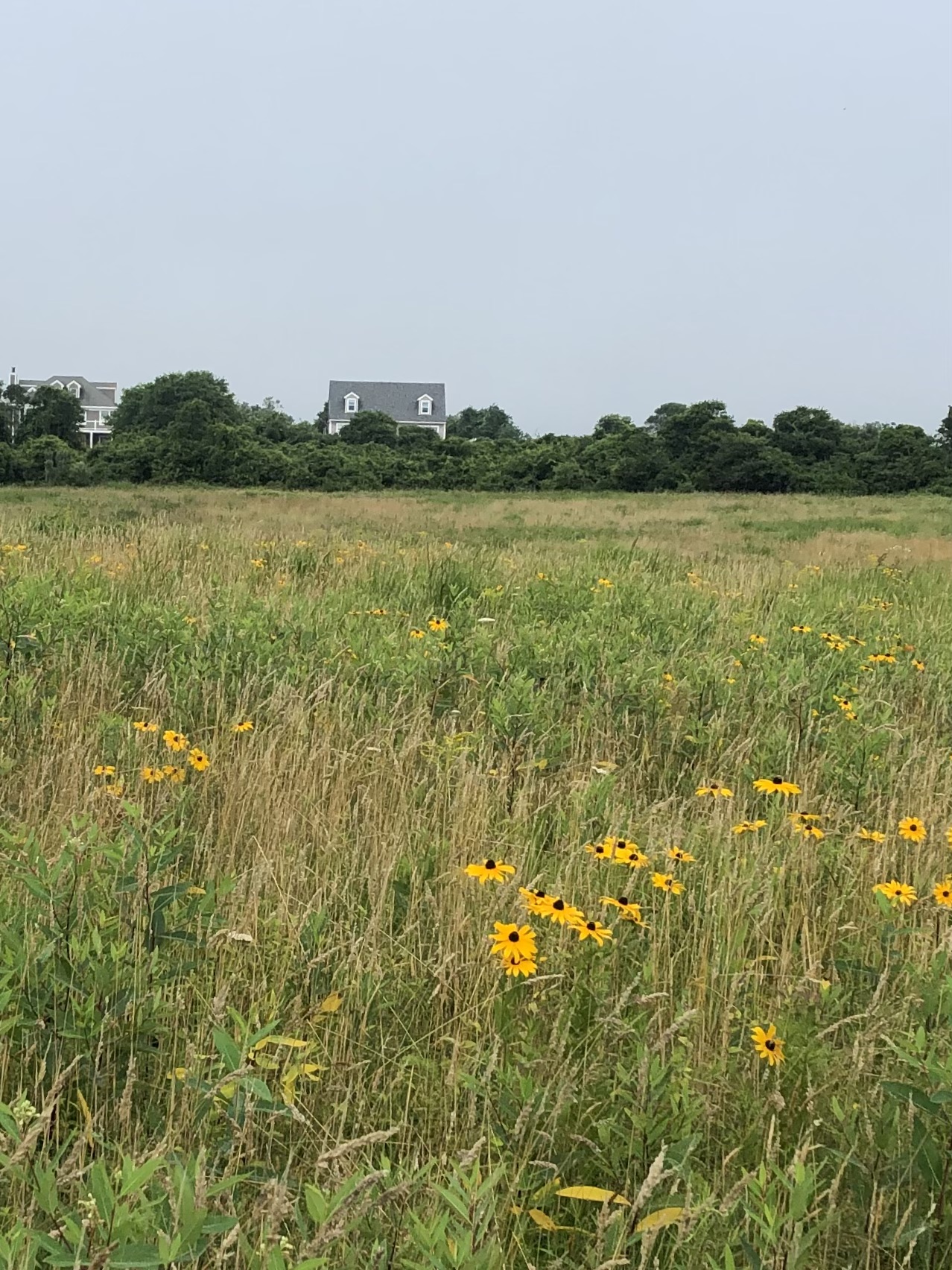
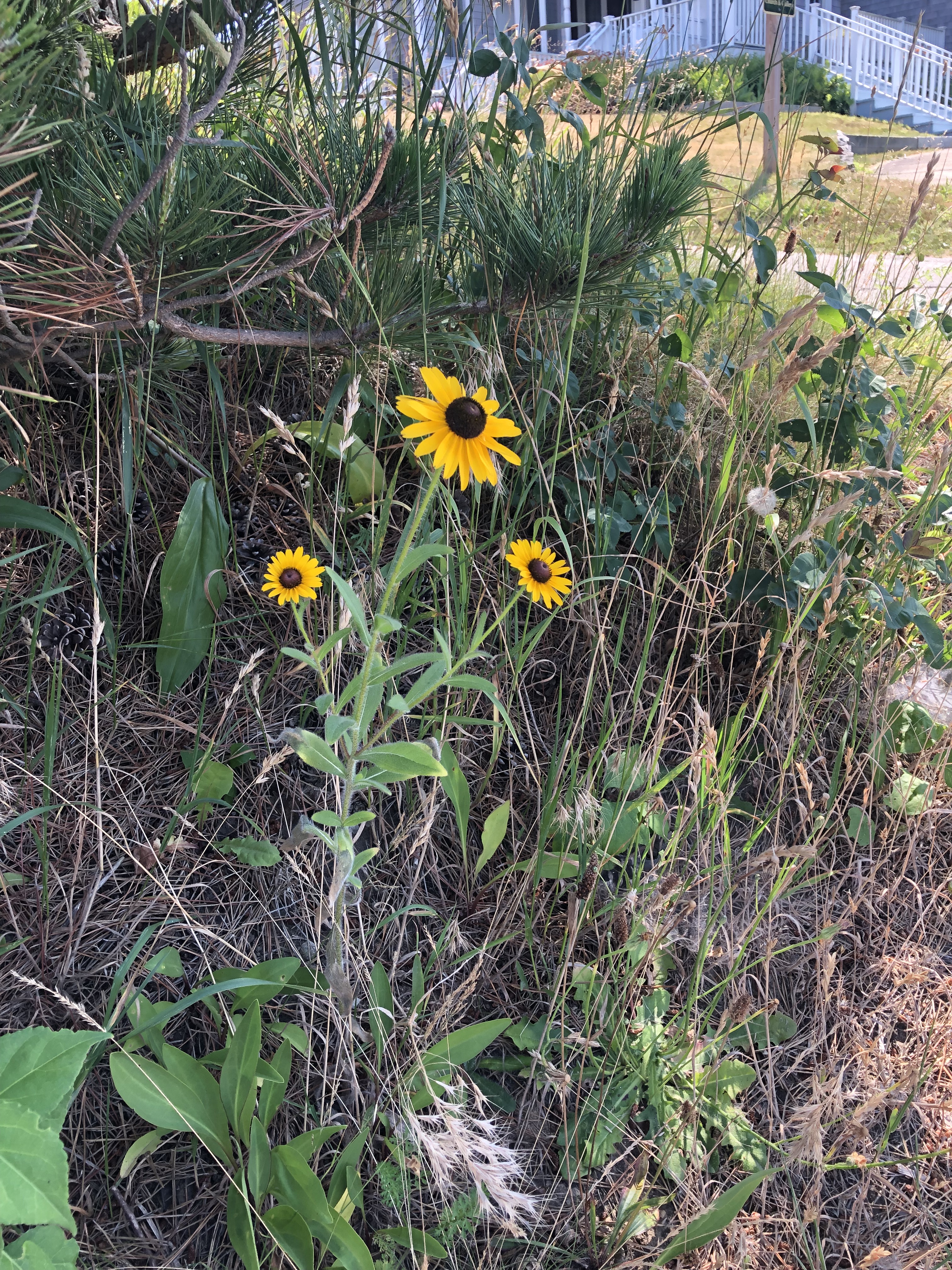
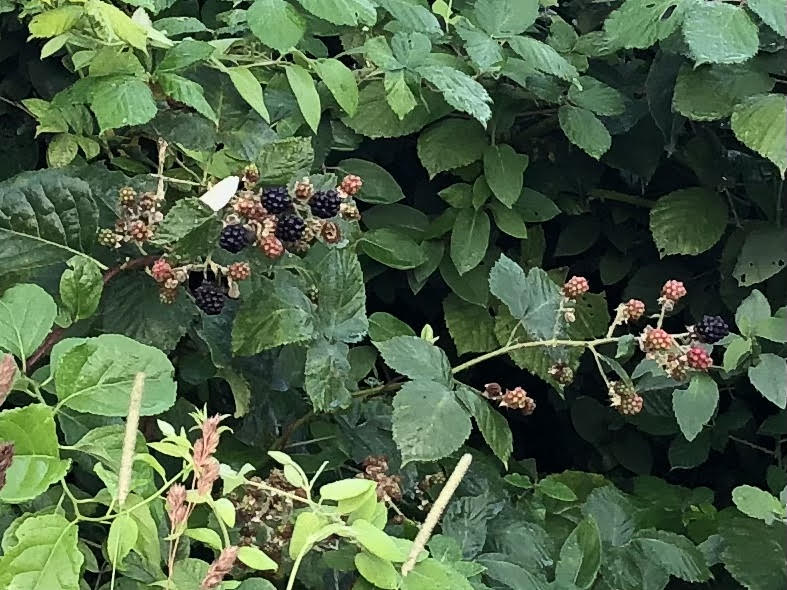
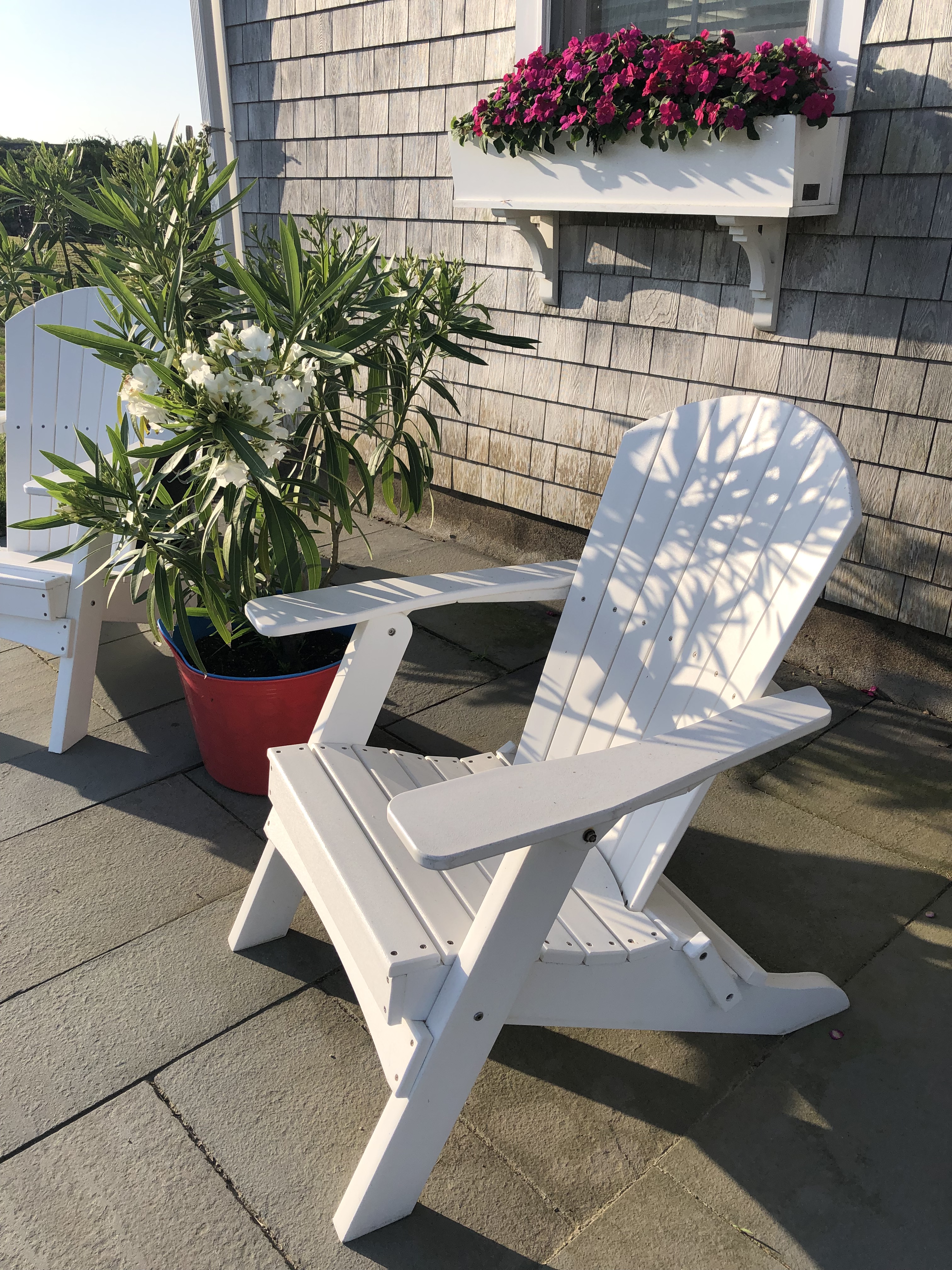
Black-eyed Susans come up every year where they will no matter what else is going on in the world. Blackberries ripen and Pat gathers them so Sandra can make jam on the dark winter days ahead. I took a picture of Sandra’s mother’s lovingly tended oleander plants. They don’t normally live up North, but Sandra pounces as soon as she sees an aphid and that’s why they are still healthy.
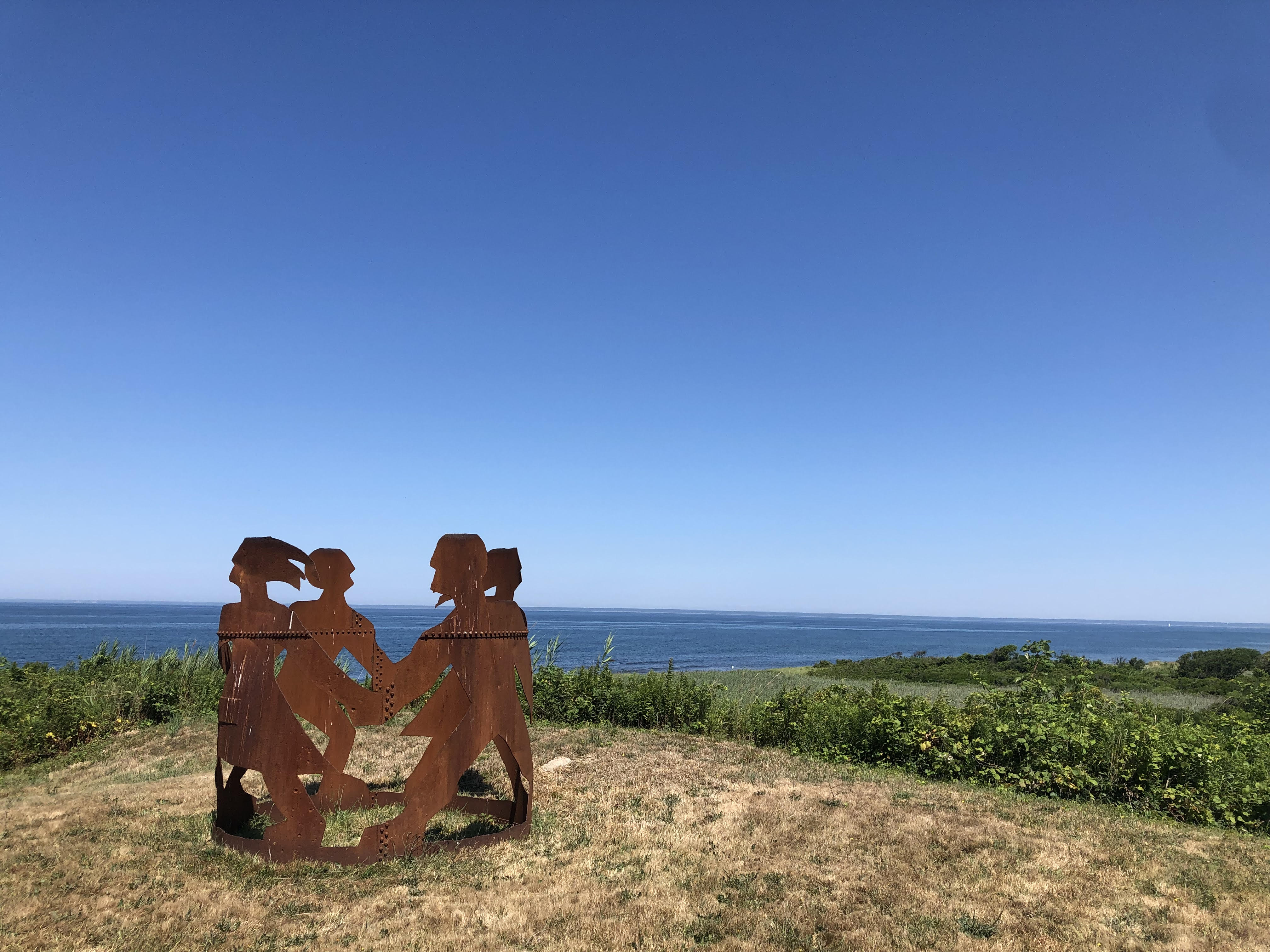
The rust-painted “Recycling” sculpture at the New Shoreham transfer station (former dump) is by Peruko Ccopacatty and shows the possibilities of reclaiming history.
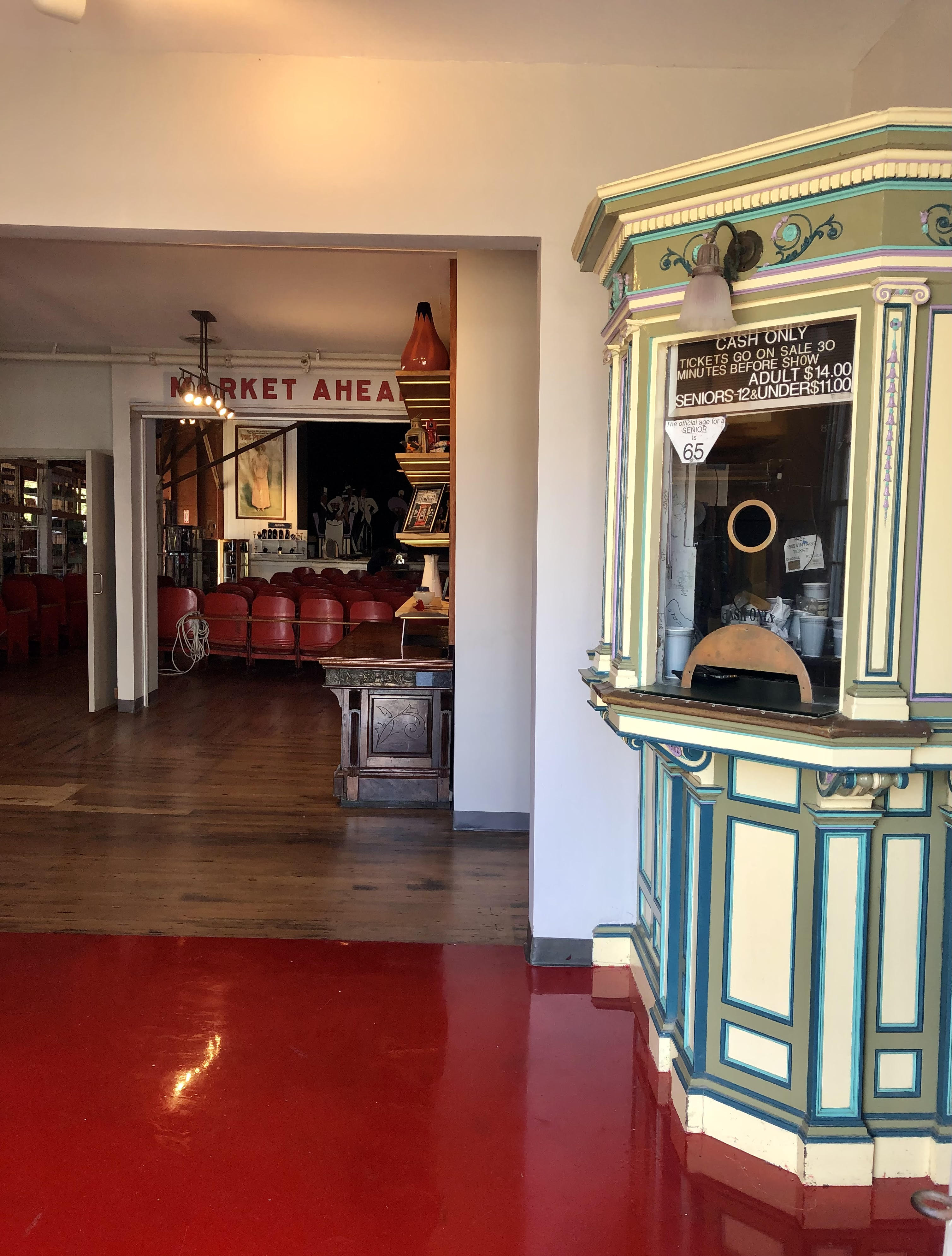
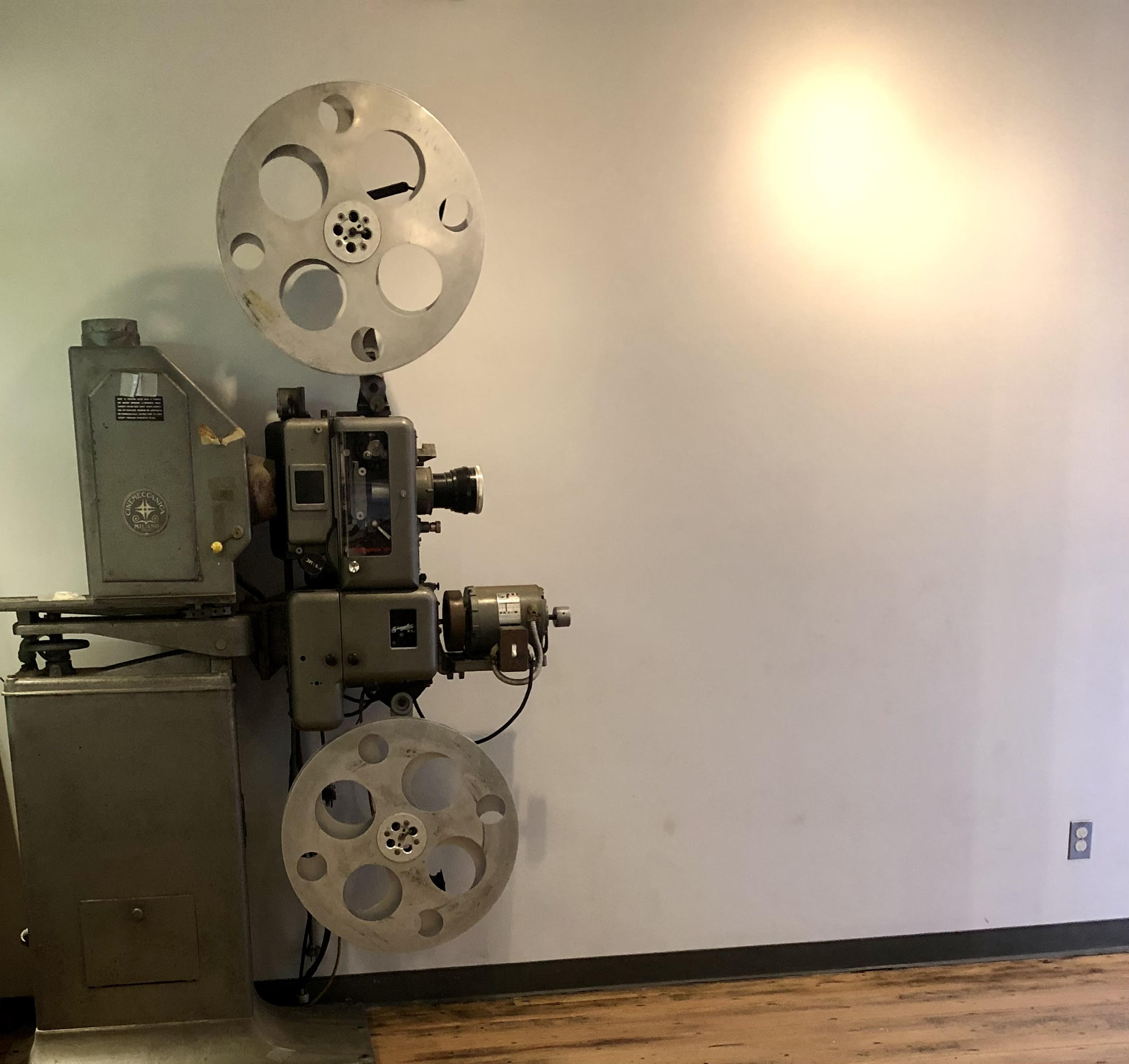
Speaking of history, I think we need to enjoy old-time movie theaters now, while they last.
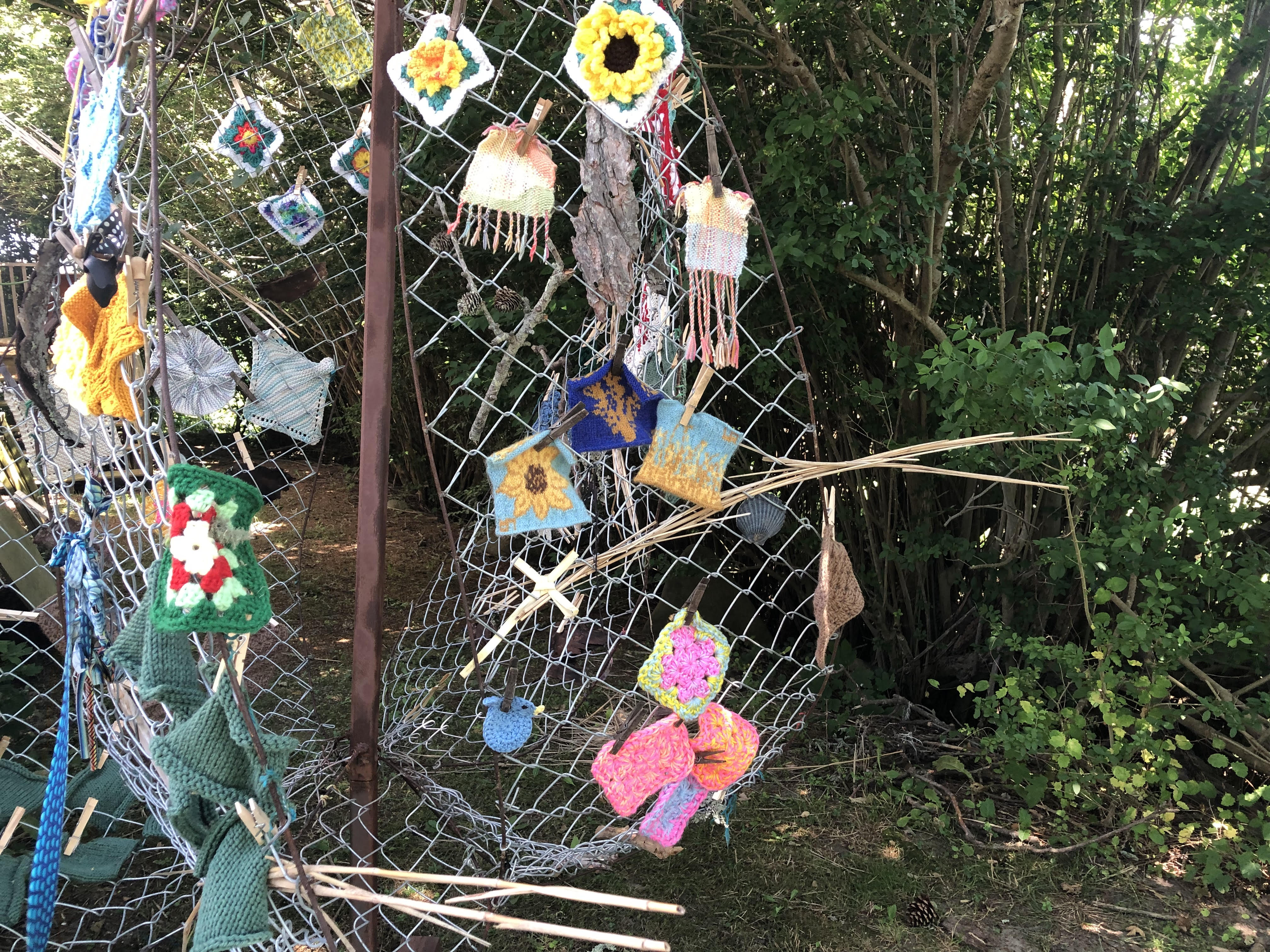
Outside the Spring Street Gallery, I added a grape vine to this “community fiber tree.” I am also planning to thread and hang a feather and a couple shells with holes if I can interest a grandchild in helping.
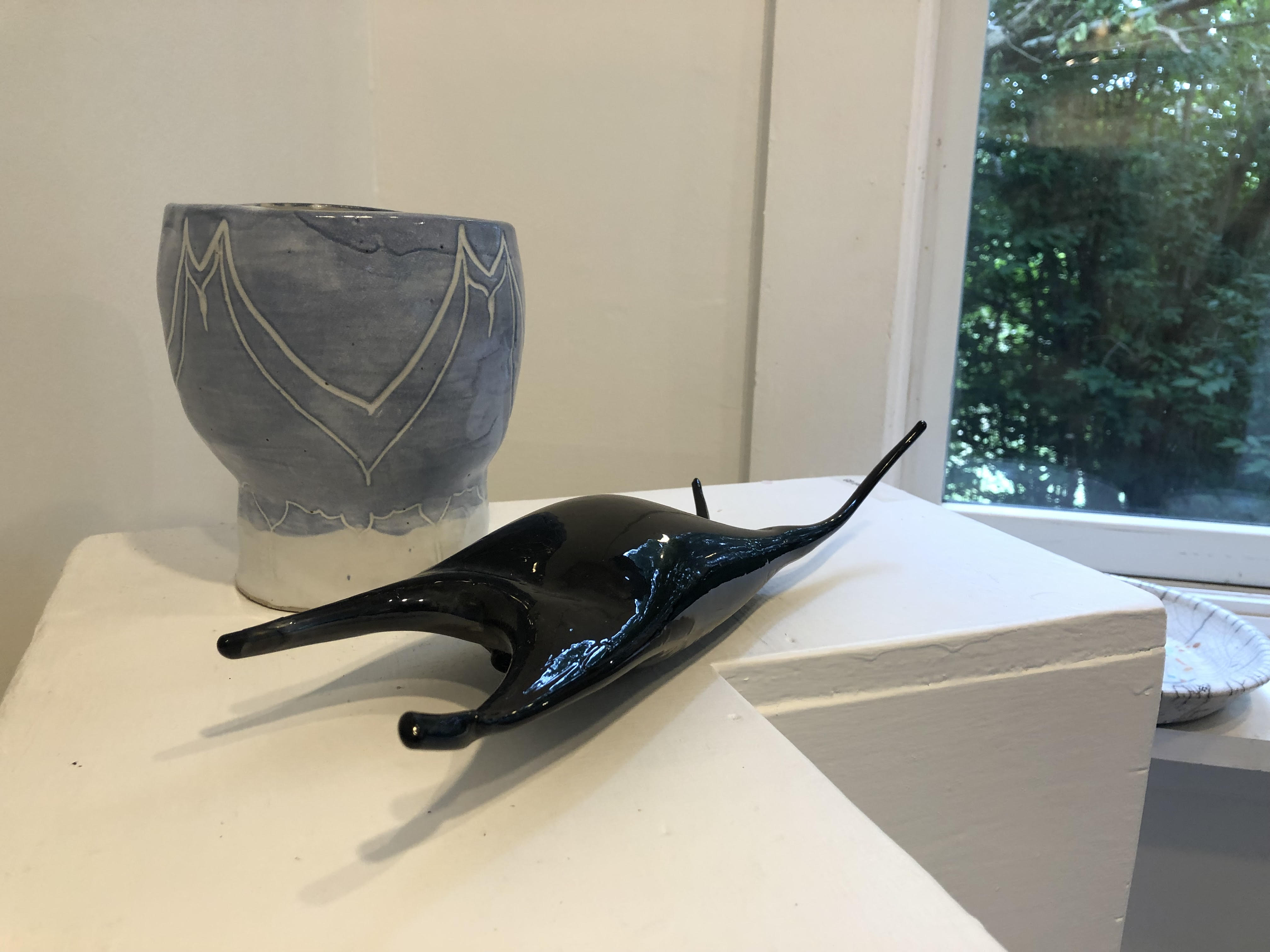
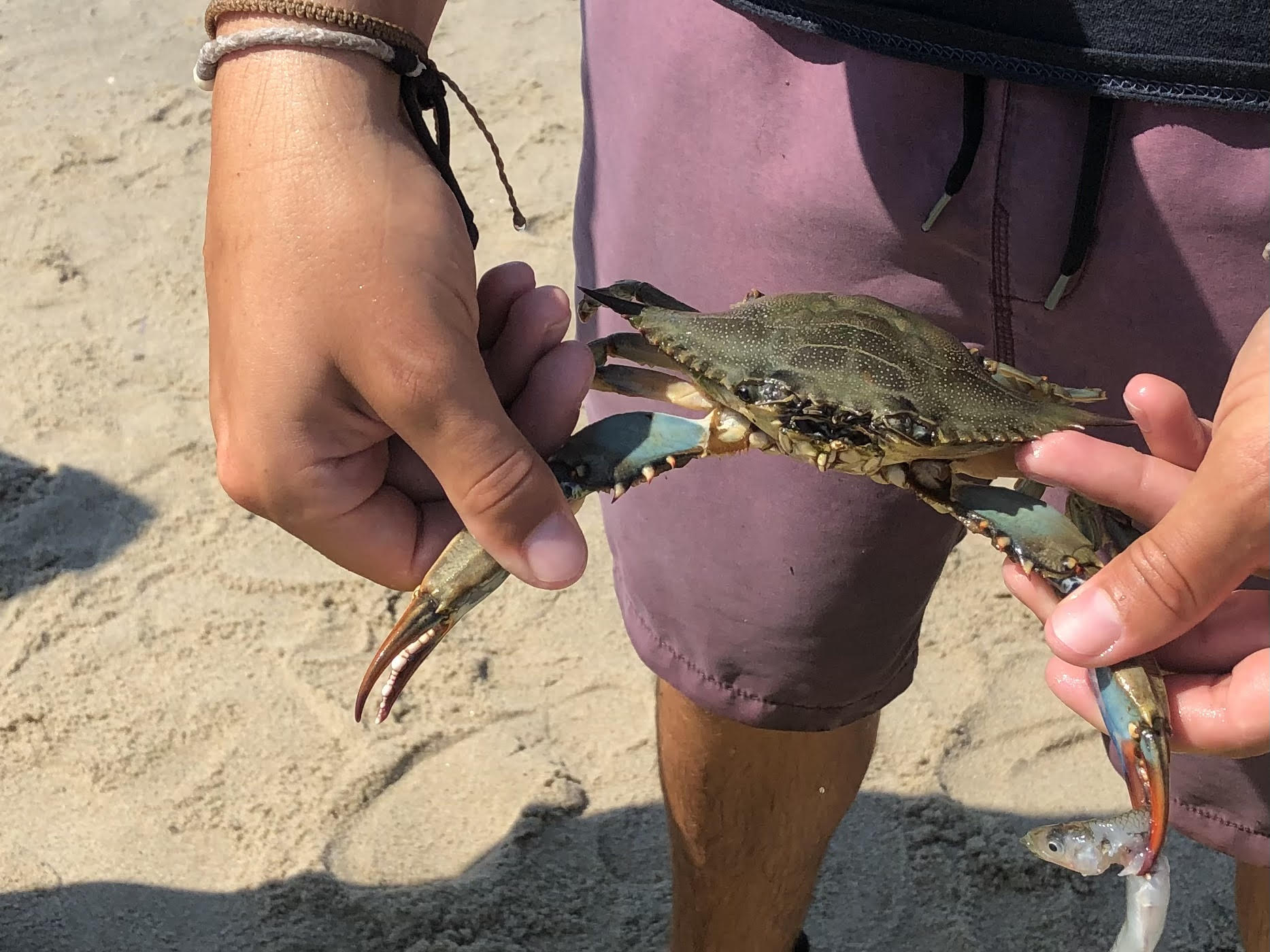
Inside the gallery, there’s a large ceramic version of a skate’s egg case. Next Nature herself appears, in the form of a blue claw crab who was about to release thousands of eggs into the salt pond. Blue claws are moving north, which is nice if you love to see them, not so nice if you realize it’s because of a warming climate. The little girl at the Nature Conservancy seining-net demonstration was entranced with a green crab, too.
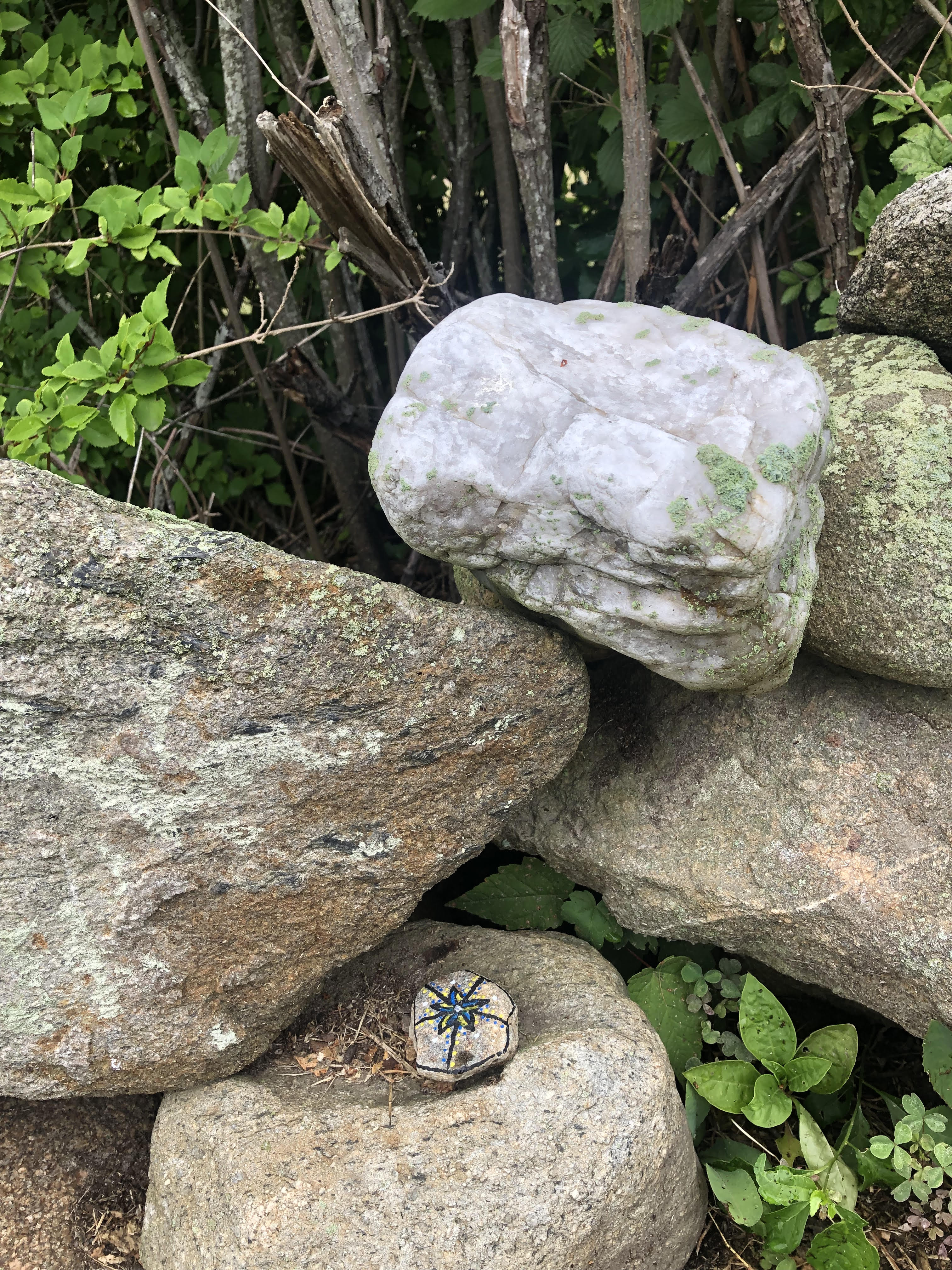
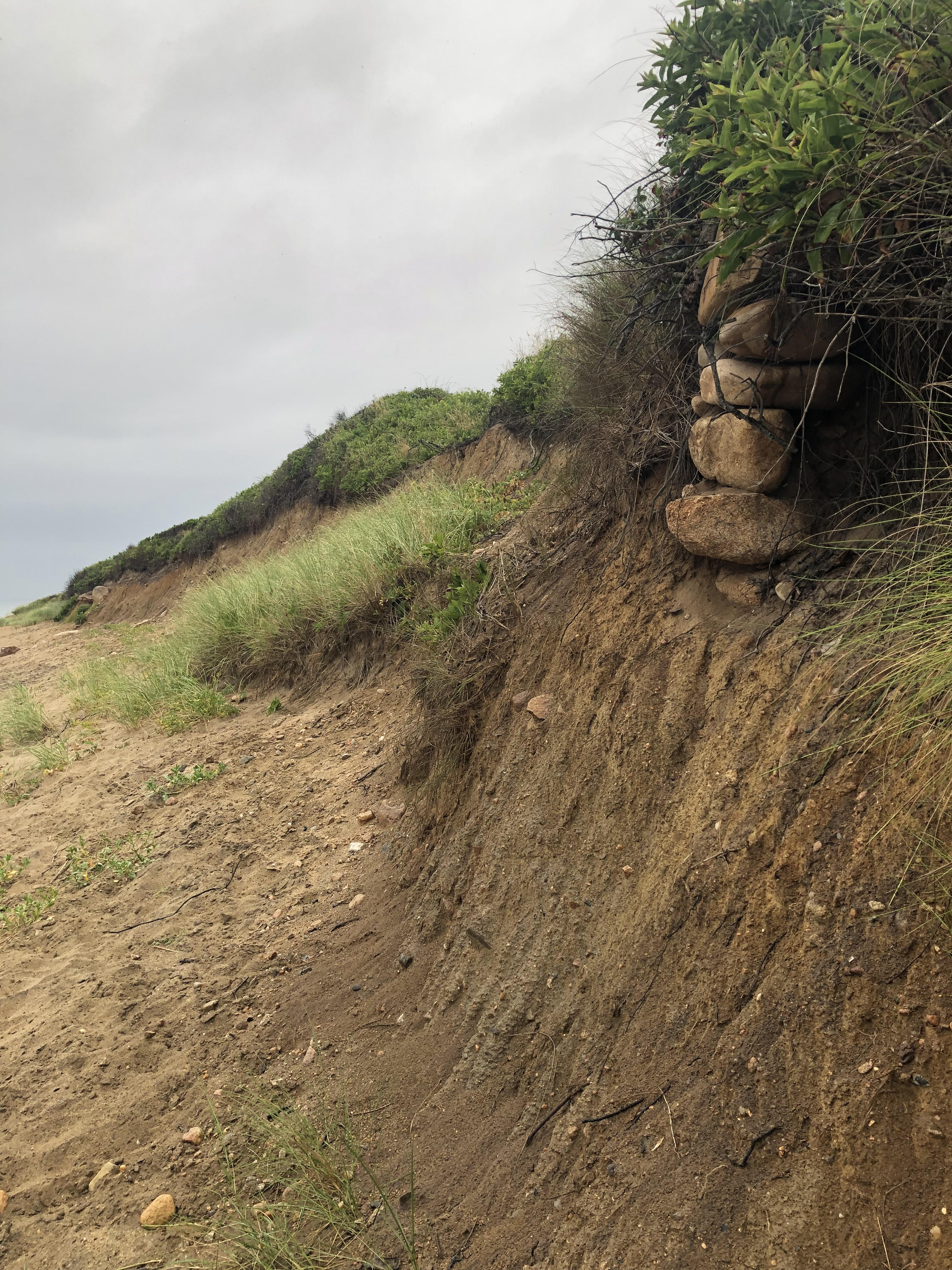
Painted rocks of various sizes are next, followed by precarious ones threatening to fall from the ever changing bluffs. All islands have messages about about the precarious — what Nature makes precarious, what humans do.
Funny how quickly the photos pile up in beautiful weather. Winter days offer fewer opportunities, unless there’s a big snowstorm. Most of today’s pictures illustrate how I am drawn to spring’s strong sunlight.
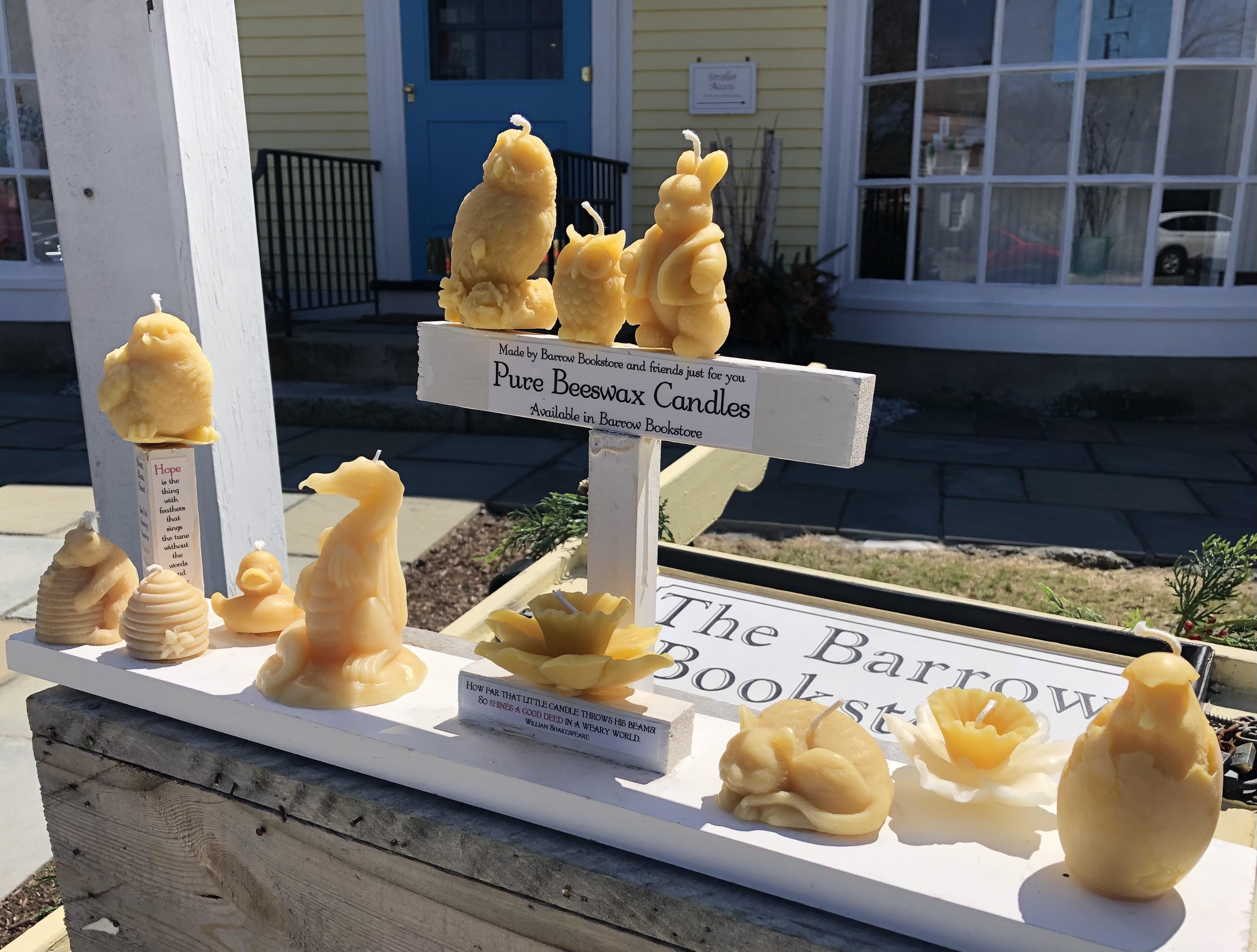
Sunshine highlights the candles offered by the Barrow Bookstore, a shop featuring used books and much more — for example, birdhouses made from books.
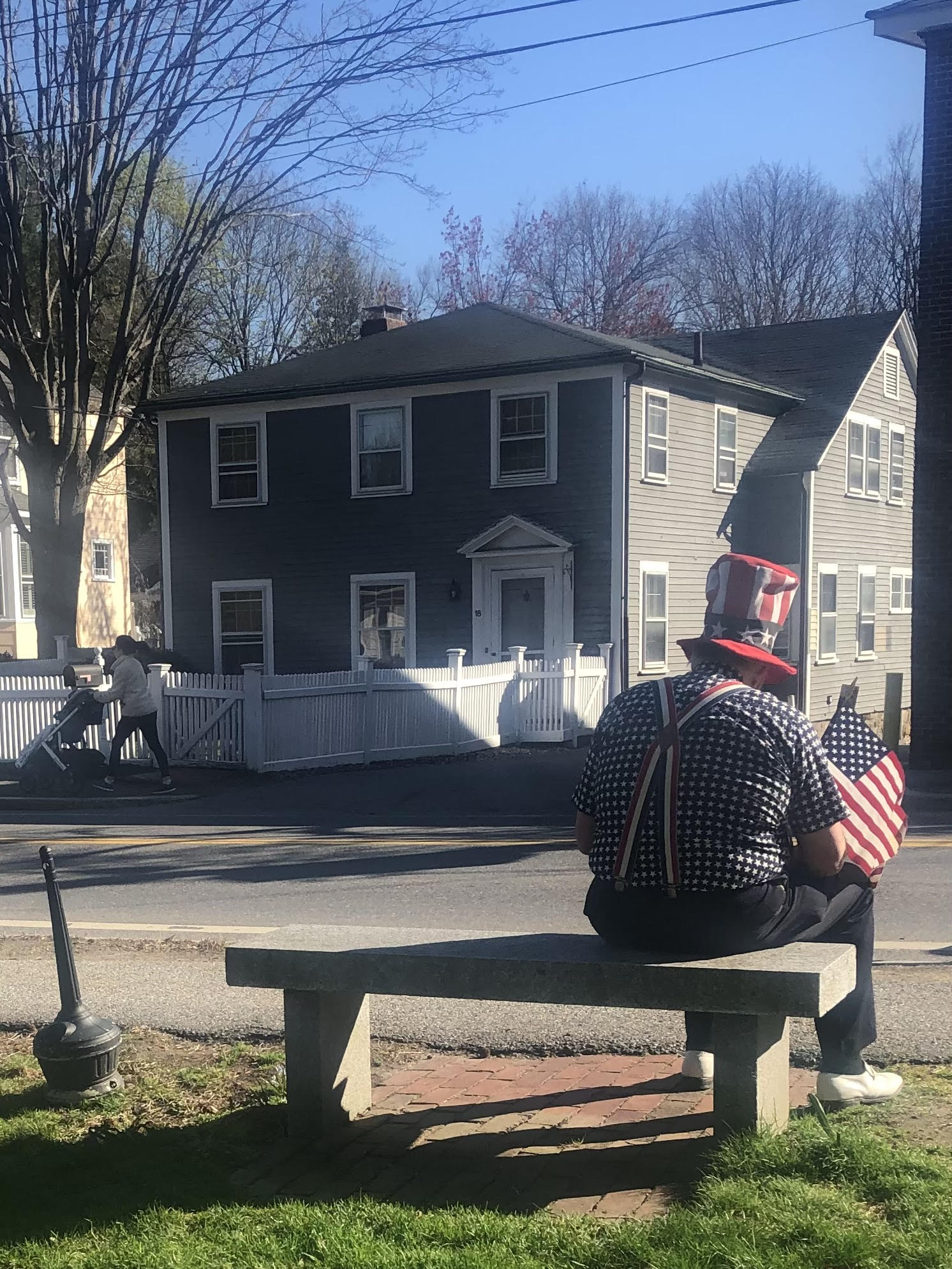
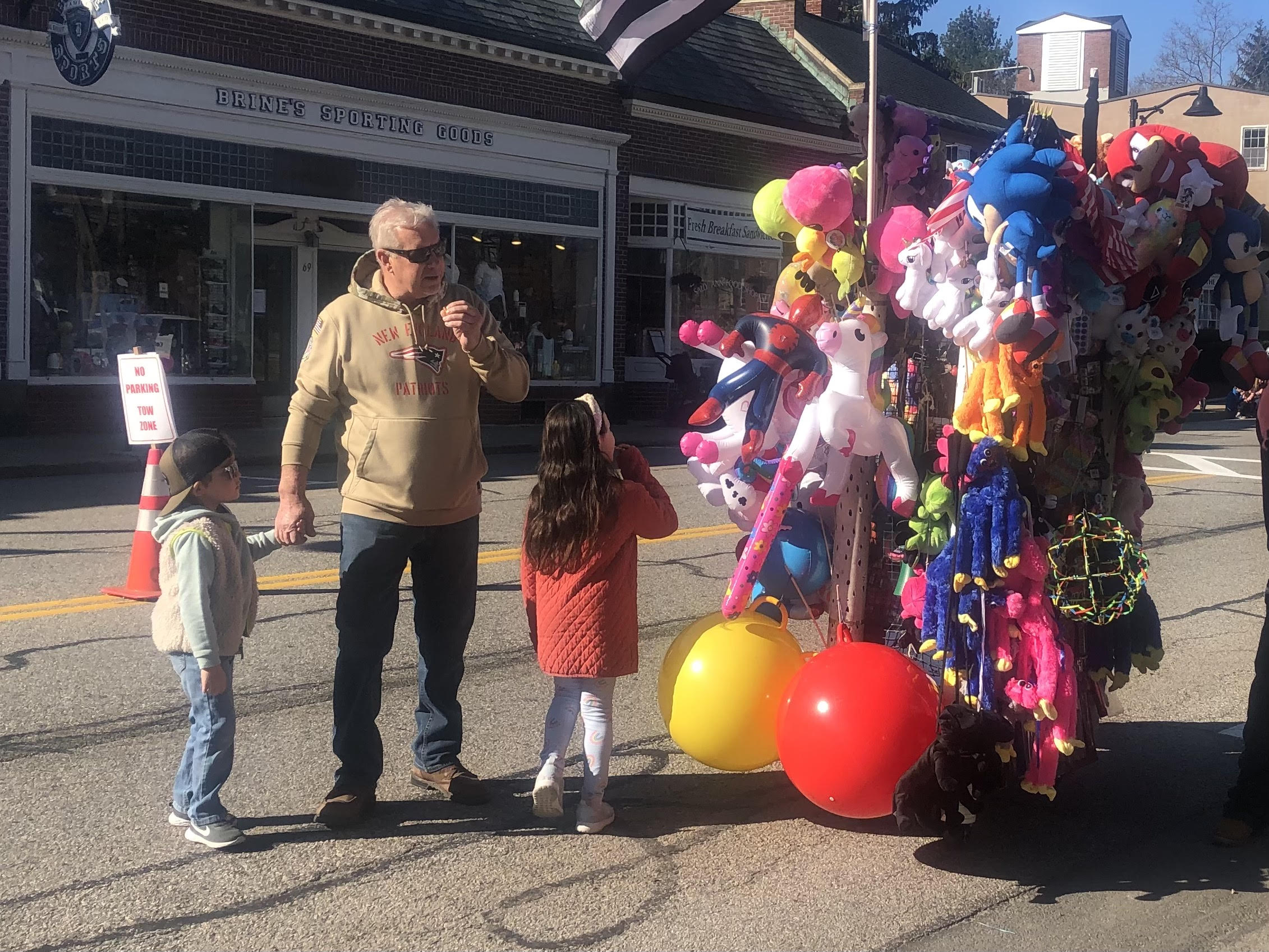
I have a couple shots of people getting ready for the Patriots Day parade, which is always a big deal here. (Well, unless there’s a pandemic.) “The shot heard ’round the world,” usually credited with being the first shot of the American Revolution, happened at the North Bridge in our town, April 19, 1775. This year I managed to get up there in time to join the crowd watching the reenactment. Lots of noise and smoke and harmless musket shots.
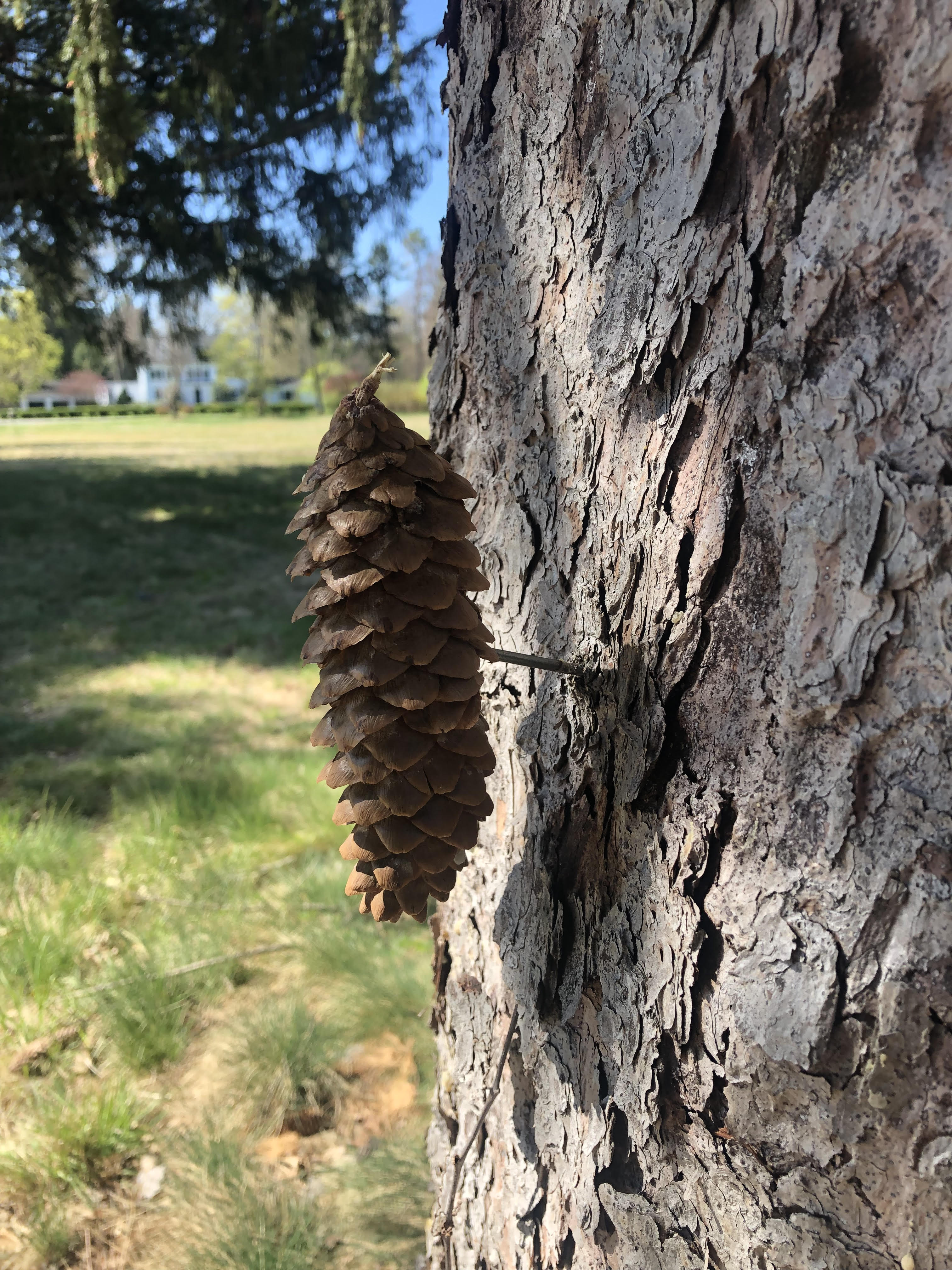
I have no idea why a pine cone is nailed into a tree, but my camera is always drawn to oddball things.
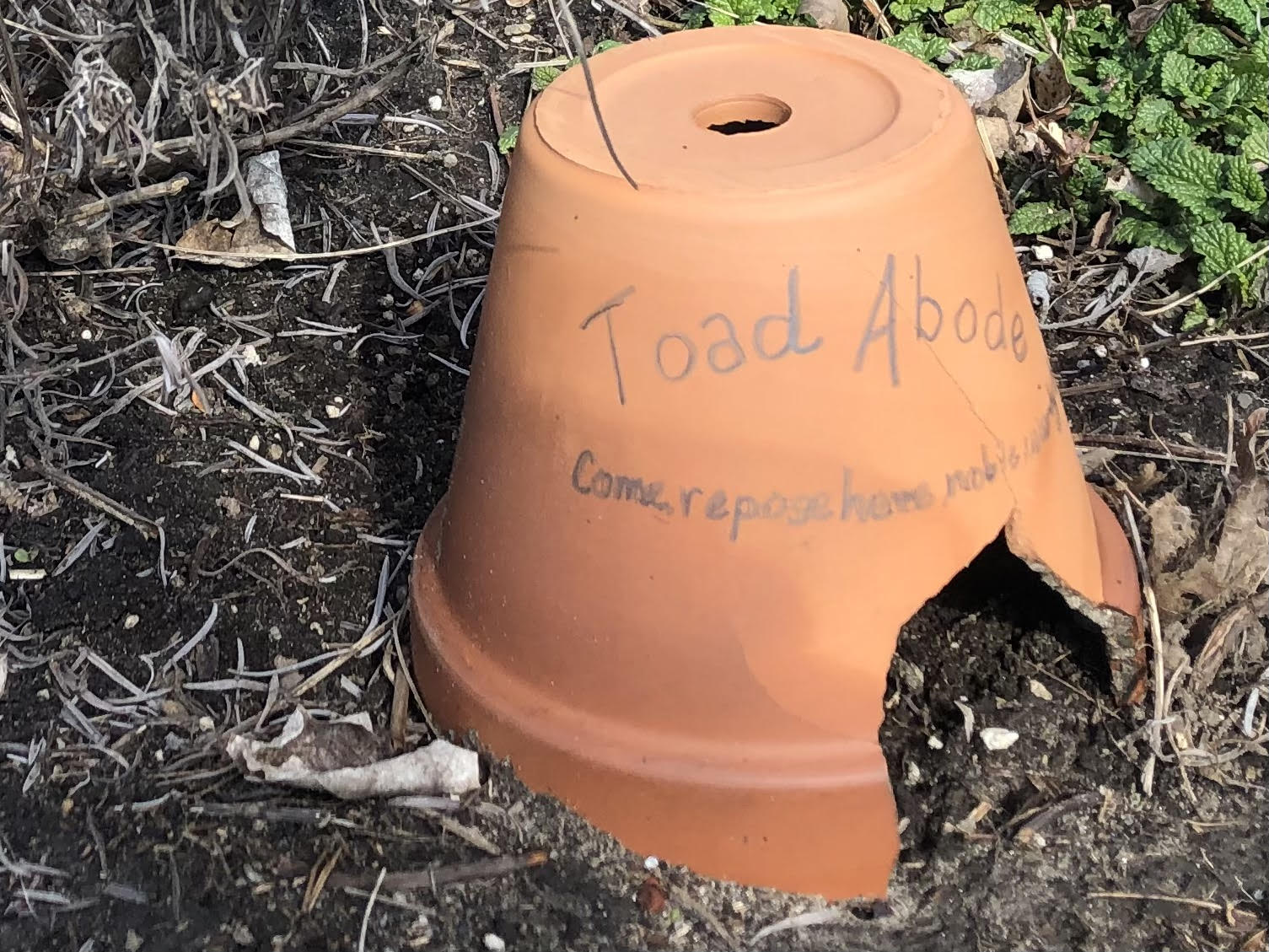
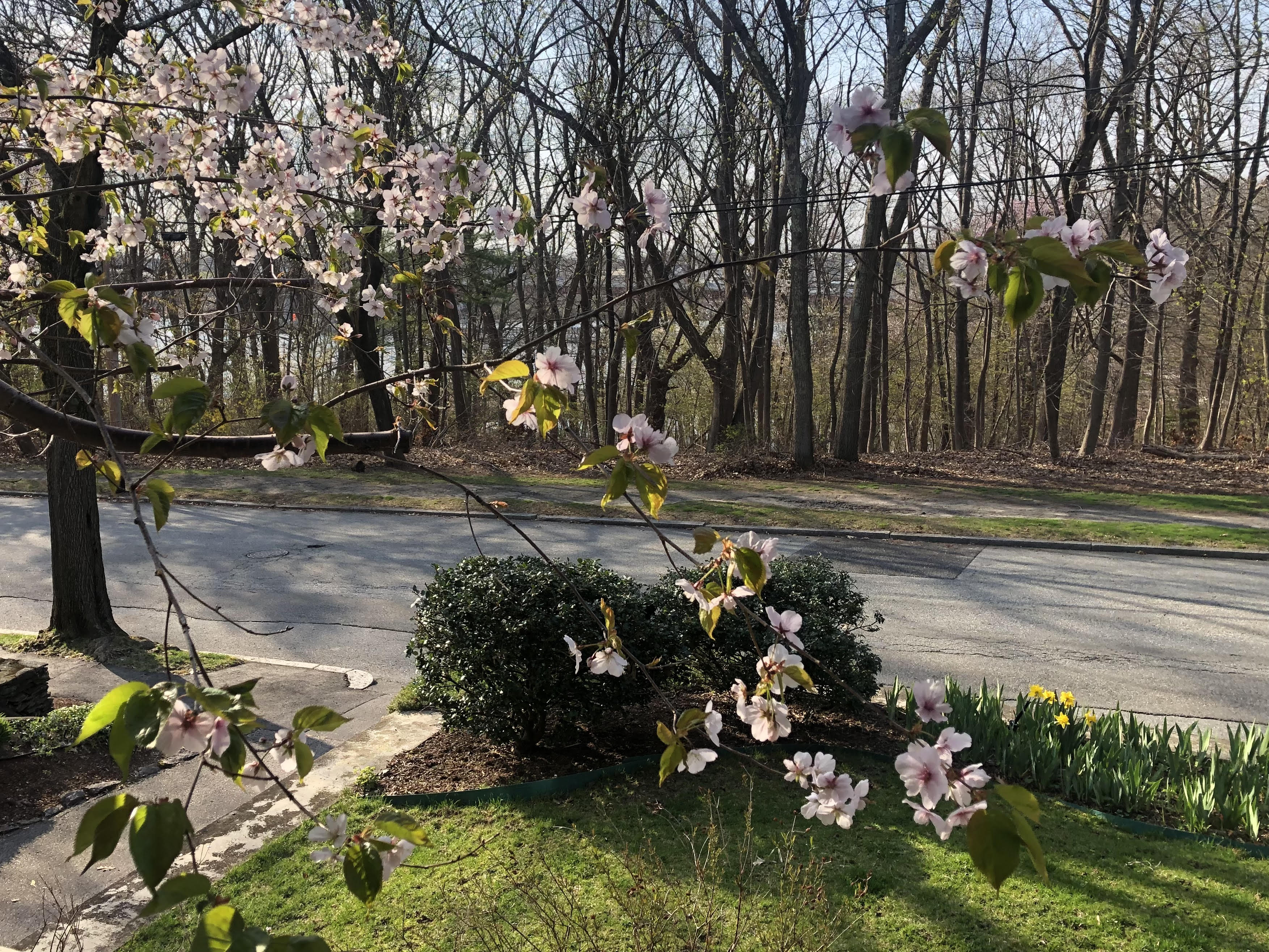
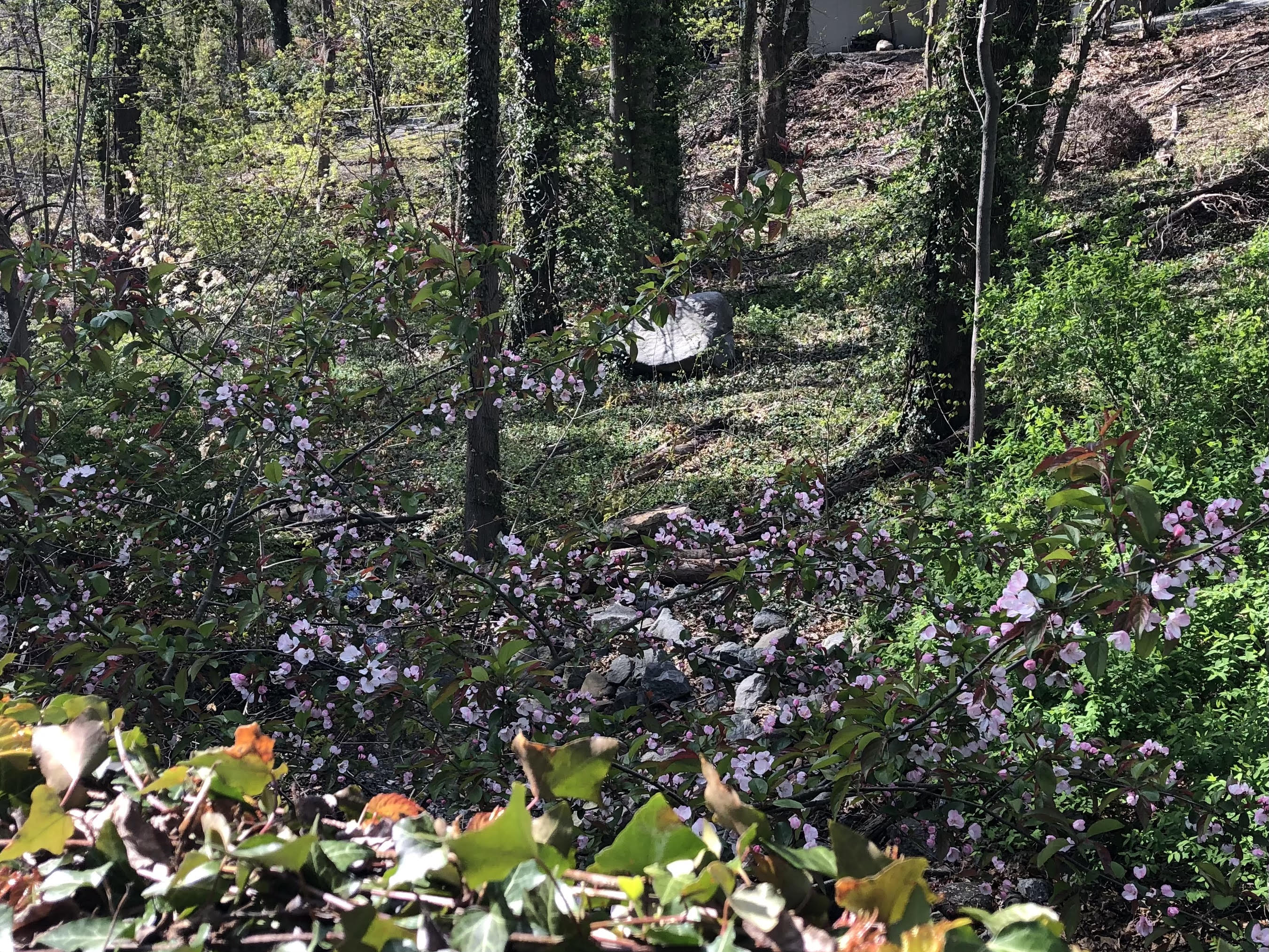
The Toad Abode is at a community garden in Massachusetts, and the flowering trees are in Rhode Island.
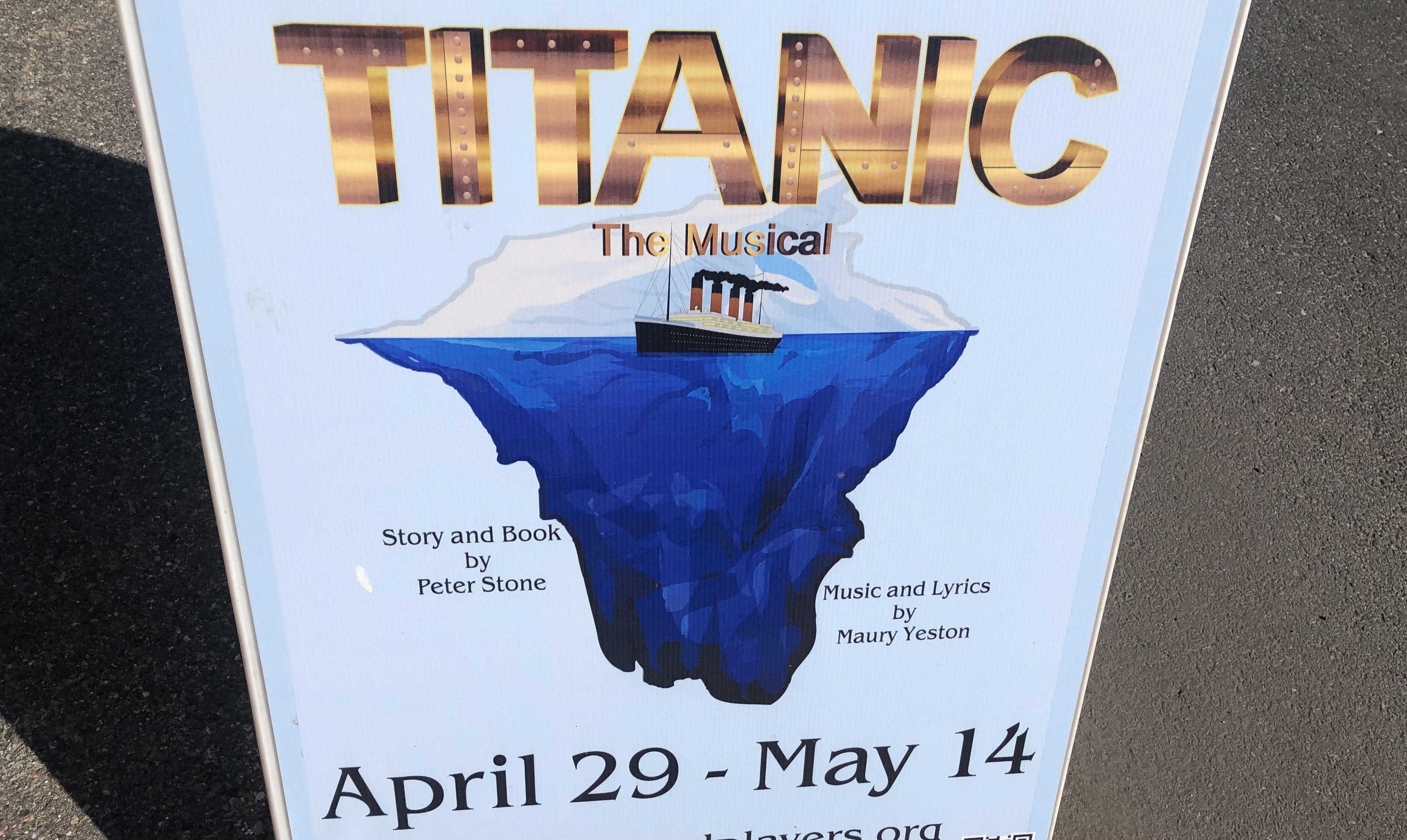
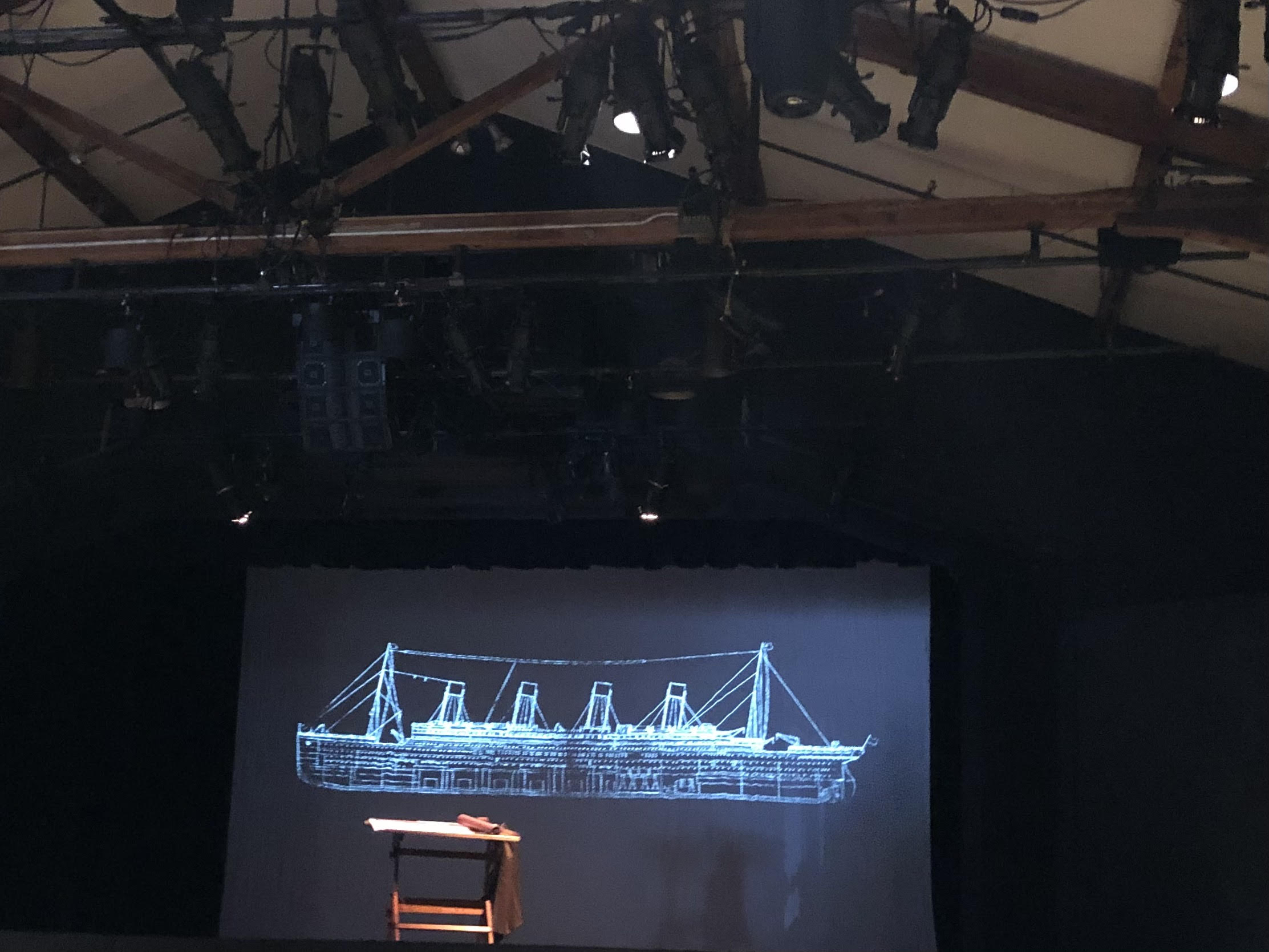
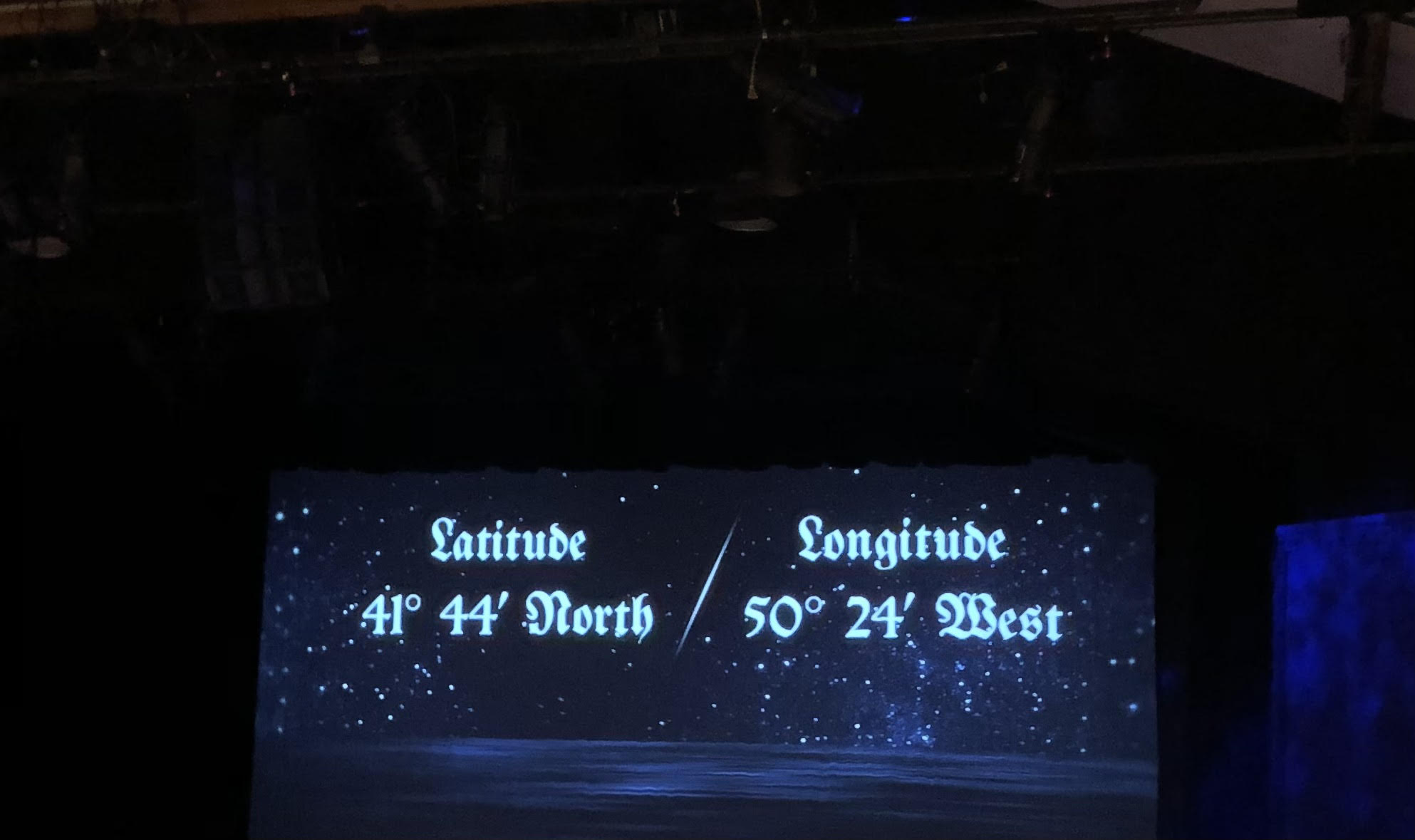
From sunlight to dark: the moving musical Titanic, sung by some of the strongest voices I have heard since Covid. We weren’t allowed to take pictures during the show, but they put up a couple of their haunting slides before the show and at intermission. I guess you know what happened at that longitude and latitude. So many people to blame! So much hubris!
Having not been to theater for a long time, I managed to attend three shows in one week, all masked up, of course. I saw my youngest grandchild in a production of The Wizard of Oz. She had written invitations to each child in her class, and many came. Then I attended Footloose with my eldest grandson, who had friends in the cast. And finally, I presented my vaccination card at our local community theater and enjoyed the Titanic along with a lot of other matinee-loving old folks.
Suzanne’s mother-in-law, known on this blog as Stuga40 (see selfie below), flew from Sweden in March to hang out with family in Providence for a few weeks. She brought along her artist’s eye.
My husband and I had many nice walks with her, outdoor lunches, indoor conversations, and playtimes with grandchildren. Because of Covid, it had been three years since we’d seen her.
I wanted to share a few of Stuga40’s photos with you because I liked them so much.
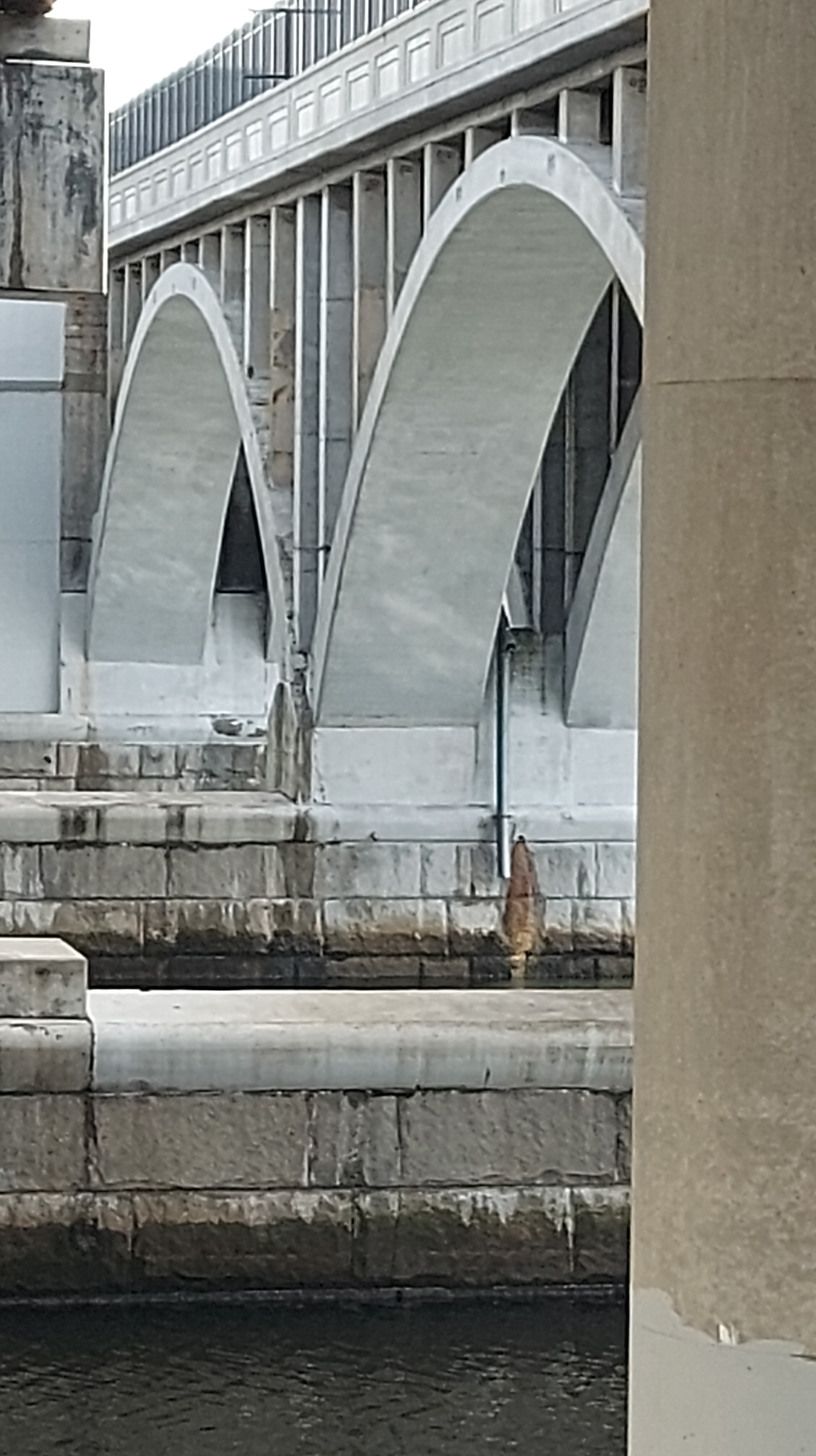
Above, you see a view under the I-195 bridge over the Providence River, where a new bike trail passes. It reminded me of artists like Charles Sheeler, whose work was among those we saw on a rainy-day visit to the RISD [Rhode Island School of Design] Museum.
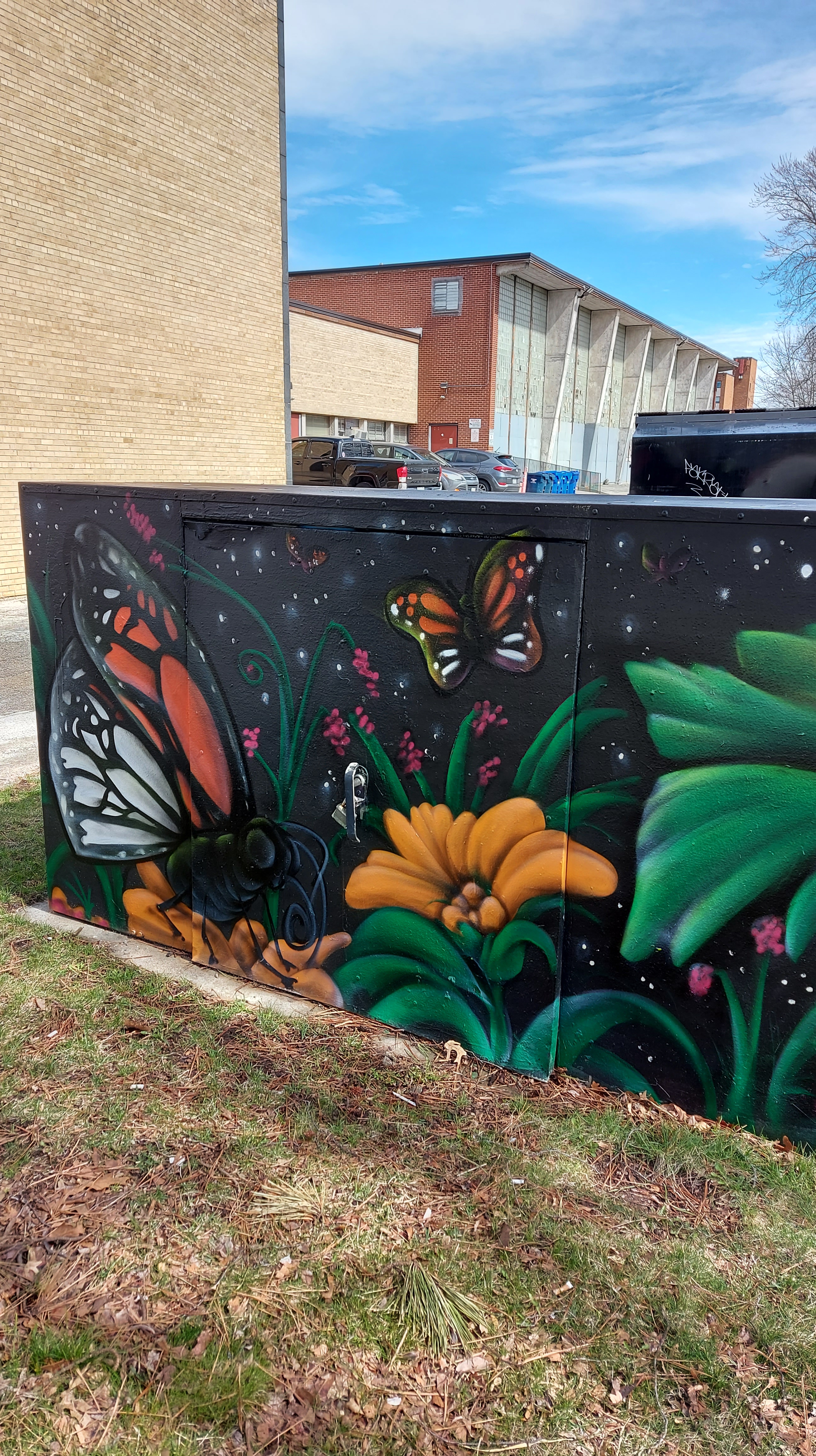
She also took shots of random things that intrigued her: utility-box art, a large mural, and the plant life we have all around us but don’t always notice.
When Stuga40 gets back to Sweden, I know she will continue to apply her connoisseur’s eye to the photos she takes on her walks around Stockholm. I hope to have some more to show anon.
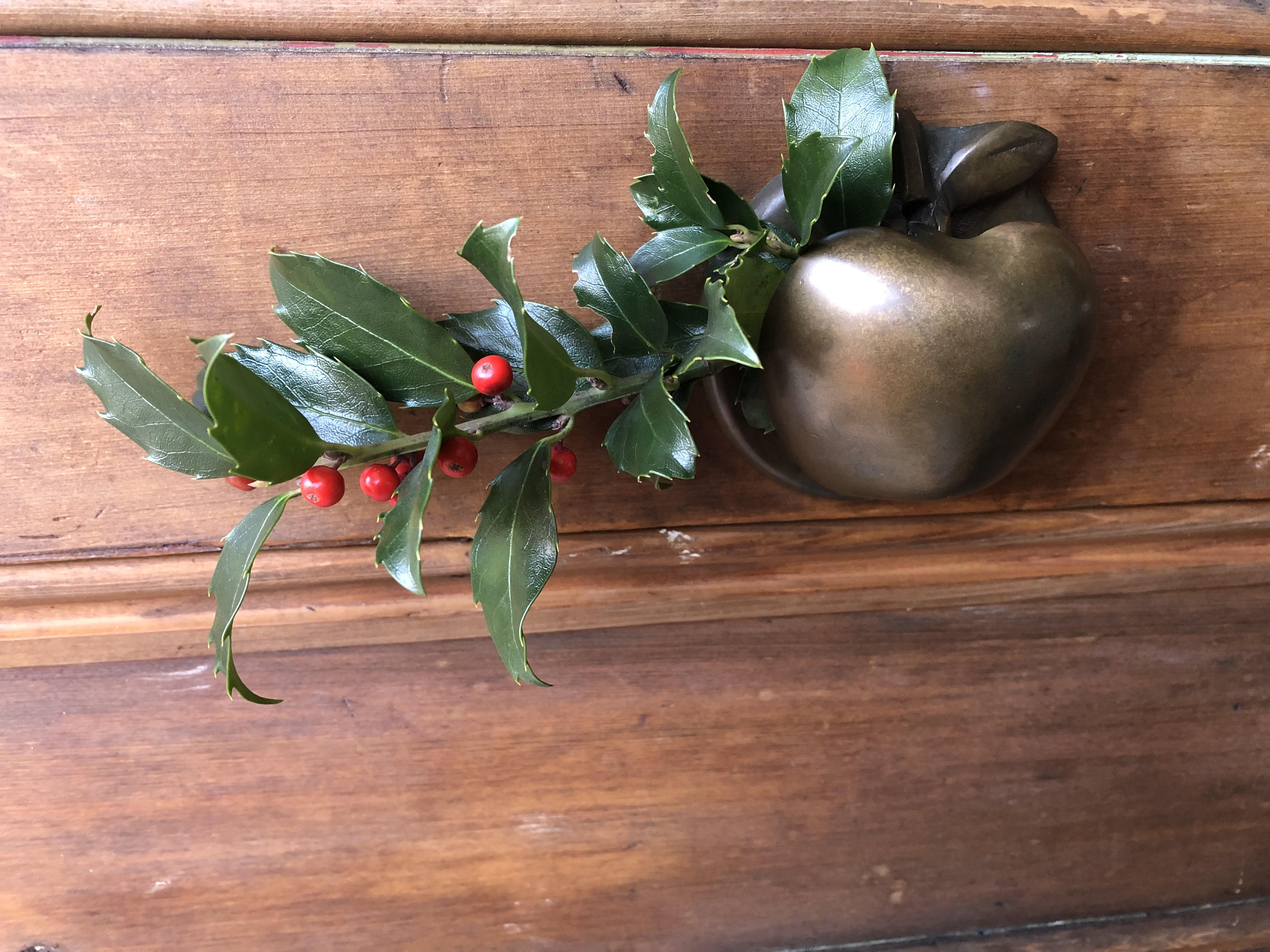
During the Civil War, I was once told, soldiers from upstate New York who knocked apples off trees with their rifles were derided as apple knockers. But as I can’t find that history on the internet, I think it may be apocryphal.
Nevertheless, the expression was definitely used to differentiate New York City folks from every other New Yorker when we lived upstate years ago.
Back then, I said to my mother that I thought someone should make a door knocker in the shape of an apple. Whether she had thought of it before or was responding to my comment, she was the one who took action.
Her little company is long defunct, but whenever I visit a home of people who knew her, I see a bronze apple knocker on their door. My own house has the one above on the back door and another on the front door. If my children are the ones to sell our home one day, I hope they remember to stipulate in the contract that the knockers stay with them — collectors’ items now.
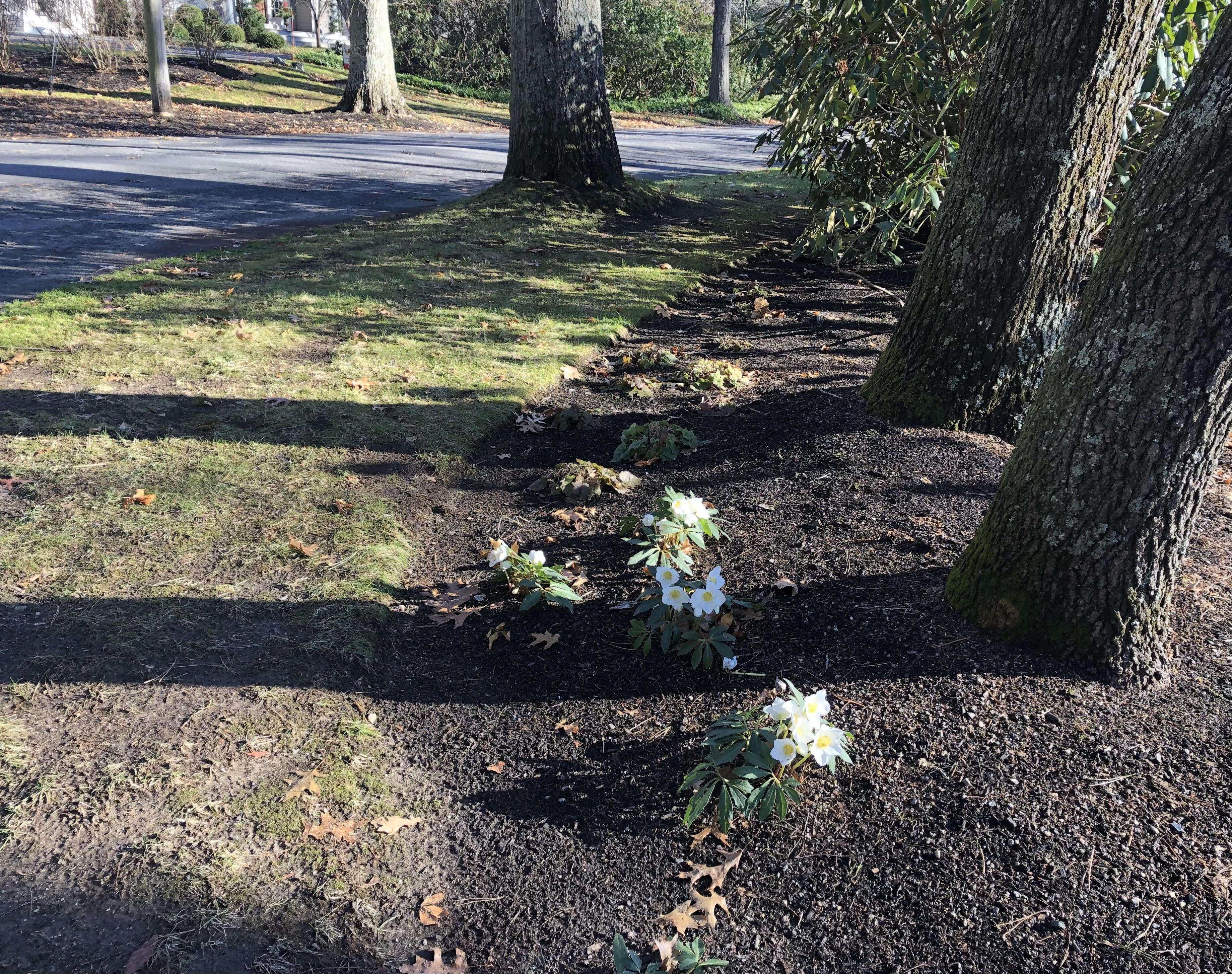
Moving right along, I have a few recent photos to show you. Below is another of my winter hellabore photos. I can’t get enough of these flowers, also called Lenten Rose, which bloom in the coldest weather.
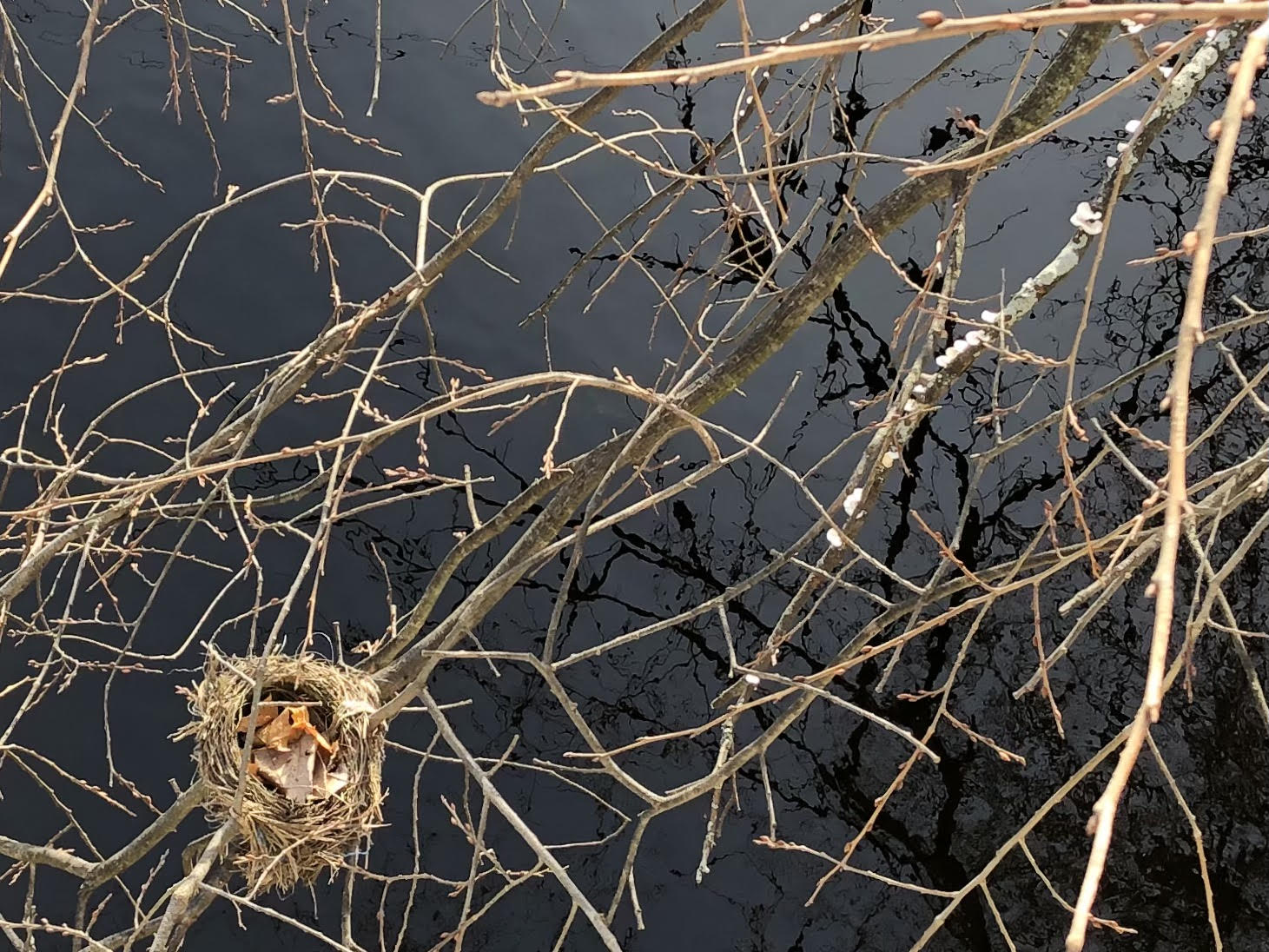
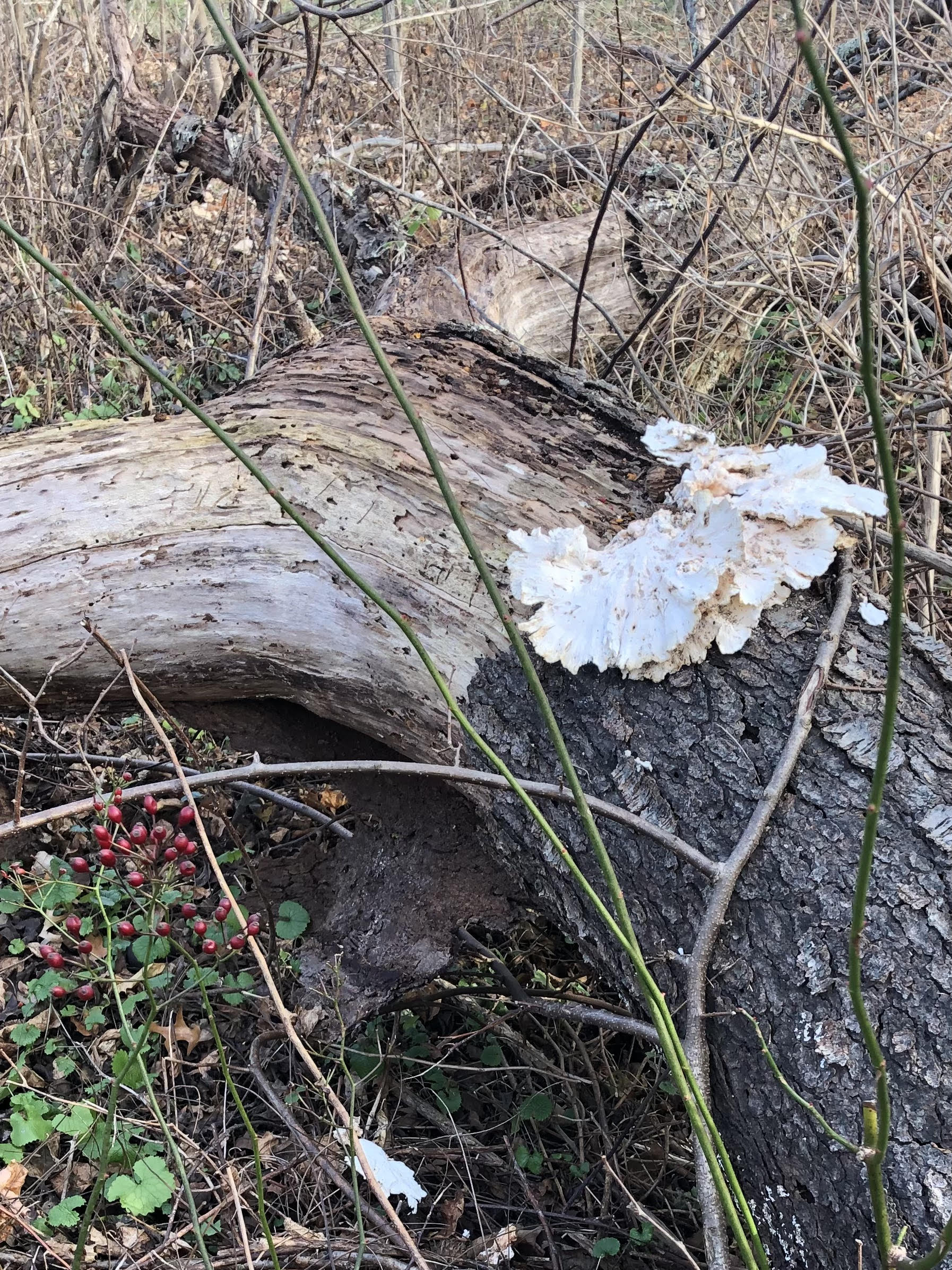
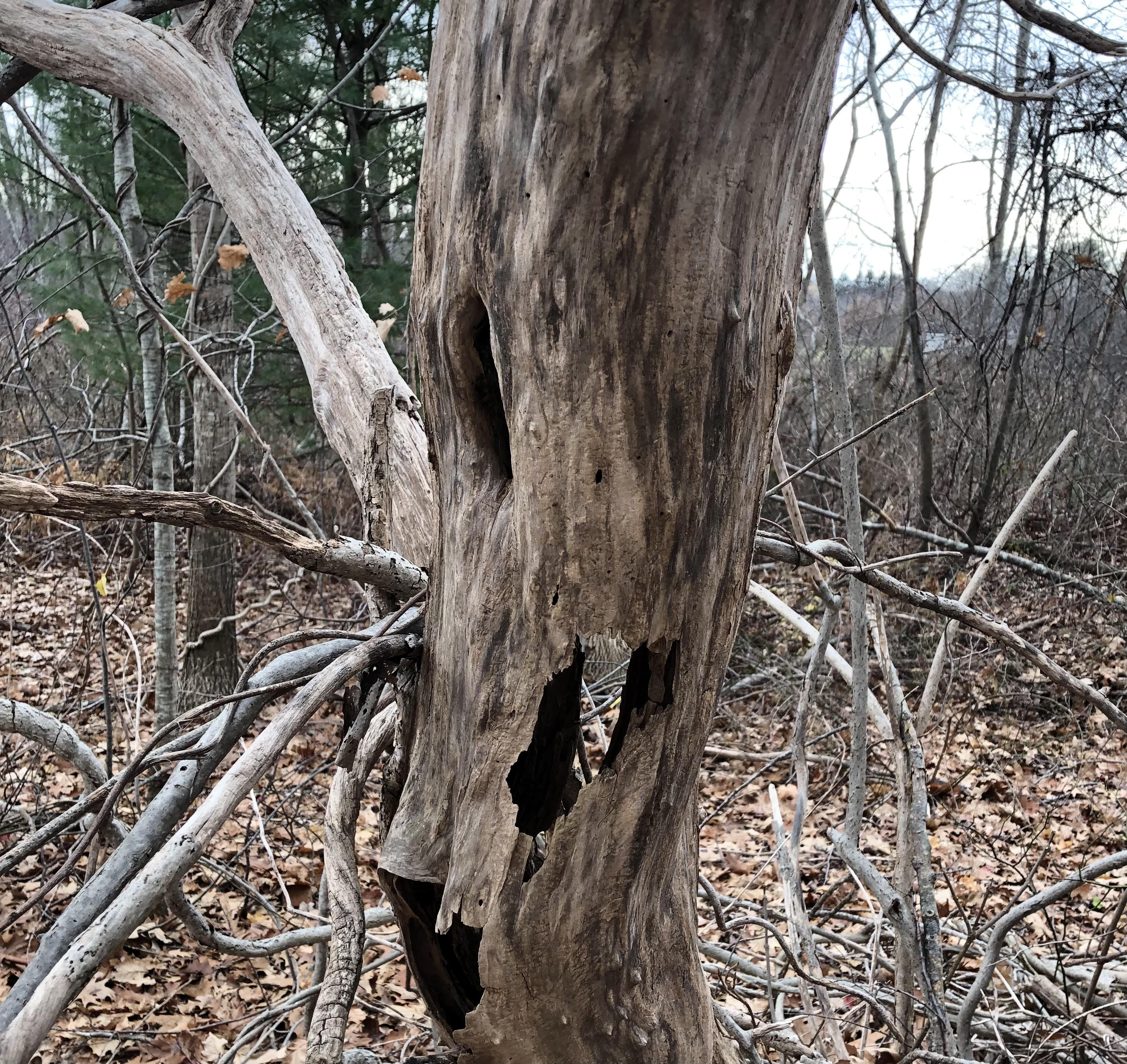
The two snarly-twig photos show an abandoned nest over the Sudbury River and a fancy-dress fungus near the elementary school’s playground.
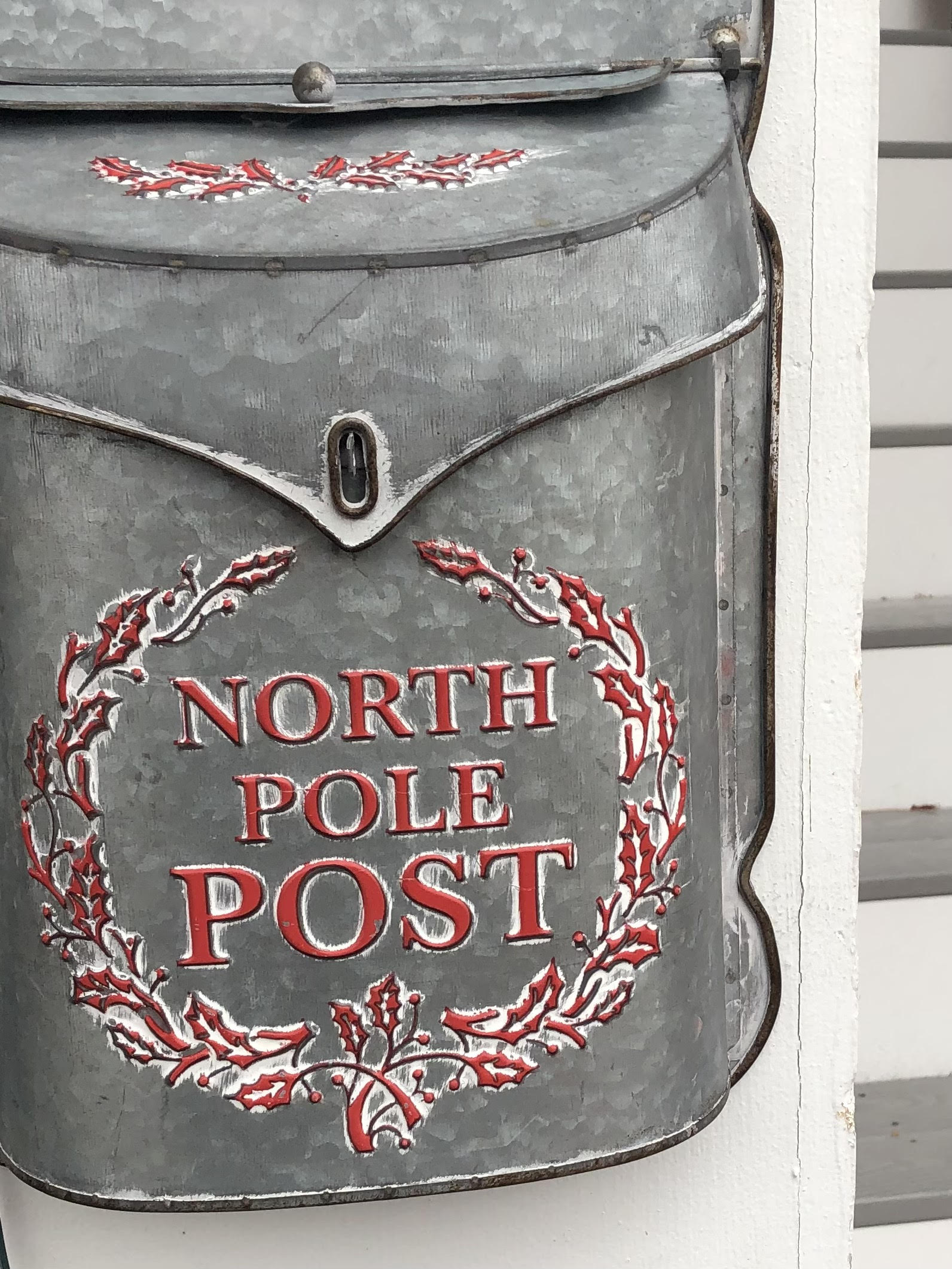
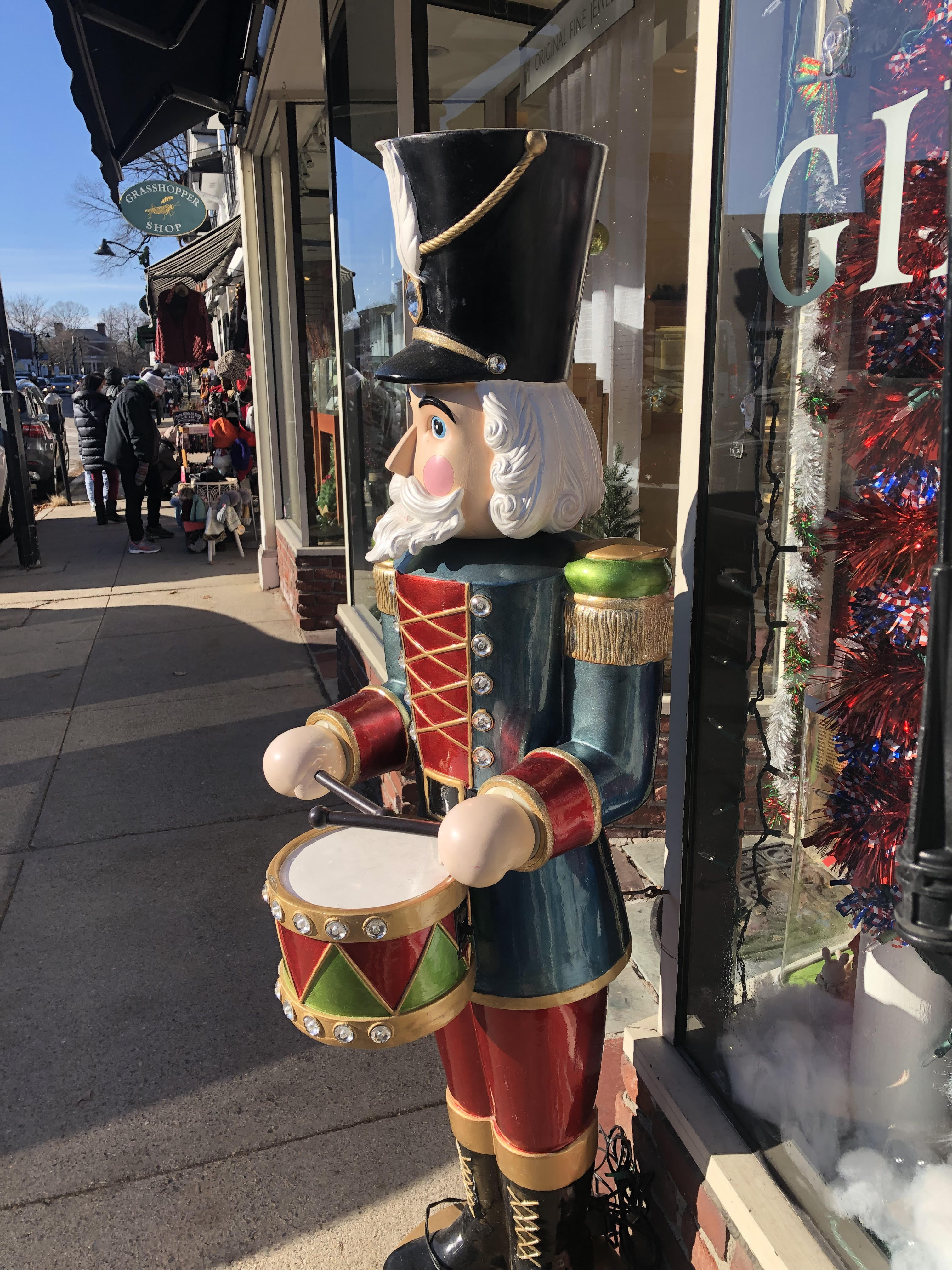
The post box for Santa reminds me that my youngest grandchild just got a response from her letter to the North Pole — exciting for all concerned. The cheery toy soldier on Main Street points passersby to a staircase leading to a toy shop below.
My husband and I went to our first post-Covid show at Umbrella Arts and especially loved the non-traditional holiday songs. Today, reading headlines about all the well-vaccinated people getting the Omicron variant, we’re probably going back in hibernation like the ground hog that sees its shadow. We’re not post-Covid after all.
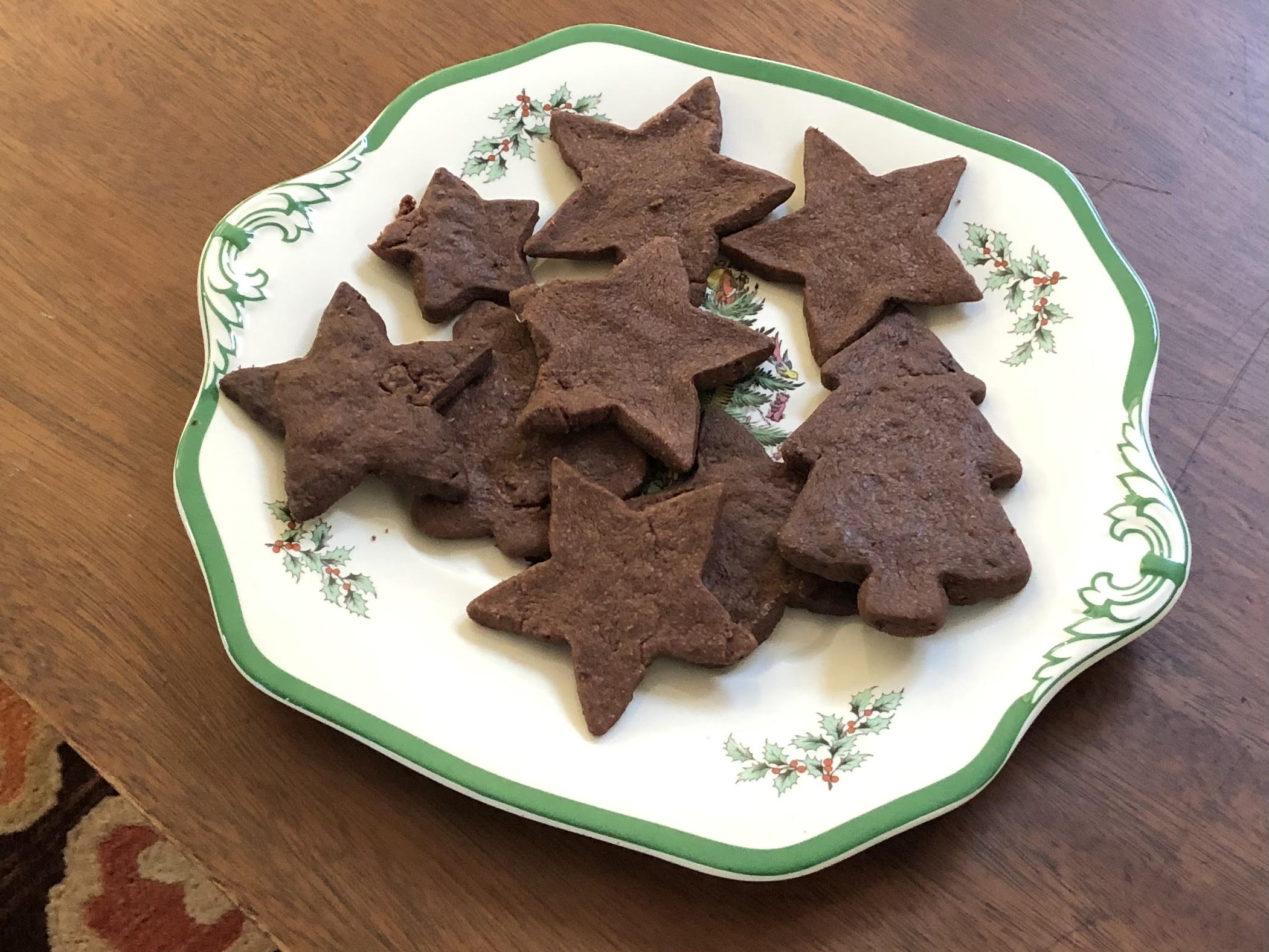
I made the chocolate cookies from a recipe in the newspaper. The kids decorated some of them with frosting and sprinkles.
I also have a photo from friends who set off for a Christmas vacation in Hawaii after the guy in the last photo recovered from Covid followed by pneumonia.
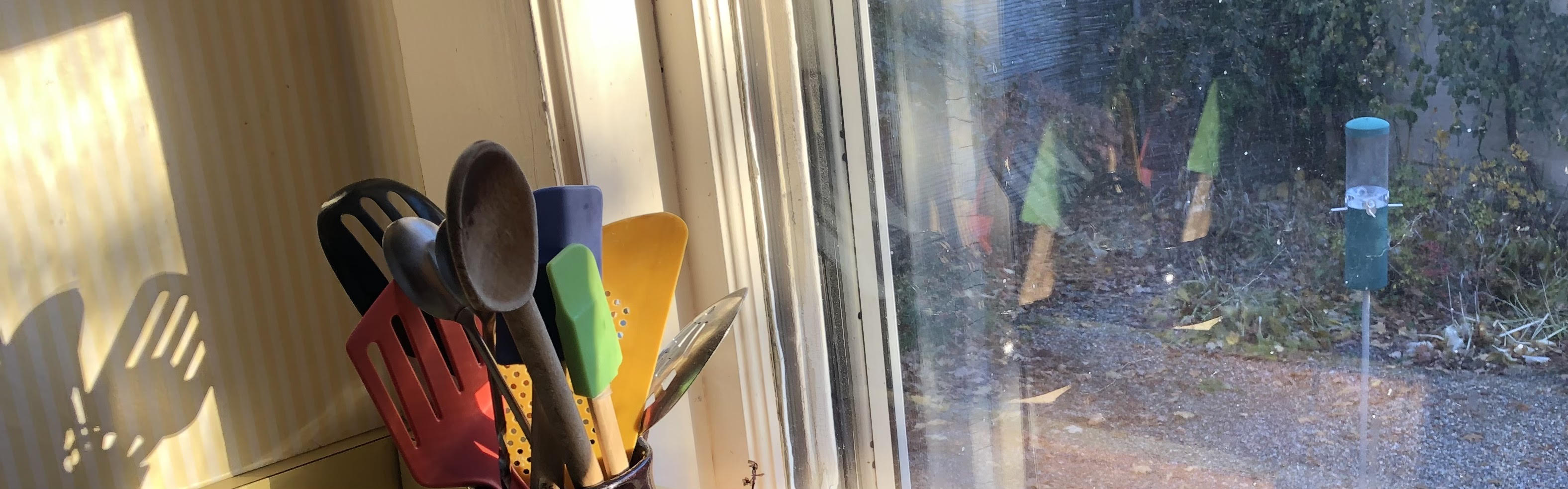
The next time that I post photos, I hope I can include some action around the bird feeder. Although there are experts who recommend feeding the birds year-round, I usually wait to put seeds in the feeder until it’s really hard for birds to find other food. As of this moment, they are still having a good time with all the berries and naturally occurring seeds in our yard.
I continue to take outdoor walks in the cold, identifying birds with my Merlin app for birdsong. I’m also working with a grandson to learn more about birds through Wingspan, the board game. (I blogged about it here but didn’t understand then how difficult it is to learn the rules.)
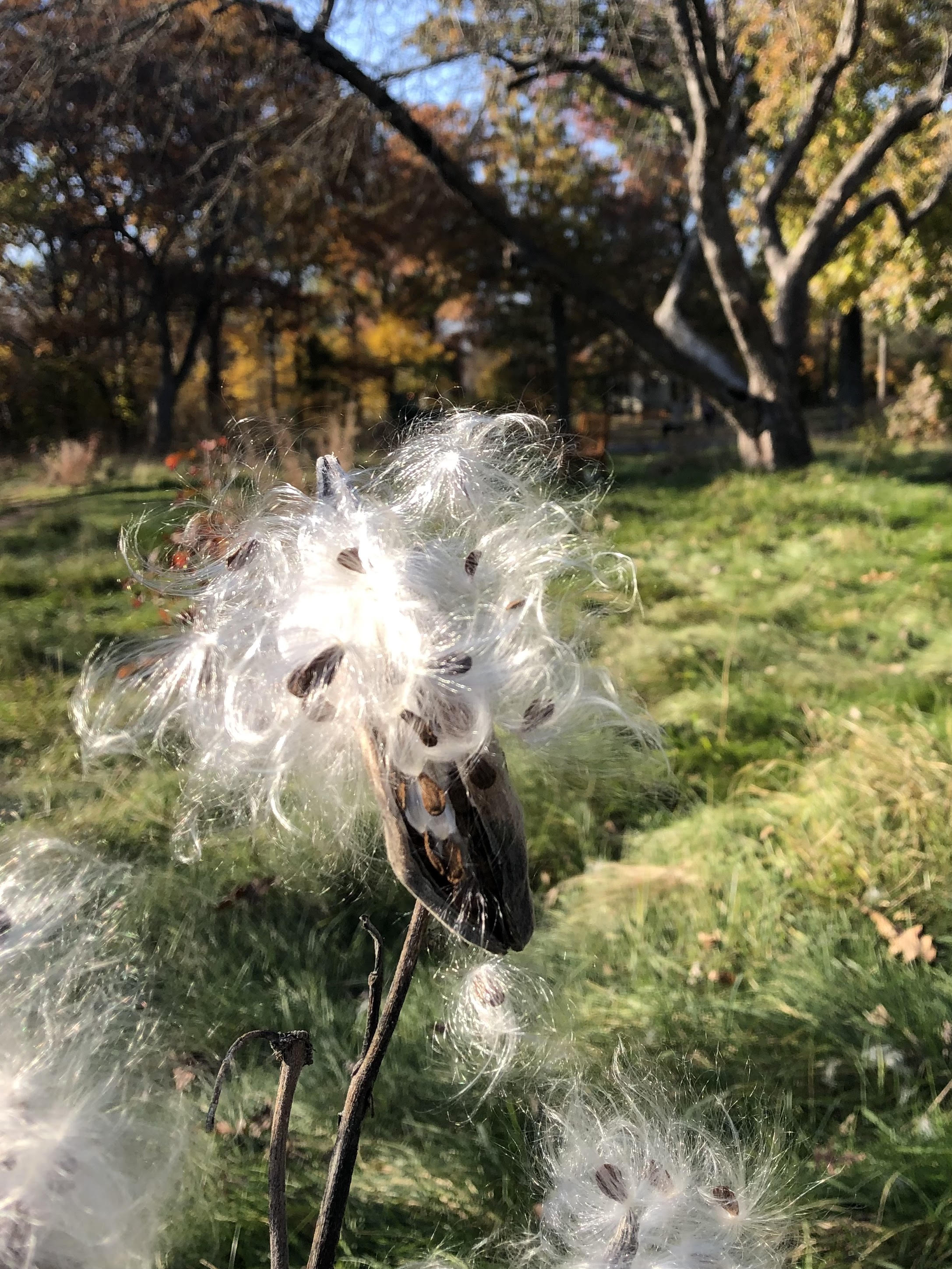
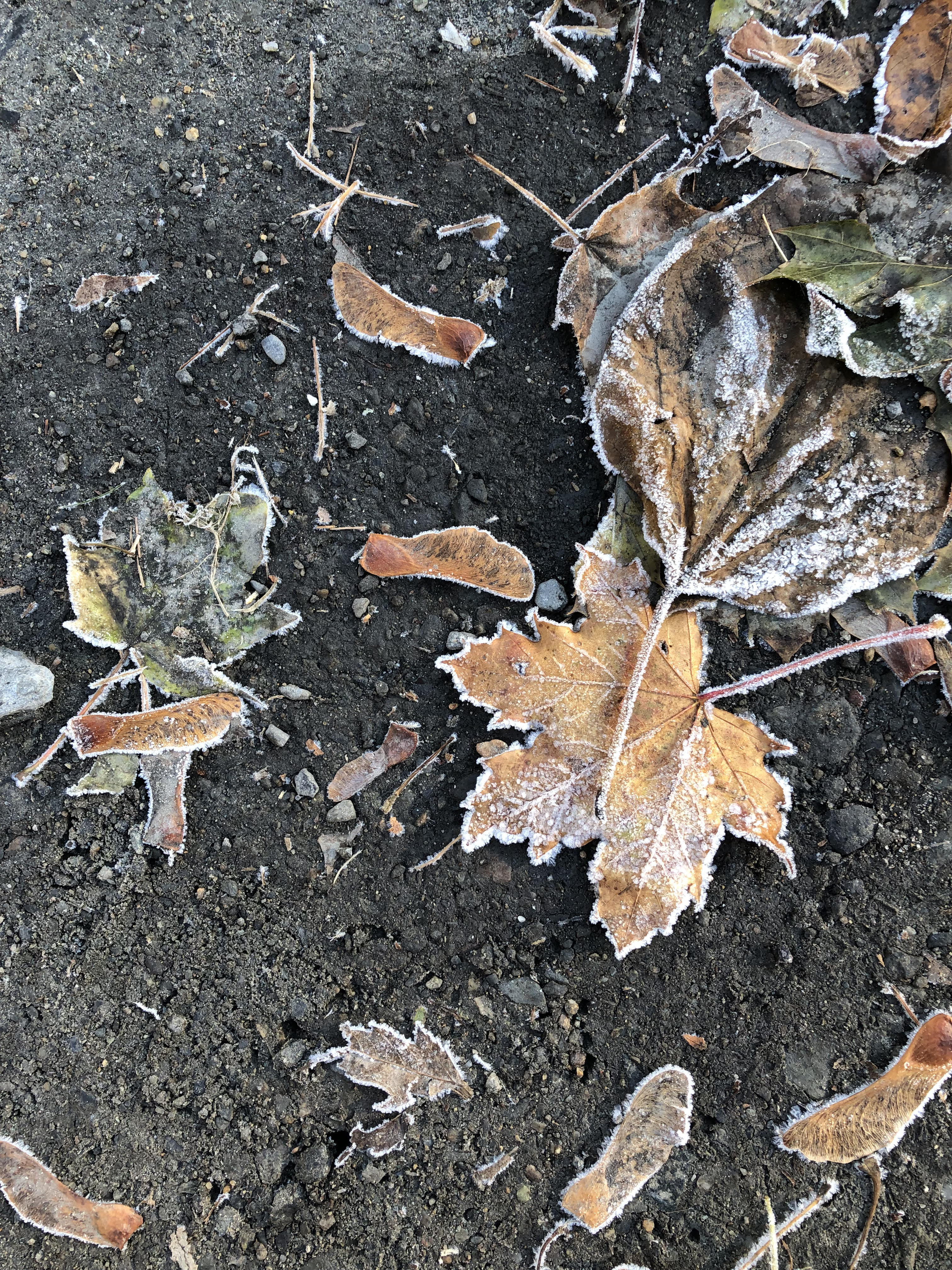
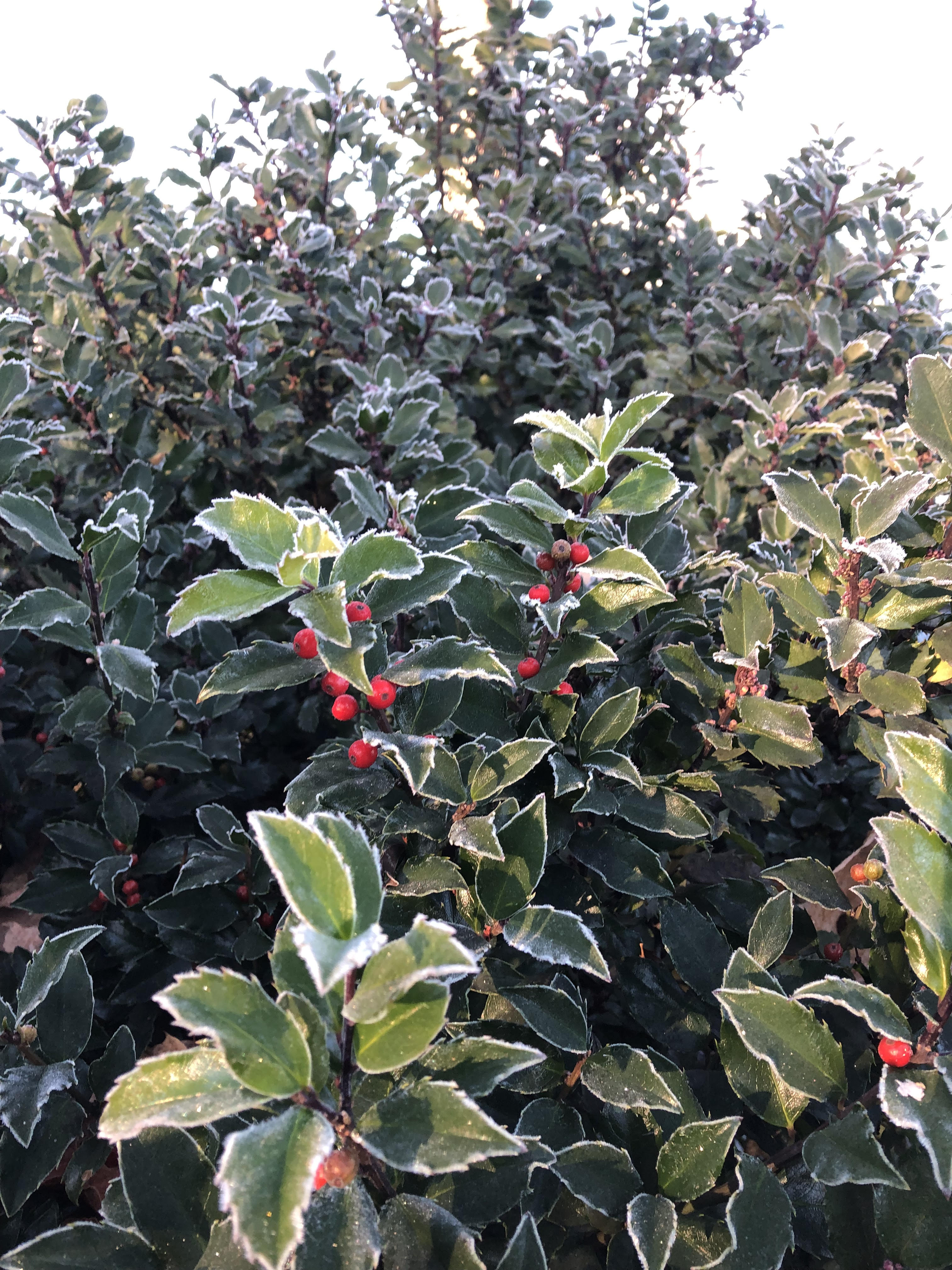
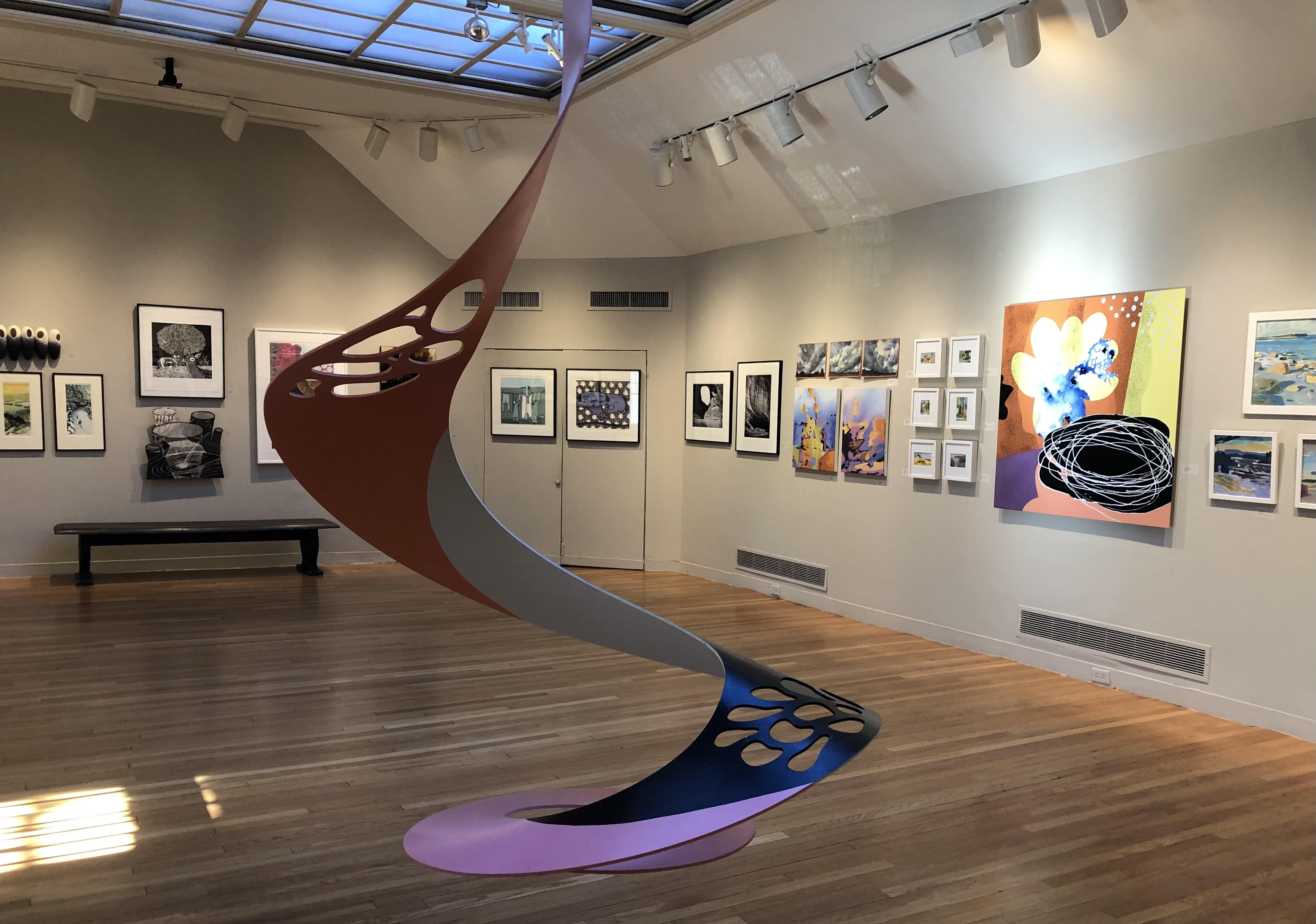
Here are a few more photos: from cold, frosty walks; from a nice, warm art gallery featuring a circus of skate-egg-case performers; and from Kristina’s visit to balmy North Carolina.
There were quite a lot of opportunities for photos on sunny October days this year, and I’m not even counting funny pictures from Halloween in Providence, where one grandchild was Harry Potter, another was Princess Aurora, Suzanne was the Fairy Godmother from Disney’s Cinderella, and Erik had turned into a vampire after getting vaccinated (as some would have you believe).
I didn’t get to see my young Captain Marvel and her scary brother the Mummy in person. Fortunately, their mom sent a dramatic action shot.
I do try to be a bit restrained with family photos on social media, so today I will show you other shots I’ve collected. The photo above is of a kind of mandala that a Providence resident is in the process of creating near Blackstone Park. She encourages passersby to add something. I added more red leaves.
On the library lawn back home, I got to see Dr. Seuss’s famous Thing One and Thing Two and Eric Carle’s Very Hungry Caterpillar. There was also a “walking” book, consisting of signs showing page spreads. The current choice is The Water Protectors, by Carole Lindstrom and Michaela Goade (illustrator).
My husband had been reading about Ralph Waldo Emerson — particularly about the influence that Quaker thinker George Fox had on him — and so decided it was high time to visit Emerson’s house. Among other things we learned was the fact that in the early 1800s, people didn’t know that tuberculosis was contagious. Emerson’s first wife died of it at age 18. Also, the original Emerson family still owns the home. It’s a rather dark and gloomy place, though. I preferred the recently restored barn and took a picture there.
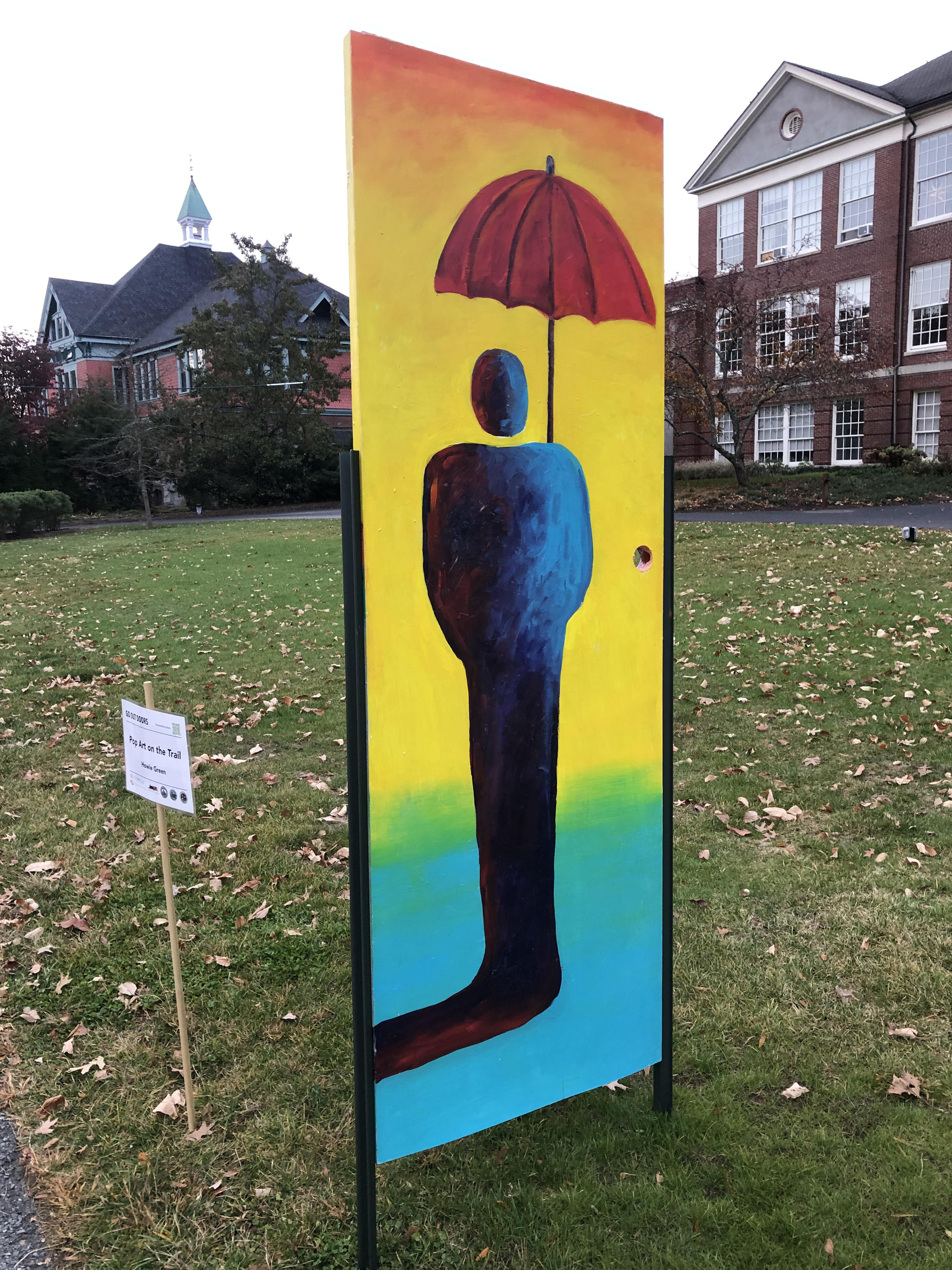
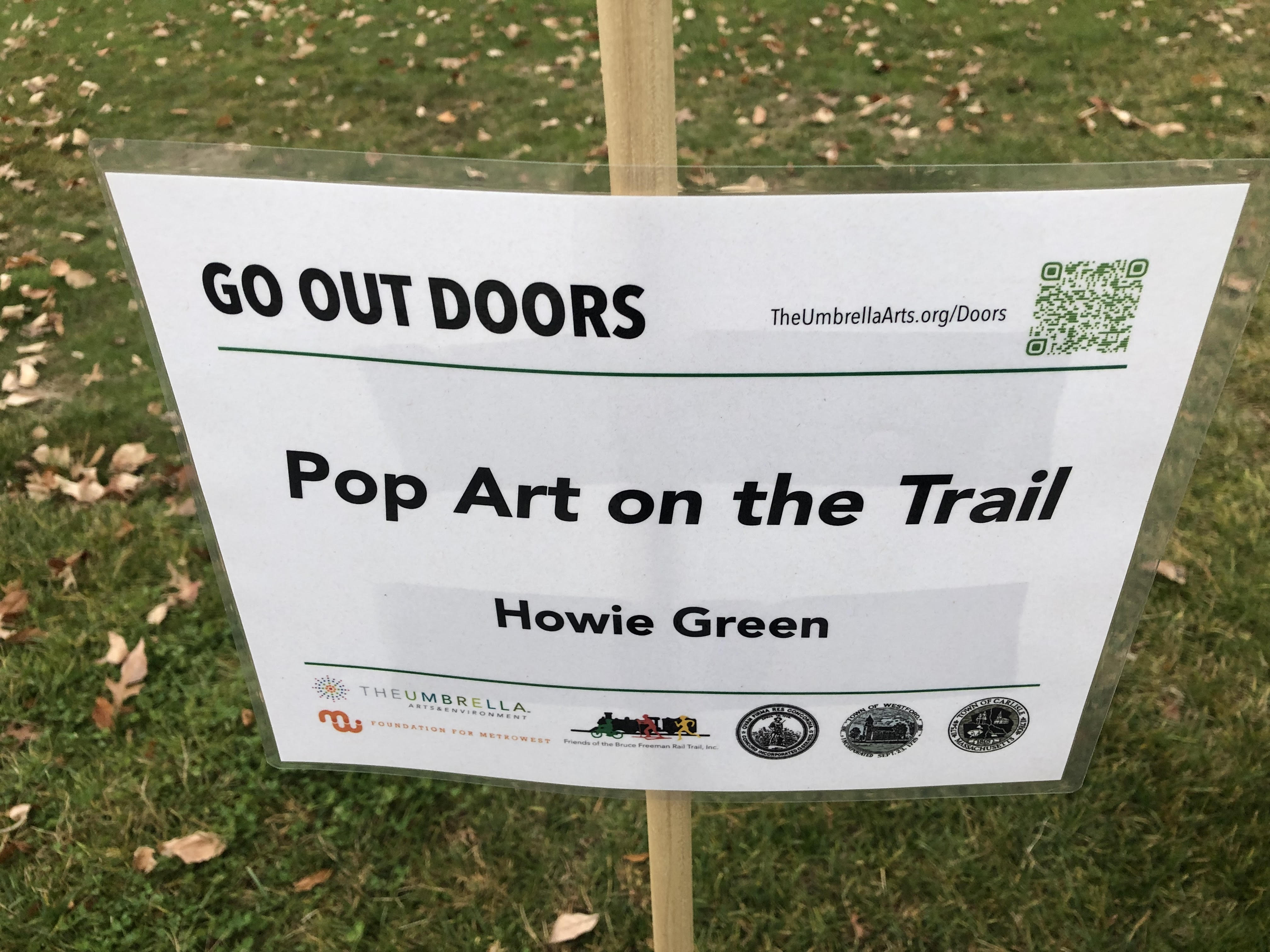
Moving right along, I have art for you from the Umbrella. The two pieces of door art are “Pop Art on the Trail,” by Howie Green, and “Remember the Future,” by Amy Cramer.
Then there’s the art center’s fabulous annual Art Ramble in the Hapgood Wright Town Forest, which I generally hold off on visiting until the first frost kills off the mosquitoes that breed in Fairyland Pond.
The Shibori hanging series, “Windblown,” is by Kiyomi Yatsuhashi. The beautiful Luna Moth Life Cycle is by Jude Griffin. The lungs of the forest are depicted by Barbara Ayala Rugg Diehl (BARD) in a work called “In and Out.”
The next photo shows Lisa Nelson’s “Waves of the Aerial Sea.” And last but not least is a huge dragonfly, or “Ethereal Dreamer,” by Laurie Bogdan and Kimberley Harding.