Feeds:
Posts
Comments

Posts Tagged ‘postaday’

The radio show Living on Earth recently reported how negotiations among environmental activists, the timber industry, indigenous people, and the British Columbia government protected 85 percent of a huge Canadian forest.

“Eighty-five percent of the Great Bear Rainforest in British Columbia is now protected … Steve Curwood discusses [the compromise] with reporter Andrew MacLeod of the magazine The Tyee, who explains what’s been protected and what’s open for logging.

MACLEOD: “It’s an area of 6.5 million hectares between the top end of Vancouver Island and the Alaska Panhandle. So it’s an area, about the size of Ireland, and it’s quite remote. There are only about 1,400 people who live there. So much of it has never been logged. This is usually described as the largest intact temperate rainforest in the world, a very lush, mossy, moist year-round ecosystem. … We’re talking trees that five or six people put their arms around. Some of these cedars can be in 20 feet in diameter …

CURWOOD: “Tell me what is the [forest’s] Spirit bear?

MCLEOD: “They are a subspecies of black bear. They are a genetic variant that comes out white, so it’s a white black bear. There are also Grizzly bears there, there are whales, wolves, and just a relatively pristine ecosystem up there.

CURWOOD: “And who calls them Spirit bears? …

MACLEOD: “My understanding is that it goes back through the First Nations, there have always been these genetic variant bears there and they’re seen as special.”

When Curwood asks why the timber industry agreed to the negotiation, MacLeod explains that the campaign to protect the forest helped to avoid extended confrontation.

“Lots of First Nations people will tell you they’ve been on the land for thousands and thousands and thousands of years and it’s been sustainable, it’s been healthy, that it’s really only last 150 years of colonialism where you’ve seen clear-cuts and destruction and species driven to extinction. On the other hand, there are lots of people from First Nations who are working in the logging industry today as well. Over time, First Nations have sort of reestablished their rights. There have been some precedent-setting cases just in the last few years that have recognized aboriginal title does exist.” More here.

Of possible interest: Read how Wabanaki diplomacy smoothed a similar negotiation process in Maine, here.

Photo:  Elsen Poulsen/Animals Asia, Flickr CC BY-NC 2.0
A white Spirit bear fishing
Read Full Post »

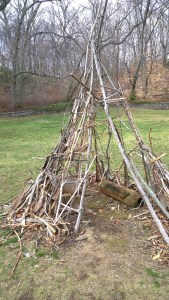
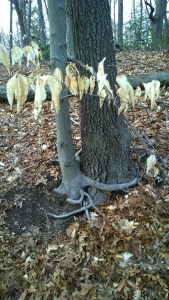
Something reader KerryCan said in a comment one day got me thinking that I’d like to see if I could get a photo of Providence that could make a part of the city pass for rural. At first, I found only bland vacant lots left over from the rerouting of route 195. Then I went to Blackstone Park, where a treehugger tree and an ersatz teepee caught my eye.

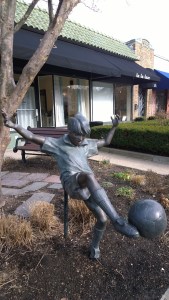
The soccer-playing kid is in a suburban-looking area on the East Side, and the glowing tunnel is right downtown.

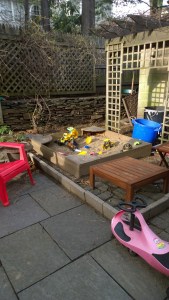
I thought the sandbox looked lonely.

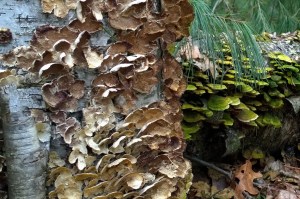
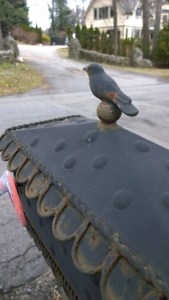
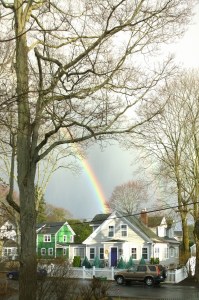
In Massachusetts, I went looking for skunk cabbage and jack-in-the-pulpit plants, but it was too early. Not spring yet. I did hear peepers. And I saw gracefully rotting tree stumps, a bird on a mailbox, and a wonderful rainbow.

031616-treehugger-tree

031616-teepee-Blackstone-Park-RI


031616-soccer-statue

031616-glow-in-the-dark


031616-lonely-sandbox

031816-fungus-on-stumps


031816-bord-on-mailbox

031816-rainbow-Concord

Read Full Post »

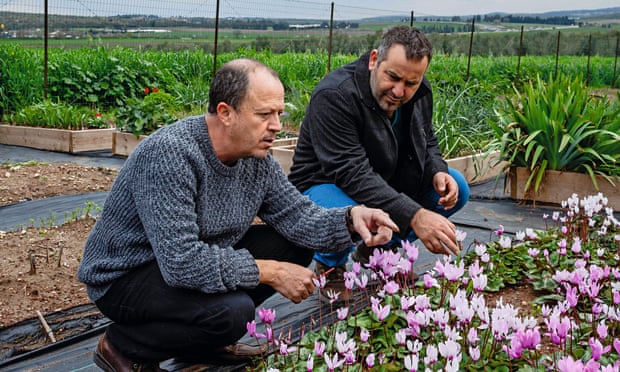
Shared interests can bridge cultures. The Guardian‘s Jim Cable offers up a nice example in his report on “two plantsmen in Israel – one Jewish, the other Muslim – [and their] mission to save their region’s rare native species.”

He writes that Oron Peri, a Jewish garden designer who lives halfway between Haifa and Nazareth, has long partnered with Mansour Yassin, a Muslim, on landscape work. Now they are collaborating to share a large collection of Eastern Mediterranean native species with other plant enthusiasts. He says their affiliation is perfectly natural in the part of Israel where they live.

“Yassin adds, ‘We have the same ideas about relationships between Christians, Jews and Muslim people. We don’t hold to stereotypes about where you come from.’

“Peri realised the time had come to formalise the way he shared plants with other enthusiasts. So Seeds of Peace was born; a scheme where seed sales of garden-worthy bulbous plants support conservation of rare species. Yassin is gradually matching up botanic names with the Hebrew he naturally uses for plants he has known since playing in the mountains as a boy. …

“For Peri, the collection represents 20 years of travel and botanising, specialising in plants from the Mediterranean and Middle East. Indigenous populations have suffered due to tourism (particularly on the Greek islands and Cyprus) and illegal harvesting for the bulb market. Some plants are endangered in the wild, with no conservation scheme to protect them in their native country. They give these refugees, as Peri refers to them, a place to thrive and set seed.” Read about the work here.

Photo: Yadid Levy
Oron Peri, left, is Jewish and his Seeds of Peace partner, Mansour Yassin, is Muslim. Here they examine cyclamen in their beds in Kiryat Tiv’on.

Read Full Post »

There are people who like to cook and people who like to fish, but if they are not in the same family like John’s in-laws, the caught fish may never get eaten.

Fortunately, there are now a growing number of services that will enable you to catch your fish and eat it, too.

Diane Bair and Pamela Wright describe a few at the Boston Globe.

“Fishing charters are wildly popular along the sunset coast of Florida. The Gulf Coast, from St. Pete Beach to Clearwater, has some of the best deep sea fishing in the country and plenty of days of sunshine and calm seas. It’s dubbed the ‘grouper fishing capital of the world,’ but mackerel, snapper, barracuda, tuna, dolphin, wahoo, hogfish, and more are also plentiful.
“Most charters guarantee that the boat will bring back fish, and they often include free fish cleaning and ice. But what do you do with your catch if you’re staying at a vacation resort or local hotel? These restaurants in the St. Pete Beach area will gladly prepare your keepers: You catch ’em, they’ll cook ’em.”

The reporters list these spots: Friendly Fisherman (150 John’s Pass Boardwalk, Madeira Beach, 727-391-6025, www.gofriendlyfisherman.com); Sea Critters Café in St. Pete Beach (2007 Pass-a-Grille Way, 727-360-3706, www.seacritterscafe.com); Conch Republic Grille (16699 Gulf Blvd., N. Redington, 727-320-0536, www.conchrepublicgrill.com); and Maritana Grille (3400 Gulf Blvd., 727-360-1882, www.loewshotels.com/don-cesar/dining). Descriptions of the delicious preparations here.

My husband and John have often brought back bluefish after going out on G Willie Make-It’s charter. G Willie (Bill) cleans the fish you want and sells the fish you don’t want to local restaurants.

Not everyone loves bluefish, but the first one of the year says summer has arrived.

Photo: Pamela Wright for the Boston Globe
Eating on the outside deck at Sea Critters Café, where you can get the fish you caught turned into a meal.

Read Full Post »

Well, this is a new one on me: a bookstore that sells only one title at a time.

Amy X. Wang reports at a website called Quartz that in September 2014, “Yoshiyuki Morioka, a bookseller who had been running a store in Tokyo, Japan, for 10 years, had a curious thought. Lots of customers, it seemed, dropped in during book launches and other events to buy the same title; others often appeared overwhelmed by all the extra variety. So why not start a bookstore that only sold one book at a time?

“Now, Morioka Shoten — Morioka’s new venture that threw open its doors in Tokyo’s trendy Ginza shopping district in May 2015 — operates around that very principle. The store stocks multiple copies of only one carefully selected tome each week …

“Takram, the design engineering firm that helped Morioka put together the look of his new store, says the experience highlights ‘the importance of a physical venue in the era of digital reading.’

“Books that have been displayed so far include Swedish-Finnish author Tove Jansson’s The True Deceiver, Hans Christian Andersen’s Fairy Tales, and works from well-known Japanese writers like Mimei Ogawa and Akito Akagi. Each title is displayed for six days in a row—Tuesday to Sunday—and then swapped out for a new book.

“And things are going quite well at the quiet little store. According to Morioka, Morioka Shoten has sold more than 2,000 works since it opened. Proof, then, that readers seeking deep, personal relationships with physical books are still around across the world.” More here.

You know, that last sentence strikes a chord. I was just explaining to a friend today how this blog resulted from my daughter asking if I would apply my love of blogging to support the vibe of the jewelry company she founded, which emphasizes deep, personal relationships.

If you’ve never clicked on the Luna & Stella site (or even if you have), please do now. Suzanne and Erik have posted a steady stream of new birthstone-jewelry designs and charms over the five years I’ve been blogging. Each one is full of meaning.

Photo: Takram/Miyuki Kaneko
The one-room bookstore Morioka Shoten in Tokyo

Read Full Post »


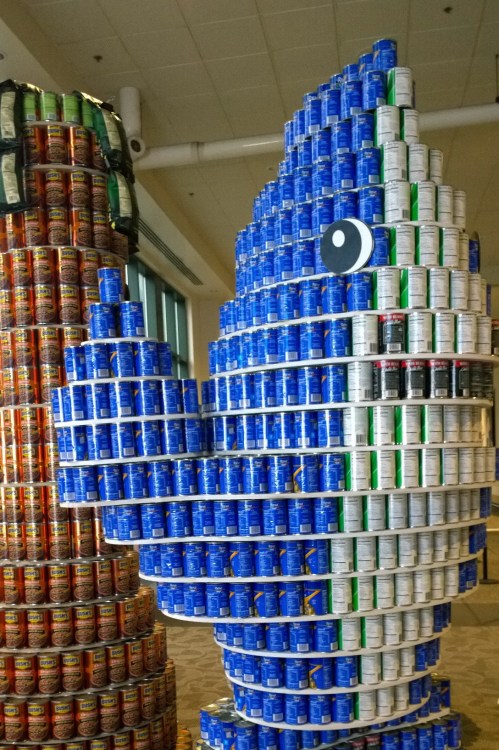
031616-canstruction


Several civic-minded design and construction businesses have once again entered the Rhode Island Community Food Bank‘s annual Canstruction contest. The display at the Providence Place mall combines fun with a message about hunger in the state and the need for canned goods.

LLB Architects of Pawtucket and Shawmut Design and Construction of Providence are the geniuses behind the display featuring the Left Shark, an Internet celebrity since one of singer Katy Perry’s backup dancers at the 2015 Super Bowl went rogue.

I remember seeing another Canstruction event last year, at the Boston Society of Architects. It’s easy to see why this sort of work needs to be done by designers and builders: it’s really hard to make cans look like anything but cans. The BSA cans were donated to the Merrimack Valley Food Bank in Lowell.

031516-left-shark-recreated-in-cans

Read Full Post »

Here’s an idea that could give a welcome boost to underprivileged children: a free connection to the Internet at their home.

It seems that Google, in the spirit of its discontinued motto “Don’t be evil,” is piloting a new public service.

Matt Hamblen at Computerworld reports, “Google Fiber [recently] announced free gigabit Internet service to residents of selected public housing projects connected to its fiber optic service in U.S. cities.

“The program was launched at West Bluff, an affordable housing community in Kansas City, Mo., where 100 homes have been connected to Google Fiber. Across the Kansas City area, Google is now working with affordable housing providers to connect as many as nine properties that could reach more than 1,300 local families.

“Google described the program as an extension of its work with ConnectHome, an initiative of the U.S. Department of Housing and Urban Development (HUD) and the Obama administration. …

“In addition to free Internet, eligible residents will work with ConnectHome partners like Connecting for Good and Surplus Exchange to be able to purchase discounted computers and learn new computer skills, Google said.” More here.

Depending on what the housing developments are like to live in and whether they provide supports like the Family Self-Sufficiency program to move people to independence, this could be a useful piece of the difficult poverty-reduction puzzle. So, good on Google!

Photo: ConnectHome 
A resident of West Bluff in Kansas City and her son are among the first of 1,300 families in area affordable housing units to receive Google Fiber gigabit Internet service at no cost.

Read Full Post »

I love thinking about sunlight and shadow. Dickens uses them a lot for Richard and Ada’s story in Bleak House — maybe my favorite book of all time.

“So young, so beautiful, so full of hope and promise, they went on lightly through the sunlight … So they passed away into the shadow, and were gone.”

Many of you know what the decades-long case of Jarndyce vs Jarndyce did to Richard and Ada’s bright hopes. I’ve come to think that it was not so much Richard’s fevered expectations of an inheritance that brought the most sorrow, but his need to fix blame. Blame is corrosive.

When I interviewed a formerly homeless Marine last week and he started telling me about how upset he was that something bad had just happened with his benefits, I was touched by how he kept reminding himself how to cope, saying, “I believe in fixing the problem — not the blame.” Words to live by.

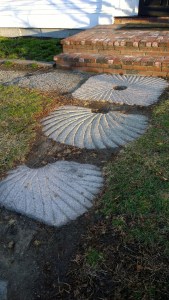
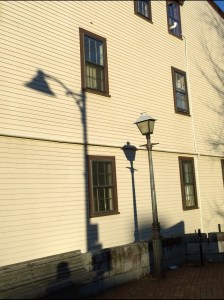
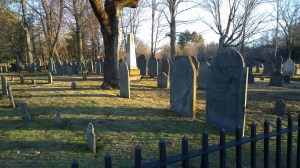
The first three photos were taken early Saturday morning, when the effects of sunlight and shadow were especially breathtaking. (I can never resist that old graveyard. You’ve seen it here in all weathers.)

The next three were taken at the playground near John’s house. Every few months, new creatures appear on that tall tree stump. (You’ve seen previous creature photos, too, on this blog.)

031216-early-footpath-shadows

031216-lamppost-shadows


WP_20160312_06_42_36_Pro

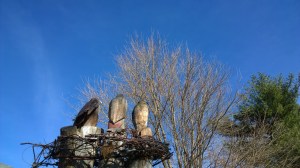
031216-carved-eagles-arlington


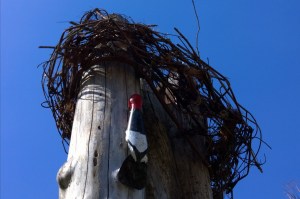
031216-carved-woodpecker-arlington

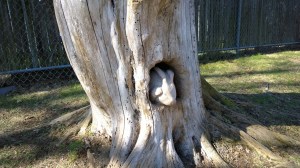
031216-hidden-bunny

Read Full Post »

When I was growing up in Rockland County, New York, my parents liked to buy art from artist friends and, when possible, offer other kinds of support. They hired the Hungarian-American artist André Dugo, for example, to paint a portrait of my brother Bo and me sitting in an armchair and reading one of the artist’s children’s books. We often read his book Pete the Crow or the books featuring a cardinal and a blue jay, or the one about the calf that ate the wrong kind of grass and puffed up like a balloon.

One day, Mr. Dugo came to our house to watch television with us. (We had one of the first TVs because my father was writing a story on Dumont for Fortune magazine.) We kept asking Mr. Dugo what he would like to see, and he kept saying he just wanted to see whatever we ordinarily watched.

As we worked our way through several programs, Mr. Dugo noted our reactions, sometimes asking questions.

Not many months after, a children’s book came out. It was called Tom’s Magic TV, and its premise was that a boy traveled through the TV screen and into adventures with sharks, circus clowns, puppets, cowboys and spacemen. Bo and I were not mentioned. The mother didn’t look like my mother. This was an early exposure to children’s-literature research — or poetic license.

I’m pretty sure that Gene Autry was the model for the cowboy adventure.

030916-Toms-Magic-TV-Dugo

Read Full Post »

Last Sunday, Pam and I walked over to the library to hear an acclaimed poet read at the poetry series. Ross Gay, who lives in Indiana, had just published his poetry collection Catalogue of Unabashed Gratitude and was doing readings around New England.

Glenn Mitchell, who organizes the library’s poetry series, was able to publish an advance interview with Gay in the local paper.

She wrote, “Gay says his inspiration for writing poems is a determination to practice joy as a discipline. He is a finalist for the 2015 Kingsley Tufts Poetry Award and the National Book Critics Circle Award and was a finalist for the 2015 National Book Award in Poetry and the NAACP Image Award in Poetry.

“Gay also works in the field of literary sports writing. He is a founding editor of the online sports magazine Some Call it Ballin’, a publication of reflective essays written by well-known poets, essayists and fiction writers along with podcasts of contributors.

“He serves on the board of the Bloomington Community Orchard, a nonprofit, food justice project.

“An associate professor of poetry at Indiana University, Gay is residing in Cambridge while a 2015-16 Fellow at the Radcliffe Institute for Advanced Study.”

Here is what Gay told Mitchell about the poet that inspired him to write poetry: “[Amiri] Baraka’s poems were such a clear articulation of the kind of alienation I was experiencing when I went off to college — a kind of racial alienation and class alienation — that I had no idea how to begin to talk about other than wanting to break things. I knew I was full of rage (which I later knew was a version of sorrow, too), but I didn’t know how to put it into words, which Baraka’s work made it possible for me to understand was possible.”

To her question about gardening coming into his life and the difference it made, he says, “I think close looking, paying attention, going slow, a kind of training in receptivity — I think those are things I learn from the garden … I approach poems like that, usually. I like to listen to them as much as I try to impose my own will on them. … A garden or a poem is potentially a device for pulling people together, they are both food, I’m saying, which we might feed to each other.”

In his Sunday reading, Gay included a poem about strangers sharing figs from a tree unexpectedly flourishing near his Philadelphia home — a poem that expresses some of his thoughts about our history of racism and the possibility of goodness.

He says, “The poem ‘To the Fig Tree at 9th and Christian’ gets at it—gets at what it means for us to come together despite the brutal history we’ve inherited, or even enacted. I think that fig tree is a kind of mercy.”

More here.

Read Full Post »

My parents sometimes took me to the New York City ballet when I was little, and once or twice we went backstage. I think I got the autograph of Maria Tallchief, but I was too young to be careful with it for a lifetime.

Recently, I was interested to see an article by Allison Meier on Tallchief and four other American Indian ballet dancers. I had not known there were five. The article is at the website Hypoallergic, and the lead came from ArtsJournal.com.

Meier writes, “Five dancers who started their careers in the 1940s redefined dance in the United States, becoming some of the first American prima ballerinas in the world’s top companies, from the Ballets Russes to the Paris Opera Ballet. And they were all American Indians from Oklahoma.

“Yvonne Chouteau, one of the ‘Five Moons,’ as they were anointed, died [January 24] at the age of 86. Along with Moscelyne Larkin (Shawnee, 1925–2012), Rosella Hightower (Choctaw, 1920–2008), Marjorie Tallchief (Osage, b. 1926), and, most famously, Maria Tallchief (Osage, 1925–2013), she rose in the ranks of dance when ballet was still not widely appreciated in this country. The women had distinct careers, but they all danced when they were young at powows and caught performances by the traveling Ballets Russes and other companies, propelling them to study professionally. …

“Nora Boustany wrote in Hightower’s Los Angeles Times obituary that the women’s ‘remarkable accomplishments showcased American dance and talent to the world when Russian stars still dominated that scene.’

“And as Larkin said in a short documentary produced by NewsOK: ‘It’s not just a fluke that we are all Native Americans and that we all became dancers.’

“In the Oklahoma State Capitol, a mural of the five dancers adorns the rotunda. Painted by Mike Larsen, it shows them posed in white tutus, the shadows of the Trail of Tears behind them. Each had a unique style and left her own legacy, but together they promoted their indigenous heritage through the art of dance.”

More here.

Photo: Roger Wood
Maria Tallchief in ‘Swan Lake’ in 1952. (The photo is housed at the New York Public Library, Jerome Robbins Dance Division.

Read Full Post »

I enjoyed this cheery article at Roads and Kingdoms/Slate on a family in Ghana who will design whatever kind of coffin is requested — like the potato chip coffin below.

Reporter Akinyi Ochieng describes seeing “coffins of all shapes and colors: a chili pepper, a cat, a scorpion. …

“Founded in the 1950s by Seth Kane Kwei, this is thought to be the oldest coffin shop specializing in abebuu adekai: proverb boxes.

“In the last 50 years, these fantasy coffins have become one of Ghana’s most unique cultural exports. The curious tradition of burying people in coffins shaped like everything from lobsters to busty women is primarily practiced in Accra and has spawned over 10 workshops in the capital city. Almost all of these are owned by former apprentices of Kane Kwei, who died in 1992. …

“The coffins intended for burial are made from a soft wood and cost about $700. The ones considered works of art and bound for homes and galleries, are made from mahogany. Those can sell for as much as $3,000. …

“ ‘When I started working, people used to call me a coffin maker or a carpenter,’ says [one family member]. ‘Over the years, I’ve become more actively engaged in the design process from start to finish. I think that’s what really helped me transcend just being a carpenter to being a true artist with a vision.’ ”

More from Akinyi Ochieng here. See some finished coffins, too.

Photo: Theophilus Mensah 
Design plans for an upcoming piece.

Read Full Post »

This batch is all Rhode Island. First I have a couple pictures from the mall. If you don’t call the mall Providence Place, people aren’t sure if you mean the Arcade. I’m having a hard time keeping track of the local names. You have the Rhode Island Convention Center, which is not the same as the Civic Center (is that the Dunkin Donuts Center?), which is totally not the same as the same as P-PAC (Providence Performing Arts Center), which is not the same as the Veterans Memorial Auditorium …

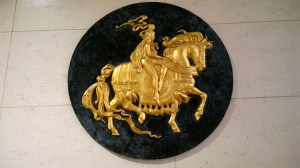
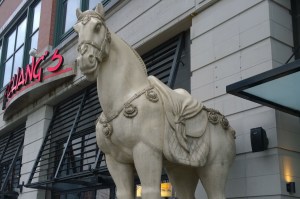
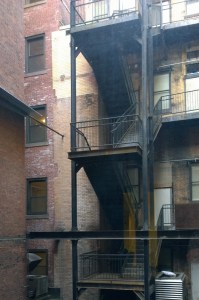
Back to the photos. Lady Godiva hangs out in Providence Place, as does PF Chang restaurant’s fine-looking Tian horse. Next, I’m posting a glimpse of  some old brick buildings that were merged and renovated to house my new workplace. I love the view out this conference room window.

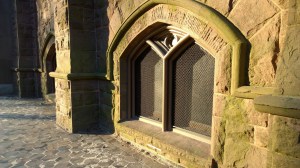
The archway is from a different renovated building, the historic Heating & Cowling Mill, which has beautifully repurposed to house formerly homeless veterans.

Several homeless people were watching me from the steps of the cathedral early one morning like wary deer. I took an unobtrusive picture around the corner, where the sun was warming a quiet nook.

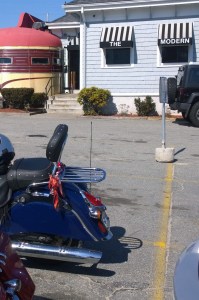
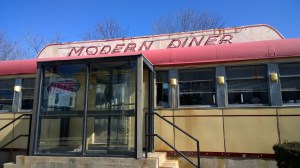
The Modern Diner is in Pawtucket and serves breakfast all day, but not breakfast only. It was recently featured on the Food Network show and made a list of top diners in New England. Check out the Providence Journal report.

030716-Godiva-in-the-mall

30216-Chinese-horse


030816-between-brick-buildings

030716-arch-Vets-for-Tomorrow


030716-vets-for-tomorrow-providence

030816-cathedral


030916-modern-diner-pawtucket

030916-motorcycles-at-the-diner

Read Full Post »

Ingenuity can make a business out of almost anything. That’s what you may conclude after reading how a small Maine company is making something useful from lobster shells.

Tom Bell has the story at the Associated Press: “A startup company in Maine is developing a children’s bandage coated with a substance extracted from crushed lobster shells that would promote blood-clotting and is resistant to bacterial infection.

“The company, Lobster Tough LLC, shipped Maine lobster shells to a processor in Iceland for testing, and so far, the results are promising, said Thor Sigfusson, an Icelandic investor in the company. …

“ ‘My dream will be to use the massive amounts of lobster shells that are being thrown into dumpsters,’ he said. …

“The lobster shells must be dehydrated to remove weight and lower shipping costs. Lobster Tough this winter is shipping a portable dehydration machine from Iceland to Maine. The company eventually plans to build a $2 million dehydration plant somewhere on the Maine coast, said Patrick Arnold, an investor who lives in South Portland. …

“The bandages would be the first commercial product developed through the New England Ocean Cluster, a new business incubator in Portland.”

More here.

Photo: Tasty Island

Read Full Post »

Do you ever read Kevin Lewis’s Sunday Globe column, “Uncommon Knowledge”? He covers new research in the social sciences. Thanks to him, I learned about this study on helping minority boys get engaged in education.

“A disproportionate number of students struggling academically are minorities, ” he writes. “Can we do better?

“In what they claim is the first credible study of the effect of an ethnically grounded education, researchers at Stanford analyzed the effect of a ninth-grade course offered in several San Francisco public schools covering ‘themes of social justice, discrimination, stereotypes, and social movements from US history spanning the late 18th century until the 1970s’ and requiring students ‘to design and implement service-learning projects based on their study of their local community.’…

“The researchers found that taking the course ‘increased attendance by 21 percentage points, GPA by 1.4 grade points, and credits earned by 23 credits (or roughly four courses).’ They call the results ‘surprisingly large effects,’ which were concentrated among boys.”

The paper, by Thomas S. Dee, and Emily Penner, is The Causal Effects of Cultural Relevance: Evidence from an Ethnic Studies Curriculum.” It was posted at the National Bureau of Economic Research in January.

More here.

Photo: Stanford University
Teacher David Ko instructs an ethnic studies class at Washington High School in San Francisco. A Stanford study found students benefit from such courses. Here, Ko is explaining an assignment about the role of advertising in reinforcing cultural stereotypes.

Read Full Post »

« Newer Posts - Older Posts »