Feeds:
Posts
Comments

Posts Tagged ‘postaday’

It’s getting chilly around here. Thirty degrees this morning. I’m getting wimpier about taking my walk outside and just go ’round and ’round indoors. I need to toughen up. The NY Times health columnist Jane Brody is older than I am and not only swims every day (vigorously, I’m sure) but walks five miles. Whoosh. I would have to walk back and forth to the high school — twice — to do five miles. It would take me half the day.

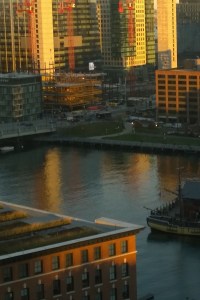
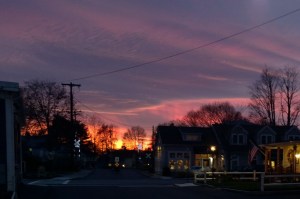
Here are photographs from the last couple weeks: shadows at the zoo, where my grandson ran into a friend he usually sees only in summer; milkweed and shadows; leaves casting shadows; an abandoned bird nest; overdevelopment reflecting on the waters of Fort Point Channel; and a burning sunset.

110815-John-at-zoo

110815-giraffes-at-Roger-Wms-Zoo


111515-milkweed-sun-and-shadow

110715-empty-nest


110815-leaf-shadow

111715-reflecting-on-Ft-Pt-Channel


111515-sunset-concord-MA

Read Full Post »

With a little creative thinking, a woman in Detroit was able to put a rundown house to good use, improve the neighborhood, promote her flower business, and help florists who focus on locally grown flowers.

Stacy Cowley writes at the NY Times, “Eleven months ago, a derelict house here that is now filled with 36,000 flowers contained far grimmer things. …

“Twelve thousand pounds of trash had to be hauled out before Lisa Waud, a florist who bought the duplex at auction for $250, could see what kind of canvas she had purchased.

“The house remains a structural wreck, but its atmosphere has been transformed. [In October] some 2,000 visitors [toured] Flower House, an art installation Ms. Waud and more than three dozen floral collaborators from around the country created on the site. Their goal is to cast a new light on the Detroit metropolitan area’s infamous blight, and on their own trade. …

“All of the plants and flowers filling [the rooms] are American-grown, a rarity in an industry that imports a majority of its wares from Colombia and elsewhere. …

“The inspiration for Flower House struck in 2012, when she saw images from that season’s Christian Dior couture show, held in a Parisian mansion filled with flowers in a rainbow of colors.

“ ‘It was stunning, and I knew immediately that I wanted to do that — but living in Detroit, I pictured it in an abandoned house,’ she said. ‘I’m trying to rebrand abandoned houses as a resource.’ …

“Ms. Waud estimated that she would need to raise $150,000 to cover the installation’s floral costs, but when she contacted her usual wholesalers, the California Cut Flower Commission, Mayesh and Nordlie, all three offered to donate their flowers.” Read about the inspiring results here.

Photo: Laura McDermott for The New York Times 
Lisa Waud, a Michigan florist, works on her room on the back side of the Flower House on the first day of the installation in Hamtramck. 

Read Full Post »

In case you’ve ever wondered why anyone would become a scholar and spend life mired in musty, dark library stacks, let me introduce you to an assistant professor of English at Montclair State University in New Jersey.

“In an unassuming notebook held in an archive at the University of Cambridge,” writes Jennifer Schuessler an American scholar has found what he says is an important new clue to the earthly processes behind that masterpiece [the King James Bible]: the earliest known draft, and the only one definitively written in the hand of one of the roughly four dozen translators who worked on it.

“The notebook, which dates from 1604 to 1608, was discovered by Jeffrey Alan Miller, an assistant professor of English at Montclair State University in New Jersey, … last fall, when he was in the archives at Sidney Sussex College in Cambridge, researching an essay about Samuel Ward, one of the King James translators and, later, the college’s master. He was hoping to find an unknown letter, which he did.

“ ‘I thought that would be my great discovery,’ he recalled.

“But he also came across an unassuming notebook about the size of a modern paperback, wrapped in a stained piece of waste vellum and filled with some 70 pages of Ward’s nearly indecipherable handwriting.

“The notebook had been cataloged in the 1980s as a ‘verse-by-verse biblical commentary’ with ‘Greek word studies, and some Hebrew notes.’ But as Professor Miller tried to puzzle out which passages of the Bible it concerned, he realized what it was: a draft of parts of the King James Version of the Apocrypha, a disputed section of the Bible that is left out of many editions, particularly in the United States.

” ‘There was a kind of thunderstruck, leap-out-of-bathtub moment,’ Professor Miller said. ‘But then comes the more laborious process of making sure you are 100 percent correct.’ ” More here.

Photo: Maria Anna Rogers/Master and Fellows of Sidney Sussex College, Cambridge
Pages from Samuel Ward’s translation for part of the King James Bible, the earliest known draft for the King James translation, which appeared in 1611.

Read Full Post »

Try to Praise the Mutilated World

By Adam Zagajewski
Translated By Clare Cavanagh

Try to praise the mutilated world.
Remember June’s long days,
and wild strawberries, drops of rosé wine.
The nettles that methodically overgrow
the abandoned homesteads of exiles.
You must praise the mutilated world.
You watched the stylish yachts and ships;
one of them had a long trip ahead of it,
while salty oblivion awaited others.
You’ve seen the refugees going nowhere,
you’ve heard the executioners sing joyfully.
You should praise the mutilated world.
Remember the moments when we were together
in a white room and the curtain fluttered.
Return in thought to the concert where music flared.
You gathered acorns in the park in autumn
and leaves eddied over the earth’s scars.
Praise the mutilated world
and the gray feather a thrush lost,
and the gentle light that strays and vanishes
and returns.

082015-flower-in-Greenway-for-DS

Adam Zagajewski, “Try to Praise the Mutilated World” from Without End: New and Selected Poems. Copyright © 2002 by Adam Zagajewski.

Read Full Post »

Ideas for very cheap houses keep coming around and disappearing. I remember one some years ago that was basically a covered bed, promoted as preferable to a sheet of cardboard for a homeless person but not exactly a solution to underlying issues.

See what you think of these homes in unused shipping containers.

oung professionals are living in repurposed shipping containers while the homeless are lugging around coffinlike sleeping boxes on wheels.

“These two improvised housing arrangements have emerged in an industrial pocket of Oakland where the median rent has gone up by 20 percent over the past year. One, in a warehouse, is called Containertopia, a community of young people who have set up a village of 160-square-foot shipping containers like ones used in the Port of Oakland. Each resident pays $600 a month to live in a container, which can be modified with things like insulation, glass doors, electrical outlets, solar panels and a self-contained shower and toilet. …

Photo: Jim Wilson/The New York Times
Heather Stewart created Containertopia with Luke Iseman in Oakland, Calif.

Read Full Post »

Here’s an imaginative trompe l’oeil, art that gives the illusion of a welcome at the border.

Jude Joffe-Block writes at Fronteras, “Artist Ana Teresa Fernandez is attempting to paint a stretch of the border fence in Nogales, Sonora, so it looks like it is no longer there. … The project is an expansion of an earlier installation Fernandez did on the Tijuana border fence.

“Fernandez was born in Mexico, moved to San Diego as a child, and grew up going back and forth between the two countries. She heard story after story of migrants who lost their lives trying to cross the border, and of families divided by it. …

“In 2011, Fernandez went to Tijuana from her home in San Francisco with a plan to paint the fence.

“ ‘I just had this epiphany, of like, you know I can bring the sky down and erase it, just using paint and painting it sky blue,’ Fernandez said.

“She picked a stretch of the fence on the beach on the Mexican side, climbed up a ladder, and began to paint. …

“Fernandez carefully chose a shade of blue that would make it look like the fence disappeared into the sky and the Pacific Ocean behind it.

“The illusion worked. As she was finishing up a jogger came running up excitedly.

“ ‘And this runner was all sweaty,’ Fernandez remembered. ‘He was like, “I get it! I get it!” I looked down from the ladder, and I was like,”Excuse me sir, what do you get?” And he was like, “It looks like it is gone from far away!” ‘…

“Fernandez says her goal is to inspire people to imagine what if the fence really did come down.”

More here at WBUR, where you also can listen to the story.

Photo: Ana Teresa Fernandez
Ana Teresa Fernandez’s art installation on the border fence in Tijuana.

Read Full Post »

I thought today would be a good day to note that, with the right supports in place, veterans who have suffered post-traumatic stress while serving the country can move forward with their lives.

The willingness of some of these service men and women to expose their story in the media strikes me as an extra level of bravery.

Kathy McCabe writes at the Boston Globe about Army veteran Michael Saunders.

“Saunders, who served from 2002 to 2006, deployed twice to Iraq … He started therapy at the VA outpatient clinic in Lynn, where a counselor suggested he focus on a new mission: going to college.

“ ‘She said I would make more money with a college degree,’ said Saunders, who worked for a lumberyard after his discharge from the Army.

“He enrolled in VITAL — an acronym for Veterans Integration to Academic Leadership — a national program that helps veterans transition from soldier to student. VITAL brings VA services, including mental health counseling, to college campuses. …

“According to Pam Flaherty, dean of students, Middlesex Community College had nearly 600 student veterans in 2014-15. In the last year, 70 who have PTSD have taken part in VITAL and received mental health care on campus. …

“The Bedford VA also offers the VITAL program at Bunker Hill Community College in Charlestown, Mount Wachusett Community College in Gardner, Northern Essex Community College in Haverhill, North Shore Community College in Danvers and Lynn, Endicott College in Beverly, and Salem State University.

“Saunders, who graduated from Everett High School in 1999, is in his second year studying liberal arts at Middlesex Community College in Bedford. He has discovered a talent for writing, and hopes to transfer to Emerson College next year.

“ ‘It was a rough start, but I’m doing fine now,’ said Saunders, who also has a job at the college’s Veterans Resource Center. ‘Had the VA not had the service in place here, I wouldn’t have come.’ …

“ ‘I can sit in class now, for an hour and 20 minutes,’ Saunders said. ‘I couldn’t sit still for 10 minutes before.’ He has a lingering fear of crowds, so he adjusted his seat in the classroom.

“ ‘ I have to be able to see the door, and I don’t like anybody behind me,’ Saunders said. ‘If I can’t do that, I can’t focus.’

“For one class, Saunders wrote a story called ‘The Dark Is Afraid of Me,’ a fictional account of a military mission in Iraq.

“ ‘It was really easy for me to tell the story,’ Saunders said. ‘When the professor read the paper, she was like, “You need to go see a publisher, now.”

” ‘Maybe I will.’ ”

More such stories at the Globe, here.

080115-flag

Read Full Post »

Azzurra Cox at the Atlantic‘s City Lab website wrote recently about design students and a nonprofit theater group that “created a ‘park-in-a-cart’ to serve the fast-growing city of El Alto, Bolivia.

“One bright July afternoon in El Alto, Bolivia, a playground paraded across a busy intersection.

“In the country’s second-largest city—and, at approximately 13,500 feet, the highest major urban settlement in the world—desfiles are a frequent occurrence, even a way of life. …

“But this parade was different. Dodging a stream of minibuses, a few individuals wearing carnivalesque costumes tugged two colorful metal carts—one resembling an astroturf bee, the other an elephant—to the center of a nearby plaza.

“Working in the harsh sunlight, they set about disassembling the carts. The shell of the bee became a series of green mounds, while the elephant trunk revealed itself as a slide.

“In a matter of minutes a playground was born, and the sounds of children playing rippled across the plaza. …

“In this dense city, driven by commerce at all scales, streets, sidewalks, and communal spaces are often transformed into informal markets, where vendors and minibuses compete for real estate. While this competition brings vitality, it requires novel methods of occupying urban space for play.

“The pop-up playground aims to do just that. Over three summers, the International Design Clinic (IDC), a ‘guerrilla design’ collective, has collaborated with Teatro Trono to design and build a pair of mutable, movable playspaces …

“Toward the end of that July afternoon, the park collapsed its way back into the carts. As one mother convinced her five-year-old to take her last turn down the slide, she asked one of the designers where she could find the playground next. Megan Hoffman, who studied anthropology at Temple University, recalls a grandmother who offered the group a sleeve of crackers to express her gratitude.

“ ‘That day,’ Hoffman says, ‘our pop-up playground was a space of joy.’ ”

More at City Lab.

Photo: Megan Hoffman
The mobile park on parade in El Alto this summer.

Read Full Post »

In September, Emily Fox did a feature at Michigan Radio on efforts to preserve a dying Native American language. The initiative is focused on preschoolers.

“Anishinaabemowin is the language that was spoken by tribes in Michigan for millennia,” Fox says, “and it’s near extinction in the state.  Many Michigan tribes don’t have any fluent speakers left, while those that do are only reporting between one to three fluent speaking elders.

“Michigan tribes are doing what they can to bring the language back. Some are doing language immersion weekends. Some are creating programs to learn Anishinaabemowin online.

“A lot of tribes are teaching community language classes, or bringing it to the public schools and day care centers.

“The Saginaw Chippewa Indian Tribe in Mt. Pleasant only has one fluent Anishinaabemowin speaker, but they have been able to pool enough resources together to have a four-day-a-week early childhood language immersion school since 2009.

“Isabelle Osawamick, with the Language Department for the Saginaw Chippewa tribe, says the teachers at the Sasiwaans Immersion School only speak in Anishinaabemowin. The language is used in class lessons and in every daily activity. …

“She says with immersion, the kids start to understand Annishinabemowin quickly.

“ ‘I’ve seen them listen and in a matter of two months they comprehend 100%,’ Osawamick says.”

Click here to read the details and to listen to the recorded broadcast.

Photo: Emily Fox / Michigan Radio
Two-year-olds at the Sasiwaans language immersion school in Mt. Pleasant get a lesson in the Native American tradition of smudging.

Read Full Post »

Sometimes I wish I lived closer to where the migrants are pouring into Europe. When I read, for example, about all that Germany is doing, how organized the country is about getting people acclimated, helping with housing and language, it makes me want to sign up. In Samos, Greece, Suzanne’s friend’s family spent weeks buying and distributing food, diapers, and other necessities.

Mark Turner writes at UNHCR Tracks about a chef who acted on his impulse to do his bit. He “packed his knives, drove to Croatia and started cooking.

“After serving up 6,000 piping-hot meals for refugees, the Swedish chef’s big wooden spoon is looking worse for wear.

“ ‘It wasn’t broken when I began,’ says Victor Ullman, a 27-year-old from Lund, displaying a large wedge-shaped hole as he pulls it from a simmering pot.

“But long days and nights serving stew to thousands of Syrians, Afghans, Iraqis and many others have taken their toll. ‘As long as I am awake, I am cooking,’ he says. …

“We’re in Bapska, Croatia, a few hundred metres from the border with Serbia, where tens of thousands of refugees have [crossed], seeking safety in Europe.

“They arrive by foot, in baby strollers, in wheelchairs, hour after hour, day after day, wet, hungry, exhausted, on an epic trek towards the unknown.

“And all along the way they are met by an army of volunteers from across Europe, drawn by an overwhelming desire to help.

“There’s Florian, the small farmer from Austria; Ghais, a Syrian who made it to Europe last year; Livija, a trainee pizza maker from Berlin; Stefan, a long-distance walker (‘3,200 kilometres in 82 days!”’); Danjella, a former refugee from Bosnia.

“There are activists and BMW workers, students, sociologists and physiotherapists, sporting fluorescent yellow waistcoats marked with their name and spoken languages, reassuring the crowds, united by a sense of shared humanity.”

Victor “also feeds the aid workers and the Croatian police, who he says are good guys doing their best. ‘They call me the crazy Swede,’ he adds.

“Victor shows me a pair of boots given to him by one policeman, after he’d given his own shoes away to a refugee. ‘I love these shoes,’ he says. ‘They’re like a memory from here – one of them. Spread the love!’ ” More here.

(Jane D: thanks for the lead on twitter.)

Photo: Igor Pavicevic

Read Full Post »
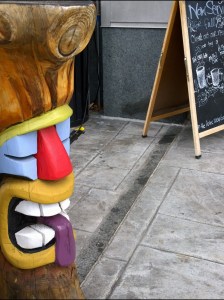
Here are some recent photos.

The totem pole is outside a Jamaica Plain (JP) coffee shop, where on certain days, people pay for the next person’s coffee. When I took my turn to “pay it forward,” the puzzled recipient said, “Gosh, I love JP.”

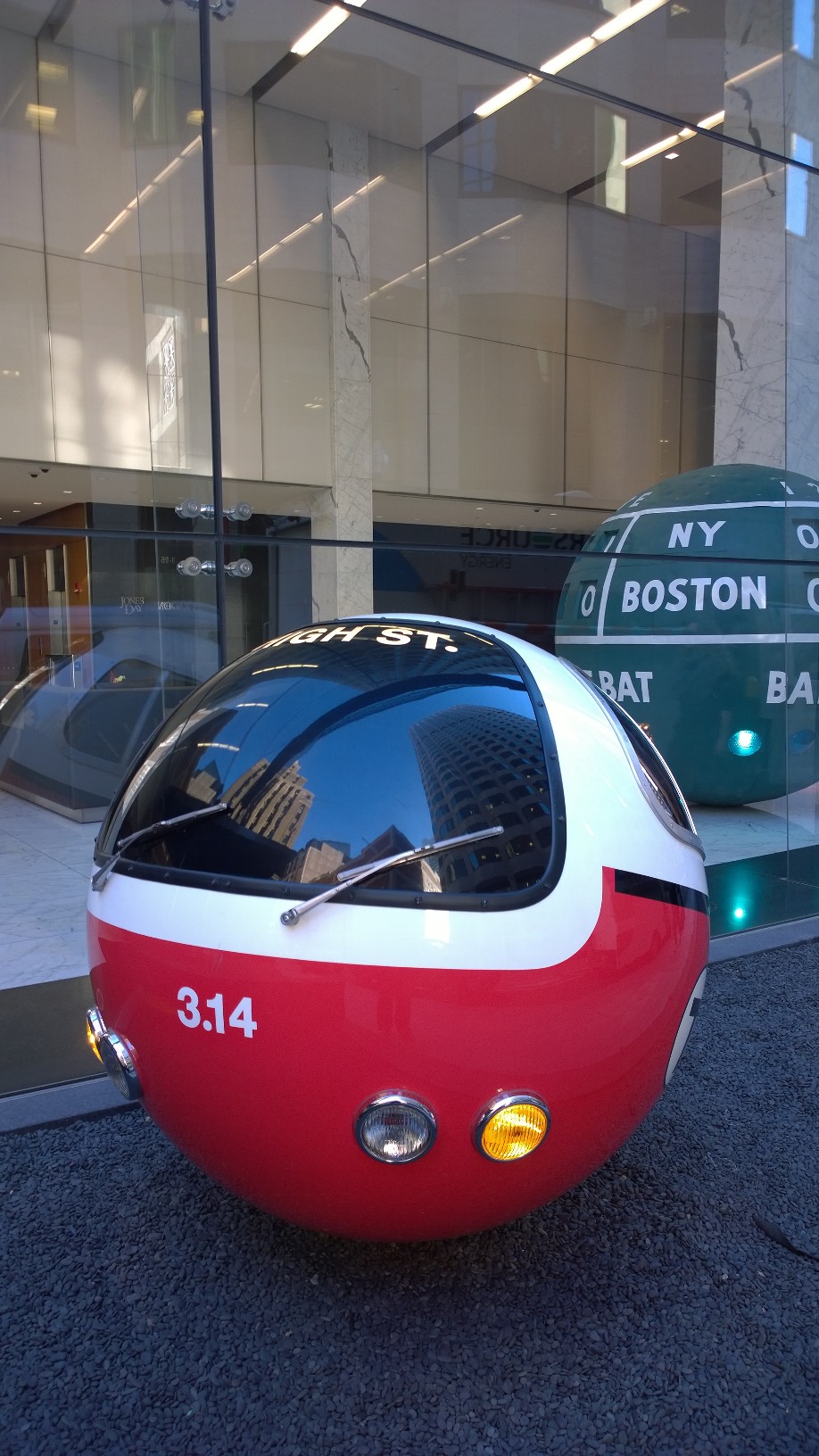
Next is a Red Line ball on High Street in Boston. Steve Annear reports at the Boston Globe that Lars-Erik Fisk  “used polycarbonate to shape the sculpture before he added a windshield, destination arrival sign, and headlights and tail lights to the sphere to capture the T’s look.” (Fisk also made the Green Monster inside the building.)

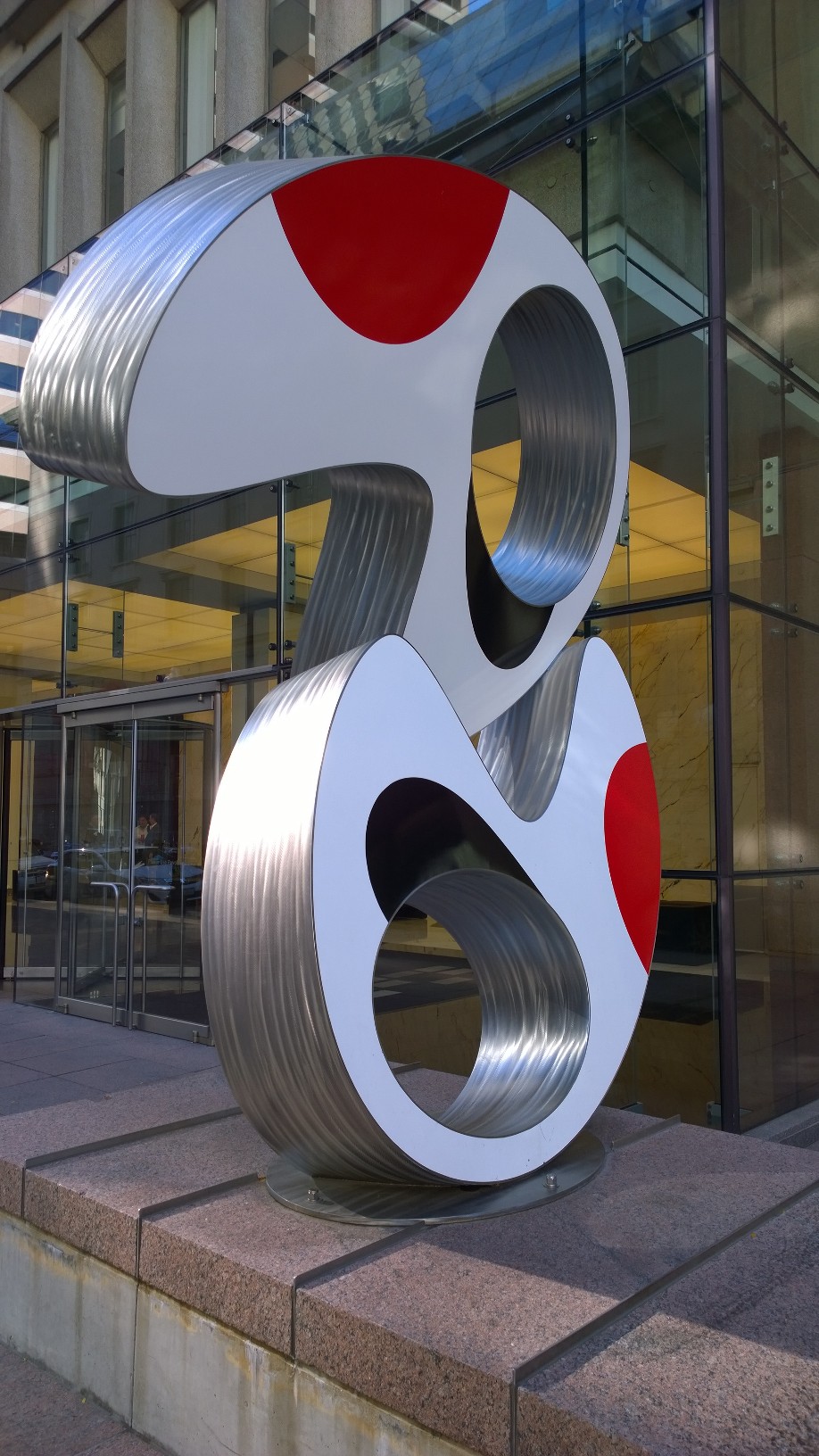
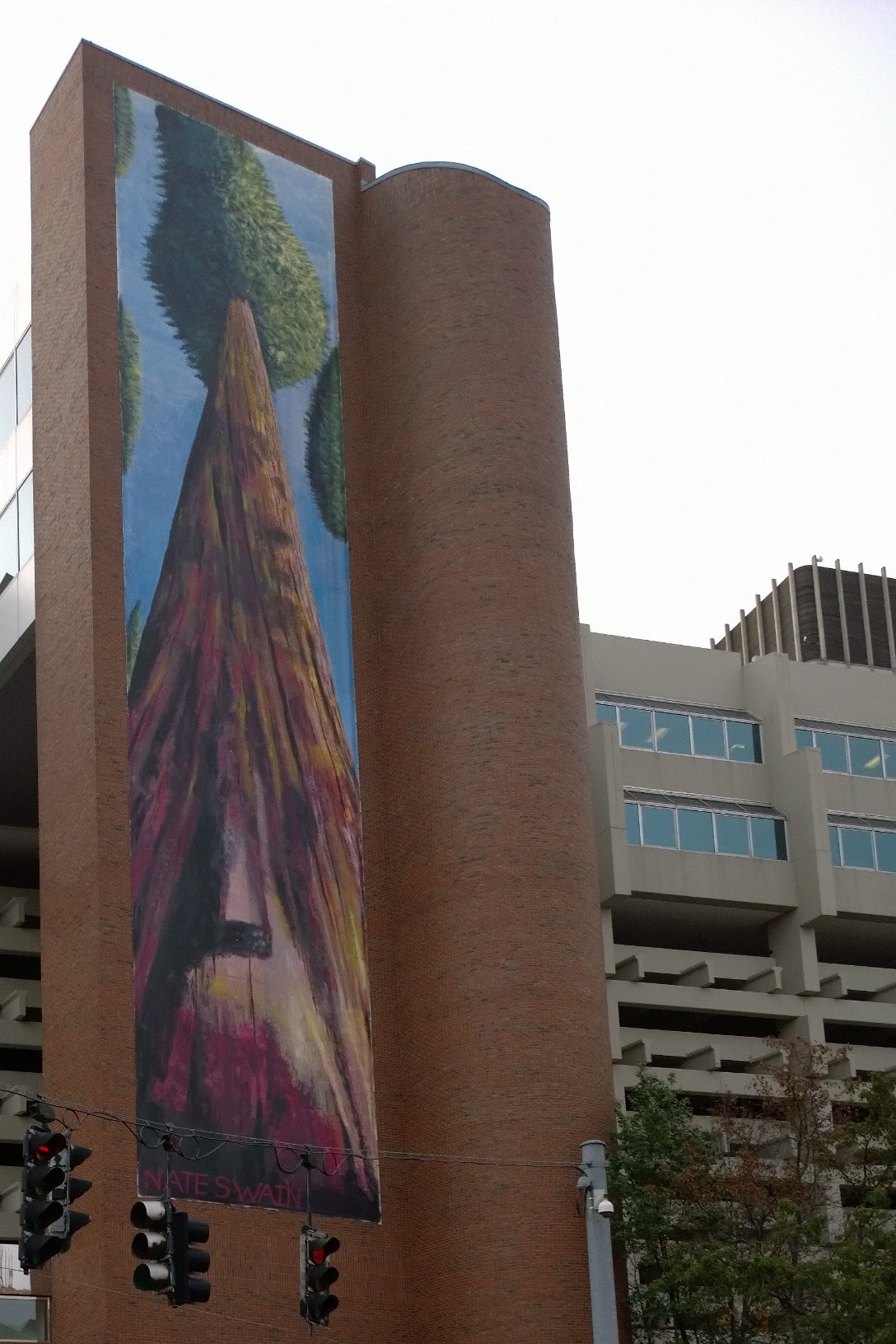
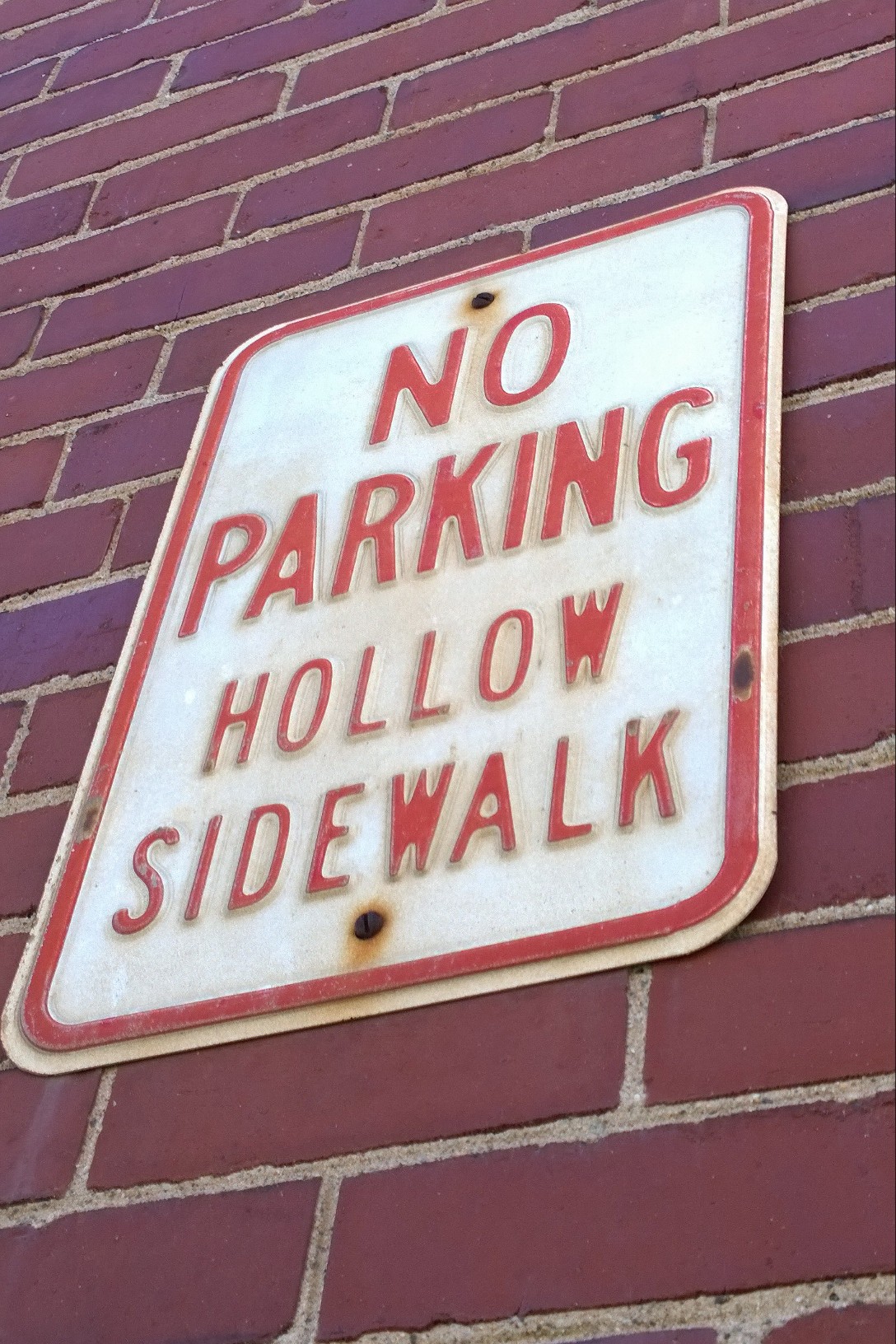
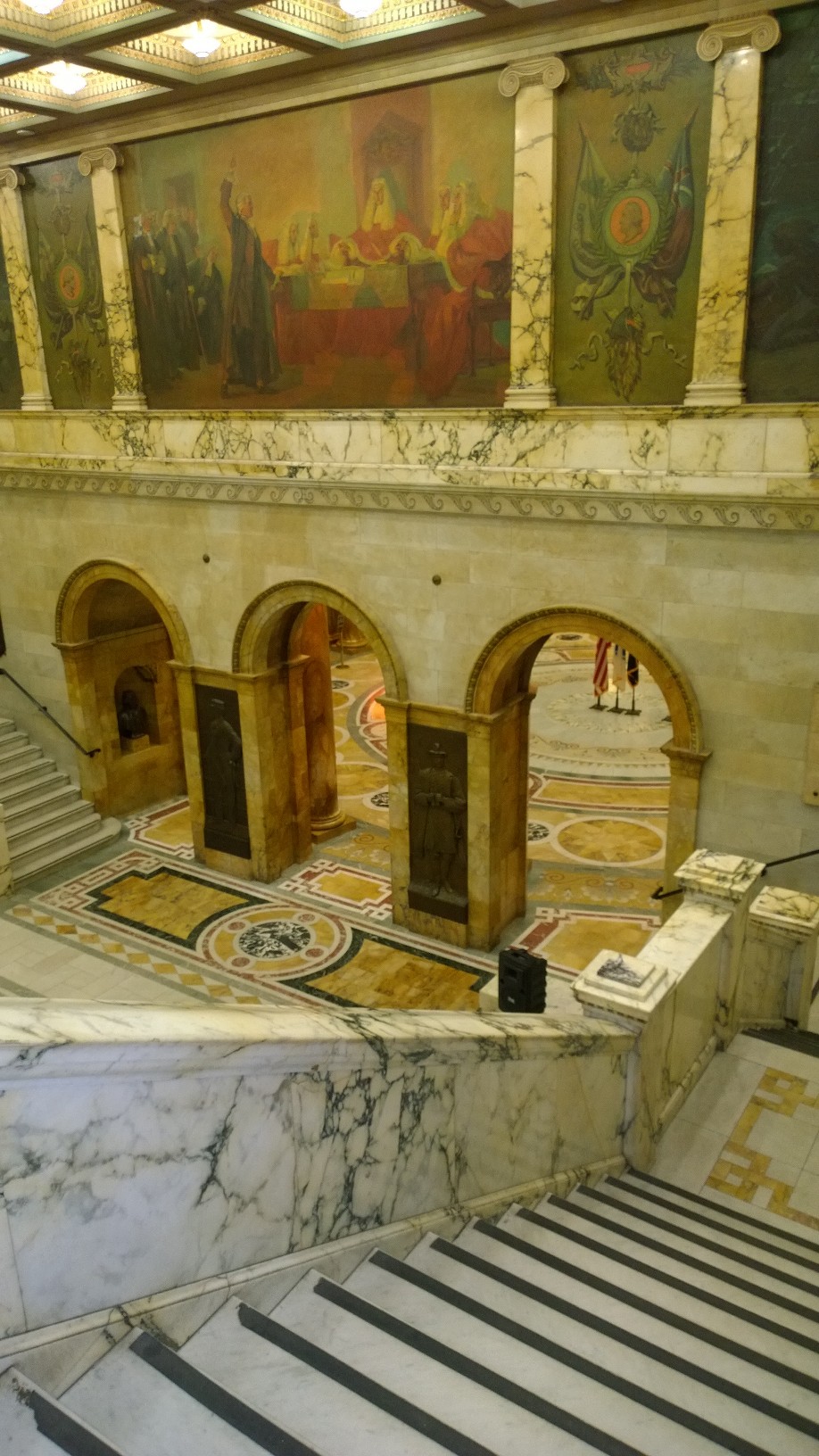
The second sculpture is on Franklin Street. The giant tree mural is on a Congress Street parking garage, near Government Center. The beautiful staircase is at the Massachusetts State House.

The Redcoat is at the North Bridge, as is the bittersweet on the gate. The dogwood and the Japanese Maple are at my house.

110615JP-totem-pole-coffee-shop

102615-MBTA-ball

110315-Boston-sculpture

102815-tree-mural-Boston-and-garage

102815-tree-mural-Boston

110515-hollow-sidewalk

102915-MA-statehouse

110715-redcoat-North-Bridge

110715-bittersweet-North-Bridge

110715-dogwood

110115-lovely-orange Japanese-maple

Read Full Post »

Greg Cook has a lovely story at WBUR’s “The Artery” on Boston artist Nate Swain’s Zen garden.

Swain tells the reporter, ” ‘I worked driving a tour trolley in Charlestown, and I drove over that bridge every day to go to work, and looked down … I went down there not even knowing what I wanted to do.’

“At the edge of the Charles River, near the North Washington Street Bridge, by the dock in front of the Residence Inn by Marriott on the east end of the park, he’s been assembling ‘Low Tide City’ or ‘Barnacle City.’ It’s ‘a little city’ of bricks and stones that disappears under the river and appears when the tide goes out. ‘I realized it could be an art piece about sea level change,’ he says. ‘People could watch it flood and imagine Boston could do that if sea level rises.’

“And right under the Zakim Bridge, Swain realized he could rake the existing expanse of gravel he found there into patterns, much like a traditional Zen rock garden, to create ‘Zen Under the Zakim.’ He says, ‘If you really sit there and you listen to all the noise, some of the traffic, even though it’s really noisy, it does sound like ocean waves.’ …

” ‘I try to find places where I can do art without asking permission. In Boston, there’s so much bureaucracy. There’s no room for spontaneity. … With all the bureaucracy and the permission-asking, it sucks all the energy and all the inspiration out of the art piece itself.’ …

” ‘I have this theory,’ he adds, ‘if you put something up beautiful and colorful and fun, in good taste, uplifting, it will stay and everyone will love it and no one will bat an eye.’ ”

More here.

Photo: Greg Cook
Nate Swain’s “Zen Under the Zakim” in 2015.

Read Full Post »

Here’s a nice story by NY Times reporter Dan Bilefsky about a British Muslim bake-off contestant who is a winner on many levels.

Bilefsky writes, “Prime Minister David Cameron praised her coolness under pressure. Bookmakers monitored her performance as they do election candidates.

“Television watchers admired her raspberry mille-feuille and soda-flavored cheesecakes — along with her blue chocolate peacock, and a mountain of éclairs in the form of a nun.

“The victory of Nadiya Jamir Hussain, a petite 30-year-old, head-scarf-wearing mother of three from northern England, in a wildly popular reality show called ‘The Great British Bake Off’ on [Oct. 7] has been greeted by many in Britain as a symbol of immigration success …

“Ms. Hussain’s popularity, bolstered by her self-deprecating humor and telling facial expressions, helped the final episodes of the baking program, in which contestants vie with one another to make a variety of desserts, attracting well over 10 million viewers per show, according to news reports. She has also become a darling of social media, with more than 63,000 followers on Twitter as of [Oct. 8]. …

“Ms. Hussain’s triumphant final dessert, a ‘big fat British wedding cake,’ offered a multicultural message of sorts by fusing her Bangladeshi and British identities. The lemon drizzle cake was decorated with jewels from her own wedding day in Bangladesh and was perched on a stand covered with material from a sari in red, blue and white, the colors of the Union Jack.”

More here.

Photo: Mark Bourdillon/Love Productions, via BBC
Nadiya Jamir Hussain, the winner of “The Great British Bake Off.” 

Read Full Post »

Giving prisoners something constructive to do with their empty time has long been a goal of reform activists and prisoners themselves. The upstate New York prisoners mentioned in a recent Talking Points Memo article really got into formal debating — to the point that they beat a storied Harvard team.

Colin Binkley writes, “Months after winning a national title, Harvard’s debate team has fallen to a group of New York inmates.

“The showdown took place at the Eastern New York Correctional Facility, a maximum-security prison where convicts can take courses taught by faculty from nearby Bard College, and where inmates have formed a popular debate club. Last month, they invited the Ivy League undergraduates and this year’s national debate champions over for a friendly competition. …

” ‘Students in the prison are held to the exact same standards, levels of rigor and expectation as students on Bard’s main campus,’ said Max Kenner, executive director of the Bard Prison Initiative.” …

” ‘There are few teams we are prouder of having lost a debate to than the phenomenally intelligent and articulate team we faced this weekend,’ [the Harvard team] wrote. ‘And we are incredibly thankful to Bard and the Eastern New York Correctional Facility for the work they do and for organizing this event.’

“Against Harvard, the inmates were tasked with defending a position they opposed: They had to argue that public schools should be allowed to turn away students whose parents entered the U.S. illegally. The inmates brought up arguments that the Harvard team hadn’t considered.  …

“While in prison, they learn without the help of the Internet, relying instead on resources provided by the college.”

More here.

Photo: Acroterion
Eastern Correctional Facility

Read Full Post »

Dezeen magazine has an article on an apartment building in Australia that seems to change color depending on your viewing angle.

“The triangular window bays that project from the facade of this Sydney housing block by MHN Design Union appear either red or yellow, depending on the viewing angle.”

The apartment block was designed “for local developer Crown Group on a plot in Waterloo, a former industrial area that is gradually being redeveloped into a residential neighbourhood.

“The architects based the design of the facade on the sculptures of Yaacov Agam, an Israeli artist who is known for his brightly coloured kinetic and optical illusion works – which also influenced a series of rugs by London studio Raw Edges. …

“The building’s form tapers to a point at the rear, creating triangular floors that range from 10-high at the front to seven at the back. …

“The building is shortlisted for two awards at this year’s World Architecture Festival, which will be held in Singapore at the beginning of November.” More here.

Photo: John Gollings

Read Full Post »

« Newer Posts - Older Posts »