Feeds:
Posts
Comments

Posts Tagged ‘postaday’

Justin, a family friend, worked for several years at the Catalina Maritime Institute but was no longer there, alas, when a giant mystery fish turned up last week.

Melissa Locker has the story at Time, “It sounds like something out of a horror story: Jasmine Santana was snorkeling off the coast of Southern California’s Catalina Island when she spotted a half-dollar sized eye staring up at her.

“It wasn’t a Halloween prank, though, but the body of a giant oarfish resting on the sandy bottom in about 20 feet of water. Instead of panicking at the sight of the sea creature, Santana called in the troops. After all, she is a marine science instructor at the Catalina Island Marine Institute. Even as such, she had probably never seen anything like this 18-foot oarfish before. The elusive sea creatures live thousands of feet deep in the ocean and are rarely seen alive or dead. …

“The creatures are the longest bony fish in the world, known to reach 56 feet in length.” More.

Justin’s father answered an e-mail I sent: “The photo on the beach with all of the kids holding the oarfish was at one of the two camps that Catalina Island Maritime Institute operates.  That one in the photo was Toyon Bay.  Justin worked at Camp Fox, about 10 minutes away by boat.  … I just read in today’s Providence Journal that a 2nd dead oarfish was found Friday in the water near Oceanside, CA.”

What can it all mean? What will turn up next? A giant squid? The Loch Ness Monster?

If you see the Loch Ness Monster, be sure to let me know and I’ll come running. So disappointed Bigfoot turned out to be a brown polar bear, even an ancient one. I was hoping he would be more human.

Photo: Catalina Island Marine Institute/Reuters
The crew of sailing school vessel Tole Mour and Catalina Island Marine Institute instructors hold an 18-foot-long oarfish that was found in the waters of Toyon Bay on Santa Catalina Island, Calif., Oct. 13, 2013.

Read Full Post »

Around the country, generous people have been “paying it forward”– doing a good deed for someone else that was done for them.

Only in this case, it’s more backward than forward because it involves paying for whatever the person behind you at the drive-thru has ordered. It’s become surprisingly widespread, according to Kate Murphy, writing at the NY Times today.

“If you place an order at the Chick-fil-A drive-through off Highway 46 in New Braunfels, Tex., it’s not unusual for the driver of the car in front of you to pay for your meal in the time it took you to holler into the intercom and pull around for pickup. …

“You could chalk it up to Southern hospitality or small town charm. But it’s just as likely the preceding car will pick up your tab at a Dunkin’ Donuts drive-through in Detroit or a McDonald’s drive-through in Fargo, N.D. Drive-through generosity is happening across America and parts of Canada, sometimes resulting in unbroken chains of hundreds of cars paying in turn for the person behind them.

“Perhaps the largest outbreak of drive-through generosity occurred last December at a Tim Hortons in Winnipeg, Manitoba, when 228 consecutive cars paid it forward. A string of 67 cars paid it forward in April at a Chick-fil-A in Houston. And then a Heav’nly Donuts location in Amesbury, Mass., had a good-will train of 55 cars last July.” More.

I love the idea, but I think I missed something. Do you give the order taker an extra $20 and get the change when you pick up your meal at the next window? Or does the cost of the stranger’s meal have to go on your credit or debit card?

Photo: Wikimedia Commons
Drive-thru food outlet

Read Full Post »

No real theme among the collection today.

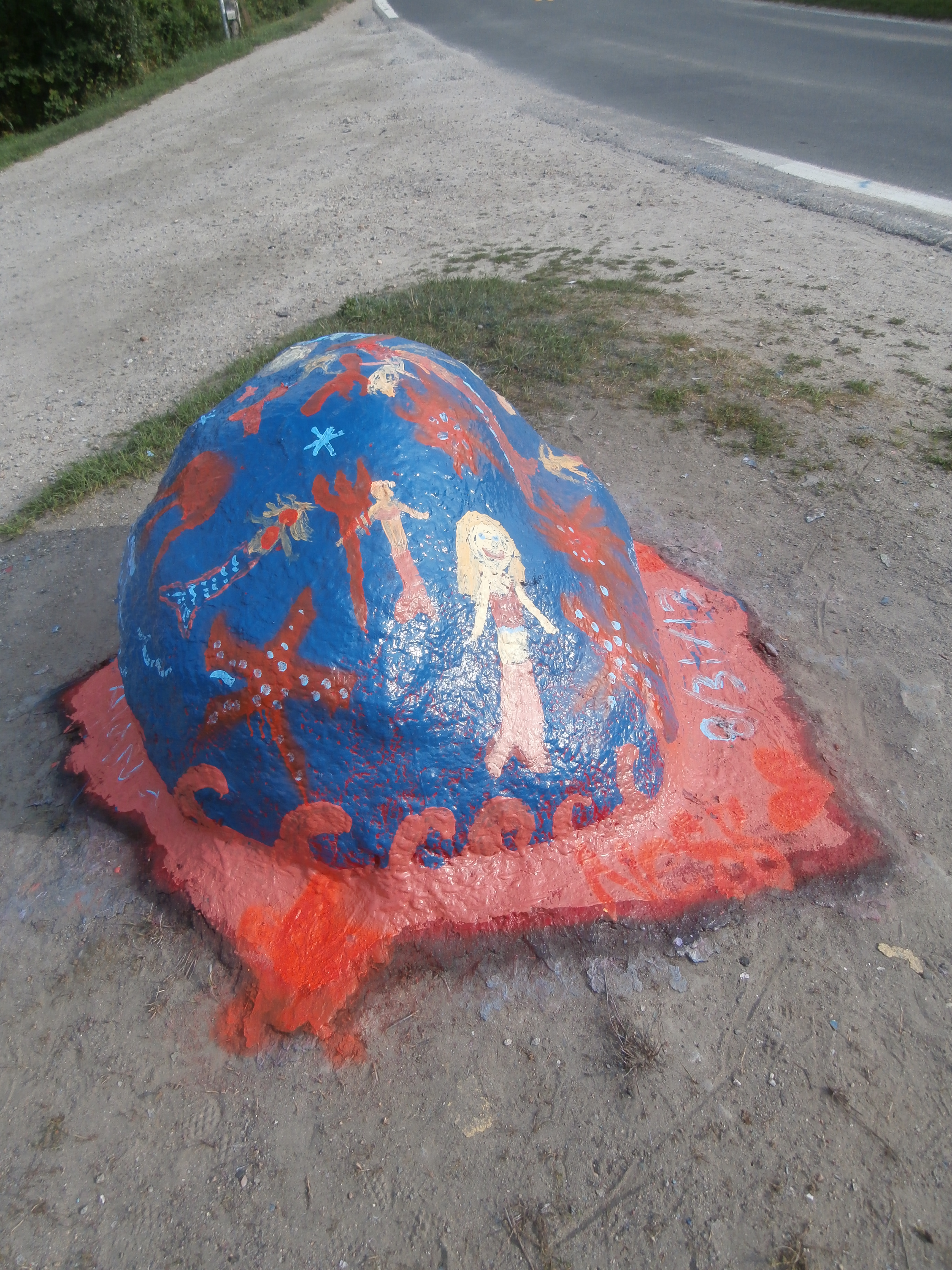
The first picture is of a rock that gets repainted all summer long — sometimes a few times a day — with pictures and messages of various kinds. This painting features mermaids, starfish, and octopi.

I also wanted to include some more lovely clouds, the old Massachusetts state house (dwarfed by modern buildings like Virginia Lee Burton‘s Little House), a warehouse interior repurposed as an elegant atrium for a Fort Point hotel, another one of those “Play Me, I’m Yours” street pianos, the Barking Crab restaurant sign, and a sleeping bee.  “When a bee lies sleepin’ …” (Do you know the Harold Arlen song from the 1954 musical House of Flowers?)

Perhaps there’s a theme after all: Trying to see what is right in front of me.

mermaid-rock

OLYMPUS DIGITAL CAMERA

OLYMPUS DIGITAL CAMERA

OLYMPUS DIGITAL CAMERA

public-art-piano-ft-pt-channel

barking-crab-boston

bee-close-up

Read Full Post »

Concerned about education? Observe children. They can lead the way.

More and more educators are taking the approach Sugata Mitra tried when he put computers in the slums of India and watched children teach themselves.

Joshua Davis writes at Wired about another success story in an impoverished part of Mexico.

For 12-year-old Paloma Noyola Bueno, who grew up next to a garbage dump where her father scavenged for a living, school was a bright spot, even when it was all rote memorization. …

“As she headed into fifth grade,” writes Davis, “she assumed she was in for more of the same—lectures, memorization, and busy work. Sergio Juárez Correa was used to teaching that kind of class. …

“On August 21, 2011—the start of the school year — he walked into his classroom and pulled the battered wooden desks into small groups. When Paloma and the other students filed in, they looked confused. Juárez Correa invited them to take a seat and then sat down with them. …

” ‘You do have one thing that makes you the equal of any kid in the world,’ Juárez Correa said. ‘Potential. … And from now on,’ he told them, ‘we’re going to use that potential to make you the best students in the world.’ ”

And so began his effort to teach differently, to help children discover they could think for themselves.

It’s a long article but worth reading to understand the approach that led to a transformed class — with exceptional test results as a sort of minor spinoff.

Read it here.

Photo: Peter Yang
These students in Matamoros, Mexico, didn’t have reliable Internet access, steady electricity, or much hope—until a radical new teaching method unlocked their potential.

Read Full Post »

Rosie Goldsmith writes at BBC News that in Iceland, one in 10 people will publish a book.

“It is hard to avoid writers in Reykjavik. There is a phrase in Icelandic, ‘ad ganga med bok I maganum,’ everyone gives birth to a book. Literally, everyone ‘has a book in their stomach.’ One in 10 Icelanders will publish one. …

“Special saga tours – saga as in story, that is, not over-50s holidays – show us story-plaques on public buildings. Dating from the 13th Century, Icelandic sagas tell the stories of the country’s Norse settlers, who began to arrive on the island in the late 9th Century.

“Sagas are written on napkins and coffee cups. Each geyser and waterfall we visit has a tale of ancient heroes and heroines attached. Our guide stands up mid-tour to recite his own poetry – our taxi driver’s father and grandfather write biographies.

“Public benches have barcodes so you listen to a story on your smartphone as you sit. …

“Solvi Bjorn Siggurdsson, a tall, Icelandic-sweater-clad novelist, says writers owe a lot to the past. …

“Siggurdsson pays homage to Iceland’s Nobel Literature Laureate, Halldor Laxness, whose books are sold in petrol stations and tourist centres across the island. Locals name their cats after Laxness …

“Everyone receives books as Christmas presents – hardback and shrink-wrapped.

” ‘Even now, when I go the hairdressers,’ Kristin Vidarsdottir, manager of the Unesco City of Literature project, says, ‘they do not want celebrity gossip from me but recommendations for Christmas books.’ ” More.

I like the idea that everyone “has a book in their stomach.” The saying reminds me of the late, great Rev. Dana Greeley who used to say all people have one sermon in them.

Photo: Corbis

Read Full Post »

In Bhutan, the queen is an enthusiastic basketball player. And she has an unusual advantage: no one is allowed to touch royalty without permission.

Today, says Gardiner Harris of the NY Times, Bhutanese royalty has begun sharing their game with the public.

“After decades of being a largely royal preserve, basketball here is about to have its breakout moment.

“A South Korean coach has been hired to cobble together a national team that many hope will someday be able to challenge its neighbors for bragging rights in South Asia and beyond. Bhutan has tried many times to win an international game but, except for a single victory in a three-on-three tournament, has never succeeded. …

“Bhutanese players say their best hope for a win could be against the Maldives, a country with half of Bhutan’s population that is threatened by global warming. As sea levels rise, Maldivians may have trouble finding places to play, players noted. And facing them in Thimphu’s thin air (the city’s altitude is 7,710 feet) could provide a crucial advantage.”

More.

Photo: Kuni Takahashi for the NY Times
Bhutan’s queen, Jetsun Pema Wangchuck, who is a good player

Read Full Post »

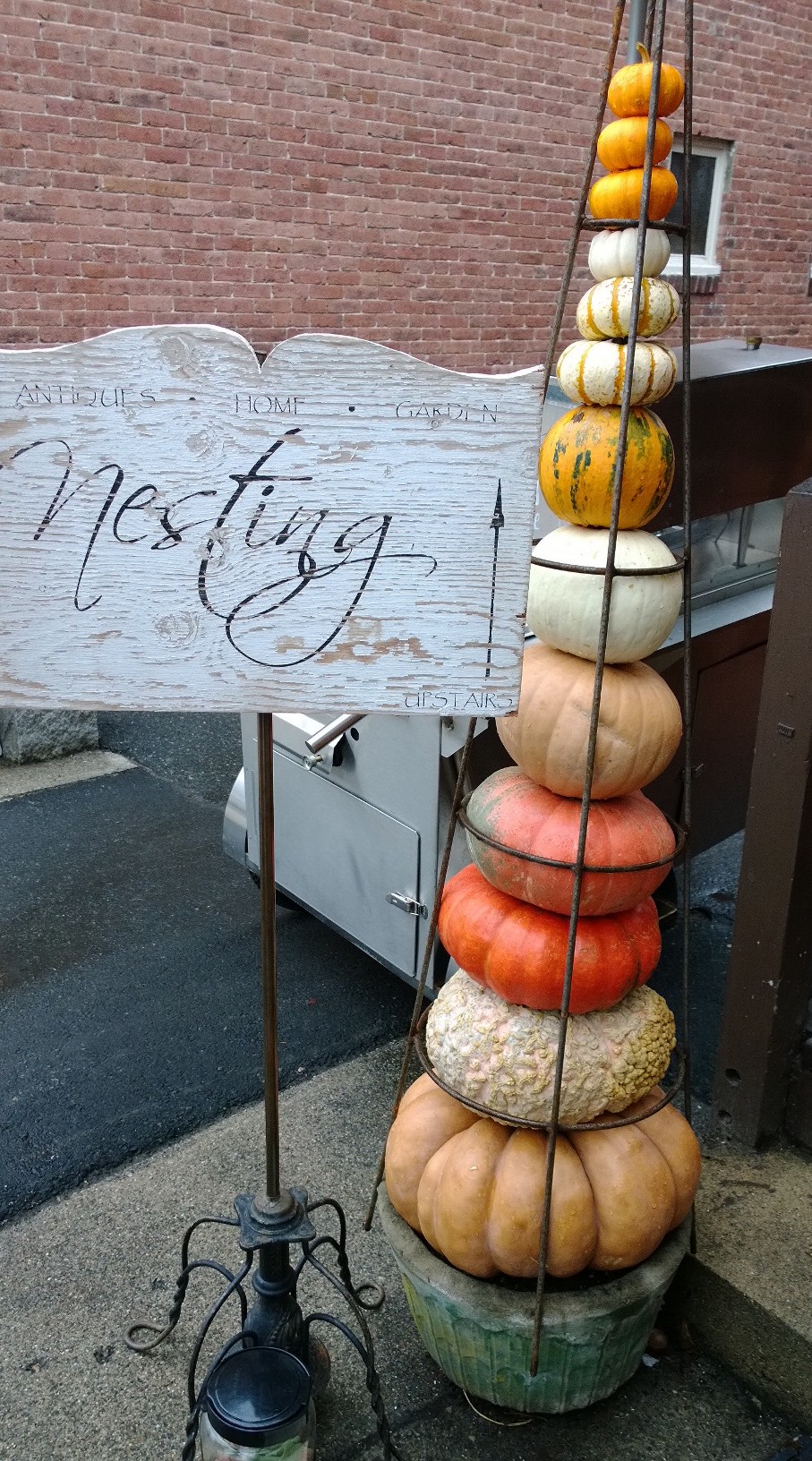
pumpkin-stack

A time of year to get creative with squashes, visit a farmers market, kayak on a river, roof the barn.

Get it all in before winter. Only the wooly bear knows for sure how long the winter will be.

Photo of farmers market: Sandra M. Kelly
Other photos: Suzanne’s Mom

kayak-2101213-autumn-bounty

roofing-the-barn

autumn-leaves-new-england

deciduous-holly

wooly-bear

Read Full Post »

I took modern dance in high school. The teacher was said to have studied with Isadora Duncan, and she certainly liked that flowing kind of movement.

Miss Hinney once challenged us to choreograph a dance about an abstract topic. Page and I chose Lavoisier’s discovery of oxygen, for which we used music from the Firebird Suite. We were not allowed to act it out as if we were Lavoisier, rather we had to interpret the chemical reaction using dance. It was impossible, so we were naturally very proud when we pulled it off.

Since then I have felt a great respect for the inventiveness of choreographers.

Here is one who sounds pretty cool. Allison Orr has closely observed garbage men in Austin, Texas, and has made their movements into a dance. More recently she worked with employees of the power company.

Robert Faires at the Austin Chronicle describes “The Trash Project, her award-winning, phenomenally popular collaboration with the city’s Solid Waste Services Department (now Resource Recovery) that made dancers of sanitation workers and the machines they operate. … Now, the Forklift Danceworks artistic director is at it again, albeit with a different city department, Austin Energy, whose employees are the focus for PowerUP. …

“For Orr, who’s made a career of making dances from the movements of people who aren’t trained in the art form – firefighters, gondoliers, roller skaters, orchestra conductors, Elvis impersonators, traffic cops, et al. – the personal stories of her subjects have become as important as their moves. She talks at length to the people with whom she collaborates on a dance and weaves recorded excerpts from interviews into the performance as the subjects are moving,” The latest Production, PowerUP was performed in September at the Travis County Exposition Center. More.

Photo: John Anderson
Power company choreography.

Read Full Post »

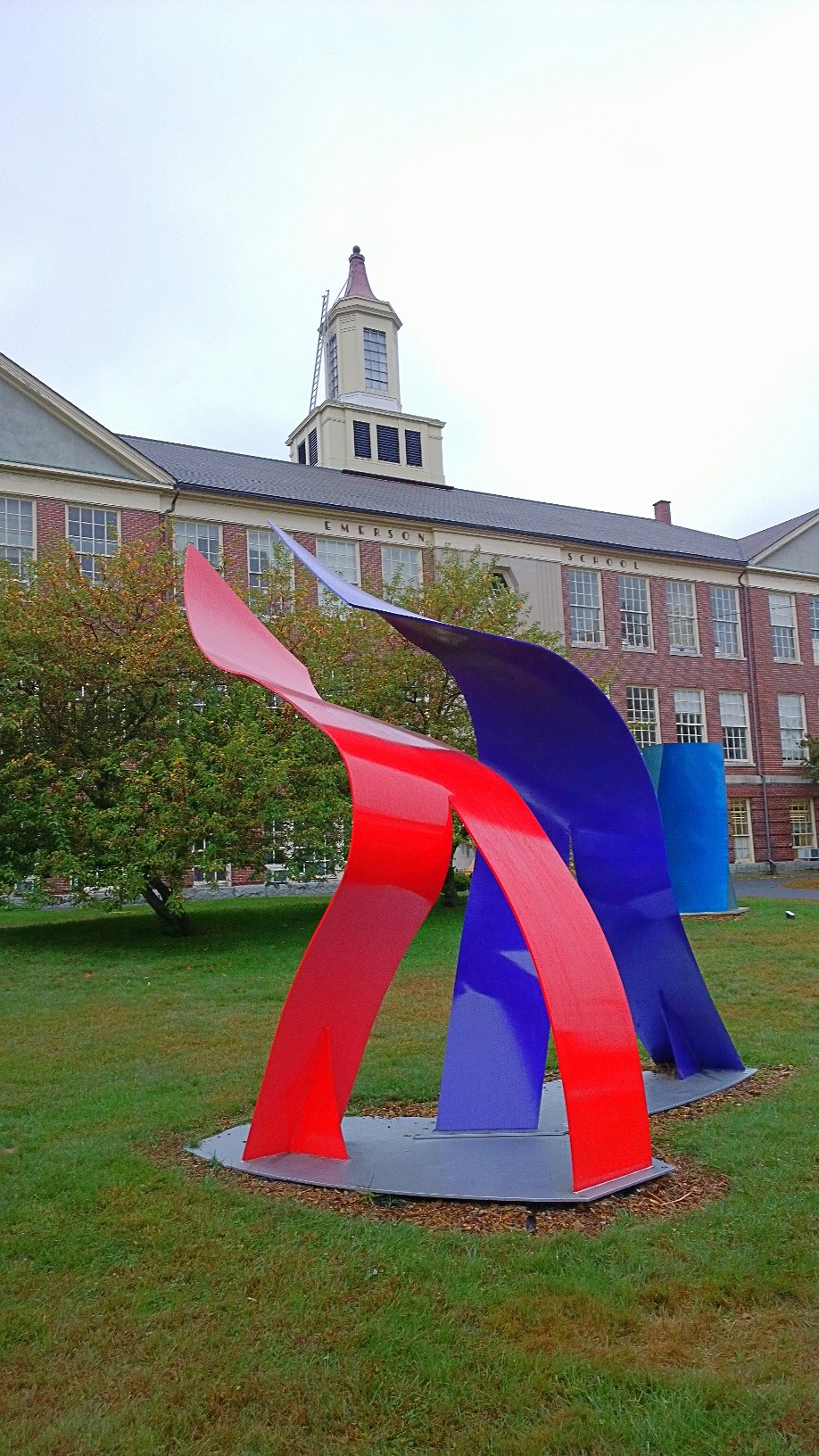
The other day I was walking past the Emerson Umbrella and saw some new sculptures  on the lawn. I thought one, the graceful bent metal below, looked like two people dancing.

Geoff Edgers of the Boston Globe came to town to watch the installation and interview the sculptor, David Stromeyer.

“Stromeyer, a Marblehead native who splits his time between Vermont and Texas, has had his work shown at, among others, the deCordova Sculpture Park and Museum in Lincoln, National Building Museum in Washington, D.C., and the University of Vermont’s Robert Hull Fleming Museum, in Burlington. Stromeyer also has a connection to Concord. His sister-in-law, Mimsey Stromeyer, is a painter and mixed-media artist who is one of 54 artists renting space at Emerson Umbrella. …

“On the first day of installation, in the rain, Stromeyer and crew unloaded the steel pieces. The first challenge was lifting the heavy steel pieces over a series of wires on the site. On the second day, with the sun out, the artist worked on moving those pieces into place and mounting them properly. …

“He takes pride in the fact that he creates his art, from the twisting of the metal to the sandblasting and painting.

“ ‘It sounds really simple, but you don’t grab one end and turn it in the way you intuitively might think,’ he said. “[Each piece has] to be built incrementally, every inch, bending it in multiple directions at once. I spent two months building jigs for the hydraulic press to create those forms. And each twist is different.” More.

I’ve known Mimsey West (her professional name) for 30 years. One of her sons was in school with John. I love her art, especially some slightly abstract watercolors she did years ago of sheep in Wales.

A couple times a year the Umbrella artists hold open studios, and it really is a treat to go — lots of art available for one-of-a-kind holiday gifts.

waltz-of-the-sculptures

Read Full Post »

Margarida Santos Lopes has a hopeful story at the Christian Science Monitor about an Israeli rabbi and a Palestinain who are friends.

“Shaul David Judelman is an Israeli rabbi who moved from Seattle to Bat Ayin, a religious community in the occupied West Bank.

“Ziad Abed Sabateen is a Palestinian farmer who endured imprisonment during the first intifada against the Israelis more than 20 years ago and whose family was dispossessed of most of its land to accommodate Jewish settlers.

“The two men are good neighbors, friends, and business partners – not enemies.

“Mr. Judelman and Mr. Sabateen are committed to ‘peaceful coexistence’ between Israelis and Palestinians, whether they live together in one state or two separate states.

“The majority of those in both their camps may find it hard to understand the two men’s close relationship. But neither side repudiates them as traitors or collaborators. …

“On a mountaintop with a view of the Mediterranean Sea … Judelman and Sabateen plan to create the Heavens Field Farm, which will put ’emphasis on belonging to the land, not ownership of it,’ according to their joint manifesto.

“Their idea is to run an organic farm that will sell vegetables in local markets, support families in need, and attract volunteers and tourists. Among their partners are a joint Israeli Palestinian journal, called Maktub, and other nonpolitical groups such as Eretz Shalom (Land of Peace).”

Read more to understand how each came to their worldview through different paths.

Photo: Udi Goren
Shaul David Judelman (l.) and Ziad Abed Sabateen, in Bethlehem. They want to create an organic farm in the West Bank as a project for peace.

Read Full Post »

A day that Canadian short story writer Alice Munro wins the Nobel Prize for Literature might be a good day to talk about the power of fiction.

The NY Times took up the subject only last week. I think that reporter Pam Belluck must have been a little psychic. She wrote: “Say you are getting ready for a blind date or a job interview. What should you do? Besides shower and shave, of course, it turns out you should read — but not just anything. Something by Chekhov or Alice Munro will help you navigate new social territory better than a potboiler by Danielle Steel.

“That is the conclusion of a study published [October 3] in the journal Science. It found that after reading literary fiction, as opposed to popular fiction or serious nonfiction, people performed better on tests measuring empathy, social perception and emotional intelligence — skills that come in especially handy when you are trying to read someone’s body language or gauge what they might be thinking.”

Emanuele Castano and David Comer Kidd, researchers in the New School for Social Research’s psychology department. say “the reason is that literary fiction often leaves more to the imagination, encouraging readers to make inferences about characters and be sensitive to emotional nuance and complexity. …

“ ‘It’s a really important result,’ said Nicholas Humphrey, an evolutionary psychologist who has written extensively about human intelligence, and who was not involved in the research. ‘That they would have subjects read for three to five minutes and that they would get these results is astonishing.’ ” More.

My own use of literary fiction is mainly for pleasure, not job interviews. But when things are bleak, Dickens can be the best medicine.

Photo of Charles Dickens from Biography.com

Read Full Post »

Someone tweeted this today, and I thought you would like it.

Chinese artist Ai Weiwei has created a nighttime art installation made of bicycles all lit up.

On October 5, says Alice at the website My Modern Met, “Chinese artist and activist Ai Weiwei presented a new version of his incredible Forever Bicycles installation. As the centerpiece of this year’s Scotiabank Nuit Blanche, the all-night contemporary art event that takes over city streets, 3,144 bicycles, the most Weiwei has used of this work to date, were stacked 100 feet in length and 30 feet in height and depth in Toronto’s Nathan Phillips Square. This was the first time the installation has been displayed in an open air, public space. Since this was a night-time festival, it was spectacularly lit up with pink and blue lights.”

Check My Modern Met for a stunning array of photos, here.

Photo: http://www.mymodernmet.com

Read Full Post »

Here’s a lovely story by Bella English at the Boston Globe.

Like many other people who feel helpless after a tragedy, illustrators of children’s books wanted to do something useful last April 15 and were delighted to be asked to give their talents.

“After the Boston Marathon bombings,” writes English, “Joe and Susan McKendry of Brookline wanted to do something. …

“Joe, an artist who teaches at the Rhode Island School of Design, thought he could auction off a couple of paintings he did for his first book, ‘Beneath the Streets of Boston: Building America’s First Subway.’

“But then he realized he had something more valuable: connections to other artists. Why not make it a group project? We Art Boston was born, with dozens of artists contributing paintings or illustrations to the cause: the emergency and trauma fund at Boston Children’s Hospital.

“The fund helps children and families get the treatment they need ‘when faced with a tragedy,’ says Stacy Devine, an associate director with the Boston Children’s Hospital Trust. What began as a response to the Marathon bombings expanded to include all traumatic events. …

“The McKendrys also wanted to hold a community event for children to get more directly involved. On Oct. 20, We Art Boston is hosting a family day on the Rose Fitzgerald Kennedy Greenway, right across from the New England Aquarium.

“All of the donated artwork will be framed and on exhibit, and people can bid on them through volunteers who will place the bids online using iPads. Several of the illustrators will be there and will sign books or, for a donation to the cause, draw portraits of stuffed animals for children who bring their favorite one along.”

More.

Henry Cole’s “Penguin Pride” (l8-by-12 inches, framed) has a value of $550 and a suggested bid of $250.

Read Full Post »

Here is an annual spectacle I’d love to see.

“Shepherds led a flock of 2,000 sheep through the streets of Spain’s capital and largest city on Sunday, in defense of ancient grazing, droving and migration rights that have been increasingly threatened by urban sprawl and modern agricultural practices.

“Those urban settings were once open fields and woodlands, crisscrossed by droving routes. Since at least the year 1273, the country’s shepherds have had the legal right to use about 78,000 miles of droving routes around the country to move livestock seasonally between summer pastures in the cool highlands and more protected lowland grazing areas in the winter.

“Every year, a handful of shepherds defend that right in Spain’s capital city.”

I guess it’s use it or lose it. Plus it’s good to make people think about where their food and wool come from, and whether things have changed for the better.

More from the Associated Press.

Photo: Andres Kudacki/Associated Press
Shepherds led a flock of 2,000 sheep through some of Madrid’s most sophisticated settings on Sunday.

Read Full Post »

This was posted at an Arlington blog last May, but I just saw the sculpture it refers to.

“You are invited to watch the ladybugs for the Waldo Park Tree Sculpture being made right before your eyes … Work by artists has already begun to transform a tall tree stump on the hill in Waldo Park … into multimedia sculpture that features local birds, animals and insects. The Friends of Waldo Park are holding two community participation days as this work is created. …

“Watch the metal-smiths at work as they cast aluminum ladybugs to be bolted onto the tree sculpture. Stop by for however long you’d like to see how metal-casting is done!” More.

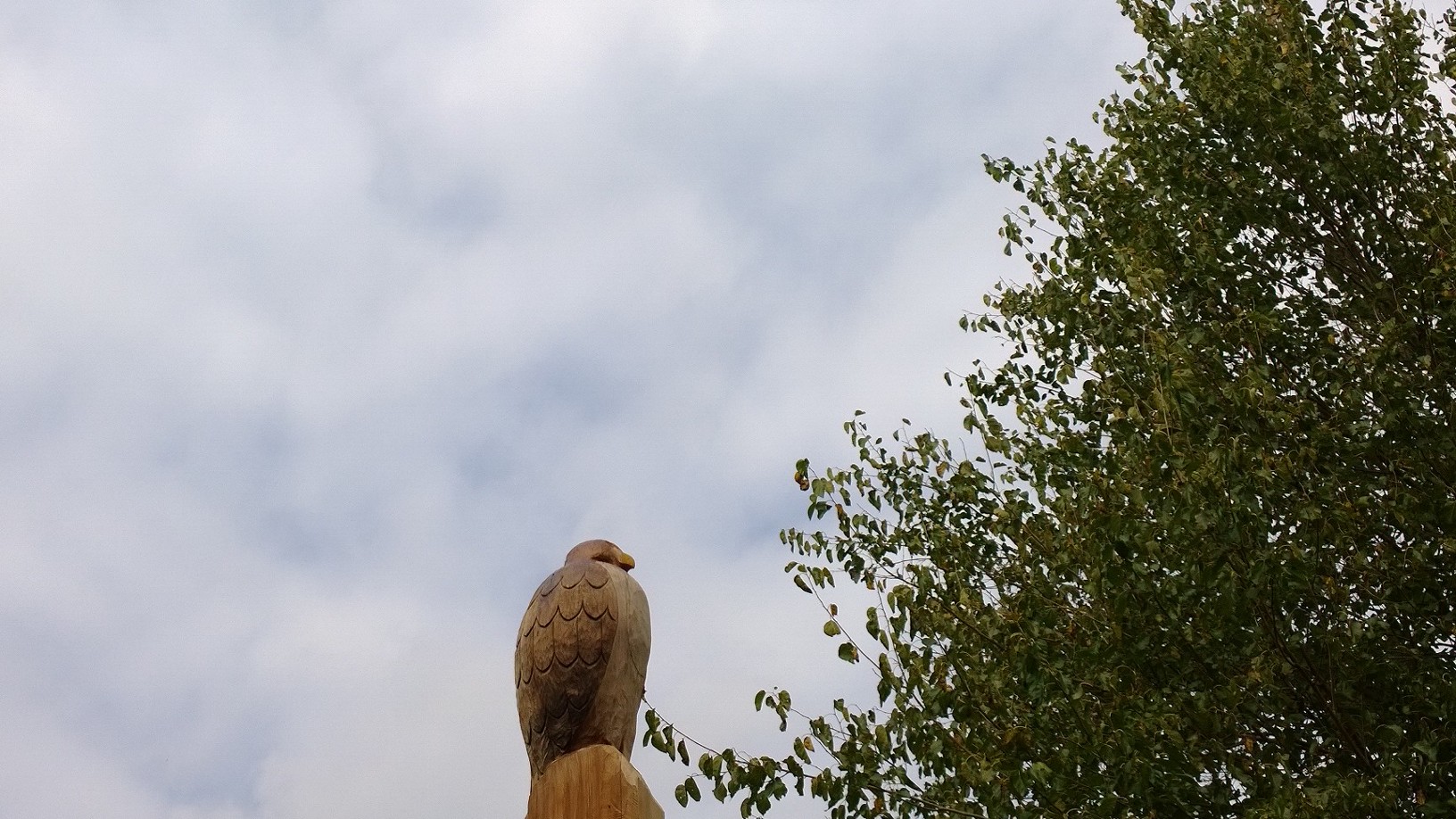
Note the metal ladybugs crawling up the trunk, the bunnies peeking out from inside, and the hawk on top.

carved-hawk-and-metal-bus

bug-close-up

rabbit-in-tree-waldo-park

hawk-carved-from-dead-tree

Read Full Post »

« Newer Posts - Older Posts »