Feeds:
Posts
Comments

Posts Tagged ‘postaday’

In the current heat wave, I want to blog about something cool. I thought about using today’s Globe story on the Boston bar that will be made entirely of ice, but I am not into bars and the entry fee is $19.

So here is one about a tiny kingdom in the Himalayas that is cut off from the world until the river freezes. The only problem is — the river isn’t freezing as much as it used to.

“About 1,000 years ago, the Buddhists there broke away from the Tibetan Empire [and founded a kingdom] in the very north of India, in the state of Jammu and Kashmir.

“The Kingdom is isolated other than two months a year when the river freezes over and people can cross over to India.” It’s called Zanskar.

Hear more at the Public Radio International show “The World,” where guest Daniel Grushkin describes a lucky escape he had near Zanskar when a piece of ice he was stepping on broke off.

And be sure to check out the adventurer’s other excursions at his blog “Roads and Kingdoms, here.


Photo: Sumit Dayal
Trekking over the frozen Zanskar River.

Read Full Post »

The Internet is proof of the idea that  “one and one and 50 make a million.” A handful of people can see something cool, and before you know it, that something has gone viral.

The Boston Globe had a story last month about a 14-year-old boy who likes to photograph imaginative miniature scenarios, just for fun. Now he has fans from all over.

Ethan Gilsdorf writes about “Zev Hoover’s fanciful photographic take on reality. His arresting images evoke a wonderland of imaginary environments, built from f-stops and pixels, and hinting at characters with secret stories to tell.

“Hoover’s work, which he posts on the photo sharing site Flickr using the handle ‘Fiddle Oak’ (a play on ‘Little Folk’), has caught fire across the Internet. He has been profiled in the media and on design and photography blogs. …

“One post touting his ‘surreal photo manipulations’ has received 108,000 Facebook likes. …

“His series of ‘Little Folk/Fiddle Oak’ images began during a walk in the woods with sister, Aliza. He remembers thinking, ‘Oh, wouldn’t little people be cool?’ Crouching near the ground, he imagined seeing the world from their perspective. He felt the miniature genre had never been done in photography — ‘at least not very well.’

“ ‘There’s a fine line to walk between having it be too abstract and having it be too cheesy-obvious,’ he said. …

” ‘Fiddle Oak’ is not his first photography endeavor. When he was 10, Hoover embarked on ‘The Snugg Project,’ taking a photo of his teddy bear in unique, whimsical settings for 365 consecutive days. ‘It became a little like work,’ his father said, ‘but made him be creative every single day.’ Some of the pictures were displayed at J.P. Licks ice cream shops.”

More.

Photo: Zev Hoover
One of the “Fiddle Oak” pictures.

Read Full Post »

How delightful! Suzanne told me that Georgia’s childhood friend Jules calls his Rhode Island oyster business Walrus and Carpenter.

Lewis Carroll’s poem “The Walrus and the Carpenter” was the first poem I memorized in school. I was 11. It was a long poem but not too hard after memorizing the script of Alice in Wonderland at 10 (I was Alice’s understudy).

Here’s where oysters come in:

“O Oysters, come and walk with us!”
The Walrus did beseech.
“A pleasant walk, a pleasant talk,
Along the briny beach:
We cannot do with more than four,
To give a hand to each.”

The oldest oyster is wary and has no intention of leaving his oyster bed. But a slew of young oysters jump up, ready for a pleasant walk and talk. After many verses:

“O Oysters,” said the Carpenter,
“You’ve had a pleasant run!
Shall we be trotting home again?’
But answer came there none–
And this was scarcely odd, because
They’d eaten every one.

Read the whole poem, here.

And if you are in Rhode Island, please check out Walrus and Carpenter Oysters. On their website, you will find bios about the oyster cultivators on the team and information on where to show up for their current dinner series.

Suzanne particularly recommends reading some of the links on the company’s press page, especially the one to the New Yorker article (here) about how a dismantled bamboo art installation from the roof of the Metropolitan Museum of Art called Big Bambú ended up making oysters happy in Rhode Island.

Photo of the original John Tenniel art: wikimedia.org

Read Full Post »

For a while there, my 3-year-old grandson was really into elephants. That was the result of a bedtime story John invented about a lost elephant in the cemetery at the end of his street.

Even though he is more into lions at the moment, I have been taking random elephant-related pictures for him, like the one on the Chinatown mural I posted a couple weeks back.

I hope he gets to see the elephant in front of the school in Rhode Island. It’s made from wood that Hurricane Sandy threw on the shore. I took a picture.

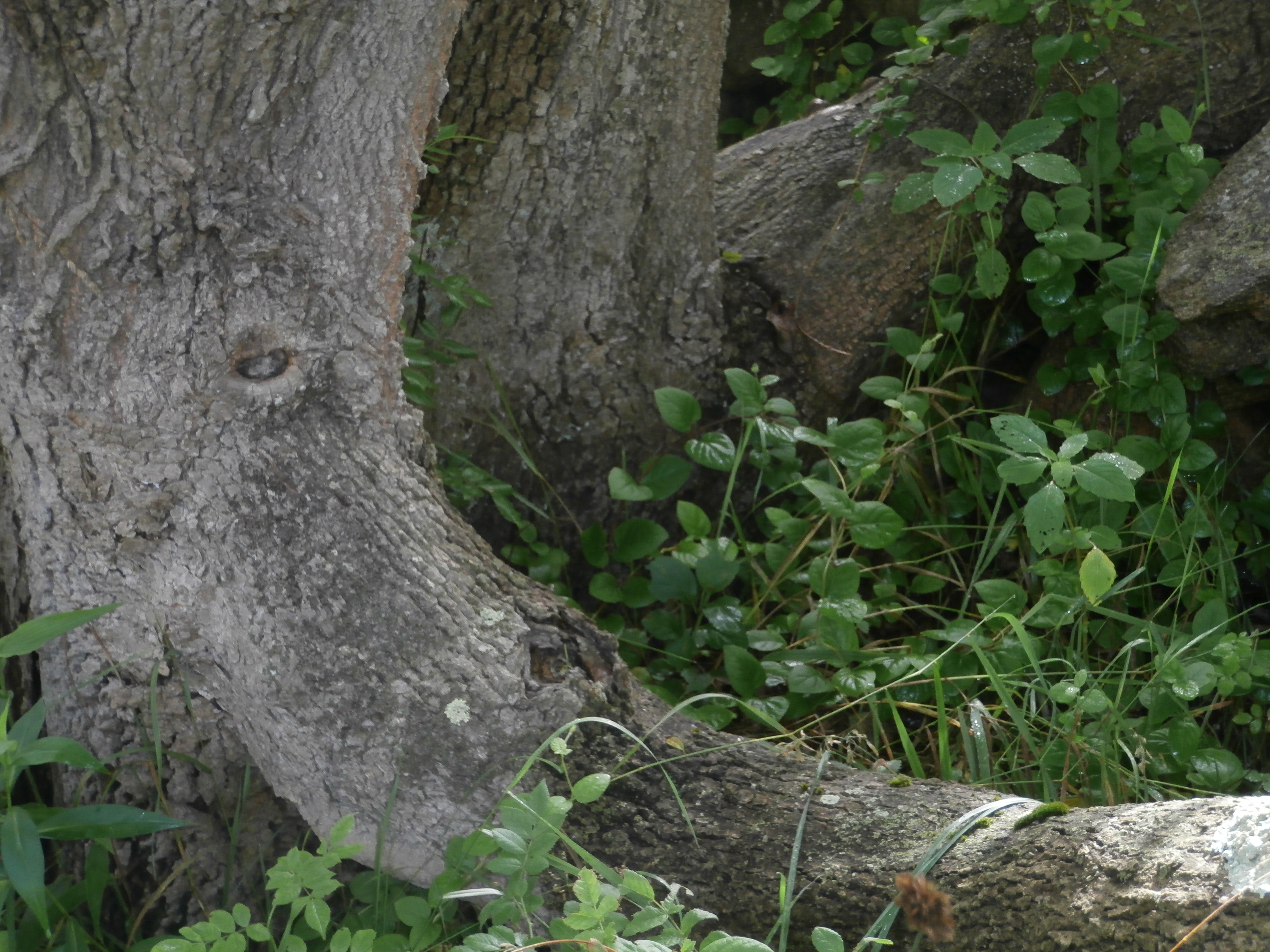
On the same morning I took a picture of an elephant spirit trapped in a tree. He had probably been unhappy foraging on a small island but seems to be doing well in his current metamorphosis. He is quite serene, watching cars and walkers pass by on Payne Road, keeping his eye on things. Asakiyume may be able to provide more details of his backstory. She has a better imagination for menageries in the wild.

driftwood-elephant-sculpture

elephant-sculpture-for-sale

elephant-spirit-in-tree

Read Full Post »

I continue to be a fan of street art and the way it allows informal artists to express themselves while also letting passersby enjoy both homespun and professional achievements as they go about their errands.

In Rhode Island, there’s a painted rock. Everyone paints it, and no painting lasts for long. In the summer, paintings wishing someone happy birthday may last only a few hours, as mine did one Birthday Week when Suzanne turned 16 and John turned 21. (They didn’t wake up in time to see it.)

There has also been some amazing work by experts on that rock, too, but it gets respect for only a couple days. It’s essential to capture it with a camera.

Yesterday I passed along an idea to a gallery owner that she liked. How about painting the painted rock to look like a rock!? Crazy, huh? She may do it, too. She has a painting of rocks in the current show that she could replicate. She knows she’d have to take a photograph, though, or the rock might be painted over before anyone sees it.

Meanwhile, here’s a nice story about street art in the Bushwick section of Brooklyn.

Amy O’Leary writes at the NY Times, “Growing up, Joseph Ficalora would sit on the roof of his family’s steel fabrication business. In Bushwick, Brooklyn, in the 1980s, it was one of the few safe places outdoors. The view was grim. The streets were dirty. Graffiti was endless. …

“Most people want to hold onto their past as it was, but Mr. Ficalora has found greater comfort in obliterating it, bathing the neighborhood in paint.

“Today the rooftop of [his] family business, GCM Steel, offers an eye-popping panorama of street art. More than 50 multicolored murals have transformed a swath of nearby buildings into a vast outdoor gallery called the Bushwick Collective, anchored at the intersection of Troutman Street and St. Nicholas Avenue.” More.

Photo: Victor J. Blue for The New York Times
Gaia, well-known among street artists, paints — legally — on a building in Bushwick, Brooklyn.

Read Full Post »

Here’s a good one from The Atlantic for all you linguists out there.

Richard Solash reports, “A new study claims that mountains may have influenced a special class of sounds occurring in almost all of the languages of the Caucasus.

“In the 10th century, an Arab geographer described the Caucasus region as a ‘mountain of tongues.’ The nickname has stuck to this day, likely because of how well it captures two of the area’s main features: its dramatic cliffs and its array of languages.

“But new and controversial research by a U.S. linguist suggests that the ‘mountains’ may have more to do with the ‘tongues’ than anyone has guessed.

“In a study published last month in the journal Plos One, Caleb Everett, an anthropological linguist at the University of Miami, claims that a special class of sounds occurring in almost all of the languages of the Caucasus may be due to ‘the direct influence’ of the region’s high altitude.

“Everett’s conclusion applies beyond the Caucasus as well. He offers apparent proof that the rare sounds, known as ‘ejectives,’ are far more likely to occur in regions of high elevation worldwide.”

More at The Atlantic, where you will also find a great map of languages in the Caucasus..

Photo: Wikimedia Commons
Greater Caucasus Mountain Range

Read Full Post »

I heard something fun at the radio show “On the Media” this morning.

“The Norwegian Broadcasting Corporation has been creating some of the world’s slowest TV — shows like a 7 hour train ride or 18 hours of salmon fishing. Norwegian audiences are loving it. Brooke [Gladstone] speaks with Rune Moklebust of the Norwegian Broadcasting Corporation about why he thinks so-called ‘boring TV’ is actually quite exciting.” Listen to the show here.

In case you want more detail, the Wall Street Journal covers the story, too.

WSJ reporter Ellen Emmerentze Jervell writes, “Executives at Norway’s biggest television company, the NRK national broadcasting service, have work on their hands trying to figure out how to extend a recent string of broadcast hits that have drawn millions of viewers in this small Scandinavian nation to their TVs for many hours at a time.

“One idea currently on the table is to launch a live show in which experts knit while spectators sit in their living rooms eagerly awaiting the next stitch.

“Another scheme is to produce a 24-hour-long program following construction workers building a digital-style clock out of wood, shuffling planks to match each passing minute.

“When the time changes from 09:45 to 09:46, the crew turns the ‘5’ into a ‘6.’ When the clock strikes 10:00, the job is tougher as each digit needs to be reconfigured.

” ‘That part of the show will actually be really exciting,’ says Rune Moklebust.” More at the WSJ, here.

Erik, someone needs to ask Svein if he (or the baby) has been watching. Apparently slow TV is soothing and meditative. I guess Norwegians need that as much as anyone else.

Nov. 9, 2013 update: Watching knitting.

Photo: Norwegian Broadcasting Corporation

Read Full Post »

I’m hoping someone from my deep past will remember the name of the man who used to travel to my growing-up neighborhood in a blue-painted school bus to sell fruits and vegetables. The name “Mr. Mackey” is clawing itself to the surface, but I may have that wrong.

I had flashbacks about the huckster today when I read about the Fresh
Truck, an old idea made new in a time of urban food deserts and locavore sensibilities.

Christina Reinwald wrote the story for the Boston Globe.

“A food bus began to roll down the city’s streets Thursday. The retrofitted school bus, the brainchild of a Boston start-up called Fresh Truck, is expected to visit Boston communities that don’t have nearby grocery stores, selling fruits and vegetables.

“Fresh Truck founders Josh Trautwein and Daniel Clarke, recent Northeastern University graduates, came up with the idea last year and work full time now to serve neighborhoods in need of more healthful food options. …

“Fresh Truck raised more than $32,000 from over 300 contributors to its Kickstarter crowdfunding campaign earlier this year. It also received private donations to get started.

“Starting Monday outside the New England Baptist Hospital in Roxbury, Fresh Truck will sell its produce for about 20 percent less than average grocery prices, Trautwein said.

“Avoiding the traditional brick-and-mortar shop eliminates many operating costs for Fresh Truck.” More.

Photo: Yoon S. Byun/ Globe Staff
A food bus run by Fresh Truck, a Boston start-up, aims to serve neighborhoods in need of more healthful food options.

Read Full Post »

If you need more hours in the day, be sure to read “How to trick your brain into thinking your day is longer,” an article John found. (But if time is dragging and you want fewer hours waiting in line or being stalled on the subway, I suggest you try reciting poetry.)

Belle Beth Cooper writes at LifeHacker that intense concentration can make you feel like you have added on all the time you need to do whatever you are doing.

“Can you remember a period in your life when, if you look back on it now, time seemed to stretch on forever? … Chances are, you were probably doing something—or a whole bunch of somethings—that was brand new to you and demanded your attention.

“The funny thing is, by focusing on what you were doing, you actually slowed down time (or how your brain perceived that time, anyway). Neuroscientist David Eagleman” explains how it works here. …

“As we age, this process comes into play even more, making time seem to fly by much faster. This is because the more we age, the more often we come into contact with information our brains have already processed. This familiar information takes a shortcut through our brains, giving us the feeling that time is speeding up and passing us by.

“For young children, it’s easy to see how this would work in reverse, since the majority of information their brains are processing would be brand new, and require more time to process. …

“According to the research, if we feed our brains more new information, the extra processing time required will make us feel like time is moving more slowly.” Try it out. More of the science at LifeHacker.

Photo: Andrada Misca, lovingphotography.wordpress.com
The very image of concentration.

Read Full Post »

Public Radio International’s “The World” had a delightful story today on a young Egyptian who looks like he might be a real “contenda” for a sumo wrestling title.

Clark Boyd reports, “His real name is Abdel Rahman Ahmed Shaalan. But in Japan, they call him Osunaarashi, or ‘Great Sandstorm.’

“Shaalan is 21-year-old professional sumo wrestler who hails from Giza in Egypt. After a few years of training at the club level in Egypt, Shaalan left Egypt to try to break into the Japanese professional ranks. …

“Osunaarashi is currently fighting in a tournament in Tokyo, but here’s the thing: He is also a devout Muslim, and this is the holy month of Ramadan. And that means Osunaarashi is fasting.”

The radio report goes on to say that although sumo has always been an intensely tradition-bound sport, the people at the residence where Osunaarashi is living with other wrestlers have made accommodations in deference to his religion. For example, a typical stew that sumo wrestlers are served to bulk them up is chock full of pork, but the chefs now make it with chicken and fish.

More.

Photo: Phlyz/Wiki Commons
Osunaarashi, the Egyptian sumo wrestler, after a Tokyo tournament in May

Read Full Post »

When Erik and Suzanne were living in California, Erik says, he often wondered how it happened that the state had such a glorious, unspoiled coastline, where one could drive for miles and miles and see only the beauty of nature.

Now he knows. It’s been a long, hard fight, one that probably will never end. Steve Blank talks about the fight at his website, here.

“California has some of the most expensive land in the country,” Blank writes, “and as we all know, our economy is organized to extract the maximum revenue and profits from any asset. Visitors are amazed that there aren’t condos, hotels, houses, shopping centers and freeways, wall-to-wall, for most of the length of our state’s coast.

“It was the Coastal Act that saved California from looking like the coast of New Jersey.

“In 1976 the voters of California wisely supported the Coastal Act and the creation of a California Coastal Commission with 2 goals.

“First, to maximize public access and public recreational opportunities in the coastal zone while preserving the  rights of private property owners, and

“Second, to assure priority for coastal-dependent and coastal-related development over other development on the coast. …

“The Commission has been able to stave off the tragedy of the commons for the California coast. Upholding the Coastal Act meant the Commission took unpopular positions upsetting developers who have fought with the agency over seaside projects, homeowners who strongly feel that private property rights unconditionally trump public access, and local governments who believe they should have the final say in what’s right for their community, regardless of its impact on the rest of the state.”

Good for California! There’s more at Blank’s website.

Photo: http://steveblank.com

Read Full Post »

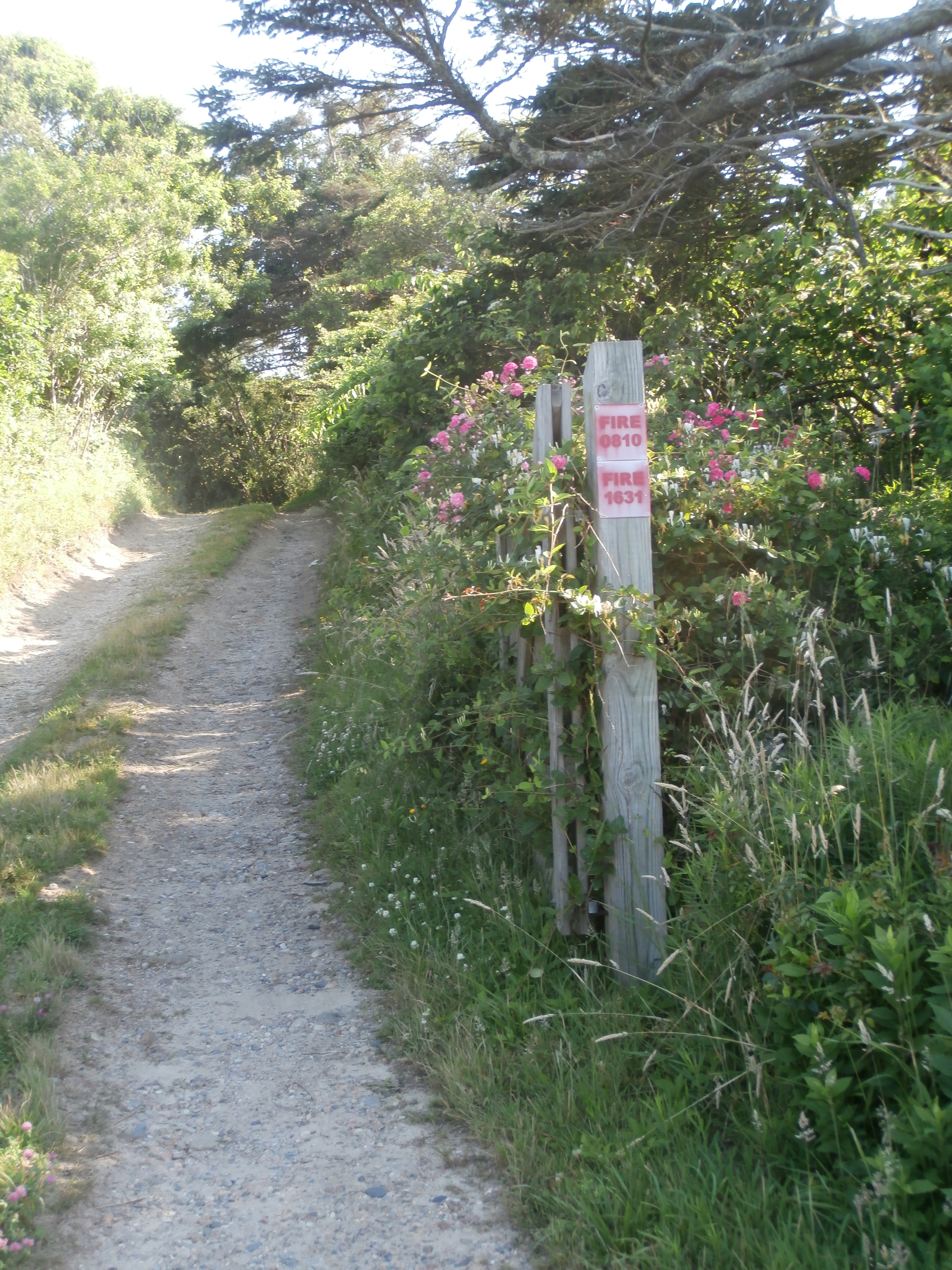
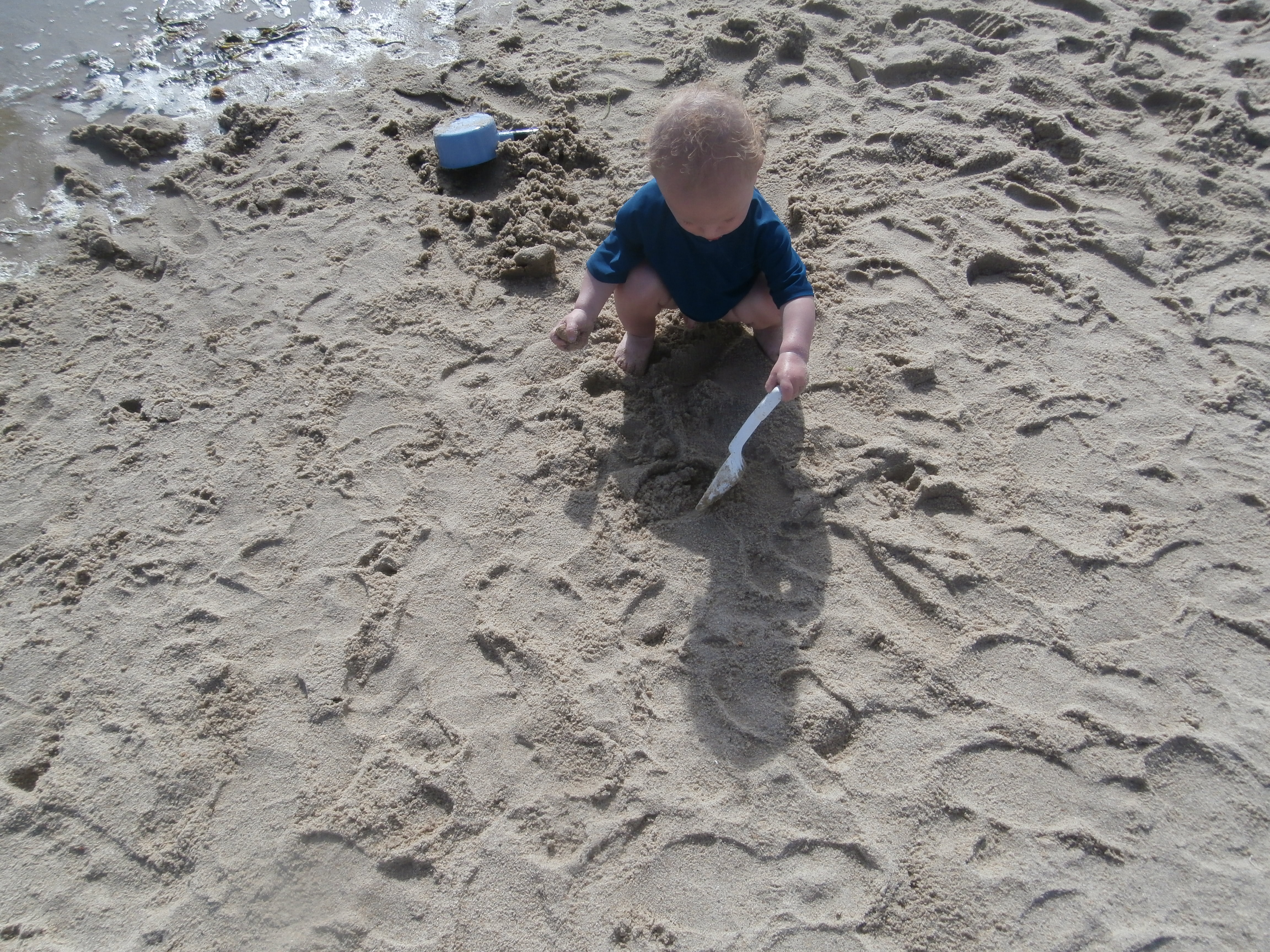
There’s nothing like good weather in Rhode Island in July. Good for walks and going to the beach. Good for a hardworking fishing industry, too.

Here are a few recent photos.

point-judith-rhode-island

country-lane

roses-growing-wild

two-kinds-of-roses

water-lilies

digging-in-the-sand

Read Full Post »

A high-minded concert may be a drop in the bucket when it comes to fighting global poverty, but as you know, I’m a believer in the power of “One and one and 50 make a million.”

In May, James C.McKinley Jr. wrote for the NY Times, “When the Global Poverty Project staged a benefit concert with Neil Young, the Black Keys and Foo Fighters in Central Park last fall, skeptics wondered if that nonprofit’s attempt to generate pressure on world leaders to help the poor would fade as soon as the amplifiers and guitars were put away.

“But this week the charity proved it had won converts, at least within the music industry. More than 70 artists, among them Jay-Z, Beyoncé, Bruce Springsteen, Pearl Jam and Bruno Mars, have pledged to give the project two tickets from each of their concerts over the next year, creating a pool of more than 20,000 tickets.

“The tickets will be used as prizes to encourage people to become involved in causes like fighting poverty in the third world, eradicating polio, building schools and ending famine. To win the tickets, fans are asked to earn points by taking action through a related Web site, globalcitizen.org. They can sign petitions, pledge to volunteer their time as aid workers, write elected leaders or donate money to aid organizations.

“‘It provides us with an opportunity to get really powerful activism worldwide,’ said Hugh Evans, the chief executive of the Global Poverty Project.” More.

Do check out a related post from 2011 on a countertenor who runs Artists for a Cause, a collaboration that provides talent for fundraising events — here.

Photo: Julie Glassberg for The New York Times
Neil Young with Crazy Horse performing in Central Park in September 2012 in a benefit concert for the Global Poverty Project.

Read Full Post »

I was reminded of a recent science article this morning. Erik was speaking Swedish to my one-year-old grandson, and John said he shows the three-year-old foreign-language cartoons because it’s a great age to get an ear for them.

I recalled something interesting in the NY Times. Tim Requarth and Meehan Crist wrote, “Babies learn to speak months after they begin to understand language. As they are learning to talk, they babble …

“But when babies babble, what are they actually doing? And why does it take them so long to begin speaking?

“Insights into these mysteries of human language acquisition are now coming from a surprising source: songbirds.

“Researchers who focus on infant language and those who specialize in birdsong have teamed up in a new study suggesting that learning the transitions between syllables — from “da” to “do” and “do” to “da” — is the crucial bottleneck between babbling and speaking. …

“The lead author, Dina Lipkind, a psychology researcher at Hunter College in Manhattan [said], “What we’re showing is that babbling is not only to learn sounds, but also to learn transitions between sounds.” …

“At first, however, the scientists behind these findings weren’t studying human infants at all. They were studying birds.

“ ‘When I got into this, I never believed we were going to learn about human speech,’ said Ofer Tchernichovski, a birdsong researcher at Hunter and the senior author of the study, published [in] the journal Nature. …

“Dr. Tchernichovski and Gary Marcus, who studies infant language learning at New York University and who helped design the study, discussed the results. Could the difficulty learning transitions in songbirds hold true for human infants?

“By analyzing an existing data set of recordings of infant babbling, they found that as babies introduce a new syllable into their repertory, they first tend to repeat it (‘do-do-do’). Then, like the birds, they begin appending it to the beginning or end of syllable strings (‘do-da-da’ or ‘da-da-do’), eventually inserting it between other syllables (‘da-doda’).” More.

Photo: Iva Ljubicic
A juvenile zebra finch, right, perched next to a plastic model, which helps the bird learn to sing. Researchers have discovered that babies learn to babble much as birds learn to sing.

Read Full Post »

Joe Palca, at National Public Radio, recently had a nice report about astronomy and optics.

I thought of John and his OpticsForHire team.

“It used to be that if astronomers wanted to get rid of the blurring effects of the atmosphere,” says Palca, “they had to put their telescopes in space. But a technology called adaptive optics has changed all that.

“Adaptive optics systems use computers to analyze the light coming from a star, and then compensate for changes wrought by the atmosphere, using mirrors that can change their shapes up to 1,000 times per second. The result: To anyone on Earth peering through the telescope, the star looks like the single point of light it really is.

“The reason the atmosphere blurs light is that there are tiny changes in temperature as you go from the Earth’s surface up into space. The degree to which air bends light depends on the air’s temperature.

“With adaptive optics systems, telescopes on Earth can see nearly as clearly as those in space.” More at NPR.

Photo: Heidi B. Hammel and Imke de Pater
The near-infrared images of Uranus show the planet as seen without adaptive optics (left) and with the technology turned on (right).

Read Full Post »

« Newer Posts - Older Posts »