Feeds:
Posts
Comments

Posts Tagged ‘religion’

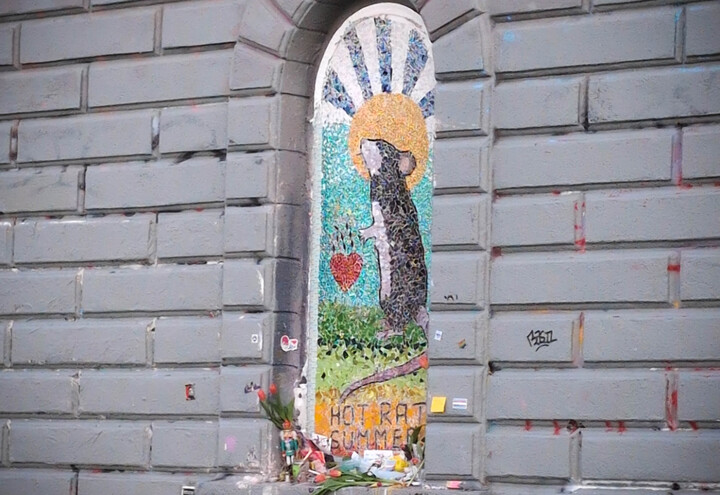
Photo: FoxyDonuts.
Seattle is making a game of loving rats.

Gotta love the kooky things people come up with. Today’s story is about people in the state of Washington who’ve decided there is a patron saint of rats. They call him St. Rat.

Nathalie Graham writes at the Stranger, “Heat waves shimmer along Pine Street. A rancid, somehow warm fishy smell wafts from Momiji’s dumpster, which is baking in the hot sun on 12th Avenue. The crumb rubber in Bobby Morris Playfield’s astroturf emits its own corona of heat, absorbing the sun’s rays. …

“Nearby, genderqueer youths balance on the concrete lip of the Cal Anderson Gatehouse scrubbing Hot Rat Summer, a pseudo-famous, pseudo-religious guerrilla mosaic of a rat with a halo. …

“Hot Rat Summer features St. Rat, a kind of patron saint for those at the bottom of the societal heap. … They leave offerings of doodles, flowers, and snacks at St. Rat’s feet. They protect the art and the saint within it.

“Last month, City Hall decided to protect Hot Rat Summer from bureaucracy, but that has not kept it safe from taggers, who’ve consistently spraypainted it. Ten days ago, it was a wash of black. …

“The taggers may not see the value of St. Rat, but the art and theology professors at Seattle University who spoke to the Stranger certainly did. They gave a few hot takes on this venerable rat.  

“Ken Allen, an associate professor of Art History at Seattle University, strolled over to Hot Rat Summer to analyze it in person. For the scholar of West Coast art in the mid-20th century, the rat’s saintly halo evoked the Beatnik era and artist Joan Brown, part of a loose, bohemian artist collective in the mid-50s called the Rat Bastard Protective Association

“These bastards ‘often used urban detritus in their assemblage and collage work,’ Allan wrote in an email. Brown, herself, often featured animals, including rats, ‘in a similarly dignified if not quite saintly way as in the Rat Summer piece.’ Take her various portraits of weird cats or The Bride, a painting of a beautiful cat in a wedding dress with a leashed pet rat (the groom?). Or the less sanctified Fur Rat, a rat sculpture made with chicken-wire and a raccoon fur coat.  

“ ‘They would have admired the underground spirit of the anonymous artist of Rat Summer, no doubt,’ he continued. 

“As would Beatnik writers like Jack Kerouac, who ‘idealized the poor and oppressed.’ …

“Dr. Kristin Doll, adjunct professor in Seattle University’s Department of Theology and Religious Studies, meditated quite a bit on the ‘Saint Rat’ figure central to Hot Rat Summer. 

“Doll wrote in an email that she couldn’t attribute any intentional religious metaphors to the artist(s) because she did not know them, but says the work is full of symbols with a clear religious history that make for a ‘clever twist on tradition.’ She loved it. 

“ ‘The creators of Hot Rat Summer are certainly creative, humorous, and they have injected a serious topic (protection of trans people and their rights) with tongue-in-cheek versions of traditional religious themes,’ she wrote. …

“Mosaics are common in religious art, Doll wrote, especially in the Eastern Orthodox tradition and in the Byzantine empire, which popularized the style. …

“St. Rat is not a saint. Cannonization is a lengthy, posthumous process analyzing a saint’s life for piety and holiness, plus a series of documented miracles. We don’t know if St. Rat is based on a real rat, if that real rat is dead or living. … This makes analyzing holiness hard. 

“And, Doll points out, the Vatican formalized the process in the 12th century to prevent situations exactly like Saint Rat, or, as she explained, ‘the rise of a popular cult based on a figure that may not meet the Church’s standards of holiness.’ Worshippers of Saint Guinefort, a greyhound who became a folk saint in 13th century France, know what she’s talking about.  

“Anyone who has been to Cal Anderson has seen the dog worshippers. Rats are not so well loved. We’re quicker to associate rats with garbage, plague, and excellent French cooking than we are to associate them with holiness. ‘A rat is a subversive image that challenges traditional notions of sanctity,’ Doll wrote.”

More at the Stranger, here, and on Instagram. Fun pictures at both sites.

Read Full Post »

Photo: Sarah Aziz.
Muslims and Jews in Kolkata, India, have a long history of friendship.
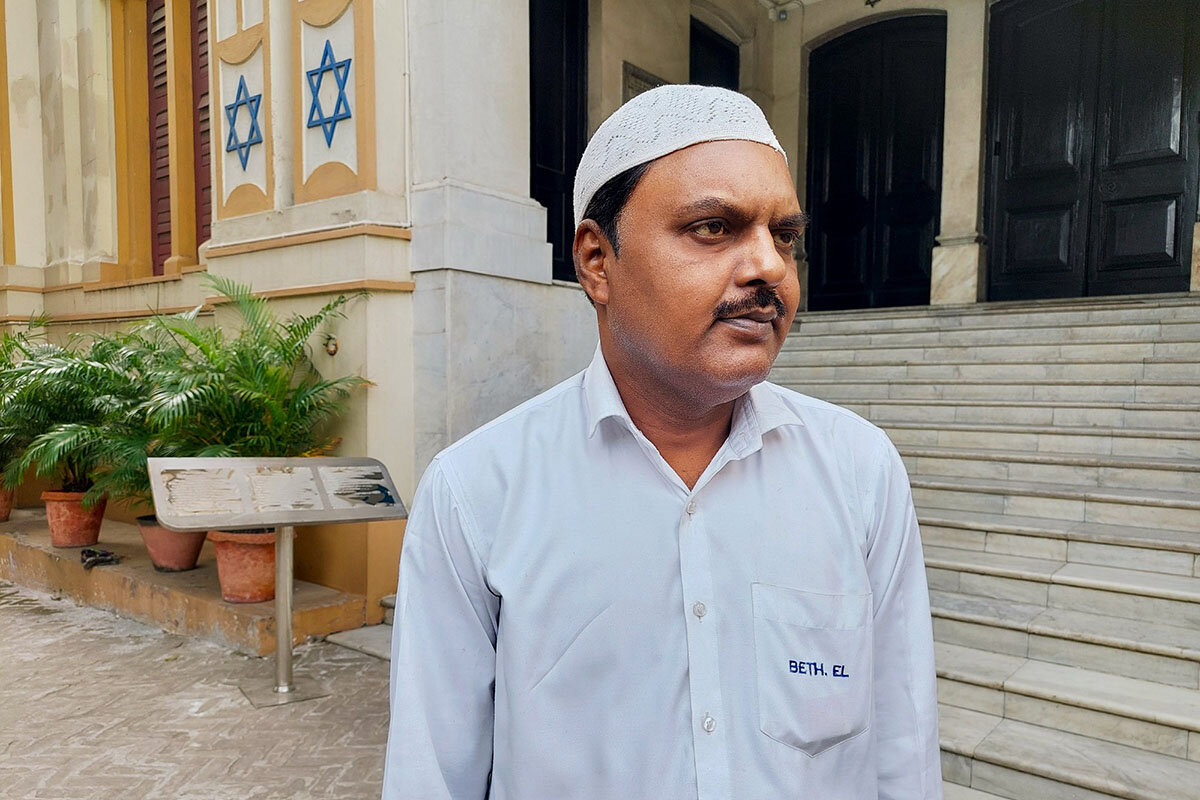
Shaikh Wasim, one of six Muslims who work as caretakers in Kolkata’s synagogues, stands outside his place of work.

All religions teach peace and friendship. So why do they go to war with each other? Sometimes humans make no sense.

In India, which under the current Hindu prime minister is known for repression of Muslims, one city has a surprising story to tell. Not about Hindus and Muslims, alas, but about Jews and Muslims. And the story is especially welcome in this time, when the war in Gaza has made relations worse in other parts of the world.

At the Christian Science Monitor, Sarah Aziz explains how Kolkata, India, is different.

‘The Oct. 7 attack profoundly affected the Jewish community in Kolkata, but failed to sour Jewish-Muslim relations.’

“Dilawar Mondal gently bends the stems of a centuries-old myrtle plant to examine its aromatic leaves, used in the Jewish ritual bath for the dead. It is among the myriad plants, shrubs, and trees that he has tended to for the last eight years in Kolkata’s only Jewish cemetery, established in the early 19th century by Jewish merchants from Baghdad and Aleppo.

“He pauses to check the time – the sun is overhead, which means he’ll soon need to take a break to perform Zuhr, the afternoon Muslim prayer.

“Many of the city’s Jewish institutions – including synagogues, schools, and the cemetery – are maintained by Muslim caretakers. The intertwined communities have offered each other hope, security, and strength amid rising global hostilities following Hamas’ Oct. 7 attack and Israel’s military campaign in Gaza. …

“The camaraderie and respect between the Jewish and Muslim communities of Kolkata can be traced back to the establishment of the cemetery, says Owaiz Aslam, founder of the Kolkata-based Indian Pluralism Foundation, which promotes interfaith harmony among Indian youth.

“Historical records show Shalom Aaron Obadiah Cohen, the founder of the Baghdadi Jewish community in Kolkata, reached out to a Bengali Muslim friend regarding the cemetery.

“ ‘They were new to the country and needed help,’ Mr. Aslam says. ‘The Muslim friend offered him a plot of his own land free of cost, but … Cohen insisted on giving his friend a gold ring as a token of solidarity between the two communities, which continues even today.’ … 

“More than a century later, the Baghdadi Jews in Kolkata assigned a Muslim family from the neighboring state of Odisha the job of caring for their synagogues, explains Navras Jaat Aafreedi, an expert in Jewish history who teaches at Presidency University in Kolkata.

“Since then, several generations of that family have continued to serve the three synagogues in Kolkata – Beth El, Maghen David, and Neveh Shalom – even as the Jewish population here has dwindled.

“Fewer than 15 Jewish residents remain, most of them older. But women’s rights activist Jael Silliman, who grew up Jewish in Kolkata, says that the synagogues still hold special significance.

“ ‘These three beautiful spiritual spaces mark our presence in the city, and recall and embody our history in a place where we flourished and prospered through trade and business endeavors,’ says the scholar, noting with pride that Kolkata is home to the only two synagogues protected by the Archaeological Survey of India as important heritage sites.

“Today, the synagogues draw tourists from all over the world, and in November, Mr. Aslam initiated an interfaith Jewish-Muslim prayer ceremony at the Beth El Synagogue, where he prayed for the safe return of the hostages taken from Israel by Hamas on Oct. 7.

“ ‘As a Muslim, my heart cries for innocent children and adults suffering in Israel as well as Gaza,’ he says.

“At the same synagogue, Shaikh Wasim shows up for work in his pristine uniform, Beth. El’ embroidered on his breast pocket and a white topi, or Muslim skullcap, on his head. With reports of a global uptick in antisemitic attacks against synagogues and other Jewish institutions, Mr. Wasim and the five other caretakers who currently oversee Kolkata’s synagogues are no strangers to fear. 

“ ‘I am afraid, like any other human being,’ he says. ‘But the deep love that the Jewish and Muslim people in Kolkata share always pulls me back to the synagogue, no matter the circumstance.’

“[Jo Cohen, secretary for Jewish Community Affairs in Kolkata] says the Oct. 7 attack profoundly affected the Jewish community in Kolkata, but failed to sour Jewish-Muslim relations.

“ ‘The Muslim caretakers of the synagogues and the cemetery, alongside my Muslim friends, are as close to me as ever. The Israel-Gaza situation has not affected our relationships in the slightest,’ says Ms. Cohen, who also serves as honorary secretary at the city’s Jewish Girls’ School, where the majority of the students are Muslim. 

“Later, while cleaning around the synagogue, Mr. Wasim echoes Ms. Cohen’s sentiments. ‘I pray for the violence and bloodshed to end, so that Jewish and Muslim communities can coexist in peace like they do in Kolkata,’ he says. …

“ ‘Ultimately, a Jew and a Muslim are praying to the same God, even if they call Him by different names,’ [Cohen] says.”

More at the Monitor, here.

Read Full Post »

Photo: Anne Pinto-Rodrigues.
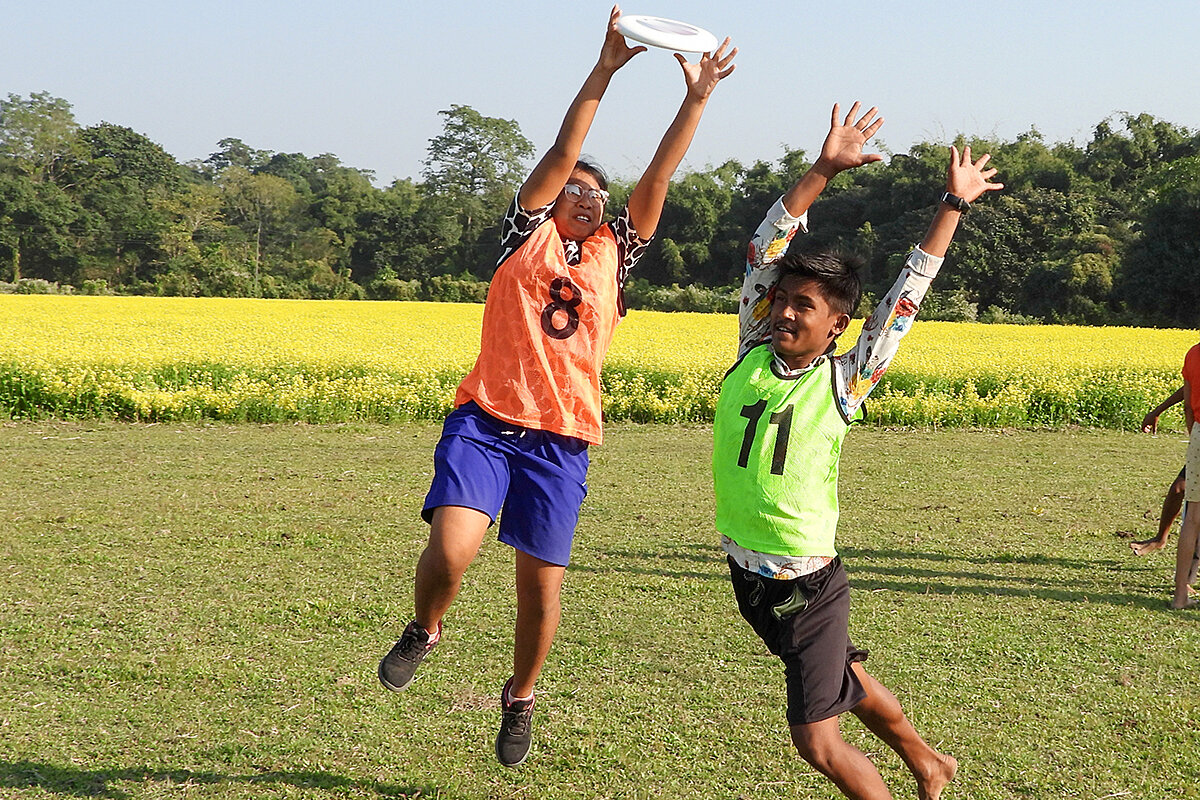
Phungbili Basumatary (left) completes a pass during in ultimate Frisbee in Rowmari village, India. She says the sport has allowed her to bond with teammates from different ethnic backgrounds.

The reason I share so many stories from the Christian Science Monitor is that they seek out good news whenever possible. In India, where ethnic violence has grown worse in recent years, a happy kind of game is drawing young people of different faiths together.

Anne Pinto-Rodrigues writes at the Christian Science Monitor, “On a cool Sunday afternoon, a white disc whizzes through the air in Rowmari village, located in the Indian state of Assam. A teenage girl snatches it out of the air, earning applause and supportive whoops from the other players on the field, who all come from different villages.

“The American flying disc game officially known as ultimate – or ‘ultimate Frisbee,’ for those not worried about trademark infringement – was virtually unheard of in this part of the world till a few years ago. But it’s rapidly gaining popularity throughout northeast India. That includes Assam’s Chirang district, where over 30 girls and boys gathered in Rowmari village last December for a coaching session organized by the Action Northeast Trust (ant), a rural development nonprofit. …

“Chirang was not always this idyllic. Starting in the 1980s, the region experienced over two decades of ethno-religious conflict between the majority Bodos, Muslims, and the several other groups. Poverty is rampant, as are gender inequality and child marriage. But ultimate, with its emphasis on self-governance, provides an opportunity to foster peace among Assam’s newest generation.

“Today, 3,500 children and youth from nearly 100 villages participate. …

“ ‘I’ve observed a substantial transformation in the behavior and attitudes of the young people in communities where the [Frisbee] program is active,’ says Dr. Deben Bachaspatimayum, a social activist and teacher of peace studies based in Manipur, another state contending with violence in northeast India.

‘This bottom-up peace-building approach is helping youth discover a society based on equality and justice.’ …

“The region is largely peaceful now, but as recently as 2014, outbreaks of violence in Chirang and neighboring areas left over 100 dead and thousands homeless. 

“ ‘After the 2014 conflict, we were looking for something that would bring communities together,’ says Jennifer Liang, co-founder of the ant. “Something girls could get involved in.’ …

“It’s a mixed-gender, noncontact, and relatively new sport, meaning everyone in the community would be building their skills from scratch. The game involves two teams of seven players each, who score points by completing passes. There are no referees – instead, players must communicate with each other to call fouls and resolve conflicts. …

“So in 2015, the ant introduced a very simple version of the game to a cluster of villages known as Deosri that had been struggling with violence. … The league recruits young people between the ages of 11 and 14. Team members all come from the same village and, as a result, tend to be from the same ethnic group. The challenge is learning to work with the opposite gender. 

“ ‘Initially in these villages, the boys were skeptical about being in a mixed-gender team,’ says Ms. Liang. ‘In due course, they realized that the girls are equally important.’ …

“Manoranjan players can graduate to the more competitive Rainbow league, where the ant introduces more rules to promote peace building. Each team must include players from a minimum of three different villages, three different ethnicities, and three different mother tongues. … Rainbow sessions end with group discussions on burning social issues like child marriage and suicide. …

“Ms. Ray, who’s part of Durgapur village’s Rajbongshi ethnic group, [said that ultimate came] to the region, ‘there were times we would tell children from other communities or religions not to play with us,’ she says, with great remorse. ‘Now I treat everyone equally.’

“Although ubiquitous in America, Frisbees and other flying discs are available only in one sporting goods store in Assam’s capital city. Ms. Liang hopes that in the future, discs will become available in every village shop, as easy to come by as a soccer ball.

“ ‘My dream is that Frisbee doesn’t remain a nonprofit-led program, but rather something all children can play,’ says Ms. Liang.”

More at the Monitor, here.

Read Full Post »

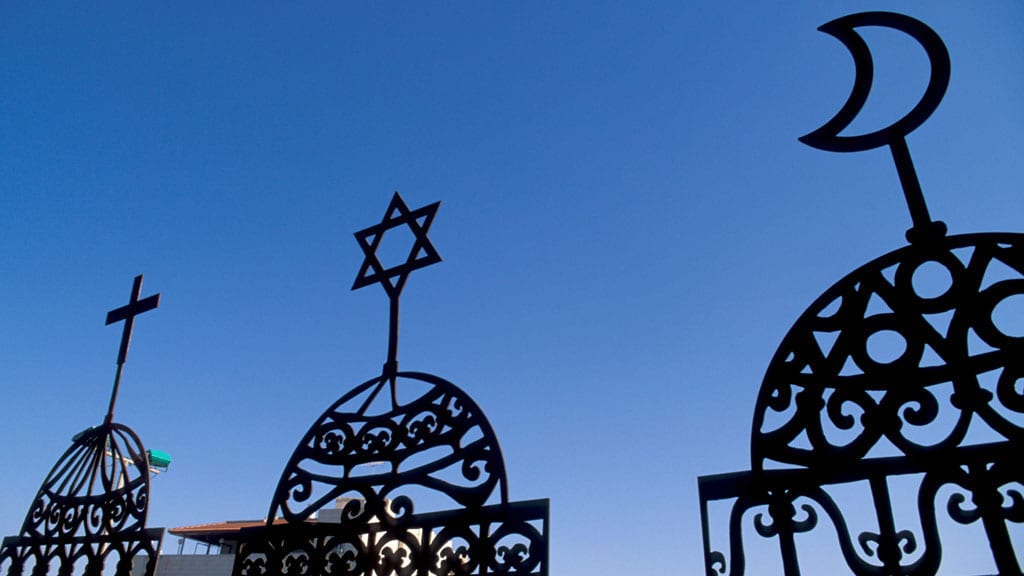
Photo: Menorah Islands Project.
Christianity, Judaism, and Islam are referred to as the “Abrahamic” religions because they are all rooted in a common ancestor – the biblical Abraham.

Today is like an alignment of planets because the three main Abrahamic religions are celebrating three important holidays at the same time: Ramadan, Passover, and Easter. I was thinking it would a good day to remind ourselves what the three faiths have in common, so I did an internet search and found information at the British Library.

The library had put the question in the hands of Anna Sapir Abulafia, Professor of the Study of the Abrahamic Religions at the Faculty of Theology and Religion at the University of Oxford and a Fellow of Lady Margaret Hall.

She writes, “When people refer to the Abrahamic religions they are usually thinking of Judaism, Christianity and Islam. There are, in fact, more Abrahamic religions, such as the Baha’i Faith, Yezidi, Druze, Samaritan and Rastafari, but this article will focus on the main three aforementioned.

“The term ‘Abrahamic’ highlights the hugely important role which the figure of Abraham plays in each of these traditions. Jews, Christians and Muslims look to their sacred texts to find the history of Abraham and how it has been interpreted through the ages. For Jews, the central text is the Hebrew Bible consisting of the Torah (the first five books or Pentateuch), the Prophets (Nevi’im) and the Writings (Ketuvim). Abraham’s story unfolds in Genesis, the first book of the Torah. …

“For Christians, the Hebrew Bible is the Old Testament, the precursor of the New Testament that narrates the birth, ministry, death and Resurrection of Jesus Christ as well as the life and preaching of the earliest followers of Jesus. For Christian understandings of Abraham the Letters of St Paul are of particular importance.

“Muslims engage with the figure of Abraham/Ibrāhīm in their holy book, the Qur’an, as well as in the Hadith, the body of writings which transmit the sayings and actions of the Prophet Muhammad.

“Let us turn to Genesis to map out the story of Abraham, which is shared by Jews and Christians. In Genesis 12: 1–3 Abraham (at that stage his name is still Abram) is called by God to: ‘Go from your country and your kindred and your father’s house to the land that I will show you. I will make of you a great nation, and I will bless you, and make your name great, so that you will be a blessing … and in you all the families of the earth shall be blessed.’ “

Professor Abulafia proceeds to describe in detail how each of the religious traditions perceives Abraham. She explains that Abraham has a son with Hagar (Ishmael) and also with Sarah (Isaac), saying, “trouble brews between Sarah and Hagar as their sons grow up, and Sarah persuades Abraham to send Hagar and Ishmael away (Genesis 21). God promises Hagar that Ishmael too will be made into a great nation.

“God then tests Abraham’s faith by commanding him to sacrifice Isaac (Genesis 22). But when Abraham is about to sacrifice Isaac on Mount Moriah, an angel stops him and directs his gaze to a ram caught in the thicket. The ram is sacrificed instead of Isaac. …

“In Jewish tradition, Abraham became identified as the ‘first Jew.’ He is depicted as the embodiment of the faithful Jew upholding God’s commandments. Traditionally, Jews see themselves as the descendants of Abraham through his son Isaac and Jacob, his grandson. …

“In Christian tradition, Abraham’s faith became paradigmatic for all those who followed Jesus. In the words of St Paul, in Romans 4: ‘For what does the scripture say? “Abraham believed God, and it was reckoned to him as righteousness.” ‘ …

“Islam shares with Judaism the narrative of Abraham’s destruction of idols in the service of the worship of the one true God. In Surah 37 of the Qur’an, Abraham ‘said to his father and to his people, “What is that which ye worship? Is it a falsehood – gods other than Allah that ye desire? Then what is your idea about the Lord of the worlds?” … Then did he turn upon them, striking (them) with the right hand. … He said: “Worship ye that which ye have (yourselves) carved? But Allah has created you and your handwork!” ‘ …

“In the same Surah, Abraham has a vision that he must sacrifice his son. As in the Bible, Allah intervenes in time. The Qur’an emphasizes that this was a difficult trial which both Abraham and his son passed with flying colors. It does not specify whether the son was Isaac or Ishmael, although today most Muslims believe that it was Ishmael/Ismā‘īl.

“The biblical narrative concerning the dismissal of Hagar and Ishmael is paralleled in the Muslim tradition with Abraham taking Hagar and Ishmael to Mecca, where in due course Abraham and Ishmael build the Ka‘bah, the focus of the Hajj.” More from the professor here.

I wrote another post in 2011, here, on the Abrahamic faiths. In a 2014 post, I described a nonprofit that brings together young people from the three backgrounds. A post earlier this year was on an Abrahamic collaboration that is helping Afghan refugees in Maryland, here.

Read Full Post »

Photo: turkey.theglobepost.com via History Daily.
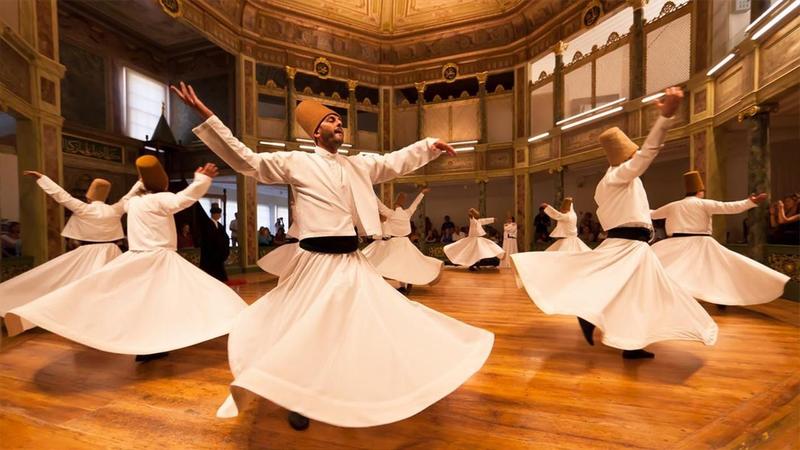
Turkey’s ‘whirling dervishes’ strive to keep the practice sacred amid tourist demand.

Each of us in our own way tries to maintain some sort of balance in our lives. It might be a balance between hours spent at a job and hours spent with family, a balance between work and play, between nutritious foods and sweets, between ideals and pragmatism. I myself would like to keep a balance between being well informed and getting depressed. Although it’s impossible to unsee what one has just read, there has to be a way to stop oneself when more information is just going to be upsetting.

At the radio show The World, Durrie Bouscaren reported recently on Turkey’s whirling dervishes and the challenge they face keeping a balance between a wish to share their culture and respecting their religion.

Bouscaren writes, “On a recent Friday evening, spectators gathered around a circular, wooden stage at a cultural center in Konya, Turkey. A single beam of light shined down on a man who placed a red sheepskin cloth on the floor. 

‘A procession of semazen appeared wearing tall headpieces and long, white robes covered by dark cloaks. They ranged widely in age, but are all were men who enact the sema, a ritual meditation known in popular culture as actions of the ‘whirling dervishes.’ 

“ ‘The acts of the sema represent the other world,’ said 32-year-old Osman Sariyer, a semazen and tour guide with the Irfan Civilization Research and Community Center in Konya, where the ritual demonstration took place. ‘Remembering the other world, remembering the creator, all the time.’ 

“Countless semazen — those who do the sema — live in the modern Turkish city of Konya, the final resting place of Jalalluddin Rumi, the 13th-century Persian poet, Islamic philosopher, and Sufi mystic who first popularized the sema. 

Today, semazen must grapple with the push and pull between the promise of tourism income for the community and the nagging feeling that the sema should be a private affair.

“In December, Konya hotels sell out for weeks as tourists arrive from around the world to pay their respects on the anniversary of Rumi’s death. In 2008, UNESCO inscribed the sema as one of the ‘masterpieces of the oral and intangible heritage of humanity.’

“In this hubbub — where busloads of tourists arrive to buy tickets to sold-out ‘dervish shows,’ and flock to the shops where they sell tiny figures of semazen souvenirs — it can start to feel overwhelmingly commercialized. 

“But performing the sema for tourists is a way to share this ritual, Sariyer said. At the cultural center, the tickets are free, according to a long-held tradition that prohibits the exchange of money or engagement with politics when it comes to this practice. 

“As semazens, we believe in the brotherhood of other religions, and we do not exclude anyone. Anyone coming here from any religious energy will feel that energy, and that’s what we’re trying to do here,” he said.

“As the music begins, a solo from a type of flute known as the ney symbolizes the breath of God, blowing life into human forms. The semazen shed the outer layer of their clothing — an act of shedding the ego. They bow and begin to spin. …

“It’s a slow, controlled spin. One foot stays planted on the floor. At times, one hand reaches up to the sky, while the other points downward — a position meant to bring love from God down to Earth and its people. 

“But outside the ritual, Sariyer explained, most semazens live regular lives. They get married, have kids and work desk jobs. …

“Historically, semazens were organized in orders throughout the Ottoman Empire and beyond. The orders were banned in 1925, as Turkey became a secular republic. So, they went underground.

“The semazens grew and learned about the practice within these orders, explained Nadir Karnıbüyükler Dede, a leader at the International Mevlana Foundation. When they were abolished, it became harder to pass on the traditions to the new generation. …

“In his office at a construction firm, Adnan Küçük keeps a small square board on the floor — just 3-feet tall and 3-feet wide — to practice the turns of the sema. 

“ ‘It gives you this excitement, this feeling of being overjoyed,’ … Küçük said.  He’s been practicing sema for over 20 years.

“Küçük’s father was one of those who upheld the tradition in those difficult decades, from the 1920s through the 1990s. …

“By the 1990s, when Küçük was a teenager, there were very few young semazens in Konya. But one day, a Polish official called Konya’s tourism office to ask if they had any whirling dervishes they could send to participate in a youth festival. …

“ ‘They’d take us to a hotel, people would be eating — and as we’re preparing the sema they’re serving alcohol,’ he said. ‘Which completely contradicts the ritual.’ Alcohol is forbidden in Islam. …

“Now he only gathers with a small group of friends to do the sema privately, meeting at least once a week before the pandemic began.”

More at PRI’s The World, here.

Read Full Post »

Some people think religion is incompatible with science, but that depends on the individual and the particular field of science you’re talking about. One of my brothers is both devout and a scientist. And at his Zoom retirement party this past year, I learned he wasn’t the only one in his lab.

A woman who heads up an important climate change center is Texas is another example. Sarah Kaplan wrote about her at the Washington Post.

“ ‘What world have I brought my child into?’ the new mom pleaded. ‘What can I do to make sure my baby isn’t brought up in a world that’s being destroyed?’

“It was 2019, and climate researcher Katharine Hayhoe was at a church breakfast in Fairbanks, Alaska, when a young woman tapped on her shoulder and confessed that she was terrified. Ever since the birth of her daughter, the young woman said, she couldn’t stop worrying about the threat of a rapidly warming planet.

“ ‘That heartfelt question is one I thought I could only really answer as a fellow mom,’ said Hayhoe, an atmospheric scientist at Texas Tech University and an evangelical Christian who has spent years trying to educate the public about climate change.

“Hayhoe told the Alaska woman the same thing she sometimes had to tell herself when she worried about her own son’s future: Channel your fear into action. Talk to your friends and family. Advocate for change in your town, your church, your school, your state. Now, Hayhoe aims to replicate that exchange on a much bigger scale.

“Along with five fellow climate scientists who are also mothers, she has teamed up with Potential Energy, a nonprofit marketing firm, to launch Science Moms, a $10 million campaign to educate and empower mothers to do something about climate change.

“Advertisements featuring Hayhoe and the female scientists will air on national TV and online for the next month. The initial push will be followed by ads in several key states where the effects of climate change are already being felt, including North Carolina, Arizona and Wisconsin. …

“In one video, Colorado State University atmospheric scientist Melissa Burt narrates a montage of images of her 4-year-old daughter, Mia, juxtaposed with footage of a hurricane.

“ ‘You don’t have to be a climate scientist to want to protect the Earth,’ she says. ‘And for Mia, I want you to know that I worked really hard to be a part of the change and to make it a better place for you.’

“The campaign also has a website featuring facts and resources, including links to books on talking to kids about climate and a form for contacting elected officials. …

“Mothers are the ‘sweet spot’ for inspiring social change, said John Marshall, a veteran marketing executive and consultant and a founder of Potential Energy. They have a long track record of political activity: Mothers Against Drunk Driving helped lower the legal limit for blood alcohol content in drivers. Moms Demand Action has lobbied for initiatives to prevent gun violence. …

“His research suggests that mothers are not more vocal about the warming threat because they’re not confident they understand the science and are unsure of what to do about it. That’s where Science Moms comes in.

‘Moms trust moms,’ said Burt. She hopes that viewers will see her — a Black woman who studies the warming Arctic and presents at scientific conferences but also cooks spaghetti for her family and gardens with her daughter — and feel represented.

“ ‘I want to connect with moms who look like me. … We are disproportionately affected by the impacts of climate change. I just want other moms who look like me to know they have a role in combating this crisis,’ she added.

“Science Moms is funded through donations, including large gifts from philanthropist MacKenzie Scott and former Nature Conservancy chief executive Mark Tercek. The group says it will be the biggest educational awareness campaign around climate since Al Gore’s $100 million ad blitz about the issue in 2007. [The] group cannot engage in political campaigns or seek to influence legislation.

“Marshall will measure success in heightened awareness of the threat posed by global warming and increased willingness to take action. He said his aim is to double the proportion of Americans who say they are ‘alarmed’ about climate change — a number that hovers around 26 percent, according to the Yale Program on Climate Change Communication. …

“Hayhoe hopes the ads will help counter the climate misinformation and misconceptions that so many Americans are exposed to: claims that it only affects polar bears (weather-related disasters cost the United States $95 billion and killed more than 200 people last year); assertions that the climate is always changing (in 4.6 billion years it has never warmed this fast); accusations that other countries are more at fault (the United States is the largest historical source of planet-warming emissions). …

“ ‘What we want to do is empower other moms to become messengers in the most-trusted category, which is friends and family,’ she said. ‘I really believe that using our voices is the way we can make a difference.’ ”

More at the Washington Post, here.

Read Full Post »

5523

Photo: Karen Robinson/The Observer
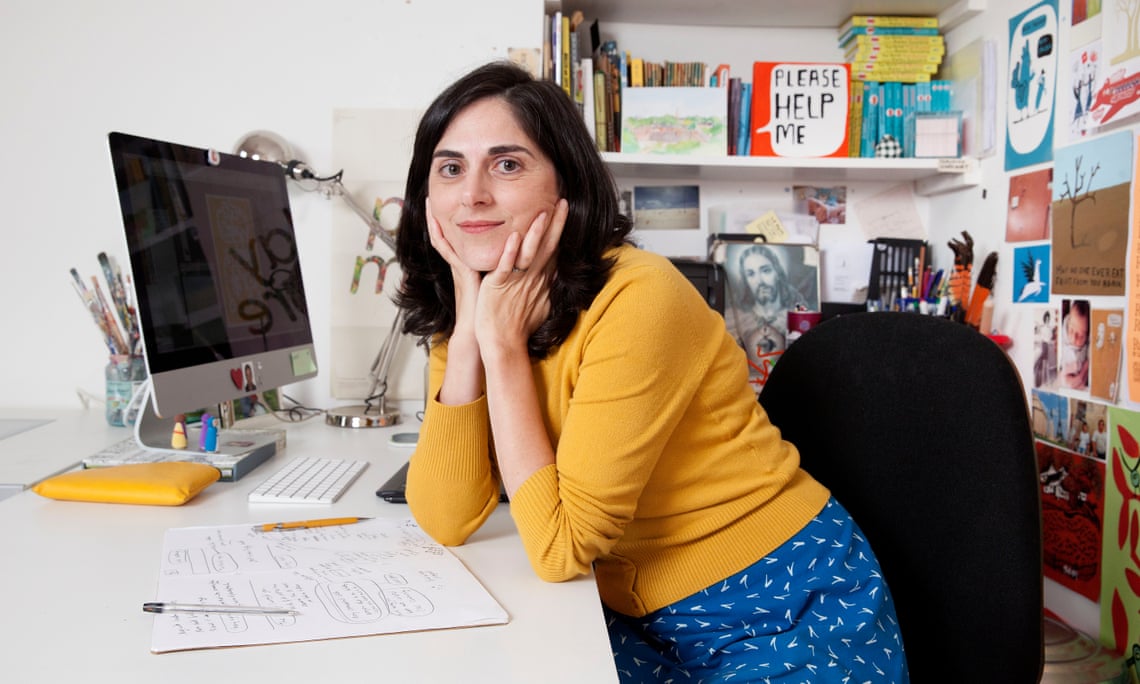
Cartoonist Simone Lia can’t resist painting worms, but her interests go way beyond humble invertebrates.

I happened to run into two very different stories about comics yesterday and thought I would make a post referencing both. The featured article is an interview with Observer cartoonist Simone Lia. Kate Kellaway was the interviewer.

” ‘Whenever I was between projects,’ says Simone Lia – comic-strip cartoonist in the Observer and author of a new children’s book, The Secret Time Machine and the Gherkin Switcheroo, about the unlikely friendship between a bird and a worm – ‘I couldn’t stop painting worms. I didn’t know why.’ …

“She knew enough, she goes on, to know she should pay attention to this obsession. And, with a laugh, she explains she realised how much she admired the character of the worm:

‘They’re very humble, live in the ground, do good work, get on with it.’ These qualities, she says, ‘I’d like for myself.’

“If this sounds like a Christian aspiration, it will not surprise Lia’s many fans. In 2011, she beguiled readers with the book that made her name: Please God, Find Me a Husband! The belief in God was no joke. But the book was very funny.

“In one irresistible sequence, Lia, whose boyfriend had just ended their relationship by email, walks disconsolately across Leicester Square. She hears the lyrics of INXS’s Need You Tonight playing from a bar and believes God is communicating with her. Before long, in her mind’s eye, she is dancing friskily with God – a bearded, bespectacled bloke in a pale blue, calf-length dress. Her story leads her to a religious order in Wales (‘I’m so not going to find a husband hanging out with nuns’) and to Australia, where she meets a handsome horseman who, in the way of handsome horsemen, disappears over the horizon.

“It is eight years since that book was published (it has five worms on one of its opening pages). As we sit down in Lia’s front room, I ask how long it took God to get his act together. ‘Ten years,’ she says. …

“Her latest children’s book … The Secret Time Machine and the Gherkin Switcheroo describes the challenge of living with an old bird who does the crossword puzzle and does not want to go out, and a worm who dreams of wriggling back underground. Having said that, the worm overturns Lia’s definition of wormdom by mainly living above ground and by not being humble at all. He swings between feeling he is worthless and believing himself a genius. …

“In the interests of honesty, she feels she should not leave out ‘the dark bit’ of her life. … ‘Putting things mildly, there was a lot of fighting at home. I felt very alone and felt even Jesus was not listening to my prayers – it felt like he did not care. That is when I stopped praying, became interested in art. Drawing and painting was an escape. I could enter another world and forget about feeling lonely or afraid. … That might be how Fluffy came about.’

“Fluffy (2007) was a graphic novel about the relationship between a rabbit and the floundering human being he thinks of as his dad. It looks like a children’s book but isn’t. … It was while researching for Fluffy in Sicily (the rabbit goes on hols there) that Lia rediscovered God. A randomly encountered Mormon asked her whether she still prayed. She went into a baroque church, but all she could think of was to ask God for a better hotel room (she feared she had been staying in a brothel).

“ ‘Despite my rubbishy prayer, I felt something out of the world in that moment. It’s very hard to explain but it was as if my heart opened up. … From that moment, something shifted inside of me.”

Read more about Lia and how her life has affected her comics here. And for a completely different take on cartoons, read the Paris Review article on comics as poetry, here.

On second thought, tying religion to comics and tying poetry to comics may not be so different after all. Depends on where you’re coming from.

In the Paris Review, Ivan Brunetti explains why comic strips like “Jump Shot,” by Lynda Barry (below), deserve to be called poetry.

lyndabarry_jumpshot-1

Read Full Post »

shane-claiborne

Photo: Christian Today
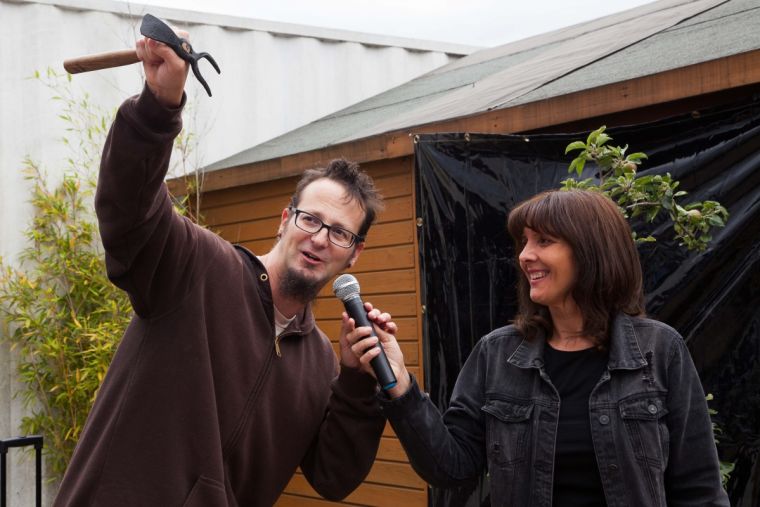
Shane Claiborne and Dr Sally Mann with one of the garden tools made from knives seized from the streets of London by police as part of a peace-focused project. In America, Claiborne beats
guns into garden tools, in a modern version of “swords into plowshares.”

I am not devout like several of my readers, but I love stories about people of any religion who try hard to practice the humane tenets of their faith.

In this story, a Christian called Shane Claiborne was a guest of the radio show On Being to explain what his faith tells him to do about the proliferation of guns used for violence in America. Host Krista Tippett brought him together with Omar Saif Ghobash, a diplomat of the United Arab Emirates and author of Letters to a Young Muslim to talk about how they would like to refocus members of their faith who seem immune to messages of love and kindness.

From the website: “Spiritual border-crossing and social creativity were themes in a conversation between Shane Claiborne and Omar Saif Ghobash, two people who have lived with some discomfort within the religious groups they continue to love. Ghobash is a diplomat of the United Arab Emirates and author of Letters to a Young Muslim. One of his responses to the politicization of Islam has been to bring a new art gallery culture to Dubai, creating spaces for thought and beauty.

“Claiborne is a singular figure in Evangelical Christianity as co-founder of The Simple Way, an intentional neighborhood-based community in North Philadelphia. One of the things he’s doing now is a restorative justice project inspired by a Bible passage — to transform guns into garden tools.” Play the episode here.

And for more on beating weapons into garden tools, there is this story by Rob James at Christian Today.

“Shane Claiborne is no shrinking violet. Prominent speaker and bestselling author Shane heads up Red Letter Christians, a movement that is committed to living ‘as if Jesus meant the things he said.’ Consequently Shane is a passionate advocate against homelessness, war, gun violence and the death penalty. As he sees it, the Gospel of grace is a call to Christian activism, something he talked about when we met at the YMCA’s recent 175th anniversary celebrations in London.

” ‘I’m here to celebrate 175 years of the YMCA because it’s not just been an organisation about words but about action. … Young people are very aware that politicians in many of countries have failed, and as we look at the world we have been handed from our parents we can see that it is very fragile.’ …

“For Shane, faith is not simply a ticket into heaven or a licence to ignore a hurting world. Faith, he believes, should give us the determination to transform the world. … It’s not about ‘going up when we die,’ he observes, but ‘about bringing God’s dream down to earth while we live. …

” ‘The health of any society is not shown by how the stock market is doing or how rich we are but how the most vulnerable are doing. And of course justice issues are all interconnected so it’s impossible to separate caring for the environment from our care for the poor. The folk who suffer the most injustices are the most vulnerable people.’ …

“And for him, the United States is a particularly challenging context at the moment.

” ‘We are living through some historic and troubling times,’ he said. “Just before I came to London I was at the border in El Paso where we have kids who are living in cages, separated from their own families, because our own administration has said they don’t know if they will ever be reunited. …

” ‘This is not about issues but about loving our neighbour, recognising that when anyone is hurting we are all hurting, and until we can all live without fear, until all of us are free, none of us are fully free.’ ”

More at Christian Today, here, and at On Being, here.


Read Full Post »

There are so many interesting cultures in the world! For example, when I was editor of a magazine about lower-income issues in New England, I heard for the first time about the Karen from Burma (Myanmar). Who? Soon after, I managed to acquire an article on Karen refugees in Waterbury, Connecticut, so I was able to learn something along with my readers.

Recently, I heard of another new-to-me minority, members of which are being resettled in Massachusetts. They are called Mandeans, and their pacifist religious beliefs had subjected them to persecution in Iraq and Iran for millennia.

Here is what Brian MacQuarrie writes about them at the Boston Globe.

“The Mandaeans have found safety and acceptance since they began arriving [in Worcester] in 2008, freely practicing a monotheistic religion that predates Christianity and Islam. But they still do not have a temple — a ‘mandi’ for baptisms, marriages, and birth and death rituals — and whether one is built could determine if they continue to call Worcester home.

” ‘Work is not the anchor, living in an apartment is not an anchor, the mandi is the anchor,’ said Wisam Breegi, a leader of the Mandaean community. …

” ‘It really is a culture that is in danger of disappearing,’ said Marianne Sarkis, an anthropology professor at Clark University. ‘If you don’t have a way of preserving the culture and traditions and even the language’ of Aramaic — what a temple helps provide — ‘it is not going to survive very long.’ …

“ ‘We really don’t have the expertise, the know-how, the connections,’ said Breegi, who also has founded a scientific firm that is developing a low-cost, disposable, neonatal incubator for use in developing countries.

“To help forge the religious connections, Breegi and Sarkis are preparing an application for a nonprofit organization to help raise money for the temple. Worcester Mayor Joseph Petty said in an interview he is willing to help the project where he can.

“ ‘They’re all doing what everyone else is trying to do — working hard and getting their kids a good education.’ …

” ‘It’ll just help make Worcester stronger in the long run,’ Petty said of his city’s embrace of Mandaeans and other immigrants. ‘You can’t build walls between people.’ ”

Worcester held a ceremony of welcome in April that “represented the first time — anywhere, at any time — that Mandaeans had been recognized as a valued, important minority group, Sarkis said.” Wow.

More here.

Photo: Craig F. Walker/Globe Staff
The Kalmashy family (left to right) Lilo, and her husband Mahdi and their daughters and Sura and Sahar, shared lunch at their home in Worcester.

Read Full Post »

I was so happy to get this hopeful update on Kids4Peace Boston today.

“For a while last summer, as violence escalated in Israel/Palestine, the possibility of Israeli, Palestinian and US youth coming together for a Kids4Peace camp seemed pretty unlikely.

“But despite countless barriers and uncertainties, all 25 young leaders — Muslims, Christians and Jews from Jerusalem, the West Bank, and Boston — did make it to be together on that beautiful mountaintop in New Hampshire. …

“Being in the presence of one another and listening, really listening, to each other’s stories is the crucial first step in the Kids4Peace experience.

” ‘I came to Kids4Peace to try and understand the different viewpoints that each kid has. Some people don’t understand that someone with a different opinion than you can be right without making you wrong.’
~Participant from Boston

“In the midst of violence, in the midst of despair, there are people who turn towards each other rather than away. This summer 25 peace leaders and their families proved that they are the kind of people who choose to turn towards. These young leaders walked away from camp feeling empowered by and connected to others who believe, as they do, that together peace is possible.

” ‘To be a peacemaker is to hold our hands together, and to help each other not killing each other, to treat each other as humans.’ 
~Participant from Jerusalem”

Read Full Post »

Last night I went to a jazz benefit for the nonprofit Kids4Peace Boston, which sponsors a summer camp and other events for children of three faiths — Christian, Muslim, and Jewish. The children are from both the United States and Jerusalem and are 11 to 12. Read more about the program here.

The fundraising event was held in the Grand Circle Gallery in Boston, which features magnificent travel posters and travel photography from the 1930s and 1940s. The entertainment was provided by Indian vocalist Annette Philip and her jazz quartet. Very impressive.

Read Full Post »

First Parish does not have a typical service on New Year’s Day. For one thing, attendance is sparse.

Sunday’s “Taizé” service put me in mind of something my mother used to say about Unitarians to tease my father, who was one. (The denomination was not yet Unitarian-Universalist.) She liked to say that her impression of Unitarians had always been “seven people in an attic with a violin.”

Parishioner Joan Esch and her cello provided the opening music yesterday. Instead of going into the main sanctuary, we gathered in the parish hall, sitting on folding chairs around a small table with candles and flowers. At most there were 40 people, including toddlers running and climbing.

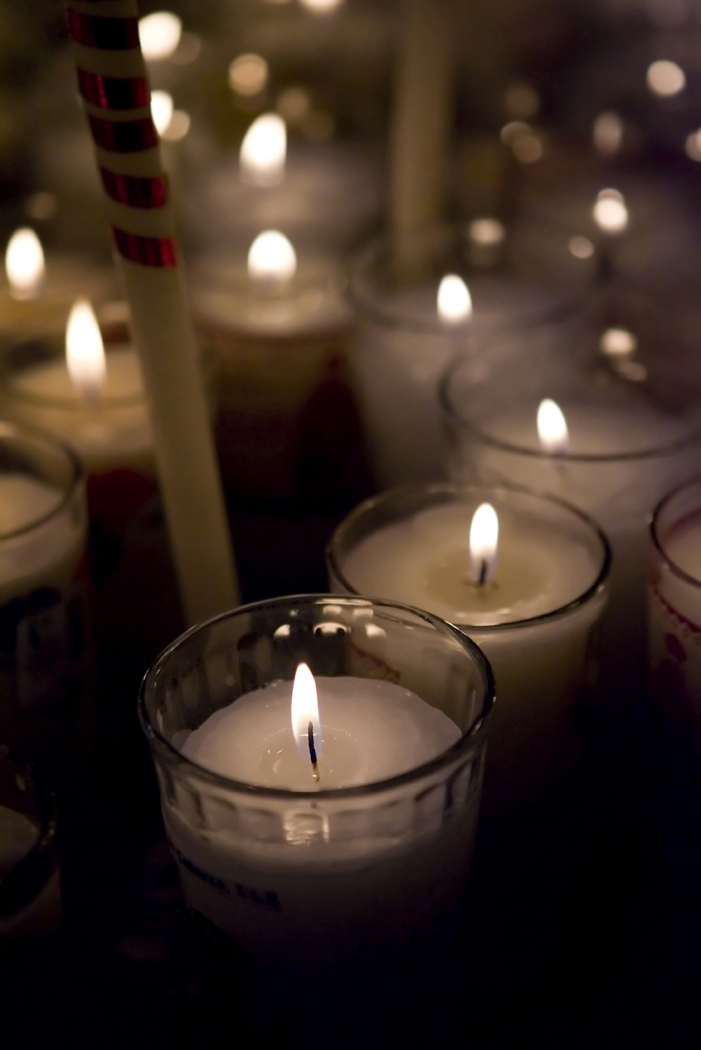
Mark Richards led the Taizé service, explaining that the concept started in France. The First Parish version is short and consists of one-verse songs sung over and over in unison without accompaniment and interspersed with readings, cello interludes, meditation, and candle lighting — for remembrance (such as an illness or death) and hope (such as a new beginning or a birth).

I enjoyed being there. It was different. And I liked a line that was quoted from a long-ago minister — something about the mystery within reaching for the mystery without.

Read Full Post »

A while back I blogged about the book groups called Daughters of Abraham, involving women from three related religions: Muslim, Jewish, Christian. I mentioned that I had met book group participant Heidi, who founded something similar for children, Kids4Peace.

Today I thought I would check back to see what Heidi’s organization has been up to, and I was led to a delightful blog on the first Kids4Peace summer camp. Here’s a taste.

“July 11, 2011 — This morning there was basketball before breakfast! The Christian children had prepared a Sunday morning service for us with the Reverend Josh Thomas, Executive Director of Kids4Peace USA, presiding. The Muslim and Jewish children had many questions after the service and the Christian children were able to answer many of them. In the afternoon, we had our choice of activities with other campers whom we hadn’t met before. Choices included archery, windsurfing, arts and crafts, drama, and woodworking.”

A different sort of project took the Kids4Peace folks to the Interfaith Youth Service Day at the Swedenborgian Church on the Hill (Beacon Hill, Boston). Heidi wrote me that Kids4Peace organized “a program geared towards children under 12 (the older kids did outdoor service projects). We created 40 toiletry kits, cards and scarves to be donated to a women and children’s shelter in Boston.” Read about it here.


Read Full Post »