Feeds:
Posts
Comments

Posts Tagged ‘safety’

Photo: Popi Sibiya.
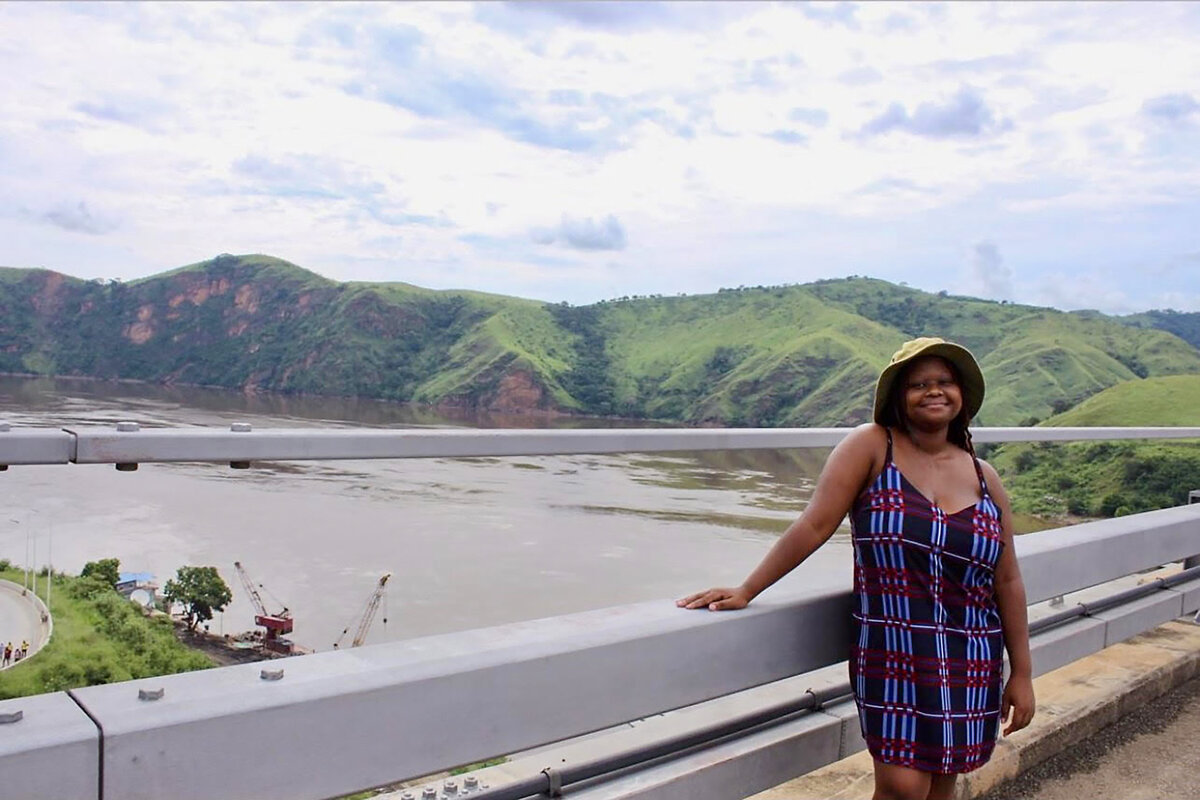
Blogger Popi Sibiya didn’t see herself in any travel writing about Africa and decided to write from a female traveler’s point of view. Here she is in Matadi, Congo.

We all know that a lot of things in our world have historically been male-oriented. Medical research, for example. As women step up to correct imbalances, that sort of bias is being corrected. Today we learn about online travel influencers who are providing a fuller picture of where and how to travel. Safety is one thing that might be more of an issue for women.

Ayen Deng Bior reports from Senegal for the Christian Science Monitor, “Last year, South African travel blogger Popi Sibiya found herself cruising the canals of Ganvié, a village on stilts in the middle of a lake in Benin. As she sat in the back of a wooden canoe, she pulled out her smartphone and began broadcasting the experience to her 40,000 Instagram followers. …

“Ms. Sibiya is a former kindergarten teacher who has spent much of the last two years crisscrossing the African continent on public transportation – and now has over 100,000 followers. She is part of an emerging group of young African women travel bloggers who are using their social media platforms to redefine what adventure travel looks like in Africa – and who gets to experience it. They are pushing back on the stereotype that travel on the continent is the exclusive domain of khaki-clad Europeans on safari or sunburned Americans sipping cocktails on Zanzibari beaches – and inviting their mostly African audiences to do the same. 

“African travelers ‘are starting to prioritize fun and adventure’ on their own continent, says Ms. Sibiya, whose followers are mostly well-off South Africans used to traveling to Europe, the Middle East, and Asia for their vacations. On her account, ‘they see that we also have beautiful beaches; we don’t have to go to Thailand,’ she says.

“Each year, African countries clock more than 80 million visitors, and the industry generates about 25 million jobs, according to the World Travel & Tourism Council, an industry advocacy group. 

“Still, African countries are rarely featured on global ‘where to visit’ lists – at least outside stock-standard international favorites like Morocco, Mauritius, South Africa, and Egypt. 

“Ordinary travelers with large social media followings are filling that void, says American travel journalist Rosalind Cummings-Yeates, who has traveled extensively in the region and often uses travel influencers to help plan her trip. 

“ ‘We don’t have to rely on traditional media [anymore],’ she says. Instead, would-be travelers can scroll the feeds of influencers like Ebaide Joy, Instagram alias @go_ebaide, a Nigerian adventure traveler currently riding her motorcycle from Nigeria to Kenya. Or like Ess Opiyo (@ess_opiyo), a Kenyan travel guide with a passion for offbeat destinations. …

“Margot Mendes has seen firsthand the power of social media to transform how people travel in the region. She lives in Dakar, Senegal, where she works in marketing. She puts the same skills to use on her Instagram account, @thedakardream, where she shares her life and travels with her 33,000 followers. 

“Her grid features scenes from bustling open-air markets, peach-colored sunsets overlooking cerulean hotel pools, and glimpses of local cuisine including baguette sandwiches and spiced rice dishes. 

“Ms. Mendes started the account five years ago, when she moved back to Dakar from Paris, where her Senegalese and Bissau-Guinean family had migrated when she was a child. Originally, the page was just to show her worried friends and family in Europe how much Dakar had transformed in the decades since they emigrated. 

“ ‘It was just me being curious about my culture and going to places to discover my own culture,’ she says. 

“But soon her page began to gain an audience beyond people she knew. She says her new followers – most of them African – told her they loved seeing their own continent branded as a glamorous travel destination for the first time. 

“Ms. Mendes’ account has the feel of a glossy travel magazine, but for many young African women documenting their travels, it is important not to shy away from the continent’s struggles – or the challenges that make travel there tricky to navigate. 

“Recently, for instance, Nigerian British travel blogger Pelumi Nubi completed a 10-week road trip from London to Lagos. … Ms. Nubi documented the journey for more than a quarter million people on her Instagram account, @pelumi.nubi. Her posts bounced between travel highs – like when Lumi the Peugeot’s wheels touched African soil for the first time in Morocco – and lows – a video of Lumi’s crumpled hood after she slammed into a parked car on a dark road in Ivory Coast. 

“ ‘You have the people who are trying to paint [Africa] as a war-torn place, a dangerous place, and then you have the people who are trying too hard to sell it as this paradise,’ says Ms. Sibiya, whose page cheerfully records her travels in rickety buses she describes as ‘hearses’ and doesn’t shy away from her brushes with poverty, bad roads, and chaotic border crossings. …

“Ms. Sibiya says her audience is mainly other South Africans, many of whom tell her they are experiencing the continent’s beaches, safaris, fancy hotels, and restaurants for the first time through her account. For many, the issue is partly cost. Counterintuitively, flights between African countries are often more expensive than flights from the continent to international travel hubs like Dubai in the United Arab Emirates or New York. And instead of high speed trains or rental cars, overland travelers often have to choose between taking rundown public transport or paying up for a private car and driver. 

“Ms. Sibiya funds her travels through paid subscriptions to her Instagram account, which cost 140 rand (about $7) a month and give access to more detailed and frequent travel updates than her public page. Currently, she has around 1,200 subscribers.”

More at the Monitor, here. No firewall. Subscriptions are reasonable.

Read Full Post »

Photo: Nadja Wohlleben.
Meenakshi Raghavan at the school she runs in Vatakara, Kerala, India, teaching more than 200 students, mostly girls. 

Women have had to fight for every freedom they’ve gained, and they have to fight to keep those freedoms, too. Maybe not with swords, but as today’s story suggests, a little knowledge of martial arts wouldn’t hurt.

At the Guardian, Haziq Qadri reported recently on an elderly woman in India who teaches younger females how to protect themselves.

“Today the pupils are mostly schoolchildren, aged from seven up to teenagers. The teacher is an 82-year-old woman known to all as Sword Granny. Inside her martial arts school – a large hall with walls adorned with trophies and mementoes – in Vatakara, in the southern Indian state of Kerala, the session begins with prayers and warmup exercises.

“Then Meenakshi Raghavan takes the class through the precise movements of Kalaripayattu, India’s oldest martial art, their bare feet padding across a floor of red dust mixed with medicinal herbs.

“Every day, this formidable women teaches Kalaripayattu to youngsters and the older men and women of the town alike.

“Raghavan has built a team of teachers who work alongside her at the Kadathanad Kalari Sangham school, but she has become especially renowned in this region not for her age, but for her focus and commitment to empowering the next generation of young women.

“Sword fighting is an essential part of Kalaripayattu, and the grandmother moves swiftly and with great grace when she swings her sword at the opponent.

“Kalaripayattu [was] banned by India’s British colonial rulers in 1804. But the art form survived underground, experiencing a resurgence in the early 20th century and gaining new life after India’s independence in 1947.

“Raghavan’s martial arts school was started by her late husband, Raghavan Gurukkal, in 1949. … ‘Anyone is welcome here, we do not charge anything to our students,’ she says.

“Raghavan began practising martial arts at seven, under the guidance of her father, who recognized the importance of self-defense in a society where women were often vulnerable. …

“ ‘When young girls and women look at me, they feel inspired that if I can do such a thing at this age, so can they at their age,’ she says.

“Raghavan says self-defense techniques are essential for young women in these times and martial arts is the best way to equip them.

“For her, the teachings of Kalaripayattu instill self-confidence and mental resilience, crucial in a society where women face systematic marginalization and violence. Crimes against women have been on the rise in the past decade, according to India’s National Crime Records Bureau. Of nearly 6m crimes recorded by police in India in 2022, 445,256 involved crimes against women, a rise of more than 30% since 2016.

“ ‘Kalaripayattu plays an important role in building mental strength and self-confidence,’ she says. ‘Offering girls hope and empowerment.’ …

“The red-sand training ground – or kalari – of her school is filled with energy and determination as her students engage in their rigorous drills and intricate movements, mastering the techniques passed down through generations.

“ ‘When I train young girls and women, I keep in mind to teach them Kalaripayattu for its essence and their self-defense,’ she says.

“Raghavan is now connecting with people beyond Kerala too. ‘I also have special groups with people coming from different countries who seek one-on-one training,’ she says proudly.”

More at the Guardian, here.

Read Full Post »

Photo: Brittainy Newman/Bloomberg Philanthropies.
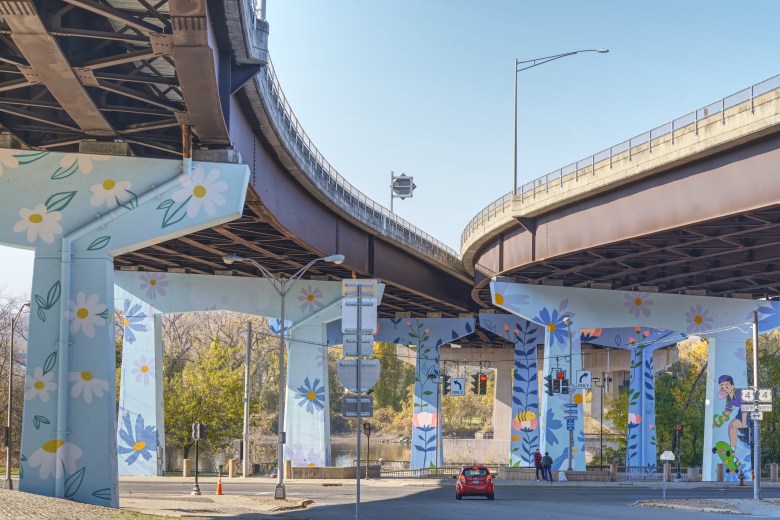
Art painted by Jade Warrick in Troy, New York.

Today’s post features a new study showing that public art, in addition to its numerous other benefits, can sometimes increase traffic safety.

Elaine Velie writes at Hyperallergic, “A study conducted by Bloomberg Philanthropies examined 17 sites over two years, before and after they were painted with ‘asphalt art’ (art on surfaces such as roads, sidewalks, and underpasses). It found a 17% decrease in total crashes and a decrease in severity of the crashes that did occur: There were 37% fewer crashes that resulted in injury and 50% fewer crashes involving pedestrians and cyclists.

“ ‘The art itself is often also intended to improve safety by increasing visibility of pedestrian spaces and crosswalks, promoting a more walkable public realm, and encouraging drivers to slow down and be more alert for pedestrians and cyclists, the most vulnerable users of the road,’ the study reads.

“The sites, spread across five states, were intersections or mid-block crosswalks. Around half of the sites were considered ‘urban core,’ defined as areas with a high population density (including two in New York City), a quarter were neighborhood zones, and the last quarter were suburban.

“In addition to reporting the actual crash rate for these sites, the study also tracked the behavior of drivers and pedestrians, noting that both groups performed less risky behavior in areas with artworks — such as pedestrians crossing without the ‘walk’ sign and drivers not yielding to pedestrians until the last moment. …

“As of now, asphalt art is not allowed under the Federal Highway Association’s rules on road signs and signals, a lengthy set of guidelines that dictate the colors required for painting crosswalks, curbs, and lines. The decision to install asphalt art requires local officials to make exceptions.”

The New York Times has more: ” ‘We want to try and help cities do wonderful things to their public realm,’ said Kate D. Levin, who oversees arts programs for Bloomberg Philanthropies and was commissioner of the New York City Department of Cultural Affairs. And especially now, as cities reopen, ‘there’s a social cohesion goal that I think has only gotten more urgent,’ she said. ‘Why not use projects like this to actually let people be involved, create a sense that public space belongs to everyone?’

“The goals are to support local working artists, community groups, businesses and government on collaborative infrastructure projects to make streets safer; to activate public space in ways that are ‘as robust and reflective of local identity and aspirations as possible,’ Ms. Levin said; and to promote community engagement, ‘because a streetscape isn’t theoretical, it runs through people’s lives.’ …

“ ‘When we closed Broadway to cars and opened it to pedestrians in 2009, we saw the potential hidden in 2.5 acres of gray asphalt,’ said Janette Sadik-Khan, a former commissioner of the New York City Department of Transportation and now transportation principal at Bloomberg Associates … ‘Streets make up more than 80 percent of a city’s public space, so they’re really the front yards for millions of Americans.’

“Three cities began or completed installations in late 2020: Kansas City, Mo; Saginaw, Mich.; and Norfolk, Va. The remaining 13 are expected to finish their projects this year. … Themes range from unity and improving police and community relations to diversity. Sioux Falls, S.D., plans to feature minority artists who will design vinyl wraps for 25 utility boxes throughout downtown. Troy, N.Y. intends to beautify an underpass. …

Teal Thibaud, director of the Glass House Collective, a nonprofit that works in an underserved neighborhood in East Chattanooga, Tenn., said even small improvements could help spawn others, especially in an area that had received limited infrastructure investment in recent years.

“The Bloomberg-funded mural, completed in April, helped beautify the area. … A new street park next to the asphalt mural that created a safe gathering space, fence art to slow traffic near the elementary school, and painted stencils on sidewalks to encourage school children and other residents to follow the safest local routes were among the projects, said Ms. Thibaud. …

“Last fall, Kansas City, Mo., redesigned a busy, dangerous four-way intersection where cars rarely stopped for pedestrians, said DuRon Netsell, founder and principal of Street Smarts Design + Build, an urban design firm that focuses on walkable communities. ‘People were just flying through the intersection, significantly over the speed limit.’

“Stop signs and traffic-calming measures like bollards and planters to extend the curbs and narrow the driving lanes, and the community-painted mural ‘blended into a unique project that is not only beautiful, but also drastically improved safety,’ said Mr. Netsell.”

More at Hyperallergic, here, and at the New York Times, here.

Read Full Post »

chicago-illinois-a-mural-on-a-building-in-the-largely-mexican-american-fx446e

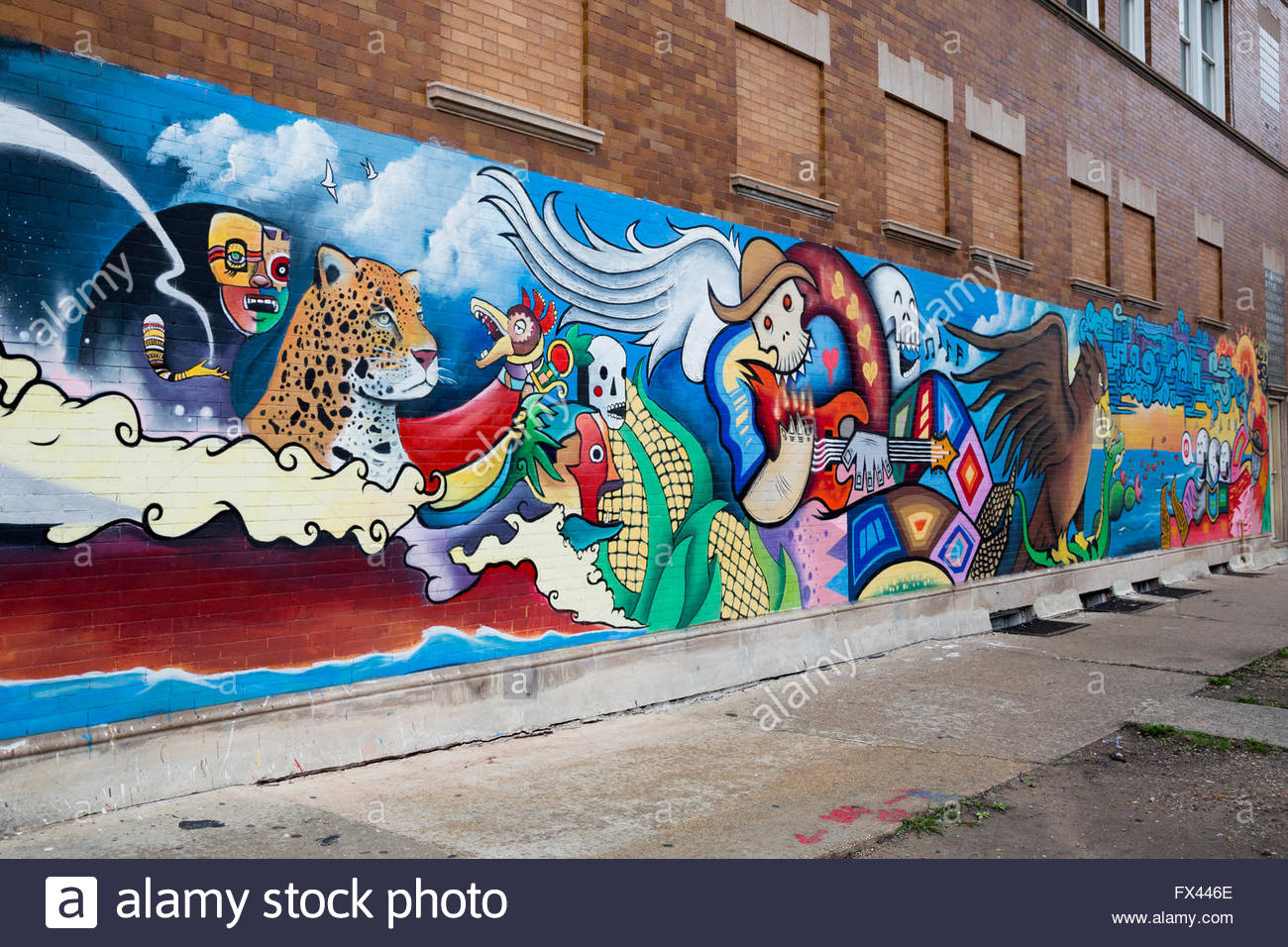
Mural in Little Village, a Chicago neighborhood with a strong Latino presence. Most research shows a correlation between immigrants moving into communities and an improvement in safety for all residents.

Despite lots of reliable data that immigrants tend to improve the safety of communities where they live, misperceptions persist. Naturally, anyone who is a dangerous criminal, whether a US citizen or immigrant, must always be dealt with, but people who come here just for a decent life are as likely as anyone else — maybe more likely — to try to make communities better.

Chiraag Bains, a senior fellow at Harvard Law School’s Criminal Justice Policy Program, talks about the issue at the Marshall Project.

“A trove of empirical research contradicts the notion that immigrants are [a] violent criminal horde. … In fact, studies consistently show that they commit significantly less crime than native-born Americans, and although the data are difficult to untangle, this appears to be true of both authorized and unauthorized immigrants. Even more, new findings suggest that immigrants may actually cause crime to decline in the areas where they live.

“In a study published recently in the Journal of Ethnicity in Criminal Justice, researchers analyzed Census Bureau and Federal Bureau of Investigation crime data across 200 metropolitan areas in every census year from 1970 to 2010….

“The researchers found a reduction of almost five violent crimes per 100,000 residents for every 1 percent increase in the foreign-born population. Analyses of city- and neighborhood-level data in ‘gateway’ cities such as New York, Chicago, Miami and El Paso have similarly found that violent crime rates — homicide rates in particular — are not higher, but actually lower in areas with more immigrants. This might help explain how violent crime dropped 48 percent over the same period that our undocumented population grew from 3.5 million to 11.2 million.

“One example of this effect in action is the Canarsie section of Brooklyn. Researchers with the Americas Society and Council of the Americas found that as white residents fled the neighborhood during the 1990s, the threat of depopulation and disinvestment was countered by an influx of immigrants, mostly from the Caribbean. Today, Canarsie has below-city average rates of poverty and housing vacancy, and its crime rate dropped from just above the city average in 1990 to 44 percent below the city average in 2010.

“There are logical reasons immigrants would be less likely to commit crimes. They may represent those among their countrymen with the most motivation and the greatest ability to seek a better life abroad. They may also have the most to lose, especially if they entered illegally or have family back home counting on their income.

“There are also explanations for why immigrants help bring down violent crime — apart from the fact that they commit less of it. New immigrants often repopulate hard-hit neighborhoods and increase the labor market opportunities of native-born workers. They also tend to create and strengthen social institutions in their neighborhoods, leading in turn to communities that are more stable and safer. This is the explanation scholars find most likely.”

More here.

Read Full Post »

whales-humpback-watercolor-mom-and-baby-olga-shvartsur

Art: Olga Shvartsur/Fine Art America
Humpback whale and baby. Recently, a humpback whale appeared to intentionally protect a researcher from a tiger shark.

A scientist who studies whales underwater was astonished and more than a little frightened in September 2017 when a whale kept pushing her toward her boat. After her colleagues pulled her to safety, she saw that in the other direction a dangerous tiger shark was lurking. The researcher believes that the whale was intentionally trying to protect her. Other scientists argue that whales aren’t altruistic.

I say, Who cares? The point is the whale’s action moved the diver away from danger, and she is grateful.

Sarah Gibbens writes at the National Geographic, “For 28 years, Nan Hauser has been researching and diving with whales. The biologist is the president and director of the Center for Cetacean Research and Conservation. … During a trip to look at whales in the Cook Islands in the South Pacific last September, Hauser says she had an encounter unlike any she had experienced before.

“A humpback whale, a marine mammal capable of weighing 40 tons and growing 60 feet long, swam toward Hauser. For ten minutes, it nudged her forward with its closed mouth, tucked her under its pectoral fin, and even maneuvered her out of the water with its back. …

” ‘I was prepared to lose my life,’ she says. ‘I thought he was going to hit me and break my bones.’

“In addition to conducting research, Hauser says she was also in the Cook Islands to work on a nature film, so at the time the whale approached, both she and a fellow diver were armed with cameras. Hauser’s point-of-view footage shows just how persistently the whale nudged her. A second whale can also be seen lurking just behind the first.

“When she finally made it out of the water and up onto her boat — bruised and scratched from the barnacles on the whale — Hauser saw a third tail moving from side-to-side.

” ‘I knew that was a tiger shark,’ she says.

“Now, after viewing the footage and reflecting on the whole harrowing experience, Hauser concludes that the whale who nudged her likely exhibited an extraordinary example of altruism. …

“Hauser’s retelling isn’t the first time scientists have questioned whether humpback whales can show signs of altruism. A 2016 study in the journal Marine Mammal Science looked at 115 instances from the past 62 years in which humpbacks interfered with a pod of hunting orcas.

“Banding together, humpbacks were seen effectively protecting their calves. But there were also examples of humpbacks showing the same behavior to protect other species of whales, seals, and sea lions. …

“Martin Biuw from the Institute of Marine Research in Nowary is skeptical of Hauser’s claim that altruism is at play in the video. Hauser had speculated the whale was male, but Biuw believes it appears to be a female.

” ‘If that is the case, it is possible that she may show protective behavior towards a human (or other animal for that matter) if she has for instance recently lost her calf,’ he says.

“Biuw explained that hormonal changes could have spurred the whale to show protective behavior.” Oh, ha, ha, hormonal changes? Good grief, give me a break.

More at the National Geographic, here.

Read Full Post »

Photo: Mirrorpix
In 1968, Hull fishermen’s wives and mothers successfully fought the dangerous conditions perpetuated by trawler owners. They refused to take no for an answer.

It’s good to be strong, but sometimes the tough guys don’t know when to complain, don’t know when complaining can prevent the premature deaths of family and friends that leave children fatherless and devastate communities.

That’s when women have to take charge. And as a group of women showed in Hull, UK, in 1968, angry wives and mothers can be tougher than men.

Lucy Beaumont writes at iNews, “In January 1968, several Hull trawlers set off to the icy, dangerous waters of the Arctic in their quest for the biggest catch.

“They headed straight into one of the worst storms in living memory. Within three weeks, three of the ships had sunk and 58 men had lost their lives. For their families back home in the Hessle Road area of Hull, the news was devastating. It was known as the Triple Trawler Tragedy. Out of this tragedy came something incredible. Hull women – wives, mums, sisters, daughters – rose up to protest against the dangerous working conditions.

“They wanted a safer fishing industry and they were prepared to do anything to get it. They marched, they spoke out and they went straight to the top demanding change. During their campaign they were verbally and physically attacked – one woman was even punched in the face. They made headlines around the world and managed to change British law after getting over 10,000 signatures in support and not giving up until the authorities listened to them. …

“The [so-called] headscarf heroes should always be remembered. The women of Hessle Road were so strong. They had to be because they could lose their husband, their father or their son at any time. They had to cope with it and carry on looking after the family – and that’s exactly what they did. The women’s campaign was one of the biggest and most successful civil action campaigns of the twentieth century and coming from Hull, I’m so proud of those women.”

Beaumont’s personal connection to the story sometimes overwhelmed her as she worked on a BBC documentary about the women. “My grandad is from a family of men and women born and bred in the fishing community on Hessle Road. His granny lost two sons at sea. John was only 19 when he was washed overboard and Herbert died from pneumonia. She had poppies on their photos and swore that she heard John calling for her at the time. It was later confirmed that he had perished.” More here.

The life of a fisherman continues to be one requiring toughness from all the women and men who go to sea. There are a few more protections today than there were in 1968, but no one controls the weather. With global warming reportedly causing more storms, the dangers are actually likely to increase.

Read Full Post »

Deltalina was one of the first to introduce a note of humor in an airline-safety video. The question is, Do passengers retain life-saving information better — or worse?

The last place most of us would look for humor is in an airline-safety video, but as Benjamin Schneider writes at CityLab, comedy in safety information has become a thing.

“Ever since the introduction of in-flight entertainment screens in the 1980s,” writes Schneider, “airline safety videos have been a quintessential feature of commercial aviation. …

“But since the late Aughts, these straight-faced public service announcements have almost completely disappeared, to be replaced by spunky pop-culture riffs, irreverent humor, and eye-catching production.

“In an industry governed by such strict regulations, there is very little airlines can do to differentiate themselves from their competition. So, in 2007, when the airline startup Virgin America sought to carve out its niche as the airline that ‘can make flying fun again, … the in-flight safety video was one of the few features that could be tinkered with. …

“In the video, an unlikely cast of characters, including a toreador and a tech-obsessed nun, demonstrate the safety instructions, while the video’s lead animator, Gordon Clark, winkingly describes their mundane acts. … ‘It made people relaxed when they sat on the plane,’ Clark said. …

“Ironically, airline safety virality was first achieved by a relatively strait-laced video from Delta in 2008. The masses became obsessed with the video’s lead presenter, whose theatrical ‘no smoking’ finger wag earned her something of a cult following, and the moniker ‘Deltalina.’ … In the ensuing years, airlines have pulled out nearly every gimmick imaginable to make their safety video a YouTube sensation. …

“No airline has pursued this strategy with the dedication of Air New Zealand, which has released 14 high-concept videos since 2009, racking up a total of 108 million views online. … [Their first] video’s popularity paved the way for ever more ambitious projects, like ‘The Most Epic Safety Video Ever Made,’ a Lord of the Rings tribute complete with dwarves, elves, and battle scenes. …

“The contemporary crop of airline safety videos appear to have a contradiction at their heart. On the one hand, they are designed to compel passengers to pay attention to important safety information that they might otherwise ignore. On the other hand, the videos contain so much extraneous data that it can be difficult to catch the actual instructions. …

“[Some observers are] skeptical of their effectiveness. Brett Molesworth, an aviation researcher at the University of New South Wales in Sydney, told the Wall Street Journal that people tend to remember the funny parts of these videos, rather than the safety instructions. … Les Dorr, an FAA spokesperson, said that the FAA is in the process of revising their guidelines for these presentations.”

More at CityLab, here.

Read Full Post »

Chalk up another one for art and culture. According to Lisa Contag at the website Blouin Art Info, a UNESCO study has found evidence that art and culture improve safety in cities, in part by building social cohesion.

She writes, “UNESCO makes a strong case for systematically fostering culture in city planning in its new ‘Global Report, Culture: Urban Future.’ …

“In more than 100 case studies, the survey analyzes the situations, risks, and potentials for cities in a number of regional contexts, with a particular interest also in Africa and Asia, where urbanization is expected to continue increasing rapidly in the next decades.

“ ‘Culture lies at the heart of urban renewal and innovation. This report provides a wealth of insights and concrete evidence showing the power of culture as a strategic asset for creating cities that are more inclusive, creative and sustainable,’ Irina Bokova, Director-General of UNESCO noted in a statement, stressing that ‘culture gives cities social and economic power,’ especially with the help of the creative industries.

“As an example, the report refers to Shanghai, China, which has held the status of a UNESCO Creative City of Design since 2010, and is considered ‘one of the world’s major creative centers, with more than 7.4% of residents employed in the creative industries.’

“Cities in conflict and post-conflict situations, such as Samarra, Iraq, which was confronted with the destruction of a number of invaluable sites such as the Al-Askari Shrine in 2006, are also taken into consideration and seem to benefit similarly. ‘Reconstruction and rehabilitation efforts have demonstrated the ability of culture to restore social cohesion between communities and improve livelihoods, paving the way for dialogue and reconciliation,’ the authors explain.”

The authors observe that culturally diverse, safe, and thriving cities are people-centered and culture-centered and feature policy-making that builds on culture.

More here.

Photo: UNESCO
Screenshot from Reza’s UNESCO video “Culture – the Soul of Cities”

Read Full Post »

It seems to take a long time to make streets safer for bicyclists. Nicole Freedman made a great start in Boston in 2011, but riders are still being hit in 2015. At the Atlantic magazine’s “City Lab” blog, Sarah Goodyear writes about the latest techniques of vigilantes working to make New York City’s streets safer.

“They showed up on the street on the morning of October 7 — 25 orange traffic cones marking the bike lane that runs northbound on Chrystie Street in lower Manhattan. Several had sunflowers poking up out of their necks.

“The cones were the work of an anonymous group that announced its intentions on Twitter, calling itself the ‘Transformation Department.’ …

“The Chrystie Street bike lanes — one on the northbound side of the street and one on the southbound — are one of the city’s main commuter routes, providing key access to and from the Manhattan Bridge, which connects Brooklyn and Manhattan. Thousands of people ride the route everyday …

“But the infrastructure remains painfully inadequate in the eyes of many advocates for safer streets. …

“Installing flexible bollards to keep cars out of the bike lane would be one example of an improvement that would not require a street redesign and that could be implemented relatively quickly, says [activist David ‘Paco’] Abraham. Instead, even maintaining the status quo has proven difficult.

“An NYC DOT spokesperson said in an email that a proposal for a two-way bike lane [is] under review. …

“The makeshift safety cone installations are the most visible manifestation of the frustration that advocates and bike commuters like Abraham feel over the disconnect between the city’s stated policies and its actions on the street. ‘We’re tired of seeing people injured,’ says Abraham. …

“The Department of Transformation has clearly captured the imagination of some New Yorkers with its efforts. This week they set up a GoFundMe page to pay for more cones and raised $1,000 in a single day. Abraham says the ever-growing community of people who ride bikes — and more broadly, of New Yorkers who want the streets to be safe for all users — no longer will be satisfied with a minimalist approach to bike infrastructure.”

More here.

Photo: Streetfilms
A cyclist uses the Chrystie Street bike lane in lower Manhattan. 

Read Full Post »

“New York City is using poetry to boost traffic safety. The city is installing 200 colorful 8-inch square signs featuring haiku about safety at cultural spots, schools, and high accident areas. In an age when many messages compete for attention, officials hope that ones such as

‘Oncoming cars rush
‘Each a 3 ton bullet
‘And you, flesh and bone’

“will encourage pedestrians to exercise caution.”

So writes the Innovators Insights listserv, linking to the CBS New York news story, where you will find some amused and amusing comments from New Yorkers.

“ ‘What we’ve learned that is that the more innovative the message and with a little bit of humor, or something a little off beat, is much more effective form of communication,’ Transportation Commissioner Janette Sadik-Khan said.”

Reminds me of my October post on traffic mimes in Caracas. Remember? There’s something delightfully incongrous about traffic adminsitrators being the ones, out of all possible professions, to use mimes and haiku to further their work objectives.

But maybe I don’t know much about traffic administrators.

Read Full Post »