Feeds:
Posts
Comments

Posts Tagged ‘san francisco’

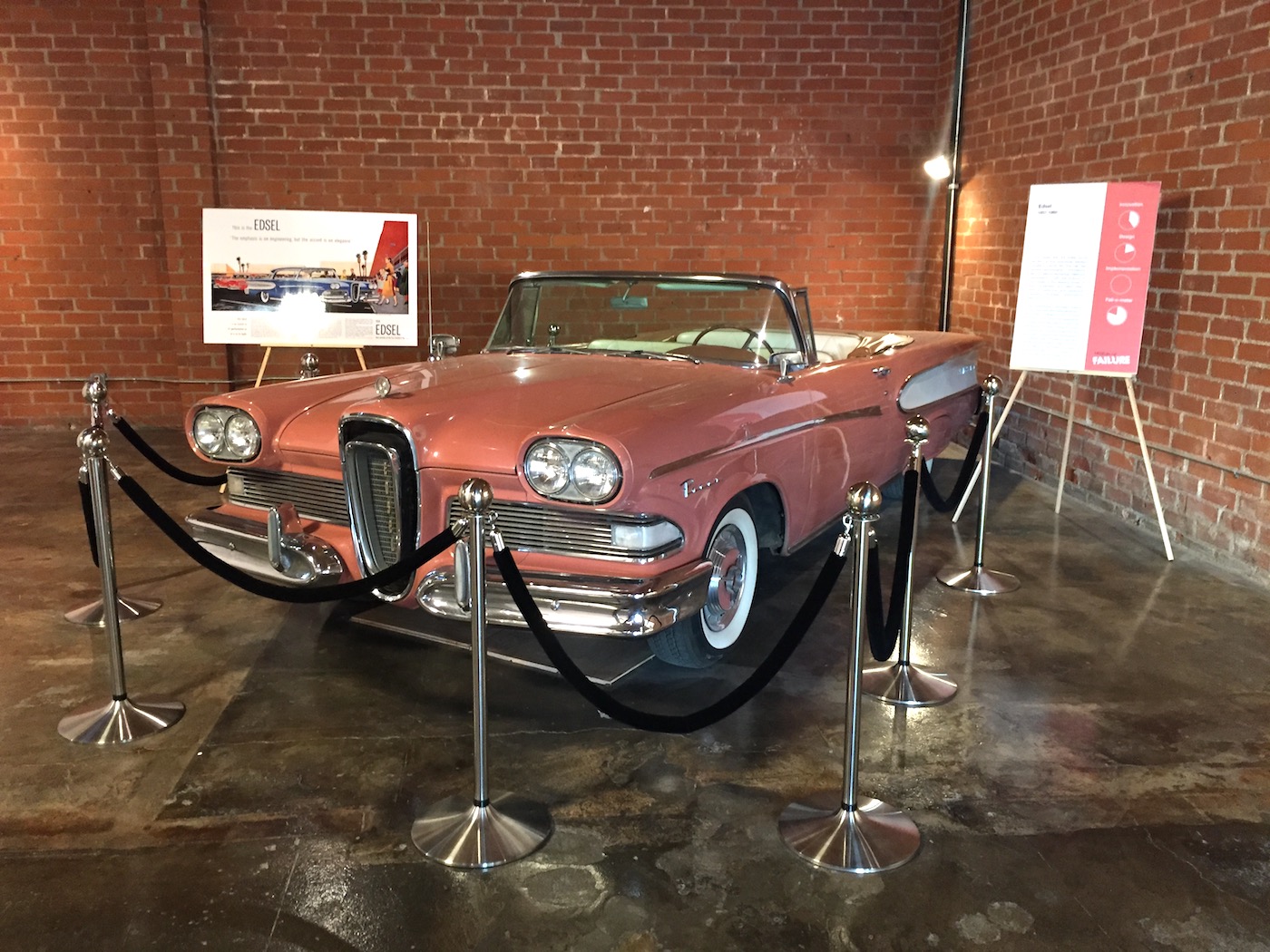
Photo: Matt Stromberg/Hyperallergic.
Ford Edsel at the original Museum of Failure in 2018.

Years ago, my husband and I went to see a Harvard student performance of a rarely performed Cole Porter musical, Nymph Errant. The thing we remember most is that the director was outside handing out flyers disavowing his participation. Someone else had made decisions about the final production, and he wanted the audience to know he disagreed — violently!

I’m reminded of that incident by the current kerflufle over something called the Museum of Failure. The .com version, supposedly the original, is at war with a .net version and its recent exhibition.

Lily Janiak at the San Francisco Chroniclewrites, “Will the real Museum of Failure please stand up?

“Earlier this month, Time Out reported that a popup exhibition of some of history’s most spectacular bad ideas [would] tour next month, with a San Francisco stint at the space formerly occupied by Madame Tussauds in Fisherman’s Wharf.

“The website museumoffailure.net likewise teased the exhibition. But a different website called museumoffailure.com — which had the same logo and branding and much of the same content — made no mention of it.

“Turns out the discrepancy isn’t a marketing blunder. It’s an international copyright dispute.

“When the Chronicle contacted Samuel West, the proprietor of museumoffailure.com and the creator of the museum’s concept, he disavowed the San Francisco stop. 

“ ‘This is a surprise to me,’ he wrote via email. … He later claimed on a video call that it was ‘fraudulent.’

“David Perry, a spokesperson for SEE Global Entertainment Inc., which is producing the Fisherman’s Wharf event, rebutted West’s claims.

“ ‘SEE Global owns the international trademark for and all the assets in the Museum of Failure: period end stop,’ Perry wrote via email. ‘In years past, we have welcomed him to all iterations of the Museum of Failure as a valued cheerleader with all due credit given.’

“West, who’s based in Malaga, Spain, and has a Ph.D. in organizational psychology, studied play in the workplace, including how improv theater can improve a team’s creativity. He was interested in destigmatizing failure but thought, ‘It’s too interesting to be a TED Talk. I need a new form.’

“That new form, the Museum of Failure, premiered in 2017 in Sweden, where he was living at the time. A hit, it went on to tour to Taiwan, France, Canada and beyond. …

“For an item on the Fyre Festival, West made a replica of the real-life ‘Fyre Festival luxury lunch — a pathetic-looking cheese sandwich in a Styrofoam box — out of plastic. For a piece on Theranos, he made replicas of ‘little tiny vials’ of blood, putting them next to test tubes for scale. (The blood was ‘Halloween vampire blood,’ he said.)

“One of the museum’s fans was Martin Biallas, CEO of SEE Global Entertainment Inc., whose previous exhibition credits include the Disgusting Food Museum — which West also co-created. …

“In 2017, Biallas and West signed an agreement under California jurisdiction that granted SEE ‘exclusive license’ to the museum’s ‘assets, artifacts, memorabilia, content and exhibit and merchandising items and the descriptions thereof’ for a period of five years, with two options to renew. West could continue to stage his own popup exhibitions so long as they were either more than 200 miles or more than 12 months away from Biallas’. The agreement also ensured West would receive 20% of all gross revenues.

“But on Tuesday, Feb. 25 [this year], West told the Chronicle that not only has Biallas not renewed the license; Biallas hasn’t given him his 20%. …

“In 2023, West hired a lawyer to inform Biallas he was in breach of contract and demand payment. The letter goes on to note that Biallas successfully applied to the U.S. Patent and Trademark Office for the word mark ‘Museum of Failure.’ Perry supplied the Chronicle with proof of trademark ownership.

“ ‘At the time of the application, your client knew that it did not own the rights to Museum of Failure,’ the letter states. 

“Biallas’ lawyer responded by alleging that West knew about the trademark application. The letter also asserts that because West had been embroiled in a prior Museum of Failure ownership dispute, with Niklas and Jenny Madsen of Swedish design company Superlab, West might not have legal standing. …

“Biallas has also been involved in other legal disputes about exhibition copyright. He was a plaintiff in a lawsuit alleging that two of his former employees stole imagery from his ‘Michelangelo’s Sistine Chapel: The Exhibition’ and toured it in an exhibition called ‘Michelangelo: A Different View’ under the auspices of German company Exhibition 4 You. That lawsuit was settled in 2021. 

“In 2022, the Louvre sued Biallas’ SEE Global, alleging ‘misappropriation of the Louvre’s reputation and intellectual property through a venture called ‘ “Louvre Fantastique.” ‘ … That lawsuit was settled.

“Last year, SEE Global sued the patent attorney it had hired to secure Louvre permissions, alleging negligence. In a response and counterclaim, attorney David D’Zurilla and his firm Schwegman Lundberg & Woessner, P.A. wrote that they ‘were retained specifically to prosecute a trademark and they successfully obtained the trademark.’ That case will head to trial in July if a settlement isn’t reached.”

More at the San Francisco Chronicle via MSN, here. The art magazine Hyperallergic wrote a review of an exhibit by the .com version of the Museum of Failure, here. Sounds like there’s more than enough failure to go around.

Read Full Post »

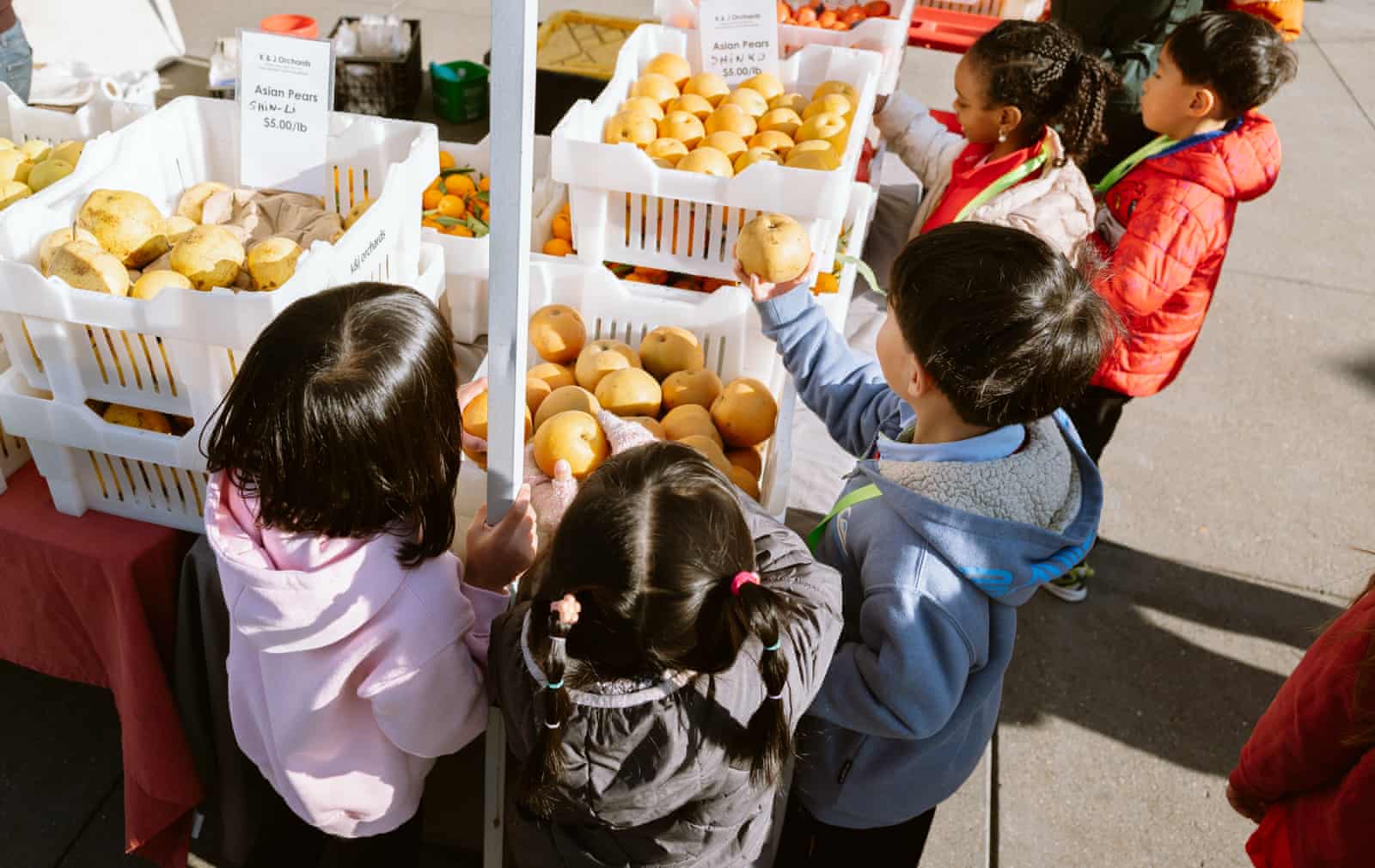
Photo:  Felix Uribe Jr/Guardian.
An organization called Foodwise Kids has brought more than 20,000 students to farmers’ markets to learn about the food system and taste new-to-them produce. Sometimes the teacher will challenge the students to join “the One-Bite Club.” 

When John came back from college the first time, one of the things he said, only half joking, was, “Why didn’t you tell me I liked mushrooms?”

He eats everything now, but as a kid, he had limited tastes, and I was no good at insisting he try something.

Today a special program for young children encourages tasting new things as part of a group.

Cecilia Nowell reports at the Guardian, “On a crisp winter morning in San Francisco, a team of six-year-olds declare that their favorite fruits and vegetables are peaches and broccoli – but then again, they have yet to venture out into the farmers’ market where produce they have never tried before awaits them. With handfuls of tokens, they will purchase persimmons, pomegranates, Asian pears, purple potatoes, kale and more from the farmers who grew them – then embark on a tasting journey, featuring new and familiar spices.

“The first-graders are visiting the Ferry Plaza Farmers Market – a Bay Area institution that draws more than 100 farmers to San Francisco’s waterfront three days a week – with 22 of their classmates from Lincoln elementary. That morning, the children had ridden the subway from their school in Oakland’s Chinatown into the city with parent chaperones and their teacher, Kathy Chen.

“Chen [knows] that at this age, her students are prone to becoming picky eaters – but what is cooked at home and what they try at school can change that. The hope is that after this field trip, when the cafeteria serves up an unfamiliar veggie or they’re offered a new fruit, the students might be a little more willing to take a bite.

“The trip is sponsored by Foodwise Kids, a nutrition and wellness program for elementary school students in the San Francisco Bay Area coordinated by the 30-year-old non-profit Foodwise. Since the program’s launch in 2012, it’s brought more than 20,000 local students out to the farmers’ market to learn about the food system. It’s focused primarily on schools with a high percentage of students of color or kids eligible for free or reduced-price school meals, and education director Tiffany Chung says the aim is to get ‘students excited about eating fruits and vegetables’ in the hopes that ‘they’ll incorporate them into their daily life and eventually lead to longer-term healthy eating options.’ …

“At folding tables, they introduce themselves to Foodwise’s staff and volunteers, and name their favorite fruits and vegetables. Chung jumps in for a moment to speak Mandarin with one student who doesn’t feel comfortable speaking English – she notes that many of the program’s volunteers are bilingual, usually in Spanish, to support the city’s diverse youth.

“While the majority of the classmates in her group prefer peaches, Temnit Desta says her favorite fruit is lemons. ‘She likes sour,’ her mom, Tehesh Hadush, explains. Although Temnit was born in California, her family is from Ethiopia and she has grown up eating lots of spicy foods. …

“Just a few years after the Loma Prieta earthquake devastated the highway running along San Francisco’s coast, community groups began discussing ways to connect downtown with the waterfront – and settled on a farmers’ market. Another aim was to educate urban dwellers about California’s farmland and sustainable agriculture while providing access to healthy, fresh produce. To this day, the market prioritizes urban families – not only by accepting Snap, previously known as food stamps, but by matching every dollar spent so families can double their Snap spending up to $15.

“After they’ve filled a basket with produce – so much that the six-year-olds are carrying the basket in teams of two – the small groups take off for a quick tour of the farmers market. When they return, Chung and other volunteers lead the groups in a game guessing which season different crops grow in. As they play, youth education manager Marcelo Clark starts chopping and roasting different trays of the produce – washing raspberries, flavoring cauliflower with jerk spice and roasting potatoes with cumin. He aims to use a mix of spices the children may have already tried at home – and others that might be new to them.

“ ‘A lot of our students are newer to America, and may not speak English,’ says Chung, but at the market ‘they’re able to see produce that is familiar to them. … They’re able to point out: “I know this. This is cilantro. I have this on tacos.” ‘ …

“When the food has been prepared, Clark carries trays of fruit and both raw and roasted veggies out to the class. The students dive into the purple potatoes, carrots, brussels sprouts, kale and cauliflower – but are more hesitant to try hummus and raw broccoli. Although her classmates and their parents exclaim at the fresh persimmon, Temnit is wary of the unfamiliar fruit.

“ ‘Today is all about trying new things and giving things a chance,’ Chung reminds the class, gently encouraging them to try just the smallest bite of everything.

“ ‘When students are unfamiliar with a fruit and vegetable, there is a lot of hesitation. We try to create this safe space where we’re telling them: “It’s OK if you don’t like it. The whole point is just to try it.” ‘ …

“By the end of the class, Temnit will be asking for more persimmon, and one of her classmates will be racing around trying to finish everyone’s leftover pomegranate seeds.”

More at the Guardian, here.

Read Full Post »

Photo: Amanda Barrows via Instagram | ccsf_p4p via Upworthy.
Amanda Barrows has placed a “poetry nightstand” in parks around San Francisco, including Alamo Square, left, and Golden Gate Park.

Here’s a good one for all my poet friends — actually, not just for poets, for everyone. Read about a park ranger in California who is getting all kinds of people involved in the art of poetry.

Sydney Page reports at the Washington Post, “In the middle of Golden Gate Park in San Francisco, a park ranger carefully placed a wooden nightstand on the ground. She attached a sign she made:

“ ‘Take a poem, leave a poem.’

“Since the nightstand’s debut there last month, amateur poets have filled it with more than 100 handwritten poems.

“ ‘The wind graces this park / Like a breezy whisper / as sounds of longing / echo from the nearby piano,’ one parkgoer scribbled on a piece of lined paper that they then left in the nightstand.

“Amanda Barrows, who came up with the idea, was surprised that it worked and people followed her instructions. …

“During the pandemic, Barrows — who said she has always considered herself a writer — decided to try her hand at poetry and signed up for a workshop.

“ ‘I had a really beautiful time,’ said Barrows, who then enrolled in another poetry class at City College of San Francisco ‘to keep the inspiration flowing, and keep myself writing.’

“The culminating assignment for the class — which is called Poetry for the People and has been taught at the school since 1975 — is a field project. Students are asked to find a way to ‘bring poetry into the community.’ …

“It dawned on her that she could perhaps fuse together her two worlds — parks and poetry. A colleague offered up a weathered nightstand, which Barrows thought would be the perfect vessel for her project, as she could fill the drawer at the top with fresh paper and pens and add a box at the bottom for poems. To get the ball rolling, she asked her close friends to help her stock the drawer with their favorite poems for people to take. …

“Since she only had a single nightstand to work with, Barrows decided she would leave it in one park for four days before moving it to a new location. …

“ ‘I’m in the parks all the time, and I see the many different ways people utilize them,’ she said, explaining that she wanted her project to reach as many people as possible.

‘Every resident of San Francisco is within a 10-minute walk to a park.’ …

“ ‘I love to see different people’s handwriting, and for them to be sharing their personal words,’ she said. “ ‘Every day that I check it and I have had submissions, it feels like Christmas.’ …

“The instructors of the Poetry for the People class — which is free for San Francisco residents — said Barrows’s nightstand has fulfilled the primary purpose of the project, which is to bring poetry to the community in a creative way.

“The success of Barrows’s project reinforces that ‘people need poetry now,’ said Lauren Muller, who started teaching the class at CCSF in 2000. ‘It fills me with optimism.’

“Other students have come up with various creative concepts, such as writing chalk poetry on neighborhood sidewalks and distributing poems disguised as parking tickets.

“ ‘It’s thrilling to see the work that students are doing,’ said Muller, adding that she hopes others will be inspired to establish similar initiatives in their own communities. ‘My hope is that this will happen across city parks, in D.C. and elsewhere.’

“Tanea Lunsford Lynx, a guest instructor for the class, agreed. ‘It’s really special to see that Poetry for the People is the catalyst but that it has a much, much bigger life; it’s one of the best things we could hope for,’ she said, adding that she believes San Franciscans are gravitating toward Barrows’s project in particular, as it has an old-fashioned feel ‘in the context of hyper-tech central.’ …

“ ‘It really is a community project,’ Barrows said. ‘It belongs to all of us.’ ”

More at the Post, here.

Read Full Post »

Photo: Lea Suzuki / The Chronicle.
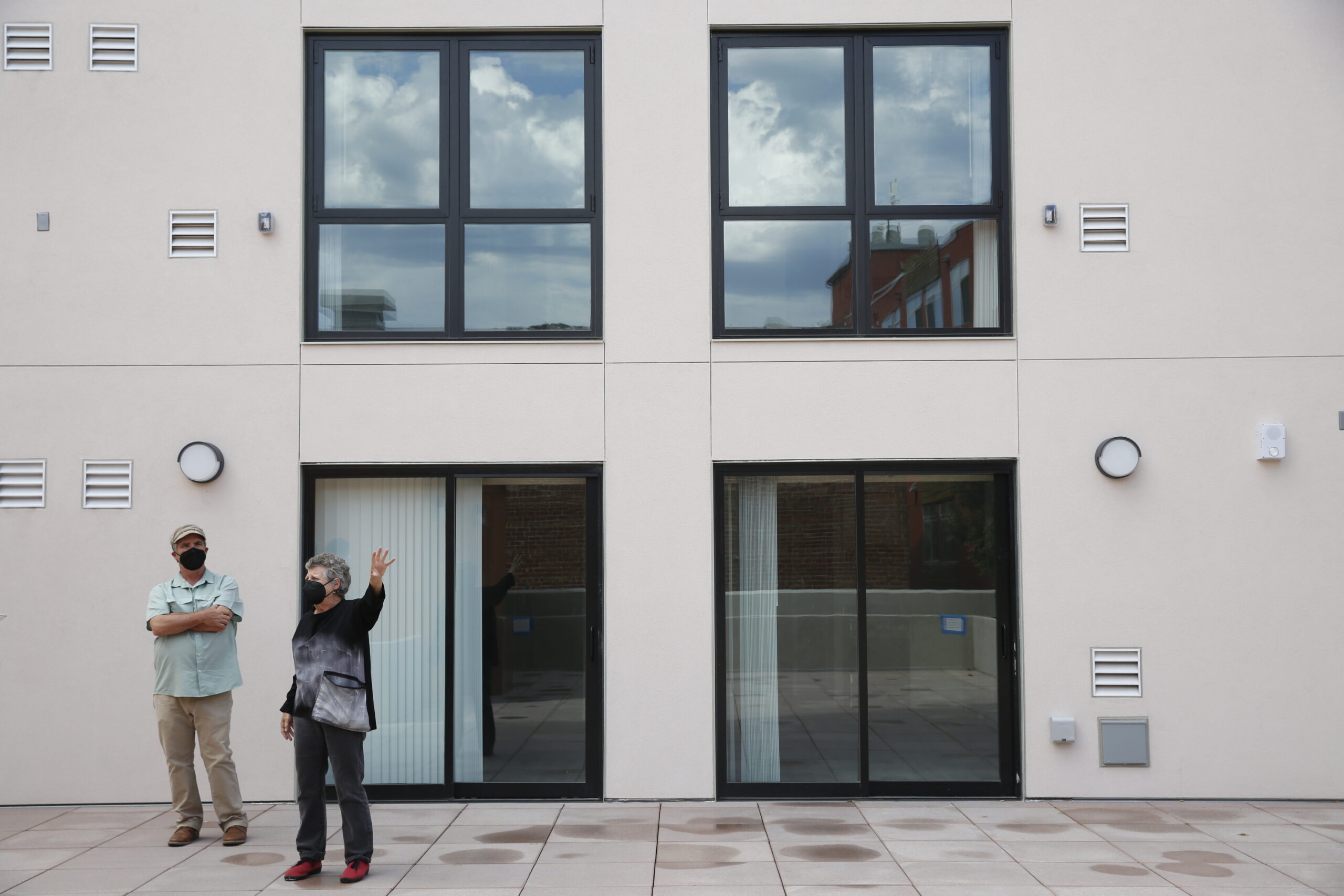
Mark Morrisette, facilities director, and Susie Medak, managing director of Berkeley Rep, at a building that will host performers in the pricey Bay area.

Every day, it seems, I read a story on how the current cost of housing affects a different group of people. Yesterday it was about elderly people in Rhode Island becoming homeless and advocates asking the governor to lift local restrictions to house them.

Today it’s about arts leaders using their characteristic creativity to figure out a solution for visiting performers in one of the most expensive regions in America.

Lily Janiak  reports at the San Francisco Chronicle, “Across the breezeway from Berkeley Repertory Theatre’s new Medak Center, fuchsia light from the set of the new musical Goddess streamed through an open loading bay door, like a portal to Narnia.

“Such a sight might frequently greet the company’s out-of-town actors, directors, designers and playwrights — as well as its fellows, Berkeley Rep’s interns — when they wake up each morning and walk next door to work from their new home.

“But the 42,885-square-foot, $26.2 million center, which plans to host a dedication ceremony on Sept. 3, isn’t just about short commutes. It marks a historic and visionary investment in artist housing in a region with ballooning real estate costs.

“Berkeley Rep’s outgoing managing director, Susie Medak, the center’s namesake and the driving force behind its construction, remembers when housing out-of-town artists cost the company $300,000 to $400,000 per year. These days it’s more like $2 million. Before the pandemic postponed the most recent season opening, Berkeley Rep had committed to paying for 7,000 nights at a nearby Marriott hotel for this past year. …

She remembers when housing out-of-town artists cost the company $300,000 to $400,000 per year. These days it’s more like $2 million.

“Assuring comfort and quiet was another objective for the Medak Center. In a university town, a living situation that looked promising during daylight hours might be beset by 3 a.m. parties.

“ ‘I can’t tell you the number of times we’ve had to move actors in the middle of a run,’ Medak said.

“The new center, located next door to Berkeley Rep’s Roda and Peet’s theater, has 45 units with capacity for 128 occupants. Fellows will share three-bedroom units. When Berkeley Rep’s not using those rooms, it plans to rent them to other nonprofits. …

“The building also features a classroom and a studio workshop space, which could host anything from movement classes to small experimental performances. … Other amenities include new storage space, a third-floor terrace with gardening beds for organic produce for residents, and a covered loading dock for the theaters so crews no longer have to load and unload sets while exposed to the rain.

“The building has key-card access, laundry on every floor and full kitchens in every unit. It’s also Gold LEED-certified for environmental efficiency.

“A trendy gray palette marks the interior. For one wall of the exterior, Berkeley Rep has commissioned a four-story mural by Oakland artist Cece Carpio to honor Ohlone peoples, on whose ancestral and unceded lands Berkeley Rep now sits.

“The theater has owned the property where the Medak Center was built since 1991, but for years it contained an empty lot and a warehouse. The project was a decades-long dream until Signature Bank helped finance it. The theater company finally broke ground in 2019.

“One comparable local facility is the San Francisco Conservatory of Music’s Ute and William K. Bowes Jr. Center for Performing Arts, which opened in 2020 and can house 400 conservatory students and 10 visiting artists, as well as 52 students from the San Francisco Ballet School. Those students pay for rooms, however, while Berkeley Rep’s fellows get free housing as part of their contract as workers.

“ ‘The Bowes Center brought together a range of our ambitions: positioning the institution right in the middle of Civic Center, providing much needed additional performance and teaching space, giving our students beautiful, safe accommodations in a place where they can work and live,’ said President David H. Stull.

“That meansfor example, a guest artist such as superstar Chinese pianist Yuja Wang might live and create and record music in the same building as students. …

“The San Francisco Ballet School has been able to increase student beds from 40 to 52 since the Bowes Center opened, said Jennie Scholick, director of education and training.  And now that students live right next to where they take classes, as opposed to a bus ride away in Pacific Heights, the school can accept younger students.

“At Berkeley Rep … the company’s first fellows [were] set to move into the new building Sept. 26, followed by visiting artists in Berkeley Rep’s Ground Floor program, and then the cast and creative team for Wuthering Heights later in the fall.

“The board’s commitment to the Medak Center through pandemic delays and uncertainty, Medak said, was ‘the greatest statement of our intent to exist on the other side of this pandemic. Building this building is a statement of optimism.’ ”

It’s not something every city will have the priorities or resources to tackle, but it’s an inspiring idea, don’t you think? More at the San Francisco Chronicle, here.

Read Full Post »

One of my brothers, the science professor, used to perform regularly as a clown, particularly at church and Sunday School. Clowns-in-ministry is actually a thing, a way to engage parishioners and provide a different perspective on teachings.

In San Francisco during the pandemic, clowns and performers of all kinds have heard the call to keep people healthy using laughter, entertainment, and public-service messaging.

Lily Janiak has the story at the San Francisco Chronicle.

“Robin Lara and Stella Adelman of Dance Mission Theater were strapping on stilts. Michael Houston of San Francisco Bay Area Theatre Company was affixing a red clown nose on top of his face mask. Marcelo Javier, also of SFBATCO, was trying out a jury-rigged pandemic-era clown prop — two extendable massage rollers tied together, allowing him to interact with passersby from a safer distance.

“If these artists were backstage — at a side room in the Mission District restaurant West of Pecos — their theater was Valencia Street on a recent sunny afternoon. And if they were about to open a show, their message was public health.

“These four, along with Rodney E. Jackson Jr. of SFBATCO and Aura Barba of SF Carnaval, were just one shift of artists in San Francisco Creative Corps, a pilot program that recruits underemployed local artists as community health ambassadors to promote healthy behavior during the pandemic.

“A partnership between the San Francisco mayor’s office, Yerba Buena Center for the Arts, the Office of Economic and Workforce Development, and the San Francisco Parks Alliance, the program launched last month. It employs 30 performing artists to encourage mask wearing and other best practices and 30 visual artists to paint murals about public health on boarded-up storefronts.

“The city chose Valencia Street and Washington Square in North Beach as pilot sites because of their high pedestrian traffic, significant amounts of outdoor eating and drinking, low mask compliance and high or increasing case rates, according to Jeff Cretan, director of communications at the mayor’s office. …

“Deborah Cullinan, YBCA’s chief executive officer, approached the city with the idea after being part of Gov. Gavin Newsom’s Task Force on Business and Jobs Recovery.

‘What’s the WPA program for today?’ she recalls thinking, referring to Depression-era initiatives such as the Federal Theatre Project and the Federal Art Project that employed artists not just as work relief but as a broad public investment in art. …

” ‘Artists are very effective in driving health outcomes in communities,’ she said, citing projects ranging from a radio drama combating the spread of Ebola in Sierra Leone to National Endowment for the Arts-backed therapy helping veterans with PTSD and traumatic brain injury at Walter Reed Army Medical Center. …

“On Nov. 29, Lara and Adelman — decked in feathers, bustiers and leg flares in addition to their stilts — paraded down Valencia Street. … Houston, with blazer, tie, rainbow wig and microphone, in addition to the red nose and mask, approached passersby for man-on-the-street interviews, asking — in a news announcer baritone — what they were doing to keep themselves safe from COVID-19. …

“The artists never scolded those without masks — emphatically not the point of the program — and pedestrians who were offered masks usually weren’t hostile. Only once in the first two hours did someone yell in response. Most either kept going or accepted, smiling sheepishly as if to say, ‘Yeah, you’re right. I knew I should have been wearing one.’ …

“ ‘If we need people to take care of one another, they have to feel taken care of first,’ said Cullinan. ‘Messages that make us feel bad aren’t going to work. Messages that make us feel good and want to be a part of something. … That’s what theater makers do.’ ”

More at the San Francisco Chronicle, here.

Read Full Post »

One thing that’s been interesting in the pandemic has been reading about various wild animals that apparently feel safer exploring suburbs and streets now that they are quieter. Today’s story is about birds that have stopped feeling the need to shout.

Eva Botkin-Kowacki reports at the Christian Science Monitor, “When the pandemic began, Elizabeth Derryberry wasn’t thinking about her research. Her focus was on the basics: how to teach remotely as an associate professor at the University of Tennessee, Knoxville; how to manage the lockdown with her young family; and how to keep everyone safe and healthy.

“But as she scrolled through social media one evening, she saw a picture of a coyote at the empty Golden Gate Bridge in San Francisco. She recalls thinking, ‘Oh my goodness, there really are no cars.’ And as she stared at that image, Dr. Derryberry thought about how quiet it must be nearby without the normal hubbub of traffic – and about the birds she had been studying there.

“Along with her colleague David Luther of George Mason University, Dr. Derryberry had been recording the songs of white-crowned sparrows in both the urban setting of San Francisco and the more rural Marin County to study how the birds responded to the hum of human-made noise. They’d found that the city sparrows sang more loudly, but with a much more limited range, than their country cousins. And the shutdown presented an unprecedented opportunity for the researchers to see if those urban birds changed their tune.

“Indeed, the urban sparrows took full advantage of the relative silence. When the research team recorded birdsongs near the Golden Gate Bridge in April and May of this year, they sounded notably different – and of higher quality – from those recorded during previous springs. Their findings were published [in September] in the journal Science. …

“As people stayed home this spring, many noticed more wildlife around them. Some pondered whether there were actually more birds, for example, or if the quieter cities just made their songs (and presence) more obvious. …

“ ‘When we’re going about our daily lives, we get used to the patterns of the animals that we see,’ says Allison Injaian, a lecturer in the Odum School of Ecology at the University of Georgia, who was not involved in the study. ‘It’s pretty hard to know what we’re missing out on if that never is visible or audible.

“ ‘But when this really unprecedented shift in human behavior occurred,’ she says, it presented ‘a great opportunity for all of us to realize the impact that we ourselves are having on the wildlife around us.’ …

“For the birds themselves, their songs encode information crucial to their existence. White-crowned sparrows, for example, listen to each other’s songs to pick potential mates in spring, and as a way to assess the fitness of another male from afar when deciding whether or not to fight him to try to take over his territory.

“But in cities, they’re typically making a trade-off between the quality of their songs and simply being heard, says Ken Otter, a biologist at University of Northern British Columbia who was not involved in the new study. …

“Before the shutdown, Dr. Derryberry and Dr. Luther found that birds in San Francisco were competing with nearly three times as much noise as those in Marin County. But when the pandemic closed everything down, there was no difference in noise levels. They attribute that to less traffic, as the amount of cars passing through had reverted to levels not seen since the 1950s.

“As a result, birdsongs could travel much farther. The researchers found that the birds sang more softly because they didn’t have to be louder than the anthropogenic noise, and even still, their songs could travel twice the distance as before the shutdown. 

“The bandwidth of the trill at the end of the sparrows’ song is also key to communicating physical fitness to potential mates or rivals. Researchers found previously that the urban birds limit their trills to higher frequencies so they don’t have to compete with the low hum of traffic. But during the shutdown, the team found that the city sparrows utilized their full range – and when they compared the 2020 songs to historical recordings in the area, they found that some of the sparrows were singing in ways not heard in the city since the 1970s. 

“Whether this has a long-term effect remains to be seen, says Dr. Derryberry. But she plans to study the San Francisco sparrows’ sounds during the breeding season once again next year. ‘I’m really excited to see what happened with the nestlings that learned their songs this year,’ she says. …

Birds don’t just adjust their songs’ volume and range. Research has found that some urban birds will adjust the time of day that they sing to avoid rush hour. …

“Studies like this one, Dr. Otter says, can also help give us direction. ‘It’s really important for understanding how we can move forward with planning,’ he says, ‘so that we can create spaces that not only attract the birds, but allow them to be successful.’ ”

More here.

Read Full Post »

snowflake1110

Photo: Brian Feulner, Special to the Chronicle
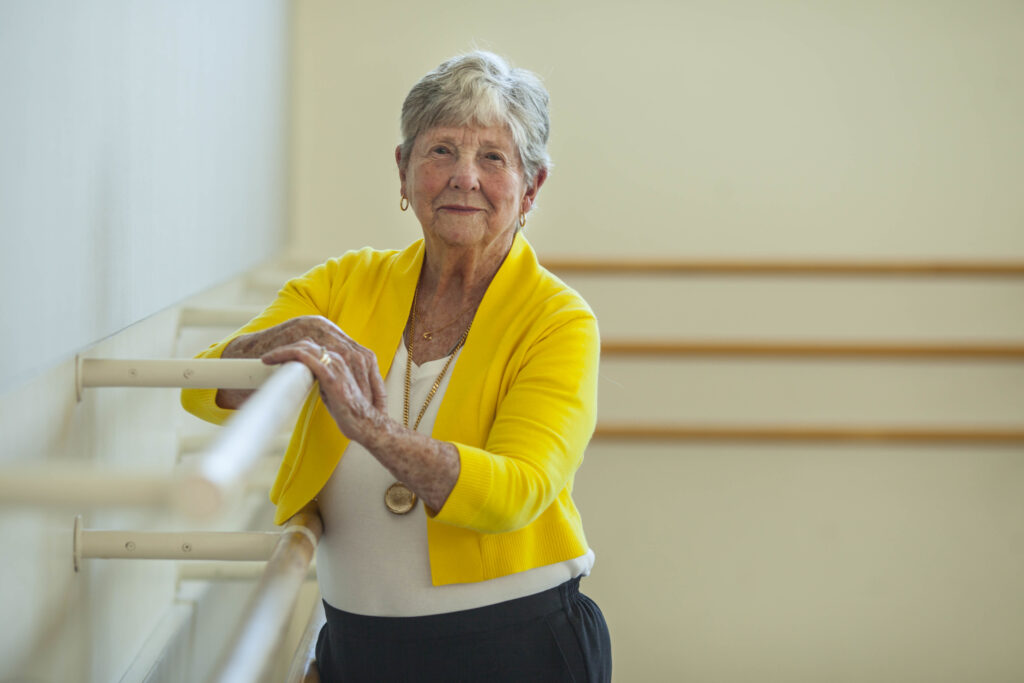
Joan Vickers, 92, was a snowflake in the first production of San Francisco Ballet’s “Nutcracker” in 1944.

I was surprised to learn that the “Nutcracker” ballet — which my youngest granddaughter and thousands of little girls and boys around the world were part of this past Christmas — was first performed in the United States in 1944. I guess I thought it was eternal. How could there ever have been a time that the “Nutcracker” was not performed at Christmas? But such is the case. And every ballet company that performs it now does something different to make the event its own.

Sam Whiting reports at the San Francisco Chronicle, “It was wartime 1944 when San Francisco first felt the magic of a Christmas Eve snowfall. It lasted 10 minutes, and Joan Vickers remembers it clearly.

“Vickers was in the first full-length ‘Nutcracker’ to be staged in America, a San Francisco Ballet production at the War Memorial Opera House. Act 1 ended in the Land of the Snowflakes, according to the program, and there were no special effects. There was only a 17-year-old Vickers and 15 other corps members dressed in white. They each held a stick with a white star at the tip of it, and they waved them around like sparklers.

“ ‘We became the snow,’ said the now 92-year-old Vickers, from her home in Alameda. ‘The audience was amazed and in awe.’

“Bay Area audiences continue to be in awe as the holiday tradition continues, and the snow scene has only intensified over the decades. ‘Nutcracker’ has been updated four times — in 1954, 1967, 1986 and 2004 — with the last revision orchestrated by Artistic Director Helgi Tomasson, who took the setting from snowbound 19th century Europe to 20th century San Francisco … when a jeweled city rose straight out of the sand to form the Panama-Pacific International Exposition.

“Despite the Mediterranean climate, the snow still falls, though in this production, it comes in the form of 600 pounds of confetti dropped from the fly space by a six-person crew. …

“ ‘As a child (in Iceland), I was always amazed at what a snowstorm can look like and how monumental and beautiful they can be,’ said Tomasson by email from Copenhagen, where the company was on tour. ‘I wanted to re-create that personal memory for San Francisco.’

“The snow falls with a ferocity probably unmatched by any other production of ‘Nutcracker,’ which premiered in St. Petersburg in 1892 with an original score by Tchaikovsky and is now revived in some form each Christmas season by just about every ballet company.

“The ‘Waltz of the Snowflakes’ is so beloved that it has its own YouTube category. … In San Francisco it comes down like it does in the film ‘McCabe & Mrs. Miller,’ which is to say once it starts it doesn’t stop. It gets in the hair and the eyelashes of the dancers, and piles up on the floor to slicken the stage. …

“Jasmine Jimison, a 17-year-old member of the corps de ballet, said it can be arduous to dance upon ‘the snow’ each night, even with caking her slippers in rosin to take the stage.

“ ‘Dancing in the snow scene is an experience like no other. It’s scary and exciting at the same time,’ said Jimison, also reached in Copenhagen last week. ‘There’s always the stress of not slipping or having enough stamina, especially once the snow starts falling really hard toward the end. I’m so exhausted by that point that my legs feel like Jell-O and I can barely see, but adrenaline helps push me through, and the escalating music adds to it.’ …

“Artistic Director Willam Christensen designed [the first US ‘Nutcracker’] as a one-season production inspired by a San Francisco visit by George Balanchine in the fall of 1944. Balanchine had danced in the full-length production of ‘Nutcracker’ in Russia and encouraged Christensen to create his own. …

“The restrictions of the war effort necessitated that budgets and materials were tight. There was only $1,000 allotted for costumes … so all of the red velvet for the outfits came from the curtain of the Cort Theater on Ellis Street, which had been demolished. … The opera house was under a blackout order, and air raid wardens were in the audience ready to blow their whistles.

“The production then went on the road to Oakland, Sacramento and Stockton, and that was to be the end of it. The following Christmas, Christensen mounted ‘Hansel and Gretel’ and ‘it was a failure,’ Vickers said. They tried other productions, but nothing else worked, so in 1948 Christensen brought back ‘Nutcracker’ for good.”

More.

Read Full Post »

Photo: Alan Greenblatt/NPR
Growing up, Liam Foley (left) was in charge of dishes and never cooked. He was still able to help chop the onions, though, at a burrito-making project for the poor in San Francisco.

Here’s another great story about ordinary people stepping up to try to make a dent in some of life’s knottier problems. This initiative is about making a dent in hunger and getting to know a few people experiencing homelessness.

Alan Greenblatt writes at National Public Radio, “Jimmy Ryan’s recipe for burritos is really pretty simple. It calls for 50 pounds of rice, 50 pounds of beans, a couple of cases of canned tomatoes and several hundred tortillas.

“That may sound like a lot, but Ryan is one of the organizers of the Burrito Project in San Francisco, an informal charity that makes and distributes about 500 burritos to the homeless once a month. On May 21, the group celebrated its second anniversary and rolled its 10,000th burrito. …

“The desire to distribute healthy, easily portable burritos is catching on. … A couple of the entities have registered as 501(c)3 charities, but others remain completely informal. Anyone is allowed to use the name as long as they’re providing burritos and not making any money off the service.

” ‘From what I understand, we have one of the only burrito projects that runs four days a week,’ says Rai Doty, a coordinator in Salt Lake City. ‘Four days a week, we feed 200 to 500 people a night.’

“The groups rely on a mix of donated food and sponsorships. In San Francisco, different companies pay the bills each month, helping out with both funding and manpower. …

“The crowd [I saw] was mostly young and white, but several other racial and ethnic groups were represented, with at least one grandmother helping out. For some, this effort represents just one stop along their personal charity journeys, which also include efforts such as working at animal shelters or churches. But for others, this was a quick and painless way to give back. …

“The organizers say they’re trying to make the event fun and welcoming, asking everyone to introduce themselves and providing kombucha and cake to celebrate their anniversary. …

“The soup kitchen that allows the Burrito Project to use its kitchen is located on the edge of the Mission District, which is ground zero for gentrification pressures in San Francisco. …

“The Burrito Project encourages volunteers not just to hand out food, but to stop and interact with individuals who are often neglected or avoided. …

“No one is under the illusion that handing out an occasional burrito is going to solve anyone’s problems.

“Some Burrito Project outposts try to do more than occasionally feed people. During the snowy season in Salt Lake City, the group partners with Warm the Homeless, which distributes blankets, coats and hats. The long-running project in Bakersfield, Calif., has been adopted by high school and church groups who hand out clothes and shoes when there are donations. Their ninth anniversary event on July 8 will provide a forum for representatives from other local groups that provide housing, health and legal assistance.”

More at NPR, here.

Read Full Post »

Photo: Elizabeth Hafalia, The Chronicle
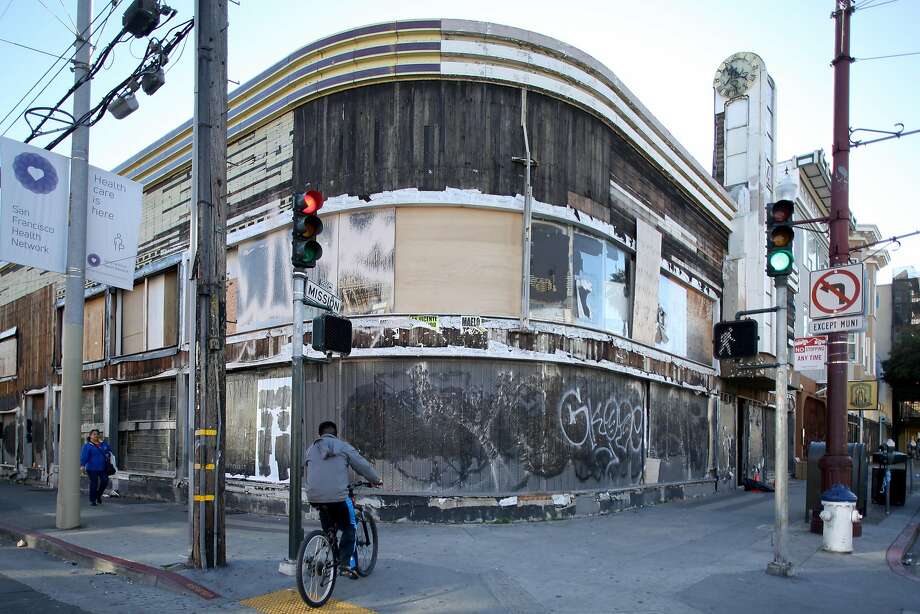
Facing a need for affordable housing and arts space, San Francisco’s Mission Economic Development Agency is joining with Dance Mission Theater and the Mission Neighborhood Centers to repurpose this neglected 1919 building.

Have you ever visited San Francisco’s Mission District? A poor, immigrant neighborhood, it is nevertheless a vibrant experiment in people-oriented housing and support for food entrepreneurs and the arts. The creative energy there is tangible.

Moreover, the neighborhood’s community-development folks never stop turning dreams into reality. J.K. Dineen has an update at the San Francisco Chronicle.

“A historic but long-neglected commercial building at Mission and 18th streets in San Francisco is poised to be rejuvenated with a mix of affordable housing, child care and dance.

“The dilapidated 1919 structure, a former furniture store that was remodeled with an Art Deco flair in the late 1930s, has been on and off the market for more than a decade. …

“Finally the Mission Economic Development Agency, a politically powerful group that often opposes market-rate housing, reached a deal to buy it by collaborating with Dance Mission Theater and the Mission Neighborhood Centers, which will open a child care facility there.

“ ‘We are all going in together to do a new model of cooperative living and dancing and taking care of our children,’ said Krissy Keefer, executive director of Dance Mission Theater. ‘It’s going to be very communal.’ …

“Brokers with the San Francisco office of the realty firm Marcus & Millichap … said market-rate developers were scared off by the Mission’s anti-gentrification political environment and that ‘MEDA was very good to work with.’ …

“The building will be the group’s first home ownership project — the others are rentals — and the first targeting middle-income families rather than low-income folks. Mission Neighborhood Centers is providing some of the project funding, along with two nonprofits: Low Income Investment Fund, a financial intermediary that provides capital for community developments, and the Neighbor to Neighbor fund.”

I’m sure everyone has read about the housing crunch in San Francisco, with tech employees pushing prices up. It’s good to hear of anything designed to ease the shortage. More here.

Read Full Post »

Photo: Paul Chinn, The Chronicle 
Artificial turf is installed in a park under construction in San Francisco, which claims to be the first city with a park near every home.

More and more research is showing that access to nature and urban parks improves not only quality of life but the health of city dwellers. Municipalities save, too, when they have healthier residents.

Recently San Francisco was able to claim the distinction of being first in the nation to offer a park 10 minutes from every home.

Lizzie Johnson reports at the San Francisco Chronicle, “In 10 minutes, you can load a TV episode on Netflix, check your mail waiting for BART or make an avocado toast. Now, you can add to that list: take a walk to the park.

“San Francisco is the first city in the nation to have every resident live within a 10-minute walk of a park or open space. The percentage is calculated by the Trust for Public Land, a nonprofit that facilitates the creation of parks and analyzes park systems for the 100 largest cities nationwide. …

“But don’t expect to see a small army of city workers and volunteers with stopwatches in hand counting their steps. The data were gathered using a complex geographic mapping program. The average person can walk a half-mile in about 10 minutes, according to the U.S. Department of Transportation, which counts even your two legs as a mode of transportation. The distance has to include sidewalks — crossing highways or skirting canals doesn’t count.

“ ‘We developed this as the gold standard,’ said Adrian Benepe, the Trust for Public Land’s director of city park development. ‘A 10-minute walk to a park is an important indicator of the livability of a city.’ …

“Criteria for the nonprofit’s annual ParkScore analysis also includes the number of individual parks, overall spending and facilities upkeep. …

“The city has spent $355 million in bond and general fund money over the past four years to purchase land, renovate dilapidated parks and improve open spaces. In 2012, voters passed the $195 million Clean and Safe Neighborhood Parks Bond to fix up neighborhood parks.

“Those measures made the difference in reaching the No. 1 spot, said Recreation and Park Department Director Phil Ginsburg.

“ ‘It speaks volumes about this city’s commitment to open space,’ he said. “It is the reflection of literally a century and a half of decisions regarding parks and open space.’ ”

More at the San Francisco Chronicle.

Read Full Post »

Two women in San Francisco felt compassion for homeless people who have nowhere to go during the day. So they arranged with a local Catholic church to welcome them.

Patricia Leigh Brown wrote the story for the Christian Science Monitor series called “People Making a Difference: Ordinary People Taking Action for Extraordinary Change.”

“Tina Christopher’s day begins at 5:45 a.m. as she cleans the sidewalk in front of St. Boniface Catholic Church in the Tenderloin, the once-colorful vice district in San Francisco now better known as a province of the poor, the desperate, the addicted, and the down and out. …

” ‘All right my beautiful brothers and sisters!’ Ms. Christopher says in her always-chipper voice. ‘Good morning! Time to get up! Wakey wakey!’ Then she unlocks the church’s heavy iron gate.

“Soon, St. Boniface’s 74 backmost pews will cradle some 150 homeless people seeking ‘sacred sleep,’ the sound of snoring permeating the incense-filled room. Beneath the saints painted on the church’s glittering dome, they stretch out for nine hours of vital slumber, resting their heads on ad hoc sweatshirt and T-shirt pillows or sometimes their folded hands. For a brief moment, their faces, beatific and babylike in sleep, do not betray the nights of fearful wandering and the way concrete seeps into a person’s bones and stays there.

“Christopher is the program director of The Gubbio Project, a pioneering effort, believed to be the country’s first. … Cofounded in 2004 by the Rev. Louis Vitale, a well-known peace and human rights advocate, the program provides a place for homeless people to sleep during the daylight hours, when most shelters are closed.

The project is named after Gubbio, the Italian town where, the story goes, residents befriended a wolf after realizing the animal wasn’t dangerous, just hungry.

“The project’s guiding lights are two women who are devoted to the dignity of the people they call ‘guests.’ Laura Slattery, Gubbio’s executive director and public voice, is a West Point graduate-turned-social justice activist who wears jeans and hiking boots and exudes a sense of calm resolve, even in a crisis. Christopher is the exuberant all-hands-on-deck ground commander who knows the name of every guest and whose finely tuned antennae swiftly intuit their needs and issues. …

“At St. Boniface, Christopher writes daily notices on the whiteboard:

“Shower bus 8:30-2
“We have Blankets!
“Tomorrow – some socks.

“She is in constant motion, eyeglasses perched atop her head, dispensing cough drops, rubber bands, tampons, shaving cream, and other necessities from a converted confessional. She makes it a point to ask guests whether they’d prefer a pink toothbrush or a blue one, a black blanket or a brown one. ‘Even the simplest things are important to people who don’t have choices,’ she explains.

“Socks and other staples come from volunteers like Roberta Snyder, who has established relationships with housekeepers at nearby hotels and provides soaps, shampoos, and other items …

“[Slattery] thinks of The Gubbio Project as ‘the ministry of presence,’ one that dispels some popular myths about homeless people along the way. Quite a number of donations to Gubbio’s $350,000 annual budget, for instance, are made by guests. ‘Last week it was $42,’ Slattery says. ‘The week before it was 24. Flips the idea of panhandling on its head, right?’ ”

Click here to read about the women’s routes to their unusual calling — one through addiction, one through West Point.

Photo: Melanie Stetson Freeman/Christian Science Monitor
Tina Christopher (l.) and Laura Slattery run The Gubbio Project, which gives people experiencing homelessness in San Francisco a place to go during the day.

1107-pmad-mgubbio

Read Full Post »

Here’s a guy who didn’t just ring his hands when he learned that a magnificent butterfly species was endangered in his part of California; he decided to do something about it.

Zachary Crockett reports at Vox, “It begins its life as a tiny red egg, hatches into an enormous orange-speckled caterpillar, and then — after a gestation period of up to two years — emerges as an iridescent blue beauty. Brimming with oceanic tones, the creature’s wings are considered by collectors to be some of the most magnificent in North America.

“For centuries, the California pipevine swallowtail — or, Battus philenor hirsuta — called San Francisco home. As development increased in the early 20th century, the butterfly slowly began to disappear. Today it is a rare sight.

“But one man’s DIY efforts are starting to bring the butterfly back.”

Tim Wong, a 28-year-old aquatic biologist at the California Academy of Sciences, tells Crockett, ” ‘I first was inspired to raise butterflies when I was in elementary school … We raised painted lady butterflies in the classroom, and I was amazed at the complete metamorphosis from caterpillar to adult.’ …

“Years later, he learned about the pipevine swallowtail — which had become increasingly rare in San Francisco — and he made it his personal mission to bring the butterfly back.

“He researched the butterfly and learned that when in caterpillar form, it only feeds on one plant: the California pipevine (Aristolochia californica), an equivalently rare flora in the city.

” ‘Finally, I was able to find this plant in the San Francisco Botanical Garden [in Golden Gate Park],’ Wong says. ‘And they allowed me to take a few clippings of the plant.’

“Then in his own backyard, using self-taught techniques, he created a butterfly paradise.”

Read more here. It sure takes persistence.

Here’s hoping an elementary school project in 2016 will lead to the rescue of another endangered species down the road.

Photo: Tim Wong (@timtast1c)

Read Full Post »

You may recall a post I wrote about the Daily Table, which takes produce that would’ve been wasted and uses it to provide good meals at low cost.

Jennifer Medina writes at the NY Times that Imperfect Produce, a San Francisco Bay Area start-up, has also “been selling what it calls ‘cosmetically challenged’ fruit and vegetables. …

“Imperfect Produce delivers boxes of ugly fruit and vegetables to people’s doorsteps in the Bay Area. A large box of mixed produce — 17 to 20 pounds of fruits and vegetables, with five to eight types of items, depending on what is in season — costs $18, for example; a small box of fruit (10 to 15 pounds) costs $12 a week. [Chief supply officer Ron] Clark primarily relies on buying produce directly from California farmers …

“Ben Simon, the chief executive, and Ben Chesler, the chief operating officer, began their work on food waste as college students, when they saw trays of food from the campus cafeterias thrown out each night. Mr. Chesler and Mr. Simon created Food Recovery Network, which now has more than 100 colleges donating uneaten food to soup kitchens. …

“The pair met Mr. Clark, who had spent more than a decade working to bring produce that would have otherwise gone to waste to food banks across California. Using his relationship with suppliers, the three have created a business that has attracted attention from many of the tech luminaries in the region, including the design firm Ideo, which receives its own drop-off each week.” More here.

Photo: Jim Wilson/The New York Times  
Imperfect Produce, a San Francisco Bay Area start-up, specializes in produce that is misshapen or cosmetically deficient but otherwise perfectly edible. 

Read Full Post »

After Brian Bailey started to follow this blog, I took a look at his own WordPress blog. The first thing I saw was the watercolor below. I said, “Oh, wow.” Then I looked through his other drawings and watercolors and liked them just as much. So I want to share the Art of Brian site with you.

I’ve always loved watercolors, the gentle suggestiveness, the uncertainty of how the the paints will run. Although good work takes a lot of skill, there’s an element of the unexpected that to me is about the randomness of experience and the beauty of randomness.

Here are some thoughts from Brian on one of his recent paintings.

“When pulling together the shapes and lines that make up a composition it can be challenging to determine how much information is enough.  Some of my favorite drawings and paintings exhibit a very economical approach to line, saying just enough to let the viewer see what the artist sees.  In recent weeks, I’ve been doing many gesture drawings, as I’ve mentioned before, and I’m trying to let my paintings be, somewhat, more gestural.  I started my painting today outside with lots of light and finished it at home by bumping up the shadows and contrast.  I’m really trying to stop myself from overworking each painting.”

Brian also has an Etsy store. I am liking everything I see there.

Art: Brian Bailey
The Orange Van, Watercolor, 4″ x 4″, © 2015

Read Full Post »

stealth-poetry-project

I like reading about — and sometimes initiating — little stealth projects like buying a box of Georges Seurat note cards and putting them one at a time on shop shelves so folks will get a subliminal clue that the Players are putting on the musical “Sunday in the Park with George.”

In 2012, I created the Stealth Poetry Project. Read about that here. I have also blogged about the reshelvers, who move bookstore volumes around  (if they think a politician’s autobiography belongs in the fiction section, for example).

So imagine my delight when a website I subscribe to, Good.Is, sent a message about an international group of people doing similar projects. They call themselves Creative Interventionists.

“The League of Creative Interventionists,” says an e-mail I received this week, “is here to insert the creativity and unexpected back into our cities. The League is a worldwide network of people working to build community through creativity. We create shared spaces and experiences in public space that break down social barriers and catalyze connections between people and communities.

“Each month we will get people together to carry out a creative intervention around a theme. We will also share our inspiration and the template for others to replicate the intervention or create their own intervention in their community.

“The League is launching in San Francisco on February 12 with an event and group creative action around the theme of love. We will be creating an installation in public space where we will share the stories of our first love on postcard-sized stickers. Random passersbys will be able to enjoy these stories and participate by adding their own story. We will also place these stickers in random places to be discovered by unsuspecting strangers who will then be invited to add their story to the installation.”

More at www.Good.is.

Read Full Post »

Older Posts »