Feeds:
Posts
Comments

Posts Tagged ‘wildlife’

Photo: Jim Davis for the Globe.
Globe reporter Matt Porter played three holes with llamas Yowie (left) and Elmer (right) at the Mountain View Grand Resort & Spa. For $150 plus green fee, you can have a llama or two join your group.

Here’s a new angle on an old sport: golf with llamas. Not sure this would work for a serious golfer, but it makes a change.

Matt Porter went to New Hampshire to report the story for the Boston Globe.

“Lloyd Van Horn, a general manager, felt business could use a boost. So he decided to promote a few prospects who were down on the farm. Finnegan, his scouting staff told him, should be the first rookie up. Teammates Elmer and Yowie also were ready for a new challenge. Word was all three had shown well on the back fields.

“And yet the call-up was a tough adjustment. Finnegan reached the big club and tried on his equipment. It fit perfectly, but he felt awkward, for he had never played the sport. Same with the other two. None had any clue what they were doing.

“The staff pressed on. After a few training sessions, Finnegan, Elmer, and Yowie became more than just llamas. They were llama caddies.

“[Van Horn] may be on to something with the newest promotion at his Mountain View Grand Resort and Spa. For $150 plus green fee, you can remove all the seriousness from your round by having a llama or two join your group. …

“Llamas cannot swing a club, so they can’t play with you. They don’t speak — they’ll grunt, bray, or cry — so they offer no course knowledge. But they are pack animals, American descendants of those who hauled gear and people through the Andes, so toting clubs is no sweat.

“In theory, they make for fine caddies. As long as you tip them well. And by tip, I mean offer several handfuls of alfalfa pellets. That was how Elmer and Yowie took a liking to me before I played a rain-soaked few holes with them in late July. …

“I had Elmer on the bag, while Yowie, his bonded mate, trotted alongside us. I chose six clubs for the three holes, Nos. 7, 8, and 9, and carefully slid them into Elmer’s custom leather saddle. After a few neck rubs — not the head, advised farm manager Henry Bogdanowicz — of Elmer’s soft, summer-cut fur, and some one-sided chit-chat, they were ready to watch us tee off.

“Golf, by its nature, encourages a long, lazy look at the world. I’m all for that. Whether playing the game or reporting on it in the last two decades, I have gazed upon many animals while hitting one good shot out of every few that I take.

“In South Florida, I saw iguanas and geckos, plentiful there as are squirrels and chipmunks here, skittering in the scorching heat. I have locked eyes with alligators, and let them break the stare. …

“In New England, these clubs of mine have chunked a deep divot or two, but if the post-swing view is a hawk circling over a hillside, or a heron gliding low over the marsh, I’m all the happier.

“Up here in the Presidential Range, course superintendent Kalen Whitney said llamas are welcome to walk his course. They will nibble on the fringes, but unlike goats, they won’t tear grass from the roots. They have soft toes, so they won’t damage the fairways. Those large, gorgeous eyes can look in two directions at once, which could help a hacker like me track my wayward flights.

“Whitney is happy to deal with them instead of porcupines and raccoons, and groundhogs that make him consider reaching for [explosives]. Last year, a moose made a mess of one of the Mountain View Grand’s postage-stamp greens. … A mama bear and her cubs crossed the property a few weeks ago, and were no doubt given the same respect you would gators in any number. …

“The umbrella I carried to the first tee was perceived by Elmer to be a threat. I decided I’d rather be wet than test our friendship. When he sat down on the job, I didn’t mention it.

“Try chatting up a llama caddie and you might be answered with a ‘HAWWWW???’ … If seriously offended, ‘they can scream,’ Bogdanowicz noted. …

“Happily, most of what was heard that day in the mountains was the chirping of the birdies. Before we called it a washout, I played pretty well. Must have been the companionship of the llama.”

More at the Globe, here.

Read Full Post »

Photo: Colorado Department of Transportation.
A black bear (black bears are sometimes brown) walks through a wildlife underpass at State Highway 9. 

In parts of the country where people really value their wildlife, there are increasing efforts to prevent roadkill by building safe crossings for animals. They’re expensive, but the passes also save humans from life-threatening collisions.

In an article at the New York Times, reporter Catrin Einhorn learns that the motivation to build pathways crosses political divides.

She writes, “The aim was to protect motorists and wildlife along an especially grisly stretch of highway. Now, it was time to see whether the investment would pay off.

“Aran Johnson, a wildlife biologist for the Southern Ute Indian Tribe in the southwestern part of Colorado, walked up a bank to a newly constructed overpass crossing Route 160. … It was a cool summer morning in 2022, with mist rising from the ground. Mr. Johnson carried trail cameras. Mule deer and elk wouldn’t be showing up in any numbers until later in the year, when they had to cross the highway to reach their wintering grounds. Still, he wanted the cameras ready to capture the earliest evidence possible of any animals using the structure.

“At the top of the overpass, he could barely believe what he saw: a line of hoof prints pressed deep into the fresh mud, stretching from one side to the other. An elk had already found its way across. …

“Since then, it’s been one successful year after another. Entire herds of mule deer and elk use the structures, as well as bears, mountain lions, bobcats, coyotes and foxes.

“Wildlife crossings are growing in popularity across the country, and in recent years, Colorado has emerged as a leader. Since 2015, it has built 28 new large game crossing structures, according to the state Transportation Department.

“The state is rich in wildlife, and many of its species travel from higher elevations in the summer to lower ones in the winter, oftentimes crossing highways at great peril. In 2022, the General Assembly passed a law creating a cash fund for the department to use for animal crossings. Colorado has also evaluated its highways to create a priority list for future projects.

“Wildlife crossings, when combined with long stretches of fencing to funnel animals to the right location, have been found to reduce vehicle collisions with large animals by more than 80 percent.

“They are expensive, but research has shown they can save money when installed on stretches of highway with at least an average of three collisions between motorists and deer per mile per year. For collisions with elk and moose, which are bigger and therefore cause more damage to vehicles and people, that threshold goes down to less than one collision per mile per year.

“Locals had long known they had to pay close attention when driving along that stretch of Route 160, near the Chimney Rock National Monument. … In the early 2000s, Mr. Johnson, the biologist for the Southern Ute, started collaring mule deer to better understand how they moved over the landscape around the reservation. He analyzed his data and superimposed them on state records of wildlife-vehicle collisions. …

“The Colorado Department of Transportation, which covers the vast majority of the cost for wildlife crossings, agreed to put in an underpass on the reservation. But the Southern Ute also wanted to install an overpass, since certain species, particularly elk, seem to greatly prefer them. The tribe came up with $1.3 million from the Bureau of Indian Affairs to make that happen.

“Additional funding for the $12 million project came from the state department of wildlife, nonprofit groups and even a private donor. …

“An added bonus of wildlife crossings is the photos that come from trail cameras, which help to bring attention to the programs, Mr. Lawler said. … [But with cuts in] federal spending, a grant program that helps states and tribes pay for wildlife crossings in collision hot spots is now in doubt, including grants that had already been promised. …

“Wildlife crossings transcend political divisions, said Patricia Cramer, an ecologist who consults with states on wildlife crossings. … Of the two states she sees as national leaders, Wyoming is red and Colorado is blue.”

More at the Times, here, and at Denver7.com, here.

Read Full Post »

Photo: John and Suzanne’s Mom.
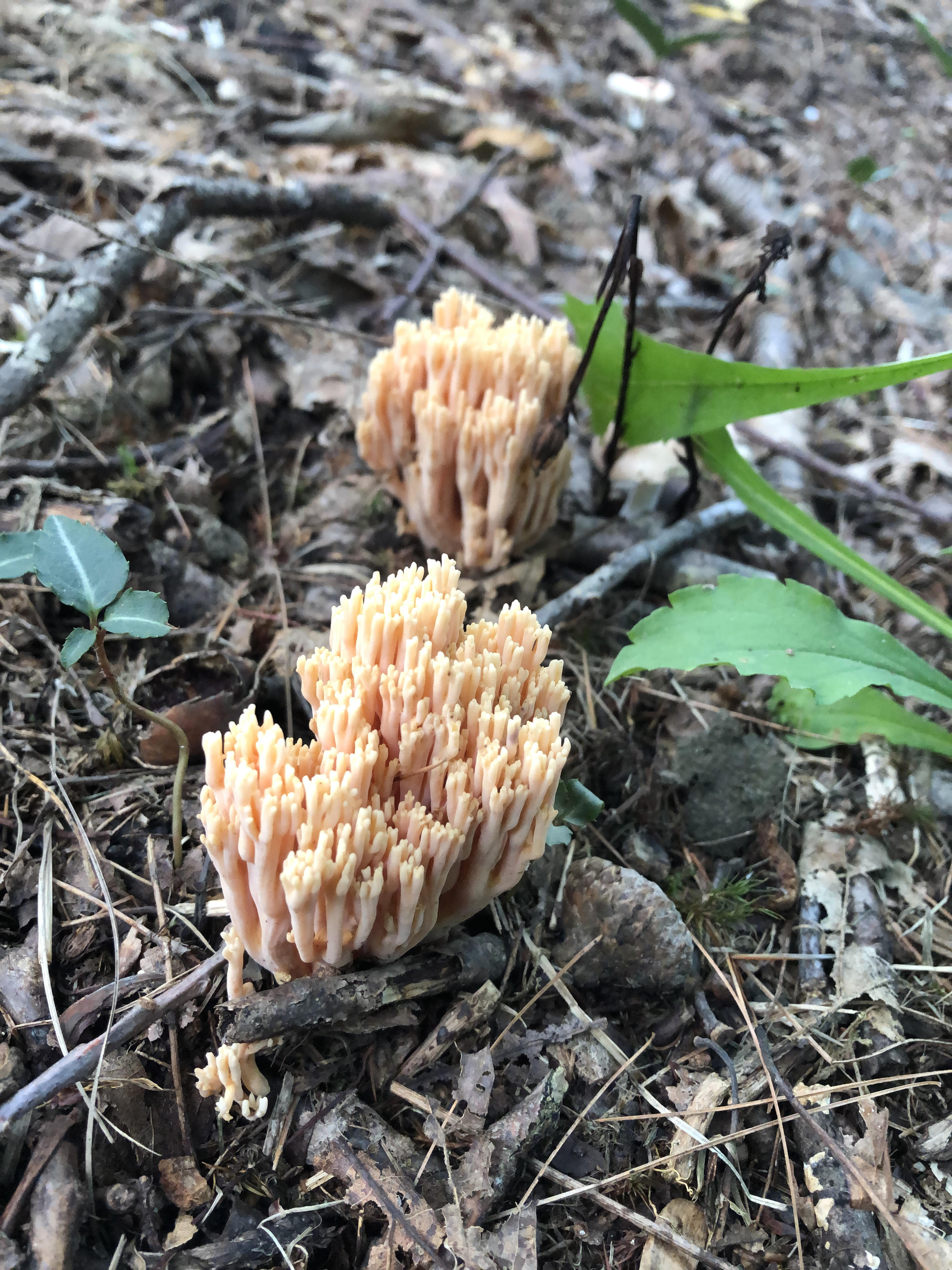
Fungi and algae receive less than 0.2% of conservation funding, according to a new study. Small speices never seem as cool as rhinos and elephants.

Is it human nature to pay more attention to the large and aggressive than to the small and quiet? As a female, I think so.

At the Guardian, Mariam Amini writes about how that tendency, when applied to the study of the natural world, can be harmful to the planet.

“Most global conservation funds go to larger, charismatic animals,” she says, “leaving critically important but less fashionable species deprived, a 25-year study has revealed.

“Scientists have found that of the $1.963bn allocated to projects worldwide, 82.9% was assigned to vertebrates. Plants and invertebrates each accounted for 6.6% of the funding, while fungi and algae were barely represented at less than 0.2%.

“Disparities persisted among vertebrates, with 85% of all resources going to birds and mammals, while amphibians received less than 2.8% of funding.

“Further funding bias was found within specific groups such as large-bodied mammals towards elephants and rhinoceros. Although they represent only a third of that group, they were the focus of 84% of such conservation projects and received 86% of the funding. Meanwhile mammals such as rodents, bats, kangaroos and wallabies remained severely underfunded, despite being considered endangered.

“ ‘Nearly 94% of species identified as threatened, and thus at direct risk of extinction, received no support,’ said Benoit Guénard, the lead author of the study. ‘Protecting this neglected majority, which plays a myriad of roles in ecosystems and represents unique evolutionary strategies, is fundamental if our common goal is to preserve biodiversity.’

“Alice Hughes, a coordinating lead author of the research, said: ‘The sad reality is that our perception of “what is threatened” is often limited, and so a few large mammal species may receive more funding than the near-12,000 species of reptile combined.

“ ‘Not only does this limit our ability to implement protective measures, but it closes opportunities to researchers. I have lost count of the number of times collaborators have switched taxa [organism populations] purely because theirs was difficult to fund. This leads to a chicken and egg situation – some of the groups with the highest rates of recent extinction, like freshwater snails, have the most outdated assessments.’

“The study, led by Guénard and colleagues at the University of Hong Kong, analyzed 14,566 conservation projects spanning a 25-year period between 1992 and 2016. …

“ ‘We are in the midst of a global species extinction crisis,’ said research author Bayden Russell. … ‘We need to change how we think about conservation funding. The community needs to be educated about the value of biodiversity and protecting species that are under threat.’ …

“ ‘Governments, in particular those which represent the main pool of funding, need to follow a more rigorous and scientifically driven approach in conservation funding,’ said Guénard.”

More at the Guardian, here.

And be sure to check Anna Kuchment’s Boston Globe interview with Mandë Holford, here, about a poisonous snail with lifesaving properties. It reads in part: “Some of the most powerful drugs in our medical arsenal come from animal venom. Ozempic was derived from Gila monsters, a lizard native to the southwestern US; Prialt, used to treat chronic pain in HIV and cancer patients, comes from deadly cone snails; and captopril, the first ACE inhibitor, a class of drugs used to treat high blood pressure, came from Brazilian pit vipers.”

Read Full Post »

Photo: Agustín Marcarian/Reuters.
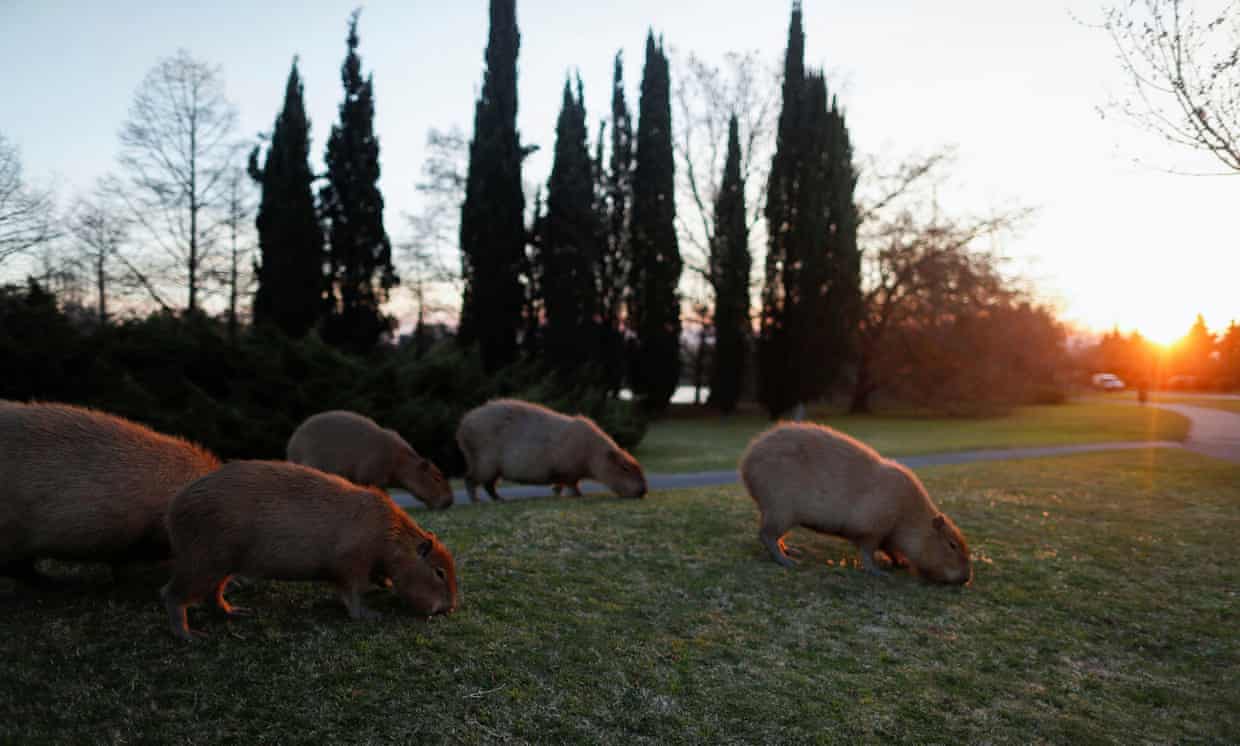
Capybaras eat the grass in the gated community of the Nordelta, north of Buenos Aires.

Can there be such a thing as too many capybaras? Five-year-old Suzanne visiting Disney World back in the day would have said no. Now she’s grown up with children of her own, but she was still pretty excited to see capybaras wandering around Columbia last week. (Columbia seems to be a new destination for school vacations. John’s family went last year and Suzanne’s this year.)

Meanwhile in Argentina, capybaras are considered too much of a good thing, especially in wealthy neighborhoods.

Harriet Barber reports for the Guardian, “A contraception debate is gripping one of Argentina’s most notable luxury neighborhoods – not for its wealthy residents, but for its original occupants, the capybaras.

“In recent years, the lovable rodents have been accused of overrunning the Nordelta, a meticulously landscaped and manicured suburb north of Buenos Aires.

“Now, in a bid to quell reproduction – some accounts suggest the number of capybaras has tripled to more than 1,000 in the past three years – the Buenos Aires government has approved wildlife population control plans, involving selective sterilization and contraceptives.

“Marcelo Cantón, a resident and spokesperson for the Nordelta Neighborhood Association, says that while capybaras themselves are not a problem, the ‘excessive growth’ of their populations is, adding that it is causing the creatures to ‘fight among themselves, fight with dogs in private gardens,’ leading to traffic accidents. …

According to El País, the new plans would see two doses of contraceptives injected into 250 of the rodents … which authorities hope will stem reproduction for up to a year.

“But not all neighbors are in agreement. The Nordelta sits within the Paraná Delta, an environmentally important wetland home to dense flora, an abundance of birds and dozens of species of mammals.

“Silvia Soto and a group of neighbors known as ‘Nordelta Capybaras – We Are Your Voice’ say the plans should be halted, dispute that there is an overpopulation problem and criticize property developers for ignoring proposals to create biological corridors and protected areas.

“ ‘For years, we have been asking for different, linked green areas that function as natural reserves connected by biological corridors, to protect the capybaras and preserve their survival and coexistence in their own natural space,’ Soto said. … Environmentalists are also now weighing in and calling on the government to protect the capybaras, which are the world’s largest rodent.”

More at the Guardian, here.

I don’t know what’s best for Buenos Aires, but I’ve often wondered if there weren’t some way to use contraception for the deer populations that have burgeoned in urban and suburban America, spreading tick diseases. What do you think?

Read Full Post »

Photo: Top Africa News.
One of the benefits of having Kenyan farmers raise butterflies for a living is that they are protecting East Africa’s largest coastal forest.

I’m reading a strange British novel called Ash Before Oak in which the protagonist is keeping a diary about the natural world he encounters on leaving London for England’s West Country. As a kind of self-therapy for the impending breakdown he senses, he makes lists of — and tries to focus on — all the flora and fauna he sees. Starting with butterflies.

Who knew there were so many butterflies in the world? Who knew there were so many in southwest England? They do have a mesmerizing quality. Today’s article is about how unsuspecting butterflies are mesmerizing people in Africa while doing good work for the planet.

Evelyn Makena wrote at Top Africa News, “Before becoming a butterfly farmer, Dickson Mbogo made a living by selling charcoal from trees he cut in the forest.

“ ‘In my search for food and an income, I was destroying the forest,’ he said.

“Now, after getting involved in butterfly farming, Mbogo’s weekly routine involves visiting sections of Kenya’s eastern Arabuko-Sokoke Forest to capture butterflies using trapping nets.

“Home to some of the world’s endangered animals and plants, the Arabuko-Sokoke Forest Reserve is the most extensive indigenous forest on the east African coast. Once part of an extensive coastal forest that ran from southern Somalia to northern Mozambique, the forest is visible for miles along Kenya’s north coast highway.

“It is home to several threatened bird species, including Clarke’s weaver bird and the Sokoke scops owl, as well as endemic animals like the Aders’s duiker, the golden-rumped elephant shrew and the bushy-tailed mongoose. It is also home to elephants and other members of the ‘big five.’

“The forest also hosts almost 300 butterfly species. For local communities living adjacent to the forest, these butterflies are now the source of a sustainable livelihood, enhancing the conservation of a forest previously threatened by illegal logging.

“At home, Mbogo places the butterflies in a netted cage that houses different varieties of trees for the butterflies to feed on and lay eggs.

“ ‘Butterflies can lay up to 300 eggs. After a few days, eggs hatch to caterpillars and feed on specific food plants until they develop into pupae,’ explained Mbogo.

“After the pupae stage, farmers take the insects to Kipepeo Center in Gede town, a few kilometers from their homes.

“ ‘Here, the insects are sorted according to species, graded, carefully wrapped in cotton for protection and packaged in boxes. They are then exported to markets in the United Kingdom,’ said Hussein Abdulahi Aden, Project Manager of the Kipepeo Butterfly Project.

“From an initial 141 members when the project started, [in 2022, there were] 872. … Farmers are paid for every pupa delivered, depending on the species type. Pupae can attract between Ksh. 90 – 225, (US$0.75 – 1.8) with farmers making collective earnings of up to Ksh.15 – 20 million (US$124,000 – 166,000) per year.

“According to Aden, the Kipepeo project was started in 1993 by the National Museums of Kenya and other stakeholders to reduce pressure on the forest while offering an alternative source of income to locals. Initially, the project was met with resistance from the community.

“ ‘For a community used to subsistence farming of maize, cashew nuts and coconuts, the idea of butterfly farming was strange and perceived as mystical. There was also fear that this was a government project aimed at evicting them from their farms,’ Aden explained. But other community members followed suit as the pioneer farmers began reaping the project’s benefits. …

“Among the butterfly species reared are the colourful African Swallowtail, Silver Stripped Charaxes and Taita Blue-banded Swallowtail. There are also other less colorful species, like the African Migrant.

“The project buys all the pupae brought by the farmers. When supply is higher than the demand, the surplus is released to the Kipepeo Butterfly Exhibition House at Gede to educate the public on the insects. Some are released back into the forest for the continuity of species – ensuring that the forest is not only protected from the charcoal burners but is also well pollinated. …

“In many ways, Kipepeo project members have become champions of conservation within the community. Sofia Saidi, a member of the Mkongani group, said that members report any suspicious activities they may come across in the forest to the relevant authorities, including Kenya Forest Service and Kenya Wildlife Service. The project has also trained volunteer community scouts who patrol the forest and deter illegal activities.

“The Kipepeo project has also been crucial in improving food security in the community. Specific butterfly species play a vital role in pollination. According to Aden, a survey conducted within a five-kilometre radius of the forest boundary found that farms closer to the forest had better yields, indicating the impact of the butterflies on plant reproduction.”

More at Top Africa News, here. For an audio story about Kenyan butterfly growers, check out The World, here.

Read Full Post »

Photo: Ragosta family via RI Department of Environmental Management.
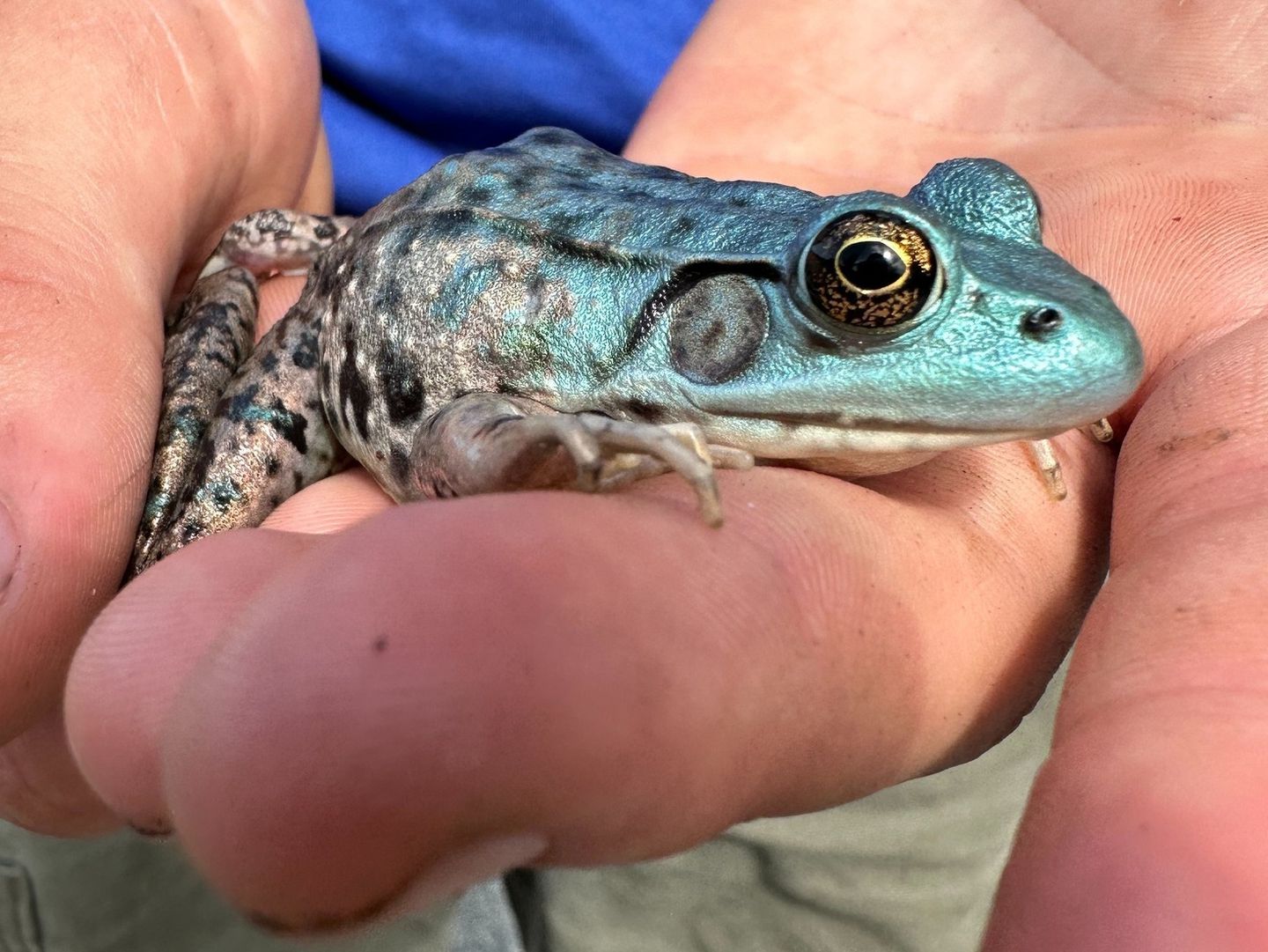
A family in Rhode Island found a rare blue frog and reported it to the DEM.

What turns kids on to Nature? Often it’s a parent’s enthusiasm about fly fishing, say, or their excitement about a rare bird or wildflower. Sometimes it’s just what kids find on explorations of their world. There are natural curiosities everywhere, even in cities, if you walk around with noticing eyes.

Carlos R. Muñoz reports at the Boston Globe about the rare blue frog Rhode Island boys spotted recently.

“A Rhode Island family made the remarkable discovery of a rare blue frog [in July] and reported it to the state Department of Environmental Management. The bullfrog displayed signs of a rare pigmentation known as axanthism, which is a lack of color-bearing cells that turns green frogs blue.

“The department said in a Facebook post on its Division of Fish and Wildlife Outdoor Education page that the condition is most frequently seen in green frogs, leopard frogs, and bullfrogs — species in the Ranidae family of amphibians. …

“A 1966 study by Cornell researchers found that only 69 out of two million frogs (0.003 percent) are blue.

“Michael Berns and Lowell Uhler, authors of the study, said that blue-green frogs are ‘incredibly rare’ but exhibit different regional occurrence rates. In New England, these blue frogs are most common in Massachusetts and Connecticut. …

“ ‘Green frogs are widely distributed throughout Rhode Island, spending most of their lives in freshwater wetlands such as marshes, ponds, streams, and vernal pools,’ according to a DEM brochure authored by wildlife technician Liam Corcoran.

“Kimberly Ragosta, the mother of five whose kids made the once-in-a-million discovery, said her son Jack spotted the glistening blue bullfrog squatting by the road while the kids were running a roadside stand.

“Jack told his mother he was taking a stroll along the road near a swampy woodland area when he noticed the croaking bullfrog’s shimmering skin ‘sticking out like a sore thumb.’ He ushered it into a bucket to show his mother. ‘It didn’t move at all; it was his easiest catch ever,’ Ragosta said.

“Jack went on to research the amphibian and correctly discovered its rarity. They notified the department, but later released the frog into the woods.

“Another blue frog was caught July 2 in northern Rhode Island by 11-year-old Finn Leonard, according to his mother Kate Arsenault Leonard. She saw the department’s Facebook post and commented with a picture of the giant blue frog with a dark leopard print and a broad grin.

“Finn told the Globe that he was trying to catch frogs for a friend when he saw the blue frog and tried to catch it. He said he also saw it last year but could not get it.

“ ‘He hopped out each time,’ Finn Leonard said of his previous attempts to lure the amphibian. He was triumphant this year when he netted the frog, which he said he knew was rare because he saw it on the YouTube Channel ‘Brave Wilderness.’ …

“Kate Arsenault Leonard said one of the reasons her family loves living in rural Rhode Island is the ability to explore nature in their own backyard. They go out looking for salamanders, fishing, watching fireflies, and of course frog hunting. …

“The family is floating ‘Alien’ as a name. Finn set the frog free. …

“DEM said the exact locations of the rare frogs are being kept secret to limit the number of ‘well-intentioned nature observers who inadvertently may cause negative impacts on habitat.’ “

This story reminds me that maple leaves also “turn color” when a certain pigment is missing. And I’m noting the role of the parents here: the kids in both stories knew their adults would be excited. Now they will be doubly inspired to look closely at Nature and try to make more discoveries. Perhaps they’ll be scientists one day. Even if not, they will always be friends of our planet.

More at the Globe, here.

Read Full Post »

Photo: AllAboutBirds.
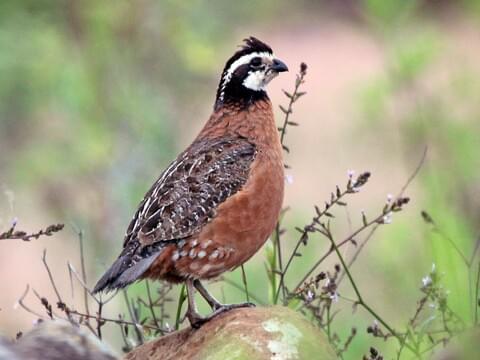
The northern bobwhite quail has a hopeful story.

This is a comeback story. When habitat is lost through ignorance, knowledge can restore that habitat — and the wildlife that used to live there. Humans can learn.

At the Washington Post, Dana Hedgpeth reports on a charming bird that says its name.

‘I don’t want to shoot them anymore — I just like to see them around and hear them whistle,’ said a landowner

“In his teen years, when Joe Graves heard the unique call of quail on his family’s 800-acre farm in rural Virginia, he and his brother Clark would often go out with their dogs and hunt them.

“But due to development and a shift in agricultural practices, the birds that once flourished on their farm in Halifax County and in the state have become harder to find. Now Virginia wildlife experts, hunters and landowners, including the Graves brothers — who are now in their 70s — are working to restore quail habitats in an effort to increase their population.

“ ‘We want to see quail be a part of the Virginia landscape, so we’re trying to create habitats that are critical for their survival,’ said Graves.

“Northern bobwhite quail, which are roughly the size of a softball, have short legs, short wings and don’t fly much. From afar they look like small, plump chickens that walk with their chests puffed out. Male quail typically have a white coloring on their neck area. Quail are best known for their unique sound — similar to a sharp whistle, which they make to communicate with each other and as a way to attract a mate.

“Because they spend most of their life on the ground — much like pheasants and turkeys — quail need a mix of habitat: Honeysuckle and briers provide protection from predators, and they walk among shrubby patches, between weeds and grasses, pecking at seeds. In the fall and winter, quail typically live in flocks, or coveys, with about a dozen birds. They roost in a circle, shoulder-to-shoulder to stay warm, and face outward to watch for predators.

“When a snake, hawk or raccoon approaches, a quail’s defense mechanism is to escape by leaping into the air, flying fast for a few seconds, though they don’t go far — about half the length of a football field. The longer they’re in the air, the more exposed they are to a predator. …

“Quail habitats have been ruined by several factors, including encroaching development and farming practices that have changed because many landowners want neat, well-kept fields between planting seasons. Justin Folks, a wildlife biologist for the Virginia Department of Wildlife Resources, said simply, ‘Quail like weeds and brush, and farmers don’t.’

“Hudson Reese, 84, who owns 1,000 acres in Halifax County, said as a teen, he could regularly find eight coveys of quail on his farm, and now that’s down to one or two. ‘People have tractors, bush hogs and mowers now,’ Reese said. ‘They want to keep their property looking like a golf course. You don’t have quail on a golf course.’ …

“With the destruction of their habitats, the quail population in Virginia has plunged nearly 80 percent since the 1960s, and so too has interest in hunting them. …

“Nationally, experts said quail were once in the mid-Atlantic region, Southeast and Midwest but are now considered one of the top birds suffering a major population decline.

“ ‘It’s amazing we have any because our environment of modern, manicured land doesn’t suit them,’ [John Morgan, director of the National Bobwhite & Grassland Initiative at Clemson University] said. ‘They’re just hanging on and slowly slipping away.’

“While northern bobwhite quail are not considered an endangered species, they are a ‘species of concern,’ according to Jay Howell, a wildlife biologist and small-game project leader who works on the quail recovery team for the Virginia Department of Wildlife Resources. He is worried that continued population declines could make them even more rare.

“Over the past 13 years, Virginia wildlife officials have made a concerted effort with hunters and more than 3,300 landowners to revive their population, and there are signs of success. Howell said the state’s quail population, though still low, is starting to reach equilibrium, and the rate of decline is slowing.

“Landowners are trying to improve quail habitat through controlled burns of forest areas. That process gets rid of pine needles, leaf debris and dead vegetation, leaving more easily walkable areas for quail. The more open ground encourages the growth of new plants and seeds and attracts insects — all of which in turn appeal to quail.

“There are similar efforts in neighboring Maryland. Officials have conducted timber harvests and controlled burns in Pocomoke State Forest since 2013, and last year quail were heard for the first time in decades, according to a 2022 report by the National Bobwhite and Grasslands Initiative, a group that promotes quail conservation.

“Overton McGehee, who owns 150 acres in Virginia’s Fluvanna County, is also working with state wildlife experts to bring quail back.

“ ‘Quail are one more of the species in Virginia that we don’t want to see disappear,’ he said. ‘They’re like a canary in a coal mine,’ he said. ‘If we don’t have the right habitat for quail, then we probably don’t have the right habitat for a variety of birds and pollinators — from whippoorwills and goldfinches to monarch butterflies and bumble bees.’ ”

When I was a kid, I was surprised that organizations of people who fish and hunt were great supporters of conservation, but it stands to reason they need places to hunt. Today I’m grateful for this example of how very different ideologies can work together for common goals.

More at the Post, here.

Read Full Post »

Photo: Bobby Bascomb.
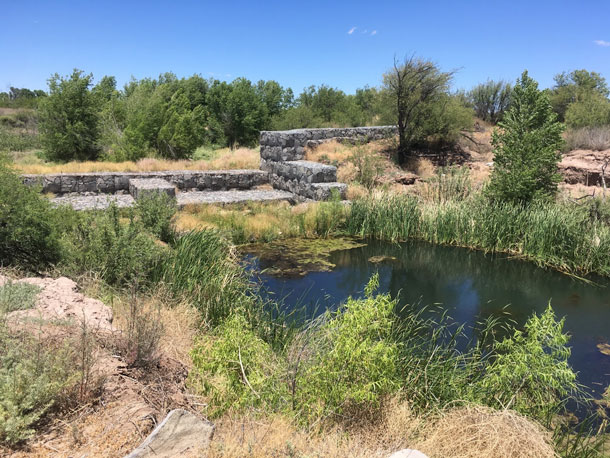
Gabions are baskets of rocks that Valer Clark places in stream beds to hold onto infrequent and precious rainfall at her ranch in Agua Prieta, Mexico.

Today I’m passing along some ideas for conserving water in dry areas. They come from a rancher in Mexico but could work elsewhere.

At the environmental radio show Living on Earth, “Bobby Bascomb visits acclaimed land preservationist Valer Clark at her ranch, Cahone Bonito, in Agua Prieta, Mexico. Valer has been a steward of dried-up lands in Mexico and the southwestern US since she purchased this property in the 1970’s, and she’s dedicated herself to finding ways to restore and maintain it. …

“BOBBY BASCOMB: For a couple months each year the region is awash with water from the seasonal monsoons. The normally dry river beds fill with flood water and swell to create habitat for all manner of water birds and amphibians. The watery paradise is short-lived though, and most of those streams dry up in a matter of weeks. But that wasn’t always the case. A network of streams, rivers and wetlands once crisscrossed the landscape. In fact, more than 150 years ago, around the time of the Civil War, people in the region struggled with malaria, a mosquito-born illness typically associated with tropical wet climates. Last year, I went to Mexico and I found a ranch owner that’s working on ways to keep some of that water on the land longer.

“My journey starts at the Gadsden Hotel in Douglas, Arizona. … The opulence of the hotel hints at an earlier time of prosperity and wealth. Valer says the whole region, north and south of the border, was made rich more than 100 years ago by the same things.

“VALER CLARK: This was copper, cotton, and cattle. The three Cs, you know, all in the early 1900s.

“BASCOMB: Those three Cs made a lot of money but heavily degraded the land. Before the arrival of settlers the region didn’t have much water but there were some dense grasslands. Forests grew alongside rivers that meandered across the open landscape. And wetlands popped up every 20 or 30 miles along those rivers. But when Valer first visited back in the 70s, decades of mining and agriculture left the arid soil dry and cracked, few trees remained and the river beds were deeply eroded.

“Valer [and] her husband at the time were traveling in Mexico and fell in love with the austere land. The wildness of the open parched landscape drew them in.

“CLARK: We just came across this ranch, by accident. And he said, Well, why don’t we bid on it, and I bid so low, I didn’t think we’d ever get it. … When I got here and started seeing the lack of water and seeing the situation, what it looked like, and the hills were bare, and there was no grass. And I thought I wonder if you could make a change. …

“BASCOMB: Valer eventually bought and rehabilitated some 150,000 acres of land in northern Mexico and the Southwest US. [Her] work here has been transformative, says Ron Pulliam.

“RON PULLIUM: There are four great geological forces: there’s volcanism, plate tectonics, there’s erosion. And there’s Valer. …

“BASCOMB: Ron is an ecologist, formerly with the US Department of Interior, and founder of the nonprofit Borderlands Restoration Network. … I pile into a pickup truck with Ron. Valer, in her own truck, leads the way out of Douglas, Arizona and across the border to Agua Prieta, … We leave behind the maquiladora factories in the duty-free trade zone of Agua Prieta and drive an hour southeast to Valer’s ranch. Pavement and two-story buildings give way to dusty soil and brittle pale green grass. To me, as a New Englander, the landscape looks rather inhospitable, but Ron says this is prime cattle grazing territory.

“PULLIAM: Generally speaking now, the stocking ratios are on the order of one cow to one hundred or two hundred acres in this area. And then think of around the turn of the century, 100 times that number of cows. … If you put hundreds of cows out on a small area here you basically reduce all the ground cover. So, when the rain comes it just runs off the land rather than being caught up in the vegetation.

“BASCOMB: And keeping that rainwater on the land is the fundamental key to what Valer is doing to rehabilitate her property. More water will mean more grass and trees, habitat for the wildlife that was once common here. … She takes me on a walk around her property. …

“CLARK: This is what we call a gabion, which is a wire basket that is filled with rocks. …

“BASCOMB: They’re about 3 feet tall, some just 5 or 6 feet wide, others more than a hundred feet across. Valer and her crew have built more than 20,000 of them on her property. They all sit in riverbeds which are dry most of the year until the monsoon rains come. That’s when the gabions get to work. They slow down the water rushing through the river bed so silt can accumulate behind them, like a sponge.

“CLARK: And that sponge holds the water. And so the water, instead of just whipping through fast, when it rains, 30% of it’s held back and goes into the ground. And so it filters down very slowly. …

“BASCOMB: Those pools of water are home to insects, birds, rare frogs, and endangered fish species.

“CLARK: And trees, all these trees coming up, they’re a result of having water here. … Some of them grow 10 feet a year. … We’ve seen ocelot, we’ve seen bobcats and lions and bears and coatimundis and javelinas, ring tailed cats.”

More at Living on Earth, here.

Read Full Post »

Photo: Waldemar Brandt/Unsplash.
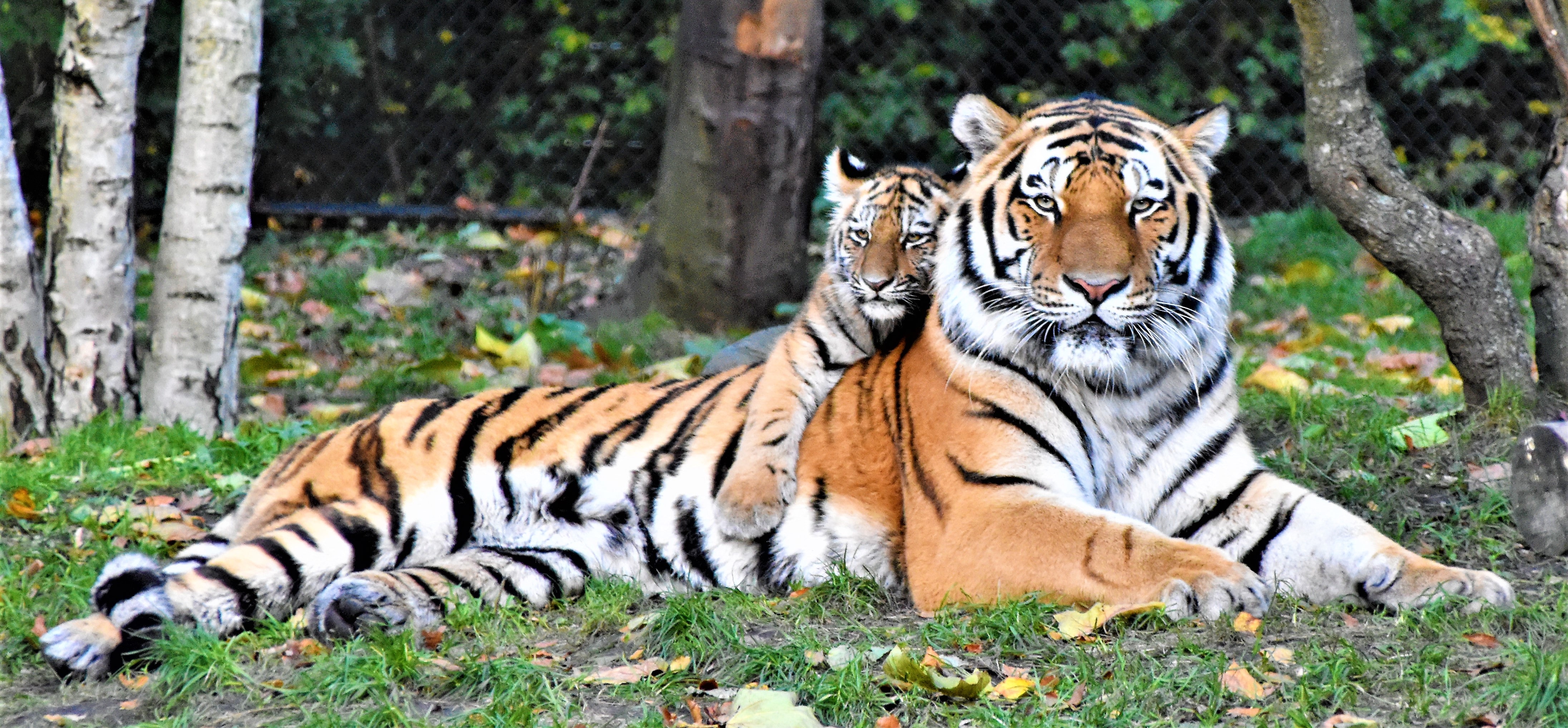
Though still endangered, tigers are doing better this year than last year.

We hear so much about species on the verge of extinction that we have to blink twice get it through our heads that anything is coming back. That’s why I like today’s story.

Dino Grandoni reports at the Washington Post that “tigers are having a good year. Nepalese officials announced [in July] that the top predator’s numbers within the country’s borders have more than doubled in a bit more than a decade. Across Asia, there are as many as 5,500 tigers prowling jungles and swamps, a leading wildlife group said last week, a 40 percent jump from its 2015 assessment.

“The slow but steady rise in the big cat’s estimated population comes as biologists get better at tracking the animal and marks a high point amid a deepening extinction crisis that may see as many as a million plants and animal species disappear worldwide because of habitat loss and climate change.

“Tiger researchers, while optimistic, warn that the fierce hunter remains under threat from both poaching and encroachment into its remaining habitat. …

“ ‘It’s a fragile success,’ said Dale Miquelle, tiger program coordinator for the Wildlife Conservation Society. ‘There are still many pressures on tiger populations, and they are disappearing from some areas.’

“There are between 3,726 and 5,578 tigers in the wild today, according to the International Union for Conservation of Nature (IUCN), which tracks the status of plants and animals facing extinction. Tens of thousands of tigers once roamed Asia.

“One big reason behind the recent jump in tiger estimates: Scientists have simply gotten better at counting the cats, placing motion-sensing cameras in more spots to identify their territory. …

“But a combination of expanding protected areas and targeting poachers who sell tiger parts for use in traditional medicine has allowed tigers to stabilize or recover in China, India and Thailand.

“ ‘In all of those countries, tiger conservation has been a priority at the highest levels of government,’ said Ginette Hemley, senior vice president of wildlife conservation at World Wildlife Fund.

“Asia’s most iconic predator is perhaps doing best of all in Nepal, where the estimated population has soared from 121 to 355 since 2009, its government said Friday, after the small Himalayan country committed to restoring habitat and dispatched military units to patrol for poachers.

“The grassy lowlands between Nepal and India near the Himalayan foothills — known as the Terai — teem with grazing animals, making it among the most productive potential habitats for the carnivore. …

“Tigers once roamed from Turkey in the west to the eastern coast of Russia and from frigid forests of Siberia in the north to tropical islands of Indonesia in the south. But a century of hunting both tigers and their prey has restricted their range and decimated their numbers.

“By the 1940s, wild tigers vanished from Singapore and Bali. By the 1960s, they were gone for good in Hong Kong and Java. In recent decades, they disappeared from Cambodia, Laos and Vietnam. And today, they continue to die out in Malaysia. …

“Both revered and feared across the globe, the tiger is a classic ‘charismatic megafauna’ — a big, regal animal that receives outsize attention and money in the conservation movement. But by protecting tigers, Miquelle said, conservationists end up protecting entire ecosystems on which other animals and people depend.

“ ‘When we talk about protecting tigers, you’re really talking about protecting the environment that people also need to survive and live a better life,’ he said.

“Yet, as tigers rebound, conflicts arise. In India, home to two-thirds of the world’s wild tigers, the big cats killed 383 people between 2010 and 2019, testing the tolerance of locals for living among them. A protest erupted in a Nepalese village this June after tiger and leopard attacks.

“In a bid to bolster incomes and provide economic incentive for tiger conservation, groups such as the WWF are encouraging residents to open their homes to ecotourists hoping to see the animals.

“Further complicating conservation efforts is Russia’s war in Ukraine, which has made it more difficult for researchers to collaborate with Russian counterparts and to attend a major tiger forum in the port city of Vladivostok scheduled for September.

“And rising seas fueled by global warming threaten to inundate tiger-filled mangroves in Bangladesh, though climate change may end up expanding the cat’s range in Russia.

“Despite the gains, tigers are still officially classified as endangered in the IUCN’s Red List of Threatened Species. And countries still are failing to double their numbers.

“ ‘We haven’t succeeded in that process,’ Miquelle said. ‘But we do feel that there are more tigers today than there were 12 years ago — that progress is being made.’ ”

More at the Post, here.

Read Full Post »

Photo: Haven Daley/AP via NBC.
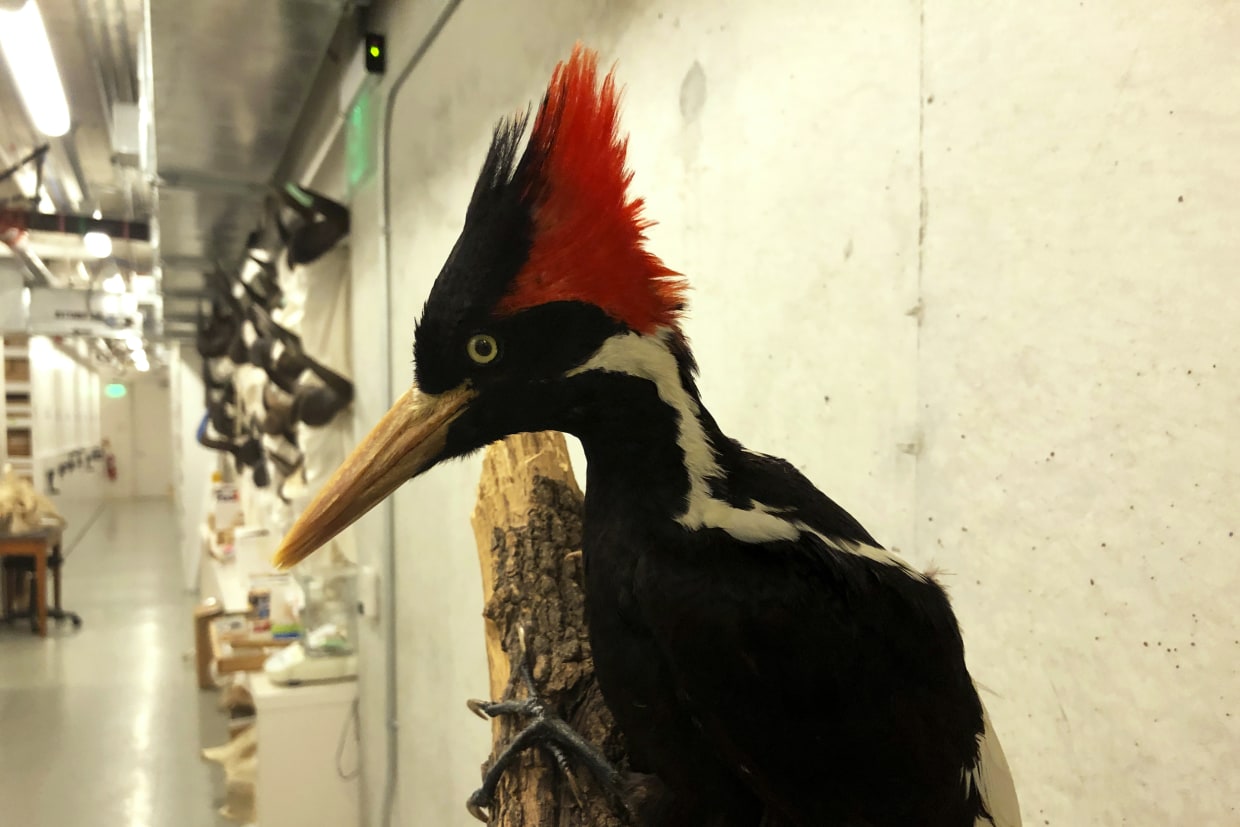
An ivory-billed woodpecker specimen on display at the California Academy of Sciences in San Francisco. The ivory-billed woodpecker has been officially declared extinct, but hope lingers on.

Jenni Doering at the environmental radio show Living on Earth recently interviewed a woman who works to protect endangered species — and who sometimes fields calls from enthusiasts who think they have found the last living … whatever. The interview begins with Curry’s memory of an encounter that opened her eyes to the parallel lives we are living with wild creatures.

“JENNI DOERING: I talked with Tierra Curry, a senior scientist with the Center for Biological Diversity. Today she mostly has a desk job, working towards getting legal protection for endangered species, plants and animals, but she started by telling me about a close encounter she had a while back working with animals in Alaska. …

“TIERRA CURRY: One winter morning, it was my job to take two bald eagles in really large dog kennels out to this flight center. And there happened to just be a huge blizzard that day. And in Anchorage, when there’s a blizzard, your life doesn’t shut down, you just keep going. And so you just go out on the road and try to make a lane and hope for the best. …

“I kept having to get out of the car and chink the ice off my windshield wipers. And because this was my first winter in Alaska, I didn’t even really have an ice scraper. So, I’m embarrassed to say this, but I was using a credit card. I’m just like stuck there with my head down, it’s pouring snow, I’m sure my hair’s freezing and, and I look up and there’s a wolf at the edge of the woods, just looking at me. And I stared back at it. And it was just this moment where I was hyper aware of being a human. I’m here, at this moment, on a Tuesday morning, outside Anchorage. And this wolf is here too. And we just stared at each other and shared this moment. And we’re both dealing with the snow. … And then we both just went on about our schedules after that moment. …

“I work on all kinds of species across the country, from crayfish to butterflies to the Humboldt martens, just whatever is endangered and needs help if it’s a plant or an animal. And people contact me regularly when they have an experience with one of these animals. Like, if someone has a monarch butterfly that they’ve watched grow from a caterpillar and it isn’t doing what they think it should be doing, they contact me for advice.

That ranges from ‘my monarch lacks self confidence’ to, like, ‘it’s the wrong color’, or ‘should I help it out of its shell?’

“Or one time somebody found me because their dog was down in the creek and came back with a blue crayfish attached to its lip. And they had heard on the news that there was this endangered blue crayfish. … I sent the pictures to crayfish researchers in that state and it actually was a species that we had petitioned for protection for and this ended up being a new location for it. …

“One time, there was a fairy shrimp in Florida called the Florida fairy shrimp and we petitioned for protection for it, and the Fish and Wildlife Service said that it was extinct. And so that was hard and we put out a press release about the Florida fairy shrimp being gone. And then, this woman a couple months later, the roads around her house flooded and she found a bunch of fairy shrimp on the road. And she thought that maybe these fairy shrimp were the Florida fairy shrimp and she didn’t know what to do. …

“She contacted the state Wildlife Commission, a local Marine Lab. Upon their advice, she went and bought a tank and food to feed them. She just wanted so desperately to help these fairy shrimp. And she felt so much responsibility, because beyond compassion for the individual animals, she was afraid they were going to get run over, or that vector control was going to spray for mosquitoes and that it would kill them. She felt responsibility for the fate of the entire species. What if she had found this animal that was just declared extinct.

“And for days, it took over her life, she dropped, like, everything she was doing to try to take care of these shrimp to see if she could save the species. … They ended up being the common species of fairy shrimp in that area. But they could have been! So it’s really important that when people do have these encounters, they report it to someone who could help save them because it’s entirely possible that it’s just something that researchers didn’t find, and that you could find it. …

“Just take a picture, take a bunch of pictures of it, don’t disturb it. … Mostly just take the pictures so that you can contact the researcher or contact me and I can find the researcher to find out what it is. Most of the time unless an animal is hurt — even if it is hurt — just contact somebody who has the skills to go pick it up.”

More at Living on Earth, here.

Read Full Post »

Photo: Tohumtoprak.
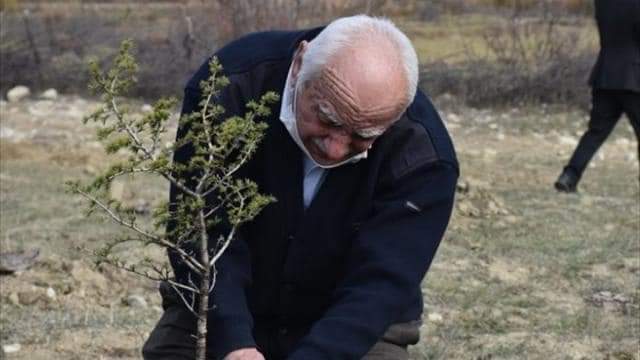
Working with his team and villagers, retired forest chief Hikmet Kaya has helped create a forest on once-barren land in Turkey.

Around the world, people have learned that planting trees can help us fight back against global warming. But it’s not as easy as sticking them in the ground. You have to ensure they live. And thrive.

Jessica Stewart reports on one initiative at My Modern Met, “Hikmet Kaya has proved that good intentions and hard work can yield big rewards. The retired Turkish forest management chief has posed proudly in front of the barren land that he and his team have transformed into a lush forest.

“He began his career in the town of Sinop in 1978 and while he retired 19 years later, his legacy has continued to grow — literally.

“Working together with his team and villagers, he brought in and planted 30 million saplings over the course of his tenure. Long after his retirement, these trees have continued to grow; and today, this barren stepped land has undergone an incredible transformation. … Needless to say, he admits he’s very happy with the results.

“It’s a wonderful example to set for the rest of the country. According to Global Forest Watch, Turkey has seen a 5.4% decrease in tree cover since 2000. … Combatting deforestation often comes down to governmental policy changes, which makes it important for individuals to know who they are voting for and to make sure their environmental concerns are heard. Still, that hasn’t stopped people from taking matters into their own hands and taking action.”

More at My Modern Met, here (where you’ll also find links to tree-planting stories from the Philippines, Pakistan, and Ethiopia).

There’s a tree maven in India who worked without help. You may have read about him. I’ll share Andrei Tapalaga‘s History of Yesterday story in case you missed the news.

“When talking about saving the environment, most people come with the comment of ‘how much difference will I make?’ … In this article, I want to present a man who has defied any kind of odds and showed the world that if you set your mind to something it will become possible.

“Jadav ‘Molai’ Payeng spent 40 years of his life planting trees, gaining the nickname of ‘Forest Man’ in India for transforming a [barren island] into a forest. [At this point] Payeng had covered 1,400 acres with trees. There is no exact number of trees as he never kept track, but we are looking at around 1.5 million trees planted in 40 years.

“Payeng was born in 1963 near the small rural town of Jorhat, India. From a young age, he saw a small island near the coast of the Brahmaputra River suffering from erosion. In many of his interviews taken by the media in India, he described that he had spent some of his [childhood] playing in that forest and it was heartbreaking seeing its vegetation slowly die.

“That is why in 1979, when Payeng was 16 years of age, he decided to plant at least one tree a day for as long as he lives, calling it giving back to Mother Nature. … The start to this incredible journey was difficult, not only [considering] the road ahead, but it was simply difficult to find tree seeds to plant. His vision was not to plant only one type of tree, but many different types. …

“As the years went by, the problem of finding seeds was solved as the trees he had planted years ago started to give seeds. With more seeds, he was able to plant even more trees every day. The island is surrounded by a flowing river, so the water supply was never a problem. …

“There are many people out there just like Payneg who have dedicated most of their life toward an honorable cause but rarely get noticed. The media in India actually discovered Payeng by mistake when in 2008, a herd of over 100 wild elephants strayed into the forest he had created.

“Payeng notified the forest department about the elephants and they thought he was crazy at first as there was no forest on the island. Upon the forest department’s inspection of the island, the community around Jorhat told them about Payeng’s efforts, at which point the media from India bombarded Payeng. [He] was also made an official forester for the forest he had created on Majuli island.

“In 2012 Payeng was interviewed by the Times, where he confessed that he had always asked for help but no one wanted to assist him. … Now the island is greener than ever whilst being inhabited by all sorts of wildlife from rabbits to tigers and even rhinos. The plantation of trees had slowed down as Payeng is becoming old and tired. However, he is trying to make his children continue what he had started.”

For more on Payeng’s initiative, click at History of Yesterday, here.

Read Full Post »

Map: Jacob Turcotte/Christian Science Monitor.
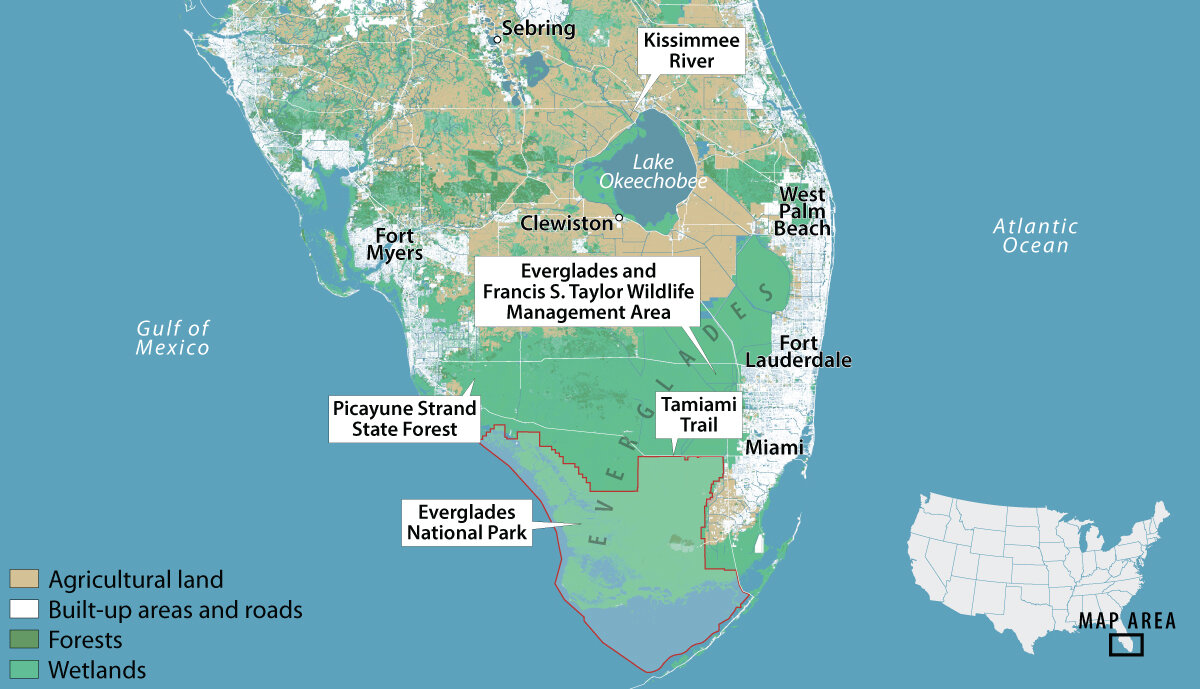
Efforts are afoot in Florida to save the the biodiversity of the Everglades by saving the water.

Last Thanksgiving, when John and family went to Florida, they sent great videos of a ride on one of those Everglades airboats that seem to float above the surface and allow visitors to get up close and personal with Everglades wildlife.

I had read, though, that the Everglades region was in trouble from overdevelopment and water pollution. Today’s article shows people are making a strong effort to protect it.

Richard Mertens has the story at the Christian Science Monitor, “Eight hundred feet up, the helicopter banks hard to the left. The horizon disappears. Mark Cook, an avian biologist, peers out his side window at a small irregular patch of water below. It’s hardly distinguishable from innumerable other patches that lie in every direction, dark and shining amid a ragged expanse of brown marsh grass and green tree islands.

“There’s one small difference: This patch is flecked with tiny specks of white, scattered like scraps of paper around a puddle.

“ ‘This year is pretty quiet,’ Dr. Cook has been saying. ‘It’s not very good for wading birds.’

“Now he looks more closely. The specks resolve into a variety of different birds, not all of them white: great egrets, snowy egrets, wood storks, white ibises, and pale pink roseate spoonbills, all standing in and around the shallow water. …

“For the birds of the Everglades, it’s not really been good for almost a century. First came the plume hunters of the 1800s and early 1900s, who shot birds by the thousands so that their feathers could adorn women’s hats in New York and London. Then came the speculators, developers, and visionaries who did more lasting damage, draining the marshes, logging the cypress swamps, digging canals, and building levees. They turned the Everglades into fields and housing tracts until half of it was gone. What’s more, says Paul Gray, a biologist with Audubon Florida, ‘The half of what’s there is all screwed up.’ 

“Today the state of Florida, the federal government, and many private organizations and individuals are working to bring the Everglades back -– at least the half that’s still left. Everglades restoration became national policy in 2000 when Congress adopted the $7.8 billion Comprehensive Everglades Restoration Plan.

“Since then, lawsuits, political fighting, and dwindled funding have at times slowed progress. But in recent years restoration efforts have gained momentum. Some projects have been completed, and new ones are underway. …

“ ‘The Everglades ball is rolling,’ says Peter Frederick, a retired wildlife ecologist at the University of Florida and an expert on Everglades restoration. 

“But will it work? Everglades restoration is a long-term undertaking. It’s expected to cost $23.2 billion and take until 2050 to finish. People often say it’s the largest ecological restoration project ever. ‘A lot could stop it,’ says Dr. Frederick. …

The Everglades system is unique in the world, an inextricable mix of water and vegetation resting on a shallow bed of porous limestone.

“More than just Everglades National Park, the Everglades once encompassed the whole southern third of the Florida Peninsula. … In those days, water that fell during Florida’s summer rains drained slowly south into Lake Okeechobee, a huge basin that in many places is hardly deeper than a suburban swimming pool. When the water was high, it lapped over the southern rim and flowed a hundred miles south in a broad sheet, through swamps and saw-grass marshes, wet prairies and sloughs, before finally discharging through mangrove swamps and coastal islands into the Gulf of Mexico. It was a rich and biologically diverse ecosystem governed by water. And the land was very flat. …

“Today those Everglades are mostly gone. They’re no longer a single vast interconnected system of flowing water but a collection of divided and diminished parts – large shallow basins separated by levees and tied together by gates and canals, with some devoted to holding water, some to cleaning it, and others to conserving wildlife.

“Lake Okeechobee is diked and polluted, and the swamps and saw-grass marshes that once received its overflowing waters are a checkerboard of sugar cane fields. The flow of water from north to south is much reduced, where it survives at all. For all its natural abundance, the Everglades today is an artificial landscape, a creature of engineering as much as topography and nature. 

“The main challenge of restoration is hydrological. It’s to re-create the old pre-drainage conditions by delivering more clean water to the Everglades. It’s to bring back the old cycle of rising water in summer followed by a long drying out through the winter. It’s to restore, at least in part, the slow flow south.

“The easiest way to accomplish this would be simply to pull the plug: tear down the dikes and levees, fill the canals, and send the engineers home. But restoration is also political, and it has always involved more than the Everglades. Its aim is also to provide clean water to coastal cities and estuaries and protect them from flooding. It’s to preserve and irrigate an agricultural district the size of Rhode Island that sits in the middle. …

“ ‘They all say the best engineer is no engineer at all,’ says Dr. Frederick. ‘Let nature do the work. The problem is that we now want to do more things with that water than we used to.’

“Dr. Cook enjoys a stork’s-eye view of the Everglades. His weekly flights take him over both the good and the bad, the degraded and the only partly degraded. [Some] areas are thick with cattails, a sign of nutrient pollution. Passing over one of these, Dr. Cook says, ‘We can’t get it back to what it once was, for maybe 100 to 200 years. But we can improve it for wildlife.’ …

“Sometimes there are surprises. In 2017, Hurricane Irma inundated the Everglades. The next spring, birds nested in numbers no one living had ever seen. To biologists, it seemed a vision of the old Everglades – and of what might still be.

“ ‘As an ecologist, you think, you get the water right and maybe they’ll come back,’ Dr. Cook says.”

Lots more on what’s being done at the Monitor, here. No firewall.

Read Full Post »

Photo: Living Habitats and National Wildlife Federation.
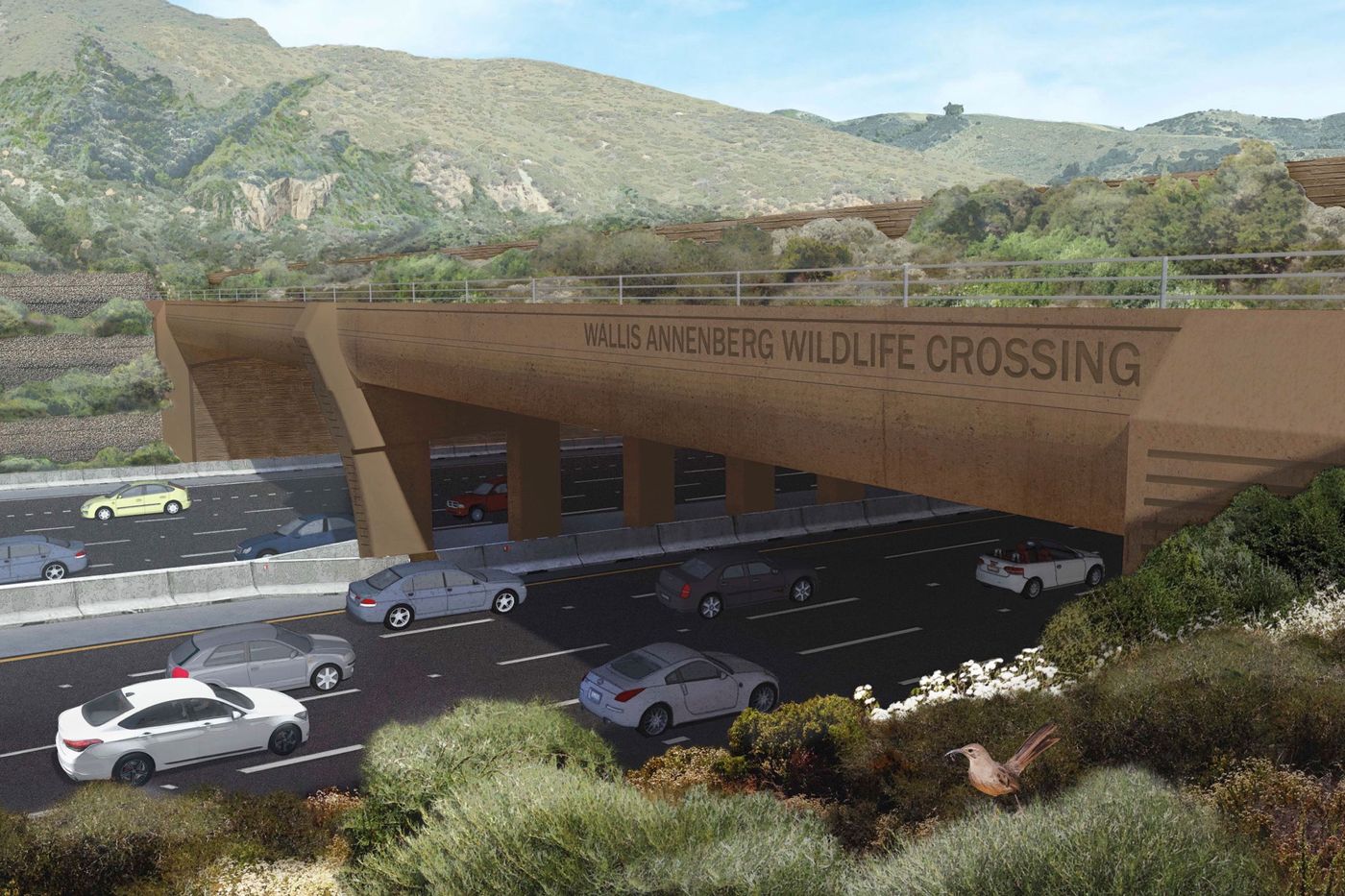
The Wallis Annenberg Wildlife Crossing should be completed over the Route 101 freeway on the western side of Los Angeles County by 2023, allowing mountain lions to easily cross eight lanes of traffic.

As the human species userps habitat from other species, there are at least a few efforts to mitigate the damage. At Curbed, Alissa Walker reports on California’s plans to build a freeway overpass that by 2023 should substantially expand the habitat of local mountain lions. It will be the largest animal crossing anywhere.

At the Guardian, Patrick Greenfield has an overview of safe passages around the world for elephants, tigers, sloths, and more.

Greenfield writes, “From a tiny railway bridge for dormice in the UK to elk, deer and bears benefiting from a slew of new animal crossings in Colorado, wildlife bridges are having a moment. …

“In January [2021], we reported on Sweden’s plans to build a series of ‘renoducts‘ to help reindeer traverse the country’s main roads. … In southern California, work is due to begin on the largest wildlife bridge in the world in 2022, to connect isolated mountain lion populations north of Los Angeles that are becoming dangerously inbred. [And there’s $350m of the] $1.2tn infrastructure package for wildlife bridges to lessen the multibillion annual cost of collisions.

” ‘Ten years ago, wildlife bridges were experimental. We didn’t know whether they would work or not. Now they’ve shown they get huge reductions in collisions. In some cases, 85% to 99% reductions,’ says Rob Ament, a road ecology expert at Montana State University. ‘You can design them for many species. Even out in the plains, we’re getting moose crossings in North Dakota.’

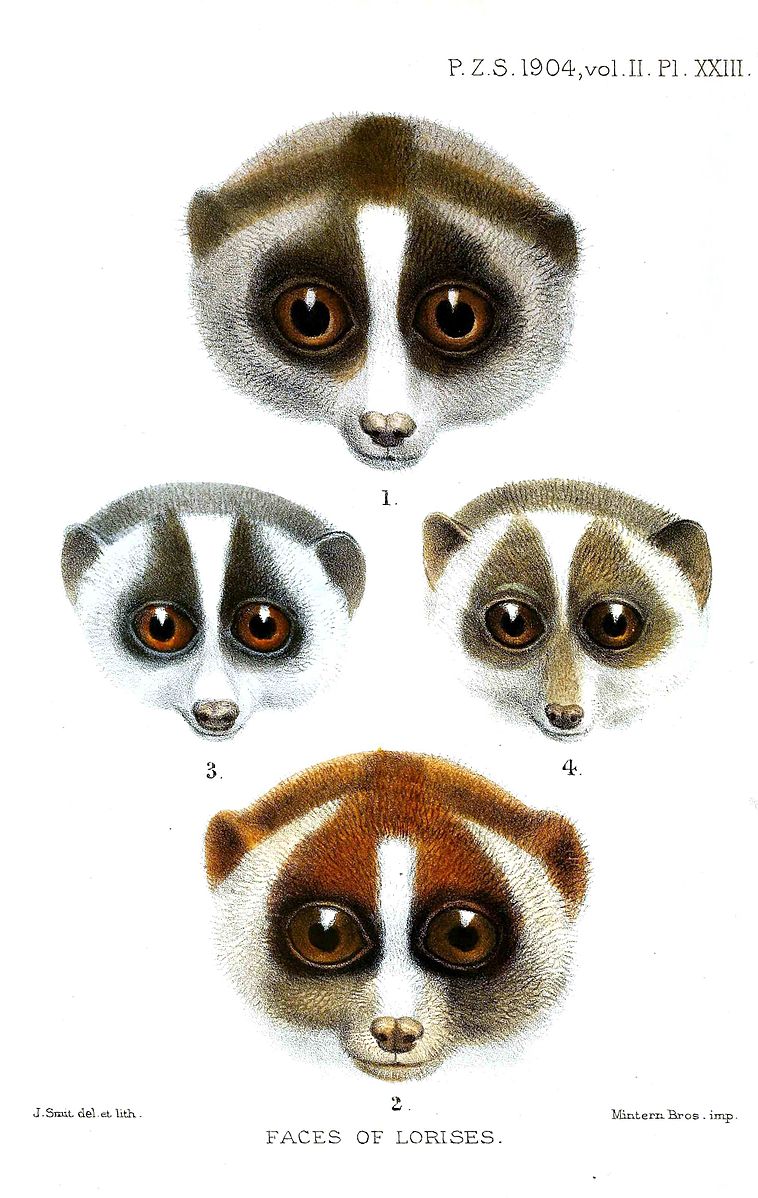
“Wildlife bridges are found on every continent: there is an elephant underpass near Mount Kenya; the Netherlands has a network of ecoducts that may help the country’s first wolf pack in more than 140 years gain a foothold across the densely populated country; suspended water pipes are helping Java’s endangered lorises; [below]; and a bison bridge may help the animals cross the Mississippi.

“Here are five projects from around the world helping animals make their way.

“Alligator Alley, Florida. The 129km (80-mile) stretch of road between Naples and Fort Lauderdale bisects the Everglades, an enormous wetland that is home to thousands of alligators, deer and the endangered Florida panther. … Dozens of underpasses and fencing help wildlife navigate the road.

A camera trapping exercise found panthers, black bears, skunks, deer, bats, birds and even fish use the crossings. …

” ‘Fencing is critical along Alligator Alley. It is a 10ft-high chain link fence with three-strand barbed wire on top. That’s to keep the wildlife off the roadway and on the crossing,’ says Brent Setchell, a design engineer at Florida Department of Transportation, who identifies potential crossing sites by monitoring road collisions with panthers and bears. ‘The fascinating thing is we just started monitoring the crossings four or five years ago. We found an abundance of wildlife.’

‘The tunnel of love’ on the Great Alpine Road, Australia. Stretching through the Victorian Alps in south-east Australia, the Great Alpine Road posed an existential threat to a colony of critically endangered mountain pygmy possums. Even though there are only about 150 of the marsupials on Mount Little Higginbotham, testing revealed genetic differences between sub-groups separated by the road, which are also threatened by fire, disappearing food sources and invasive species. Conservationists decided to build a ‘tunnel of love’ between the isolated groups to improve mixing and strengthen their chances of survival. …

“India’s tiger corridor. India’s first dedicated wildlife underpasses were a hard-fought victory for environmental campaigners. The nine crossings in the Pench tiger reserve were a court-ordered mitigation measure on the country’s longest road, the 4,112km National Highway 44, which runs down the middle of the country. Collisions with big cats still happen on the multi-lane motorway, but environmentalists say the underpasses have highlighted the need for more wildlife crossings on India’s road network. A 2019 camera trapping exercise found at least 18 species use the crossings, including tigers, wild dogs, sloth bears, civets and leopards. …

“Bhutan’s elephant crossing. Nearly 700 Asian elephants roam Bhutan’s forest on the eastern edge of the Himalayas. The small Buddhist country sandwiched between China and India is known for its dramatic landscapes and environmental leadership, as one of the few carbon negative countries in the world. On the 183km east-west motorway, Bhutan’s first elephant underpasses were constructed to help the threatened animals move through the landscape. Monitoring from 2015 to 2017 found that 70 groups of elephants were recorded near the passes, with three-quarters passing through the structures.

“Sloth bridges in Costa Rica. Wildlife passes are not always bridges or underpasses. In Costa Rica, canopy bridges are used to help sloths, monkeys and other wildlife cross roads to combat collisions, dog attacks and electrocutions on power lines. The rope bridges, which cost about [$200], are installed by the Sloth Conservation Foundation in areas where rainforest has been interrupted by human development on the country’s Caribbean coast. Crossing roads is often deadly for the slow-moving creatures and the canopy bridges also help combat inbreeding. ‘People look at them and think that they’re so poorly equipped to survive because you see them crossing roads and trying to move around and they look so awkward and useless,’ Rebecca Cliffe, head of the Sloth Conservation Foundation, told Bloomberg earlier this year. ‘But if you put them in a well-connected rainforest, then they are masters of survival.’ ”

Read the Guardian story here. Want more? The article at Curbed on the world’s longest animal bridge is here. Both of these publications are free although donations are encouraged.

Read Full Post »

Once again radio’s Living on Earth, has a holistic take on current events affecting the environment. Host Steve Curwood and environmentalists elsewhere have noted the fire-control success of indigenous people and long-ago subsistence farmers — fighting fire with fire.

In today’s story we learn how good fire management, though made more difficult by increased development, can benefit both humans and wildlife.

“The record-setting wildfires in the Western U.S. this year have had devastating consequences for the people who have lost their homes and businesses. But as Aaron Scott of Oregon Public Broadcasting [OPB] reports, many species of plants and animals depend on forest fires to create and maintain the habitat they need.

“AARON SCOTT: Ecologist Paul Hesburgh and Bill Gaines are taking us on a tour through a section of the Washington Cascades that was burned by the Tripod Fire in 2006.

“BILL GAINES: Paul, I’m not seeing a lot of woodpecker cavity activity. …

“SCOTT: The reason we’re looking for woodpeckers is that they are a poster animal for how scientists like Gaines and Hesburgh are reimagining fire. Instead of seeing fire as a negative thing that needs to be suppressed, they are finding it is essential to the well-being of many plants and animals. For example, burned forests may look barren to us. But for wood-eating insects and their predators, they are a feast waiting to happen. Gaines marvels at how woodpeckers just seem to flock in. …

“And they are far from alone. From aspen to morels, from blackberries to bees. There’s an incredible range of plants and animals that thrive in areas touched by fire. One of the best-known examples is the lodgepole pine, which grows what’s called serotinous cones.

“PAUL HESBURGH: And so every cone scale is held together by a drop of resin, and it takes the heat of a fire to melt that resin and cause those cone scales to open up.

“SCOTT: The cones shed seeds that quickly grow into dense stands of young trees. And these stands are one of the only hunting grounds for one of the country’s most adorable and threatened predators. The Canada lynx. …

“GAINES: We’re going to pretend we’re a Canada lynx. And what we want to find is our prize food, you know, a snowshoe hare.

“SCOTT: Gaines crouches down in stalks his way through the thick branches.

“GAINES: You can see here a scat from a snowshoe hare, so we know they’ve been here. Tells us this is good habitat for snowshoe hare and good habitat for lynx.

“SCOTT: That’s because these young pines are like a goldilocks zone. They’re just right, big enough to provide shelter for the bunnies with branches low enough for them to hide under. But as the pines grow taller and their branches no longer touch the ground, the bunnies and the lynx that hunt them have to go in search of new stands. …

Few northwest animals have evolved to live in thick, unchanging forests. Instead, most need an evolving clumpy mosaic of landscapes to meet all their needs. And the main driver behind that constant process of change and renewal is fire.

“HESBURGH: If you were to roll the film back a hundred, hundred and fifty years in history and take a look at a big landscape panorama, what you would see is places that were burned yesterday, places that were burned five years ago, ten years ago, that create this variety of habitats. …

“Where the forest is all grown up and blended. There are some critters still making a living in that landscape, but it has nowhere near the variety of the former landscape before it was homogenized.

“SCOTT: Today’s thick forests combined with a warming climate also set the stage for megafires. The result is two starkly contrasting landscapes and a dynamic far different from the one native animals evolved with. …

“GAINES: Lynx recovery is either made or are not here in this part of Washington. This is the largest population in the lower 48 states.

“SCOTT: And it doesn’t stop there. Fire has a crazy interaction with water by helping to thin out dense spreading forests, it actually leads to more water flowing into wetlands and streams. That encourages rich cool dining rooms for everything from bear to fish. No one is advocating that we let all fires burn freely, especially the human-caused ones. But a consensus is emerging that as crazy as it sounds, we need to restore regular fire to the land to help our fellow plants and animals survive.”

More at Living on Earth, here. Check out the original, too, at OPB in Portland, Oregon.

National Geographic, meanwhile, explains how “controlled” or “prescribed” burns can protect nature: “Controlled burns have become more important as fire suppression efforts have grown over the last century. Historically, smaller fires occurred in forests at regular intervals. When these fires are suppressed, flammable materials accumulate, insect infestations increase, forests become more crowded with trees and underbrush, and invasive plant species move in.

“Controlled burns seek to accomplish the benefits that regular fires historically provided to an environment while also preventing the fires from burning out of control and threatening life and property.”

Read Full Post »

3971

Photo: John Sturrock
“A modern mania for canal developments is reshaping cities by offering oases of calm in fast-moving town centres,” says the
Guardian.

When our kids were small, the Barge Canal (otherwise known as the Erie Canal) was as familiar to them as their friends’ backyard, as the elementary school, as the Hicks and McCarthy luncheonette. It ran right through town. I remember taking a canal-boat ride up and down (vertically) through the locks with a visiting grandmother and a picnic lunch.

In today’s story, John Vidal writes at the Guardian about a new focus on canals in England.

“Every second Monday of the month, a small group of volunteers meets in the training room of a Birmingham supermarket. They discuss what has long seemed to many of their friends a crazy and probably doomed idea: how to excavate a contaminated 40-year-old waste dump, create an urban marina, restore three miles of derelict canal and build several new bridges and locks.

“Last month, however, the meeting of the 18-strong Lapal Canal Trust committee was joyous. After 20 years of trying to restore this short stretch of the 200-year-old Dudley No 2 canal, permission had finally been granted, they were told.

“What’s more, a feasibility study showed that the plan – which would link the suburbs of California and Selly Oak by water – could be a catalyst for nothing short of the economic and ecological renaissance of a large area of south Birmingham.

“The new canal will generate jobs but also provide space for new houses, as well as pollution-free walking, boating and cycling routes. The marina for 60-100 boats will stimulate businesses and bring in tourists. The wildlife corridor created along the canal will attract herons, otters, fish and waterfowl. And although the whole project will cost about £5m, the study said it would pay for itself in six years.

“ ‘It will improve life in the city. It will complete an old canal loop around the city – we owe it to the future to restore it. … No one is objecting and we have nearly raised the first £250,000 – enough to start work,’ says the Lapal trust CEO, Hugh Humphreys.The Lapal plan is one of at least 80 canal renaissance projects currently making British towns and cities suitable for populations seeking tranquility, leisure space and new ways to move around. …

“It’s not just happening in Britain. … But few countries have as many urban canals as the UK, a legacy of British industrial might – and now a golden opportunity for transformation. Some, such as the Aldcliffe yard development in Lancaster, will see just a few expensive houses built on old industrial canal works; but many seek to create large new ‘liveable’ urban communities in what were some of the Britain’s polluted places, such as Wolverhampton, Leeds, Manchester, Lancaster, Glasgow, Liverpool and Birmingham. …

“Three things unexpectedly changed everything. A postwar infant canal leisure industry emerged; dozens of passionate heritage charities like the Lapal trust voluntarily restored many of the old waterways; and water proved to be the vital ingredient to kickstart a new, property-based canal mania.

“ ‘The restoration of the canals in the 1950s and 60s was thanks to a remarkable act of defiance by unpaid volunteers against the authorities,’ says canal historian Mike Clarke.

“ ‘Volunteers were vital. It’s unlikely there would be many canals today without them. The government, many influential people, and the British Waterways board, were all happy to see the majority filled in. … They told the government, “if you want to complain, take us to court.” …

” ‘They formed isolated stretches of peaceful country within the urban environment. Planners eventually saw them as an asset, and government at last understood their potential for leisure.’ …

” ‘The job is only half done in Britain,’ says Alison Smedley, policy officer of the Inland Waterways Association. ‘The restoration of Britain’s canal system is in full flow but there is so much left to do. … There are still about 1,800 miles left to be restored, although many [canals] have been filled in and are unlikely ever to be reclaimed,’ she says. …

“Canal and River Trust (CRT), the government-part-funded charity set up in 2012 to take over and manage the 2,000 miles of state-owned canal formerly run by British Waterways, [calculates] that about 10 million people a year visit the canals to fish, walk, cycle, observe wildlife or go boating. …

“In addition, canals have become a real alternative for people unable or unwilling to buy city property. .. Ten years ago 10% of the boats on British waterways were used as primary residences. It is now 26%, says the CRT. …

“ ‘Almost unnoticed, the canals have become important sanctuaries for urban and rural wildlife,’ says Simon Atkinson, head of conservation at the Birmingham and Black Country Wildlife Trust. … Otters, water voles, kingfishers, ducks, herons, fish, dragon- and damsel flies, even rabbits, are seen on the 100-odd miles of Birmingham canals, some of which are classed as local nature reserves. …

“ ‘If development is done well, it can enhance nature. The canals have never been more important, but it could go the other way. There is a real opportunity for high quality inner-city development and nature to flourish together.’ ”

For me as a lover of Dickens (the novels, not the man), I can’t think of English canals without thinking of the dark spirit of Bradley Headstone in Our Mutual Friend. In fact, maybe I’m ready to read that one again.

Learn more about the benefits and challenges of canal popularity here.

Read Full Post »

Older Posts »