Feeds:
Posts
Comments

Archive for September, 2012

Gwarlingo pointed me to Time In, an initiative that provides arts experiences for children who might not get such enrichment any other way.

Time In brings some of the youngest, most at-risk public school children OUT of underserved classrooms and INTO the world of the living arts every week of the school year.

“Starting from Pre-K, children {try] hands-on art in our studio one week, with hops to the world’s best galleries and museums the next! Regardless of their backgrounds, children are children. The world of imagination, creativity and fantasy is their most fertile ground. Time In acknowledges children’s phenomenal gifts and innate abilities and is dedicated to developing learning environments that stimulate, rather than stifle.

“We are proud to have changed the lives of more than 1,000 underserved Pre-K-2nd graders since 2006, and look forward to working with over 400 children this year. Time In will continue to foster not only wonderfully conceptual thinkers, but perceptive and aesthetically sensitive children, each of whom will be poised to nourish our society in the days to come.”

Read more. Or vote for the nonprofit on Facebook as Part of Chase Community Giving.

Read Full Post »

“Indiana University’s trustees voted [in June] to create a school of philanthropy, the first in the nation and a sign of both the growing amount of scholarship on the nonprofit world and intense demand to offer rigorous training to people who work at charitable institutions.”

So writes Maureen West in the Chronicle of Philanthropy.

“Leslie Lenkowsky, a professor of public affairs and philanthropic studies at Indiana University, said the decision to start a school was a profound development for nonprofits.

“ ‘It’s a coming of age for the study and teaching of philanthropy — just as we have schools for government and business, this will be the first school for the nonprofit sector.’ …

“Indiana has long been building a serious academic program in philanthropy. It created the first philanthropy doctoral program, and last month it graduated the first students in the United States to earn bachelor’s degrees in philanthropy.”

Time will tell how much innovation the program inspires. As William Schambra, director of the Bradley Center of Philanthropy and Civic Renewal for the Hudson Institute, says, it needs to be more than a “technical training school for nonprofit managers or fundraisers.”

Read more. I think they are making a great start.

Photograph: Nguyen Huy Kham/Reuters/File
S
tudents in Hanoi were glad to perform for philanthropist (and New York City Mayor) Michael Bloomberg during an event marking the donation of motorcycle helmets.

Read Full Post »

You might be interested in this article about how Dayton, Ohio, is welcoming immigrants as part of its effort to spur economic growth.

Dylan Scott at Governing magazine writes, “In contrast to some states’ anti-immigration policies, a few cities are actively trying to attract immigrants to boost their own economies. …

“City officials estimate that 10 percent of the Ahiska Turks in the United States have established themselves here in Dayton. But they aren’t alone. There are also immigrants from Mexico, Vietnam, Samoa and elsewhere.

“Watching some of these residents’ difficulty in adjusting to their new surroundings — some encountering language barriers and others struggling to secure housing — convinced city officials they needed to do more to help.

“Dayton’s Human Relations Council, a city department that investigates discrimination complaints, started in 2010 by initiating a study into allegations from Hispanic residents regarding housing discrimination. Around the same time, City Manager Tim Riordan and City Commissioner Matt Joseph resolved to make public services more accessible for those who spoke English as a second language.

“It didn’t take long for Dayton’s leaders to figure out that incremental steps wouldn’t do, that the immigration issue needed a comprehensive solution and the involvement of the entire community.

” ‘It requires a huge partnership. There are only so many things we can do as the city,’ Joseph says. ‘And the big thing is an attitude change. We have to make sure we’re encouraging people to be more welcoming and that the incentives are running the right way. That’s our role.’ …

“Dayton officials seized on a growing academic consensus that embracing immigrants is beneficial to the country as a whole and specifically the economy. A June 2011 Brookings Institution report concluded: ‘U.S. global competitiveness rests on the ability of immigrants and their children to thrive economically and to contribute to the nation’s productivity.’ The U.S. Chamber of Commerce wrote last year that research shows ‘immigrants significantly benefit the U.S. economy.’ ” Read more.

Photograph: Tim Witmer
Sarvar Ispahi, his son Uzeir and their family moved to the United States from Russia in 2005 after Ahiska Turks were granted refugee status by the federal government. They chose Dayton because a refugee community was already forming there.

Read Full Post »

I liked this multicultural story by Fernanda Santos in the NY Times. It demonstrates that people from different cultures can adapt to one another’s foods and customs very nicely in the U.S. melting pot.

It is all happening at the Ranch Market in Phoenix.

“Tortillas are a Mexican staple of transnational appeal here, bridging divisions carved by Arizona’s tough stance on immigration and reaching far beyond Latin American borders.

“The factory, at the Ranch Market store on North 16th Street, employs a pair of Iraqi refugees to whom flour tortillas have become a replacement for the flat bread known as khubz. There are also Cubans, Salvadorans, Guatemalans and, of course, Mexicans manning the machines like the rounder, which turns the masa into balls that are then pressed and cooked in 500-degree ovens at a rate of eight dozen disks a minute.

“Refugees from Somalia buy Ranch Market tortillas as a substitute for a pancake-like bread called canjeelo. Koreans have taken to using them to wrap pieces of spicy barbecued pork, like a taco. Foodies like them because they are the closest thing to an authentic tortilla that they can find at a supermarket here.”

Read more here.

Photograph: Joshua Lott for The New York Times
The Ranch Market on North 16th Street in Phoenix churns out eight dozen tortillas a minute, cooked in 500-degree ovens.

Read Full Post »

Do you have techie talents? Consider joining the folks volunteering their technology skills for unusual causes.

“At Random Hacks of Kindness events,” writes Cody Switzer for The Chronicle of Philanthropy, “technology experts volunteer to solve problems facing nonprofits and other organizations interested in doing good.

“Programmers in San Francisco and Berlin got together recently to attempt to build a system that would allow immigrants to tell their families they’ve arrived safely at their destination without anyone else finding out.

“In Nairobi, a similar group worked on a system to report election results in real time, including incidents of election violence and accusations of voter fraud.

“In Toronto, others worked on a system that could allow Nepali women to send ultrasound pictures via mobile devices.

“All of them were volunteers, willing to lend their technological expertise to nonprofits and causes.

“These projects and others were part of the Random Hacks of Kindness weekend, a twice-yearly, 36-hour work session for designers, programmers, and technology experts to solve problems facing nonprofits and other organizations interested in doing good. The most recent events, held [in June 2012] in 25 cities worldwide, drew 900 participants, according to organizer SecondMuse, a consulting firm that works with companies and individuals on better ways to collaborate.”

The Christian Science Monitor reprinted the story. Check it out.

Photograph: Lucy Nicholson/Reuters/File
Employees at Google, Microsoft, Yahoo, and other technology companies volunteer for Random Hacks of Kindness.

Read Full Post »

Jay Walljasper appeared recently in the Christian Science Monitor (by way of Shareable). Designated one of The Monitor‘s “change agents,” he has written about ways to build a sense of community in a book called The Great Neighborhood Book.

Walljasper believes that “providing people with ways to come together as friends, neighbors, and citizens creates a firm foundation that enables a neighborhood to solve problems and seize opportunities.

“The neighborhood is the basic building block of human civilization, whether in a big city, small town, or suburban community. It’s also the place where you can have the most influence in making a better world.”

Tips are provided here.

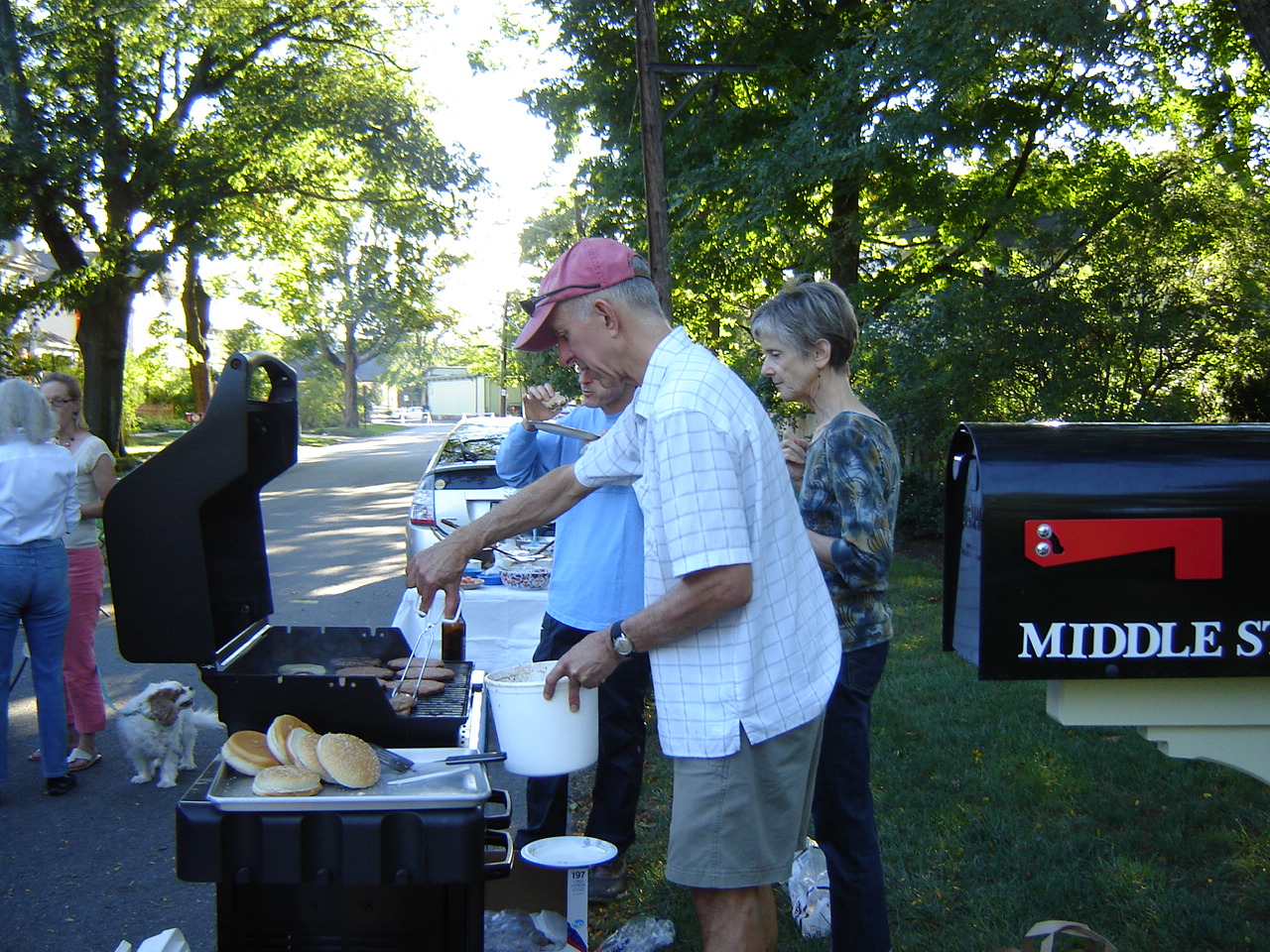
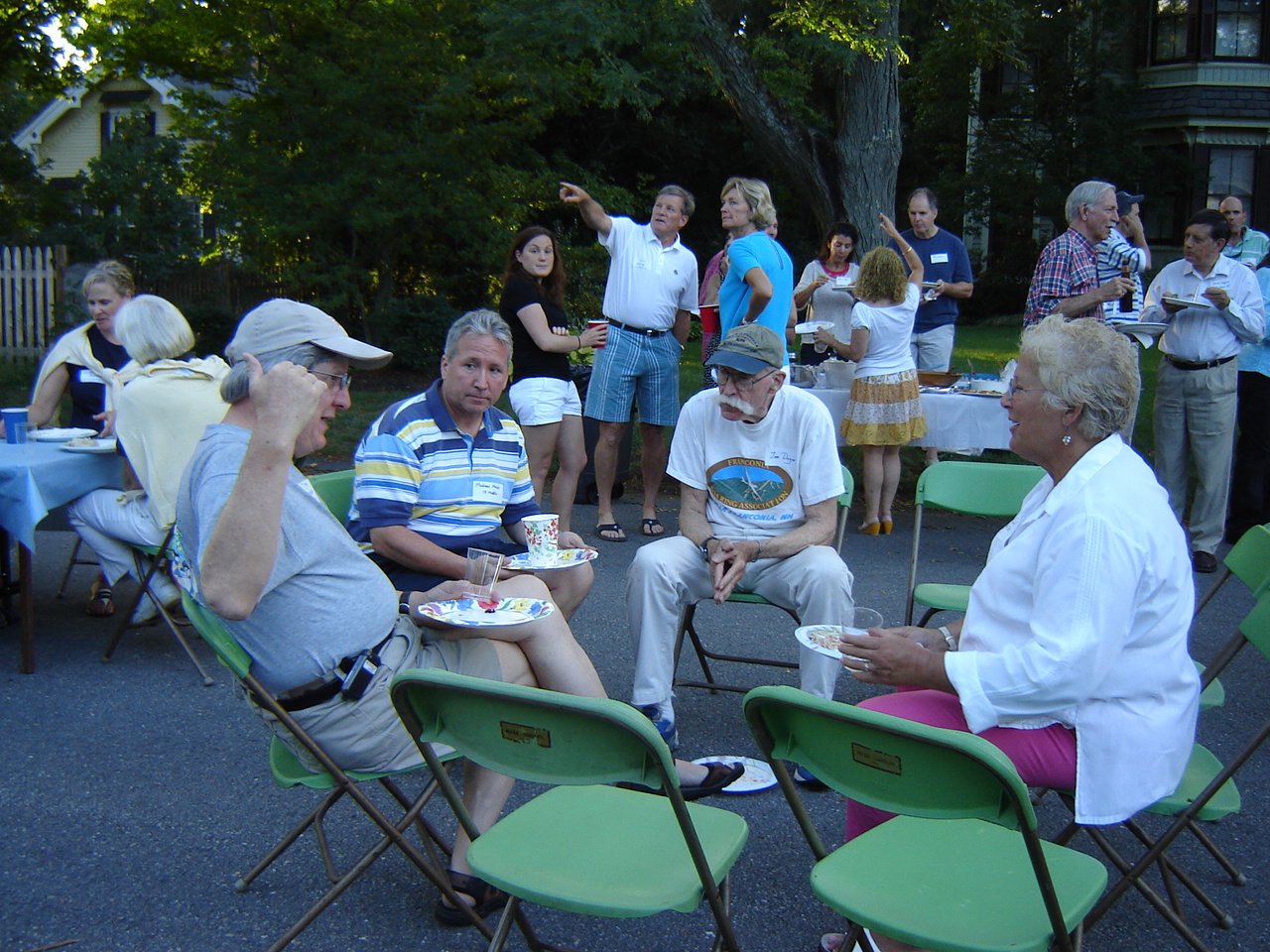
My own neighborhood has block parties on an annual basis. It hasn’t led to solving any major problems, although we did manage to get a rabid raccoon carted away not long ago. Even though most of us meet only once a year, I think we would help one anther if there was a disaster.

Pictures of Sunday’s convivial block party are below, followed by a photo of neighbors somewhere else actually working together on a project. That kind of collaboration probably produces deeper bonding.


Photograph below by Manuel Valdes/AP/File
Two volunteers hold the top of a spiral slide being installed at a neighborhood park in Kent, Wash., in 2011.

Read Full Post »

A woman in my tai chi chuan class yesterday mentioned that she was taking her son to an “Instrument PettingZoo” this weekend to see if he could find an instrument he’d like to study.

What a great name for the event! With a title like that, no one needs to explain that the idea is to help children learn about different instruments — and have fun at the same time.

This weekend’s Instrument PettingZoo is at Powers Music School.

The school’s website provides some history:

“Powers Music School is a regional, not-for-profit institution established in 1964 to provide superior music instruction and performance opportunities to all interested students. Each year the School also provides musical outreach opportunities in the community through programs such as Belmont Open Sings, the Stein Chamber Music Festival, the Peter Elvins Vocal Competition, and the Mildred P. Freiberg Piano Festival.

“The founding principles, that all students are entitled to high quality musical instruction and that music is an essential part of our lives and belongs in the community, continue to guide the School today. During 2010-2011, the School worked with over 1,000 students who traveled from 50 surrounding communities. In addition, Powers gave over 70 student recitals/community performances.”

I love the school’s dual-meaning slogan, “A great place to play.”

Makes me realize my off-and-on-music education may have left out the playful side of “play.”

Photograph: PowersMusic.org

Read Full Post »

Just realized I have long had a kind of mental mixtape of Alfred Noyes’s “The Highwayman” and Walter De La Mare’s “The Listeners.” This is disturbing as I always supposed myself to have a good memory.

The mixtape begins “The road was a ribbon of moonlight/ Toss’d upon cloudy seas” and ends ” ‘Tell them I came and no one answered/ That I kept my word, he said.’ ”

But today I reread the Alfred Noyes because it was the selection for the Poem-a-Day e-mail. It’s completely different from what I remembered. It’s all about a fair maiden [spoiler alert!] shooting herself to warn her highwayman lover that the red coats have baited a trap.

“The Listeners” is closer to what I remember teaching to a sixth grade class at Swarthmore-Rutledge Union Elementary School.

This is how “The Highwayman” really goes:

“The wind was a torrent of darkness among the gusty trees,
“The moon was a ghostly galleon tossed upon cloudy seas,
“The road was a ribbon of moonlight over the purple moor …”

Close, but no cigar.

“The Listeners” does have the line about keeping his word, but it is not at the end.

I think maybe the poems really should go together. I could make up a whole new version. That would not be so different from, say, creating a medley of show tunes, in which songs are put together in a way that brings new interpretations to the surface.

What do you think? Have you ever made a poetry mixtape?

Read Full Post »

Jim Dwyer writes lovely human-interest stories for the NY Times. On September 5, he wrote about a guy who plays music by the Hudson River for an audience of birds, fish, and whatever friends or strangers wander by.

On Tuesday morning, Jose Modesto Castillo, retired from a job in a plastics factory, walked just about as far west in northern Manhattan as it is possible to go, to the end of a long pier fingering into the Hudson River at Dyckman Street. A harmonica rigged to his head was just a breath away from his lips. Lashed to his hands with hair ties were 17 miniature percussion instruments made from items like a Snapple cap, the lid of a prescription bottle, a Spider-Man figurine, the shells of plastic eggs that once held toys from supermarket vending machines.

“Strike up the one-man mambo band.

“Mr. Modesto’s mouth danced across the harmonica, and his fingers made rhythm out of junk. He played and he bobbed. At the end of the nameless number, he raised his arms as if waving to the Palisades on the far shore. Suddenly, he noticed that he was being watched, and called out, ‘Hello señor,’ and burst into a laugh.

“It was the Tuesday after Labor Day, the first day after the spiritual end of summer, though not yet the true beginning of autumn. At the pier and tiny cove on Dyckman Street, calendars were beside the point. Mr. Modesto, 66, comes every day to play, even if only the birds and fish are there to hear him.”

Some artists can get joy even if no one is around. As a musician, Modesto sees potential in bottle caps and plastic eggshells the way a painter might see it in clouds or the sun on the subway stairs.

Read more.

Photograph: Marcus Yam for the NY Times

Read Full Post »

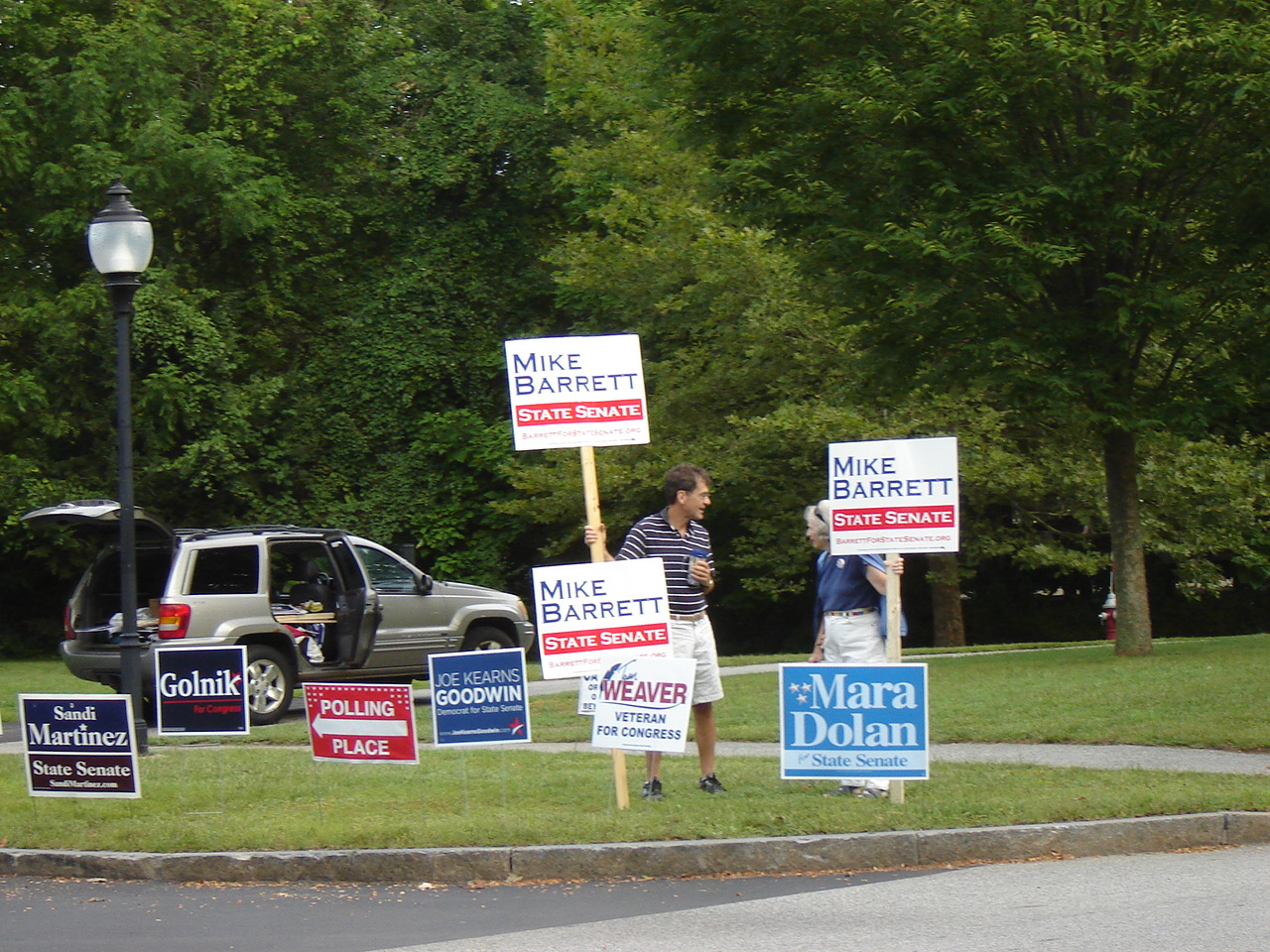
Vote

I went to vote before work. I’d heard on the radio it would be a low turnout because it was a primary and on a Thursday, which is unusual. But one hotly contested election brought out the troops.

As I left the polls, I was thinking how some folks complain their vote won’t matter or nothing will change. But I think voting is important even if it isn’t perfect.

At this very moment, people around the world are literally dying for the right to vote. And if they do get the franchise, they line up for hours time and time again even if they know it’s not perfect — too many candidates, fraud attempts, threats of violence, the wrong person winning.

A few years ago I was reading stats about Dubai, just a list of facts like population, natural resources, weather, religion. I came to the column “franchise,” and it said “none.”

None? I never really thought about it although I knew the country was a monarchy.

Franchise: none. Wow.

Read Full Post »

Here’s a guy who loves music, who loves nature, and who is taking his own quirky path to bring the two together.

On the radio show The World, Gerry Hadden interviews the impresario on location.

“We are talking about a solar power recording session in the southern Sierra Nevada mountain range, outside Granada, Spain.

“It is part of an open air recording project called Wapapura, the brain child of musician Rafa Kotcherha.

“And as Kotcherha explains, ‘for a Wapapura recording to take place, you need three elements: Music, Space and Earth.’

“ ‘The music is of course the musicians we’re going to record,’ he says.

“ ‘The space is the environment in which it is going to take place’ and ‘the earth element is the environmental non-profit, linked to the recording, which benefits from part of the purchase of the CD online when it is released.’ ”

Learn about a recording session with the European ensemble Merope high on a mountain in Spain.

Read Full Post »

In last week’s Boston Globe, Bella English had a sad-happy story about a nonprofit that reaches out to families impoverished by their children’s cancer, Family Reach Foundation.

English writes that Carla Tardif once promised a friend who died of cancer that she would help families who were struggling with a child’s treatment. In searching for the best way to do that, she ended up at Family Reach, which helps families get back on their feet. The stories she hears are heartbreaking.

“ ‘On top of watching your child suffer, people get threatening eviction notices, calls from collection agencies, or they can’t make a car payment so they lose the car and can’t get their child to treatment,’ says Tardif.

“Medical hardship is one of the leading causes of personal bankruptcy in the nation,” writes the Globe‘s English. “According to a Harvard University study, more than 62 percent of bankruptcies are caused by overwhelming medical expenses — and cancer is the most costly. ‘It’s because a parent needs to stop working to take care of the child,’ says Tardif. ‘The average cancer treatment without complications is two years.’ …

“ ‘What I’ve learned is that it’s about so much more than money,’ Tardif says [of her work]. ‘That someone cares and gets it, has a really profound effect on families.’

“Just ask Raquel Rohlfing, who at fund-raisers tells her story. Homeless, with a son [Mikalo] who had undergone a bone marrow transplant, she got a call from Tardif, who arranged payment for a year’s rent on a Winchester apartment, not far from her own house.”

In Rohlfing’s case, Tardif really went the extra mile.

English writes, “Tardif’s husband, a builder, put in a new kitchen and floors, and fixed the bathroom in the apartment. But Tardif wasn’t finished. She is also executive director of Music Drives Us, the nonprofit founded by car magnate Ernie Boch Jr. Rohlfing needed a job, and Tardif needed help, so she hired her at Boch’s foundation.”

Read more.

Read Full Post »

Saying adios to a few things I don’t expect to see anytime soon — including the romantic potato that Pat gave Sandra, which will likely get eaten before I see my friends again — or made into a Christmas ornament.

To paraphrase Heraclitus, no one ever steps in the same river twice.

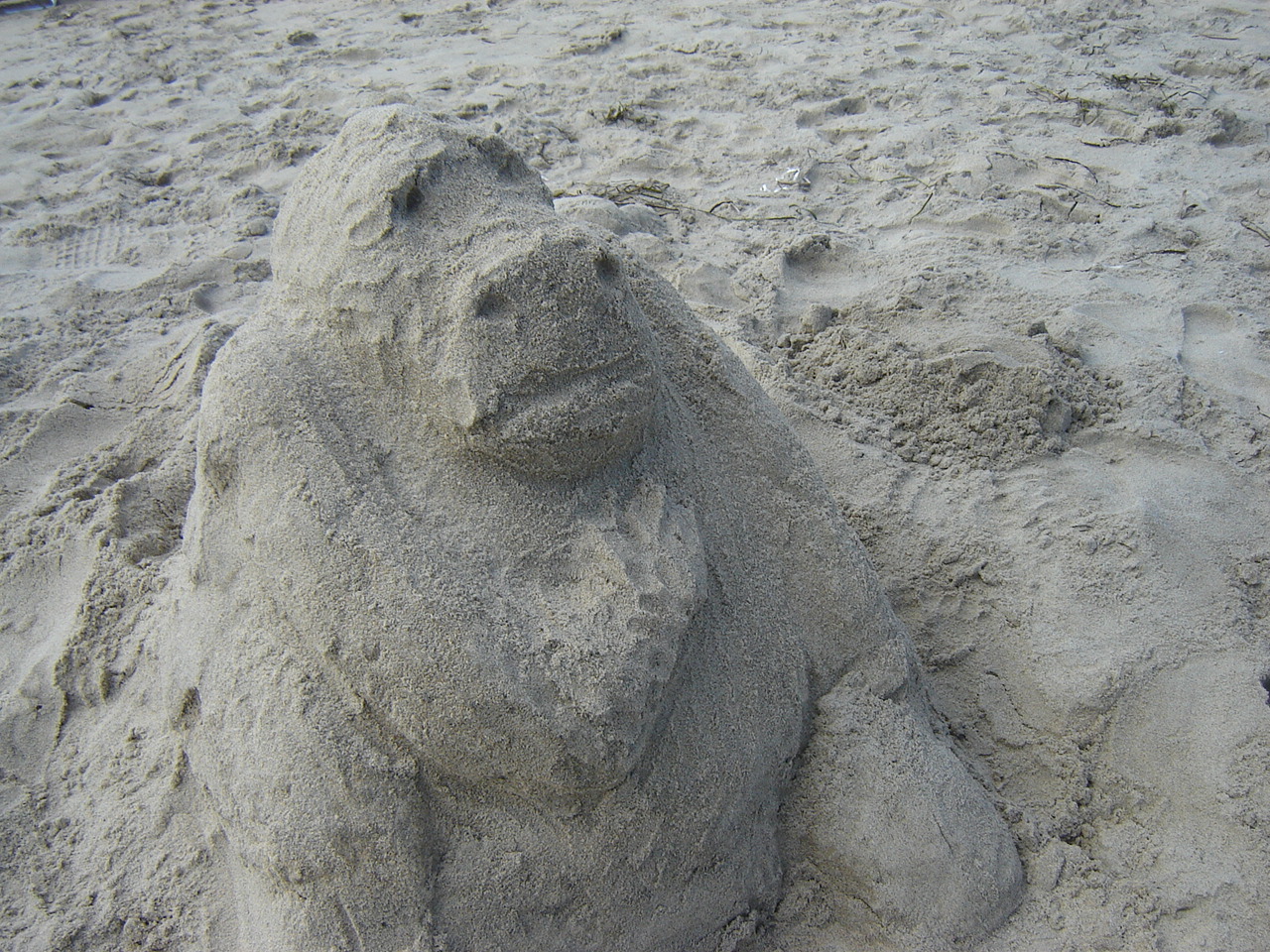
And while we are on the subject of ancient philosophy, you of course remember the Klingon adage, “Everything moves on, like gorillas at the beach.”

Read Full Post »

Last week when I posted about my visit to start-up incubator Mass Challenge, I said I wanted to learn more about 2012 finalist Bootstrap Compost, a Boston-area composting business.

Jessica Ilyse Kurn, of PRI radio show Living on Earth, recently interviewed Bootstrap Compost founder Andy Brooks.

“KURN: The idea of helping the community was his inspiration, and he had another motivation. A college grad, Brooks was getting frustrated after searching endlessly for jobs.

“BROOKS: After like relying on this cruel economy of applying and cover letters and resumes and interviews, and nothing was going anywhere for like two years, and I was, like, forget it, I gotta do something for myself, and the whole notion of, like, picking myself up.

“KURN: And so Bootstrap Compost was born. Brooks says there are many reasons why he loves helping urbanites compost.

“BROOKS: When people ask me that question, it’s like someone saying, ‘Why do you like Star Wars? Or why are the Beatles good?’ I get dizzy. Like, there’s so many reasons. The way that interests me is like — what are the challenges that we face being a disposable society?

“KURN: Brooks puts on his helmet, and jumps on his souped-up bicycle – complete with a custom-made trailer that tags behind. Such a setup couldn’t have been designed for anything other than a nomadic compost business. …

“BROOKS: When you throw out your banana peels into the trash, that to me is insulting to all the resources that went into growing those things initially. The end product is just treated like refuse, but it shouldn’t be – it still harbors this immense energy to be used for good, and to go back into the cycle of growing.”

More.

Photograph of Andy Brooks: Living on Earth

Read Full Post »

I am not ordinarily into sports, but I love Bill Littlefield’s Saturday sports wrap-up on WBUR because he is a great storyteller, and he looks for offbeat sports stories.

Today he had one on the over-65 U.S. softball players who have games with an over-65 team from Cuba.

“The Eastern Massachusetts Senior Softball Association has been sending teams to Cuba for annual exhibitions called ‘The Friendship Games.’ The first four EMASS Softball teams visited Havana in 2009 and the meeting reminded [organizer Mike] Eizenberg of kids playing pickup.

“ ‘When we went onto the field, it felt exactly the same way to all of us,’ Eizenberg recalled. ‘Most of the players didn’t speak the others’ language, but we all just loved to play ball.’

“Before that game, Cuban authorities allowed local musicians to play the U.S. and Cuban national anthems. That hadn’t happened in Cuba in 50 years. After three years of exhibitions, Eizenberg decided bringing the Cubans to the States was worth a try. He’s still amazed his Cuban friends made it.

“ ‘No one ever believed that it would be possible for them to come here. All of a sudden, magically, we received permission both from the U.S. government and the Cuban government for the players to come here,’ Eizenberg said. ‘[The Cuban players] say that this proves that nothing is impossible. If this can happen, anything can happen.’ …

“EMASS Softball player Les Gore says the Cubans and the Americans share a love of baseball and softball, but their sports resumes are a bit mismatched.

“ ‘The people playing here representing the U.S. and we’re talking about doctors, lawyers, plumbers. We’re just average guys who love to play softball,’ Gore said. ‘But the Cubans, many of the people who play for the Cuban softball leagues were in their time probably some of the most prominent baseball players that the island has ever produced, so we’re playing against those people.’ ” More.

Photograph: WBUR at  Flickr

Read Full Post »

« Newer Posts