Feeds:
Posts
Comments

Archive for January, 2015

Every Christmas my Wisconsin sister-in-law makes turtles. These are tasty treats consisting of pecans, caramel, and chocolate. When Suzanne and John were small, they looked forward to the package of turtles that arrived every year at our house. Now that they have their own houses and their own children, they are so grateful that their aunt seems willing to add to her annual workload by sending turtles to their houses — and the houses of all her nieces and nephews — as well as the past recipients, her siblings, her mother, and her in-laws.

Every once in a while, she ponders whether she should keep making them. She wonders if people still like them (!). That is, until last year’s Great Turtle Caper.

That was the year that several nieces and nephews  whispered among themselves, “Did you get the feeling that the turtle packages had been tampered with this year?” The whispers gradually built to a roar, and my brother Bo was called in to investigate, a supposedly impartial observer. A quorum of family members happening to be together, he turned his gimlet eye upon them. We need to get to the bottom of this, he said, amid much irreverent laughter.

Could a bent postman have gotten wind of the Wisconsin turtles’ fame and decided to taste one, then two, then three? (They’re a little addictive.) Could someone have filched a few before the packages went to the post office? A very small child perhaps?

The pressure grew. Suddenly, the true culprit confessed. I won’t name him other than to say it was a grown man, a close relative of the candy maker. Exposed and contrite, he vowed in the presence of witnesses never again to take unfair advantage of his access and deprive his cousins.

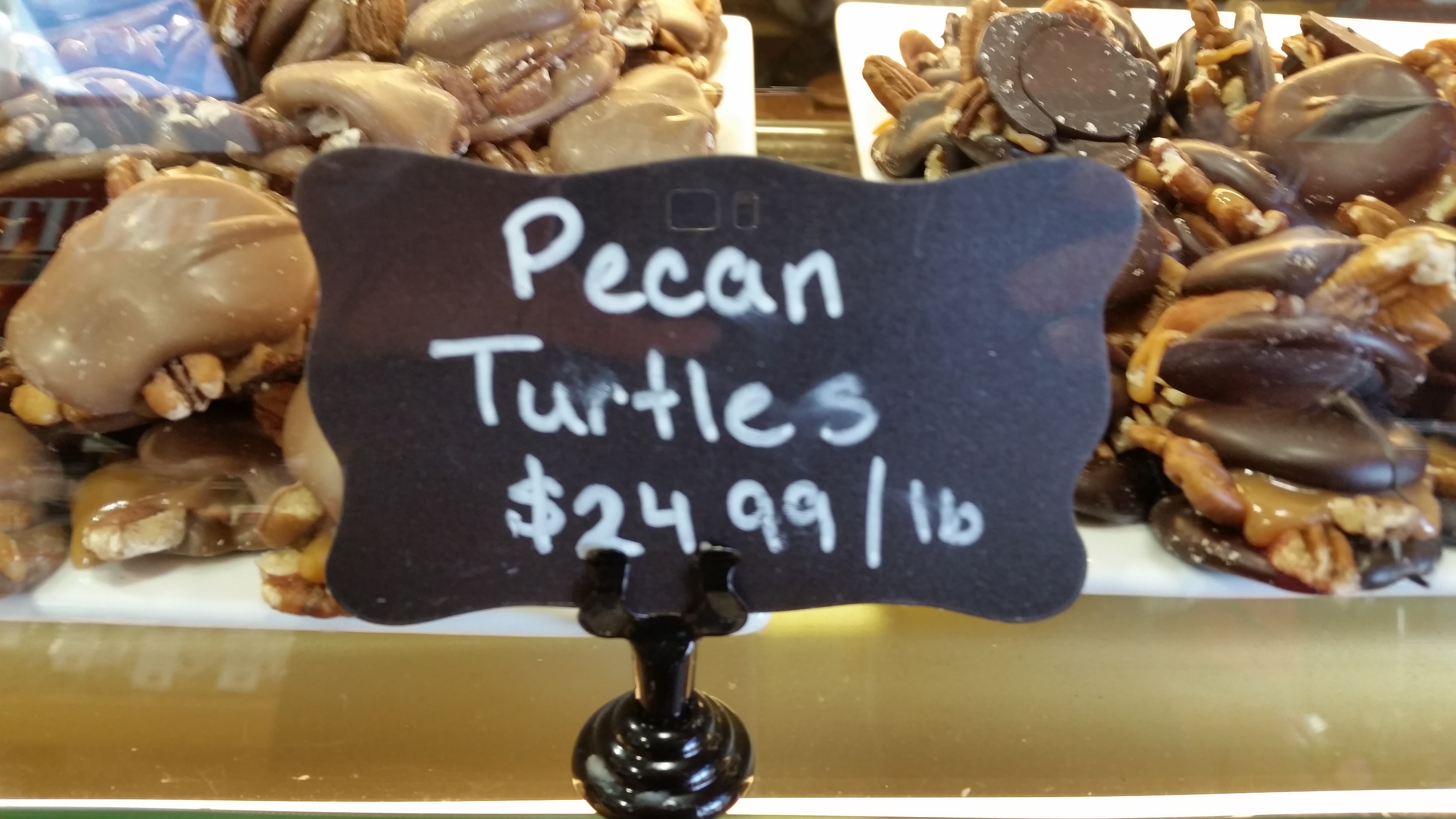
That is how Aunt Deb learned that her turtles are still in demand. And in case the rabid fan base isn’t enough to convince her of the high value the family places on her turtles, John snapped a photo in local market to convey what turtles would cost us if we were forced to buy them.
pecan-turtles-costly

Read Full Post »

It’s hard to read about the deprivations of refugees, especially the children and especially in winter. That’s why I appreciate hearing about any kindness extended to them. National Public Radio recently had a story on the kindness of Clowns without Borders.

Laura Secorun-Palet writes, “On a cold November morning, 300 children gather in a soccer field in Zaatari, a Jordanian village next to the country’s largest refugee camp. …

“Today the children are not lining up to collect food coupons or clothes from NGOs: They are here to watch the clowns.

“On the ‘stage’ — a space in front of a velvet curtain covering the goal — a tall, blond woman performs a handstand while doing the splits, while two other performers run around clapping and making funny faces. As the upside-down woman pretends to fall, the children burst into laughter.

“The performers are circus artists from Sweden …

“Clowns Without Borders is a global network of nonprofit organizations that, for the past 20 years, has been spreading laughter in the world’s saddest places. The group’s most recent annual report says more than 385 artists performed 1,164 shows for its chapters in 2012 in 38 countries, both in the developing world and for refugees and other disadvantaged children in Western countries.

” ‘It’s very important to give kids a chance to be kids again,’ explains Lilja Fredriksson, one of the Swedish performers.” More here.

Another way to help refugees is through the wonderful Minneapolis-based nonprofit American Refugee Committee.

Photo: Bilal Hussein/AP
Lebanese clown Sabine Choucair, a member of “Clowns Without Borders,” performs for children in June at a Syrian refugee camp in the eastern town of Chtoura, Lebanon.

Read Full Post »

I do like stories about people who love their work so much that they never want to stop.

Perhaps it helps to have a talent like muralist Eric Bransby, who got to study with one of my favorite artists, Thomas Hart Benton. (Suzanne says I have a personal aesthetic, which is a polite way of saying I’m crazy about anything wavy, like Benton’s energetic American landscapes.)

Chloe Veltman writes at National Public Radio, “Eric Bransby is one of the last living links to the great age of American mural painting. He studied with one of this country’s most famous muralists — Thomas Hart Benton — and went on to create his own murals in prominent buildings across the west. The artist is now 98 and still painting.

“At his Colorado Springs studio, Bransby attacks a drawing with tight, sharp strokes, a pastel pencil grasped between gnarled fingers. His studio is unheated, but he doesn’t seem to notice the cold. He’s completely engrossed in the image taking shape on his easel. It’s a study for a new mural that he hopes to install at nearby Colorado College. He says he draws between two and eight hours every day.

” ‘Drawing has been a continuous thing for me, like exercises for a musician,’ he says. ‘It’s refreshing. I draw better. I paint better.’ …

“His parents didn’t encourage his artistic pursuits. It was during the Depression, and when he demanded that he get sent to art school, he remembers his parents said: ‘Well, he’ll do one year and he’ll come back so discouraged that we’ll make something else out of him.’

” ‘But that didn’t happen,’ Bransby says. ‘I found heaven.’ ” Read more here.

Photo: Nathaniel Minor/Colorado Public Radio
Eric Bransby, pictured above in his home in Colorado Springs, is still creating art at 98. “I try to make each mural a project that will somehow expand my abilities a little bit more,” he says.

Read Full Post »

Now, here’s an idea. You’ve heard of Uber-type services that you contact when you need a ride and that charge on the basis of demand?

Well, according to Patrick Clark at Bloomberg, the time may have arrived for calling a snowplow just when you need a snowplow.

“With a blizzard gathering over the ocean,” he reports, “J and R Lawn and Landscape decided to send part of its snowplow fleet on a 300-mile drive. The landscaping company operates 20 snowplows in and around Cicero, N.Y. A tech startup called Plows and Mowz—sort of an Uber for snowplows—had promised there would be lucrative work in Boston. ‘It only snows where it snows,’ says Ted Hoffman, who handles sales and marketing for J and R. His small company was willing to bet four plows, eight workers, and money for gas and hotel rooms on a faraway post-blizzard boom. …

“Plowz and Mowz caters to homeowners who don’t pay for a regular service but want occasional help clearing a driveway. To meet customer demand, the startup uses software to assign new jobs to drivers who are already planning to be in the area. …

“Plowz isn’t the only entrepreneur with a vision for the future of snow removal. ‘On-demand is cute, but it’s not snowplowing,’ says Yeh Diab, co-founder of Boston-based PlowMe, a second startup trying to using technology to improve an age-old business. The snowplow, as he sees it, is less like a taxi (seeking customers, wherever they might be) and more like a bus (serving customers along a set path). …

“Plow drivers needed to improve their efficiency with regular customers along set routes, he determined, while an on-demand system offered a succession of one-time customers. PlowMe is designed to be a route-management tool and a marketplace in which drivers can trade or sell parts of their routes to others.”

My grandchildren know that in Geopolis, a really big snow calls for bringing out the supremely competent, cool, and collected truck called Katy (see Virginia Lee Burton’s classic Katy and the Big Snow), but if you don’t live in Geopolis, other options do exist.

Lots more snowplowing angles here.

Read Full Post »

Always recognizing that people in Finland, Minnesota, and Buffalo, New York, deal with this sort of thing all the time, I’m going to give it as my opinion that the storm of January 27, 2015, in New England was a pretty big storm. We were told to work at home for two days.

I went out at lunch to see what I could see. I saw one truck and one stand-up snowplow, a few workers trying to clear the commuter rail platform, three walkers, and one neighbor.

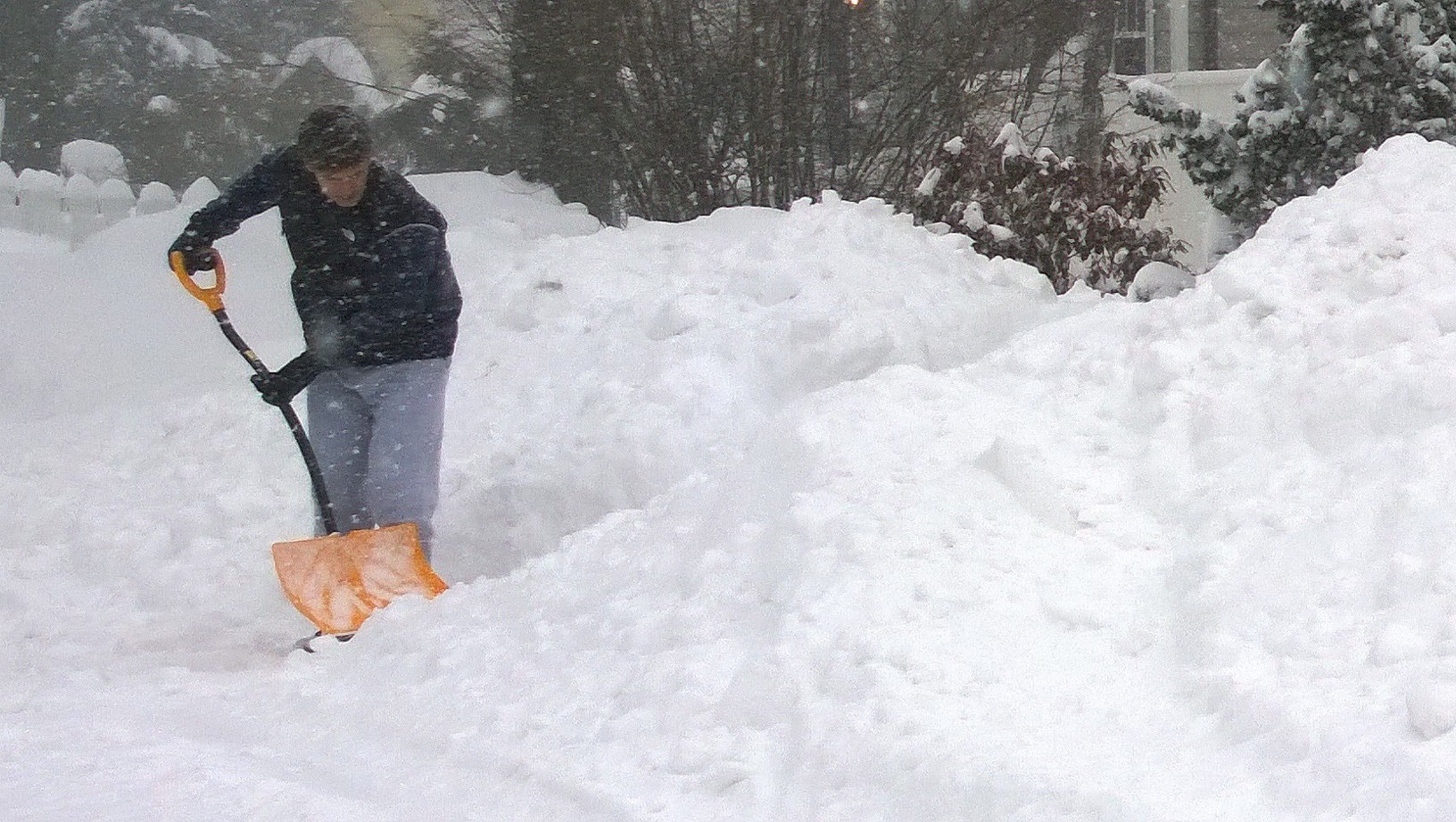
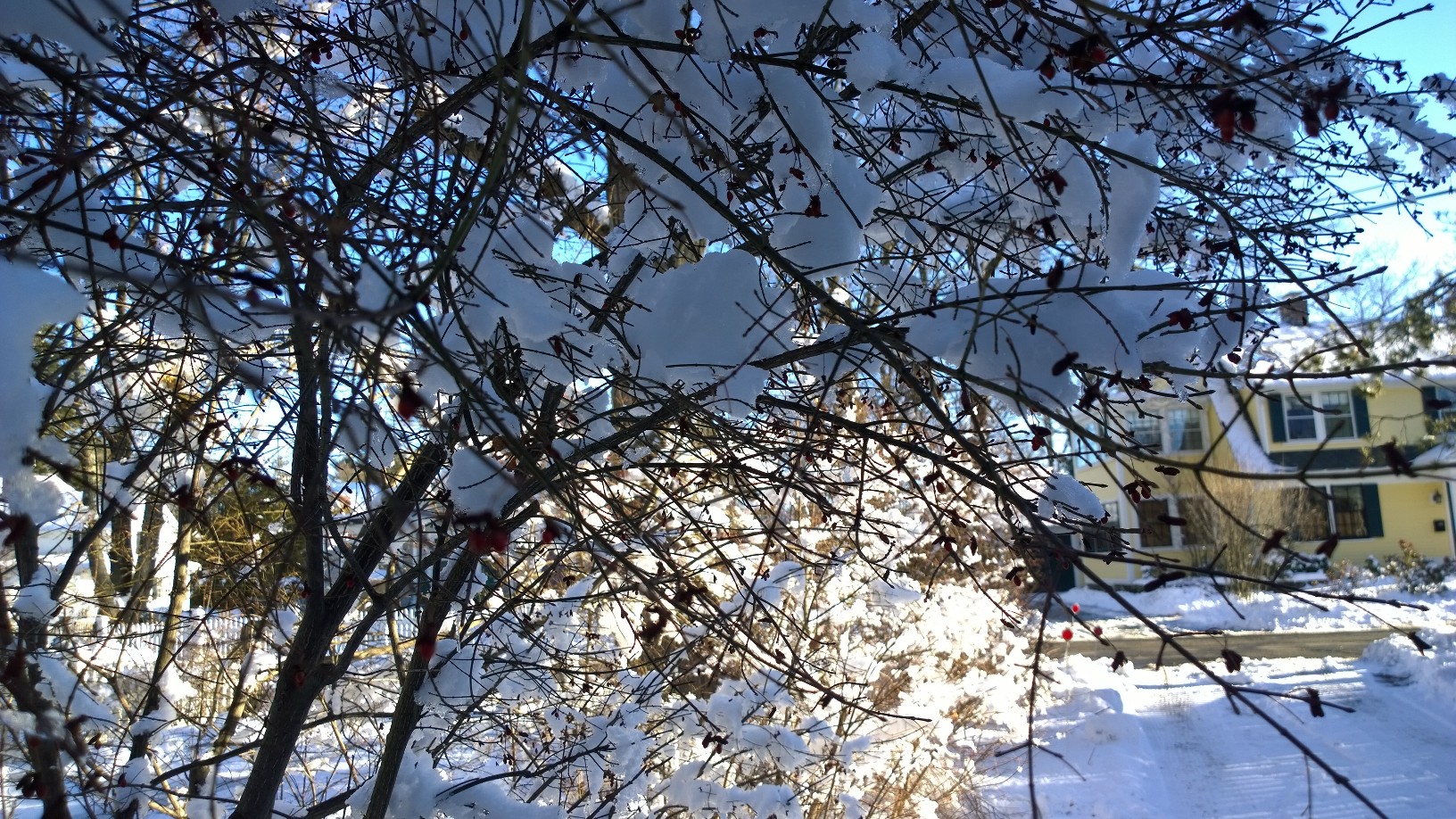
The trees and bushes in the yard were bent over. The car’s window wipers were reaching out for help. My husband had shoveled the front walk, but the gate was blocked by a snow bank. A mailbox was barely visible. My neighbor was hard at work with a shovel.

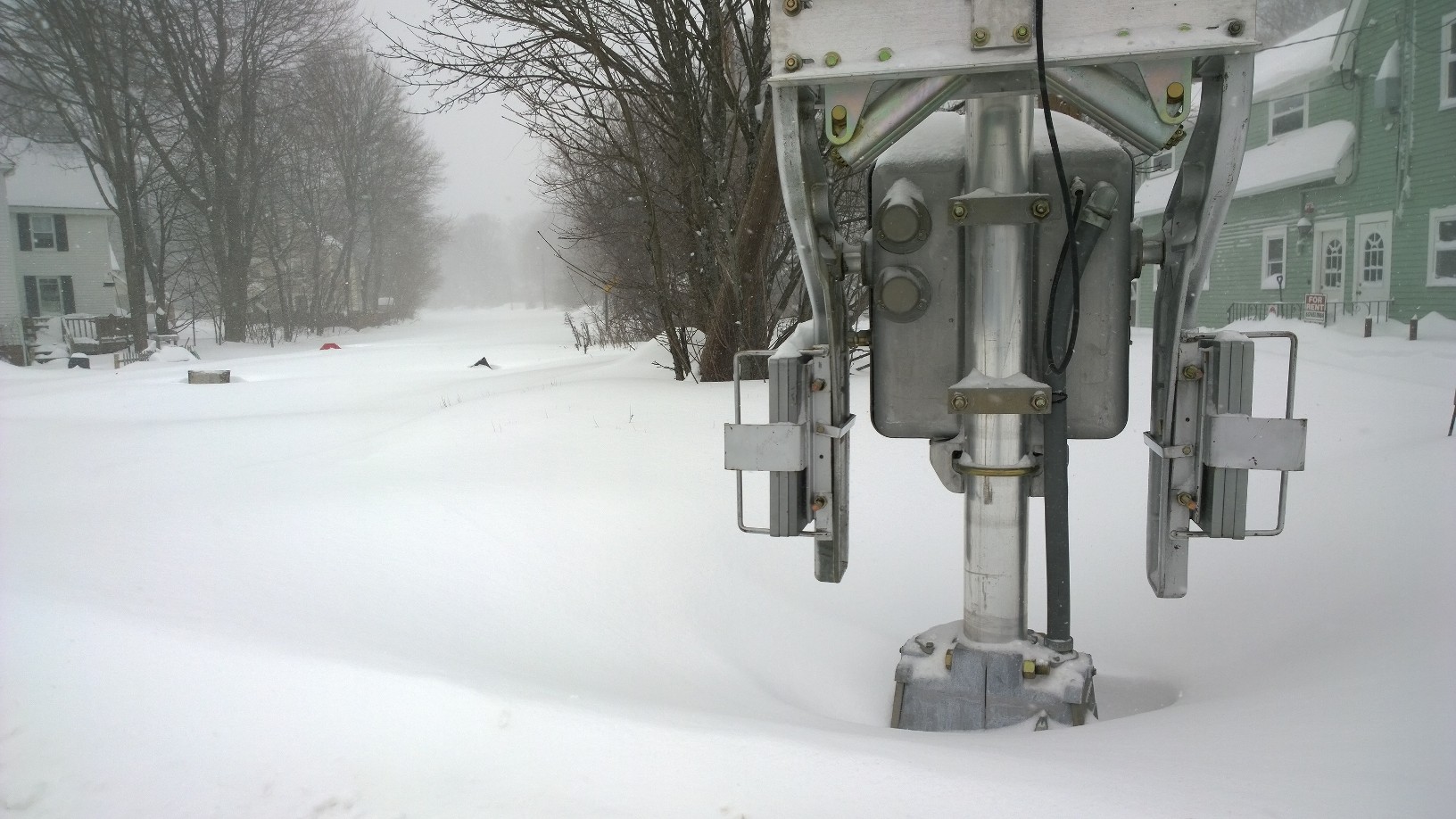
The picture that intrigues me the most, given that I take the train to work, is the picture of the buried train track. I don’t see how a train can get through there. And where will the commuters park? I can walk from my house. Not everyone has it that easy.

012715-snowy-bushes

012715-family-car-in-snow


012715-snow-bank-blocks-gate012715-mailbox-in-snow


012715-neighbor-shovels-snow

012715-train-track-in-snow

Read Full Post »

I got an unusual number of hits from readers this morning. I never know why. Is it because we are having a big snow in New England?

Let me give you a couple preliminary snow pics just in case. I hope to do a regular post this evening.

012515-a-taster-for-more-snow-to-come

012715-snow-Concord-MA-stil-coming-down

Read Full Post »

Photo: Milla Kontkanen

Lynley Beckbridge — whose tweets I have been following since a Harvard conference on aging and design — recently tweeted this BBC story about baby boxes in Finland.

Helena Lee writes, “It’s a tradition that dates back to the 1930s and it’s designed to give all children in Finland, no matter what background they’re from, an equal start in life. The maternity package — a gift from the government — is available to all expectant mothers.

“It contains bodysuits, a sleeping bag, outdoor gear, bathing products for the baby, as well as nappies, bedding and a small mattress. With the mattress in the bottom, the box becomes a baby’s first bed. Many children, from all social backgrounds, have their first naps within the safety of the box’s four cardboard walls. …

“At 75 years old, the box is now an established part of the Finnish rite of passage towards motherhood, uniting generations of women.

“Reija Klemetti, a 49-year-old from Helsinki, remembers going to the post office to collect a box for one of her six children. …

“Her mother-in-law, aged 78, relied heavily on the box when she had the first of her four children in the 60s. At that point she had little idea what she would need, but it was all provided.

“More recently, Klemetti’s daughter Solja, aged 23, shared the sense of excitement that her mother had once experienced. …

” ‘There was a recent report saying that Finnish mums are the happiest in the world, and the box was one thing that came to my mind. We are very well taken care of,’ says [Titta Vayrynen, a 35-year-old mother with two young boys].

More here. And be sure to see this related story on customs in Nordic countries, “The babies who nap in sub-zero temperatures.”

Read Full Post »

On Saturday, I made Valentines with the two-year-old grandchildren (two families). It’s so pleasant. “Relaxing,” adds Suzanne.

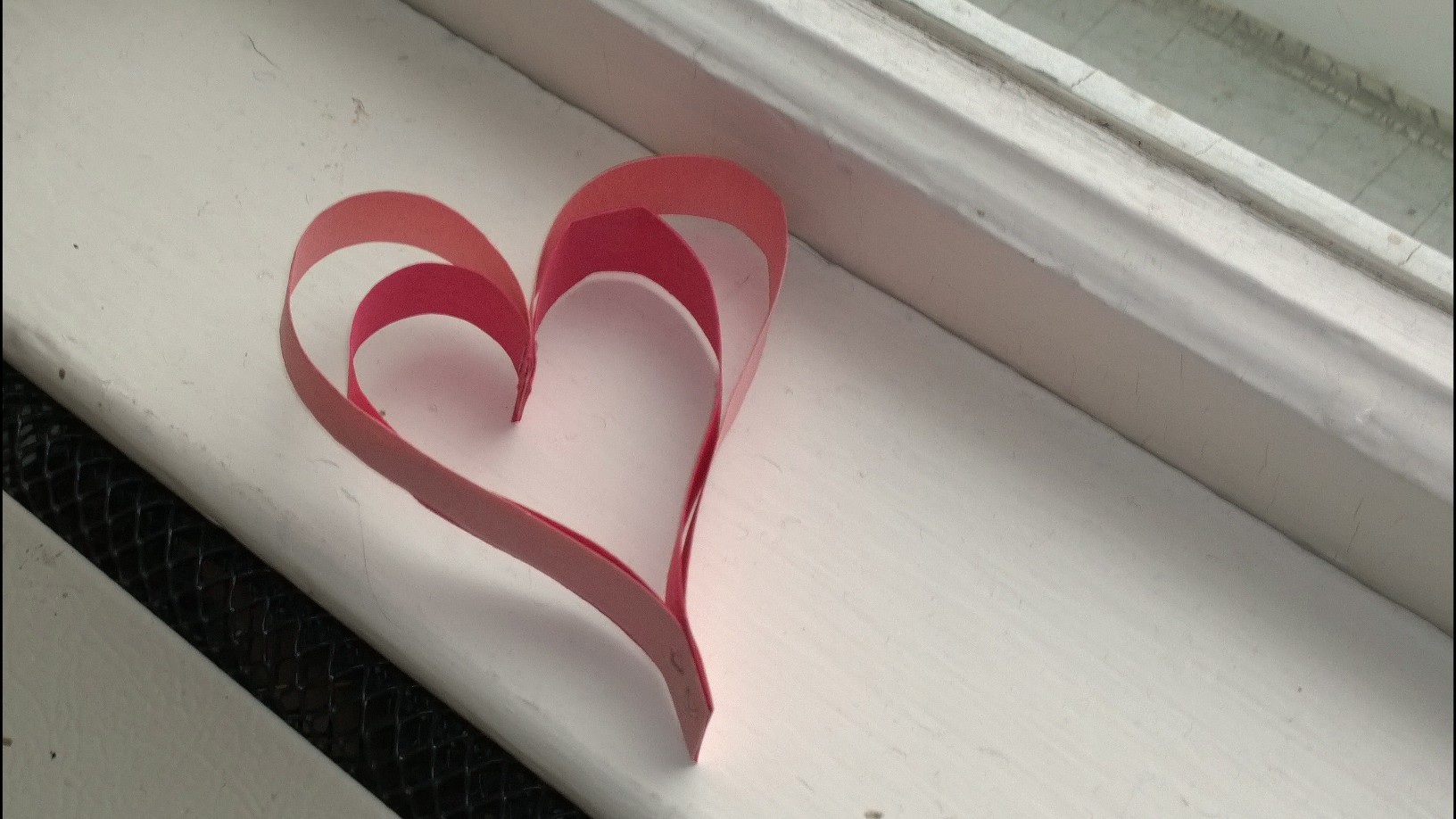
A couple weeks ago, I learned about something a little more advanced that we can try making — paper-strip hearts to hang in a window or on a tree or anywhere.

I saw a few of these ornaments in the window of the 5 and 10, and I said to myself, “Cool! I can do that!”

I looked at the samples very carefully. But when I got home and tried to replicate what I had seen, the heart came out as a bubble.

Naturally, I turned to the Internet, and Sugar Bee Crafts came to my rescue. The secret is the second staple. I thought Mandy Beyeler did a fine job of photographing exactly where you have to put that staple. And she even pulled it off with two preschoolers helping.  Check her tutorial here for the details. And look at the pictures. Mandy’s hearts are much fancier than mine.

paper-heart


Read Full Post »

KerryCan is a frequent commenter on Suzanne’s Mom’s Blog and, as I keep learning, a woman of varied talents. She has been a college English professor, she blogs regularly, and she pursues numerous traditional crafts in a deep way

But what you need to know now is that she make chocolates and sells them at Etsy in time for Valentine’s Day.

Here’s what KerryCan says on her blog about a day in the life of a chocolatier, “I don’t make candy to make a living. I make candy because I like to make candy, just as I like to quilt and I like to weave. But, unlike quilting and weaving, candy piles up fast and that can cause its own dilemmas. I sell candy so I can justify making more, to experiment and try new things, without having to eat it all myself. …

“Almost every candy I make is a multi-stage process so, when I’m making a lot of candies, my days will be organized around the steps. Some days will be focused on making the ‘innards,’ as I think of them, and other days will focus on enrobing, or dipping, the candy innards in chocolate. When I make the innards, I work in small batches, and usually produce 50 to 200 candies at a time. …

“Making any of the innards depends on paying careful attention to temperature, so using a candy thermometer is essential. And, since I’ve never met a candy thermometer that I felt I could really, really trust, I also use the old tried-and-true cold-water test. …

“Once the candy is cooked and has cooled, I have to cut it. … The next step is the critical one that makes me a chocolatier—tempering chocolate. … Anyone who wants to make really good candy learns to temper chocolate. … Tempering chocolate means melting quality, real chocolate and then cooling it in a controlled way to bring about a transformation of the chocolate. …

“I spend a lot of time tempering chocolate by hand. I may temper 3 pounds at a time. I melt the chocolate to specific temperatures, depending on whether it’s dark, milk, or white chocolate, and then bring those temperatures down again. It takes about 30 minutes of constant stirring to temper chocolate, and it can’t be rushed.” More here.

I think you could learn to make chocolate yourself just from KerryCan’s one post. She concludes, “I weigh out the candies, then I put them in little candy paper cups. I arrange them in the glossy white box and make sure they look pretty. I label the box. I seal the box with my little ‘KerryCan’ sticker. I move on to the next box. The boxes pile up in a most satisfying way.”

The chocolates and other candies may be found at Etsy, here.

Photo: KerryCan

Read Full Post »

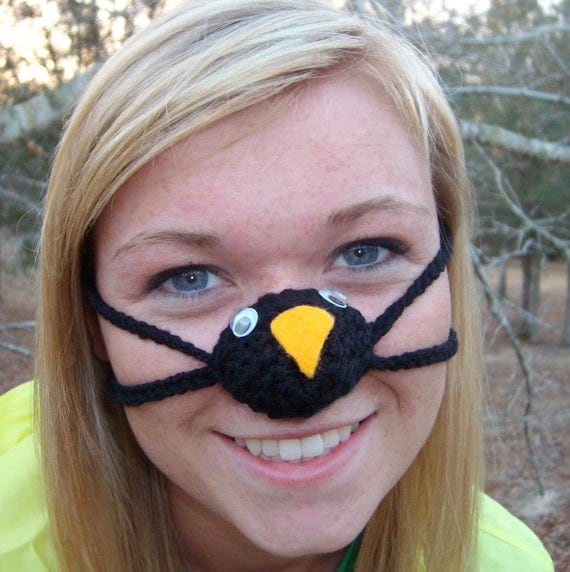
Years ago, there was a nose-warmer knitting fad at Bryn Mawr College (even before my time, so you can imagine). Students knitted nose warmers for themselves, their relatives, their friends. They put nose warmers on statues of goddesses around the campus.

The one my mother bought me at a fund-raiser looked silly, and the fad died out.

Now medical science could bring the nose warmer back.

Adam Wernick writes at Public Radio International, “As it turns out, your immune system turns sluggish in the cold, and the cold virus grows better in the slightly chillier environment of your nose than at the body’s normal core temperature. That’s the conclusion of a mouse study published this week in the Proceedings of the National Academy of Sciences.

“ ‘The optimal temperature for the cold virus to replicate is around 33 degrees Celsius (91.4 degrees Fahrenheit), which is found in the nose of most people living in normal conditions,’ says Akiko Iwasaki, a professor of immunology at Yale University and one of the authors on the paper.

“As temperatures drop outside, humans breathe in colder air that chills their upper airways just enough to allow cold viruses to flourish, says Ellen Foxman, Iwasaki’s colleague. The recent study suggests that if you can keep your nose warmer, the virus won’t replicate as easily.”

Ah-HA!

Read all about it here,. The story was based on a PRI Science Friday interview with Ira Flatow.

Photo: Aunty Marty Made It (on Etsy)

Read Full Post »

My friend Bob says there is no bad weather, only bad clothing. So I headed out at lunch yesterday all bundled up to take some pictures.

The following is to be sung to the tune of “When You Walk through a Storm.”

When you walk in the cold
Hold your head up high
And don’t be afraid
You will freeze.

At the end of your walk
There’s a golden …

I think I’m stuck. Maybe songwriter Will McM will dig me out.

While I’m on the subject, here’s a 1980s attempt at a song about cold, to be sung to the tune of “I’m Looking Over a Four-Leaf Clover.” Suzanne’s elementary school music teacher actually used it in class.

What is the reason
That we’re all freezin’
And the birdbath is filled with ice?
Why does my Omni
Go sideways down the street?
Why do my children wear
Baggies on their feet?
What normal fellow
Whose brains aren’t Jello
Would keep fighting this cold war?
What is the reason
That we’re all freezin’
And what did we move here for?

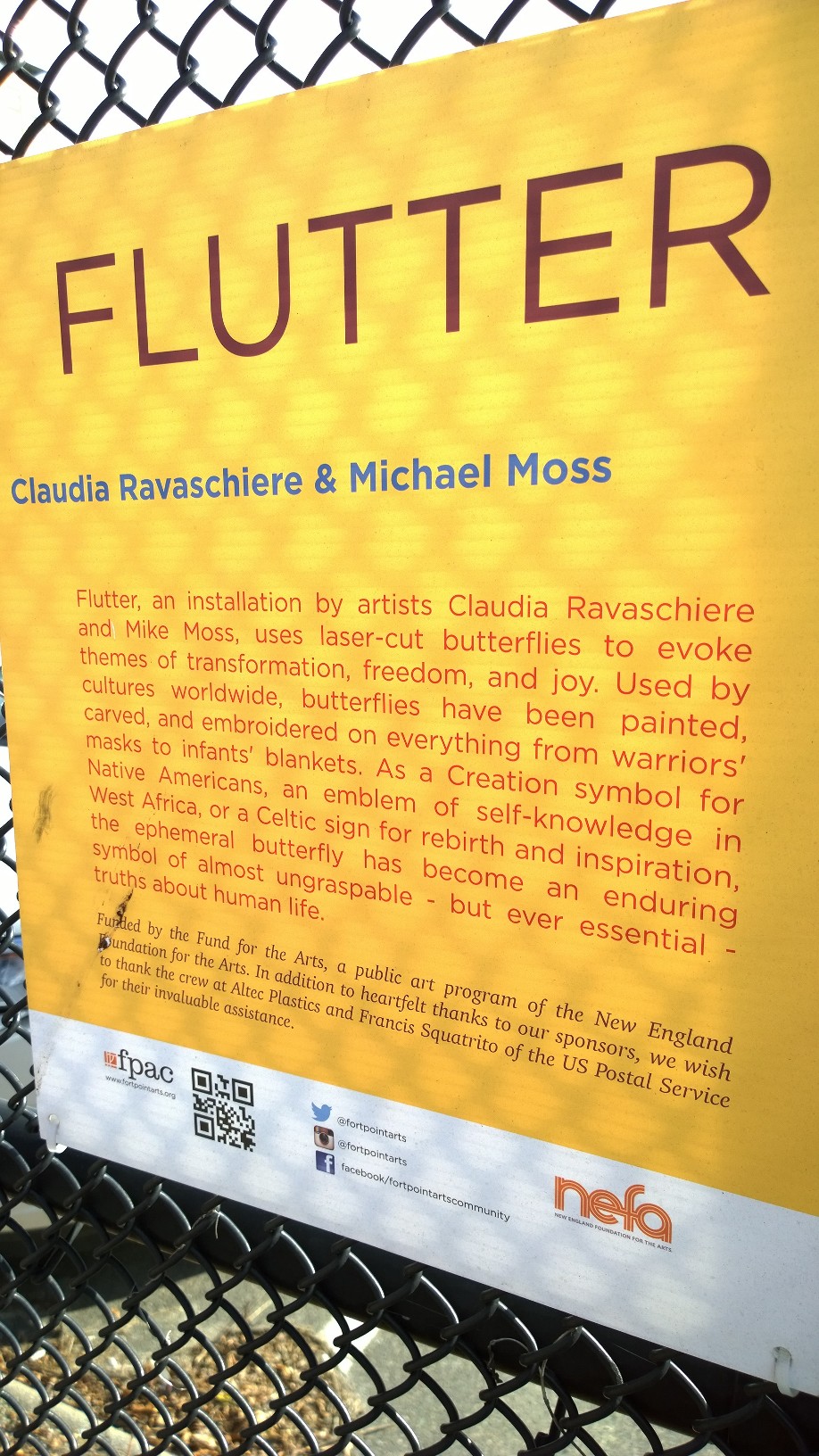
Believe it or not, I kind of like the cold. And I love getting out and taking pictures. Yesterday I noticed a yellow Fort Point Arts sign on an old chain link fence. Then I noticed the butterflies.

Read about Claudia Ravaschiere and Mike Moss’s installation, Flutter, here.

butterfly-art-fort-point

public-art-fort-point

Read Full Post »

National Public Radio’s Eleanor Beardsley reported recently on a borrowing trend.

Nothing to do with Mary Norton’s Borrowers, who gather up all the buttons and safety pins you’ve lost and store them in their home somewhere under your floorboards. No, this is about you needing a rarefied plumber’s tool to replace the kitchen faucet and deciding to borrow one for a day. (Maybe two days if a two-year-old I know offers to help.) All you need is an app called Peerby.

“It isn’t surprising that the idea for the borrowing platform Peerby [peer nearby] originated in one of the world’s most densely populated countries — The Netherlands,” says Beardsley.

“Founder Daan Weddepohl says he had the idea for the startup after his house burned down, and he had to borrow everything. At first, he says, he felt dependent, but then realized people generally like helping each other because it creates a bond. …

“In June, Peerby was selected best urban app in the AppMyCity! competition, held as part of the New Cities Summit in Dallas. Peerby hooks up 100,000 borrowers and lenders each month in the Netherlands. Since its launch in 2012, the company has expanded to Belgium, Berlin and London. …

“Cindy Bakum, an Amsterdam native, is a regular Peerby user.

” ‘Last time I had a friend over, and we were watching a movie on his laptop, but he forgot his adapter, and my adapter didn’t fit,’ she says. ‘So I put out a request, and it was actually my neighbor. He really lived on my block, and he had an adapter, so we could finish watching the movie. So that worked very well.’ ”

It’s all about the sharing economy. Read up on it at the All Things Considered blog, here.

Photo: Merriam-Webster

Read Full Post »

Looking through a pile of magazines recently, I found a 2011 newspaper article I had cut out about Hardwick, Vermont. It’s about reinventing the local culture around food and food-related businesses.

Dirk Van Susteren wrote at the Boston Globe, “If there were a ‘Locavore Capital of America’ one would expect it to be in sunny California or perhaps somewhere in the heartland … But, surprisingly, in rocky northern New England, just 45 miles from the Canadian border, is a place that could contend for that honor: Hardwick, a former quarrying town that until recently knew more pain than promise.

“In recent years Hardwick, population 3,200, located along a tumbling stretch of the Lamoille River, has seen a half-dozen innovative agricultural enterprises crop up, many with mission statements including such words as ‘community-based,’ ‘sustainable,’ and ‘organic.’

“The town, always a bit scruffy, and with a high jobless rate, might be on a green trajectory. And people are taking notice.

“Among the new operations here or in nearby towns: Jasper Hill Farm, which makes artisanal cheeses and provides aging, distribution, and marketing services to local cheesemakers; High Mowing Seed Co., an organic seed business, whose owner likes traveling around the country to tell the Hardwick farm and food story; Highfields Center for Composting, a soil-making business that collects its raw materials from restaurants, farms, and schools; Pete’s Greens, a CSA (community-support ed agriculture) farm that grows organic vegetables in gardens and greenhouses; and, finally, Vermont Soy, a tofu and soymilk producer.

“The area also has dozens of small-scale producers, from orchardists to maple sugarmakers. Their products sell at farm stands, at the summer farmers’ market, and at Buffalo Mountain Food Co-op and Cafe, a landmark in its 36th year. …

“Monty Fischer, the executive director of the Center for an Agricultural Economy, the nonprofit organization that helped spur these farm efforts, has kept count. ‘People from 40 states and 40 countries have come to ask about our agricultural cluster,’ he reports, from his downtown office.”

Read about the 2011 federal grant for the Vermont Food Venture Center, an incubator facility, the organic North Hardwick Dairy, where sunflowers are grown as a value-added crop, mead maker Caledonia Spirits, and more here.

And if anyone has been up there recently, I sure would love to know if the food culture is still going strong.

Photo: Wikipedia
North Main St., Hardwick, Vermont

Read Full Post »

I love listening to Worcester-based WICN (jazz radio). Bonnie Johnson had an especially good show yesterday, opening with Cynthia Scott and 3rd, 4th & 5th graders of PS32 in Brooklyn, NY, singing “Dream for One Bright World.”

“There is a new day dawning
“The time is now
“The world is ready for a change …

“Let’s teach out children to care
“To help one another
“And mend broken hearts
“So many children in the world
“Have never had a chance
“Their time has come …

(More lyrics here.)

You can listen to WICN online at wicn.org. Bonnie Johnson’s program is described at Colors of Jazz. “Bonnie Johnson is host of Colors of Jazz on Sunday afternoon from noon-4 pm. If you asked the Worcester native how she found jazz, she would tell you that jazz found her. As an undergraduate student at Howard University in Washington, DC, Ms. Johnson became a fan of the Quiet Storm featured on the college station WHUR-FM. …

“Ms. Johnson appreciates the diversity and the evolution of music. As a self-taught electric bassist, she has enjoyed many years of playing various types of music with her daughter and close friends in a family band. Growing up, she sang in the St. Cecilia Girl Choir at All Saints Worcester. …

“Ms. Johnson holds B.A. in Liberal Studies and M.S. in Communications and Information Management degrees from Bay Path College. She believes the future of jazz is in our children, stating, ‘Music and the arts is one area that gives young people an outlet and release of creative energy. While there are many children exposed to music through lessons and attending live performances, there are too many more that are not.’ One of Johnson’s primary goals as host at WICN is to reach youth in creative ways through community engagement.”

That’s something to think about on Martin Luther King’s birthday — and maybe to act on, too.

Bonnie Johnson, host of WICN radio’s Colors of Jazz 

Read Full Post »

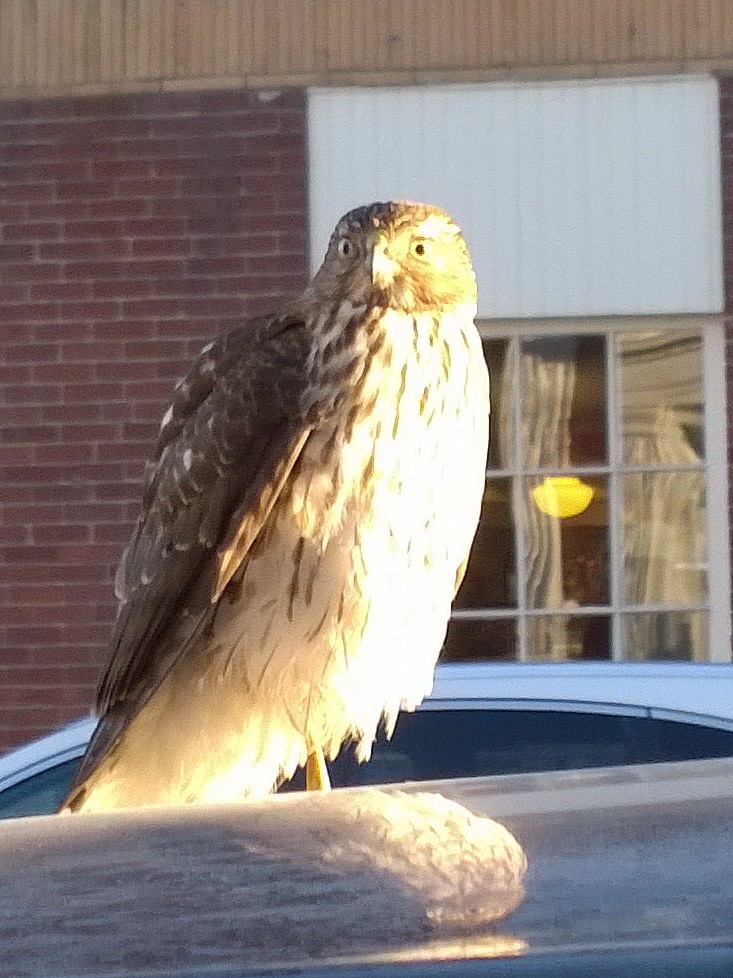
Saturday was a day for hawks. I saw one on the highway as I drove home from John’s and then another one just a little farther along. Each was perched on a high limb, scanning the road and the verge for lunch. A third hawk, in the center of town, dove after a small bird, but being intercepted and stunned by a fast-moving car, wheeled back to land on a parked vehicle, catch his breath, and pose for photos.

I wondered why the hawk was hunting in such a heavily populated area. It must be hard to find food in this weather.

Fortunately, I had bought my camera, having decided that I don’t get enough pictures for the blog if I give in to the cold and take my daily walk indoors. There aren’t many photo ops when you go ’round and ’round from the hall to the living room to the dining room to the kitchen … .

If any reader knows what type of hawk this is, I’d appreciate being enlightened.

downtown-hawk

Read Full Post »

Older Posts »